A teacher facilitation guide for the Friendship Architecture lesson, providing pacing, discussion prompts, and strategies for handling common student concerns about boundaries.
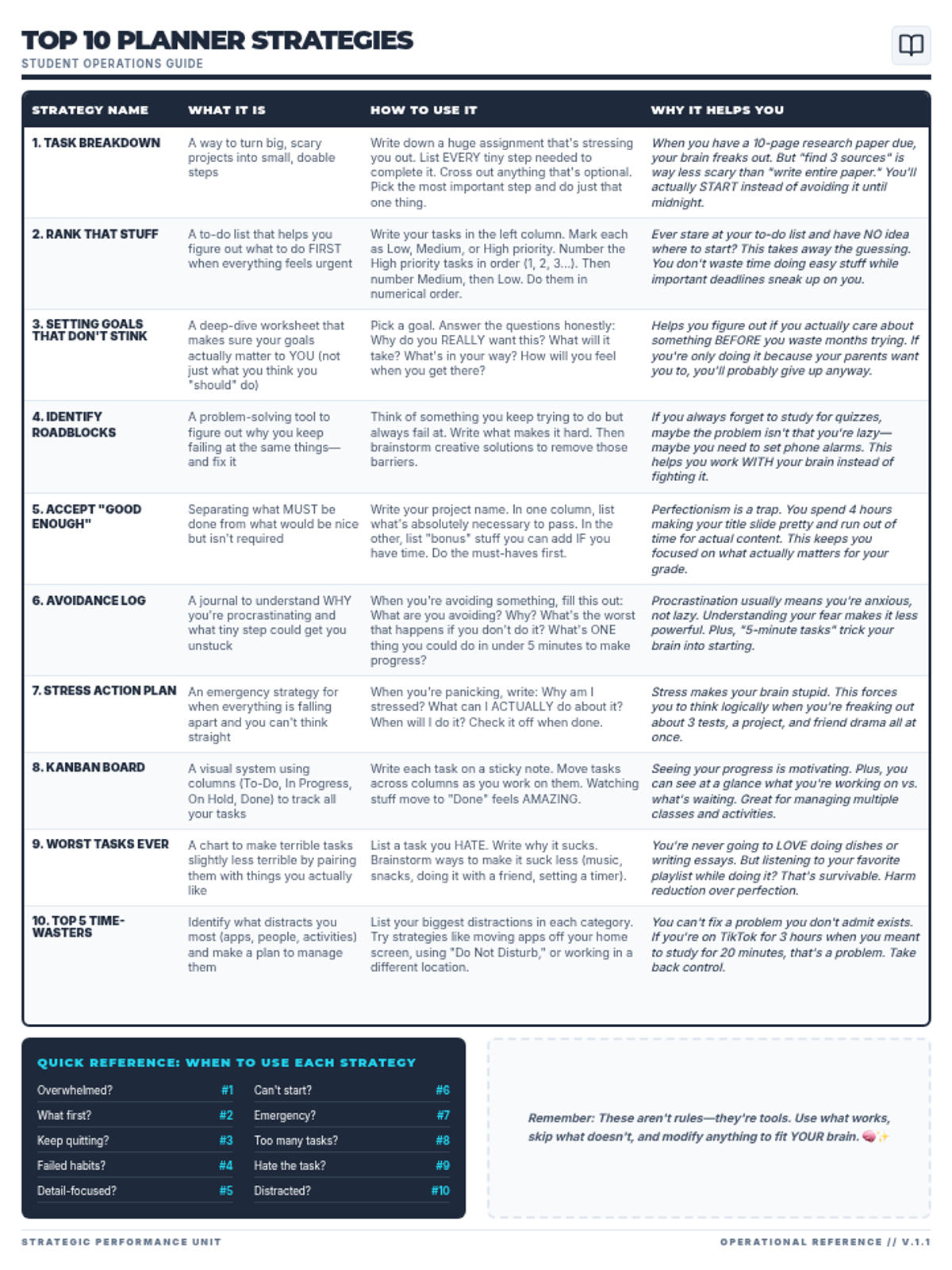
A detailed reference guide for high school students explaining the top 10 planning and executive functioning strategies. Features a comprehensive chart and a quick-reference guide for when to apply each tactic.
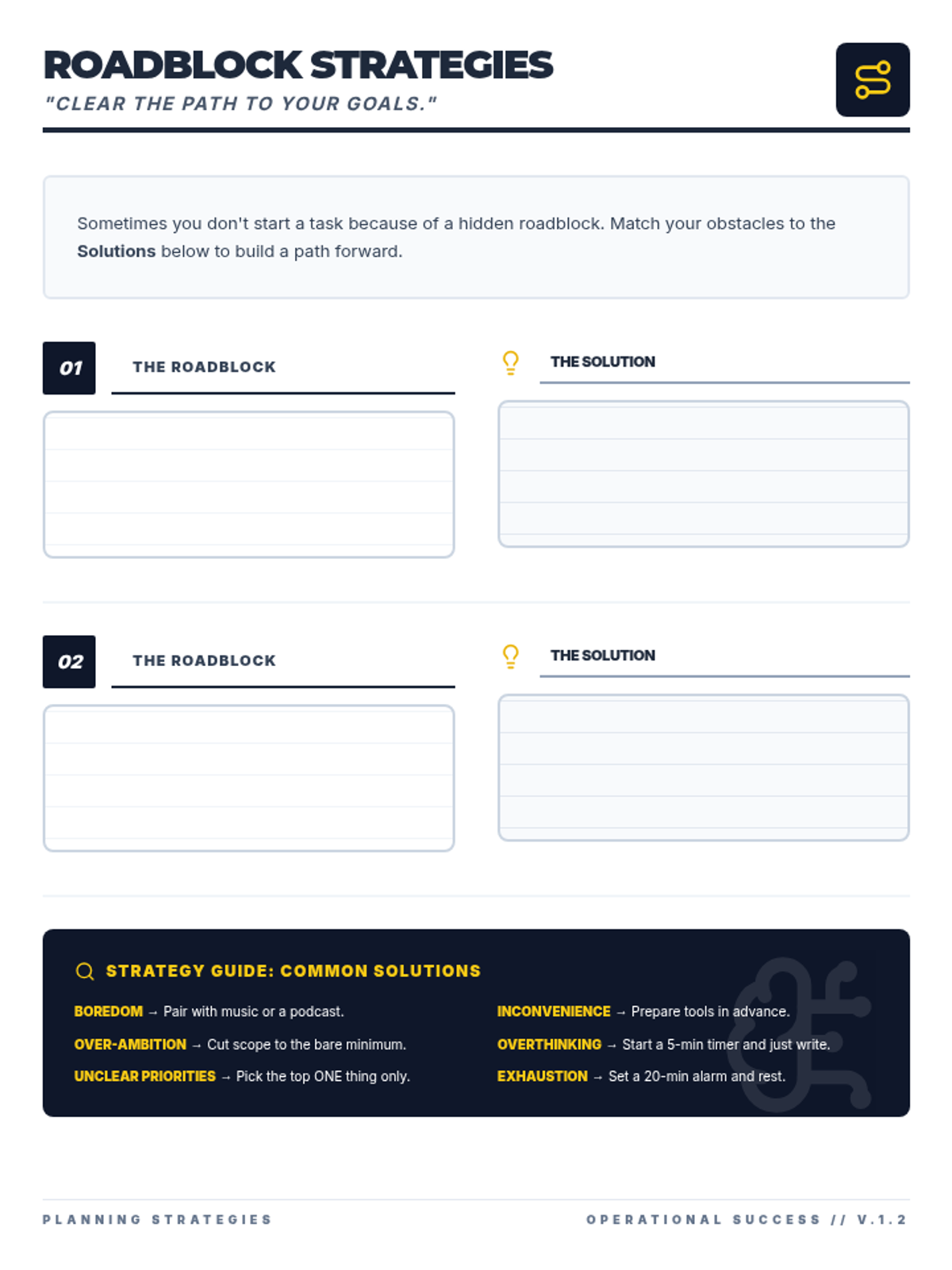
A problem-solving worksheet based on executive functioning strategies. Helps students pinpoint specific obstacles like boredom or inconvenience and develop custom solutions to overcome them. Neutral, clean layout.
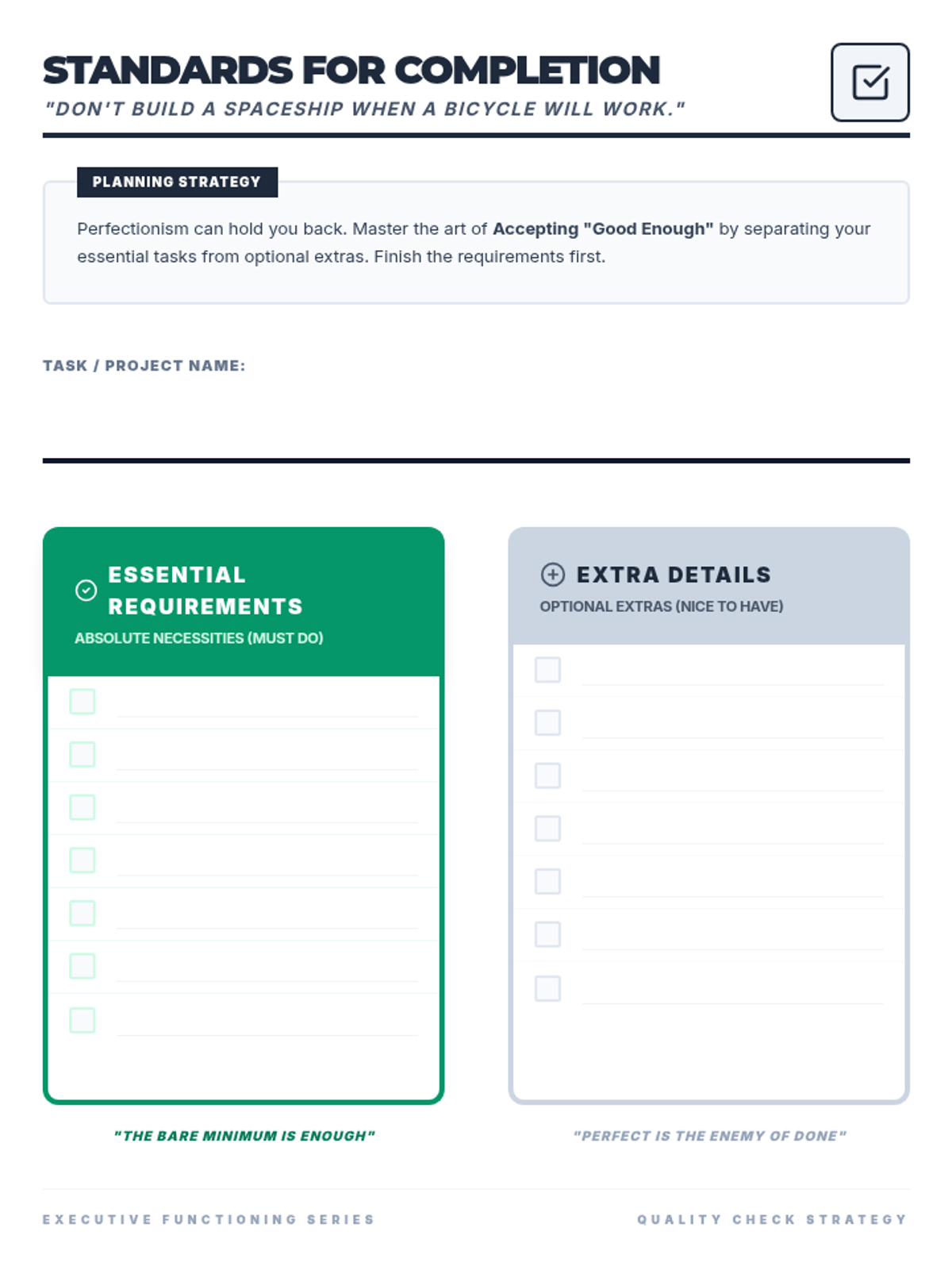
A prioritization worksheet. Helps students separate essential tasks from optional extras to combat perfectionism and ensure project completion. Neutral, high-contrast layout.
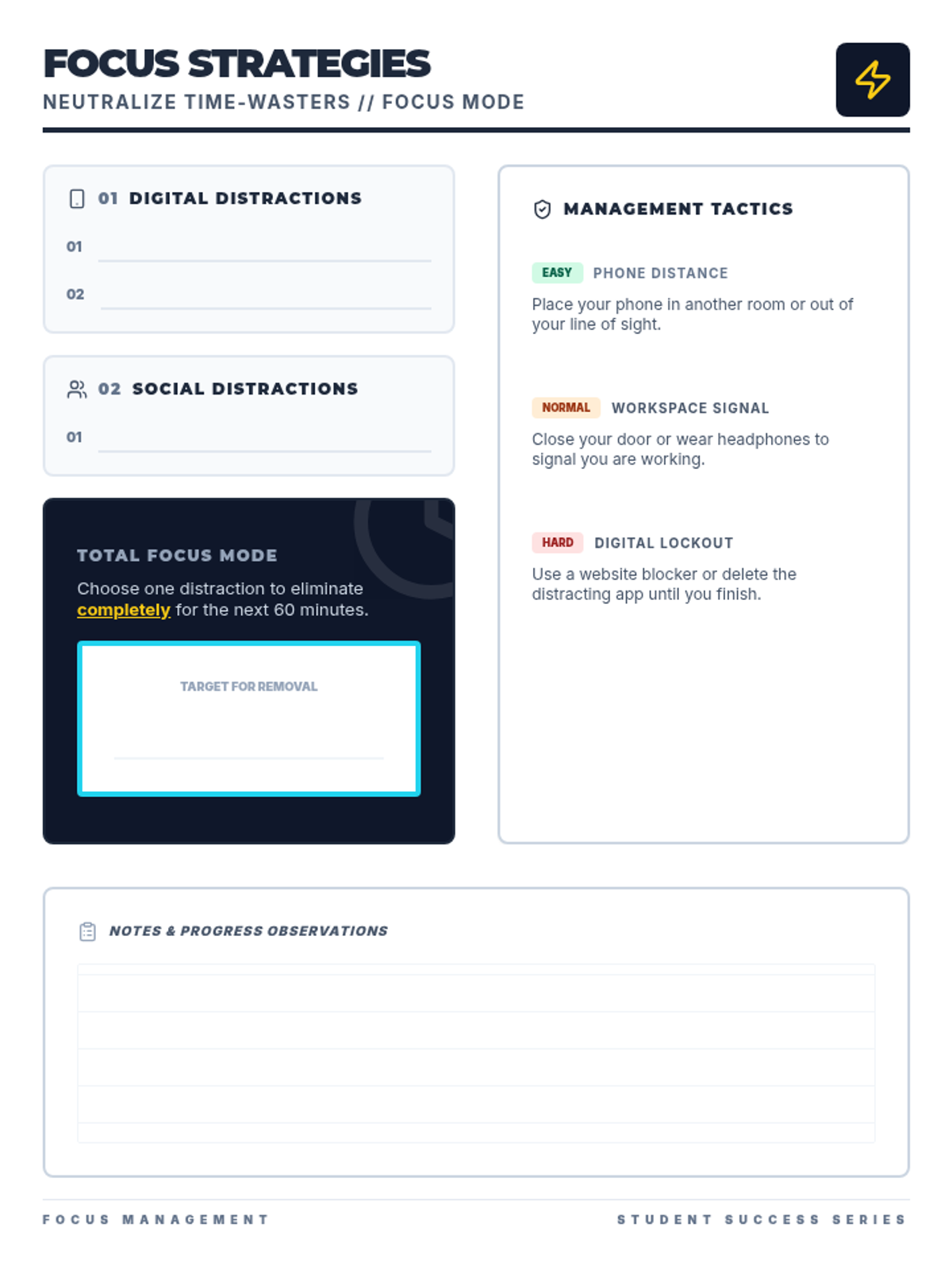
A distraction management worksheet. Helps students identify digital and personal distractions and provides tiered tactics (Easy, Normal, Hard) to improve focus. Neutral, clean layout.
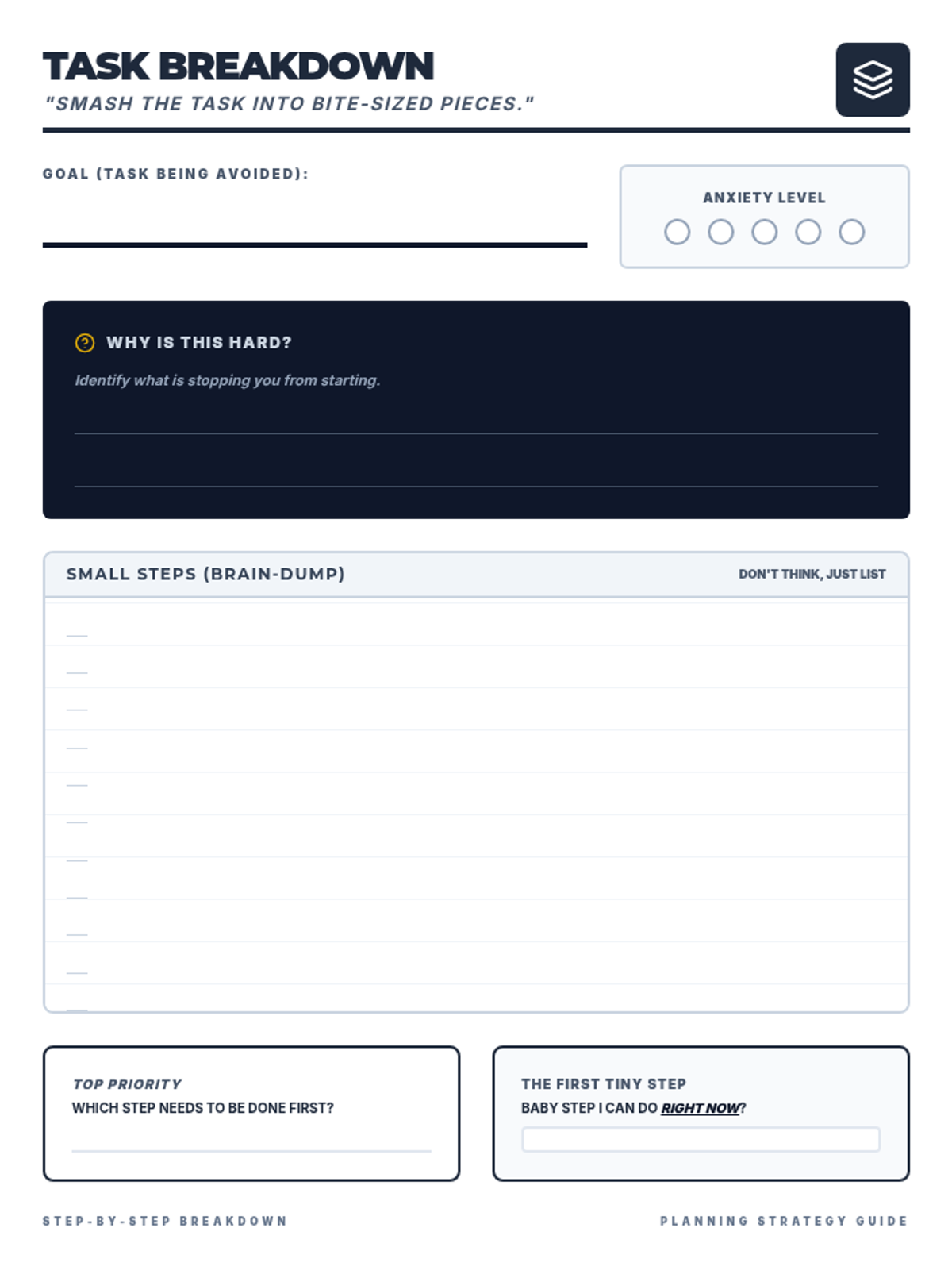
A task decomposition worksheet. Helps students identify roadblocks, break large tasks into tiny steps, and choose an immediate tiny step to start. Neutral, professional layout.
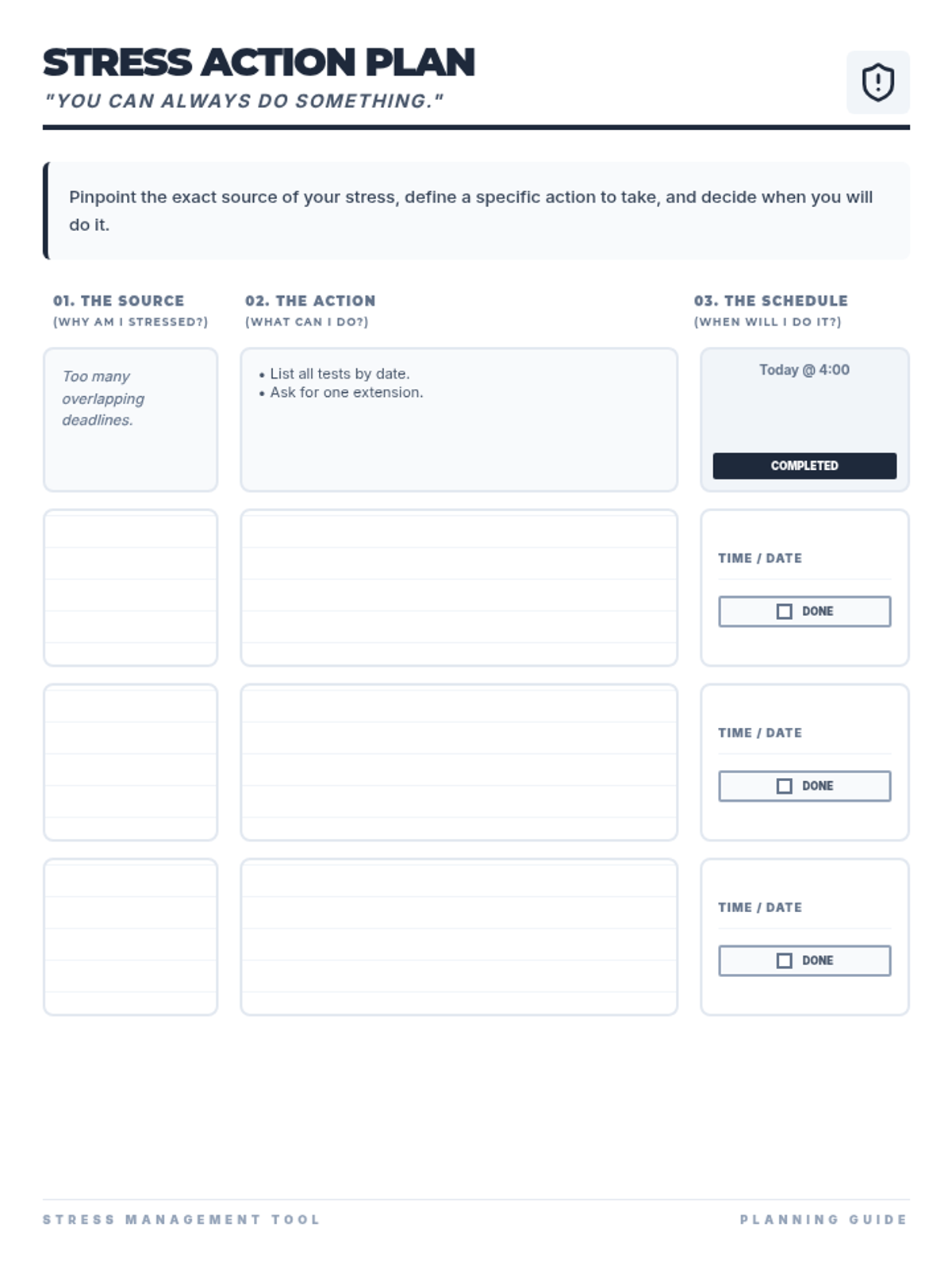
A stress management worksheet based on standard executive functioning strategies. Students identify the source of stress, immediate actions to take, and a specific time for deployment. High-contrast, neutral layout.
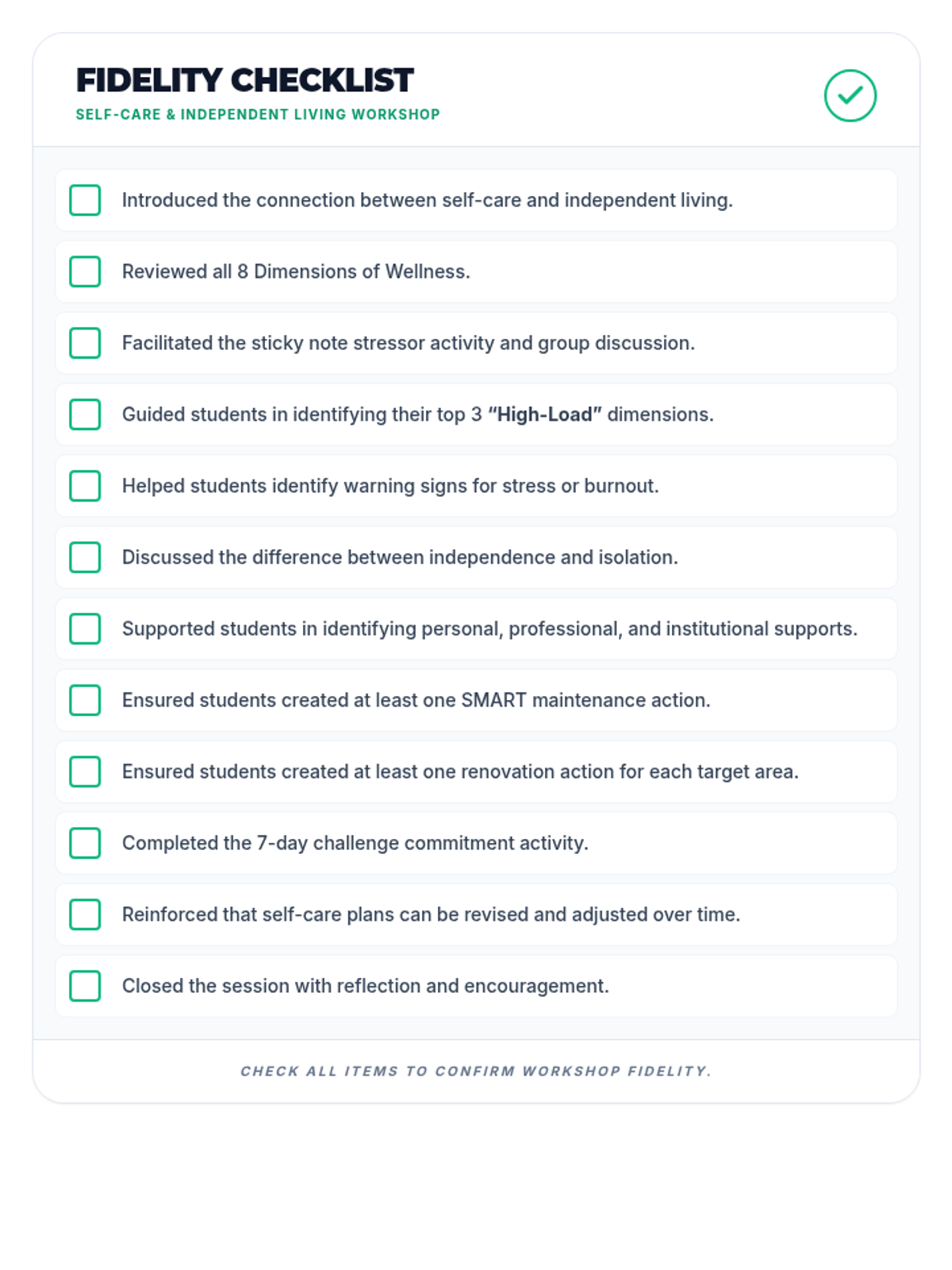
A fidelity checklist for the Self-Care & Independent Living Workshop, used to ensure all key instructional and activity components are delivered effectively. Removed administrative fields for a cleaner layout.
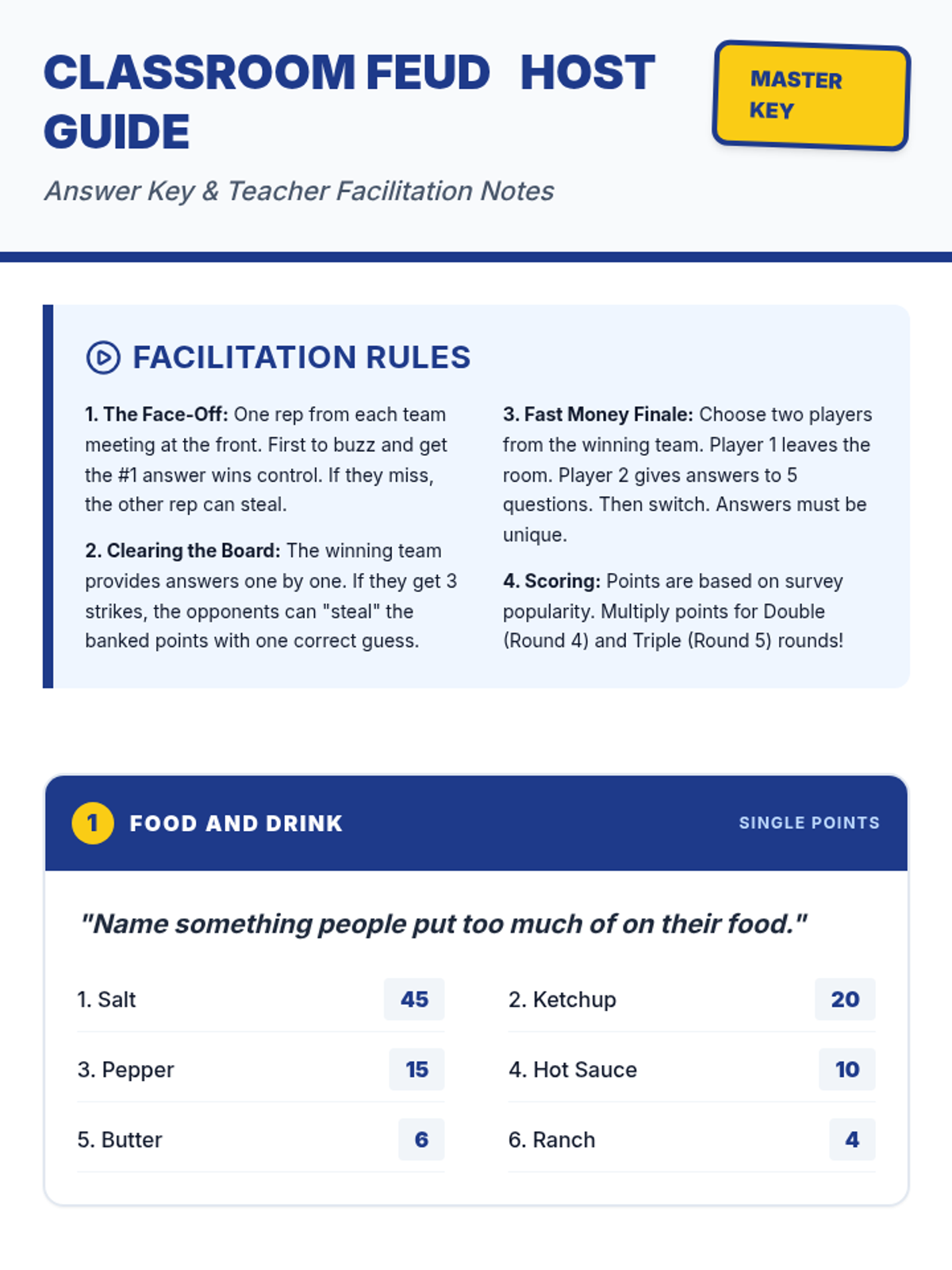
A comprehensive teacher's answer key and facilitation guide for the Classroom Feud game. It includes top survey answers with associated point values for all rounds, including double and triple point rounds and the Fast Money finale.
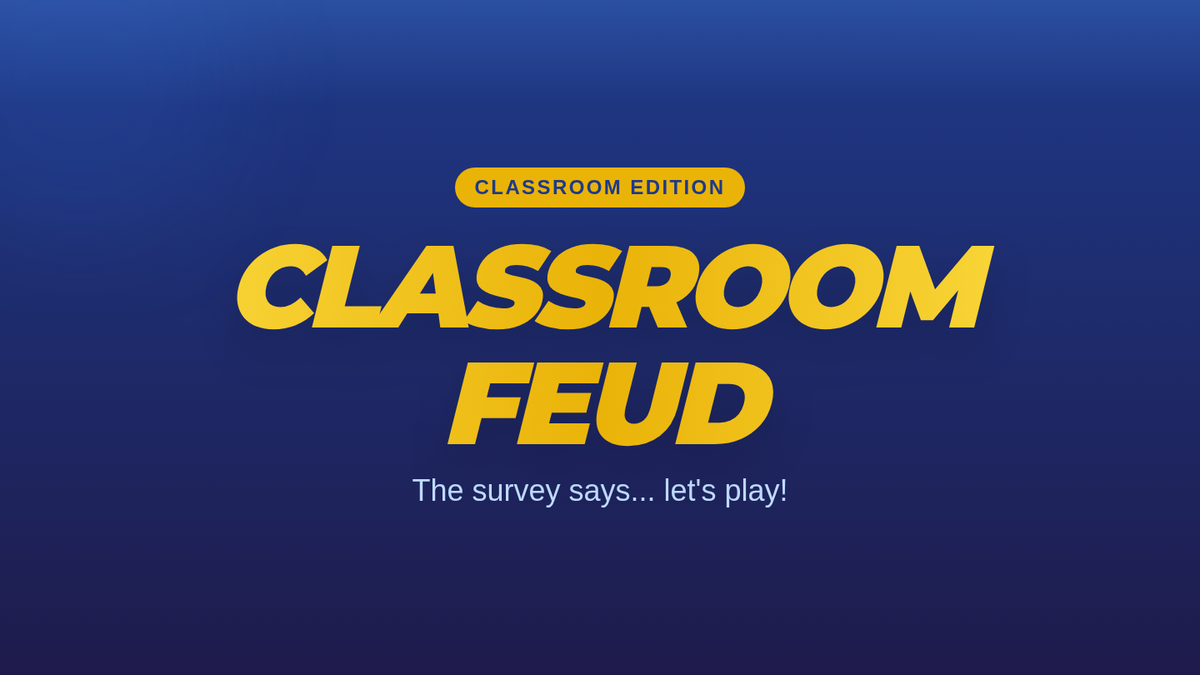
A vibrant, game-show style slide deck for 'Classroom Feud' featuring multiple rounds of survey-based questions. Includes themed slides for different categories, strike markers, and a Fast Money finale to engage students in high-energy competition.
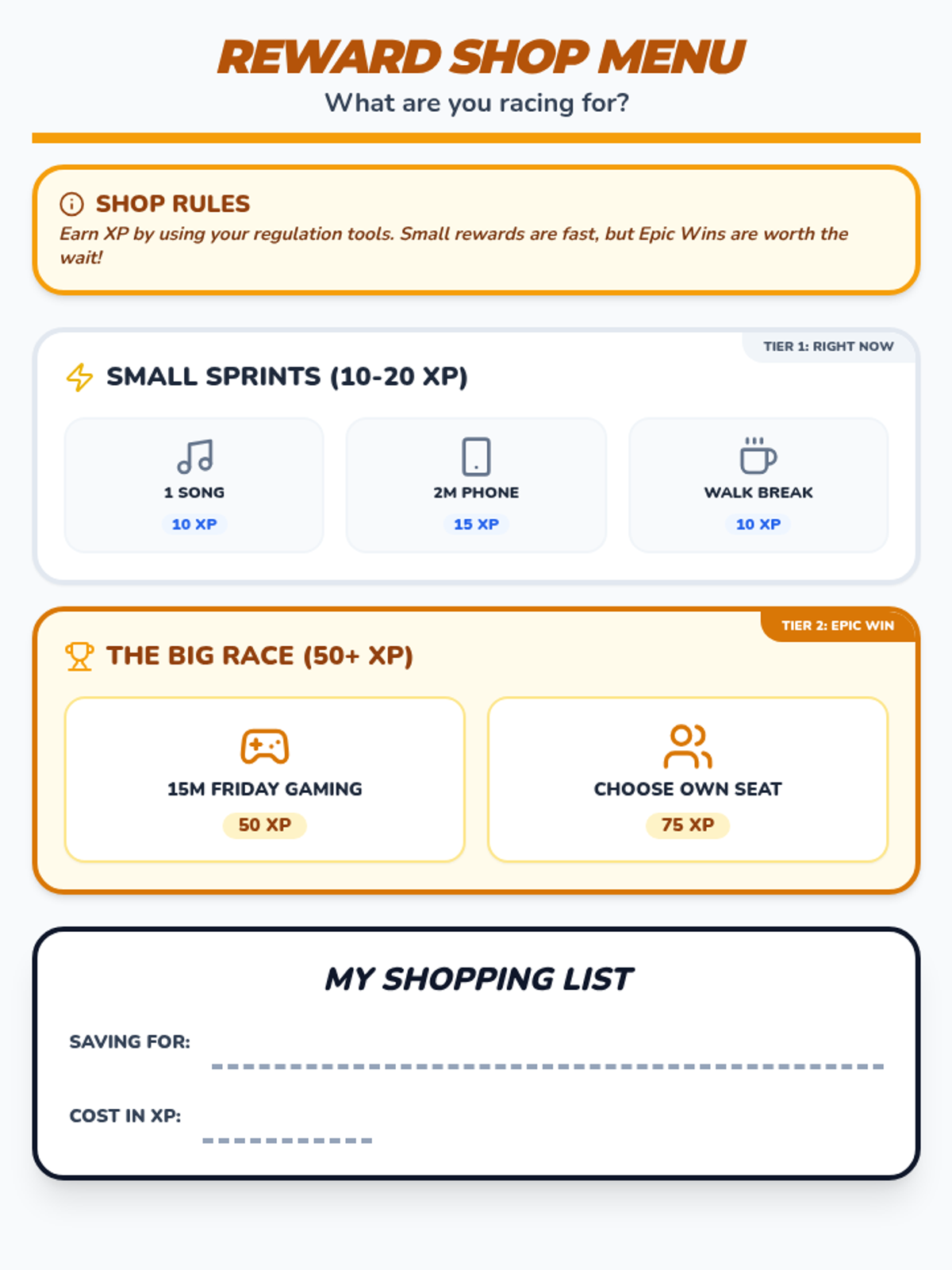
A visual 'Reward Shop Menu' for Lesson 4, helping students identify concrete rewards they can earn by applying self-regulation strategies in math class, reinforcing the concept of delayed gratification.
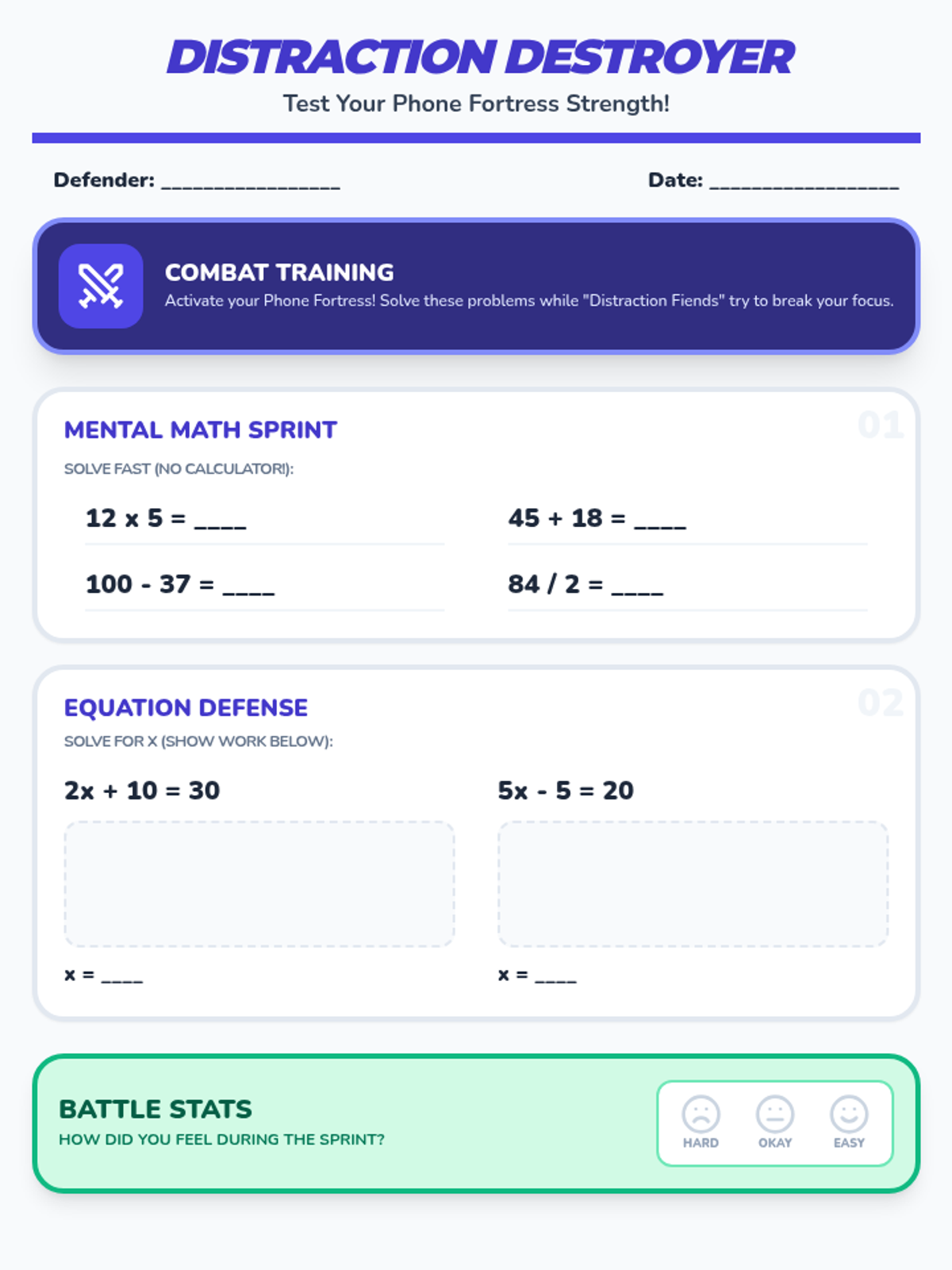
A hands-on 'Distraction Destroyer' challenge for Lesson 3, where students practice solving simple math problems while facing simulated classroom distractions to test their self-regulation skills.