A bright, celebratory check-in flyer for 8th graders to share their future high school, ask a question, and provide a one-word high school vibe. Optimized for a single-page layout with clear writing areas and decorative motifs.
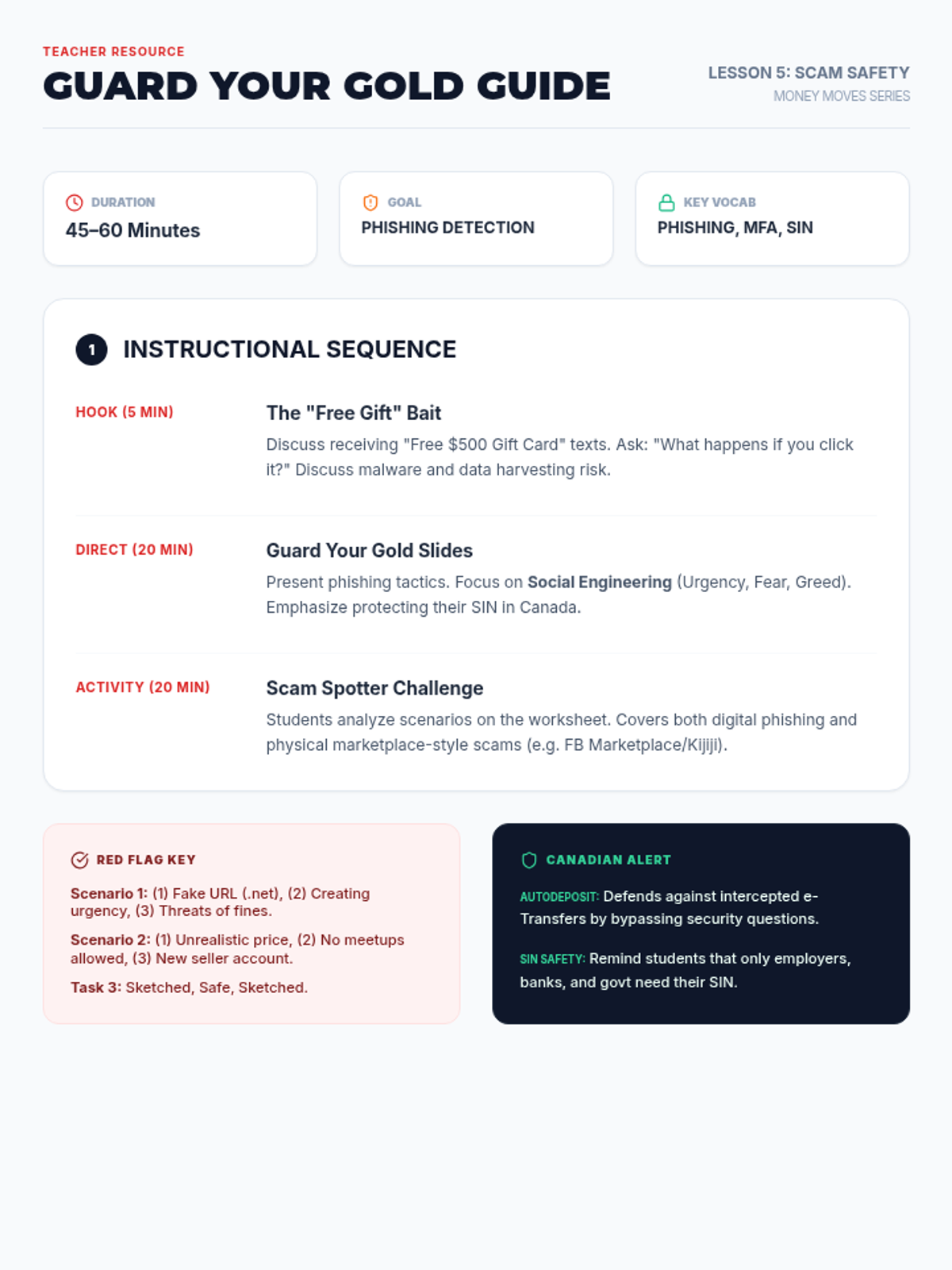
A comprehensive teacher's guide for Lesson 5, including scam detection keys, discussion prompts about social engineering, and Canadian-specific security tips like e-Transfer autodeposit. Revision: Fixed page breaks to fit on one page. Improved contrast.
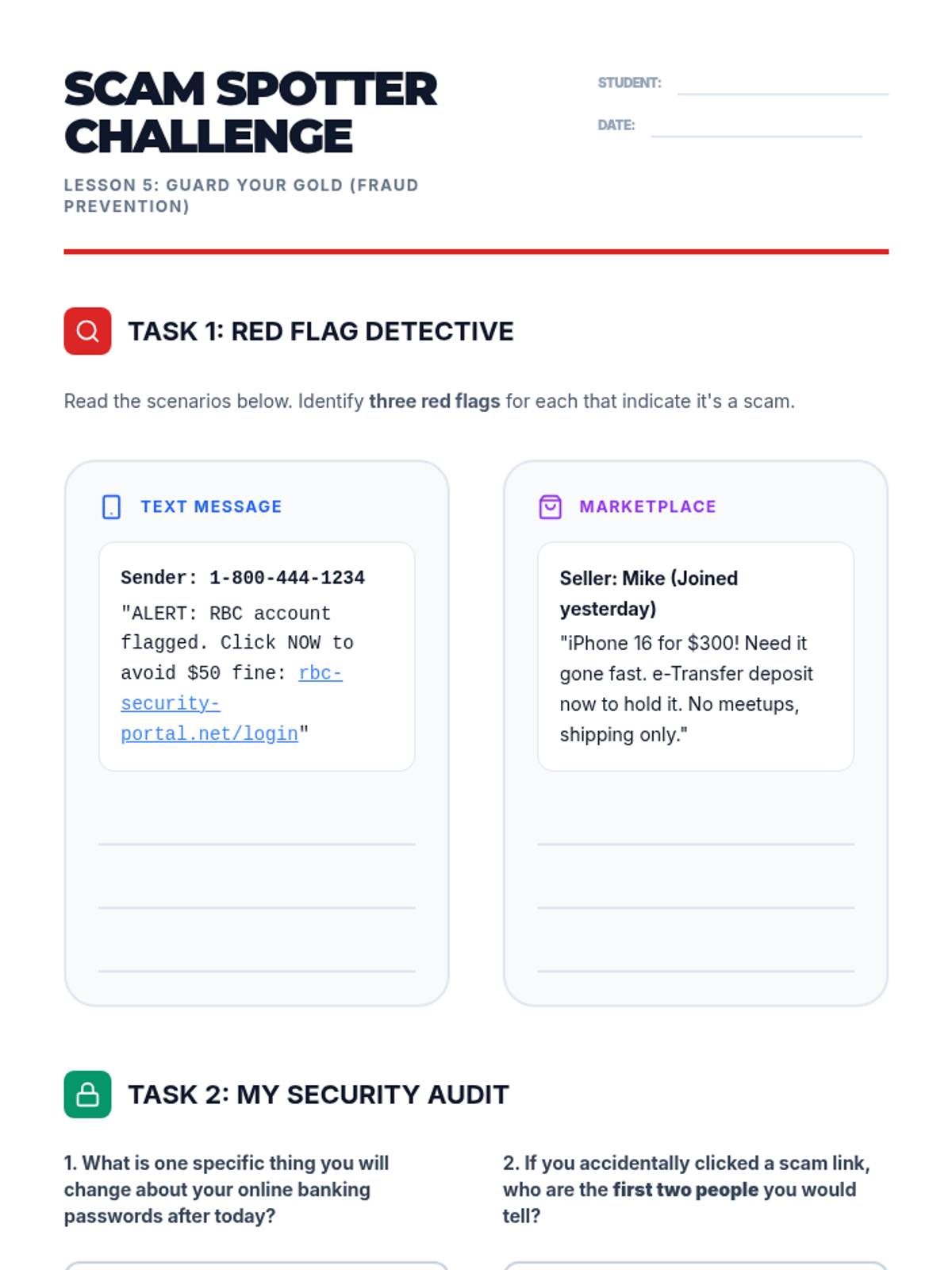
A worksheet analyzing fake scam scenarios (phishing and marketplace fraud), featuring a digital security audit and identity safety quiz. Revision: Fixed Task 1 writing lines and improved task borders.
A slide deck introducing fraud prevention, phishing detection, identity theft risks (SIN protection), and the Canadian emergency protocol for financial victims. Revision: Fixed overlaps, contrast, and icon visibility.
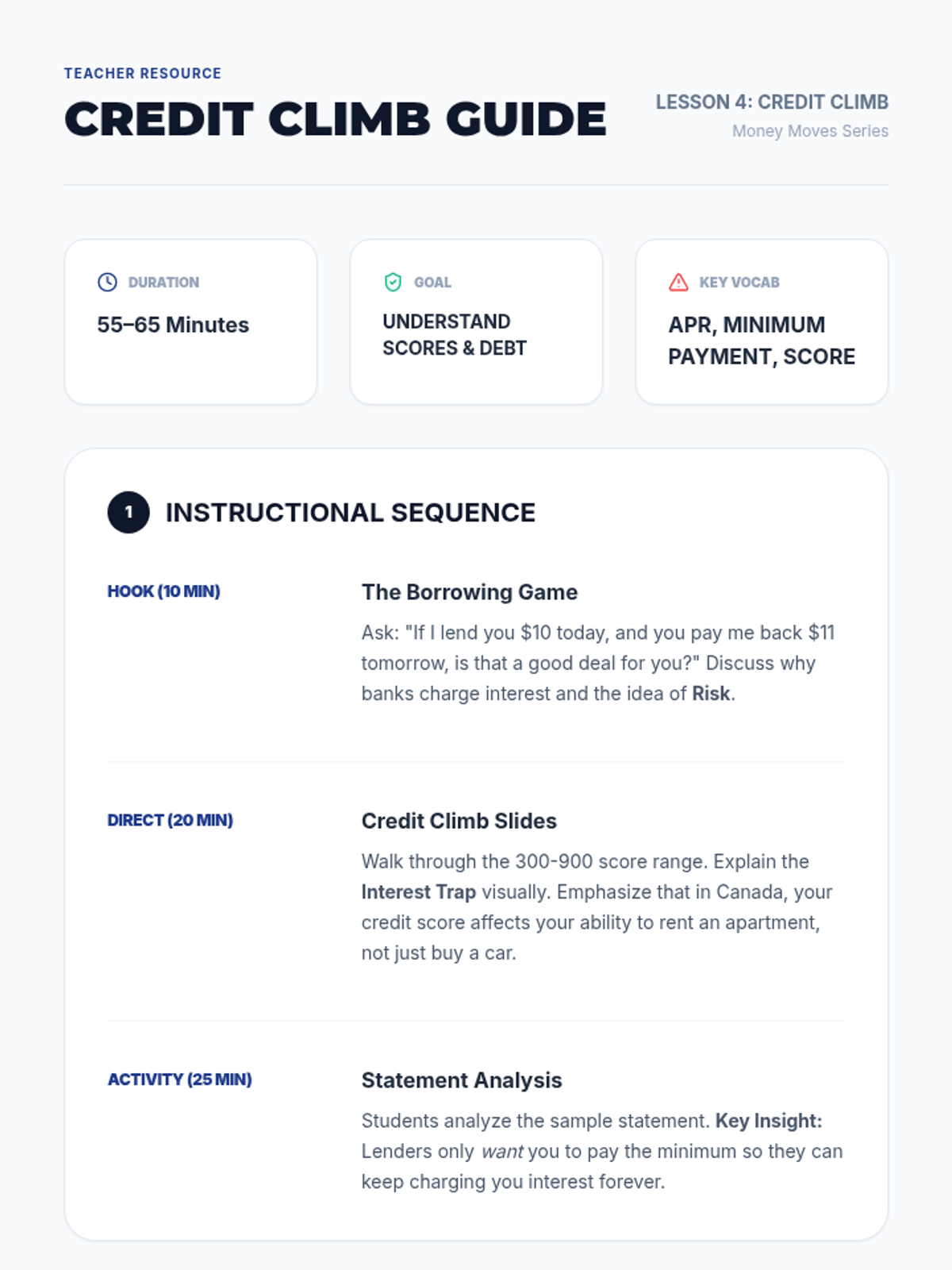
A comprehensive teacher's guide for Lesson 4, including the answer key for statement analysis and discussion points about Canadian credit laws and co-signing risks.
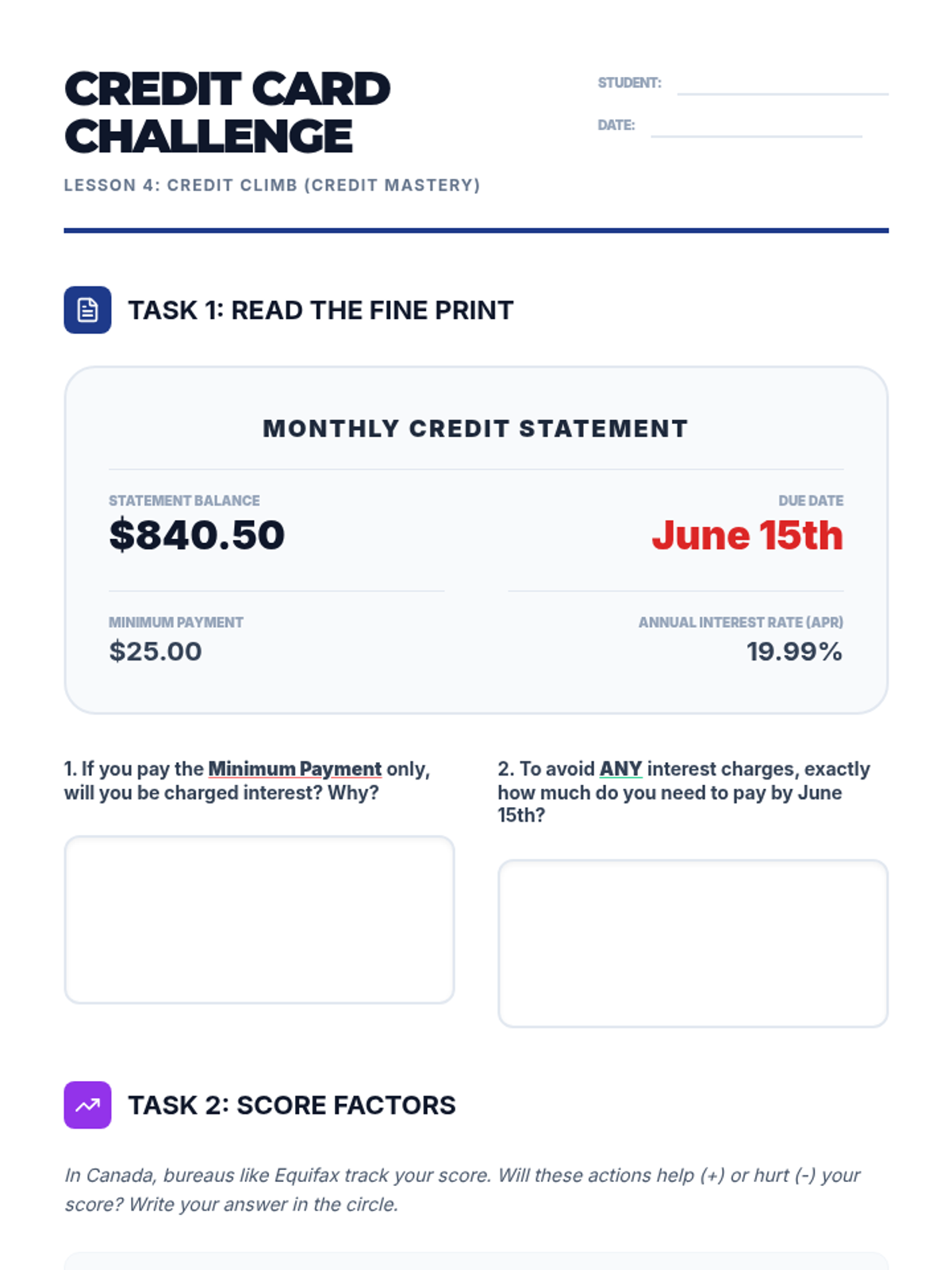
A worksheet analyzing a sample credit card statement, identifying interest traps, and exploring factors that influence a Canadian credit score. Revision: Fixed reflection word spacing, increased work areas, improved task circles.
A slide deck introducing credit foundations, covering credit scores in Canada (300-900), the difference between debit and credit, the 5 C's of credit, and the dangers of high-interest debt. Revision: Added icons to Slide 4.
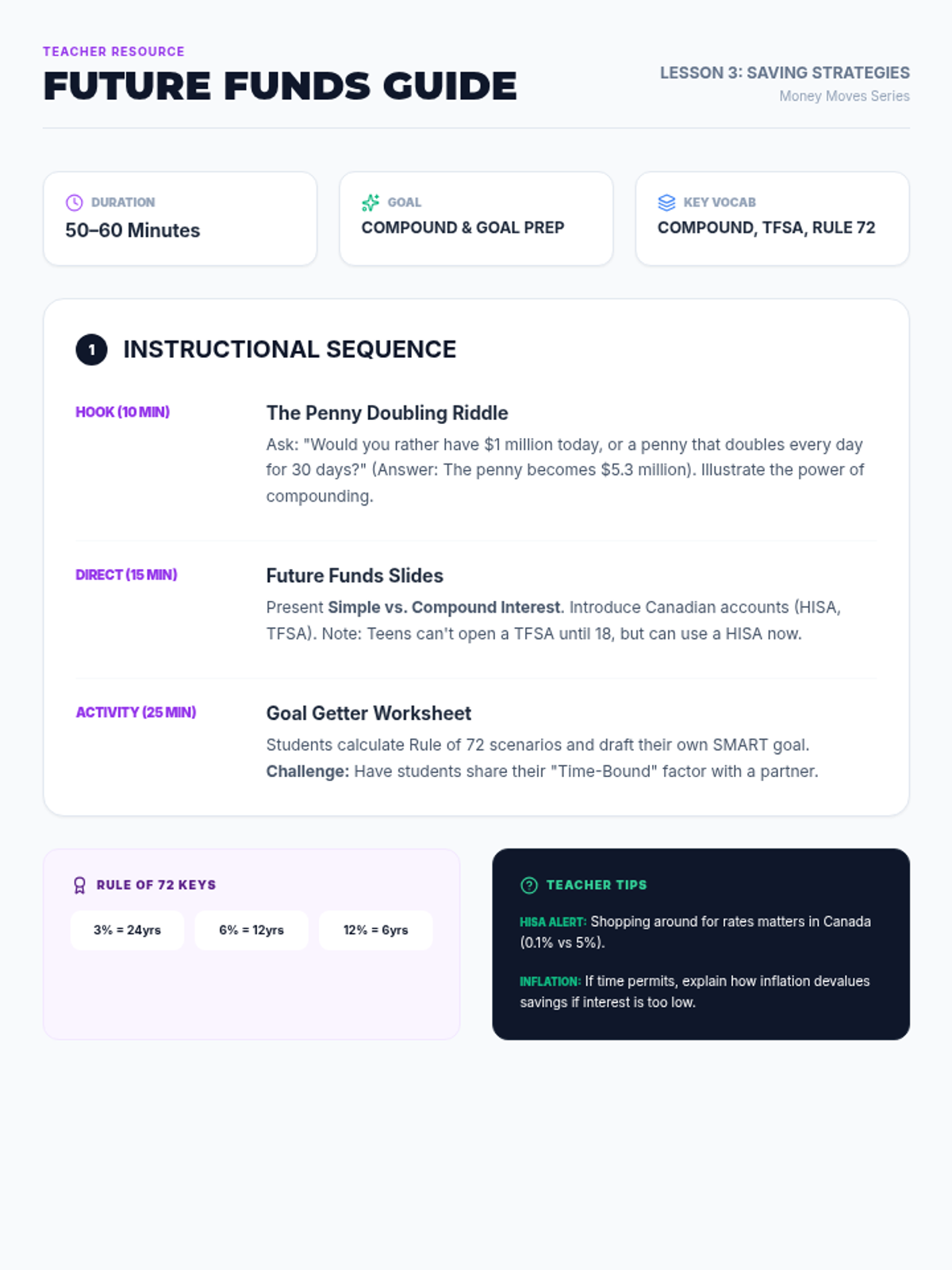
A comprehensive teacher's guide for Lesson 3, featuring the penny-doubling hook, Rule of 72 answer key, and discussion prompts about Canadian savings accounts. Revision: Fixed page breaks to fit on one page.
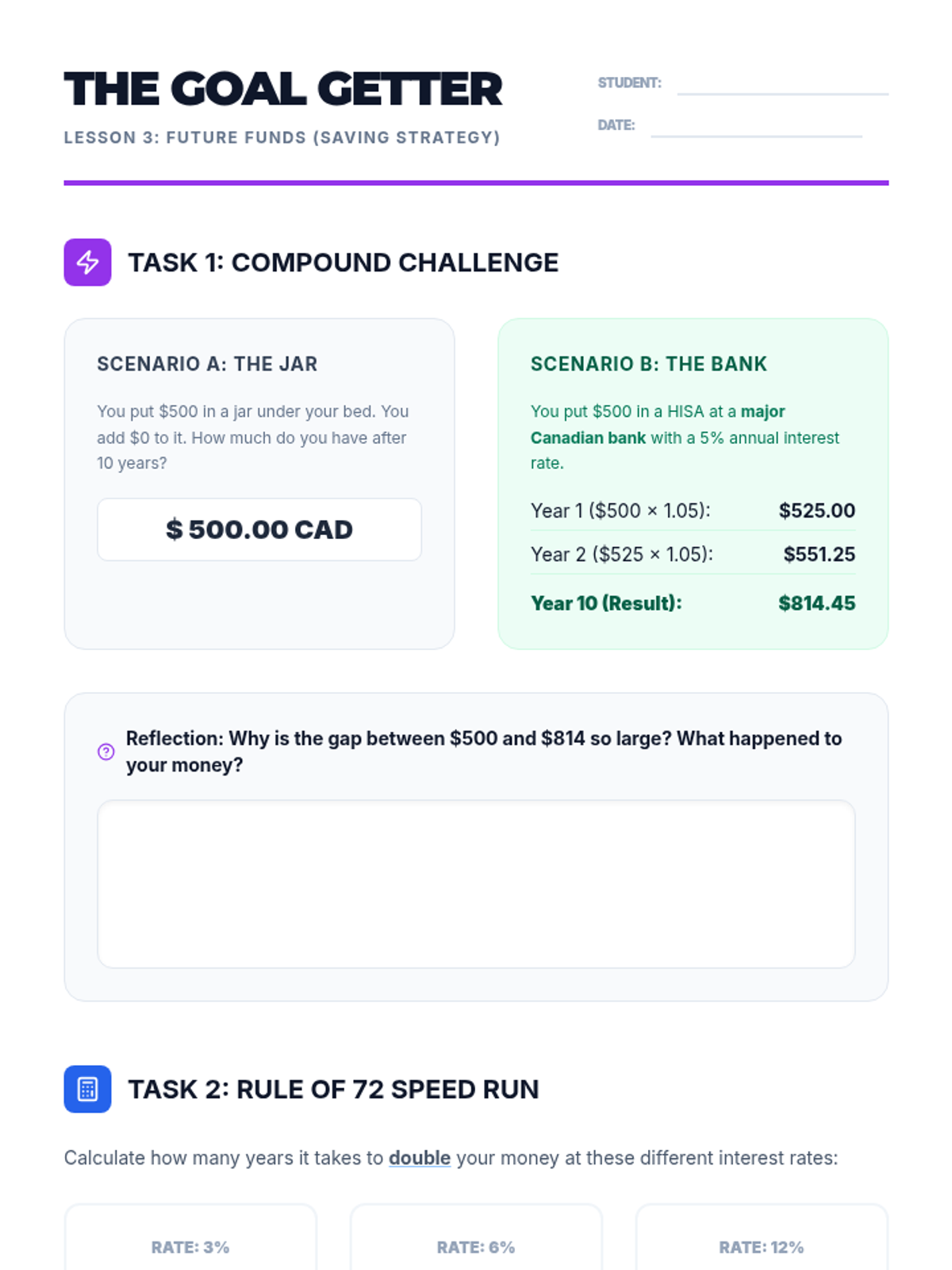
A practical worksheet focusing on compound interest calculations using the Rule of 72 and setting a personalized SMART financial goal. Revision: Lightened reflection box, improved Task 2 labels, added Canadian context.
A slide deck introducing savings strategies, simple vs. compound interest, Canadian accounts like HISA and TFSA, and the SMART goal-setting framework. Revision: Fixed word-spacing on Slide 4.
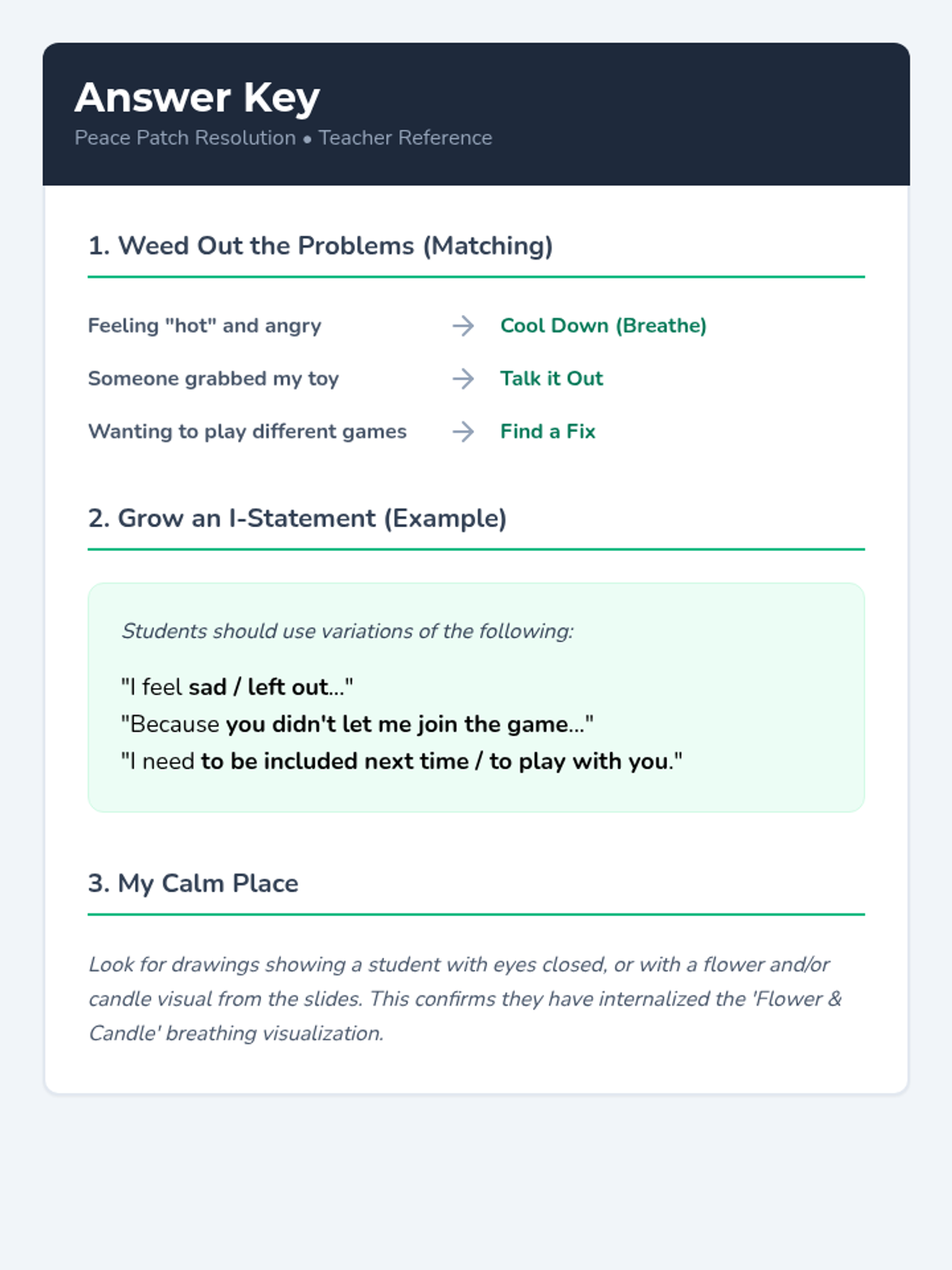
An answer key and teacher reference for the Peace Patch Worksheet. Provides the correct matching pairs and exemplary I-statement responses for teacher evaluation.
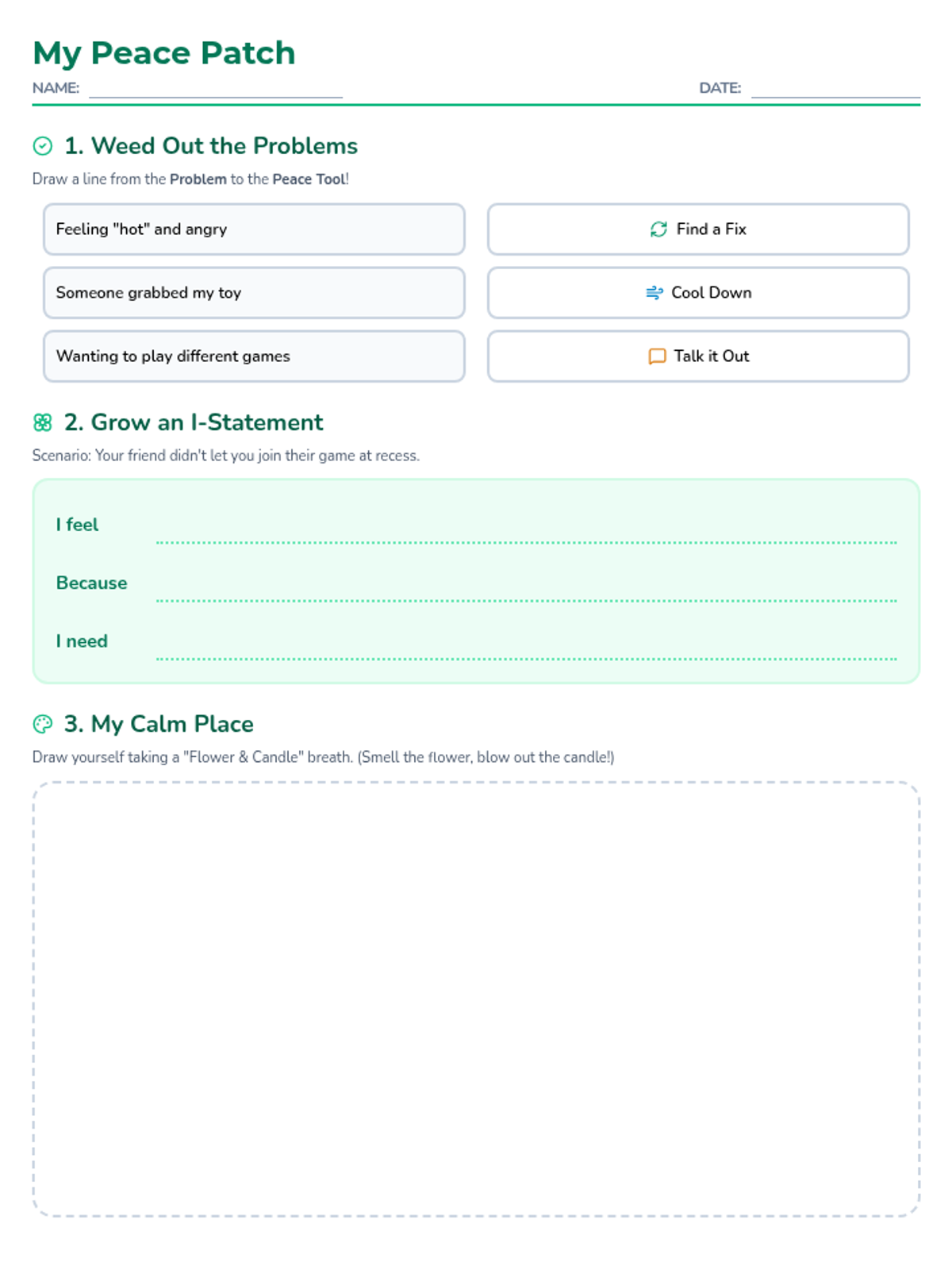
A student-facing worksheet for practicing conflict resolution. Includes a matching activity for problems and tools, a guided 'I-Statement' writing section, and a creative drawing area for visualizing calm breathing.
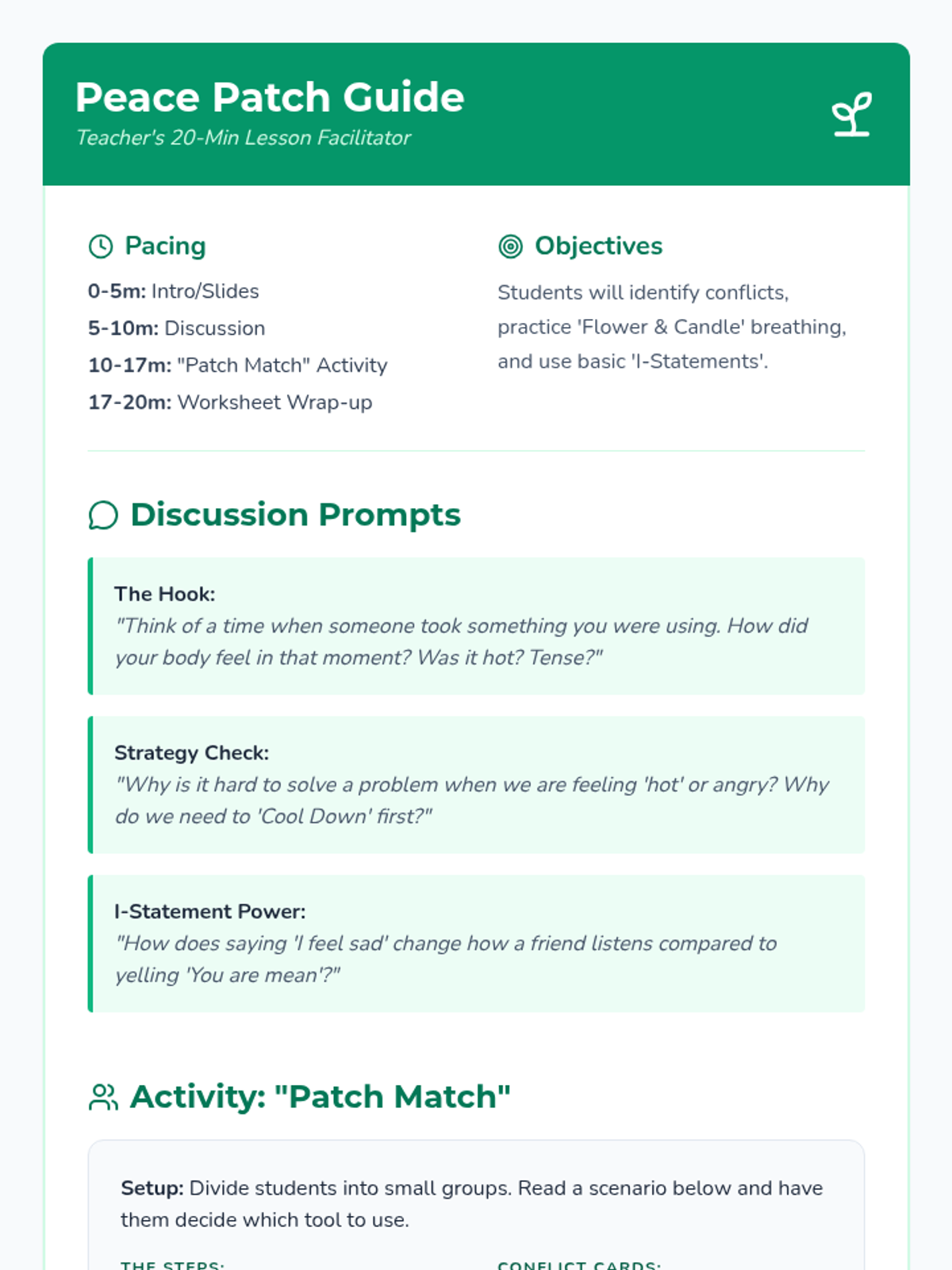
A comprehensive teacher guide for the 'Peace Patch' lesson. Includes a 20-minute pacing plan, targeted discussion prompts, and an expanded library of 19 conflict scenarios for role-playing activities.
A vibrant 6-slide presentation introducing the 'Peace Patch' conflict resolution framework. Features clear steps for cooling down, using I-statements, and finding collaborative solutions with garden-themed visuals.
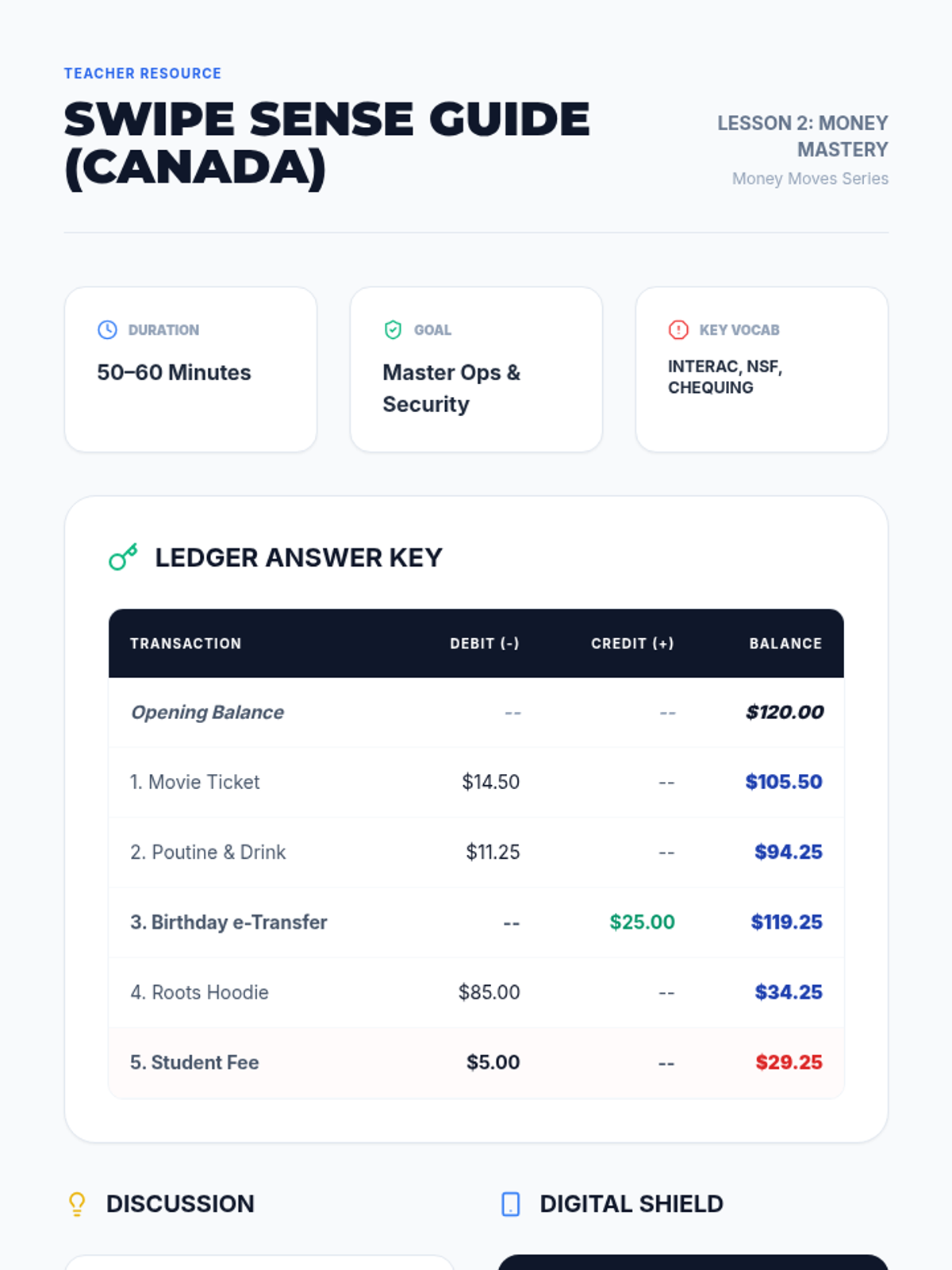
A comprehensive teacher's guide for Lesson 2, featuring a Canadian-localized answer key for the ledger activity and discussion prompts about Canadian-specific banking features like NSF fees and e-Transfer security.
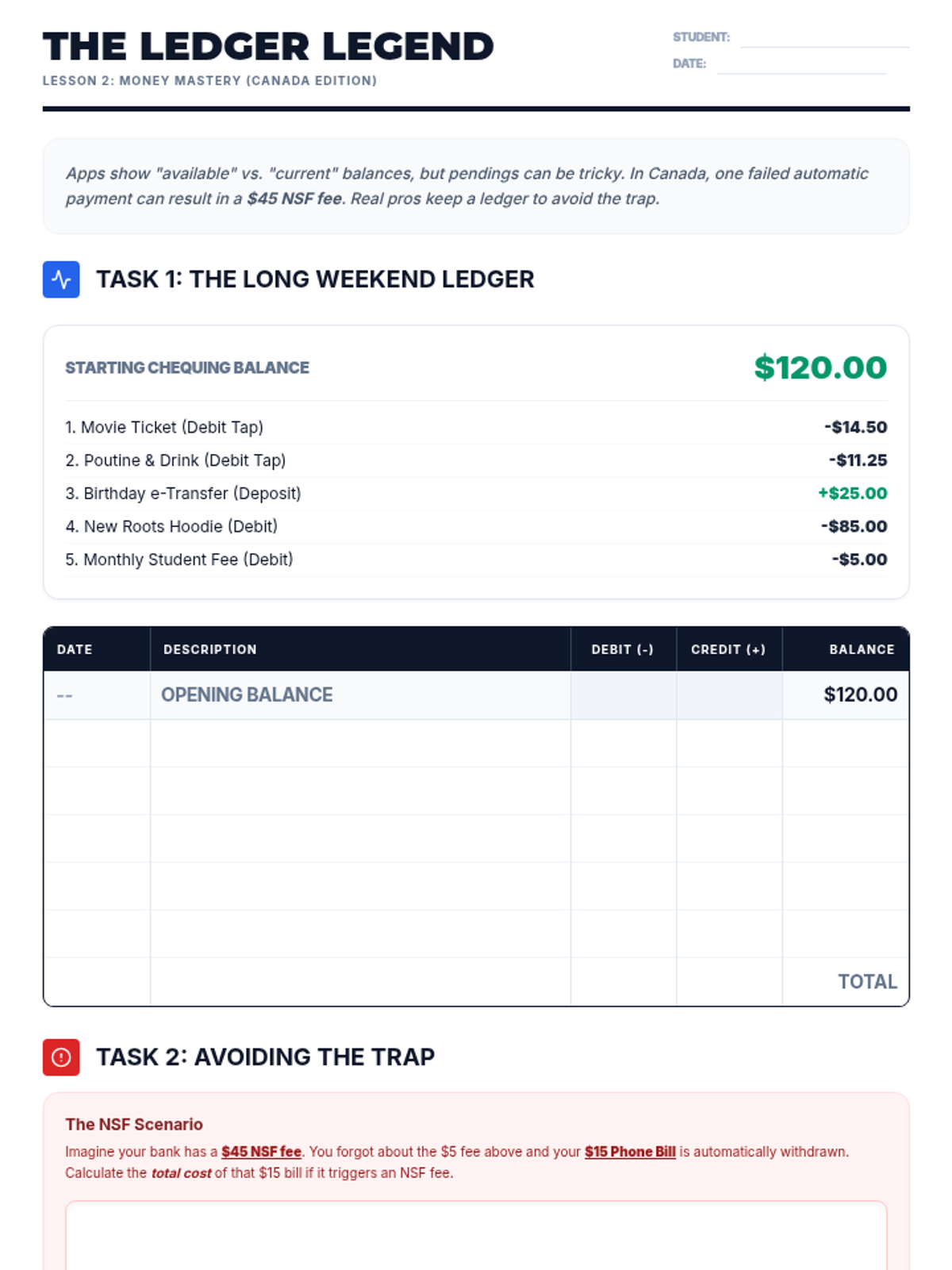
A practical ledger-balancing activity for Canadian students featuring Canadian-specific scenarios (Interac e-Transfers, loonies, NSF fees) to calculate a running balance and avoid banking traps.
A practical slide deck teaching Canadian teens how to use debit cards safely (Interac Flash), identify and avoid common Canadian fees (NSF, transaction limits), and use digital tools like Autodeposit.
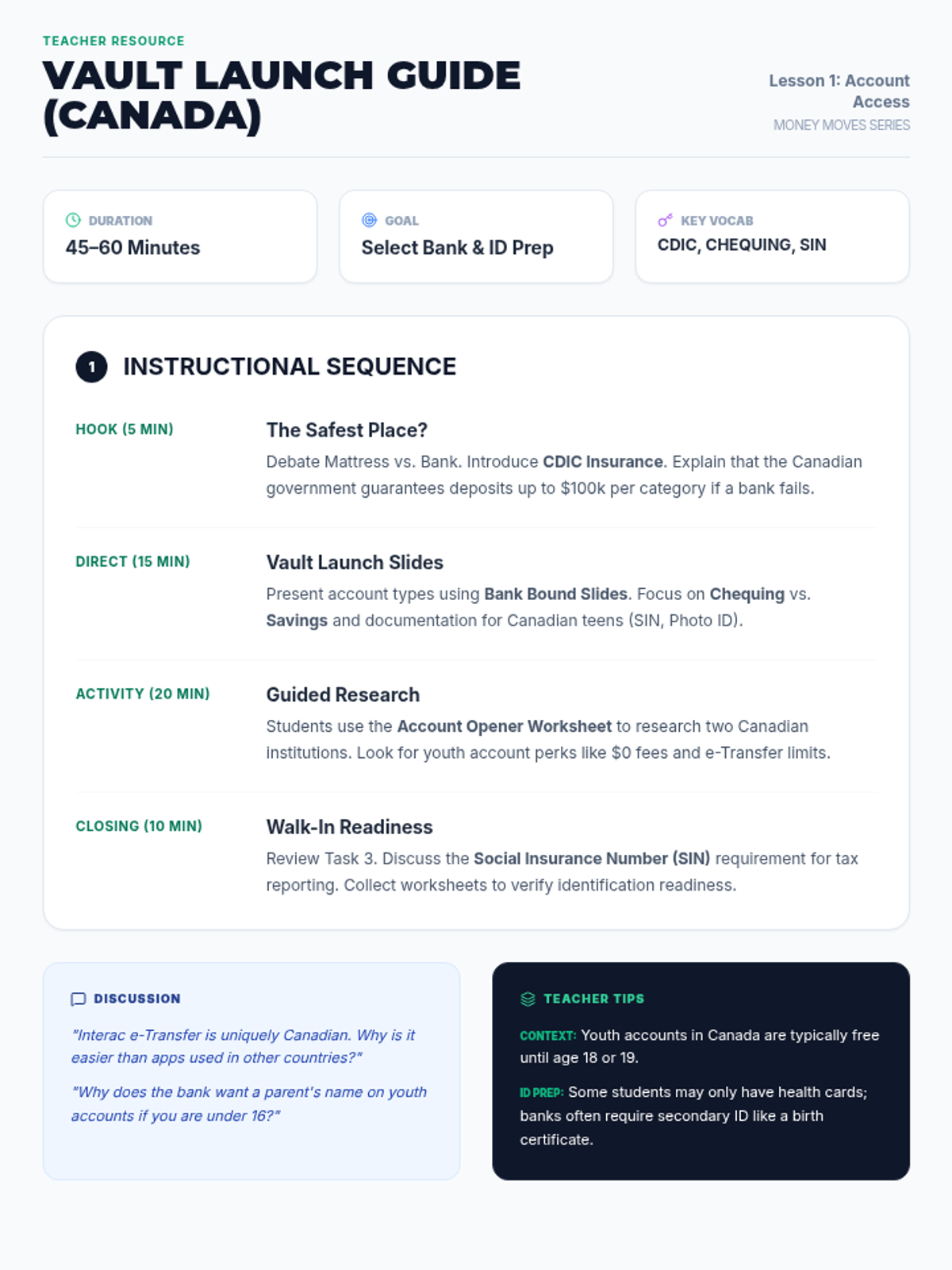
A comprehensive teacher's guide for Lesson 1, updated with Canadian banking terminology (chequing, SIN, CDIC) and discussion prompts specific to the Canadian financial landscape.
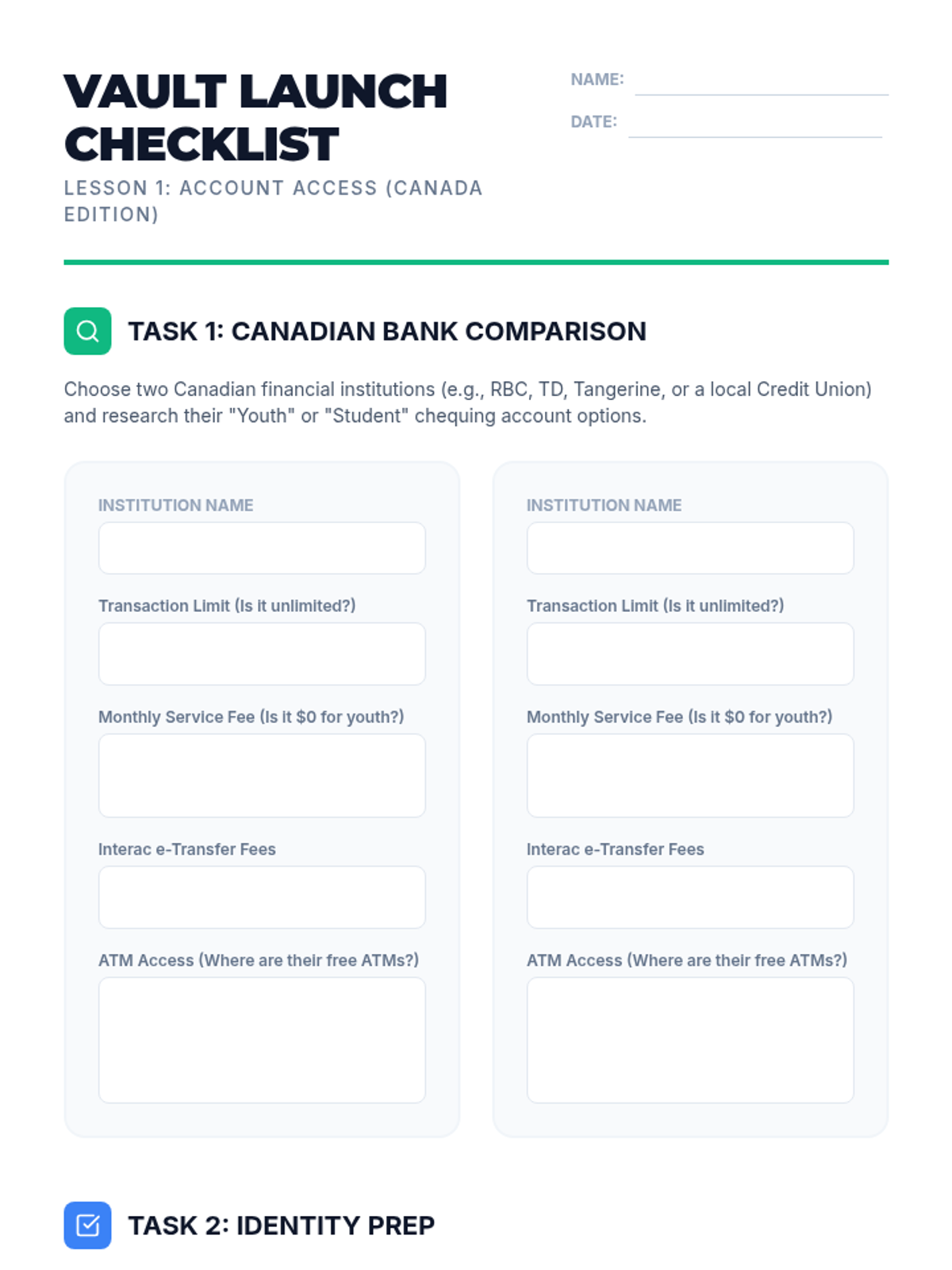
A research-focused worksheet for Canadian students to compare banking institutions (chequing limits, e-Transfer fees, etc.) and verify they have the required Canadian identification and documentation (SIN, Provincial ID).
A Canadian-localized presentation introducing bank accounts, covering the CDIC, chequing vs. savings accounts, the Big Five banks, and the necessary documentation for Canadian teens.
An expanded 7-slide presentation on the Peace Protocol, featuring detailed breakdowns of each step, communication formulas, and physiological cues. Themed in professional blue, white, and gray. Teacher examples updated to include phone use, disruption, and being sent out.
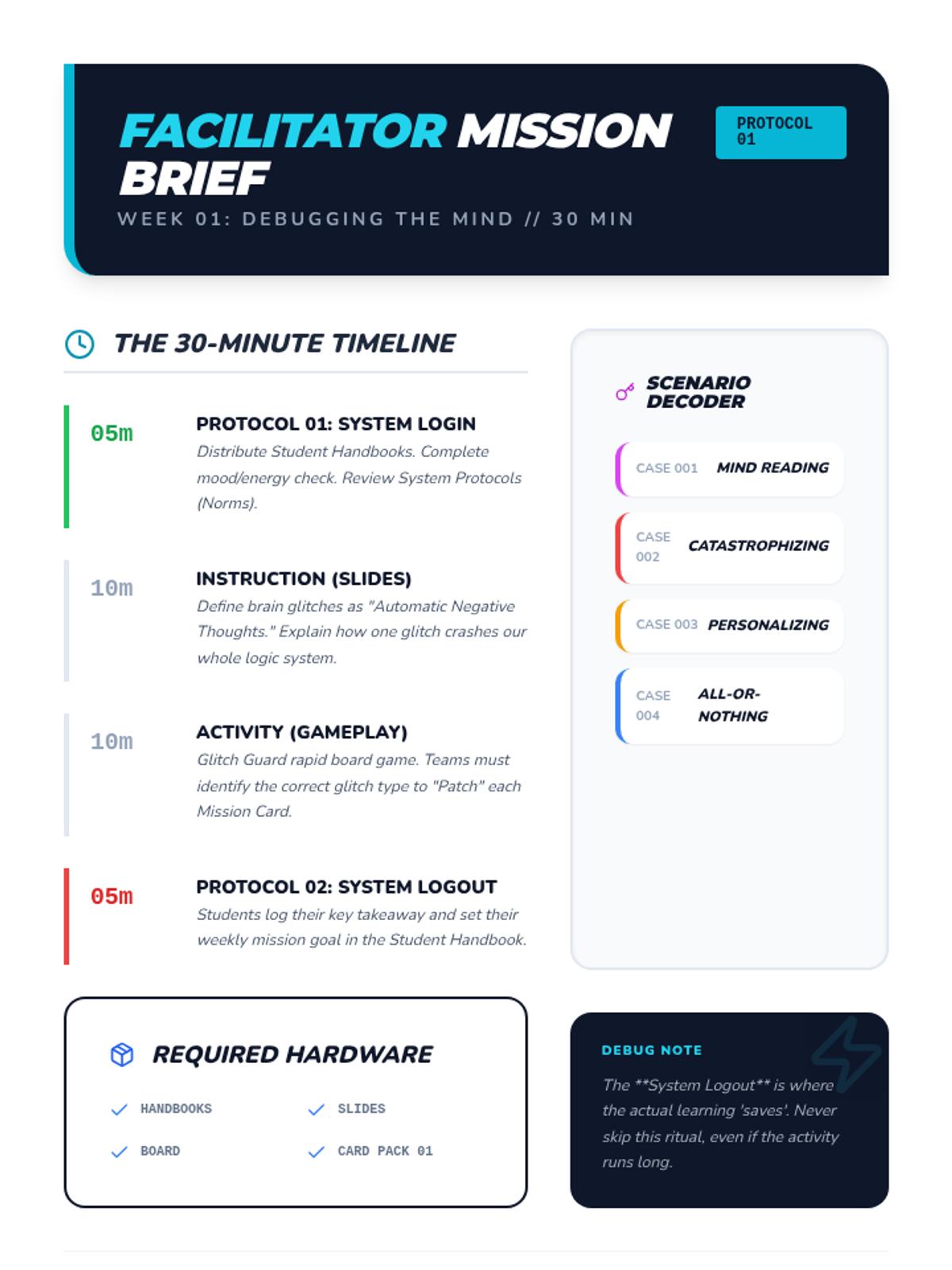
A facilitation guide for counselors for Week 1 including the recurring System Login/Logout protocol, lesson objectives, and a detailed timeline for identifying thinking glitches. Optimized for printing with standardized styles. Removed 'mandatory' tag and borders from logout.
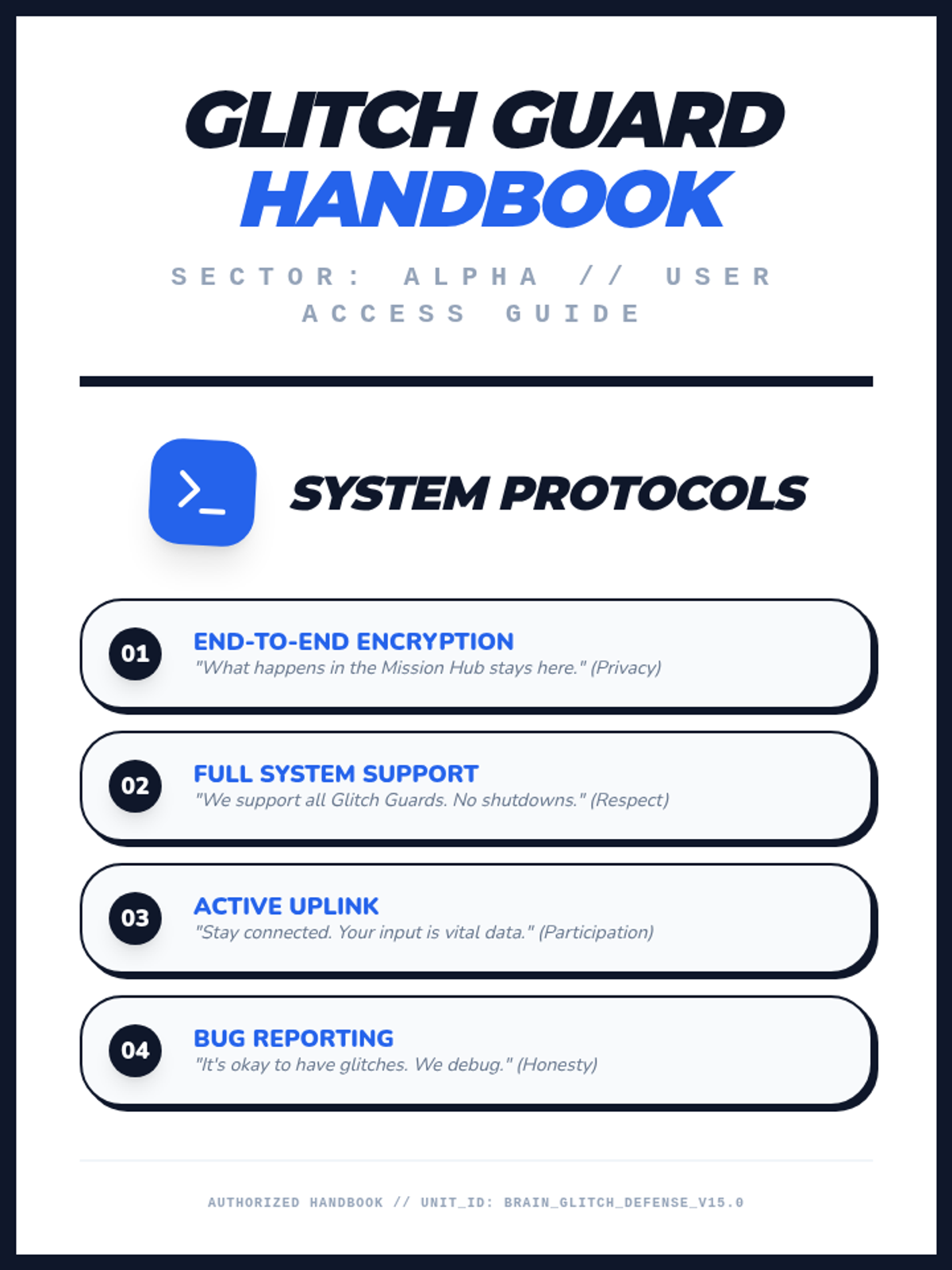
A complete student-facing booklet for the 6-week curriculum. Includes the 'System Protocols' (Norms) and individual 'Universal Mission Logs' for each session, providing a structured home for weekly login/logout rituals. Optimized for printing with clean 720x960 page sections and standard margins. (Revision: Fixed page breaks and standardized content).
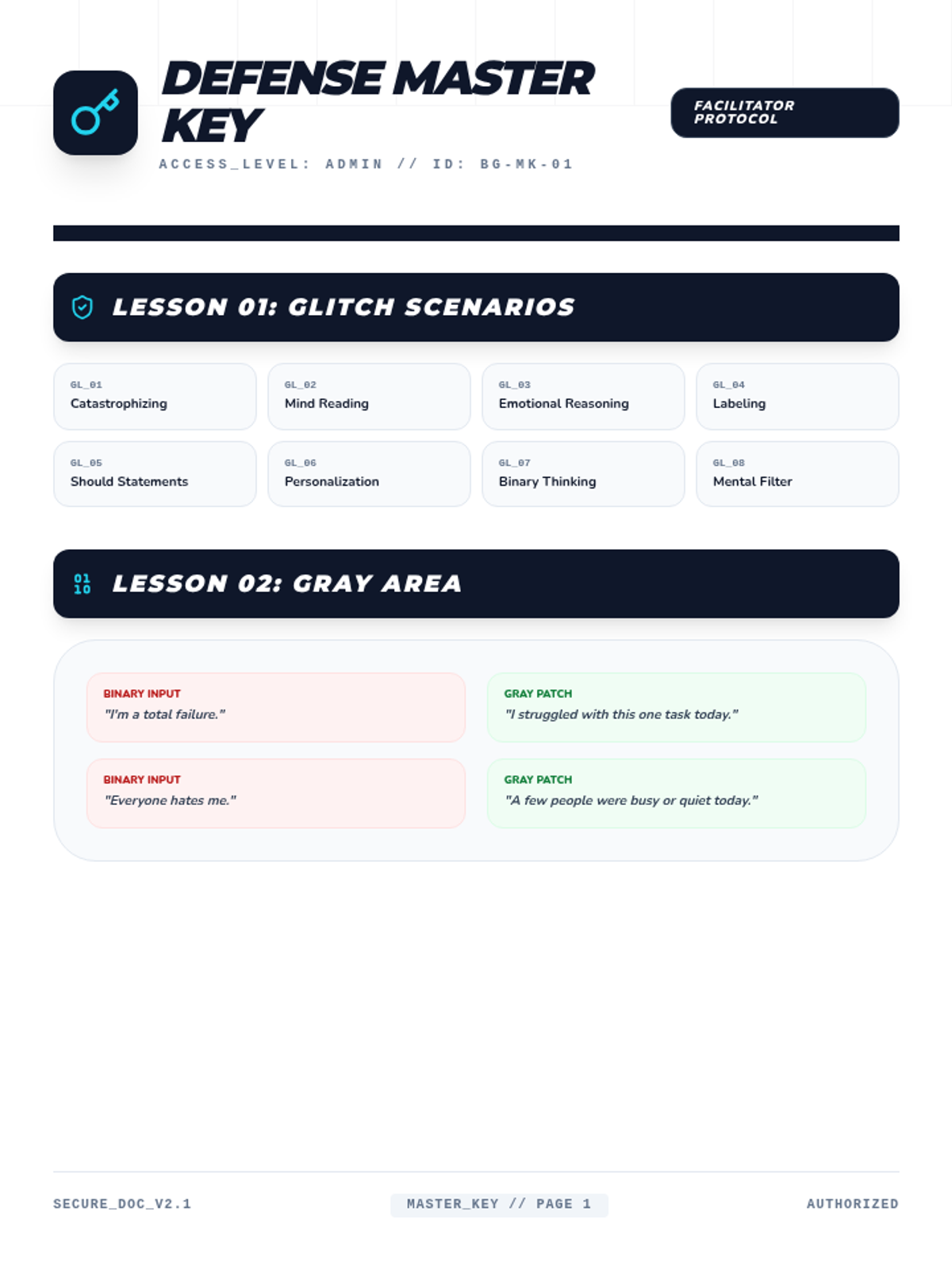
A comprehensive facilitator answer key for the Brain Glitch Defense curriculum. Includes correct glitch identifications for all 8 game cards, sample worksheet responses for Lessons 2-5, and diagnostic logic for each cognitive distortion. Styled as a secure admin access document. Updated for completeness and layout accuracy.
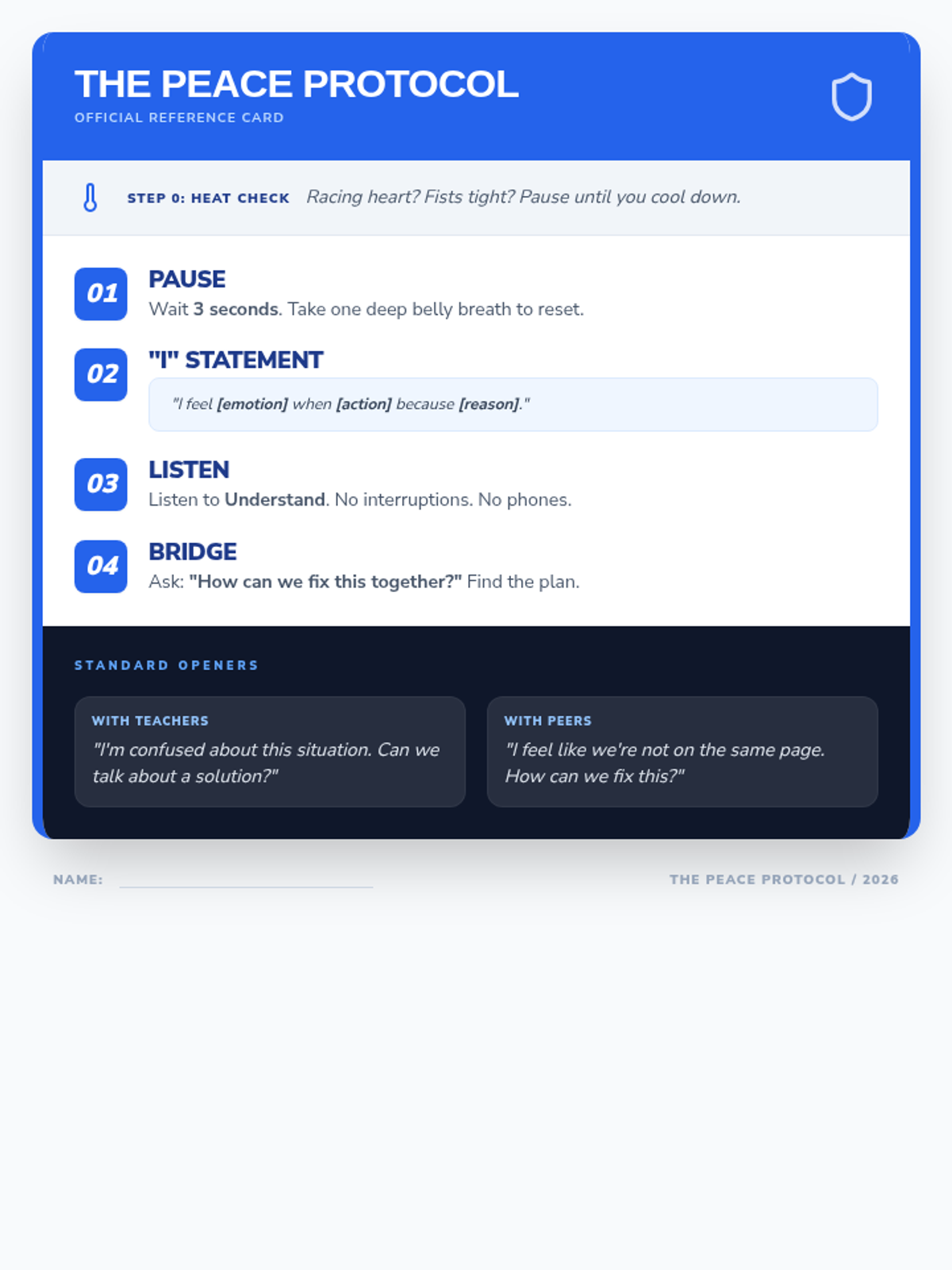
A compact, pocket-sized reference card for the Peace Protocol. Updated with blue/white/gray theme and compressed to fit on a single page. Includes communication formulas and de-escalation tips. Updated teacher example to relate to being sent out. Fixed line alignment and contrast.
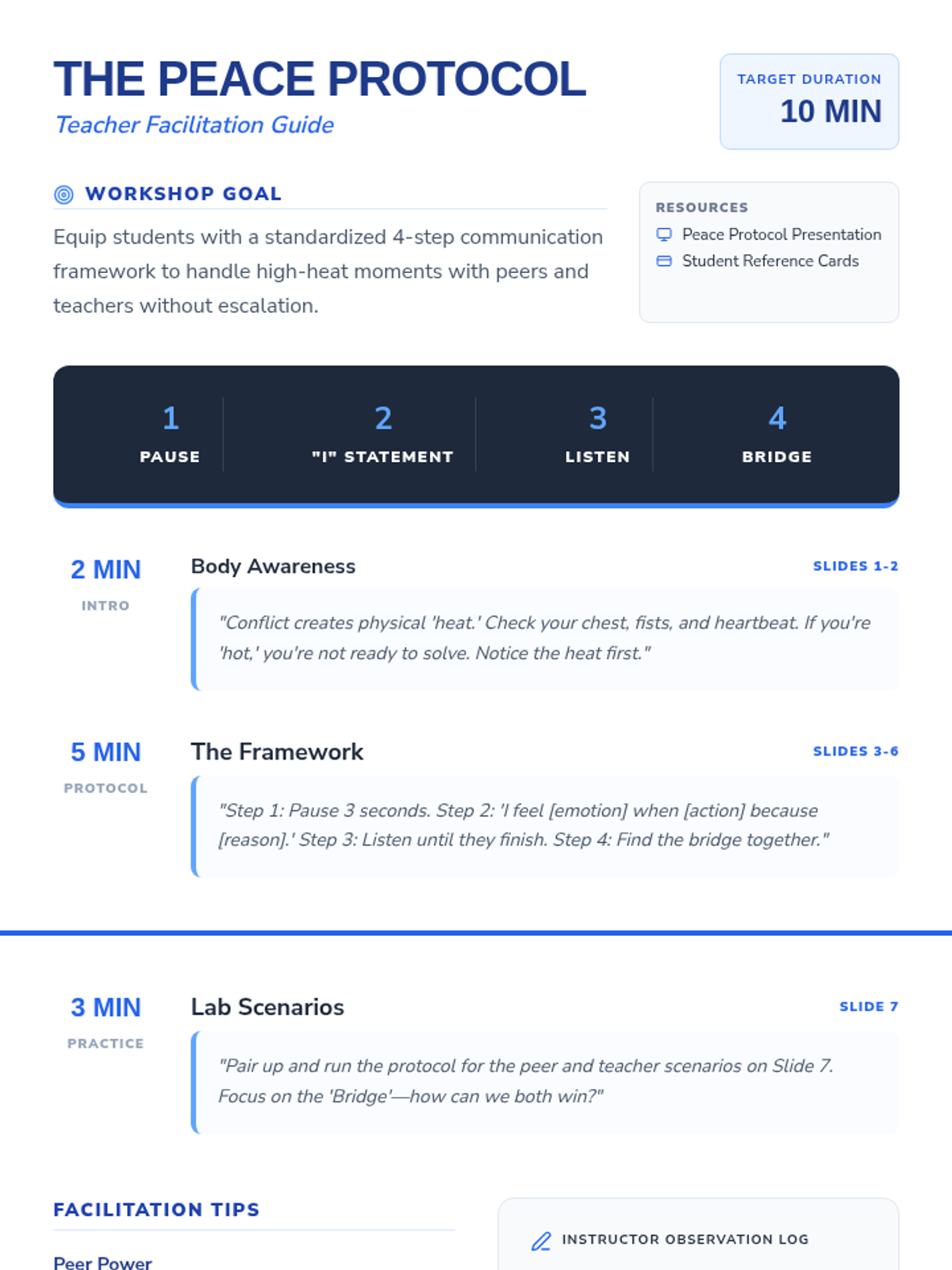
The teacher guide for the Peace Protocol lesson, updated with the new blue/white/gray theme and renamed for consistency. Includes scripts and facilitation strategies. Fixed line alignment and contrast. Compacted to 1-page. Teacher examples updated for relatability.
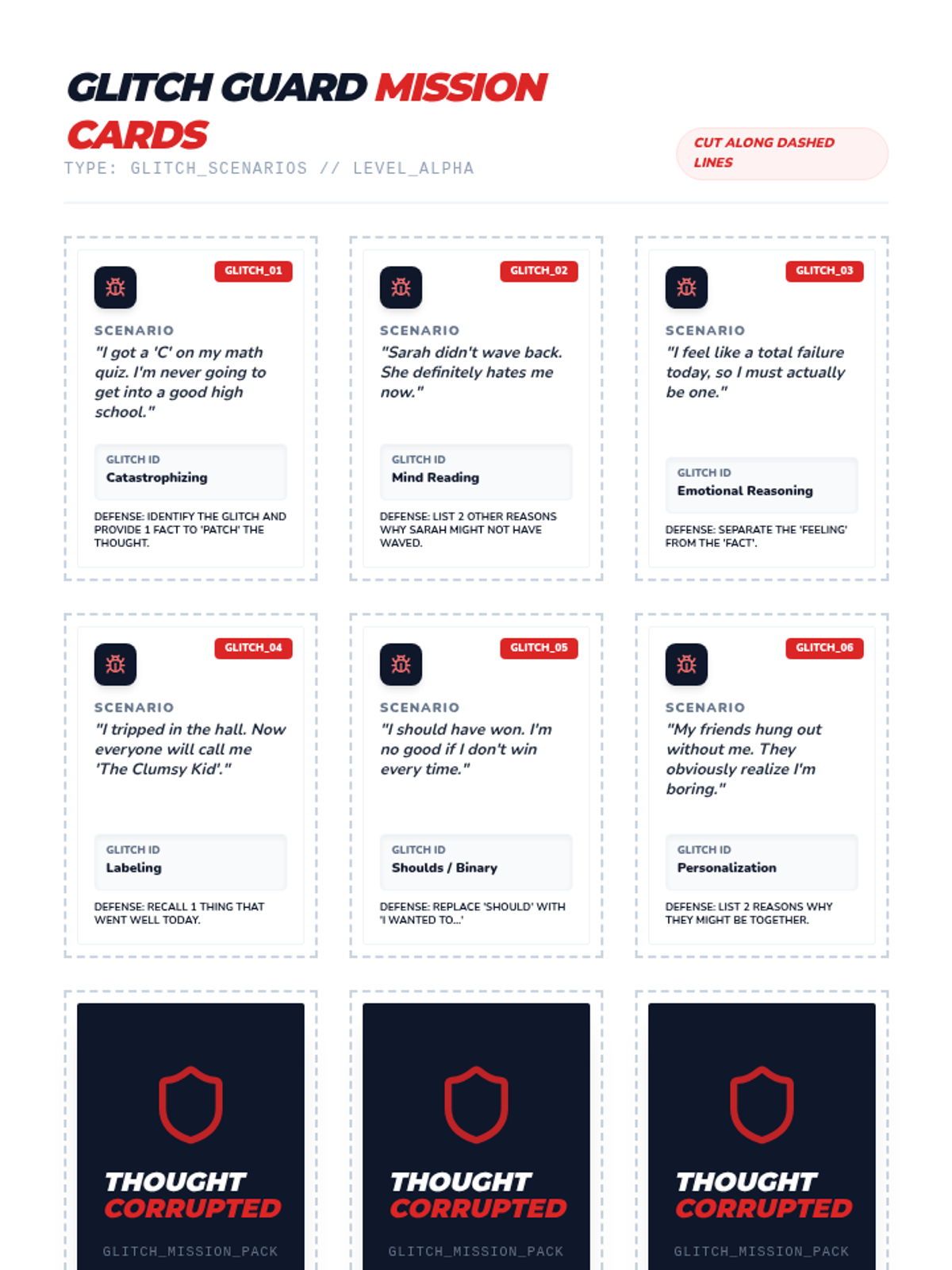
A set of printable mission cards for the Glitch Guard board game. Includes Glitch Cards with cognitive distortion scenarios (answers removed for students) and System Alerts (Firewall/Warp/Reboot) for gameplay variety. Designed for easy cutting with dashed borders and improved text contrast for accessibility. Updated grid to prevent page-break cutting.
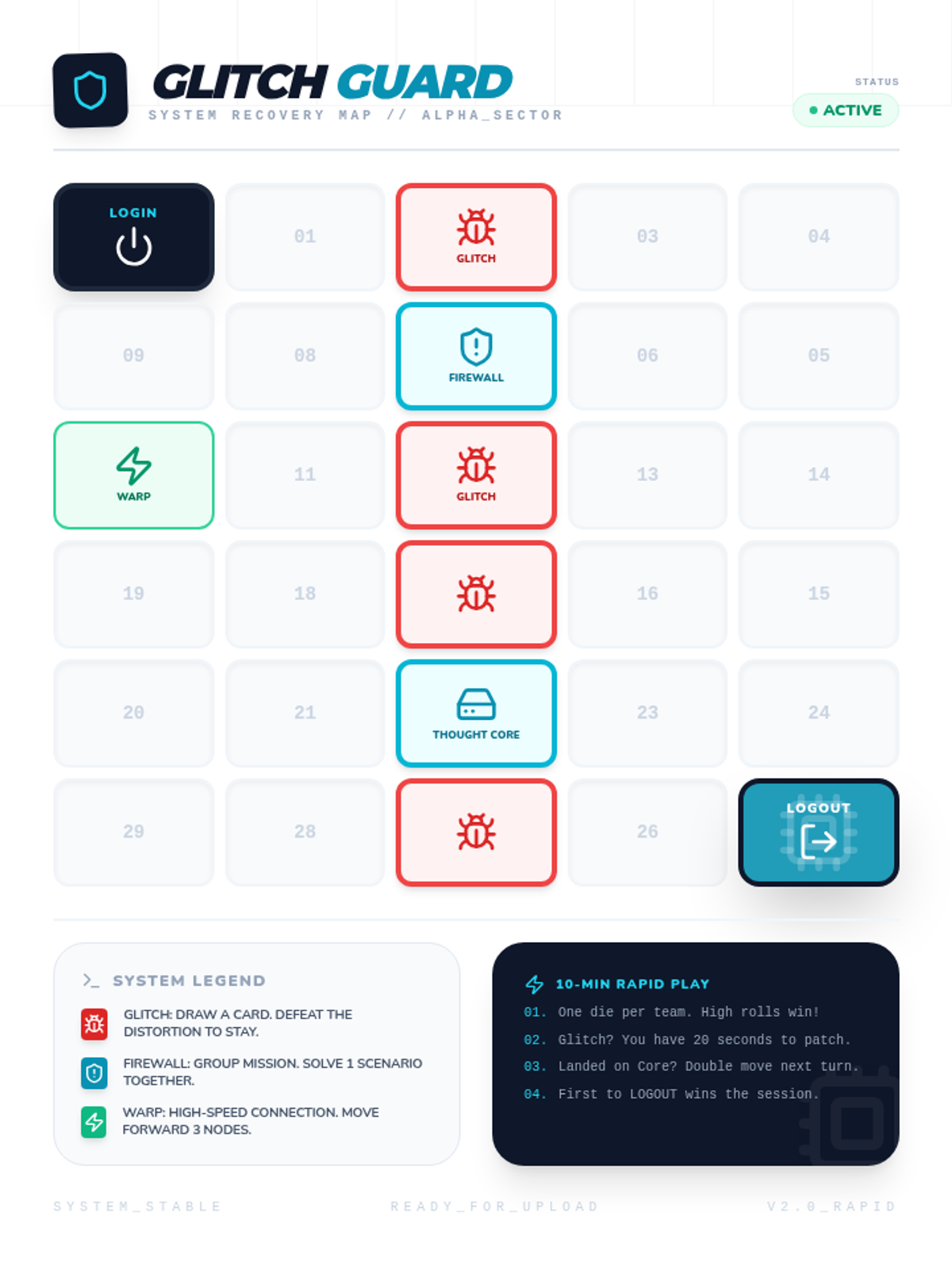
A high-speed, print-friendly version of the Glitch Guard board game, redesigned for a 10-minute rapid-play session. Features a sleek HUD aesthetic, 30 nodes in a logical sequential snake path with visual turn-guides. Includes a facilitator admin key on page 2. Optimized for 8.5x11 printing.