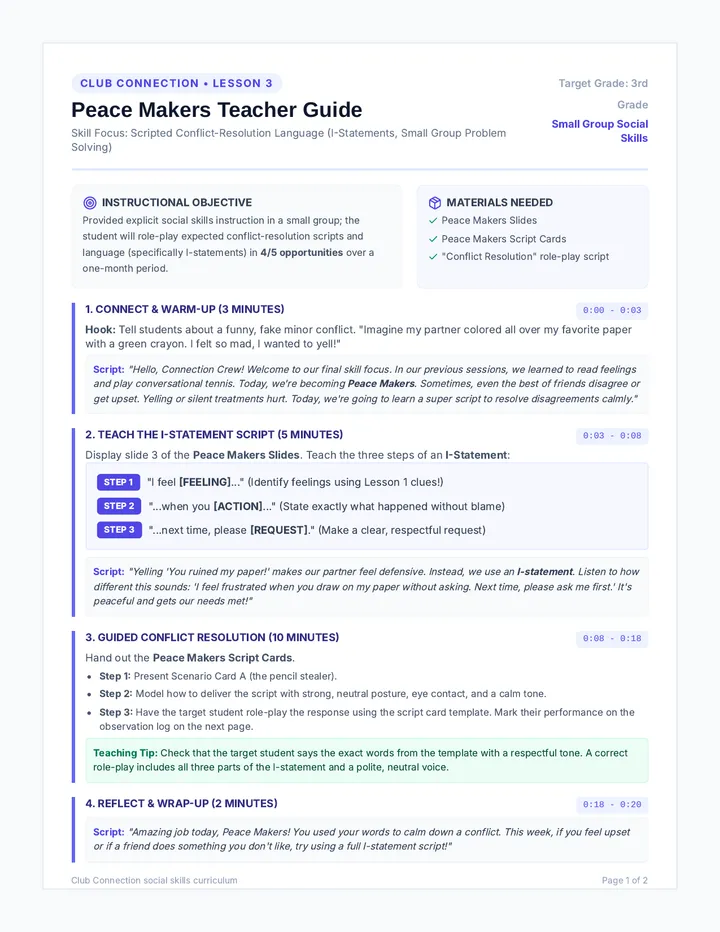
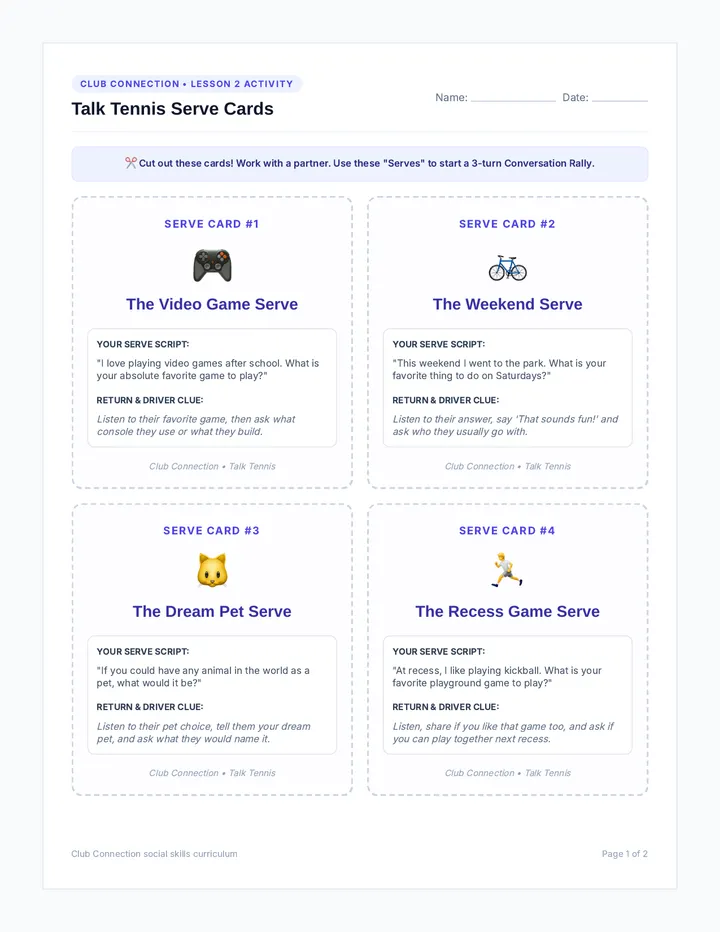
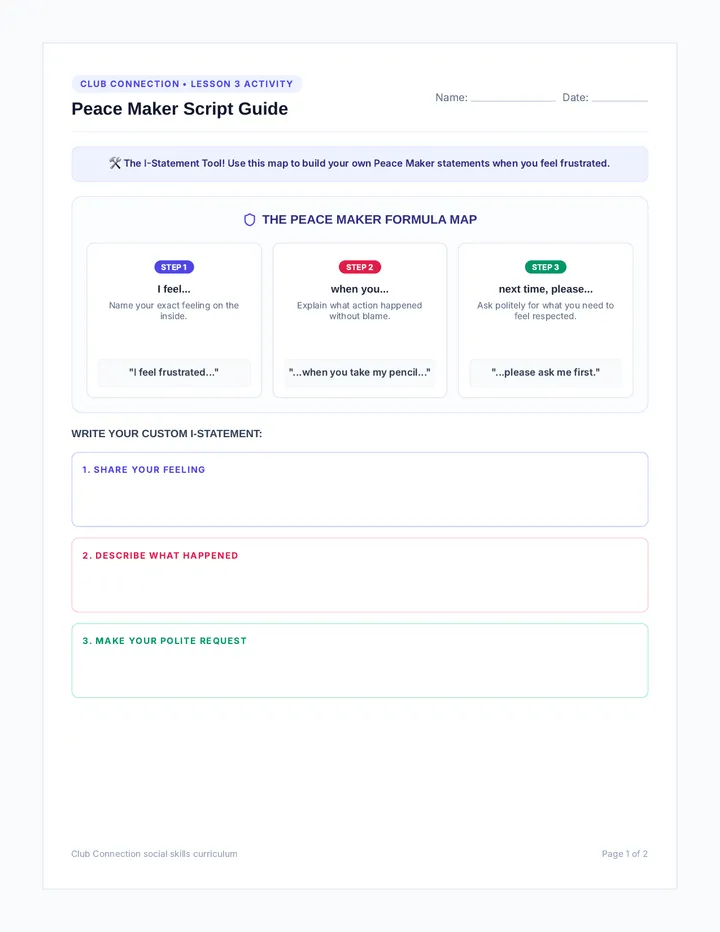
A visually engaging slide deck that introduces the concept of kindness as growth, teaches the structure of 'I' statements, and presents a case study on inclusion and conflict resolution.
A colorful one-page visual guide for the Zones of Regulation, featuring custom SVG illustrations of Dog Man characters and 3rd-grade appropriate emotion vocabulary. The layout uses a comic-book style grid with distinct color-coded panels for Blue, Green, Yellow, and Red zones.
A student-facing template kit containing game components: customizable action cards (Power-Up, Glitch Trap, Pillar Event), character tokens, and a layout blueprint for the board path.
A resource-rich handout providing students with the "lore" and scenarios needed to build their board games. It includes knowledge blocks and reward/consequence examples for all 5 digital citizenship pillars.
A high-impact visual presentation to introduce the "Code of the Quest" board game project. It features the narrative hook, the 5 pillars of digital citizenship, and basic game design principles.
A comprehensive teacher facilitation guide for the "Code of the Quest" lesson, featuring a narrative hook, step-by-step instructional sequence, and assessment checklist for the board game project.
A teacher's answer key for the 'Misfire Sorting Activity,' providing suggested matches between common classroom glitches and coping tools. Consolidated to a single page.
A teacher's facilitation guide for the 'Mistake Mechanics' lesson, including instructional goals, key vocabulary, a pacing guide, and differentiation strategies. Consolidated for easy printing.
A hands-on cut-and-paste sorting activity for 2nd grade students to match common classroom mistakes with appropriate coping skills and problem-solving tools. Tightened layout to prevent page break issues.
An introductory slide deck for 2nd graders that uses a 'mechanic' metaphor to teach about classroom mistakes (glitches) and coping strategies (repair tools). Includes practice scenarios.
A guide for teachers to facilitate the Thought Navigator lesson, including pacing, facilitation tips, and an answer key for the sorting activity.
A reflection worksheet for students to practice converting their own "what-if" worry thoughts into realistic anchors.
A printable card-sorting activity where students categorize "what-if" worry thoughts and realistic, helpful thoughts.
A visual slide deck explaining the difference between automatic "what-if" worries and realistic, helpful thoughts using a maritime navigation theme.
A 20-minute facilitation guide for teachers or counselors to lead a small group session on family changes, including pacing, discussion prompts, and key insights. Updated to reflect 14 sorting situations.