A large-format template for a classroom display where students can 'plant' their kindness promises using leaf-shaped notes.
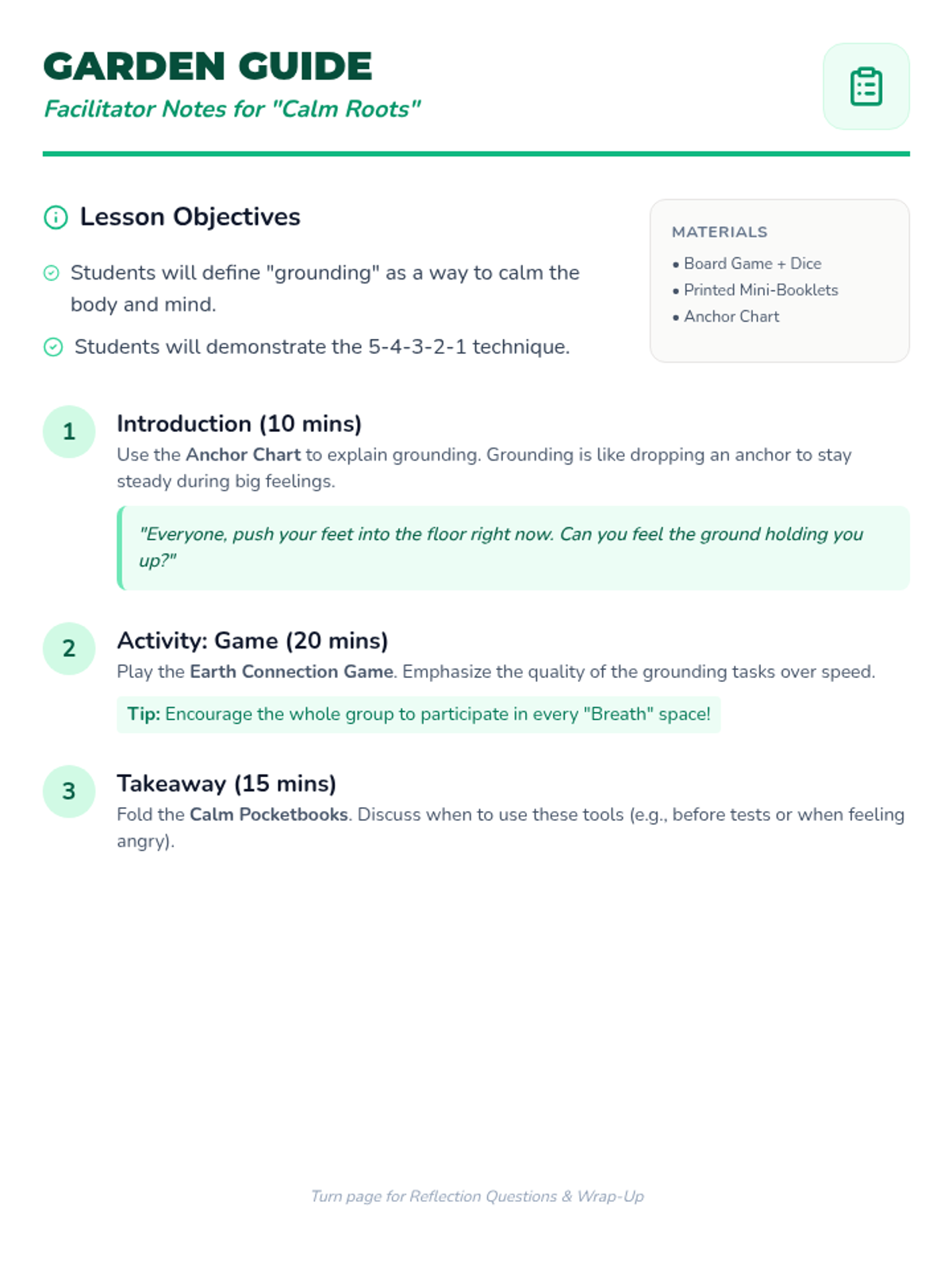
A comprehensive facilitator guide for teachers or counselors. Includes lesson objectives, a step-by-step small group plan, and discussion prompts for teaching grounding exercises to primary students.
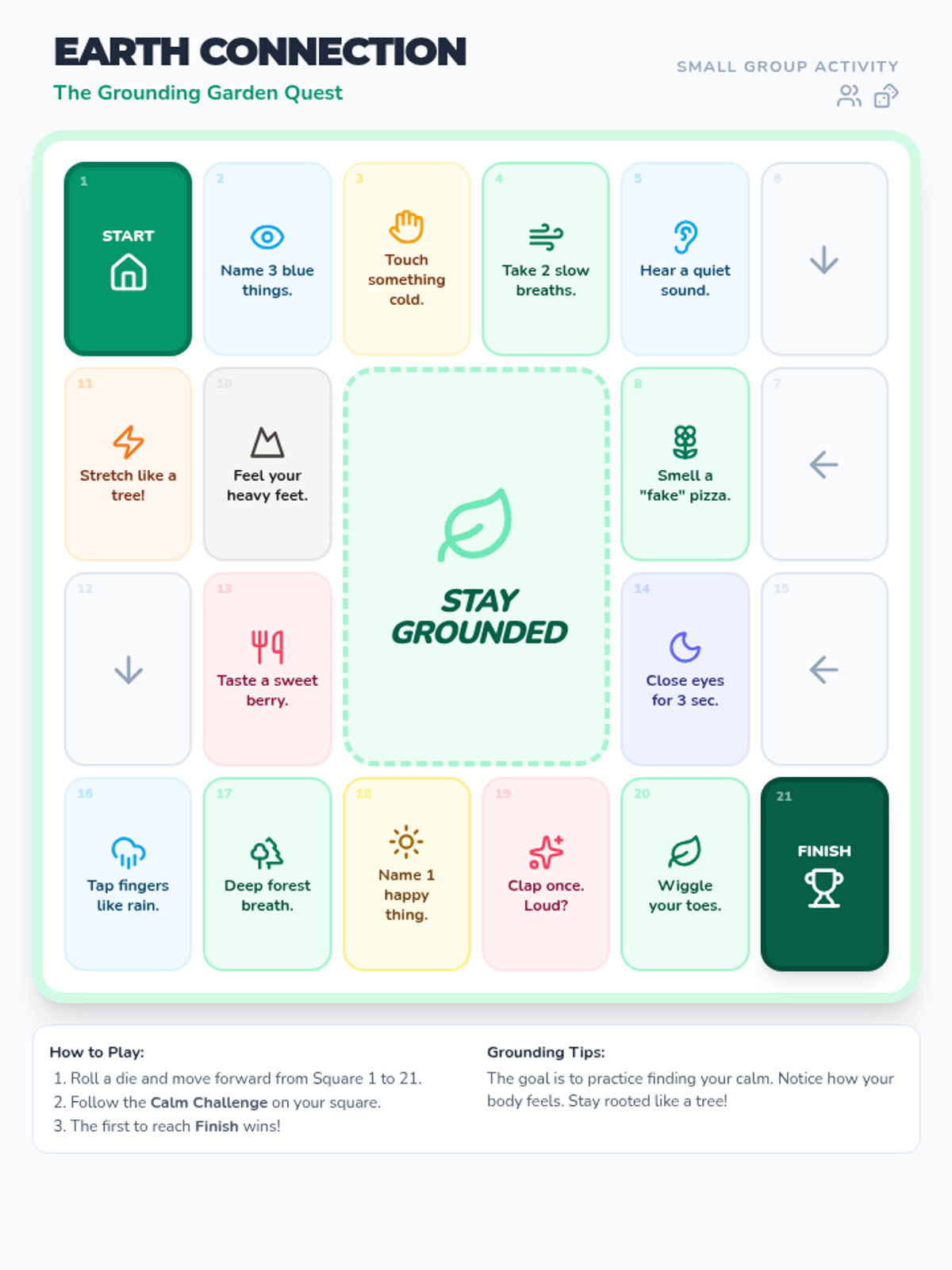
A sensory-themed board game for small groups. Students navigate a "Grounding Garden" path, completing quick sensory tasks (sight, sound, touch, movement) to reach the finish line. The path follows a logical numbering system for clear flow.
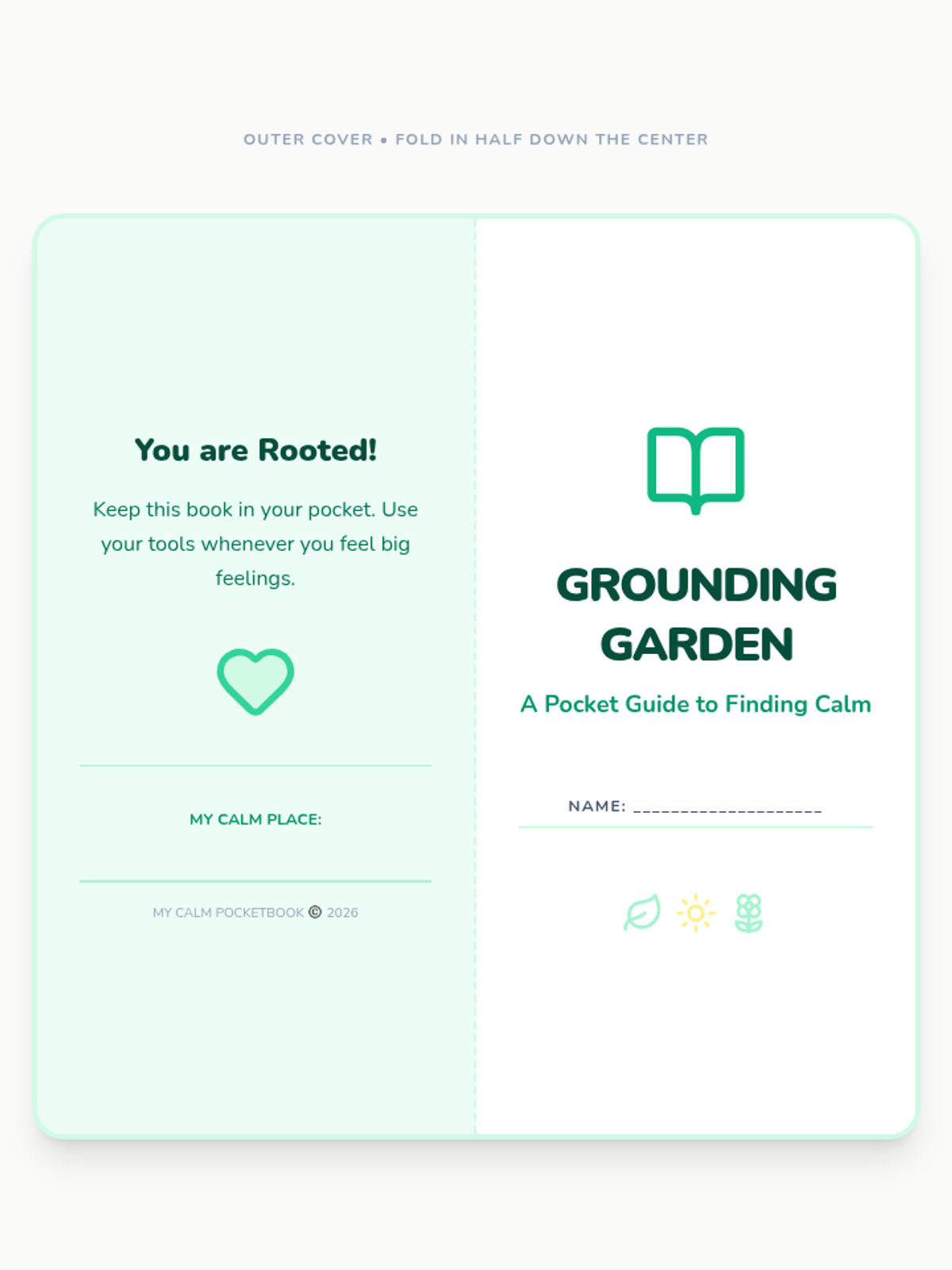
A two-page printable bifold booklet for students. Features a front cover, sensory drawing prompt, breathing exercise, and a reflection back cover. Designed for easy folding and primary student use.
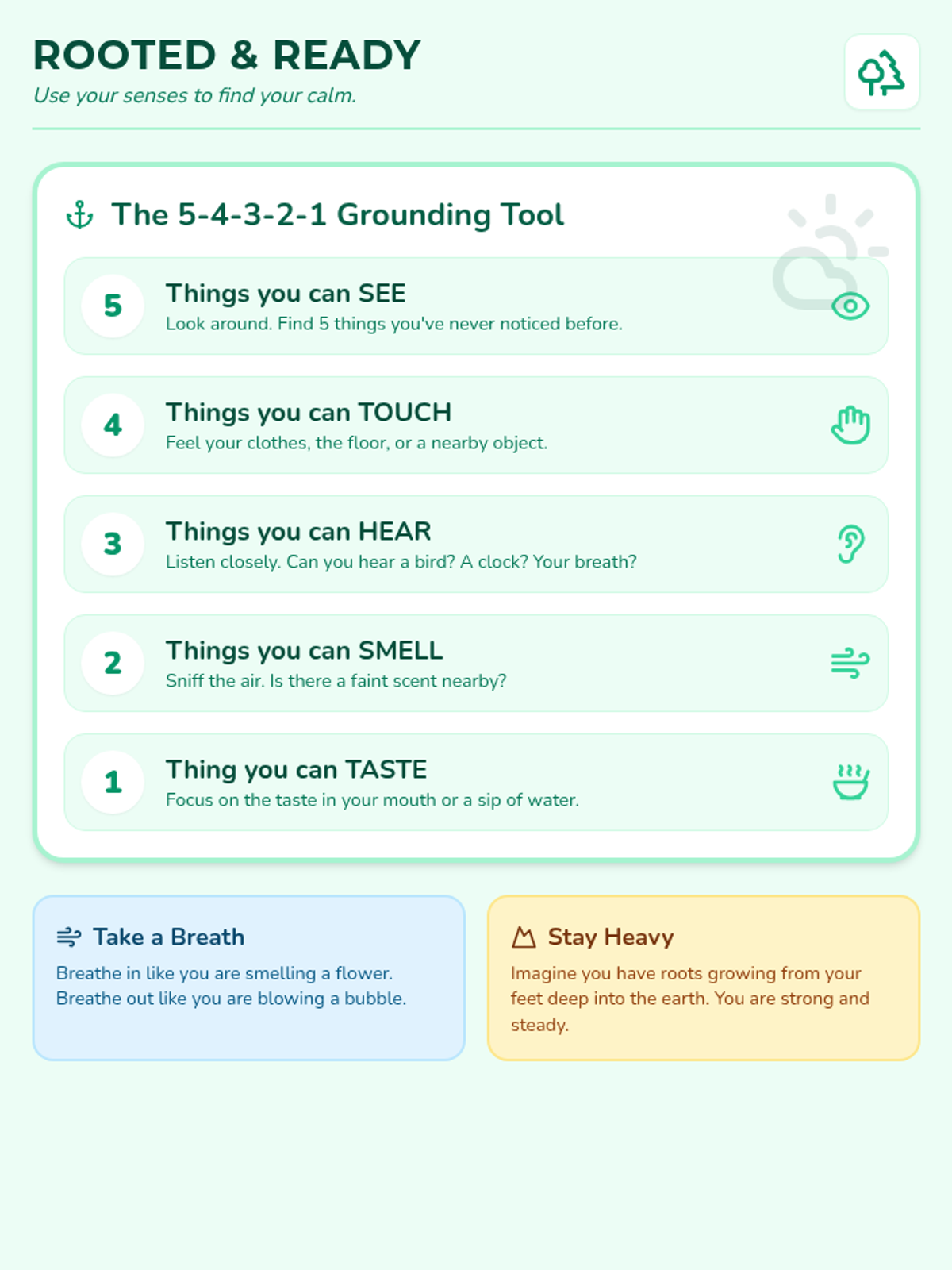
A vibrant visual anchor chart for K-4 students illustrating the 5-4-3-2-1 grounding technique with clear icons and kid-friendly descriptions. Perfect for a calm-down corner or small group instruction.
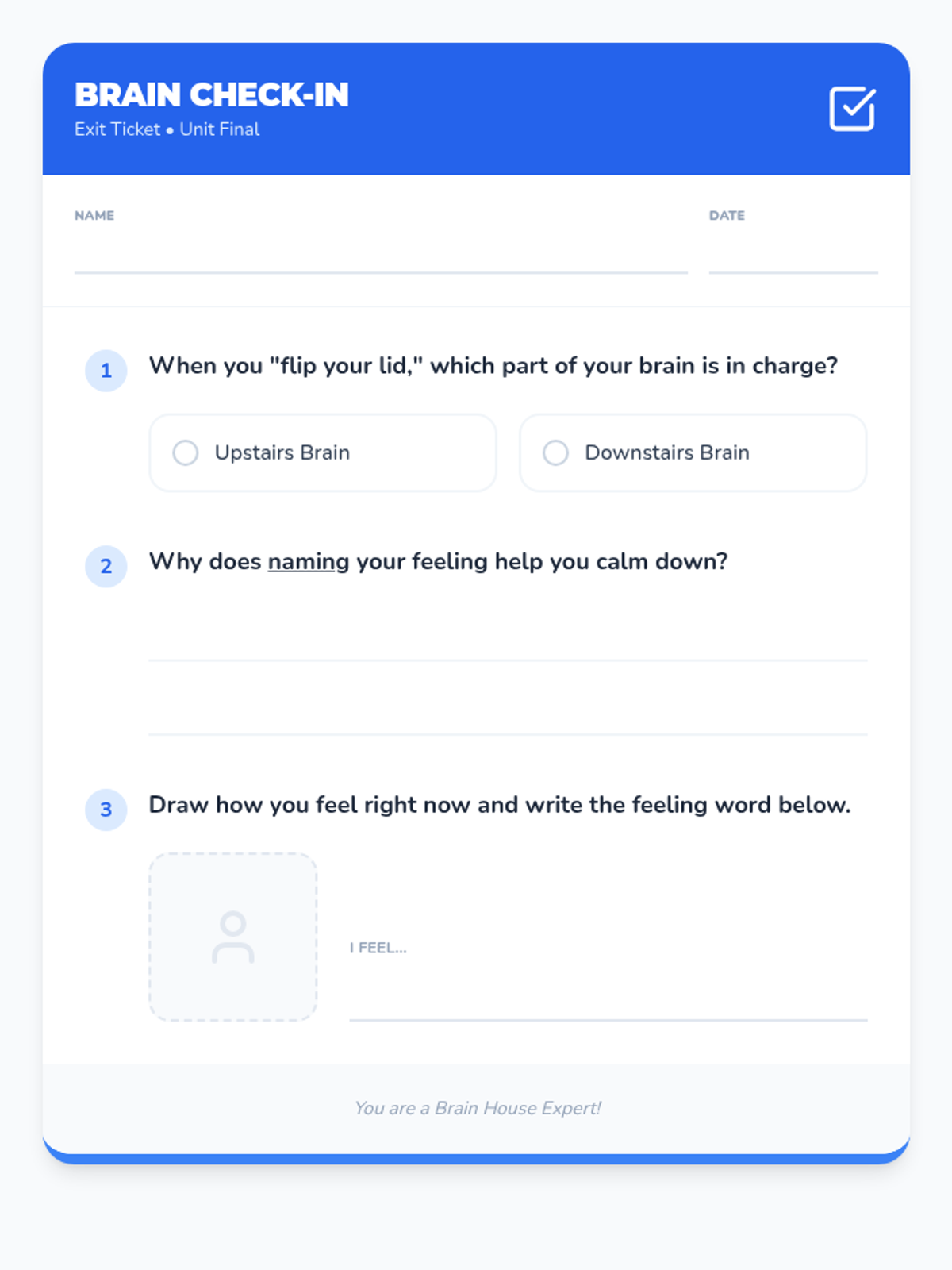
A 3-question exit ticket to assess 2nd-grade student understanding of the 'Brain House' concepts, including identifying which part of the brain is in charge during emotional flips and the importance of naming feelings.
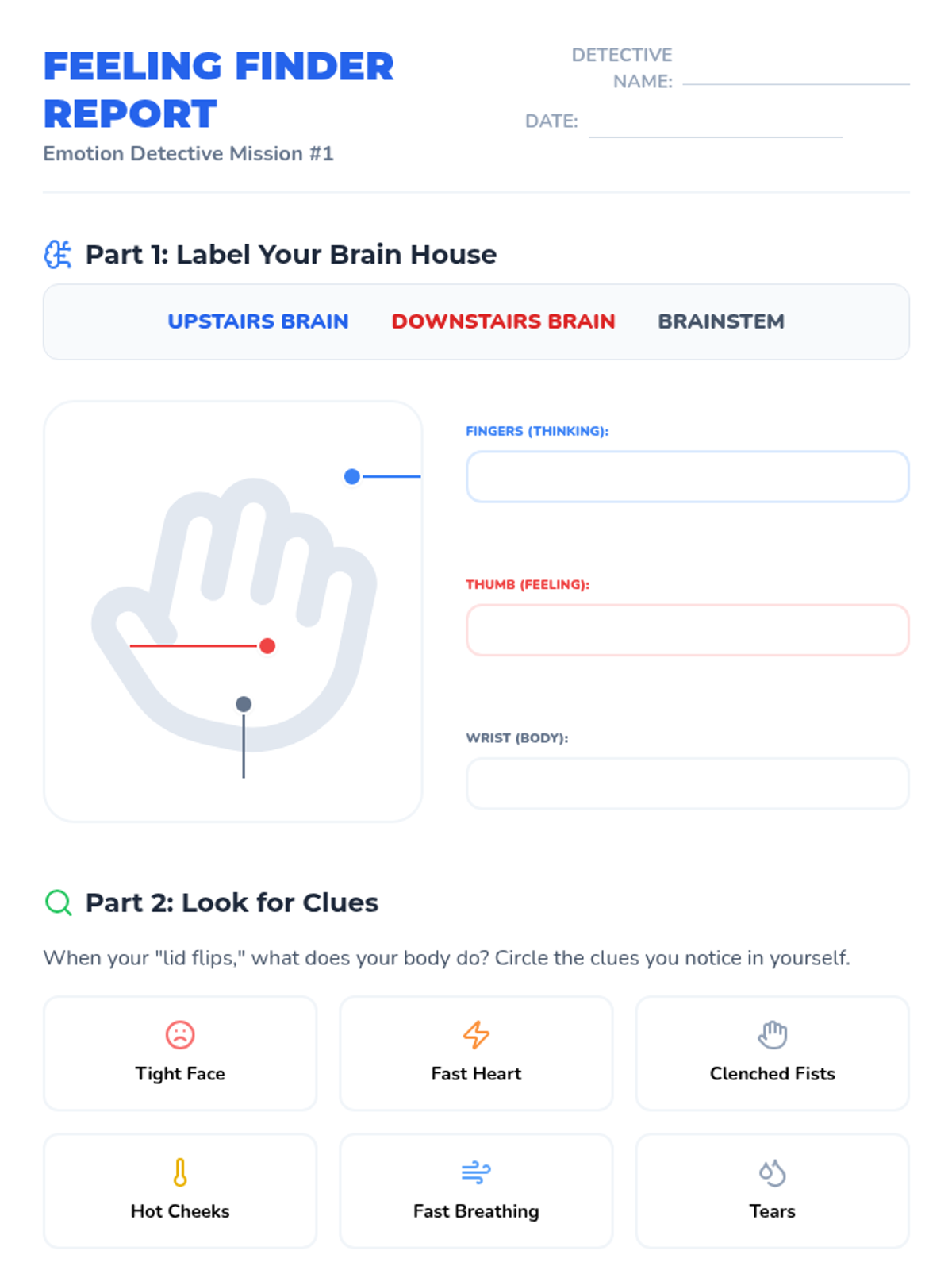
An interactive student worksheet for 2nd graders to practice labeling the hand model of the brain, identifying personal body signals of big emotions, and practicing the 'Name It to Tame It' sentence starter.
A visual slide deck introducing the 'Brain House' hand model, the concept of 'flipping your lid', and the 'Name It to Tame It' technique for 2nd-grade students. Includes an embedded instructional video.
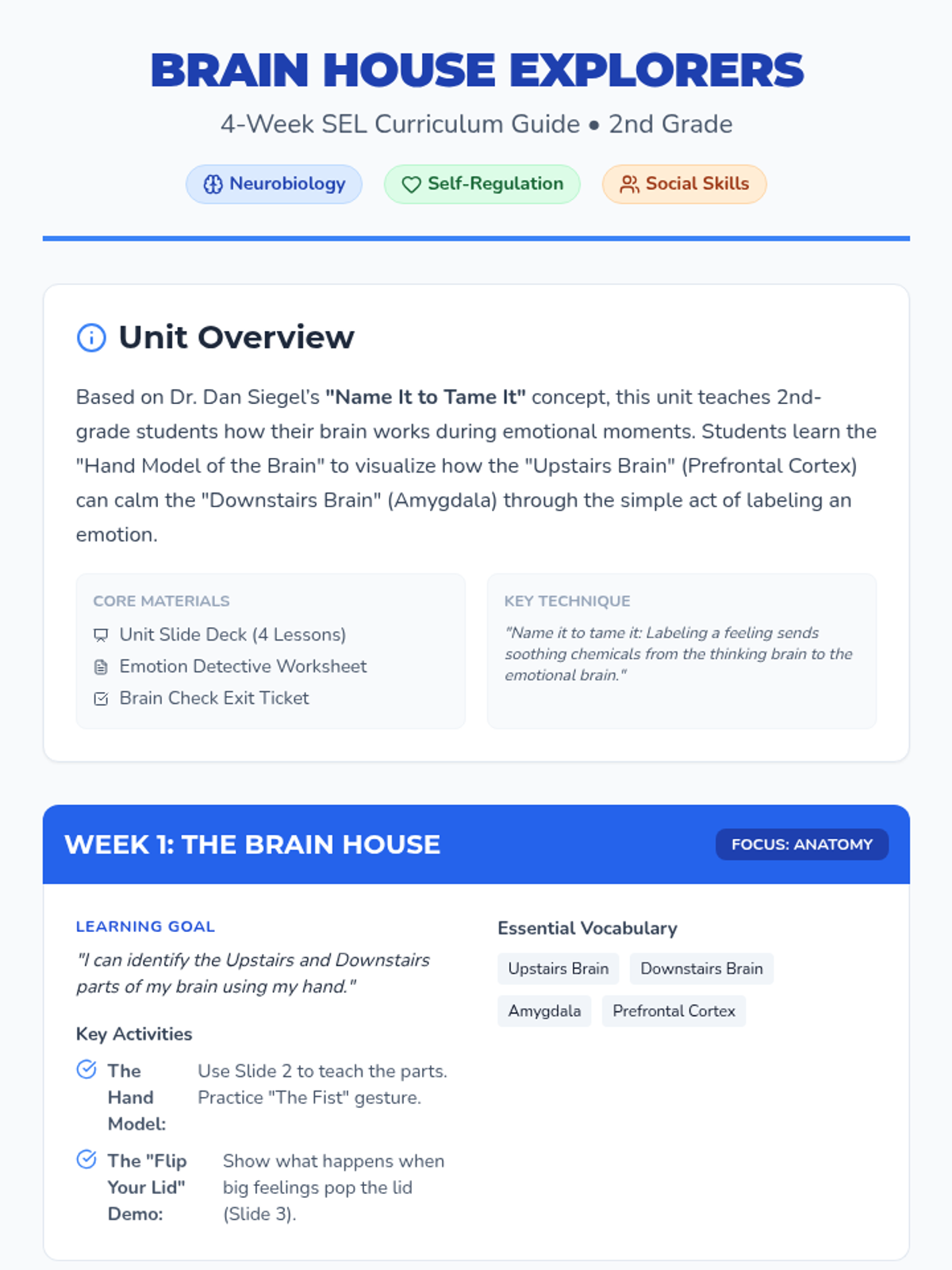
A comprehensive teacher-facing 4-week curriculum guide for the 'Brain House Explorers' unit, detailing weekly learning goals, key activities, and essential vocabulary based on Dan Siegel's Name It to Tame It concept.
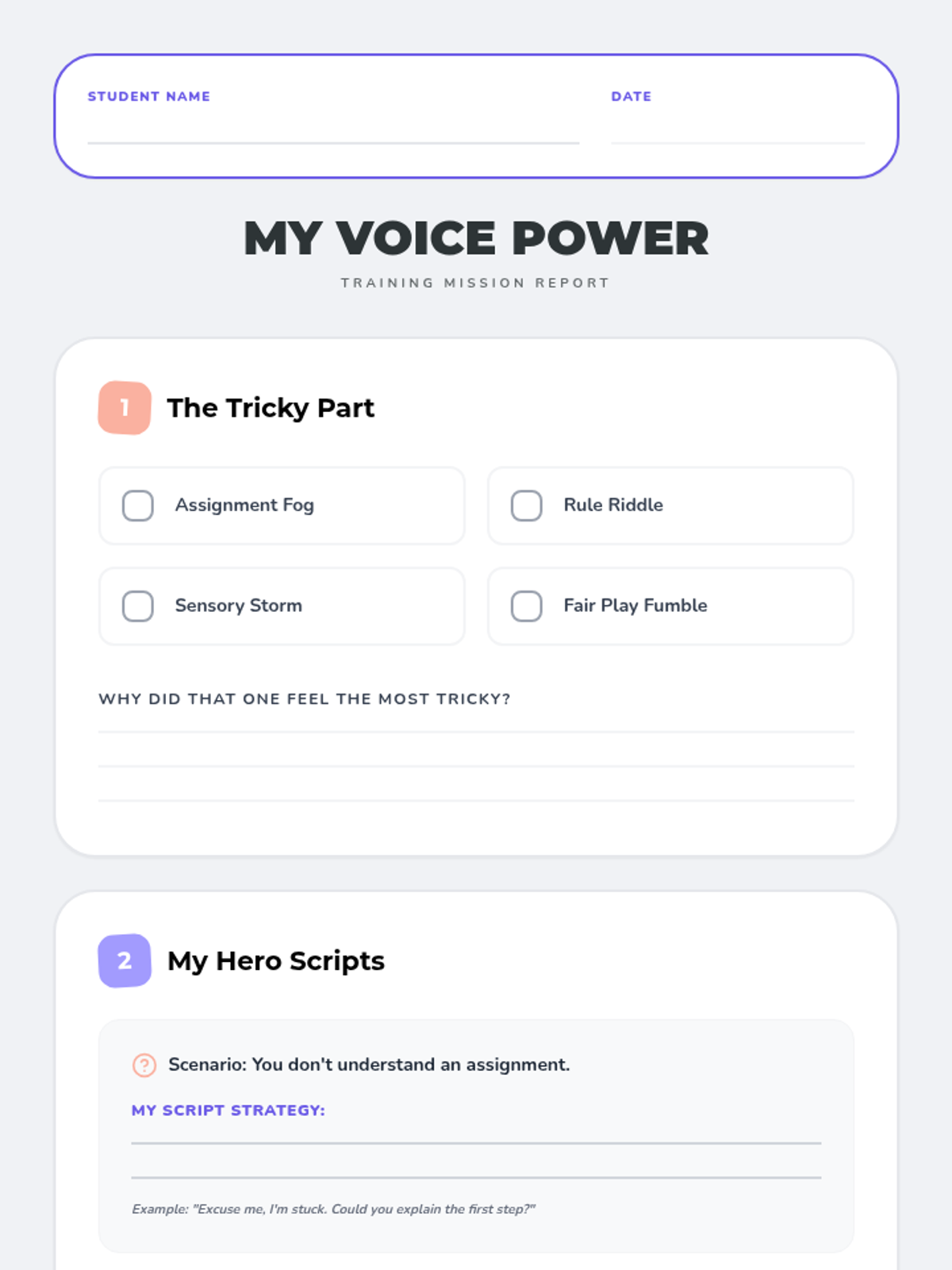
A student reflection worksheet for the self-advocacy lesson, allowing students to identify challenges and practice communication scripts, optimized for single-page printing.
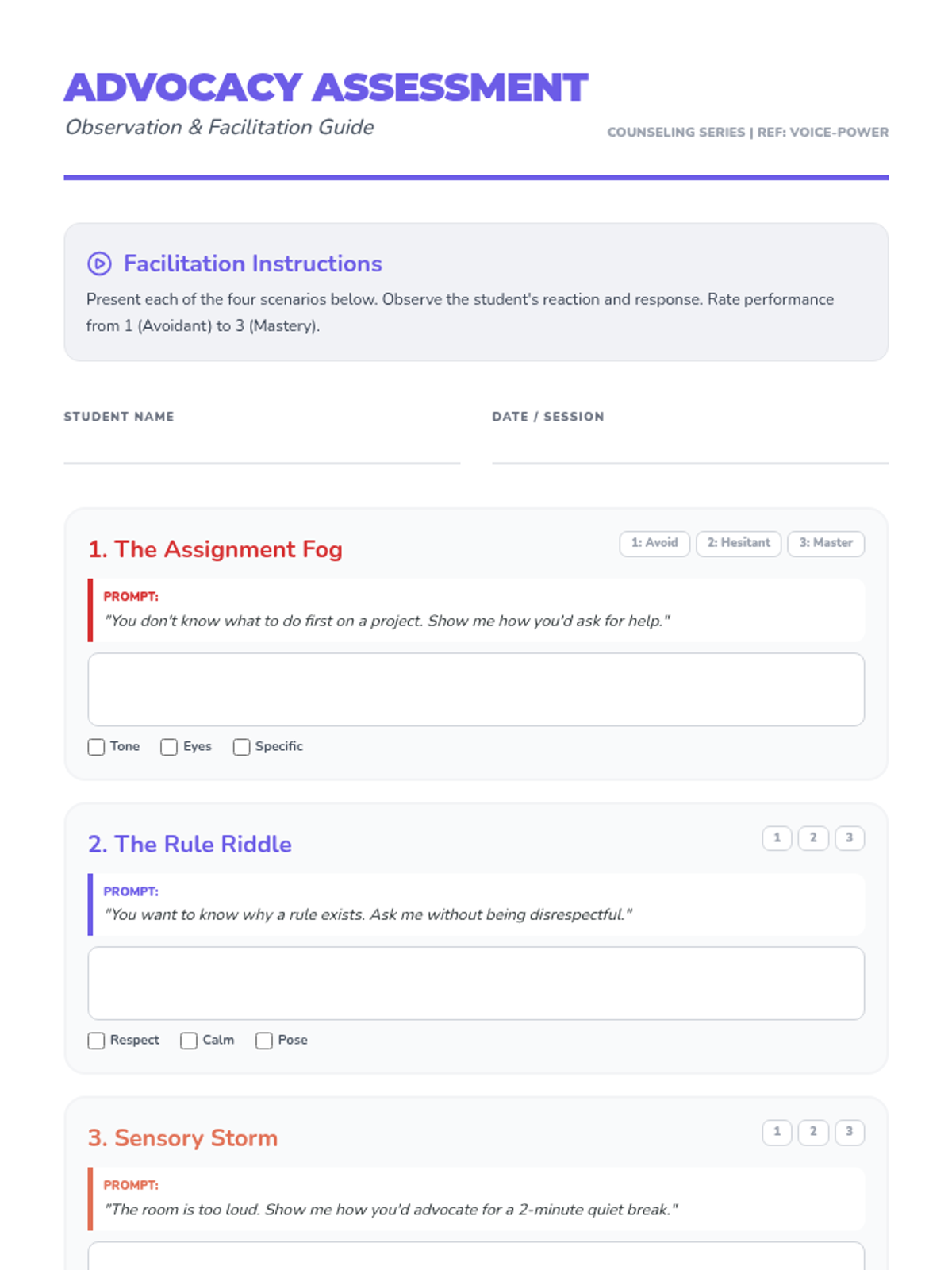
A professional observation and assessment tool for teachers or counselors to track student self-advocacy skills across four key classroom scenarios, optimized for one-page printing.
An interactive slide deck featuring four real-world classroom scenarios to help students practice self-advocacy and communication skills.
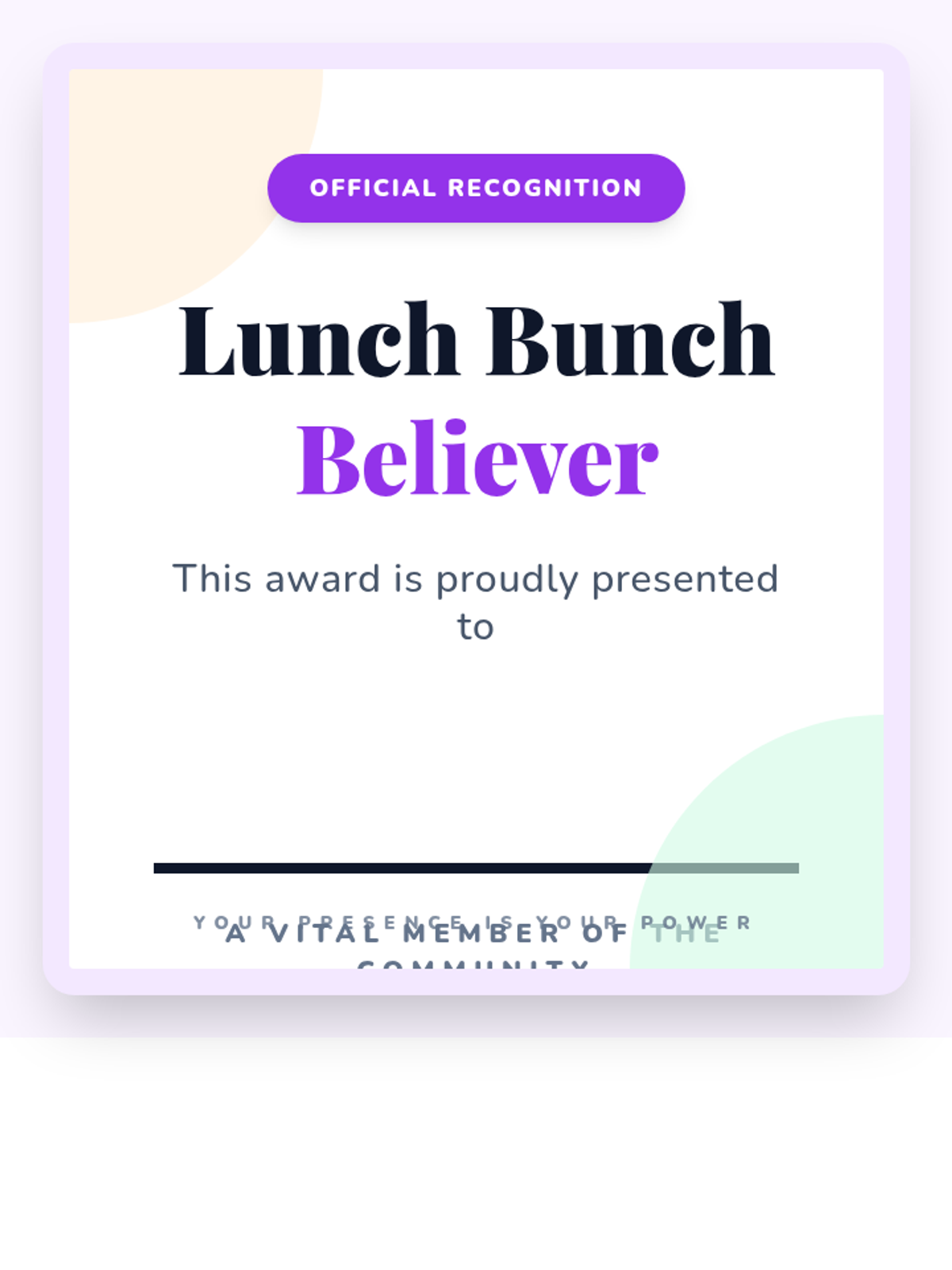
A formal but friendly certificate of completion for the Lunch Bunch series, recognizing students as "Lunch Bunch Believers" and highlighting their unique contributions to the group.
A celebratory final slide deck for the Lunch Bunch series. Focuses on reflection, recognizing individual growth, and reinforcing the commitment to regular school attendance as part of a community.
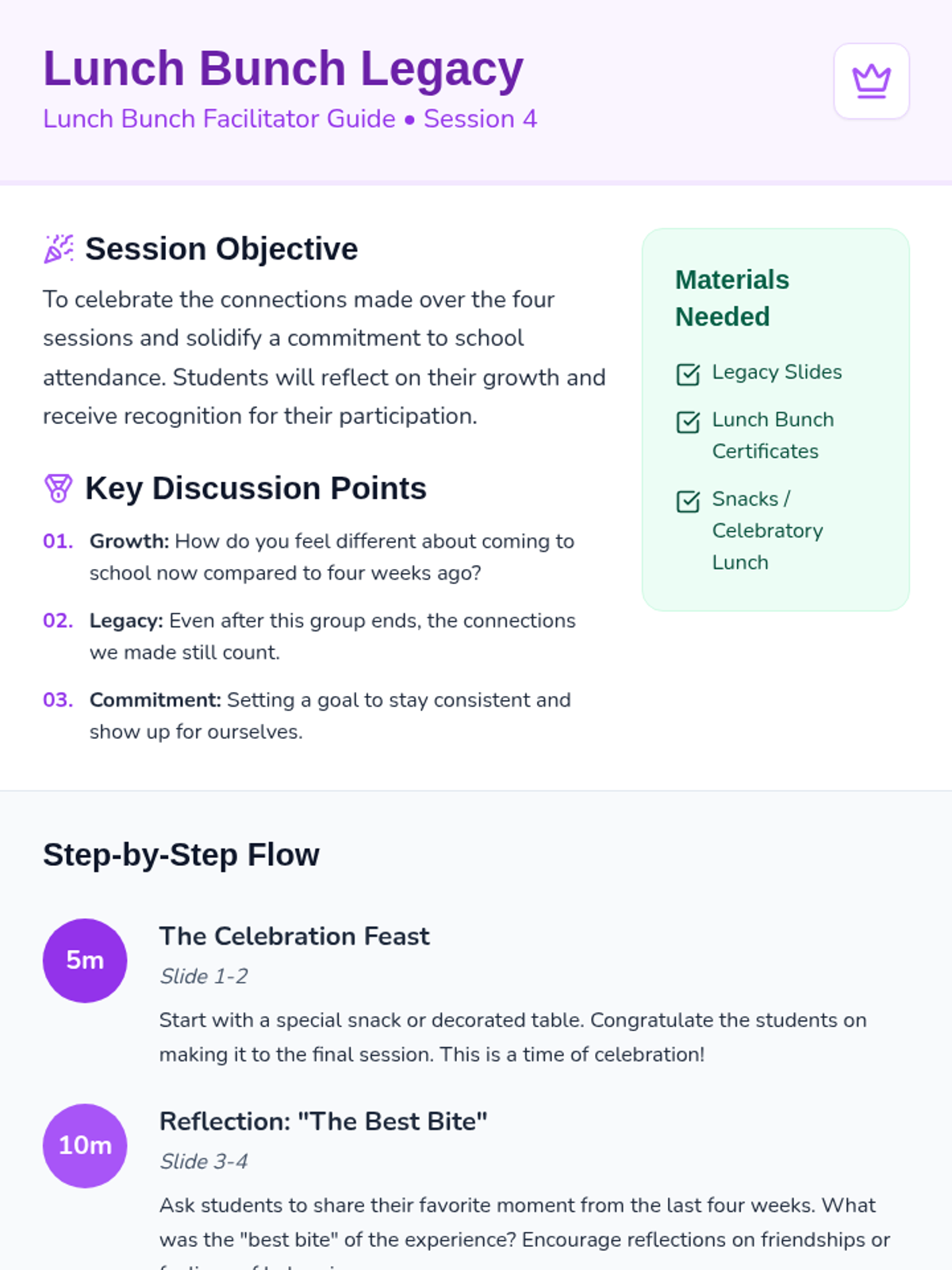
Facilitator guide for the final Lunch Bunch session, focusing on celebration, reflection on growth, and committing to future school attendance goals.
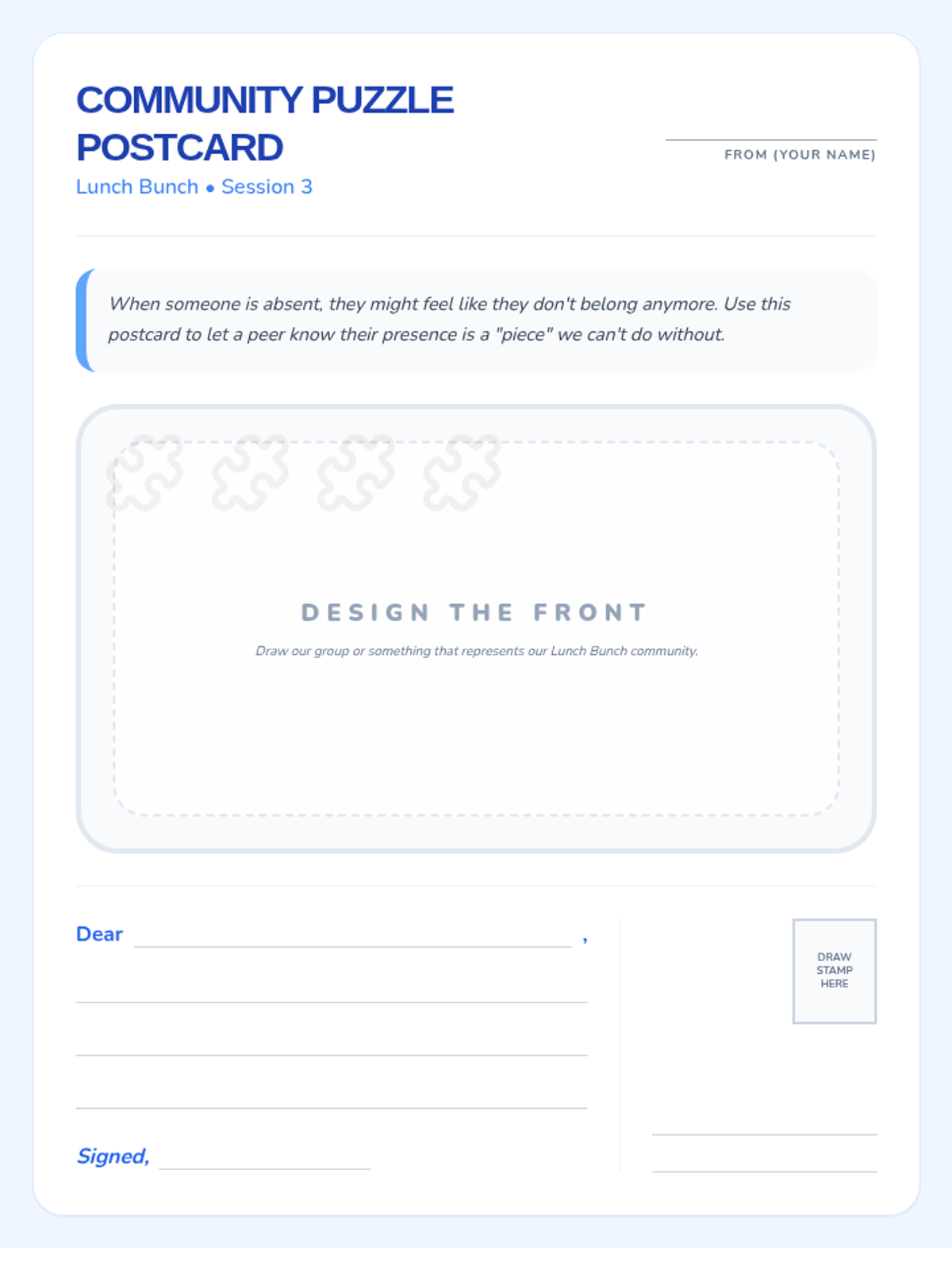
A printable "puzzle postcard" for students to design and write to peers who have been absent, reinforcing the message that every student's presence is valued.
A Session 3 slide presentation focusing on the impact of absenteeism. Uses puzzle visuals to show how every student's presence completes the group and encourages supportive communication.
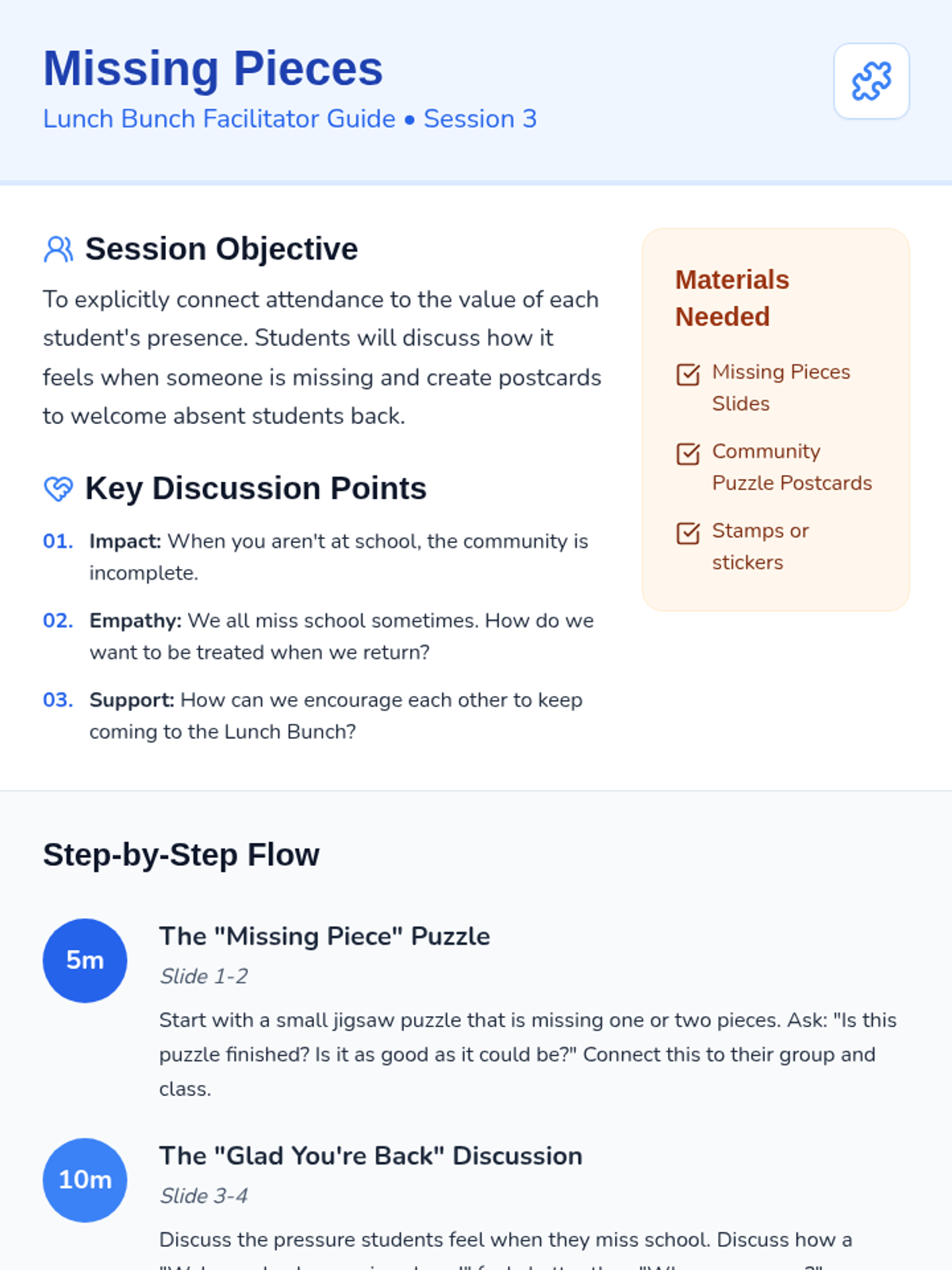
Facilitator guide for Session 3, using a puzzle metaphor to address school attendance. Helps students understand their impact on the group and how to support peers who have been absent.
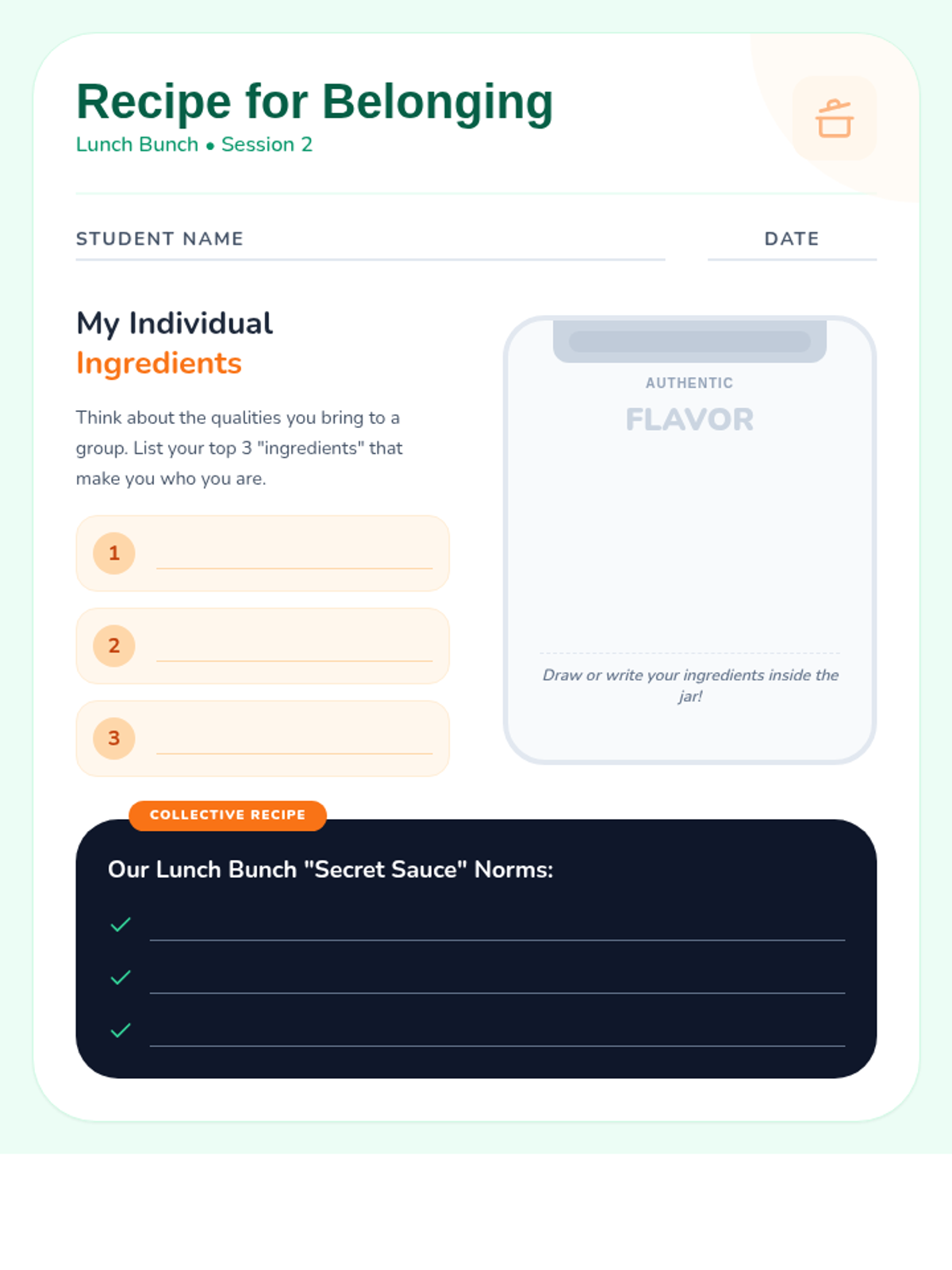
A student activity sheet where they identify personal strengths as "ingredients" in a visual jar and record group-established norms for their Lunch Bunch community.
A thematic slide presentation for Session 2, using culinary metaphors to discuss personality traits as "ingredients" and developing collaborative group norms for a positive environment.
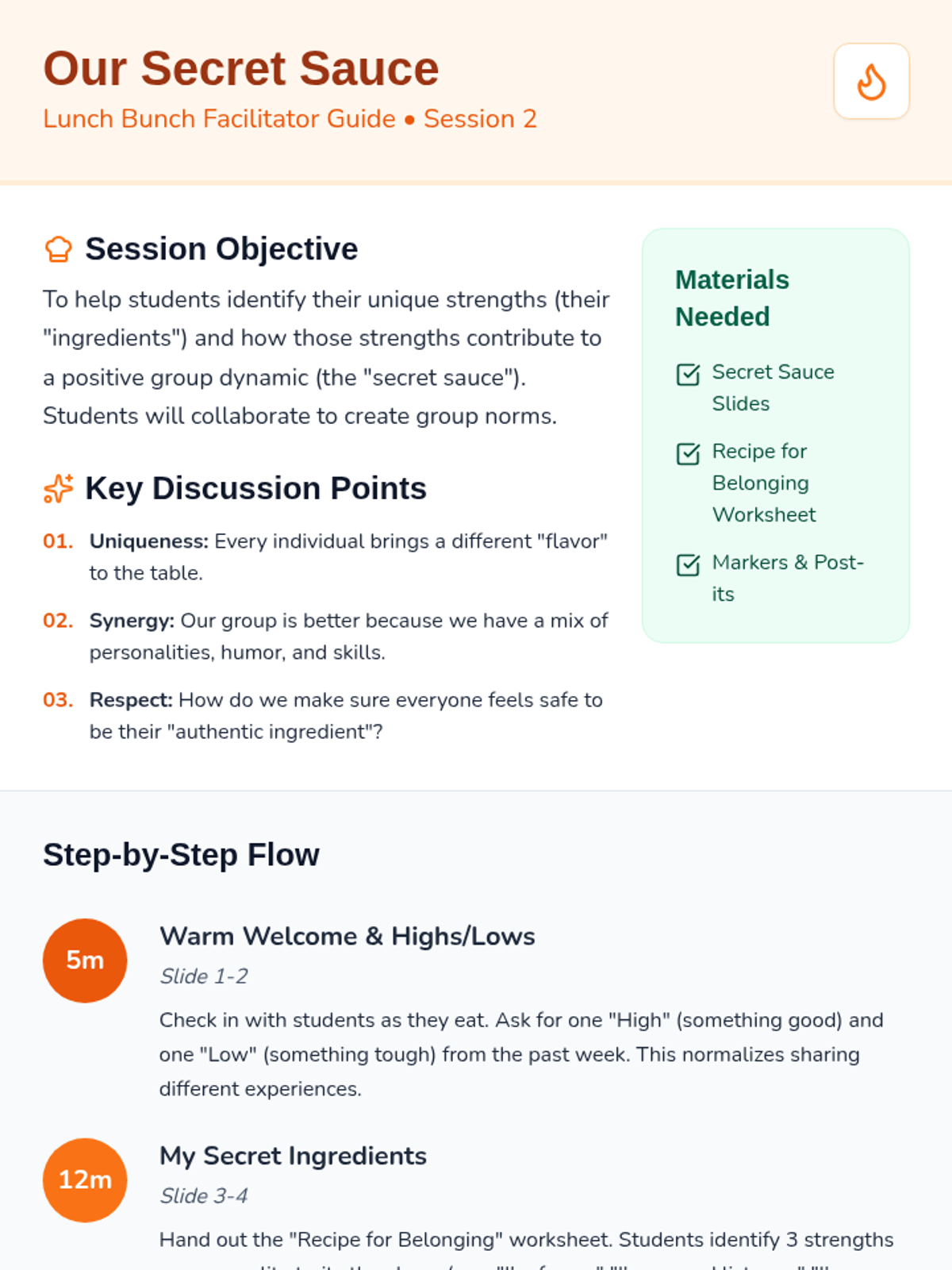
Facilitator guide for the second Lunch Bunch session, focusing on individual strengths and group norms through a "Secret Sauce" culinary metaphor.
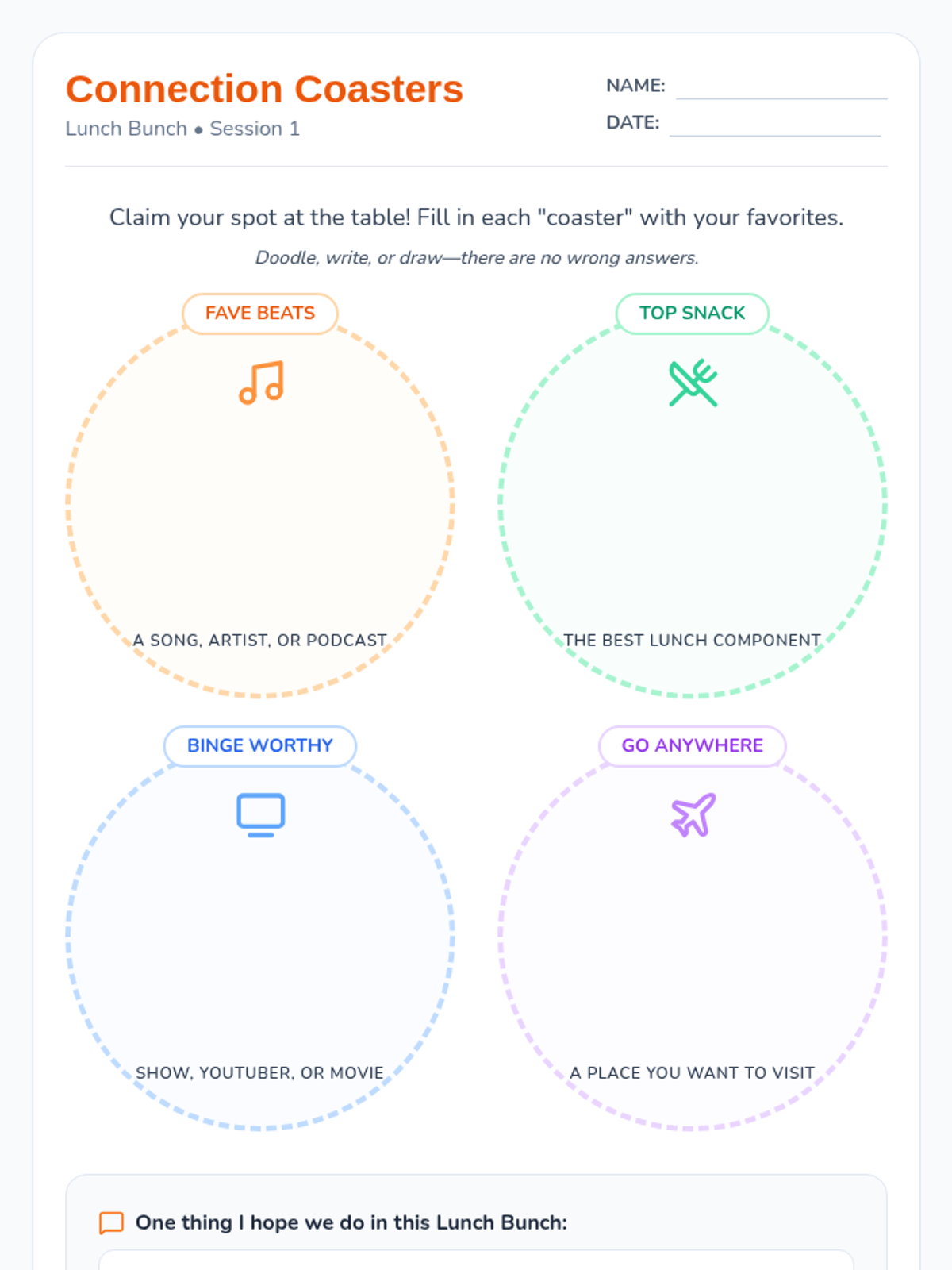
A creative, low-pressure student worksheet designed as "coasters" for their lunch table. Students share personal preferences to find common ground with peers in the group.
A visually engaging slide deck to guide the first Lunch Bunch session. Includes introduction slides, group norms, an interactive connection activity instructions, and a closing reflection on attendance.