A detailed social conflict audit worksheet for 3rd-4th grade students. Fixed legibility of work areas, line spacing, and page layout issues. Larger writing boxes and clear text contrast. Final single-page version.
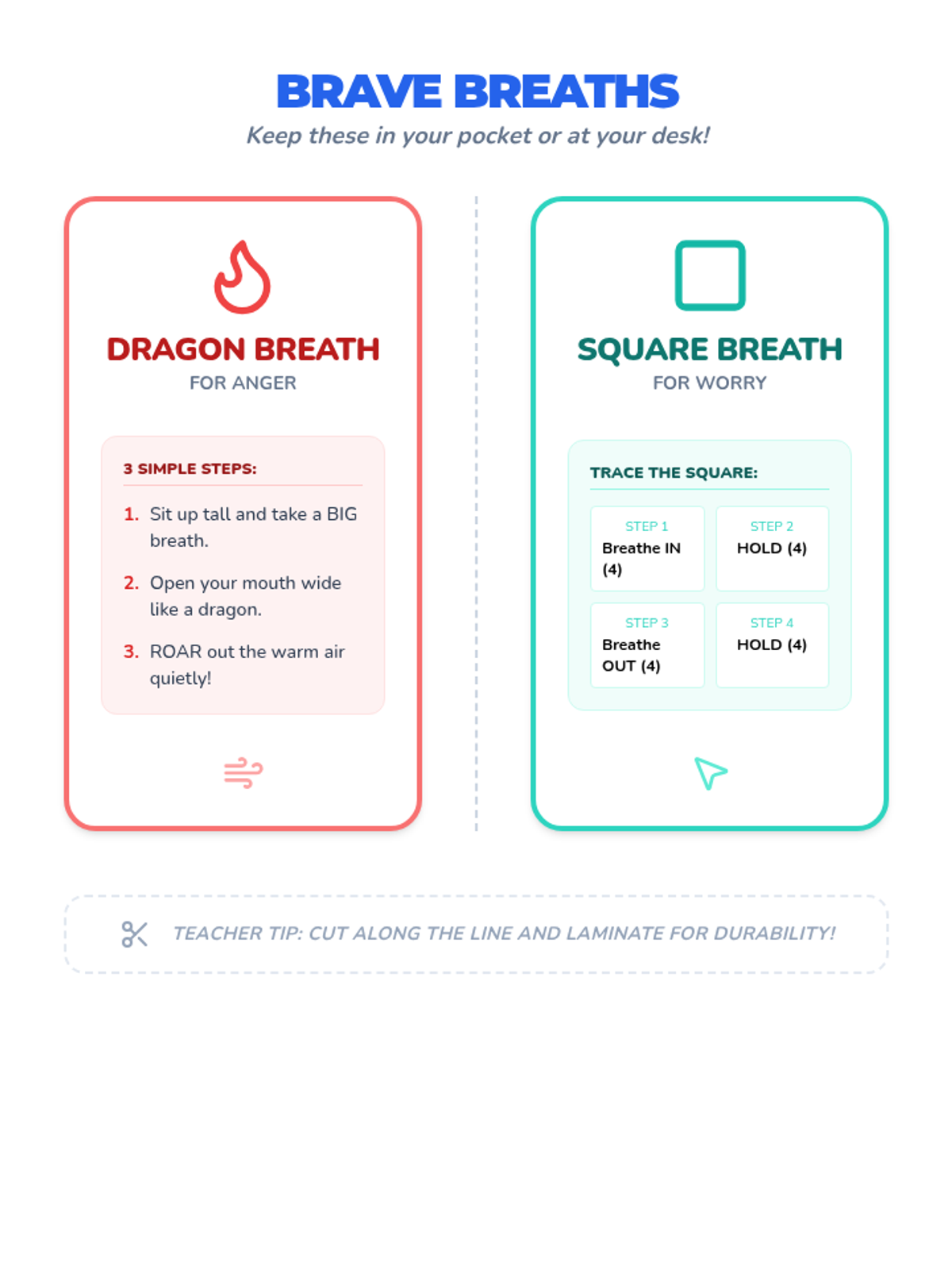
Set of two printable pocket-sized breathing cards ('Dragon Breath' and 'Square Breath') for 1st graders to keep as portable tools for managing anger and anxiety.
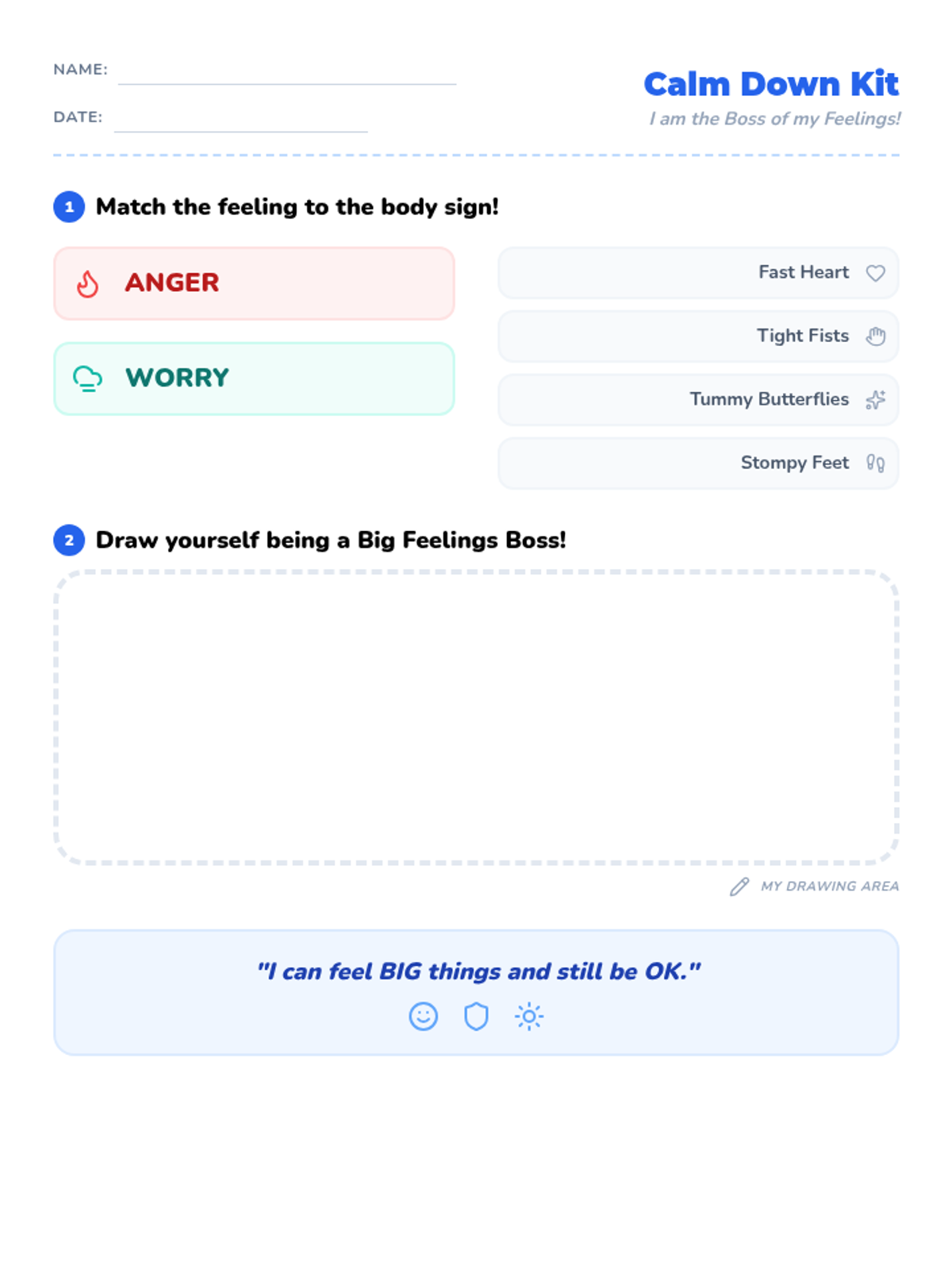
A 1st-grade worksheet that helps students connect emotional states (anger and worry) with physical sensations and provides a creative space for them to visualize themselves using their coping tools.
A visually engaging slide deck designed for a 1st-grade SEL lesson. It uses relatable analogies like 'weather' to help students identify anger and worry, and introduces 'Dragon Breath' and 'Square Breath' as management tools.
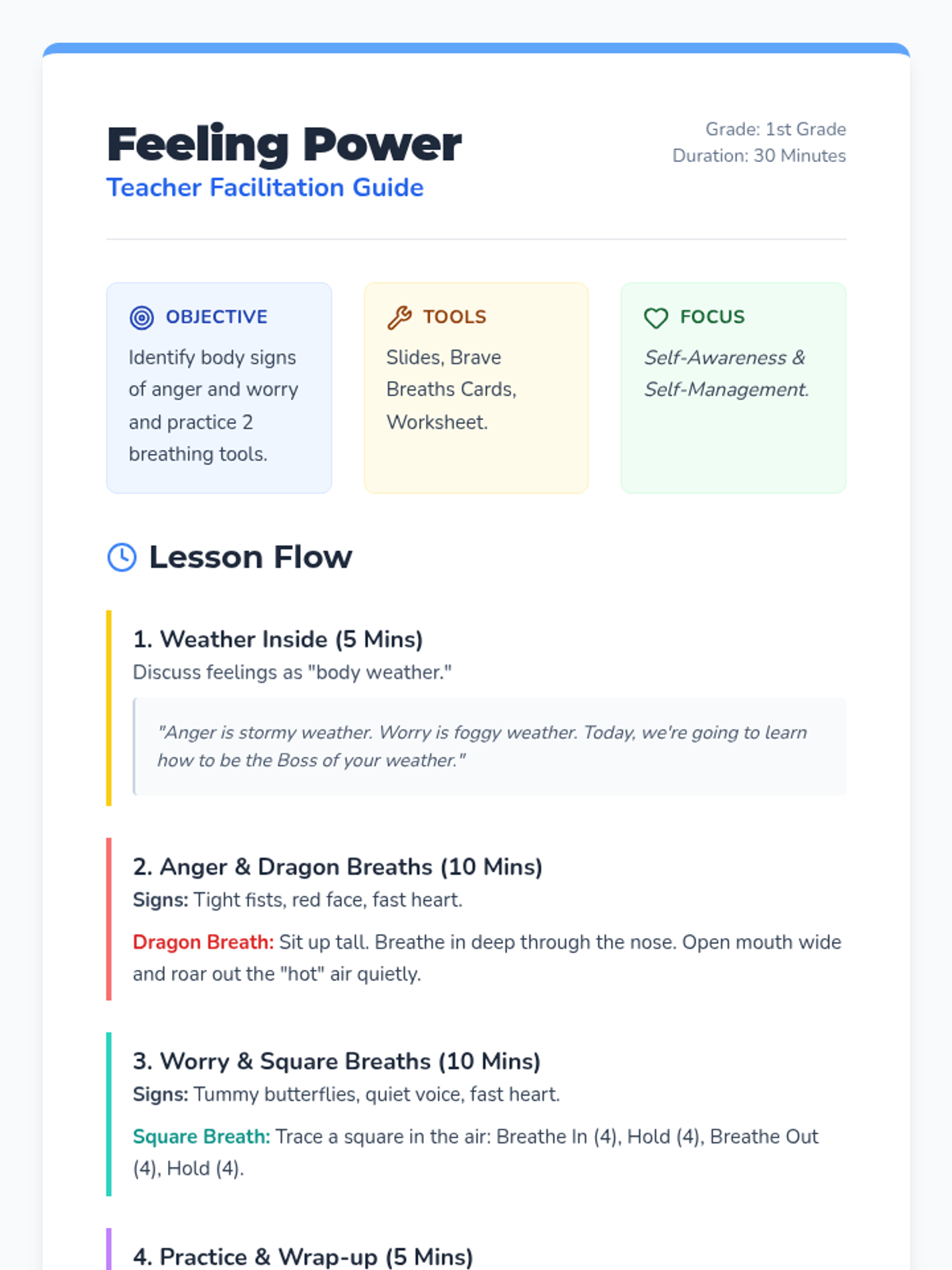
A comprehensive teacher facilitation guide for a 30-minute SEL lesson on managing big feelings like anger and anxiety. Includes a lesson timeline, discussion prompts, and specific breathing techniques.
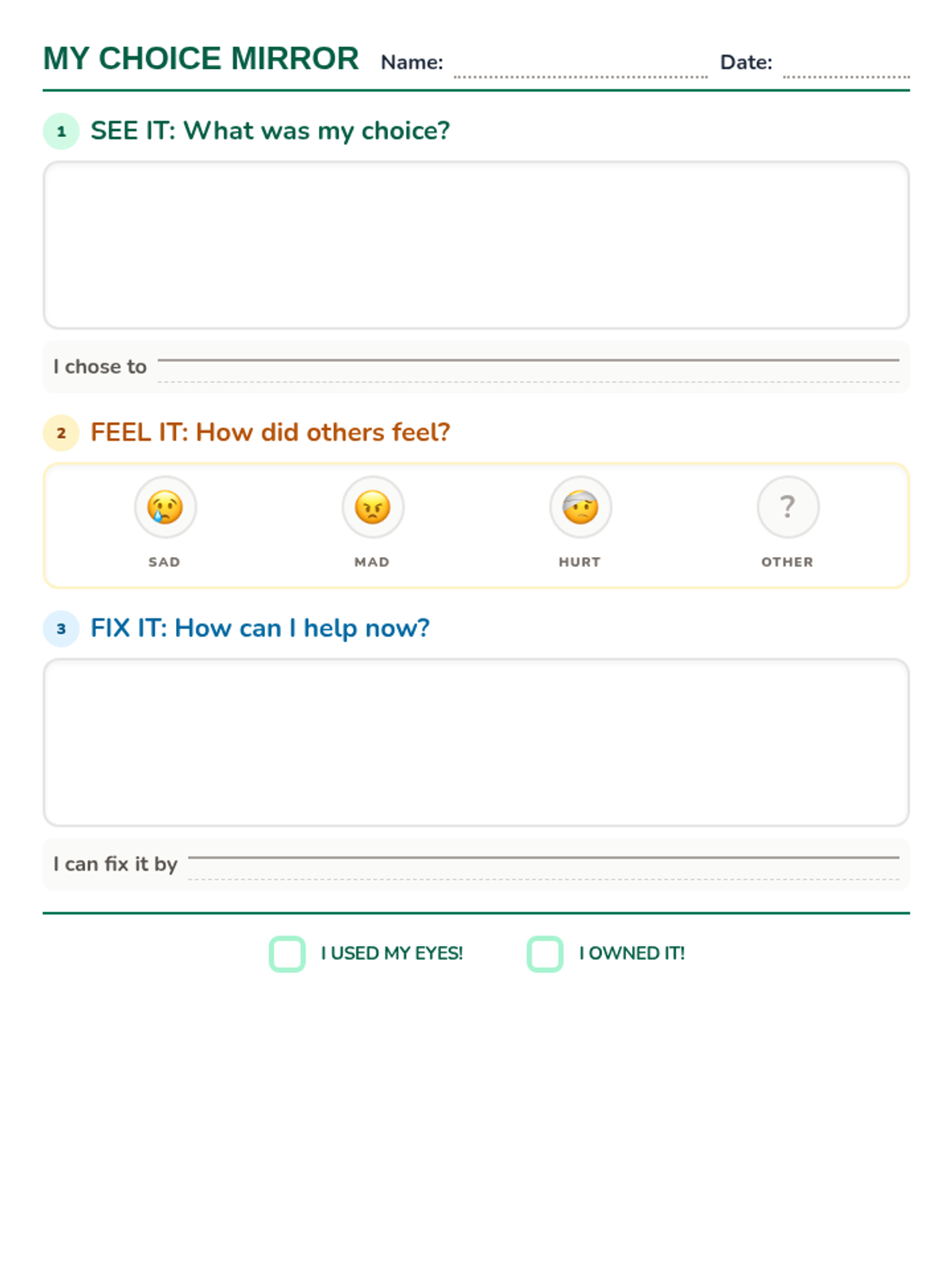
A reflective worksheet for K-1 students to practice social problem-solving. It guides them through drawing and writing about a personal choice, identifying others' feelings, and planning a way to fix the situation.
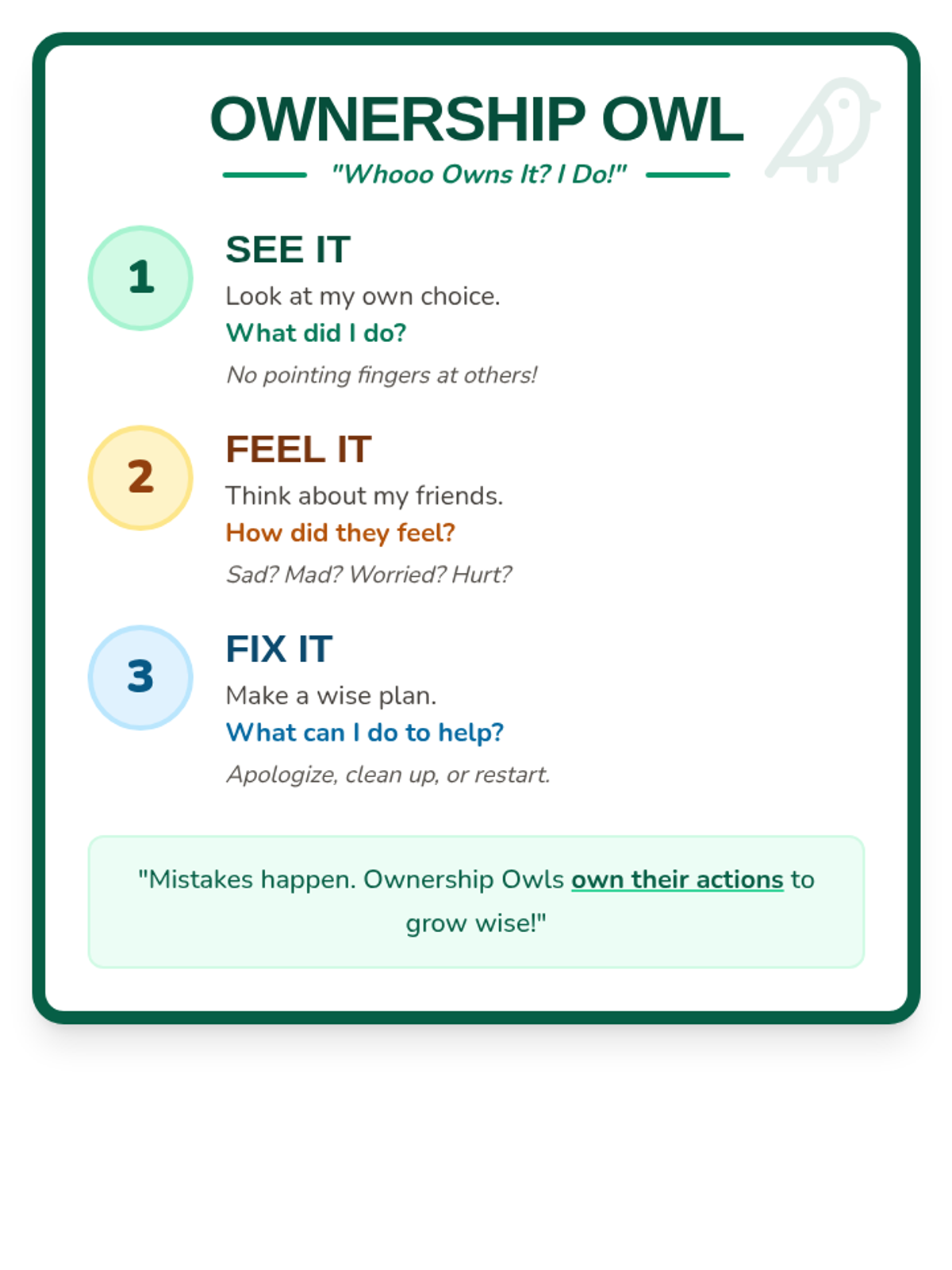
A high-contrast visual anchor chart for the classroom that outlines the three steps of accountability (See It, Feel It, Fix It) with large, readable text and supportive graphics for K-1 students.
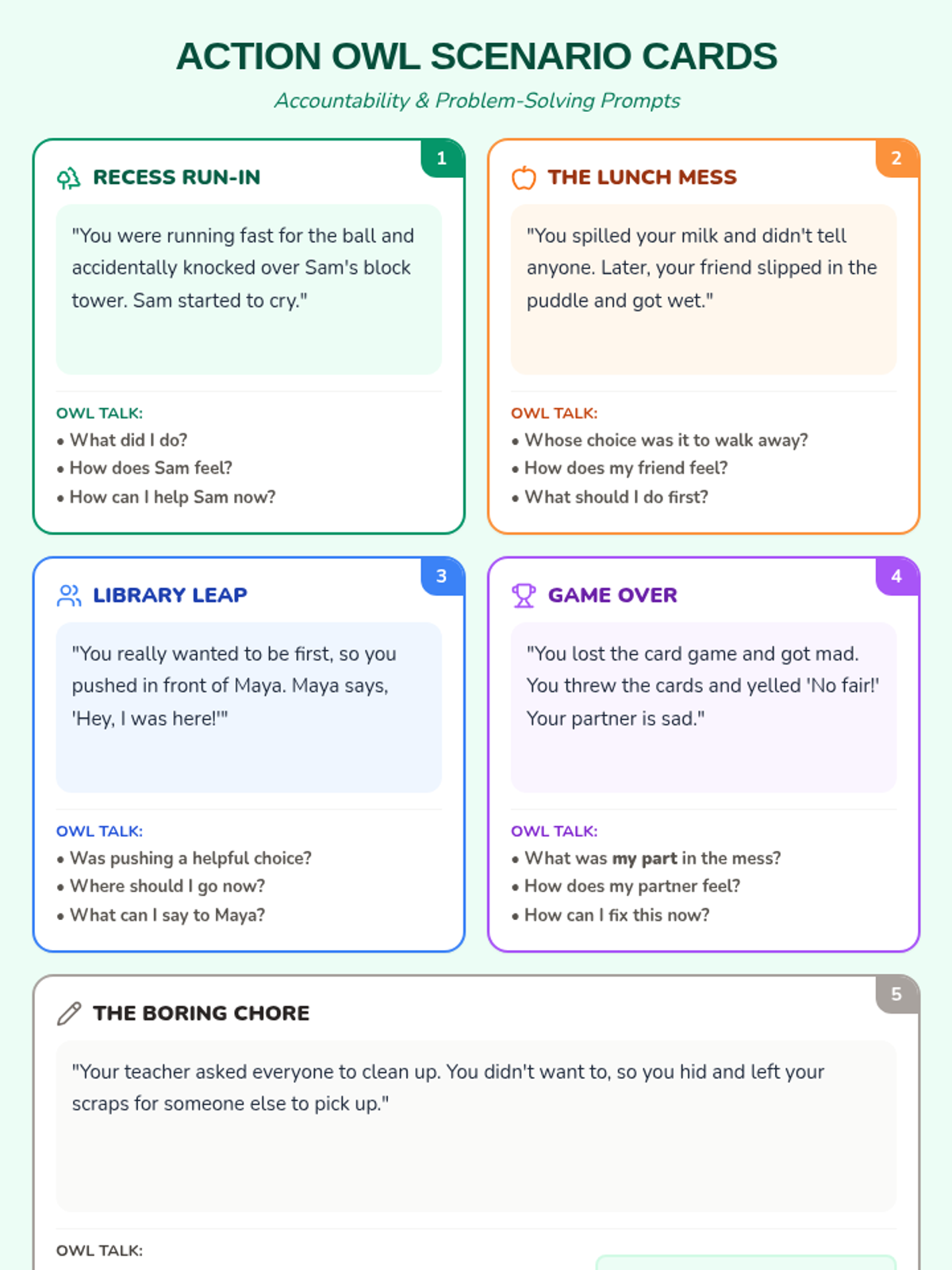
A set of 5 scenario cards for K-1 students covering recess, lunch, line-cutting, losing games, and boring tasks, designed to facilitate discussions about accountability and taking responsibility for actions.
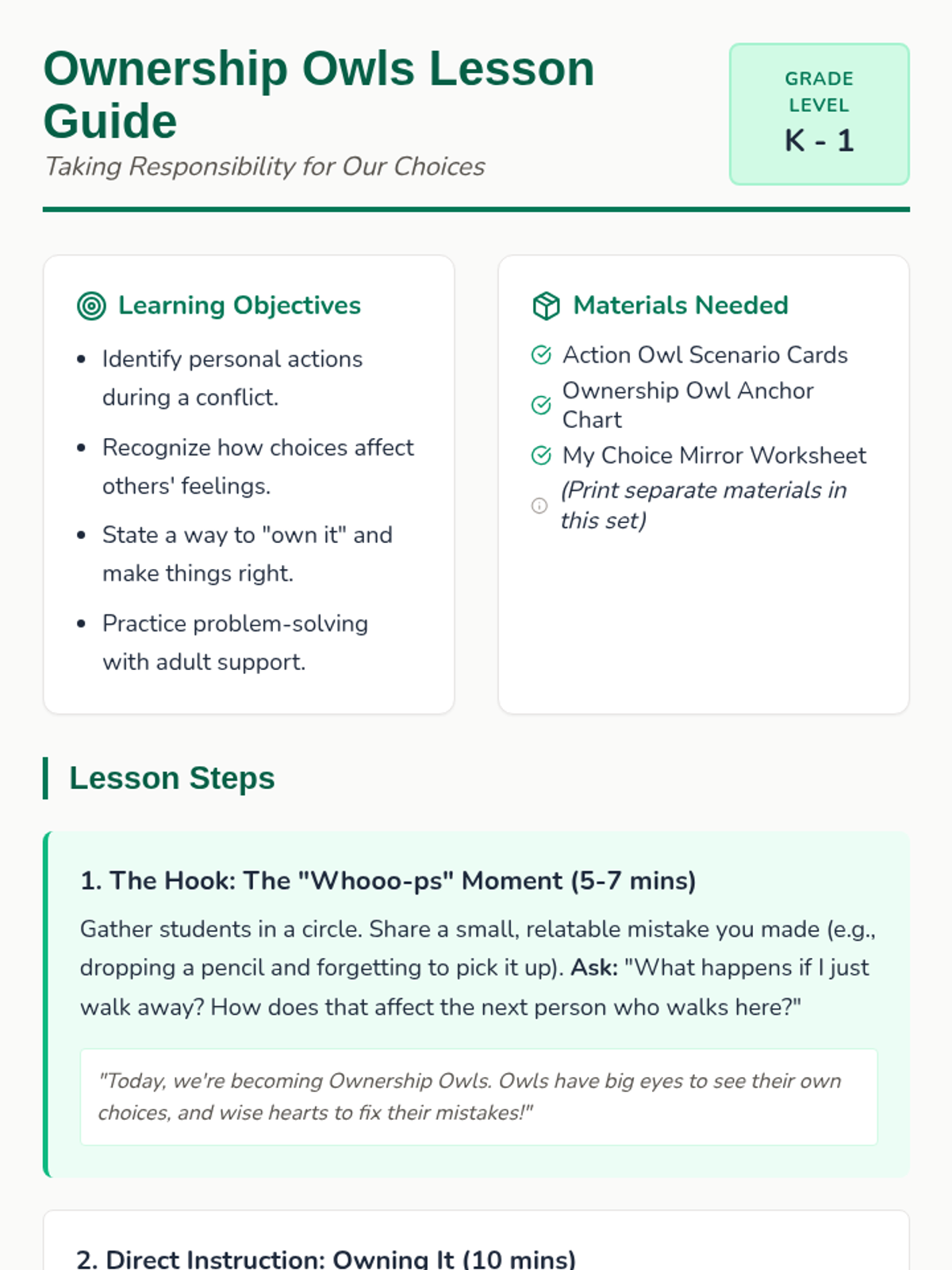
A detailed teacher guide for the Owning Our Actions lesson, providing a step-by-step instructional flow, learning objectives, and differentiation strategies for K-1 students.
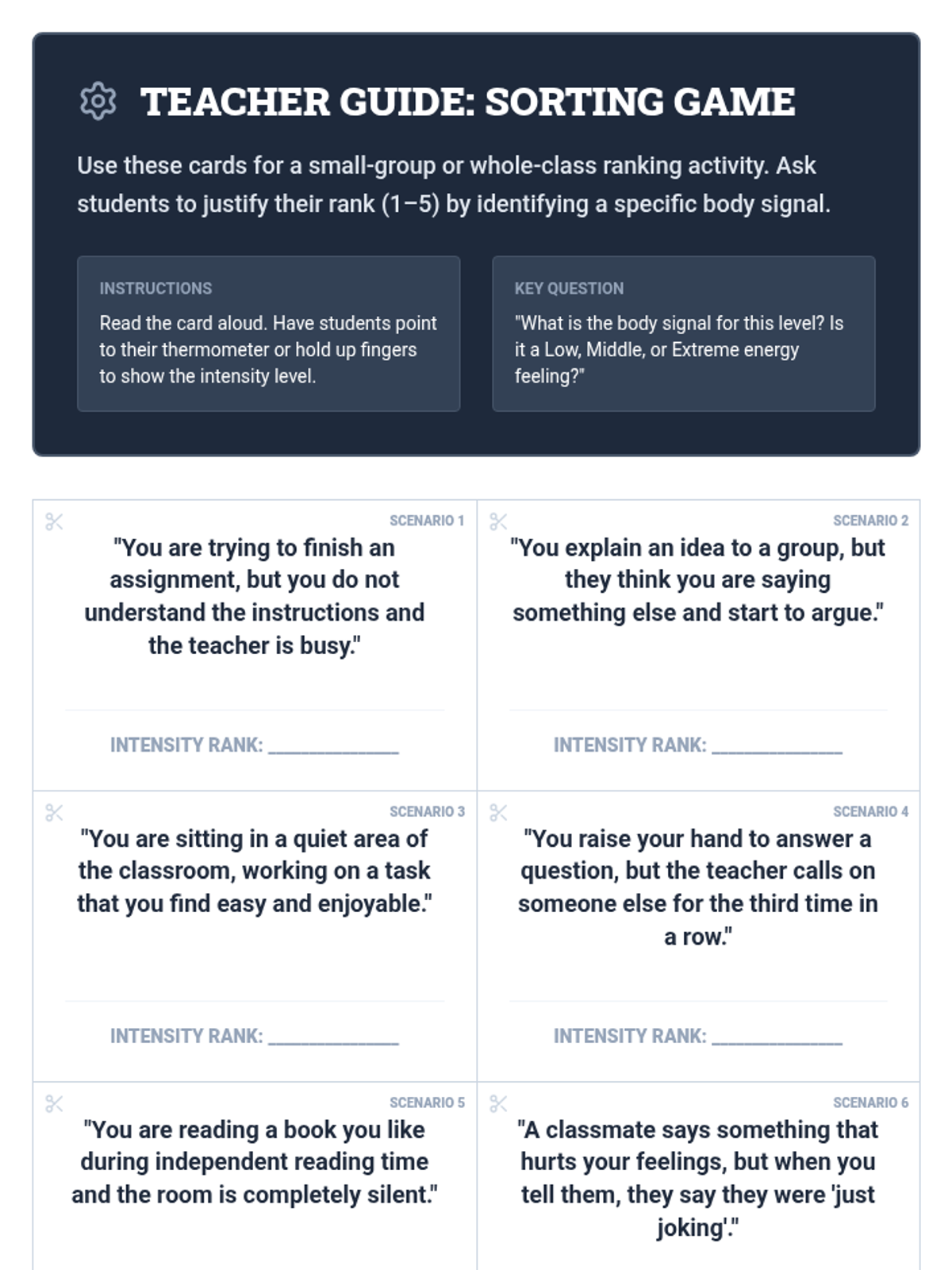
A set of 16 factual scenario cards focusing on classroom challenges like difficult assignments and social misunderstandings for a 1-5 intensity sorting activity.
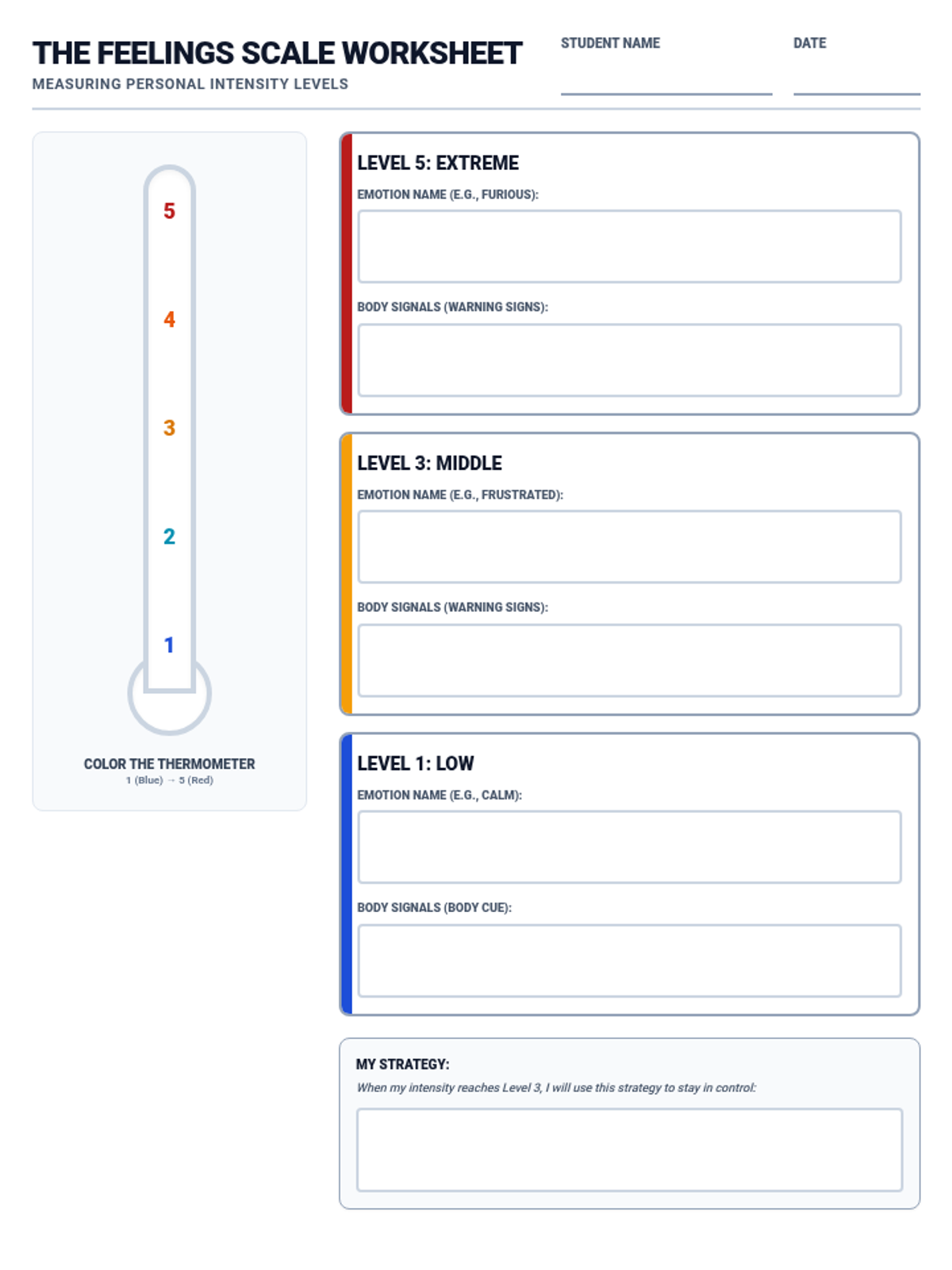
A factual student worksheet for measuring emotional intensity levels 1, 3, and 5, focusing on emotion names and physical physiological signals.