A visual-heavy presentation deck to introduce personal strengths and affirmations to newcomer multilingual learners, featuring simplified vocabulary and home language validation (Portuguese).
A graphic organizer designed as a word web, pre-filled with core concepts like Truth and Trust, with space for students to brainstorm additional vocabulary related to honesty.
A student activity sheet for practicing the identification of true and false statements, featuring large 'T' and 'F' selection areas and examples ranging from obvious facts to social dishonesty.
An answer key for the Case Files activity, providing definitions for the types of dishonesty in each scenario and suggested 'ideal repair' statements.
A small group activity guide featuring four 'Case Files' (scenarios) for students to analyze types of dishonesty and practice trust repair strategies.
A set of 5 educational slides for classroom presentation, defining honesty terms, exploring the impact of lying on friendships, and teaching trust repair steps.
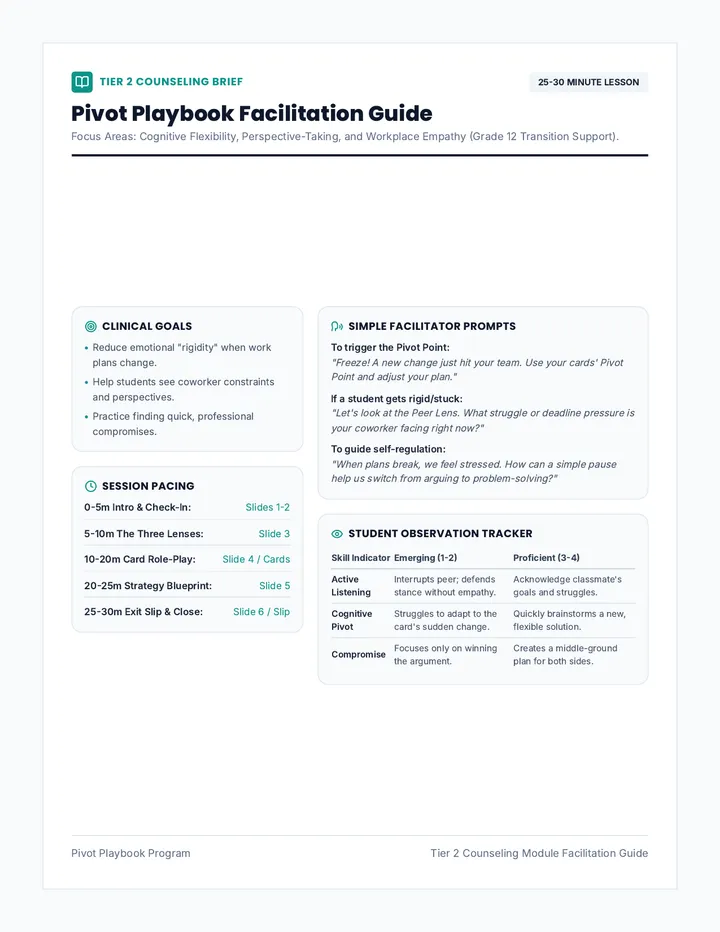
A comprehensive 30-minute lesson plan for school counselors or teachers, detailing the flow of instruction from definitions to repair strategies.
A blank version of the tech planner where students can fill in their own times, activities, and rewards to create a personalized daily map.
A comprehensive teacher's guide for facilitating the 'Space Scout Training' lesson. Includes objectives, key vocabulary, a step-by-step facilitation flight plan, and an answer key for the student worksheets. Optimized 2-page layout.
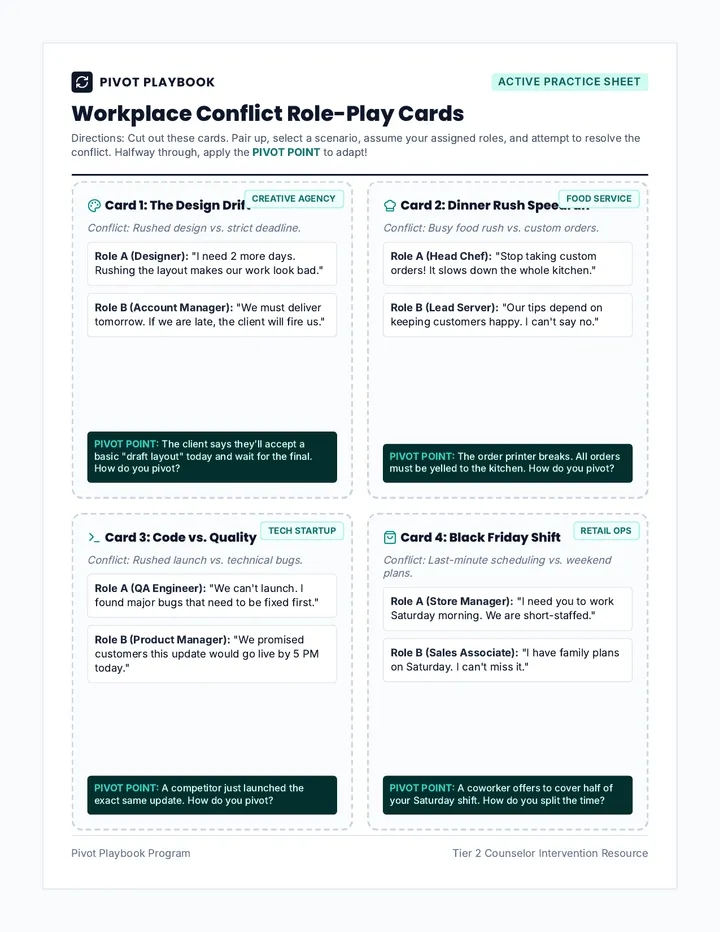
A set of activity cards featuring relatable social scenarios designed for small group discussion and role-play. Each card includes a 'Discussion Mission' to guide students in practicing personal space verbal and non-verbal cues. High-contrast, ink-friendly layout.
A student worksheet designed to help learners identify personal space 'cues' and practice using polite but firm verbal language to protect their boundaries. Features a 'Space Scout' theme with matching and visualization exercises. Condensed to a single page.
A teacher and student resource that clearly defines the boundaries of digital tech (Math, Essays), screen-free paper time, and personal hobbies.
A slide presentation explaining the difference between using technology for school projects (Math, Google Docs), screen-free paper work, and personal hobbies.
A sample daily visual schedule for tracking digital boundaries between school-related math projects, Google Docs essays, screen-free paper time, and personal hobby time.
A reflection-based journal for students to deep-dive into their internal narratives and commit to growth-oriented 'mantras' for the end of the school year.
A printable sorting activity featuring scenario cards and large sorting mats that challenge students to categorize mindsets as 'Weeds' (Fixed) or 'Seeds' (Growth).
A cognitive reframing worksheet where students practice turning fixed-mindset 'weeds' into growth-oriented 'seeds' using common middle school academic scenarios.
A vibrant, garden-themed slide deck that introduces the metaphor of 'weeds' vs. 'seeds' in the context of growth mindset and internal narratives for middle school students.
A detailed teacher guide for The Growth Garden lesson, outlining objectives, materials, and a 60-minute pacing guide for middle school educators.