Final presentation for the series, preparing students for college disability services. Revised to fix contrast on legal charts, kerning issues on key quotes, and forced background rendering.
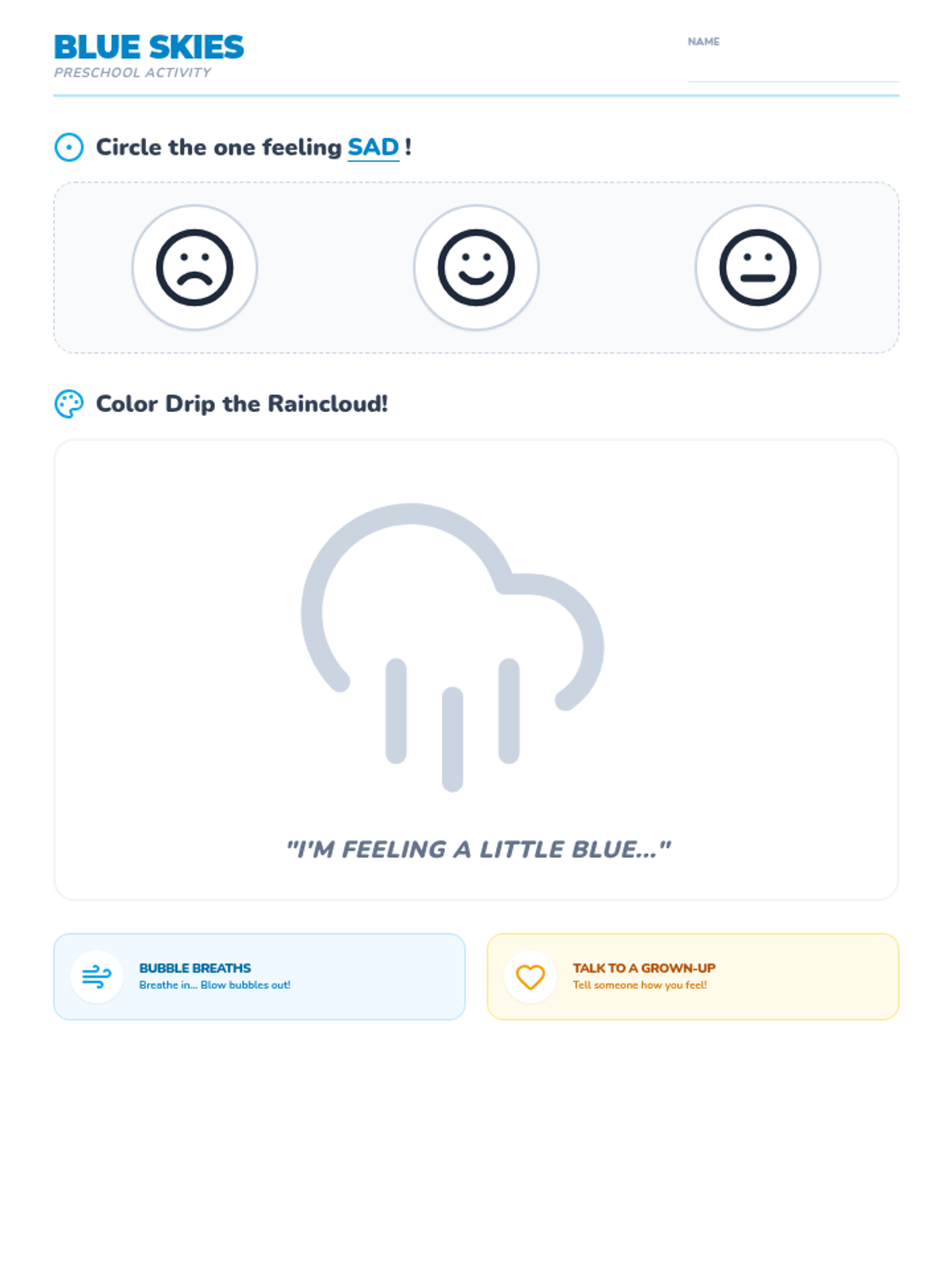
A student-facing activity sheet for preschoolers featuring character coloring, emotion identification, and visual reminders of coping strategies.
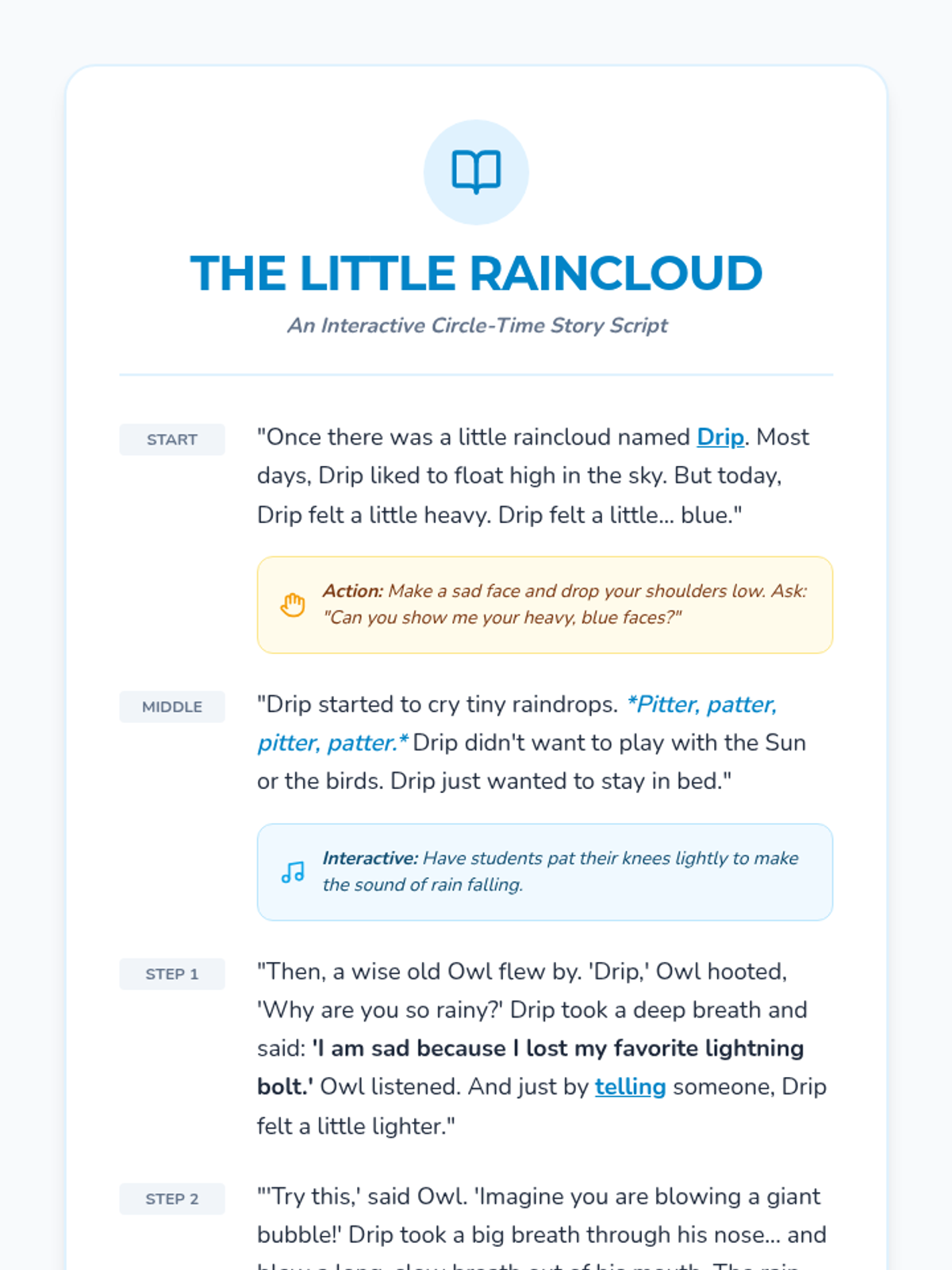
A teacher-facing interactive script featuring a character named Drip the Raincloud, used to teach preschoolers how to articulate sadness and practice breathing.
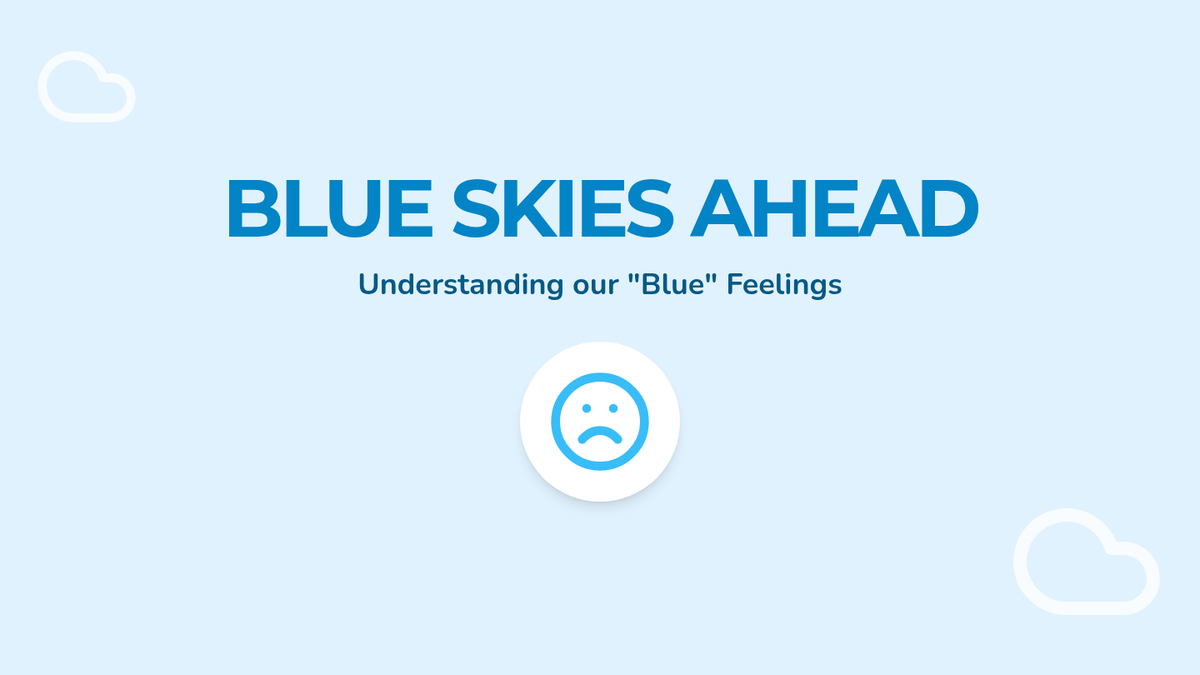
Engaging visual slides for a circle-time lesson, teaching preschoolers how to recognize sadness and use Bubble Breaths and communication to cope.
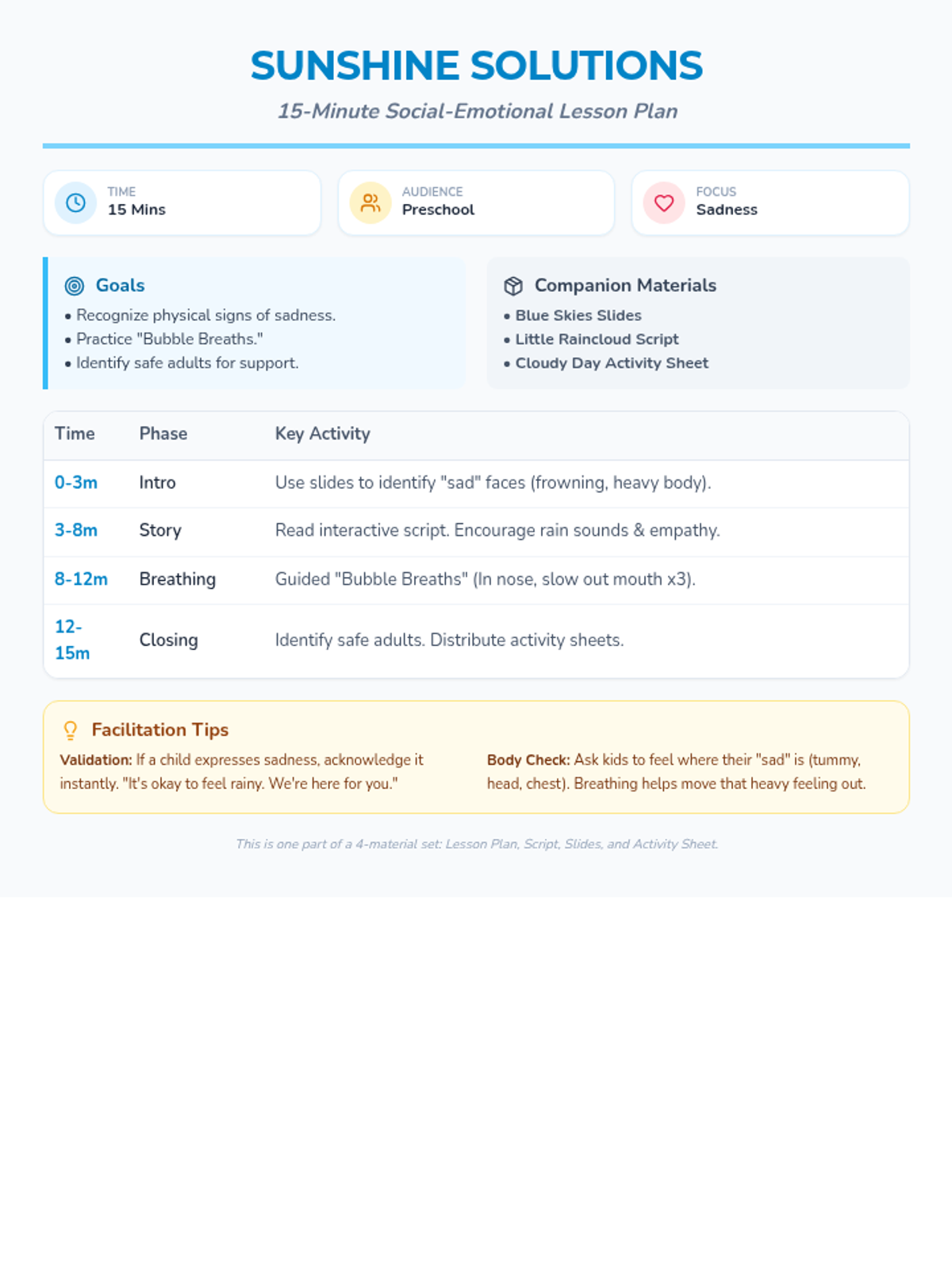
A comprehensive 15-minute lesson plan for preschool teachers focusing on identifying sadness and practicing coping strategies like Bubble Breaths and seeking support.
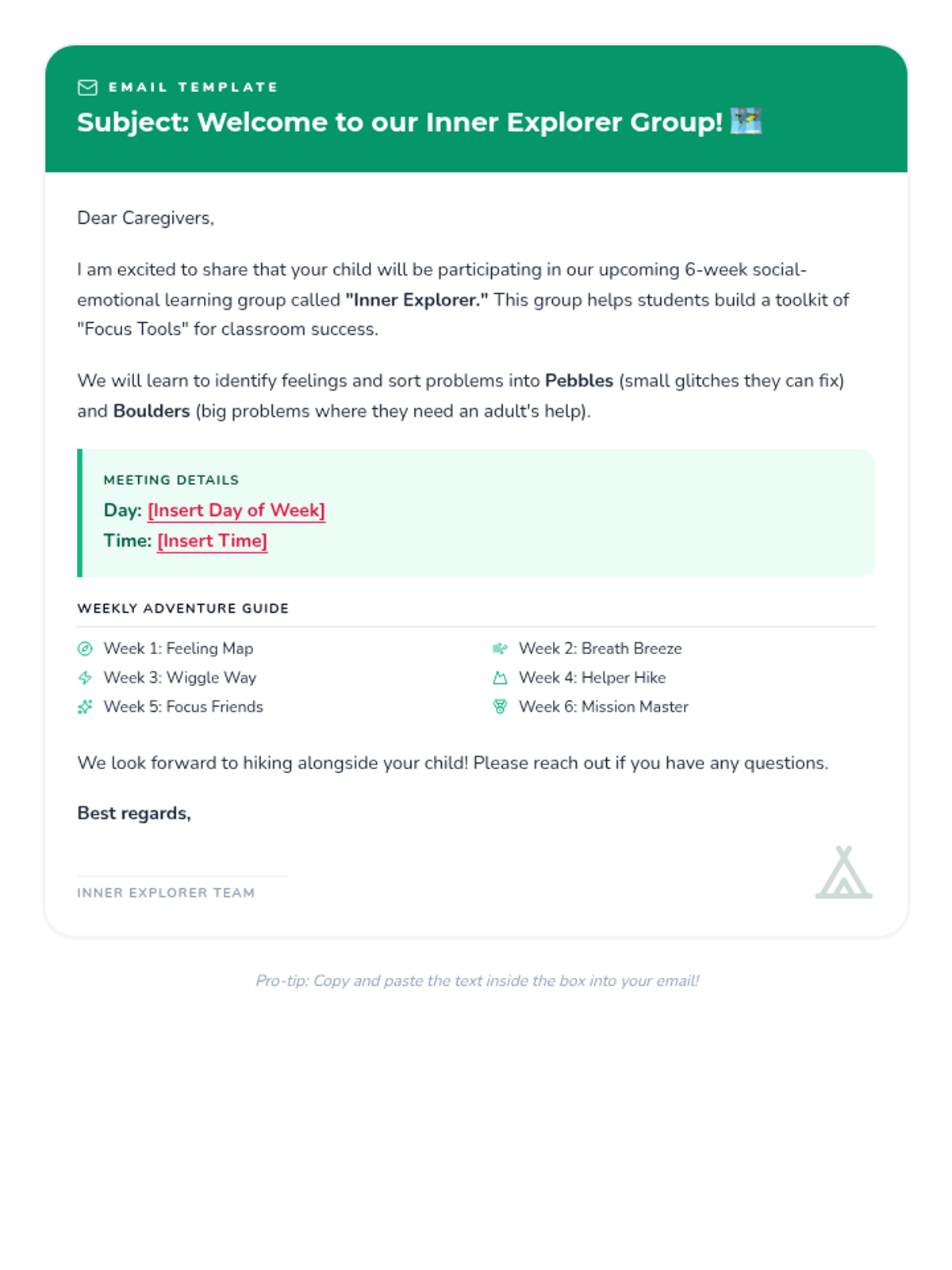
A simplified email template for caregivers introducing the 'Inner Explorer' group. Includes placeholders for group day and time, a summary of the 6-week curriculum, and an explanation of key concepts like 'Pebbles vs. Boulders'. Designed for quick copying into an email or school newsletter.
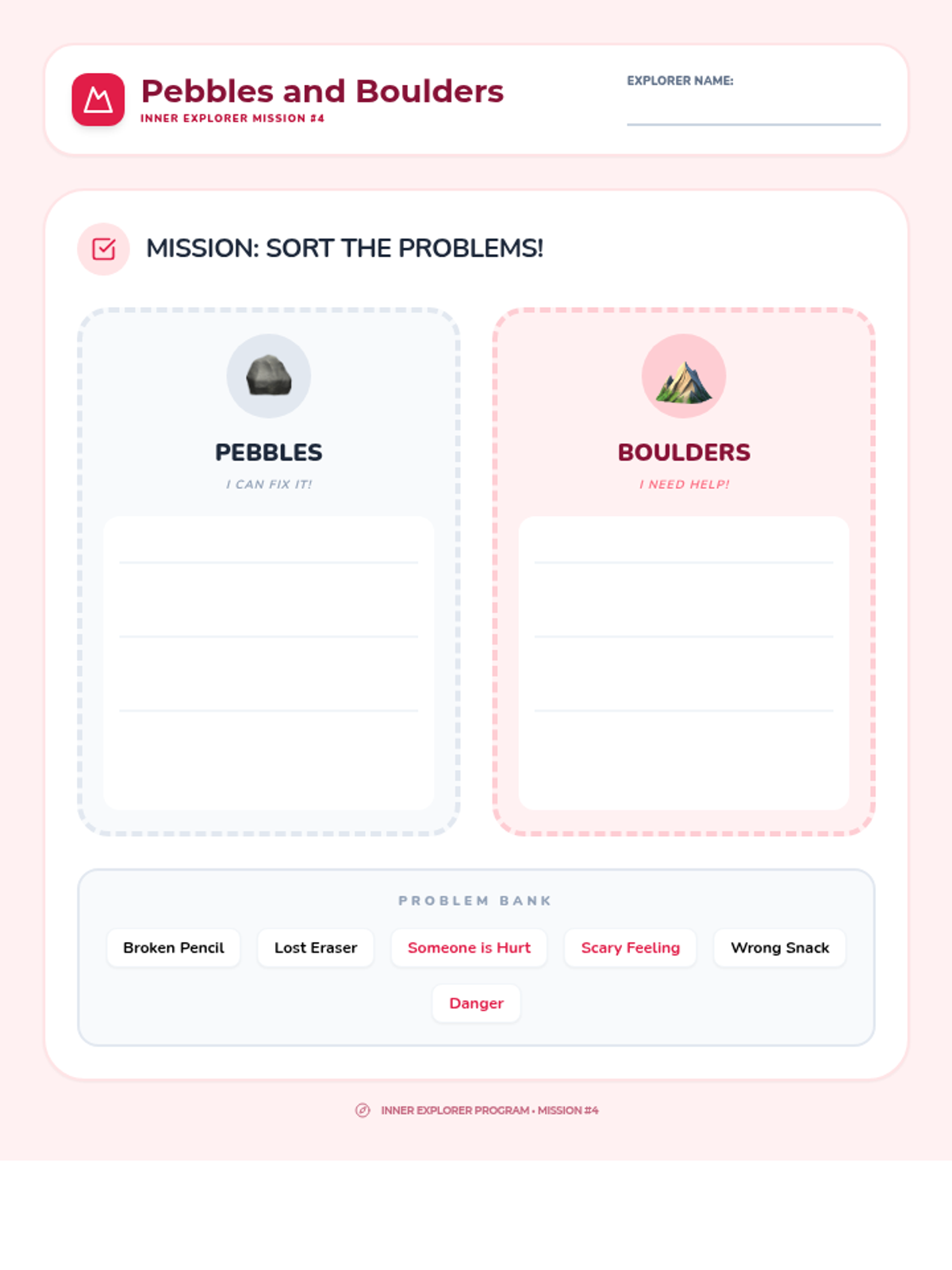
A sorting activity worksheet for first graders to practice identifying the difference between 'Pebbles' (small problems) and 'Boulders' (big problems). Includes a word bank of relatable scenarios and clear sorting areas to reinforce when to seek adult support.
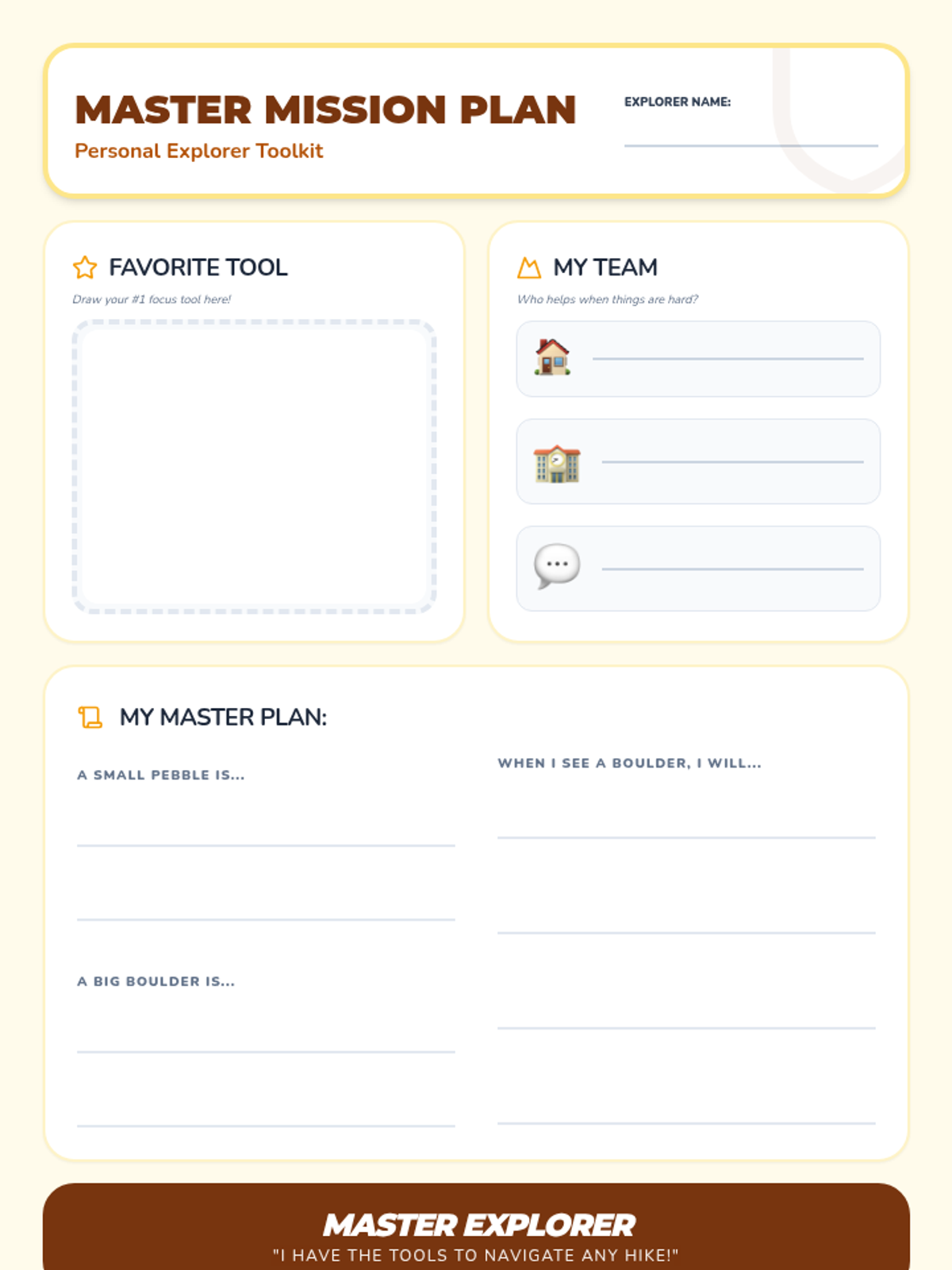
The culminating student worksheet for the Inner Explorer program, updated to include 'Pebbles vs. Boulders' problem sizing. Students document their favorite tool, their support team, and specific plans for handling different problem sizes.
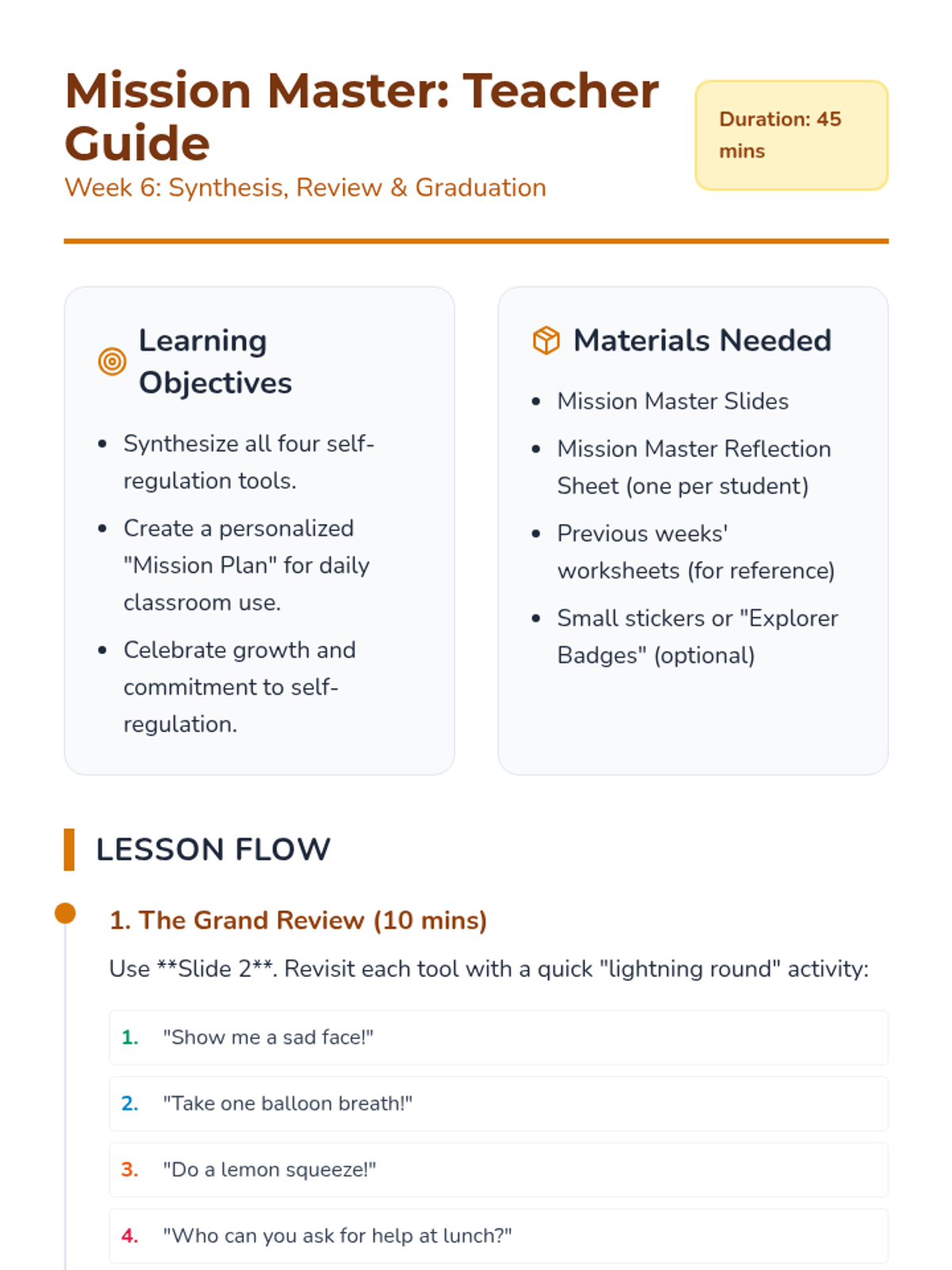
The final teacher's guide for the Inner Explorer program. Focuses on synthesizing the six weeks of learning, guiding students through the creation of their personalized mission plans, and conducting a celebration ceremony to recognize student achievement in self-regulation.
A celebratory and comprehensive review slide deck for the final week of the Inner Explorer program. Summarizes the four key tools learned (Feelings, Breath, Movement, Team), guides students in creating a personalized toolkit, and celebrates their growth as self-regulated learners.
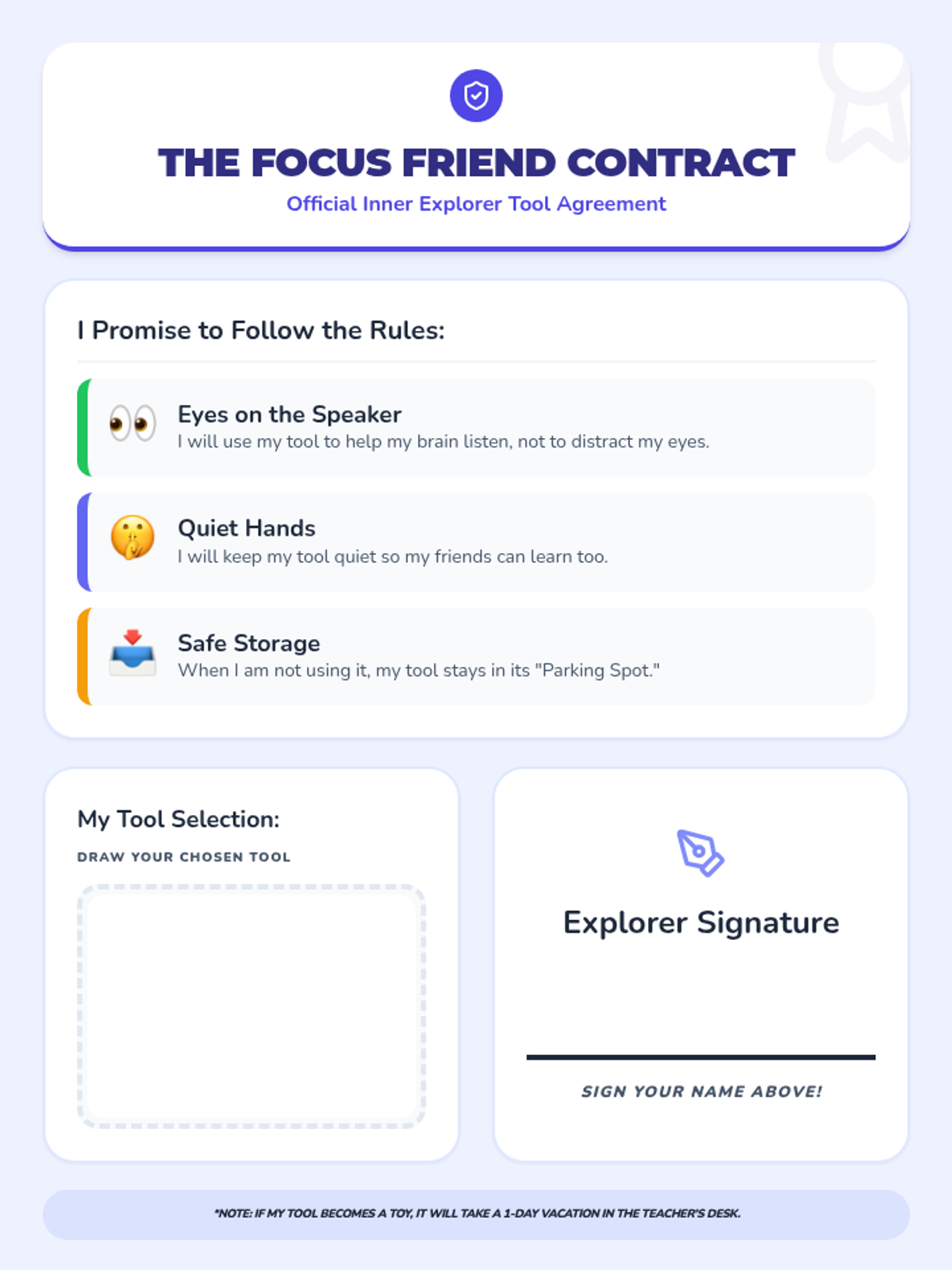
A formal behavioral contract for students using sensory tools (fidgets). Outlines three key rules (Eyes on Speaker, Quiet Hands, Safe Storage), includes a space for students to draw their selected tool, and provides a signature line to foster a sense of responsibility and ownership.
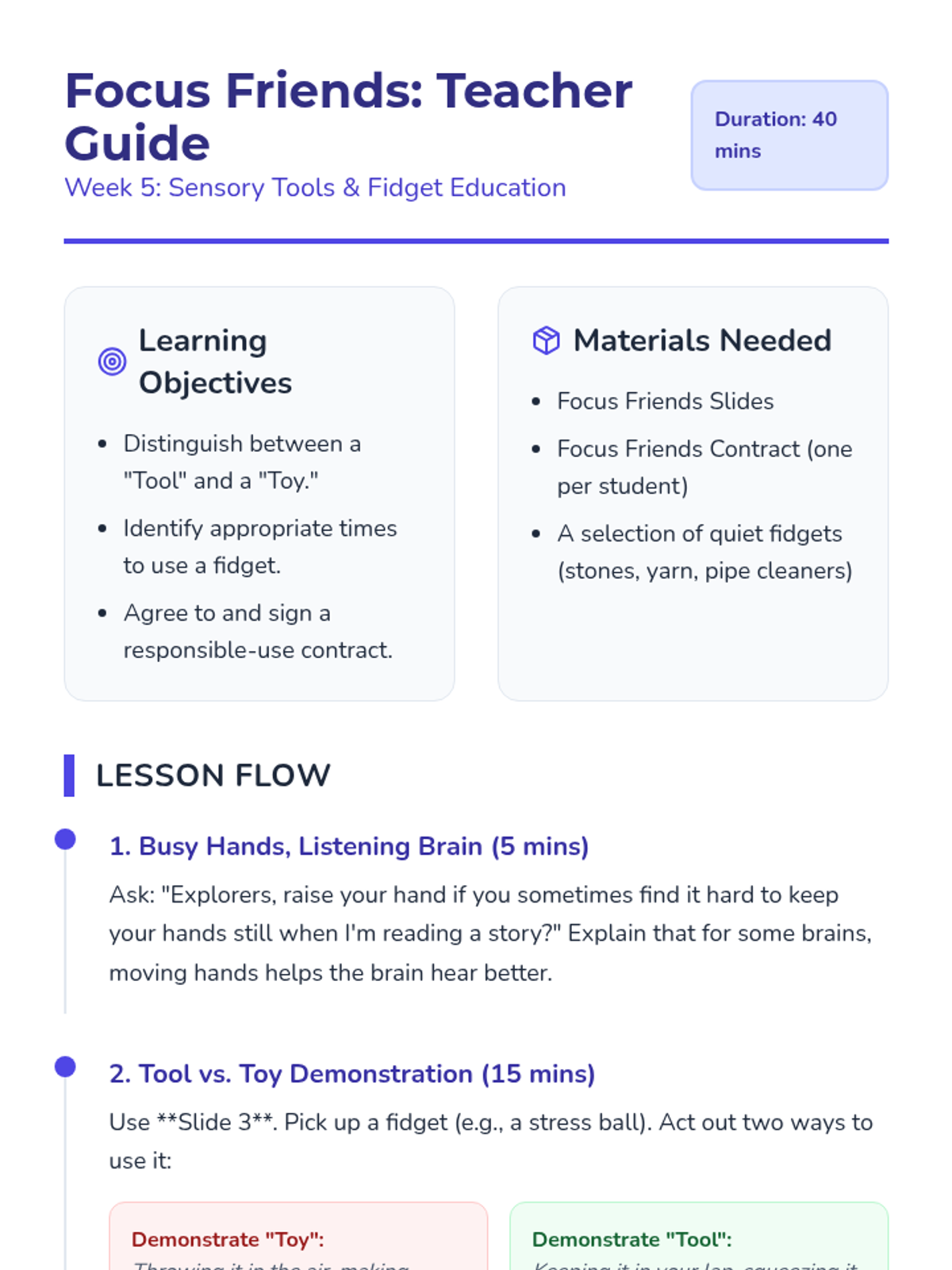
A teacher's guide for introducing fidget tools in the first-grade classroom. Includes a clear 'Tool vs. Toy' demonstration script, behavioral expectations for fidget use, and a classroom management strategy for storing and retrieving sensory tools.