A teacher-facing guide for administering and interpreting the Hope Horizon Assessment for 3rd graders, including theoretical background and scoring rubrics.
A slide deck for introducing preschoolers to the concept of play choices. It defines what a choice is, explains that friends have their own choice voice, and provides actionable options for when a friend chooses to play with something or someone else.
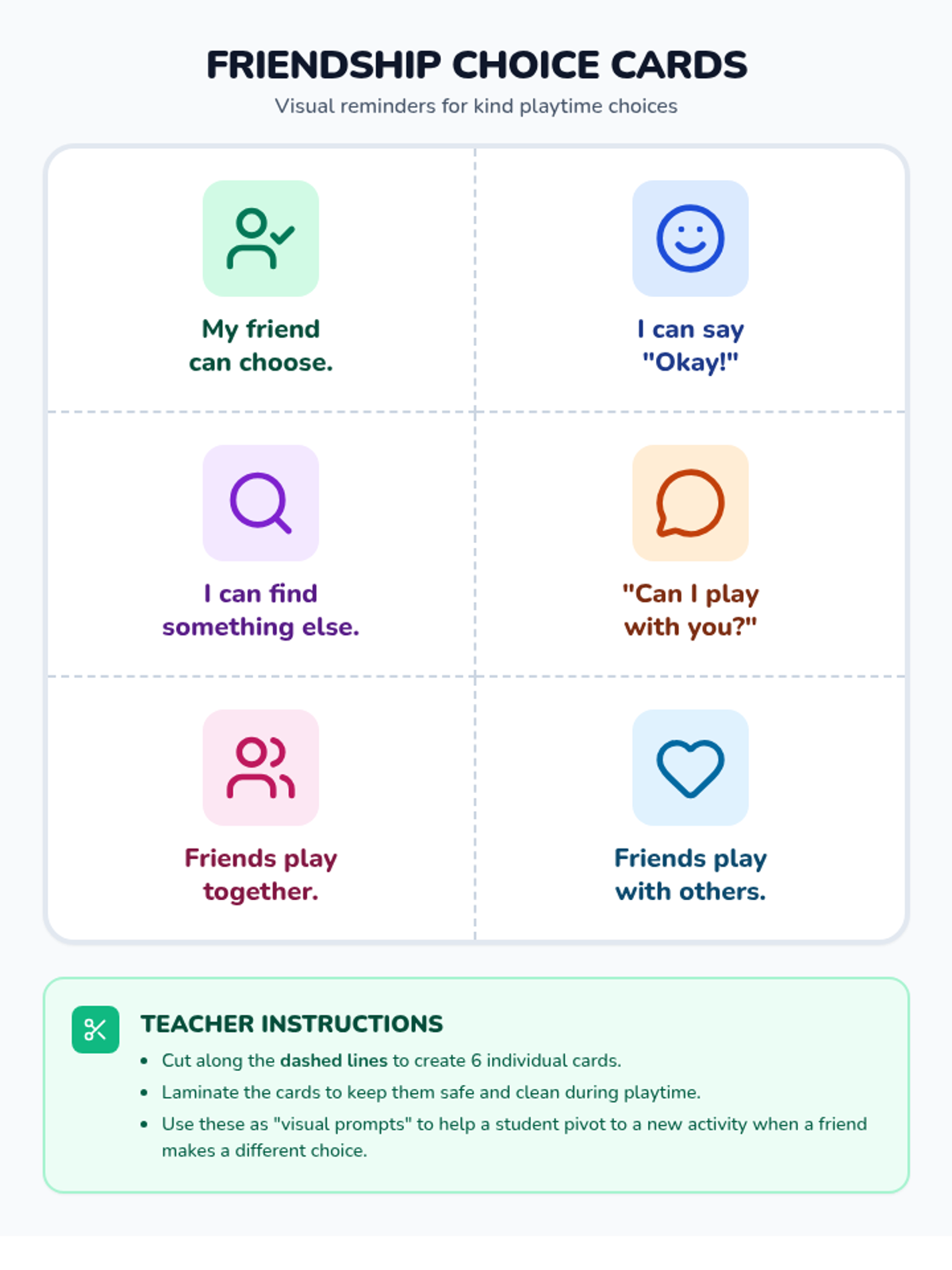
A set of 6 printable visual support cards for preschoolers to help them navigate social situations where friends make independent choices. Each card features a clear icon and a short, positive phrase.
A simple, illustrated social narrative for preschoolers about allowing friends to make their own choices during play. It covers friends choosing different toys and playing with other people.
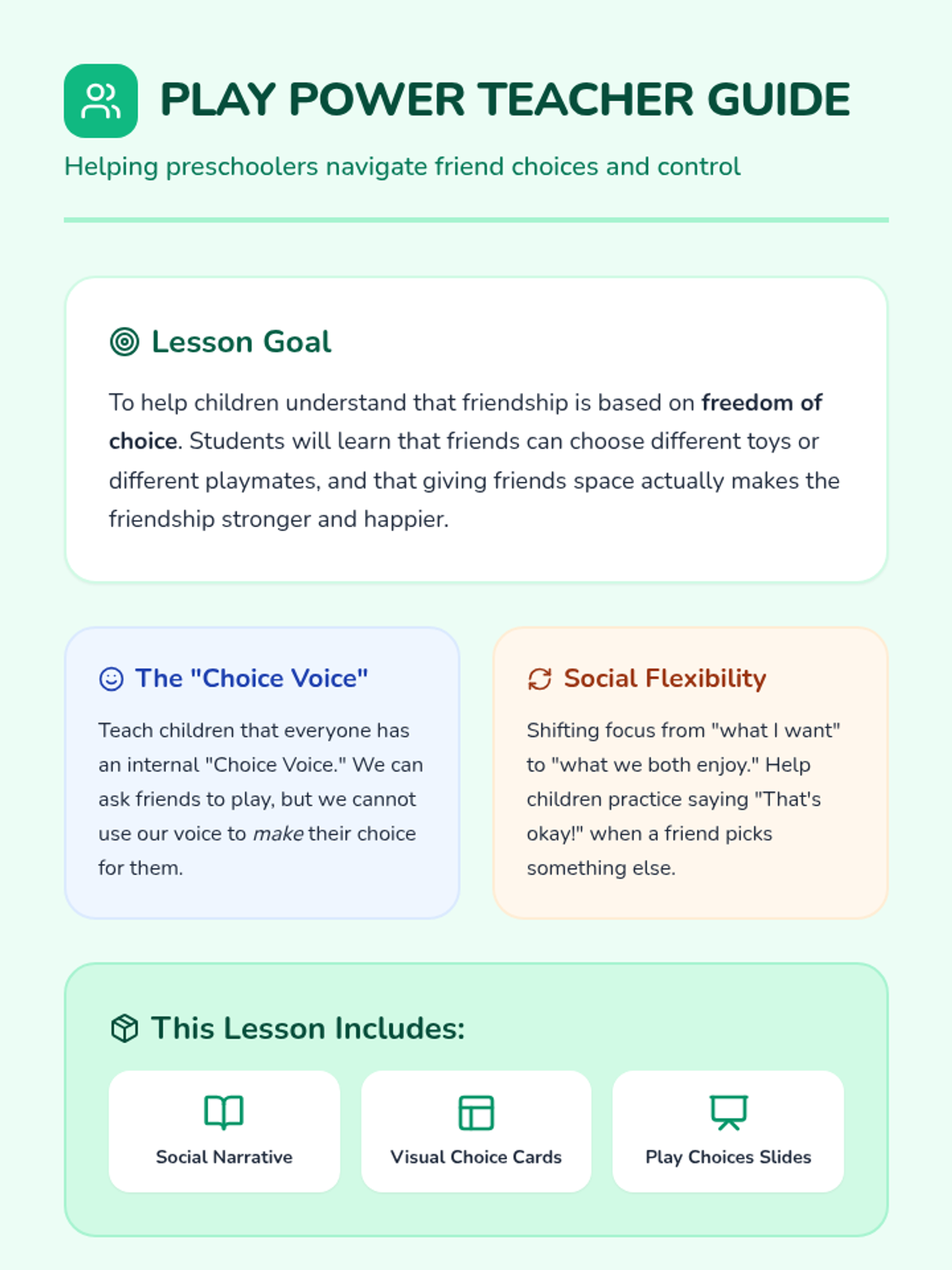
A comprehensive facilitator guide for teachers or parents to help preschoolers understand the concept of free choice in friendships. Includes teaching strategies, circle time prompts, and core concepts like the 'Choice Voice'.
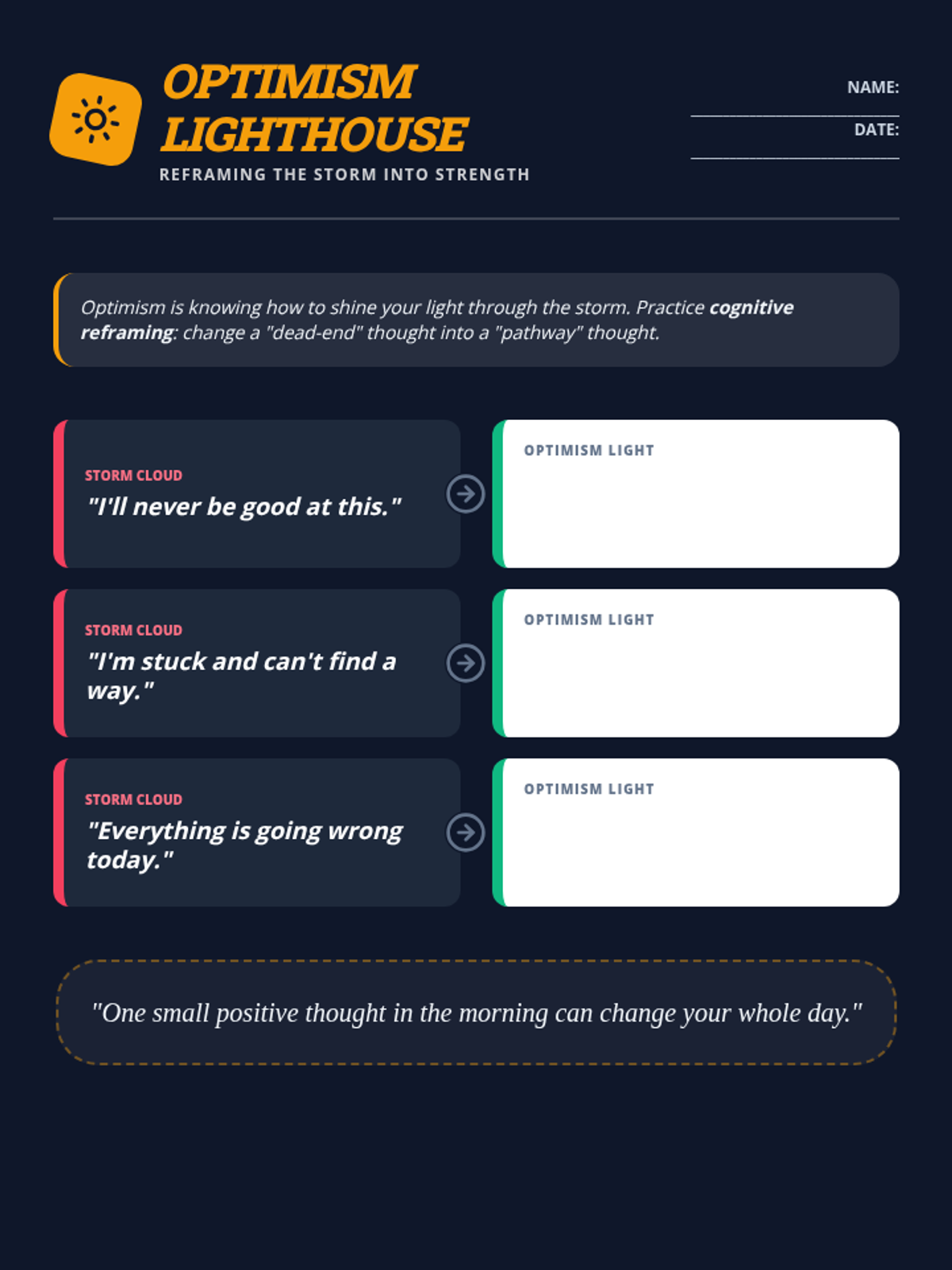
An optimism reframing worksheet that helps students transform negative "storm cloud" thoughts into hopeful, action-oriented "light" thoughts. It uses the concept of cognitive reframing to build resilience and agency.
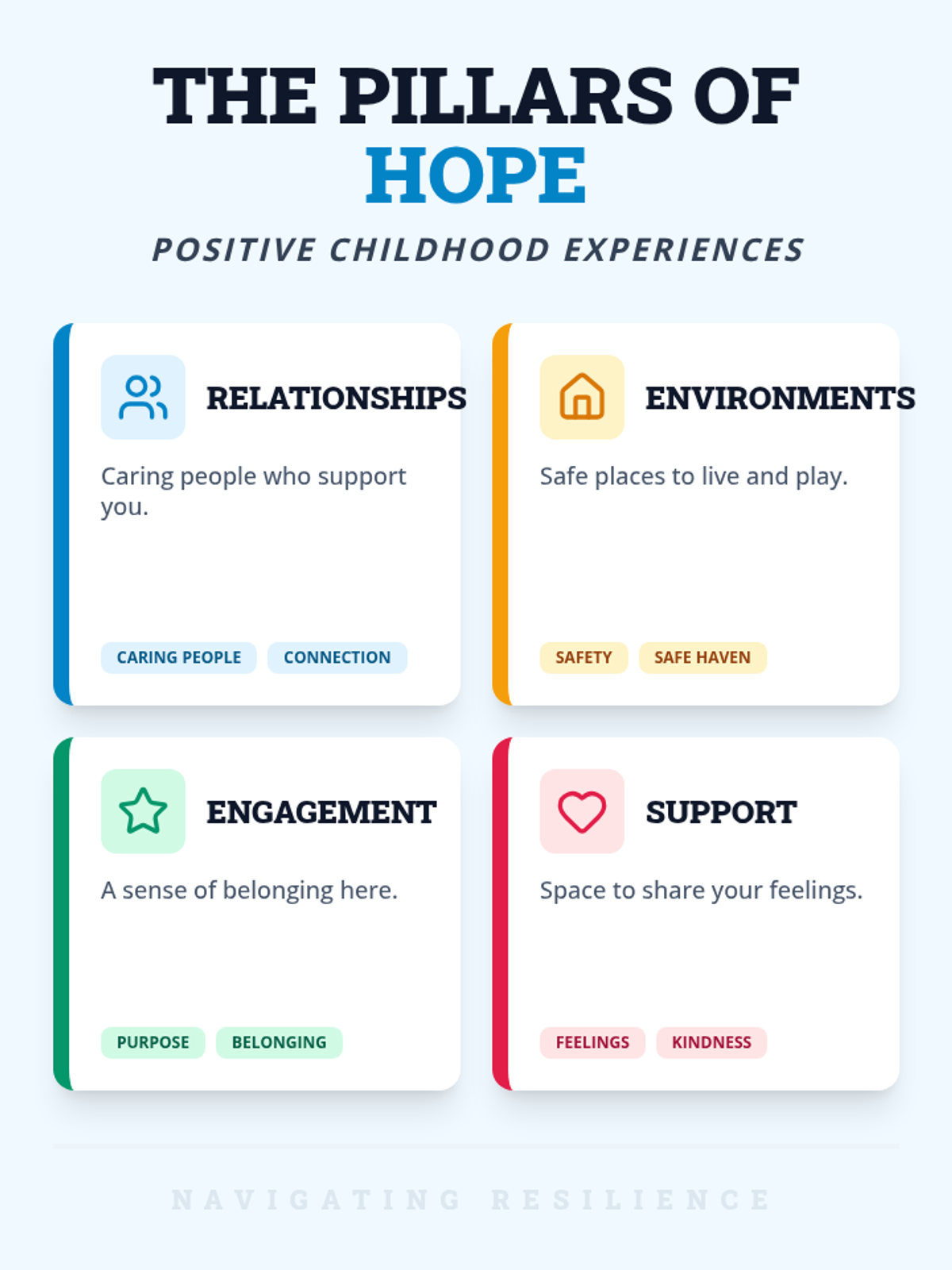
A classroom anchor chart detailing the four pillars of the HOPE framework: Relationships, Environments, Engagement, and Emotional Support. Designed to remind students of the positive experiences that build their resilience and hope.
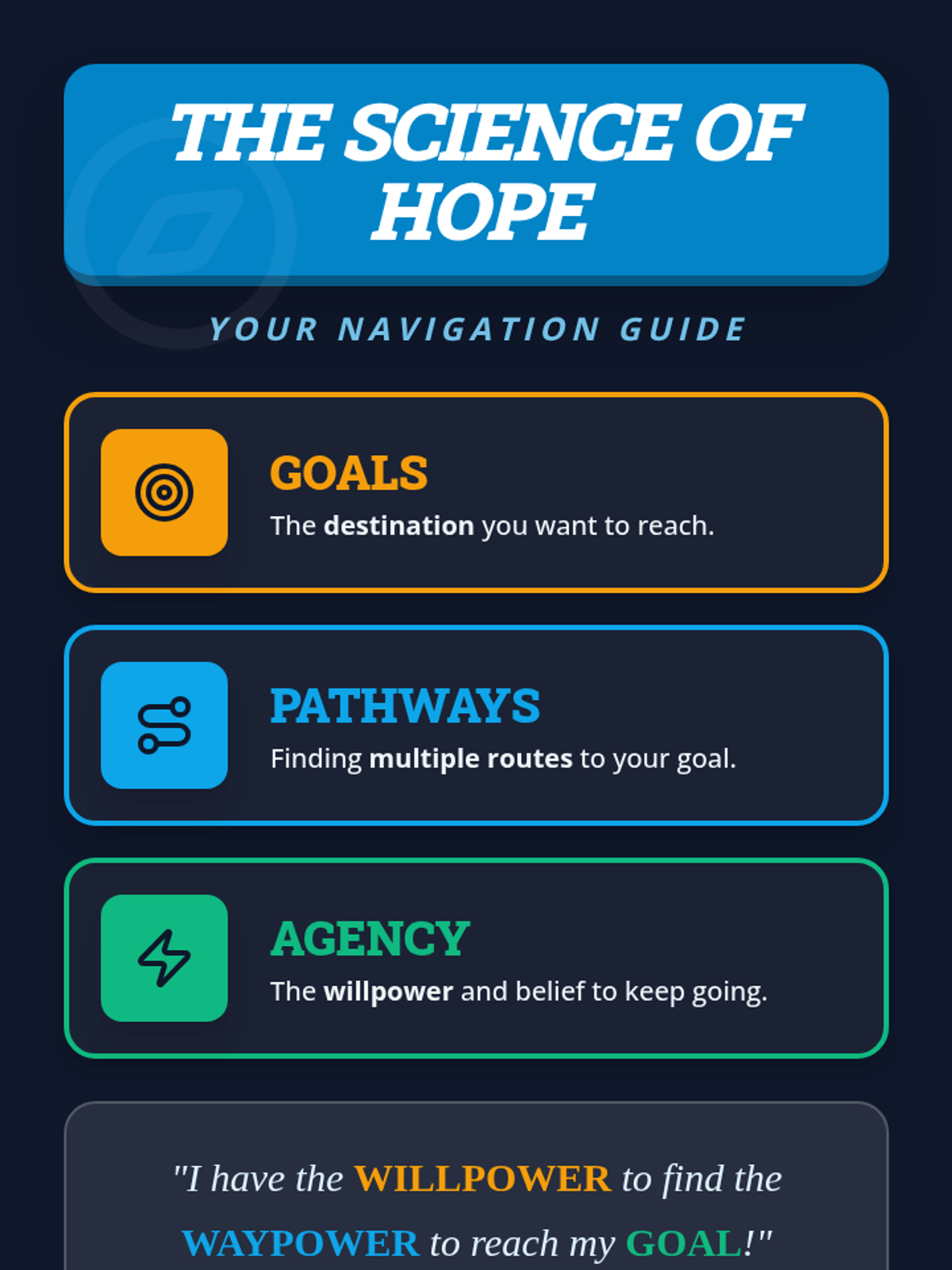
A visual anchor chart for the classroom wall illustrating the Science of Hope (Goals, Agency, Pathways). It uses high-contrast colors and bold icons to serve as a daily reference for students building their resilience and goal-setting skills.
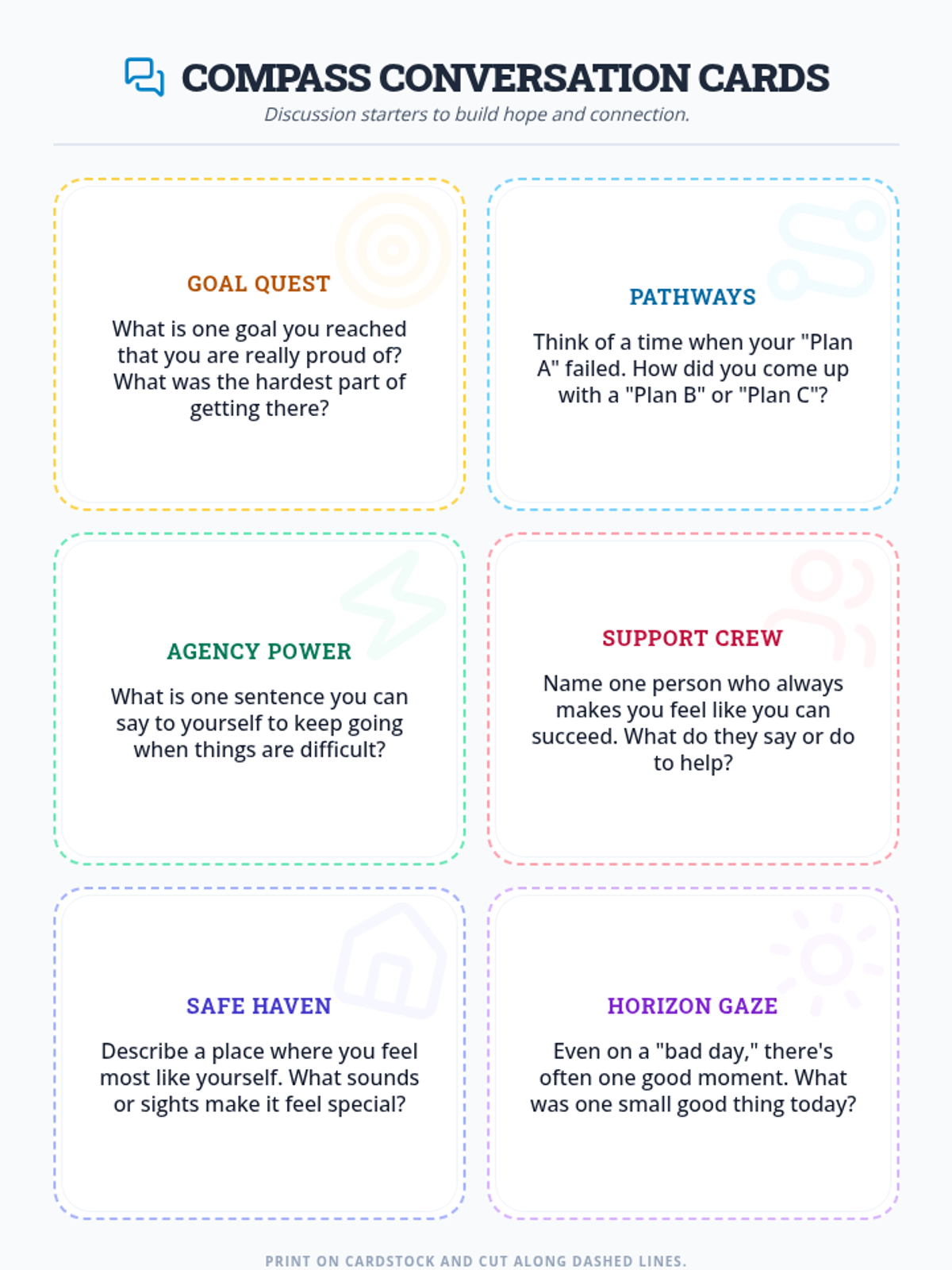
A set of printable discussion cards designed for small group circles. Each card features a prompt related to the Science of Hope or the HOPE framework to foster connection, resilience, and goal-oriented thinking.
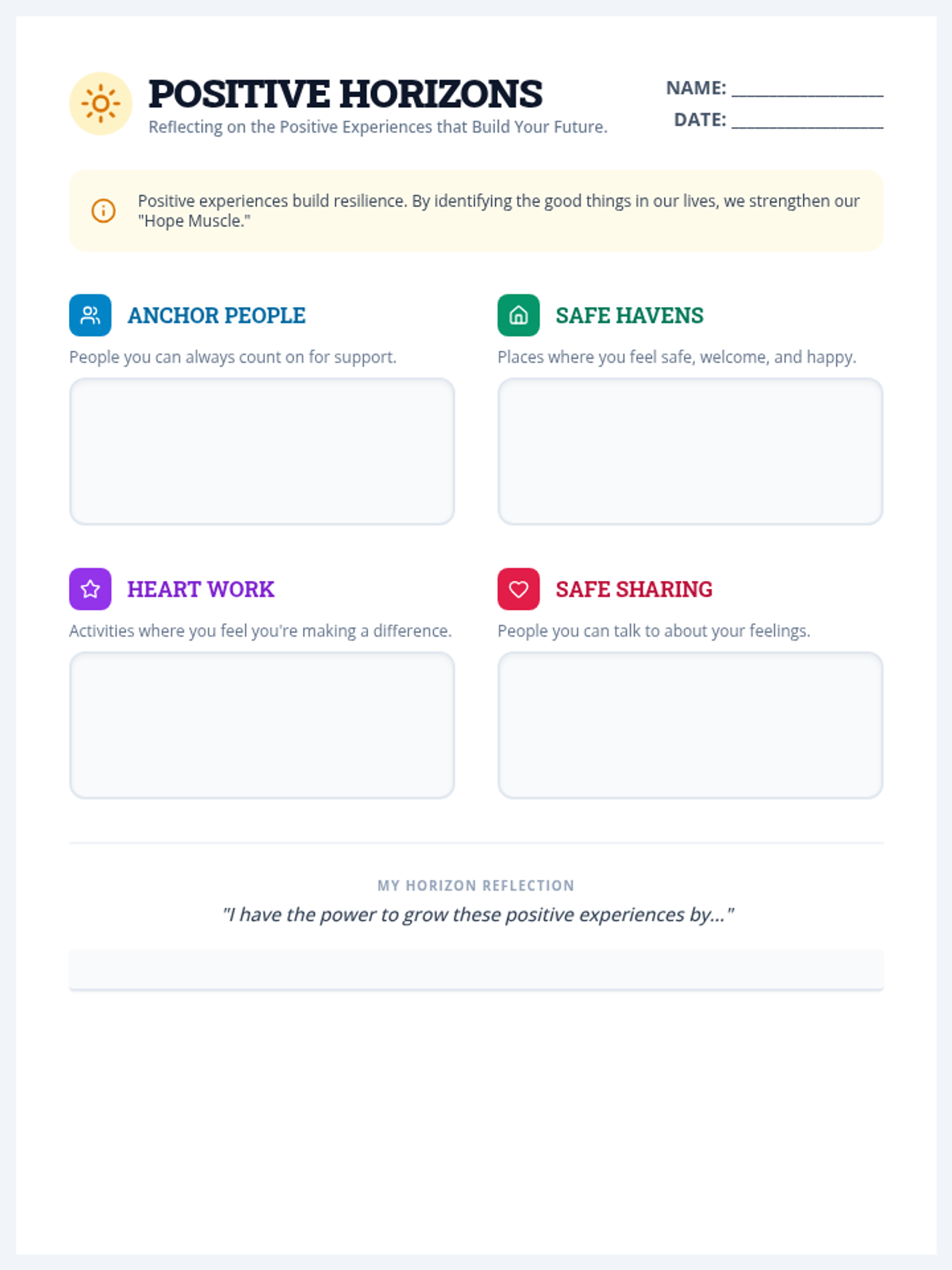
A reflection worksheet centered on the HOPE framework. It encourages students to identify and value their positive relationships, safe environments, community engagement, and emotional support systems.