A reflection exit ticket for students to express their feelings and key takeaways at the end of the lesson.
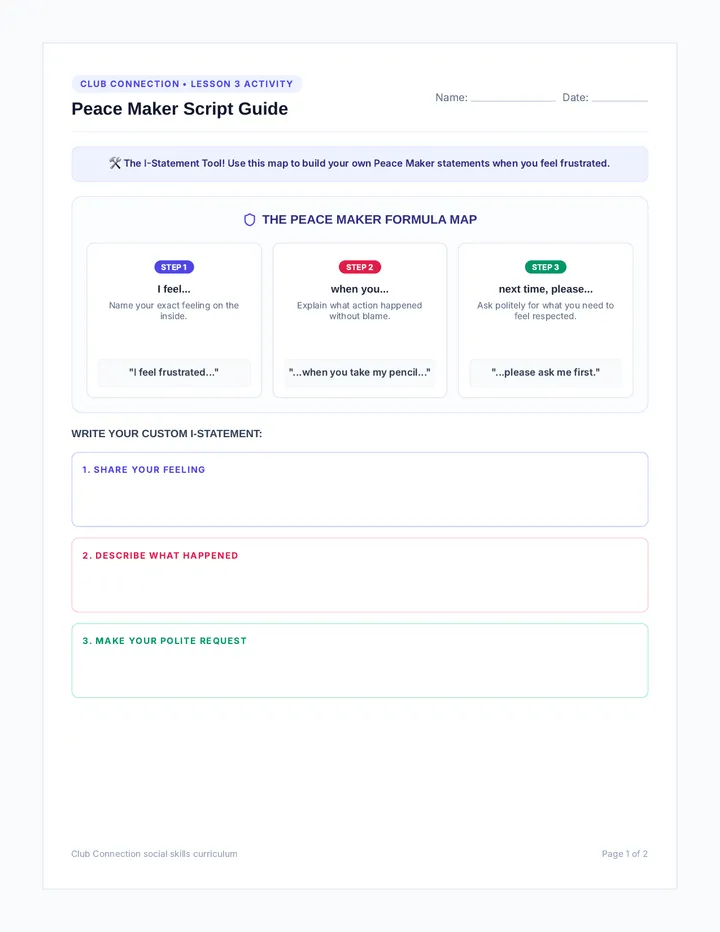
Student-facing Peace Maker Script Guide and Scenario Practice Cards. Features a structured 3-step 'I-statement' visual helper and 4 role-play scenario cards depicting common third-grade playground and classroom conflicts.
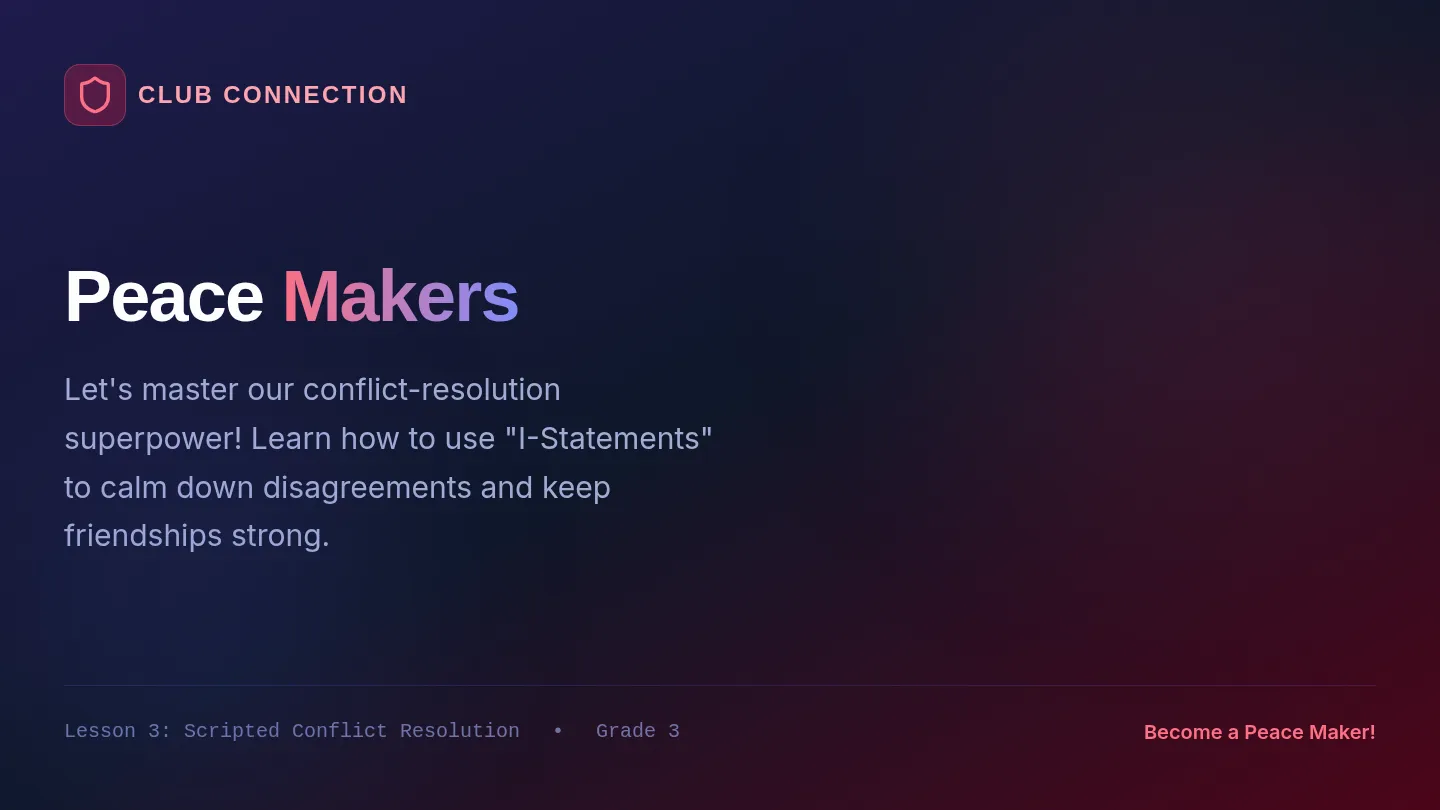
Visual instruction slides for Lesson 3 (Peace Makers). Covers "I-statements" and the conflict resolution script with colorful diagrams, child-friendly scenarios, and modeling prompts.
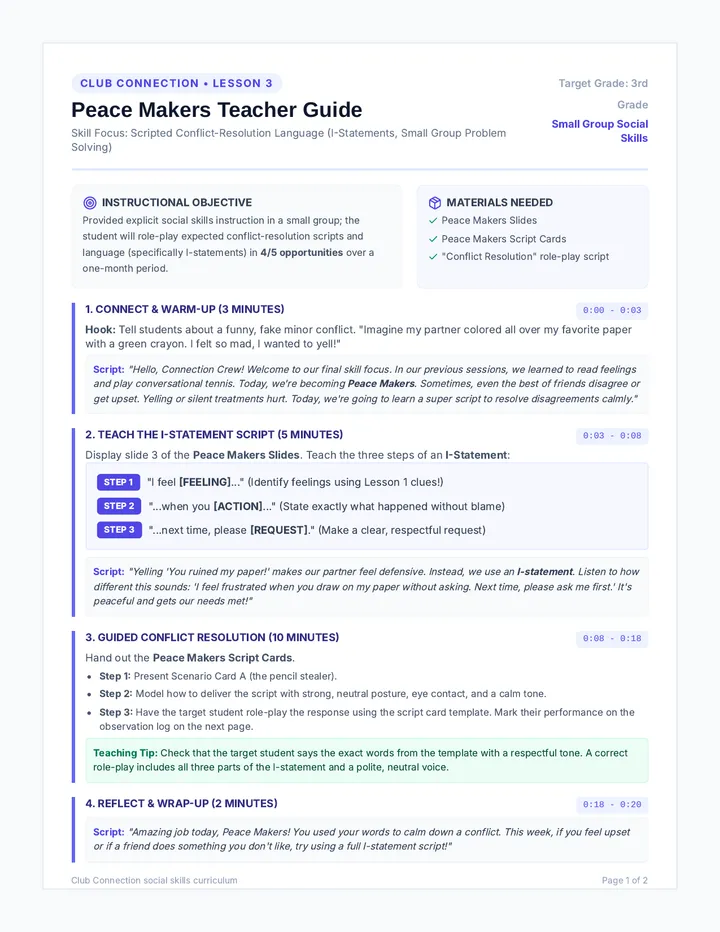
A step-by-step facilitation guide for educators to deliver the Peace Makers mini-lesson on scripted conflict resolution. Includes instructional scripts, a visual 'I-statement' formula, and a master monthly tracking summary to evaluate if the target student achieved the 4 out of 5 opportunities goal.
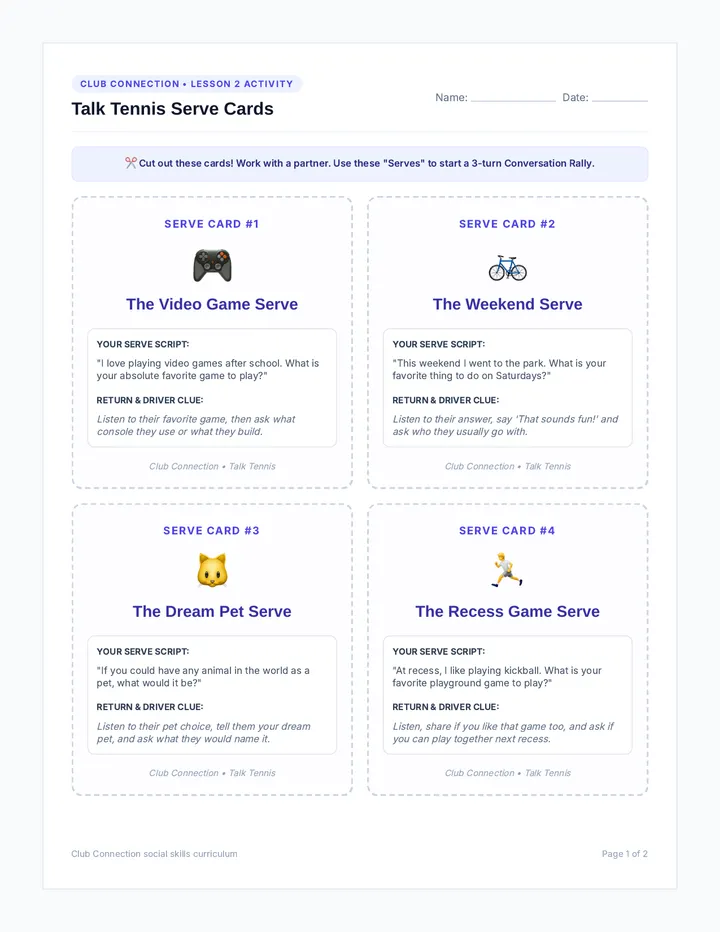
Student-facing Talk Tennis Rally Prompt Cards and script templates. Features 4 interactive conversation-starter cards (serves) and a structured step-by-step role-play rally sheet to practice 3-turn conversations.
Visual instruction slides for Lesson 2 (Talk Tennis). Covers conversational serves, returns, drivers, and 'conversation crashers' (abrupt topic changes) using high-impact visual illustrations and third-grade friendly graphics.
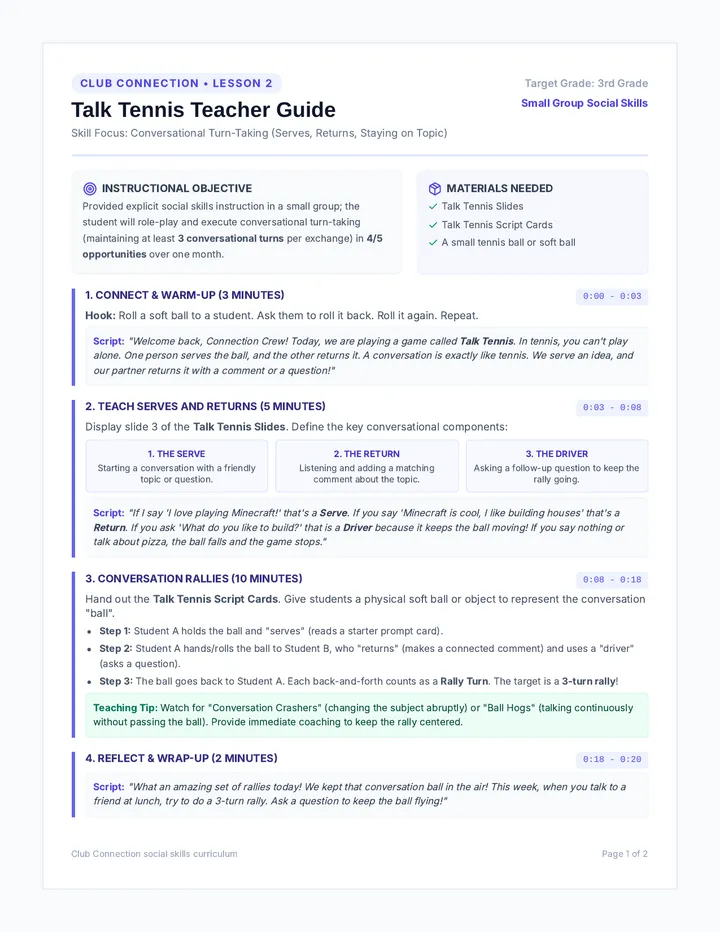
A step-by-step facilitation guide for educators to deliver the Talk Tennis mini-lesson on conversational turn-taking. Includes instructional scripts, a 'Conversation Rally' visual guide, and a print-ready active observation tracker to count peer-to-peer conversation turns.
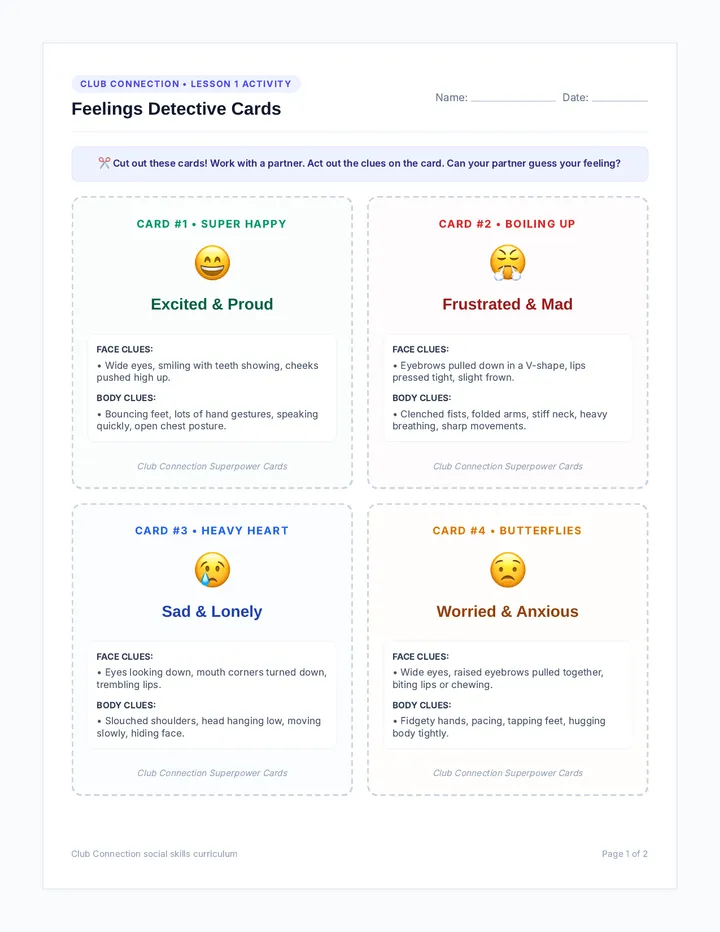
A set of student-facing Feelings Detective Flashcards and Scenario Prompt Cards. Includes visual clues for key emotions (sad, excited, frustrated, worried) and interactive group scenarios to practice reading situational contexts.
Visually rich lesson slide deck for the Heart Readers mini-lesson, teaching 3rd graders how to recognize others' feelings using facial expressions, body language, and situational clues. Includes clear visual anchor charts, check-for-understanding prompts, and active group practice slides.
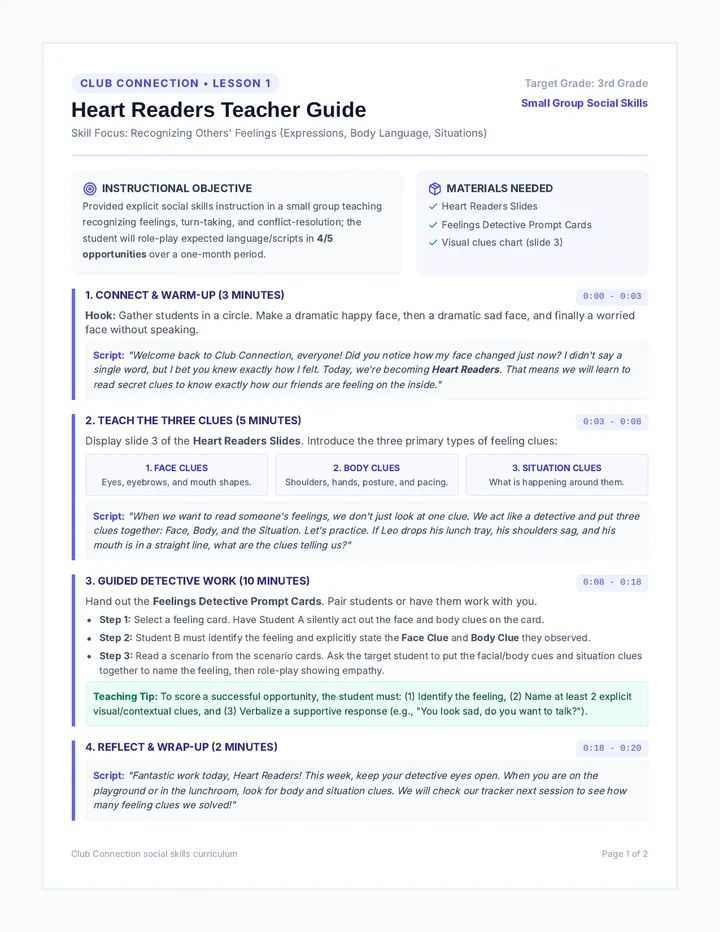
A comprehensive, step-by-step facilitation guide for educators to deliver the Heart Readers mini-lesson on recognizing feelings. Includes explicit teaching scripts, guiding questions, and a 4-week data tracking template to measure the target student's ability to role-play the social skills in 4 out of 5 opportunities.
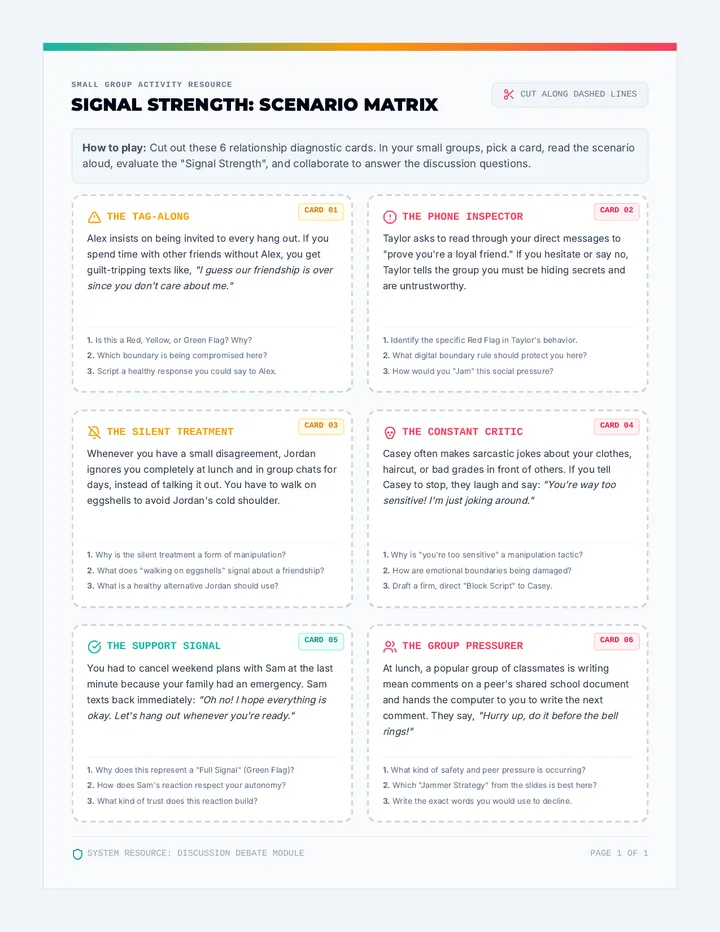
Print-ready small group scenario debate cards. Features 6 detailed scenarios designed to guide middle schoolers through peer pressure, boundary calibration, and red/yellow flag diagnostics.
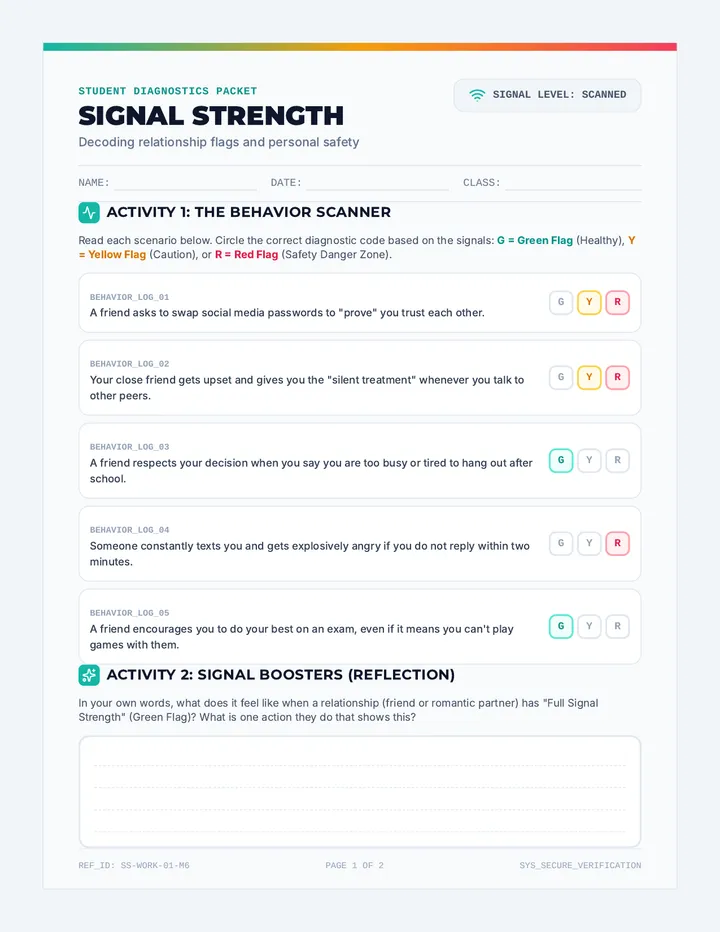
A 2-page print-ready interactive student worksheet packet for self-assessment, boundary mapping, and scripting refusal skills. Uses the cohesive digital/tech theme.
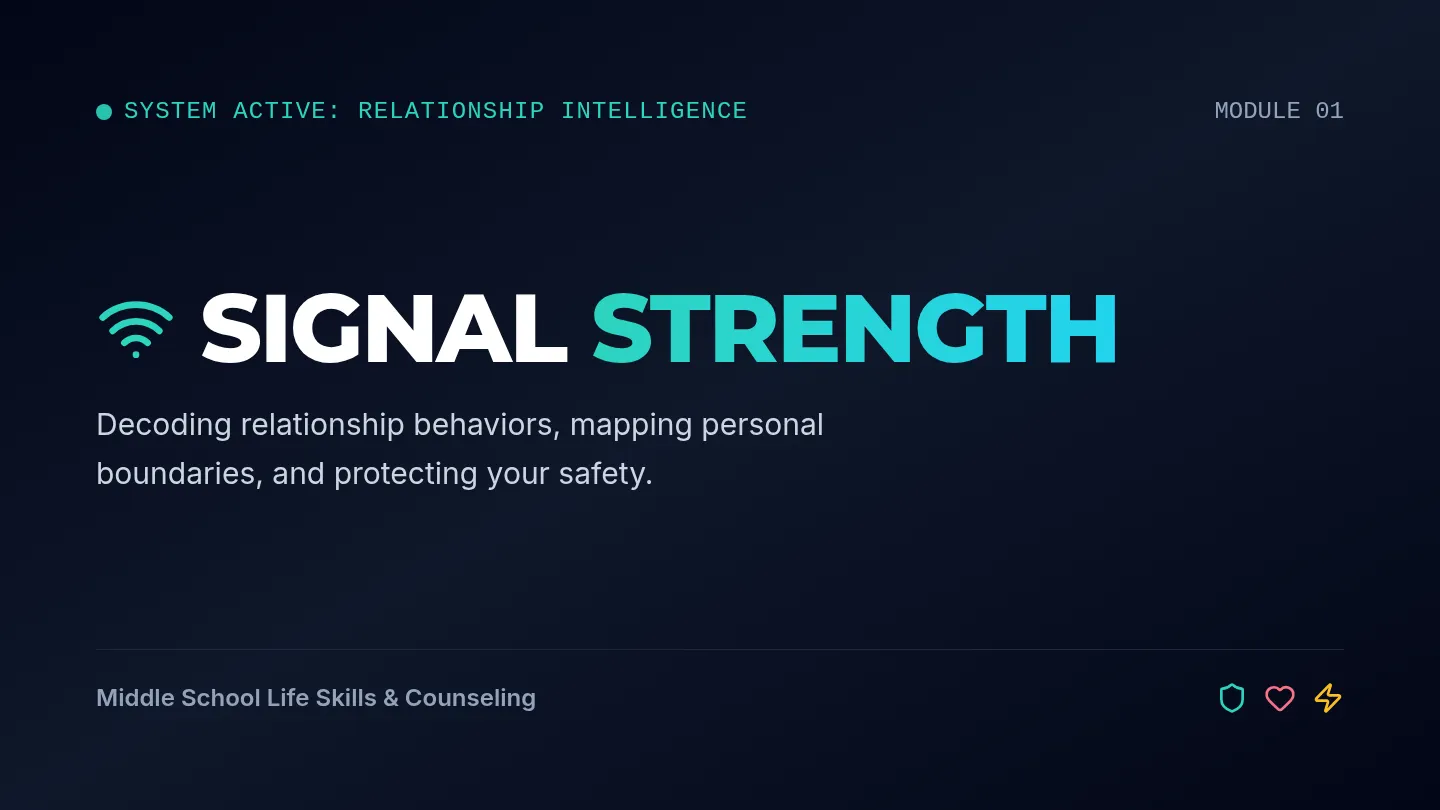
An engaging, modern slide presentation for middle schoolers to introduce relationship green, yellow, and red flags, boundaries, and safety strategies. Uses a tech/signal theme.
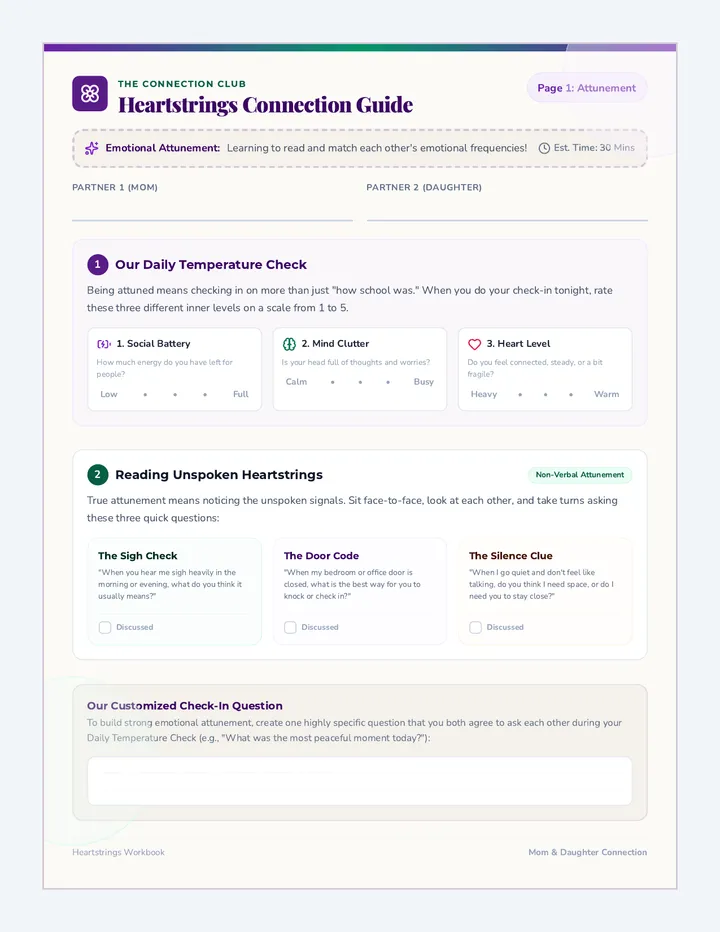
A beautifully crafted 3-page companion workbook for moms and their 11-year-old daughters titled 'Heartstrings Connection Guide'. This material focuses on emotional attunement, interpreting unspoken body signals, deep emotional validation, and collaborative conflict repair tools. It features blank writing areas and elegant styling.
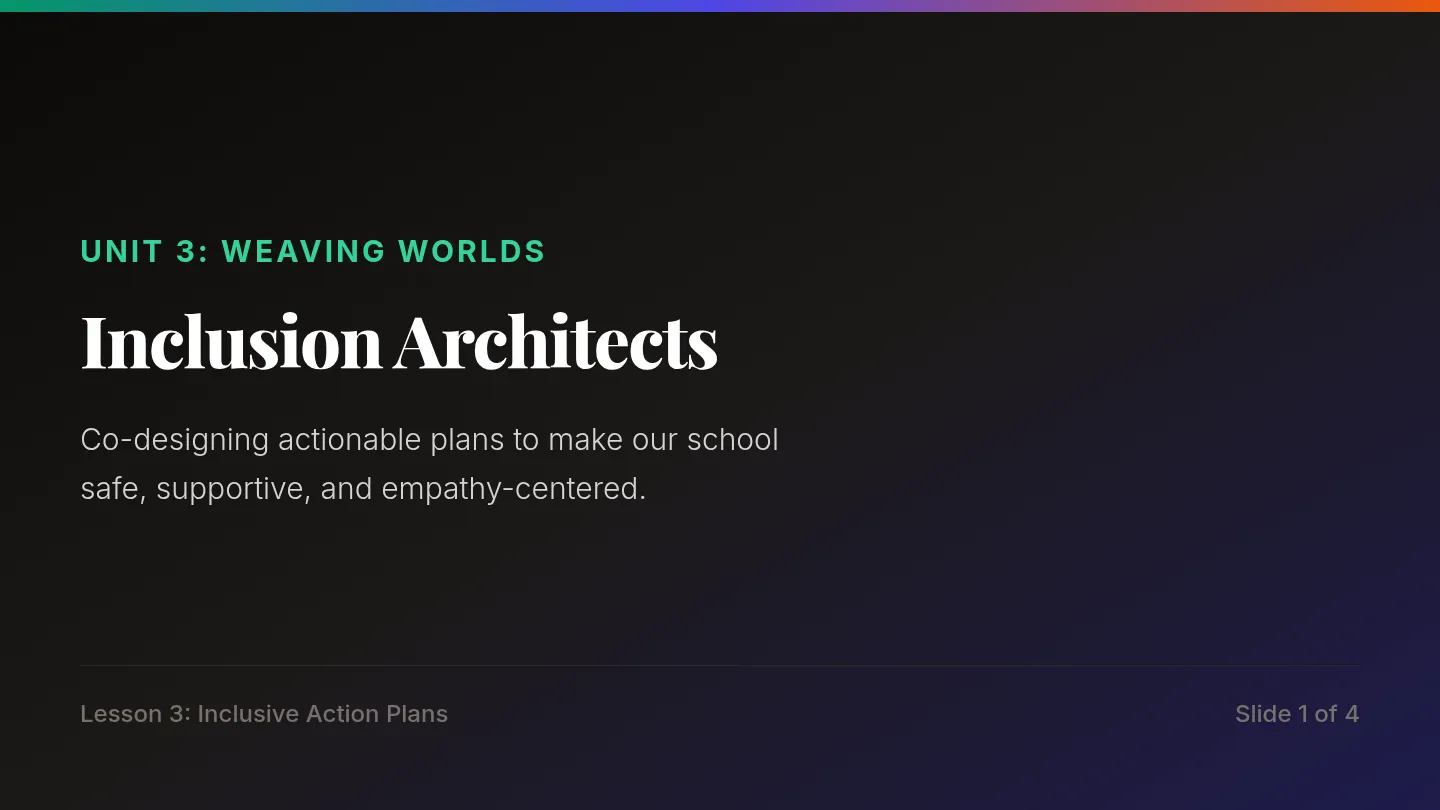
A 4-slide presentation for Lesson 3, explaining the campaign design project guidelines, campaign pathways, and presentation instructions.
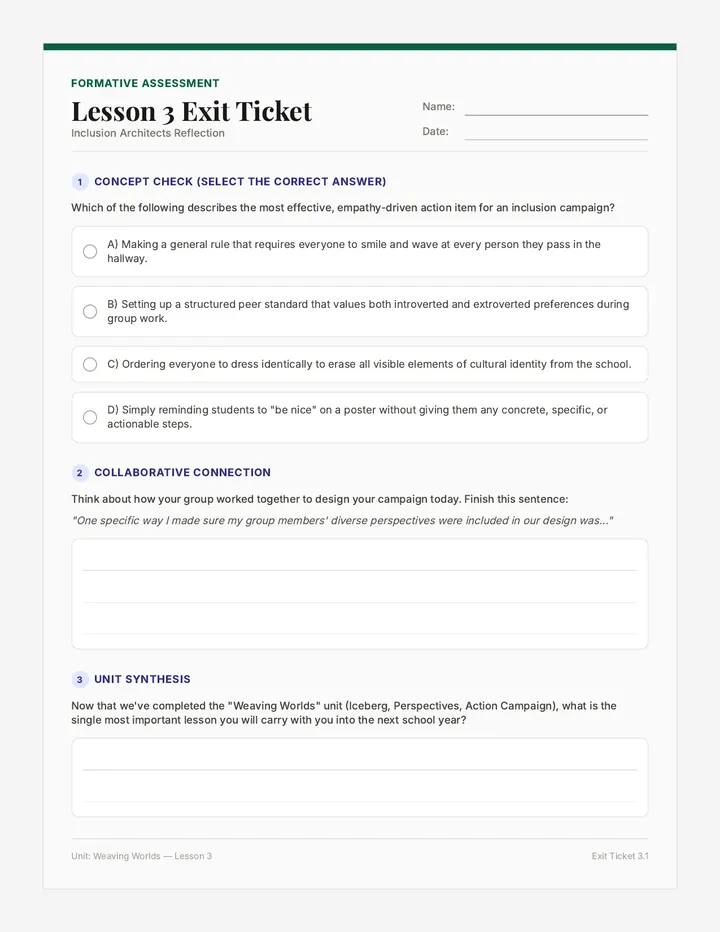
A quick daily exit ticket assessment for Lesson 3, checking students' understanding of the campaign design and reflecting on their key takeaways from the unit.
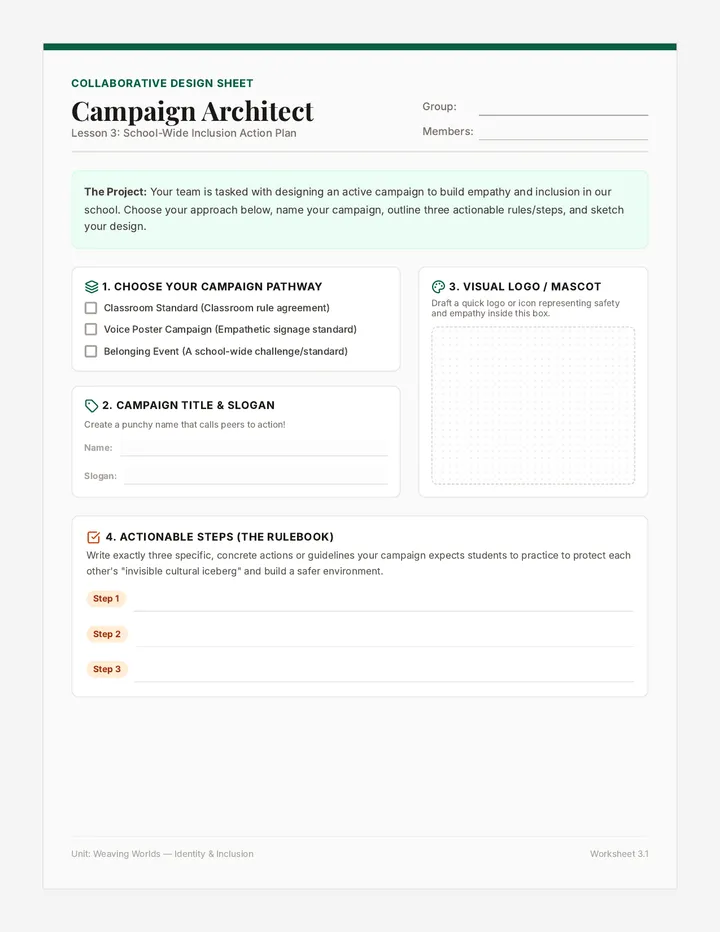
An interactive student campaign design worksheet for Lesson 3, guiding student teams to outline a campaign name, target audience, core inclusion goal, actionable steps, and a visual logo sketch.
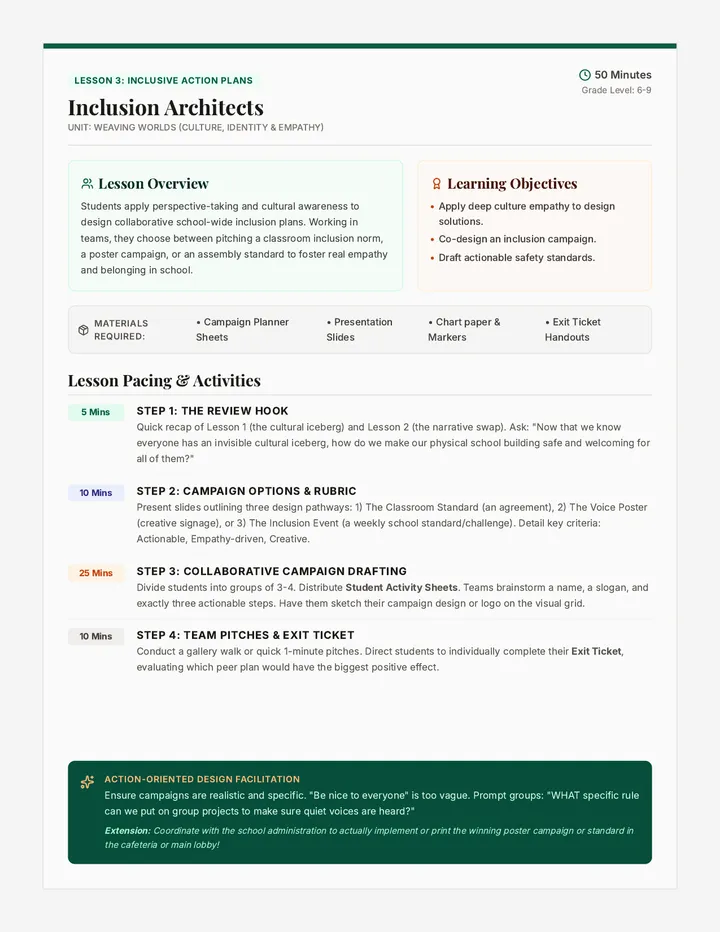
A comprehensive teacher guide for Lesson 3, outlining pacing, project criteria, student campaign options, and instructions for group presentations.
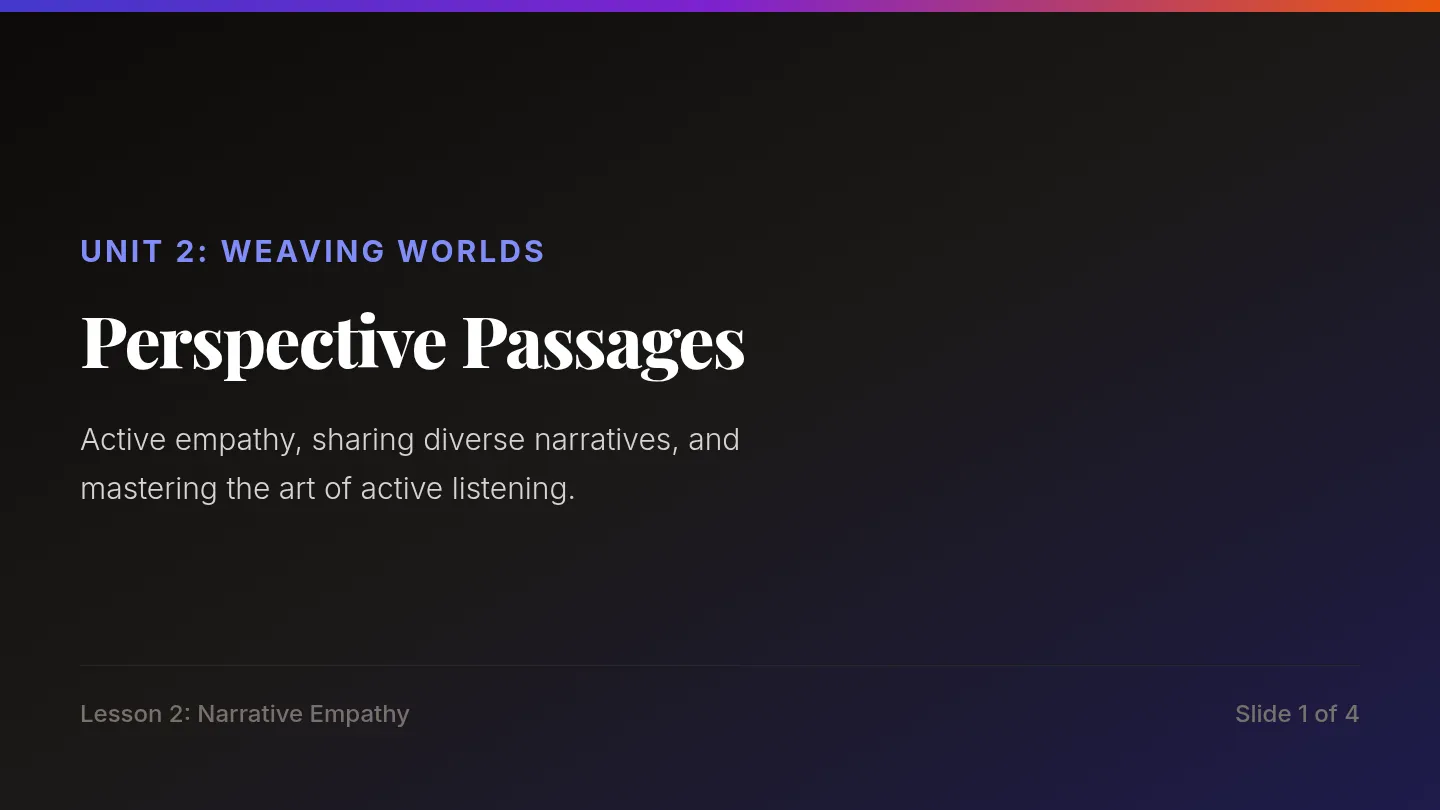
A 4-slide presentation for Lesson 2, outlining the dual hallway perspective scenario and teaching active listening rules for the student narrative swap.
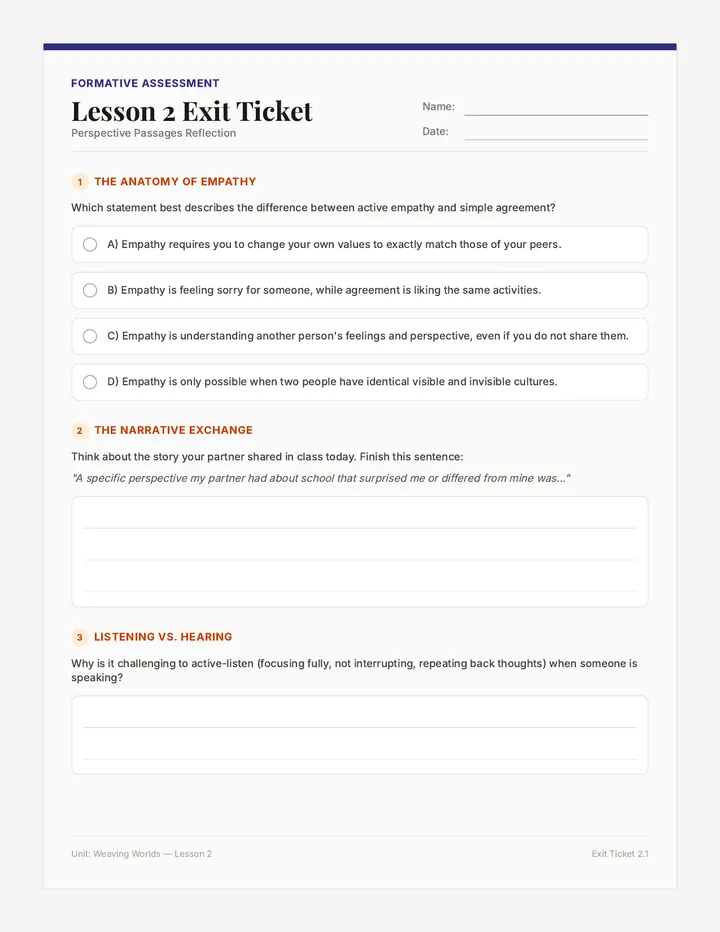
A quick daily exit ticket assessment for Lesson 2, checking students' understanding of perspective-taking and active listening.
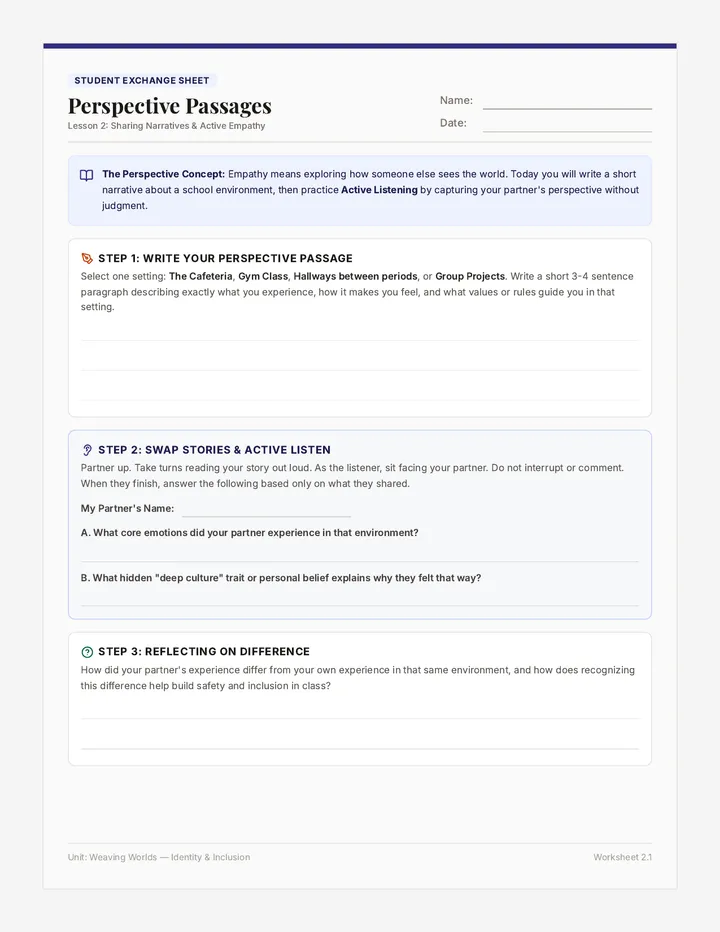
An interactive student worksheet for Lesson 2, guiding students to write a short personal perspective narrative, swap with a classmate, and practice active listening questions.
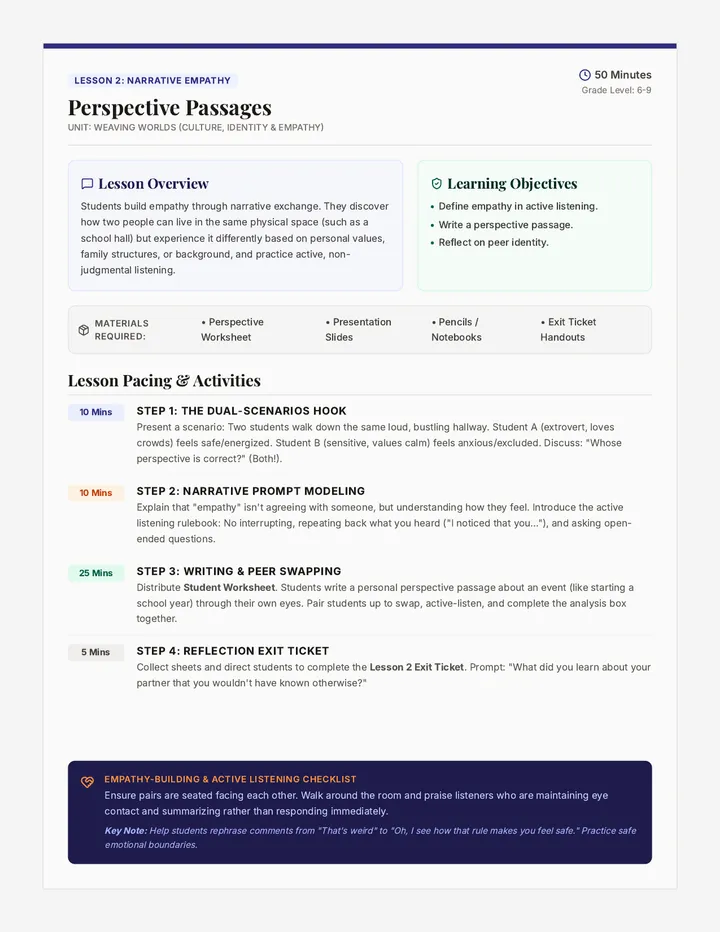
A comprehensive teacher guide for Lesson 2, outlining session pacing, discussion questions, objectives, and active listening rules for the student narrative exchange.
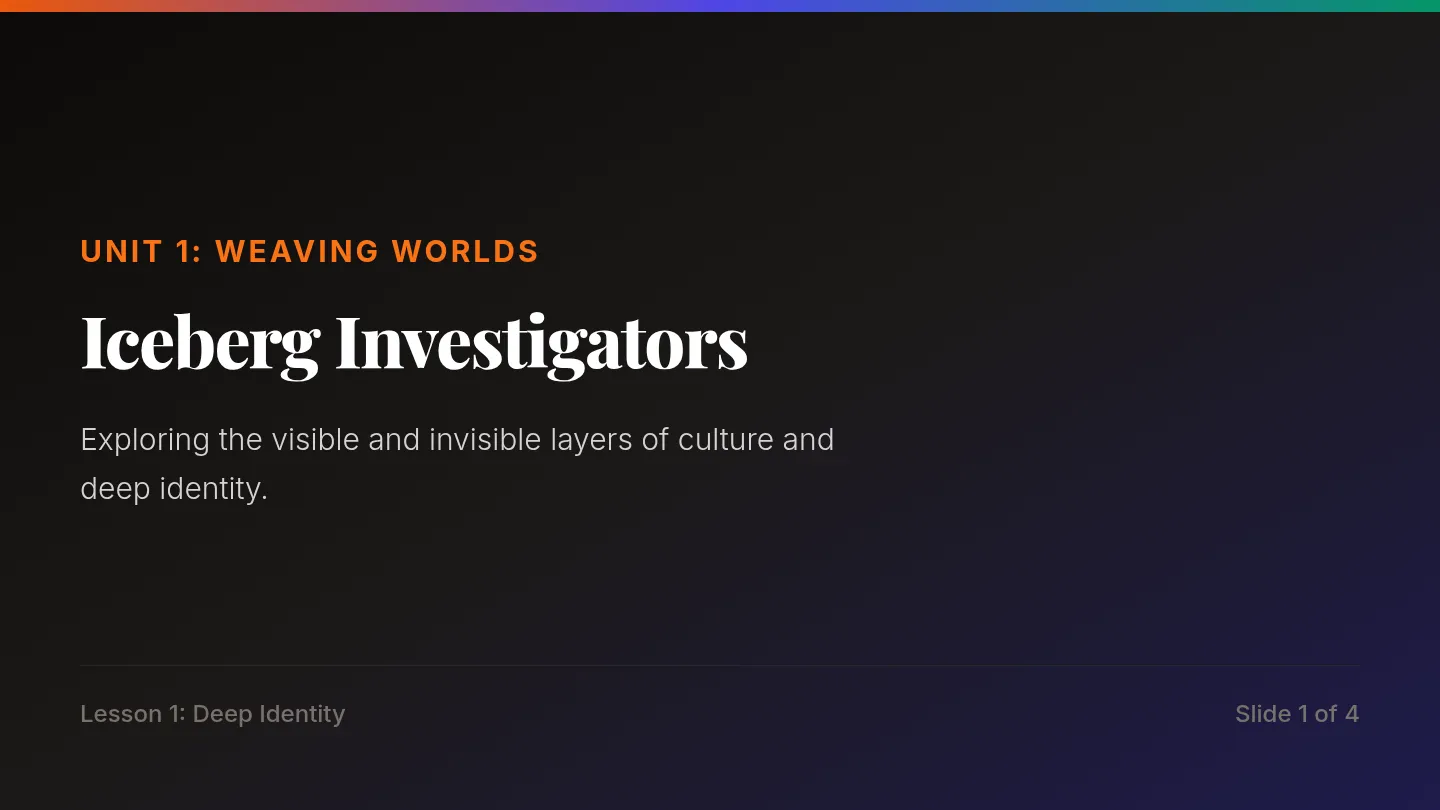
A 4-slide presentation for Lesson 1, introducing the concept of the cultural iceberg and explaining the difference between surface and deep culture.
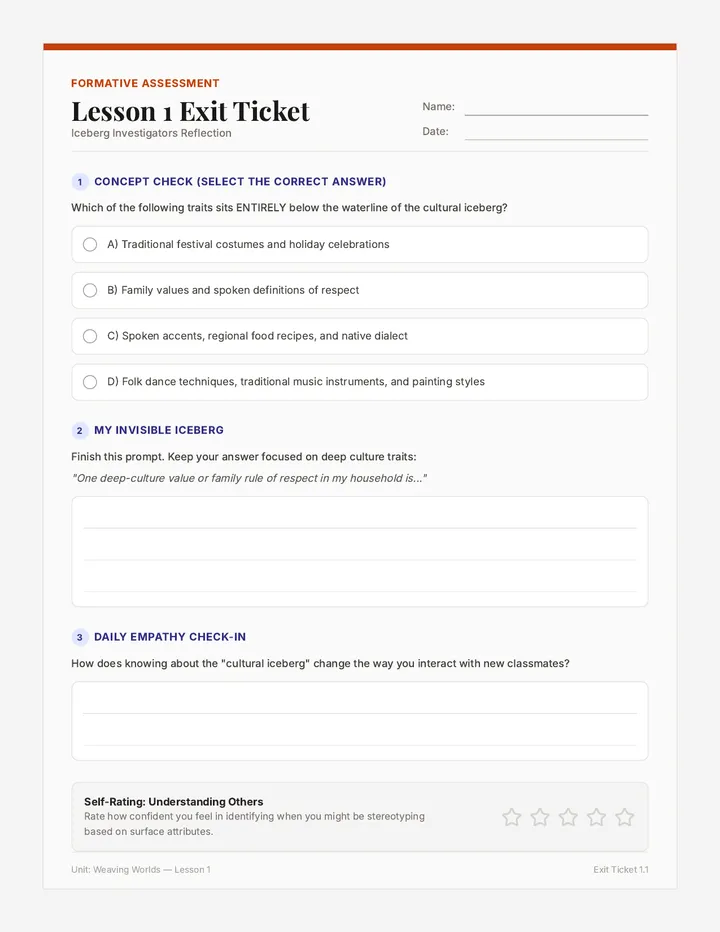
A quick daily exit ticket assessment for Lesson 1, checking students' understanding of the cultural iceberg and encouraging self-reflection.
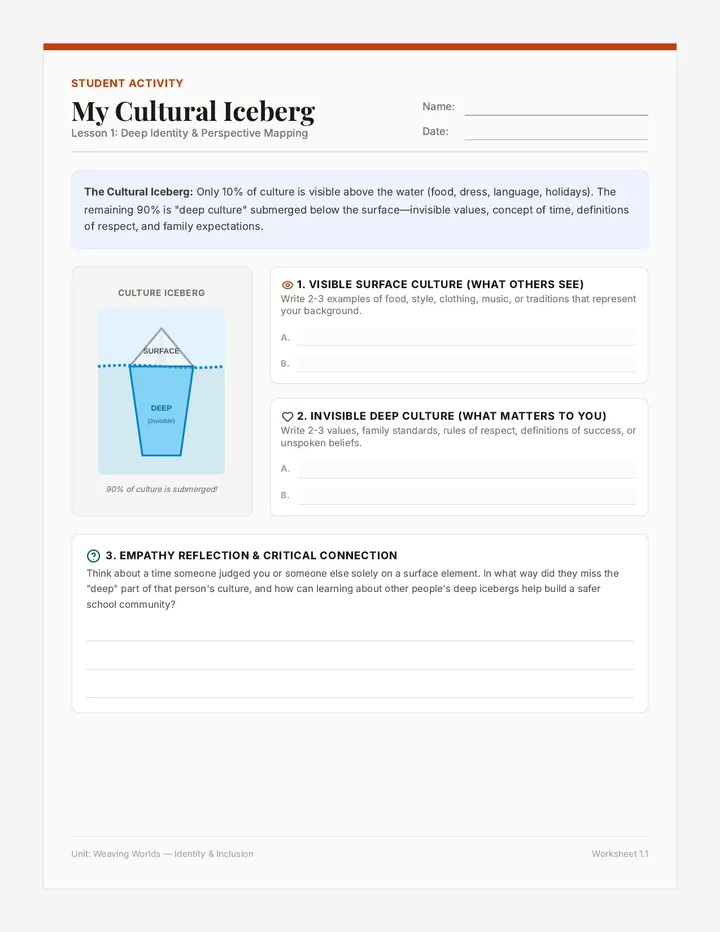
An interactive student worksheet for Lesson 1, guiding students to analyze surface versus deep culture and map their own multi-layered identities on a cultural iceberg graphic.
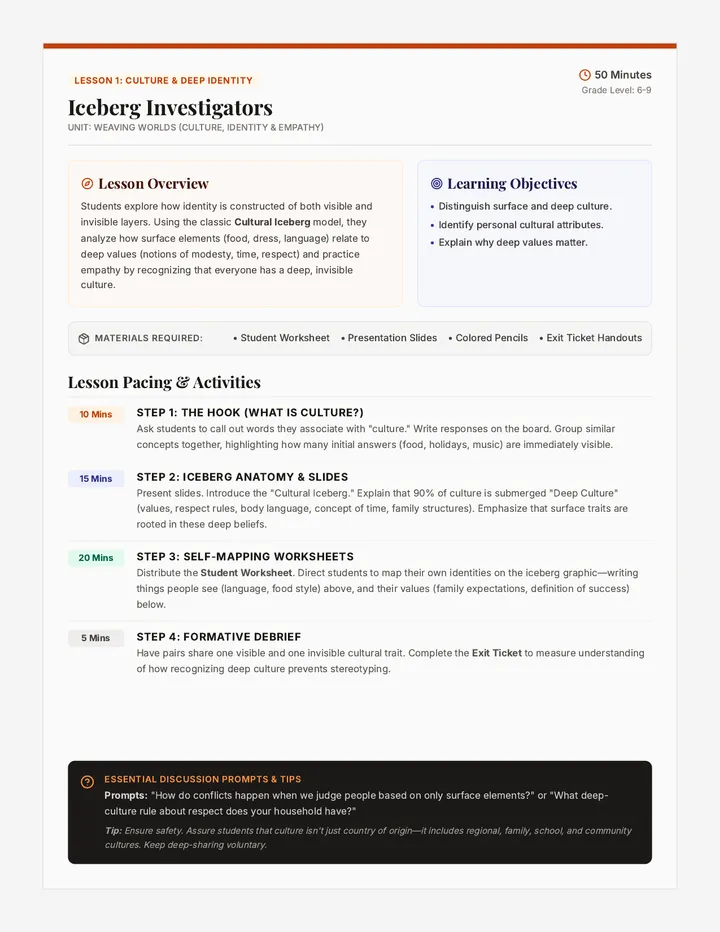
A comprehensive teacher guide for Lesson 1, detailing lesson pacing, discussion prompts, student learning objectives, and materials needed to explore the cultural iceberg.
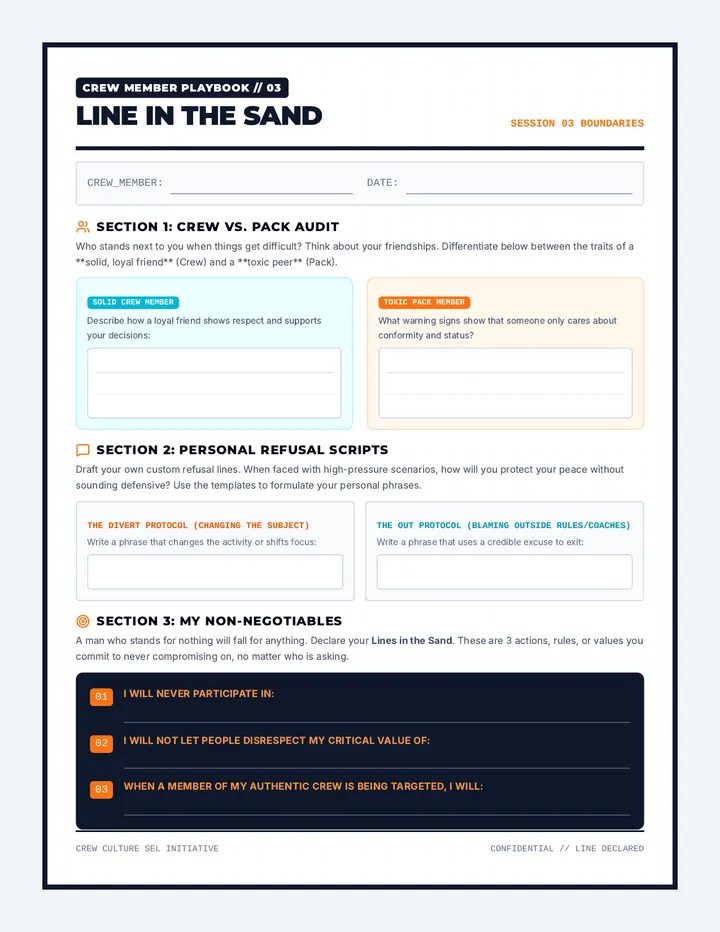
A highly engaging 1-page student playbook for Lesson 3: Line in the Sand. Helps students audit friendships, draft personalized peer-pressure refusal scripts, and declare their non-negotiable boundaries.