A comprehensive lesson plan for 'Emotion Detectives', outlining the objectives, materials, and a step-by-step instructional sequence for a 50-minute session.
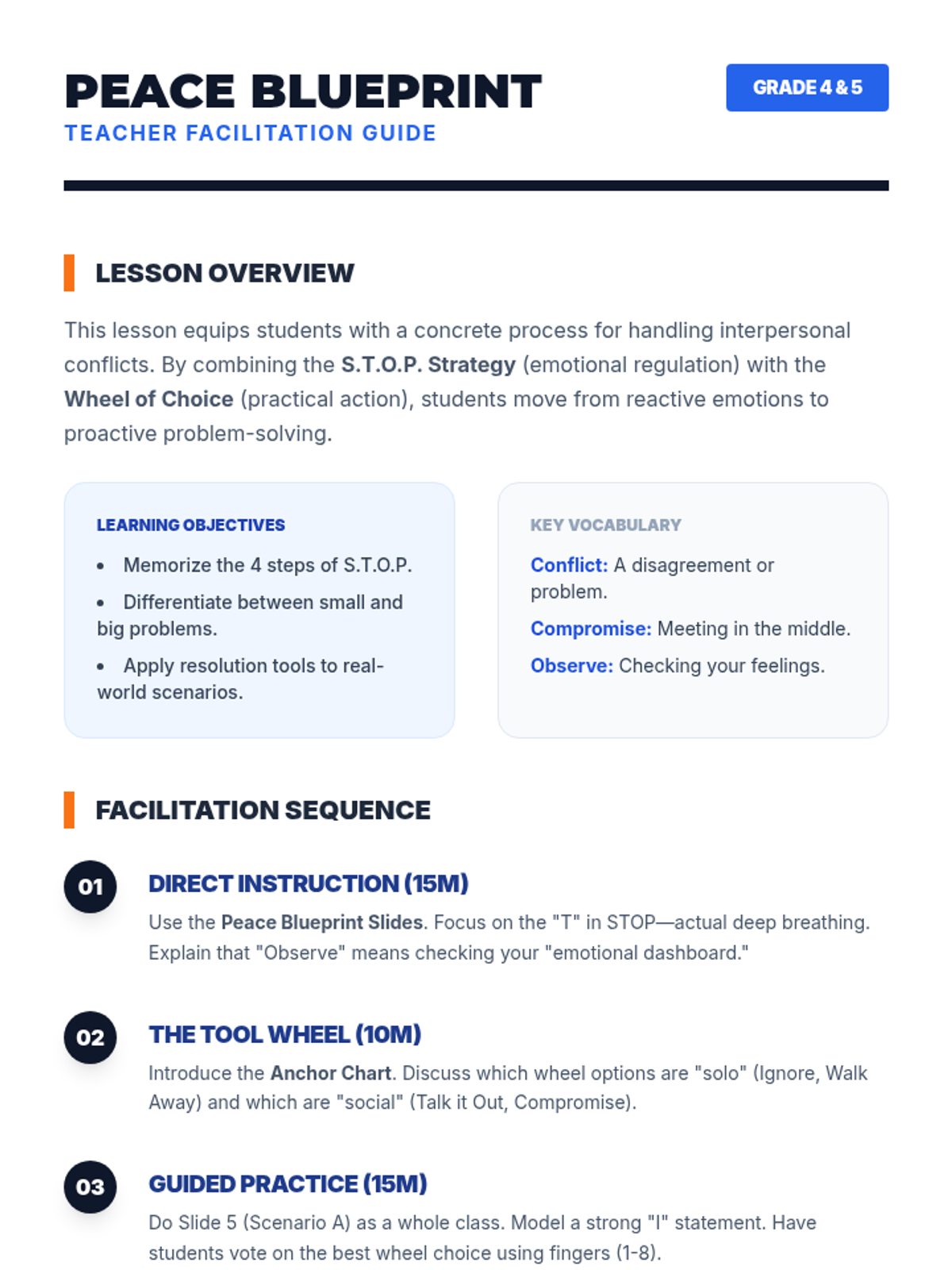
A facilitator's guide for teachers to deliver the Peace Blueprint conflict resolution lesson, including timing and discussion prompts.
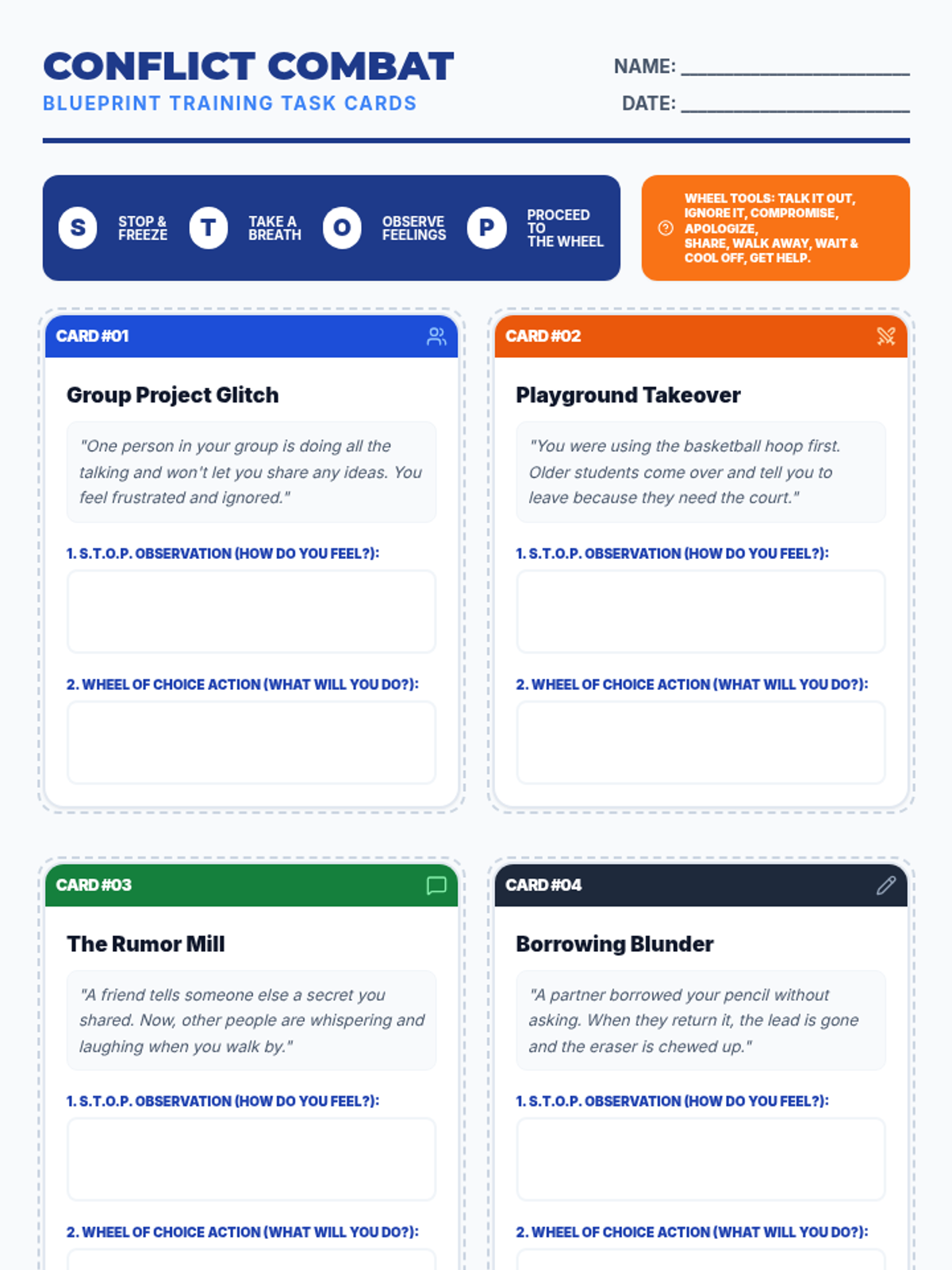
A set of conflict scenario task cards designed for 4th and 5th graders to practice applying the S.T.O.P. strategy and Wheel of Choice.
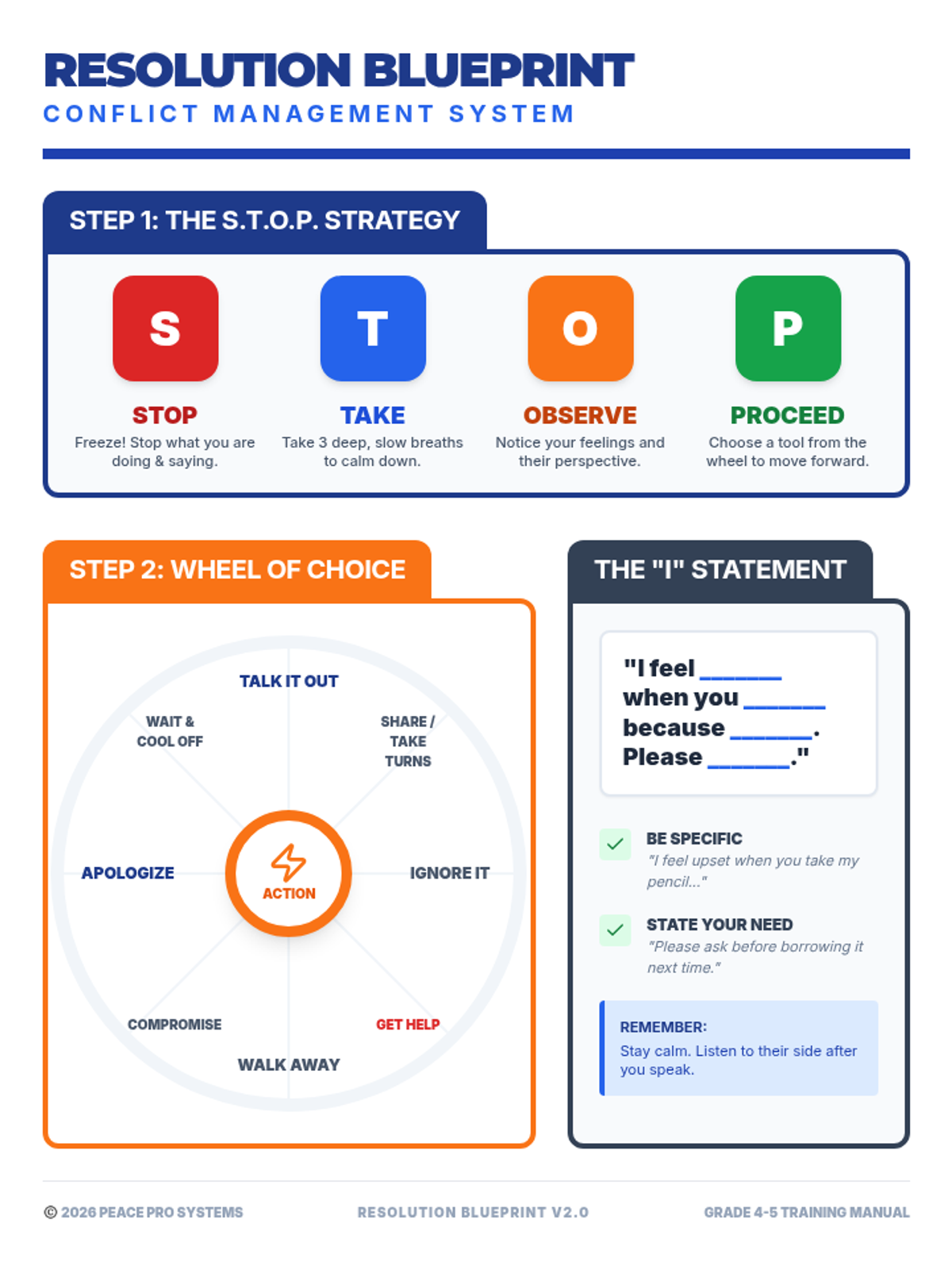
A visual anchor chart summarizing the S.T.O.P. strategy and the Wheel of Choice for classroom display.
An instructional presentation introducing the S.T.O.P. strategy and the Wheel of Choice framework for resolving conflicts.
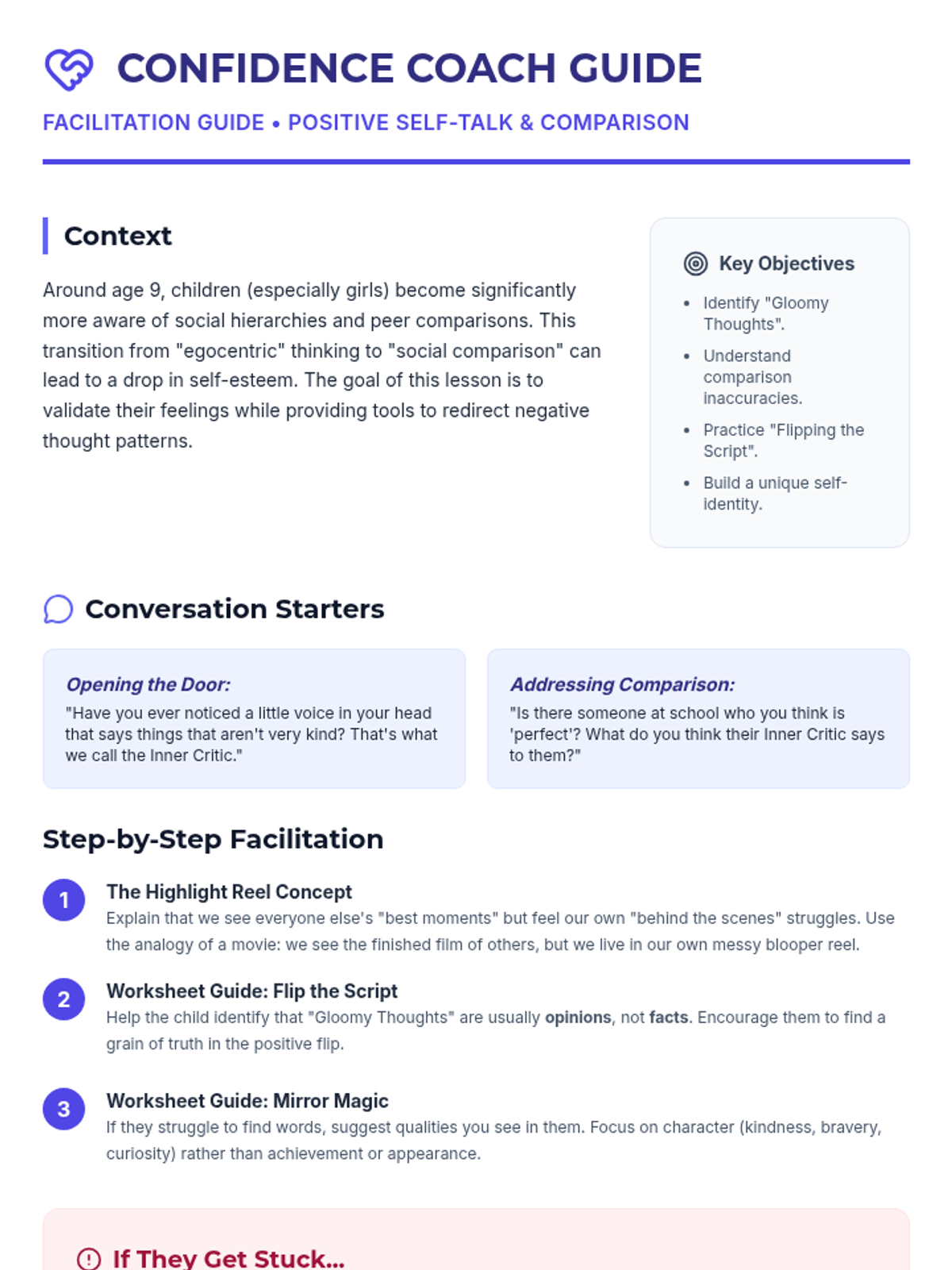
A teacher-facing guide providing facilitation tips, conversation starters, and psychological context for using the 'Inner Glow' materials with young girls.
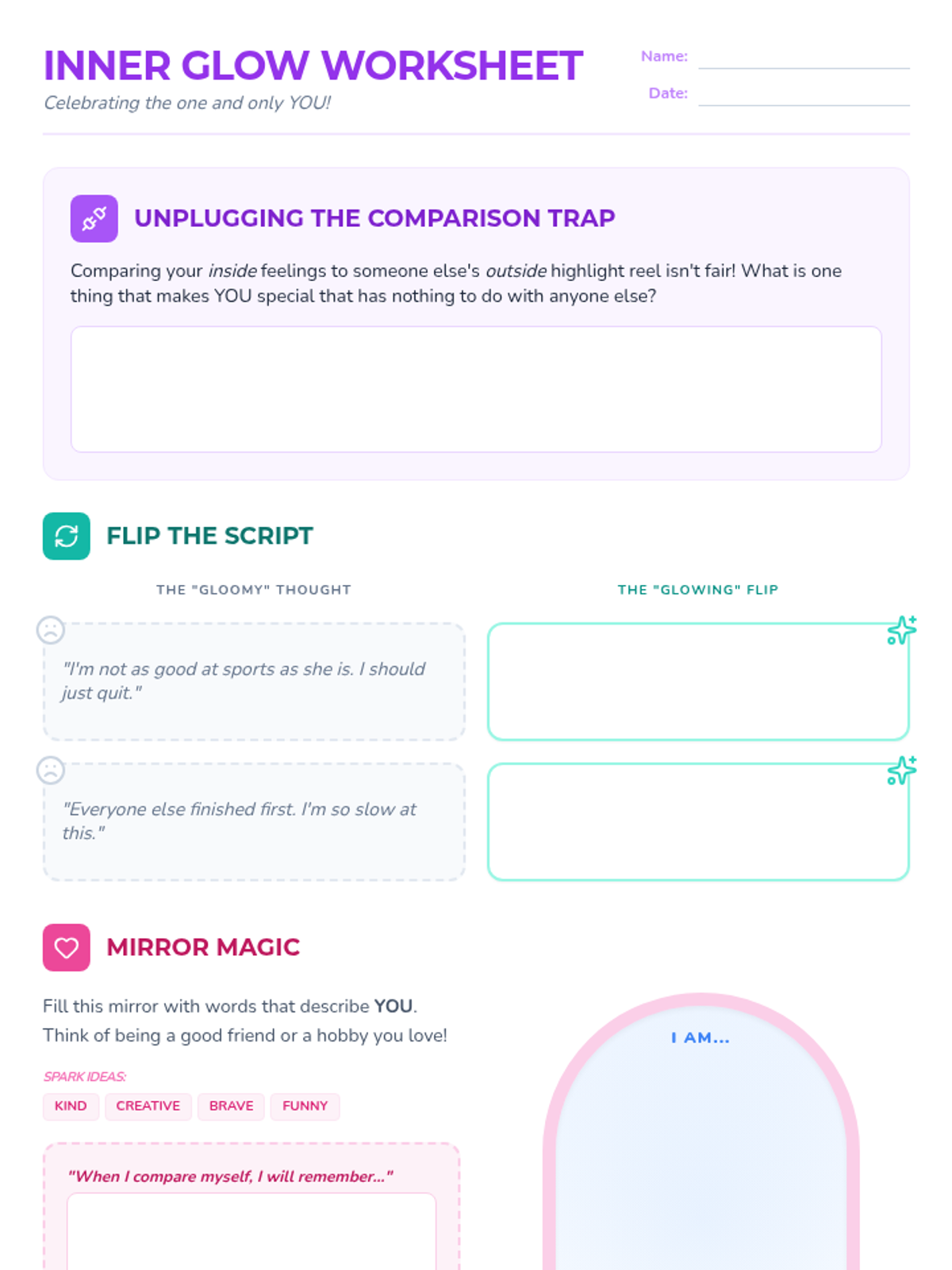
An engaging and supportive worksheet for young girls designed to challenge the 'comparison trap' and replace negative self-talk with positive affirmations. Includes a 'Flip the Script' activity and a creative 'Mirror Magic' self-reflection space.
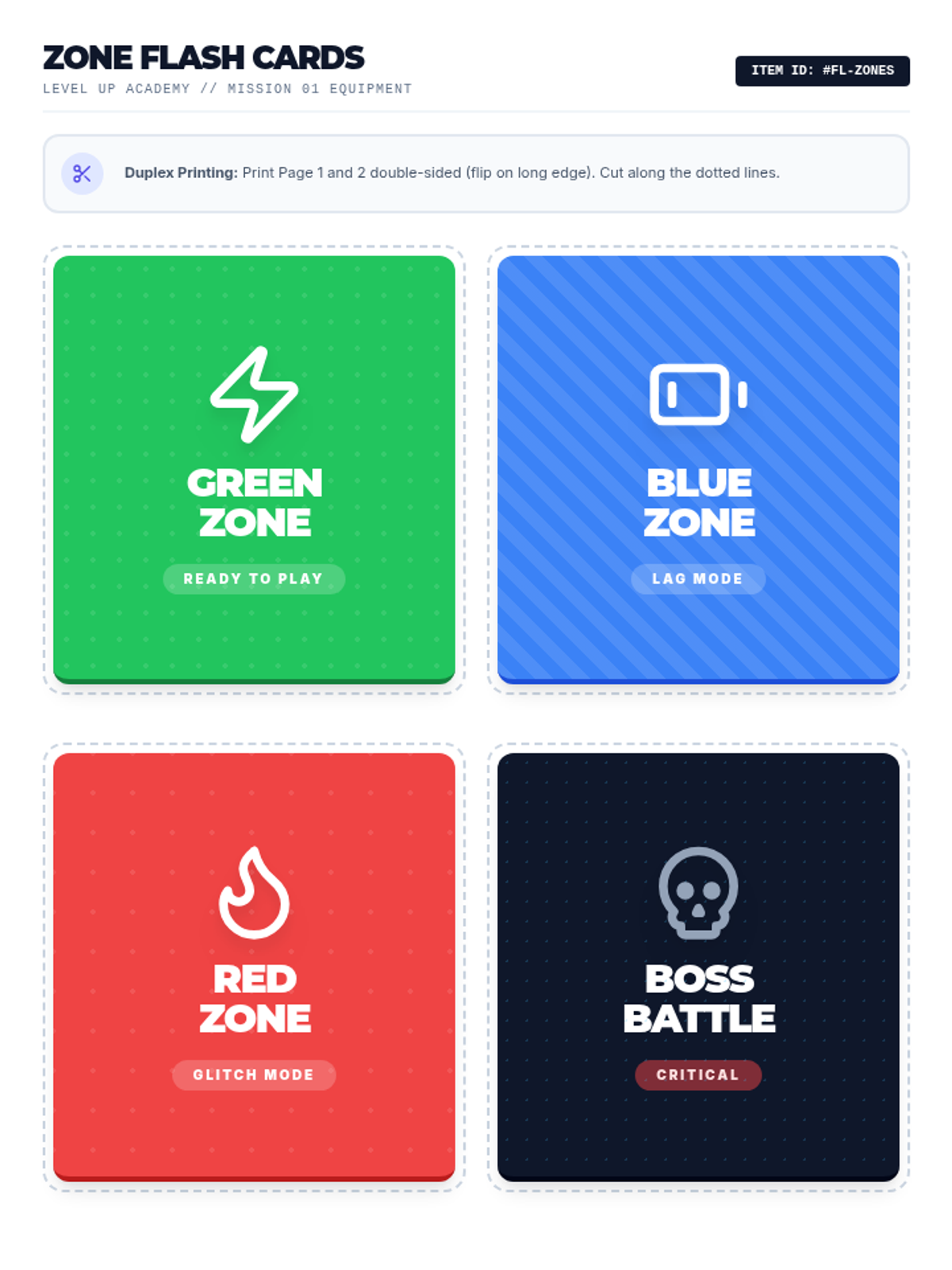
Printable double-sided flashcards for identifying emotional energy levels (Blue, Green, Red) and 'Boss Triggers' within the 'Level Up' curriculum theme.
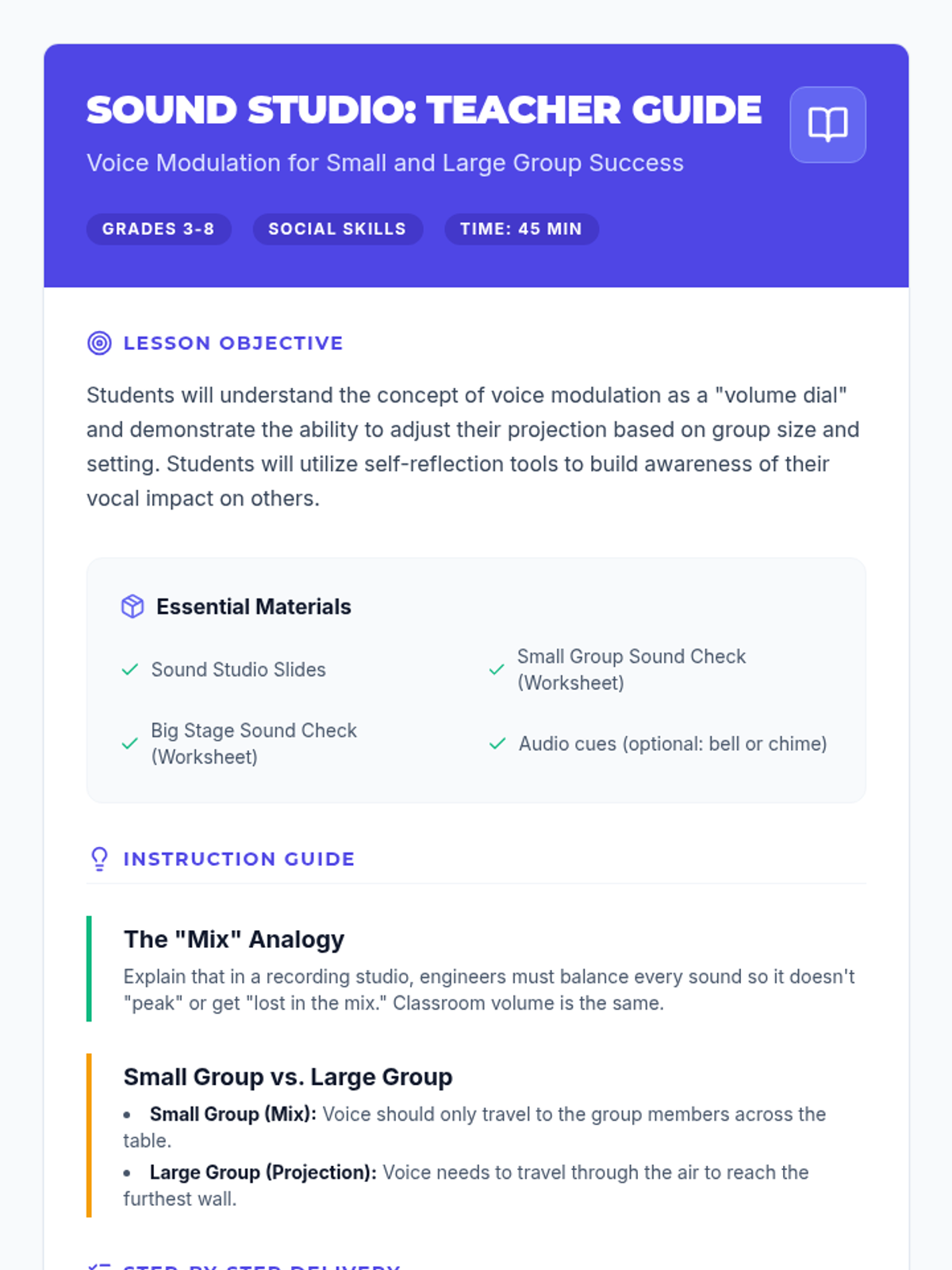
A comprehensive teacher's guide for the 'Sound Studio' lesson, providing instructional strategies, activity steps, and differentiation tips for teaching voice modulation.
A highly visual slide deck teaching the 'Sound Studio' analogy for voice modulation, featuring a volume dial and specific techniques for small and large group communication.
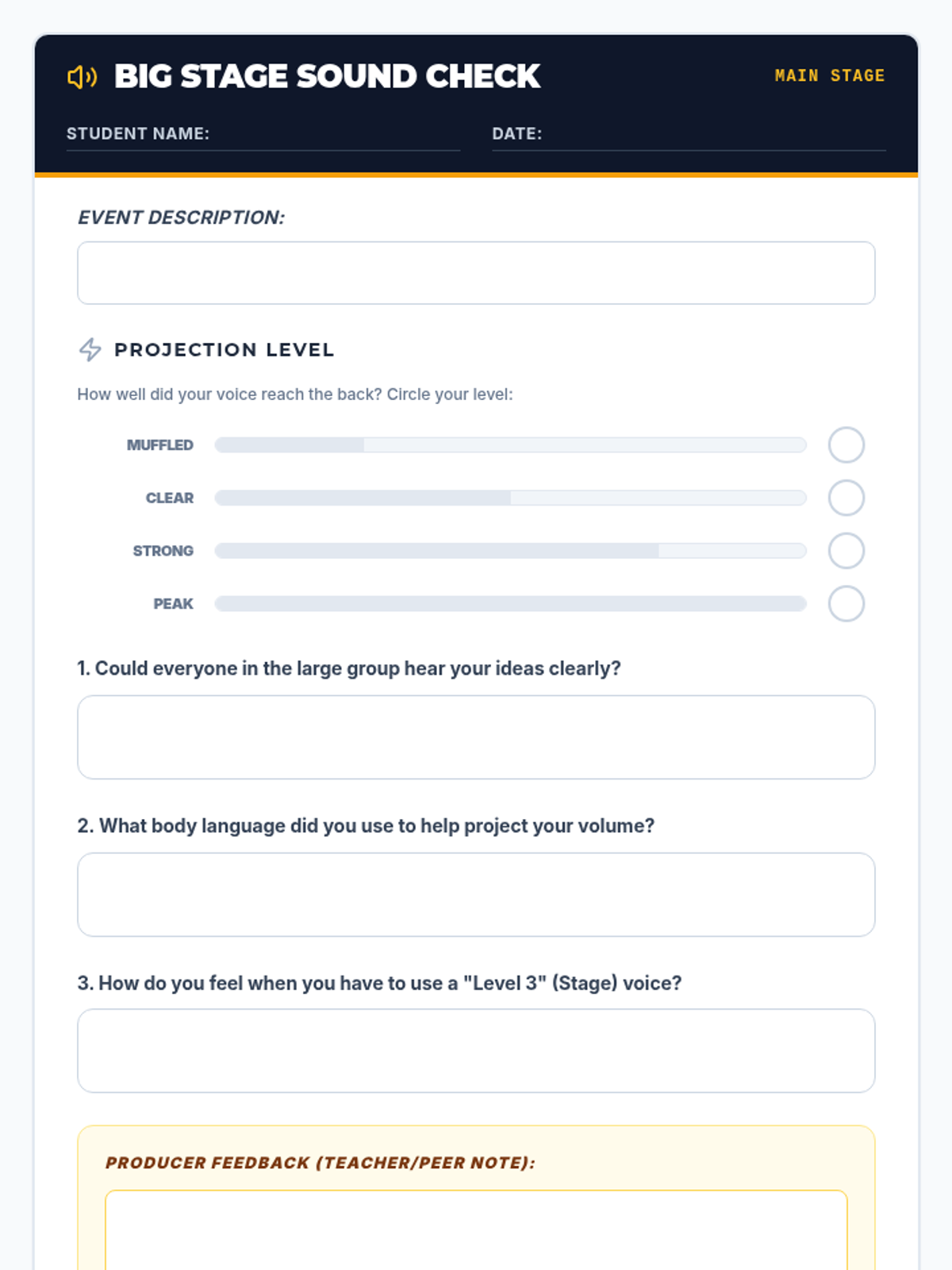
A self-reflection worksheet focused on large group communication and volume projection, styled with a 'main stage' sound engineering theme.
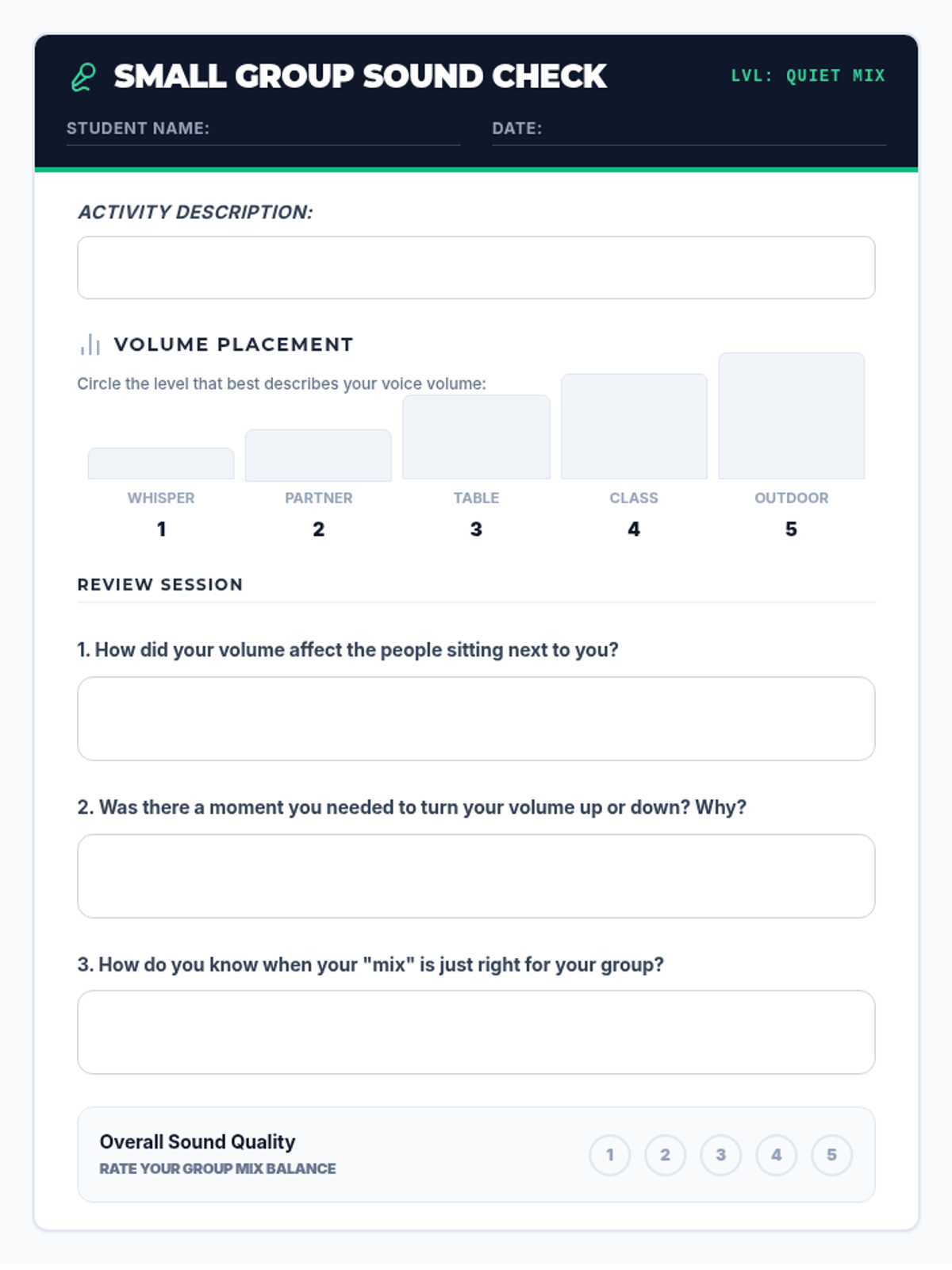
A self-reflection worksheet for students to evaluate their voice volume during small group activities, using a 'sound engineer' theme with a visual volume meter.
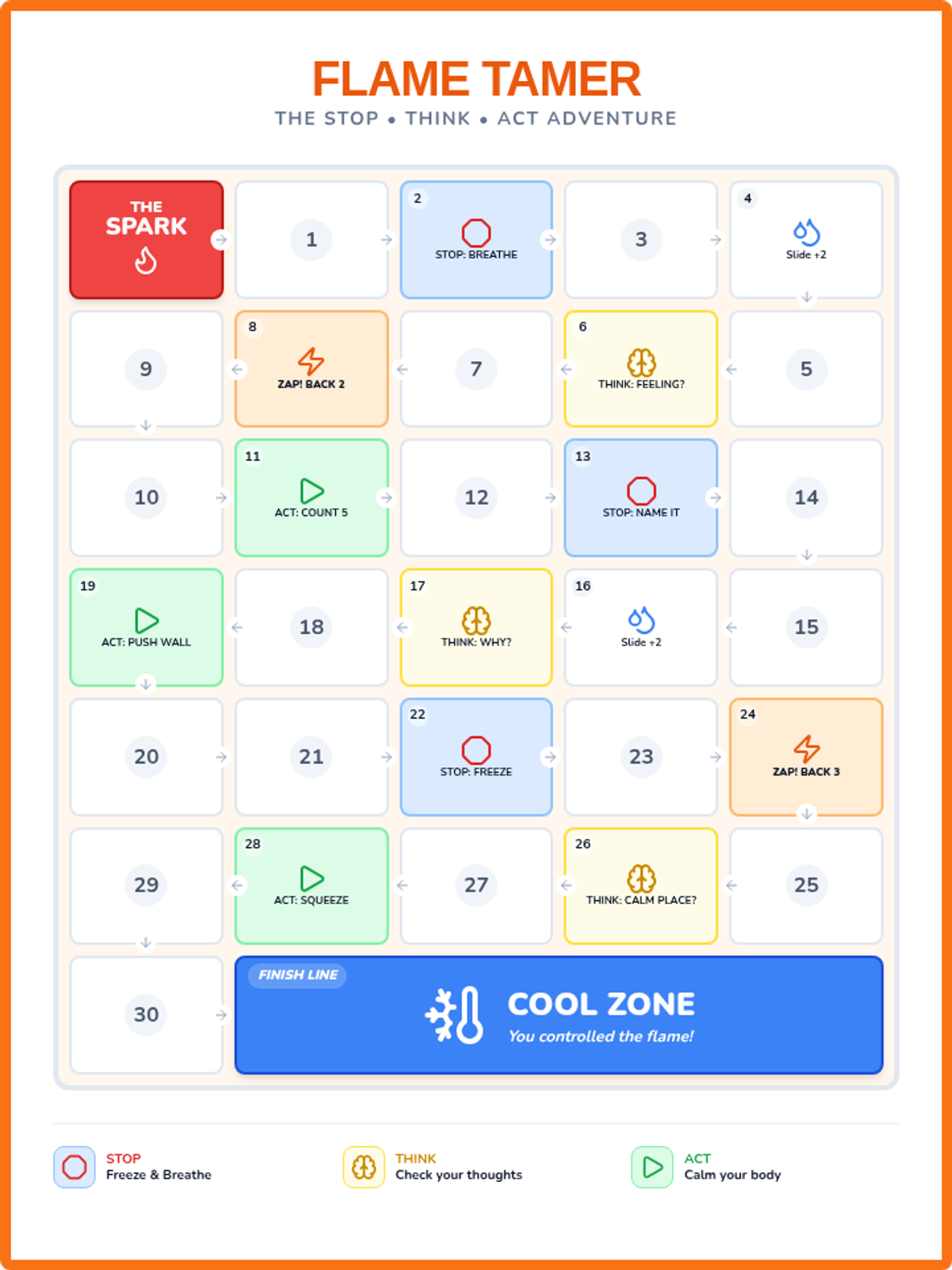
A printable two-page board game for students to practice 'Stop, Think, Act' in a fun, fire-fighter themed race to the 'Cool Zone'. Includes game board, instructions, and DIY cut-out player pieces.
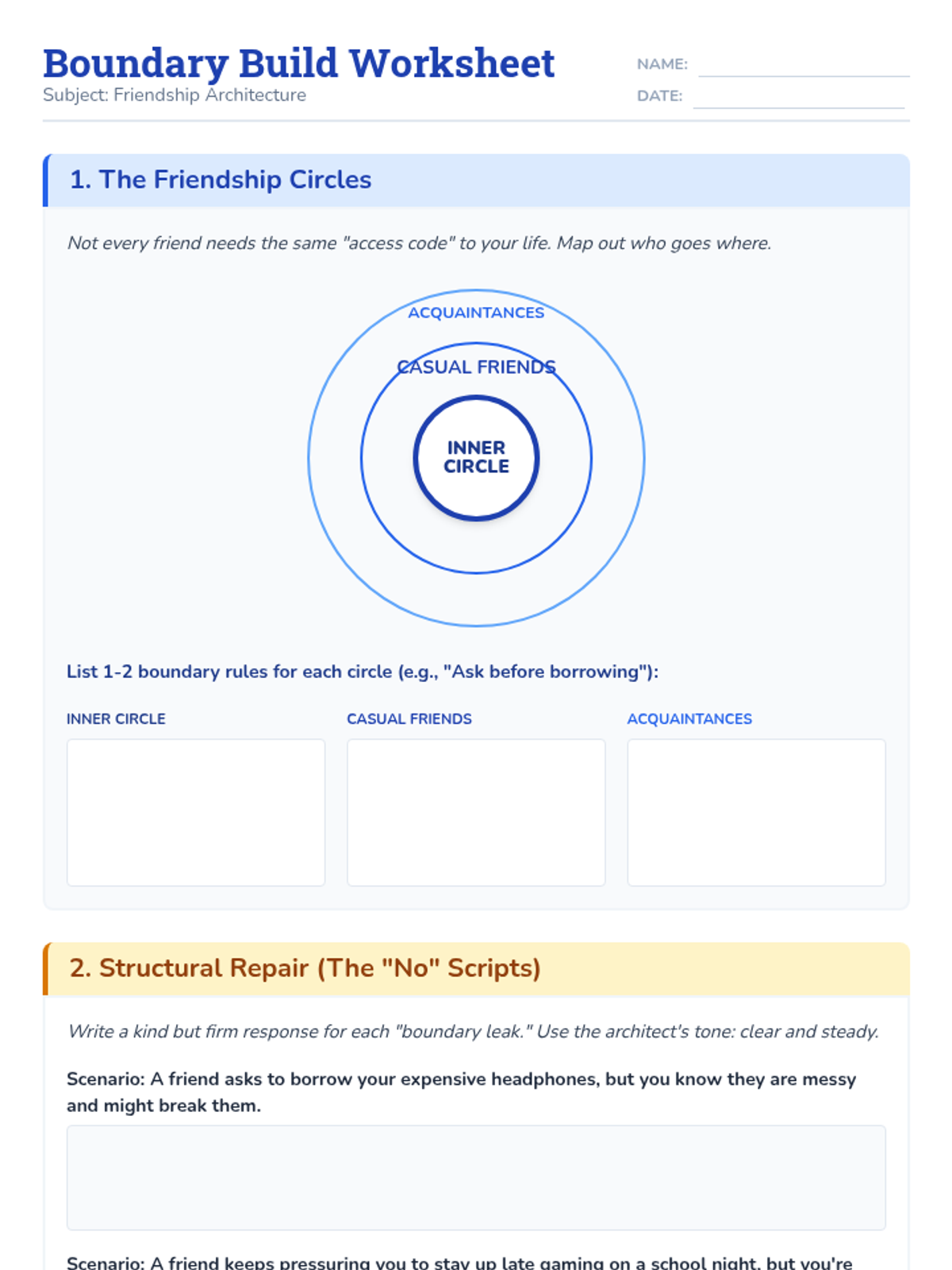
A student worksheet designed to help students map their friendship circles and practice writing "boundary scripts" for common social scenarios.
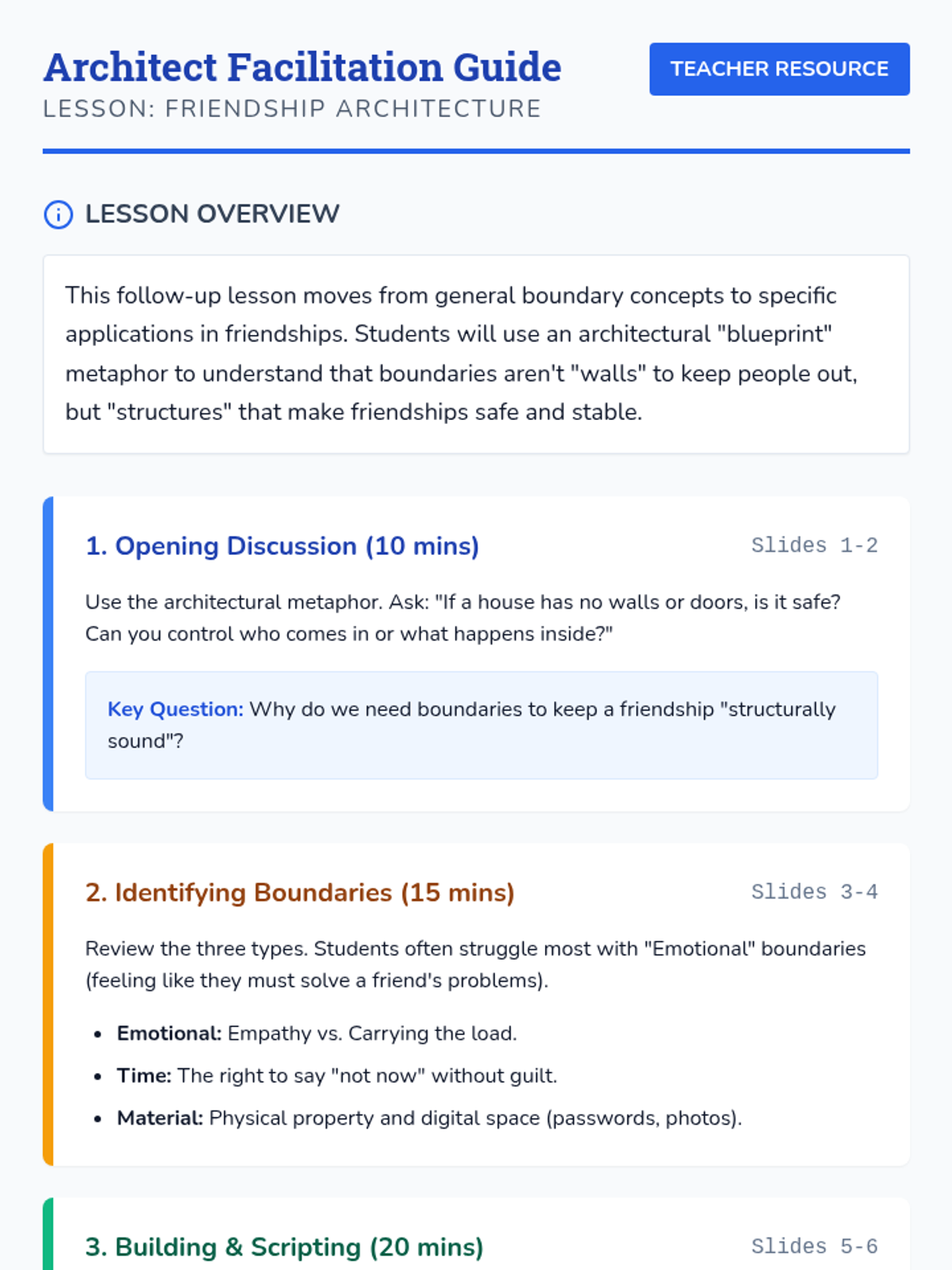
A teacher facilitation guide for the Friendship Architecture lesson, providing pacing, discussion prompts, and strategies for handling common student concerns about boundaries.
A 6-slide presentation focused on friendship boundaries using an architectural blueprint theme. It covers boundary types, red flags, and practice scenarios.
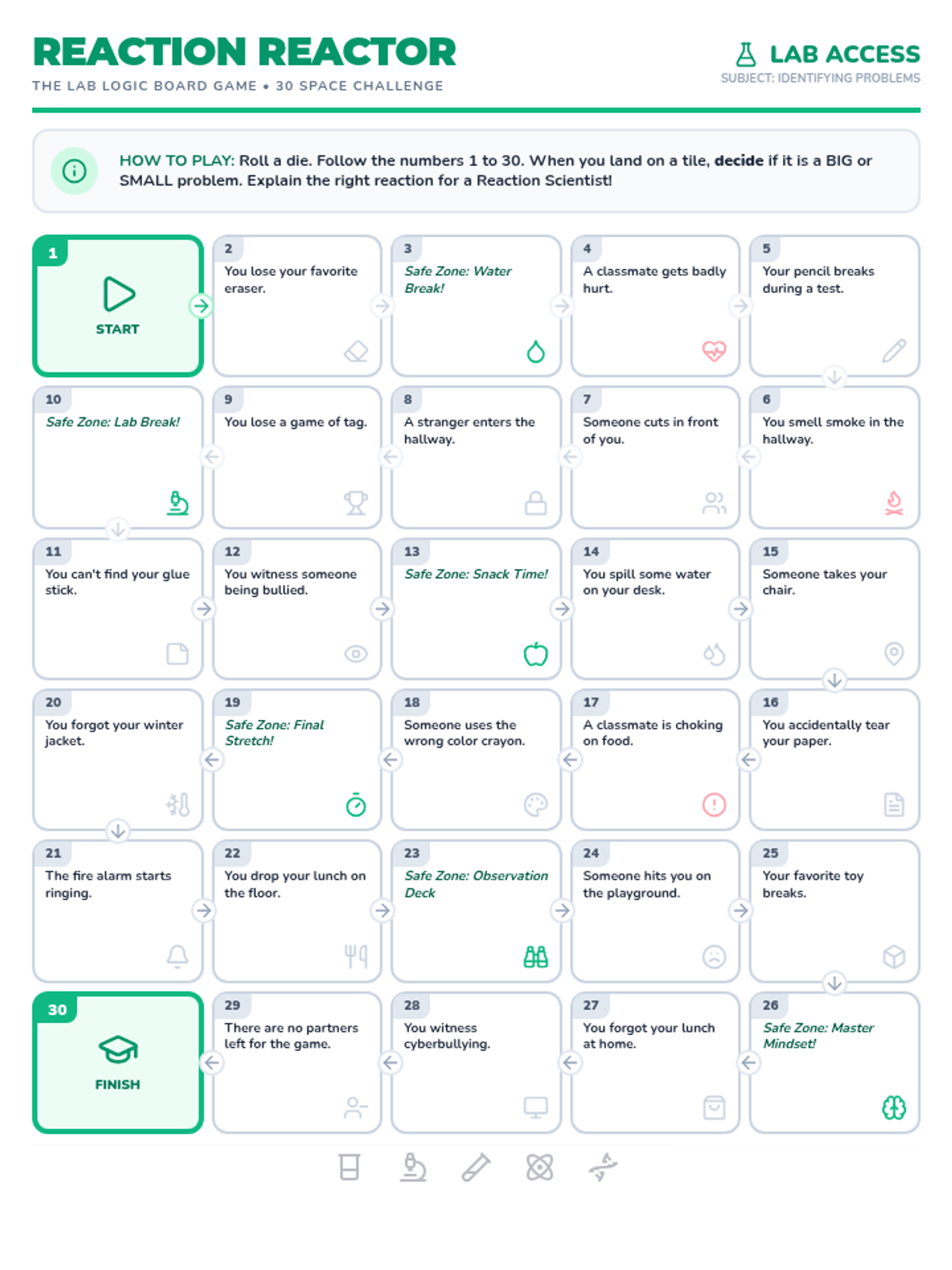
An expanded 30-space printable lab-themed board game for students to practice identifying small vs. big problems. Includes an increased variety of scenarios and safe zones with numbered snake-path navigation. Revised for path clarity and better contrast.
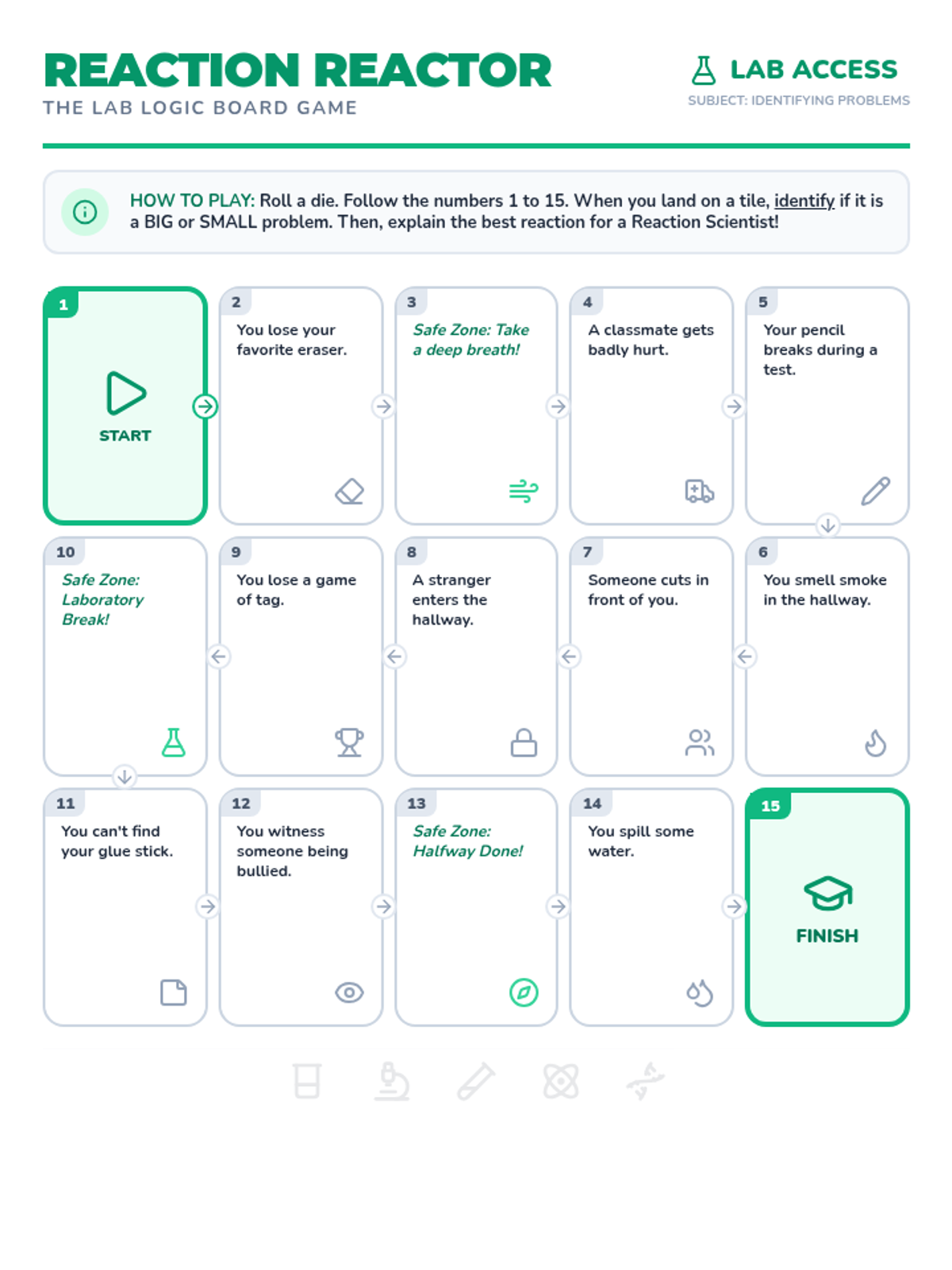
A printable lab-themed board game for students to practice identifying small vs. big problems and determining appropriate reactions. Scenarios are unlabeled and tiles are neutral to challenge students to identify the problem size themselves. Path is numbered 1-15 for clarity.
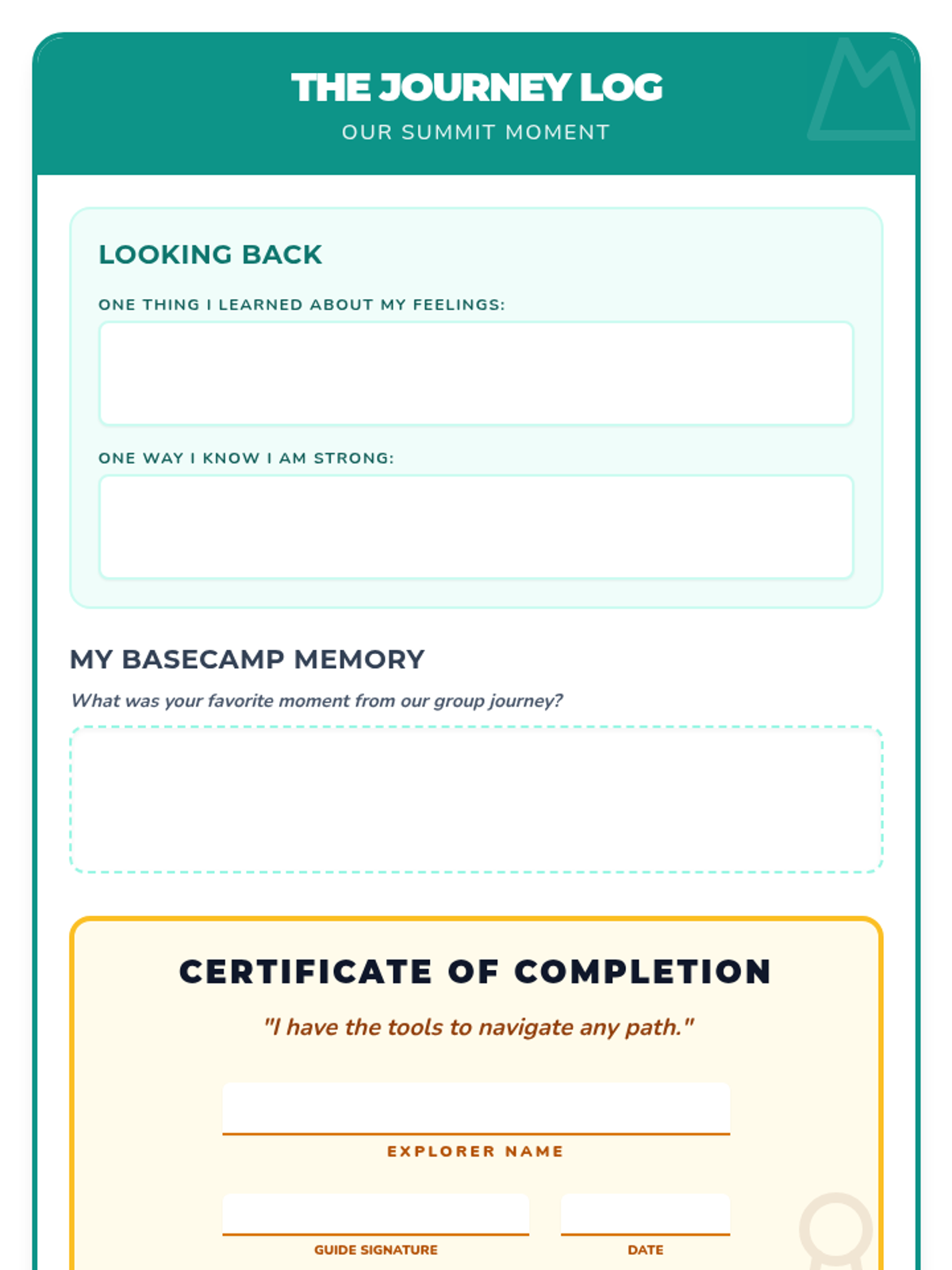
A final reflection and celebration worksheet for the last session of the Basecamp journey, including a section for students to review their growth and a "Certificate of Completion."
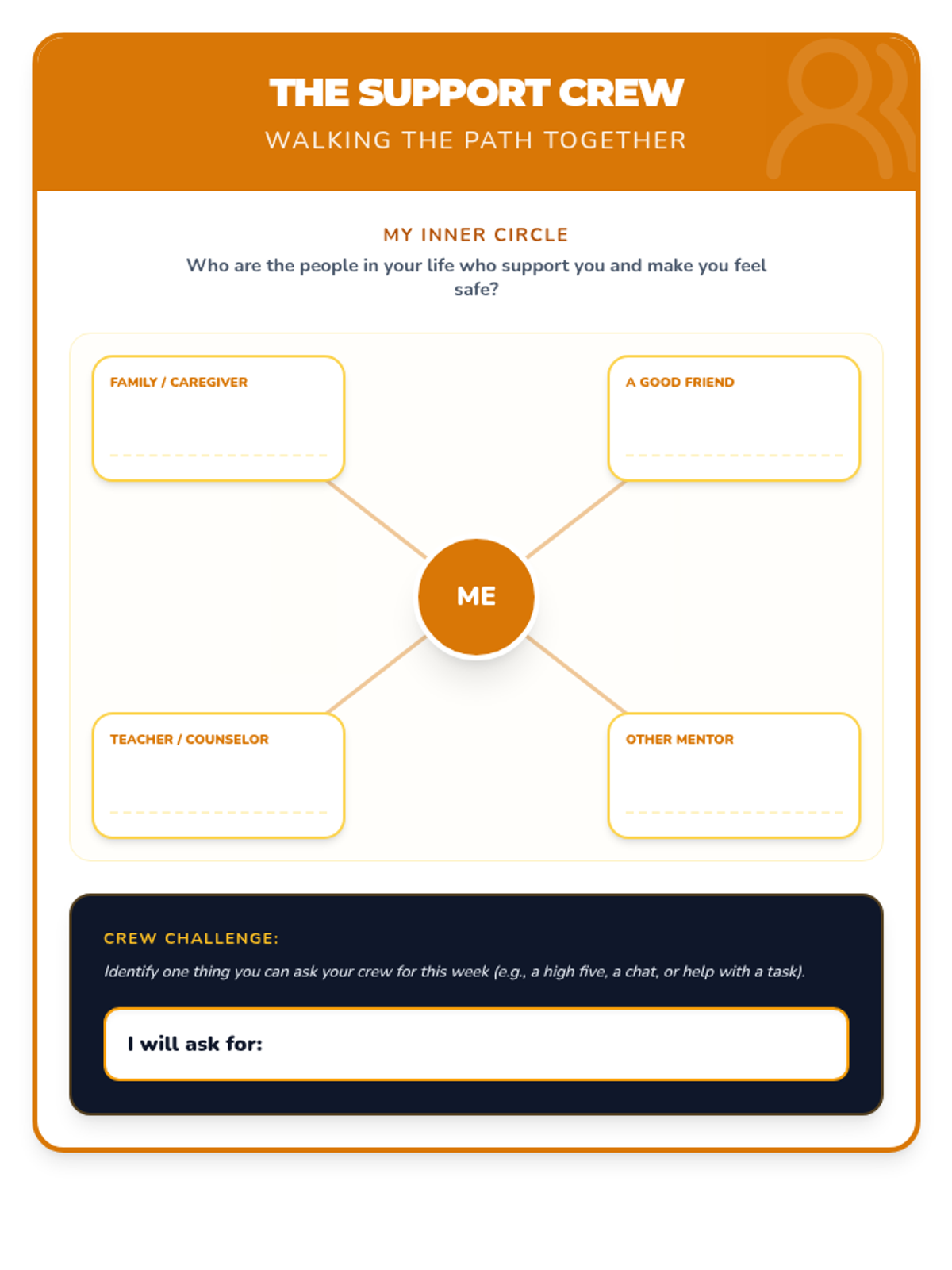
A support network mapping activity for Week 7 of the Basecamp journey, helping students visualize and identify the supportive adults and peers in their lives.
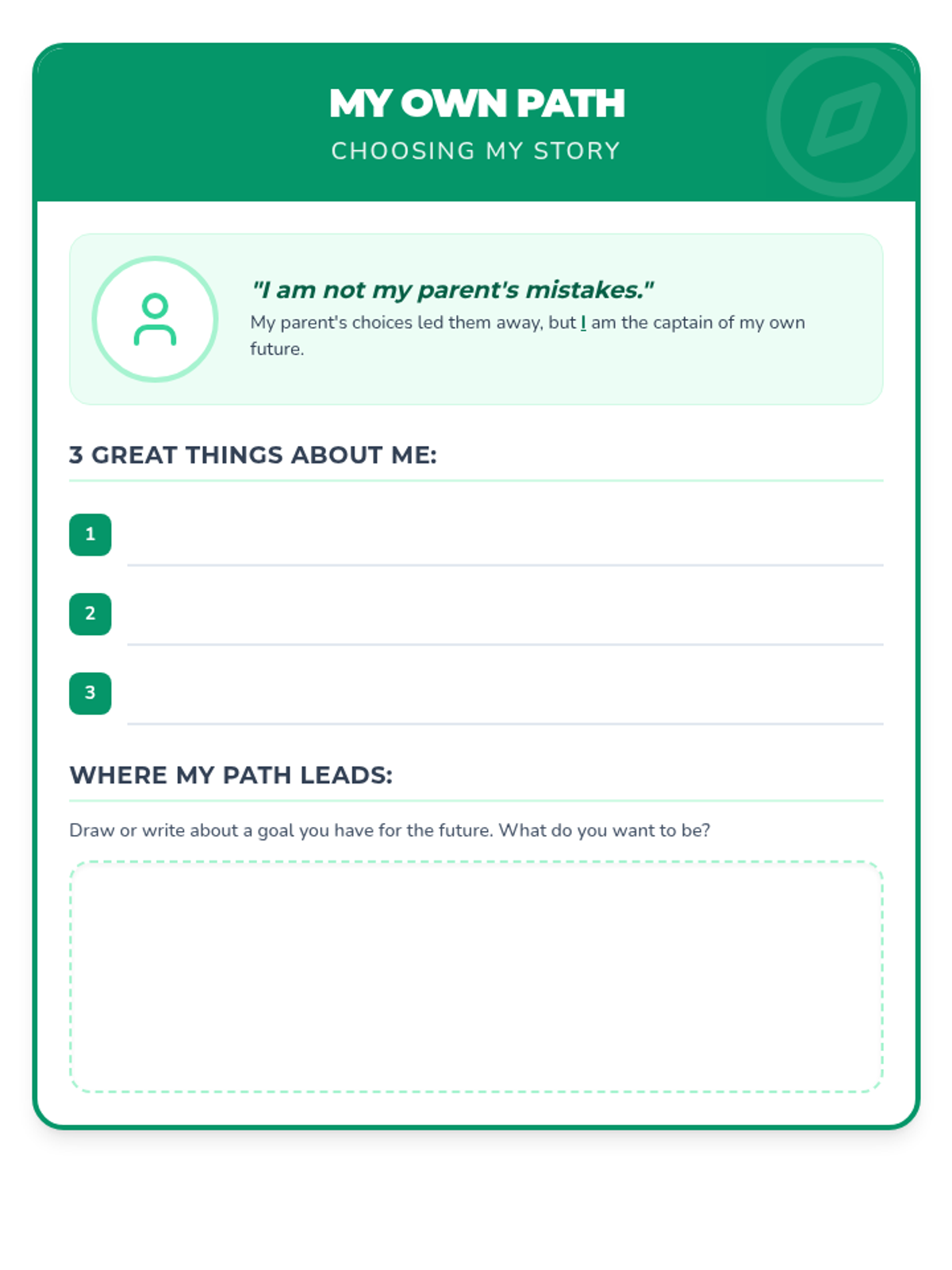
An identity-focused worksheet for Week 6 of the Basecamp journey, encouraging students to separate their identity from their parent's actions and focus on their own strengths and future goals.
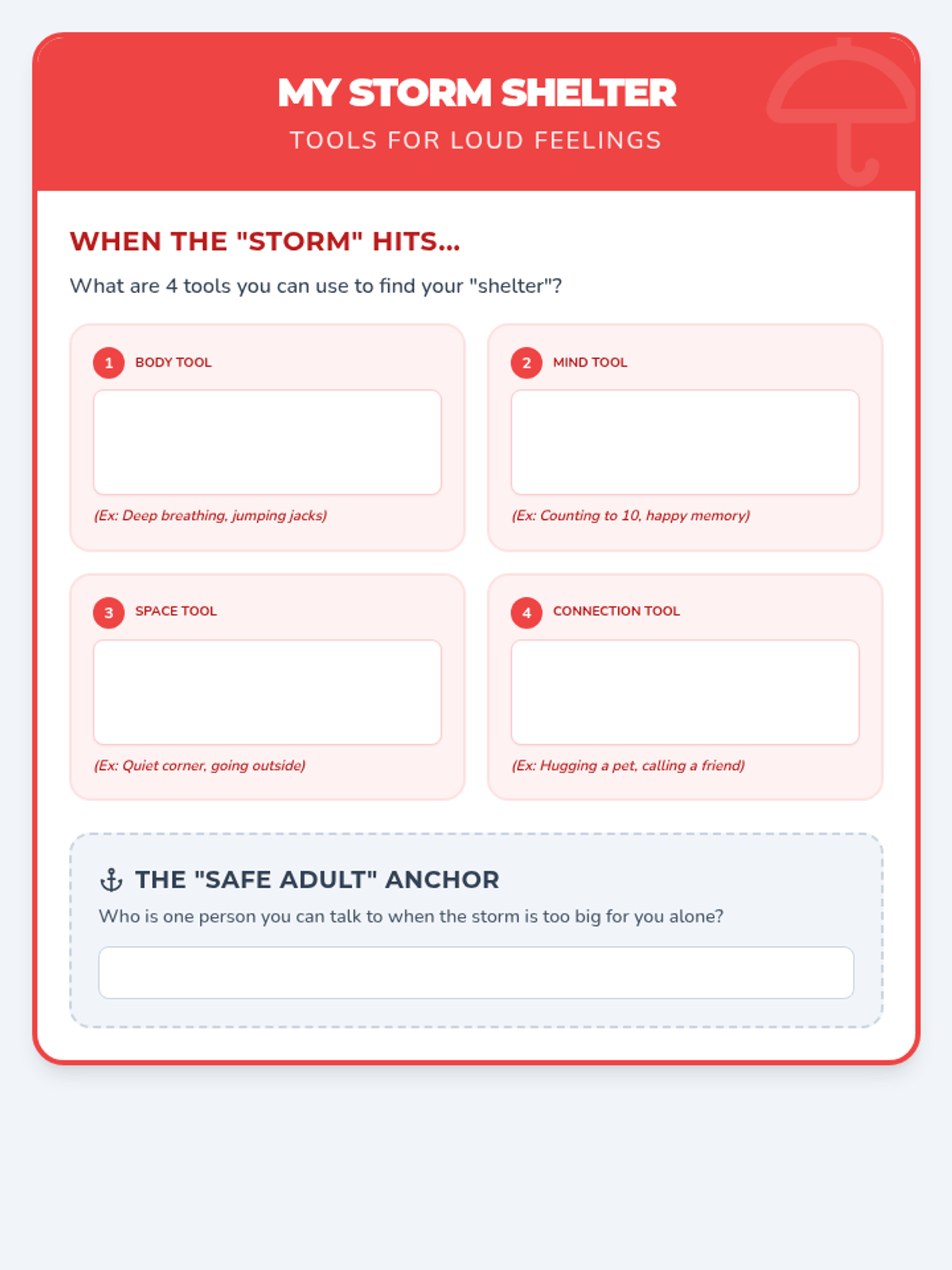
A coping skills activity for Week 5, helping students create a "Storm Shelter" map of strategies to use when they experience intense or overwhelming emotions.
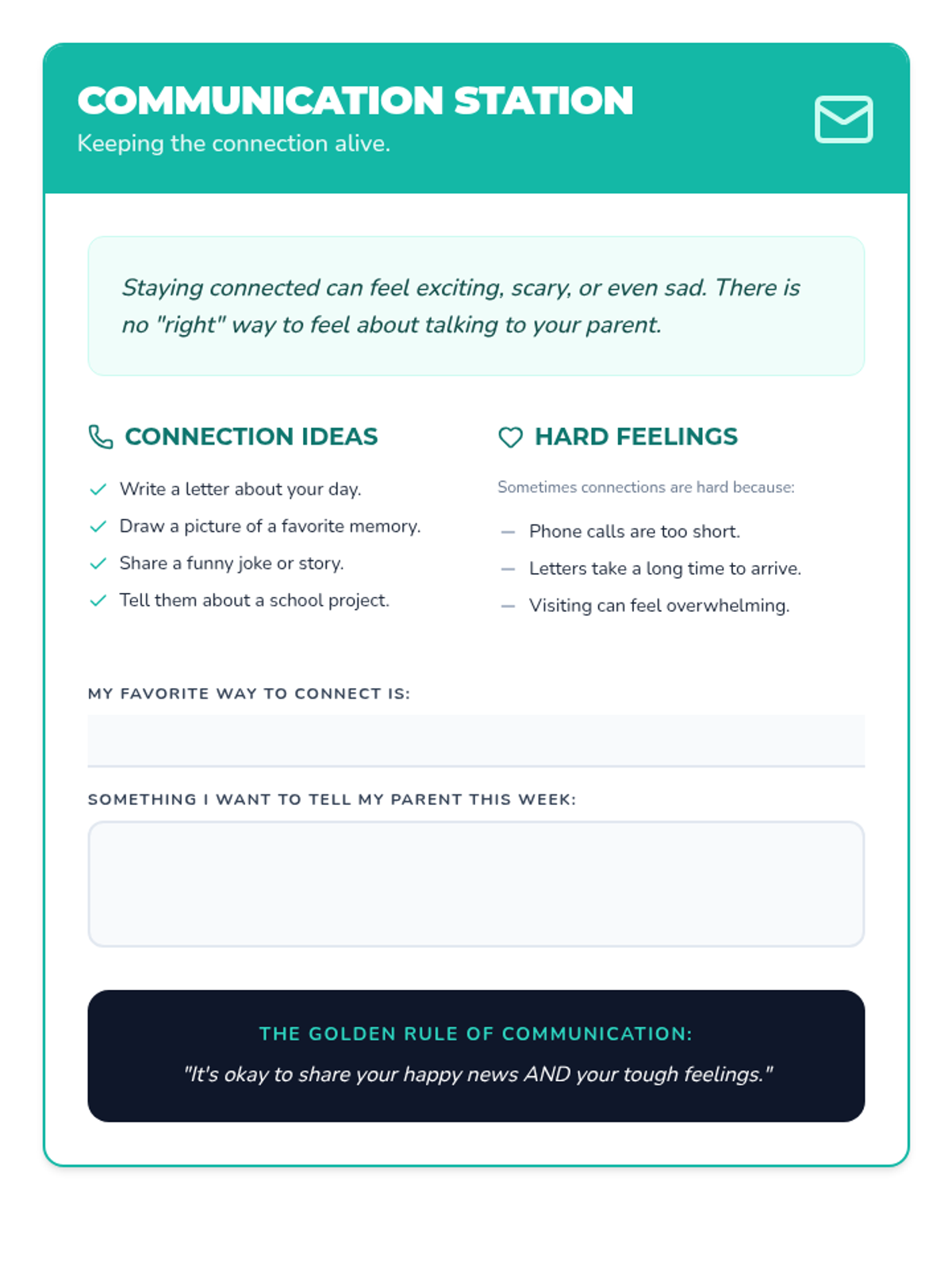
A resource for Week 4 of the Basecamp journey, providing students with ideas for staying connected with their incarcerated parents and a space to reflect on their communication preferences.
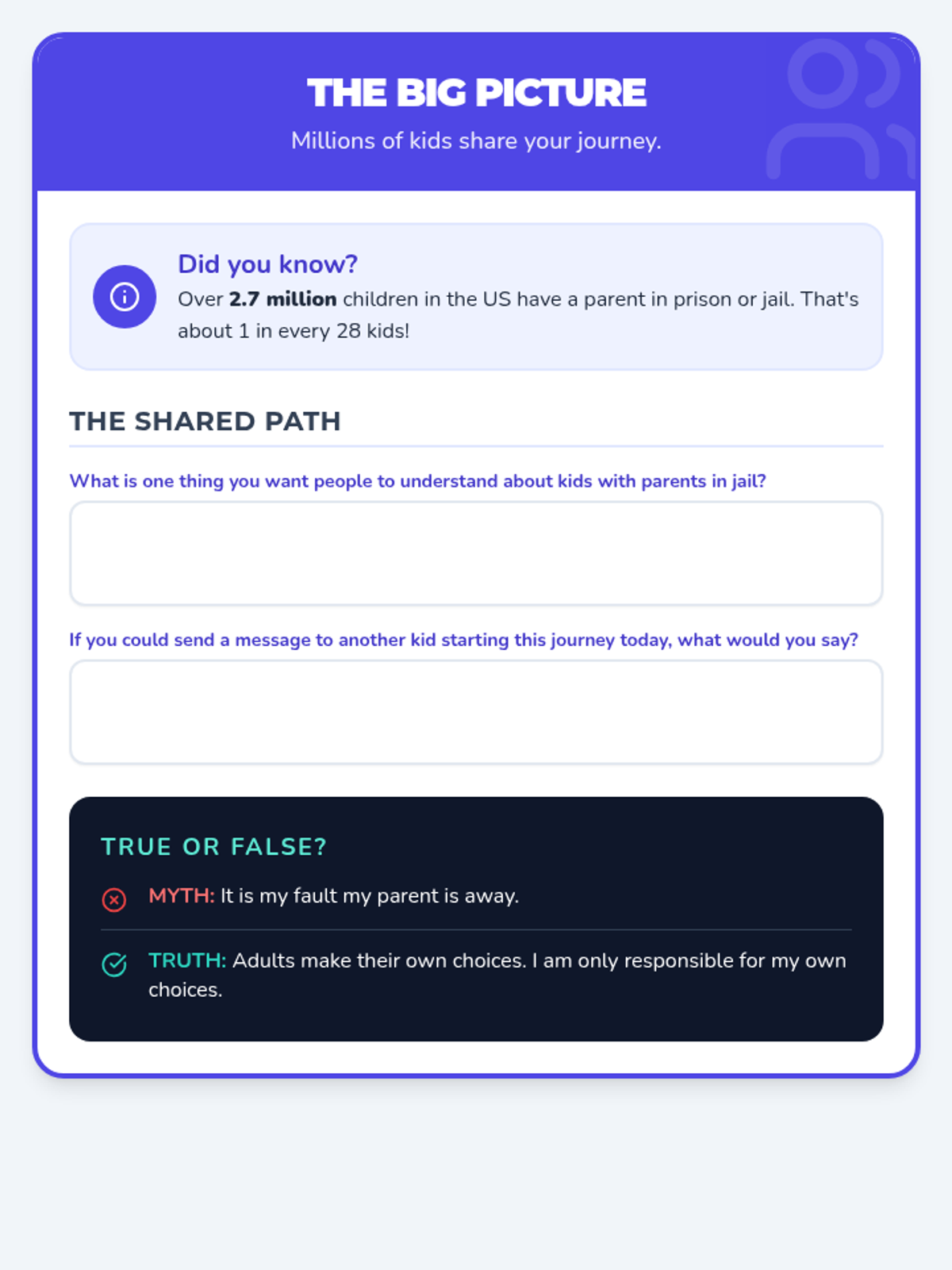
A worksheet for Week 3 of the Basecamp journey focusing on normalization through statistics and debunking common myths related to parental incarceration.
Slides for Week 2 of the Basecamp support group, focusing on identifying emotions using a weather metaphor and the concept of "Name It to Tame It."
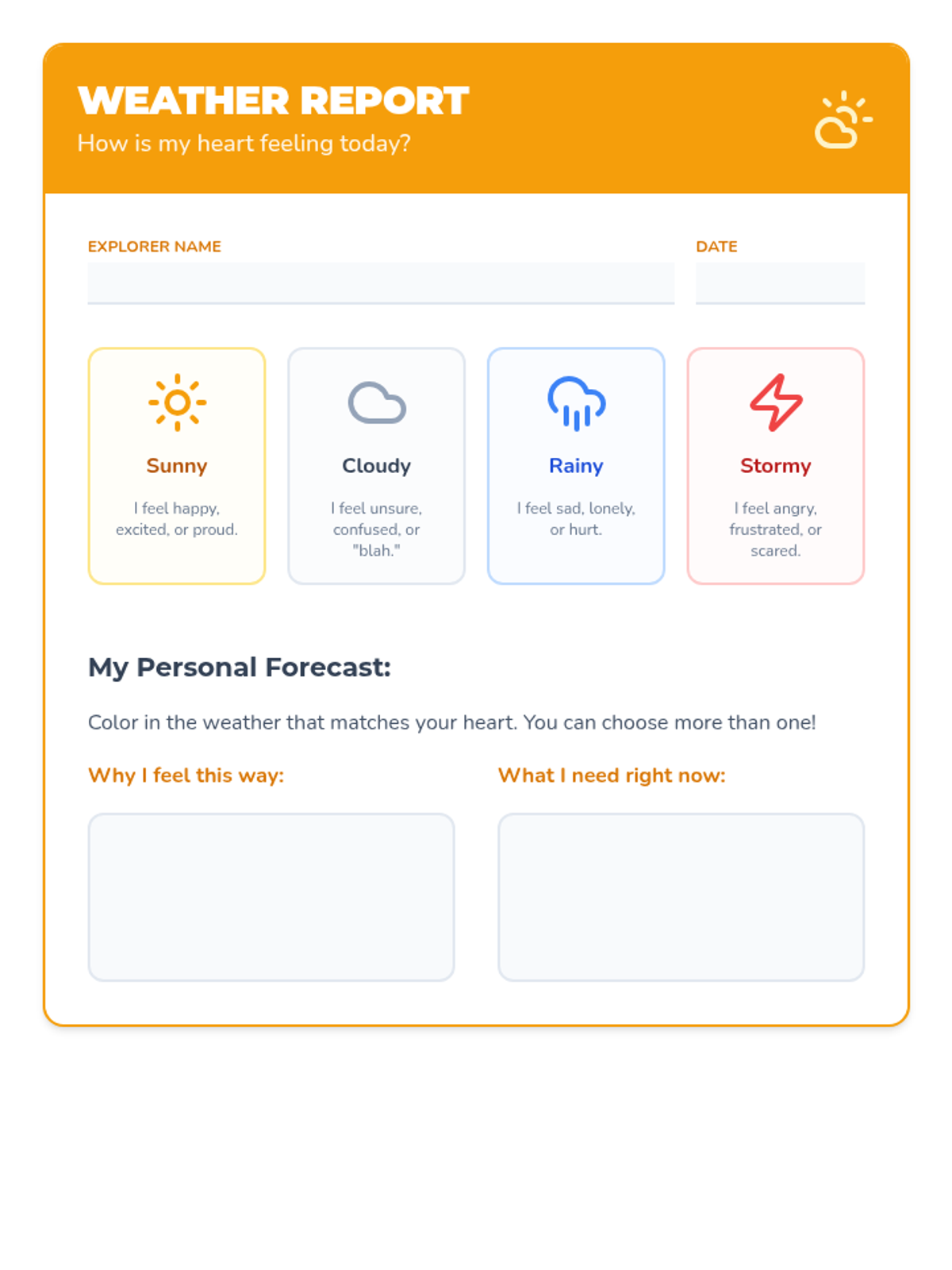
A "Weather Report" emotion chart for students to identify and express their current feelings using a weather metaphor (Sunny, Cloudy, Rainy, Stormy).