A sheet of 16 snippets (8 teacher examples, 8 family examples) to be cut out and sorted. Each snippet includes a descriptive sentence and a matching emoji icon.
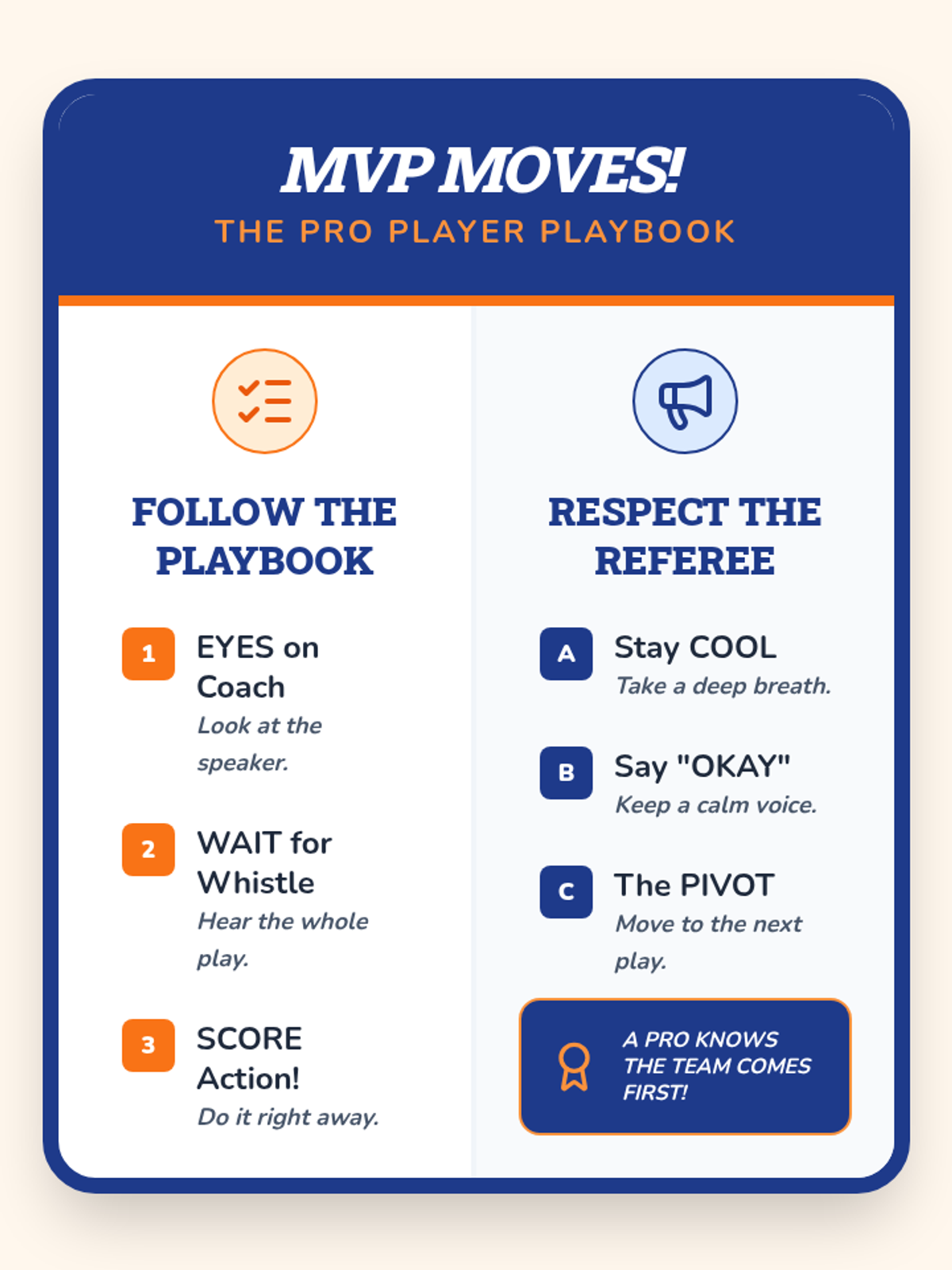
A bold, basketball-themed visual anchor chart for 2nd-grade classrooms. It uses sports metaphors (Follow the Playbook, Respect the Call) to break down the steps for following directions and accepting a "no" with a positive attitude.
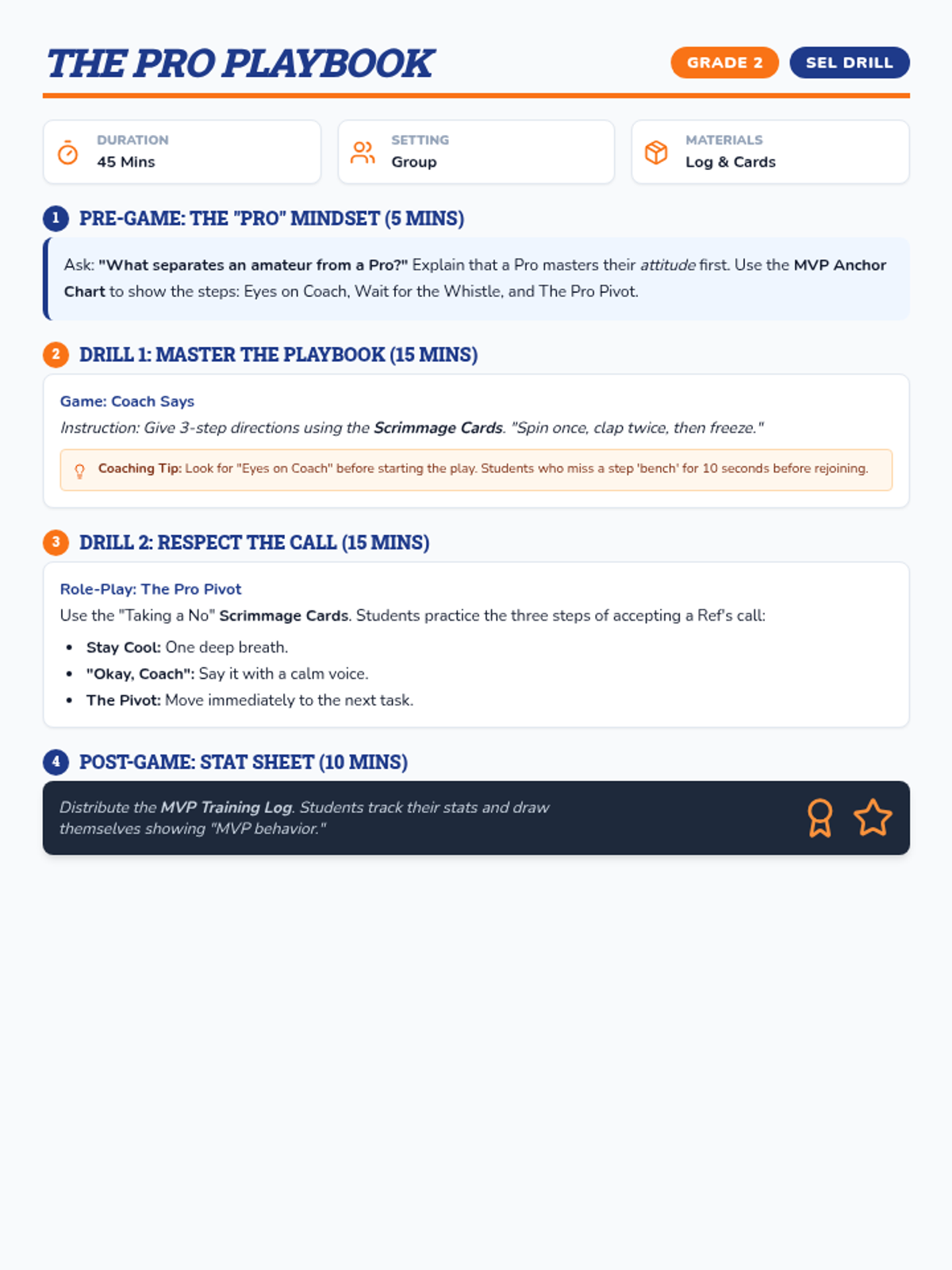
An interactive lesson plan that uses basketball metaphors to teach 2nd graders the professional skills of following multi-step directions and accepting a "no" with grace. Includes role-playing activities like "Coach Says" and "The Pro Pivot."
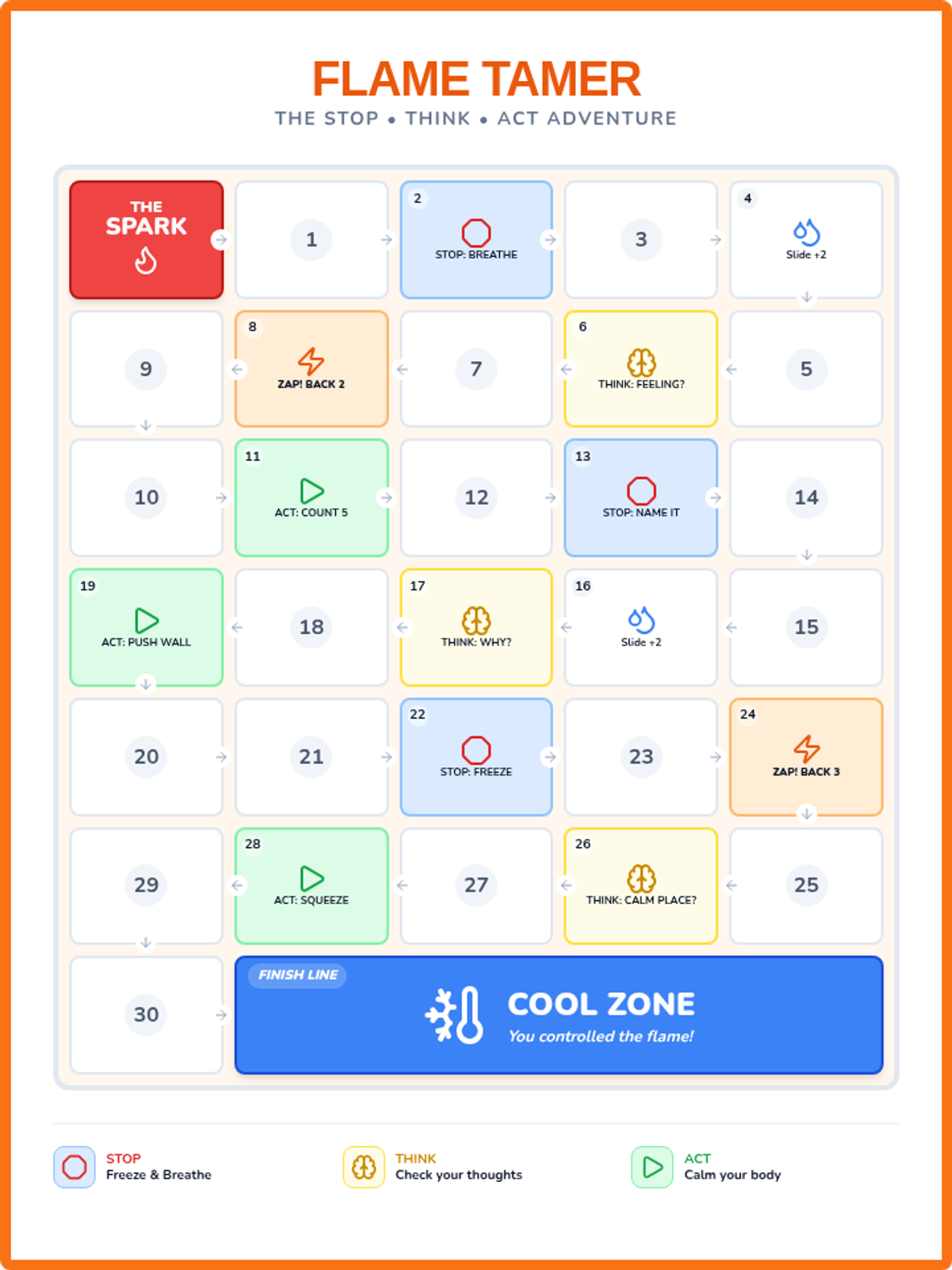
A printable two-page board game for students to practice 'Stop, Think, Act' in a fun, fire-fighter themed race to the 'Cool Zone'. Includes game board, instructions, and DIY cut-out player pieces.
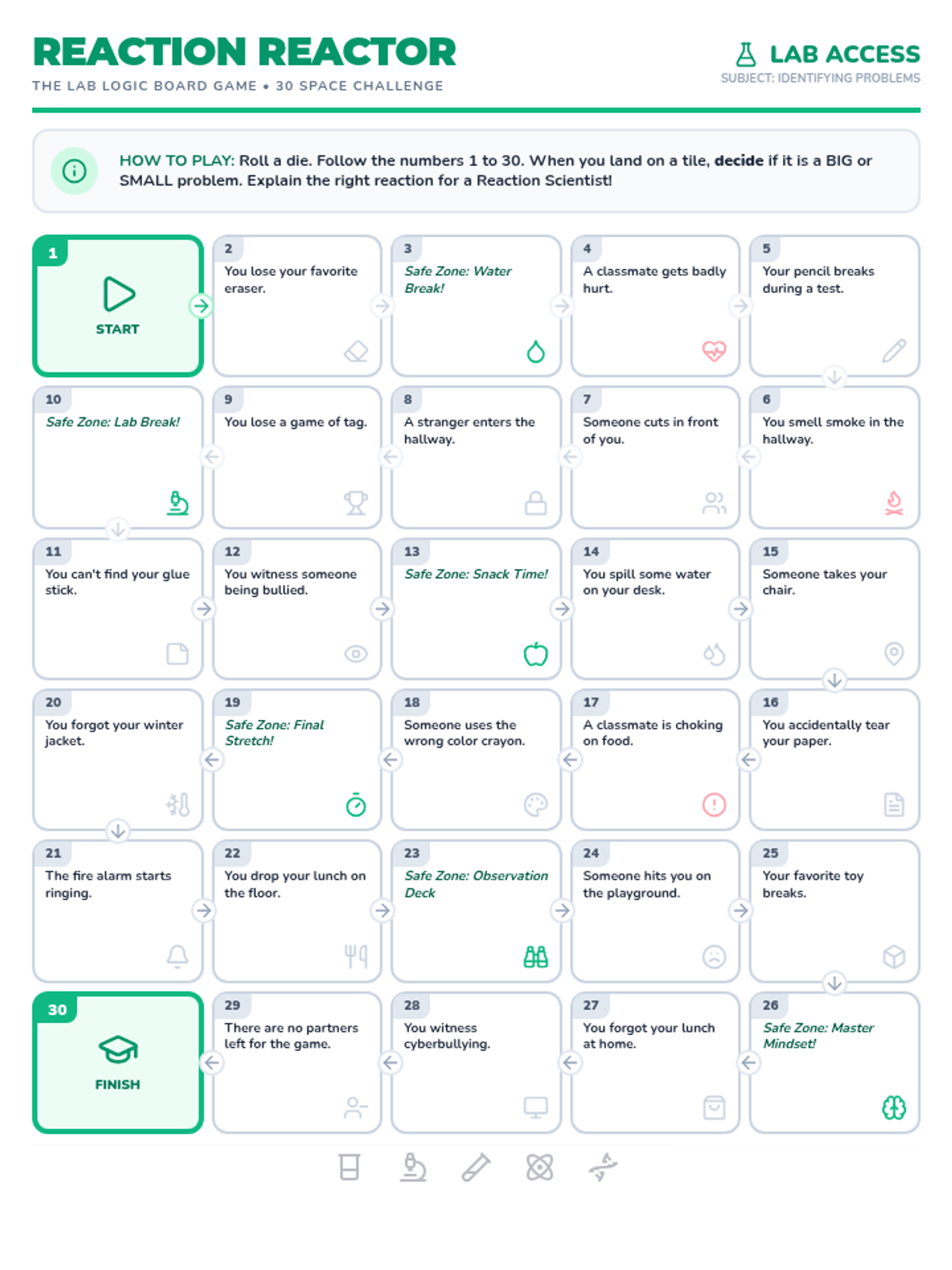
An expanded 30-space printable lab-themed board game for students to practice identifying small vs. big problems. Includes an increased variety of scenarios and safe zones with numbered snake-path navigation. Revised for path clarity and better contrast.
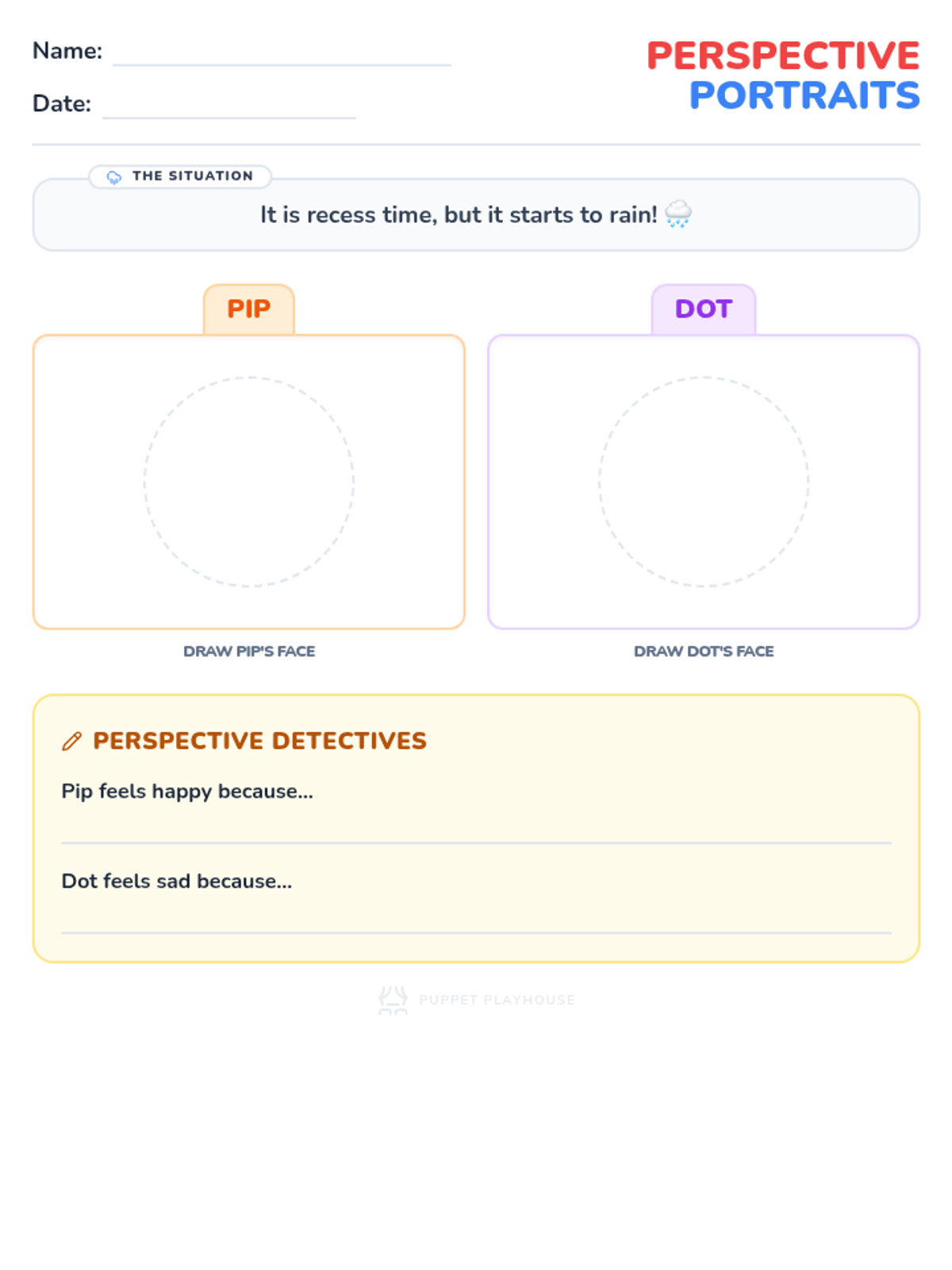
A student worksheet for 1st graders to visualize and identify different emotional reactions to the same situation (rainy recess). Includes large drawing areas and simple sentence starters.
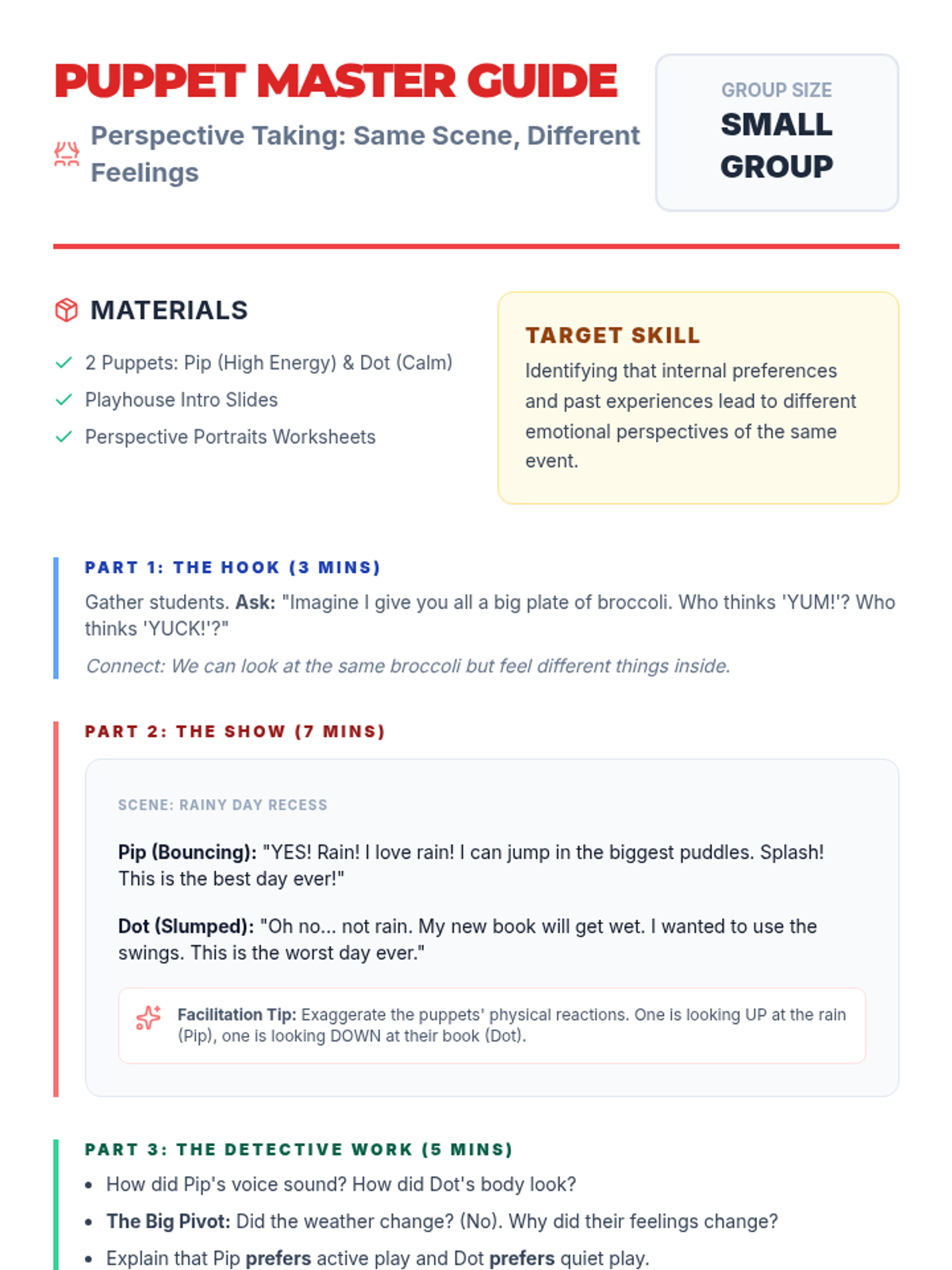
A detailed teacher-facing facilitator guide for the "Puppet Playhouse" lesson. Includes the puppet script for the "Rainy Day" scenario, discussion prompts, and an extension scenario for further practice.
A vibrant, high-contrast slide deck to introduce the "Puppet Playhouse" concept, characters, and the core scenario of rainy-day recess. designed for 1st-grade engagement with large text and clear icons.
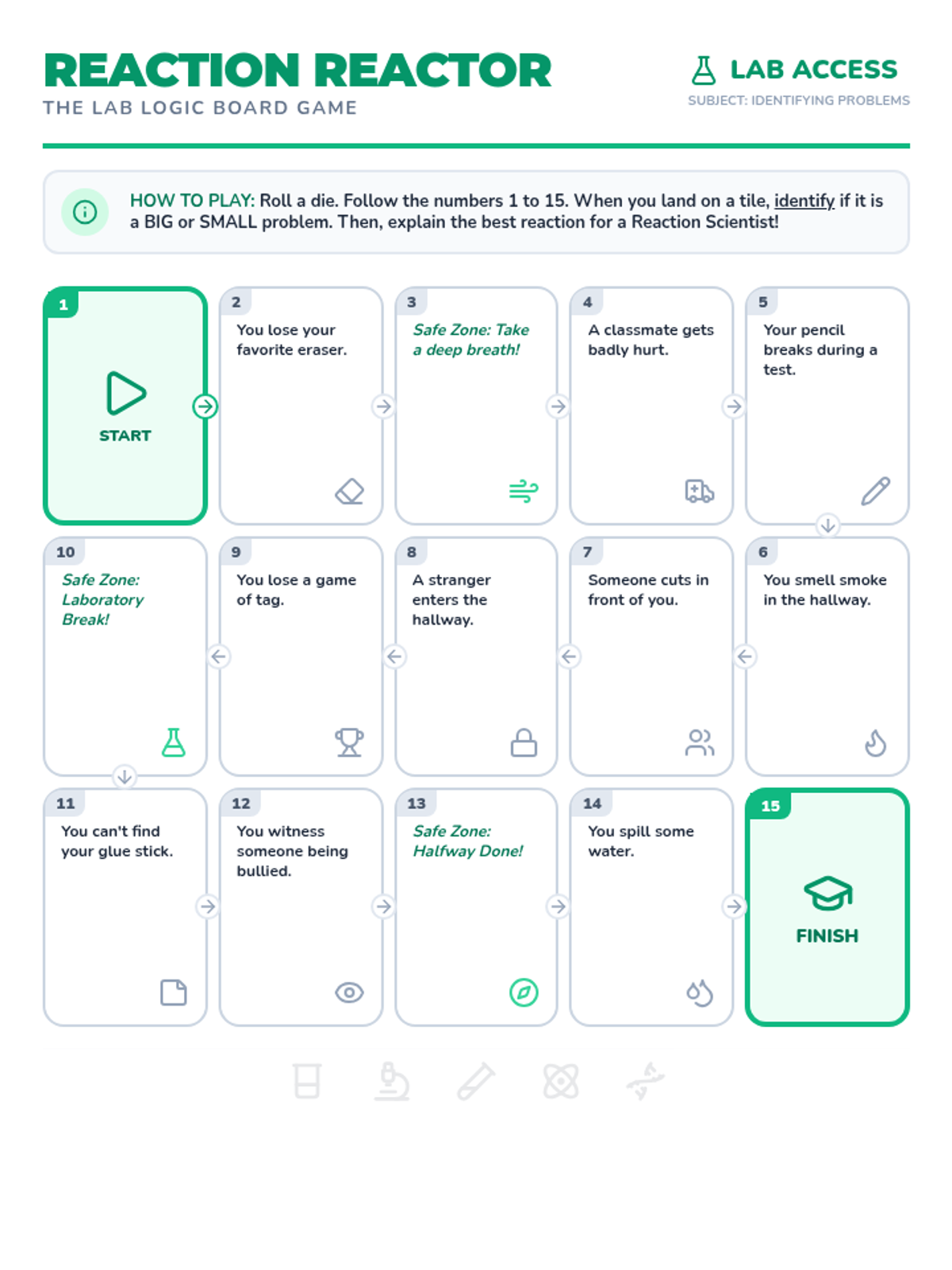
A printable lab-themed board game for students to practice identifying small vs. big problems and determining appropriate reactions. Scenarios are unlabeled and tiles are neutral to challenge students to identify the problem size themselves. Path is numbered 1-15 for clarity.
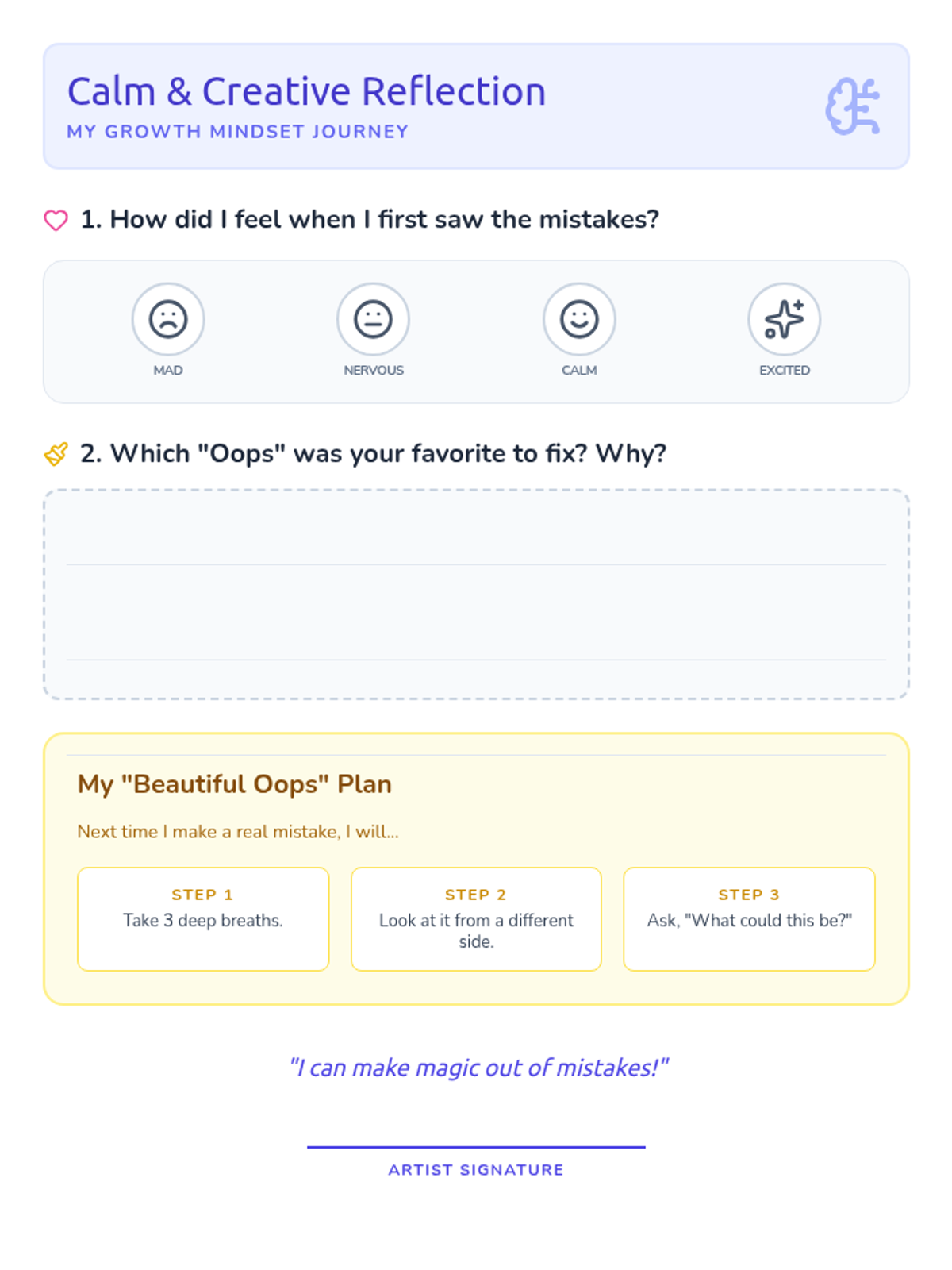
A reflection sheet for students to identify their emotions regarding mistakes and create a personal action plan. Revised with larger writing lines and higher contrast.
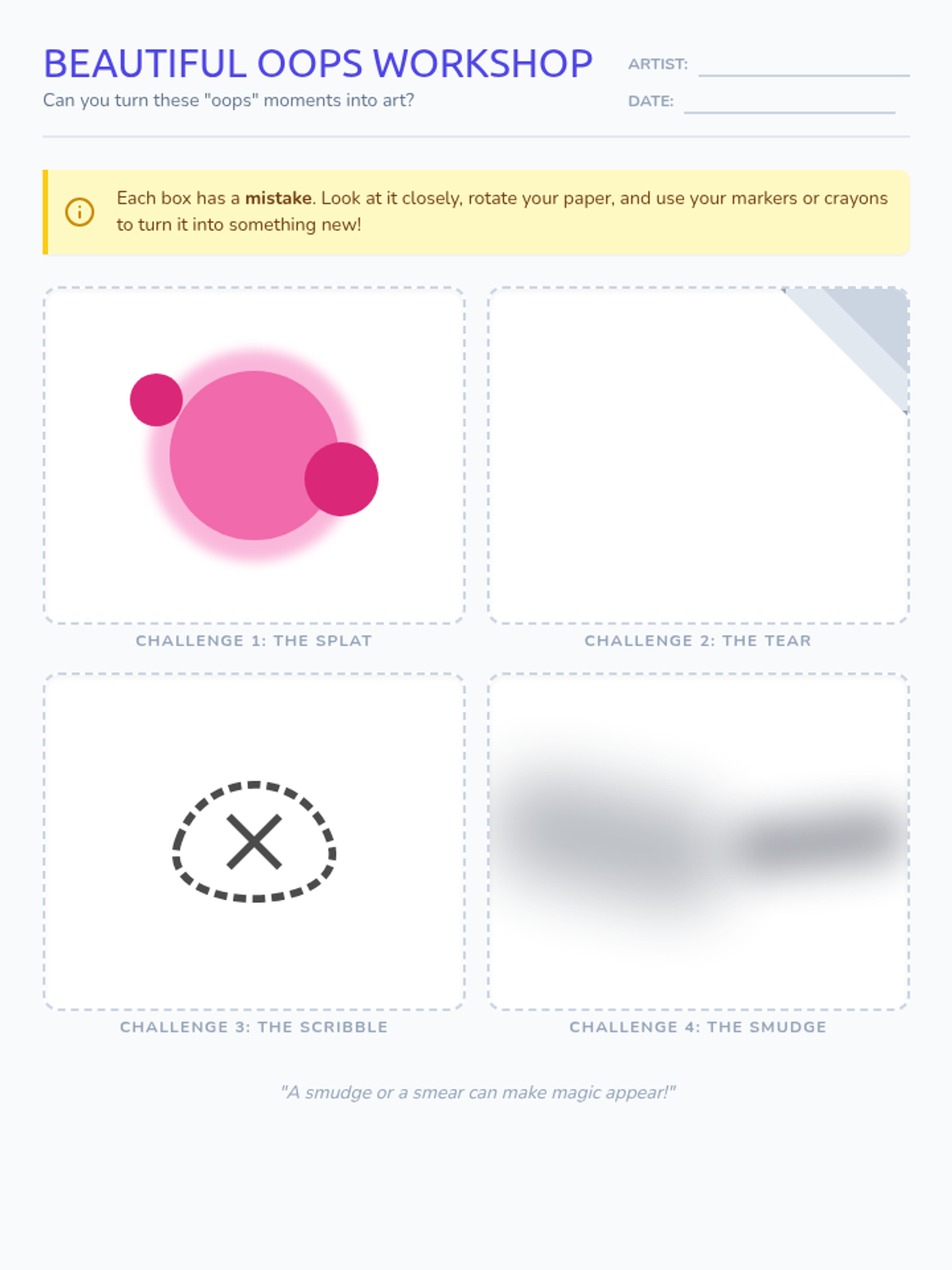
A creative hands-on worksheet featuring four 'mistake' prompts (a splat, a tear, a scribble, and a smudge) for students to transform into original artwork. Revised for maximum contrast and photocopy reliability.
An engaging slide deck for Grade 2 students that introduces the concepts of 'Beautiful Oops', explores the feelings associated with making mistakes, and teaches the steps to reframe them.
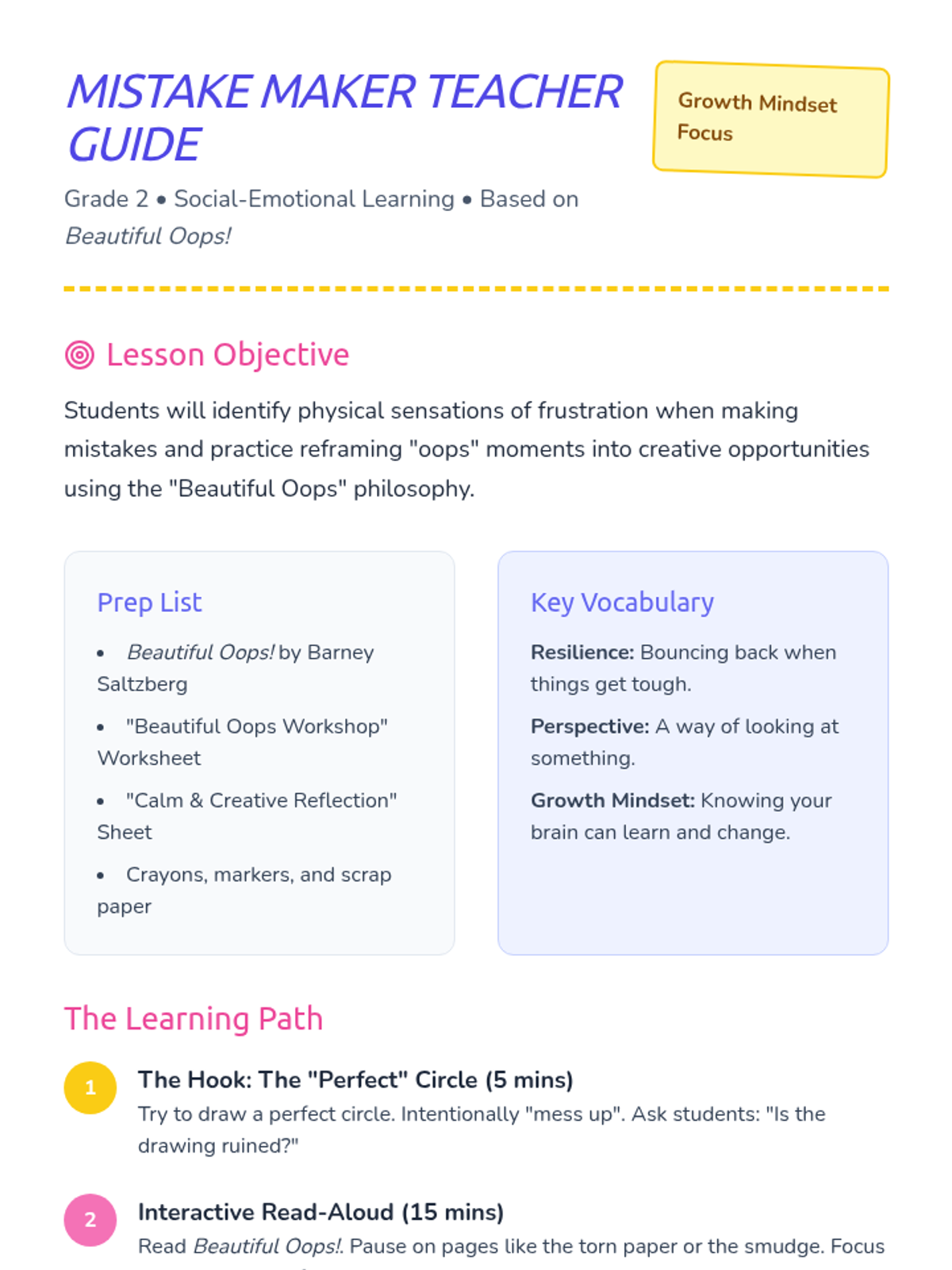
A comprehensive teacher guide for facilitating a 'Beautiful Oops' lesson. Revised for better page breaks and clarity.
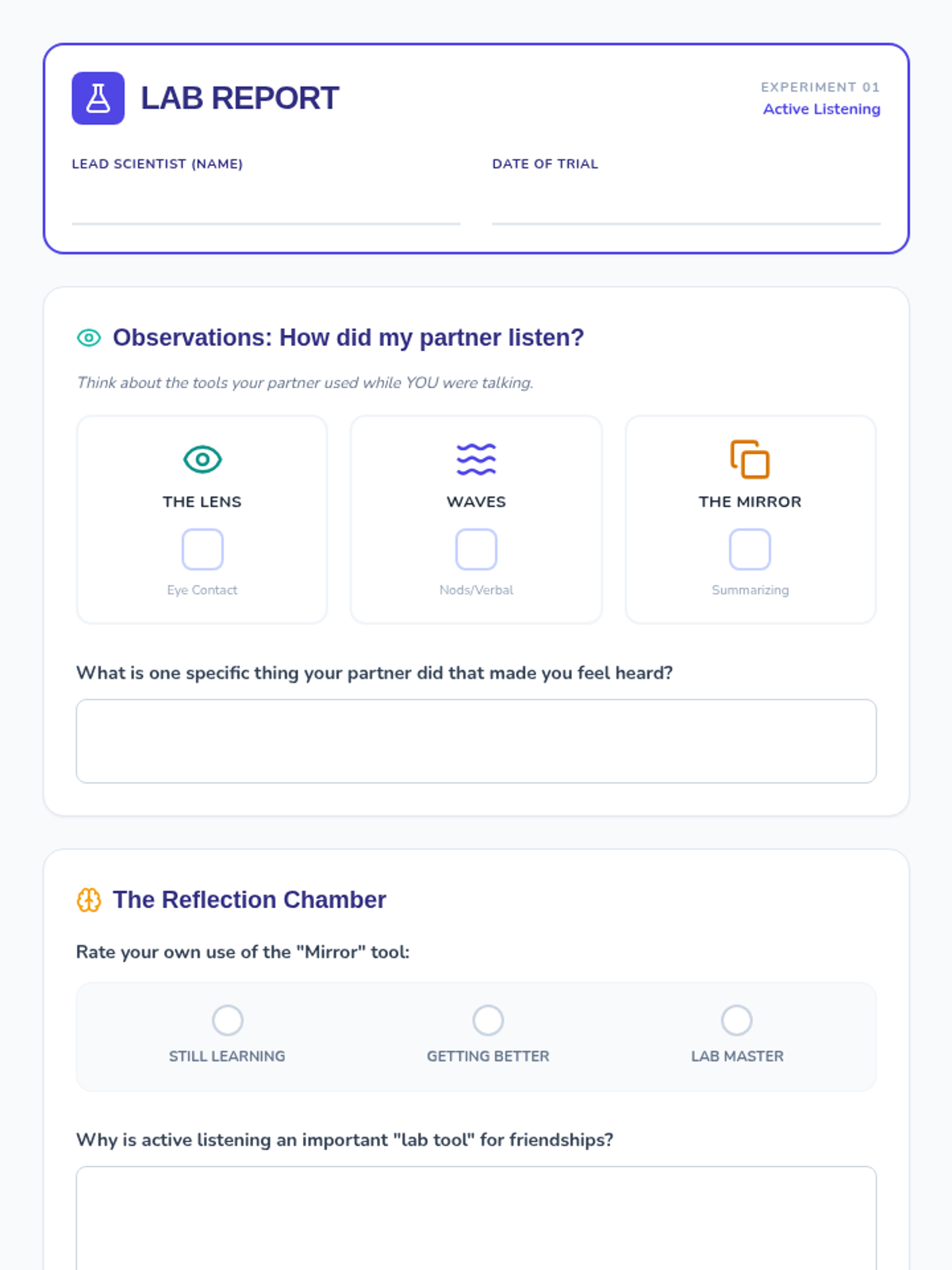
A student-facing 'Lab Report' worksheet for practicing active listening, featuring observation checklists and reflection prompts to reinforce social skills.
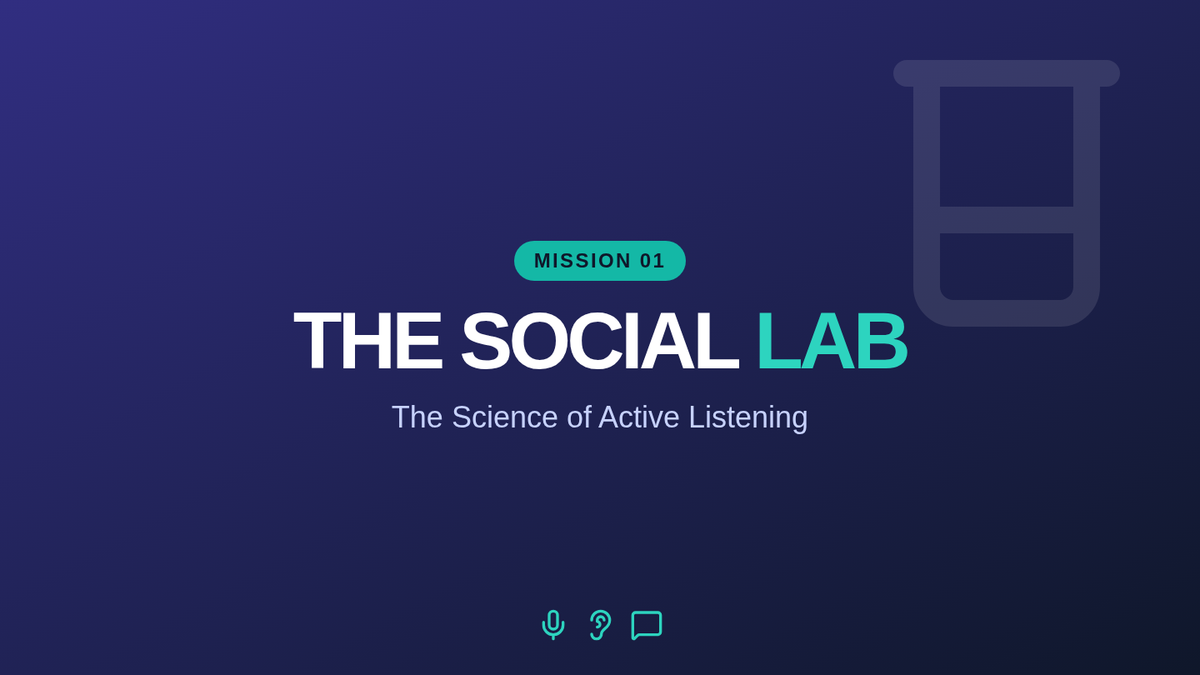
Visual slide deck for 'The Social Lab' lesson, introducing the concept of active listening through the metaphor of lab tools like 'The Lens' and 'The Mirror'.
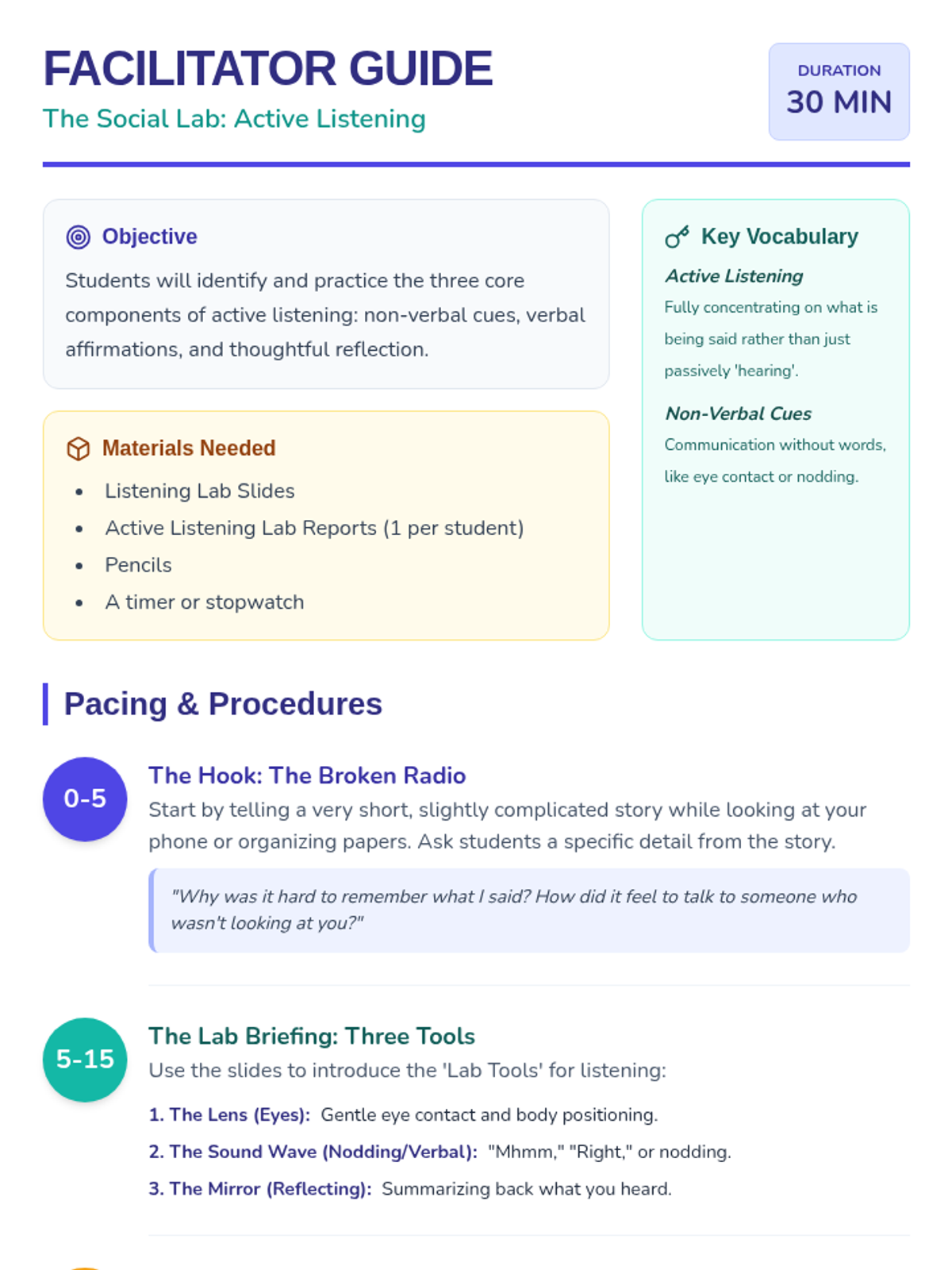
A structured 30-minute teacher's guide for the 'Social Lab' lesson, featuring a clear pacing schedule, discussion prompts, and activity instructions for teaching active listening.
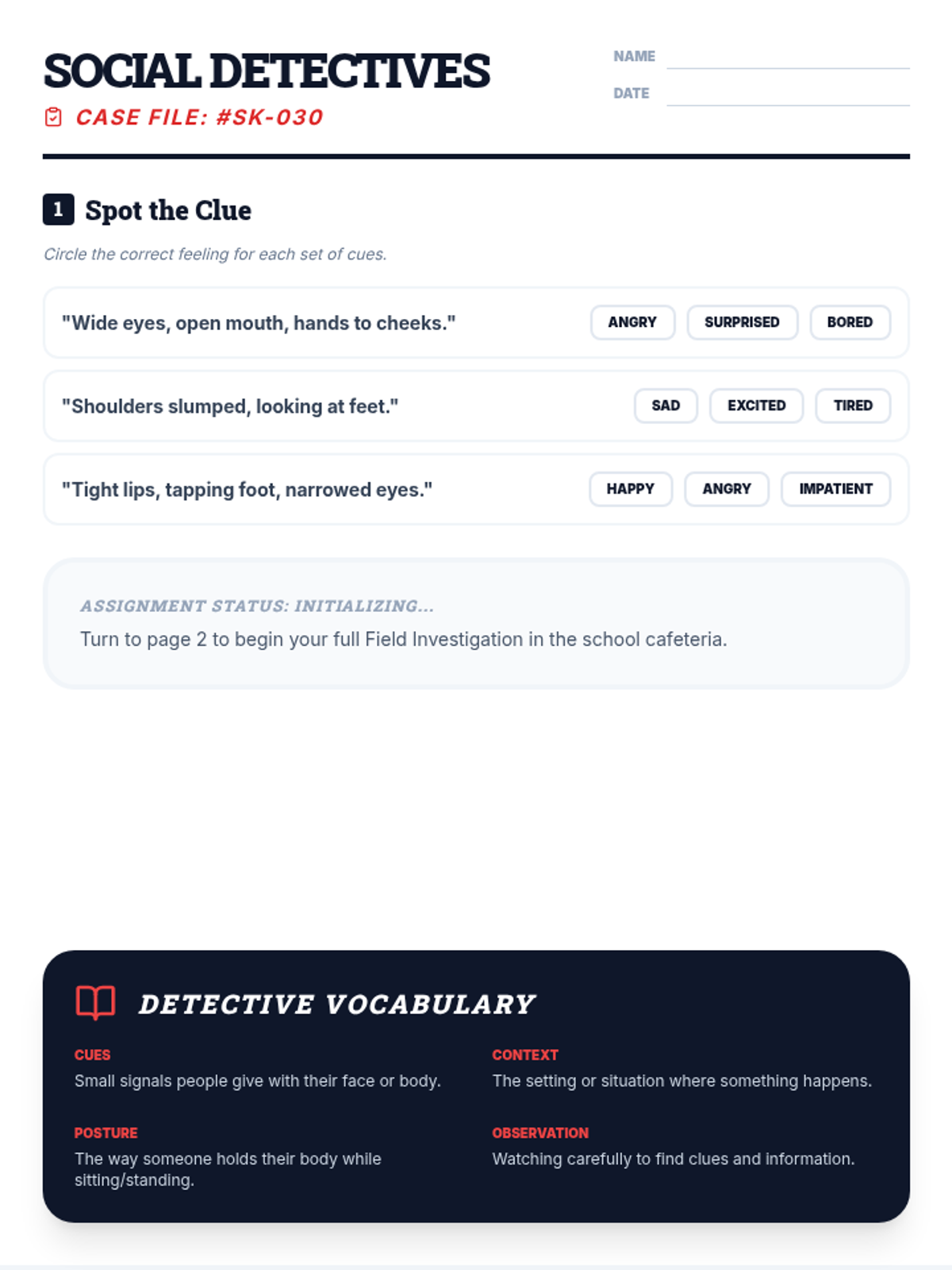
A student activity sheet for the 'Social Detectives' lesson, featuring matching exercises, a scenario analysis, and a creative drawing task to demonstrate understanding of social cues.
A visual presentation for the 'Social Detectives' lesson, covering the definition of social cues, a breakdown of facial and body language signals, and a practice case study.
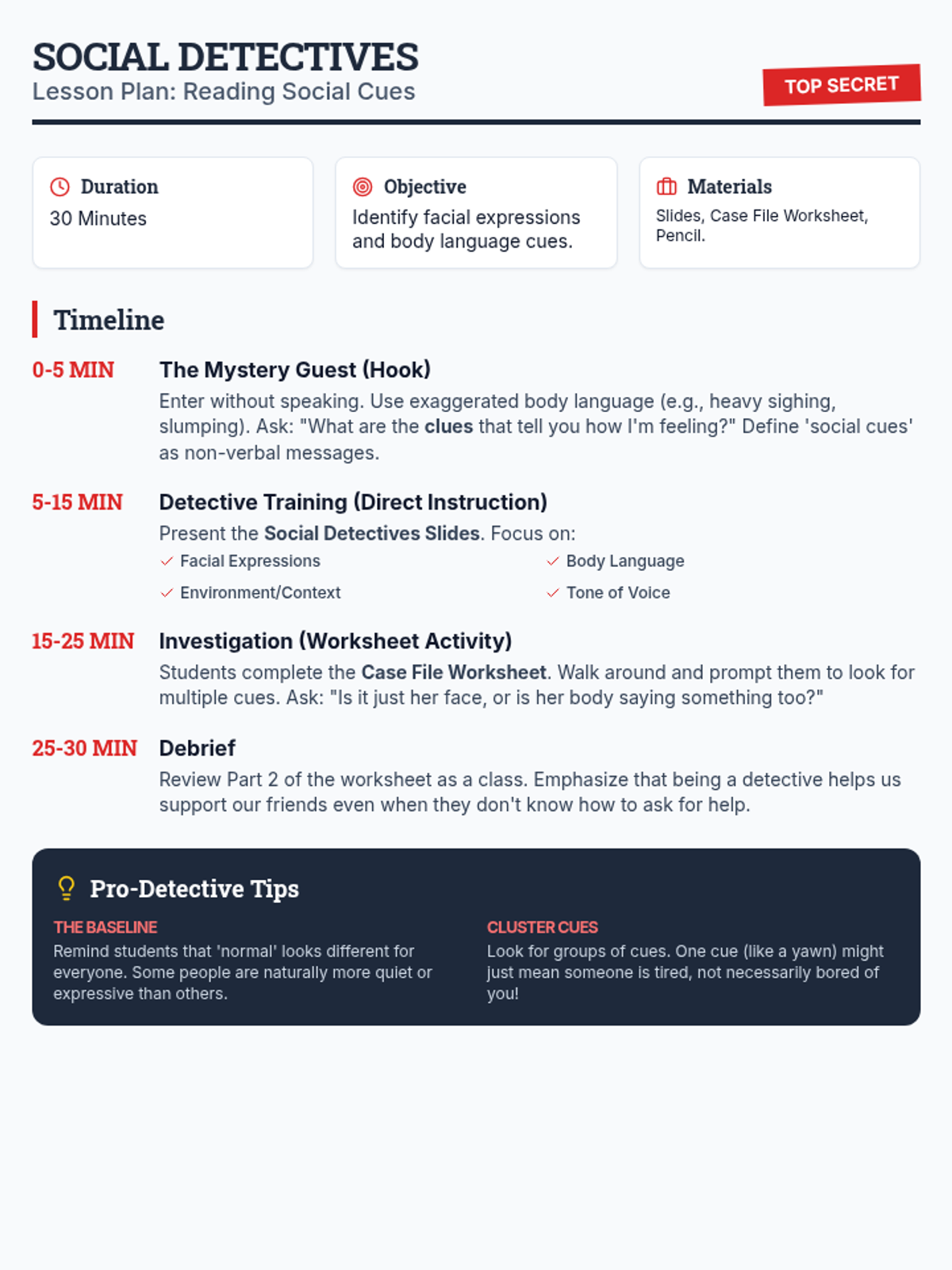
A 30-minute instructional guide for teachers to lead the 'Social Detectives' lesson, including timing, activity prompts, and pedagogical tips.
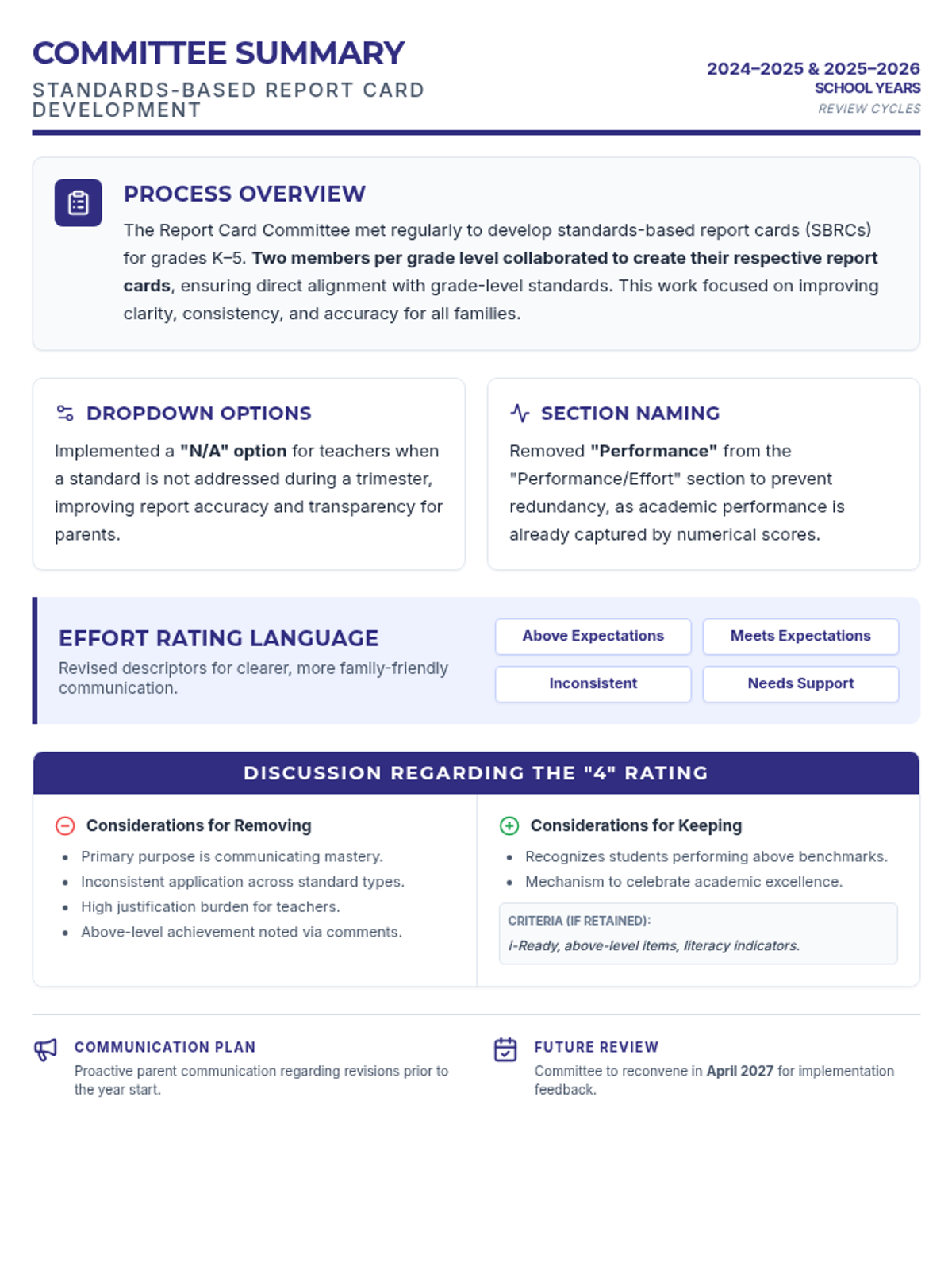
A one-page summary handout for a school committee detailing the work of the Report Card Committee, with the header updated to specify the 2024-2025 and 2025-2026 school years.
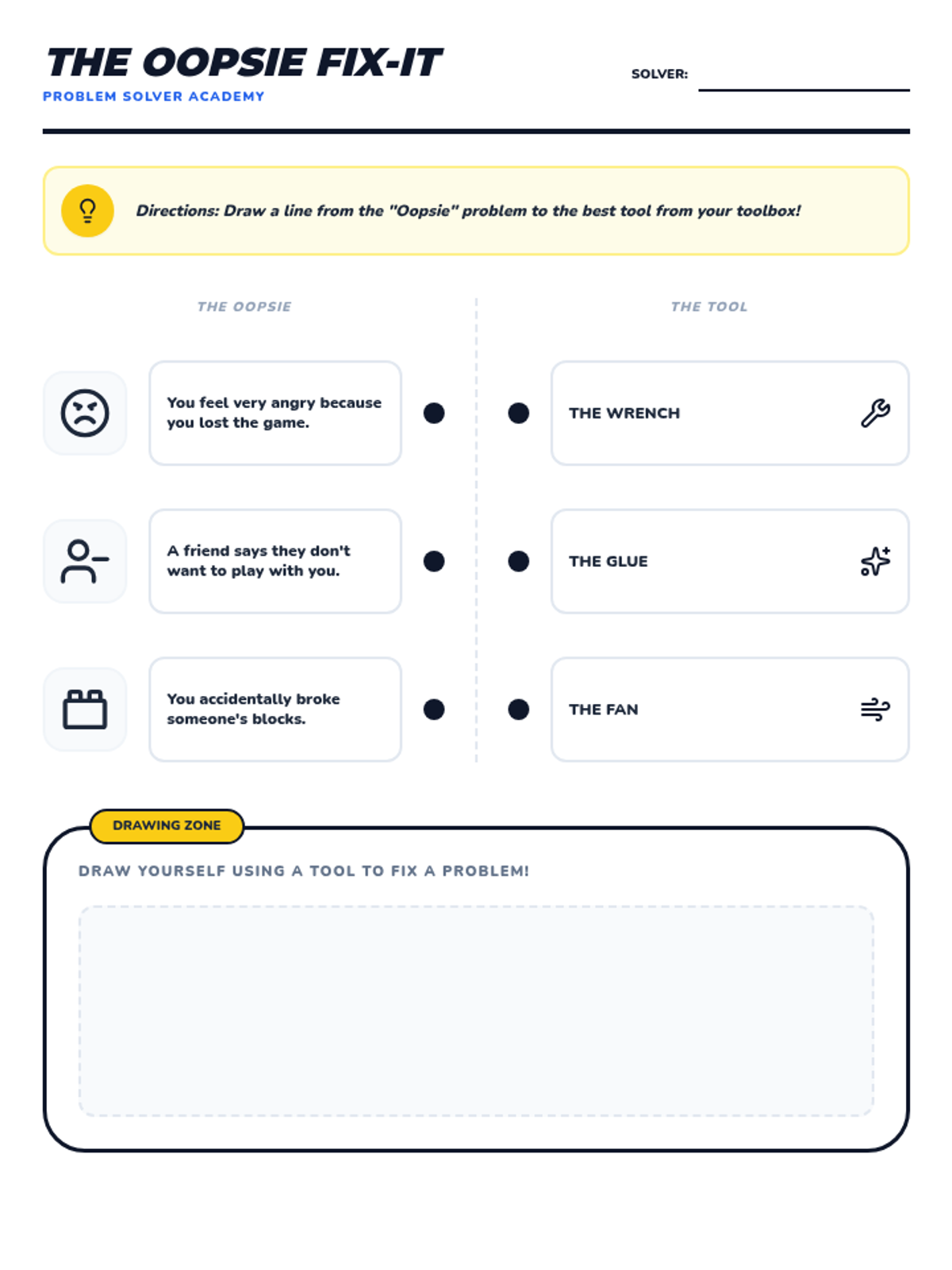
A scenario-based matching worksheet where K-1 students connect common classroom problems (the "Oopsie") with the appropriate solution strategy (the "Tool"). Includes a creative drawing space for self-reflection.
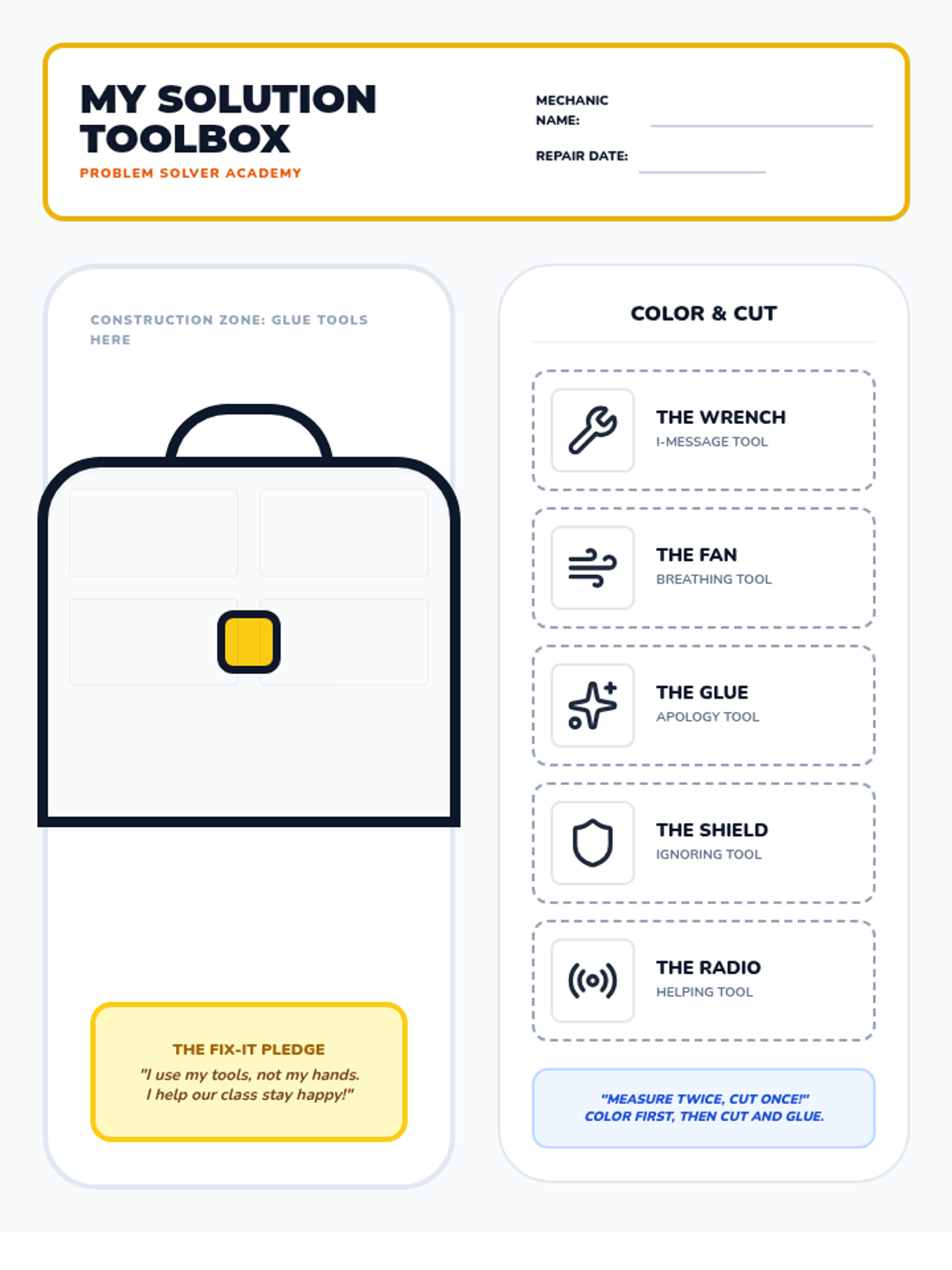
A hands-on student activity sheet where children color, cut, and paste metaphorical "tools" (SEL strategies) into a personal toolbox. Designed to help K-1 students remember how to solve social problems independently.
A dynamic and engaging slide deck for a whole-class SEL lesson. Features a "Repair Shop" theme with tool-based metaphors for solving social conflicts, including interactive "Let's Fix It" scenarios.