A rubric for peer reviewing SMART goals and perseverance actions, featuring a 'Scout Report' athletic theme.
A 4-slide presentation for Lesson 3, explaining the campaign design project guidelines, campaign pathways, and presentation instructions.
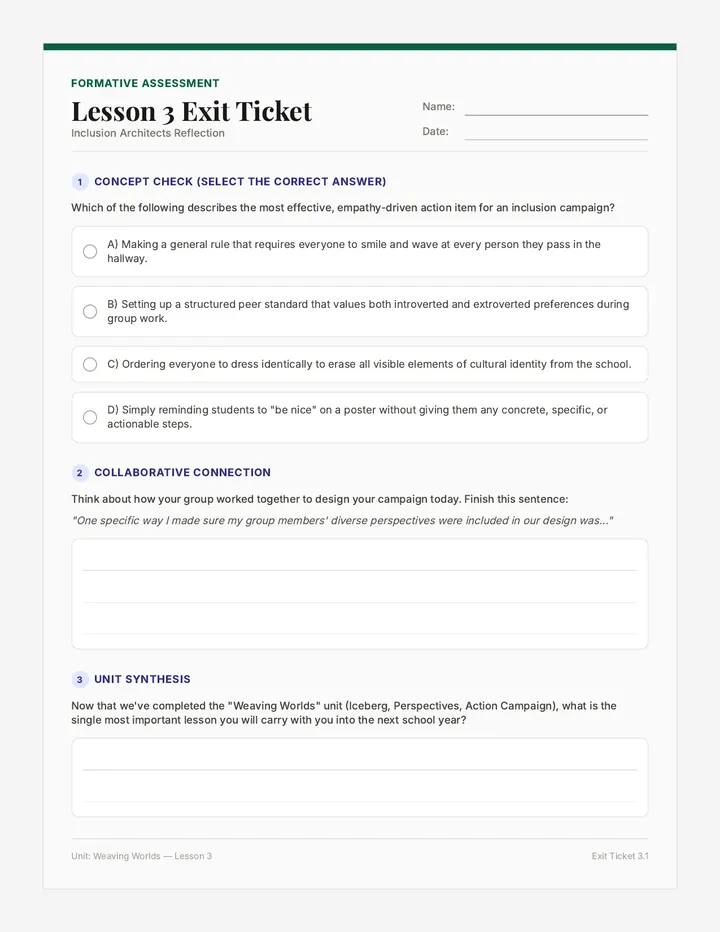
A quick daily exit ticket assessment for Lesson 3, checking students' understanding of the campaign design and reflecting on their key takeaways from the unit.
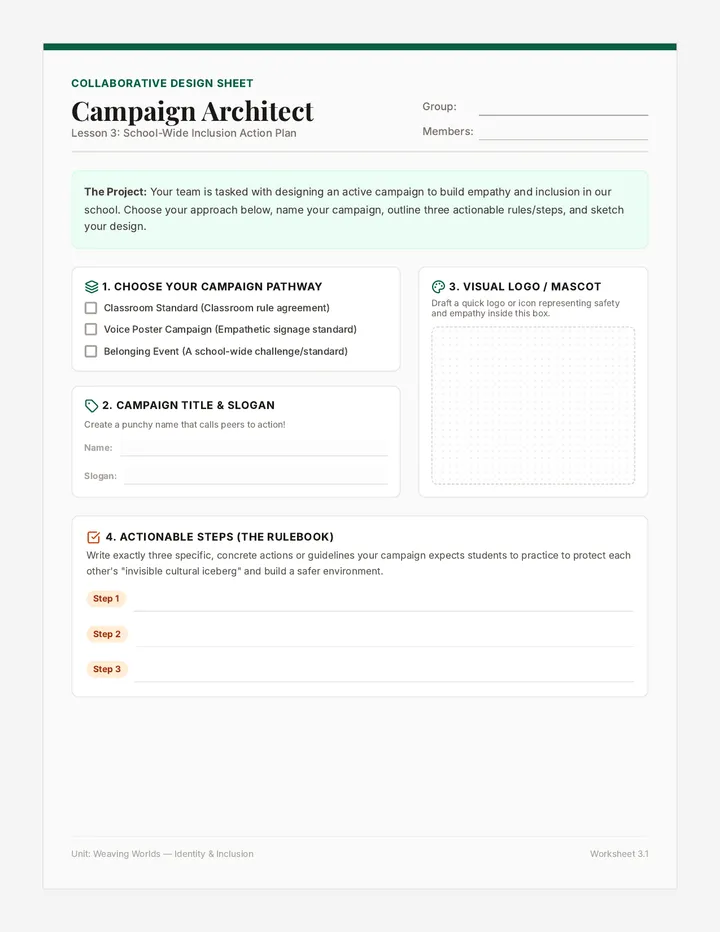
An interactive student campaign design worksheet for Lesson 3, guiding student teams to outline a campaign name, target audience, core inclusion goal, actionable steps, and a visual logo sketch.
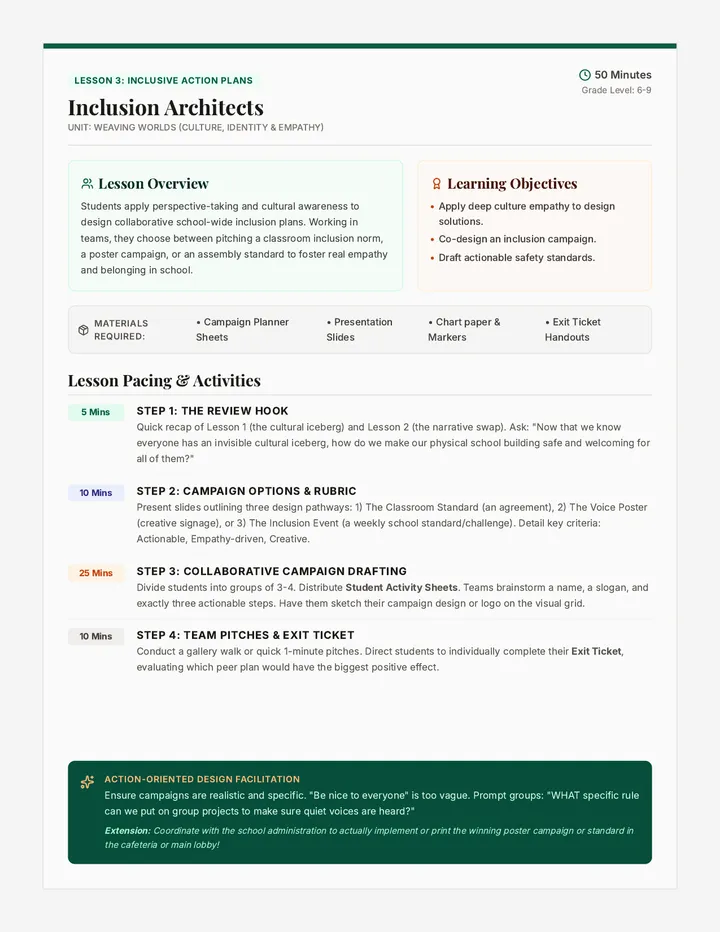
A comprehensive teacher guide for Lesson 3, outlining pacing, project criteria, student campaign options, and instructions for group presentations.
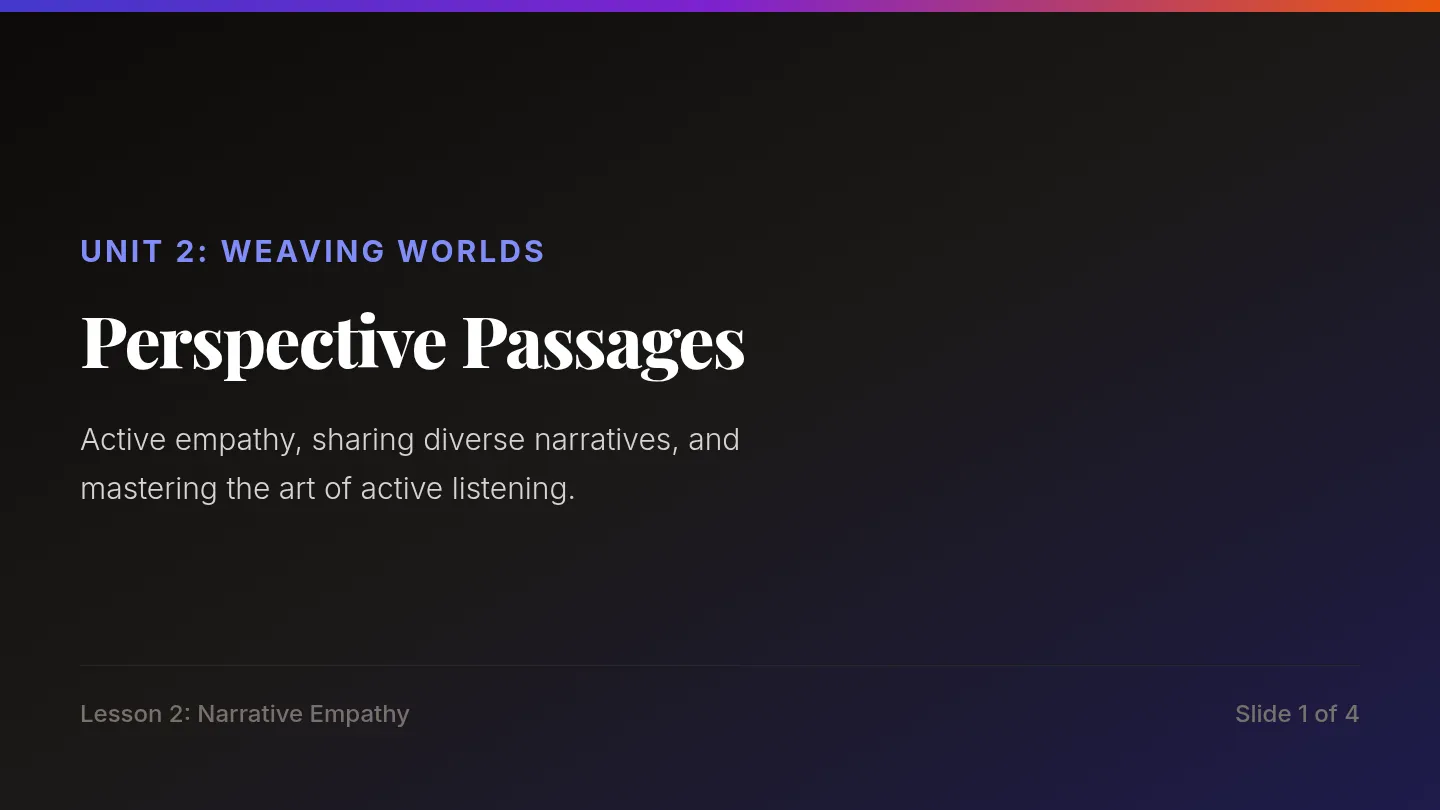
A 4-slide presentation for Lesson 2, outlining the dual hallway perspective scenario and teaching active listening rules for the student narrative swap.
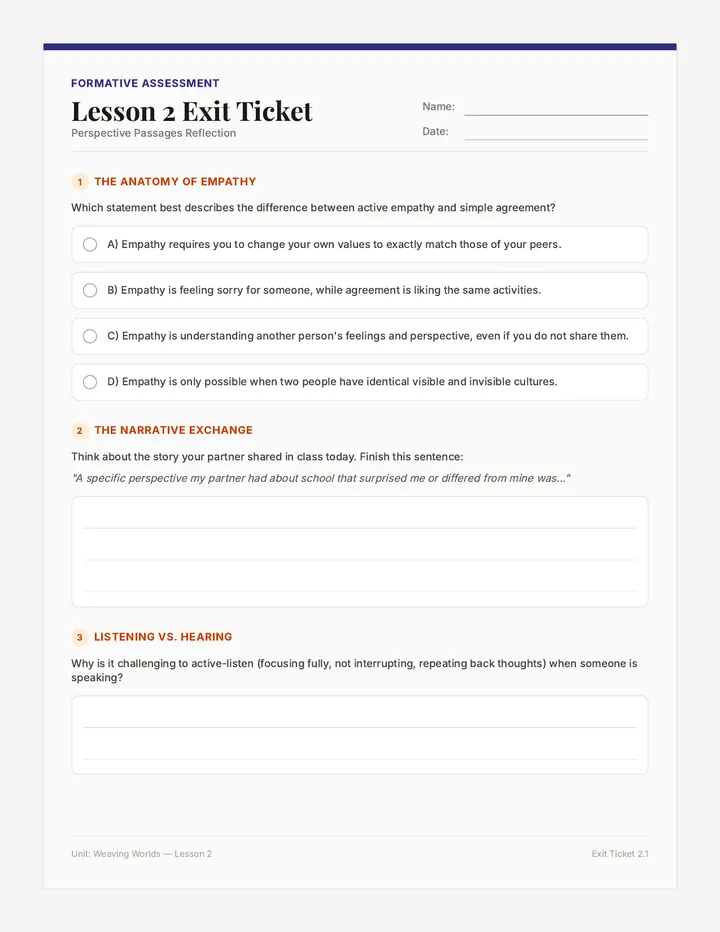
A quick daily exit ticket assessment for Lesson 2, checking students' understanding of perspective-taking and active listening.
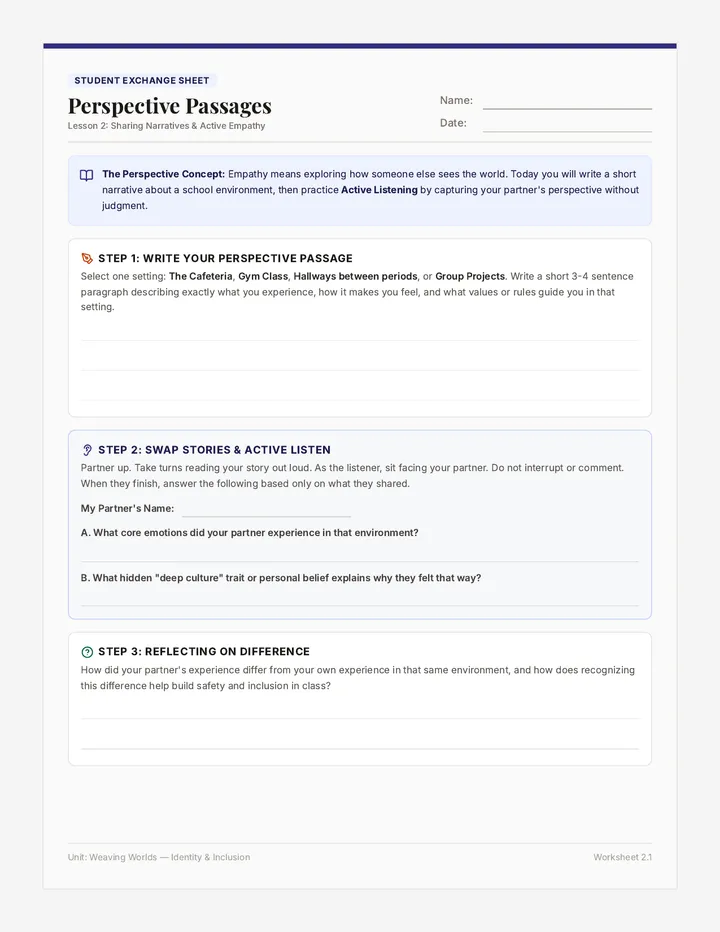
An interactive student worksheet for Lesson 2, guiding students to write a short personal perspective narrative, swap with a classmate, and practice active listening questions.
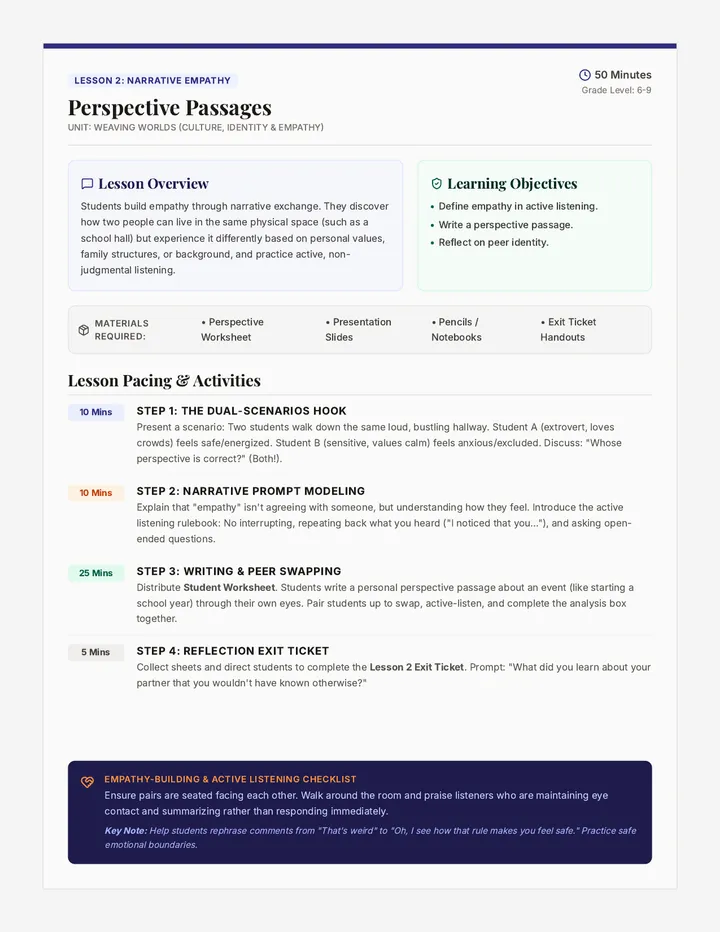
A comprehensive teacher guide for Lesson 2, outlining session pacing, discussion questions, objectives, and active listening rules for the student narrative exchange.
A 4-slide presentation for Lesson 1, introducing the concept of the cultural iceberg and explaining the difference between surface and deep culture.
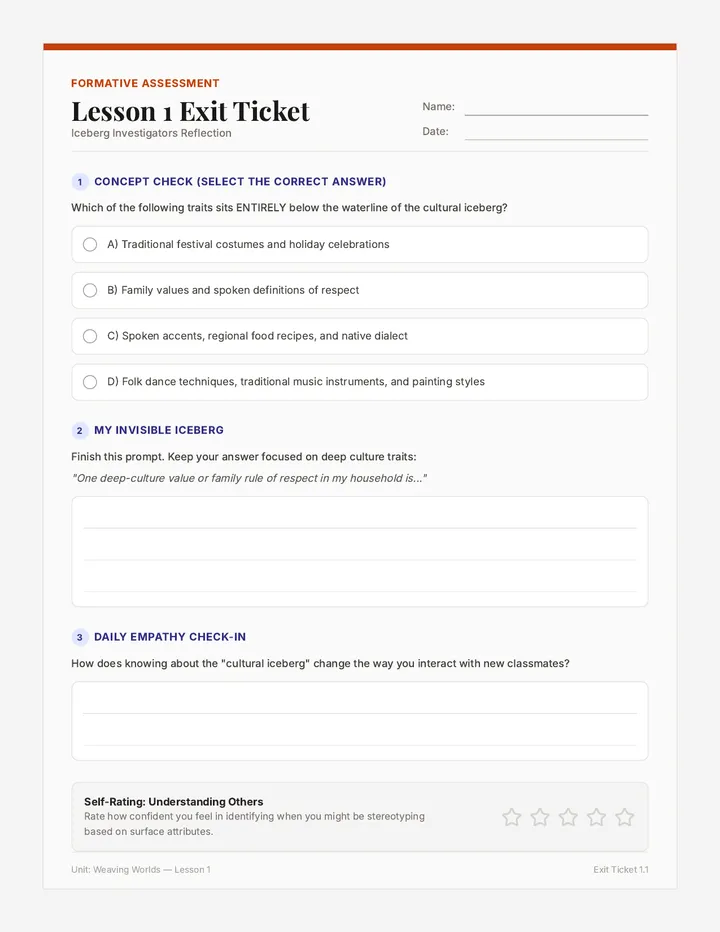
A quick daily exit ticket assessment for Lesson 1, checking students' understanding of the cultural iceberg and encouraging self-reflection.
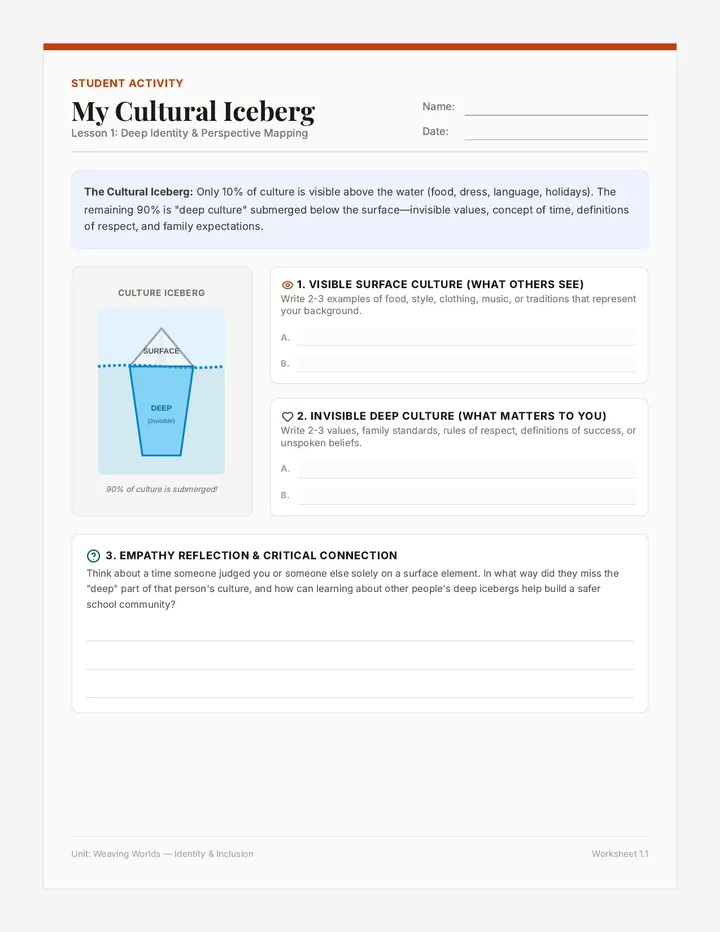
An interactive student worksheet for Lesson 1, guiding students to analyze surface versus deep culture and map their own multi-layered identities on a cultural iceberg graphic.
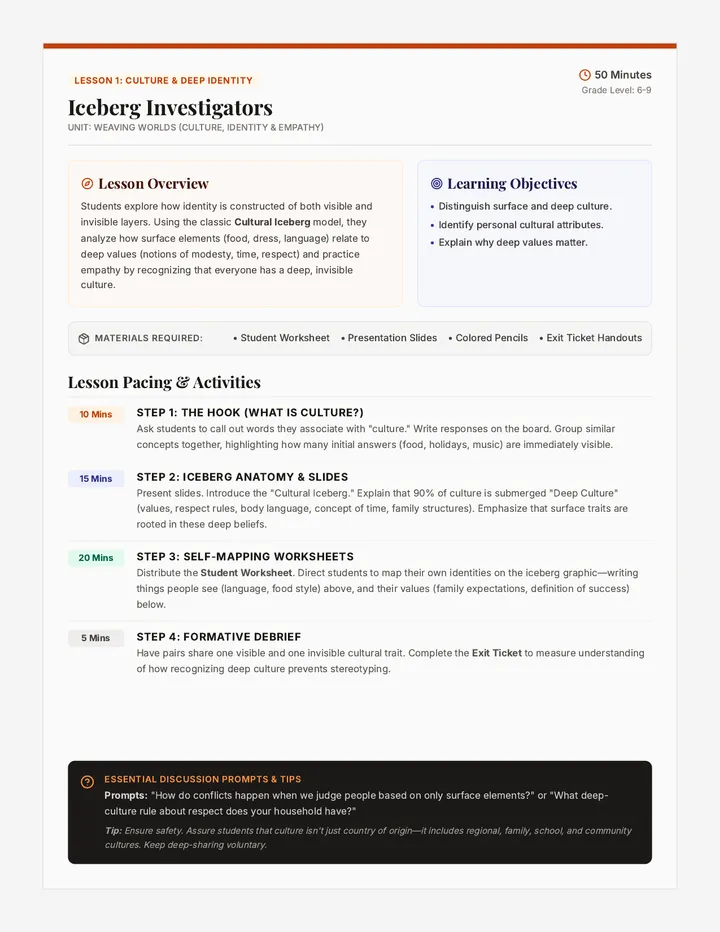
A comprehensive teacher guide for Lesson 1, detailing lesson pacing, discussion prompts, student learning objectives, and materials needed to explore the cultural iceberg.
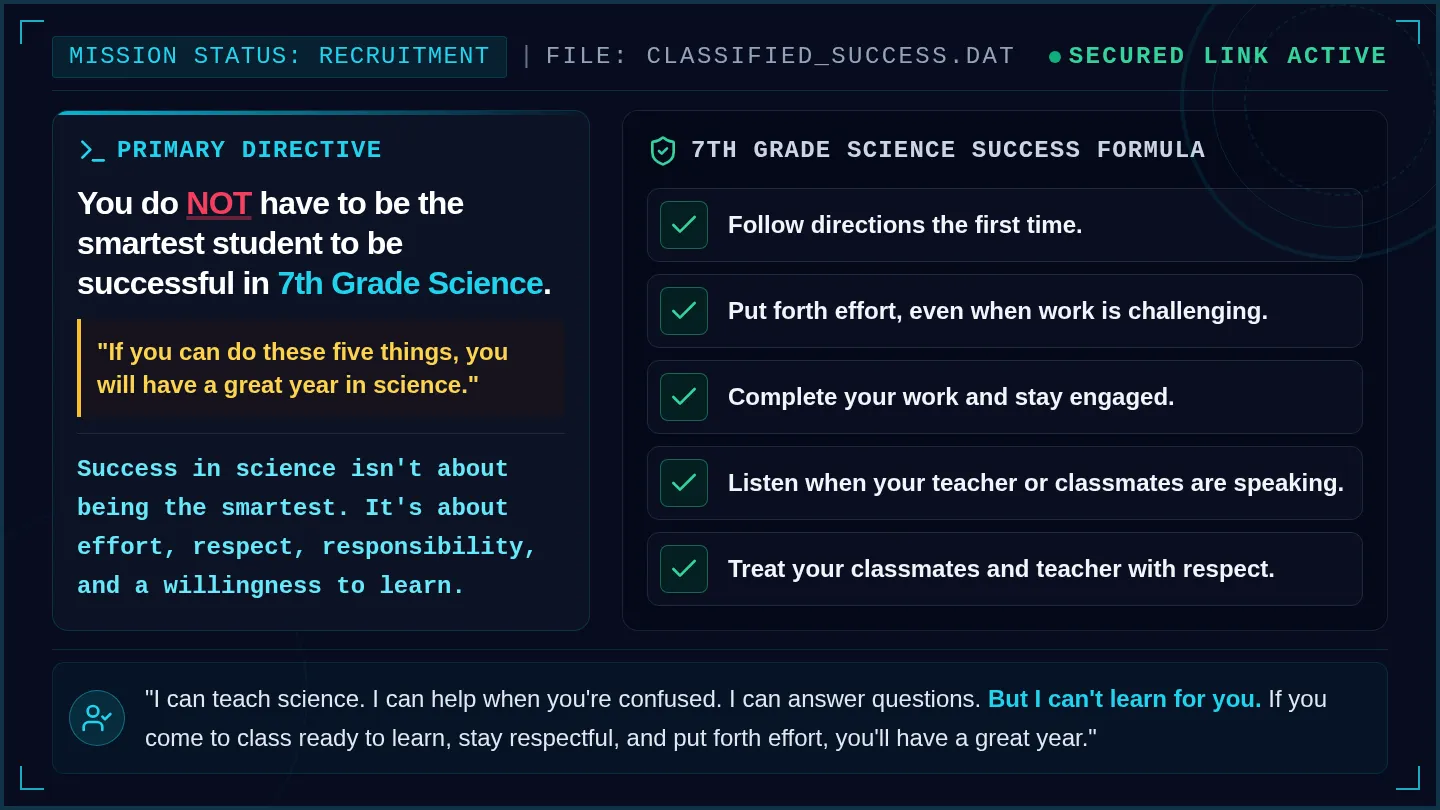
An updated high-impact, science-spy-themed presentation slide outlining the five core habits of success in 7th-grade science, incorporating the new strengthened success formula and a closing summary message.
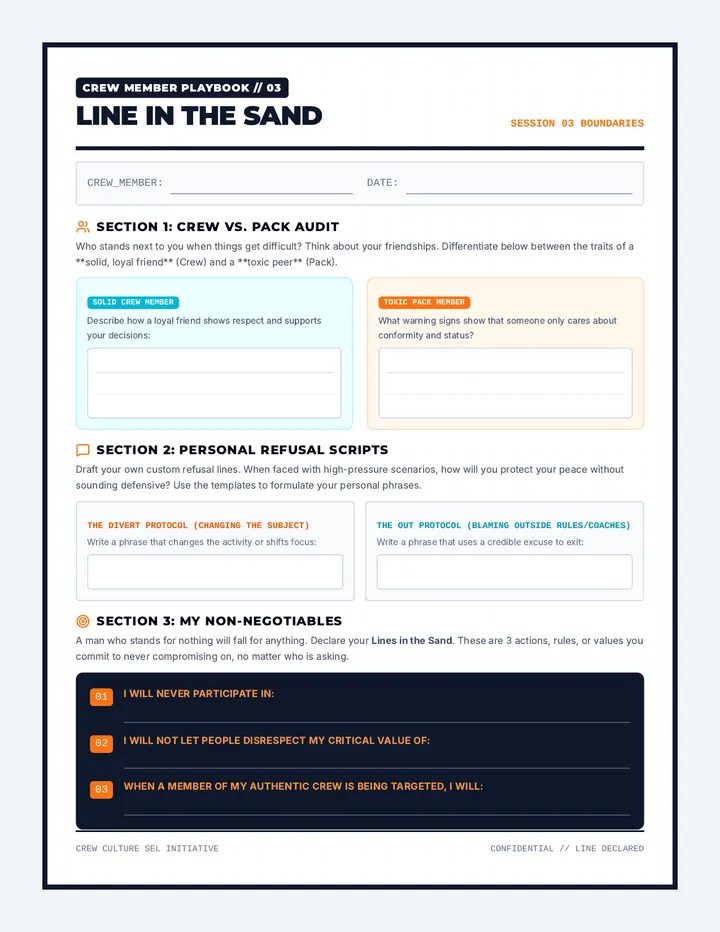
A highly engaging 1-page student playbook for Lesson 3: Line in the Sand. Helps students audit friendships, draft personalized peer-pressure refusal scripts, and declare their non-negotiable boundaries.
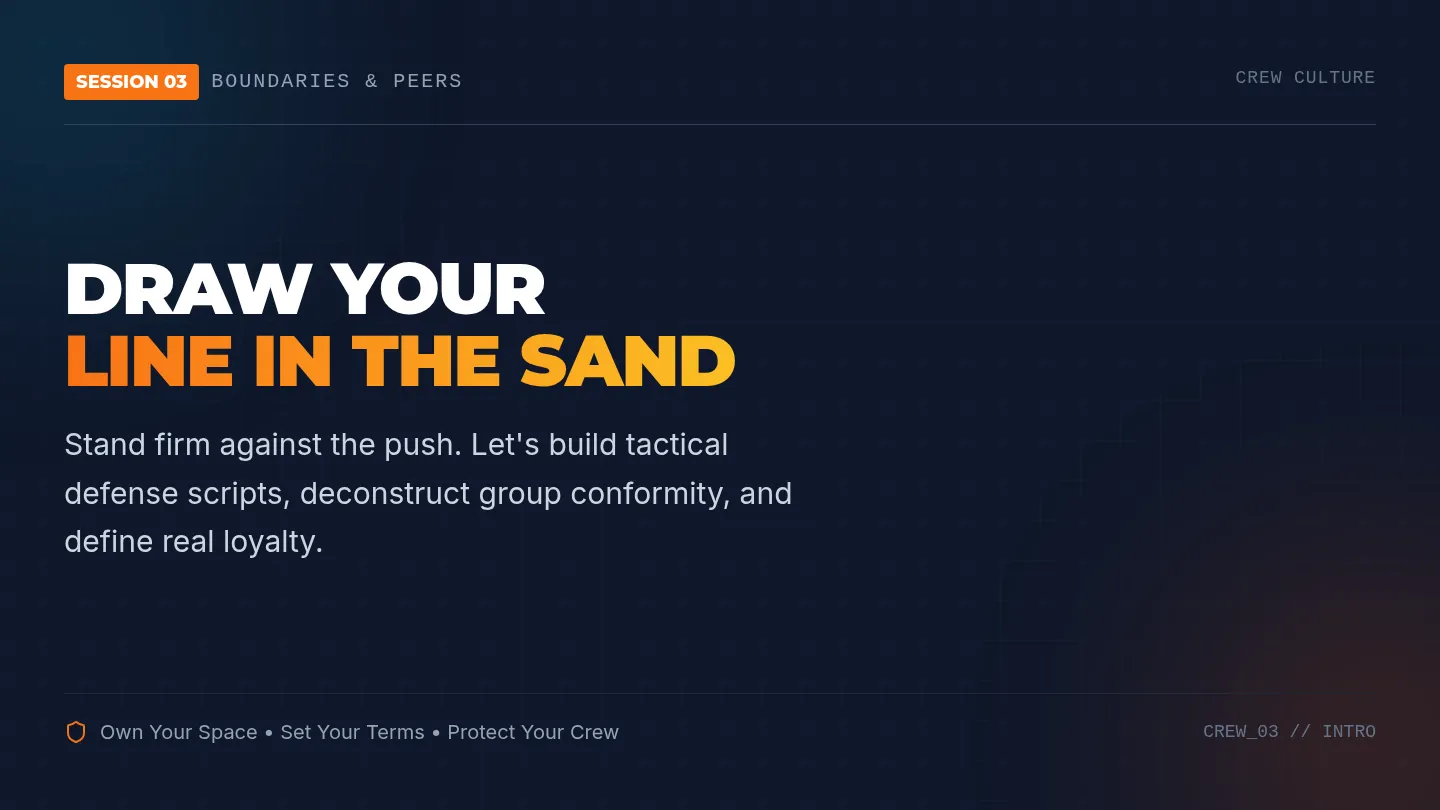
An interactive 6-slide presentation to guide Lesson 3: Line in the Sand. Covers establishing peer boundaries, identifying toxic friendship traits, and practicing refusal scripts.
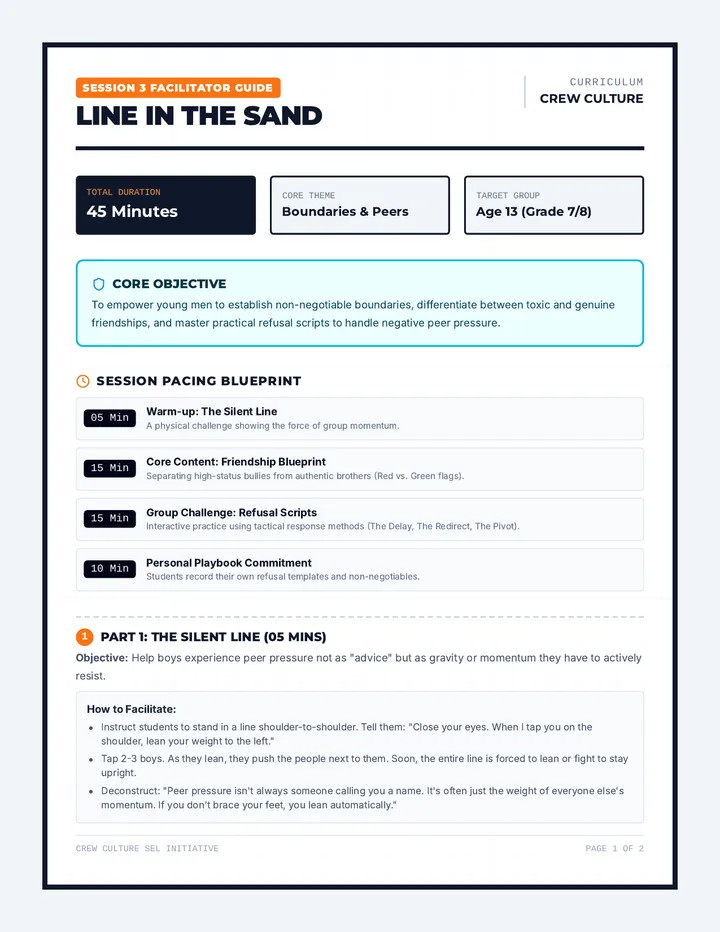
A comprehensive 2-page facilitator guide for Lesson 3: Line in the Sand. Covers establishing peer boundaries, identifying toxic friendship traits, and practicing refusal scripts.
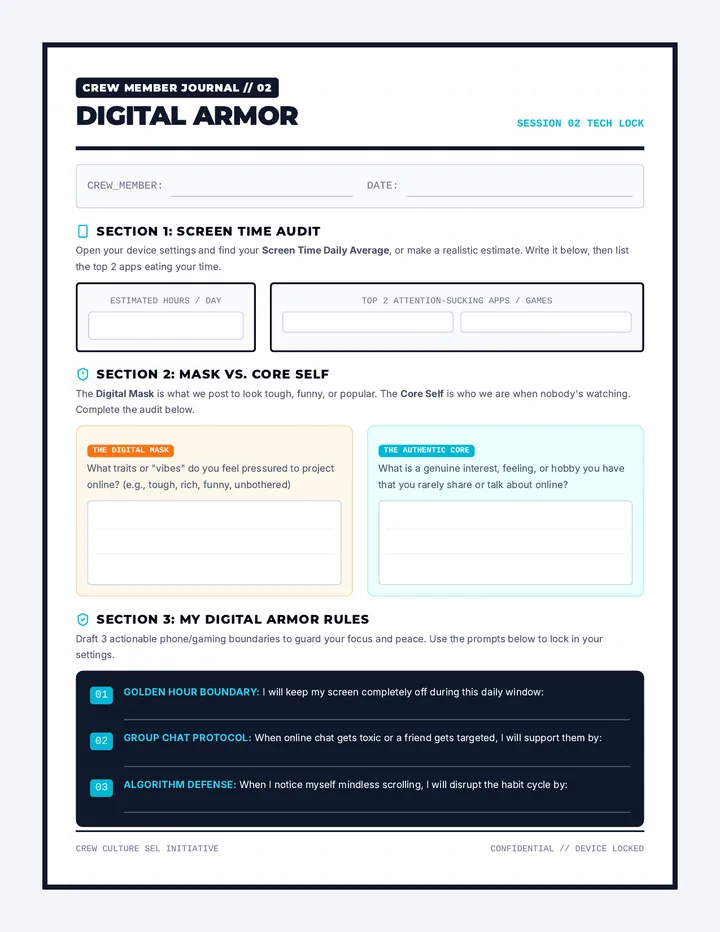
A highly engaging 1-page student journal for Lesson 2: Digital Armor. Helps students audit screen time, contrast their digital mask with their true self, and lock in daily device boundaries.
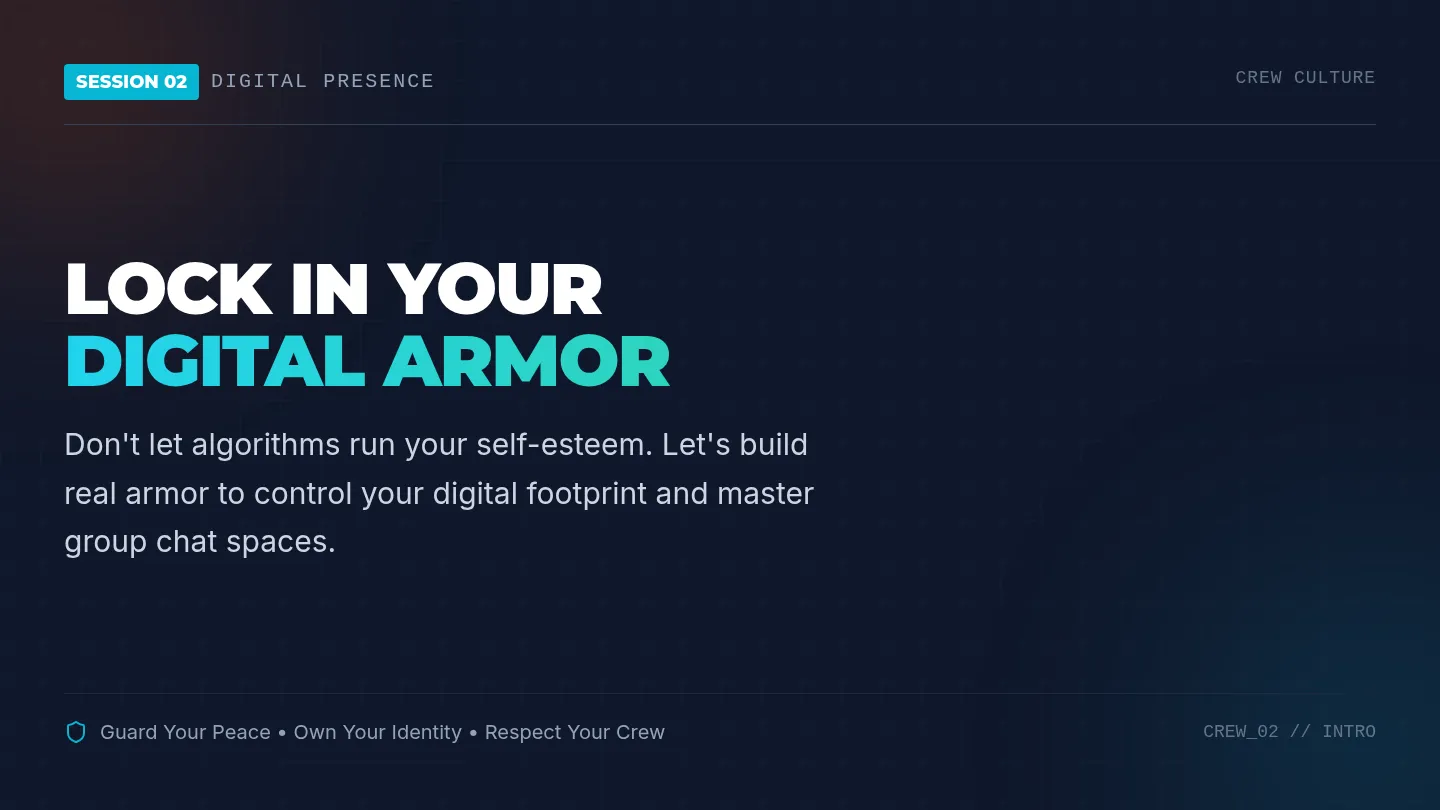
An interactive 6-slide presentation to guide Lesson 2: Digital Armor. Covers daily screen averages, the digital mask vs true identity, group chat dynamics, and lock-in habits.
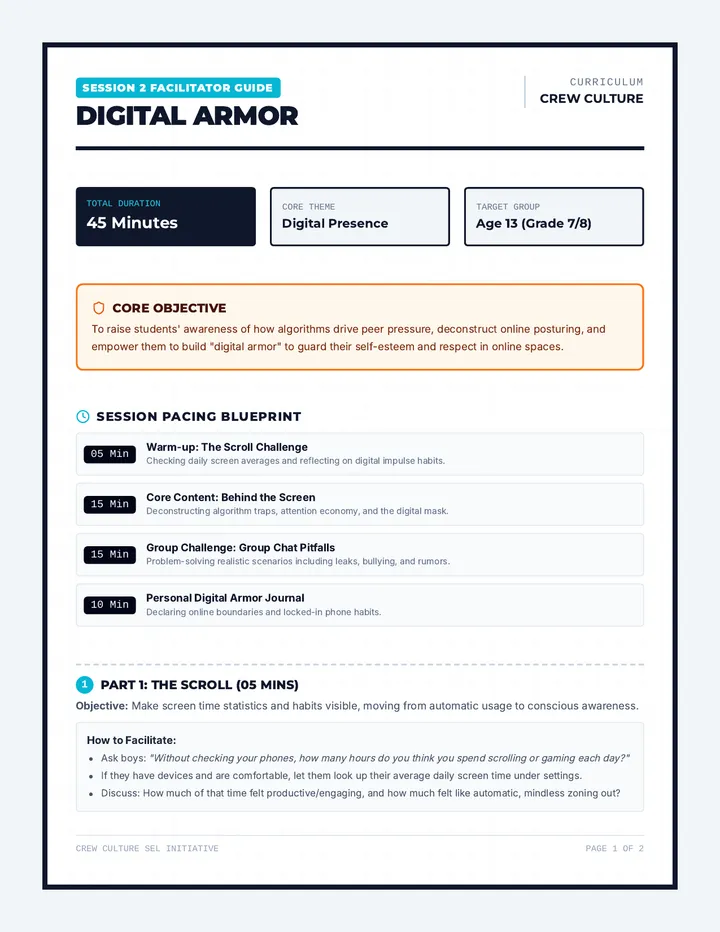
A comprehensive 2-page facilitator guide for Lesson 2: Digital Armor. Covers managing social media validation, group chat dynamics, digital footprint awareness, and phone boundary-setting.
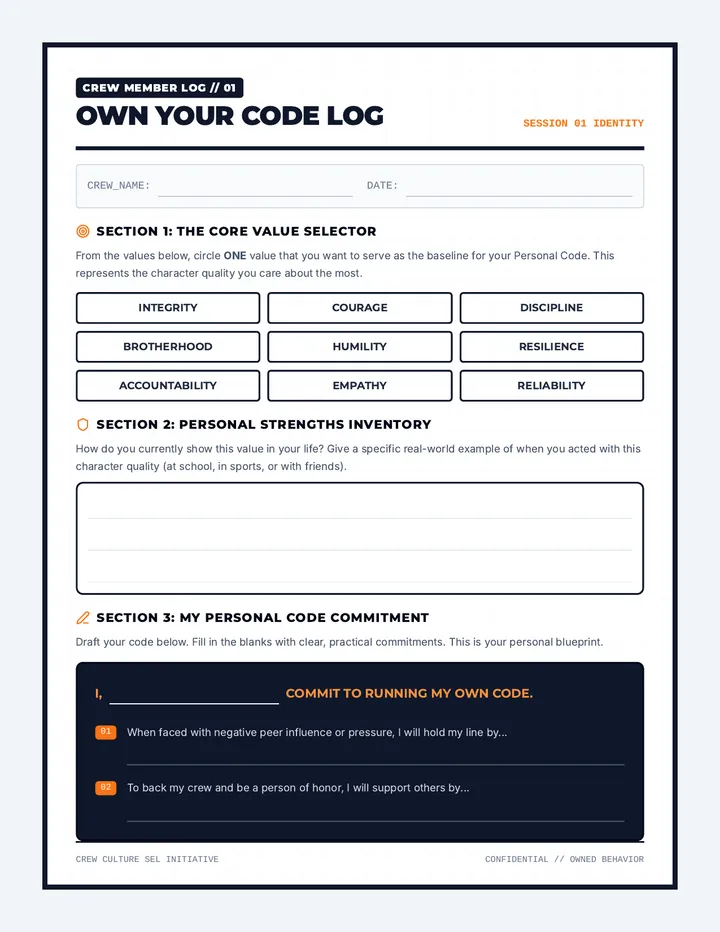
A highly engaging, themed 1-page personal reflection log for students to declare their core values, inventory personal strengths, and draft their personal commitment statement.
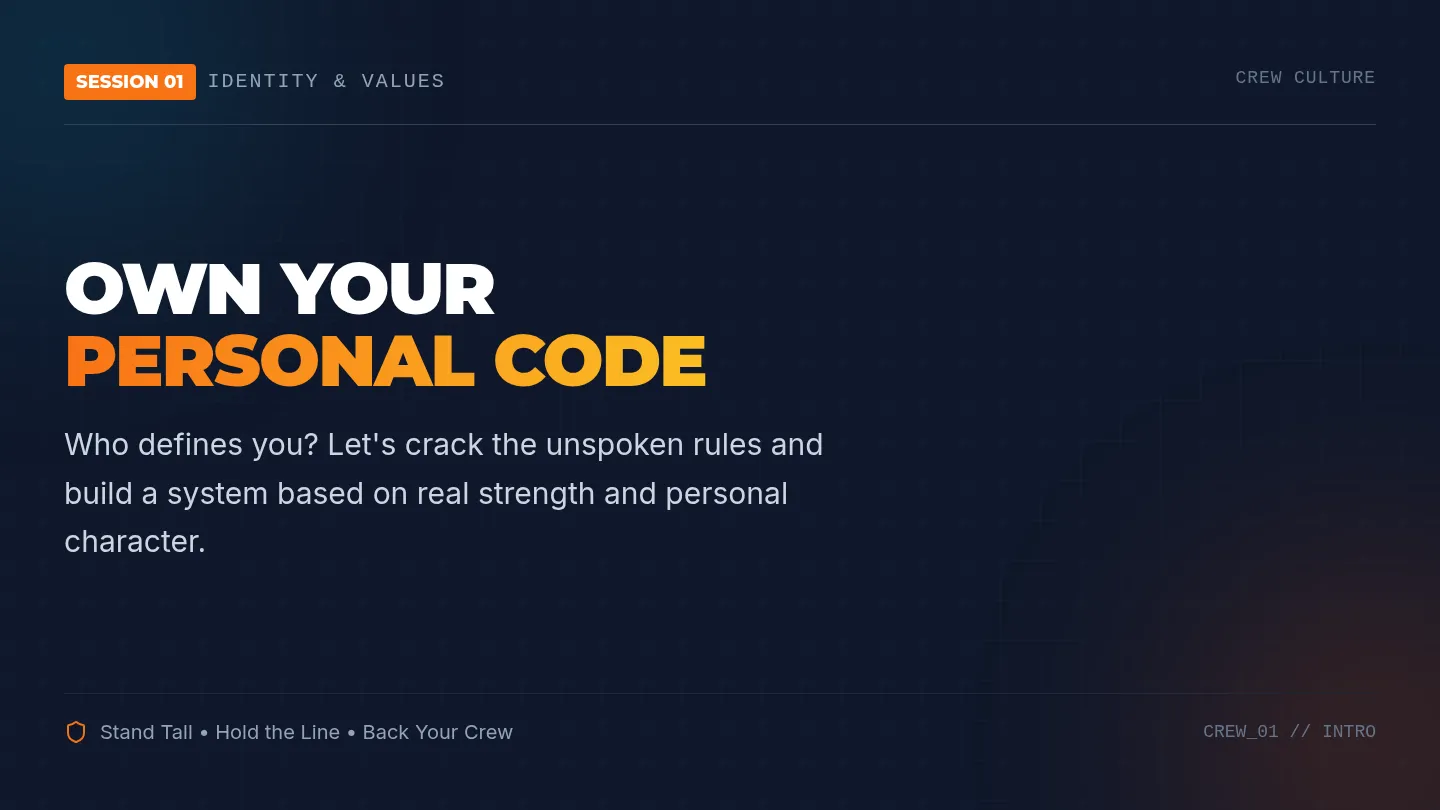
An interactive 6-slide presentation to guide the first group session, featuring bold discussion prompts, deconstructing social expectations, and setting up the core values activity.
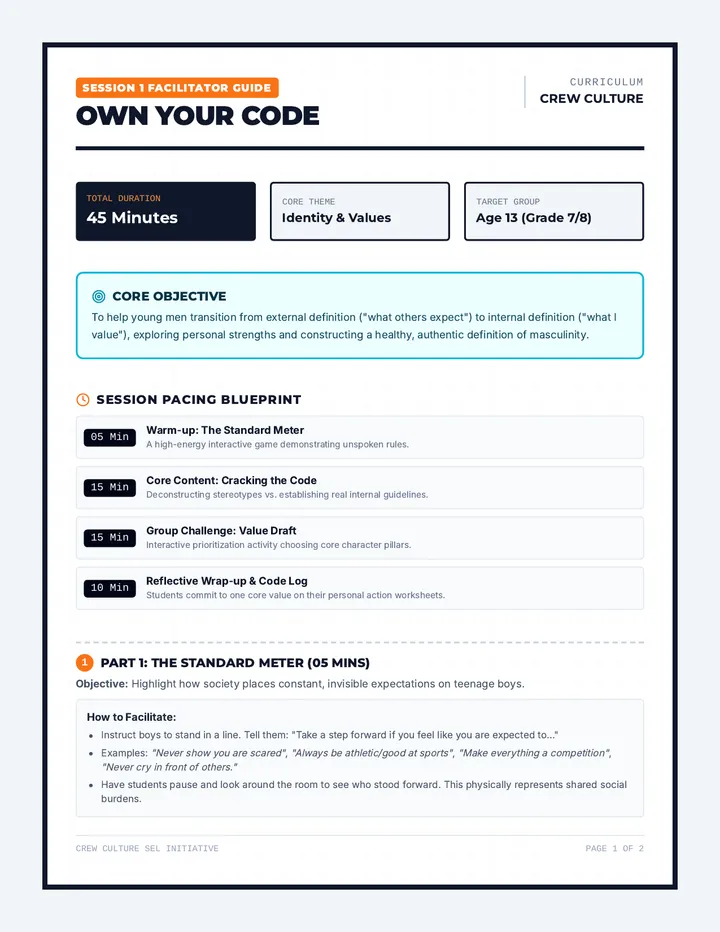
A comprehensive 2-page facilitator guide for Lesson 1: Own Your Code. Includes group guidelines, pacing, step-by-step instructions, discussion prompts, and debrief questions.
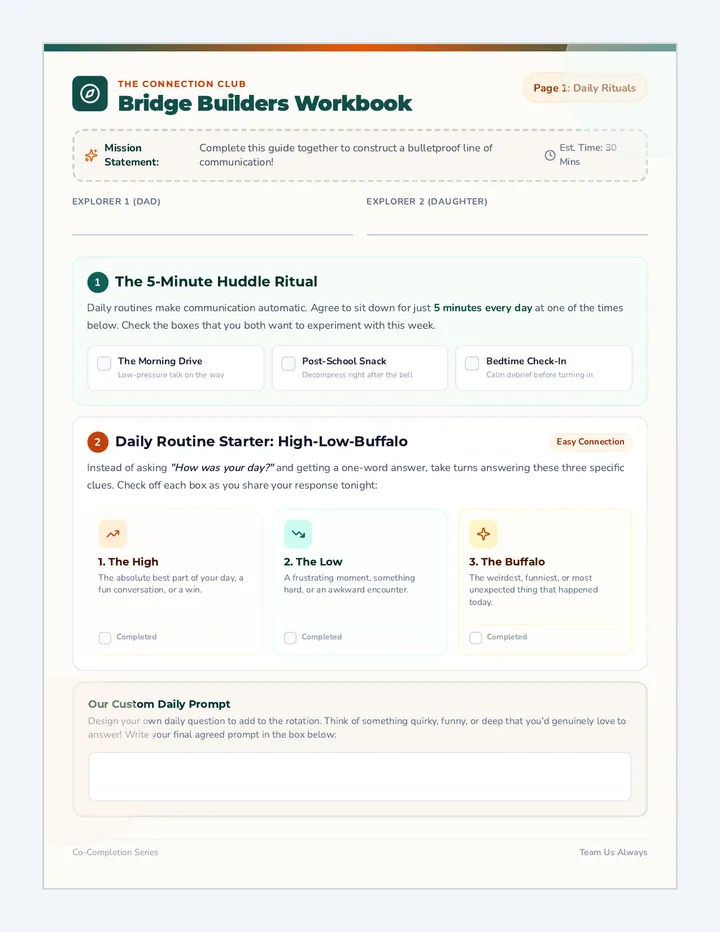
An interactive, beautifully designed 3-page father-daughter co-completion workbook titled 'Bridge Builders Workbook'. It focuses on building active listening skills, daily connection rituals, and emotional de-escalation strategies. It includes structured prompts, reflective exercises, conflict tools, and a shared agreement, with blank writing boxes tailored for comfortable handwritten completion.
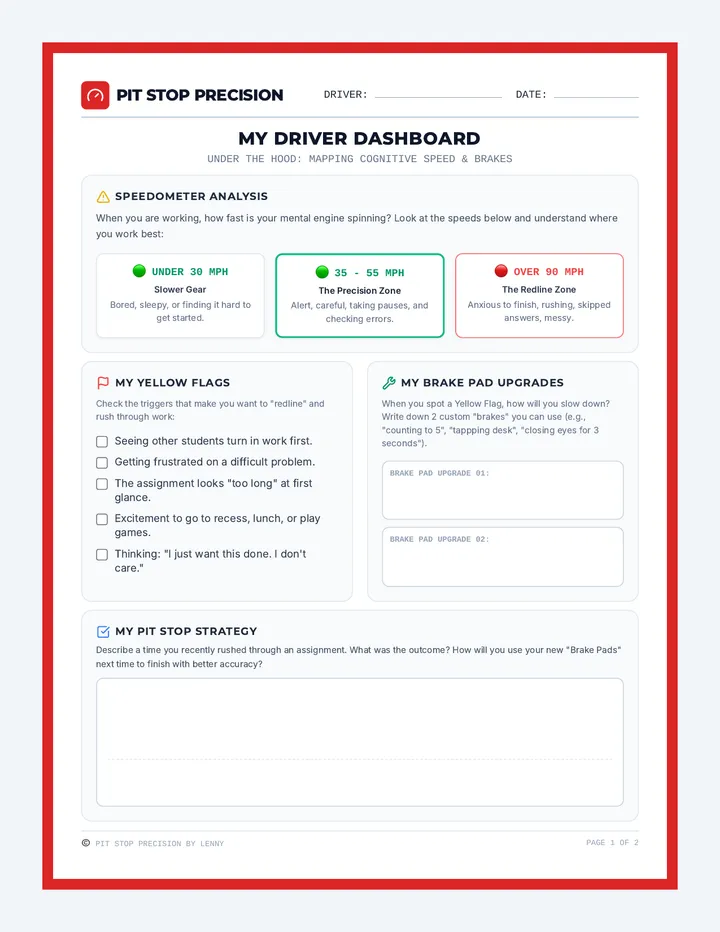
A high-octane, racing-themed student worksheet pack. Page 1 helps students identify personal rushing triggers (Yellow Flags) and design coping skills. Page 2 provides a desk-ready FIT Check checklist and a real-world persistence drill.
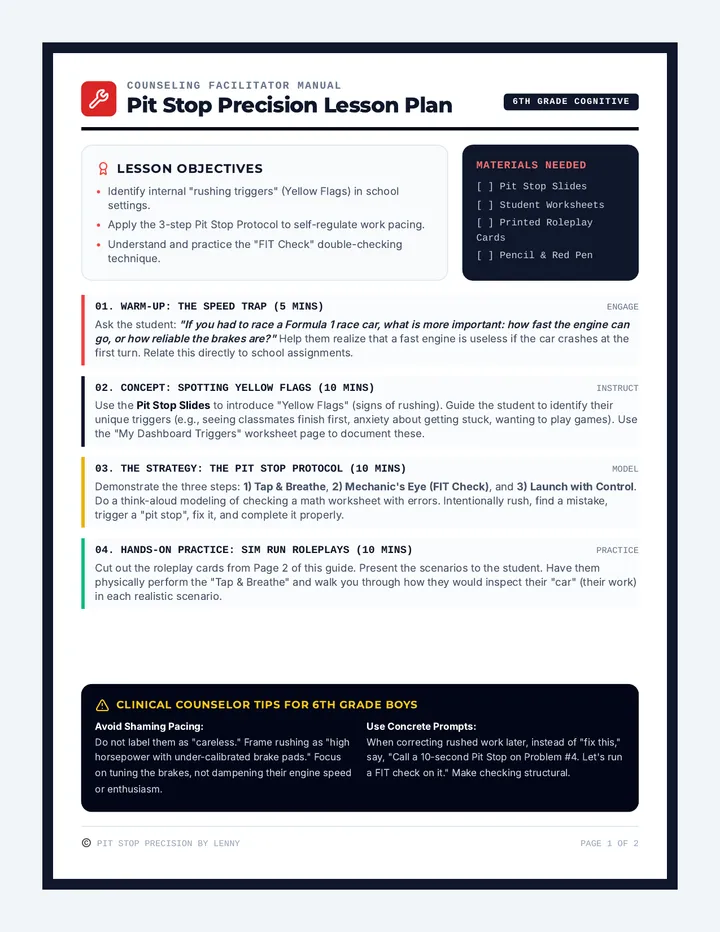
A comprehensive 2-page counselor guide for the Pit Stop Precision lesson. Includes structured facilitator scripts, step-by-step lesson pacing, and 4 high-octane printable roleplay cards to practice self-regulation and double-checking.
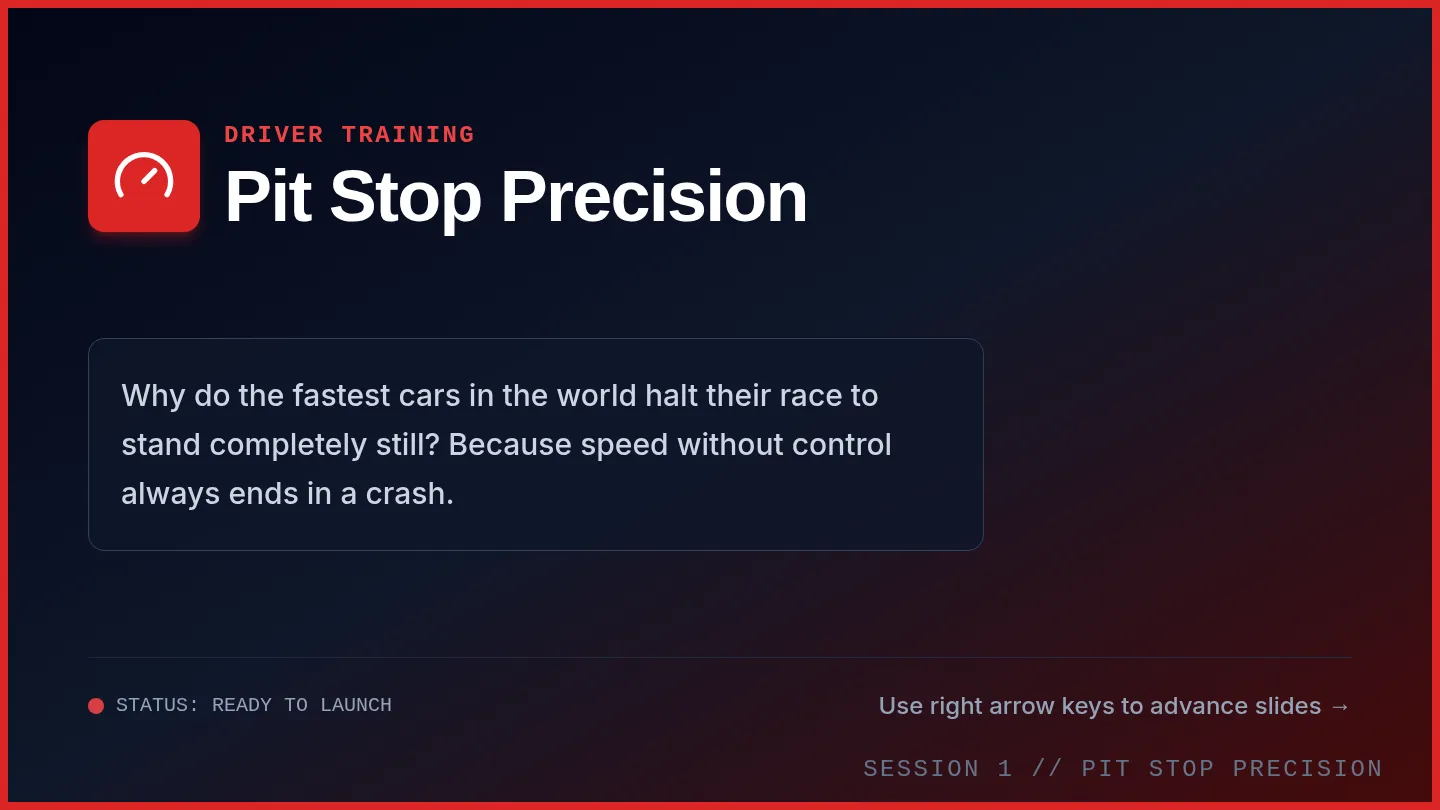
An interactive, racing-themed slide deck designed for 6th grade counseling. It teaches the 'Pit Stop Protocol' to help students identify rushing behaviors, recognize the need for double-checking, and master task persistence.
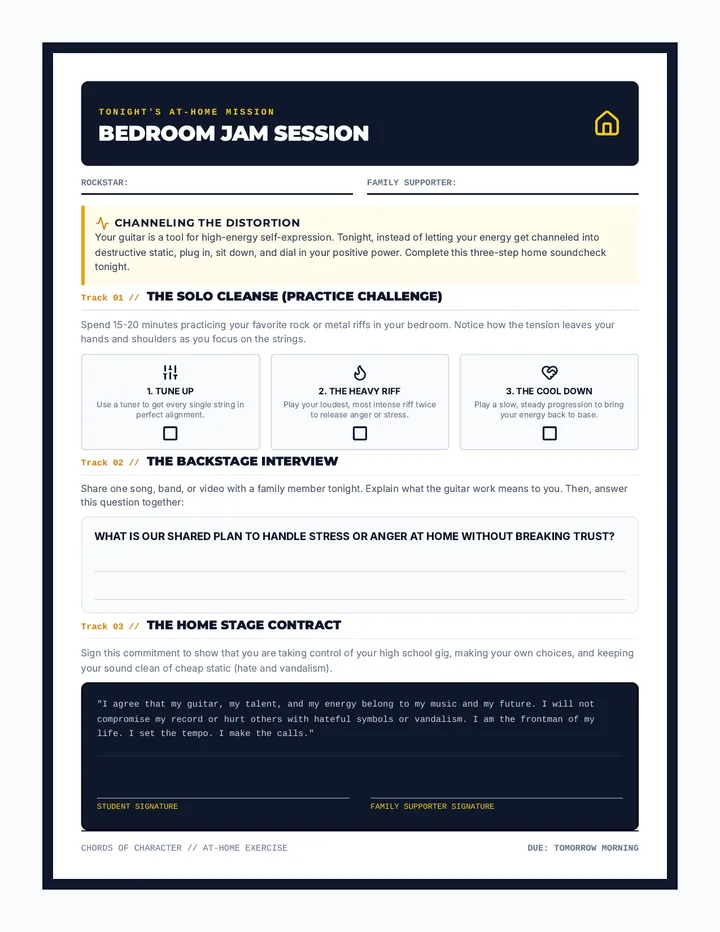
A 1-page at-home guitar practice and family reflection sheet for tonight. Features a physical playing checklist as a positive outlet, a prompt to share a favorite song, and a collaborative student-family commitment pact.
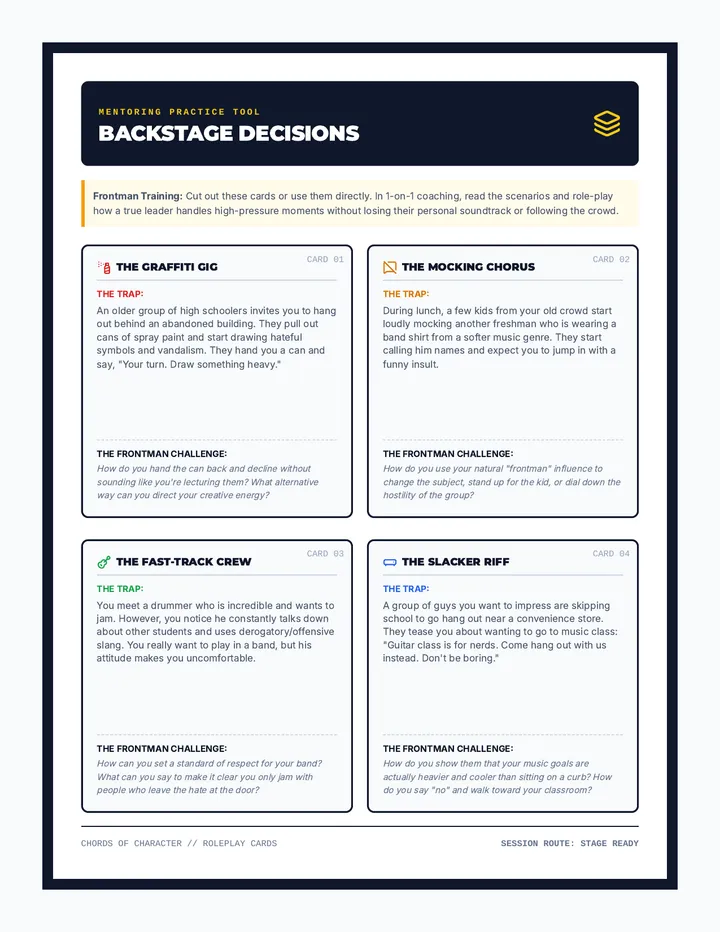
A 1-page printable activity featuring 4 role-play cards. Provides realistic social scenarios for standing up to peer pressure, resisting vandalism/hate speech, and practicing frontman leadership when transitioning to high school.
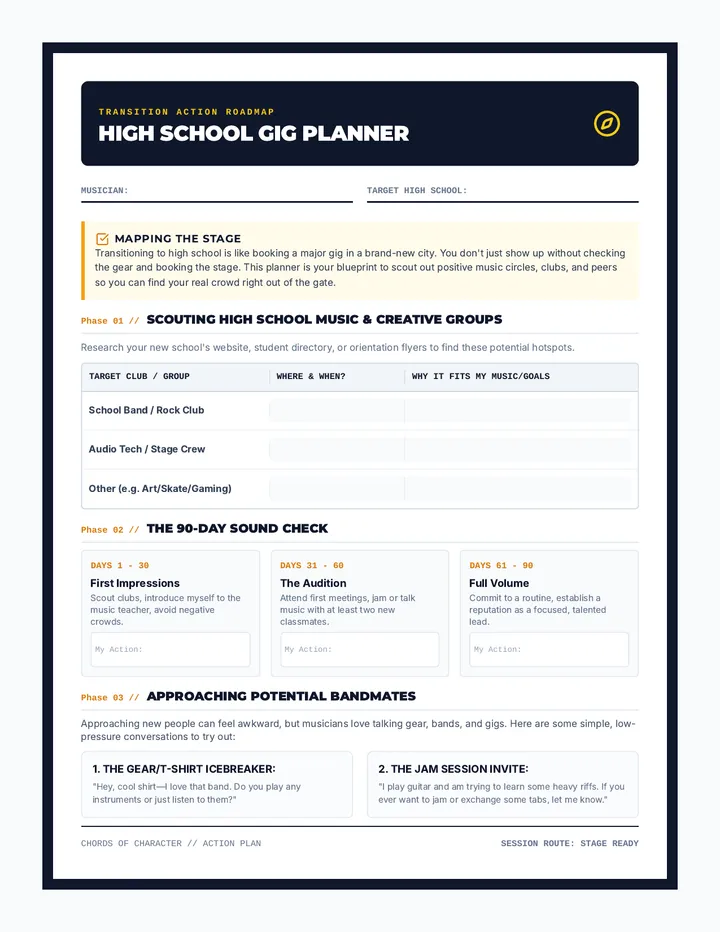
A 1-page Independent Action Plan and transition roadmap for the student. Helps him research high school music clubs, track prospective bandmates, set goals for his first 90 days, and establish a constructive routine.
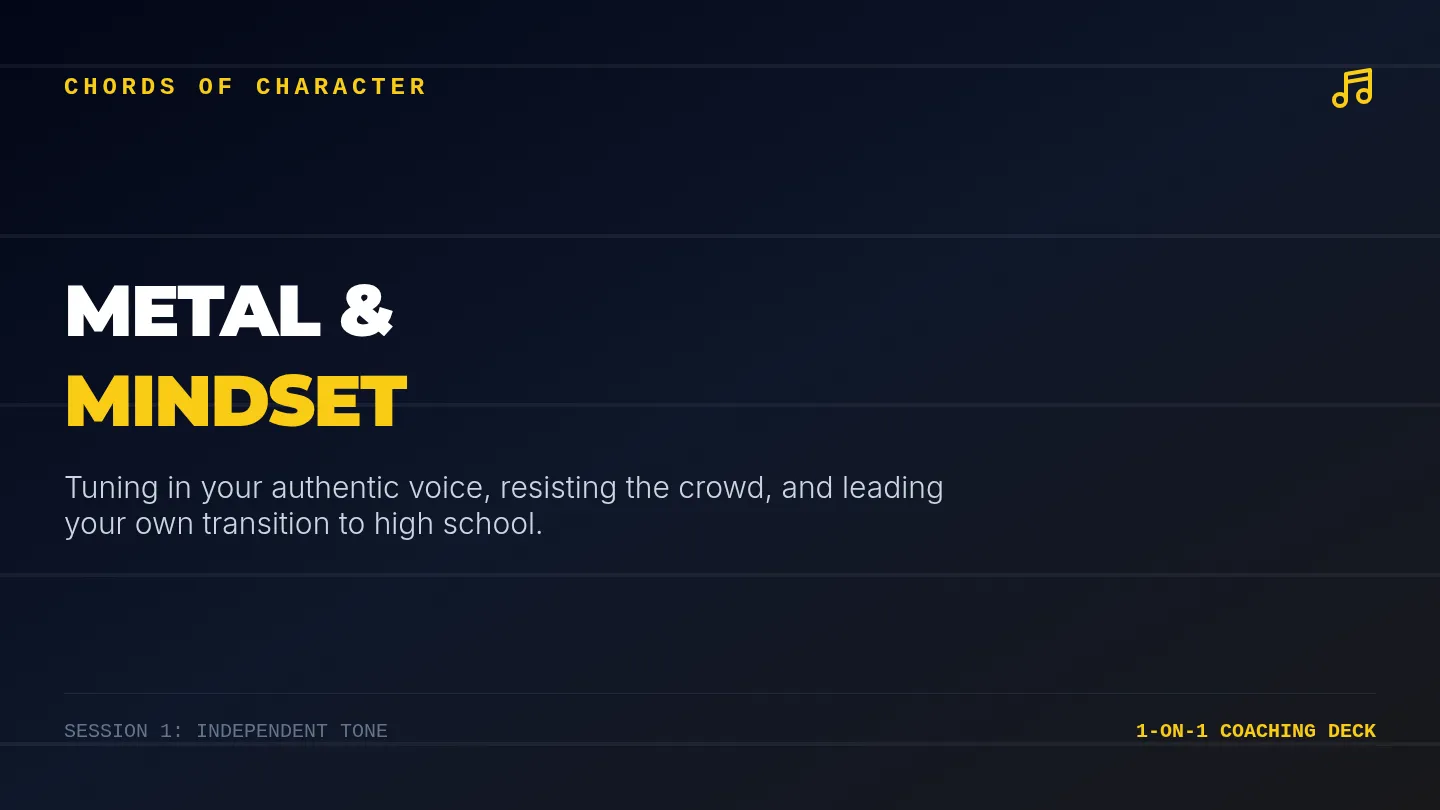
A 5-slide interactive presentation designed for 1-on-1 coaching. Uses a heavy metal/rock theme to explore the true history of the subculture, address peer pressure (feedback vs. rift), stand up against hate, and map out a positive transition to high school.
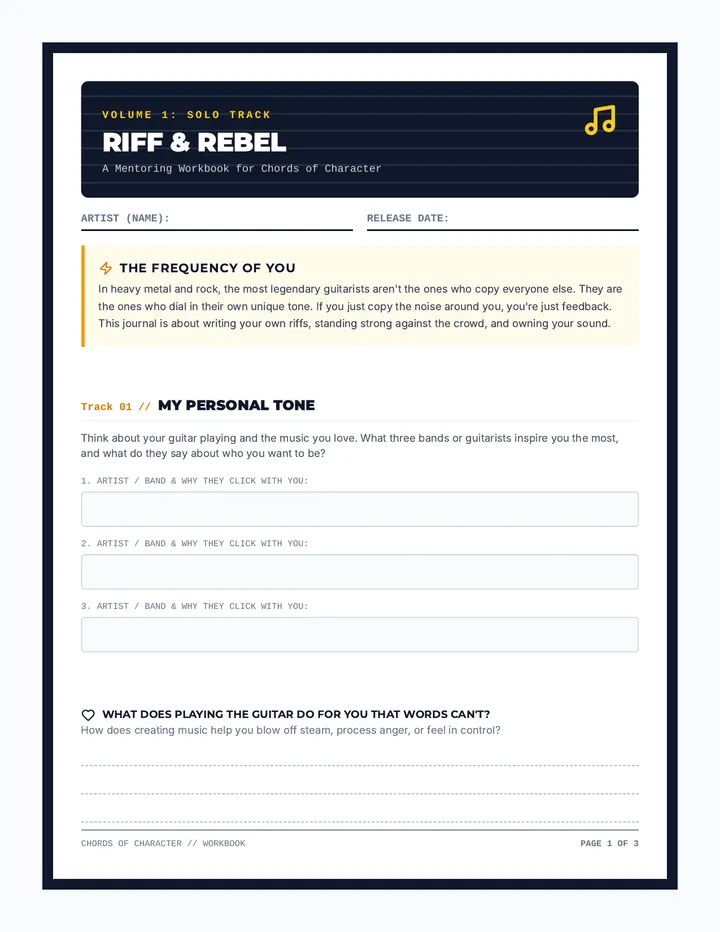
A 3-page Guided Reflection Journal for 1-on-1 mentoring. Connects the student's passion for heavy metal and guitar with themes of identity, true rebellion (standing against hate and groupthink), and creating a positive personal soundtrack.
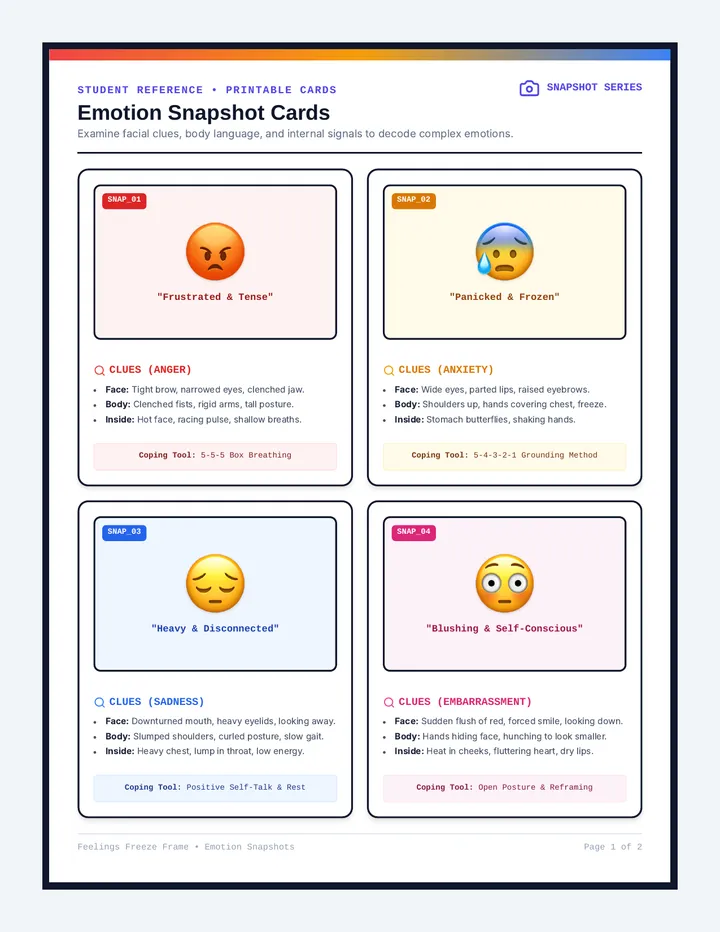
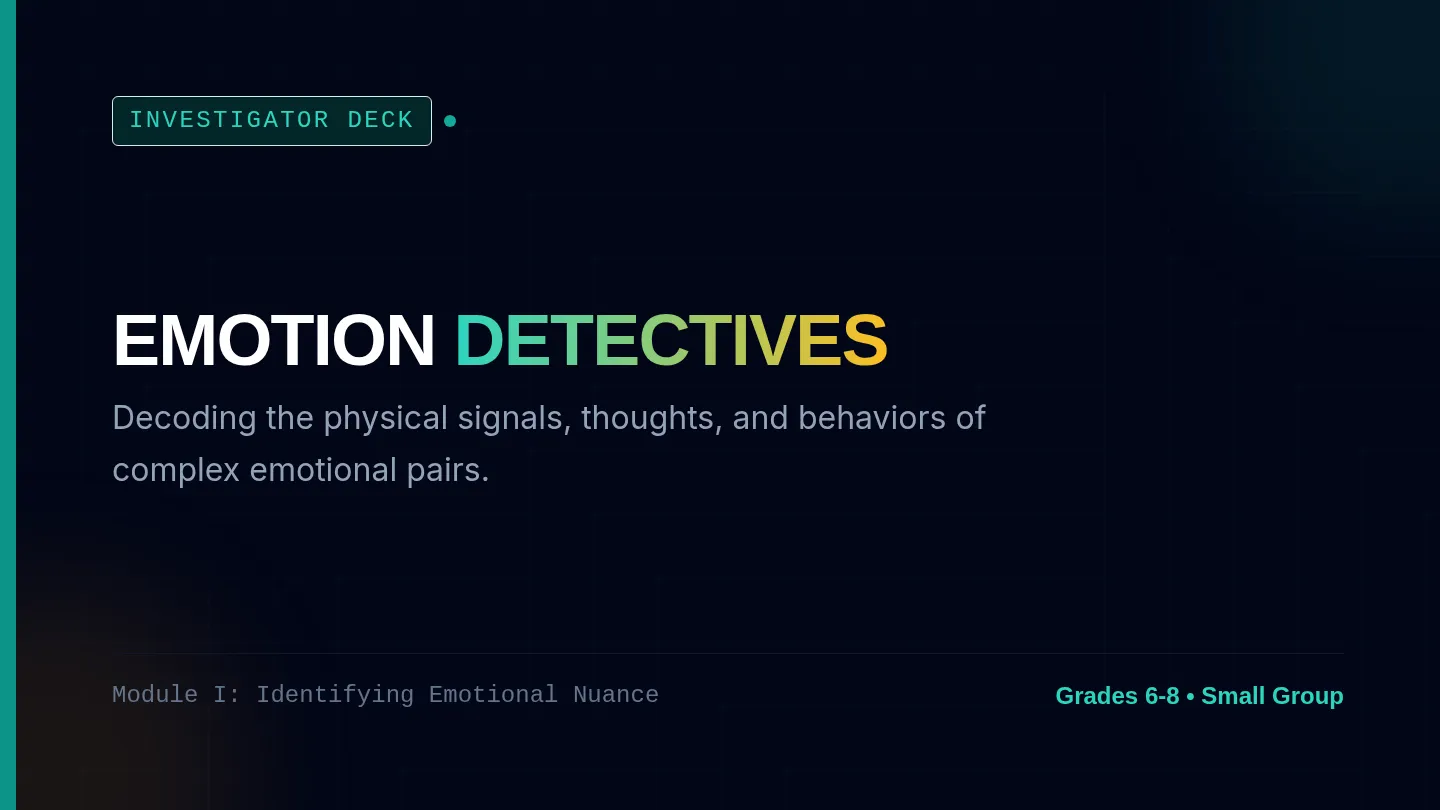
A 2-page student reference tool. Page 1 contains 4 styled 'Polaroid' snapshot cards describing facial/body clues and internal somatic signals. Page 2 provides 2 more snapshots and a quick self-guided matching activity.
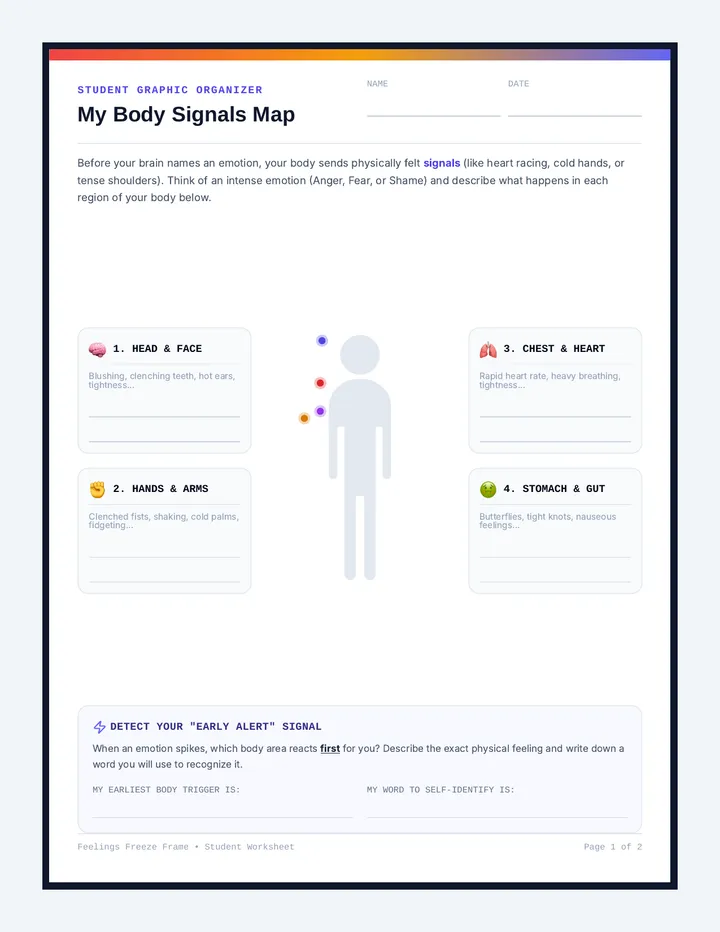
A 2-page student worksheet. Page 1 features a physical 'Body Signals Map' graphic organizer to label physical feelings. Page 2 provides scenario coping match-ups and self-regulation reflections.
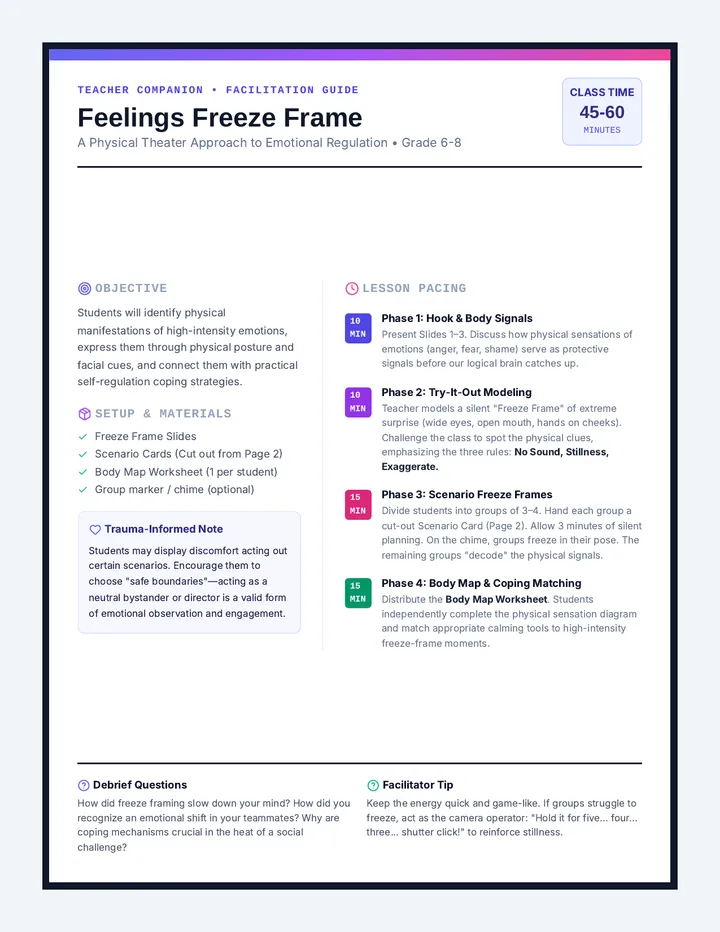
A 2-page print-and-cut facilitator's guide. Page 1 contains step-by-step pacing, pedagogy, and tips. Page 2 provides 6 pre-formatted scenario cards to cut out and distribute to student groups.
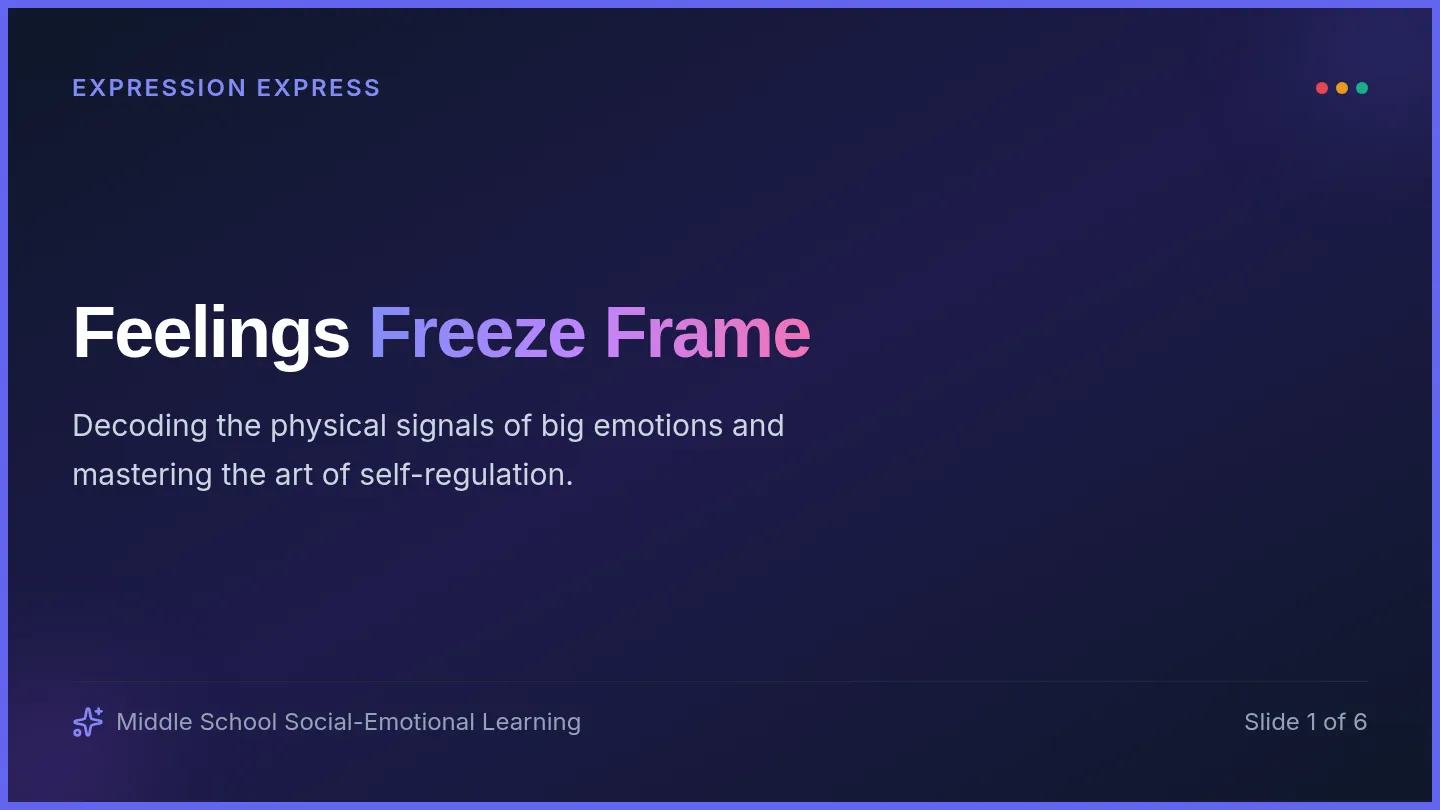
Interactive, highly visual classroom slide deck to introduce emotional expressions, body signals, and freeze-frame activities. Includes real-world scenarios and coping strategy matching.
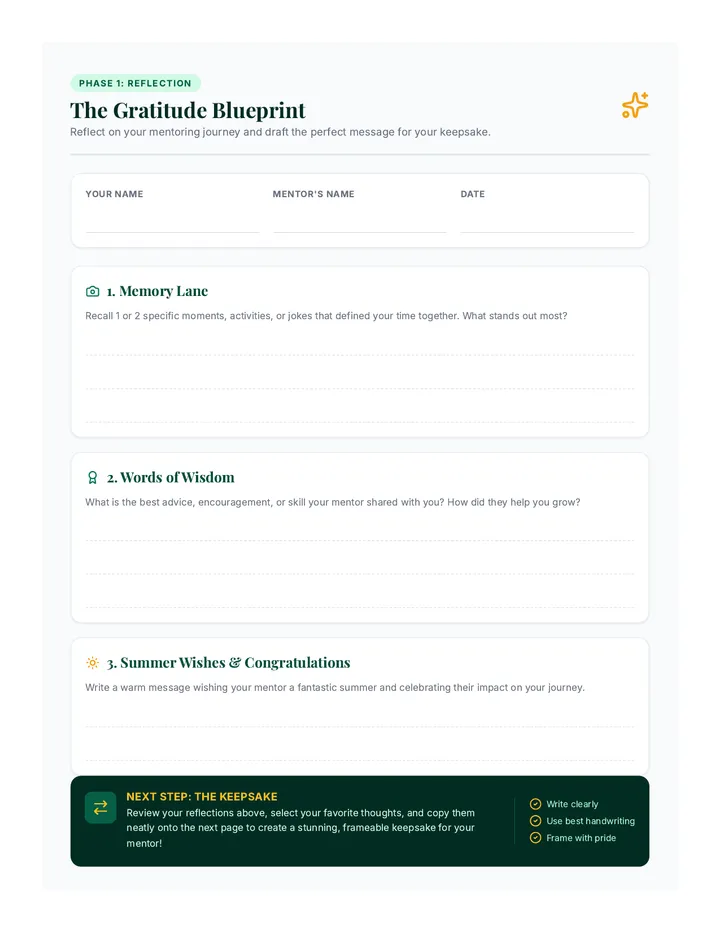
A printable 2-page resource. Page 1 is a structured reflection worksheet for mentees to brainstorm key memories and draft messages. Page 2 is a beautiful, certificate-style keepsake with a classic border and writing lines designed to be framed as a mentor gift.
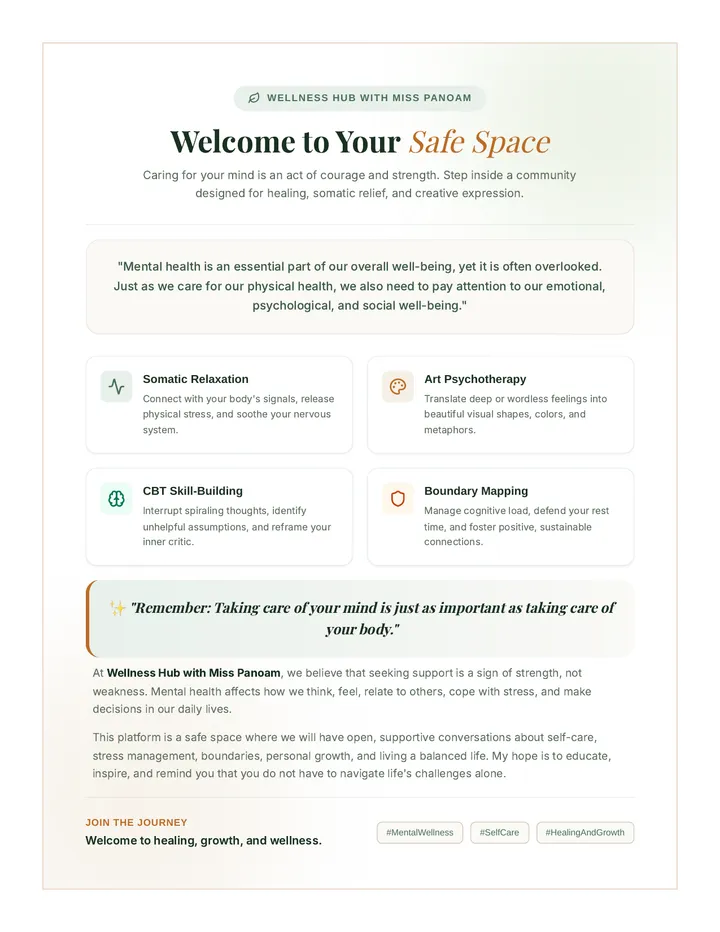
A beautifully formatted, welcoming announcement page/flyer for Miss Panoam's Wellness Hub. It features botanical motifs, key therapeutic pillars (somatic relaxation, CBT, art therapy), and an inspiring mental wellness message.
A 6-slide presentation deck designed for 16:9 projection to guide daily small group lessons. Features large, high-visibility typography (minimum 24px), dark clinical blueprint themes, and visual anchors to explain emotional mapping, guilt vs. shame, and cognitive reappraisal.
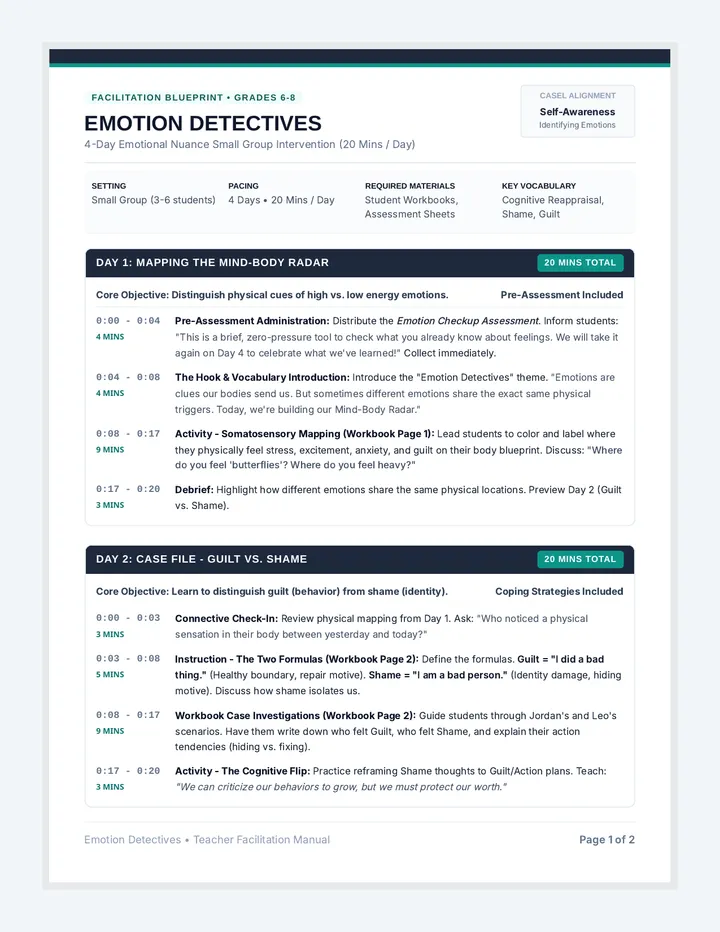
A professional 2-page teacher facilitation and curriculum guide outlining the 4-day, 20-minute daily small group intervention. Includes detailed step-by-step scripts, exact timestamps, CASEL framework alignment, common misconceptions, and facilitation techniques.
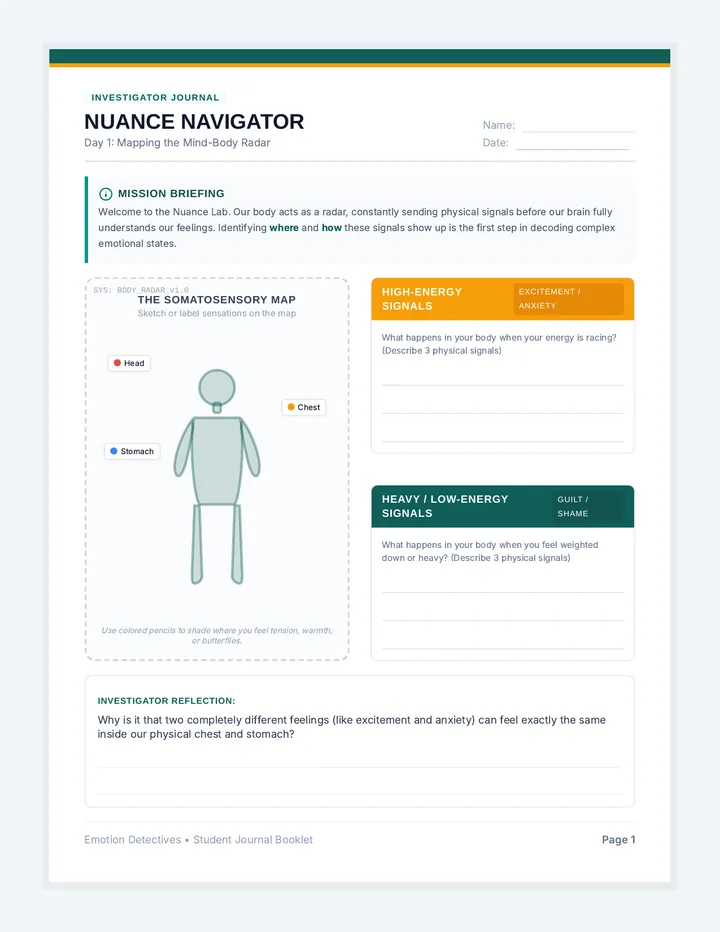
A 4-page student work booklet containing interactive physical mapping activities, cognitive reappraisal templates, guilt vs. shame scenario case files, and synthesis reflection sheets.
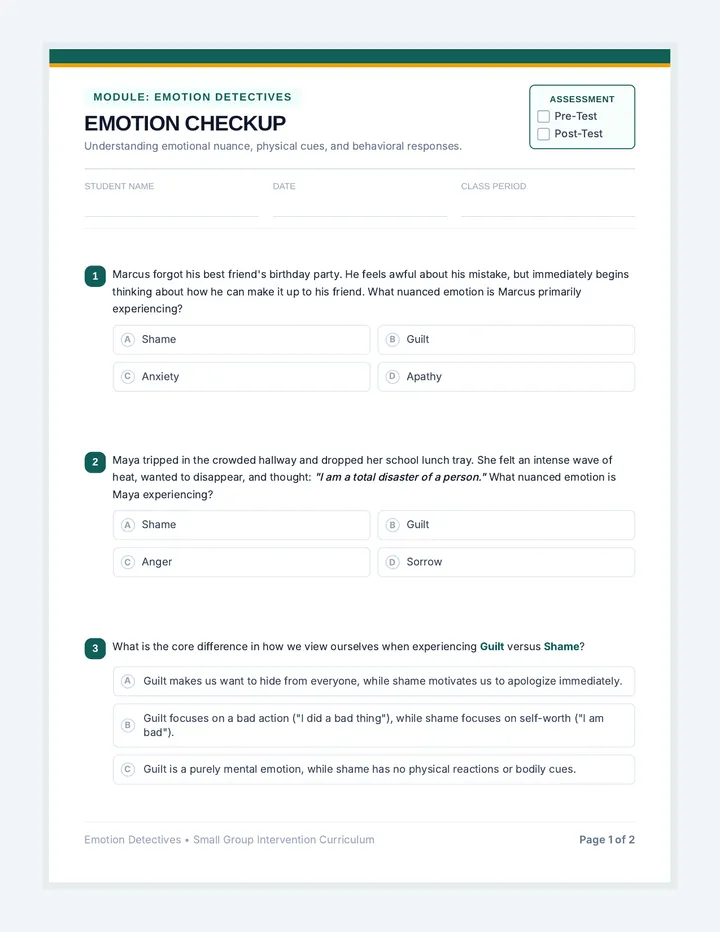
An identical pre- and post-test assessment for middle school students to evaluate their understanding of guilt vs. shame and excitement vs. anxiety before and after the 4-day intervention. Includes scenario-based multiple-choice and short-answer questions.
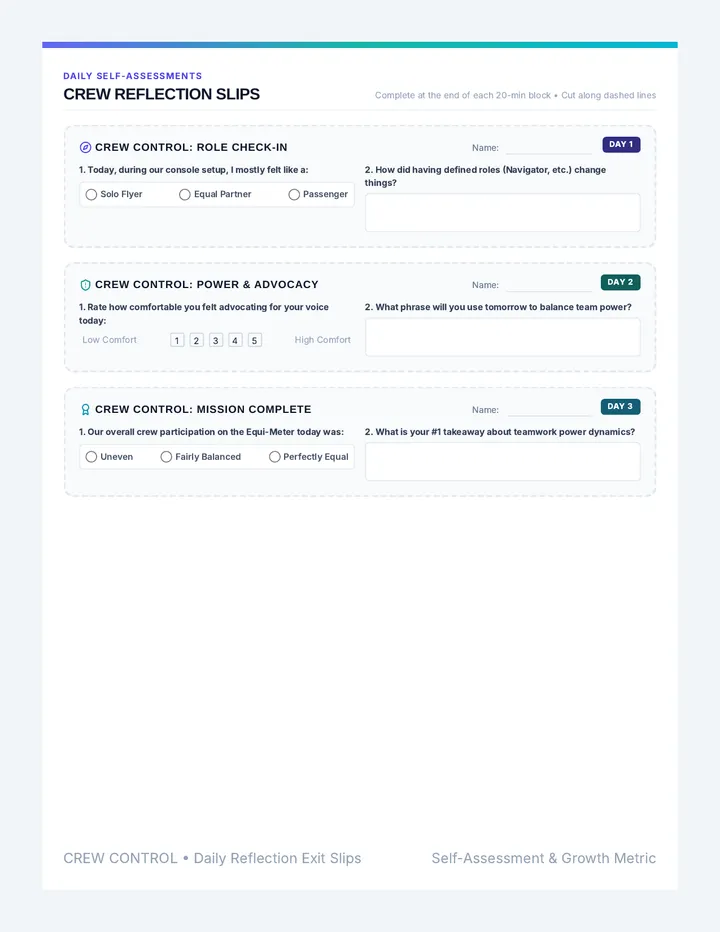
A printable 1-page document with 3 cut-out daily reflection exit tickets corresponding to Day 1, Day 2, and Day 3 of the Crew Control curriculum. Features short reflection boxes and visual balance meters for student self-assessment.
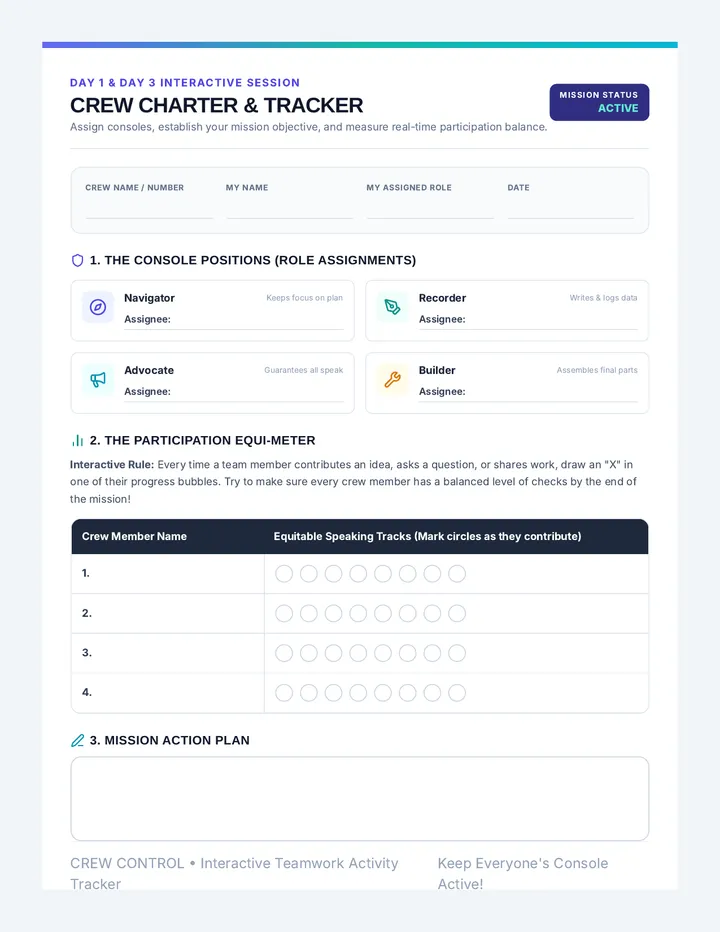
An interactive team tracking sheet where student groups assign specialized crew roles (Navigator, Recorder, Advocate, Builder) and log voice participation metrics in real-time.
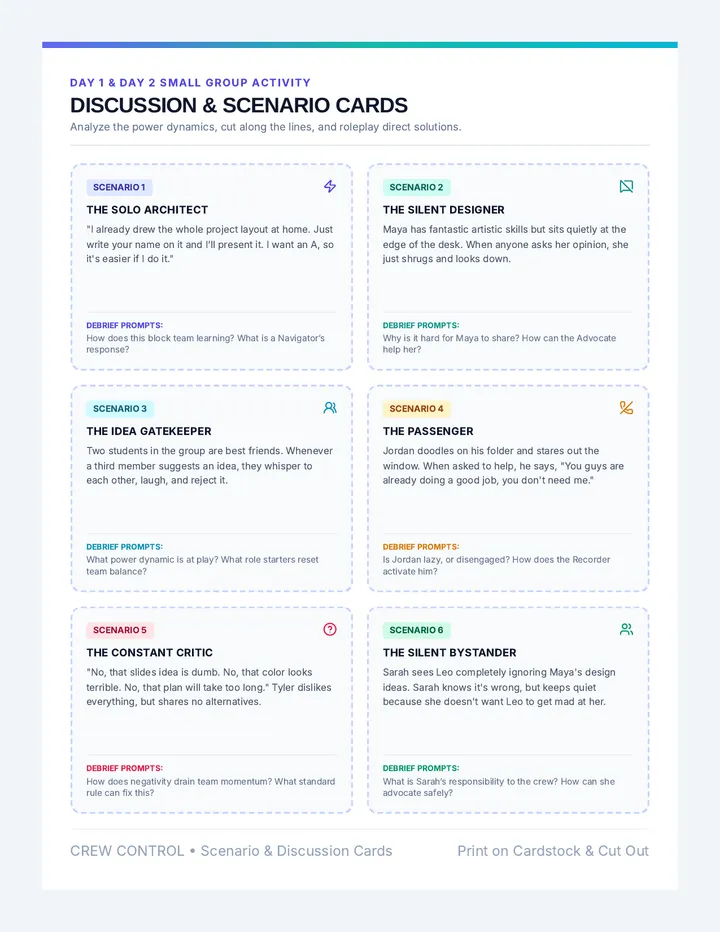
A printable 1-page activity sheet featuring 6 scenario discussion cards with realistic middle school group dilemmas (e.g., dominant leaders, passive bystanders, cliquey gatekeepers) and guiding prompts for small group roleplay.
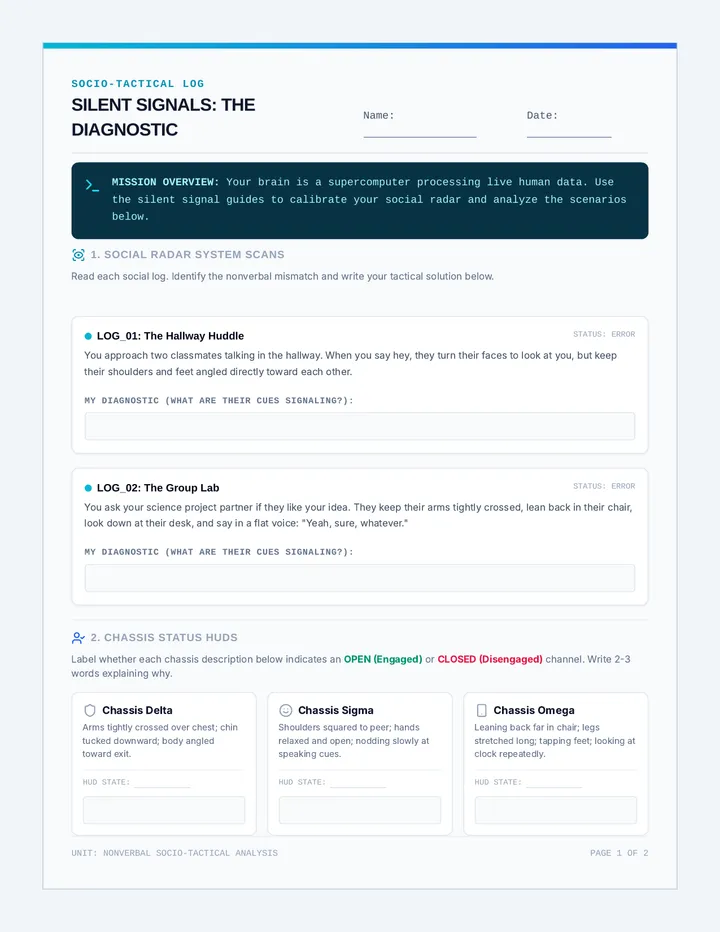
A high-interest, 2-page social skills worksheet containing interactive diagnostic exercises, vocal tone slider calibration, and reflective action-planning fields tailored for eighth-grade boys.
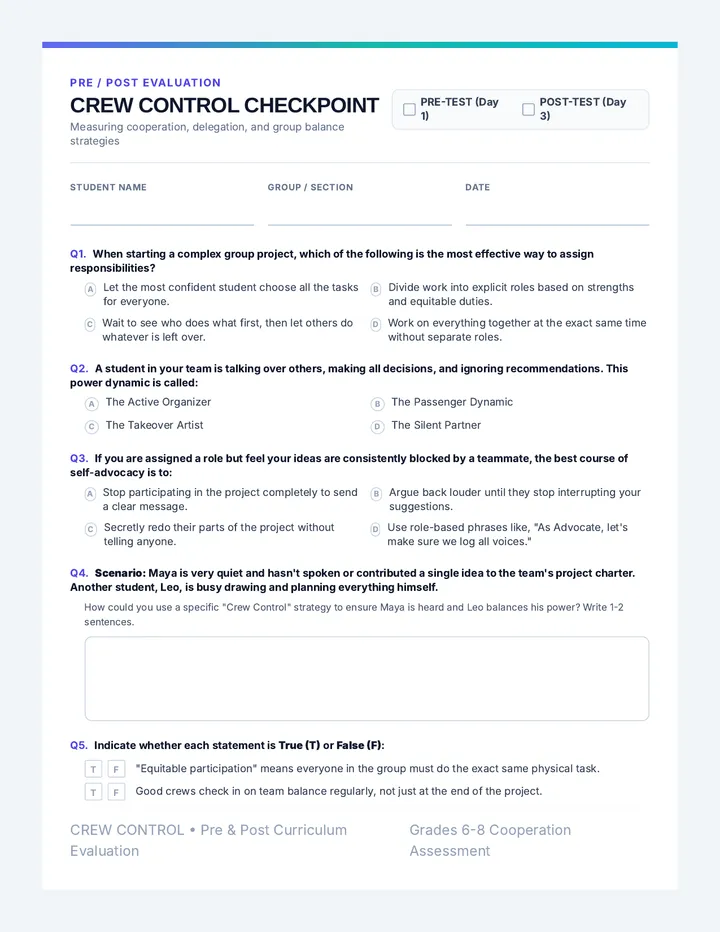
An identical pre- and post-test designed for assessment on Day 1 (Pre) and Day 3 (Post). Features 5 scenario-based questions to measure student growth in role division, self-advocacy, and handling power imbalances.
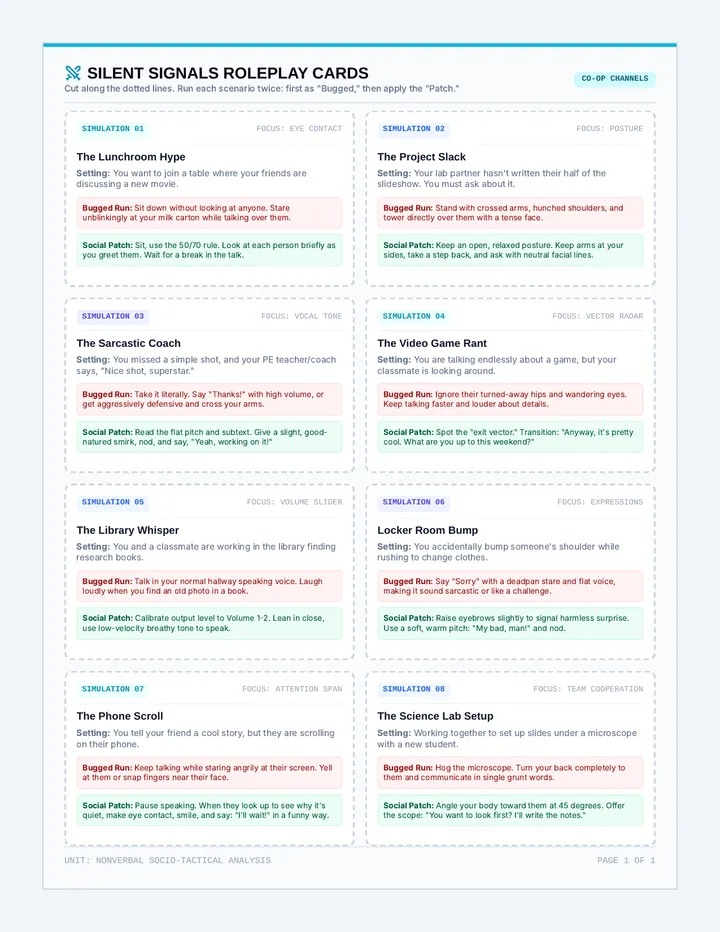
Eight high-interest, printable role-play scenario cards depicting realistic middle school situations (lunchroom, group project, hallway) with explicit "Bugged Cues" to act out and "Social Patches" to apply.
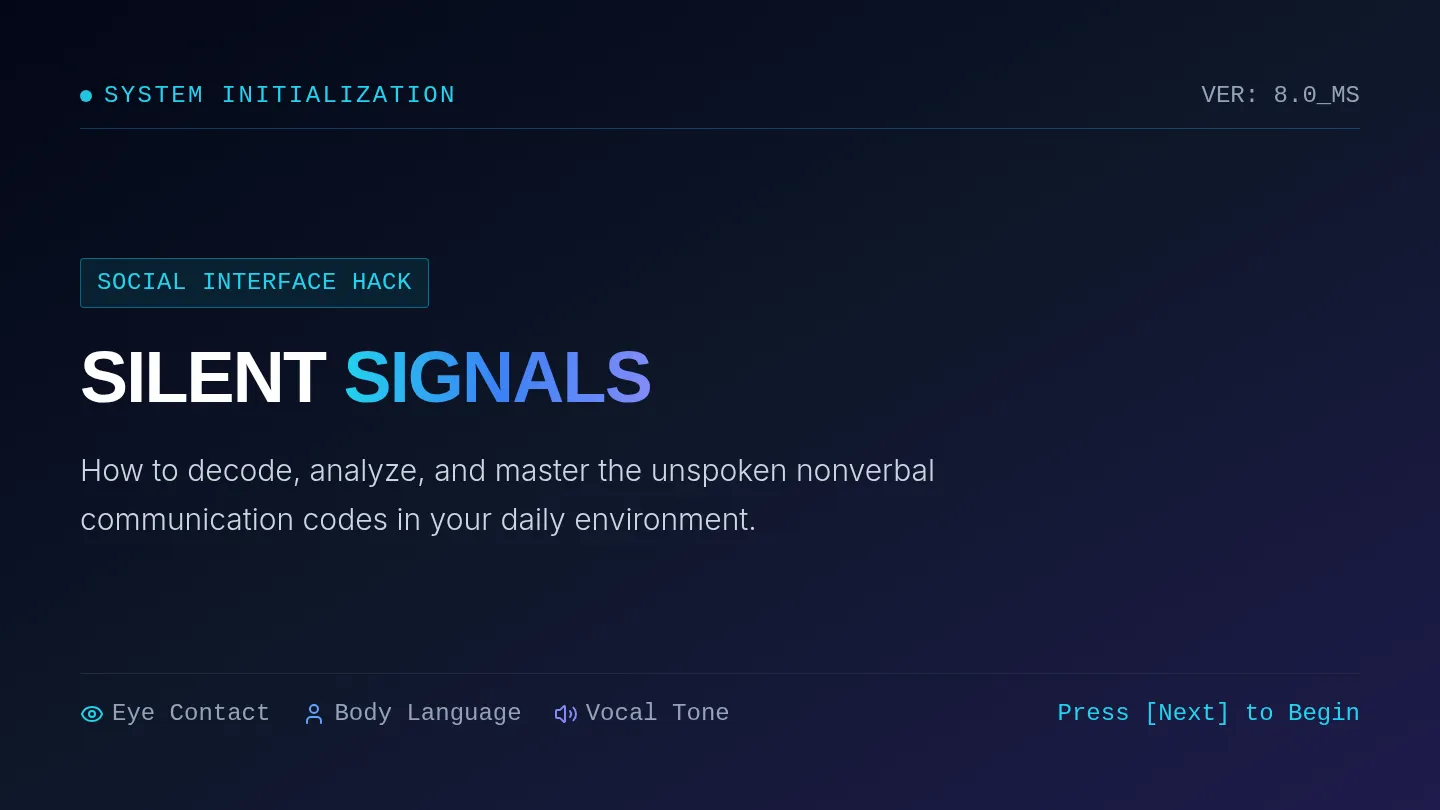
An engaging, high-tech presentation formatted as widescreen slides to introduce eighth-grade boys to eye contact, body language, and vocal tone cues. Uses gaming, UI, and coding metaphors.
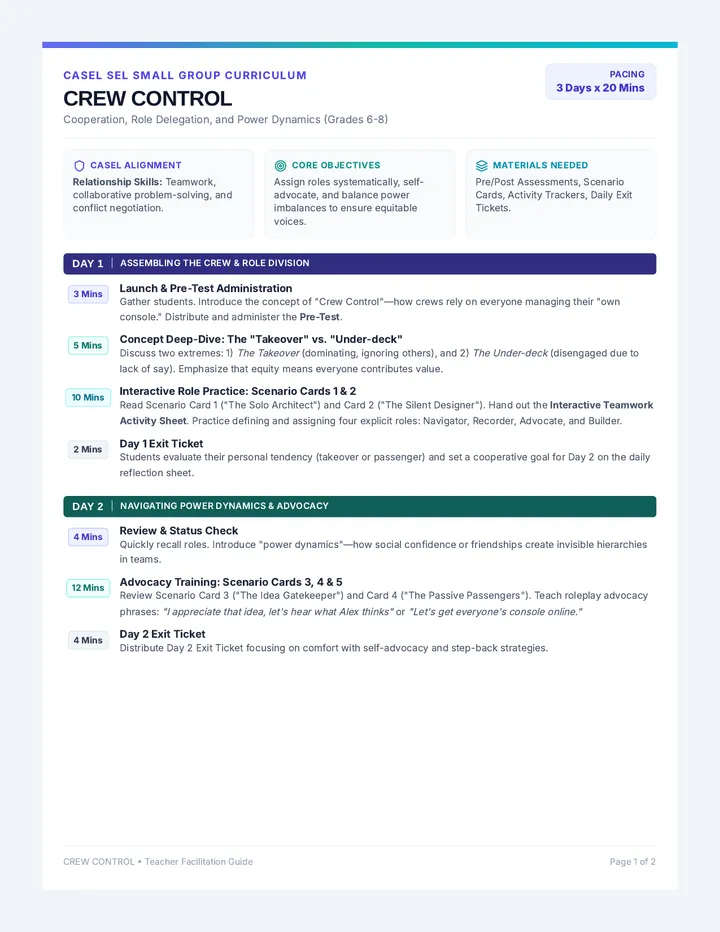
A comprehensive 2-page small group facilitation guide for teachers, breaking down the 3-day curriculum (20 minutes per day) with minute-by-minute timestamps, lesson plans, CASEL alignments, and intervention strategies for navigating group power dynamics.
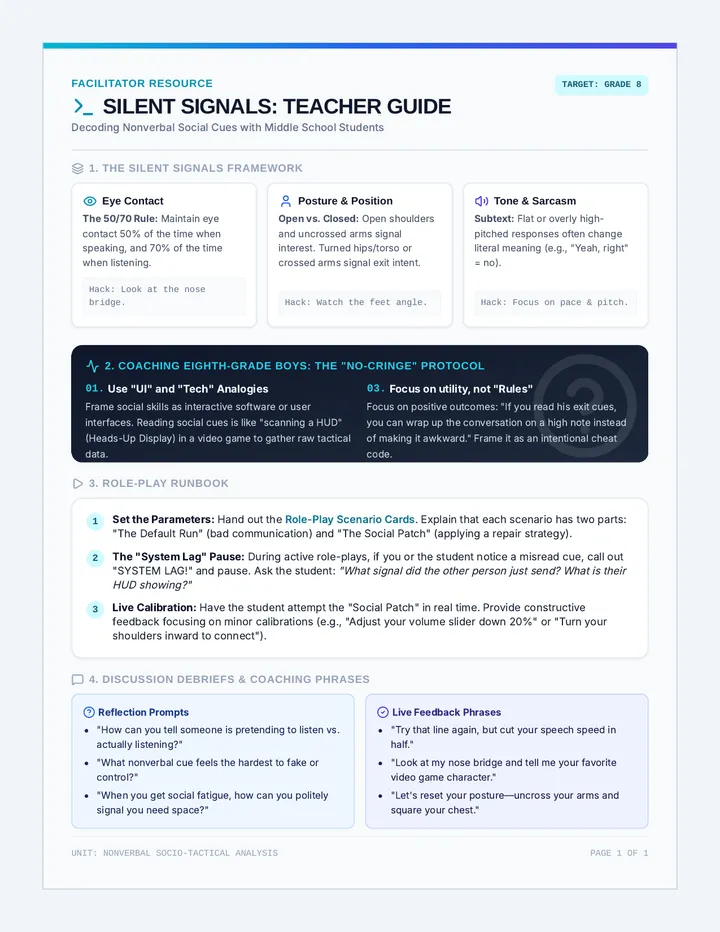
A professional, 1-page teacher facilitation guide containing practical strategies, coaching scripts, and actionable advice specifically tailored for teaching nonverbal cues to middle school boys.