The session 01 exit ticket for the Foundation Check lesson, focusing on student goals and confidence levels.
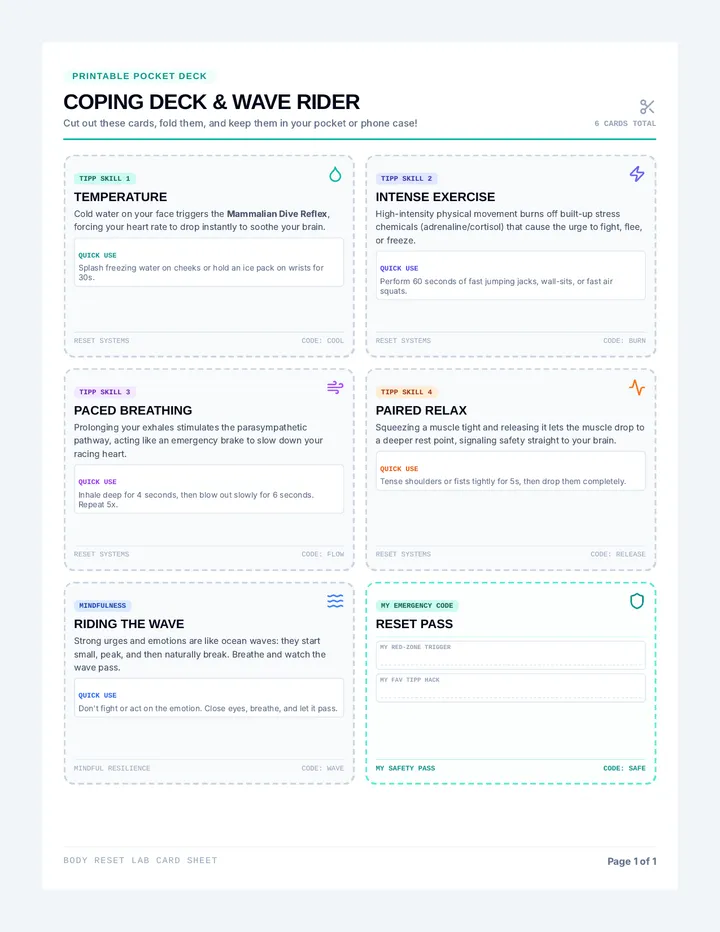
A 1-page printable worksheet featuring six pocket-sized, beautifully designed DBT coping strategy cards (TIPP + Riding the Wave) and a customizable 'My Reset Code' pass for students to cut out and carry.
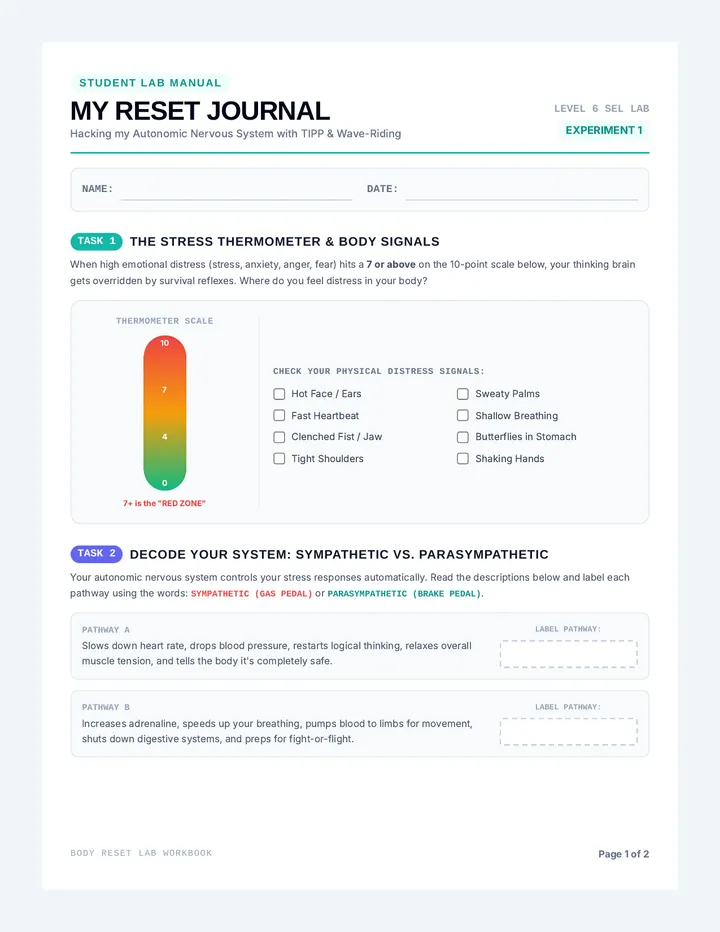
A 2-page student guided worksheet journal for the Body Reset Lab, allowing 6th graders to map their stress physical triggers, explore autonomic nervous system pathways, and construct a personalized TIPP emergency action plan.
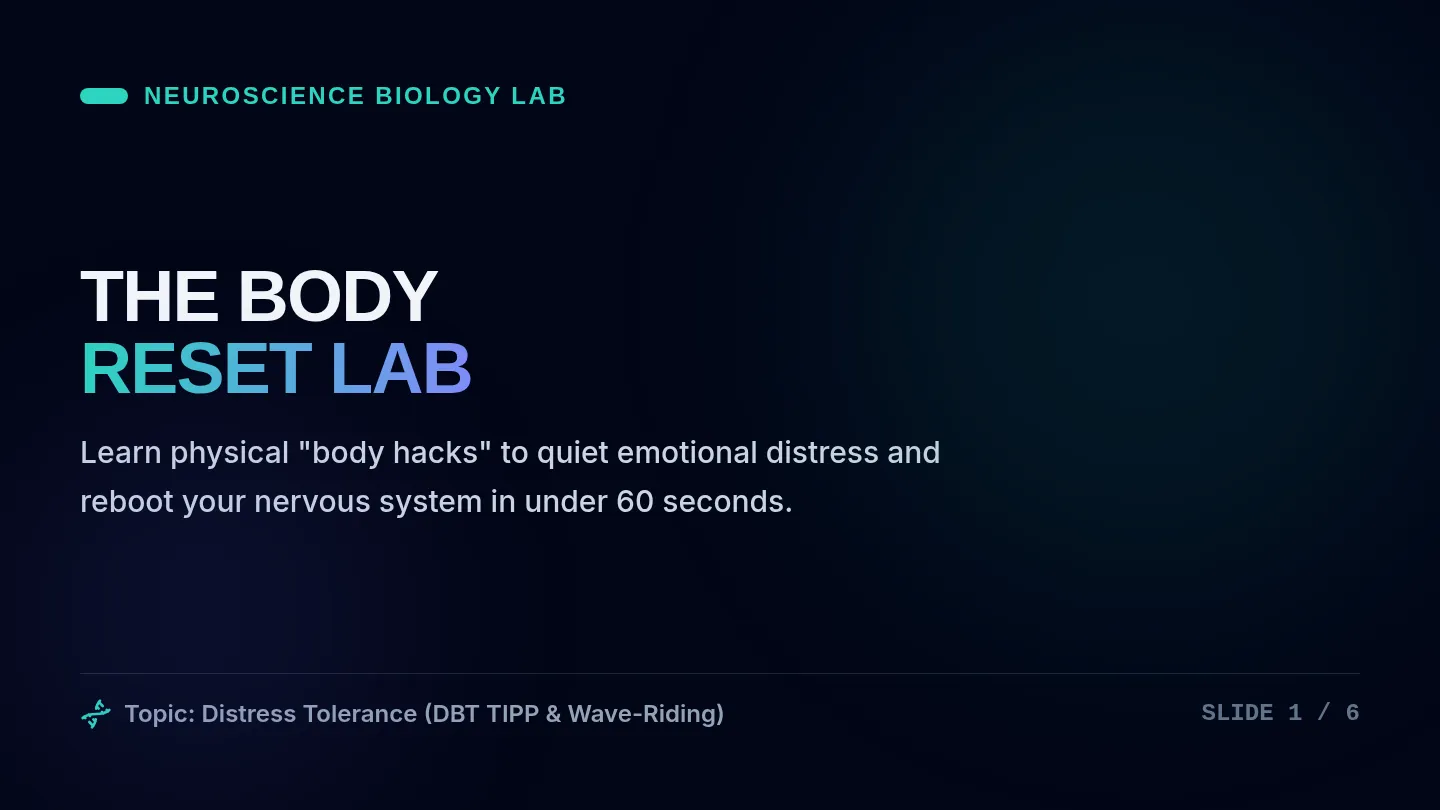
A 5-slide interactive slide deck for the Body Reset Lab, introducing the science of the nervous system, the TIPP skills, and interactive breathing and muscle relaxation exercises. Designed for high visual impact with minimum text size of 24px.
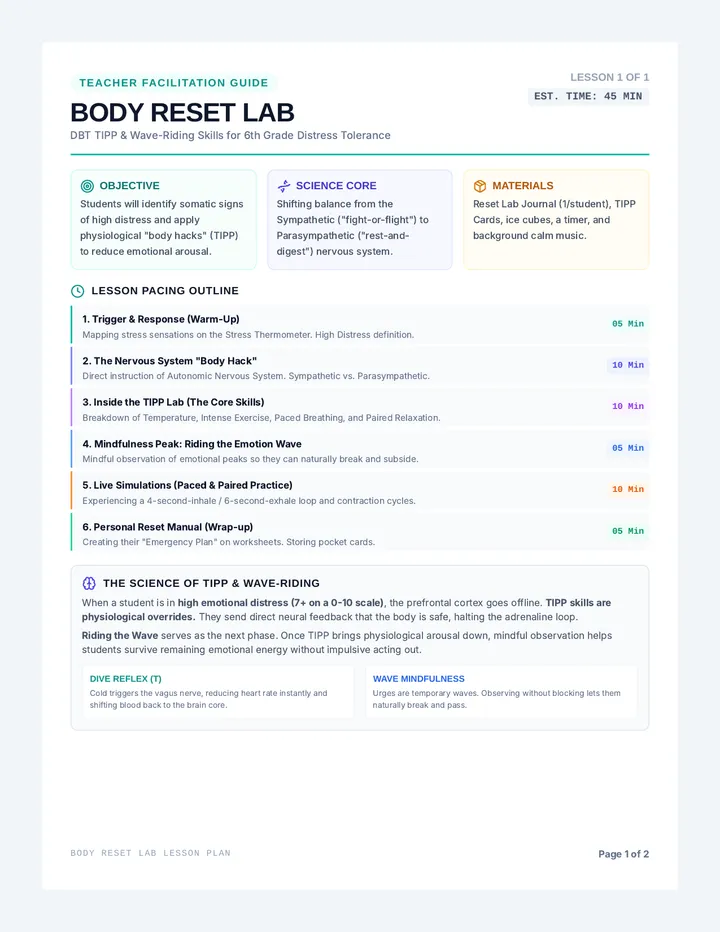
A 2-page teacher facilitation guide and lesson plan for the Body Reset Lab, featuring a pacing guide, scientific explanations of the autonomic nervous system, a classroom script, and differentiation strategies for teaching DBT TIPP skills to 6th graders.
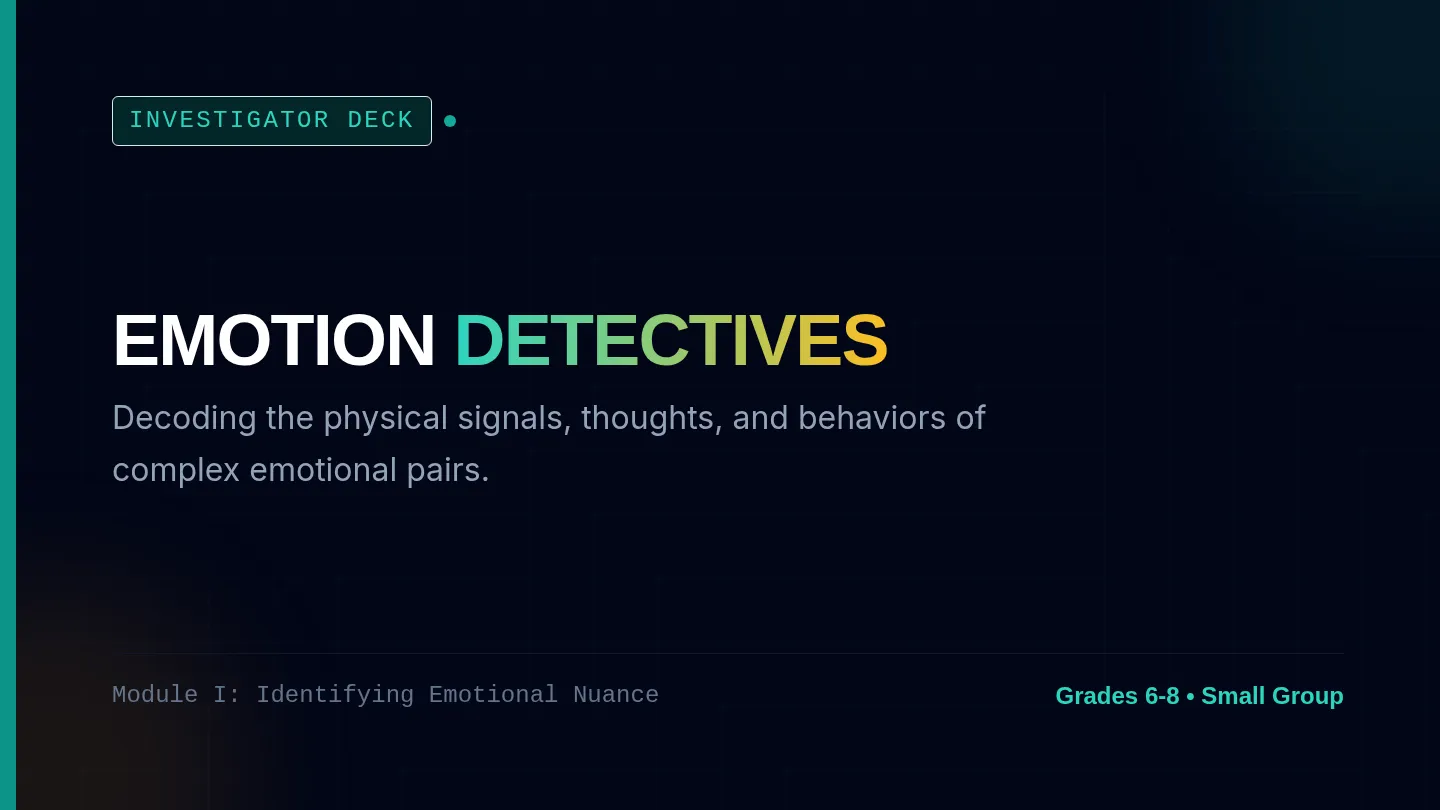
A 6-slide presentation deck designed for 16:9 projection to guide daily small group lessons. Features large, high-visibility typography (minimum 24px), dark clinical blueprint themes, and visual anchors to explain emotional mapping, guilt vs. shame, and cognitive reappraisal.
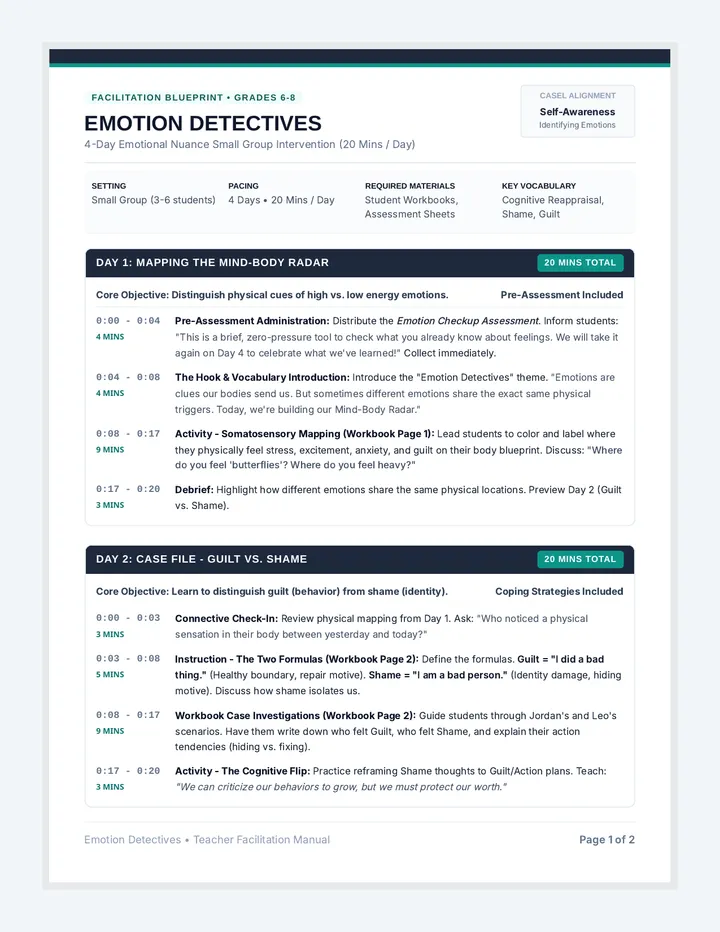
A professional 2-page teacher facilitation and curriculum guide outlining the 4-day, 20-minute daily small group intervention. Includes detailed step-by-step scripts, exact timestamps, CASEL framework alignment, common misconceptions, and facilitation techniques.
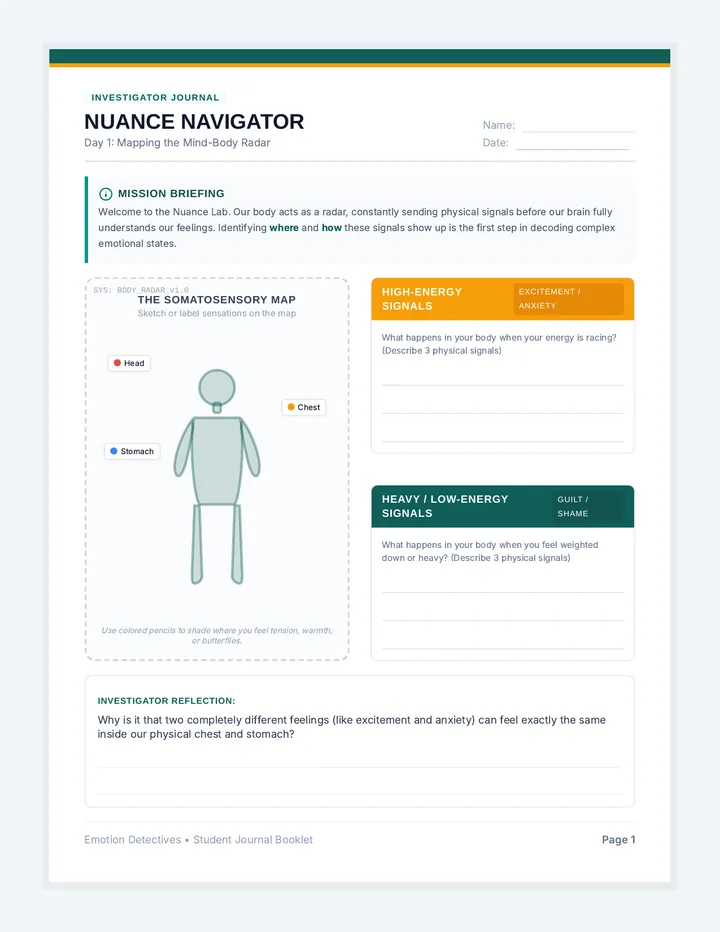
A 4-page student work booklet containing interactive physical mapping activities, cognitive reappraisal templates, guilt vs. shame scenario case files, and synthesis reflection sheets.
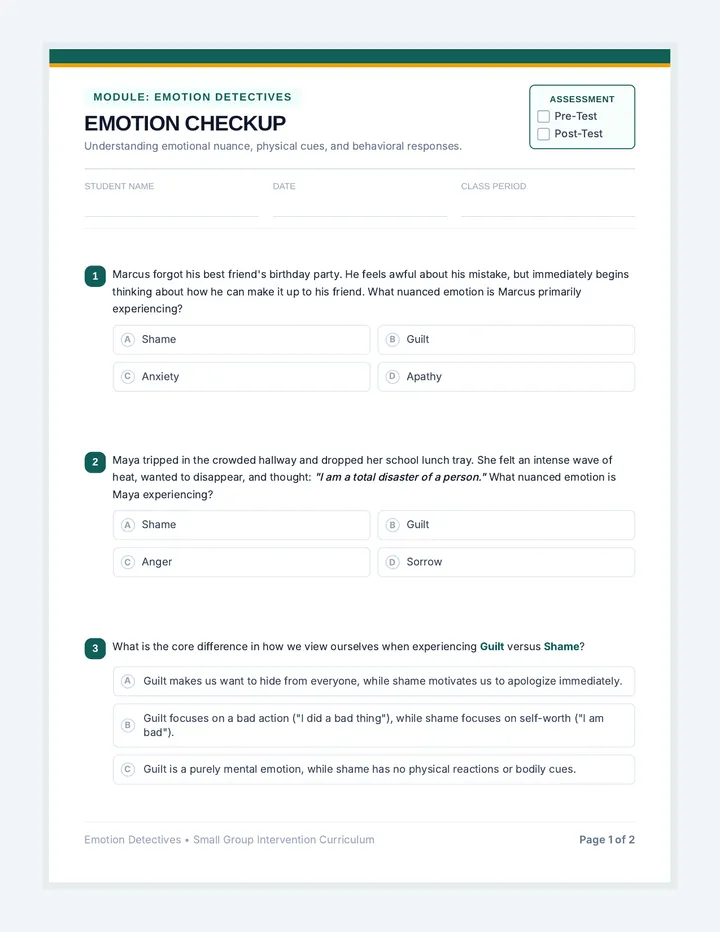
An identical pre- and post-test assessment for middle school students to evaluate their understanding of guilt vs. shame and excitement vs. anxiety before and after the 4-day intervention. Includes scenario-based multiple-choice and short-answer questions.
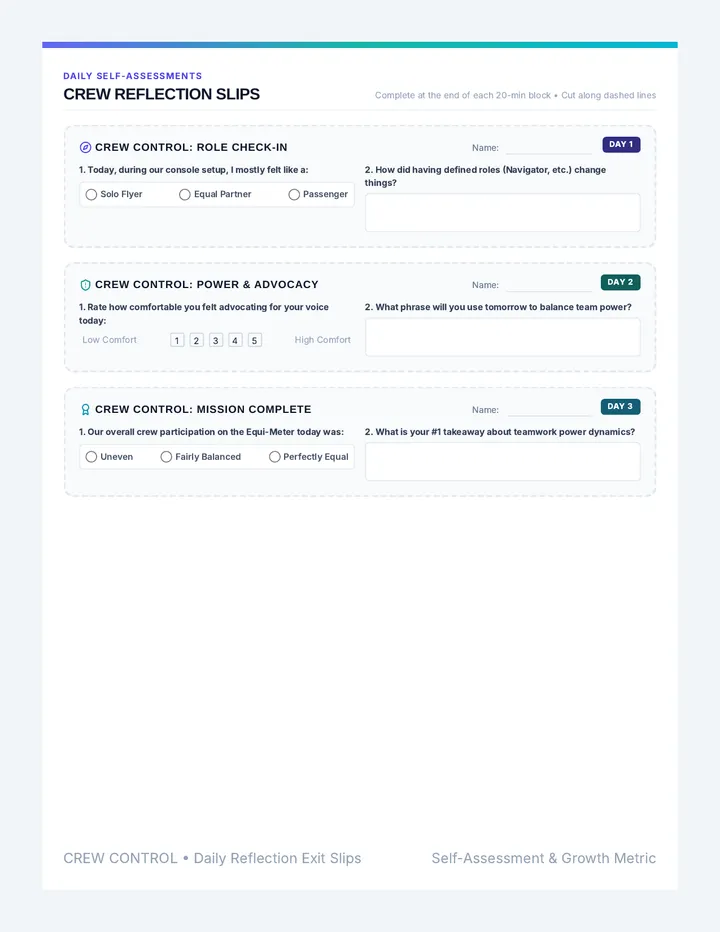
A printable 1-page document with 3 cut-out daily reflection exit tickets corresponding to Day 1, Day 2, and Day 3 of the Crew Control curriculum. Features short reflection boxes and visual balance meters for student self-assessment.
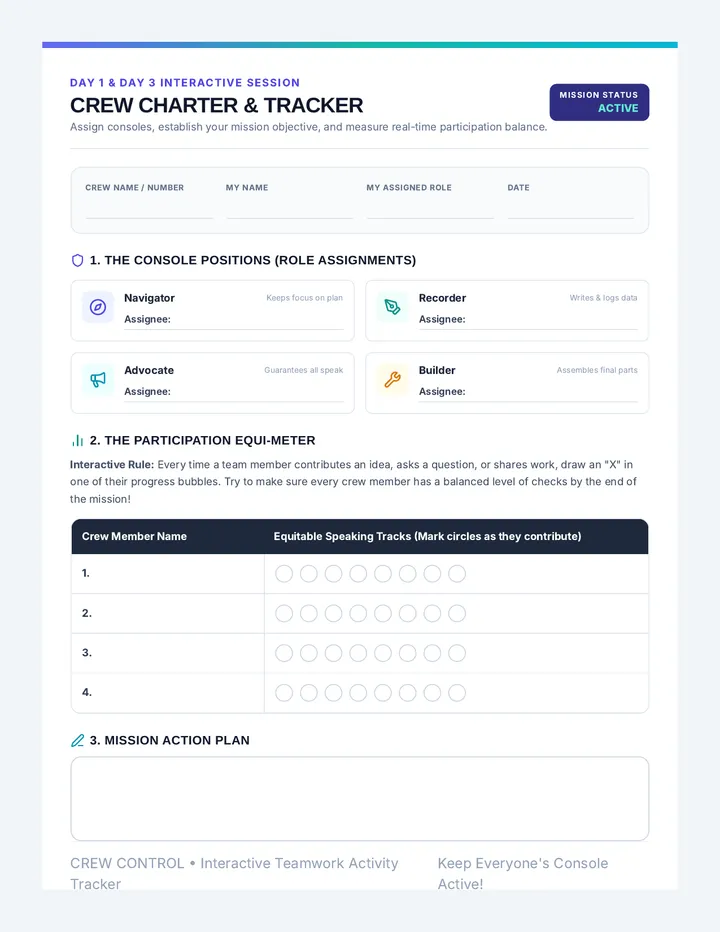
An interactive team tracking sheet where student groups assign specialized crew roles (Navigator, Recorder, Advocate, Builder) and log voice participation metrics in real-time.
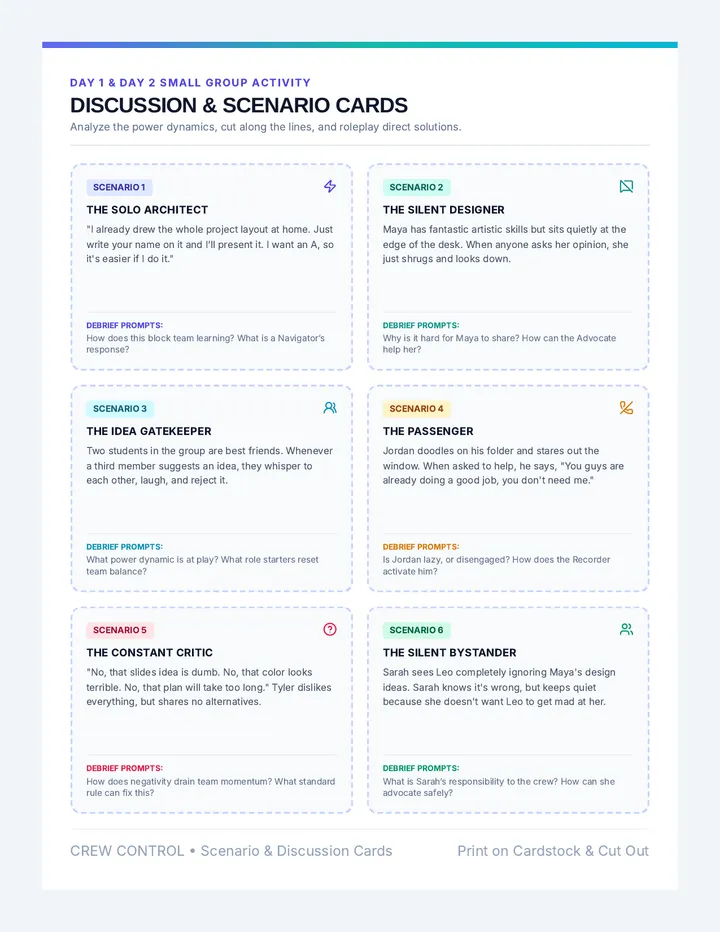
A printable 1-page activity sheet featuring 6 scenario discussion cards with realistic middle school group dilemmas (e.g., dominant leaders, passive bystanders, cliquey gatekeepers) and guiding prompts for small group roleplay.
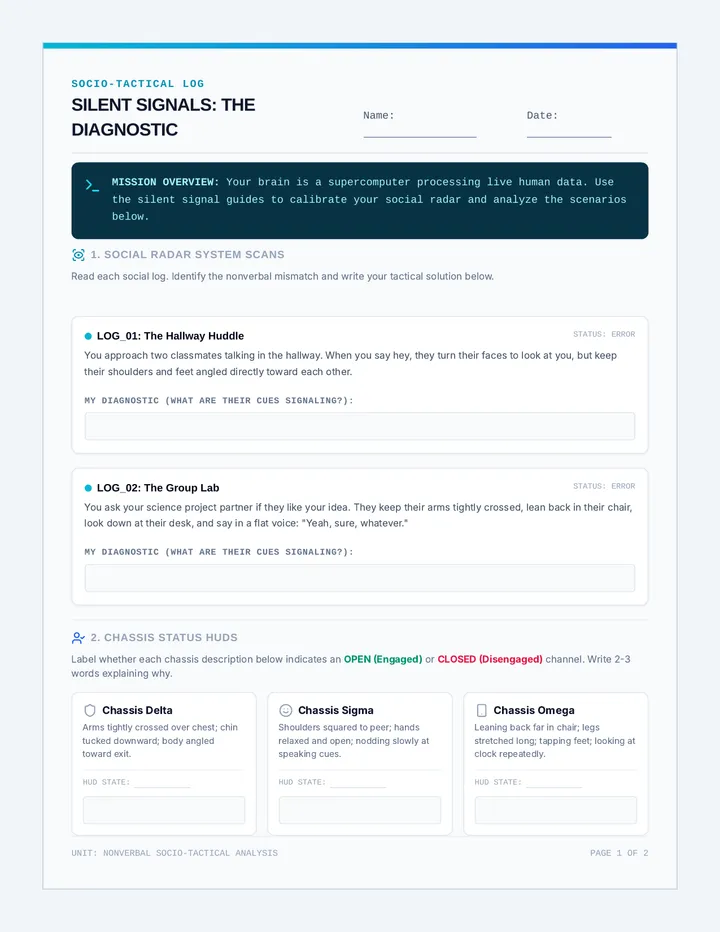
A high-interest, 2-page social skills worksheet containing interactive diagnostic exercises, vocal tone slider calibration, and reflective action-planning fields tailored for eighth-grade boys.
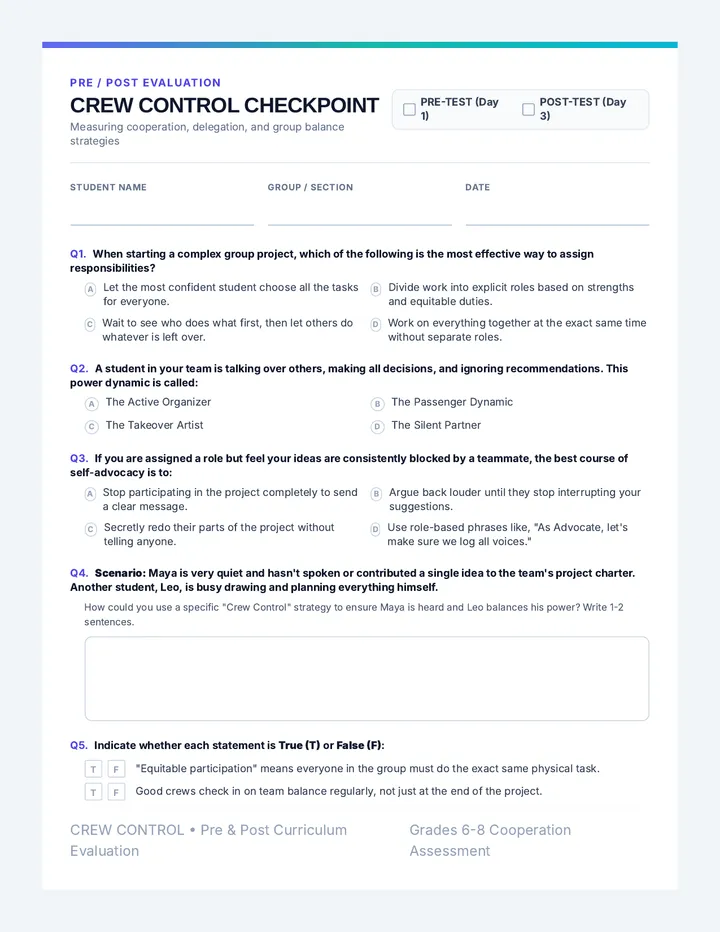
An identical pre- and post-test designed for assessment on Day 1 (Pre) and Day 3 (Post). Features 5 scenario-based questions to measure student growth in role division, self-advocacy, and handling power imbalances.
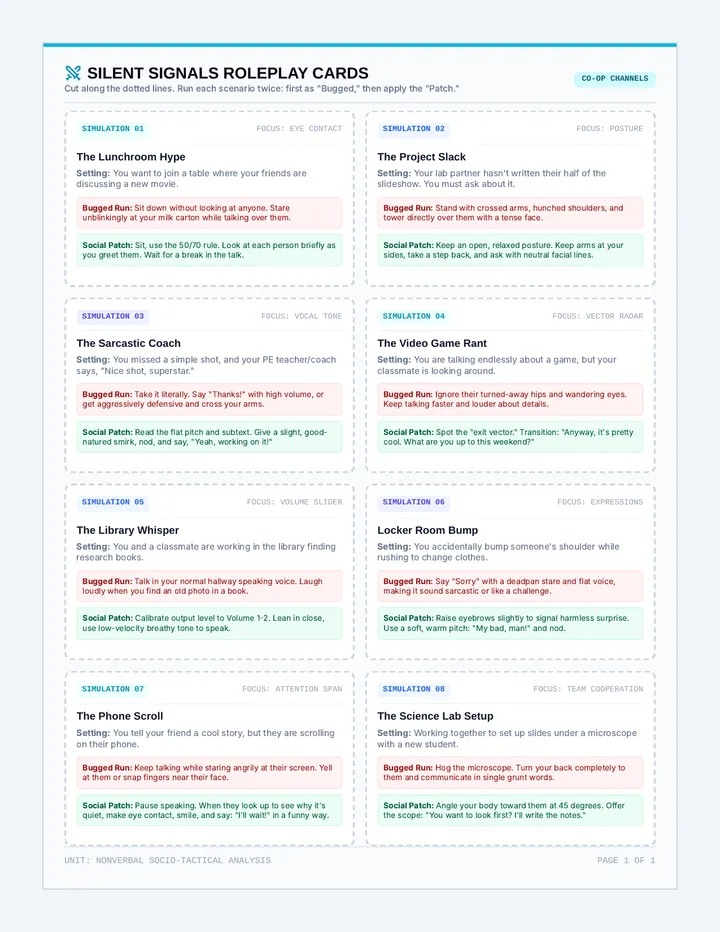
Eight high-interest, printable role-play scenario cards depicting realistic middle school situations (lunchroom, group project, hallway) with explicit "Bugged Cues" to act out and "Social Patches" to apply.
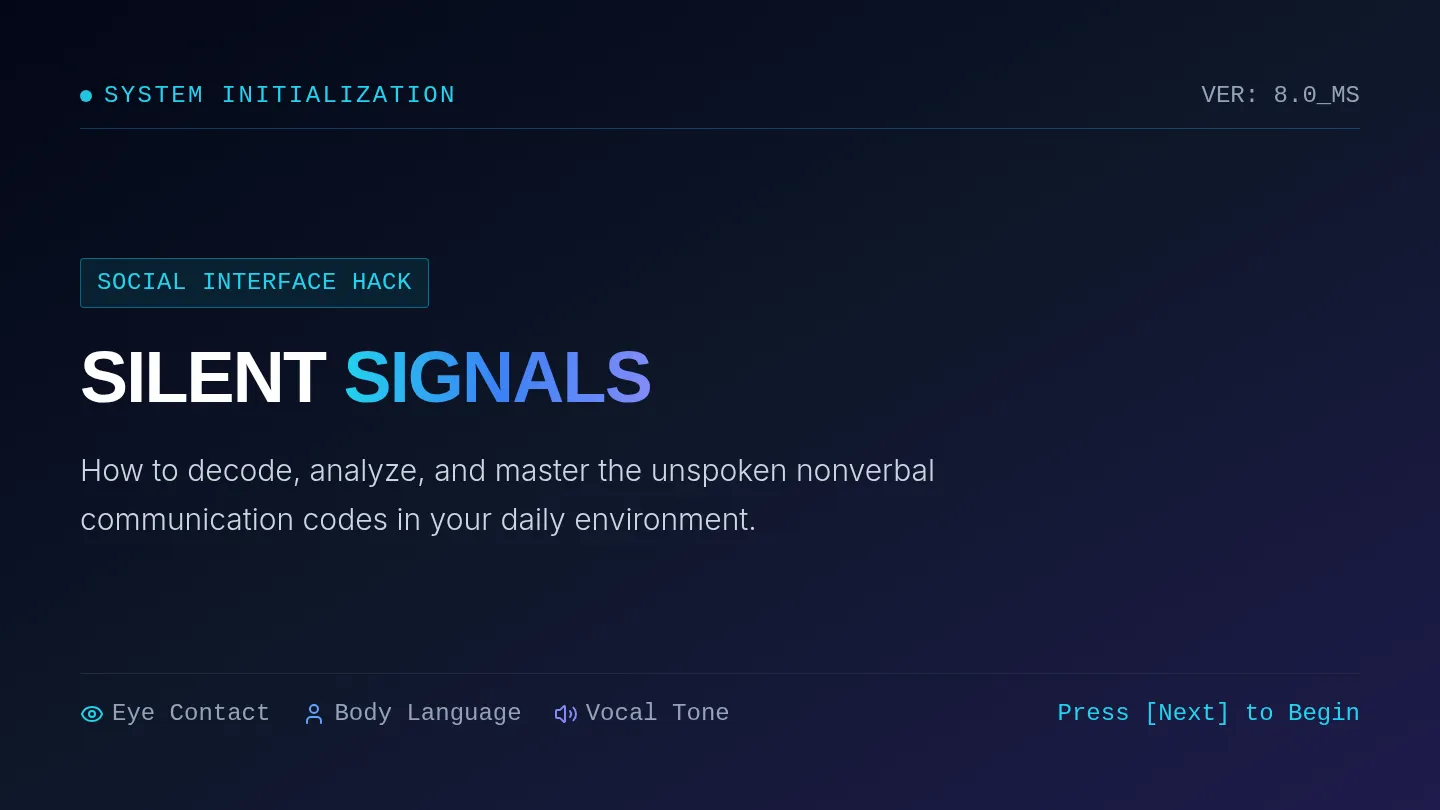
An engaging, high-tech presentation formatted as widescreen slides to introduce eighth-grade boys to eye contact, body language, and vocal tone cues. Uses gaming, UI, and coding metaphors.
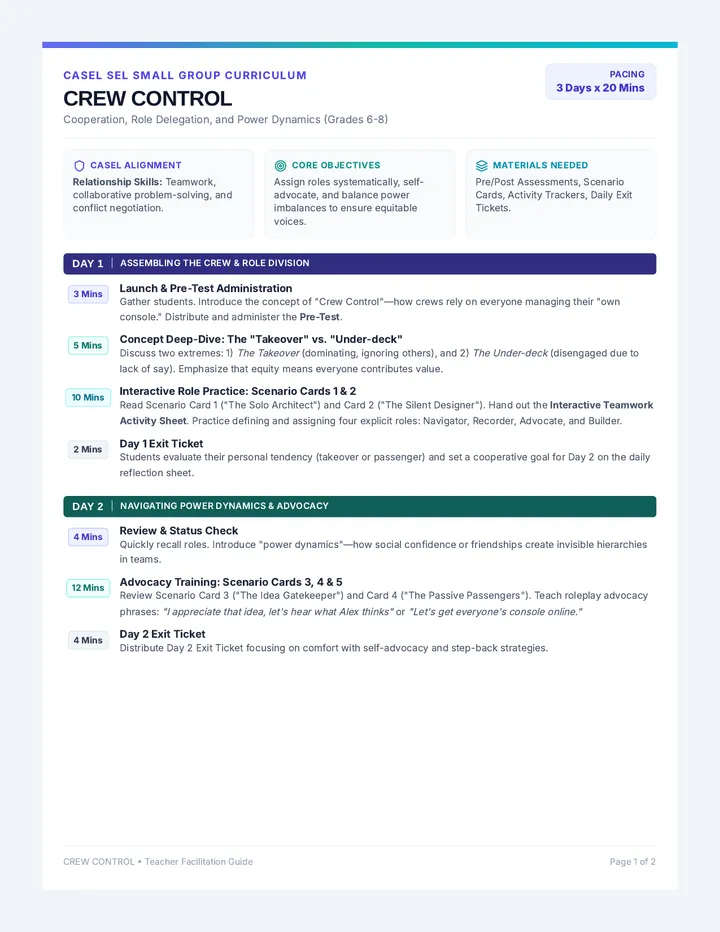
A comprehensive 2-page small group facilitation guide for teachers, breaking down the 3-day curriculum (20 minutes per day) with minute-by-minute timestamps, lesson plans, CASEL alignments, and intervention strategies for navigating group power dynamics.
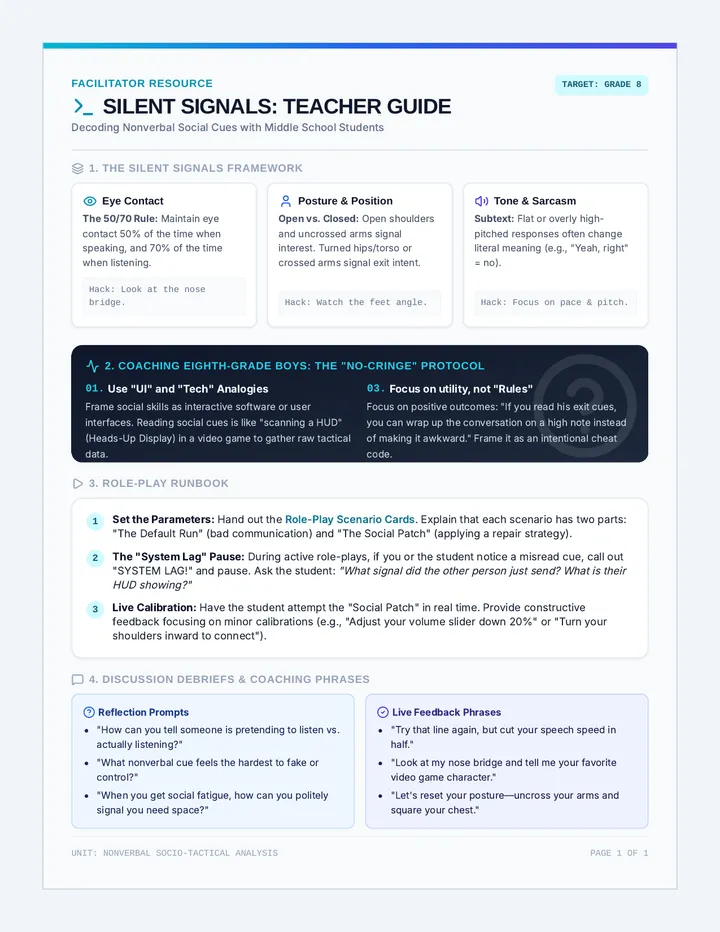
A professional, 1-page teacher facilitation guide containing practical strategies, coaching scripts, and actionable advice specifically tailored for teaching nonverbal cues to middle school boys.