An instructional slide deck designed to teach 7th-grade students how to identify the seven primary micro-expressions through a surveillance-themed visual presentation.
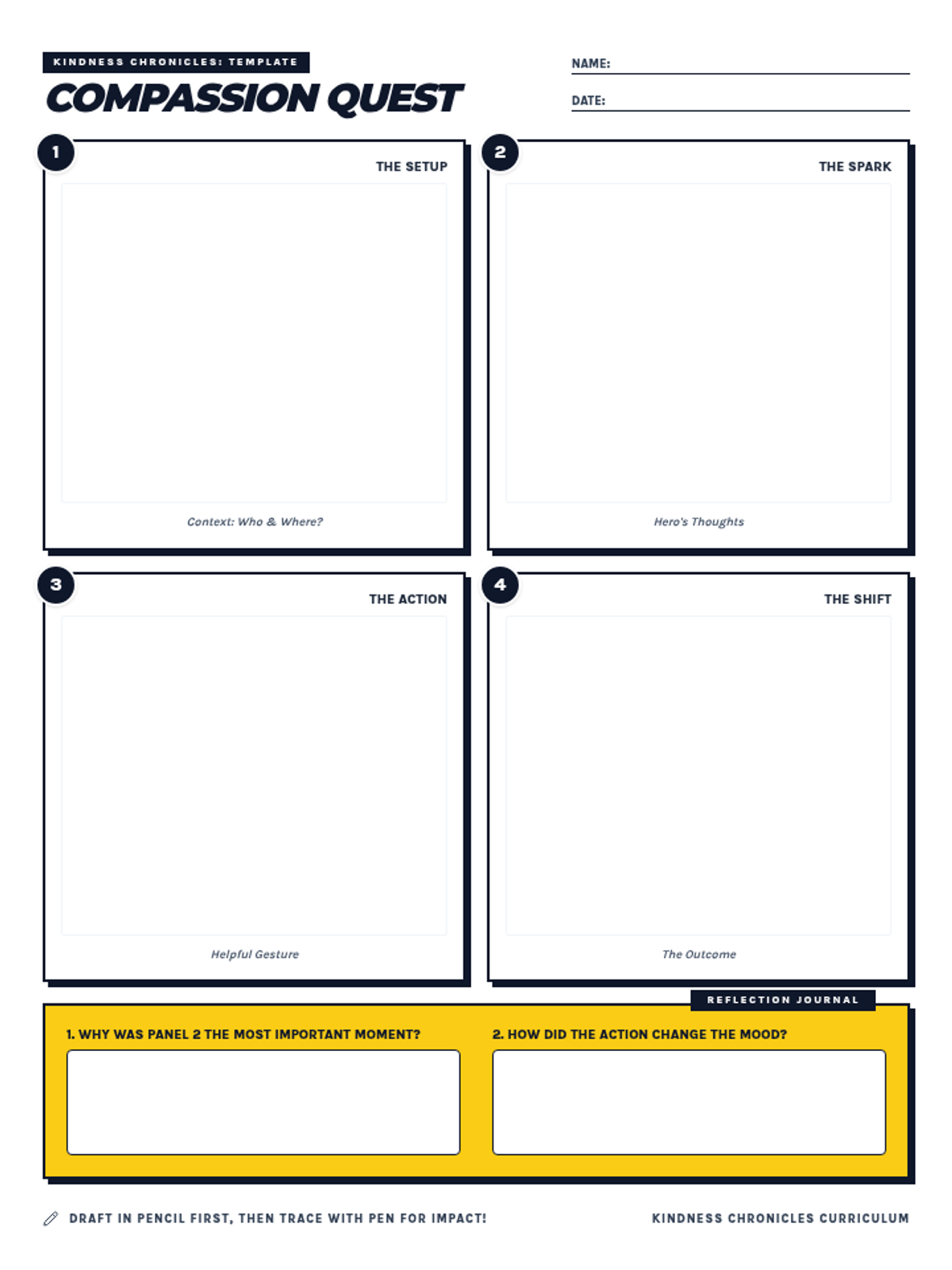
A student worksheet providing a structured 4-panel comic grid for illustrating a compassion scenario. Includes dedicated spaces for the narrative arc and a "Reflection Corner" at the bottom for students to analyze the character's motivations and actions.
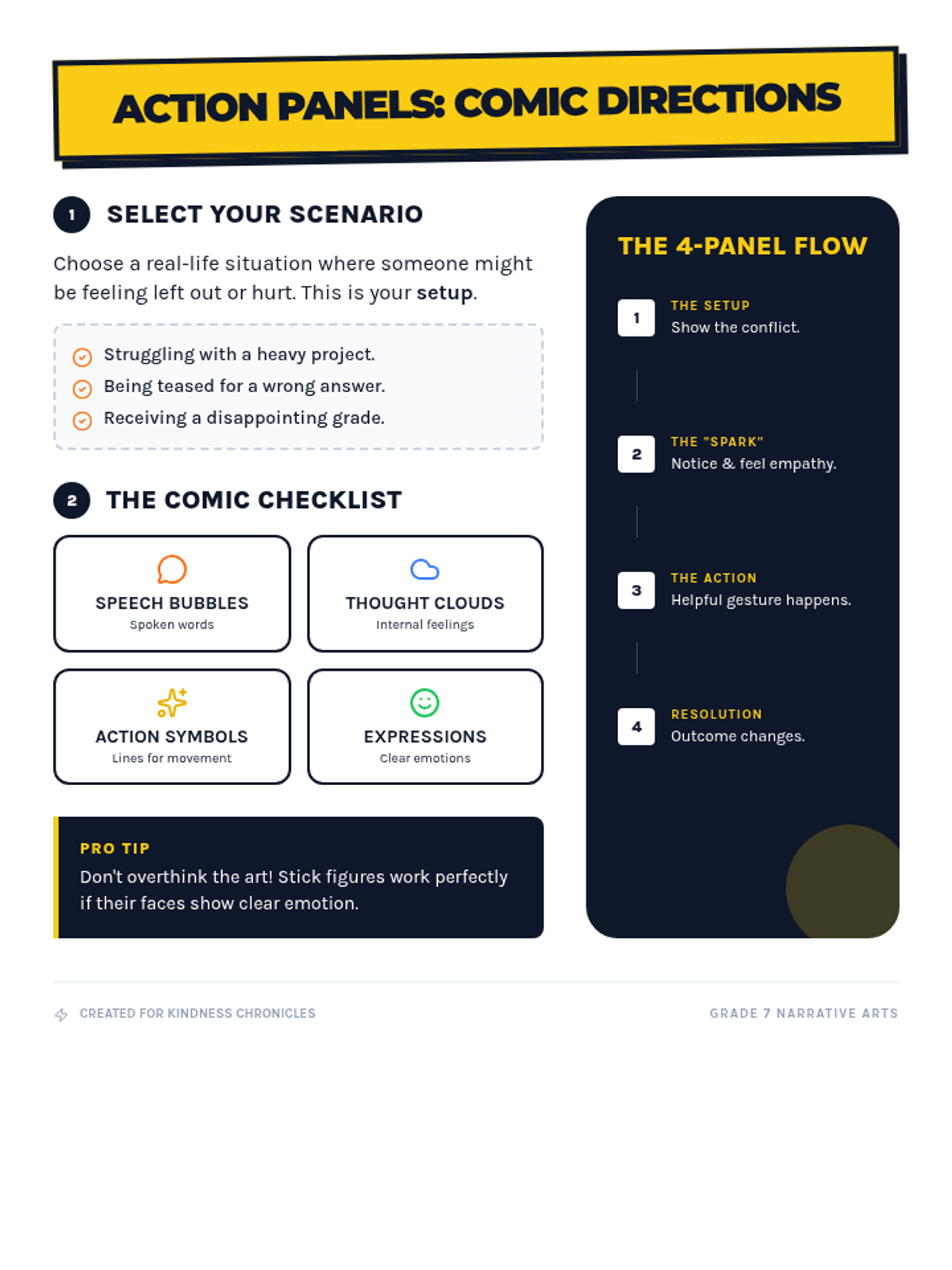
An instructional handout for students that breaks down the comic creation process into clear, manageable steps. It includes a checklist of comic elements (bubbles, clouds, symbols) and a visual guide to the 4-panel narrative structure for depicting compassion.
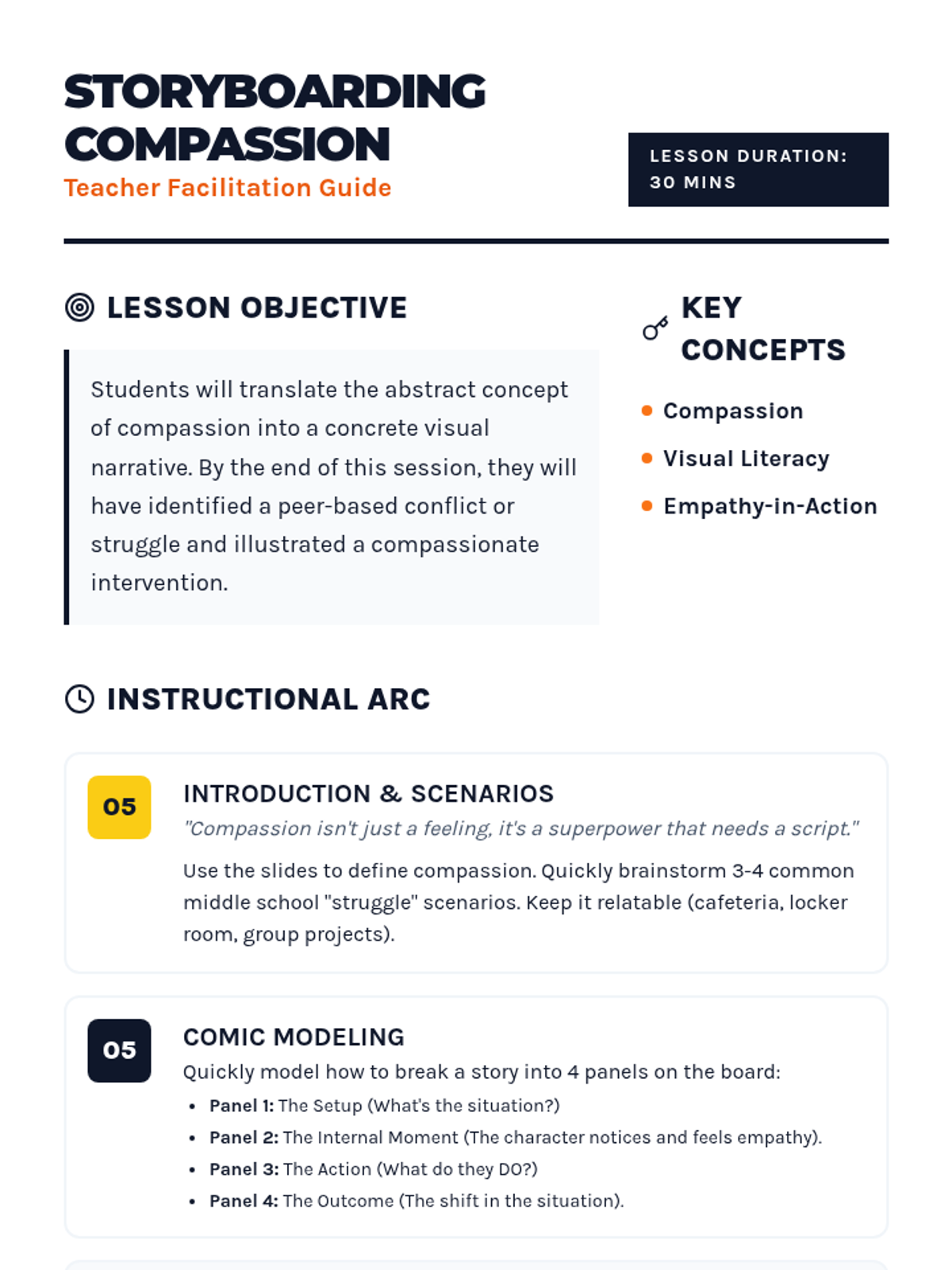
A teacher facilitation guide for the Kindness Chronicles lesson, featuring a detailed 30-minute pacing guide, instructional tips, and a breakdown of the 4-panel story arc. It provides educators with the "Compassion Superpower" framing and specific discussion prompts.
A visually dynamic slide deck that introduces the concept of compassion, basic comic-book storytelling mechanics, and peer-focused scenarios for student inspiration. Designed for a 30-minute 7th-grade lesson with bold, comic-style visuals and clear instructional prompts.
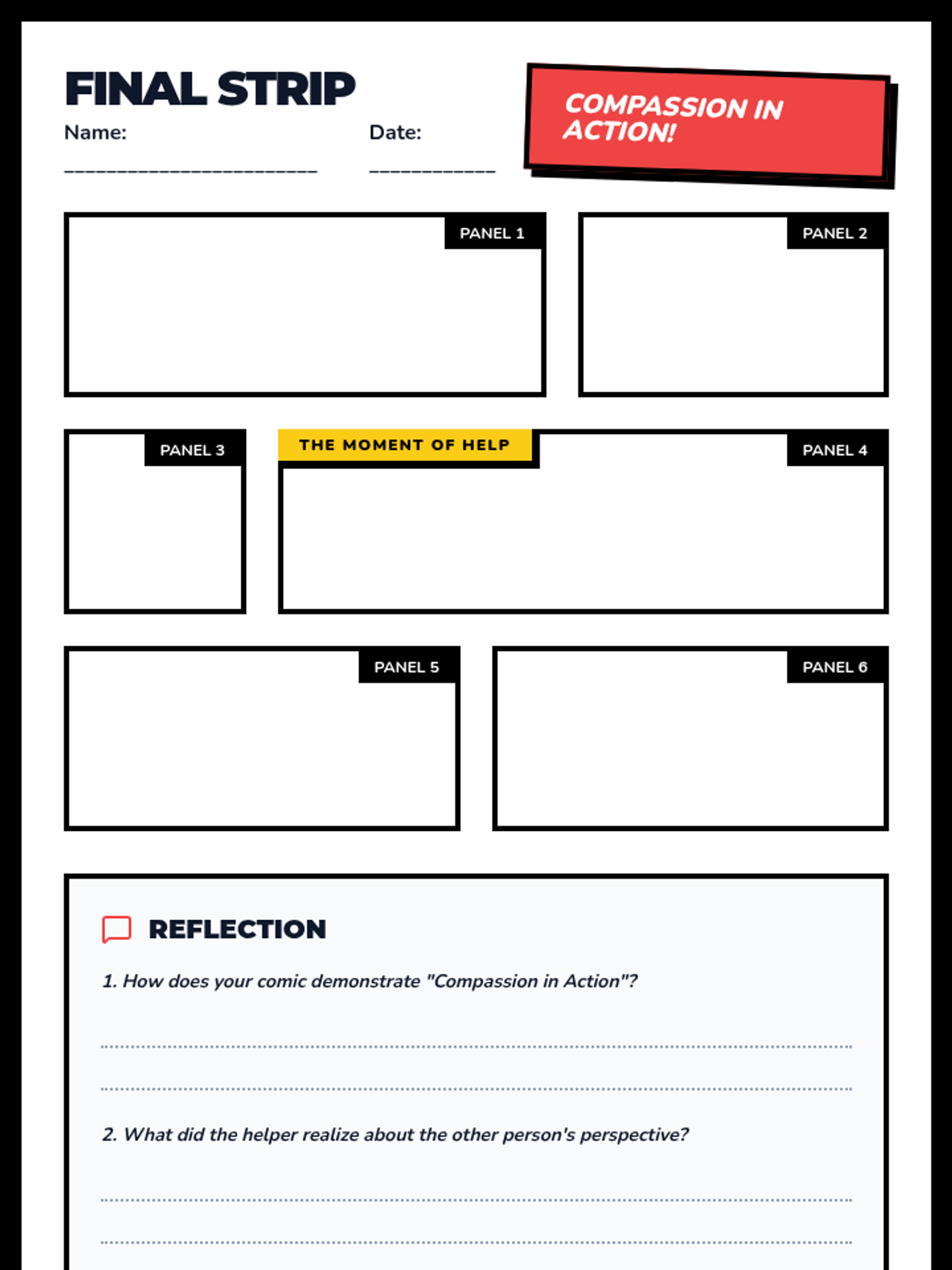
A final comic strip template with creative panel layouts and an integrated reflection section. Designed to facilitate the 15-minute creation phase and the final reflection component of the lesson.
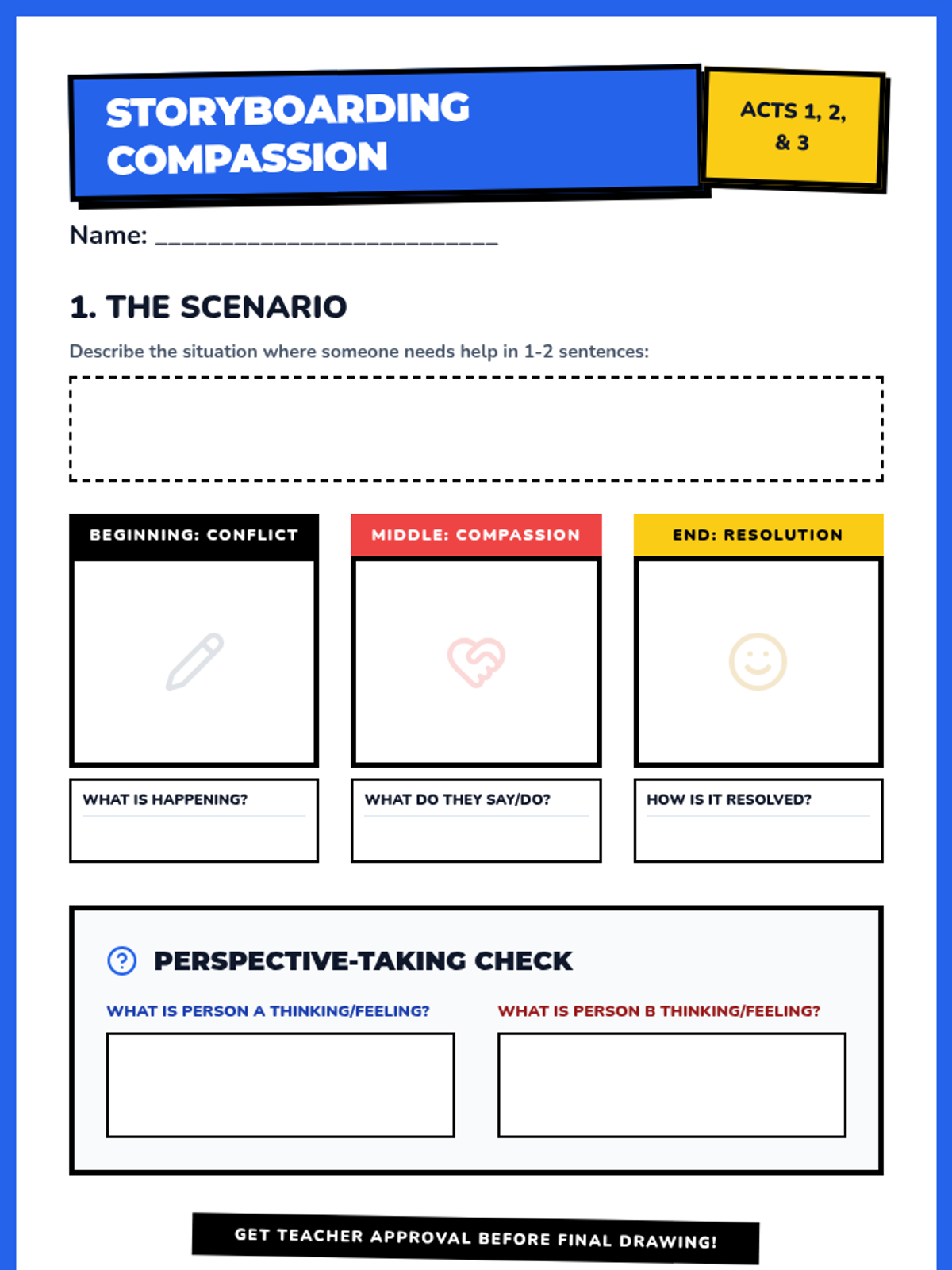
A storyboarding worksheet for planning a three-act comic. It includes sections for conflict, action, and resolution, along with a perspective check to help students think about the internal thoughts of their characters.
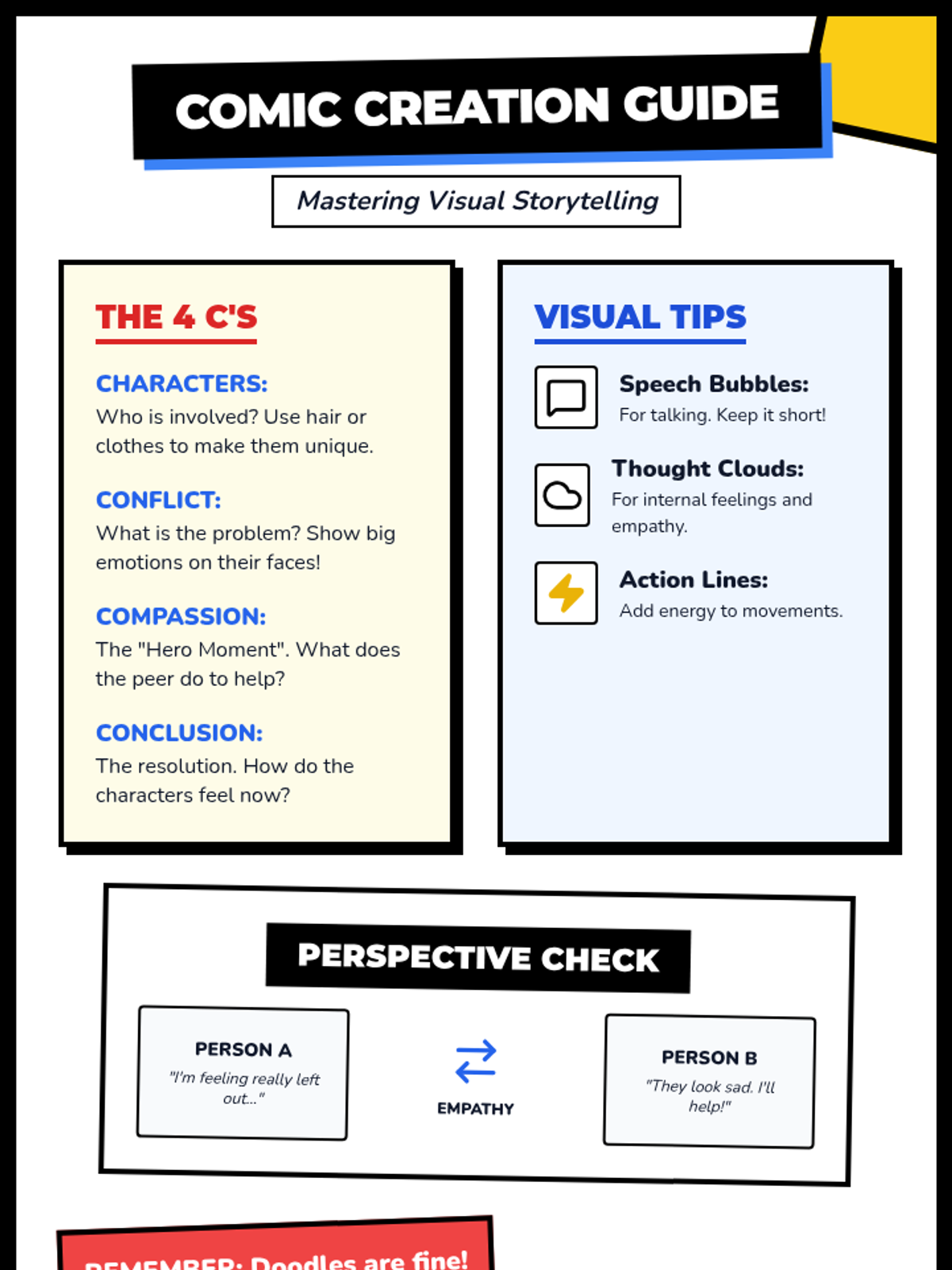
A one-page reference guide for students that explains the narrative structure of a compassion-focused comic and provides visual tips for speech bubbles, action lines, and character expressions.
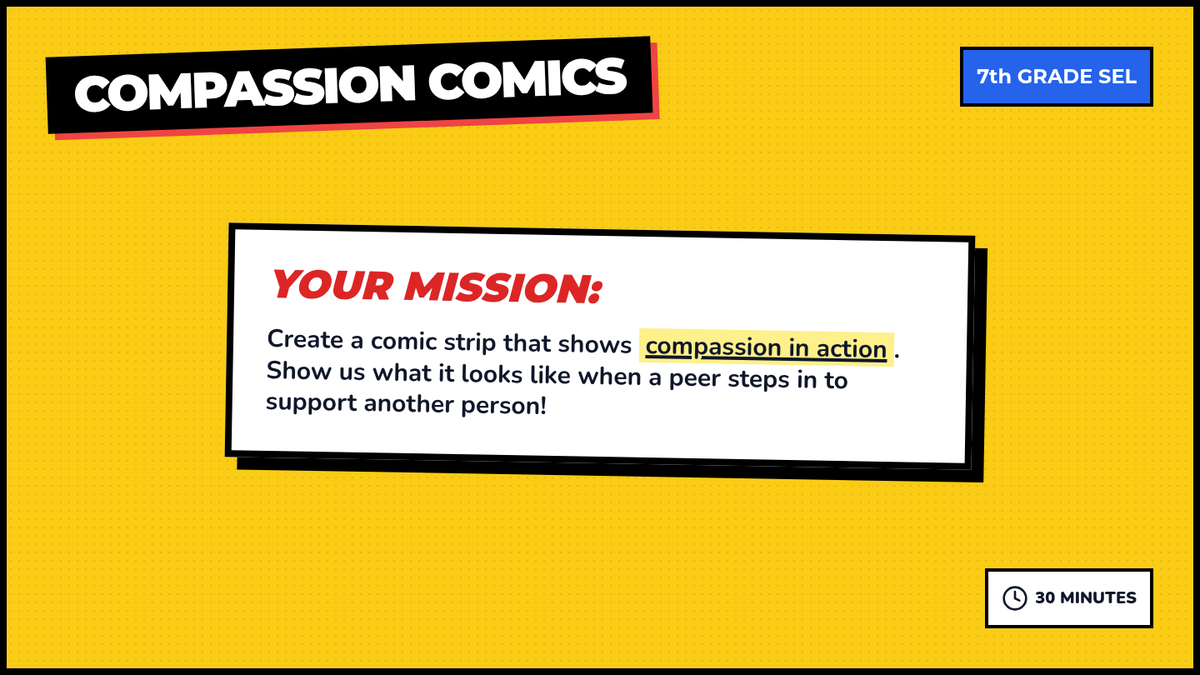
A slide deck for the 'Compassion Comic Strip' lesson, providing a 30-minute pacing guide, definitions of compassion, and peer scenarios to kickstart student ideas.
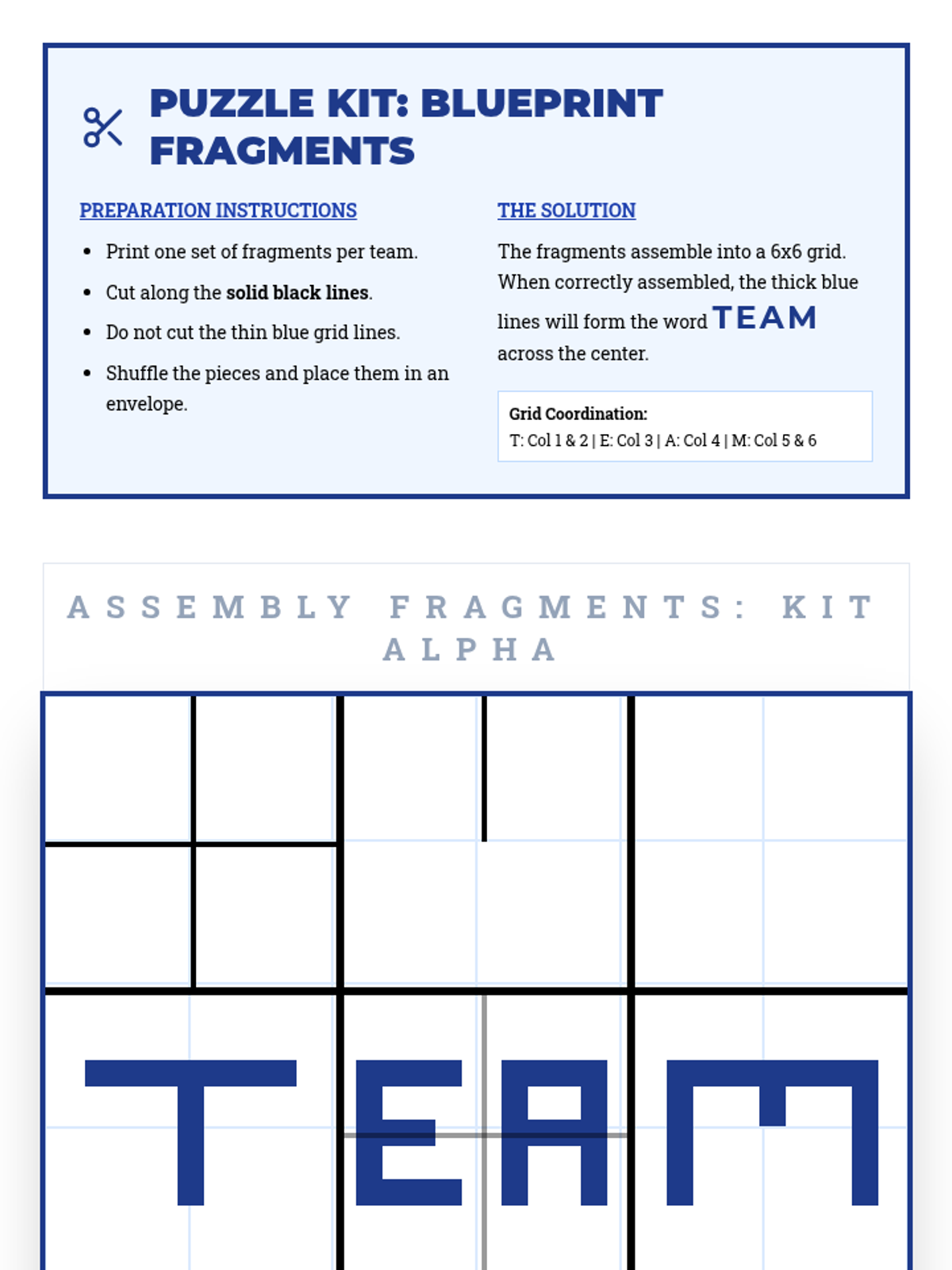
A printable puzzle kit consisting of 12 blueprint fragments that assemble into a 6x6 grid. Includes teacher instructions for preparation and a solution key.
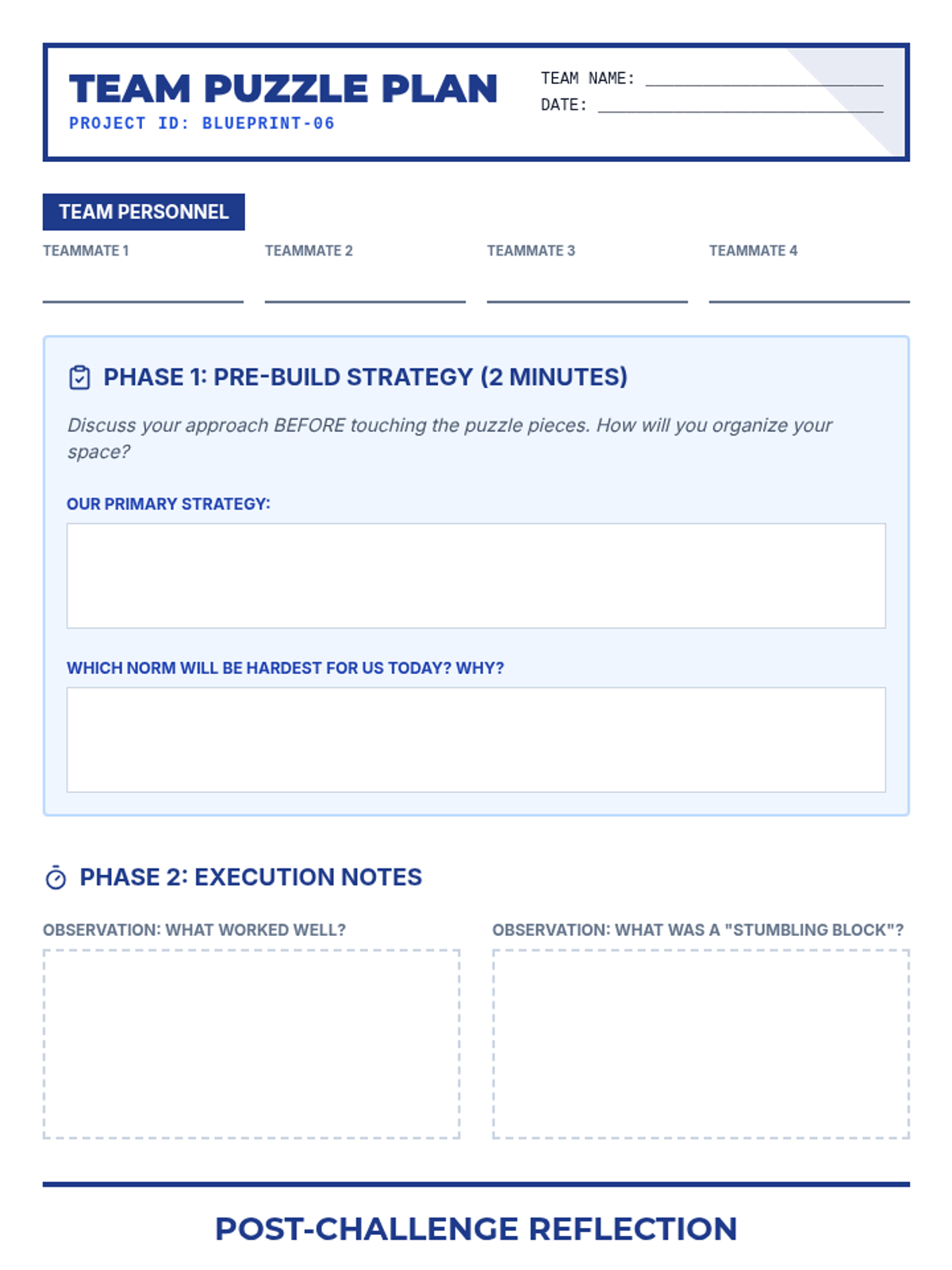
A structured planning and reflection guide for student teams. Includes sections for pre-task strategy, live observations, and a post-task evaluation of norms.
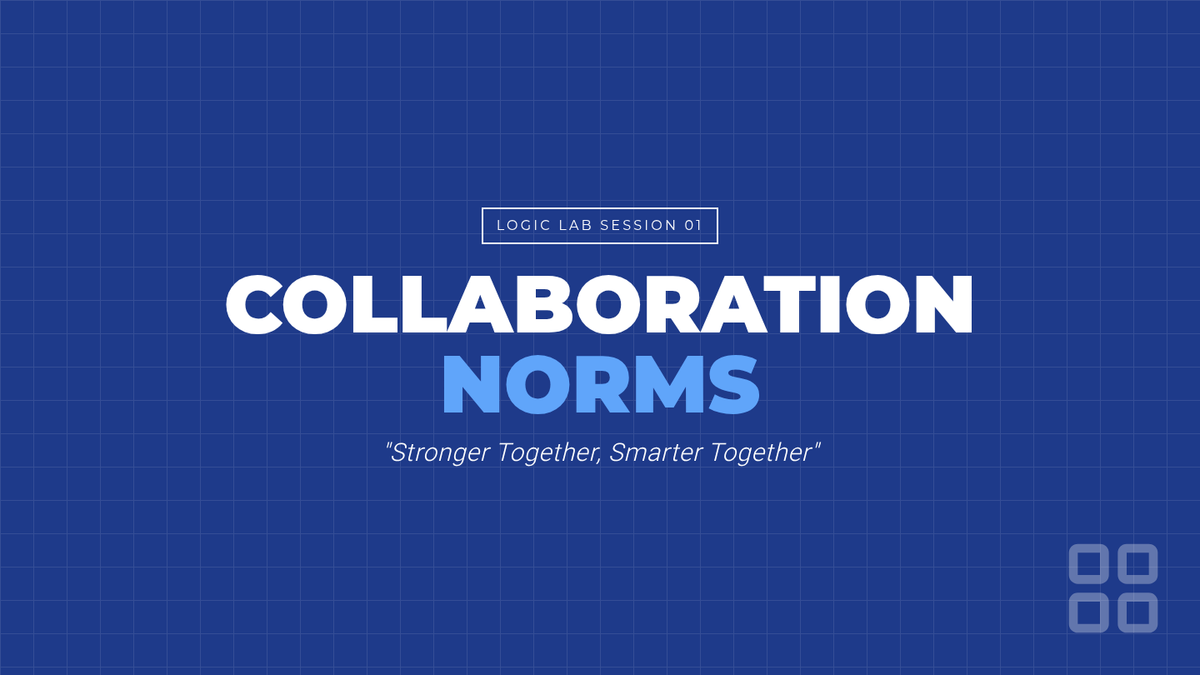
Visual presentation to introduce team norms, define expectations, and brief students on the puzzle challenge mission.
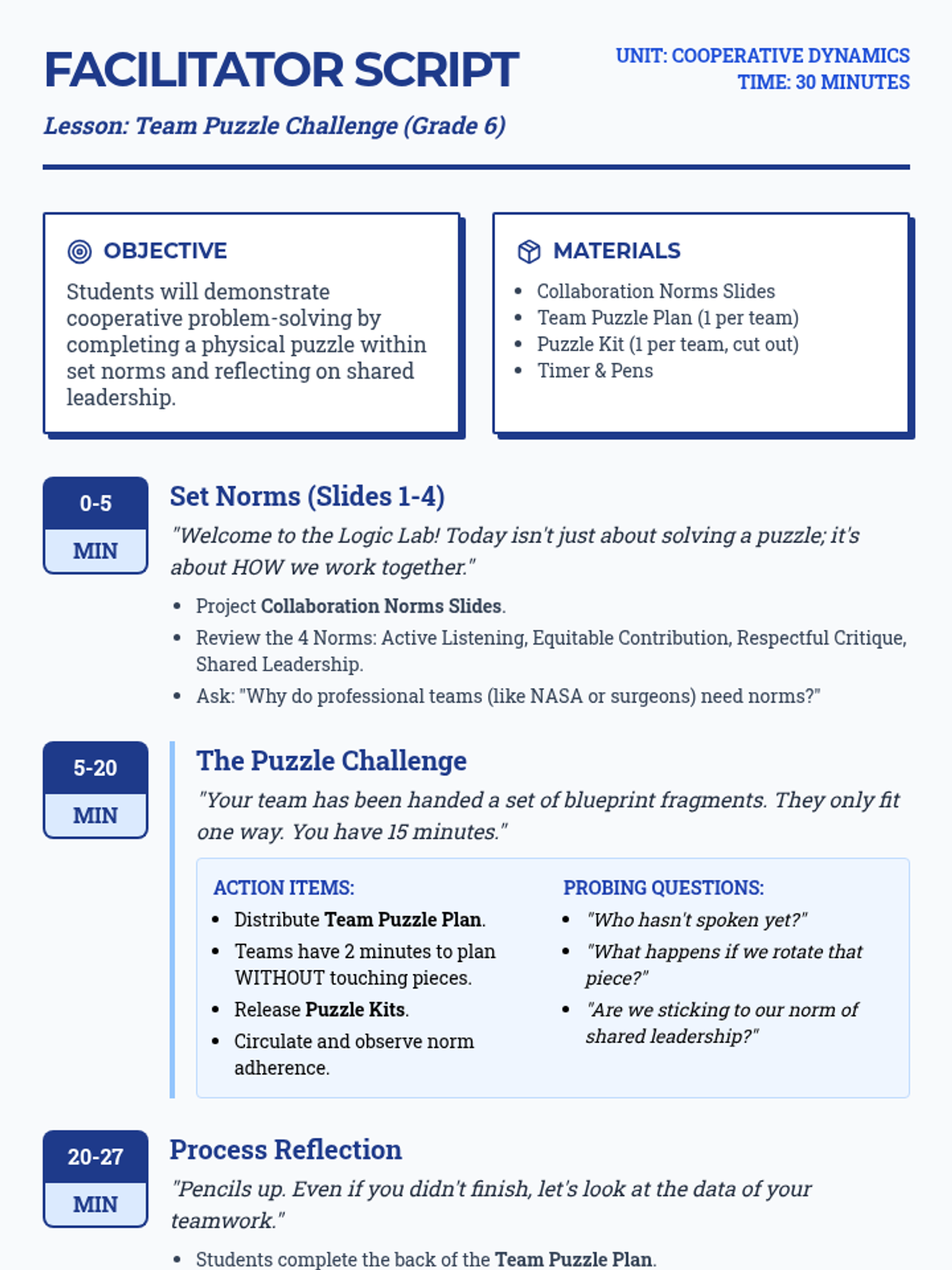
Detailed instructional guide for teachers to facilitate the Team Puzzle Challenge. Includes timing, scripts, and troubleshooting tips.
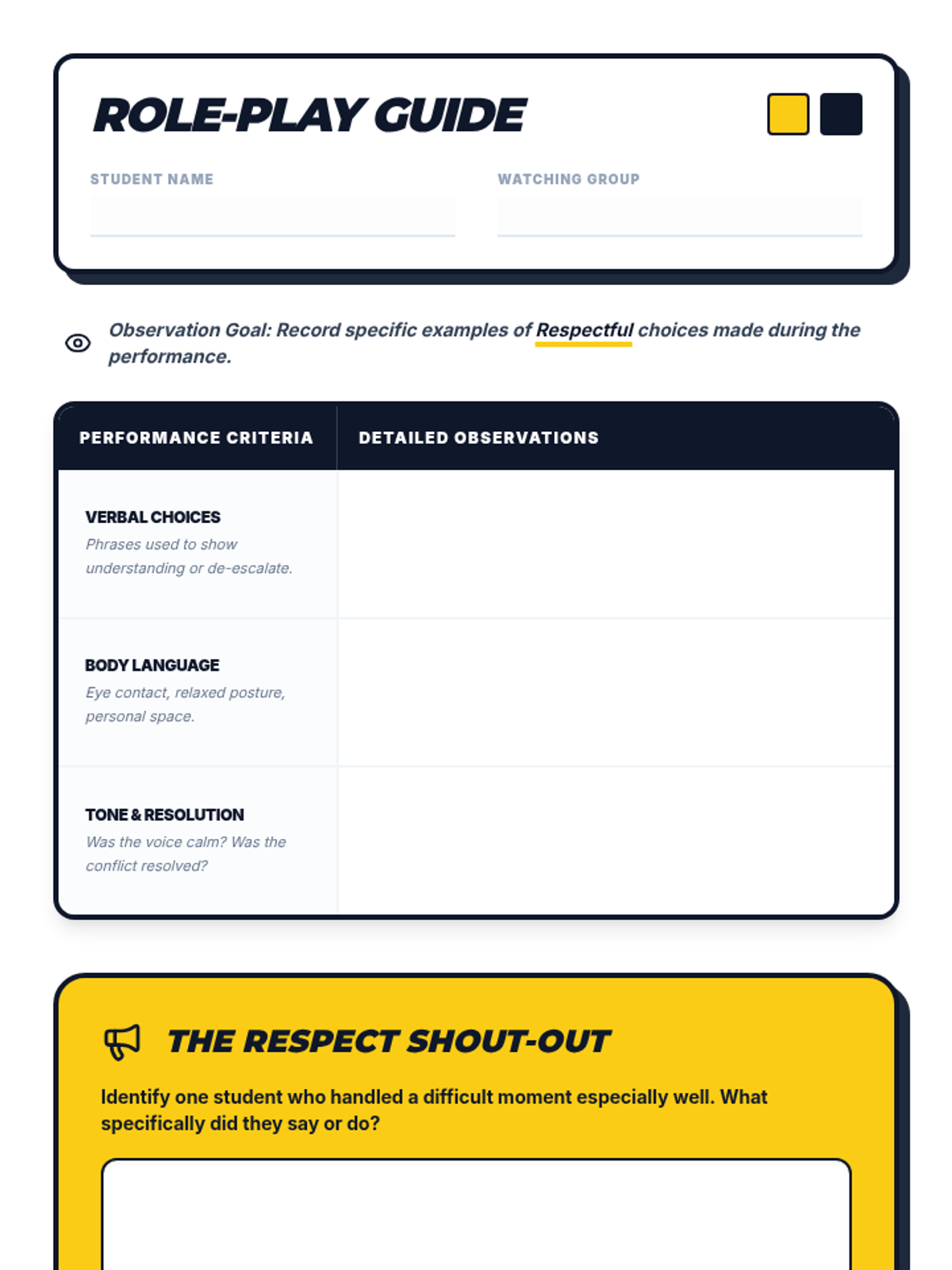
A peer-evaluation and observer guide for the 'Respect in Every Direction' lesson. It provides a rubric for students to assess role-play performances based on verbal choices, body language, tone, and conflict resolution.
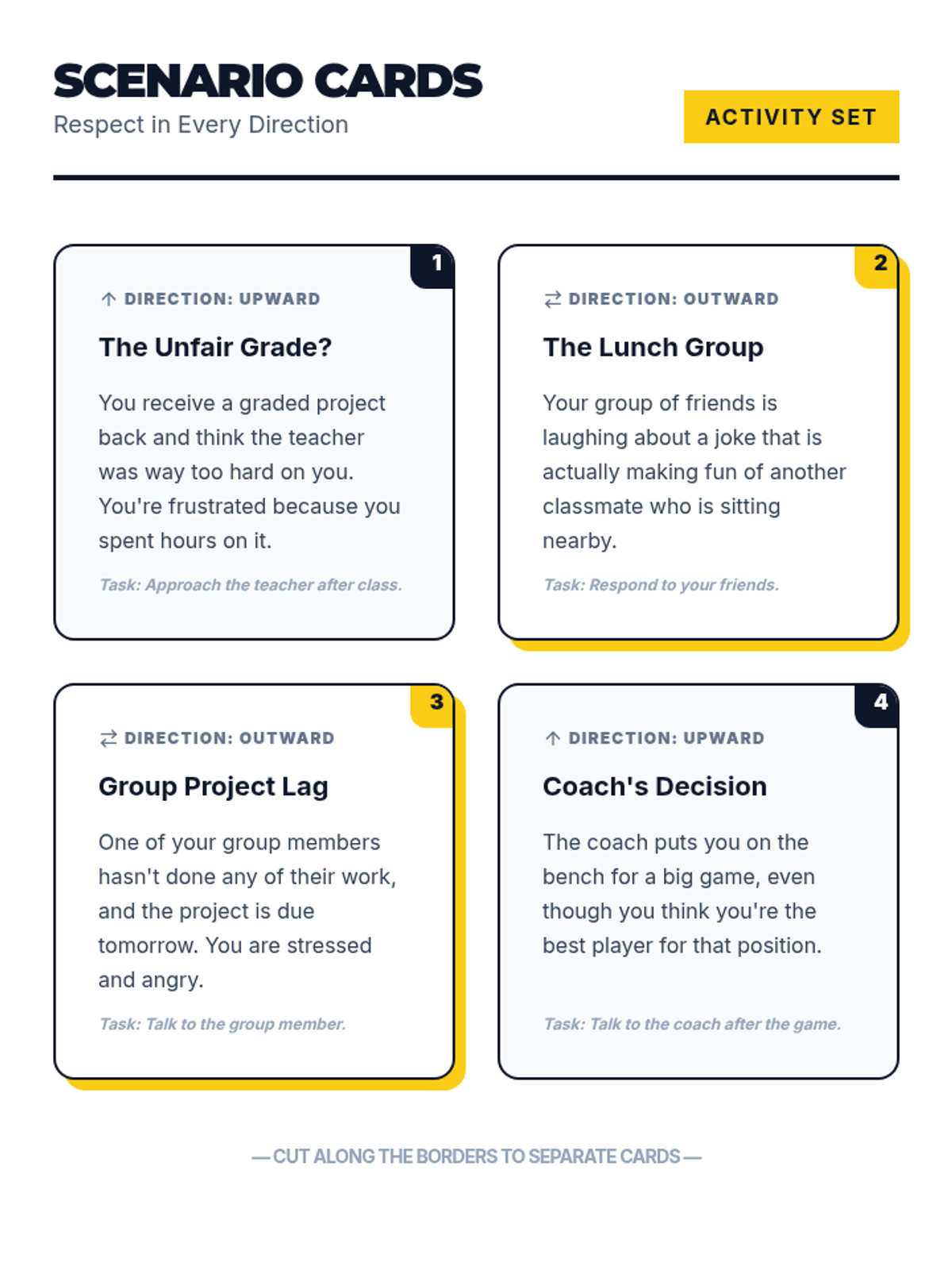
A set of scenario cards for classroom role-play. Each card presents a realistic middle-school conflict requiring a respectful response, categorized by 'Upward' (authority) or 'Outward' (peers) directions.
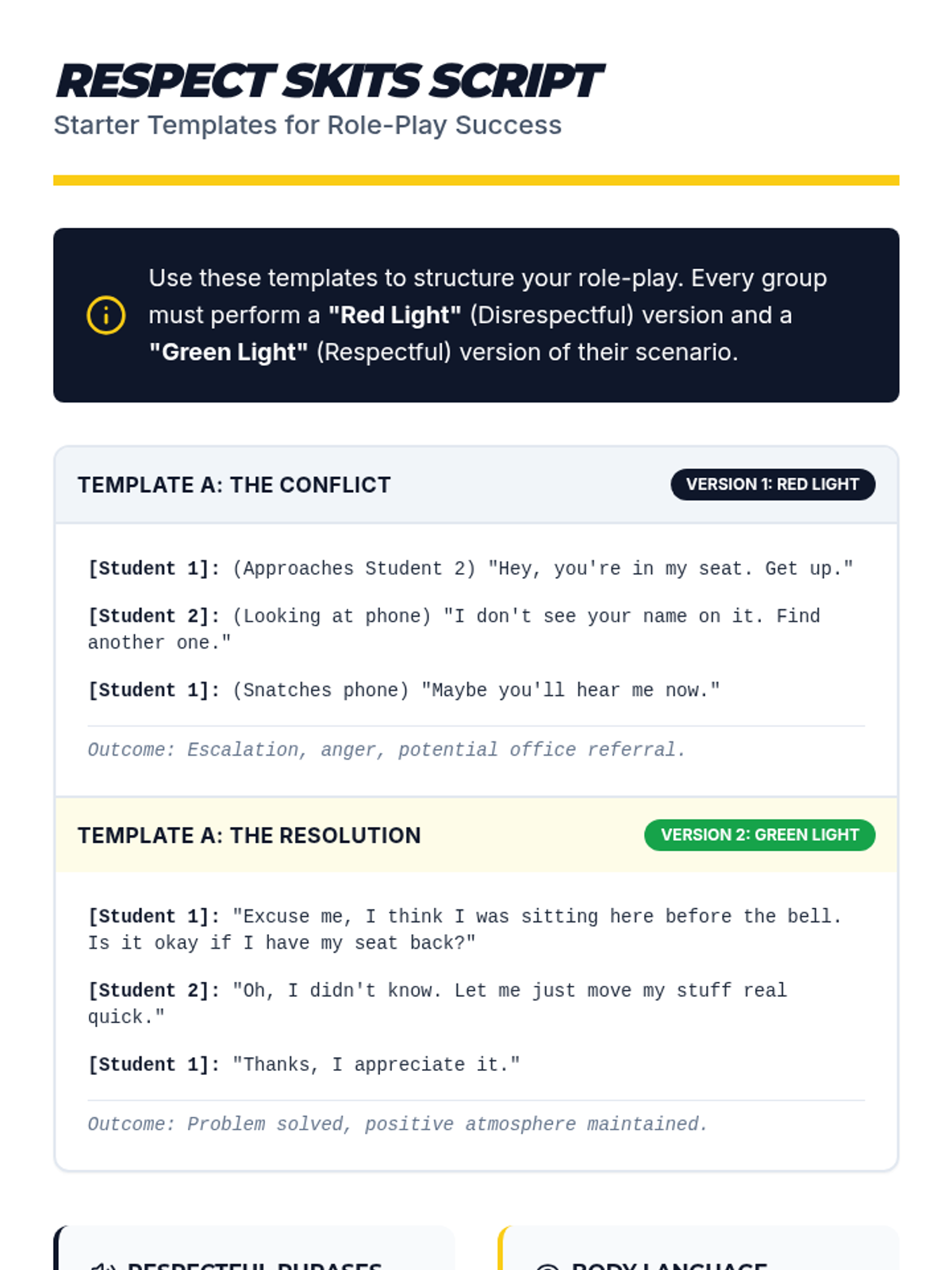
A script template and resource for students to use during role-play activities. It provides 'Red Light' (disrespectful) and 'Green Light' (respectful) examples, as well as a list of respectful phrases and body language tips.
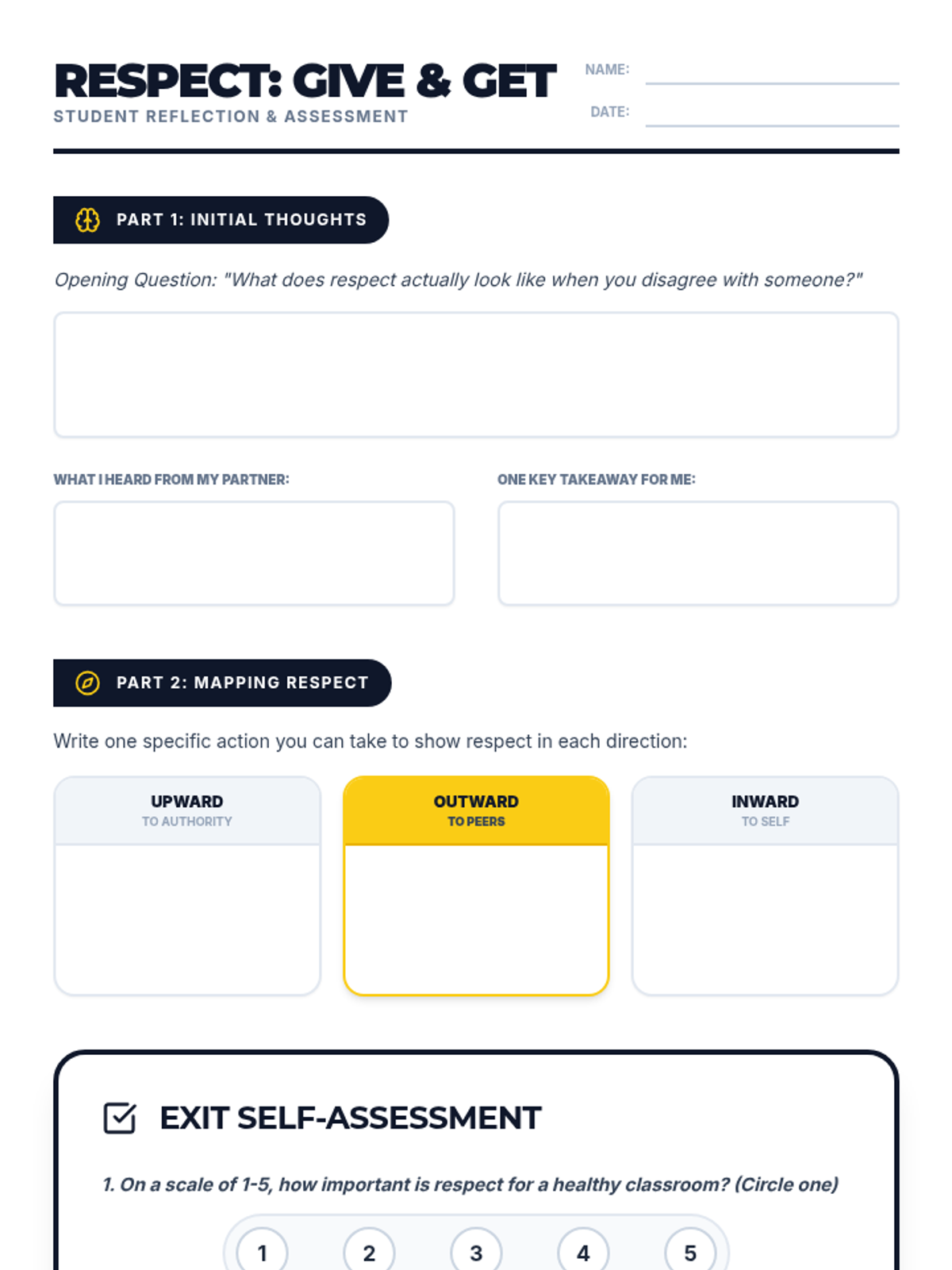
A student reflection worksheet for the 'Respect in Every Direction' lesson. It includes sections for initial think-pair-share notes, a mapping activity for different types of respect, and a concluding exit self-assessment.
A set of instructional slides for the 'Respect in Every Direction' lesson. It covers the think-pair-share opening, definitions of respect, and the concept of giving respect in different social directions (upward, outward, inward).
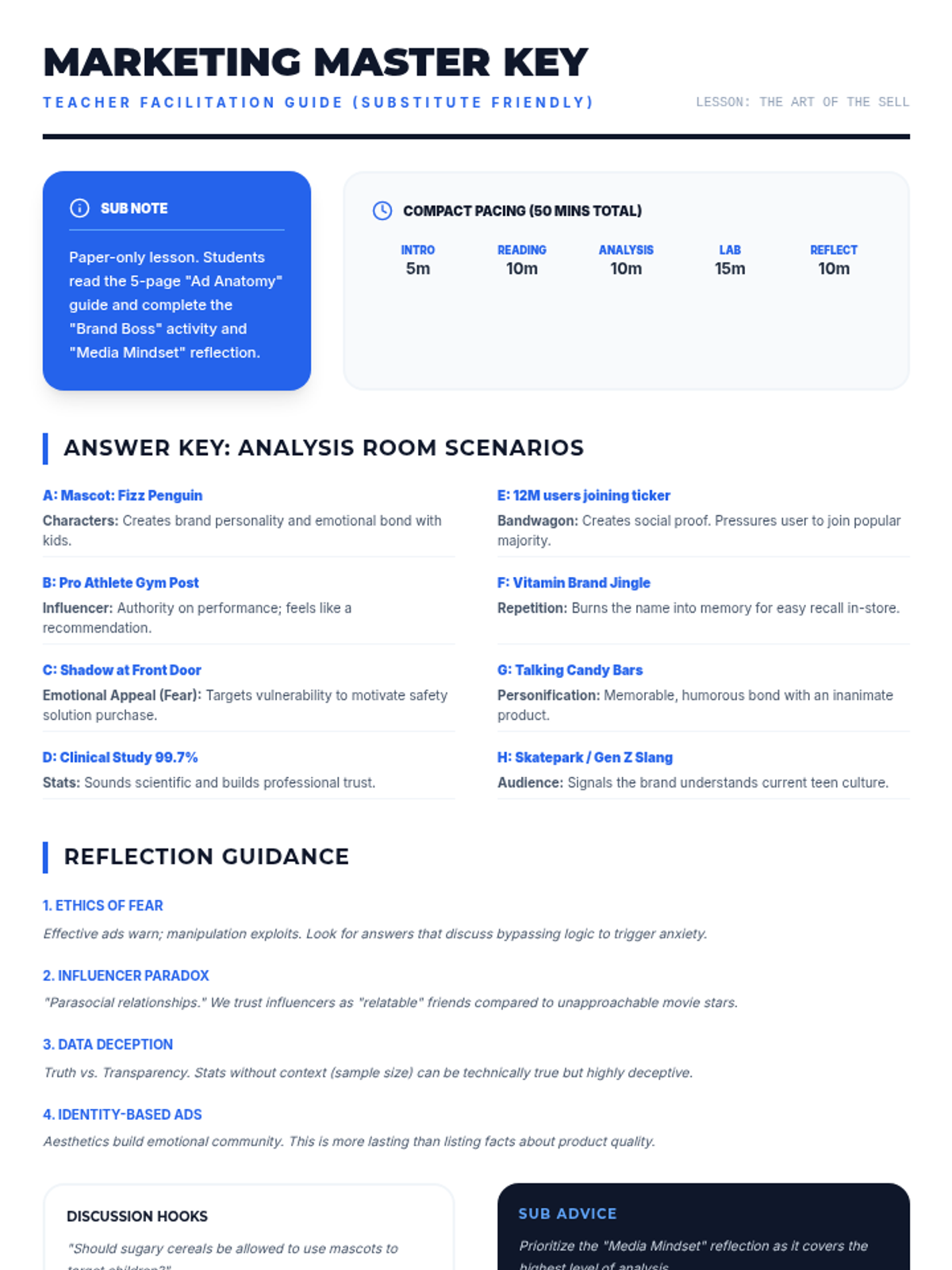
A sub-friendly teacher facilitation guide including a lesson pacing guide, detailed answer keys, reflection guidance, and classroom management tips.
A visual presentation introducing ten advertising techniques with bold graphics, key definitions, and real-world examples for a classroom setting.
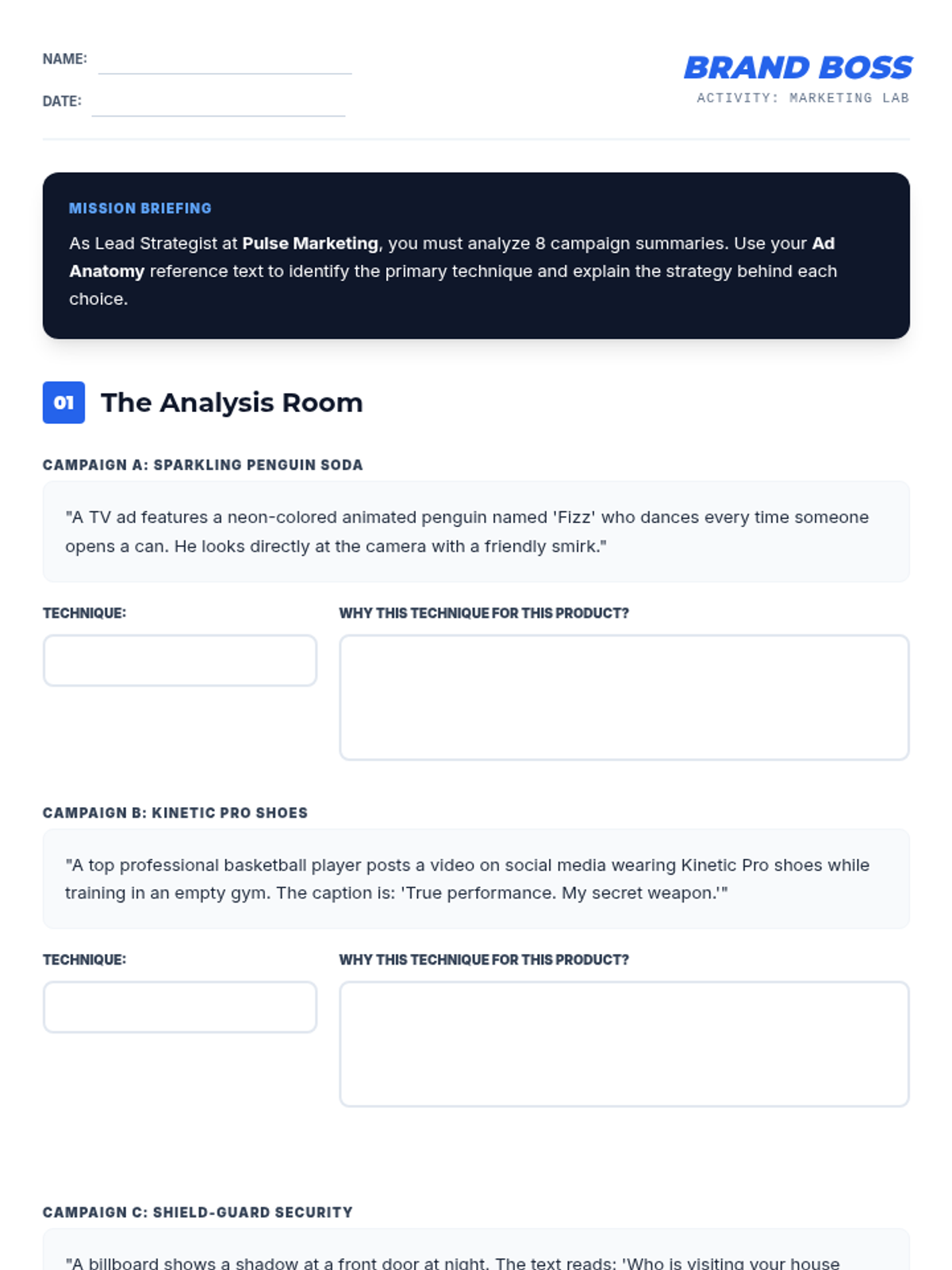
A four-part student activity involving a detailed eight-scenario analysis of advertising techniques and a creative project where students design an original ad campaign for a fictional product.
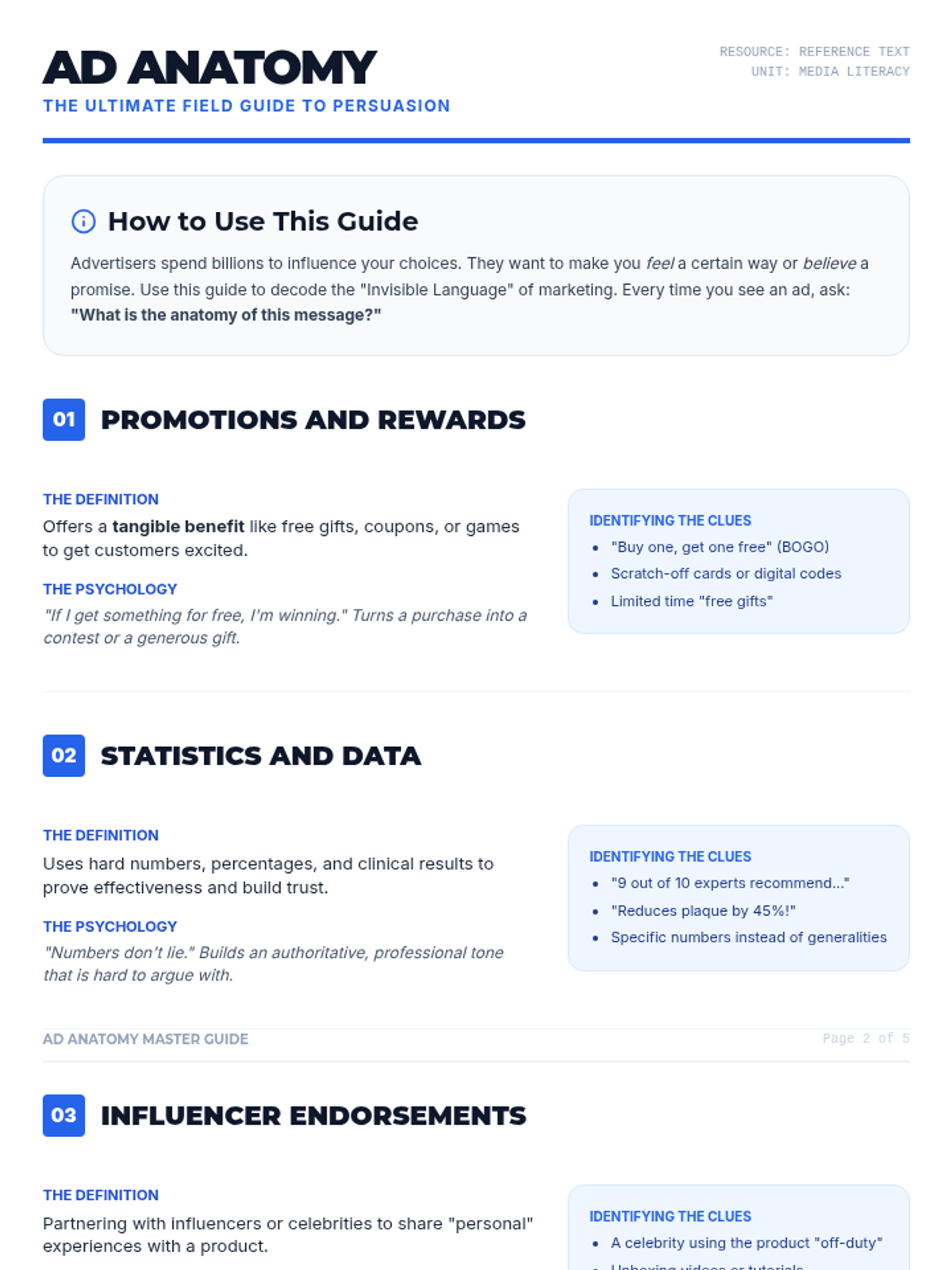
A detailed five-page master guide for 8th-grade students covering ten advertising techniques with definitions, psychological explanations, and identifying clues. Perfect for independent or sub-led instruction.
A high-contrast minimalist slide deck featuring a custom-recreated white line-art icon of a student writing at a desk on a solid black background. Ideal for independent work sessions and focus time in the classroom.
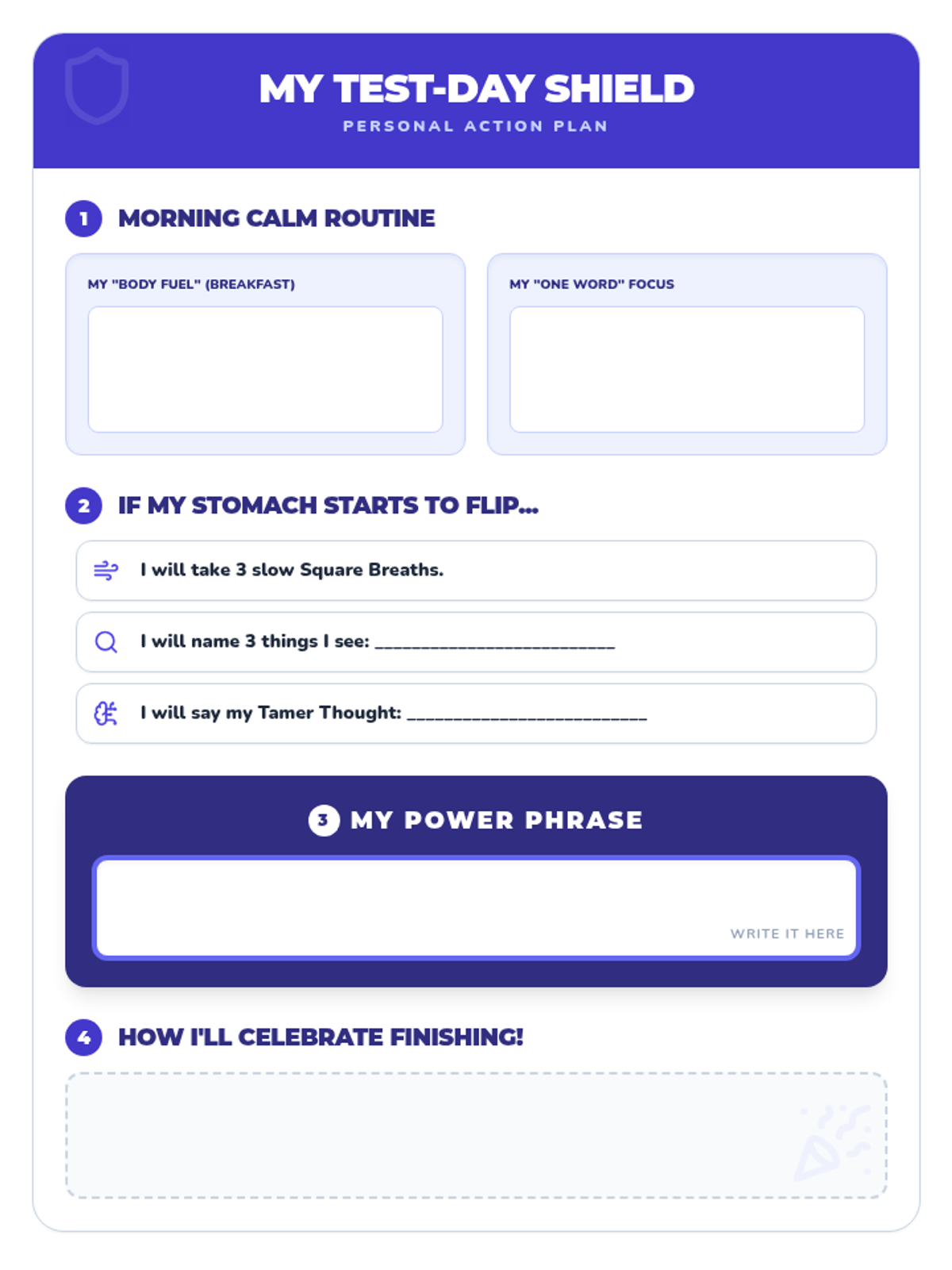
A summary action plan for students to keep in their folders or on their desks, outlining their specific routine and coping strategies for test days.
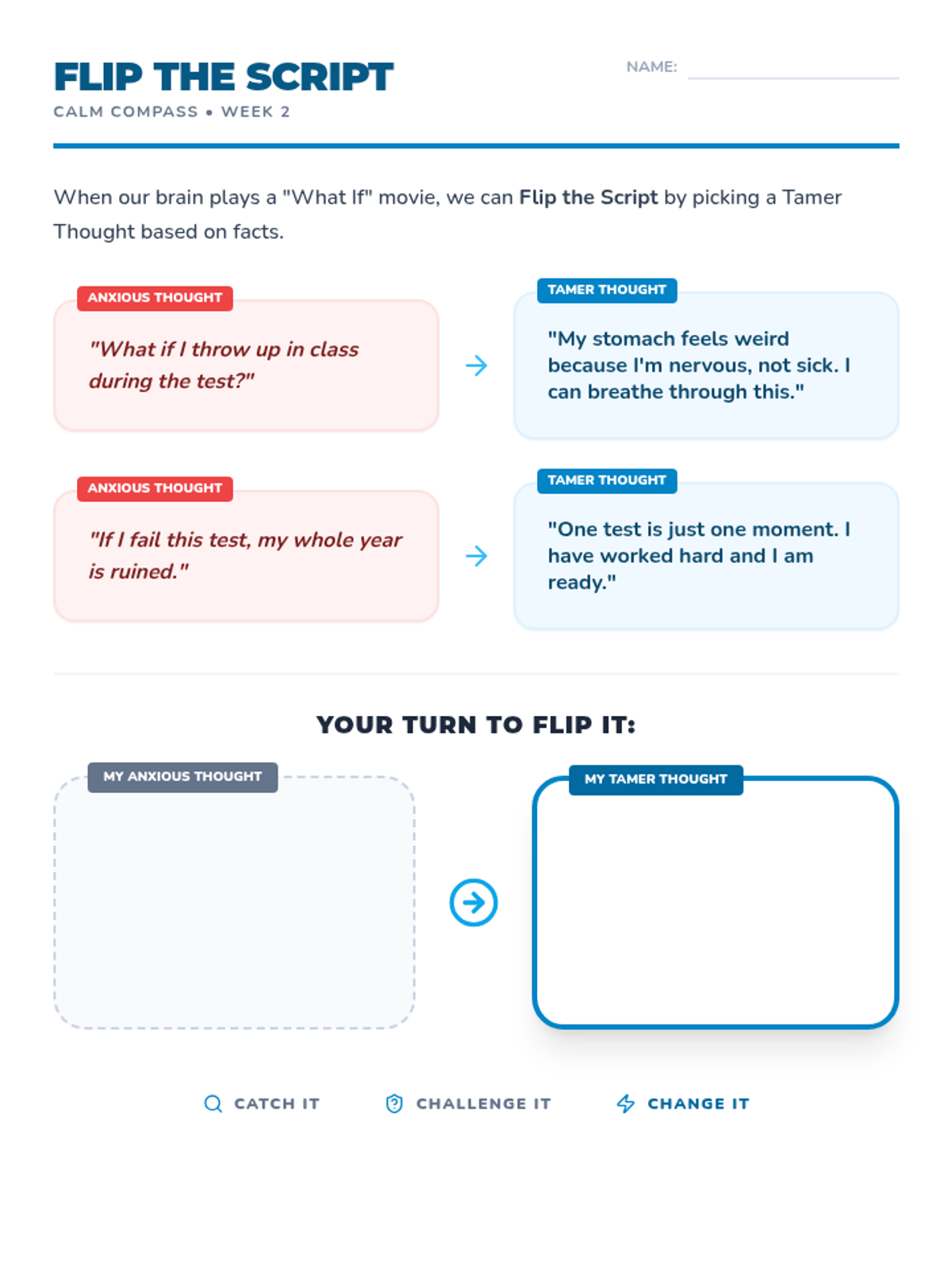
An activity sheet for cognitive reframing, helping students identify anxious 'what if' thoughts and replace them with helpful, evidence-based thoughts.
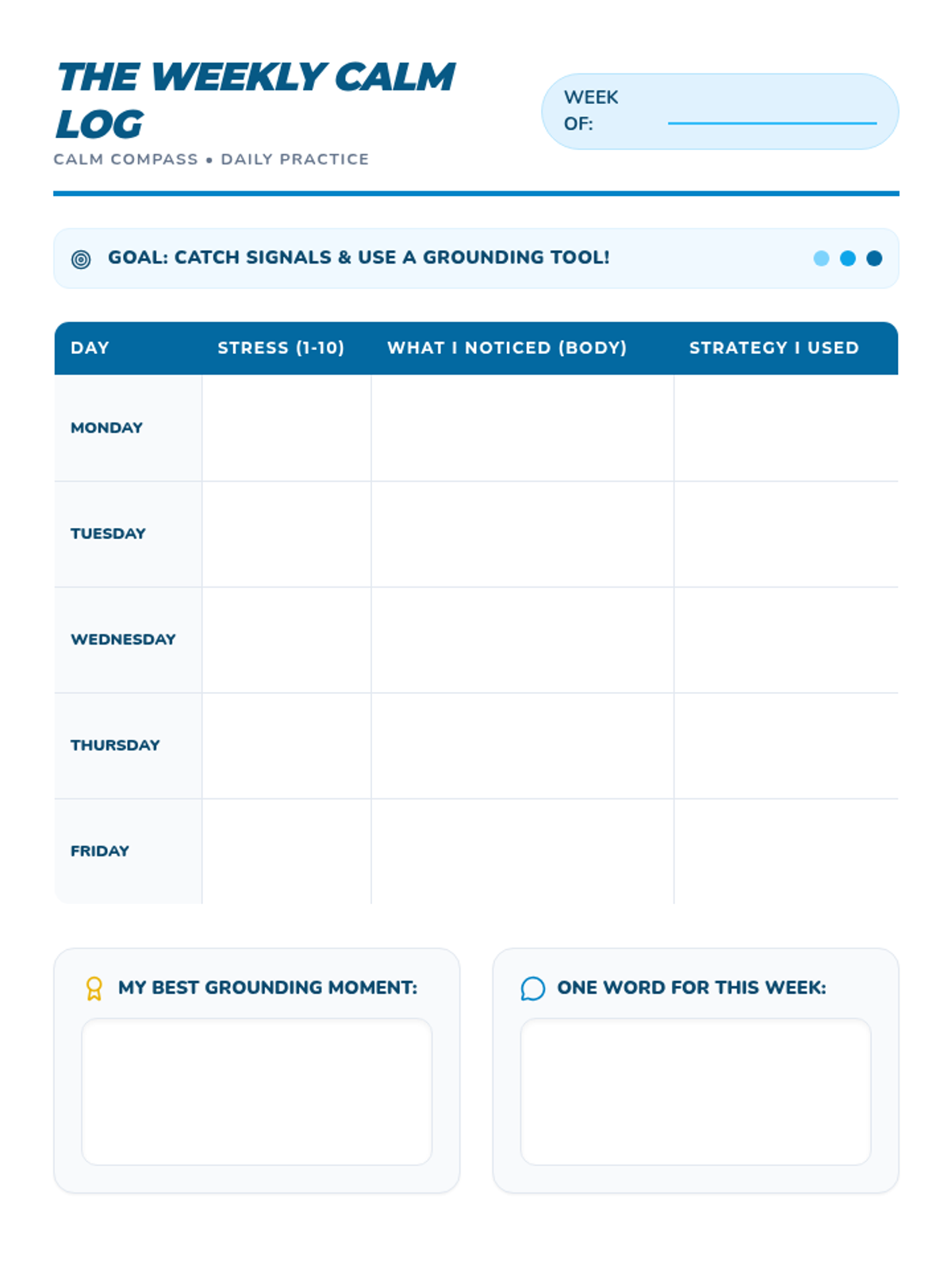
A weekly check-in log for students to track their anxiety levels, physical symptoms, and the coping strategies they utilized throughout the week.
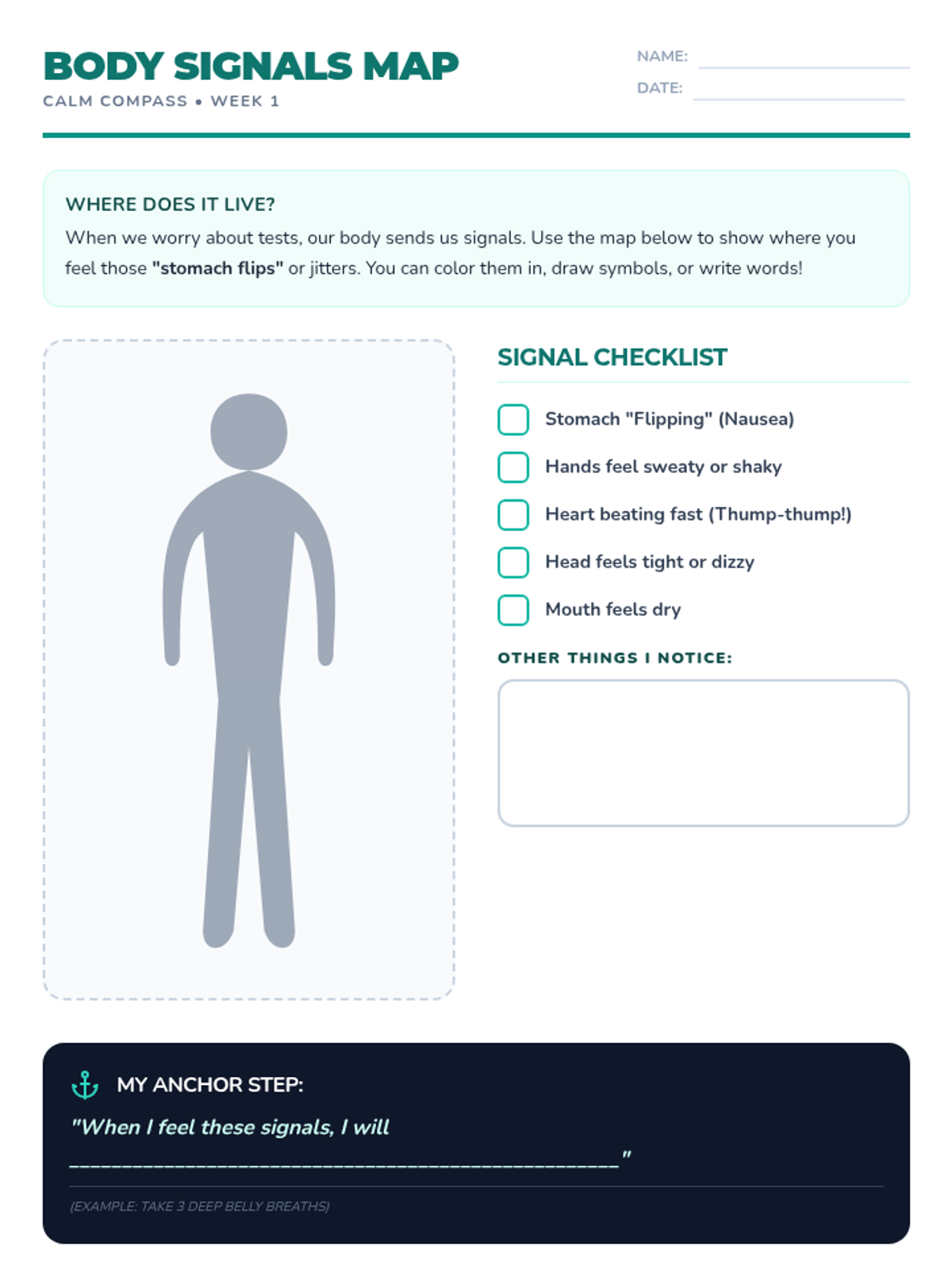
A printable worksheet featuring a body map for students to identify and visualize where they feel physical symptoms of anxiety.
A visual presentation to help students understand the physical mechanics of anxiety (the 'fire alarm' response) and learn the 5-4-3-2-1 grounding technique.
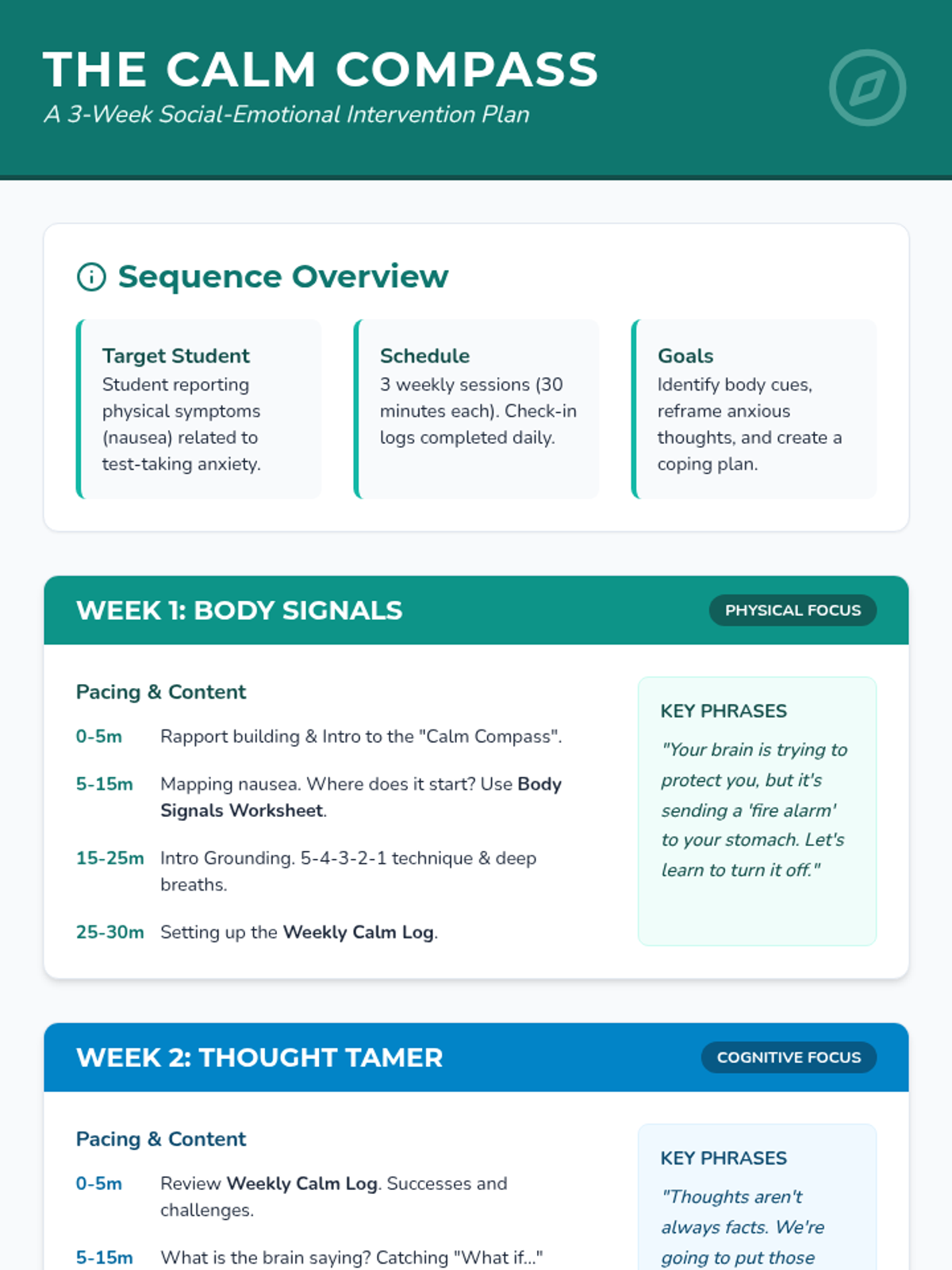
A detailed 3-week facilitator guide for a school social worker to implement a test anxiety intervention sequence. It includes session pacing, key talking points, and a materials checklist.
An instructional presentation for students on executive function skills. Covers the 1-2-3 Rule for prioritization, time estimation hacks (the buffer rule), and strategic environment mapping (school vs. home) using a high-impact mission-control aesthetic.
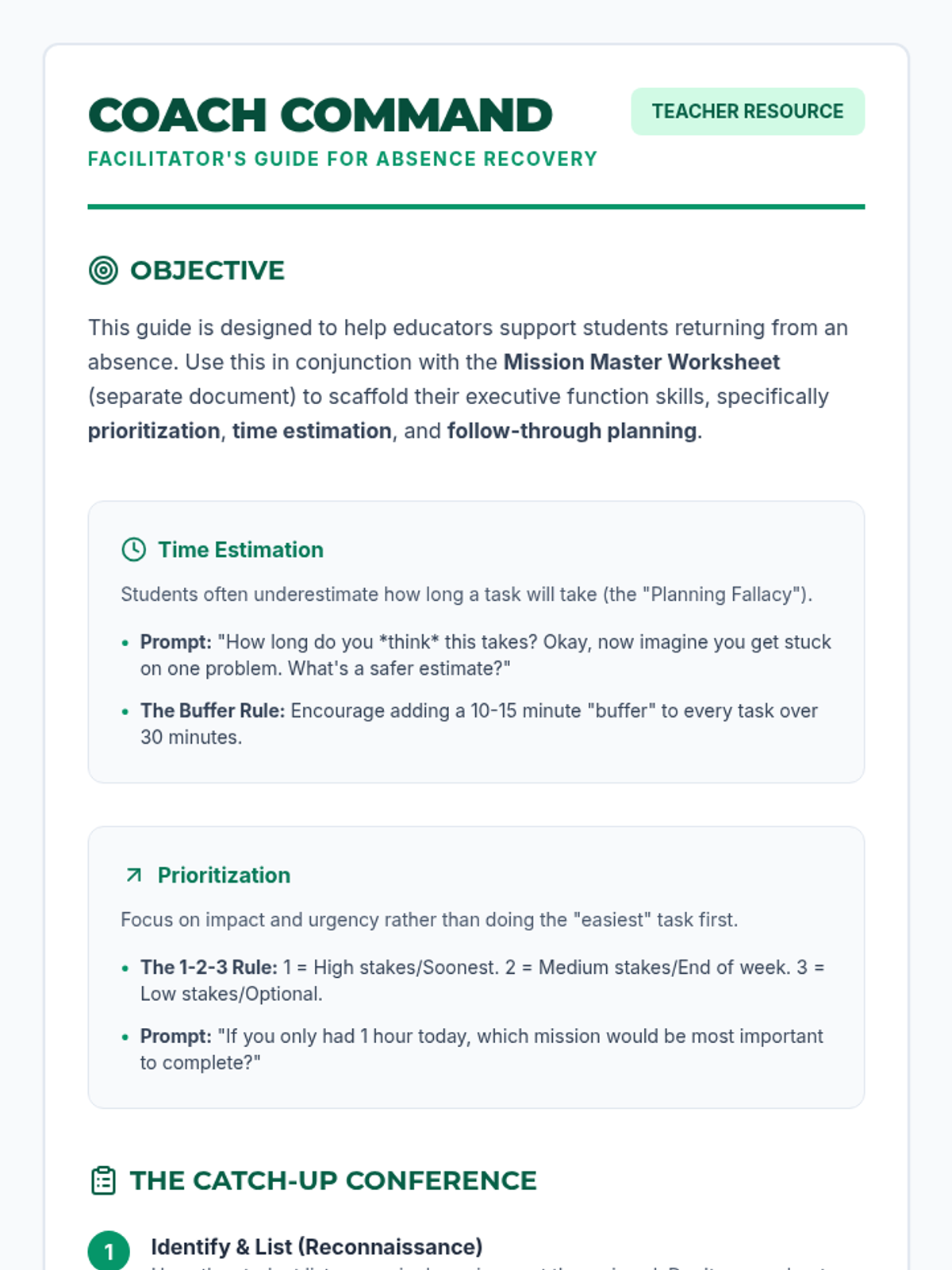
A teacher-facing guide to facilitate an absence-recovery conference. Provides specific coaching prompts for time estimation, prioritization techniques, and a step-by-step facilitation framework for supporting executive function skills.
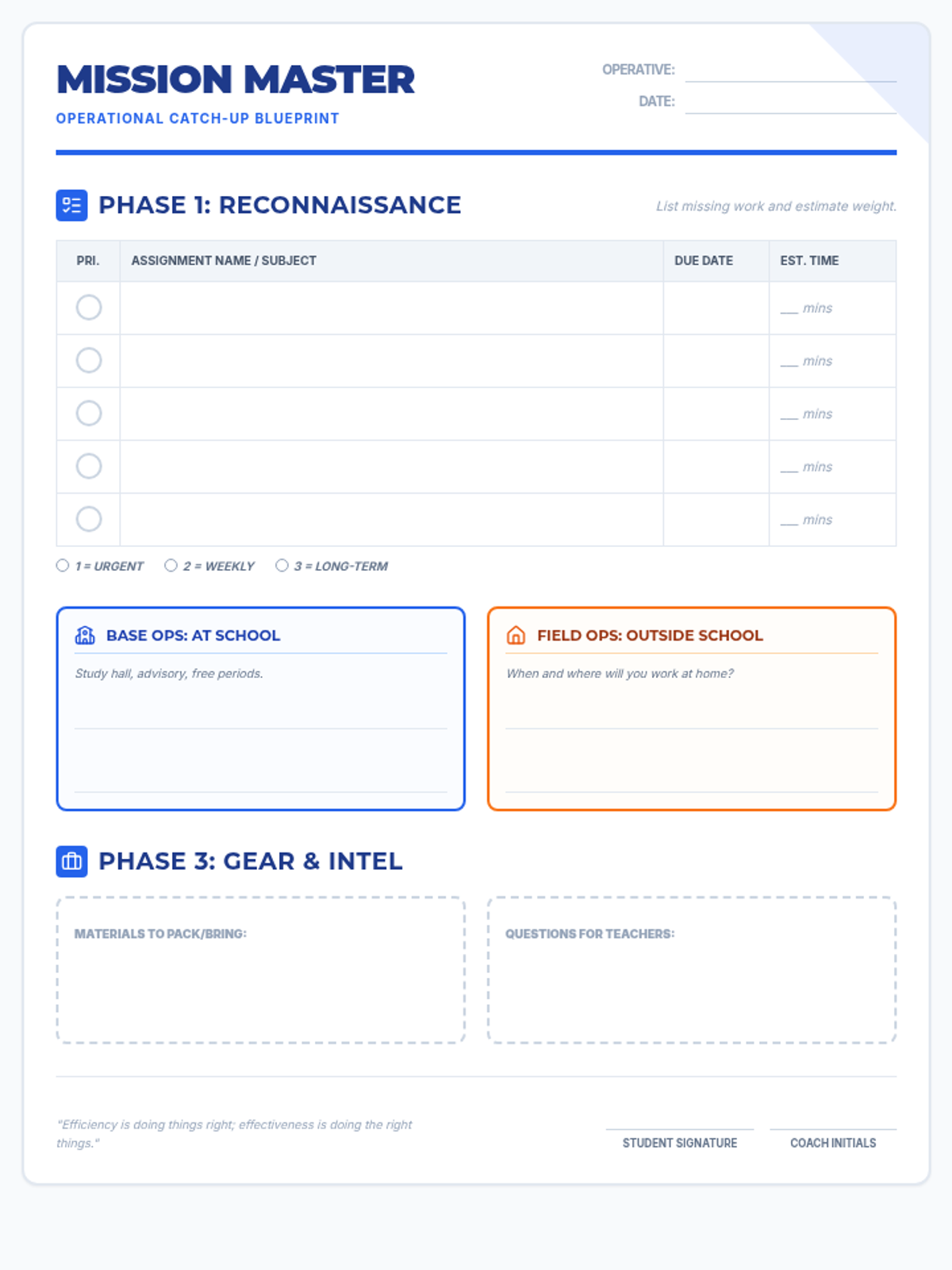
A structured student-facing planning tool for managing missing work after an absence. Includes sections for task prioritization, time estimation, and school vs. home action planning with a professional mission-control aesthetic.
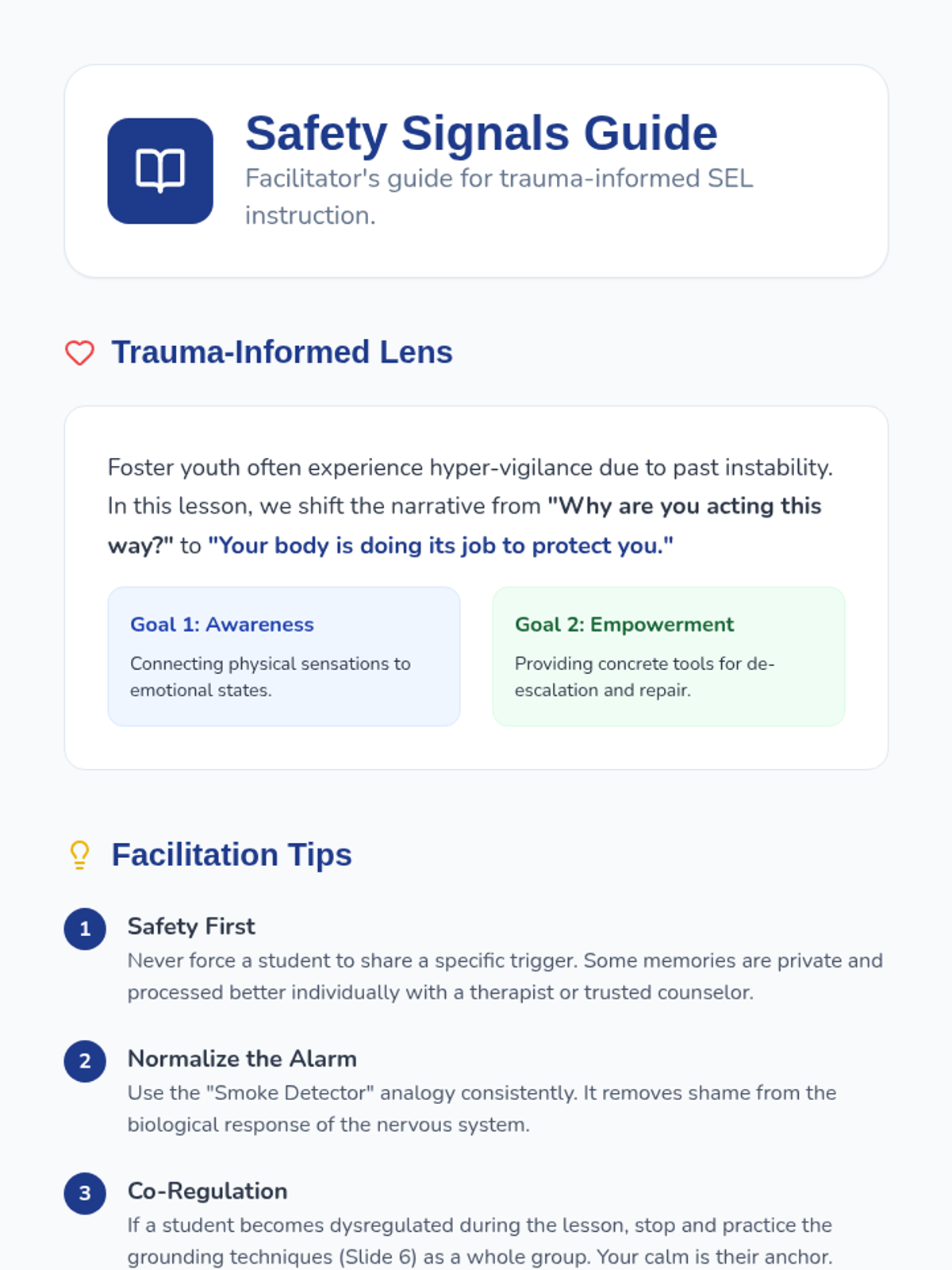
A comprehensive teacher's guide providing trauma-informed facilitation strategies, discussion prompts, and co-regulation techniques to support students during the Safety Signals lesson.