An answer key for teachers to use when grading or facilitating the Fact or Opinion Detective activities.
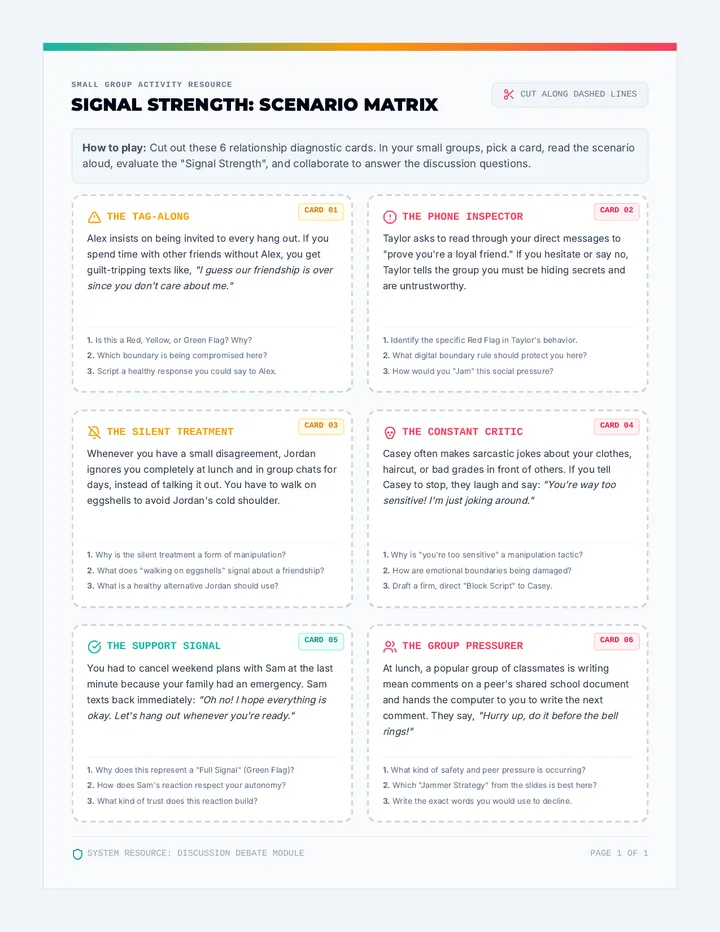
Print-ready small group scenario debate cards. Features 6 detailed scenarios designed to guide middle schoolers through peer pressure, boundary calibration, and red/yellow flag diagnostics.
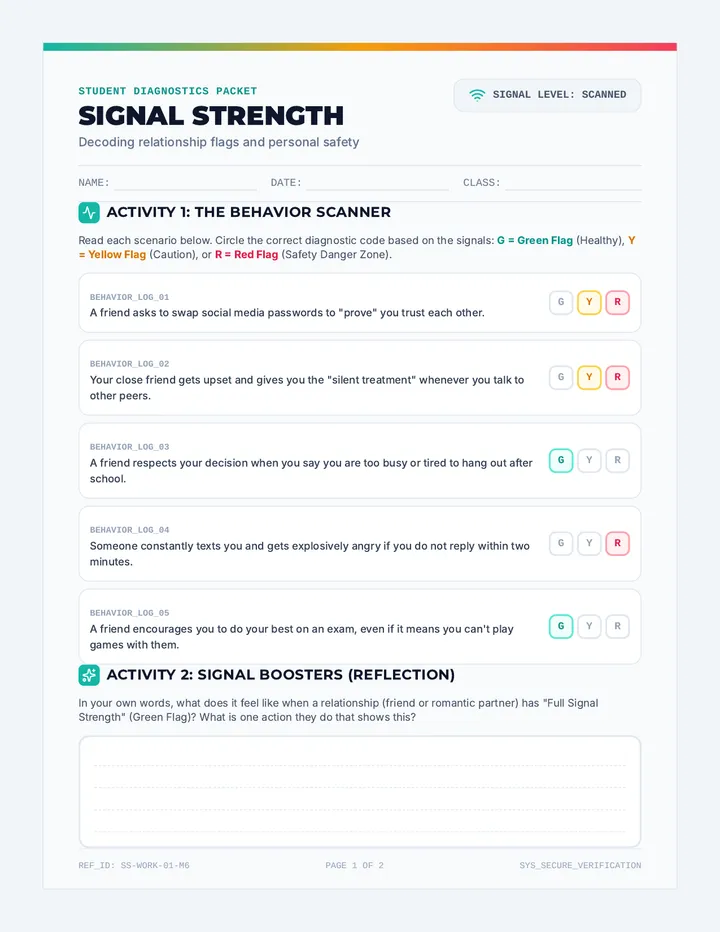
A 2-page print-ready interactive student worksheet packet for self-assessment, boundary mapping, and scripting refusal skills. Uses the cohesive digital/tech theme.
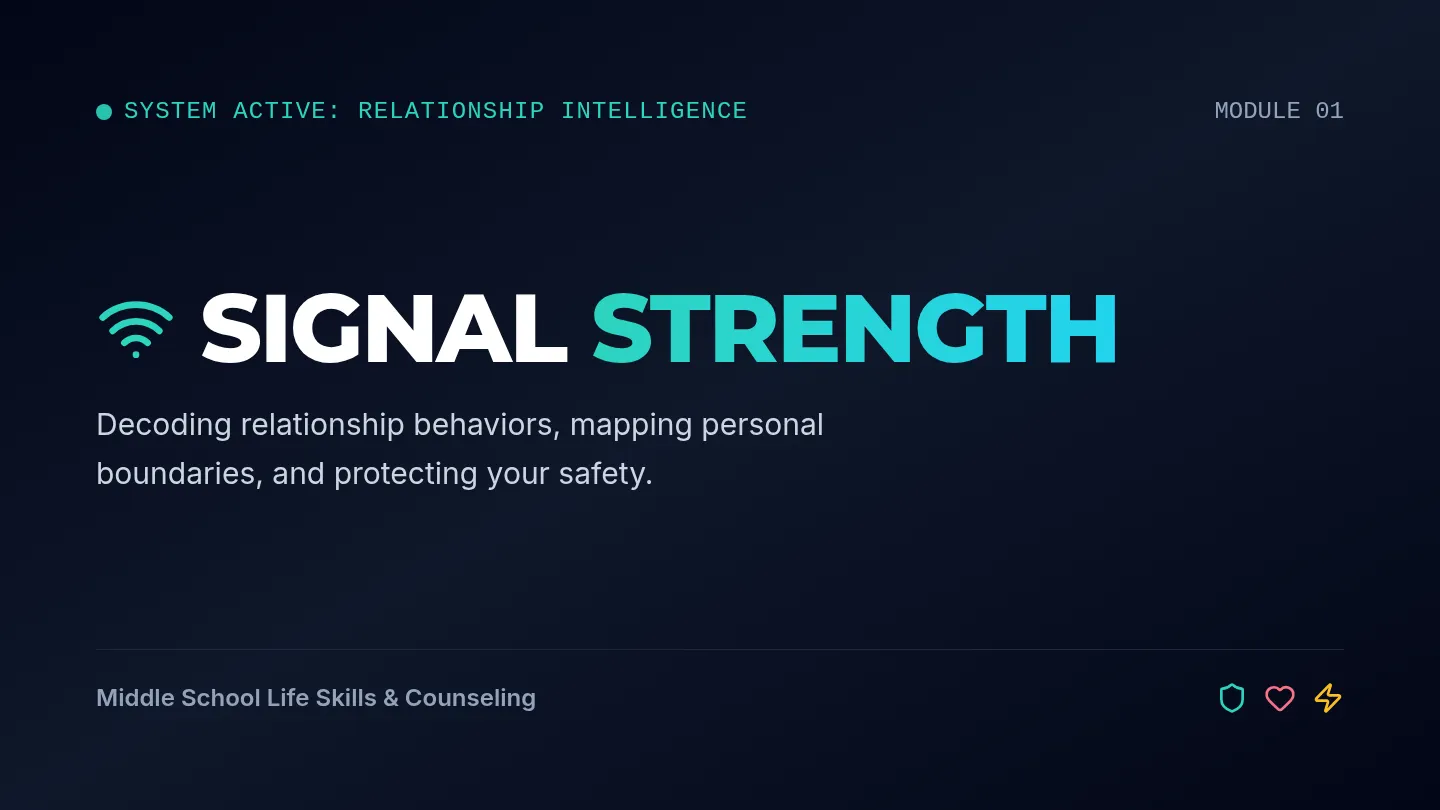
An engaging, modern slide presentation for middle schoolers to introduce relationship green, yellow, and red flags, boundaries, and safety strategies. Uses a tech/signal theme.
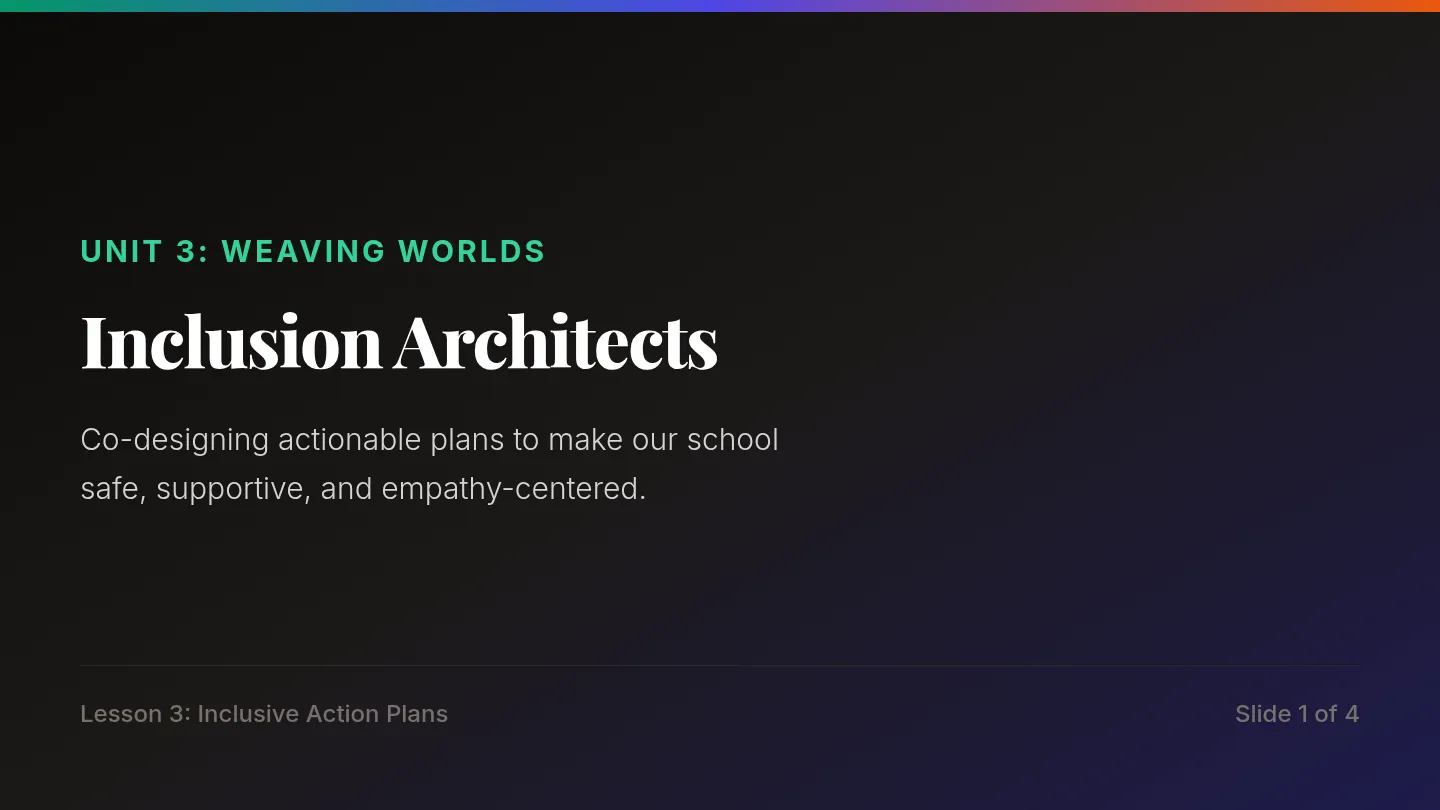
A 4-slide presentation for Lesson 3, explaining the campaign design project guidelines, campaign pathways, and presentation instructions.
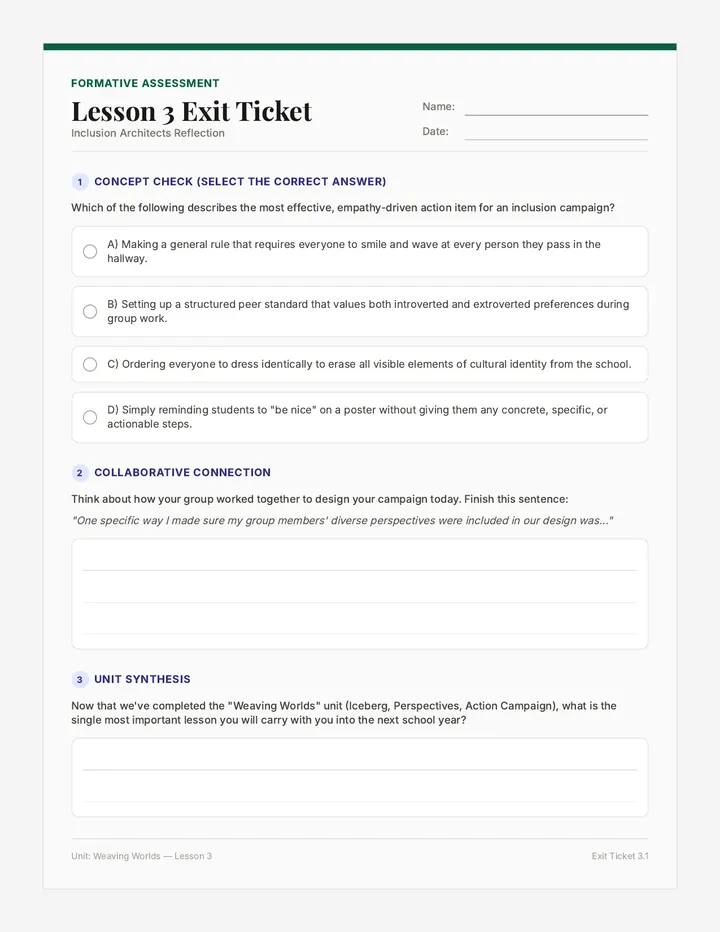
A quick daily exit ticket assessment for Lesson 3, checking students' understanding of the campaign design and reflecting on their key takeaways from the unit.
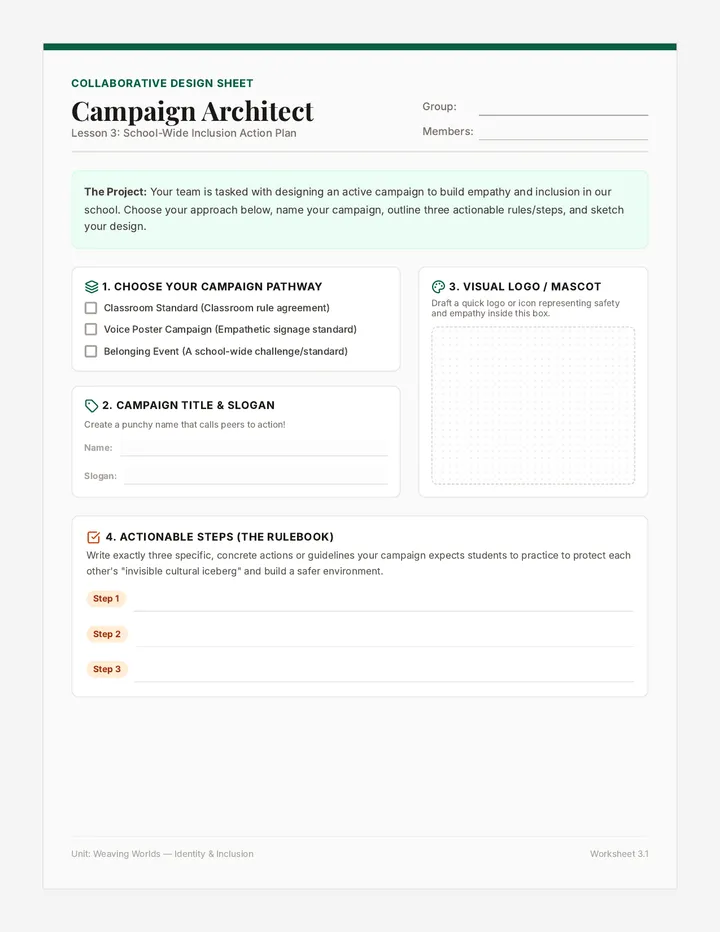
An interactive student campaign design worksheet for Lesson 3, guiding student teams to outline a campaign name, target audience, core inclusion goal, actionable steps, and a visual logo sketch.
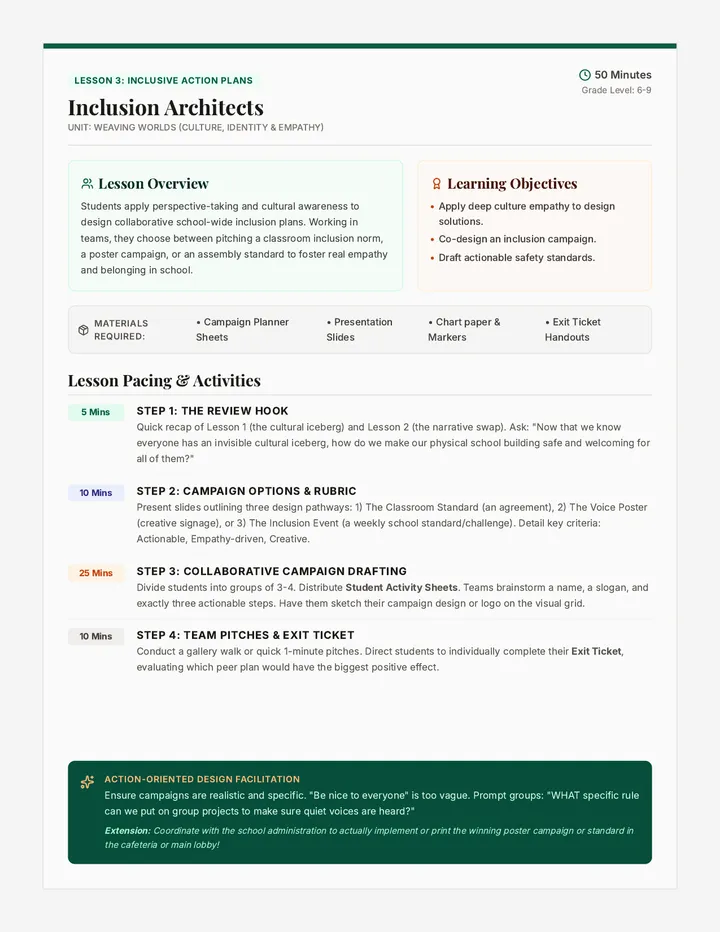
A comprehensive teacher guide for Lesson 3, outlining pacing, project criteria, student campaign options, and instructions for group presentations.
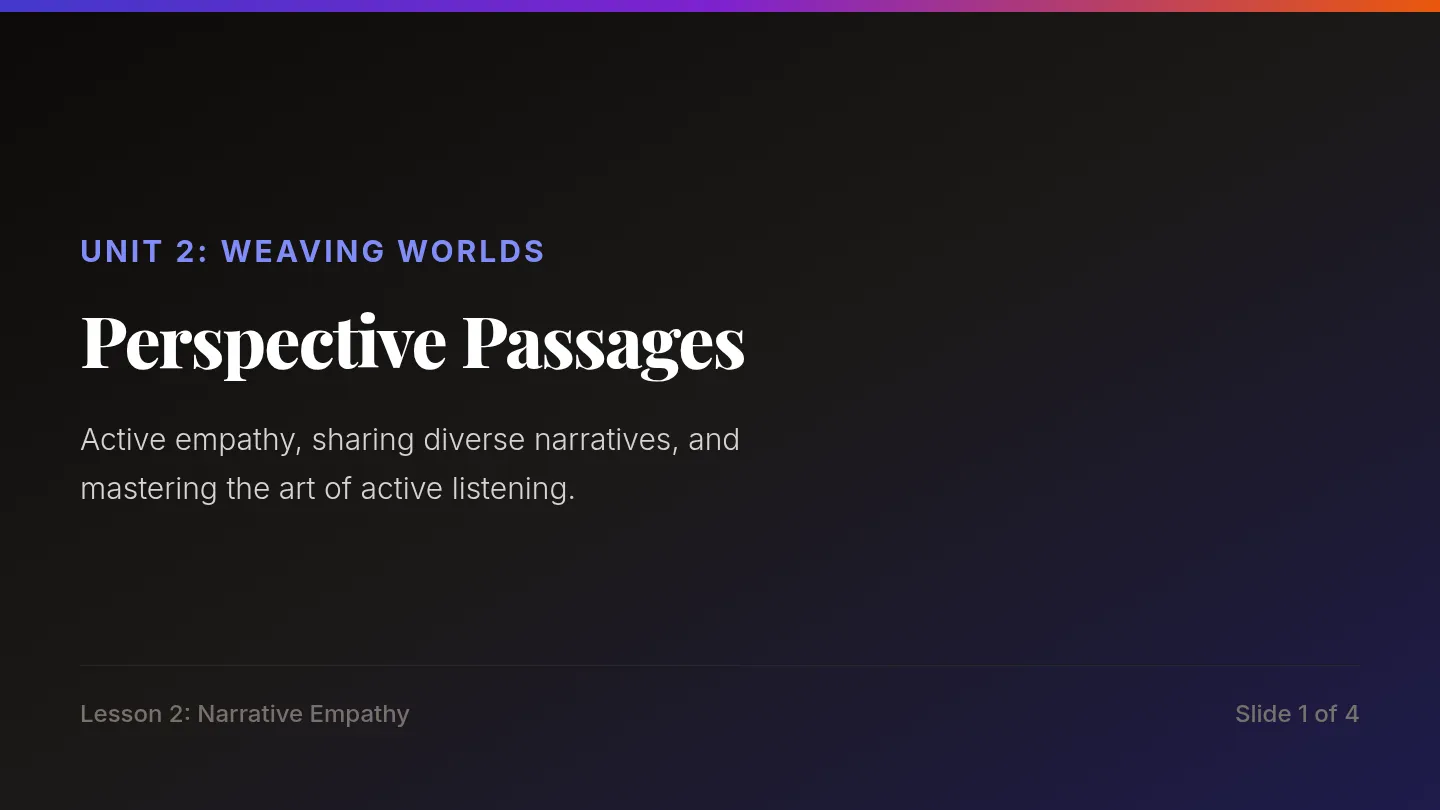
A 4-slide presentation for Lesson 2, outlining the dual hallway perspective scenario and teaching active listening rules for the student narrative swap.
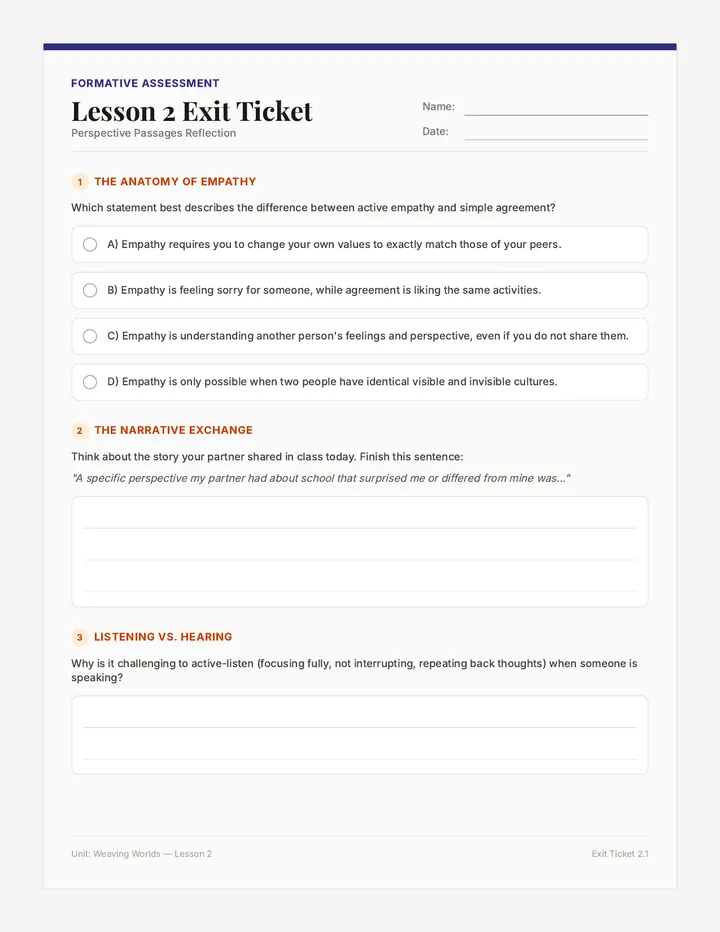
A quick daily exit ticket assessment for Lesson 2, checking students' understanding of perspective-taking and active listening.
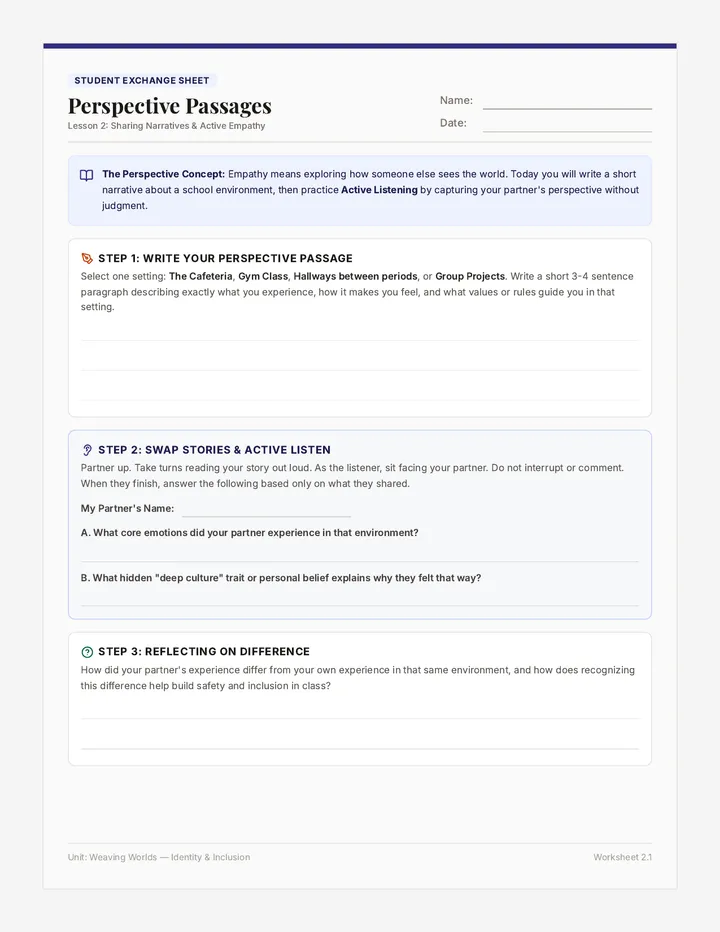
An interactive student worksheet for Lesson 2, guiding students to write a short personal perspective narrative, swap with a classmate, and practice active listening questions.
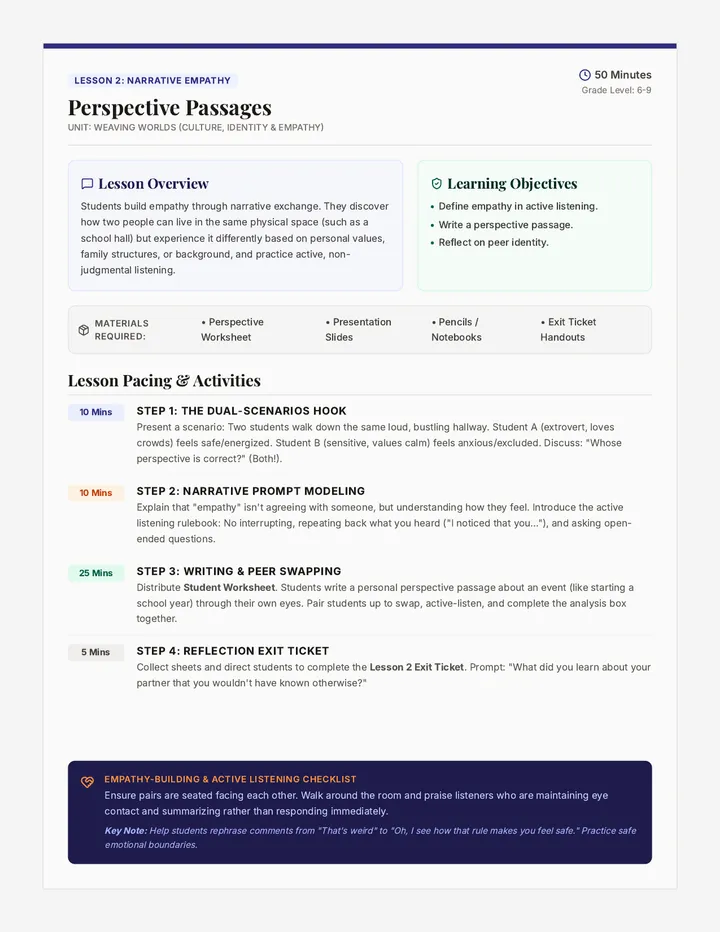
A comprehensive teacher guide for Lesson 2, outlining session pacing, discussion questions, objectives, and active listening rules for the student narrative exchange.
A 4-slide presentation for Lesson 1, introducing the concept of the cultural iceberg and explaining the difference between surface and deep culture.
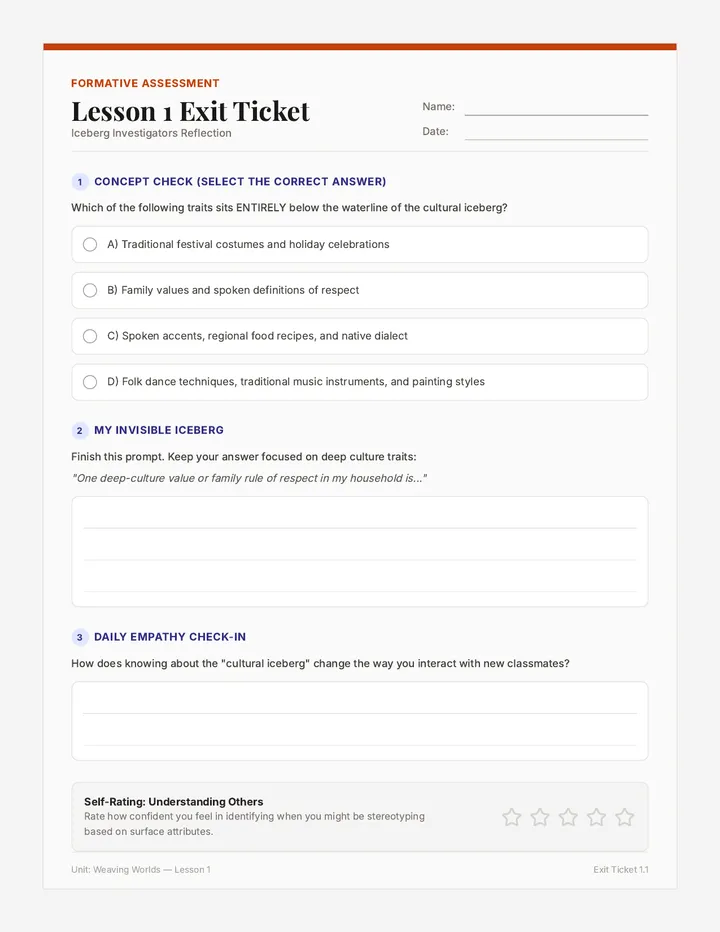
A quick daily exit ticket assessment for Lesson 1, checking students' understanding of the cultural iceberg and encouraging self-reflection.
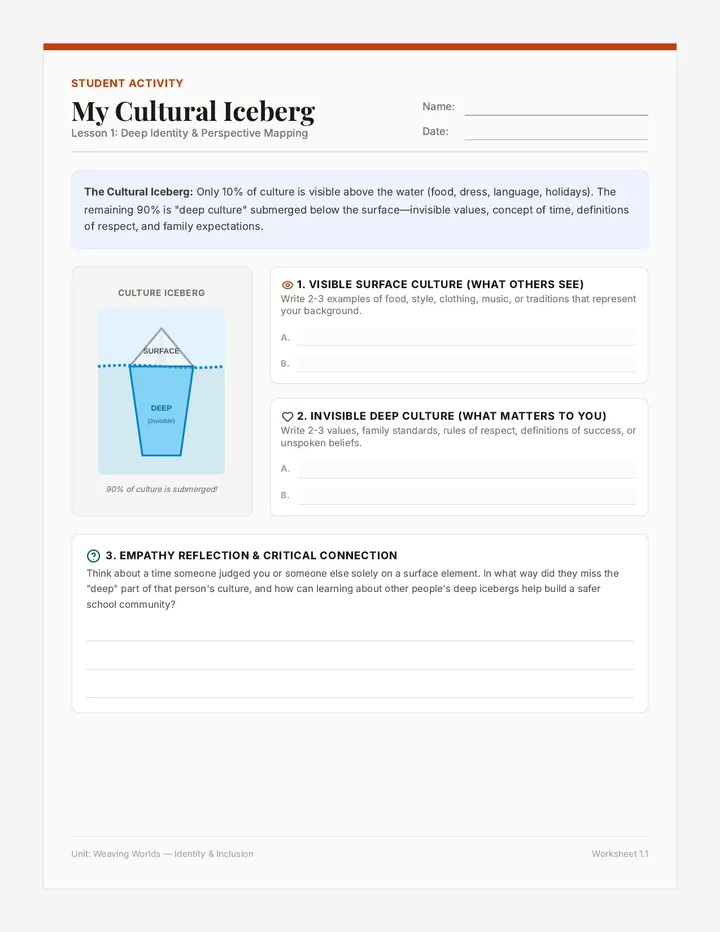
An interactive student worksheet for Lesson 1, guiding students to analyze surface versus deep culture and map their own multi-layered identities on a cultural iceberg graphic.
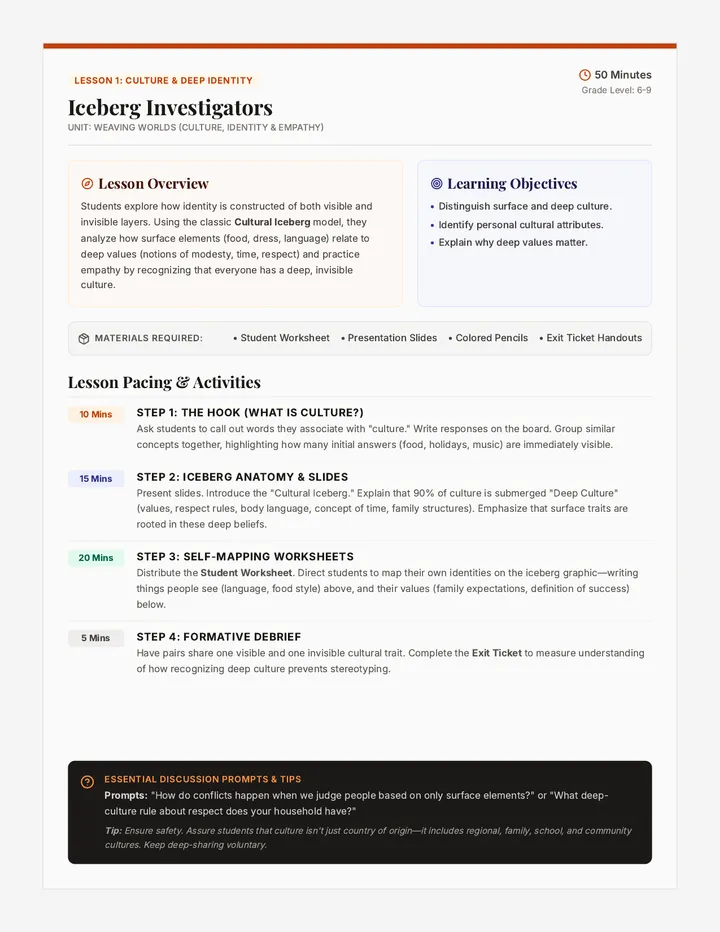
A comprehensive teacher guide for Lesson 1, detailing lesson pacing, discussion prompts, student learning objectives, and materials needed to explore the cultural iceberg.
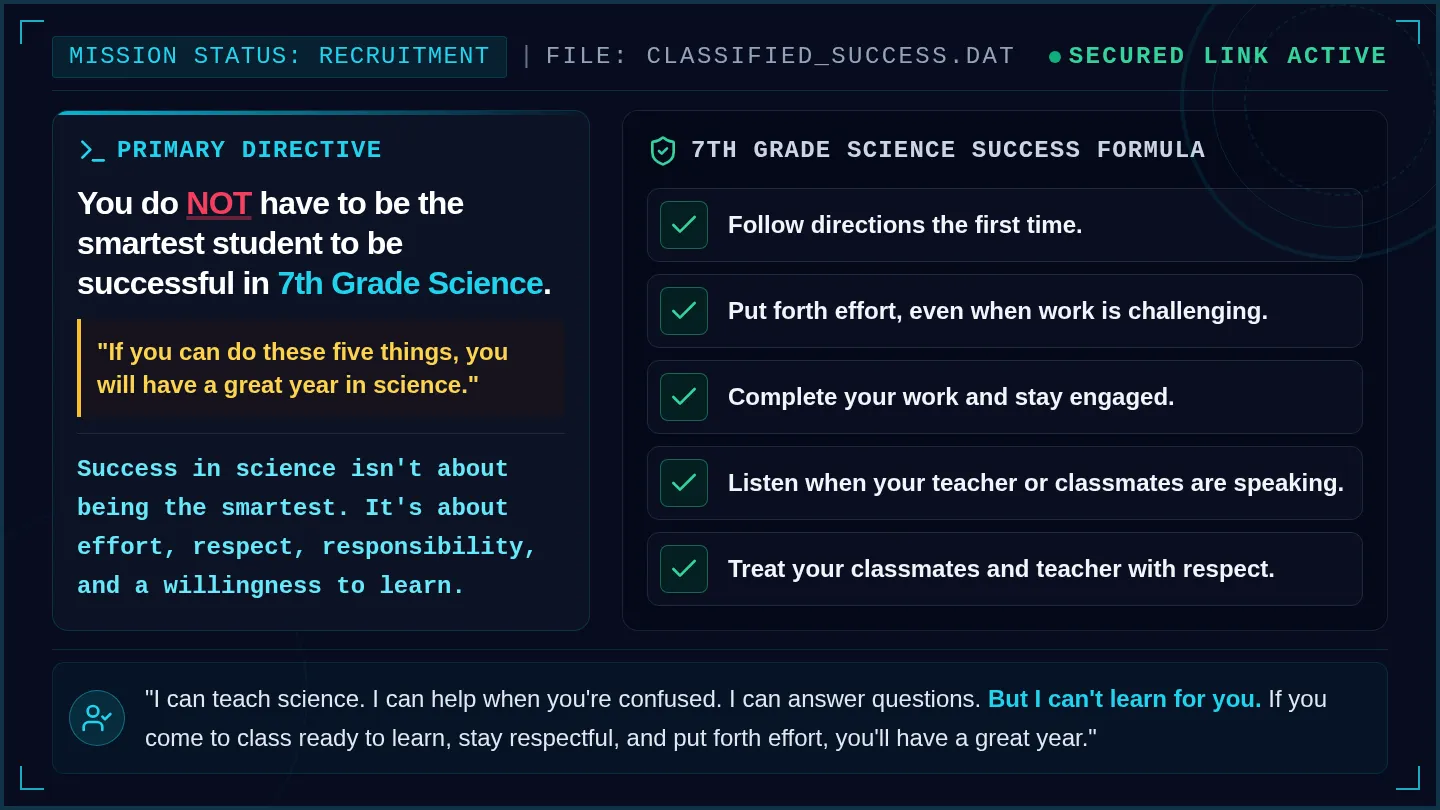
An updated high-impact, science-spy-themed presentation slide outlining the five core habits of success in 7th-grade science, incorporating the new strengthened success formula and a closing summary message.
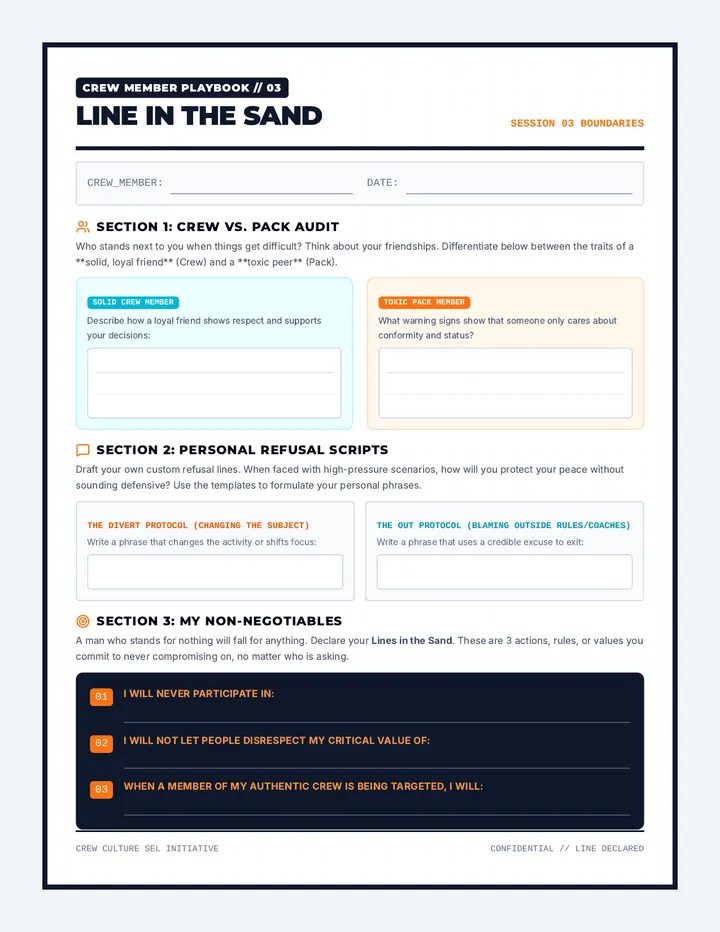
A highly engaging 1-page student playbook for Lesson 3: Line in the Sand. Helps students audit friendships, draft personalized peer-pressure refusal scripts, and declare their non-negotiable boundaries.
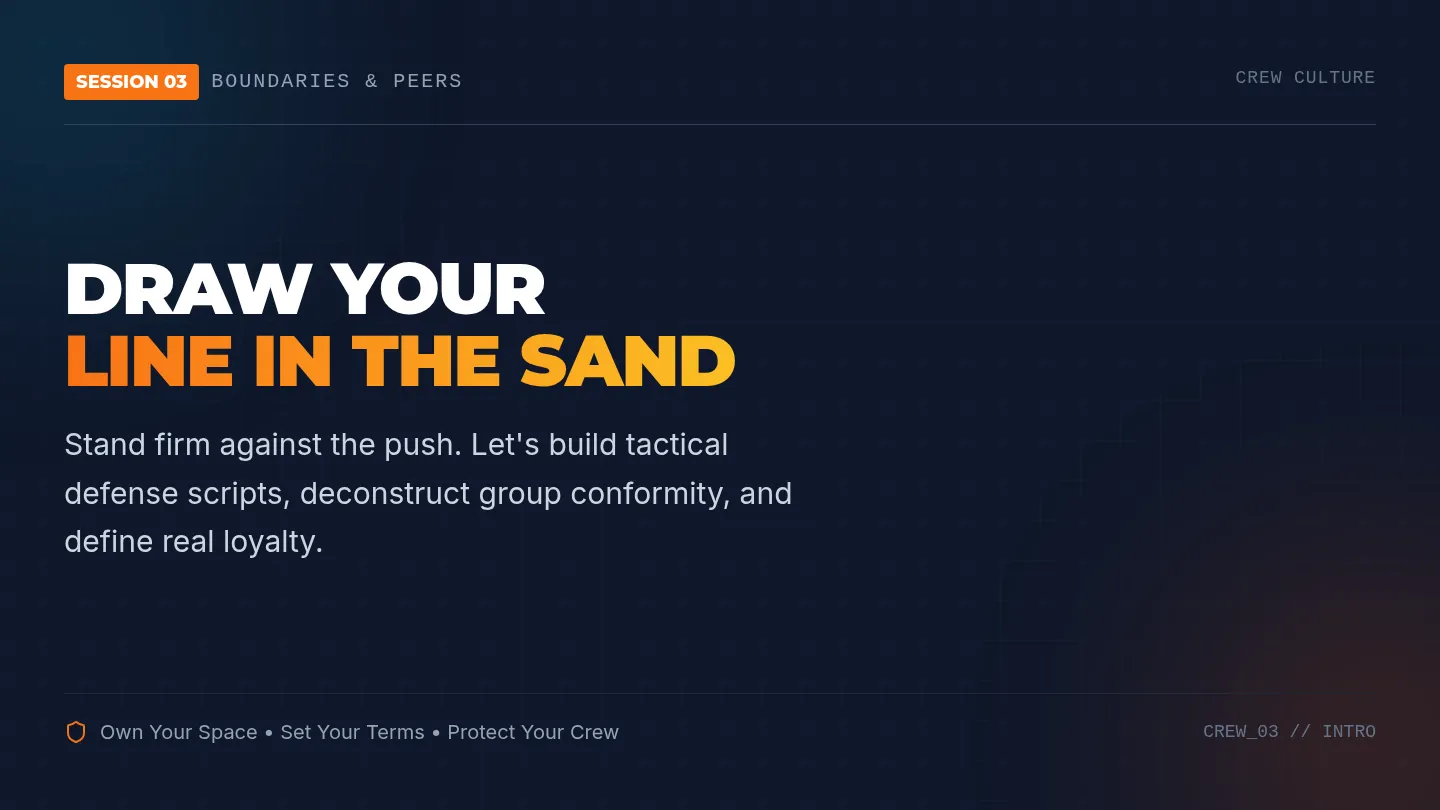
An interactive 6-slide presentation to guide Lesson 3: Line in the Sand. Covers establishing peer boundaries, identifying toxic friendship traits, and practicing refusal scripts.
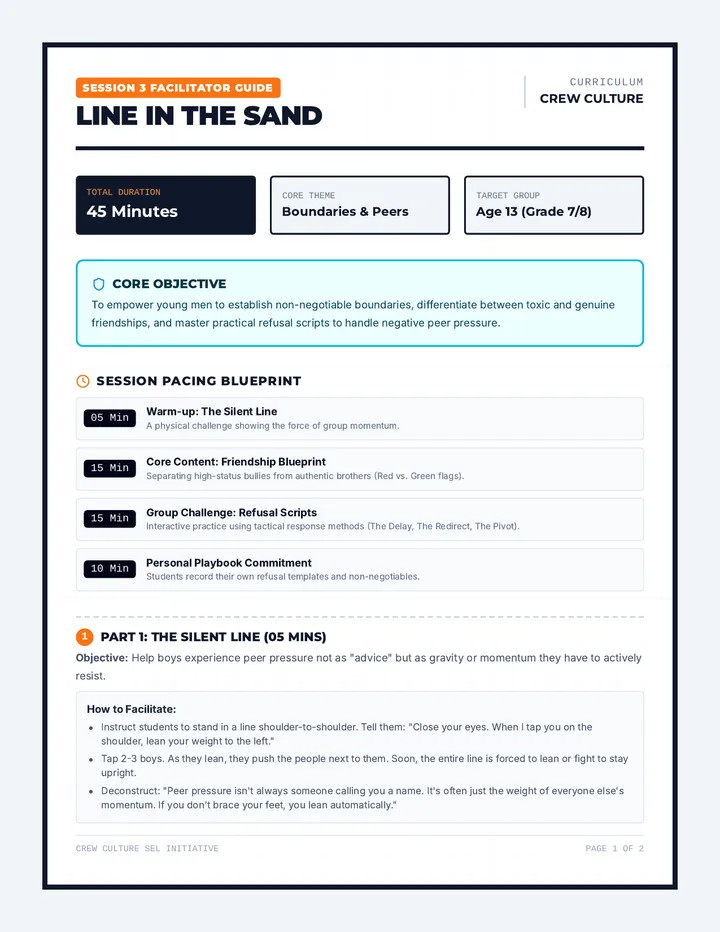
A comprehensive 2-page facilitator guide for Lesson 3: Line in the Sand. Covers establishing peer boundaries, identifying toxic friendship traits, and practicing refusal scripts.
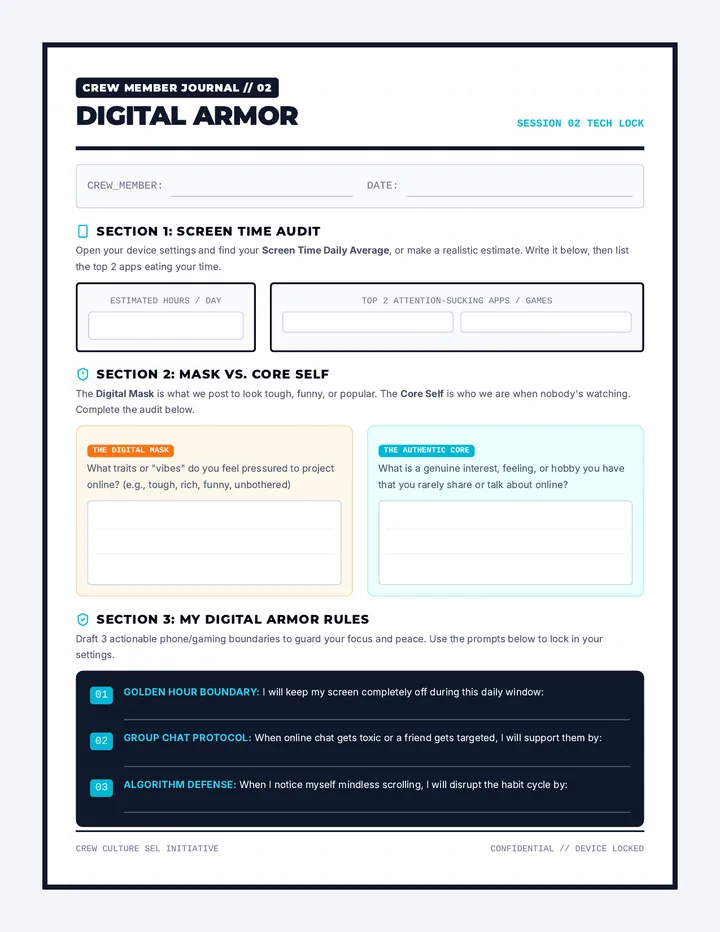
A highly engaging 1-page student journal for Lesson 2: Digital Armor. Helps students audit screen time, contrast their digital mask with their true self, and lock in daily device boundaries.
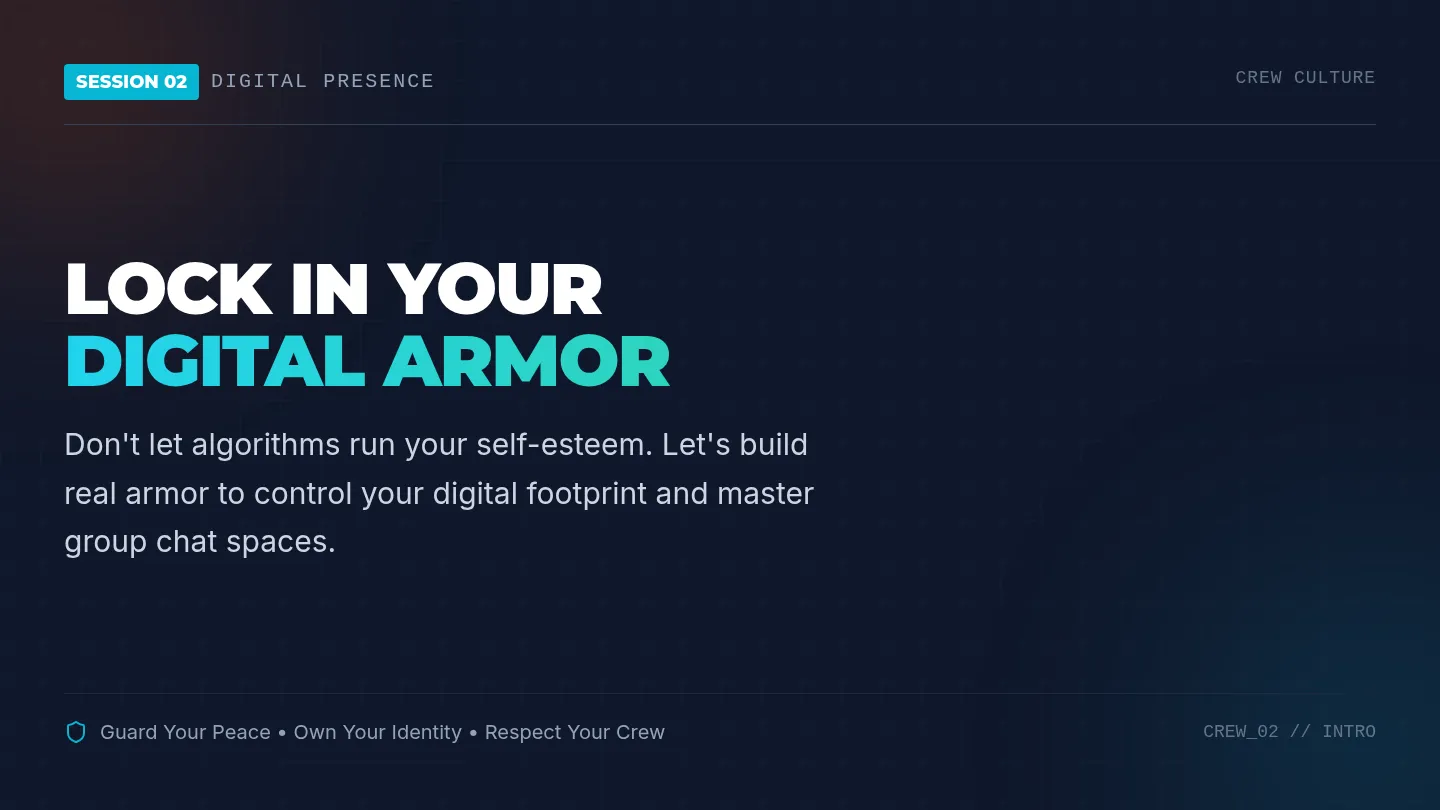
An interactive 6-slide presentation to guide Lesson 2: Digital Armor. Covers daily screen averages, the digital mask vs true identity, group chat dynamics, and lock-in habits.
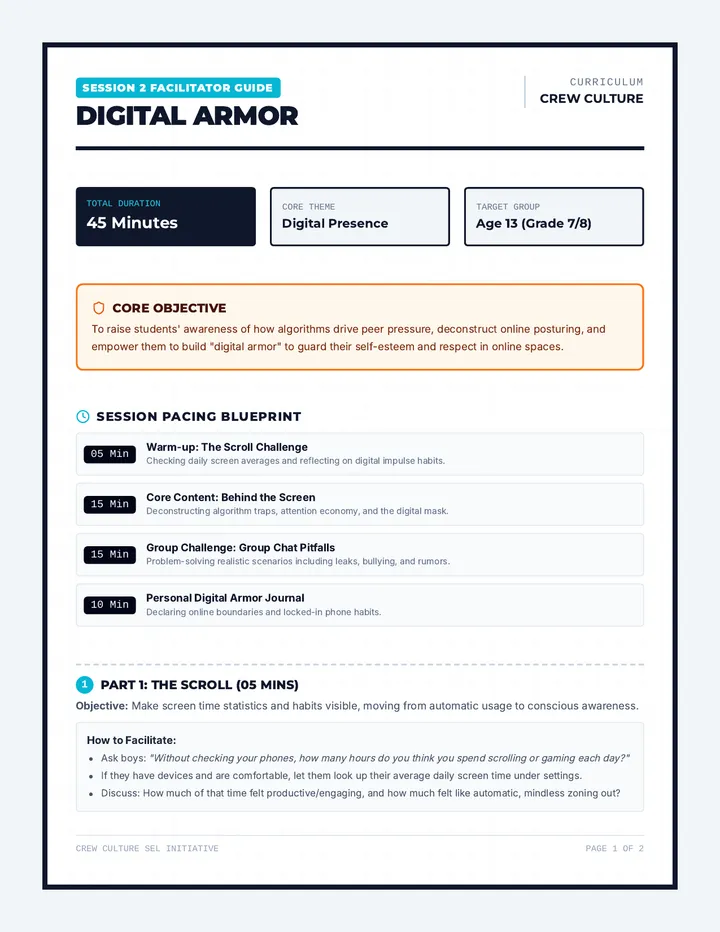
A comprehensive 2-page facilitator guide for Lesson 2: Digital Armor. Covers managing social media validation, group chat dynamics, digital footprint awareness, and phone boundary-setting.
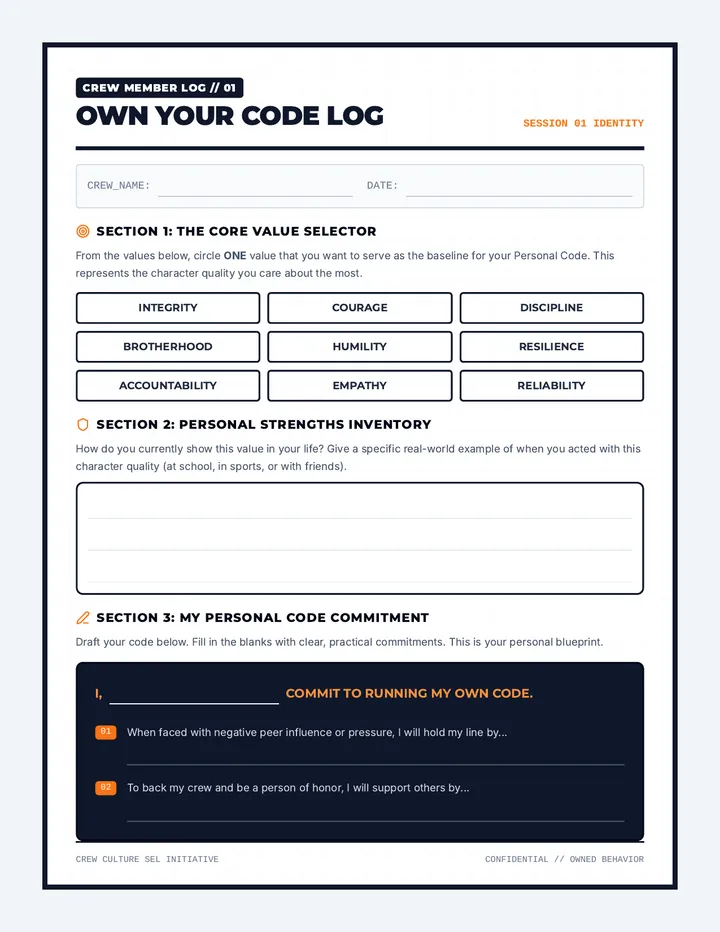
A highly engaging, themed 1-page personal reflection log for students to declare their core values, inventory personal strengths, and draft their personal commitment statement.
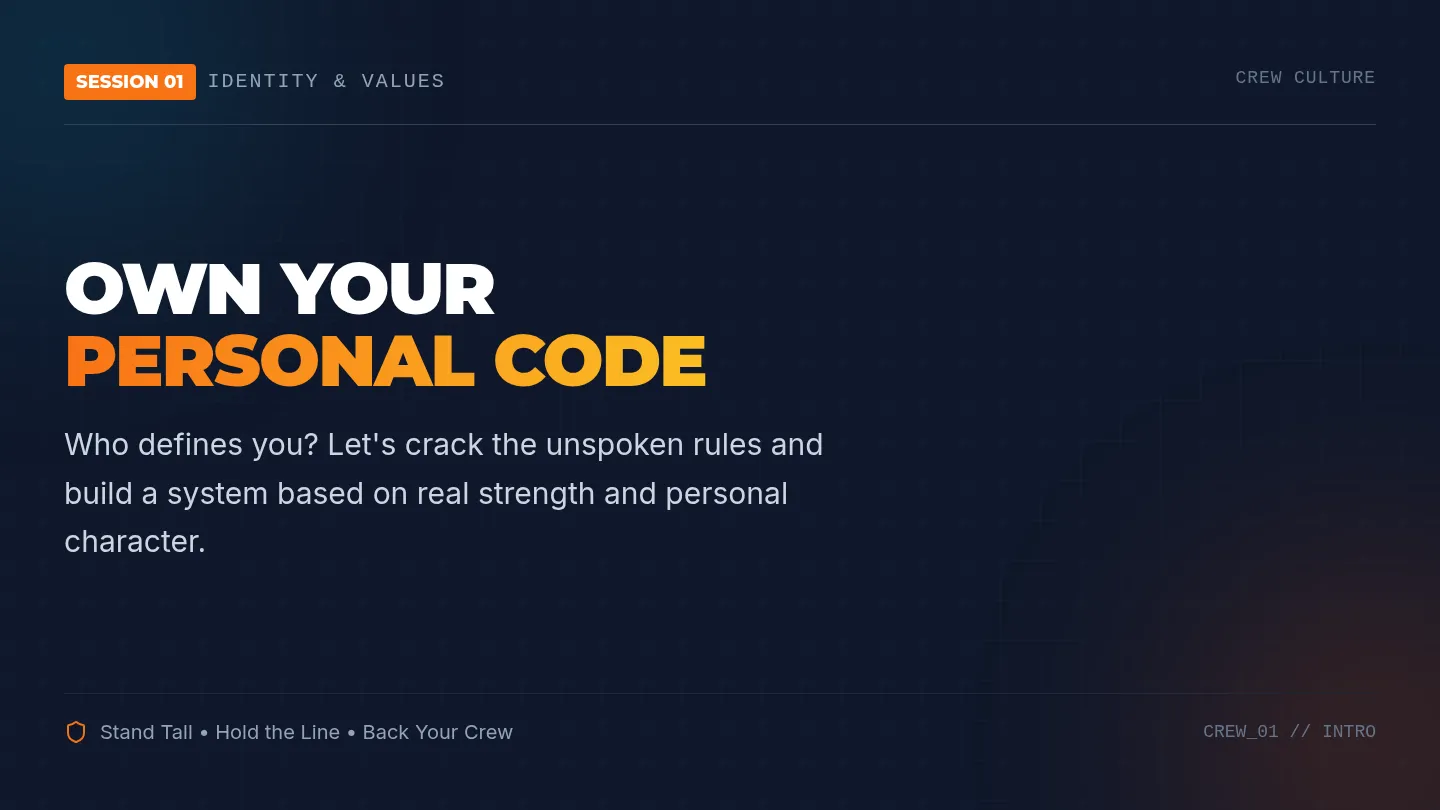
An interactive 6-slide presentation to guide the first group session, featuring bold discussion prompts, deconstructing social expectations, and setting up the core values activity.
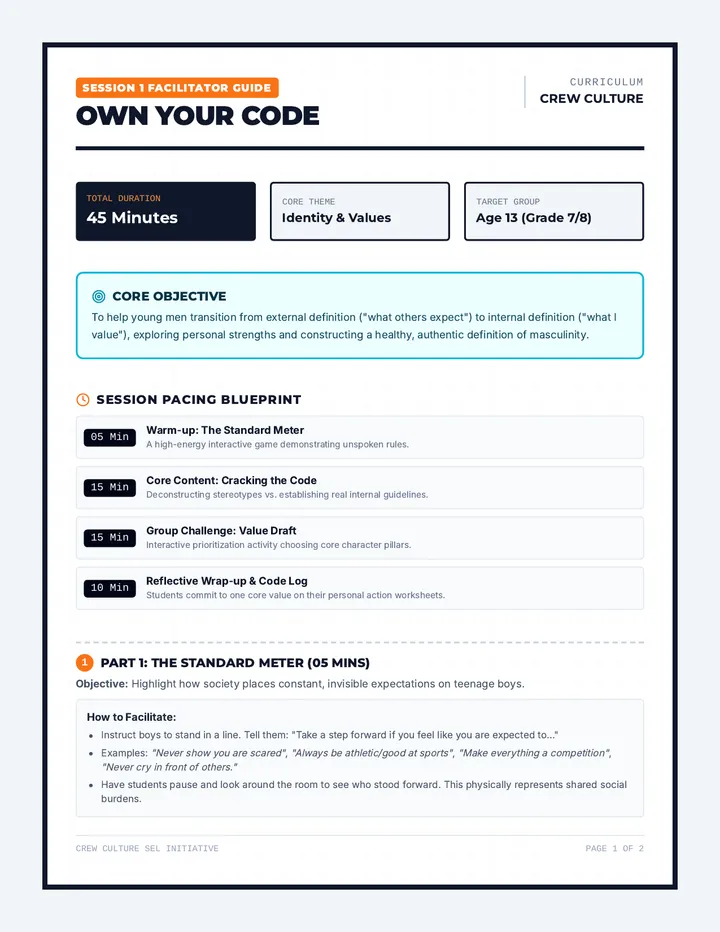
A comprehensive 2-page facilitator guide for Lesson 1: Own Your Code. Includes group guidelines, pacing, step-by-step instructions, discussion prompts, and debrief questions.
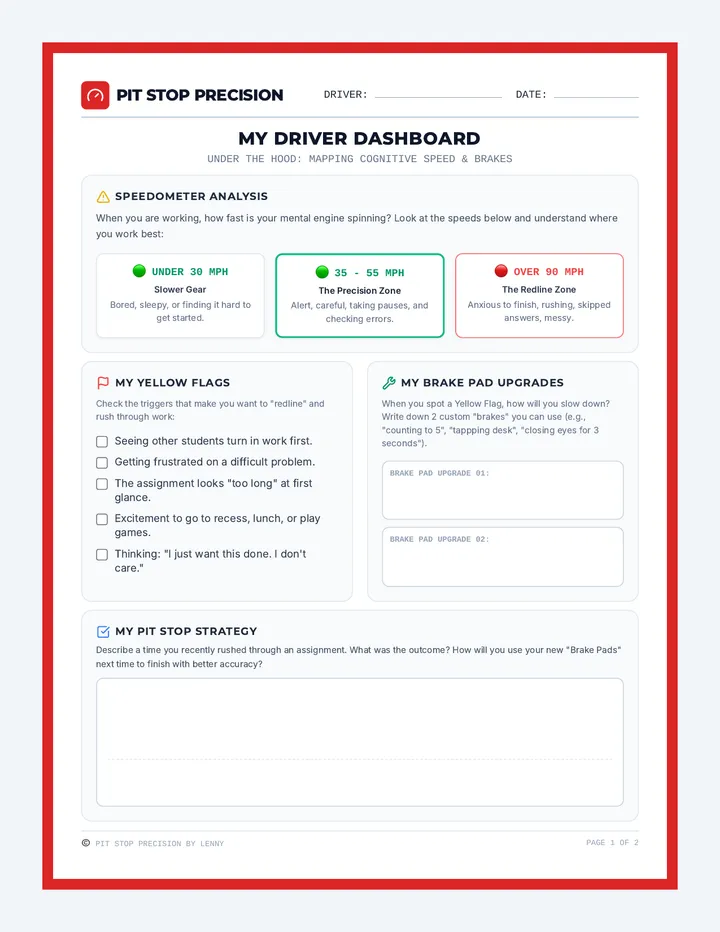
A high-octane, racing-themed student worksheet pack. Page 1 helps students identify personal rushing triggers (Yellow Flags) and design coping skills. Page 2 provides a desk-ready FIT Check checklist and a real-world persistence drill.
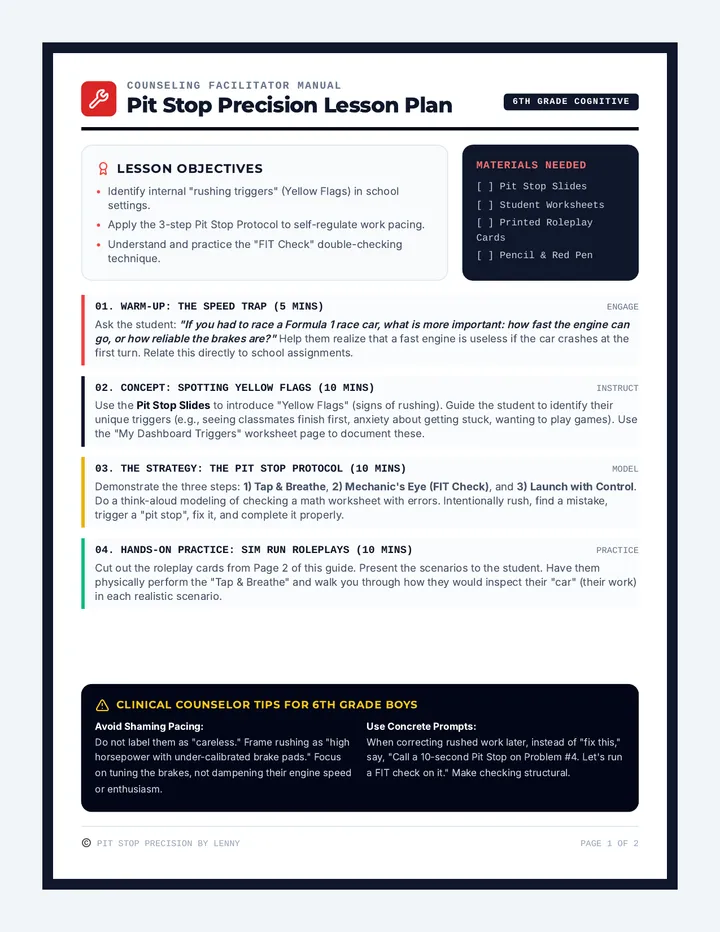
A comprehensive 2-page counselor guide for the Pit Stop Precision lesson. Includes structured facilitator scripts, step-by-step lesson pacing, and 4 high-octane printable roleplay cards to practice self-regulation and double-checking.
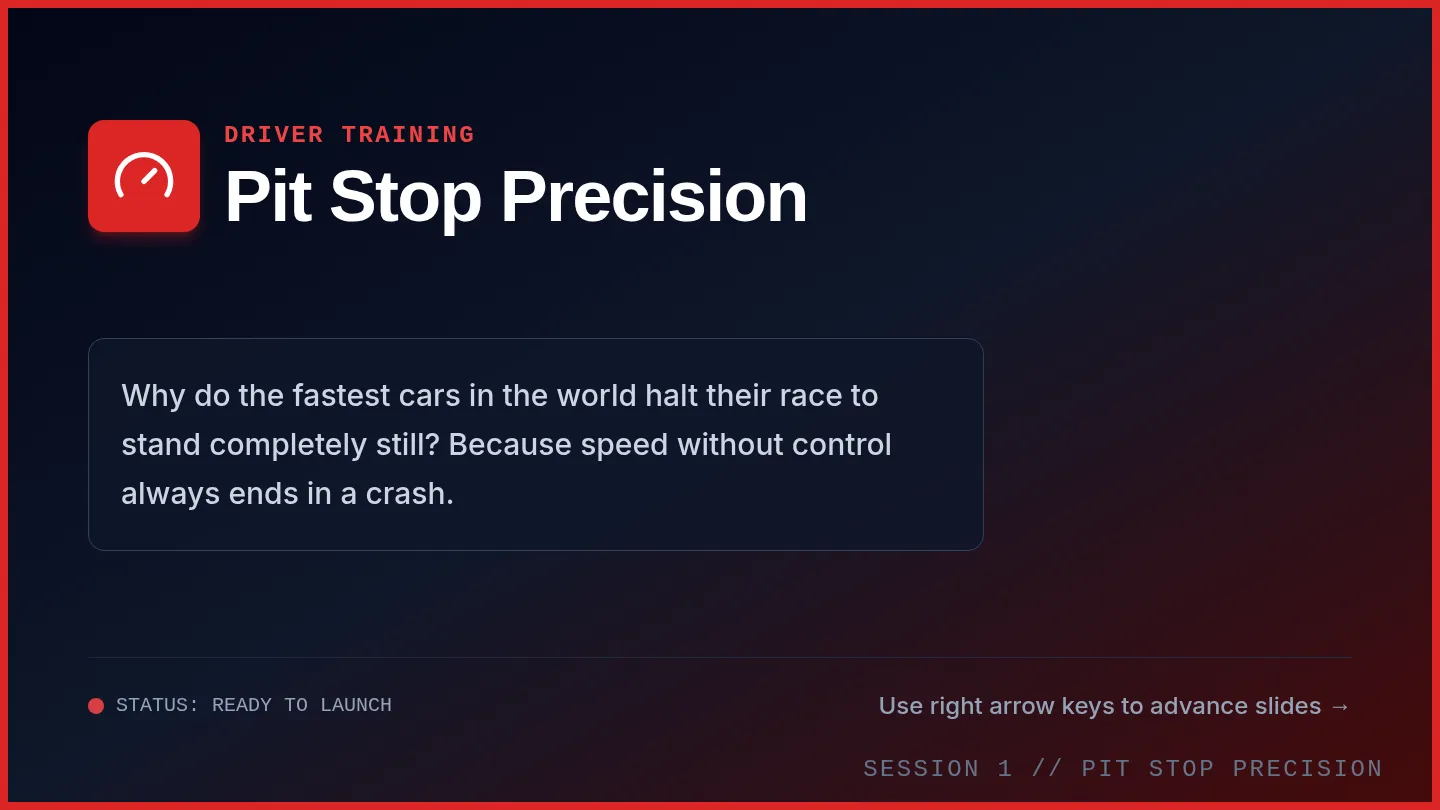
An interactive, racing-themed slide deck designed for 6th grade counseling. It teaches the 'Pit Stop Protocol' to help students identify rushing behaviors, recognize the need for double-checking, and master task persistence.
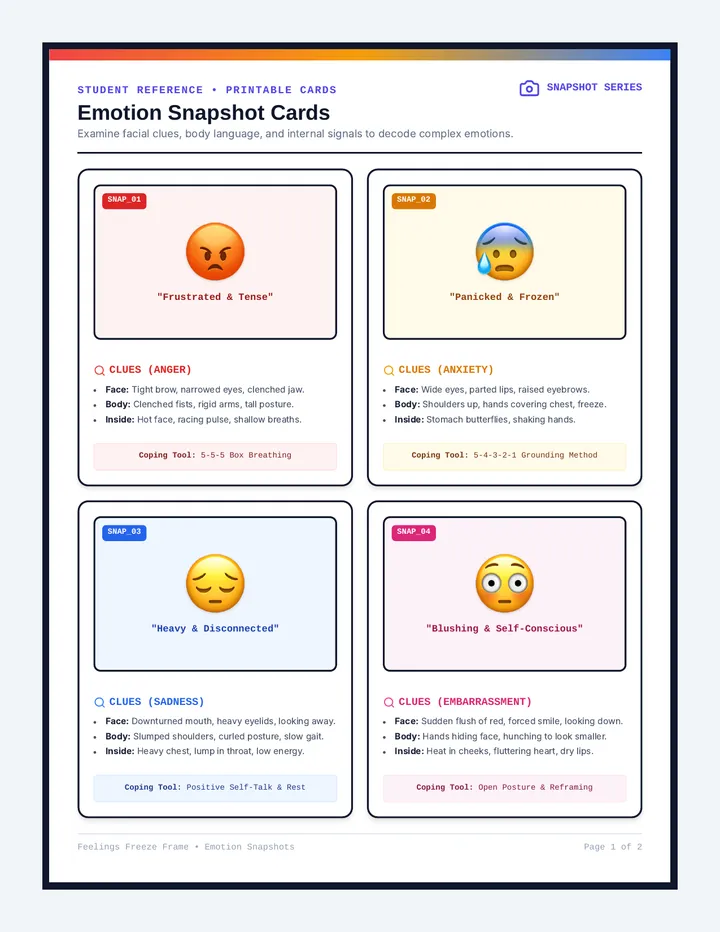
A 2-page student reference tool. Page 1 contains 4 styled 'Polaroid' snapshot cards describing facial/body clues and internal somatic signals. Page 2 provides 2 more snapshots and a quick self-guided matching activity.
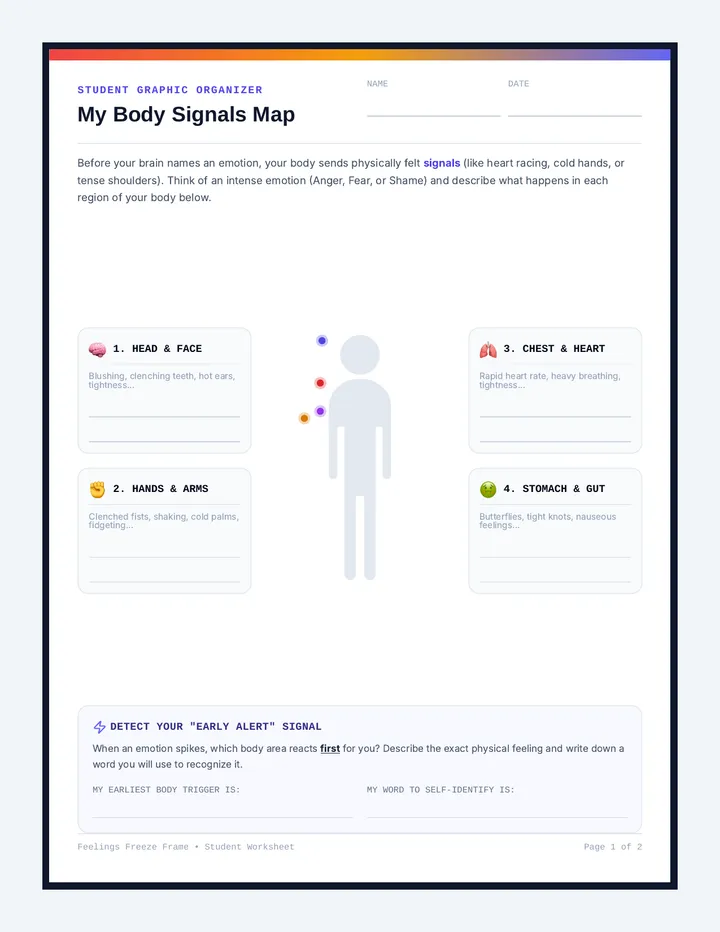
A 2-page student worksheet. Page 1 features a physical 'Body Signals Map' graphic organizer to label physical feelings. Page 2 provides scenario coping match-ups and self-regulation reflections.
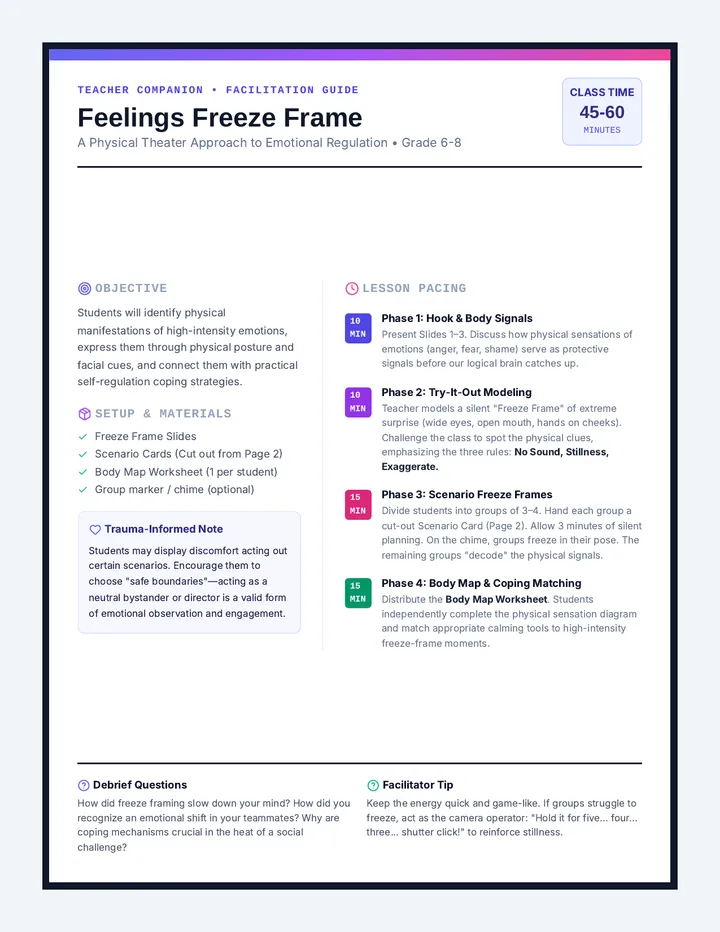
A 2-page print-and-cut facilitator's guide. Page 1 contains step-by-step pacing, pedagogy, and tips. Page 2 provides 6 pre-formatted scenario cards to cut out and distribute to student groups.
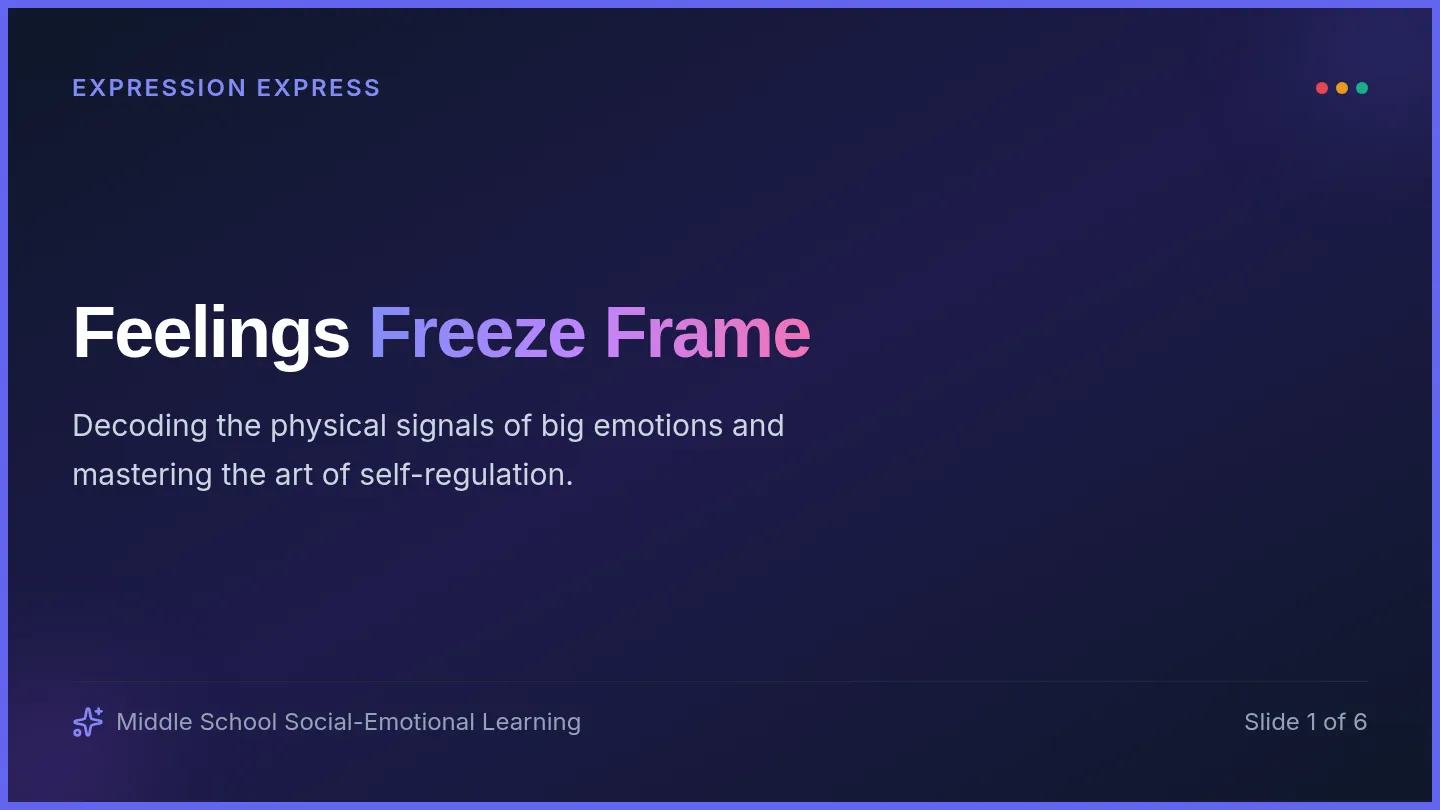
Interactive, highly visual classroom slide deck to introduce emotional expressions, body signals, and freeze-frame activities. Includes real-world scenarios and coping strategy matching.