A colorful classroom poster featuring four primary emotions (Happy, Sad, Angry, Scared) with designated spaces for students to place sticky notes or drawings. Essential for visual check-ins.
A space-themed one-page visual chart summarizing the expectations and purpose of breaks with Mrs. Humski, featuring clean-up expectations and classroom re-entry.
An 8-page space-themed mini-booklet social story that explains the expectations and purpose of taking a break with Mrs. Humski, featuring calm bodies, cleaning up promptly, and classroom success. Designed for easy printing and assembly.
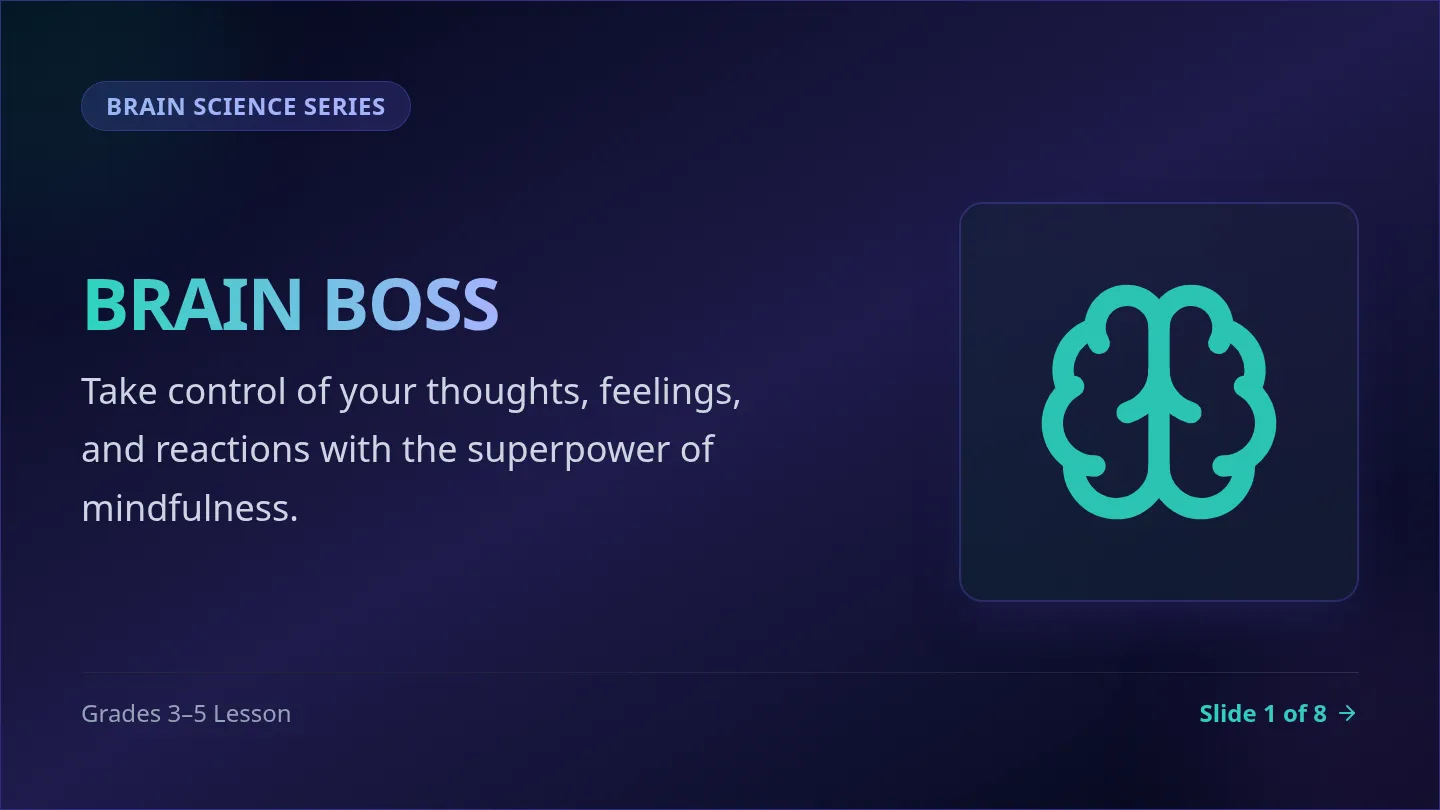
A polished 2nd-grade slide deck for "The Dot" lesson. Includes re-imagined discussion slides to build empathy for Vashti's dilemma, growth mindset instruction, and two embedded story readings. Visual layout refined for high contrast and clarity.
Visual sorting cards and puppet stick templates for Early Years students to identify and categorize emotion families without needing to read or write. Revised with neutral borders and appropriate emojis.
Maximized drawing space version of the 4th-grade worksheet with a kid-friendly reflection question. The 'Masterpiece Canvas' is the central focus, while the reflection uses engaging language like 'brain food' and 'Aha! moment' to encourage students to describe their creative problem-solving.
Teacher-facing resource containing the answer key and extension ideas. Revised for improved page layout and visual alignment of the intensity scale.
A scenario-based worksheet for P3 students to replace basic emotion words with nuanced vocabulary. Revised with word bank scaffolding and improved layout to fit four cases on a single page.
A sorting activity where students categorize nuanced emotion words into four primary emotion families: Angry, Sad, Happy, and Scared. Revised for single-page layout and improved handwriting areas.
Visual presentation for teaching emotion families (Angry, Sad, Happy, Scared) and identifying nuanced vocabulary for different scenarios.
A facilitation guide for teachers to implement the Respect Radar lesson. Includes learning objectives, key terminology, step-by-step implementation instructions, and tips for role-play and follow-up.
A sorting worksheet where students identify respectful versus disrespectful behaviors in common classroom scenarios. Features identical card styling for objective evaluation and includes a 'Respectful Word Bank' for positive reinforcement.
A two-page social story document featuring 'Riley,' a student who learns to manage tone of voice and follow directions using a 'Respect Radar' strategy. Includes reflection prompts and a step-by-step guide for respectful communication.
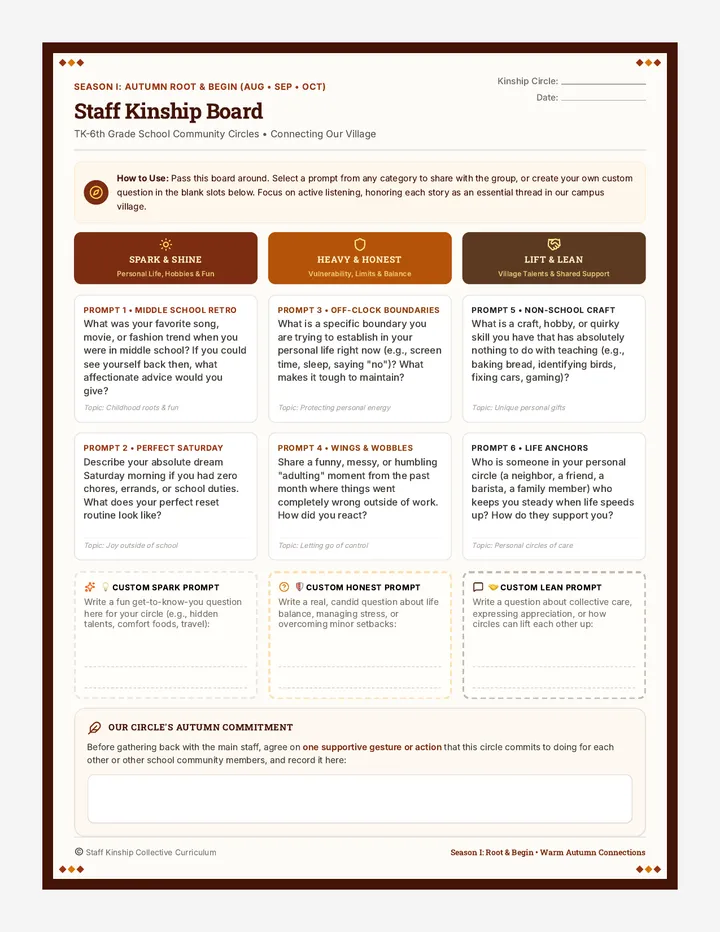
A student-facing handout featuring a large 'Peace Shield' for coloring and a quick-reference guide to the I-Message formula. Great for desk reminders or home take-overs.
Four comic-book styled scenario cards for student role-playing activities. Each card features a common 1st-grade conflict and a scripted I-Message to practice.
A comprehensive facilitator guide for teachers, including a superhero read-aloud script, a 20-minute pacing guide, and instructions for role-playing activities.
A high-energy 9-slide presentation teaching 1st graders the 'I-Message' formula using a superhero theme. Includes visual steps, feeling icons, and practice scenarios.
A facilitation guide for teachers to help students reflect on attention-seeking behaviors using the theater/performance metaphor. Revised for single-page layout and added professional tips.
A theater-themed self-reflection worksheet for students to identify triggers for goofy or disruptive behavior and plan positive alternatives. Revised to fit on a single page with improved contrast and layouts.