A detailed teacher's lesson plan for 'The Emotion Alchemist's Lab', including timing, preparation steps, and instructional strategies for teaching emotional intelligence to 7th graders.
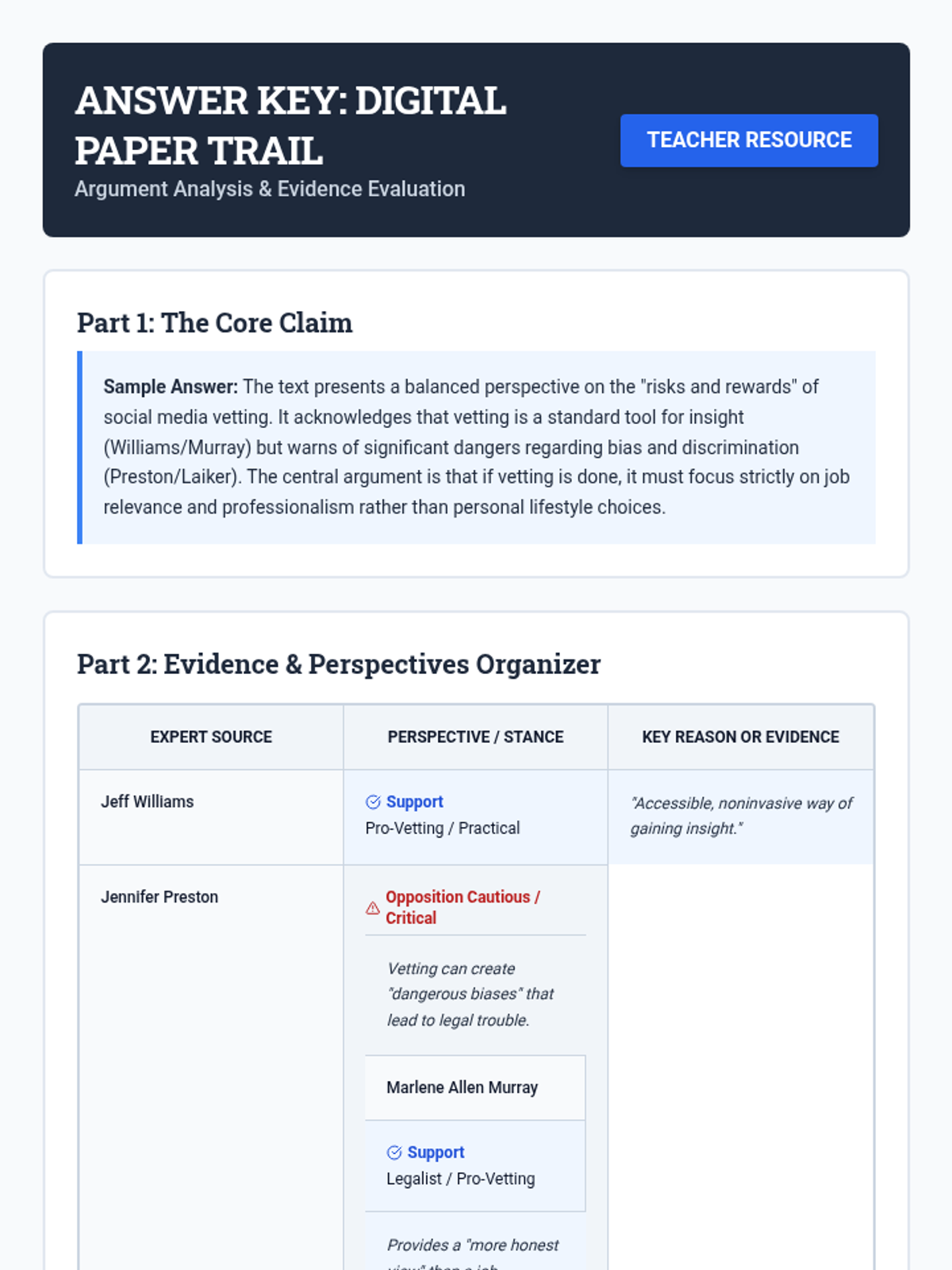
Teacher answer key for 'The Digital Paper Trail' analysis worksheet, providing sample responses and grading guidance for argument-based questions.
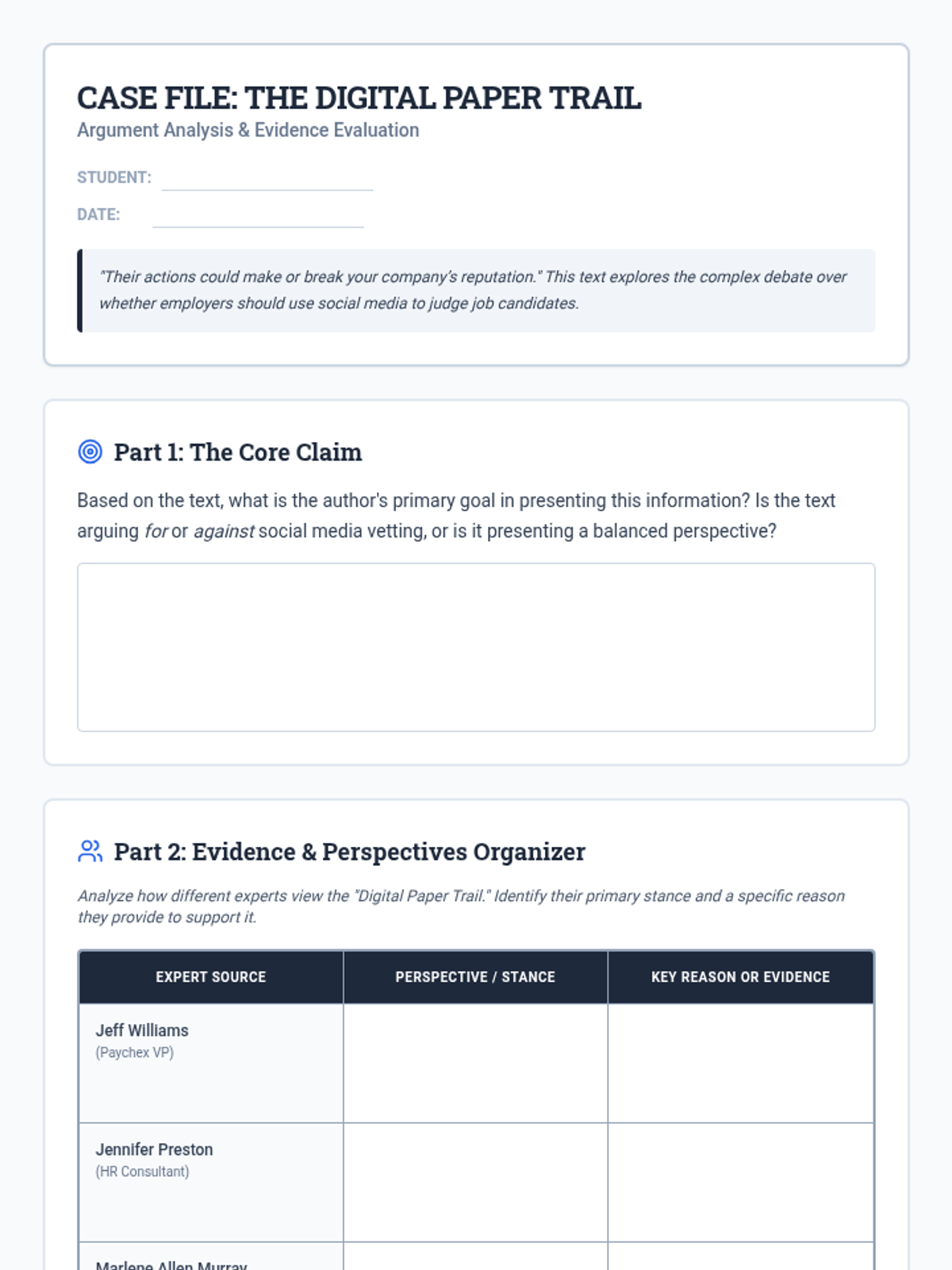
A student worksheet featuring guided questions and a graphic organizer to analyze the arguments, evidence, and perspectives in the text 'The Digital Paper Trail'.
A redesigned set of summer bulletin board posters with a tropical theme (teals, corals, yellows). Features a large landscape-styled title banner and multiple smaller posters grouped onto single pages to save space, including summer tips and local Fostoria resources. All content is vetted for school appropriateness.
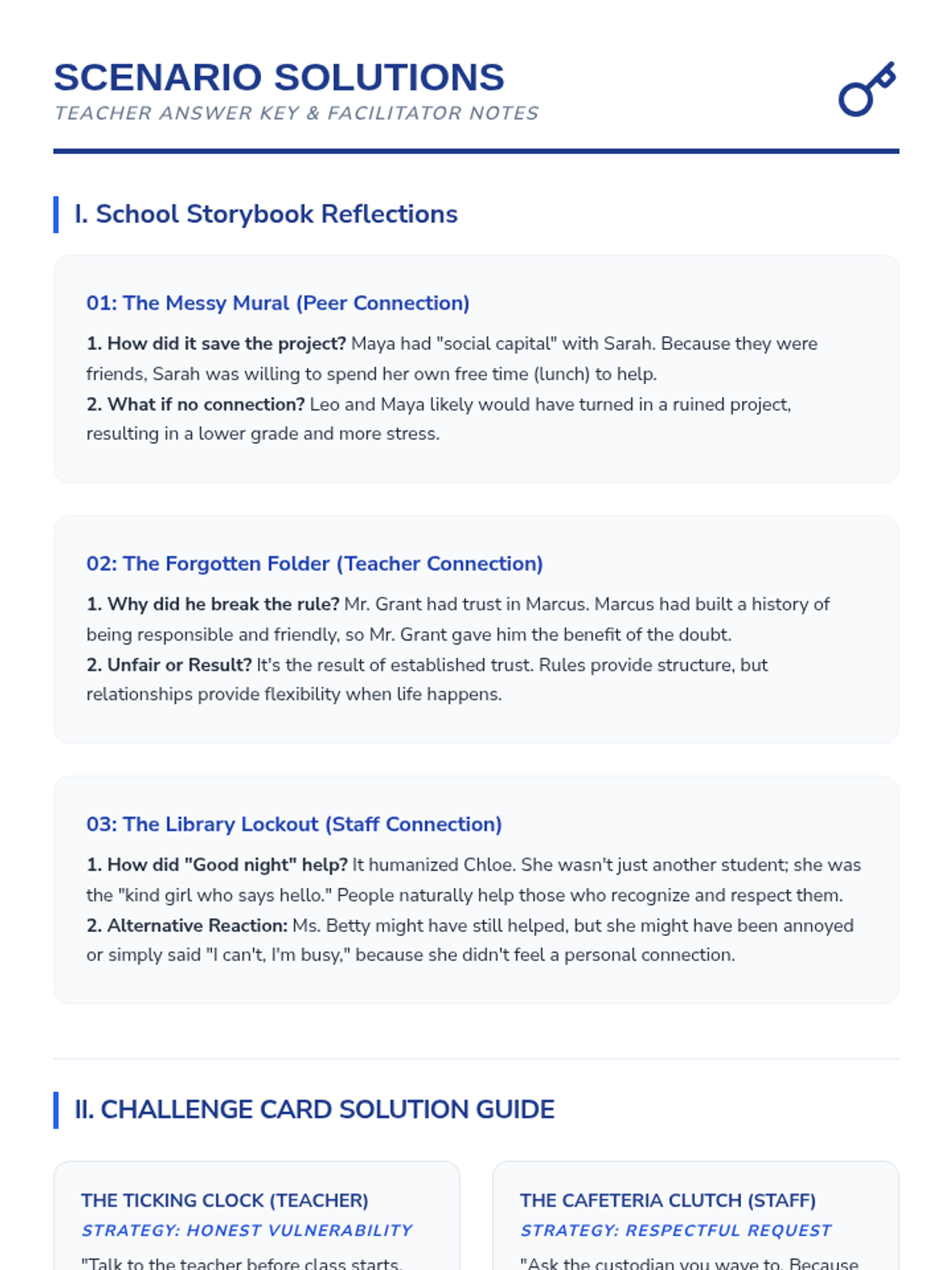
A detailed answer key and facilitation guide providing suggested student responses for the Social Stories and Connection Challenge Cards, along with pedagogical notes on the rationale behind each solution.
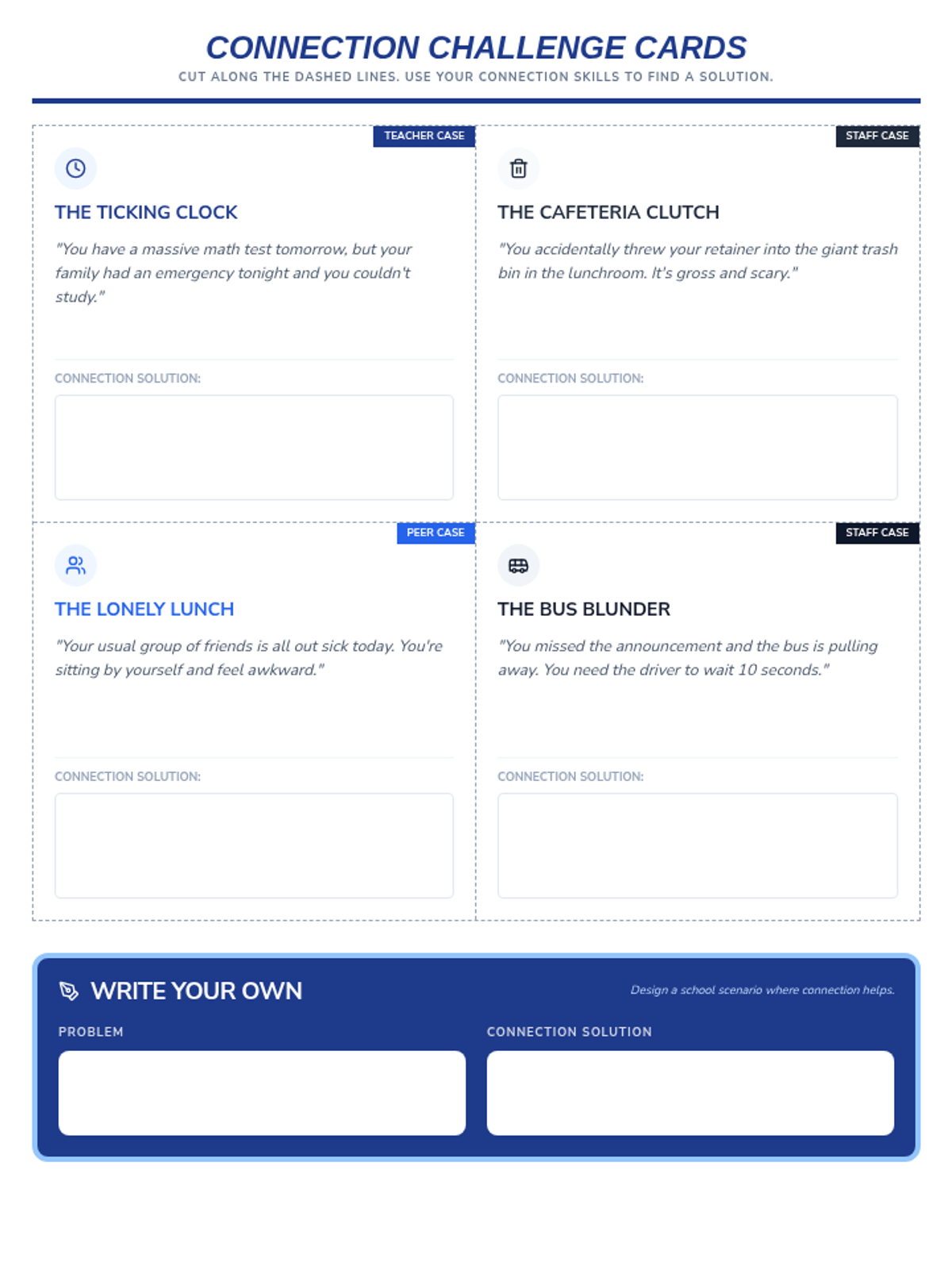
A set of four scenario-based cards and a creative writing prompt that challenge students to apply "connection solutions" to common school problems involving teachers, peers, and staff.
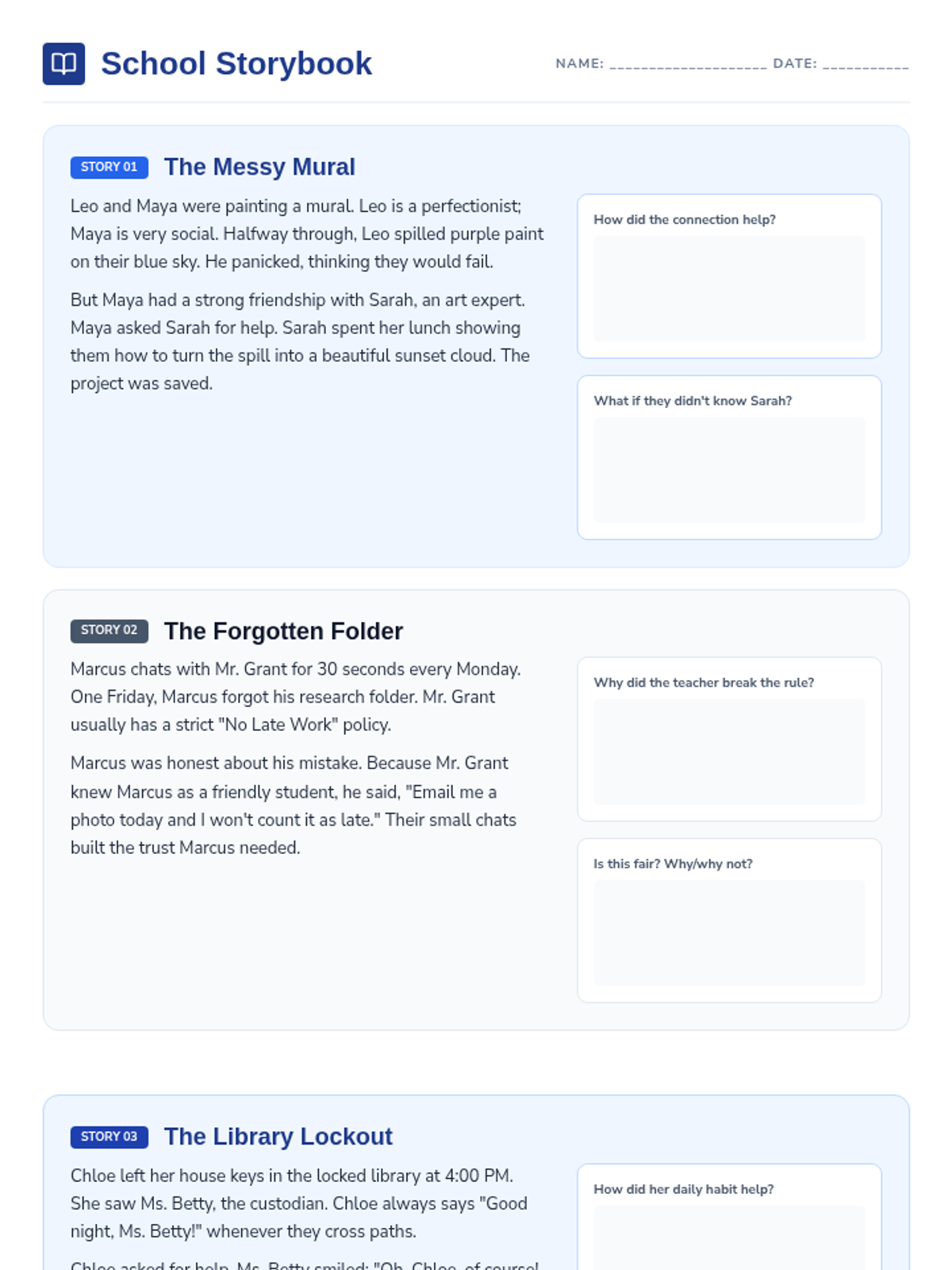
A two-page student worksheet featuring three social stories that illustrate the power of interpersonal connections with peers, teachers, and school staff. Includes reflection questions and a personal goal-setting section.
A visually engaging slide deck that explains the concept of interpersonal capital in school. It covers the benefits of connections, identifies key school groups, and provides practical scripts for building relationships.
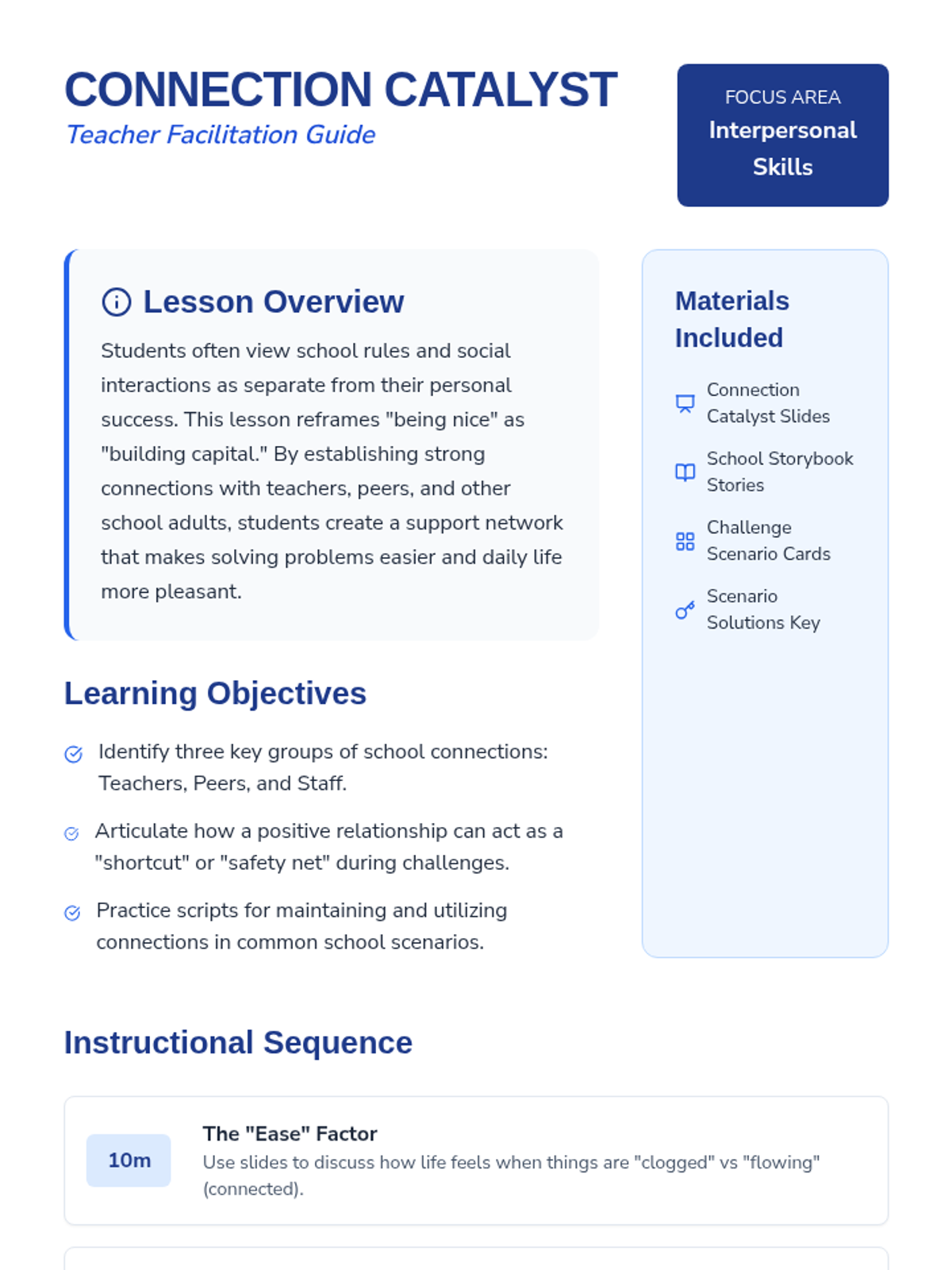
A comprehensive facilitator's guide for the Connection Catalyst lesson, featuring learning objectives, a detailed pacing guide, and thought-provoking discussion prompts centered on school-based interpersonal relationships.
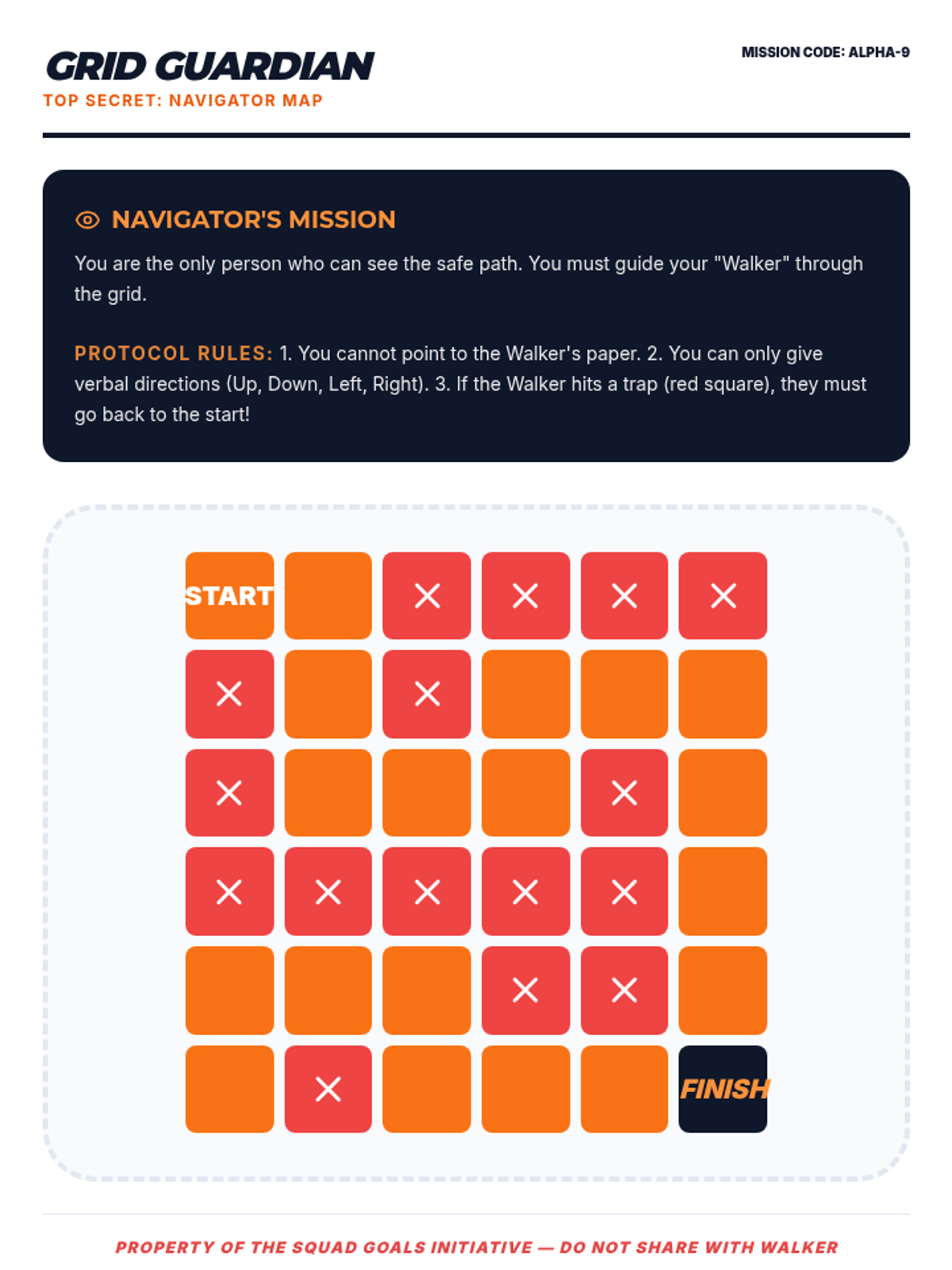
A 2-page collaborative communication activity where one student (Navigator) has a secret map and must verbally guide another student (Walker) through a grid while avoiding traps. Requiring only paper and pencils, it emphasizes clear instructions and active listening.
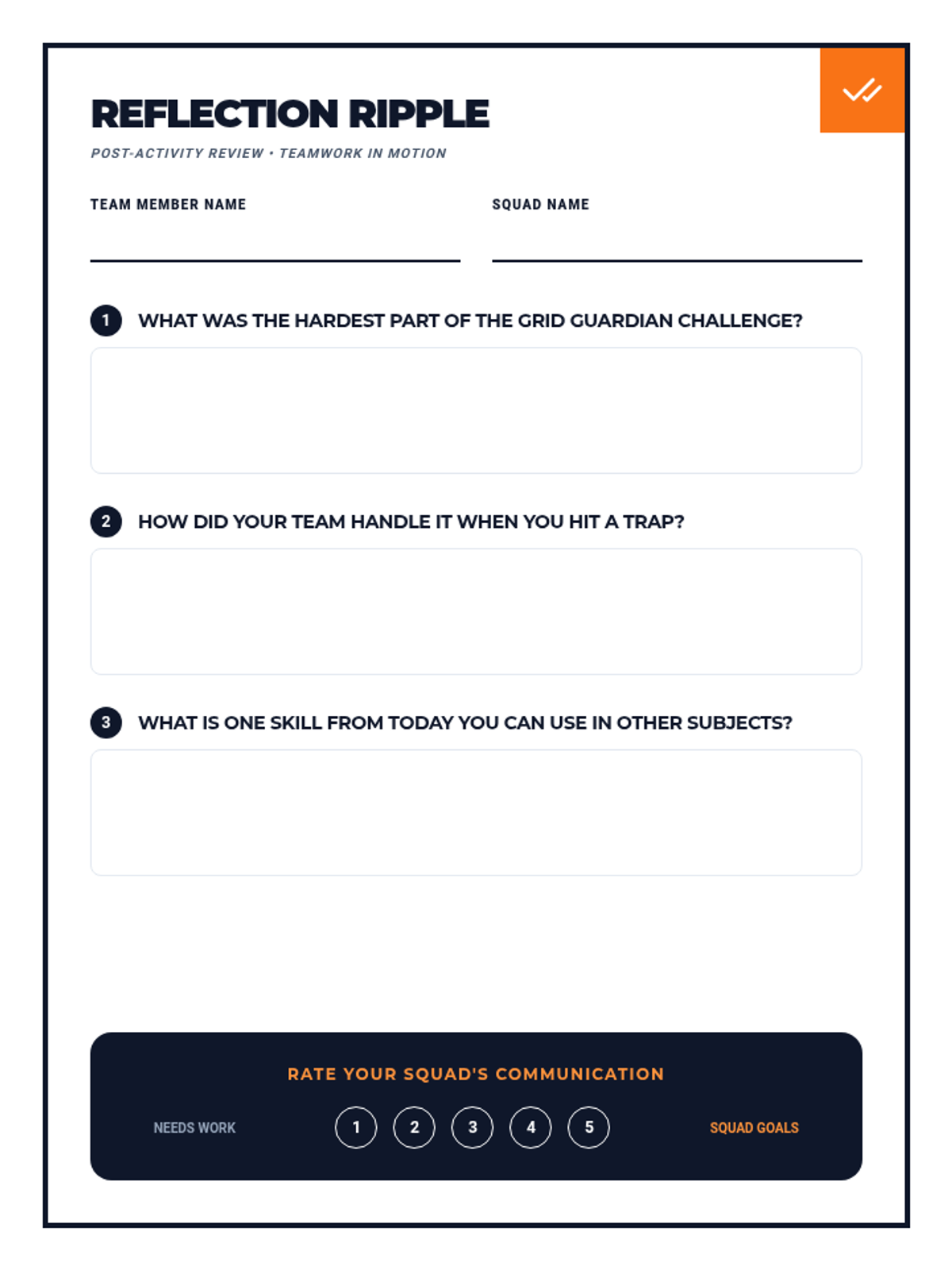
A student reflection exit ticket for the teamwork lesson, focusing on group dynamics, individual contributions, and future applications.
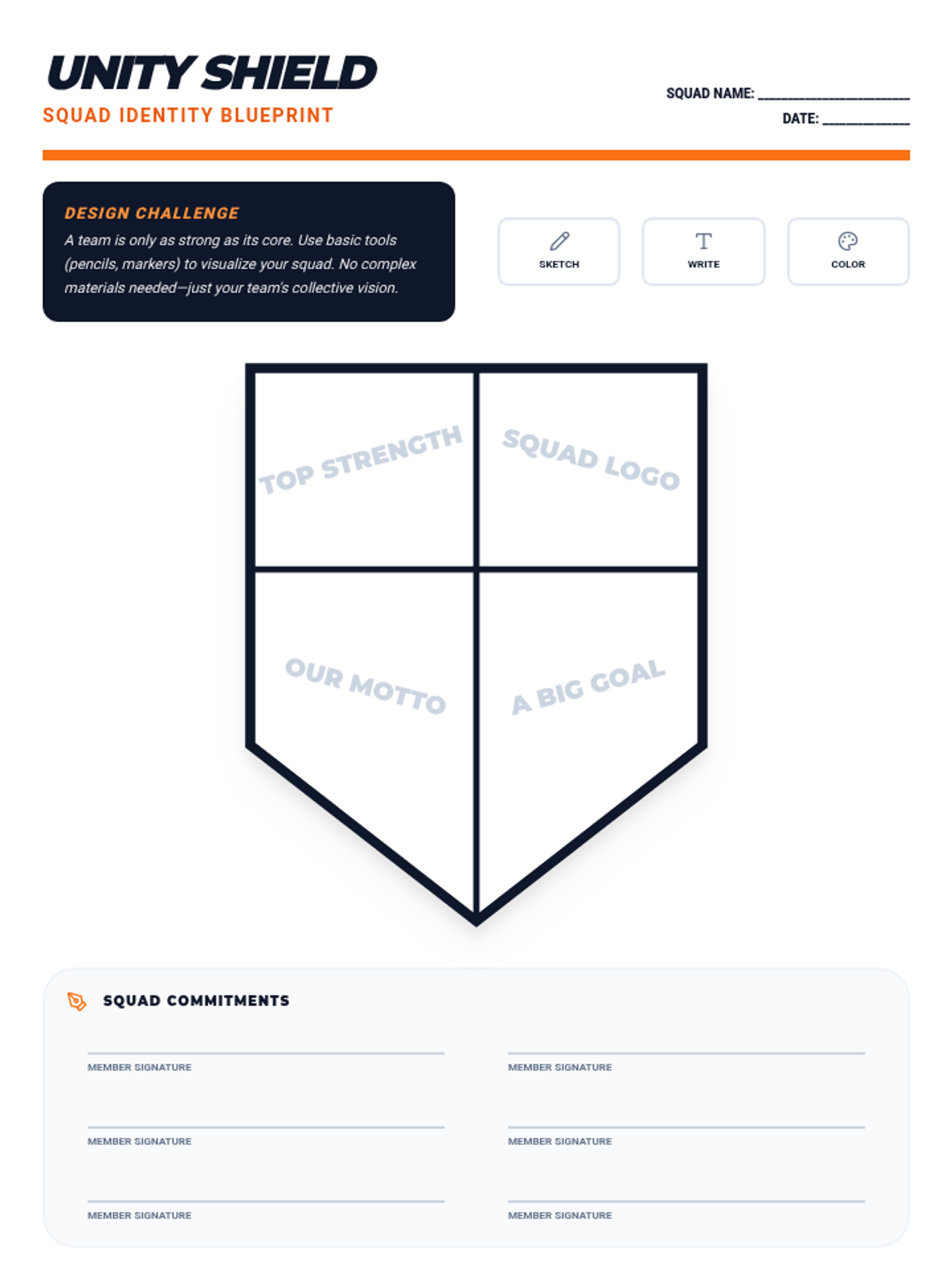
A low-resource collaborative design sheet where students create a team 'Unity Shield' focusing on logos, mottos, and goals. It requires only pencils or markers and emphasizes verbal agreement and identity building.
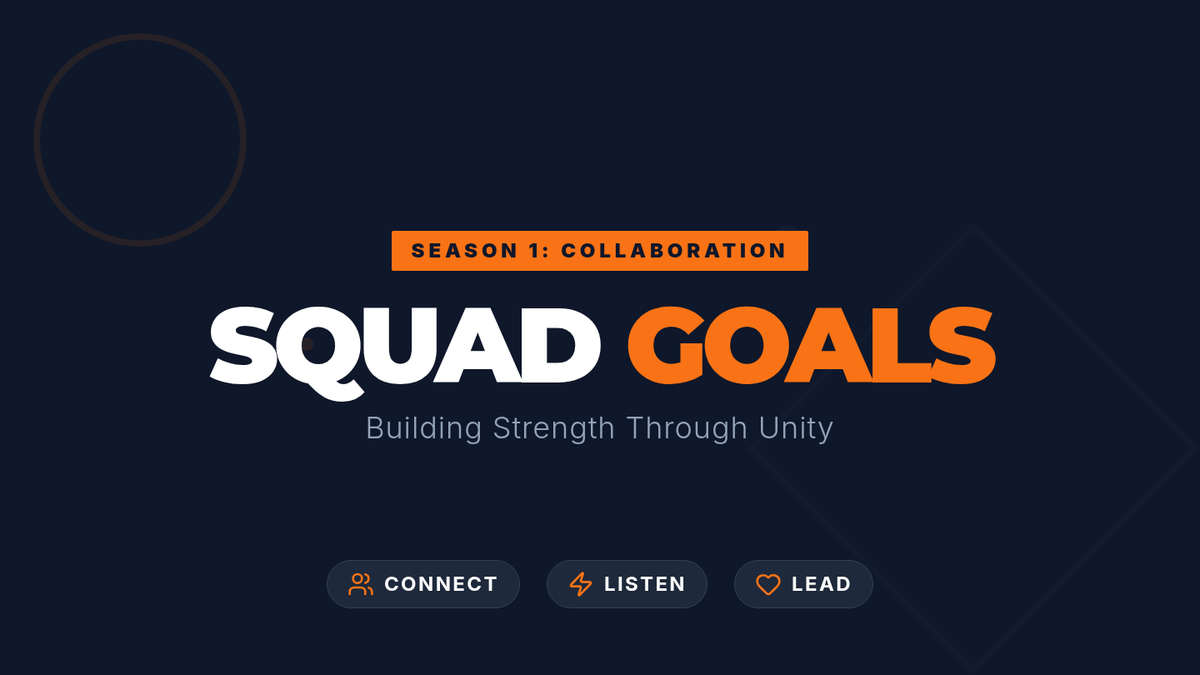
A revised slide deck for the 'Squad Goals' lesson, replacing the high-material bridge activity with the low-resource 'Grid Guardian' communication challenge and a silent warm-up activity.
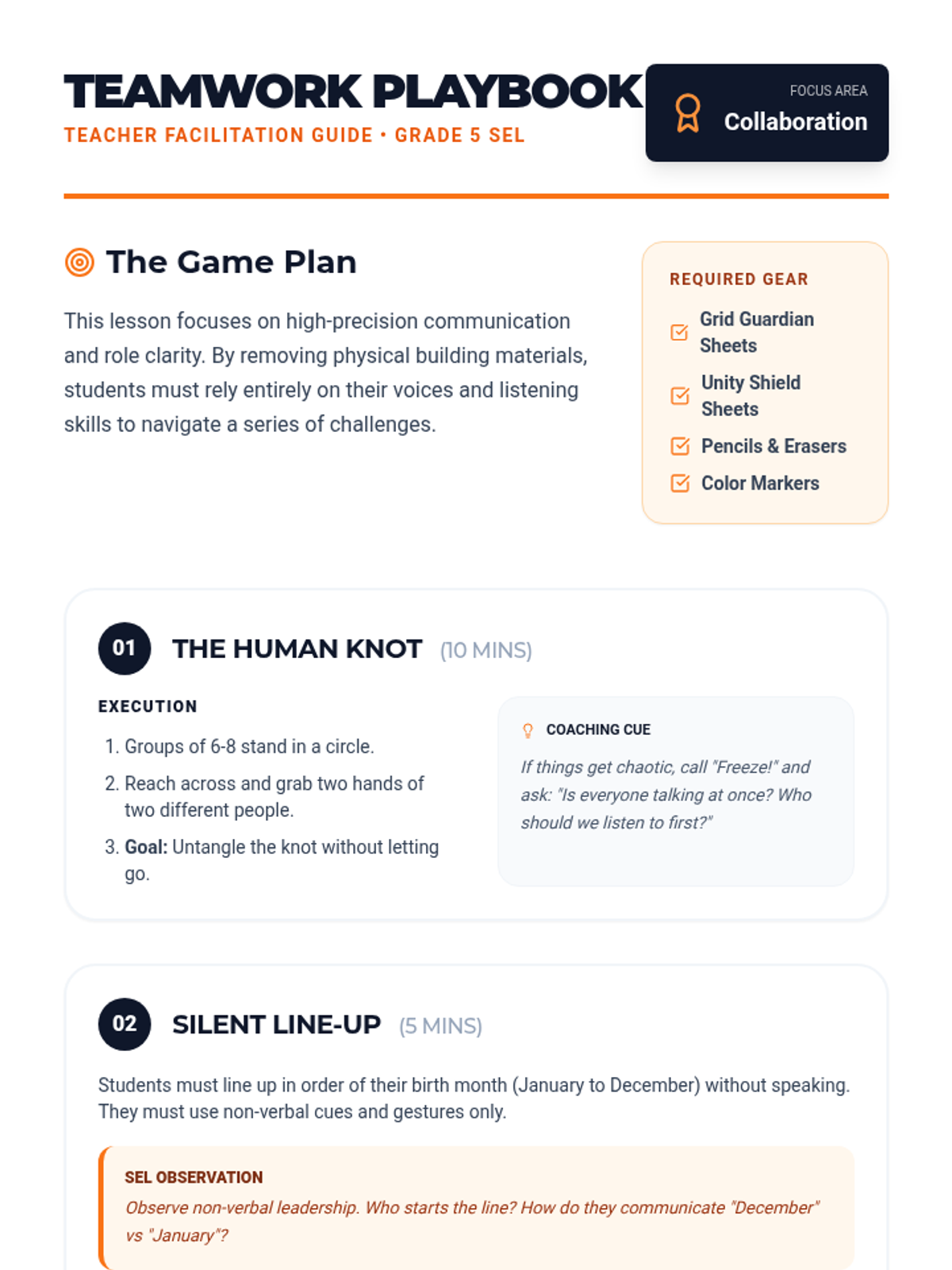
A revised teacher facilitation guide for the 'Squad Goals' lesson, replacing high-material activities with low-resource alternatives like 'Silent Line-Up' and the 'Grid Guardian' communication challenge.
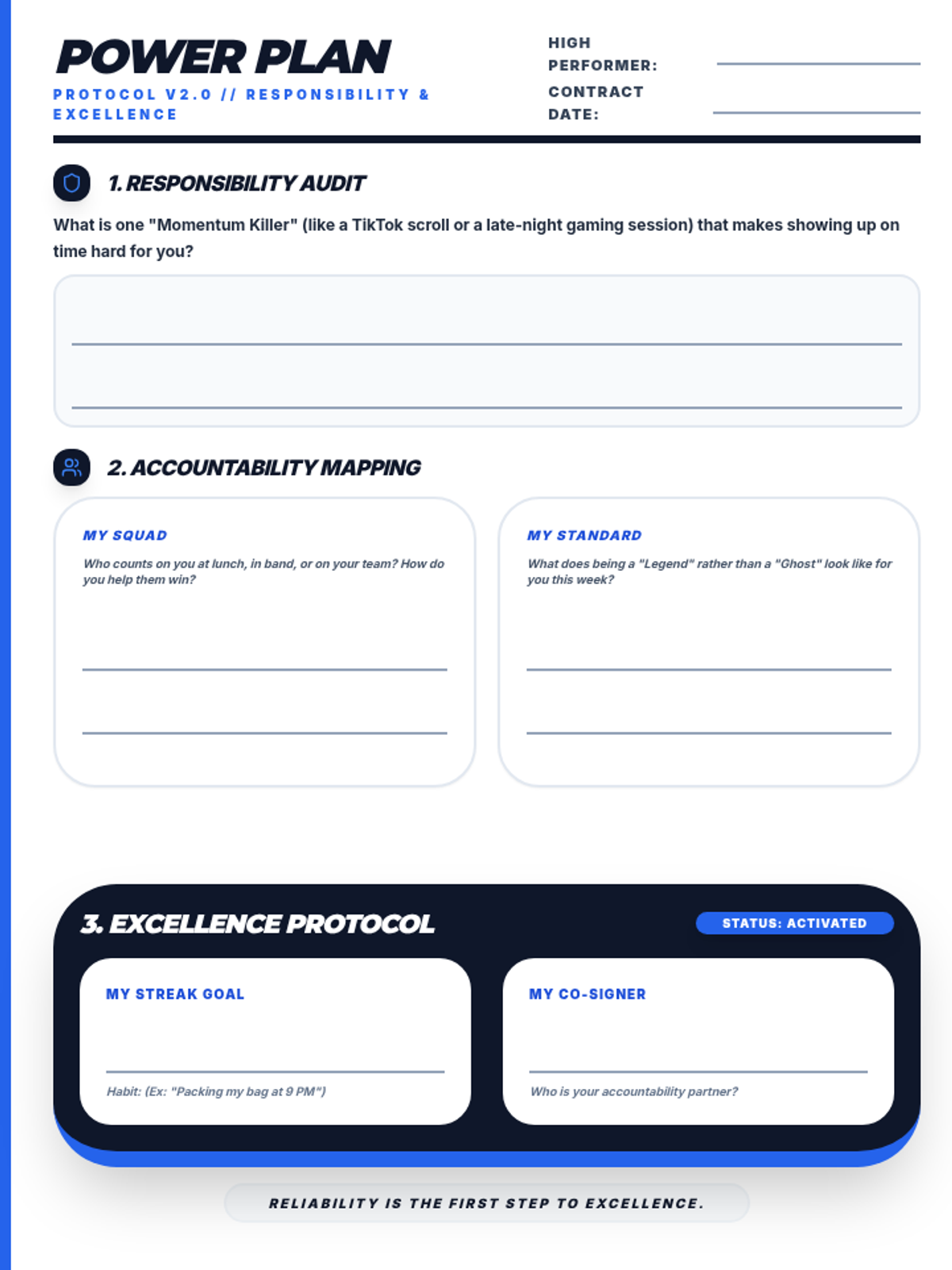
A high-performance student reflection sheet (Power Plan) focused on accountability and personal responsibility. Includes relatable middle school examples like phone habits and social connections. Revised for better spacing and one-page layout.
A high-performance slide deck focused on accountability, responsibility, and personal best. Includes relatable middle school examples like group projects, band practice, and gaming. Revised for stable layout and contrast.
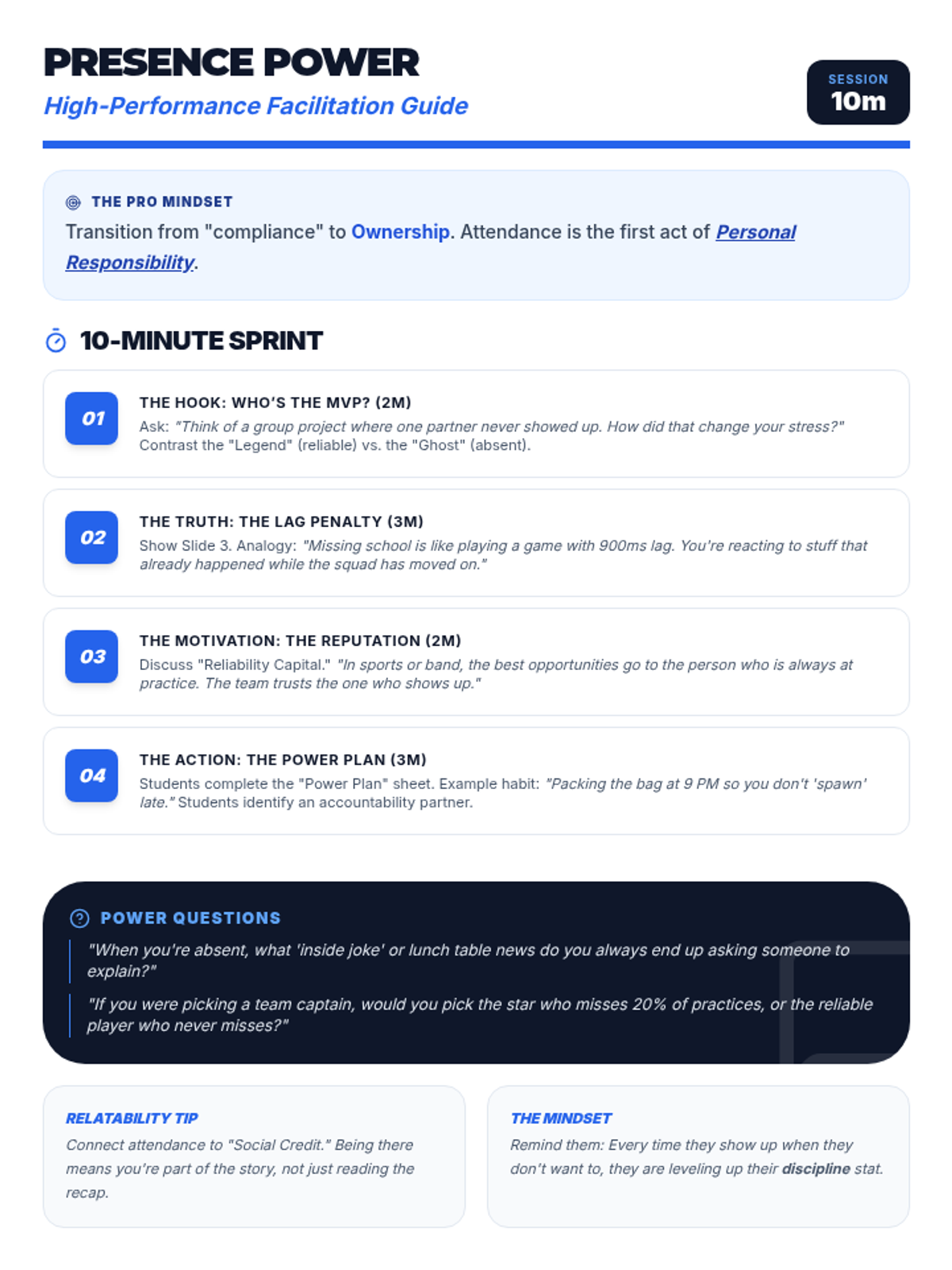
A high-performance teacher guide for a 10-minute high-impact attendance lesson. Focuses on 'Reliability Capital' with relatable middle school examples like group projects and social momentum. Revised for better legibility and single-page layout.
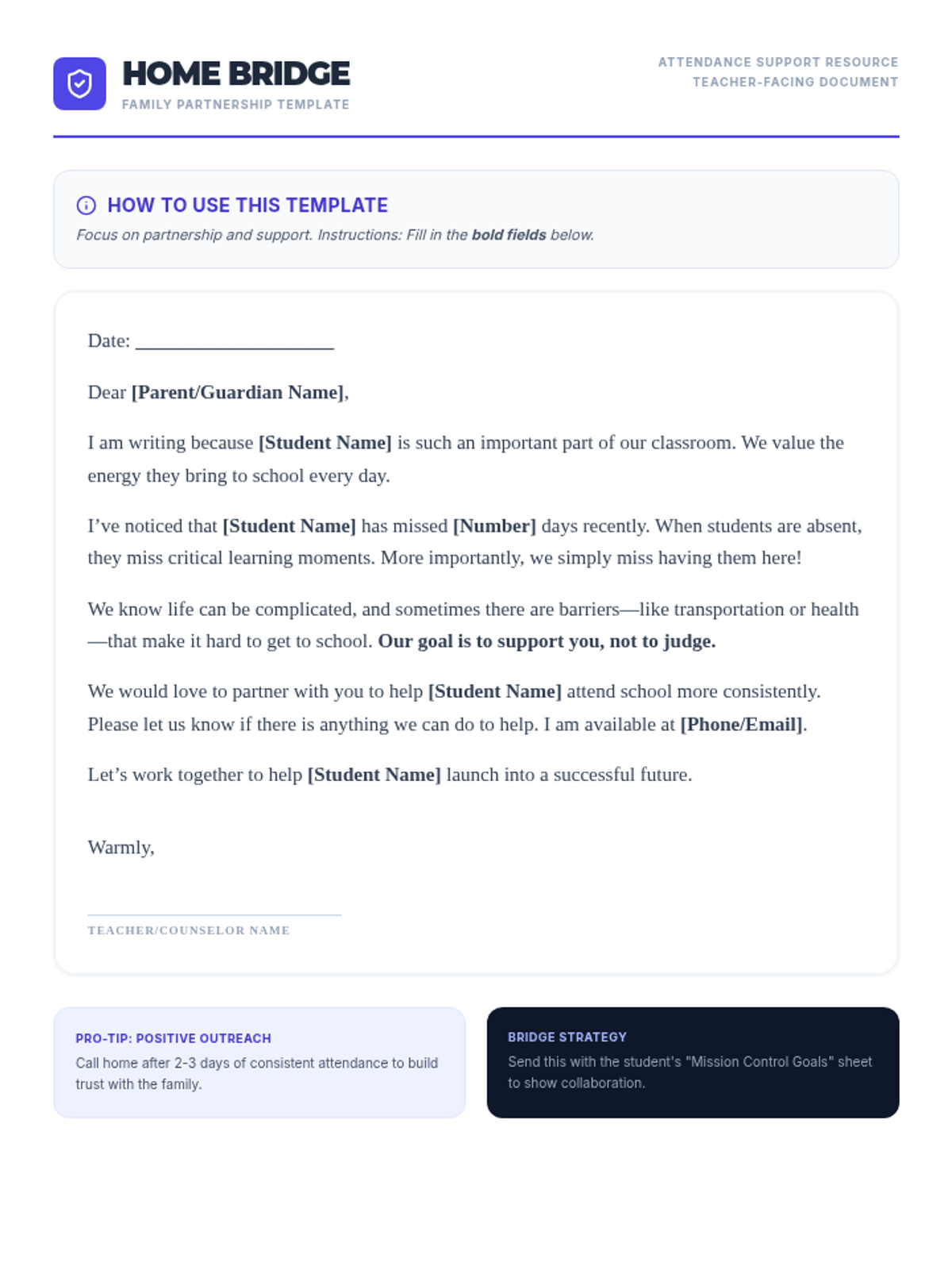
A teacher-facing outreach letter template designed to foster a supportive partnership between home and school regarding student attendance.
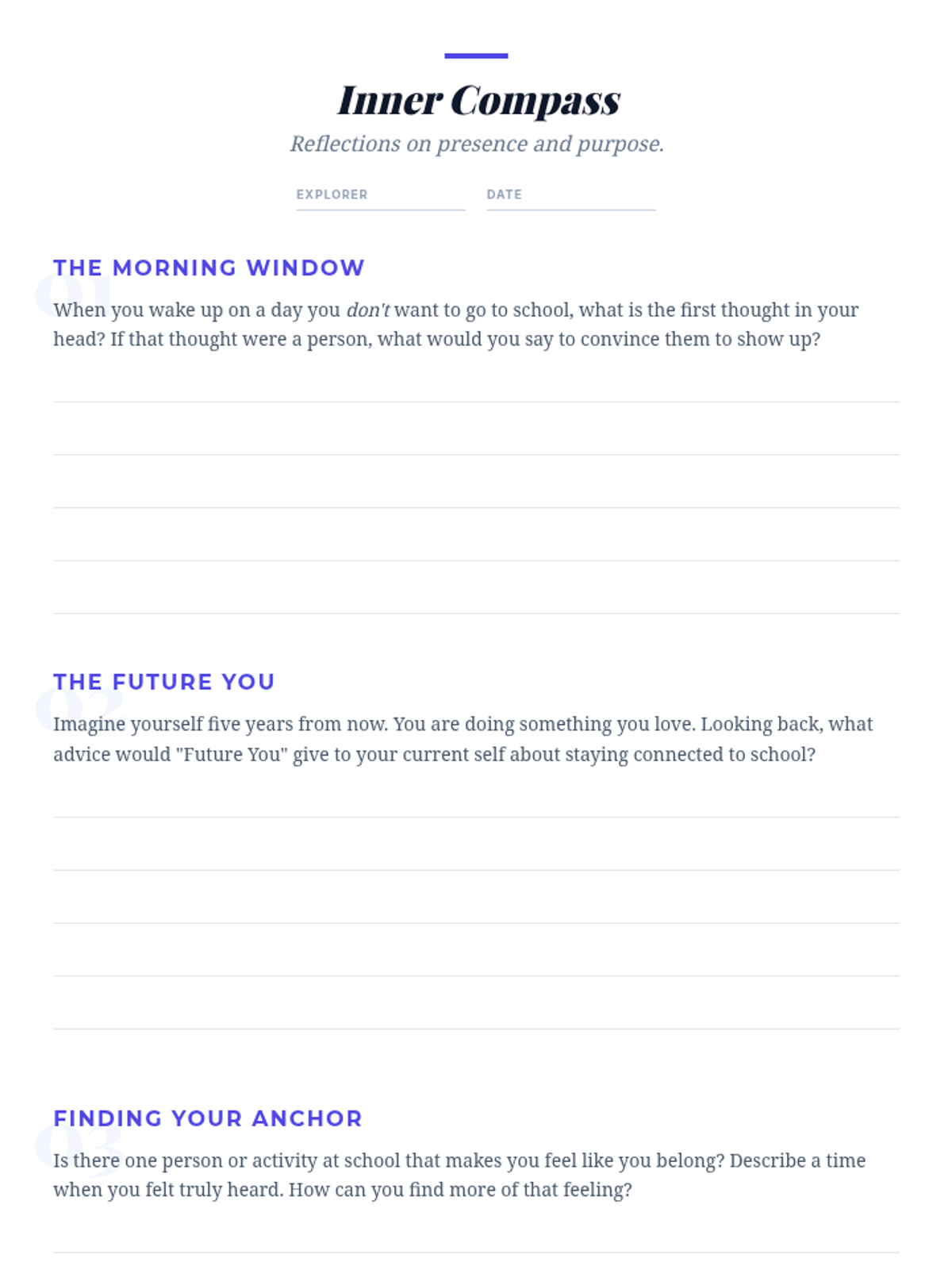
A set of deep reflection prompts for students to explore their personal connection to school and their aspirations for the future.
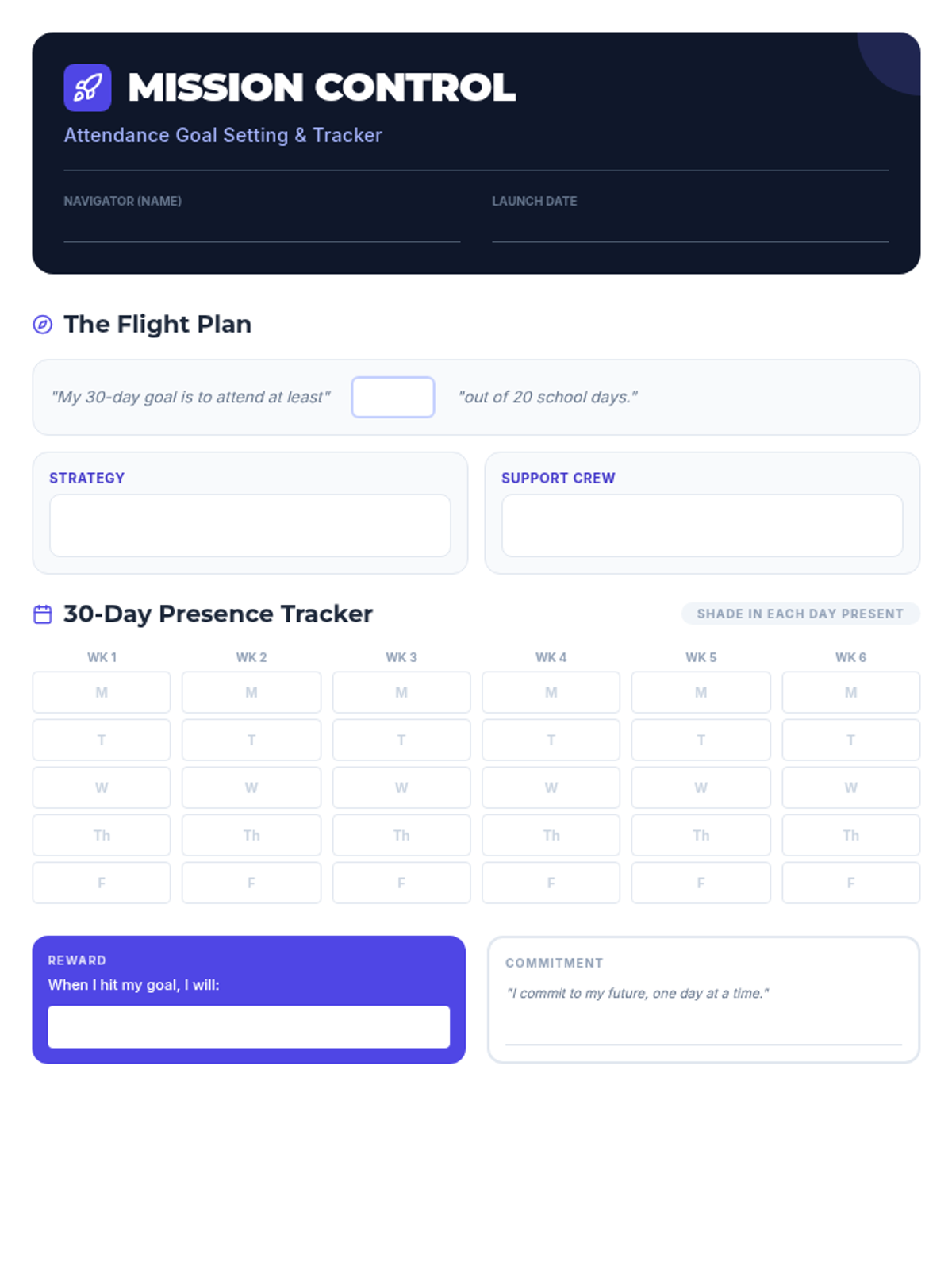
A goal-setting worksheet where students set a specific 30-day attendance goal, identify a strategy for success, and track their progress using a visual calendar.
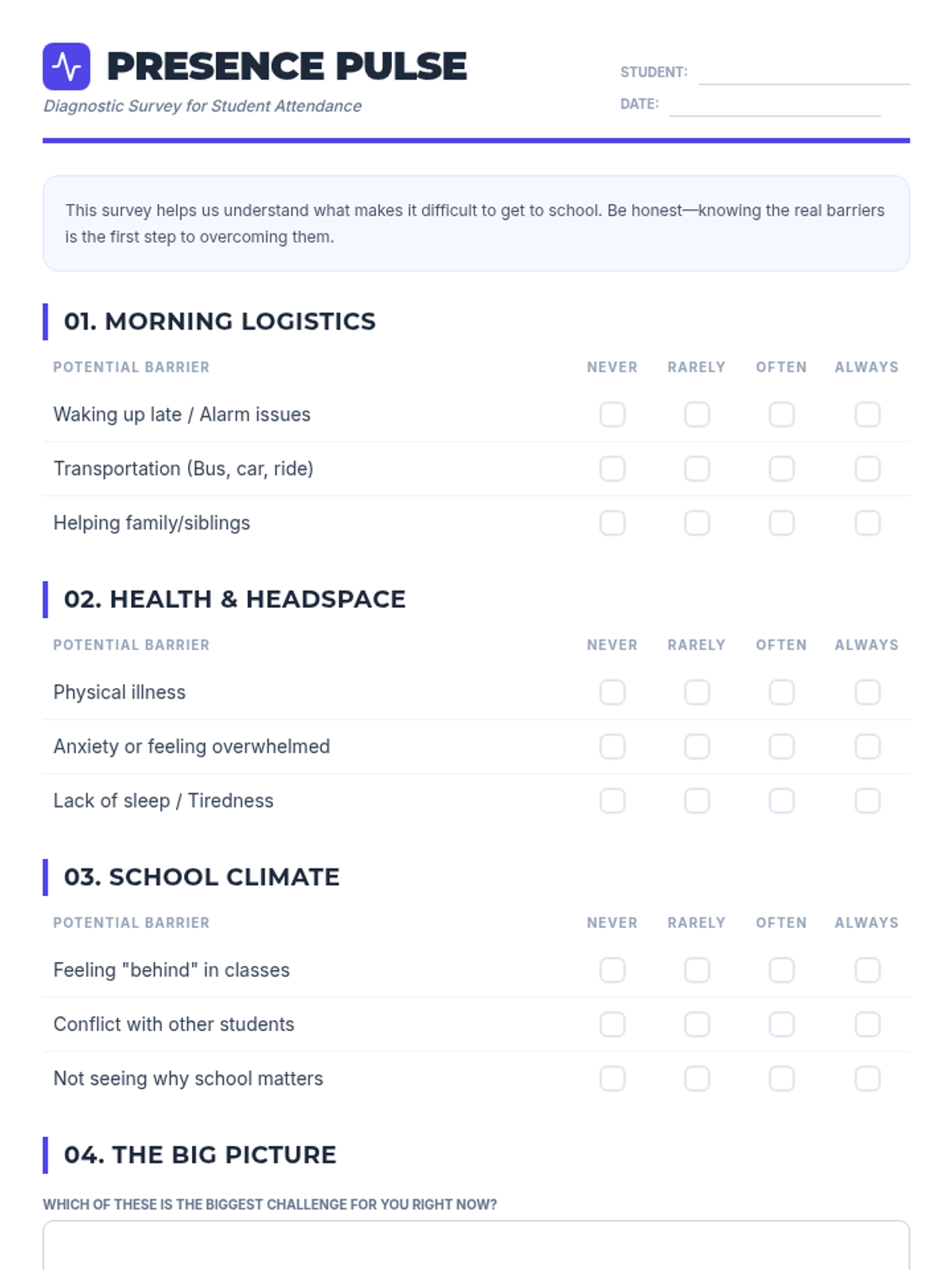
A student-facing survey to identify personal barriers to attendance across four key categories: Morning Logistics, Health & Headspace, School Climate, and Big Picture reflections.
Introductory slide deck for the attendance lesson, focusing on the 'why' of attendance and normalizing the discussion of barriers. It uses a professional, supportive 'navigation' theme.
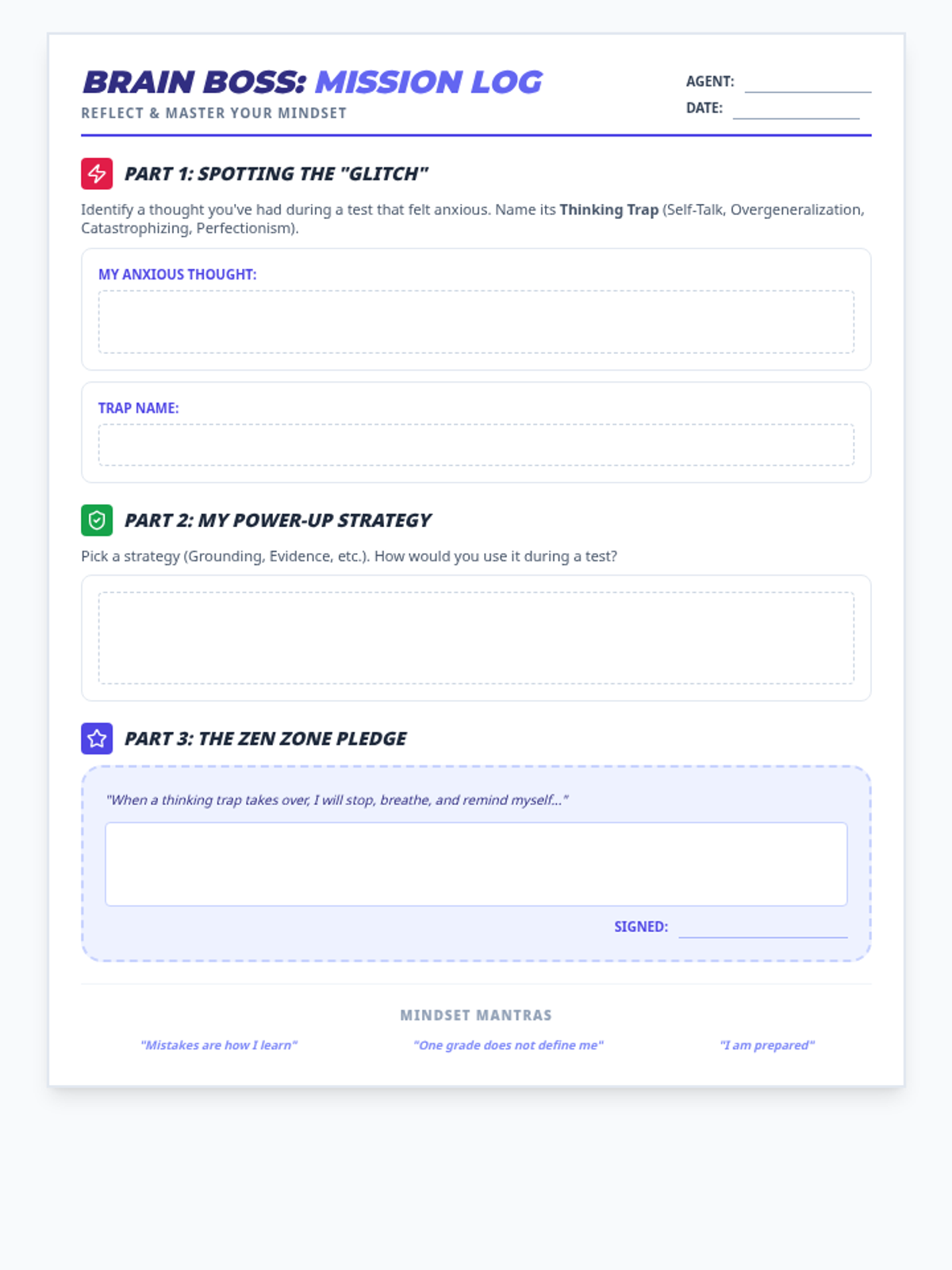
A post-game reflection sheet for students to document their own thinking traps and commit to a strategy for future tests.
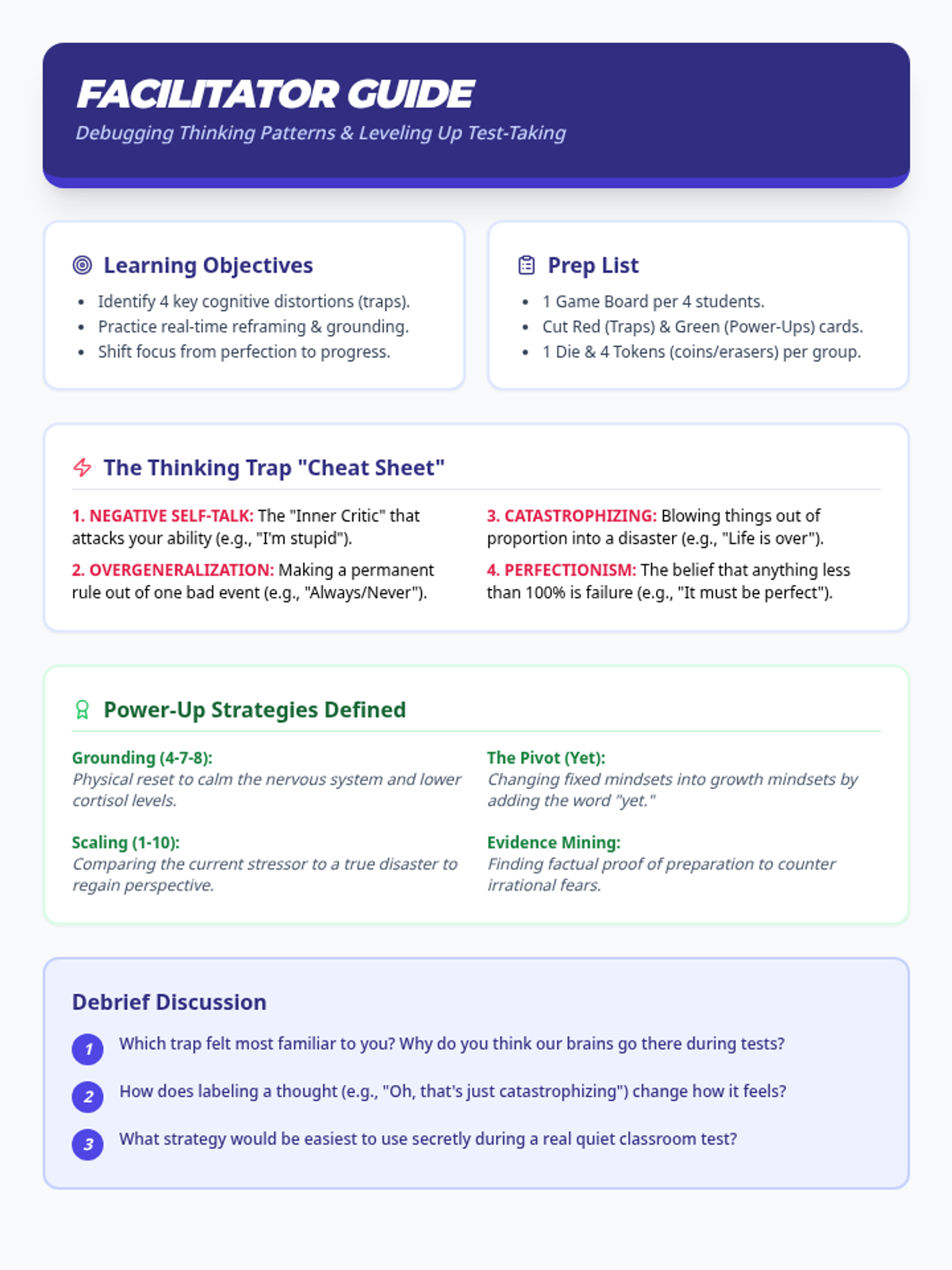
A comprehensive guide for teachers to facilitate the Brain Boss game, including definitions of cognitive distortions and debriefing questions for middle schoolers.
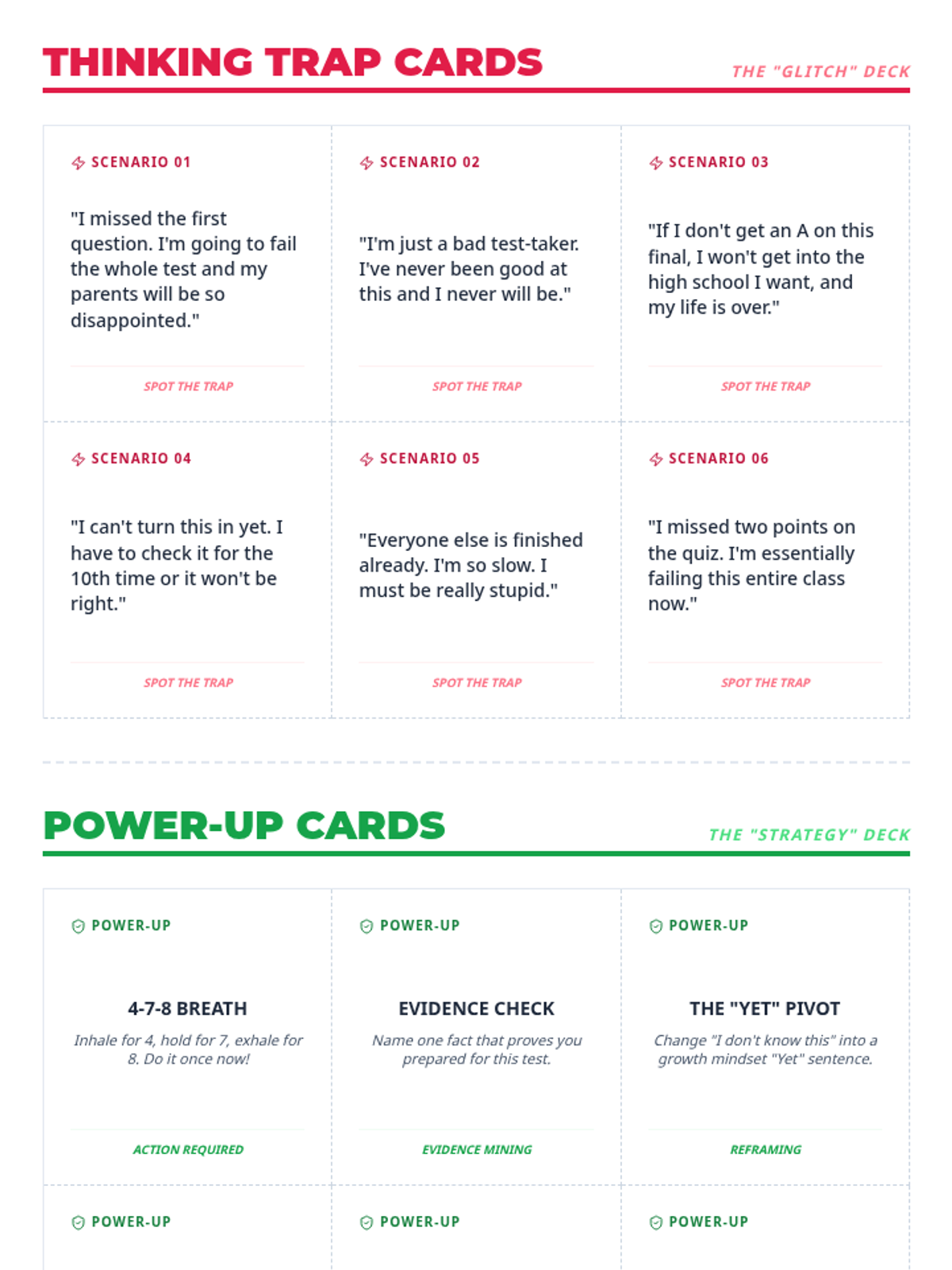
A set of printable challenge cards for the Brain Boss game, featuring "Thinking Trap" scenarios and "Strategy Power-Up" coping mechanisms.
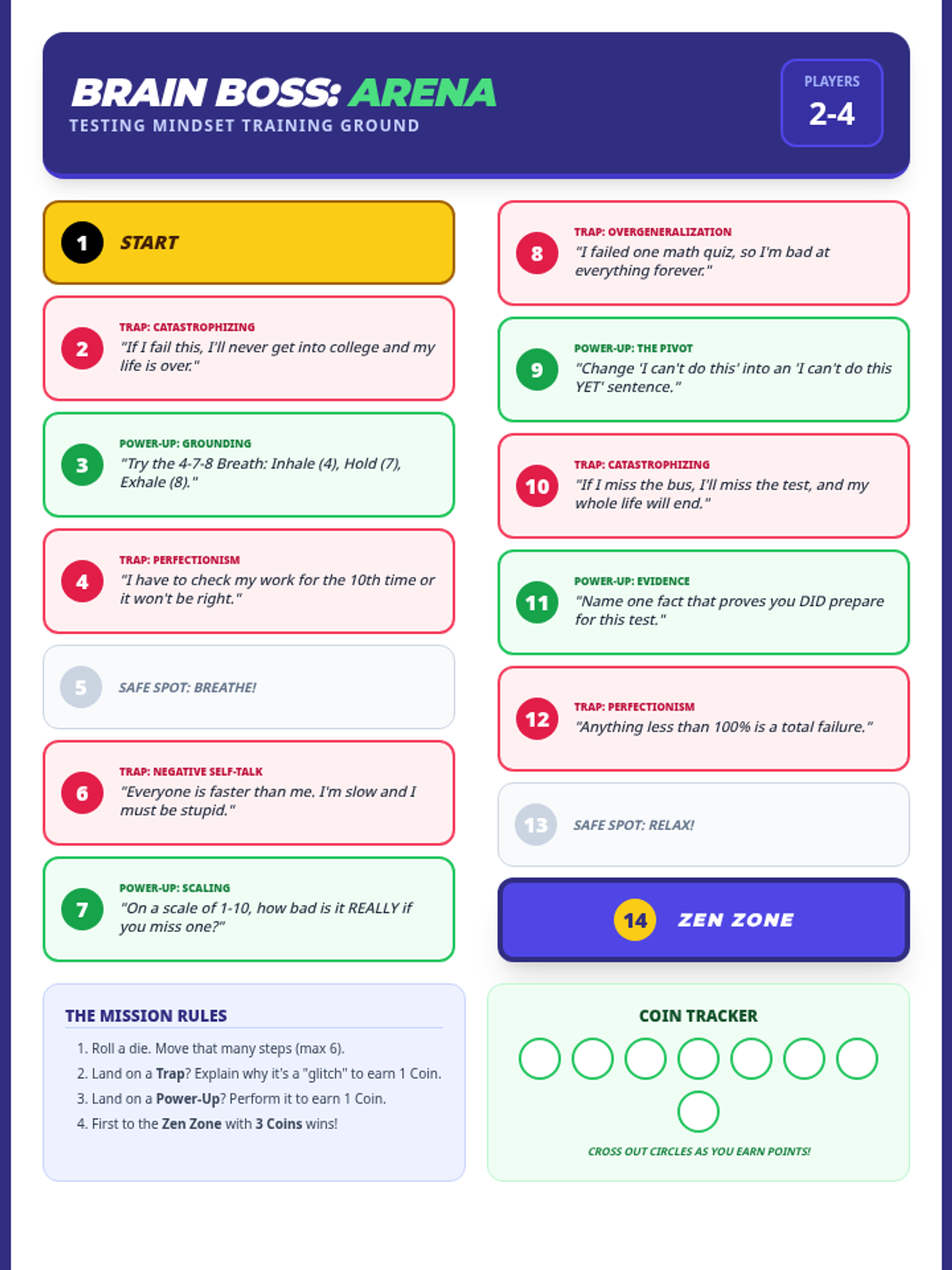
A vibrant, arcade-themed board game for middle school students to practice identifying and overcoming test-related thinking patterns like perfectionism and catastrophizing.
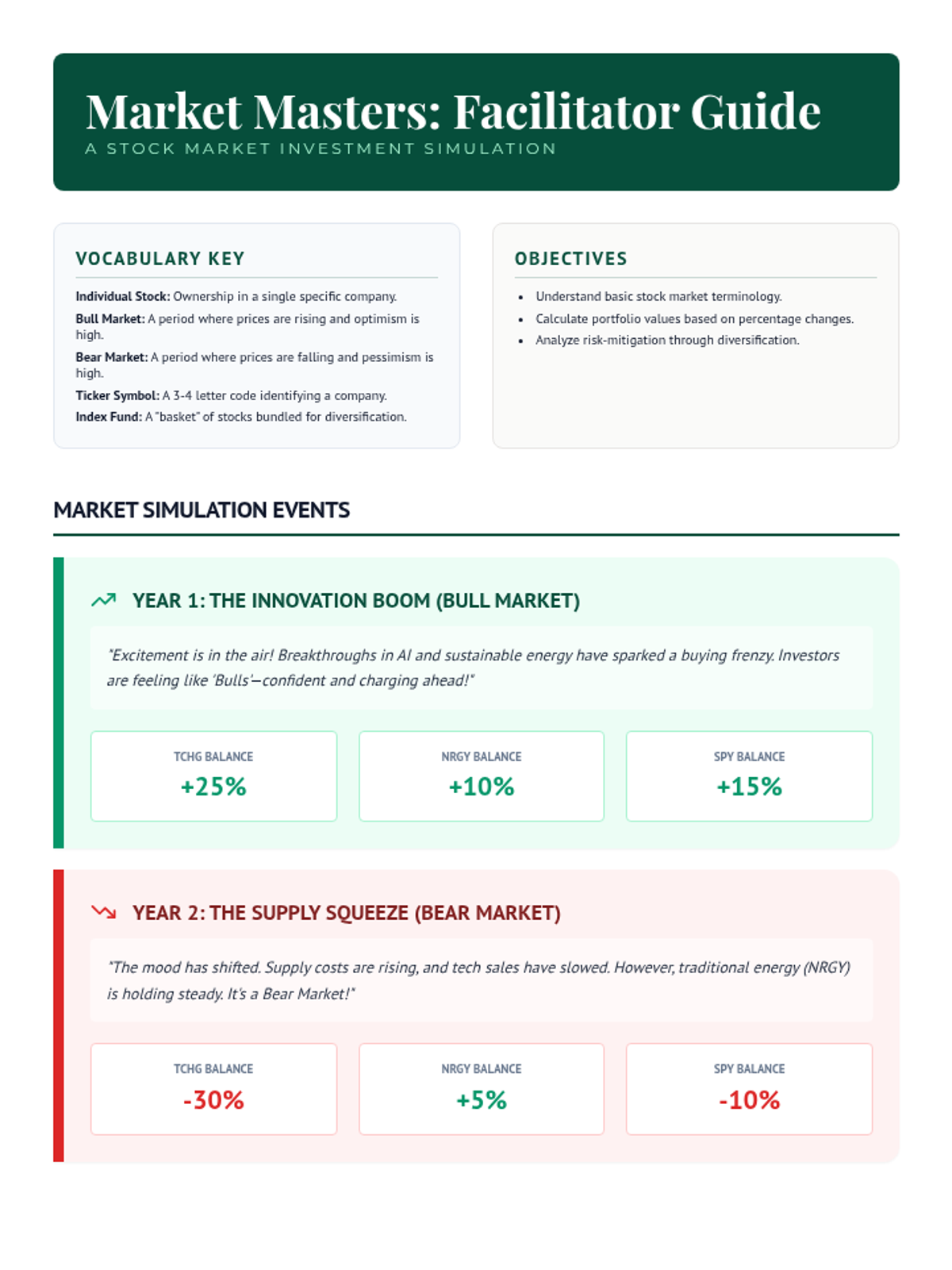
A comprehensive teacher guide for the Market Masters lesson, including an answer key, simulation "Market Event" scripts for two years, and guided discussion prompts.
A dynamic slide deck introducing stock market fundamentals, ticker symbols, market directions (bulls vs. bears), and the difference between individual stocks and index funds.
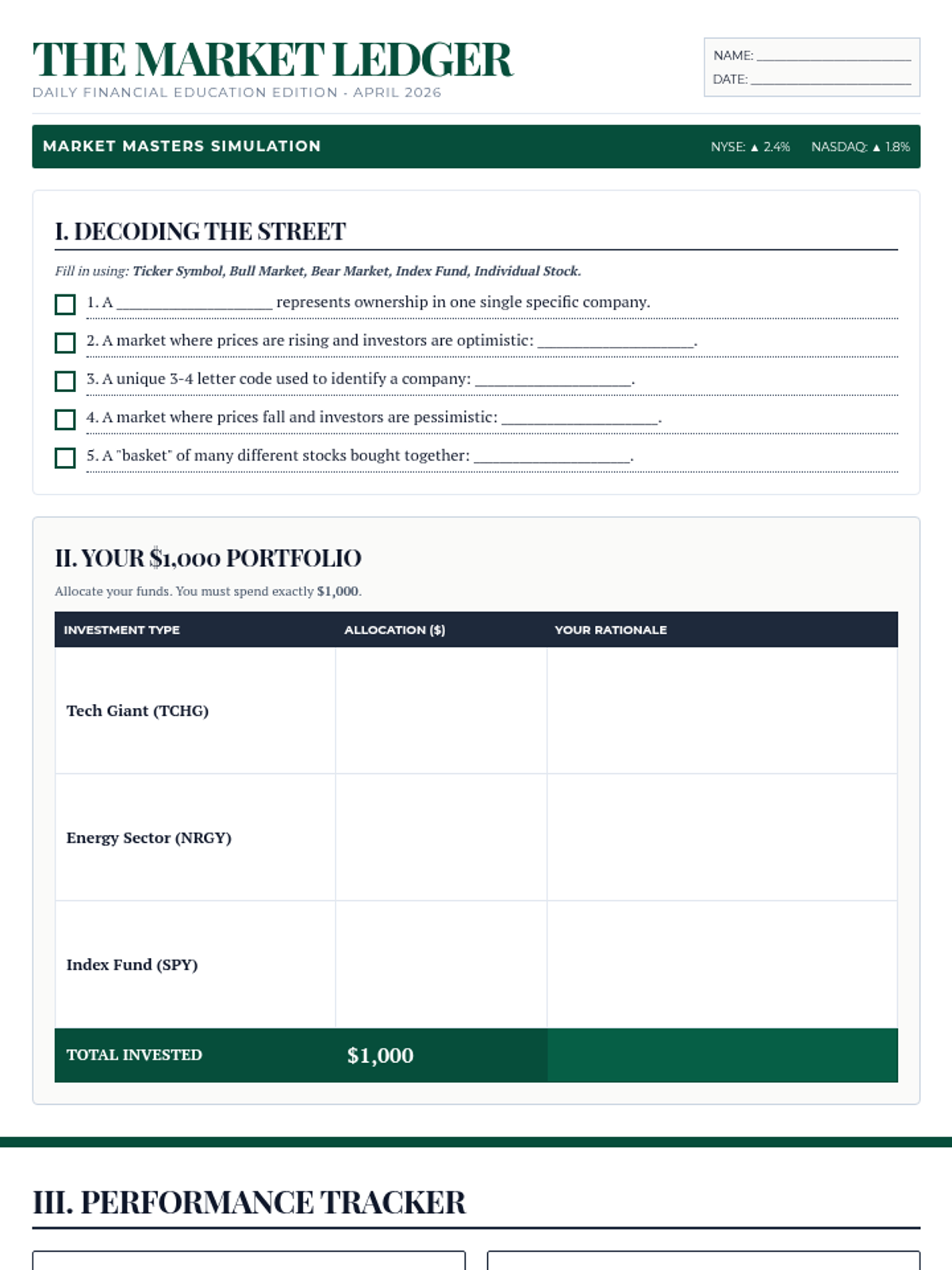
A vintage newspaper-themed simulation worksheet where students learn key stock market terminology and track a mock $1,000 investment portfolio across two years.
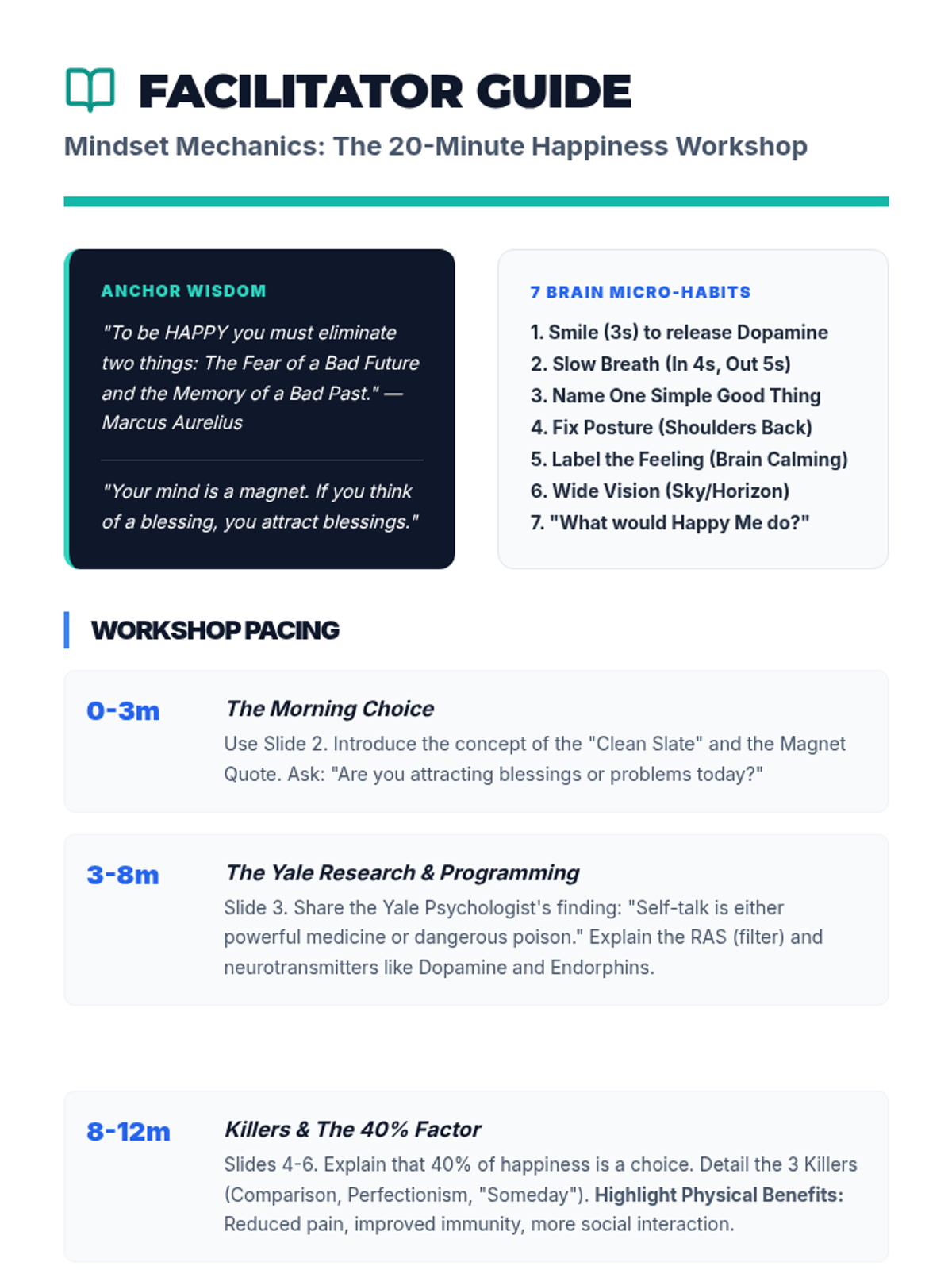
A concise teacher-facing guide for delivering the 20-minute Mindset Mechanics workshop, including pacing, script highlights, and discussion prompts.
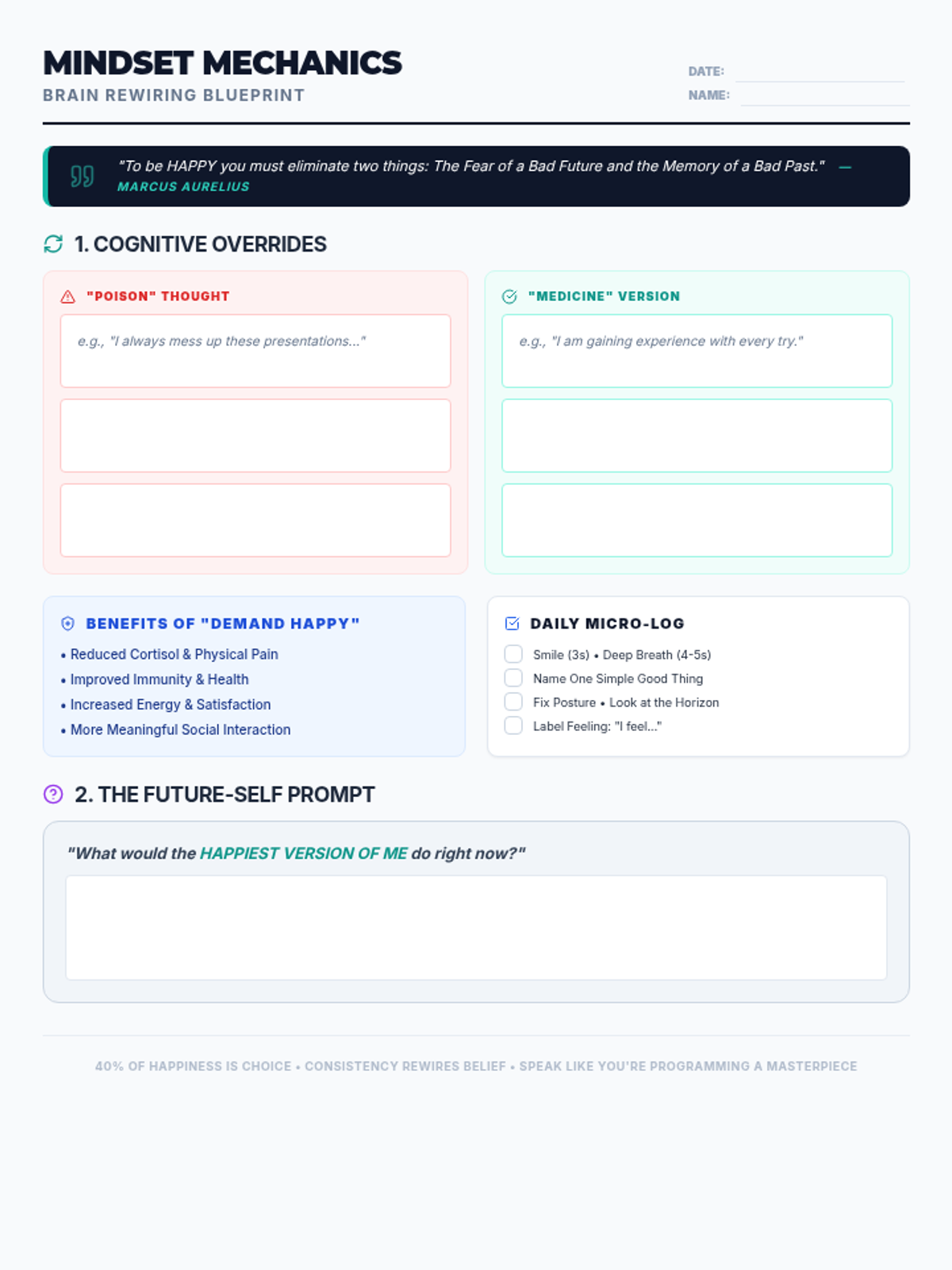
A daily student reflection and habit tracking sheet designed to help users practice positive self-talk reframing and perform micro-habits for brain rewiring.
A 10-slide presentation exploring the science and mechanics of happiness, focusing on the Reticular Activating System (RAS), the 40% factor of choice, and daily micro-habits for mental rewiring.
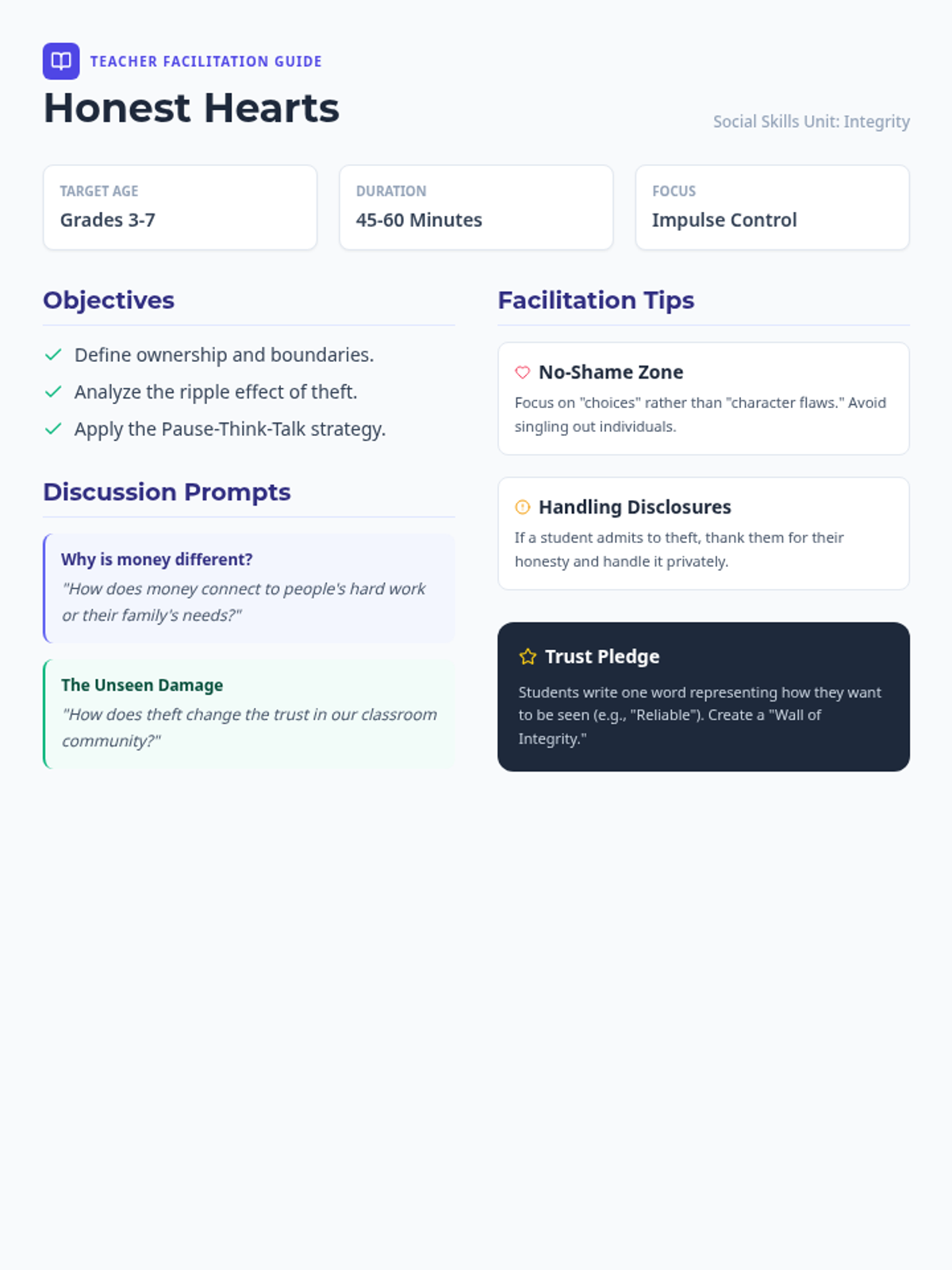
A teacher facilitation guide for delivering the Honest Hearts lesson, including learning objectives, discussion prompts, handling sensitive disclosures, and a closing activity suggestion.
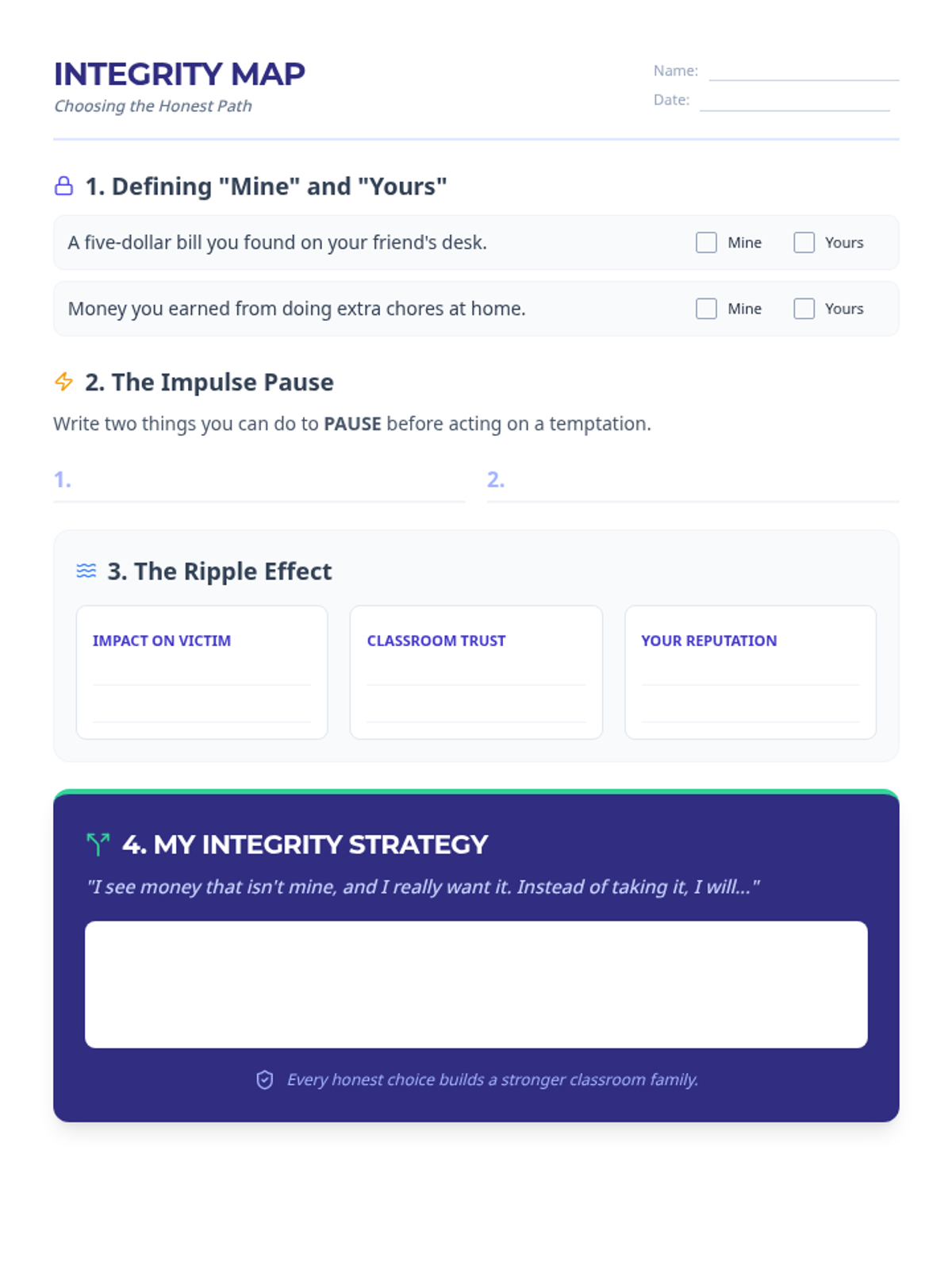
A student worksheet for personal reflection on ownership, identifying impulses, analyzing the ripple effect of theft, and developing a personal strategy for making honest choices.