Elementary awareness Teacher Guide. Updated with cleaned-up HTML, Markdown artifacts removed, and a fully populated S.O.A.R. framework box.
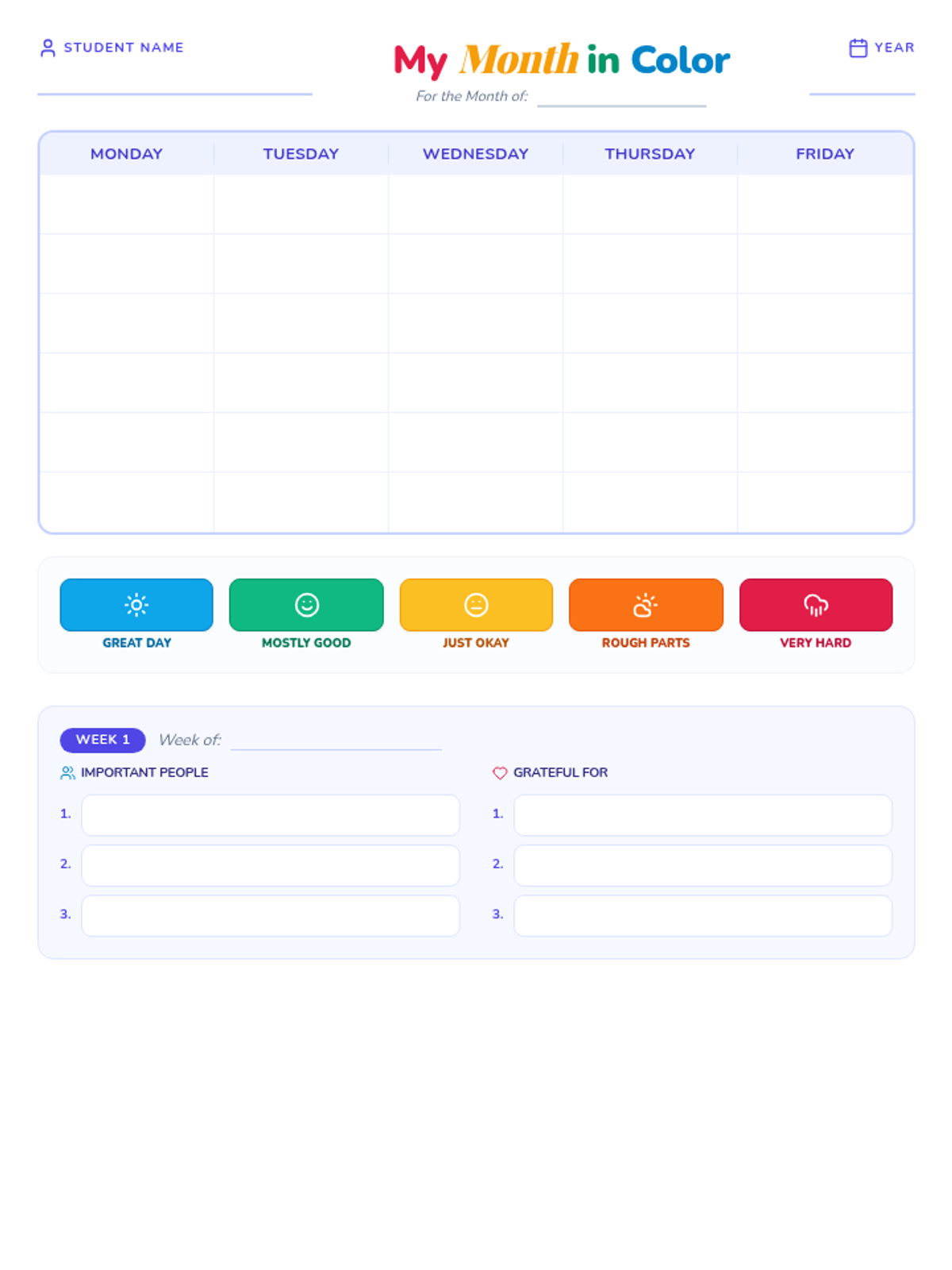
A vibrant and playful mood tracker handout that allows students to track their daily emotions using a color key. The two-page document includes a 6-week monthly grid and weekly reflection sections for important people and gratitude, optimized for handwriting and high readability.
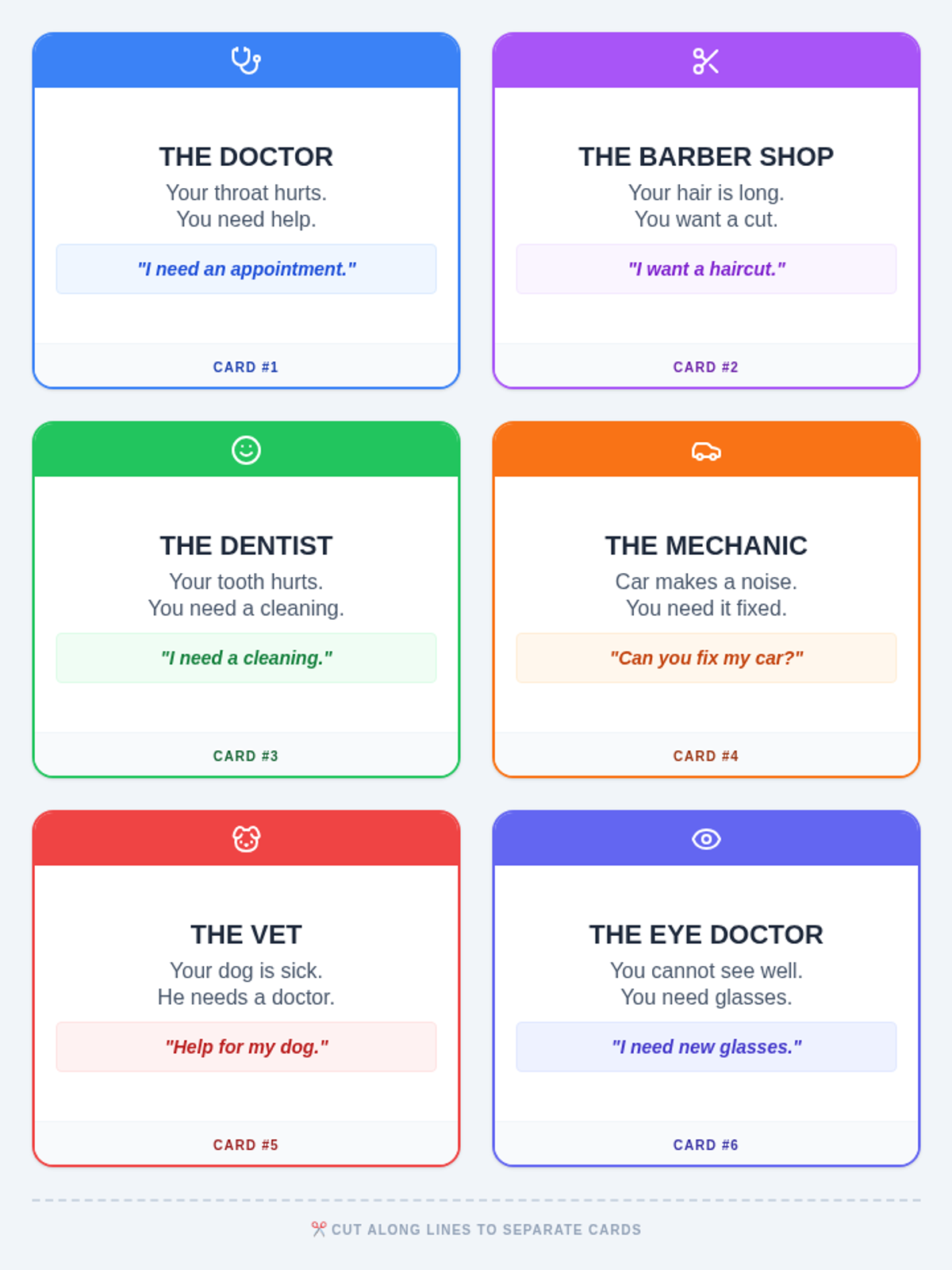
A set of 6 roleplay scenario cards focused exclusively on different reasons for visiting a doctor, used for practicing scheduling and self-advocacy skills.
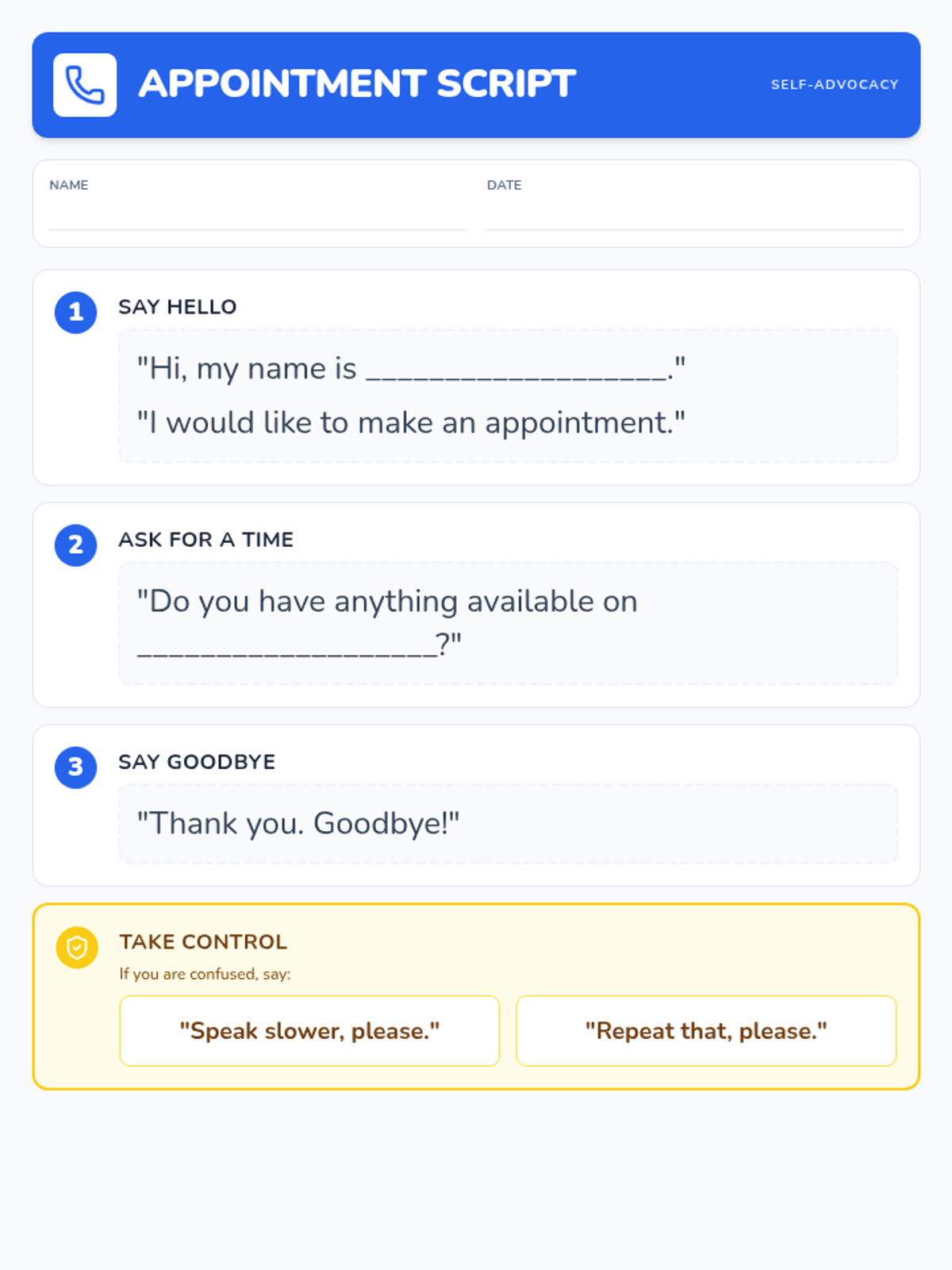
A simplified, one-page visual phone script for students to use when specifically practicing scheduling doctor appointments, featuring large text and clear self-advocacy phrases.
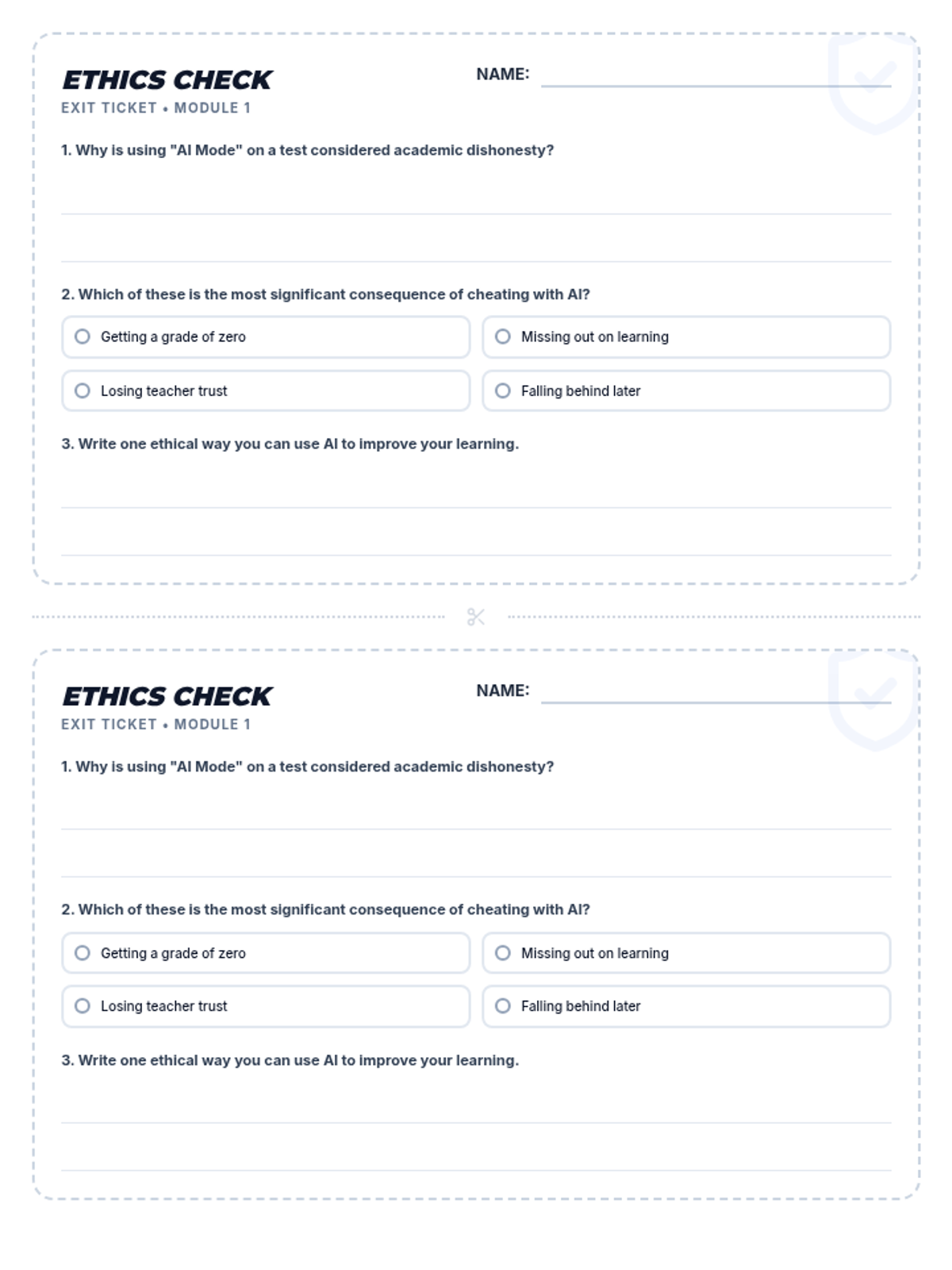
A double-sided exit ticket for assessing student understanding of academic integrity and the ethical boundaries of AI use after the lesson.
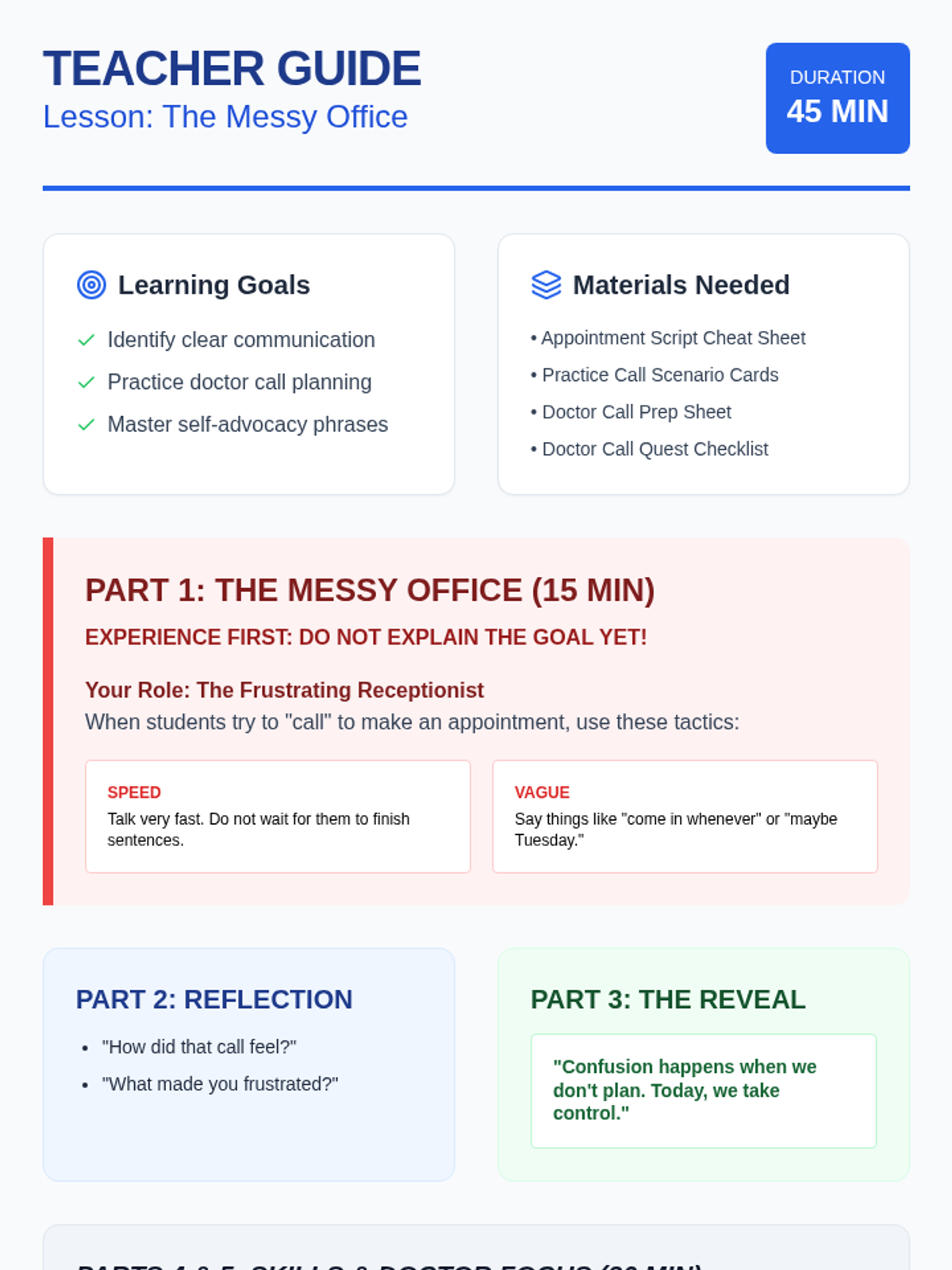
A teacher-facing guide for a doctor-specific advocacy lesson, outlining the "Experience First" methodology and providing specific tactics for roleplaying a confusing medical office.
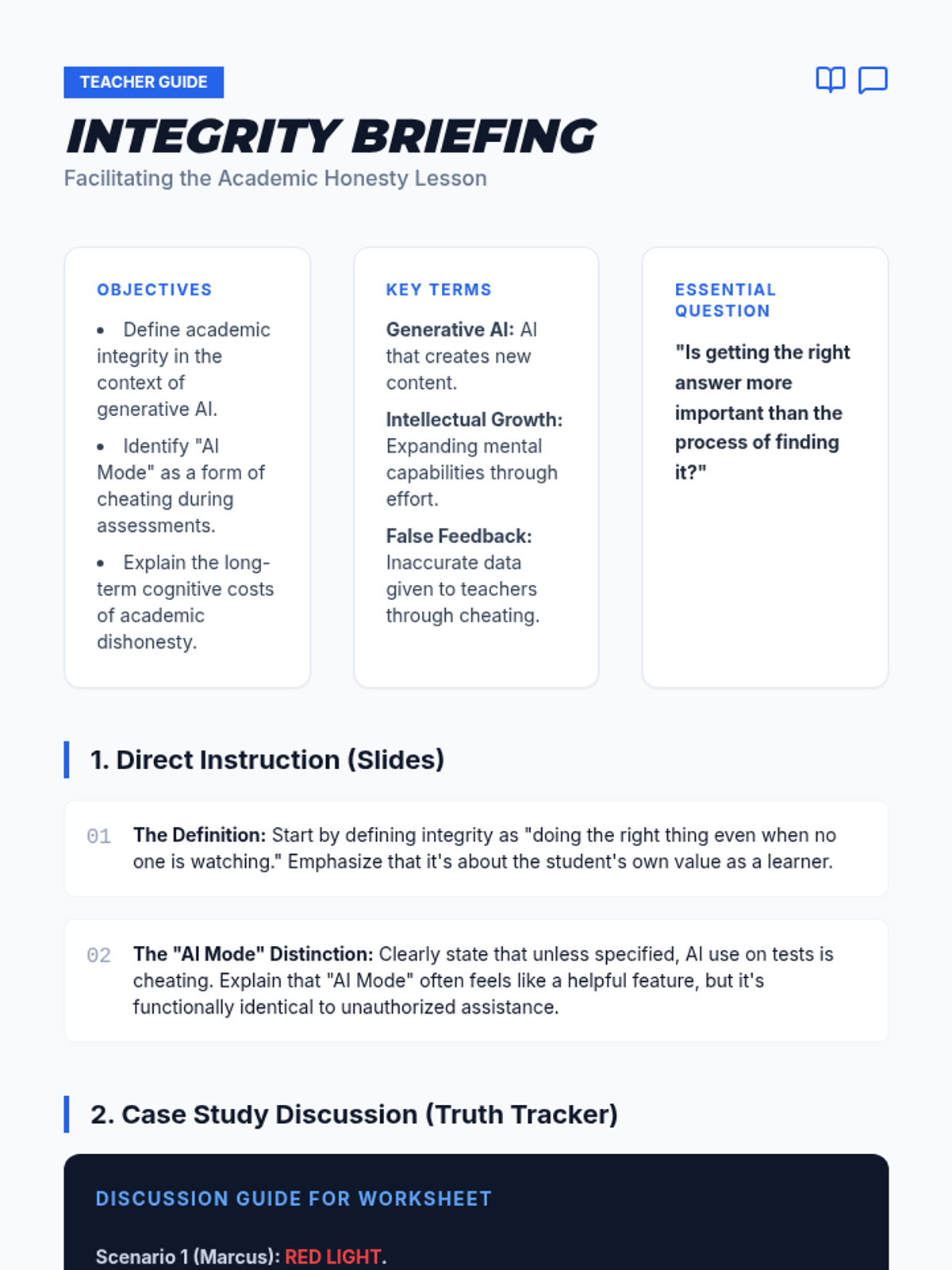
A teacher guide providing facilitation tips, discussion prompts, and an answer key for the Truth Tracker case studies, with strategies for addressing common student justifications for AI misuse.
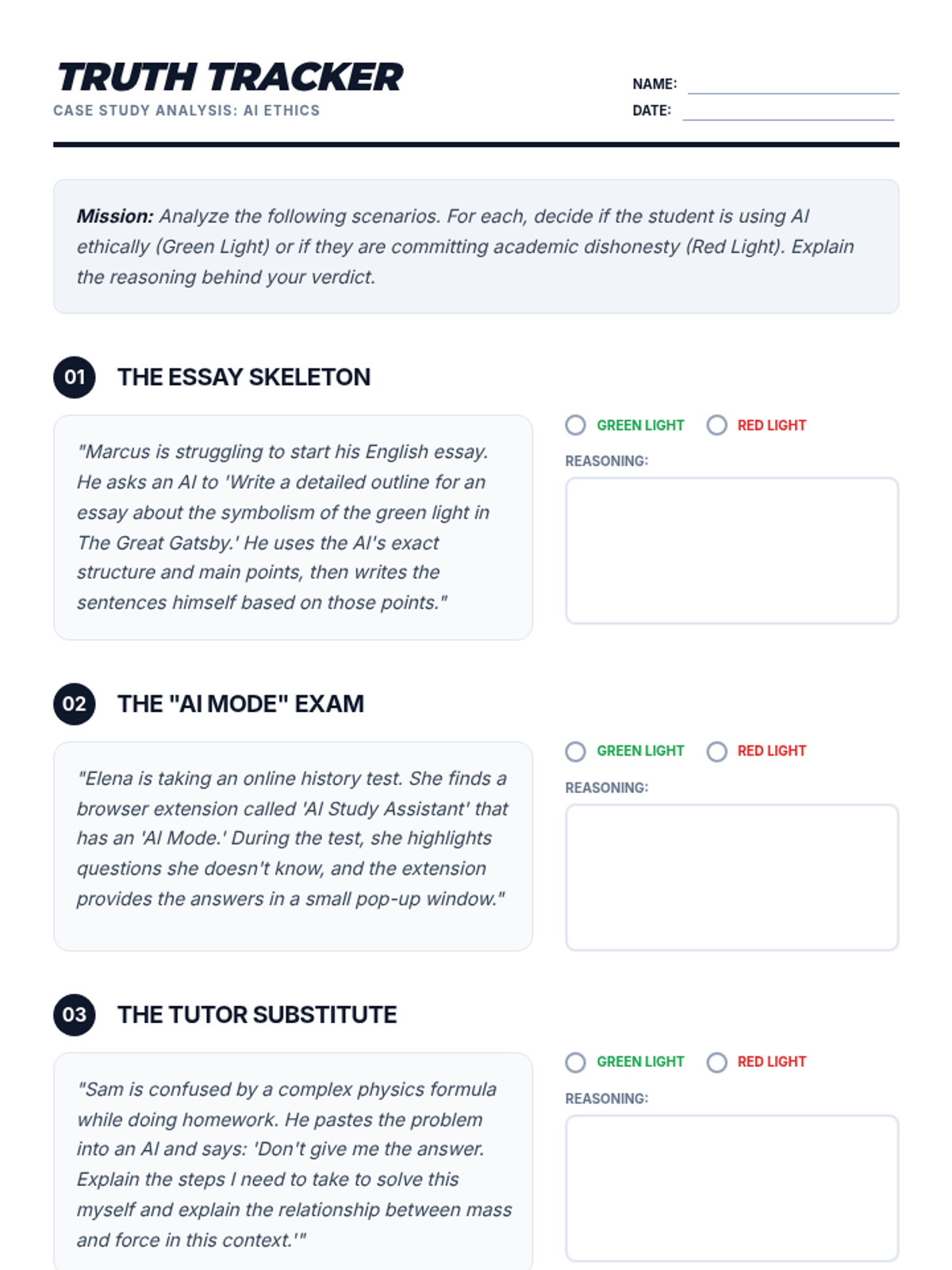
A worksheet featuring case studies where students evaluate scenarios involving AI use in school, determining whether the actions constitute academic honesty or cheating.
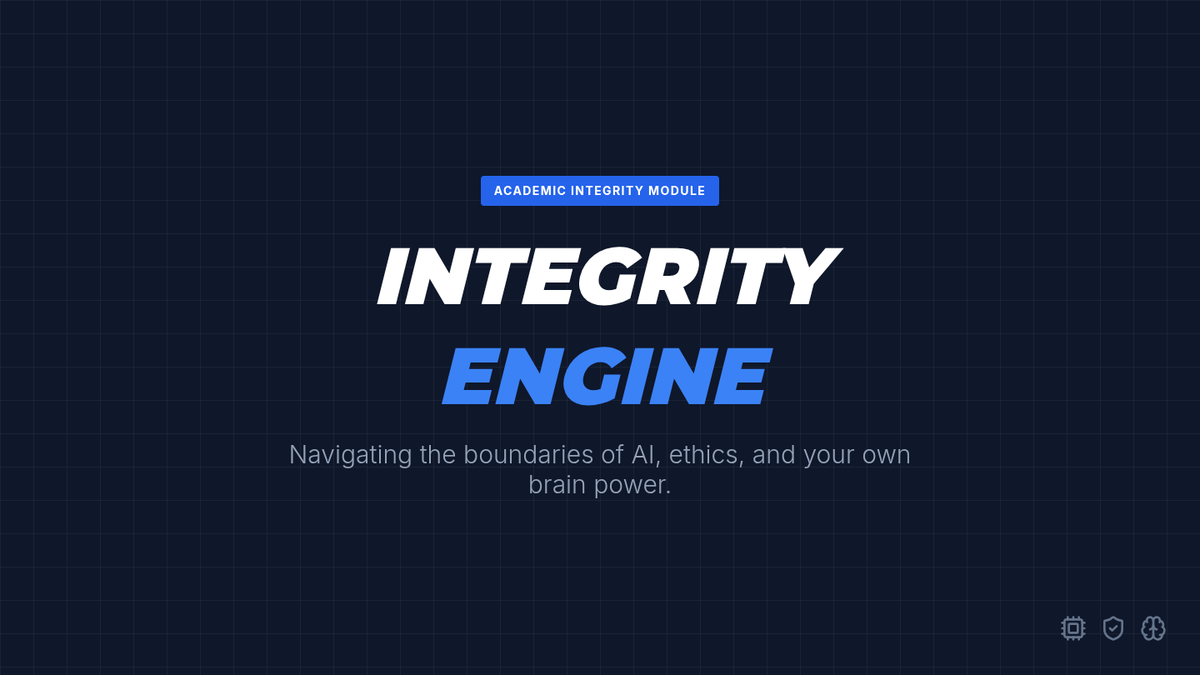
A presentation about academic honesty and the ethical use of AI, specifically addressing why using AI during assessments is considered cheating and the negative impact it has on student learning.
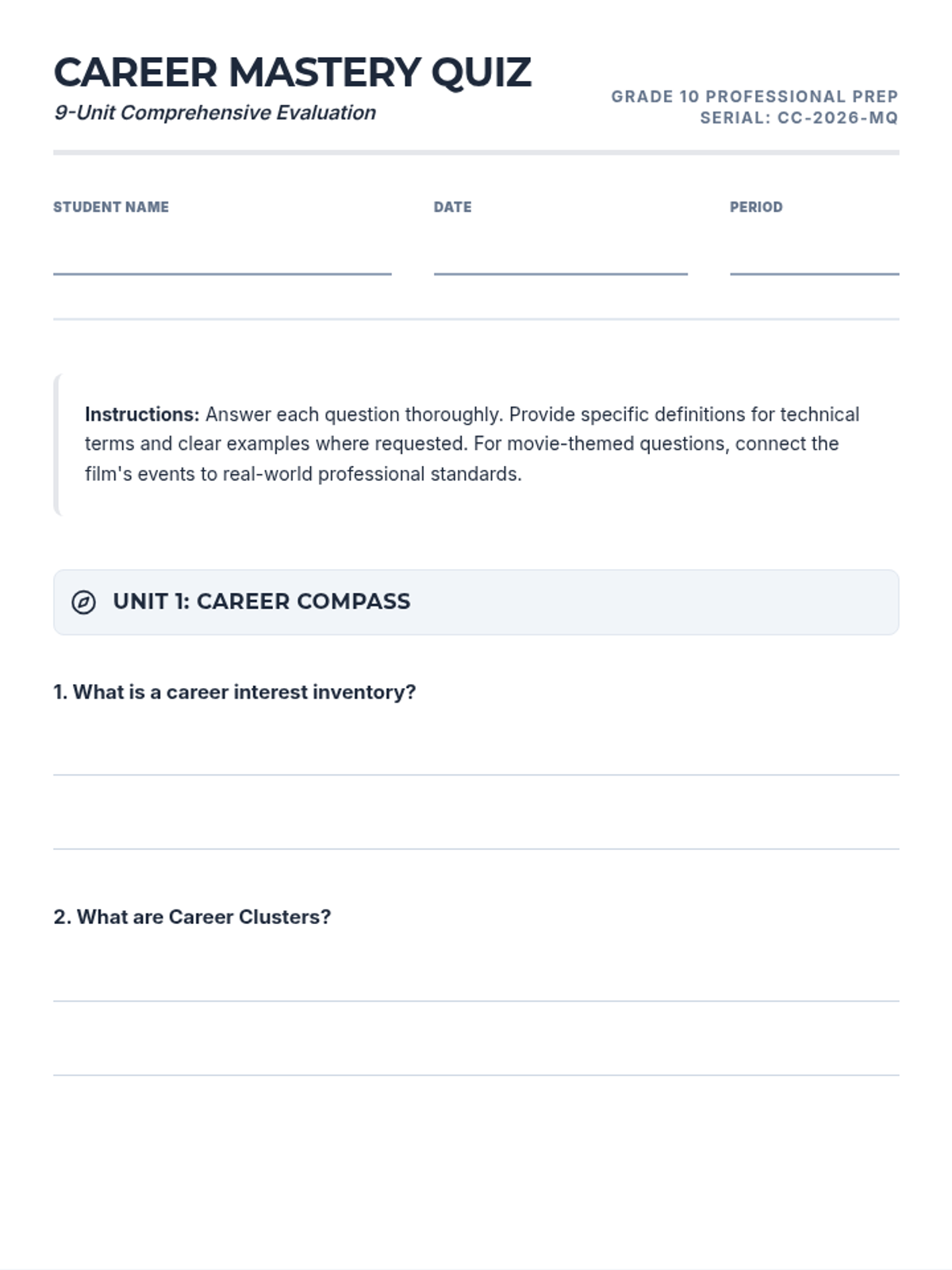
A comprehensive 17-page quiz for 10th graders based on the Career Catalyst series, featuring open-ended response areas for 56 questions across nine professional units.