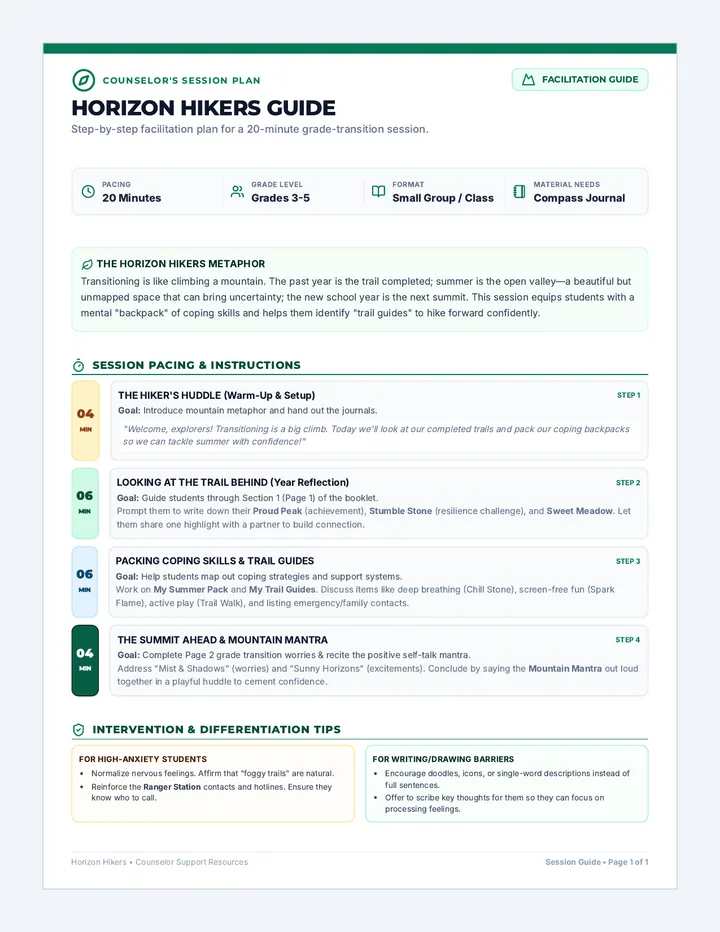
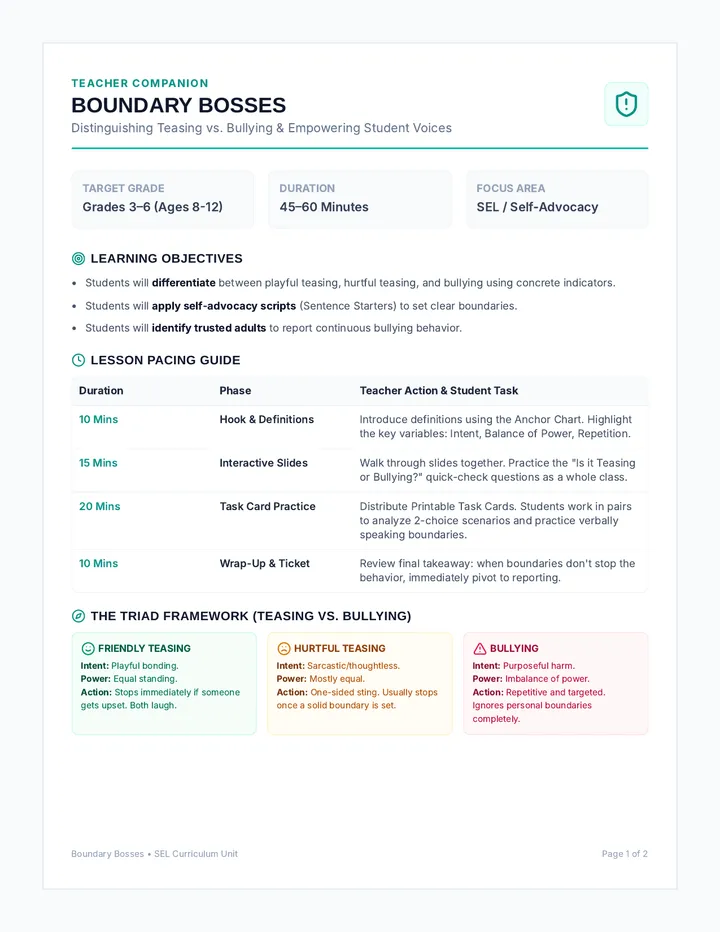
A comprehensive teacher guide for the Focus Busters lesson, including prep steps, instructional sequence, and core objectives for teaching focus skills to 4th graders.
A blueprint-themed worksheet that frames motivation mapping as a technical engineering project. Features a grid background, technical schematic headers, and organized sections for self-analysis and goal setting. Revised to fit on a single page with high-contrast white work areas.
A blueprint-themed worksheet that frames motivation mapping as a technical engineering project. Features a grid background, technical schematic headers, and organized sections for self-analysis and goal setting.

A vintage adventure journal-themed worksheet that transforms self-motivation mapping into a field expedition. Features elegant serif typography, earth tones, and sketched visual motifs. Revised for better readability and handwriting space on a single page.
A vintage adventure journal-themed worksheet that transforms self-motivation mapping into a field expedition. Features elegant serif typography, earth tones, and sketched visual motifs. Revised to fit on a single page with all original user prompts included.
A single-page motivation mapping worksheet for students to identify personal drivers and develop a growth mindset. Featuring white work areas for high contrast and a compact, organized layout.
A teacher's facilitation guide for the 'Motivation Mindset' lesson, featuring learning objectives, key vocabulary definitions (intrinsic vs. extrinsic), a timed lesson flow, and discussion prompts for deeper student engagement.
A comprehensive student worksheet designed to help learners identify their personal motivators, analyze their levels of engagement, and create a concrete action plan for achieving goals using an 'Inner Compass' expedition theme.
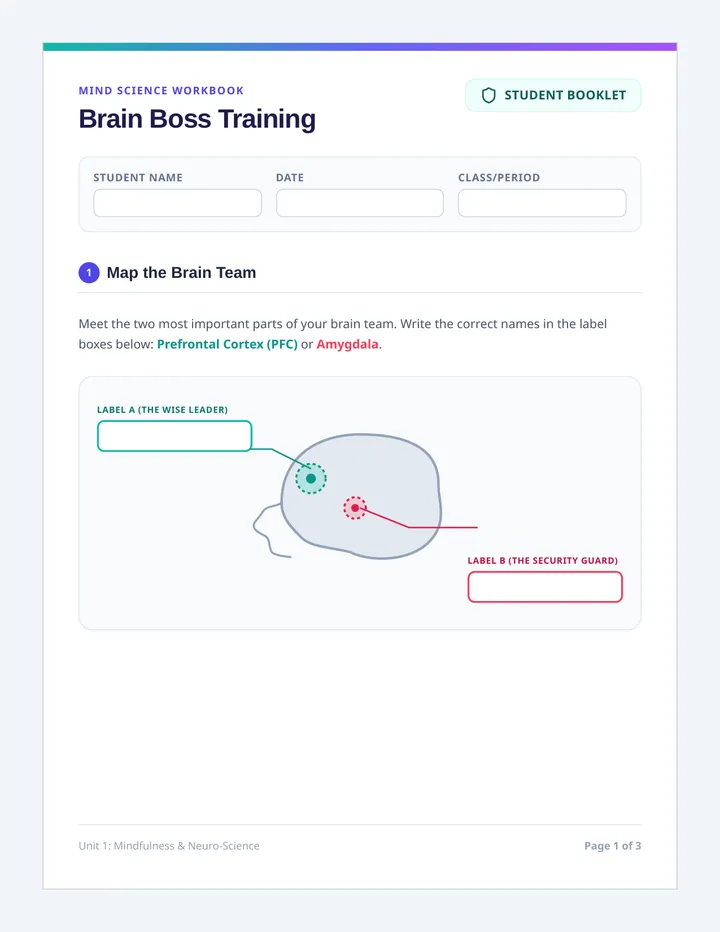
A reflection worksheet for students to record their physical and emotional states before and after the mindfulness practice, with space for drawing and writing.
A visually calming anchor chart or poster for students to reference the four main steps of the grounding and movement flow, including a facilitator read-aloud guide.
A comprehensive guided script for educators to facilitate a mindfulness session focused on progressive muscle relaxation and gentle mindful movement.
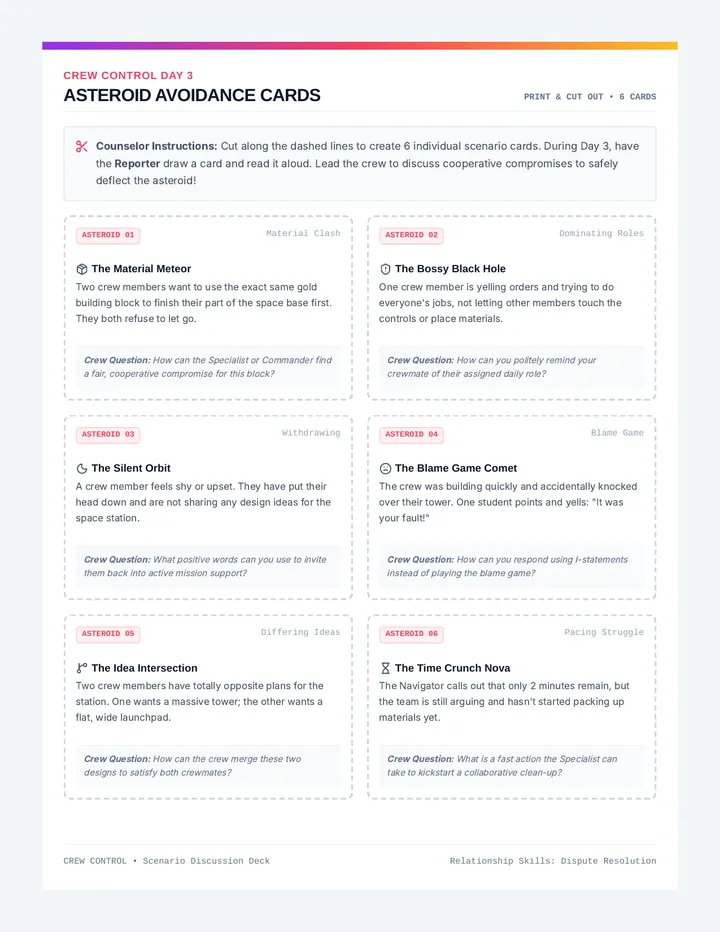
A visual presentation for Session 2, introducing the 'Asteroid' metaphor for triggers and helping students identify the connection between external events and internal engine shifts.
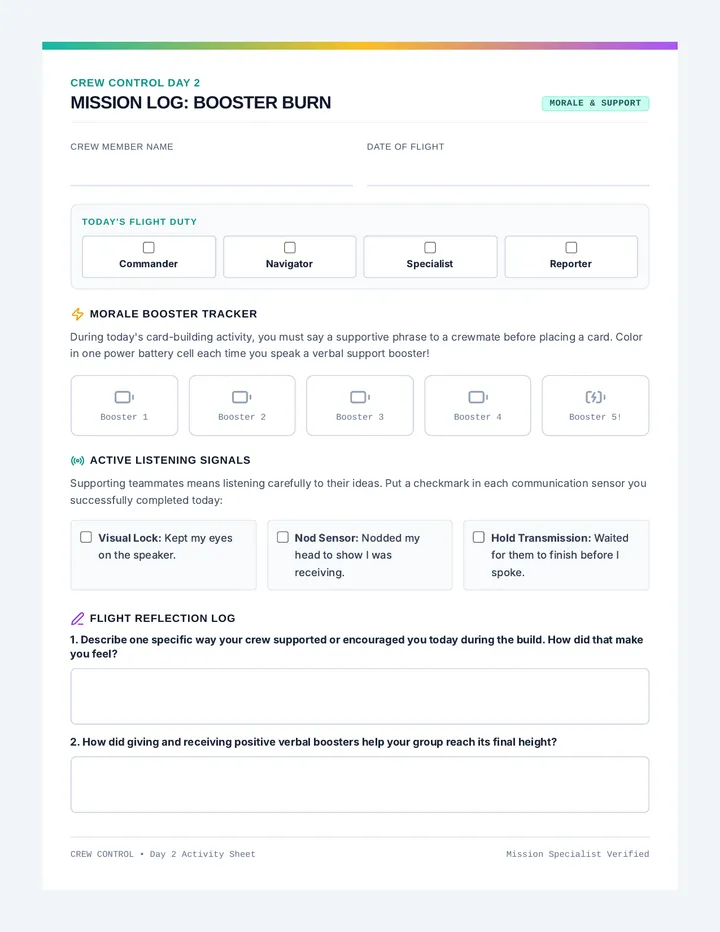
A student worksheet to help students practice and select their preferred self-regulation strategies (Heat Shields).
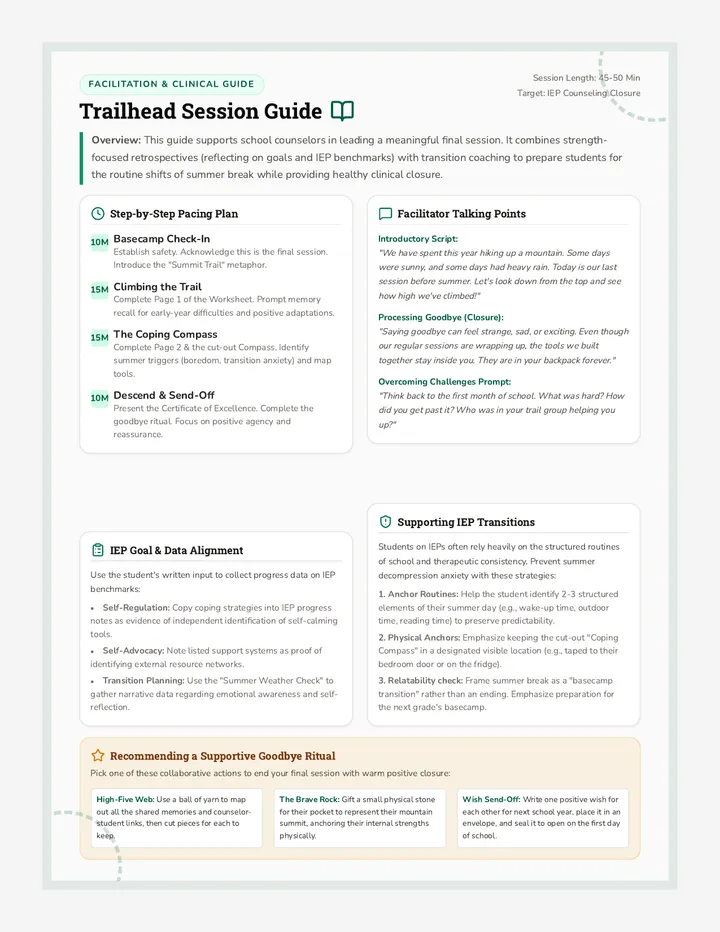
A facilitation guide for the final session, focusing on integrating all self-regulation skills through a culminating simulation activity and graduation ceremony.
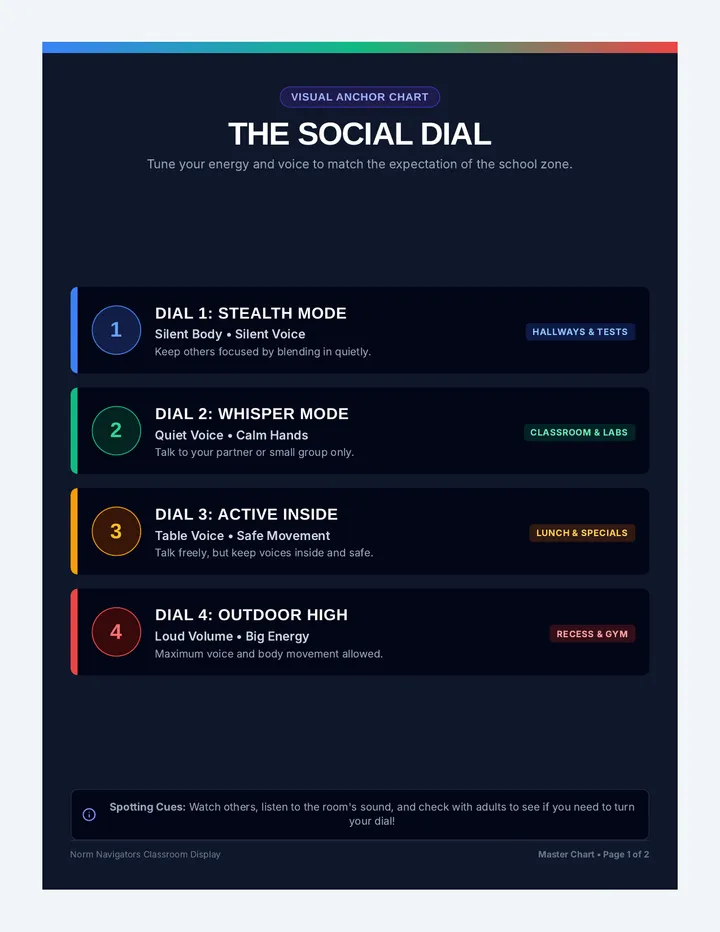
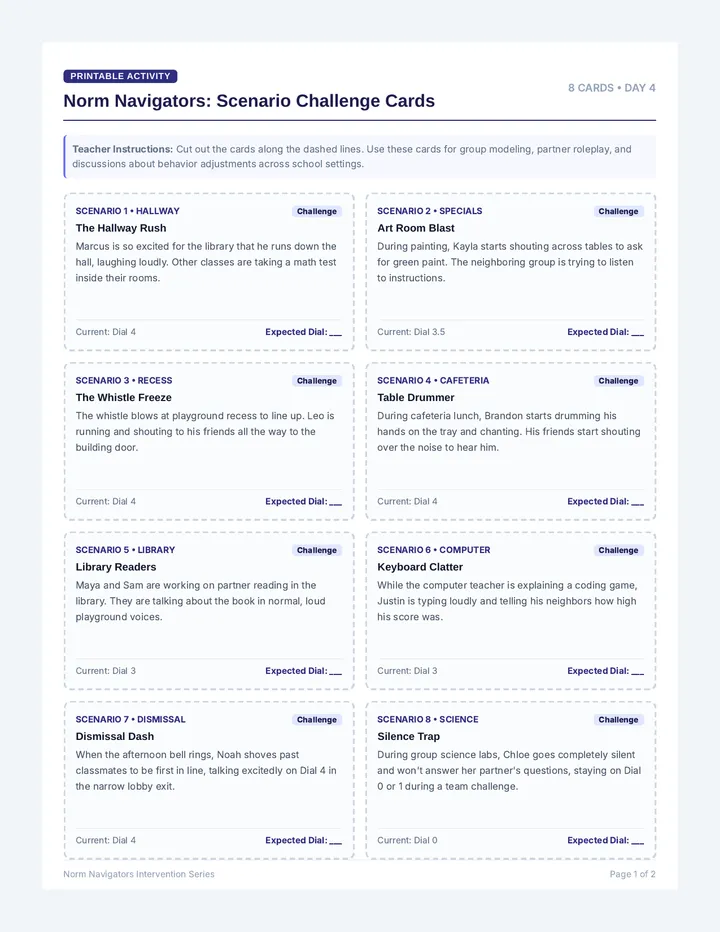
A facilitation guide for the fifth session, focusing on reading social cues and adjusting behavior to match the social context.
A facilitation guide for the fourth session, focusing on impulse control through the concept of the 'Pause Button' and inhibition games.
A facilitation guide for the third session, focusing on teaching self-regulation strategies to manage high emotions and energy levels.
A facilitation guide for the second session, focusing on identifying triggers ('Asteroids') and understanding how they affect energy levels.
A student-facing worksheet to help identify physical sensations associated with different arousal states and a weekly log to track engine levels.
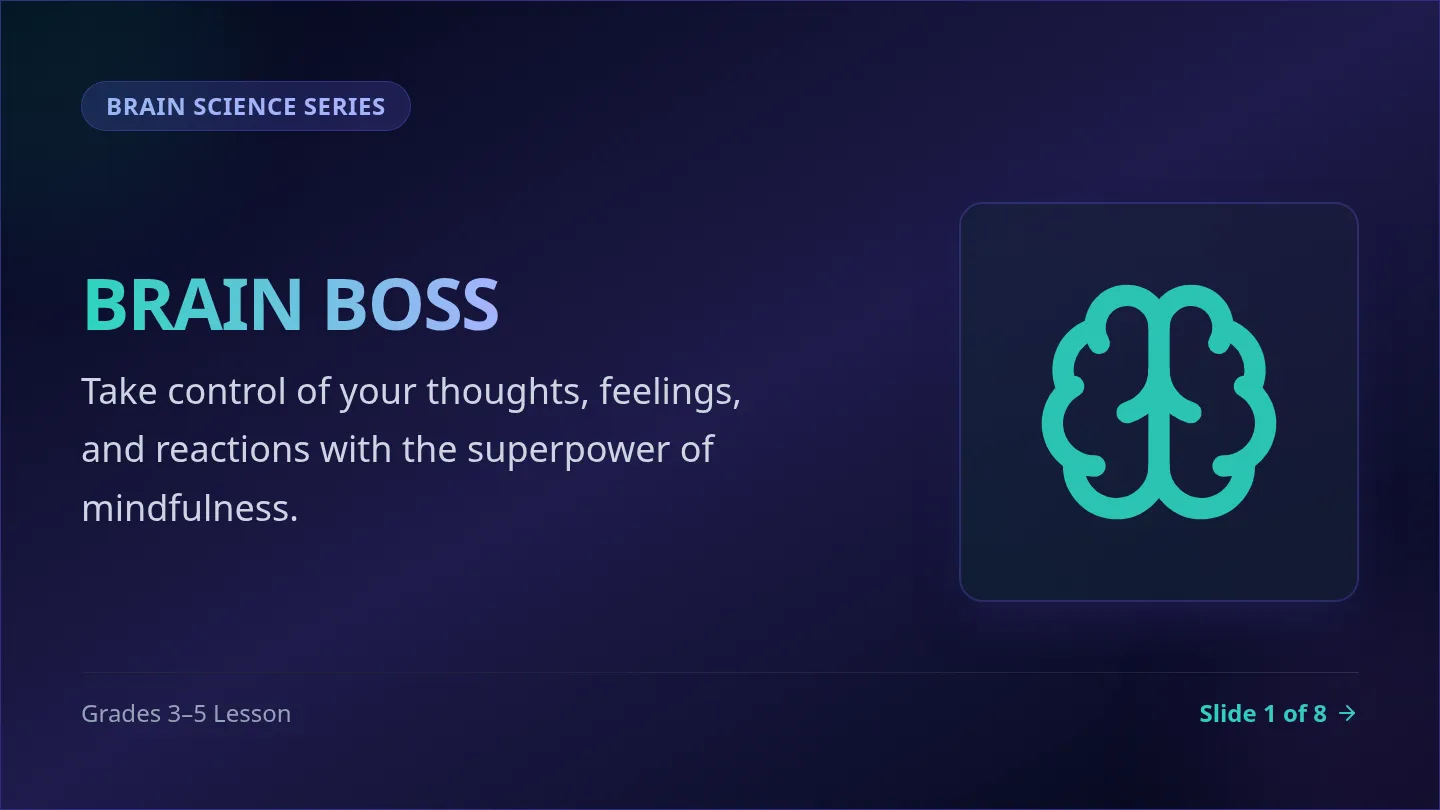
An engaging presentation introducing the concept of the 'Internal Engine' with three energy zones (Red, Blue, Green) to help students identify their arousal levels.
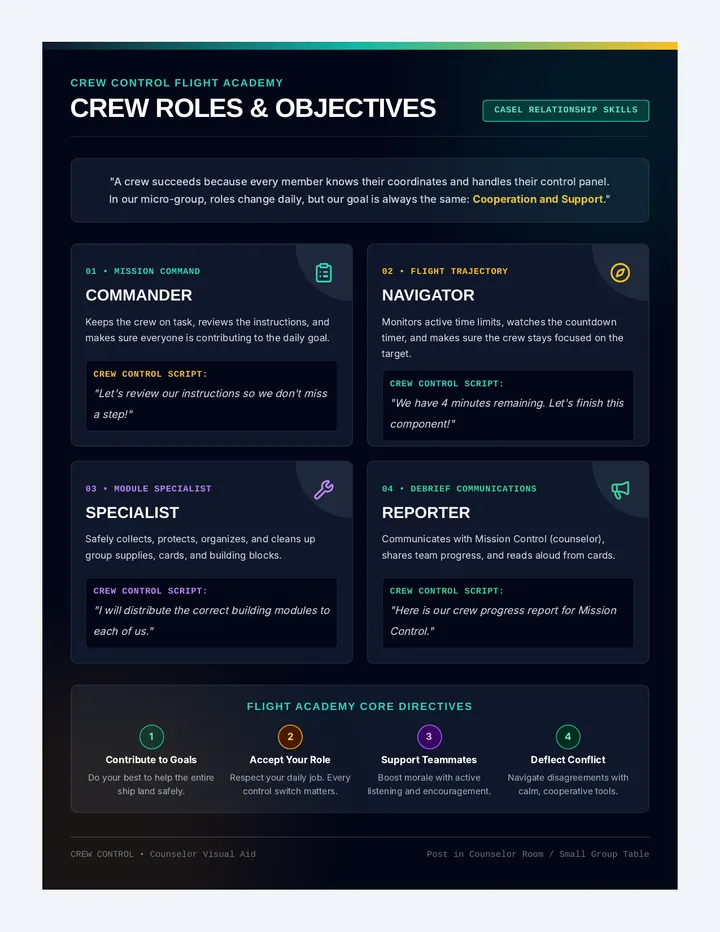
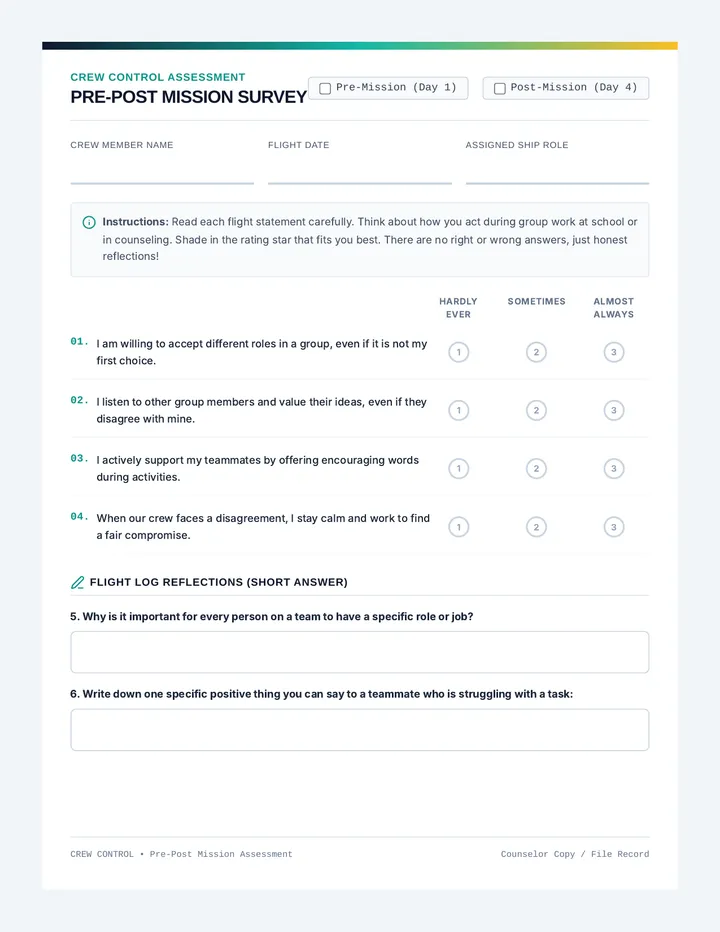
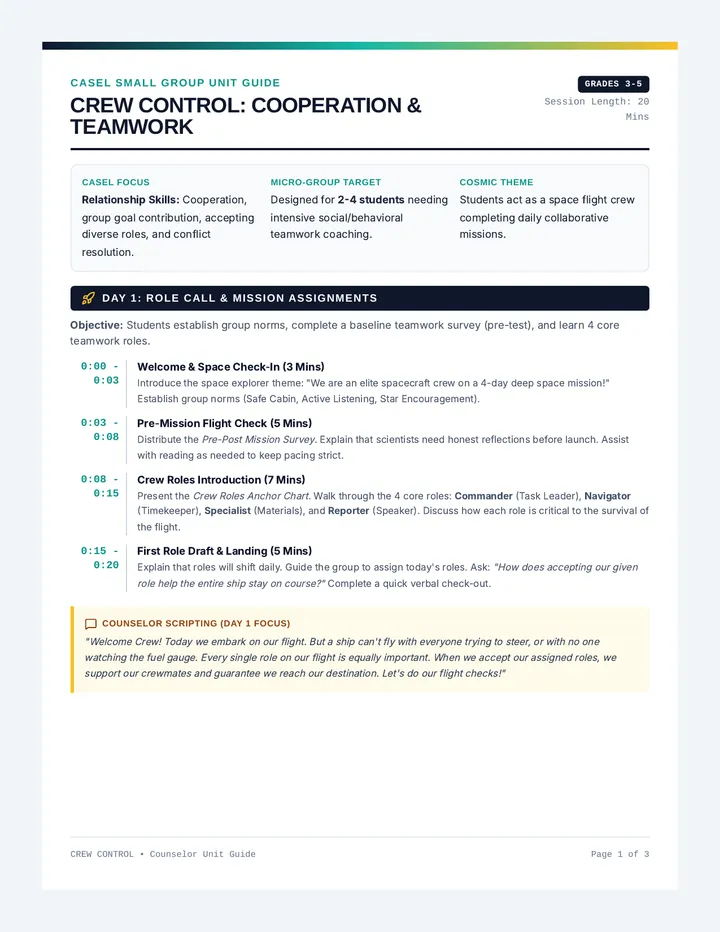
A comprehensive facilitation guide for the first session of the Mission Control program, detailing the timeline, objectives, and strategies for managing high-energy behavior.
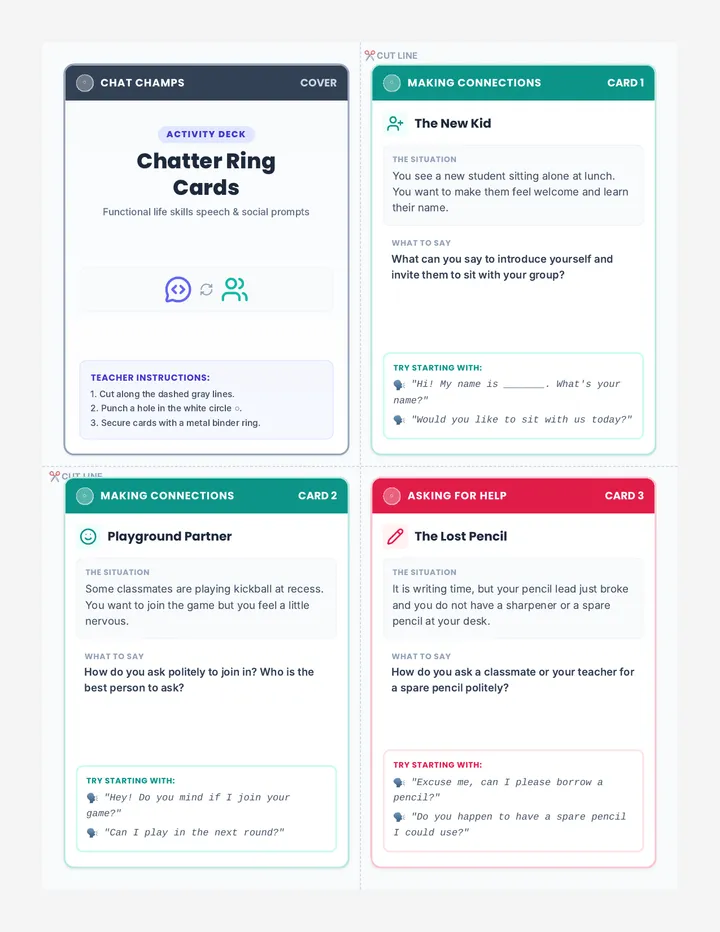
A printable set of 4 'System Reset' grounding cards with updated text, colored icons for each sensory step, and a clear 5-4-3-2-1 protocol layout.
A coding-themed mindfulness worksheet titled 'System Reset Protocol' with multi-colored sensory sections and a professional tech aesthetic. Guides students through a 5-4-3-2-1 grounding exercise. Removed Node, Telemetry, and gray backgrounds. Corrected spelling in the reflection log. Revised layout to fit exactly on two pages. Made the '05 // NEW' badge larger and replaced calibration status with body sensation lines. Standardized line weights for better visibility. Added non-breaking spaces to reflection log prompts to ensure correct word separation.
A print-ready "Choice Board" for students to use independently during testing breaks. It includes six simple, calming activities and a blank space for doodling or reflection, supporting self-management and self-awareness.
A visually soothing slide deck designed for virtual instruction. It features soft colors, large text (minimum 24px), and clear icons to guide 3rd and 4th grade students through breathing exercises, sensory visualization, and interactive sharing activities during testing weeks.
A comprehensive facilitation guide for teachers to lead a 30-40 minute virtual SEL lesson. It includes scripts, timing, SEL competency alignments, and specific strategies for supporting students with IEPs during testing season.
Facilitator script for Lesson 1 (Junior 6-8) of the Mind Mechanics program. Focuses on introducing brain "parts" using simple language, an ELL-friendly story review, and a basic grammar focus on prepositions "in" and "on." Includes Habit 1 integration.
Facilitator script for Lesson 12 of the Mind Mechanics program. Focuses on the final "Master Mechanic" certification ceremony, self-reflection using Habit 7 (Sharpen the Saw), and present perfect grammar review. Includes the Mechanic's Oath.
Visual anchor chart for Lesson 11, summarizing the "Master Workflow". Revised for single-page layout, addition of requested checkboxes, and fixed visual continuity for the connection line. High-contrast industrial design.
Puzzle-style student logbook sheet for Lesson 11. Includes an assembly flowchart integrating multiple "Mind Mechanic" tools (Reaction Engine, Coolant, POV, Choice), a grammar zone for sequence markers, and a Habit 6 reflection check. Industrial, heavy-duty design.
Facilitator script for Lesson 11 of the Mind Mechanics program. Focuses on integrating all previous skills into a final "Assembly Line" project. Includes sequence grammar, 60-minute breakdown, and Habit 6 integration.
Visual anchor chart for Lesson 10, outlining the "Choice Circuit" logic. Includes a flowchart for decision mapping and Habit 3 integration with checkboxes for student engagement. High-contrast electrical theme.
Puzzle-style student logbook sheet for Lesson 10. Includes a circuit mapping challenge to link choices to consequences, a grammar zone for conditionals (if/then), and a Habit 3 reflection check. High-contrast electrical theme.
Facilitator script for Lesson 10 of the Mind Mechanics program. Focuses on evaluating choices and consequences using the "Choice Circuit" metaphor. Includes tiered prompts, simple language for ELL, and Habit 3 integration.
Visual anchor chart for Lesson 9, illustrating "The Logic Loom" weaving process for solving "Why" and "How" questions. Includes requested checkboxes and high-contrast technical aesthetics.
Puzzle-style student logbook sheet for Lesson 9. Includes a thread-weaving investigation task matching evidence to schema, a grammar zone for causal connectors (because/since), and a Habit 2 reflection check. Theme-consistent with weaving/loom visuals.
Facilitator script for Lesson 9 of the Mind Mechanics program. Focuses on inferential reasoning and answering "Why" questions by "weaving" text evidence and personal knowledge (schema). Includes tiered prompts and Habit 2 integration.
Visual anchor chart for Lesson 8, illustrating the "POV Goggles" metaphor and providing the "Switch Protocol" for perspective-taking. Includes checkboxes for student engagement and high-contrast, professional "Mind Mechanic" aesthetics.
Puzzle-style student logbook sheet for Lesson 8. Includes a split-drawing perspective challenge, a grammar zone for contrast markers (but/however), and a Habit 4 (Think Win-Win) reflection audit. Theme-consistent with cyan/blue lens visuals.
Facilitator script for Lesson 8 of the Mind Mechanics program. Focuses on empathy and perspective through the "POV Goggles" metaphor. Includes tiered prompts for 6-14 year olds, simple language for ELL, and Habit 4 integration.
Visual anchor chart for Lesson 7, detailing "Social Frequencies" (Red, Yellow, Blue) and providing a step-by-step guide for scanning social signals with checkboxes for student engagement. High-contrast, technical "Mind Mechanic" aesthetics.
Puzzle-style student logbook sheet for Lesson 7. Includes a silent signal clue hunt, a social frequency scan activity, a grammar zone for descriptive signal translation, and a Habit 5 reflection check. Theme-consistent with radar and scanning visuals.
Facilitator script for Lesson 7 of the Mind Mechanics program. Focuses on identifying character emotions through non-verbal signals and body language. Includes tiered prompts, simple language for ELL, and Habit 5 integration.
Visual anchor chart for Lesson 6, showing the "Upgrade Station" process and how to reframe feedback as a positive "tool" for improvement. Includes requested checkboxes and high-contrast technical aesthetics.
Puzzle-style student logbook sheet for Lesson 6. Includes an upgrade log comparing old vs. new work, a grammar zone for comparative adjectives/contrast markers, and a Habit 6 (Synergize) reflection check. High-contrast orange theme.
Facilitator script for Lesson 6 of the Mind Mechanics program. Focuses on reframing feedback as "Toolbox Upgrades" and managing emotional reactions to suggestions. Includes 60-minute breakdown, tiered prompts, and Habit 6 integration.
Visual anchor chart for Lesson 4, defining "Personal Safety Gear" (Helmet, Goggles, Armor, Boots) and inspection protocols with checkboxes for student engagement. High-contrast, defensive green theme.
Puzzle-style student logbook sheet for Lesson 4. Includes a gear inventory task matching strengths to safety equipment, a grammar zone for character traits/reflexive pronouns, and a Habit 1 reflection check. Protective, high-contrast green theme.
Facilitator script for Lesson 4 of the Mind Mechanics program. Focuses on building self-esteem through "Safety Gear" (strengths) identification. Includes 60-minute breakdown, tiered prompts, and Habit 1 integration.