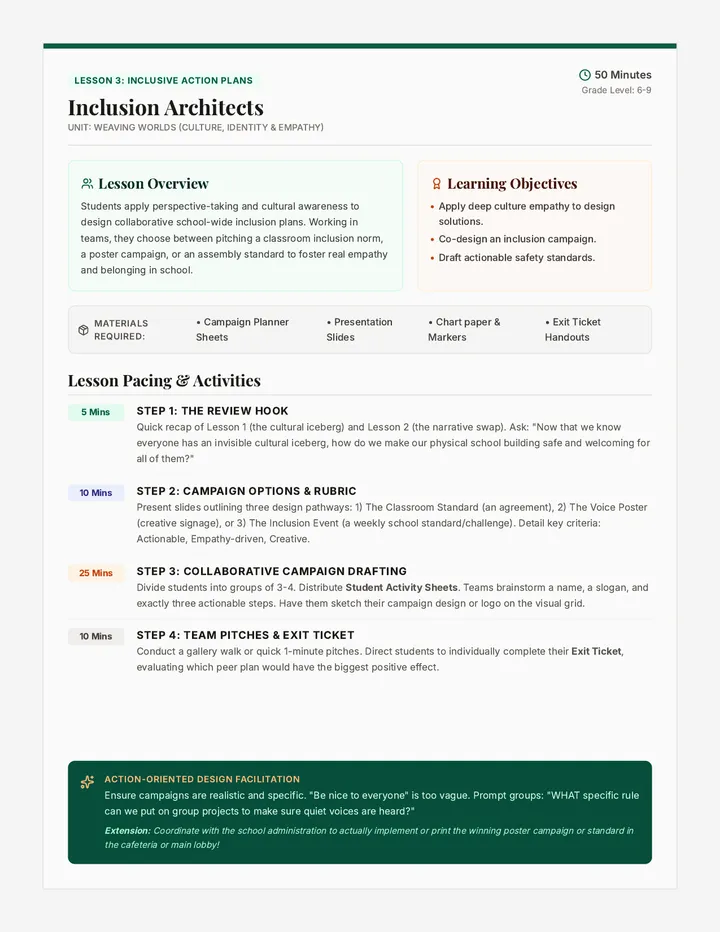
Teacher guide for Lesson 3, focusing on delegation strategies and managing instructional support staff.
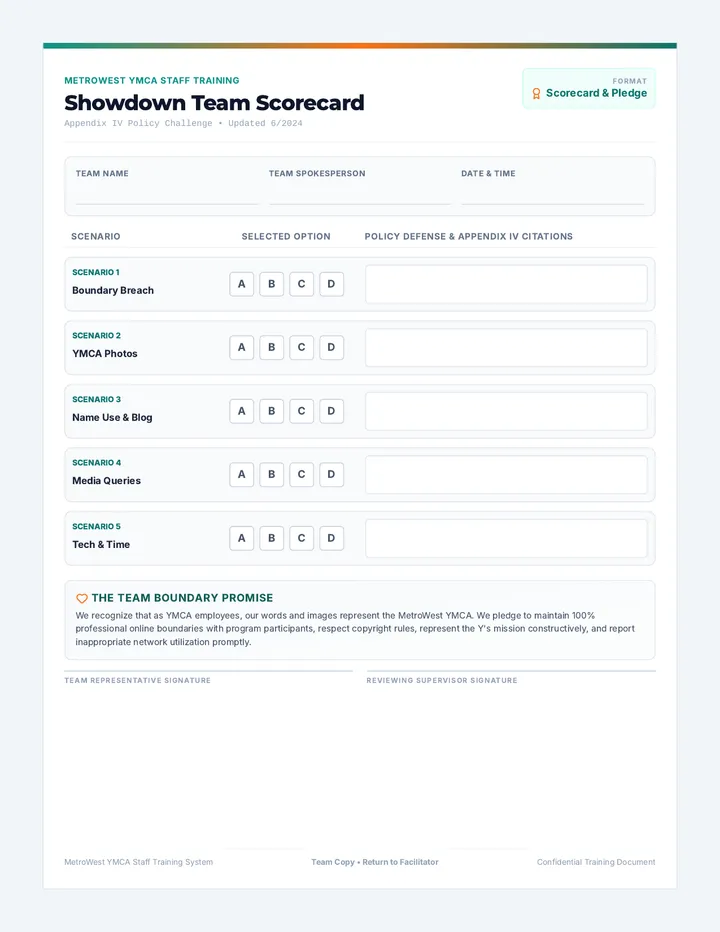
A clean, print-ready single-page team scorecard for 20-30 staff members divided into squads. It features space for team details, selection indicators, and dedicated white writing blocks for teams to cite policy rules from Appendix IV.
An engaging, high-contrast 14-slide presentation used to project the interactive trivia game during the training. It details real-world scenarios, game rules, and reveals answer explanations citing official rules from the MetroWest YMCA Social Networking Policy.
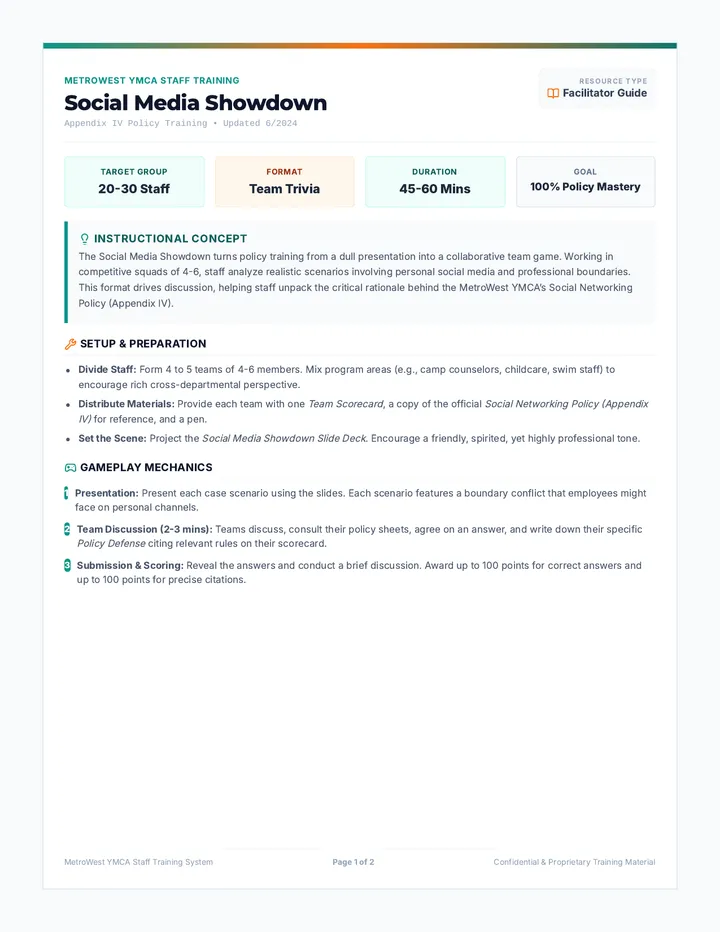
A comprehensive, two-page print-ready facilitator guide for leading the Social Media Showdown staff training. It contains game instructions, pacing guides, team division tips, and detailed policy explanations for each round based on the MetroWest YMCA Social Networking Policy (Appendix IV, Updated 6/2024).
A 4-slide presentation for Lesson 3, explaining the campaign design project guidelines, campaign pathways, and presentation instructions.
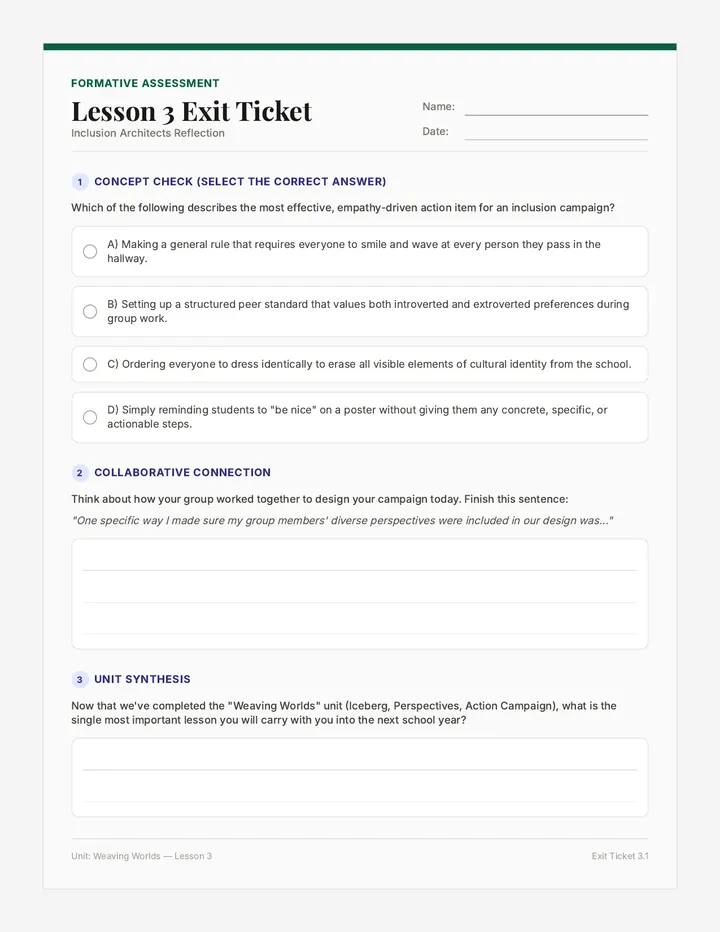
A quick daily exit ticket assessment for Lesson 3, checking students' understanding of the campaign design and reflecting on their key takeaways from the unit.
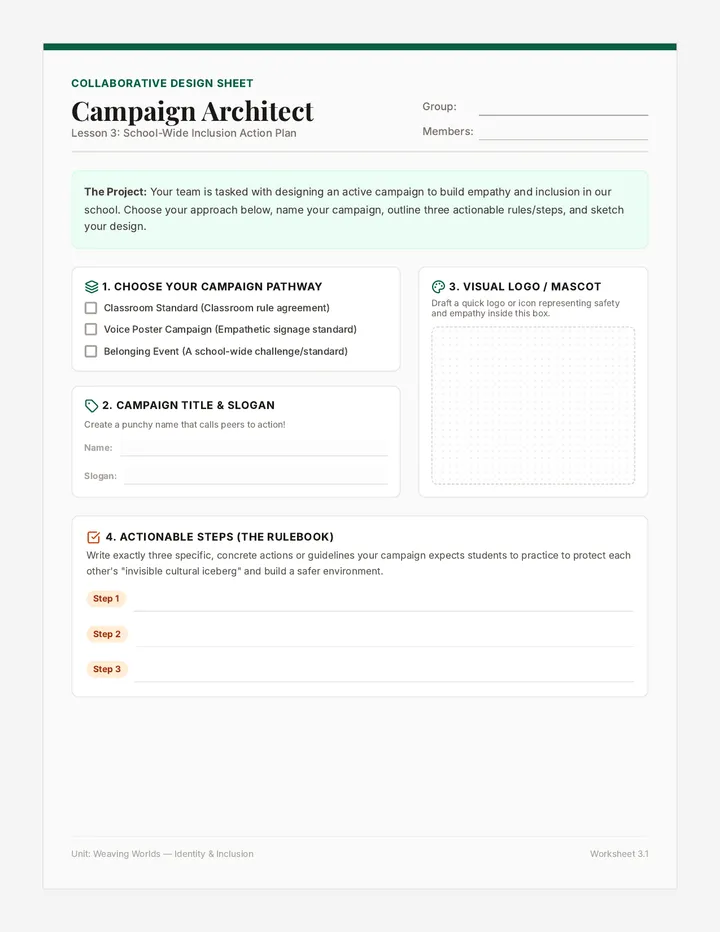
An interactive student campaign design worksheet for Lesson 3, guiding student teams to outline a campaign name, target audience, core inclusion goal, actionable steps, and a visual logo sketch.
A comprehensive teacher guide for Lesson 3, outlining pacing, project criteria, student campaign options, and instructions for group presentations.
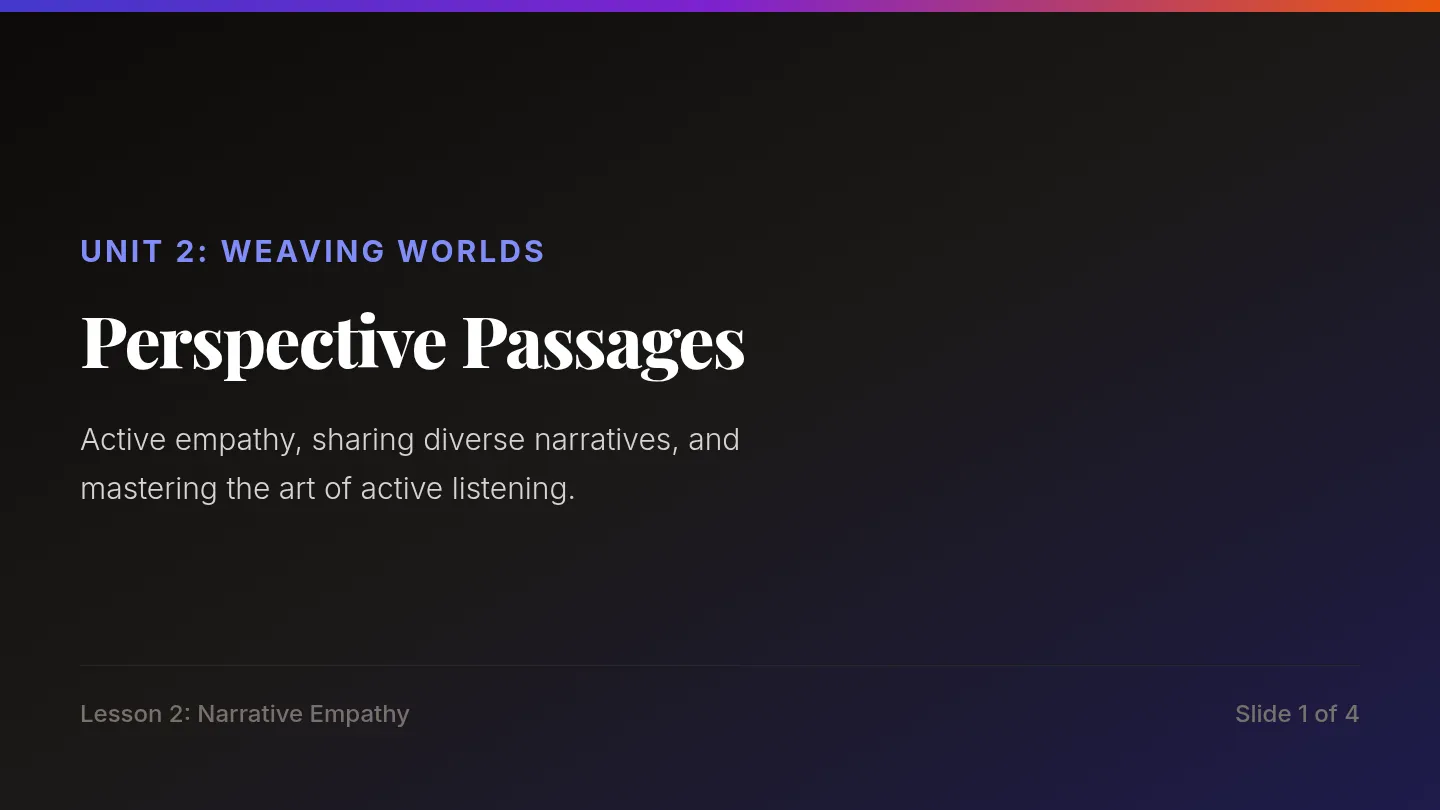
A 4-slide presentation for Lesson 2, outlining the dual hallway perspective scenario and teaching active listening rules for the student narrative swap.
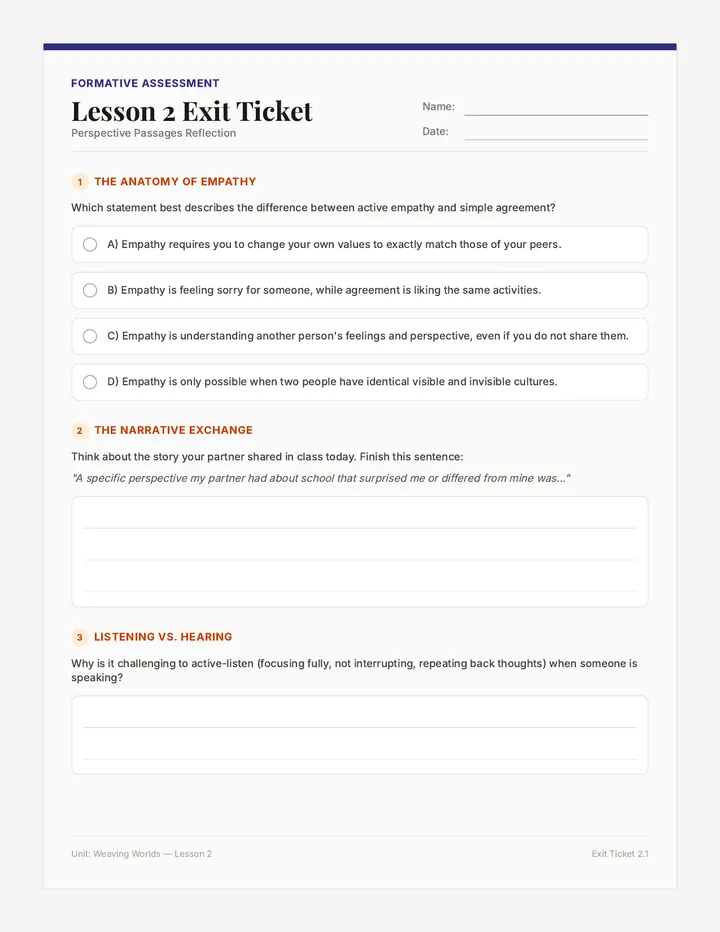
A quick daily exit ticket assessment for Lesson 2, checking students' understanding of perspective-taking and active listening.
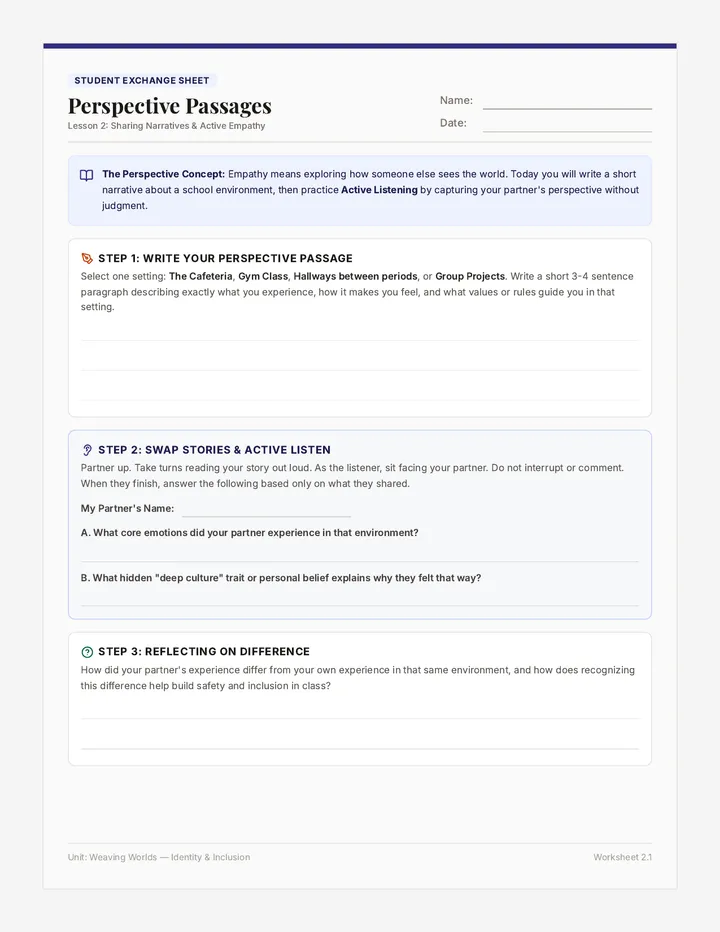
An interactive student worksheet for Lesson 2, guiding students to write a short personal perspective narrative, swap with a classmate, and practice active listening questions.
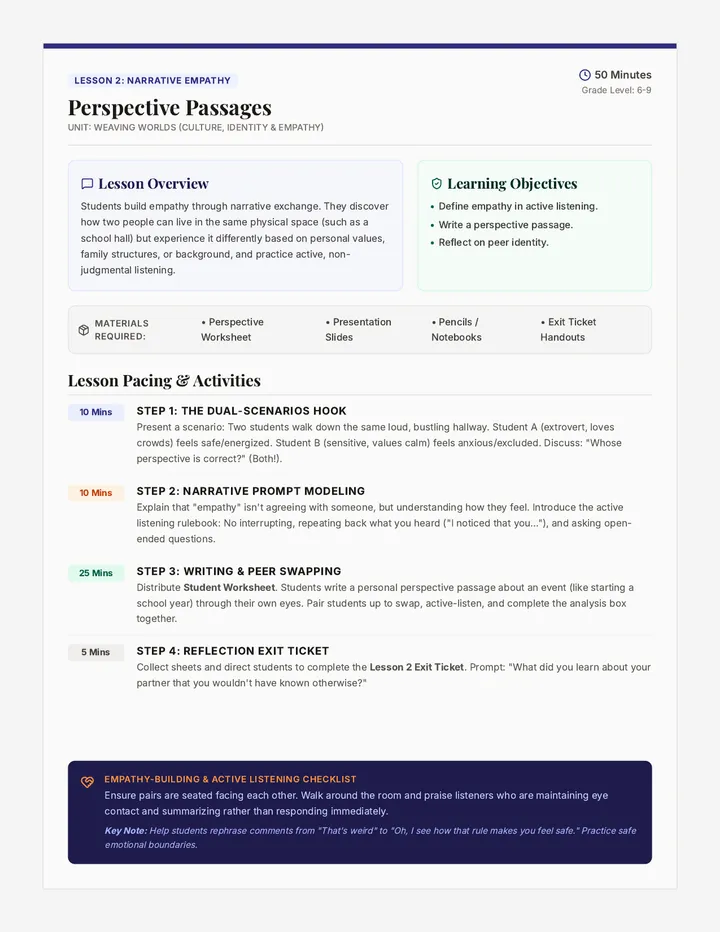
A comprehensive teacher guide for Lesson 2, outlining session pacing, discussion questions, objectives, and active listening rules for the student narrative exchange.
A 4-slide presentation for Lesson 1, introducing the concept of the cultural iceberg and explaining the difference between surface and deep culture.
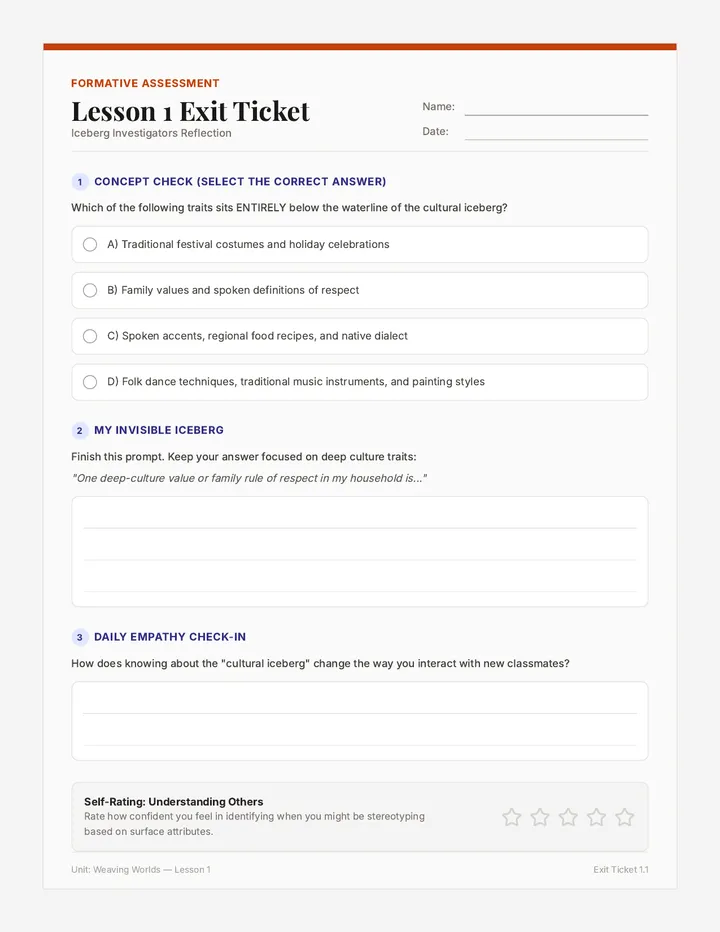
A quick daily exit ticket assessment for Lesson 1, checking students' understanding of the cultural iceberg and encouraging self-reflection.
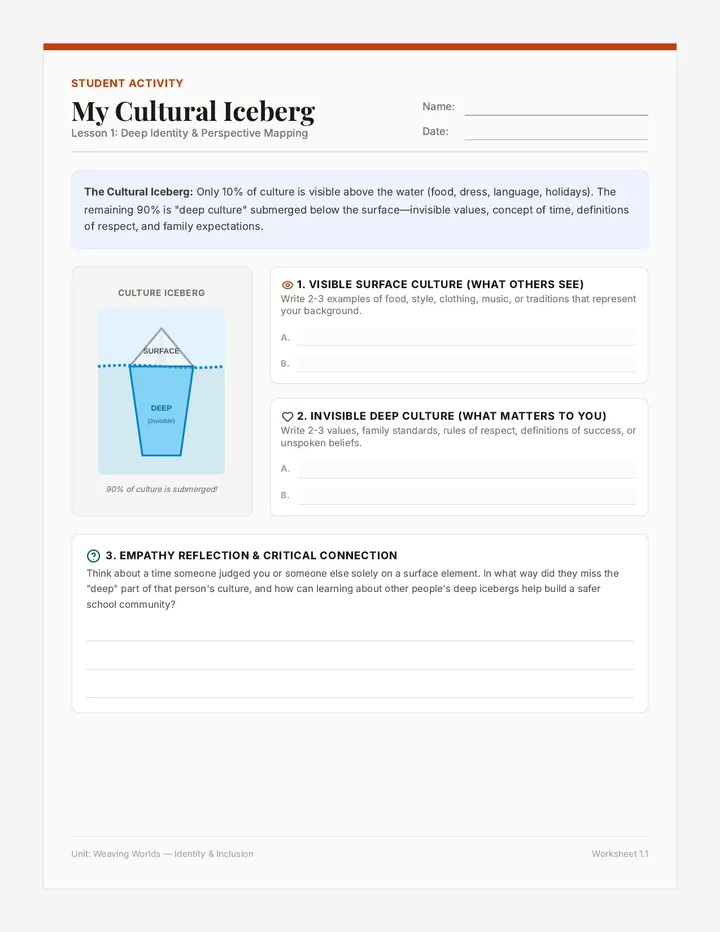
An interactive student worksheet for Lesson 1, guiding students to analyze surface versus deep culture and map their own multi-layered identities on a cultural iceberg graphic.
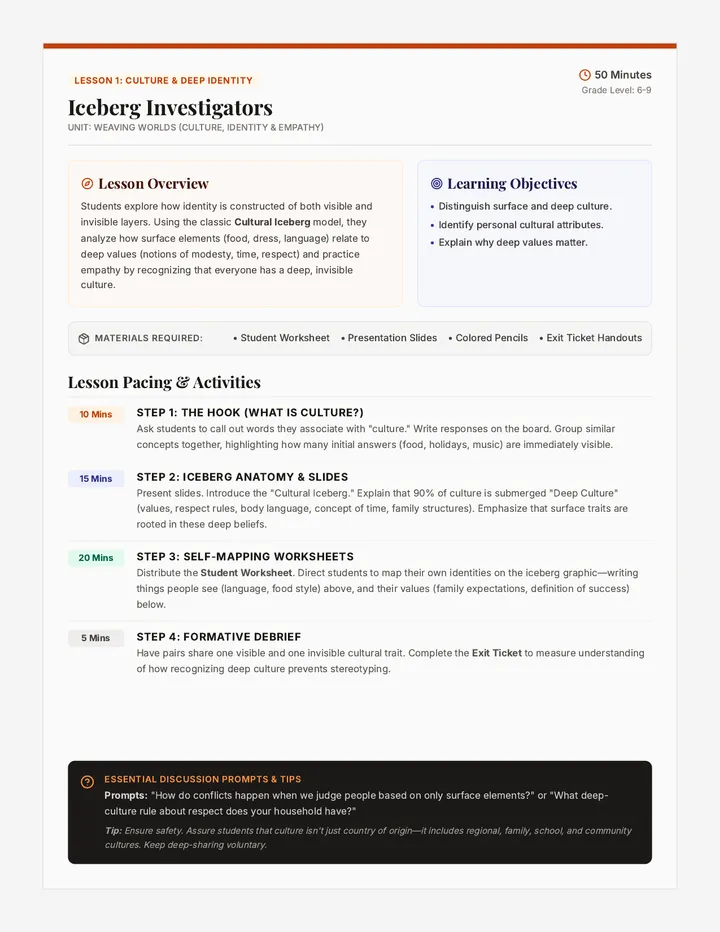
A comprehensive teacher guide for Lesson 1, detailing lesson pacing, discussion prompts, student learning objectives, and materials needed to explore the cultural iceberg.
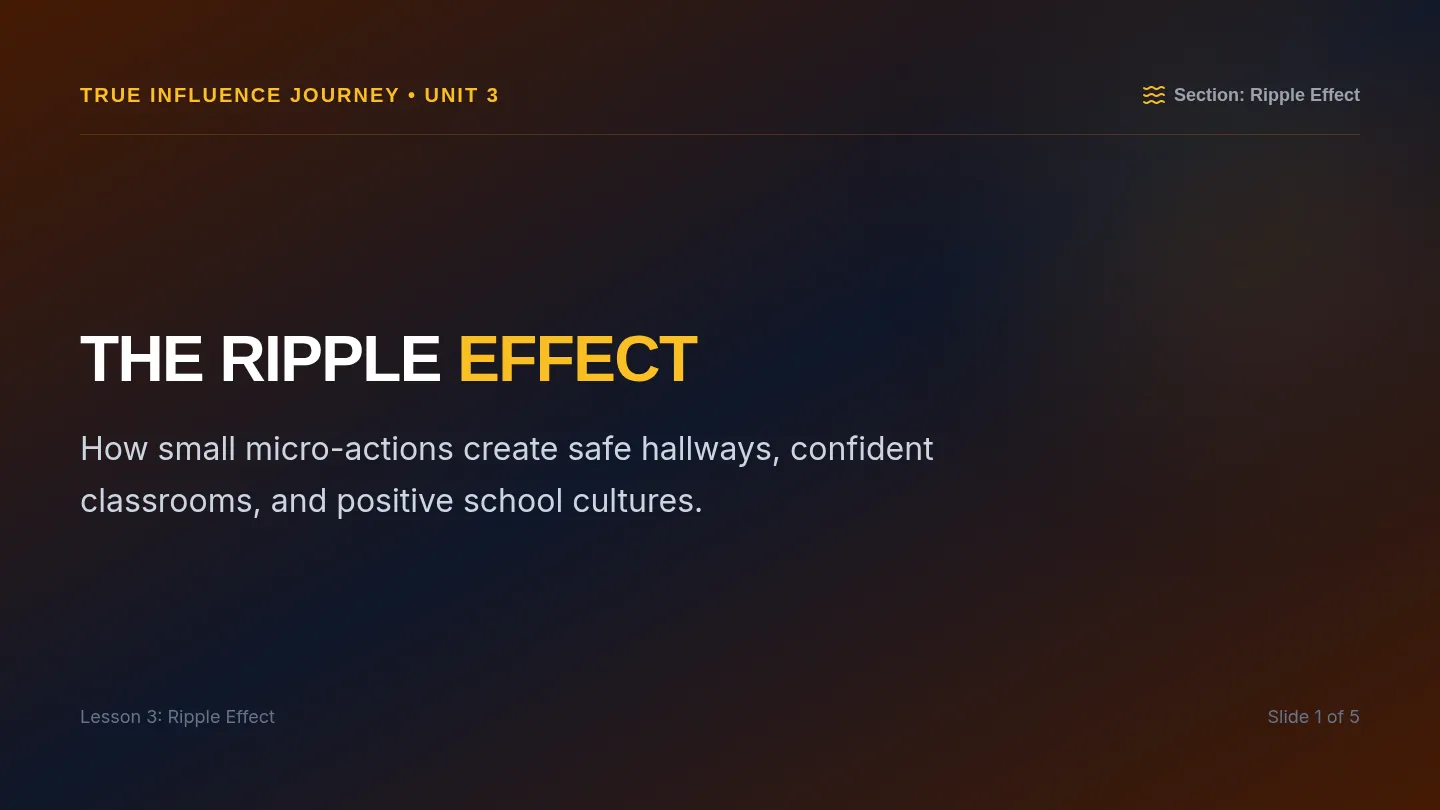
A 5-slide presentation matching the Ripple Effect lesson. It introduces students to the physics of school culture, walks through Maya's hallway story, and details the 5 leadership tracker actions.
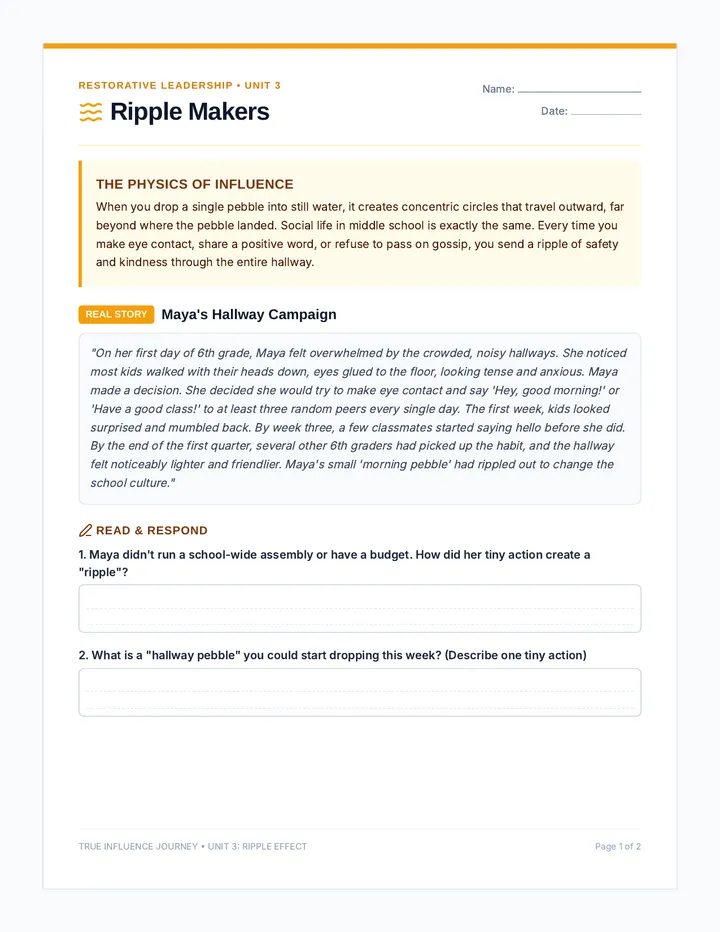
A 2-page print-ready student-centered Read & Respond workbook detailing the physics of the ripple effect in school culture, featuring biographical vignettes of youth advocates and daily leadership tracking sheets.
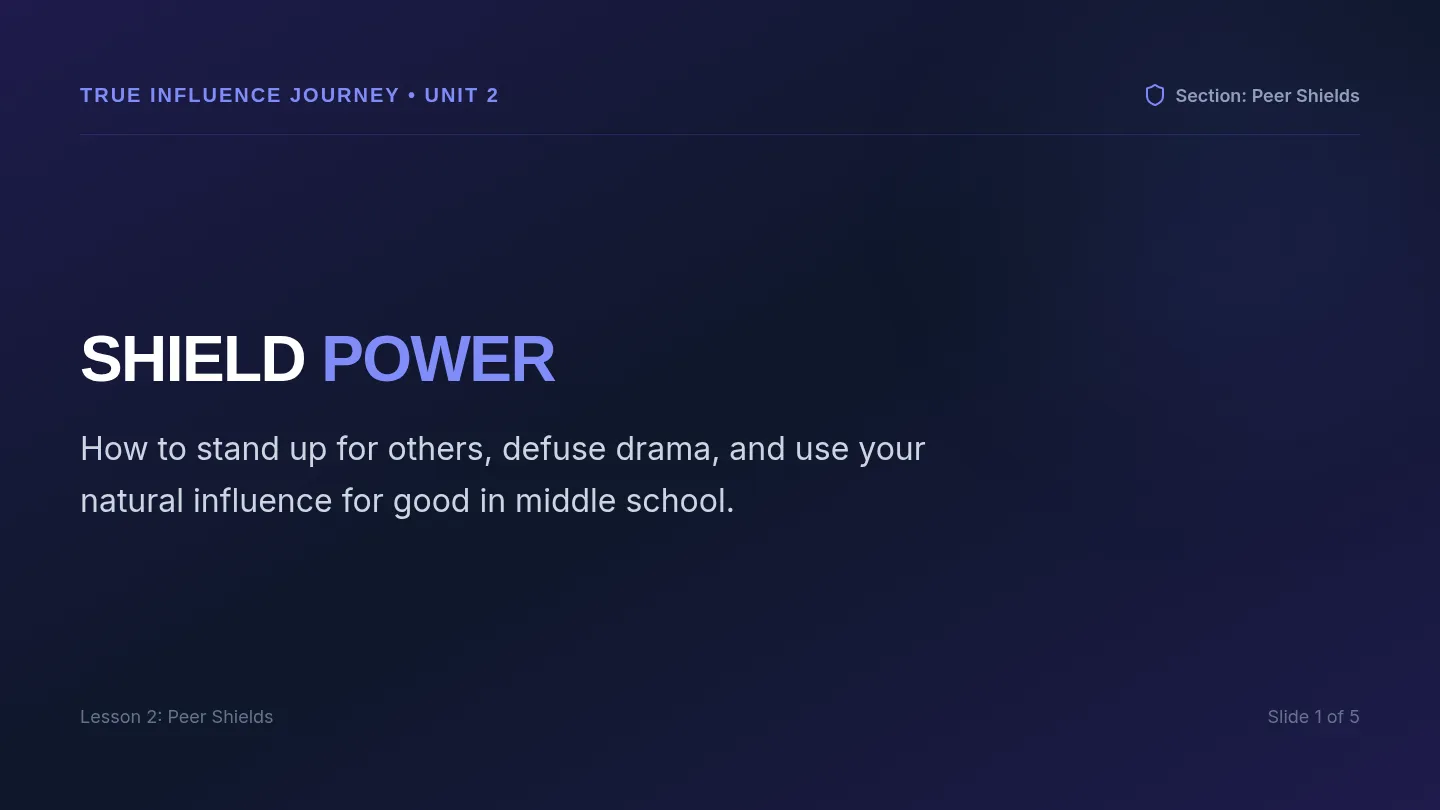
A 5-slide presentation matching the Peer Shields lesson. It helps teachers guide a classroom debate on instigators vs. bystanders vs. shields, analyzing real-life lunchroom and digital chat situations.
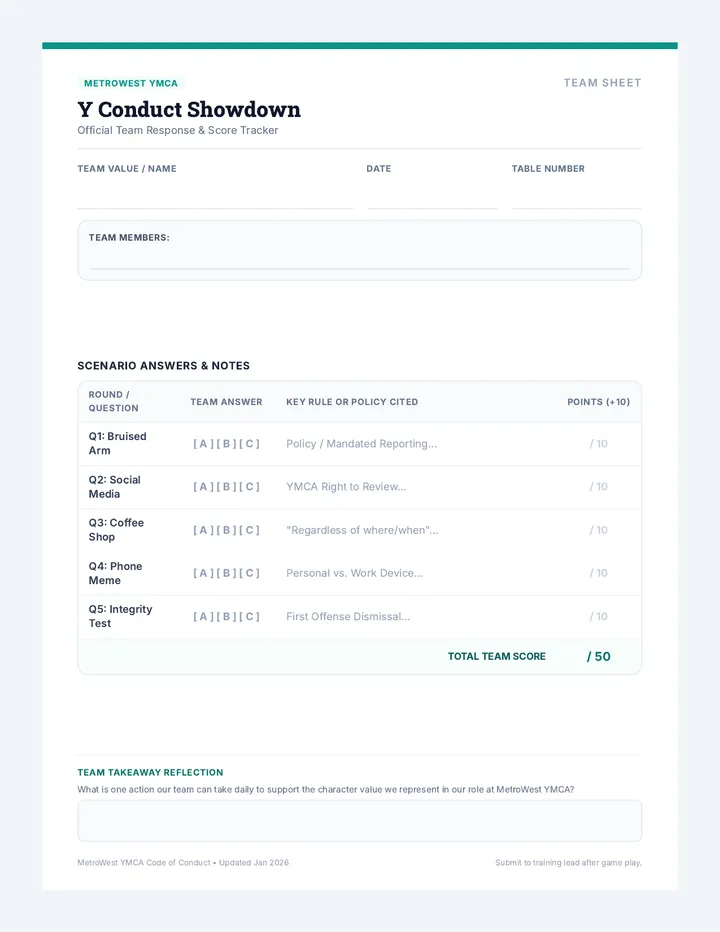
A printable team response sheet for the Y Conduct Showdown game. Allows teams (Caring, Honesty, Respect, Responsibility) to record their members, track scores, draft scenario answers, and note down key takeaways.
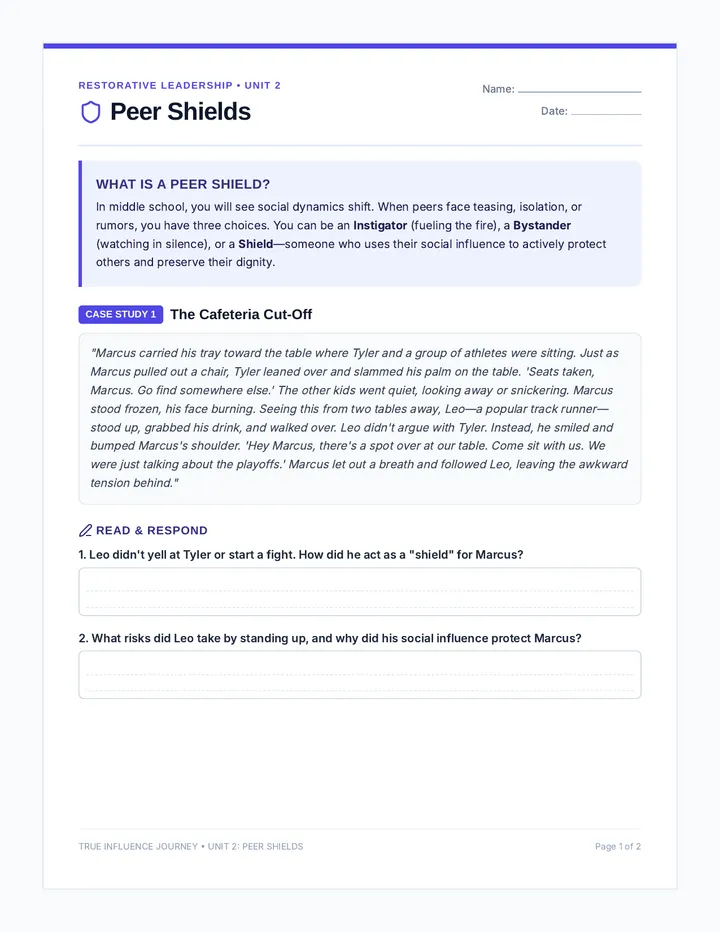
A 2-page print-ready student-centered Read & Respond workbook. Features real-world middle school scenarios (gossip, lunch exclusion) where students analyze how to step in as active shields to protect their peers.
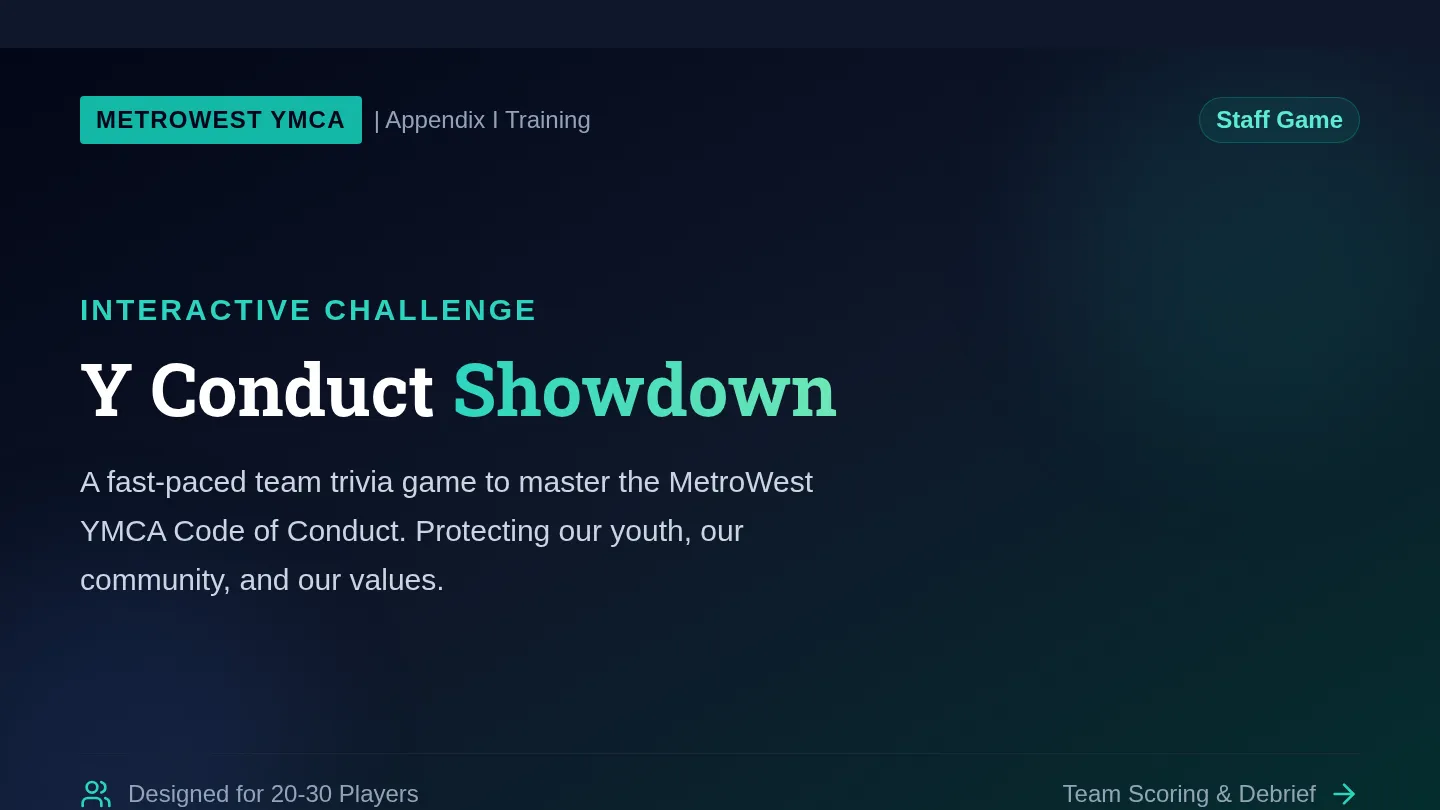
An interactive, competitive trivia slide deck designed to train 20-30 staff members and volunteers on the MetroWest YMCA Code of Conduct. Features scenario-based questions, team structures, and clear answer explanations.
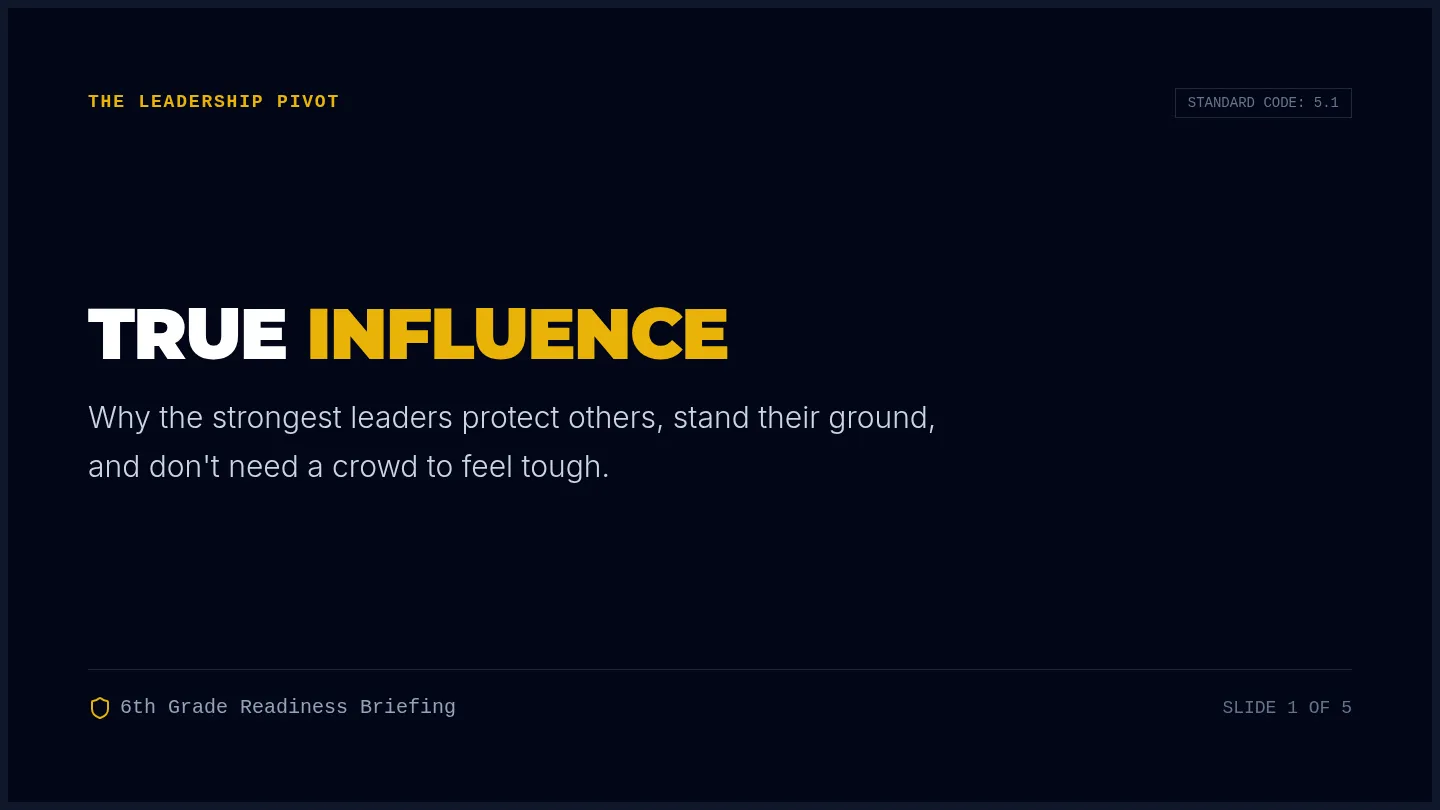
A 5-slide presentation designed for the initial mentoring or classroom session to introduce the concept of positive leadership, comparing instigators to captains, and practicing restorative responses to 6th-grade scenarios.
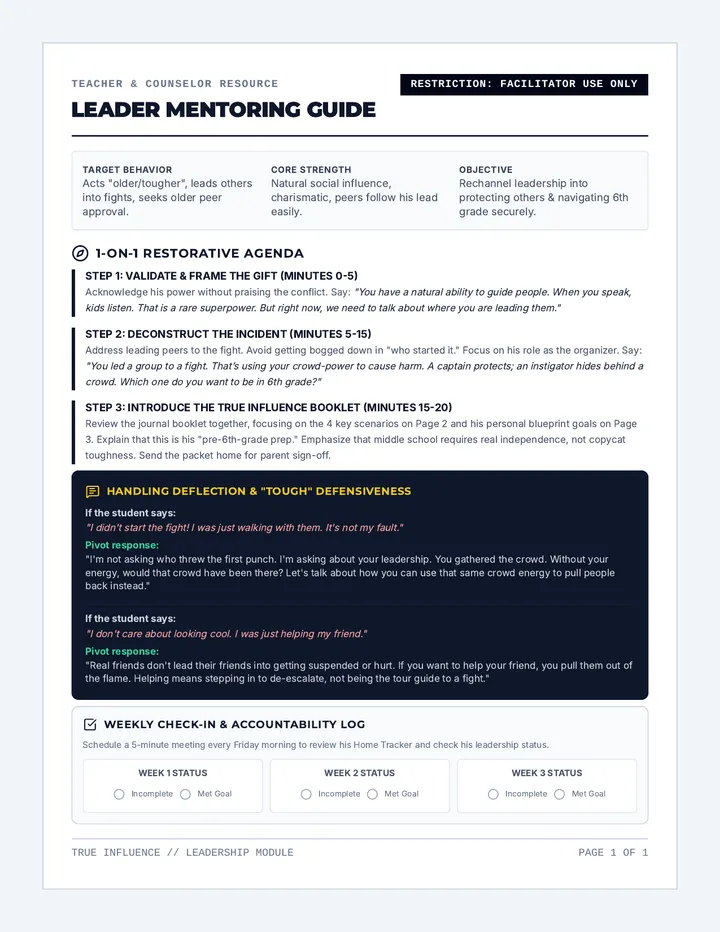
A 1-page teacher-facing mentoring guide outlining restorative meeting agendas, direct questioning strategies, and scripts to handle defensiveness for a student transitioning to middle school.
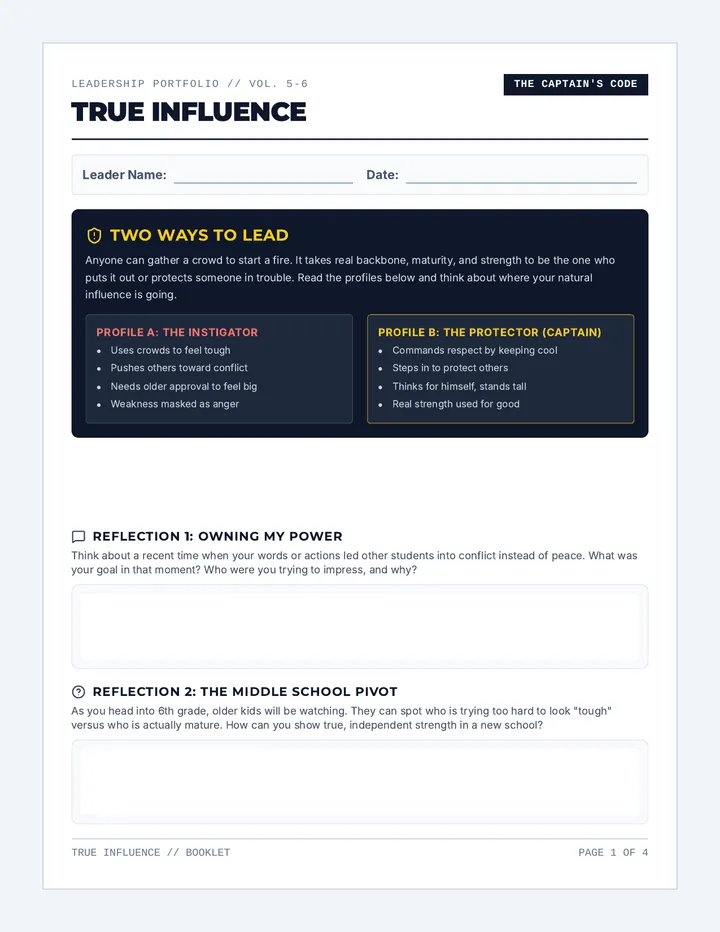
A 4-page interactive reflection booklet and home connection guide designed to help a student transition from negative influence to positive peer advocacy. Features restorative self-reflection, a 4-part middle school scenario guide, a personal blueprint and boundaries page, parent discussion prompts, and a positive leadership tracker.
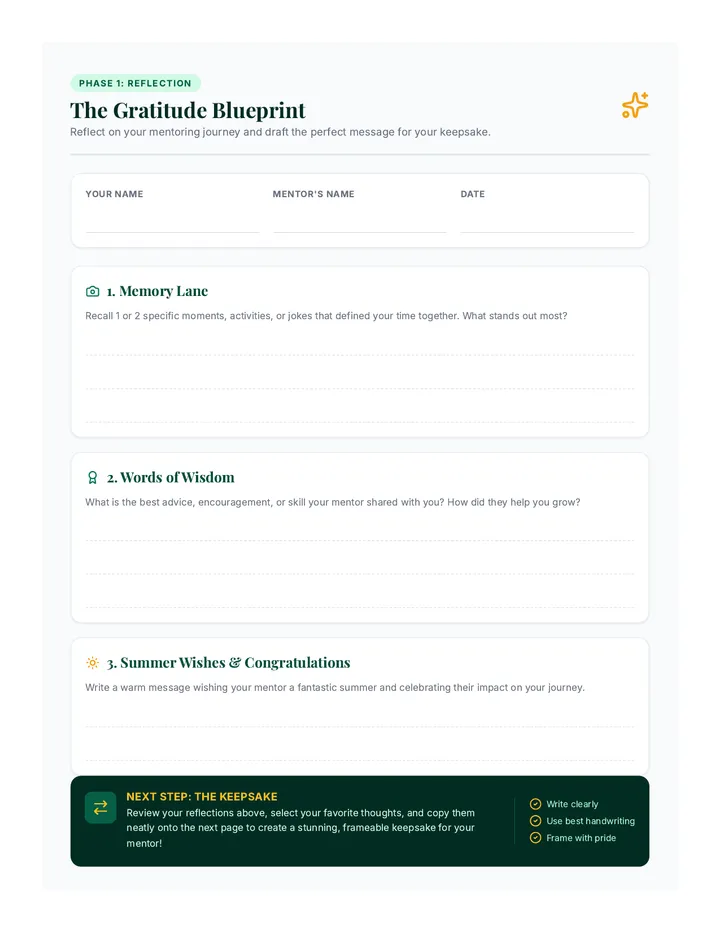
A printable 2-page resource. Page 1 is a structured reflection worksheet for mentees to brainstorm key memories and draft messages. Page 2 is a beautiful, certificate-style keepsake with a classic border and writing lines designed to be framed as a mentor gift.
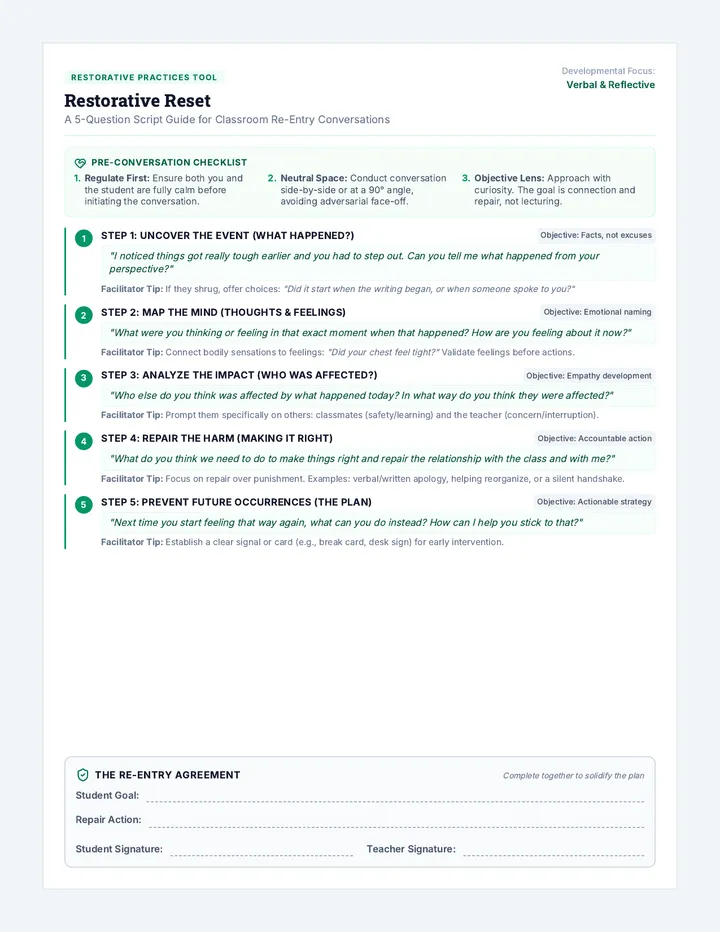
A single-page, high-utility facilitator script guide based on the 5 Restorative Questions, designed to help teachers guide students through repair and classroom re-entry.
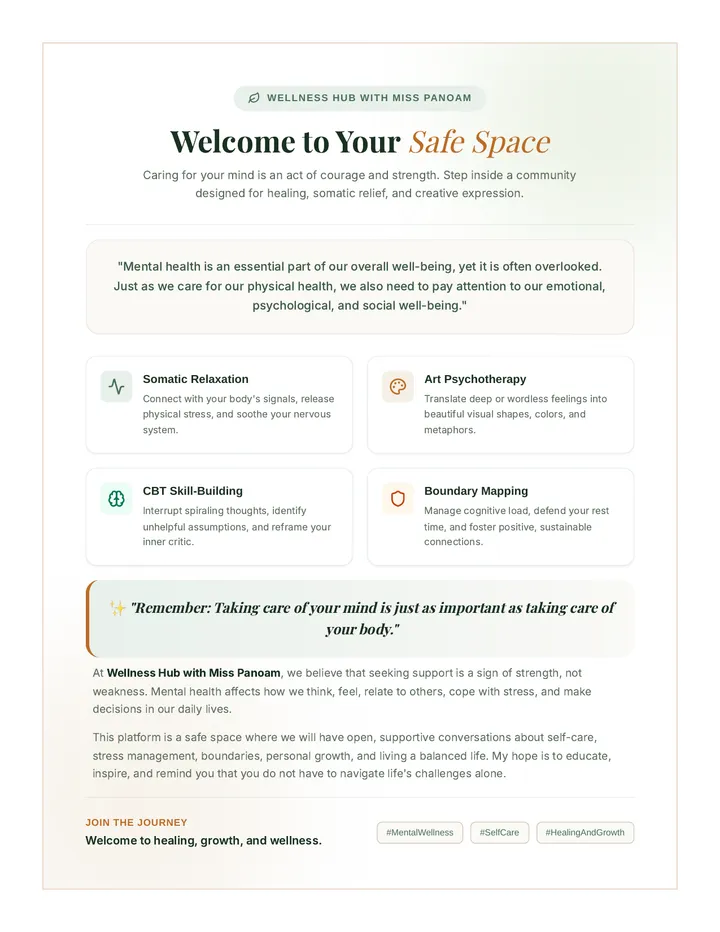
A beautifully formatted, welcoming announcement page/flyer for Miss Panoam's Wellness Hub. It features botanical motifs, key therapeutic pillars (somatic relaxation, CBT, art therapy), and an inspiring mental wellness message.
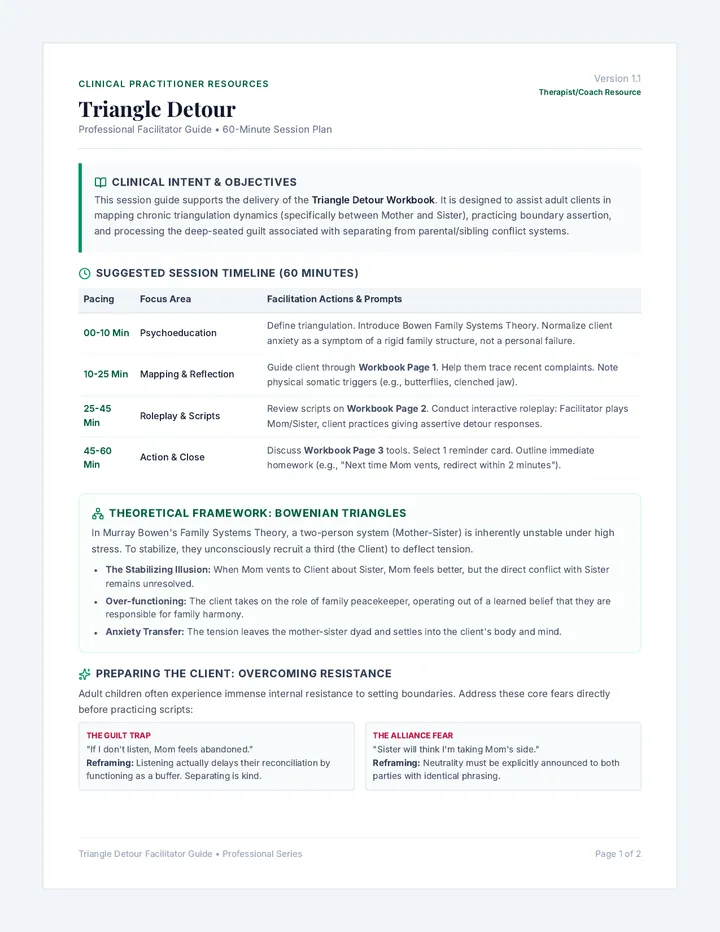
A 2-page professional facilitator guide for therapists, counselors, or coaches leading clients through the Triangle Detour workbook. Contains session structure, clinical context based on Family Systems Theory, roleplay facilitation tips, and strategies for managing family resistance.
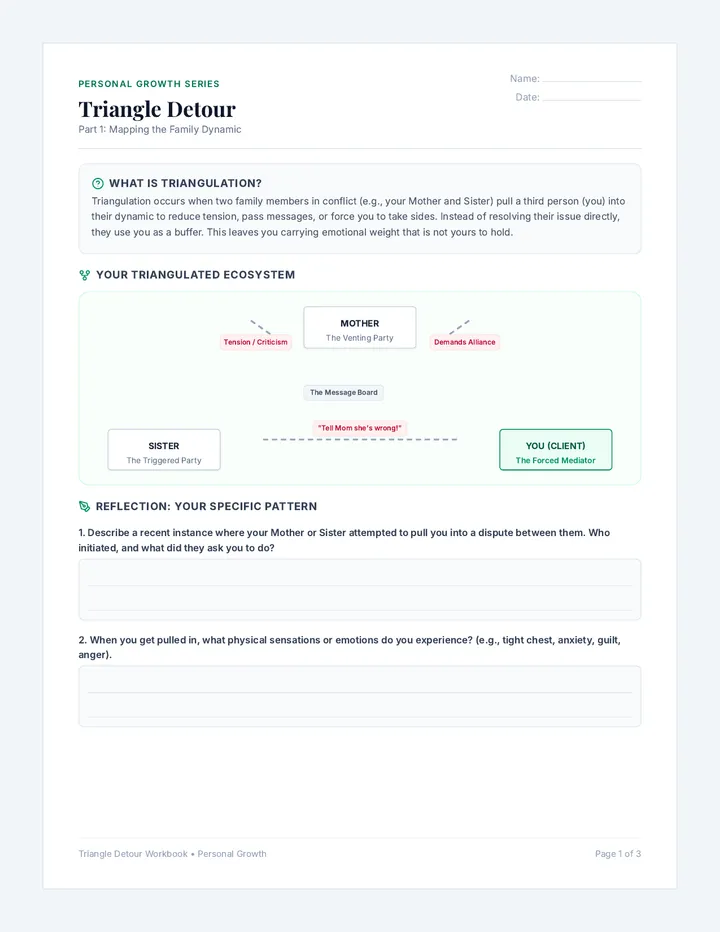
A 3-page interactive client workbook for adult children caught in family triangulation dynamics between their mother and sister. Includes a relationship mapping exercise, boundary scripts, real-world scenario analysis, a boundary log, and cut-out pocket-sized boundary reminders.
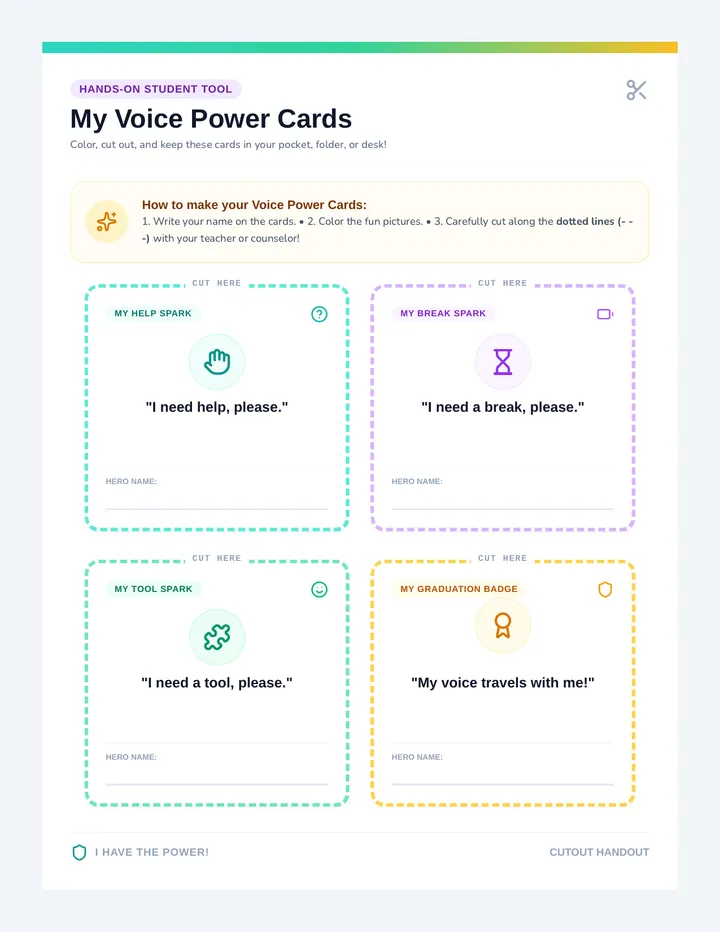
A student handout containing four printable, cut-out "Voice Power Pocket Cards." Students color, write their names, and cut out these visual reminder cards to carry in their pockets or tape to their desks to support self-advocacy in the general education classroom.