A teacher-facing guide for the 10-minute Decision Compass lesson. Includes a step-by-step script, pacing guide, and discussion prompts for the movement-based 'This or That' game, ensuring a smooth delivery without any student writing.
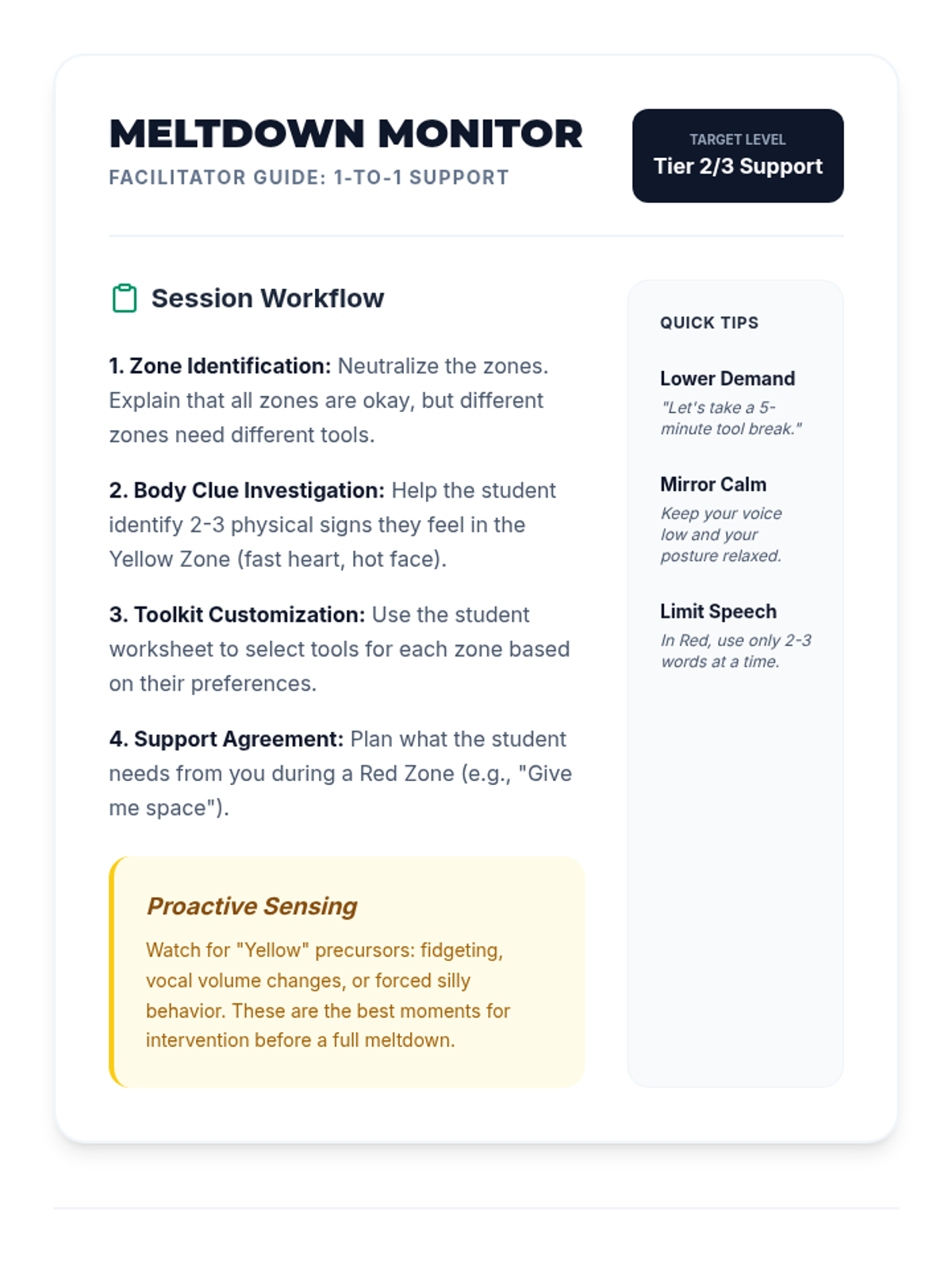
A comprehensive guide for teachers or facilitators, providing session structures, de-escalation scripts, and co-regulation strategies for 1-to-1 work.
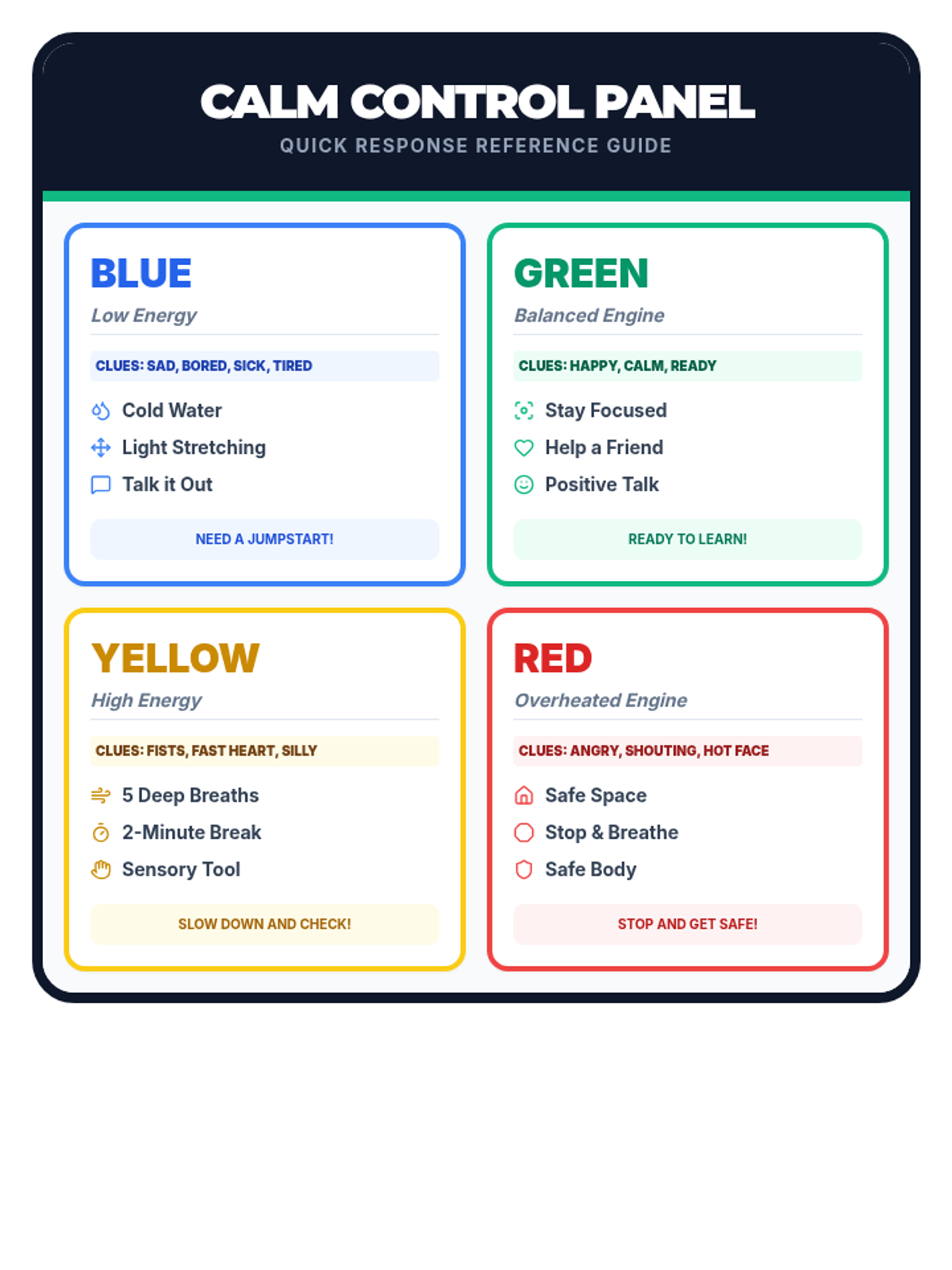
A high-impact visual poster summarizing the four zones and primary coping strategies for easy classroom or desk-side reference.
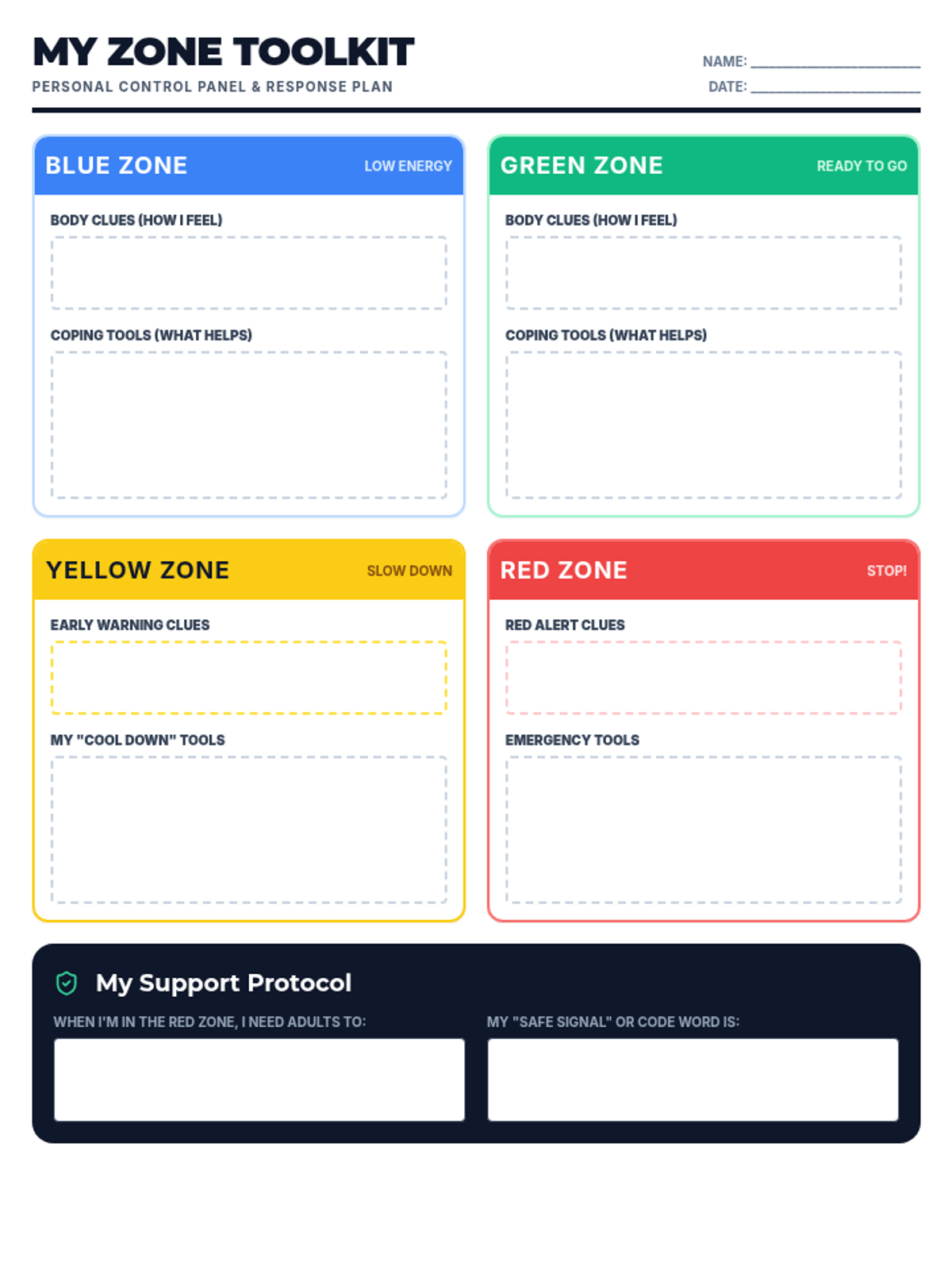
A personalized activity sheet for students to document their unique body clues and select coping tools for each of the four emotional zones.
A visual presentation explaining the four zones, body clues for sensing meltdowns, and specific coping tools for each phase.
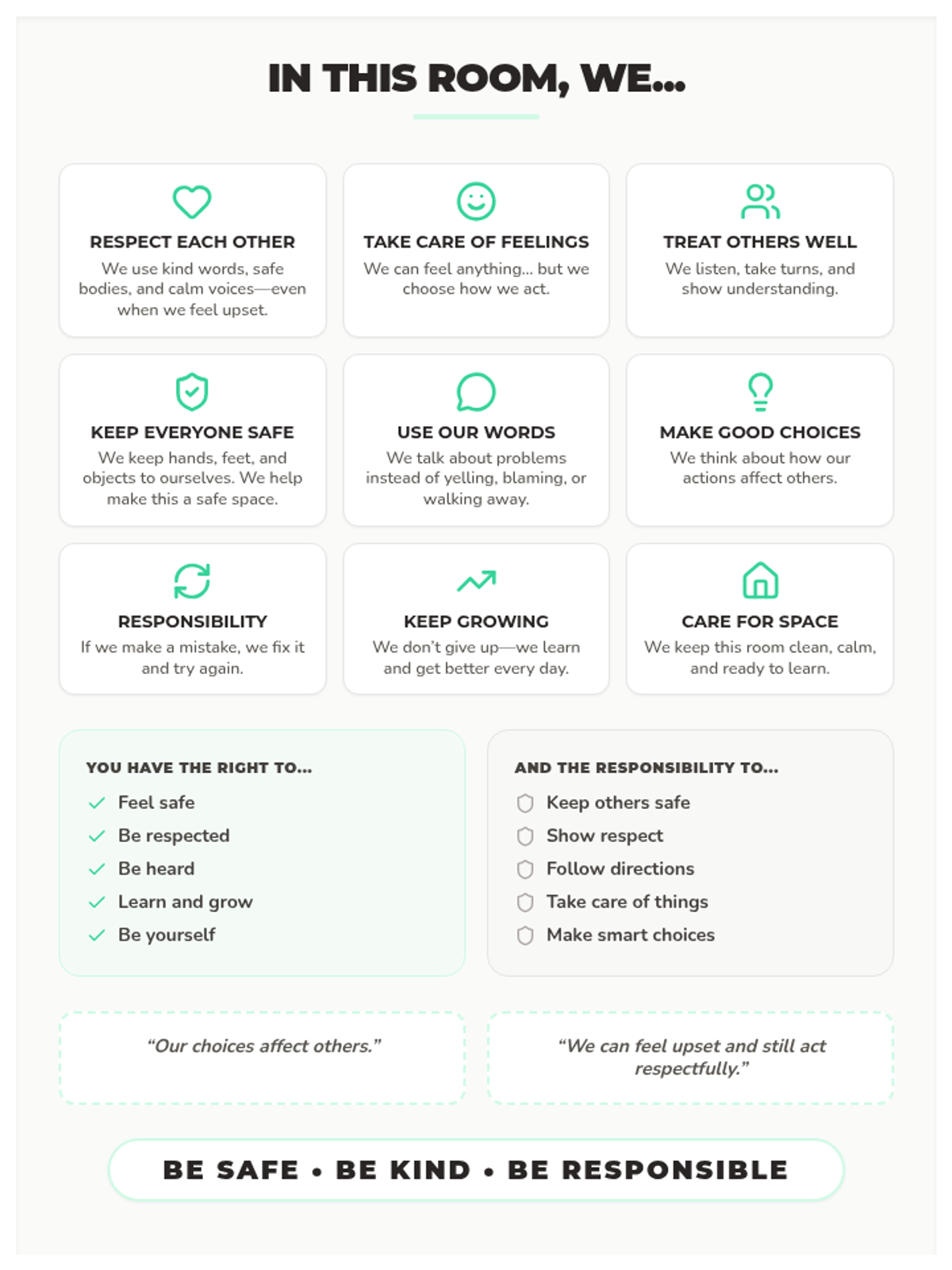
A softer, calmer minimalist poster for a school social worker's office. It uses a sage and stone color palette with muted tones to create a peaceful environment while clearly communicating expectations.
A formal assessment tool for evaluating student proficiency in de-escalation techniques, identifying growth areas in trigger awareness, communication formulas, and active listening.
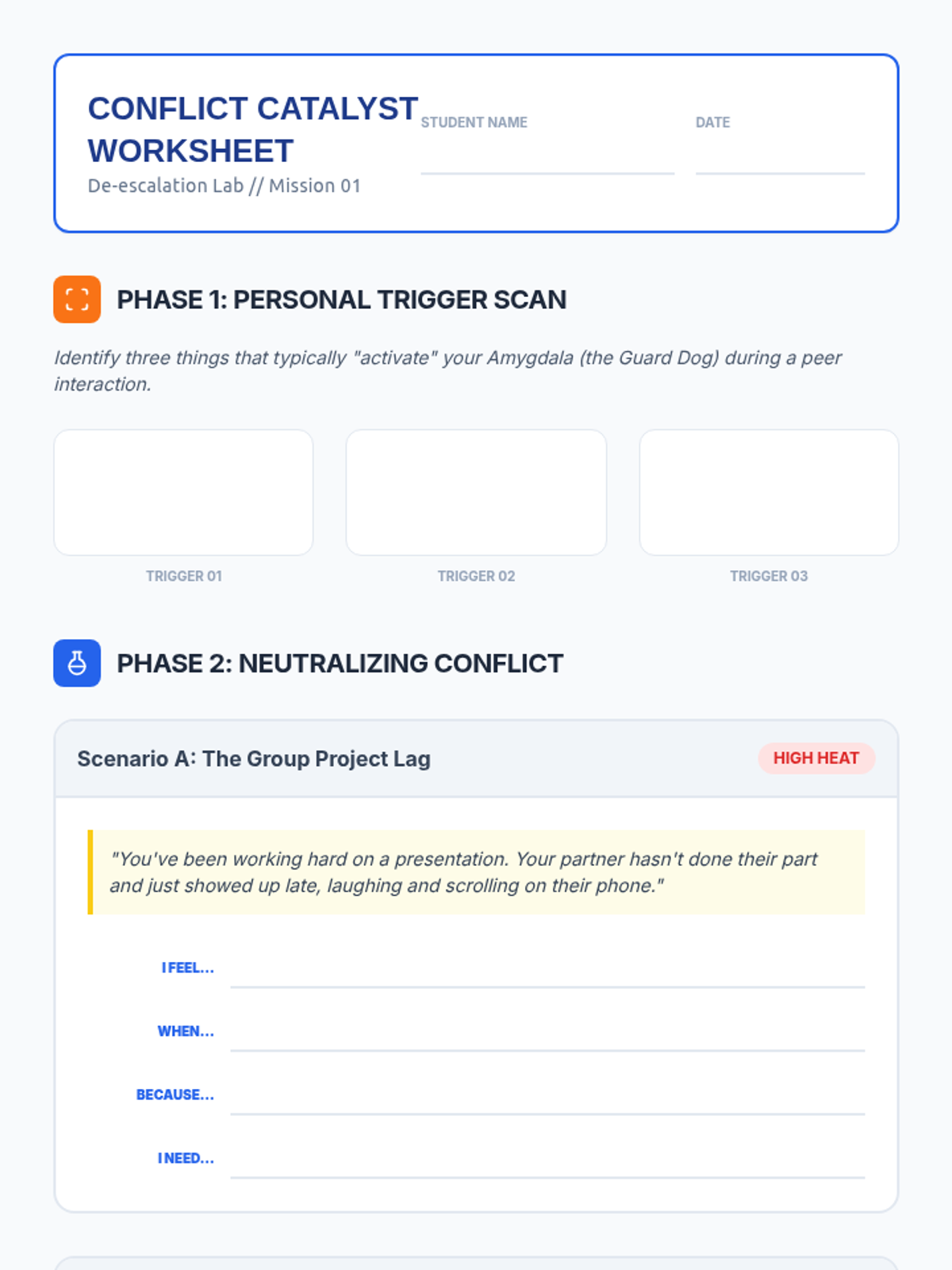
A student-facing activity worksheet featuring scenario-based practice for identifying emotional triggers and formulating 'I-Message' de-escalation responses.
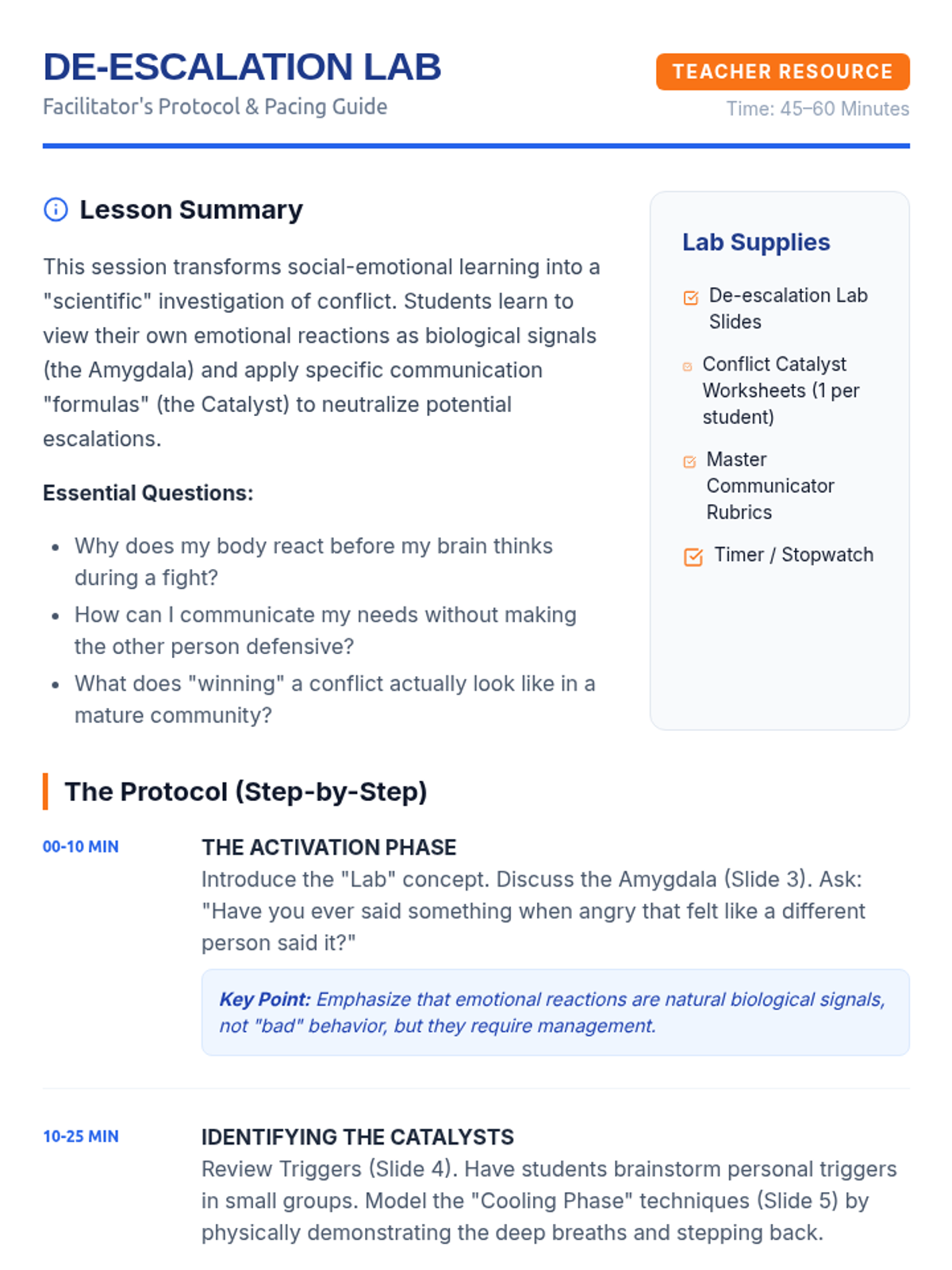
A comprehensive facilitator guide for the De-escalation Lab, featuring pacing instructions, essential questions, and differentiation strategies for managing the social-emotional session.
A laboratory-themed slide deck that guides students through the biological and social aspects of de-escalation, featuring the 'Cooling Phase' and 'I-Message' communication formulas.
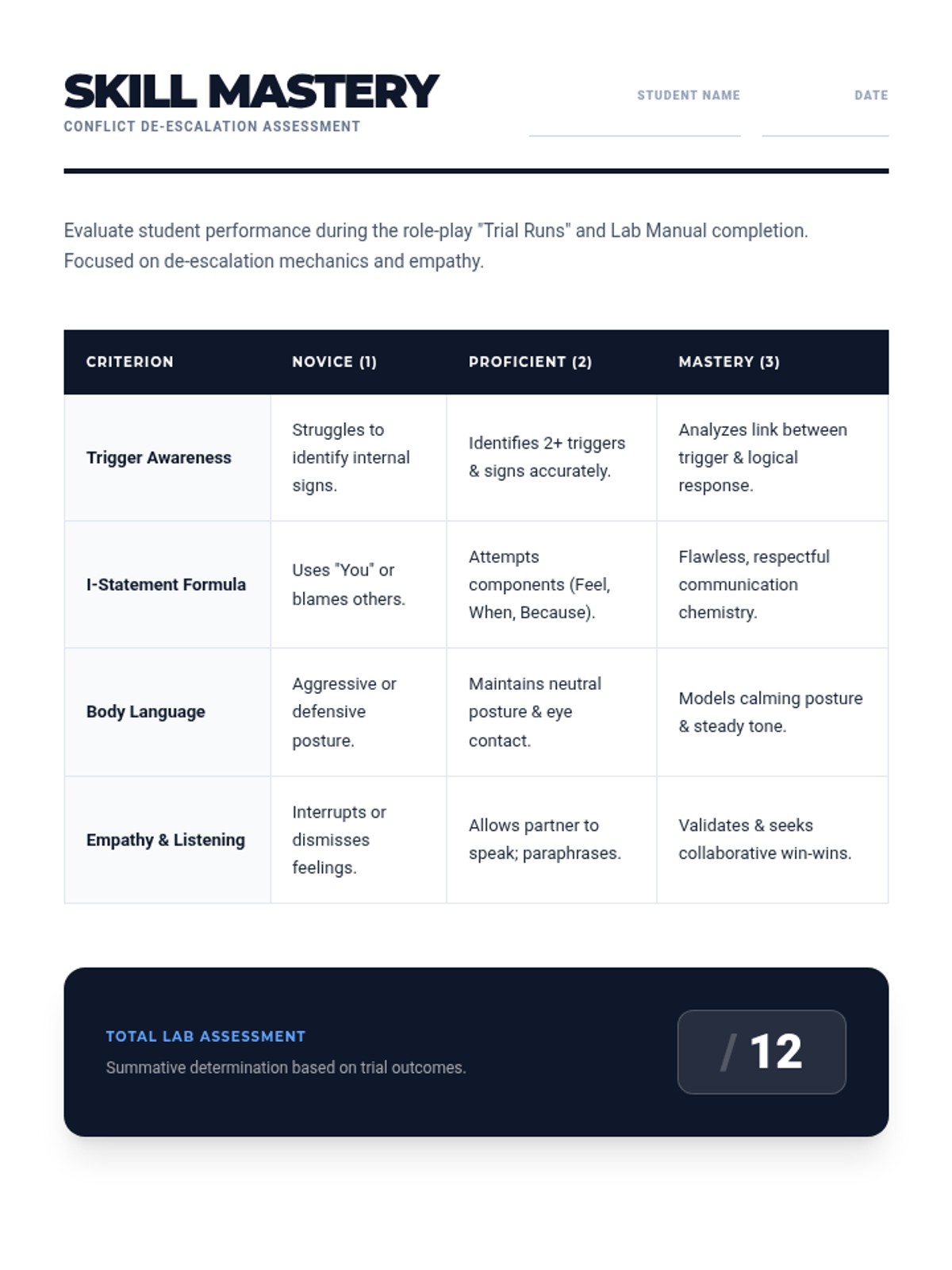
A formal assessment rubric for evaluating student performance in the De-escalation Lab, focusing on trigger awareness, I-statement application, body language, and empathetic listening.
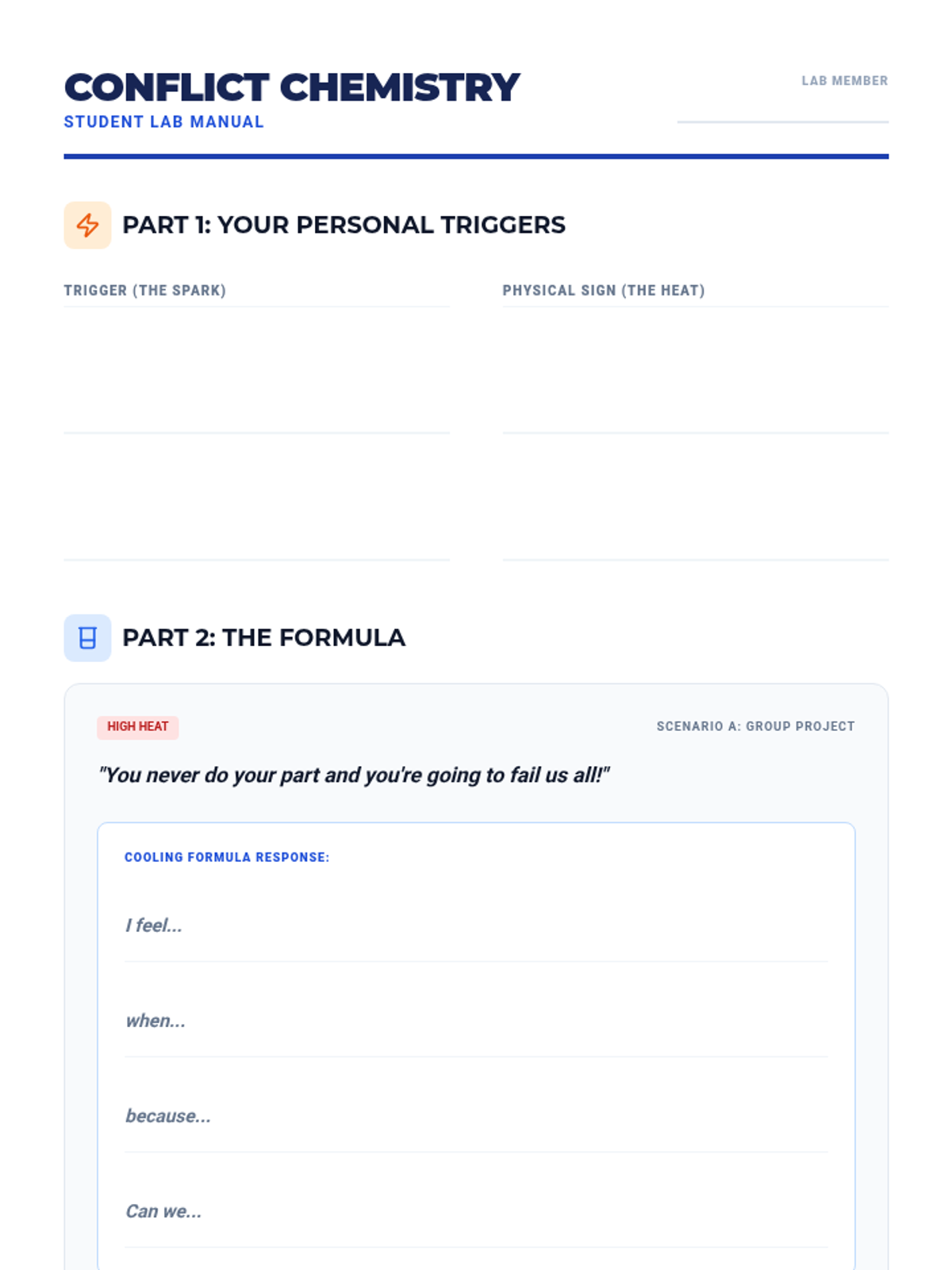
A student-facing activity worksheet for the De-escalation Lab, providing structured spaces to identify personal emotional triggers and practice transforming accusatory statements into productive I-statements using a "cooling formula."