A set of three scripted role-play scenarios for groups of four 3rd graders, focusing on resolving conflicts and using 'I' statements in common school situations like board games and group work.
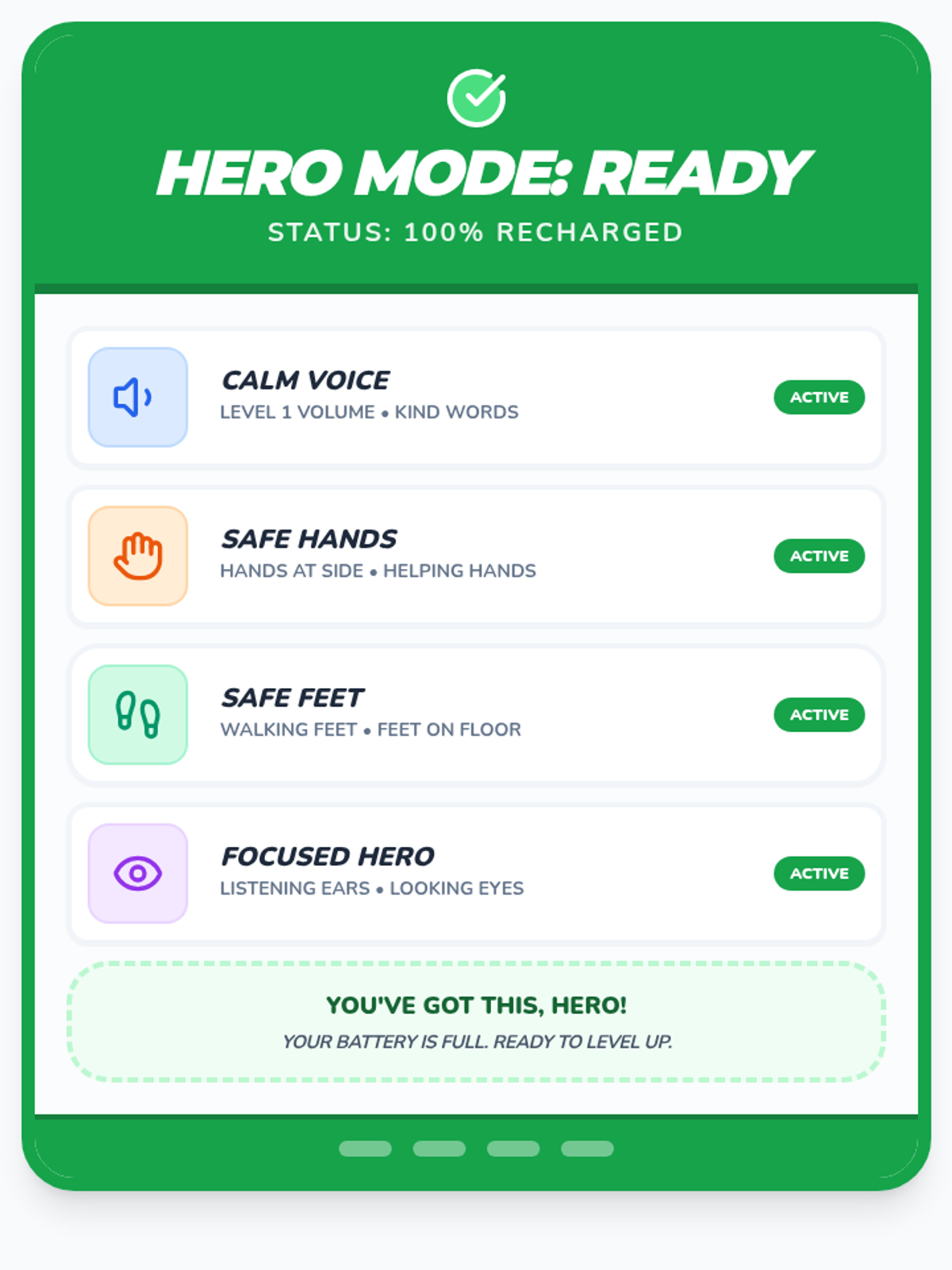
A visual poster depicting what a 'ready' and 'recharged' hero looks like, focusing on a calm voice, safe hands, safe feet, and focus. designed to signal successful regulation. Fixed layout to prevent content clipping.
A visual slide deck that introduces the 'Calm Blueprint' concept, helping students recognize physical anger alerts, identify personal triggers, and master 'I' statements to prevent aggressive outbursts.
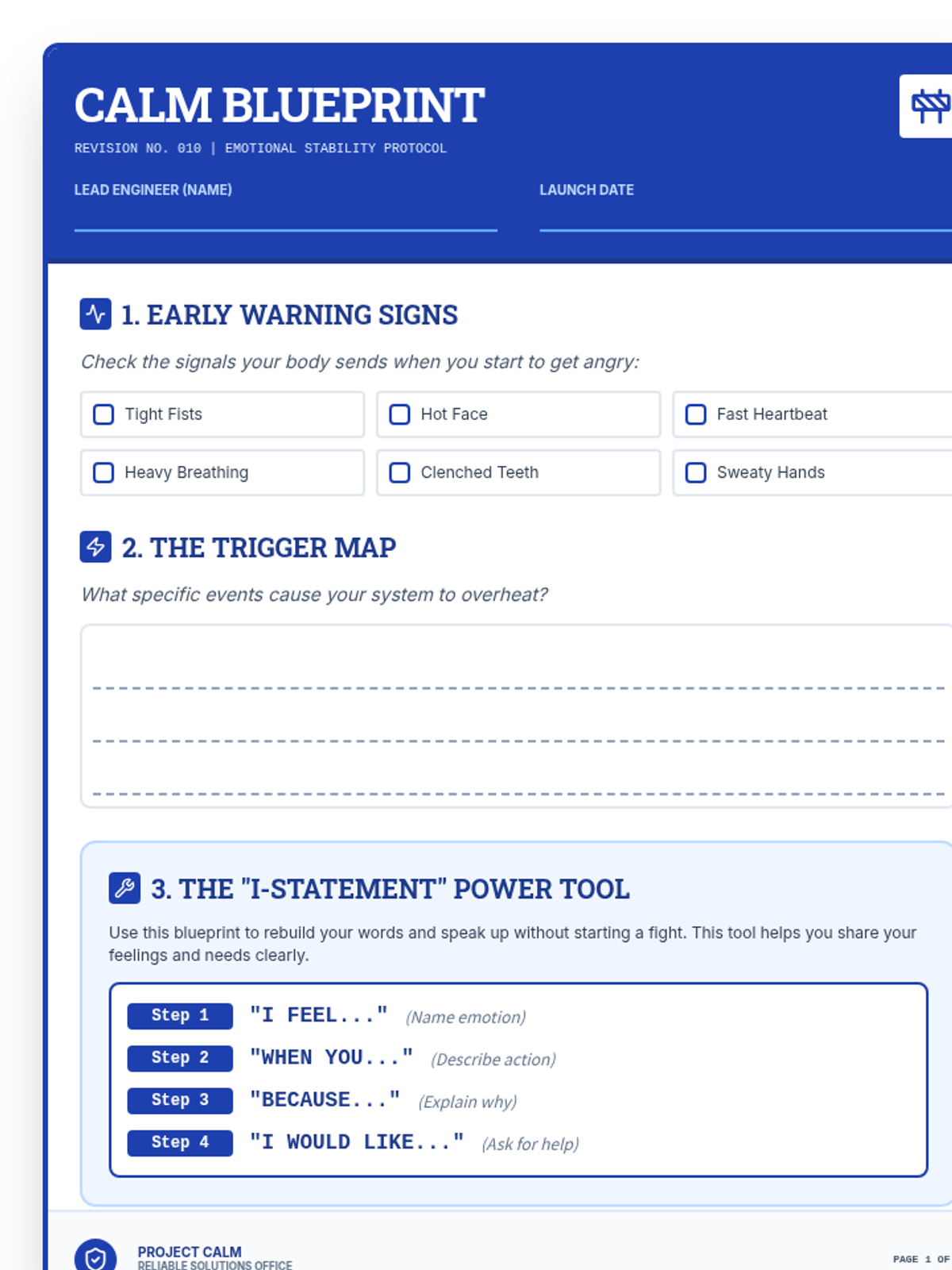
A revised blueprint-themed worksheet that helps students identify their anger triggers and physical warning signs, with improved spacing for 'I' statements and clearer page formatting.
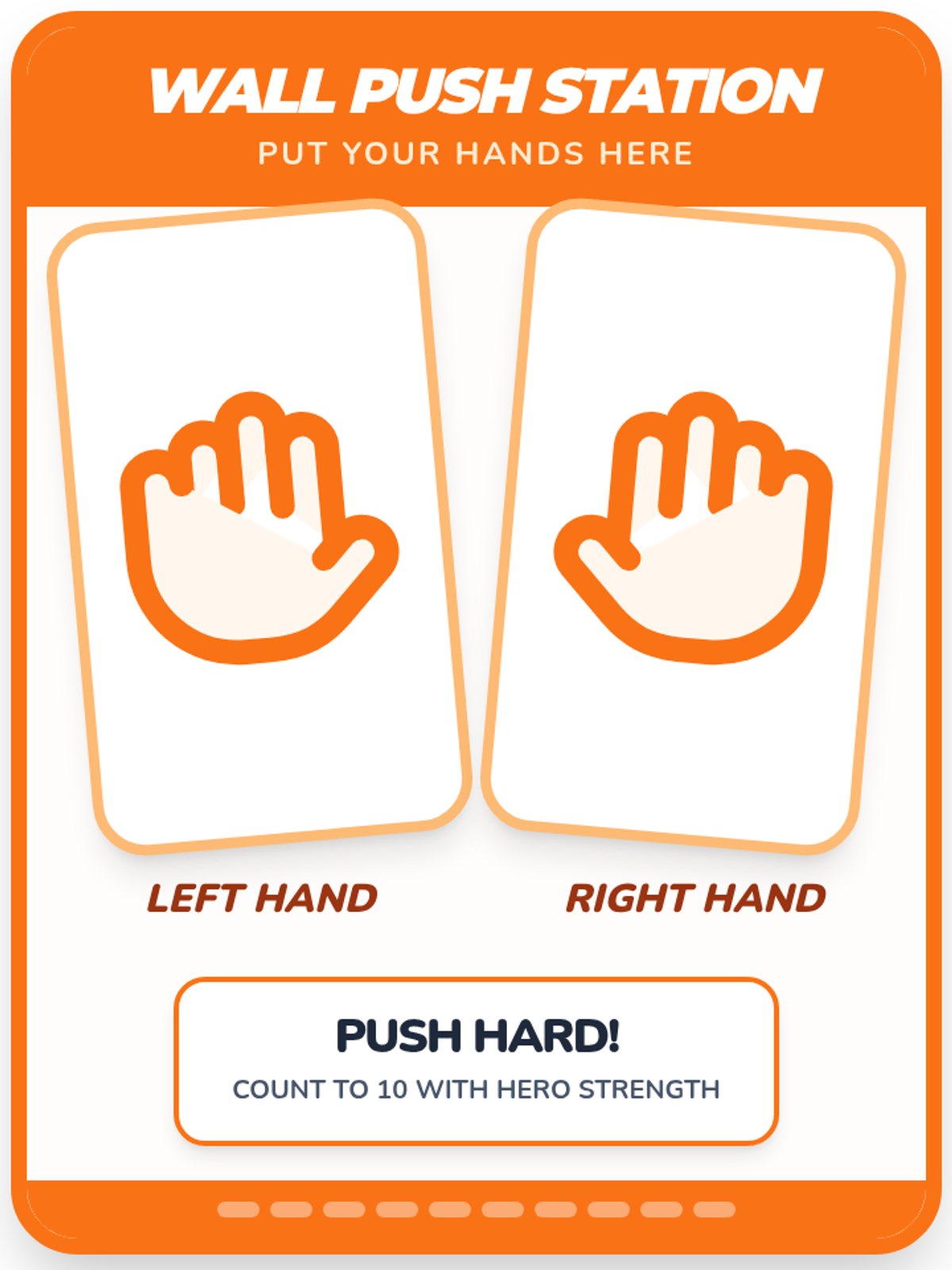
A full-page printout designed to be taped to the wall at chest height, providing a clear visual target for where a student should place their hands for wall push-ups. Hands are mirrored for correct anatomical placement. Corrected mirroring and layout to fit one page.
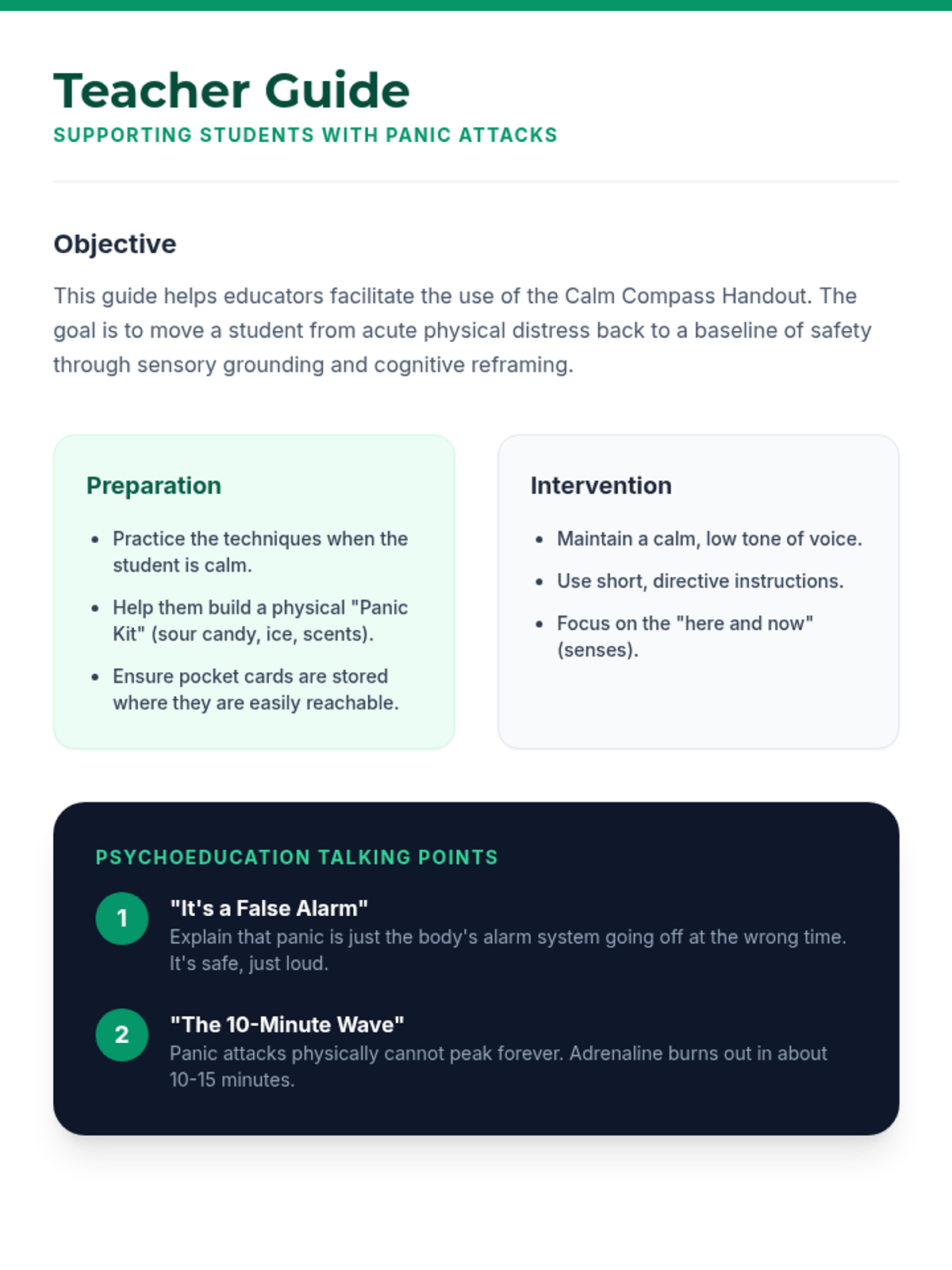
Instructional guide for teachers or counselors on how to use the Calm Compass Handout, featuring implementation strategies, psychoeducation talking points, troubleshooting tips, and a student individualized plan template.
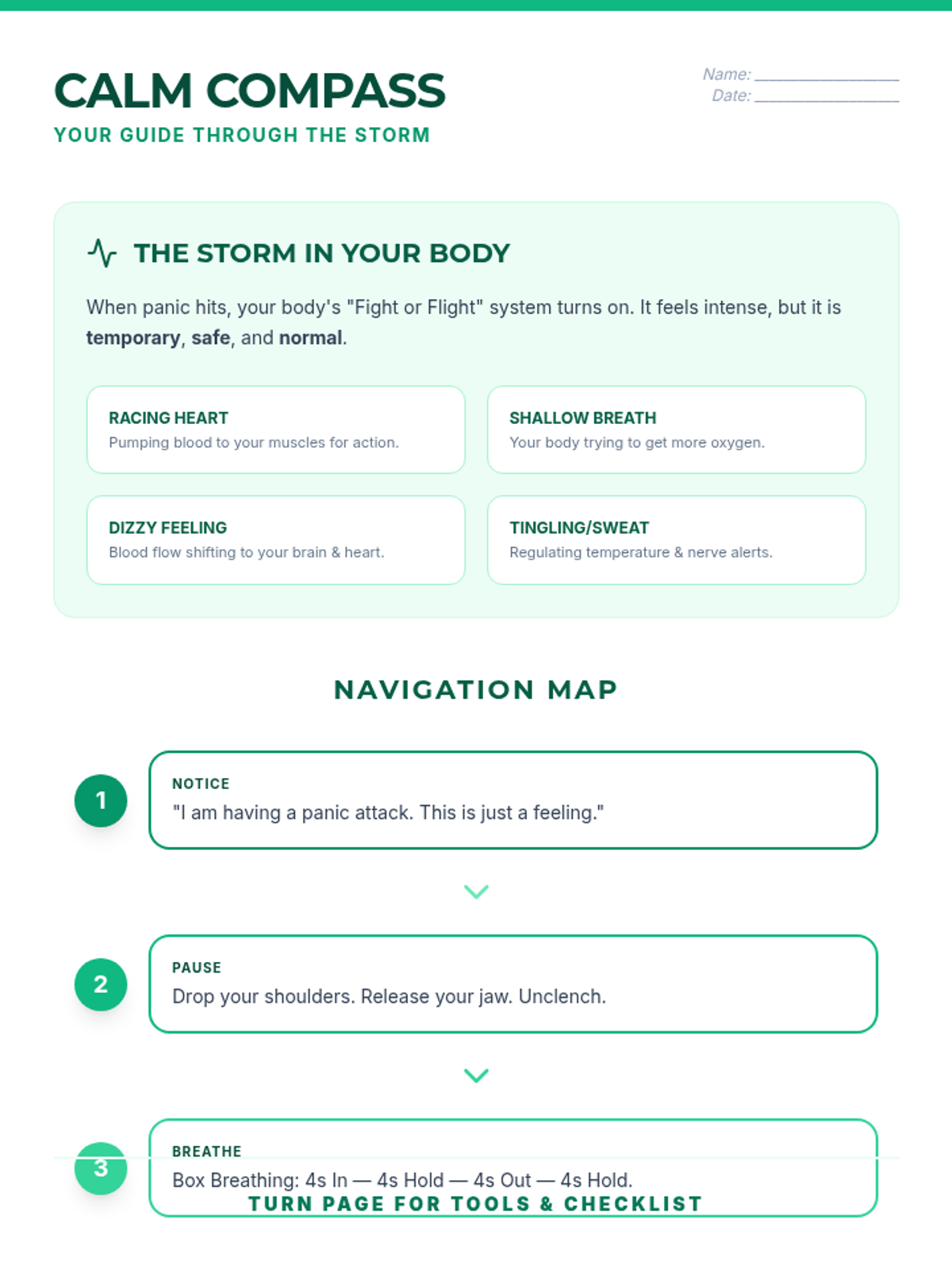
A comprehensive 3-page guide for navigating panic attacks, featuring a visual coping flowchart, physical symptom education, grounding techniques, and a 'Panic Kit' checklist, plus cut-out pocket cards.
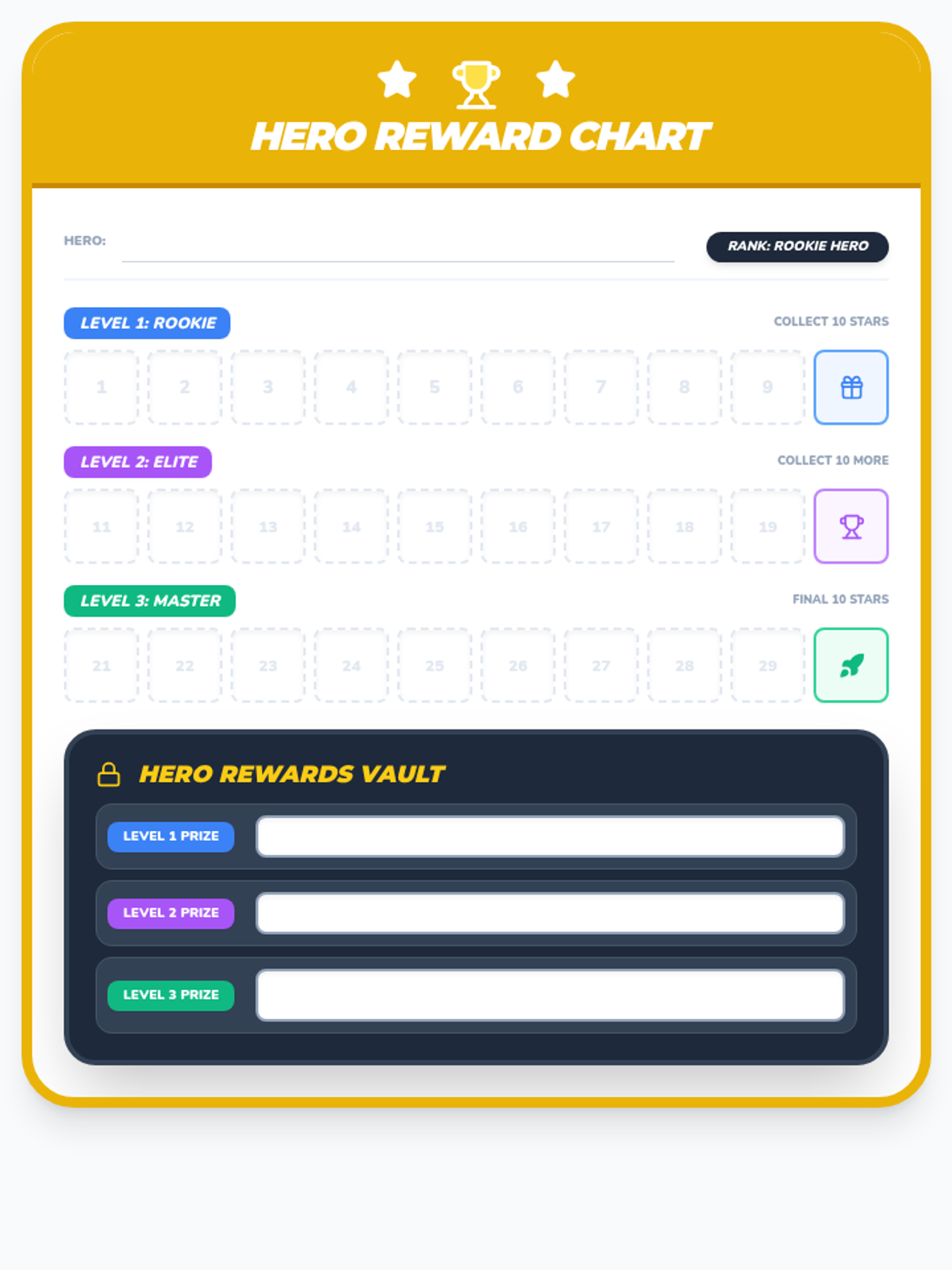
A video-game themed reward chart for tracking successful self-regulation 'recharges'. Features 3 levels with 10 stars each and a 'Rewards Vault' for incentives. Fixed layout to prevent page breaks.
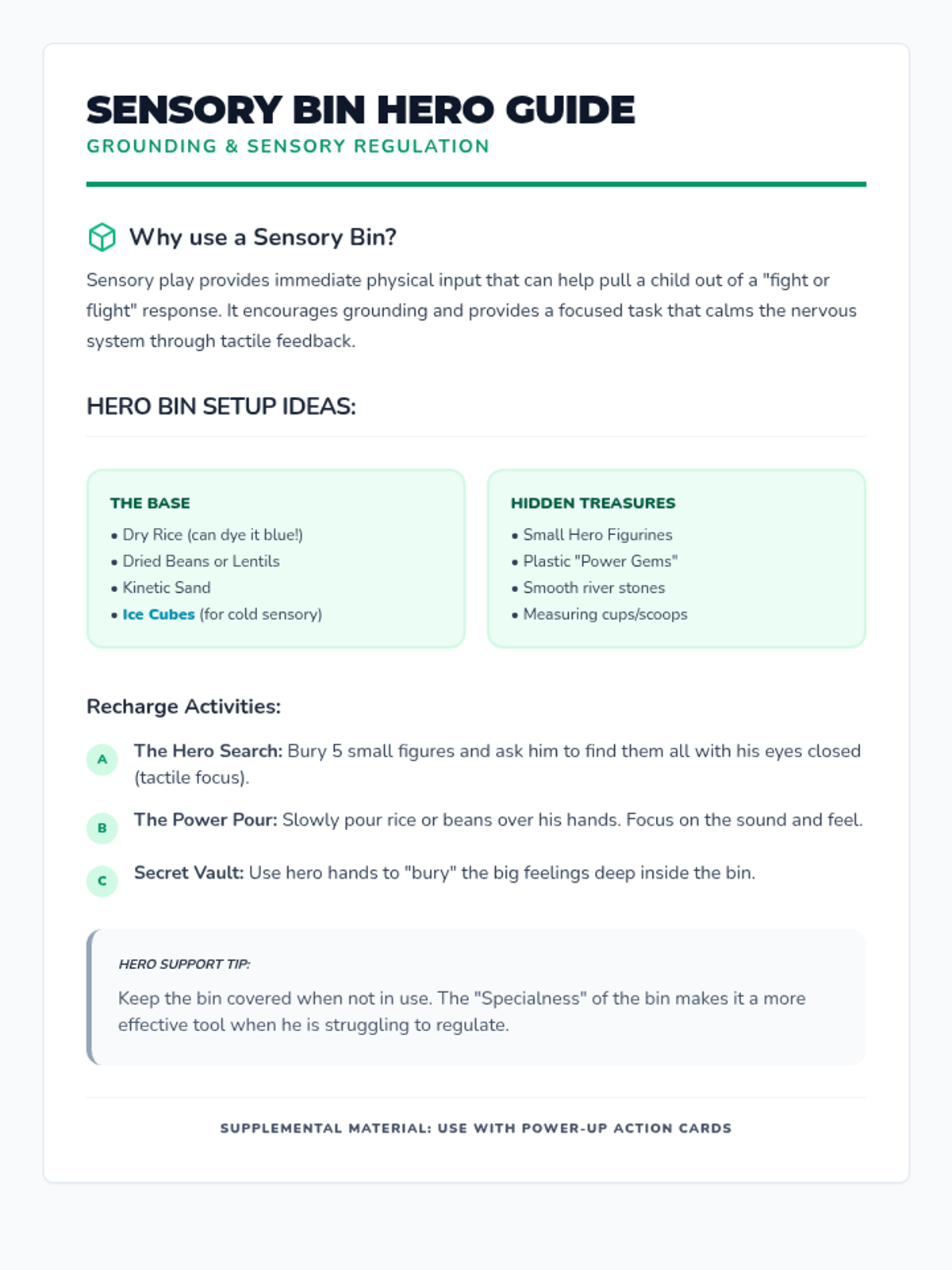
A guide for caregivers on how to set up and use a sensory bin for emotional regulation, including base material ideas and grounding activities. Fixed layout to prevent blank second page.
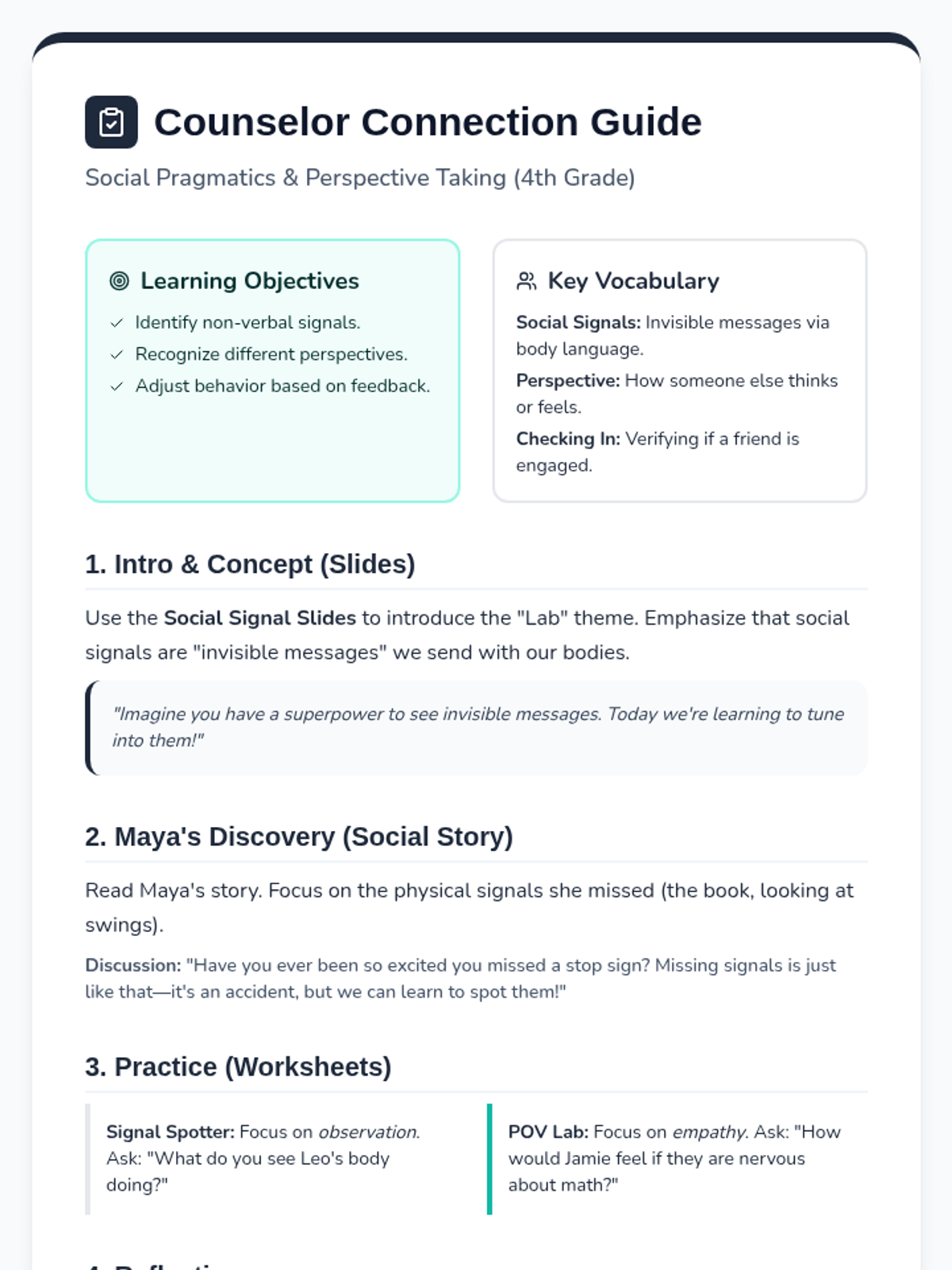
A teacher/counselor facilitation guide for the Social Signal Lab lesson, including learning objectives, vocabulary, and step-by-step instructions for using the materials.
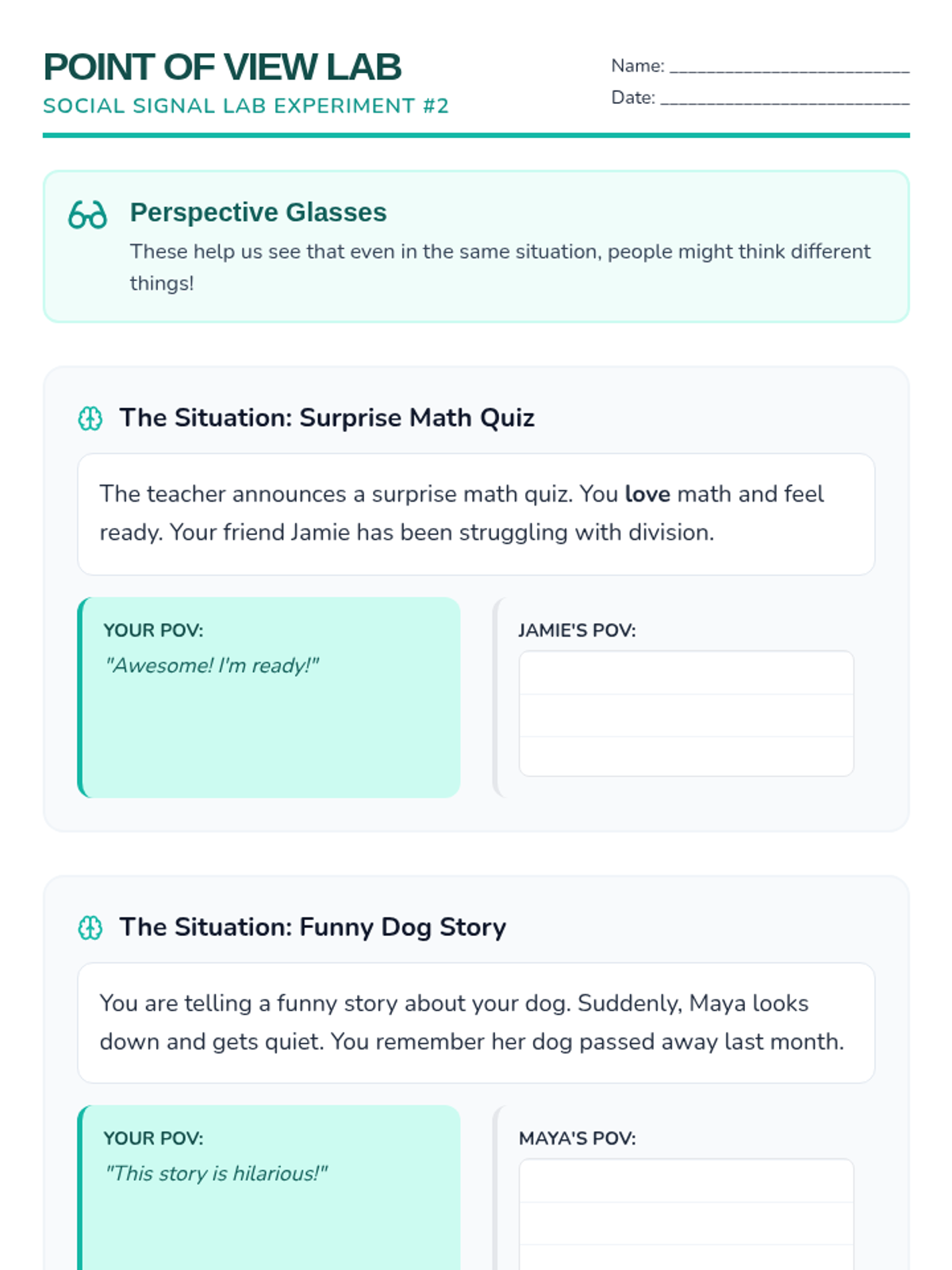
A worksheet designed to help students practice perspective-taking by identifying how different people might feel or think in the same situation.
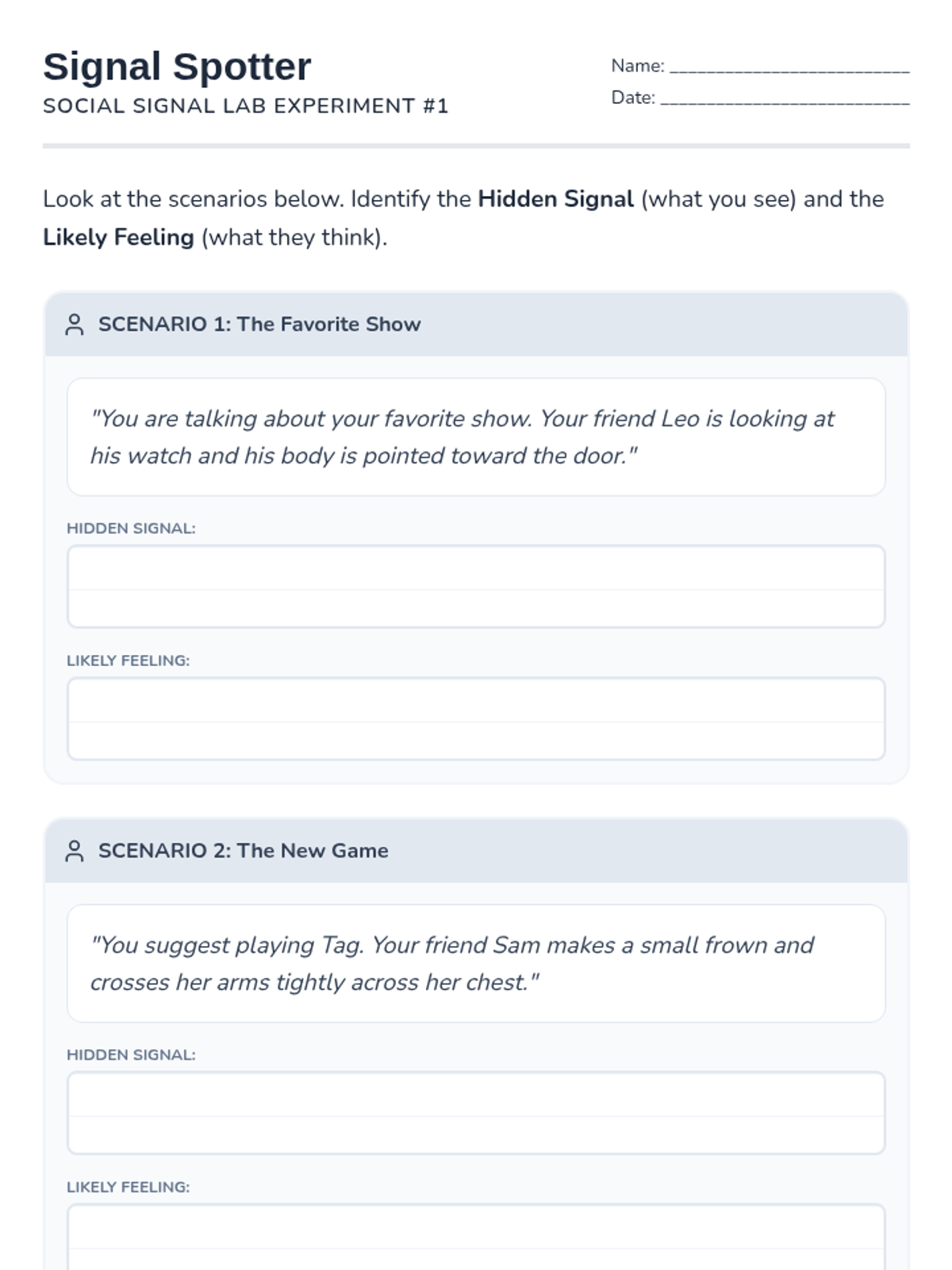
A worksheet focused on identifying non-verbal cues (signals) and interpreting the underlying emotions or intentions in common social scenarios.