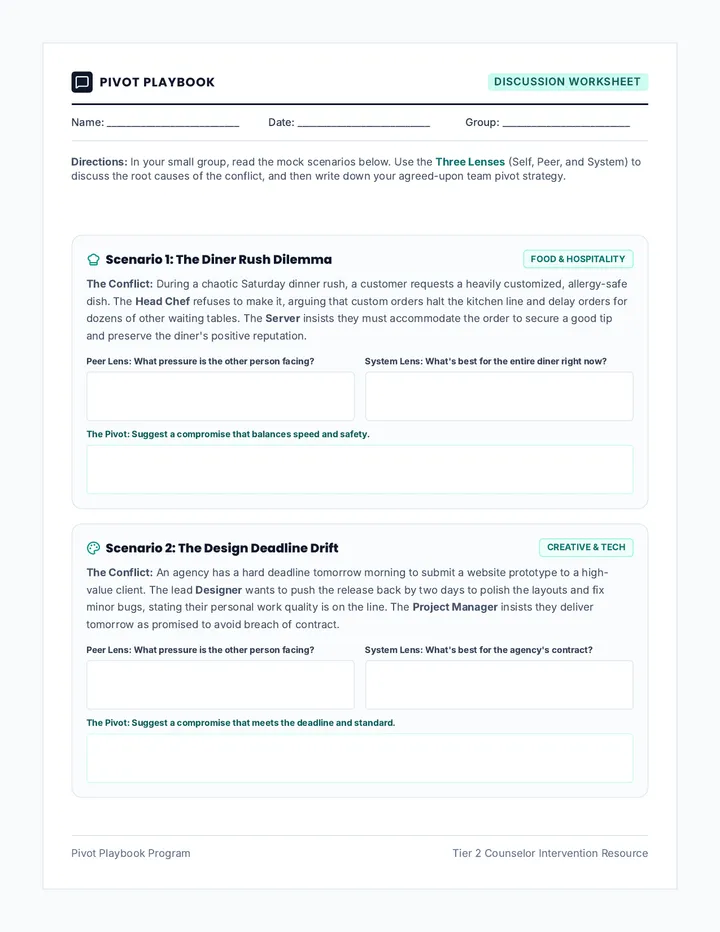
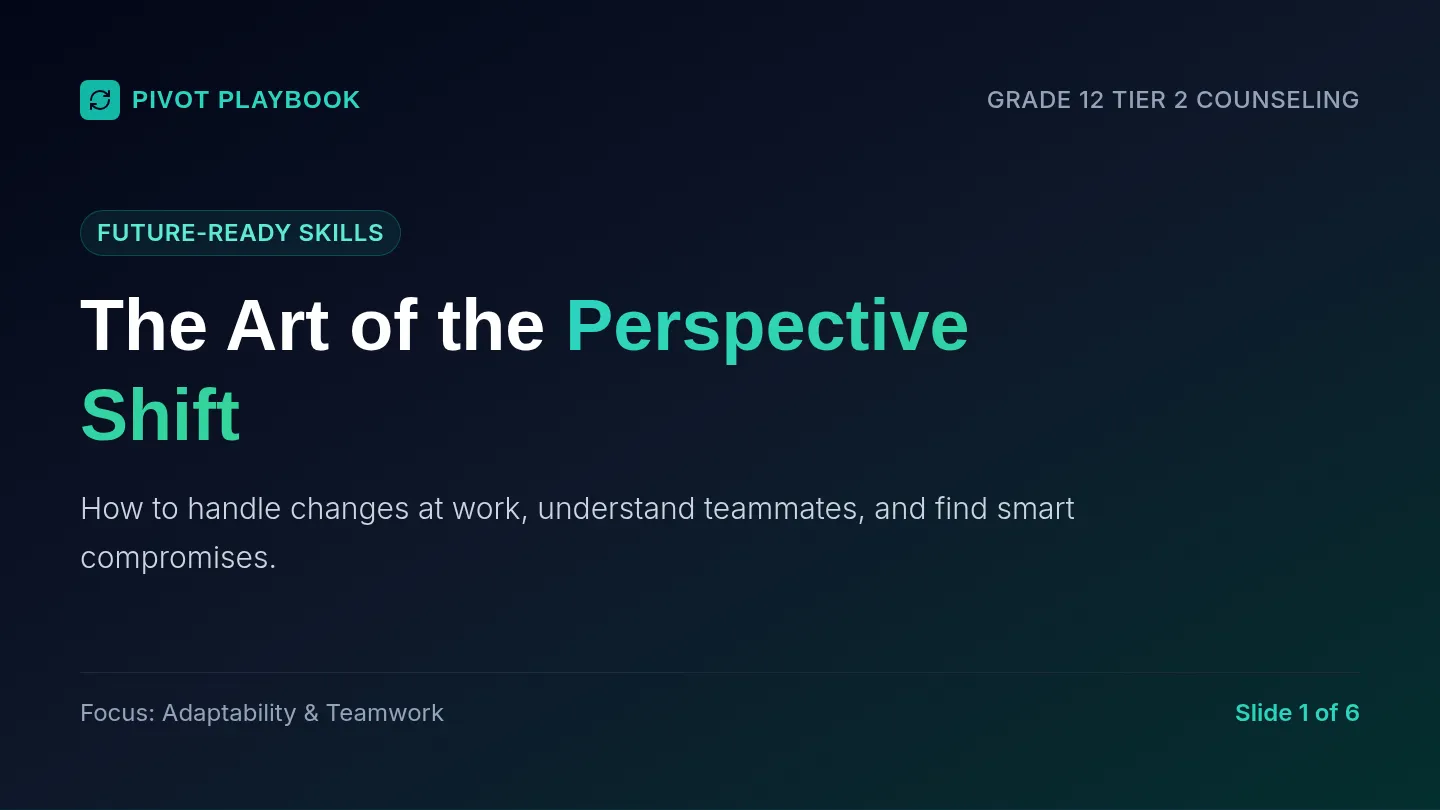
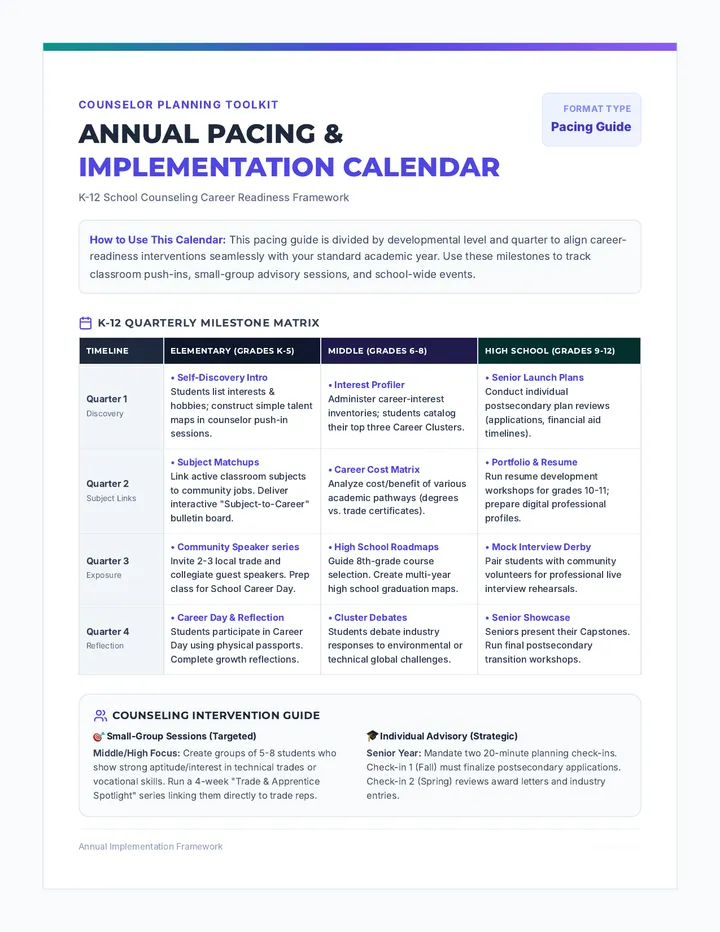
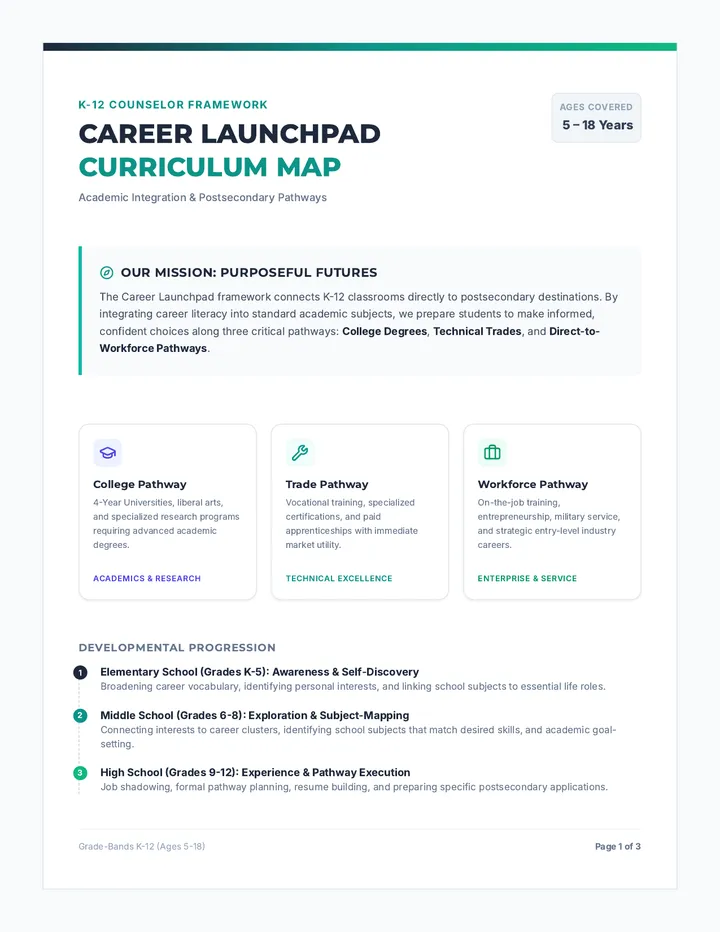
A visual presentation deck to facilitate the class debrief after the Communication Relay, featuring reflection questions and real-world application prompts.
An engaging student worksheet designed as a racing pit-stop dashboard. It includes a visual progress track, a debris log for identifying barriers, and space for two specific tactical adjustments.
A detailed step-by-step instructional script for teachers to deliver the Goal Pit-Stop lesson, including specific prompts, transitions, and teacher notes for each phase of the lesson.
High-impact visual slides for the Goal Pit-Stop lesson, featuring a racing theme, clear phases for reflection, and guidance on setting specific, actionable adjustments.
A comprehensive 30-minute lesson plan for 6th-grade students using a racing pit-stop metaphor to teach goal reflection and adjustment. Includes instructional arc, success indicators, and differentiation strategies.
A comprehensive one-page behavior guide for Irving ISD that synthesizes best practices into an optimized 8.5 x 11 inch reference sheet.
A student-facing worksheet designed with a professional blueprint aesthetic to guide 7th graders through drafting, filtering, and finalizing a SMART goal with concrete action steps.
Scripted prompts for a guided visualization activity and structured peer coaching rounds to help students refine their goals during the Goal-Getter Blueprint lesson.
A high-impact slide deck for the Goal-Getter Blueprint lesson, utilizing a clean blueprint aesthetic to teach the SMART framework and facilitate peer coaching.
A comprehensive teacher facilitation guide for the 30-minute Goal-Getter Blueprint lesson, featuring a timed instructional arc, prep checklist, and pedagogical tips.
A comprehensive behavior policy handbook for K-12 schools, including mission statements, a detailed classification matrix (summary table), and a restorative action menu for teachers and administrators.
A visual decision-making flow chart for K-12 teachers that distinguishes between teacher-managed minor infractions and office-managed major infractions, including specific intervention steps and proactive strategies.
A detailed analysis of four existing behavior systems, highlighting their commonalities and differences to inform a cohesive K-12 framework.
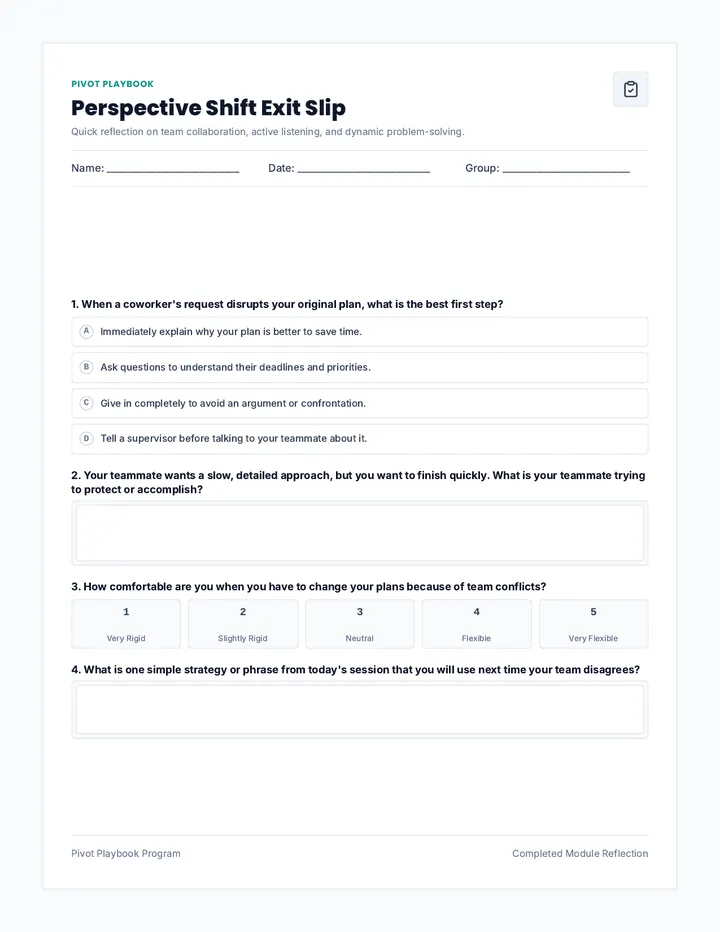
An exit ticket checklist for students to self-assess their mastery of self-management concepts and reflect on how to apply perseverance strategies in real-world scenarios.
Role-play scripts for students to practice giving and receiving constructive feedback in various realistic scenarios, focusing on active listening and emotional regulation.
A student worksheet for identifying actionable feedback and drafting SMART goals, including a structured section for peer review and self-management practice.
A comprehensive reference guide for students outlining self-management strategies, including the 'Feedback Filter' and 'Sieve Method' for processing constructive criticism.