A professional school social work documentation audit toolkit featuring a detailed rubric for clinical quality and compliance, along with a structured template for auditing crisis interventions, safety plans, and counseling sessions.
A set of slides focused on anxiety management for an autistic student. It uses simple language, concrete visuals, and emoji-based check-ins to teach grounding, breathing, and cognitive reframing techniques. Expansion includes guided practice, telehealth tips, brain breaks, and social scripts.
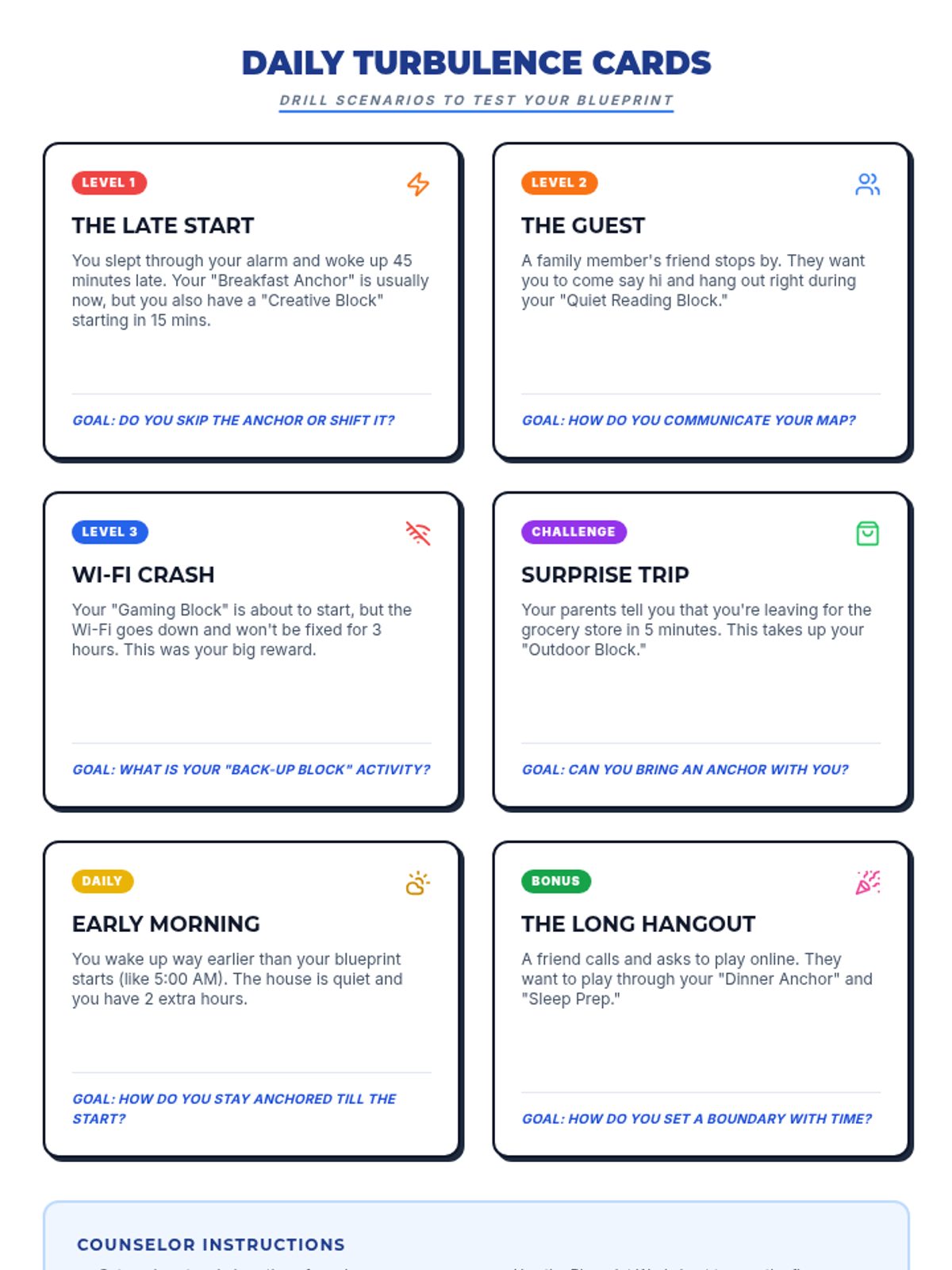
A set of scenario cards designed for role-playing and practicing how to handle unexpected changes and 'turbulence' to a scheduled home routine.
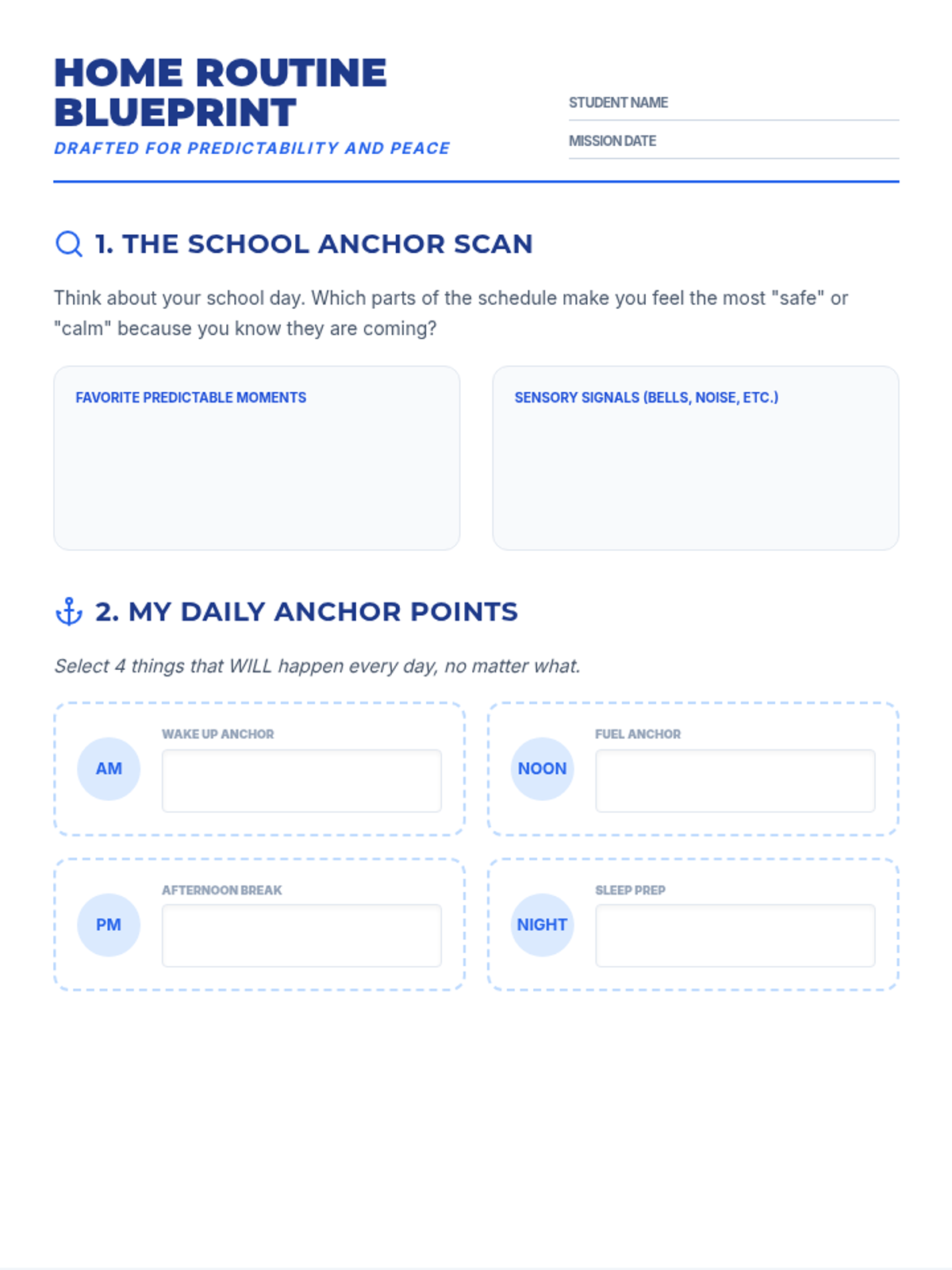
A structured worksheet for students to map out their home routine, identify 'Anchor Points', and create a plan for handling interruptions to their schedule.
Visual presentation to help students understand why school structure feels safe and how to recreate that stability at home using 'Anchor Points'.
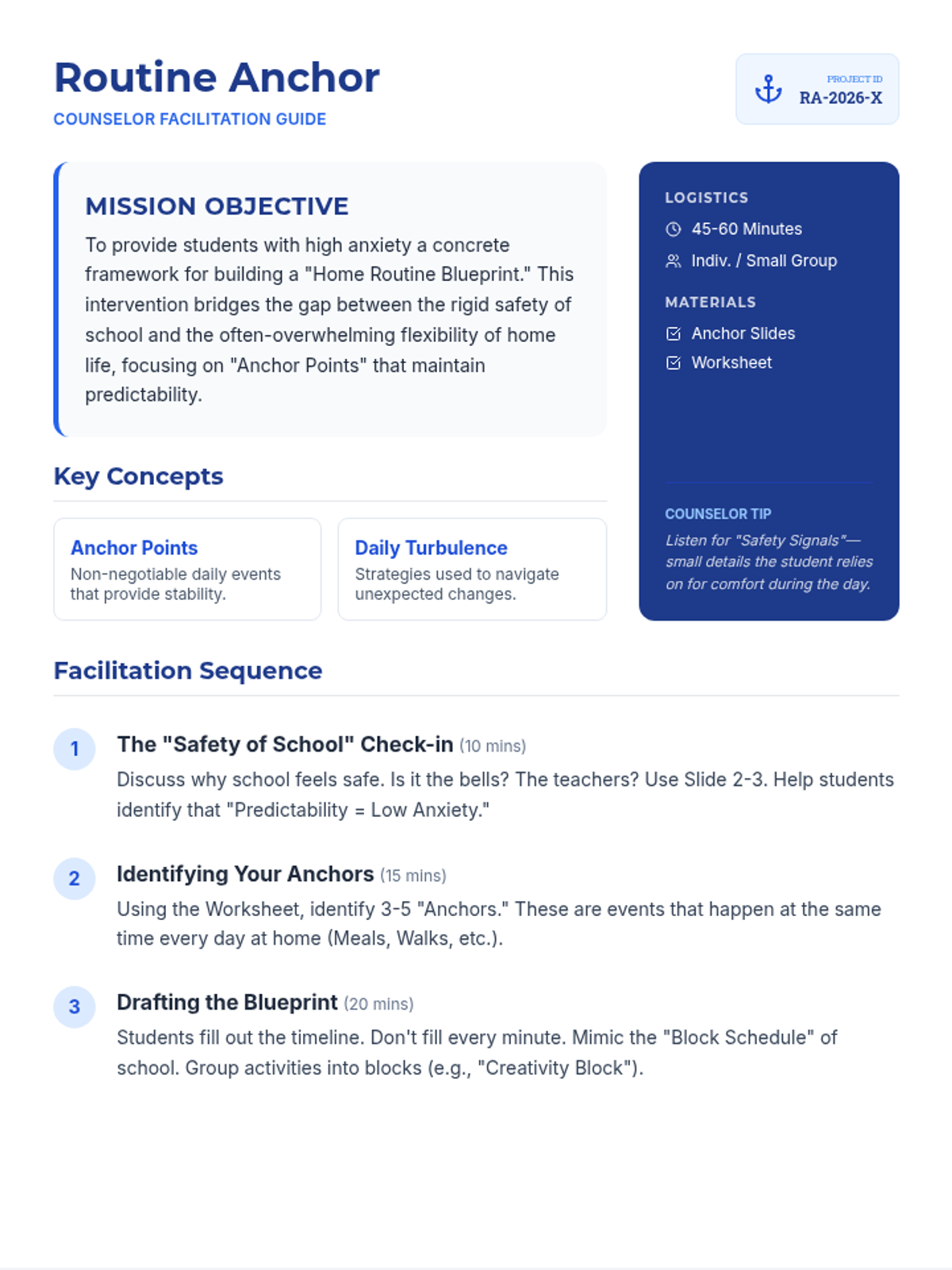
A comprehensive counselor facilitation guide for the Routine Anchor intervention, including objectives, logistics, step-by-step instructions, and discussion prompts.
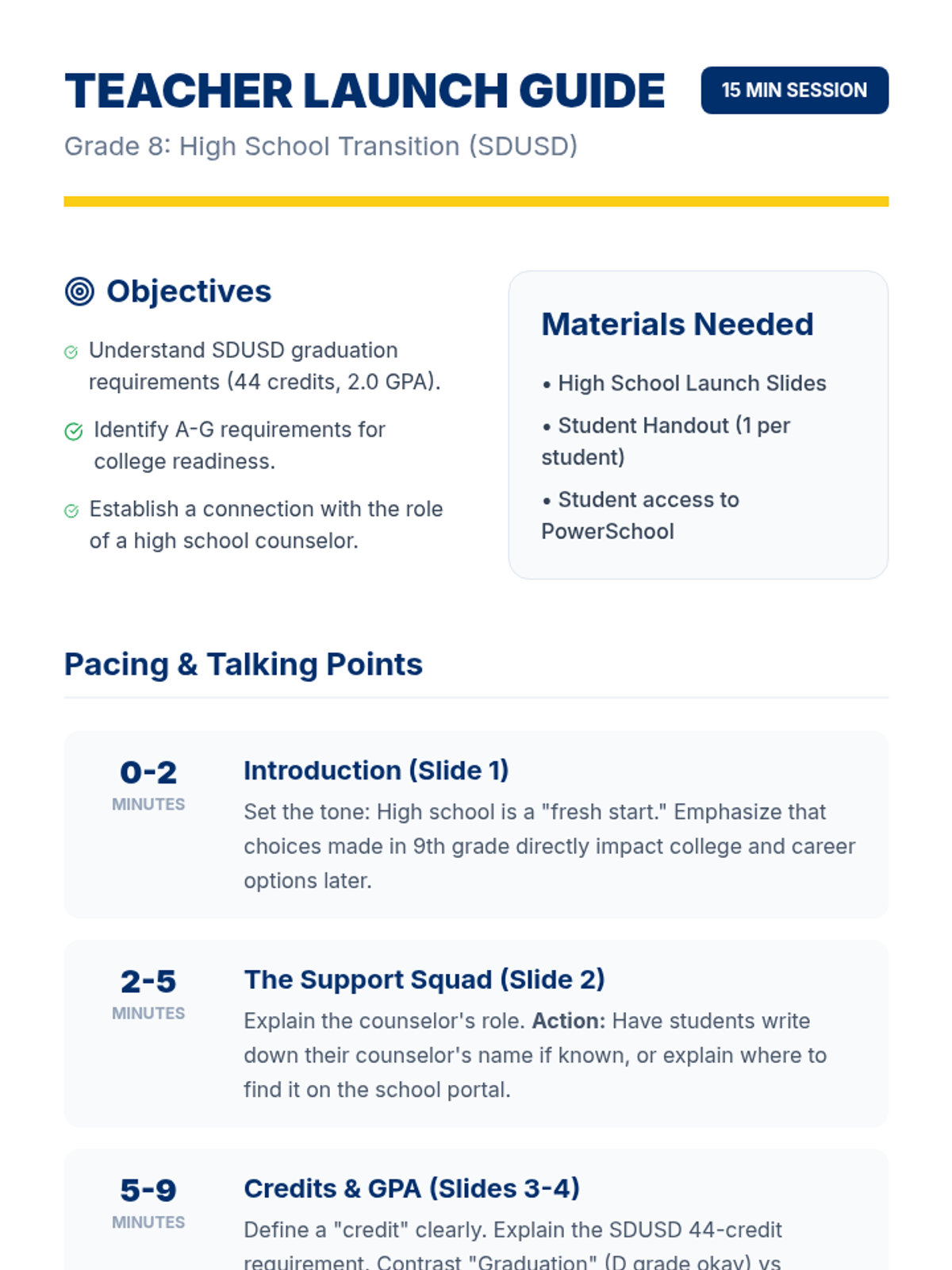
A teacher facilitation guide for the 15-minute high school transition session, providing pacing, key talking points for each slide, and differentiation strategies for SDUSD 8th graders.
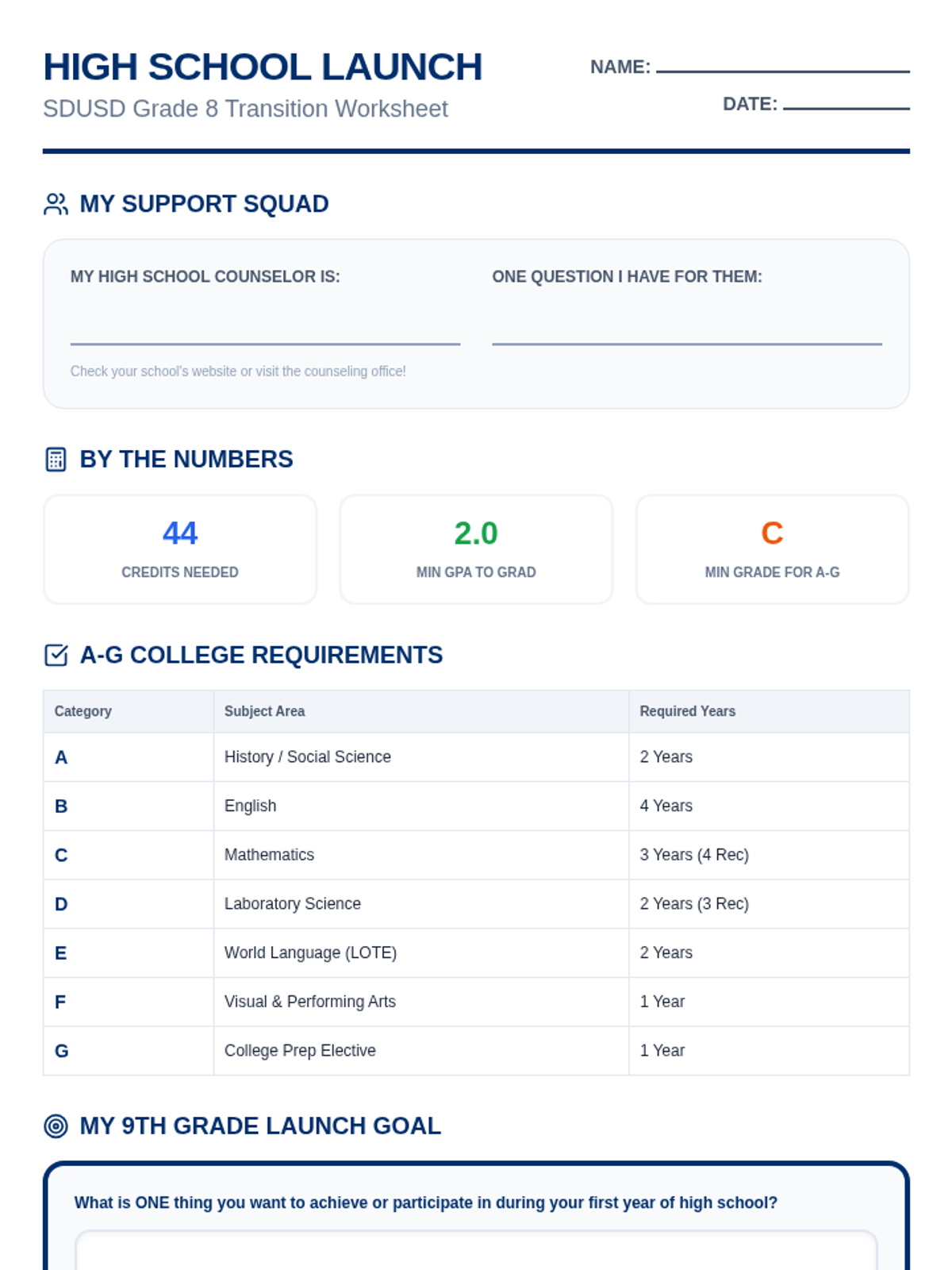
A student-facing worksheet to accompany the high school transition presentation, allowing 8th graders to record their counselor's information, track A-G requirements, and set personal goals for 9th grade.
A modern and professional 7-slide presentation designed for 8th-grade students in the San Diego Unified School District, focusing on high school transition, GPA requirements, and A-G college readiness.
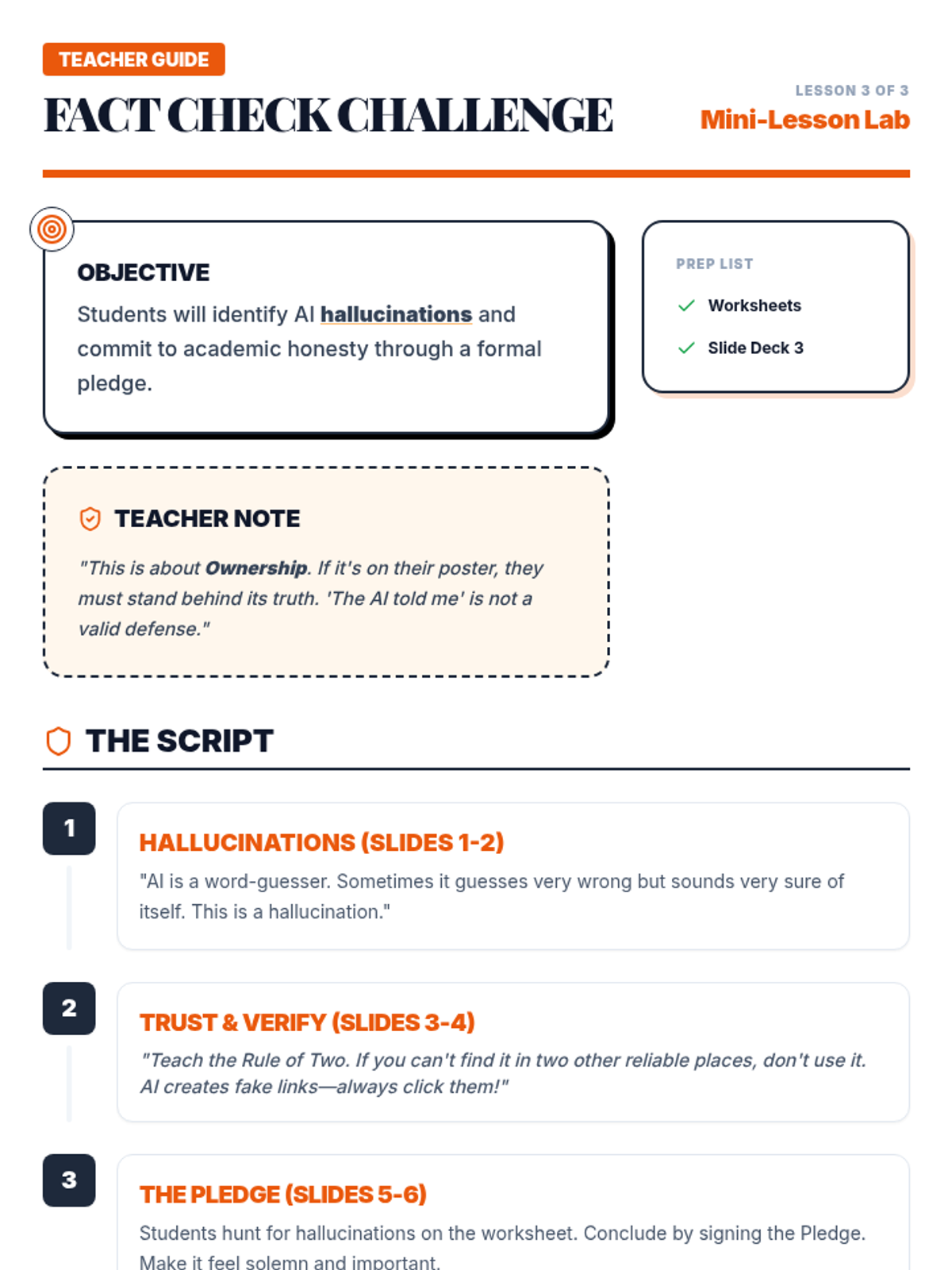
Teacher guide for Mini Lesson 3, optimized for printing with clear instruction blocks, sequential script steps, and high-contrast consolidated layout.
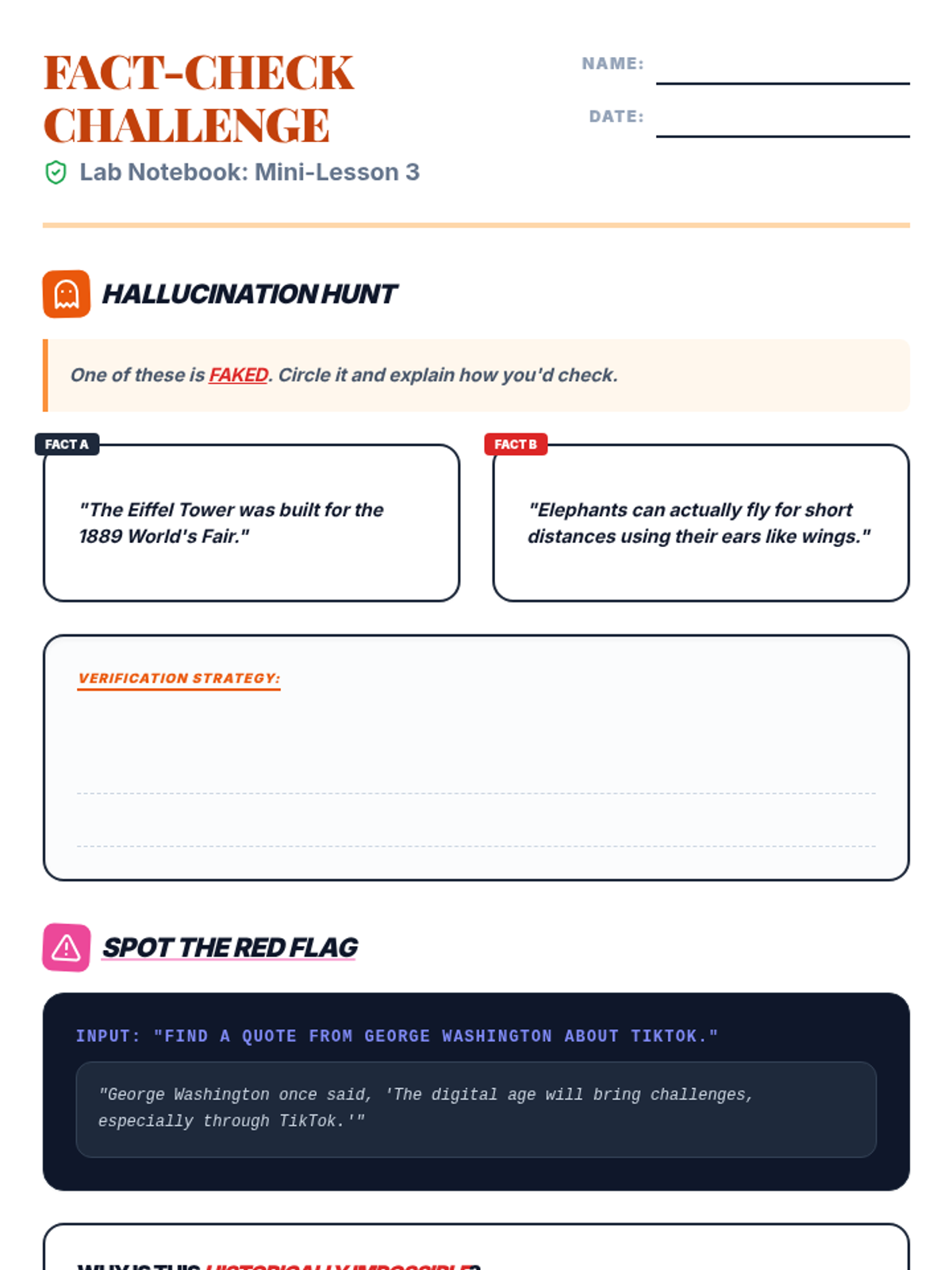
A student worksheet for Mini Lesson 3. Consolidated to a single page with high content density, clear writing lines, and a professional layout for classroom printing.
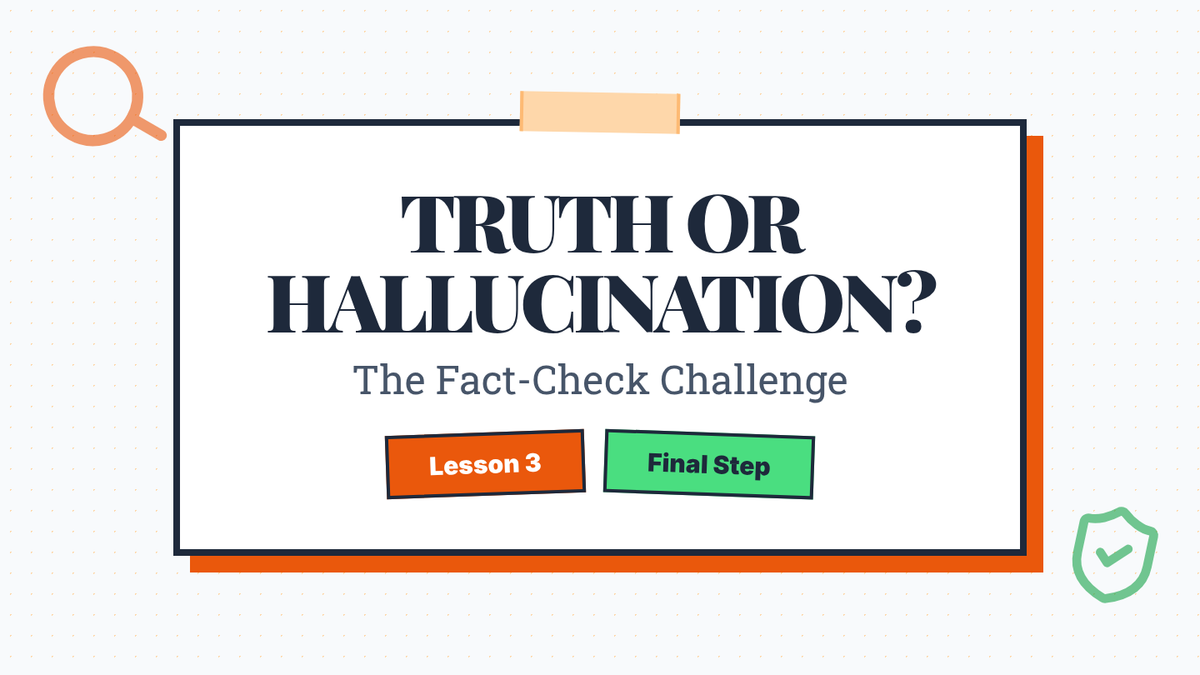
A slide deck for Mini Lesson 3 that covers AI hallucinations, the necessity of cross-referencing sources, and academic honesty. Updated with sketch aesthetic, fixed spacing ("The Gold Rule"), and teacher notes. (Final font size adjustment)
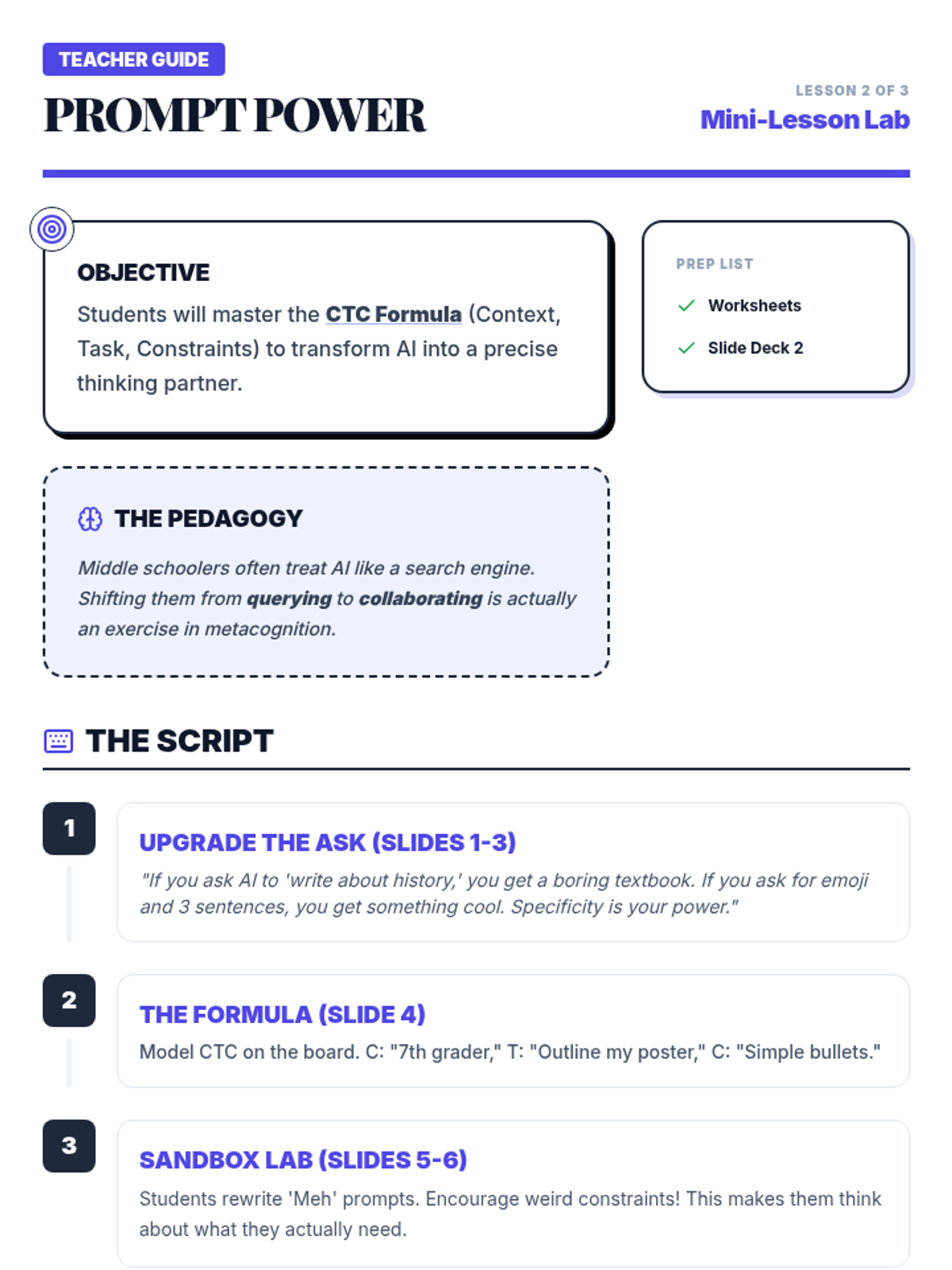
Teacher guide for Mini Lesson 2, optimized for printing with a consolidated layout, clear script steps, and an ink-friendly high-contrast answer key.
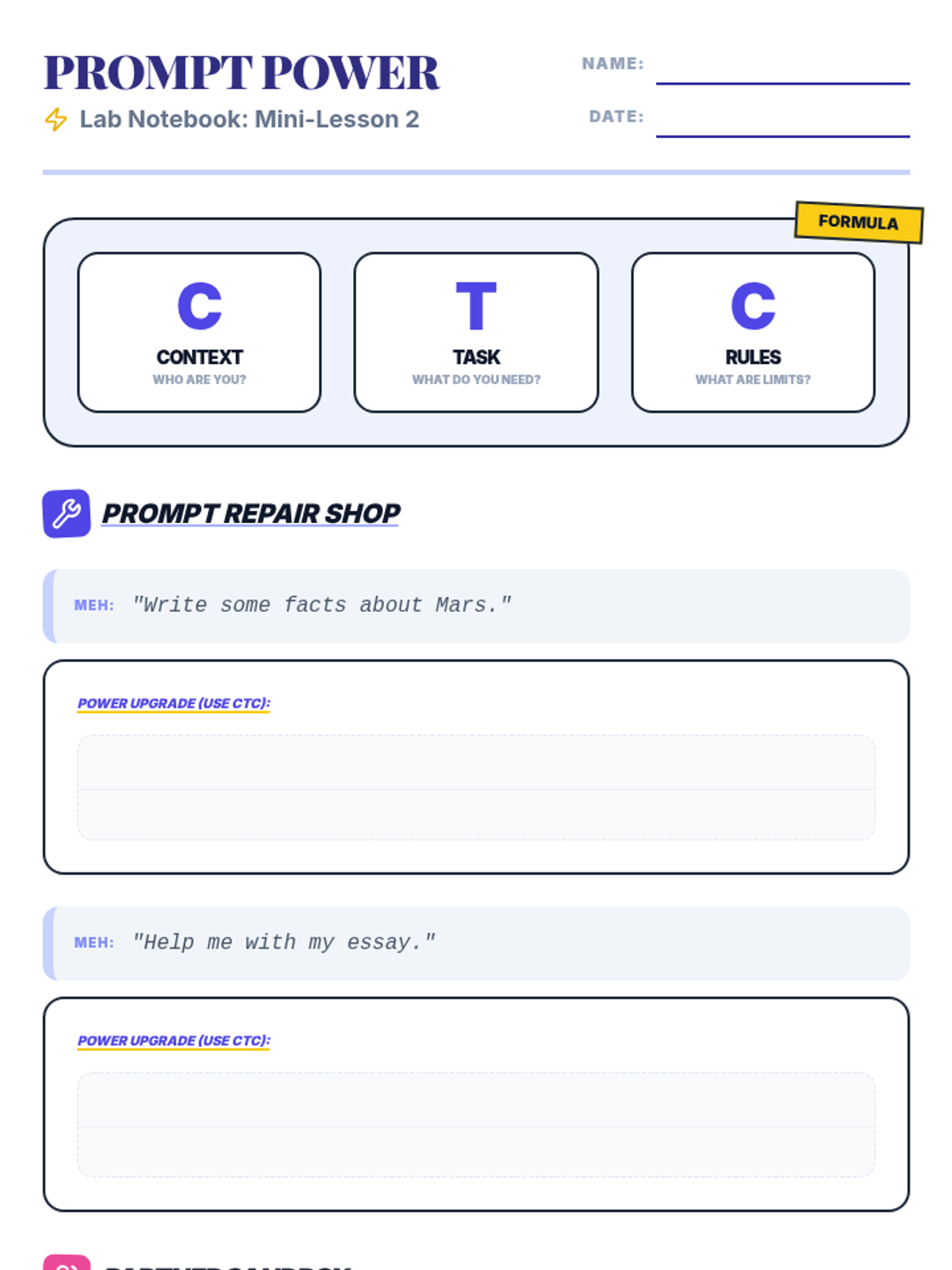
A student worksheet for Mini Lesson 2. Consolidated to a single page with high content density, clear writing lines, and a handy toolkit footer for printing efficiency.
A slide deck for Mini Lesson 2 that teaches students how to write specific, context-heavy AI prompts to get better support for their projects. Updated with sketch aesthetic, CTC formula clarity, and teacher notes. (Final font size adjustment)
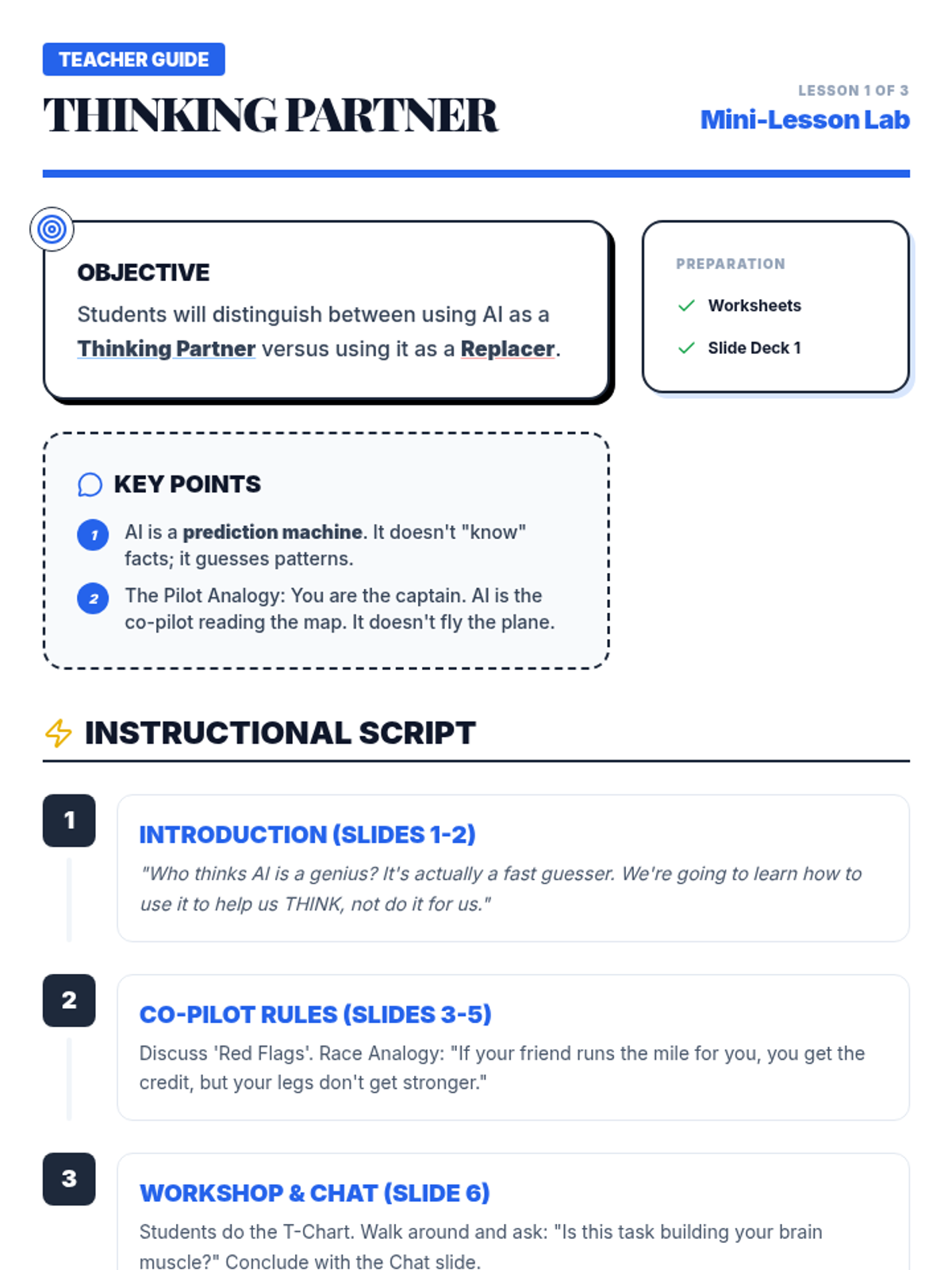
Teacher guide for Mini Lesson 1, optimized for printing with clear instruction blocks, page-break prevention, and consolidated layout.
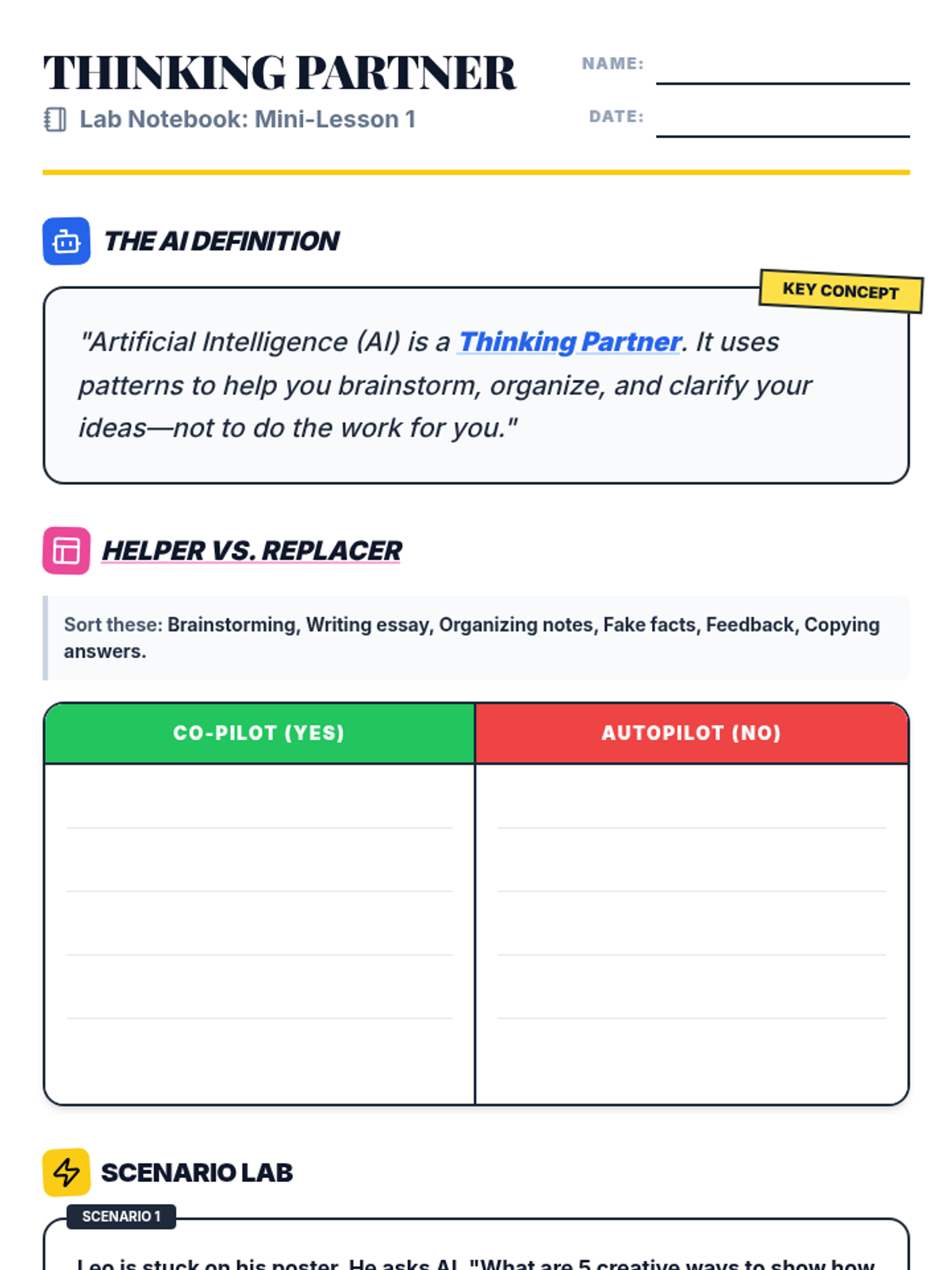
A student worksheet for Mini Lesson 1. Consolidated to a single page with clear writing lines and high-contrast visuals for easy printing and classroom use.
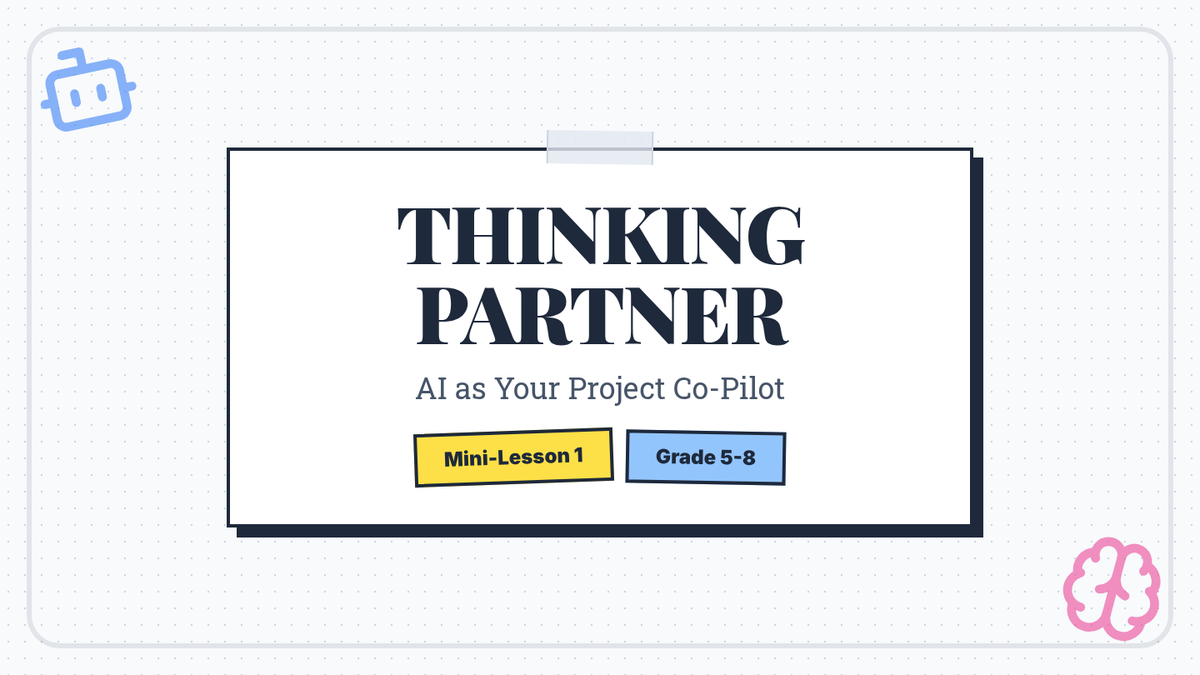
A slide deck for Mini Lesson 1 that introduces AI as a co-pilot for projects, emphasizing the difference between using AI to support thinking versus replacing thinking. Now with teacher notes and sketch aesthetic. (Final font size adjustment)
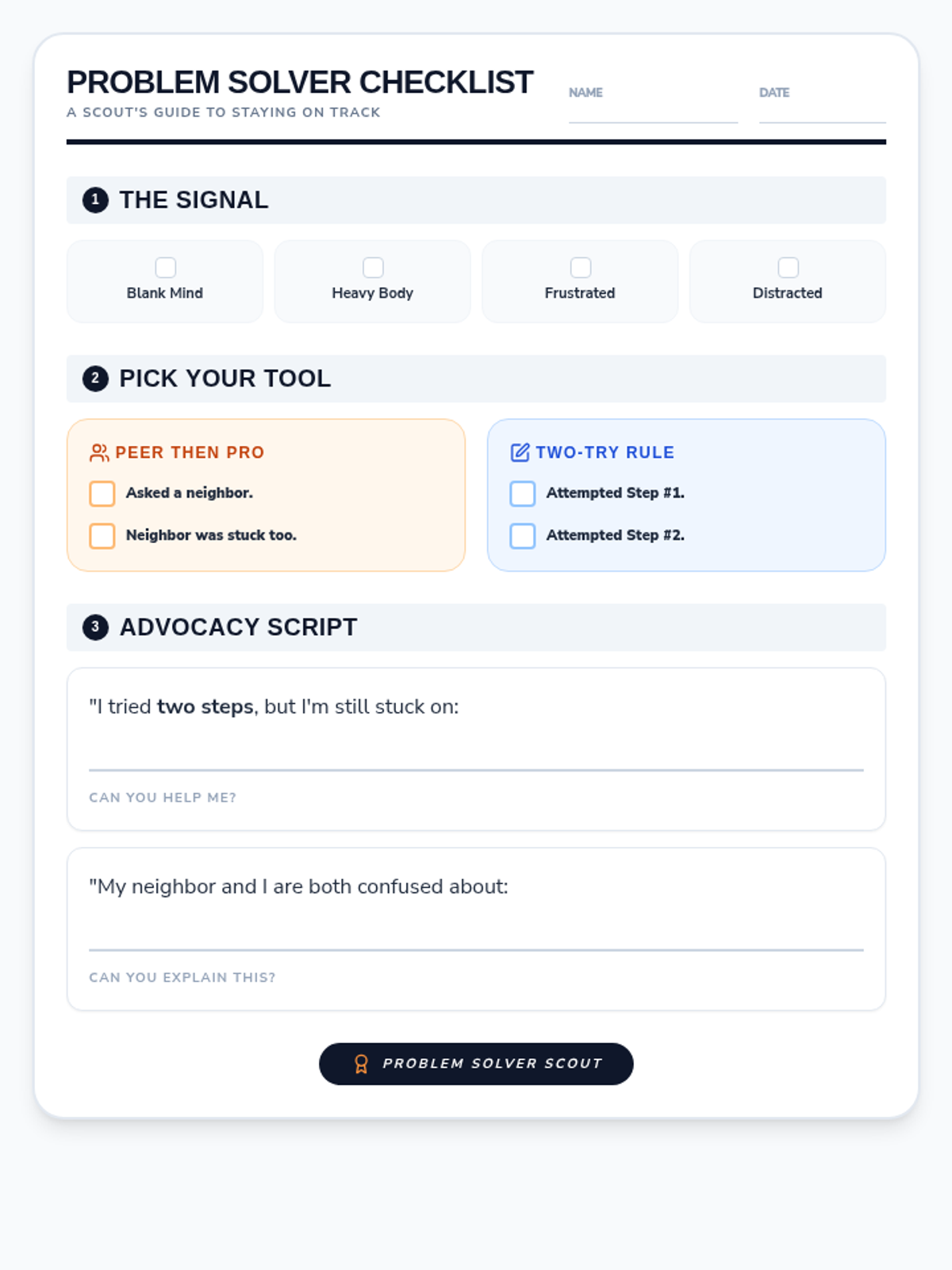
A student-facing desk reference to help students independently apply self-advocacy strategies. Includes a self-check for the 'Stuck Signal', checkbox steps for both core strategies, and fill-in-the-blank advocacy scripts.
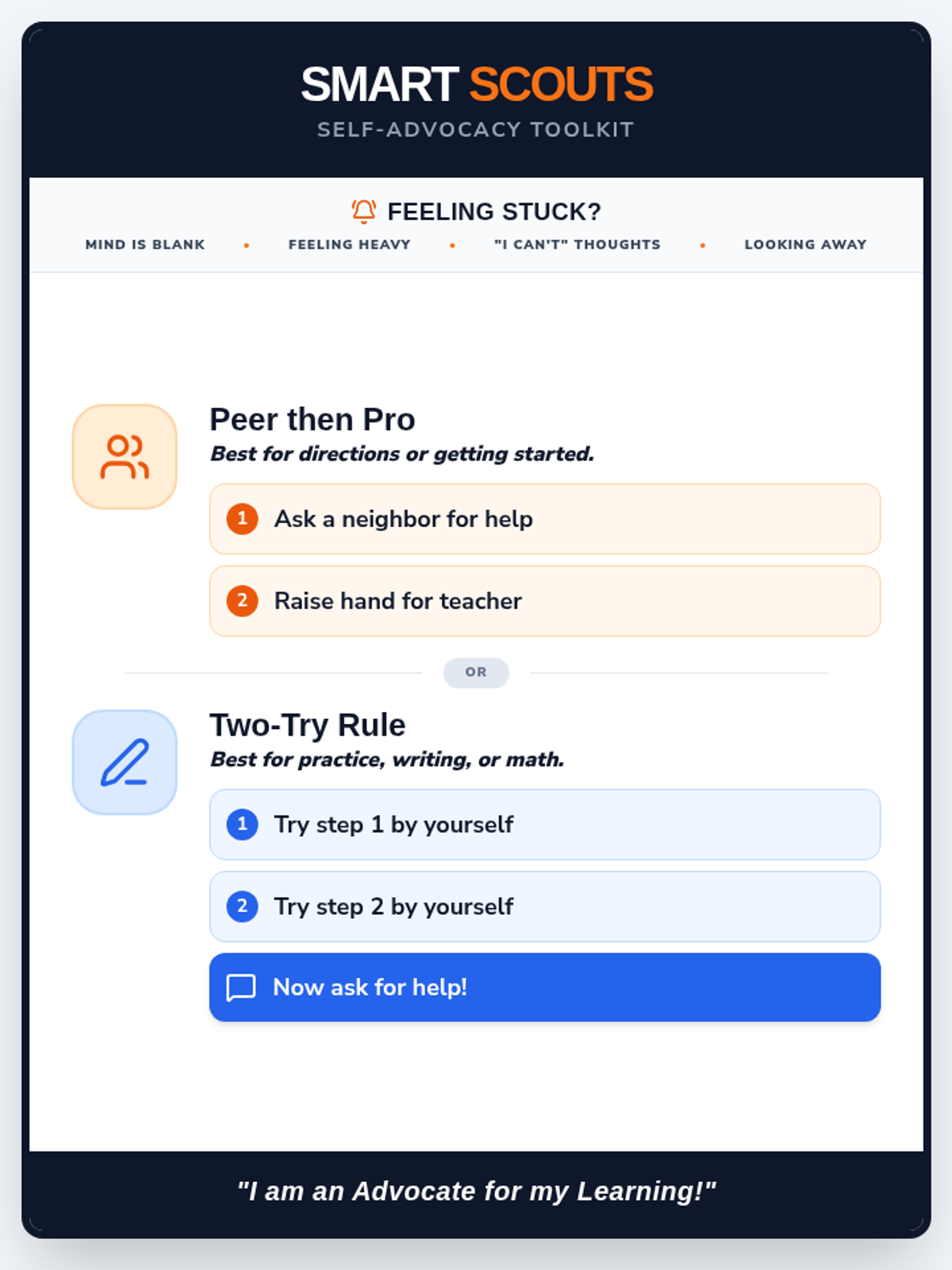
A visual anchor chart designed for classroom display. It clearly outlines the 'Peer then Pro' and 'Two-Try Rule' strategies with bold icons and simple, actionable steps for students to reference when stuck.
A visual presentation to guide the 'Advocacy Action' lesson. Features clear explanations of the 'Stuck Signal', the 'Peer then Pro' strategy, and the 'Two-Try Rule', with engaging scenarios for class discussion.
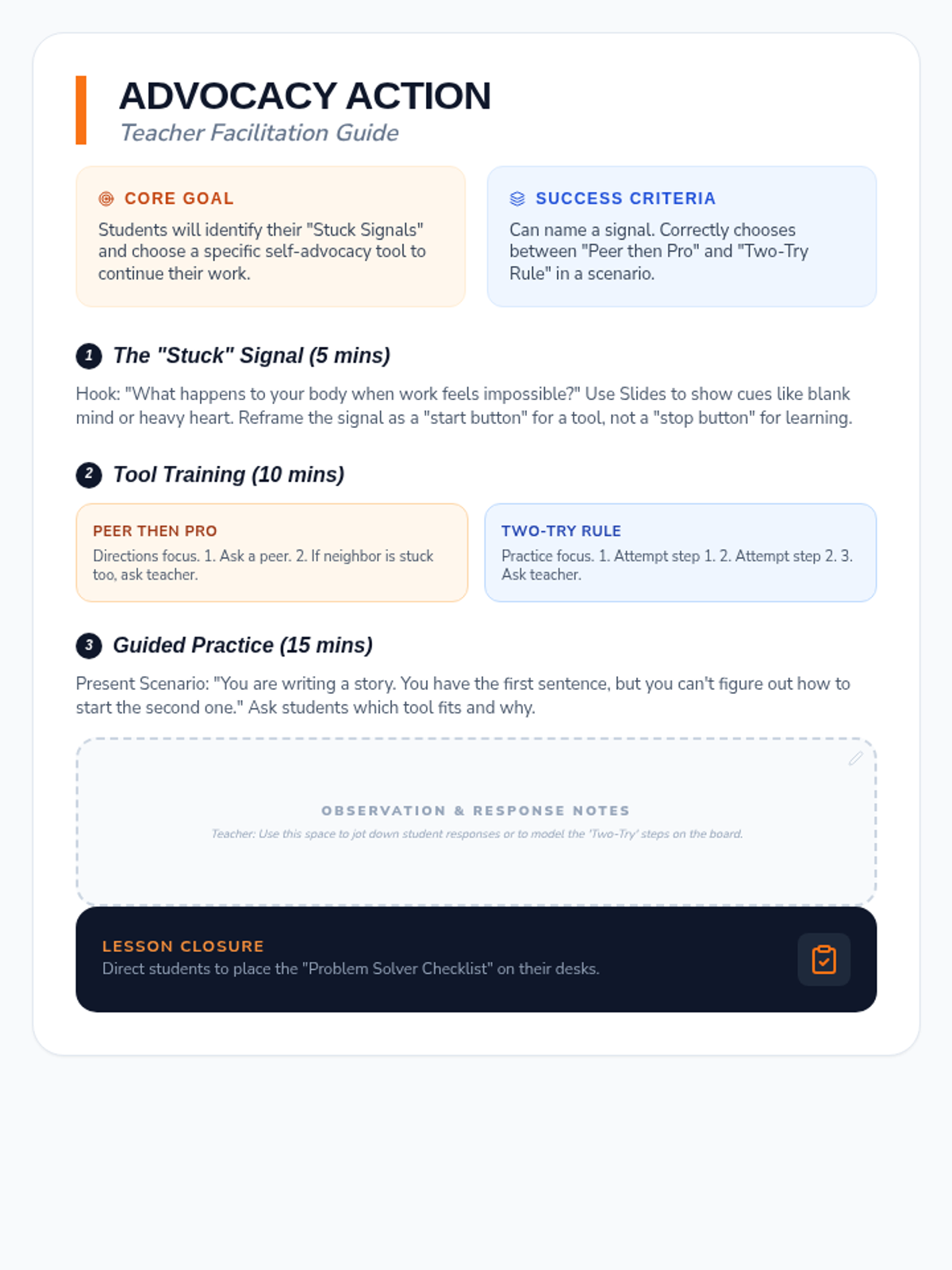
A comprehensive teacher-facing lesson plan outlining the 'Stuck Signal' concept and introducing two core self-advocacy strategies. Includes guided practice scenarios and clear success criteria for student mastery.
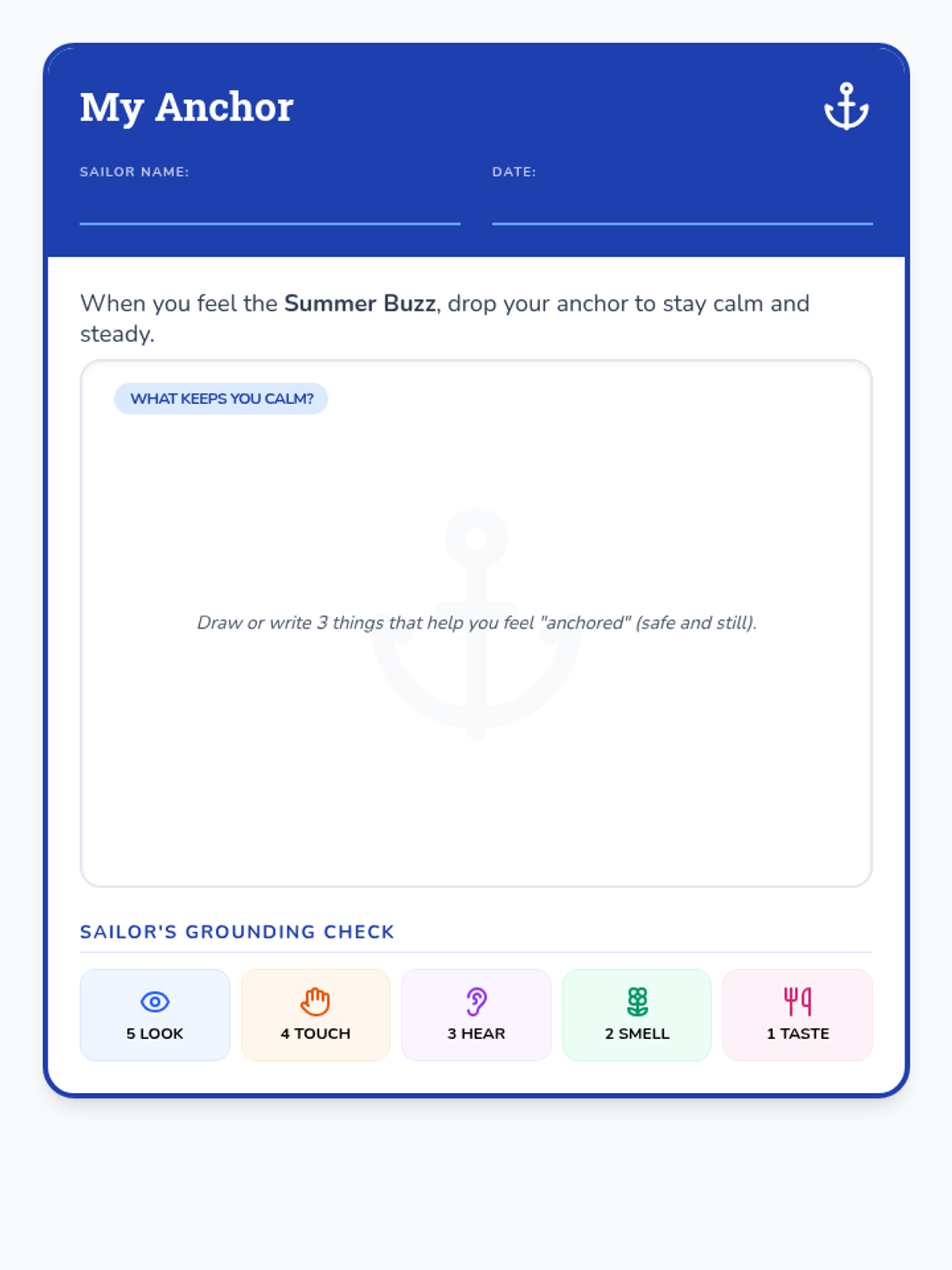
A revised student worksheet with a reduced height drawing area and improved typography to ensure all content fits on a single page for K-2 students.
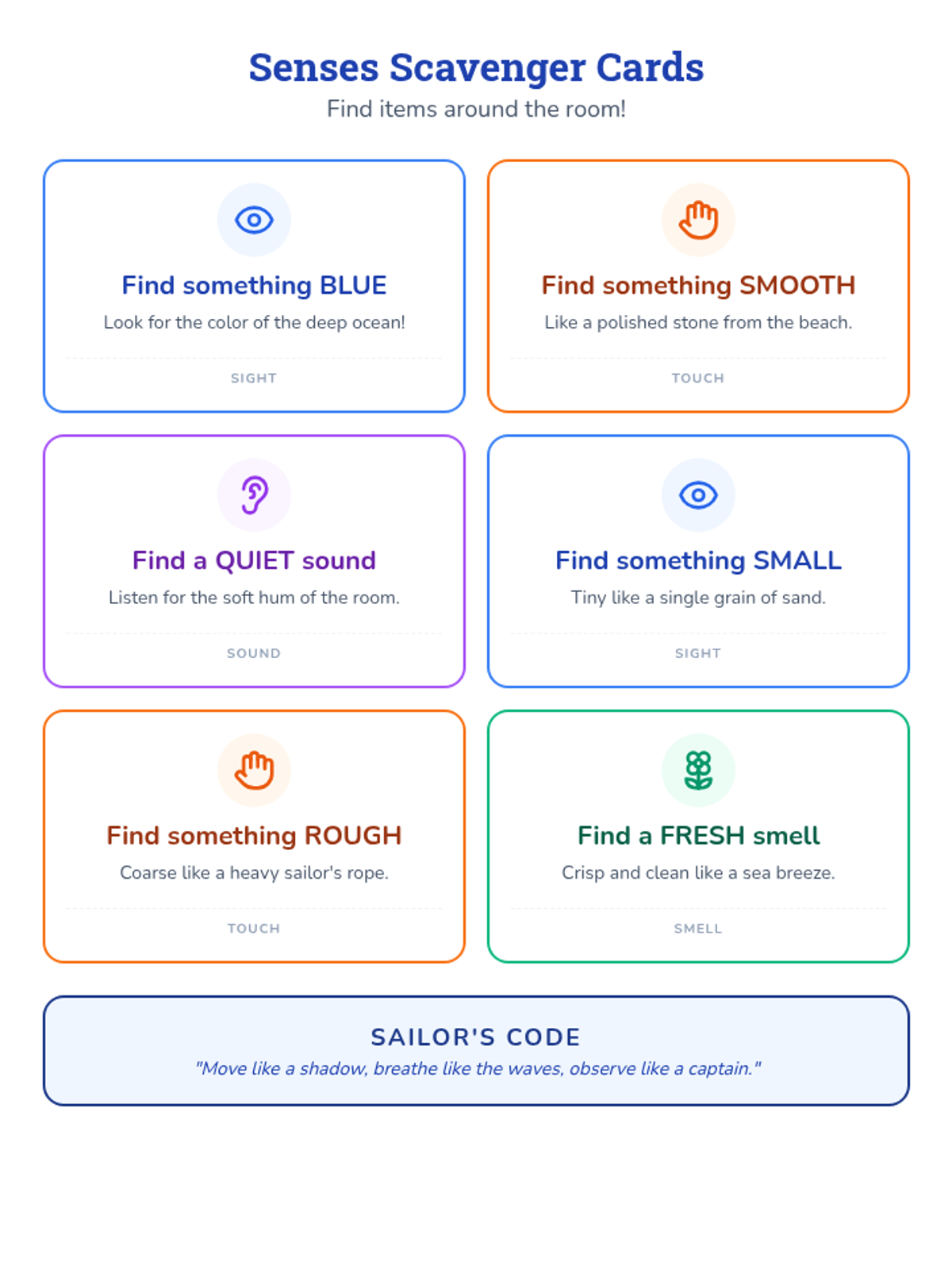
A revised set of scavenger hunt cards with ink-saving white backgrounds and layout adjustments to ensure cards do not split across pages during printing.
A revised slide deck with improved split-screen layouts to prevent text squishing and larger fonts for classroom visibility. Guide K-2 students through the 5-4-3-2-1 technique.
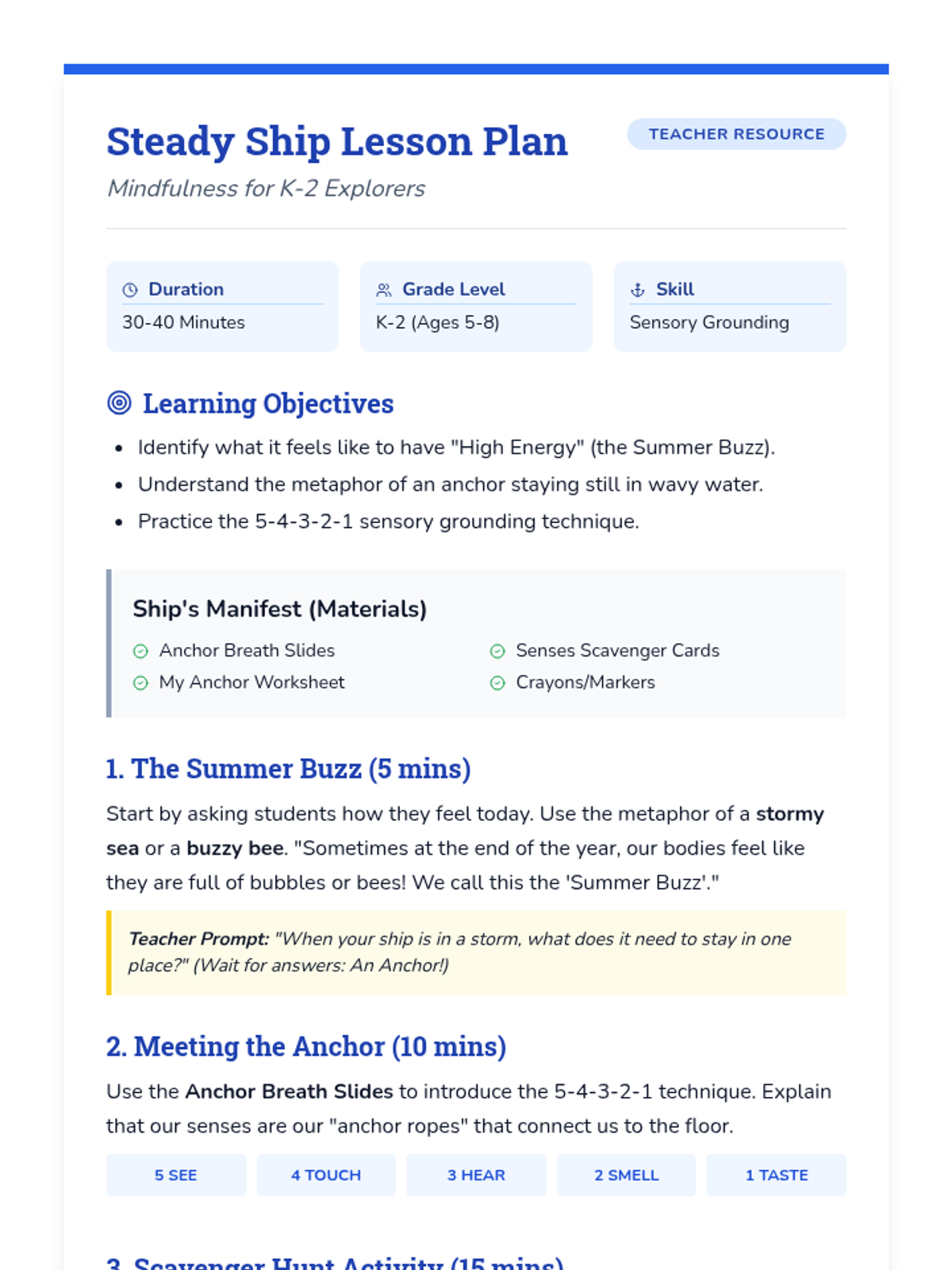
A revised comprehensive teacher guide for 'The Grounding Anchor' lesson, with improved layout to ensure all content fits onto two pages and differentiation strategies stay together.
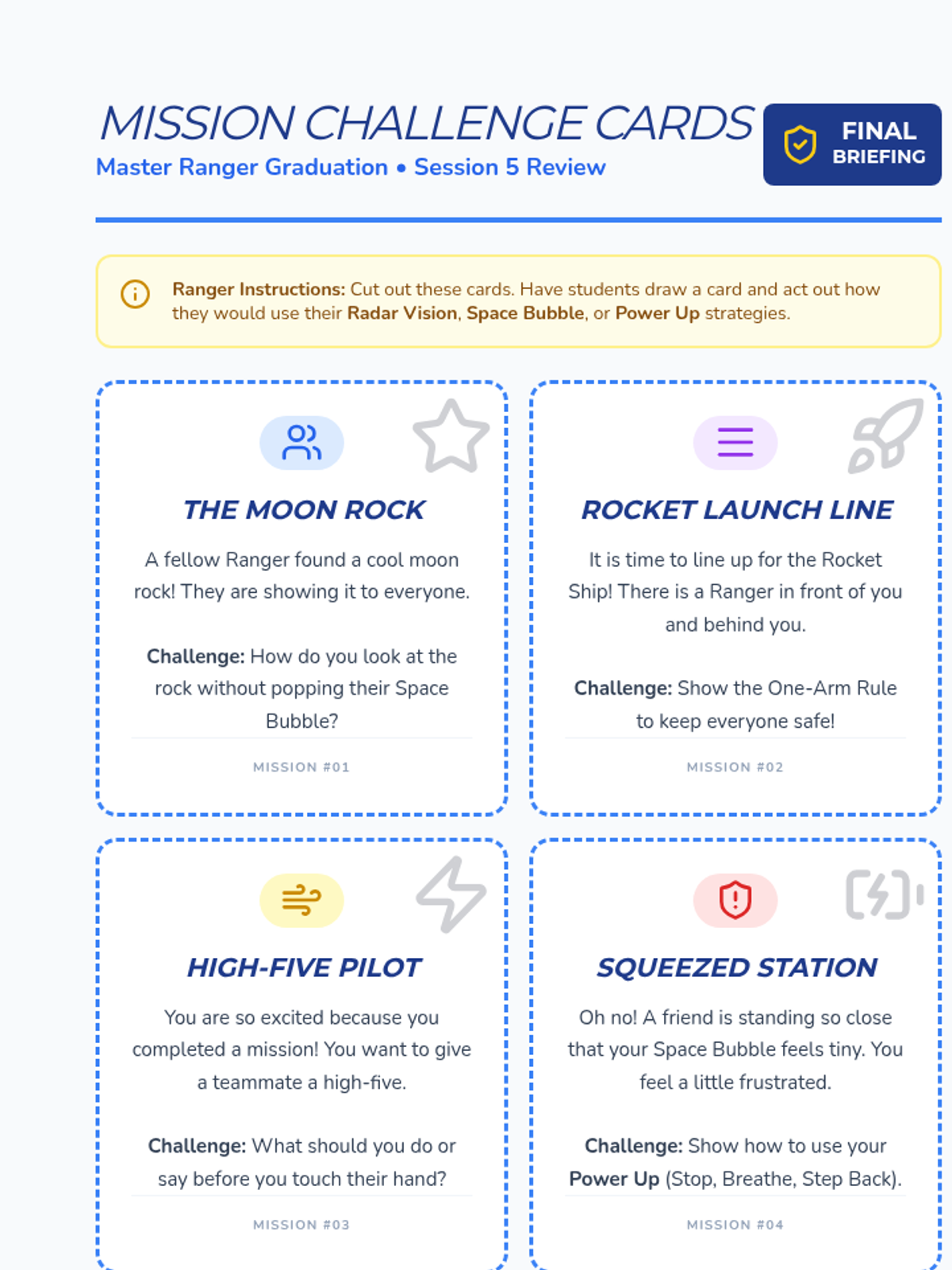
A set of 8 illustrated prompt cards for the Session 5 review activity. Each card presents a relatable scenario for kindergarteners to practice their personal space skills like the 'One-Arm Rule' and 'Power Up' strategy. Revised for better page layout and contrast.
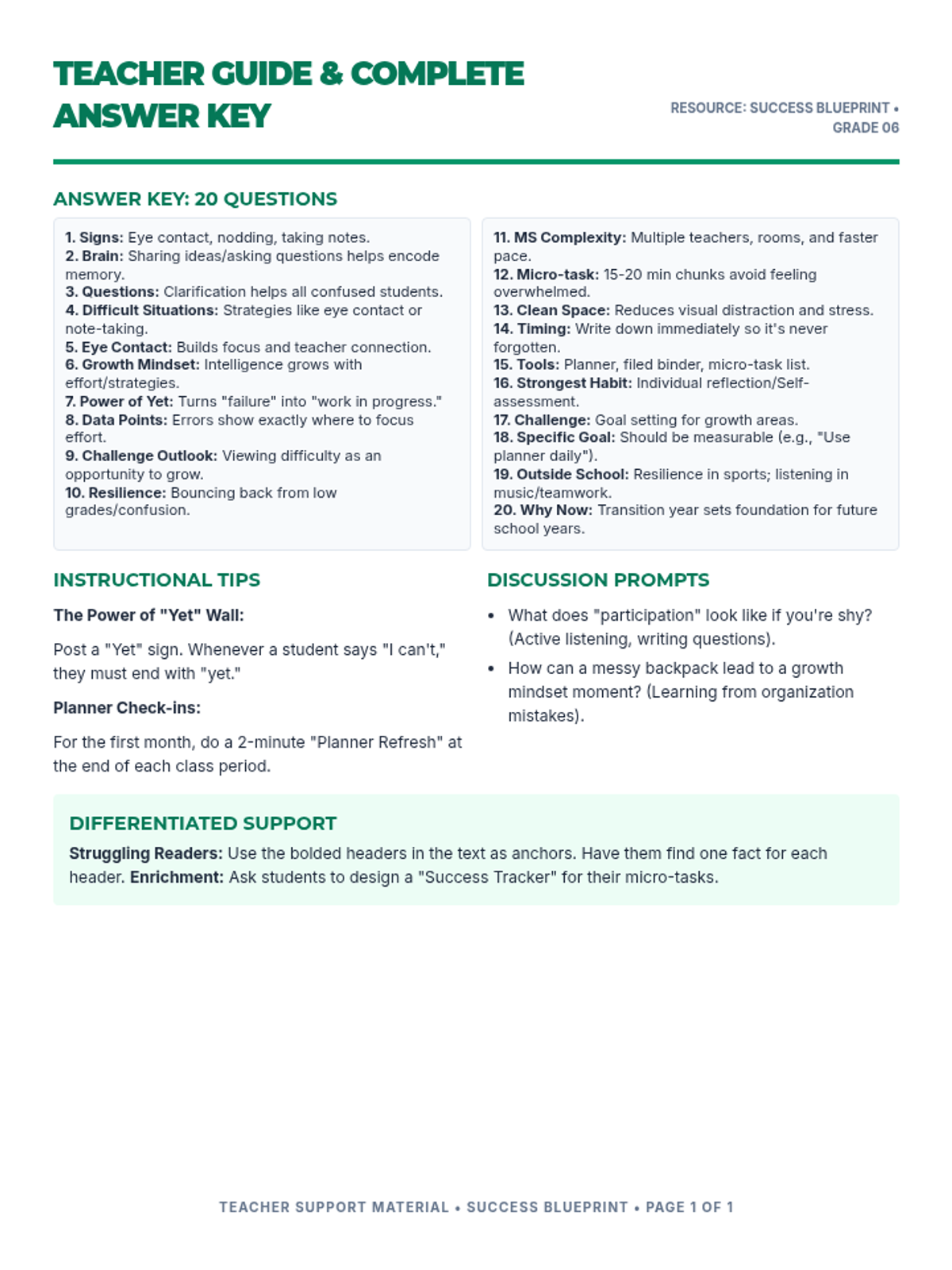
A concise, single-page teacher guide and complete answer key for all 20 questions in the Success Blueprint worksheet.
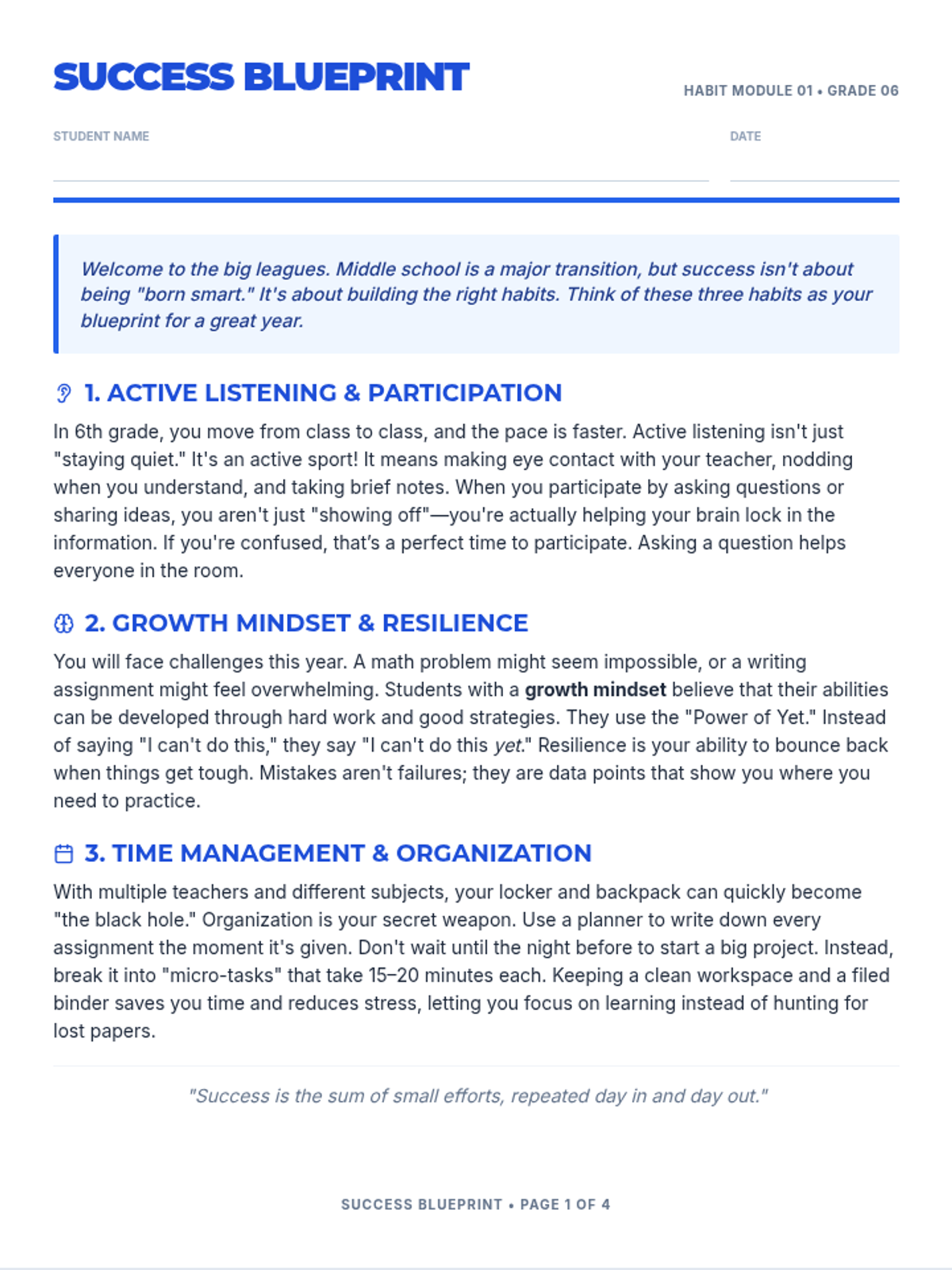
A 6th-grade level article about success habits (active listening, growth mindset, and organization) followed by 20 open-ended reflection questions. This version ensures the article fits on one page and provides ample writing space across 4 pages.
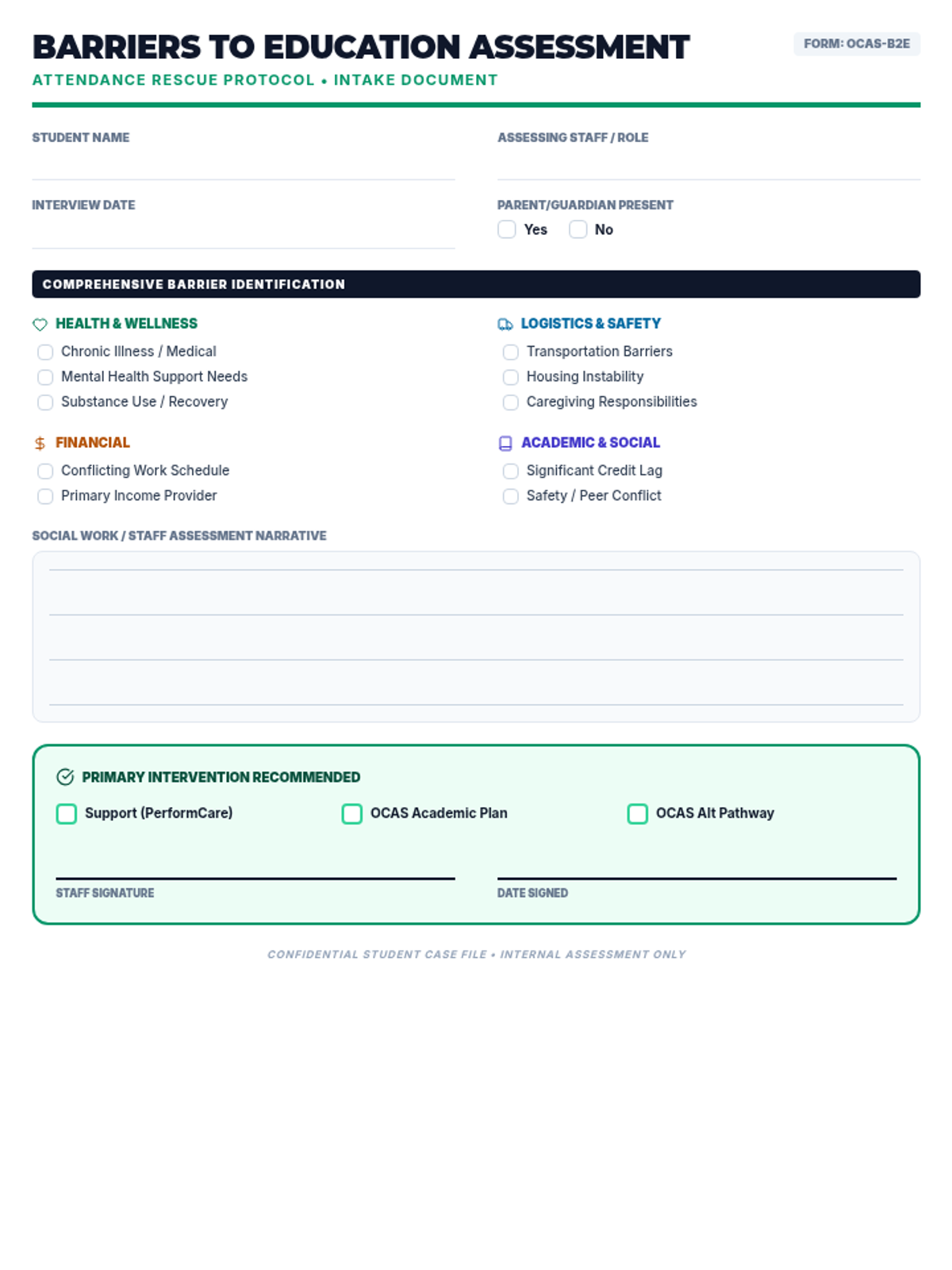
A detailed, two-page comprehensive assessment tool for social workers to identify root causes of chronic absenteeism across physical health, home stability, finances, and school engagement domains.