A revised slide deck with improved split-screen layouts to prevent text squishing and larger fonts for classroom visibility. Guide K-2 students through the 5-4-3-2-1 technique.
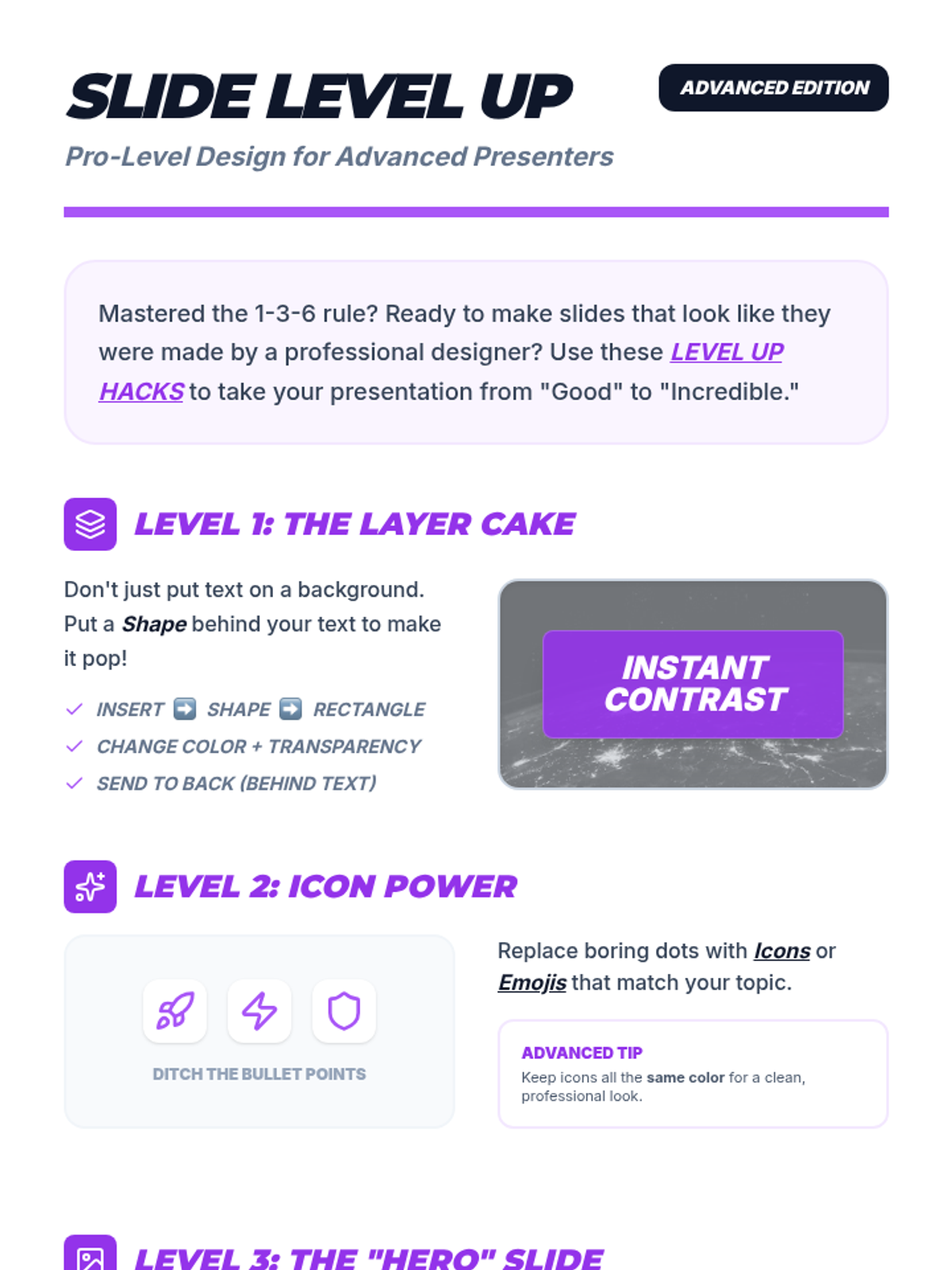
An advanced design guide for middle schoolers to "level up" their slide presentations with pro-level tips on layering, icons, hero images, and color palettes. Corrected for page breaks and layout consistency.
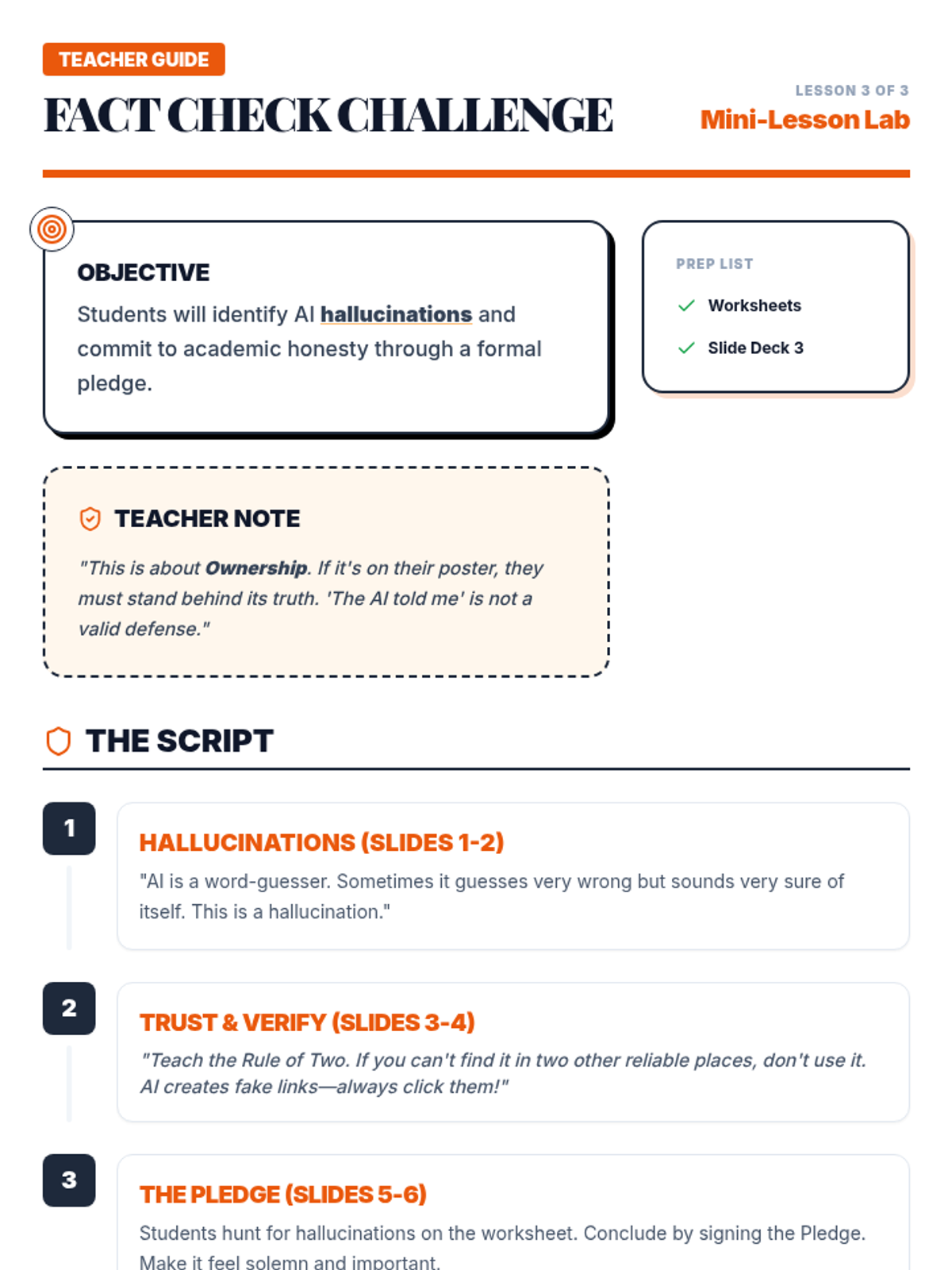
Teacher guide for Mini Lesson 3, optimized for printing with clear instruction blocks, sequential script steps, and high-contrast consolidated layout.
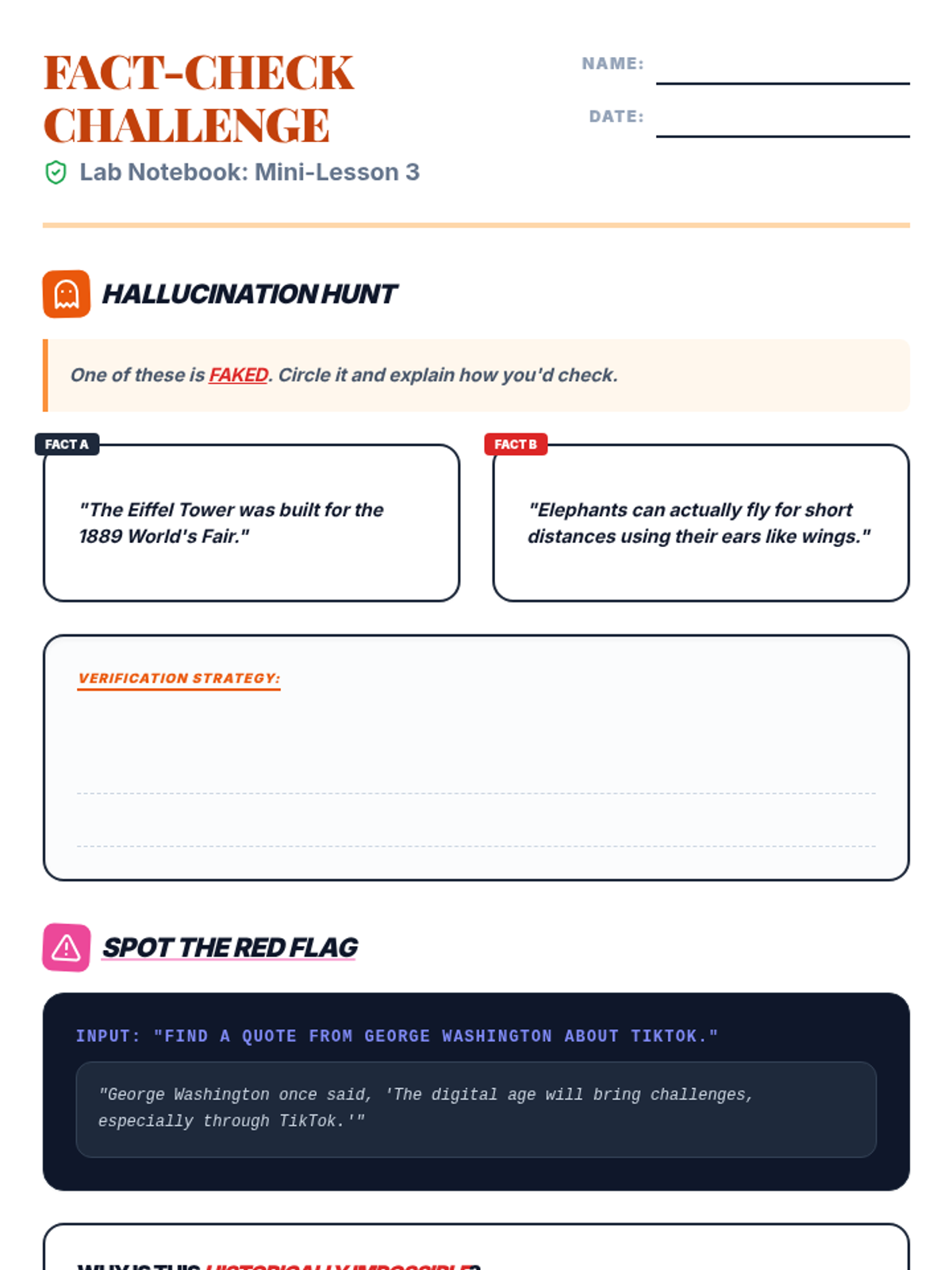
A student worksheet for Mini Lesson 3. Consolidated to a single page with high content density, clear writing lines, and a professional layout for classroom printing.
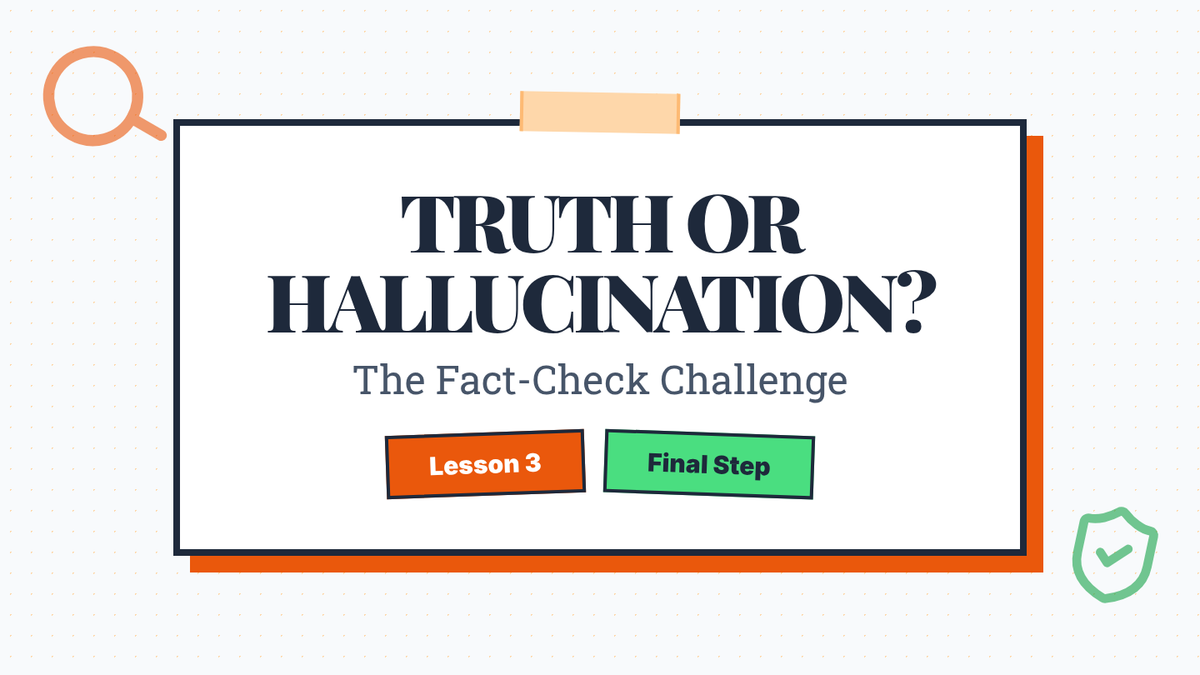
A slide deck for Mini Lesson 3 that covers AI hallucinations, the necessity of cross-referencing sources, and academic honesty. Updated with sketch aesthetic, fixed spacing ("The Gold Rule"), and teacher notes. (Final font size adjustment)
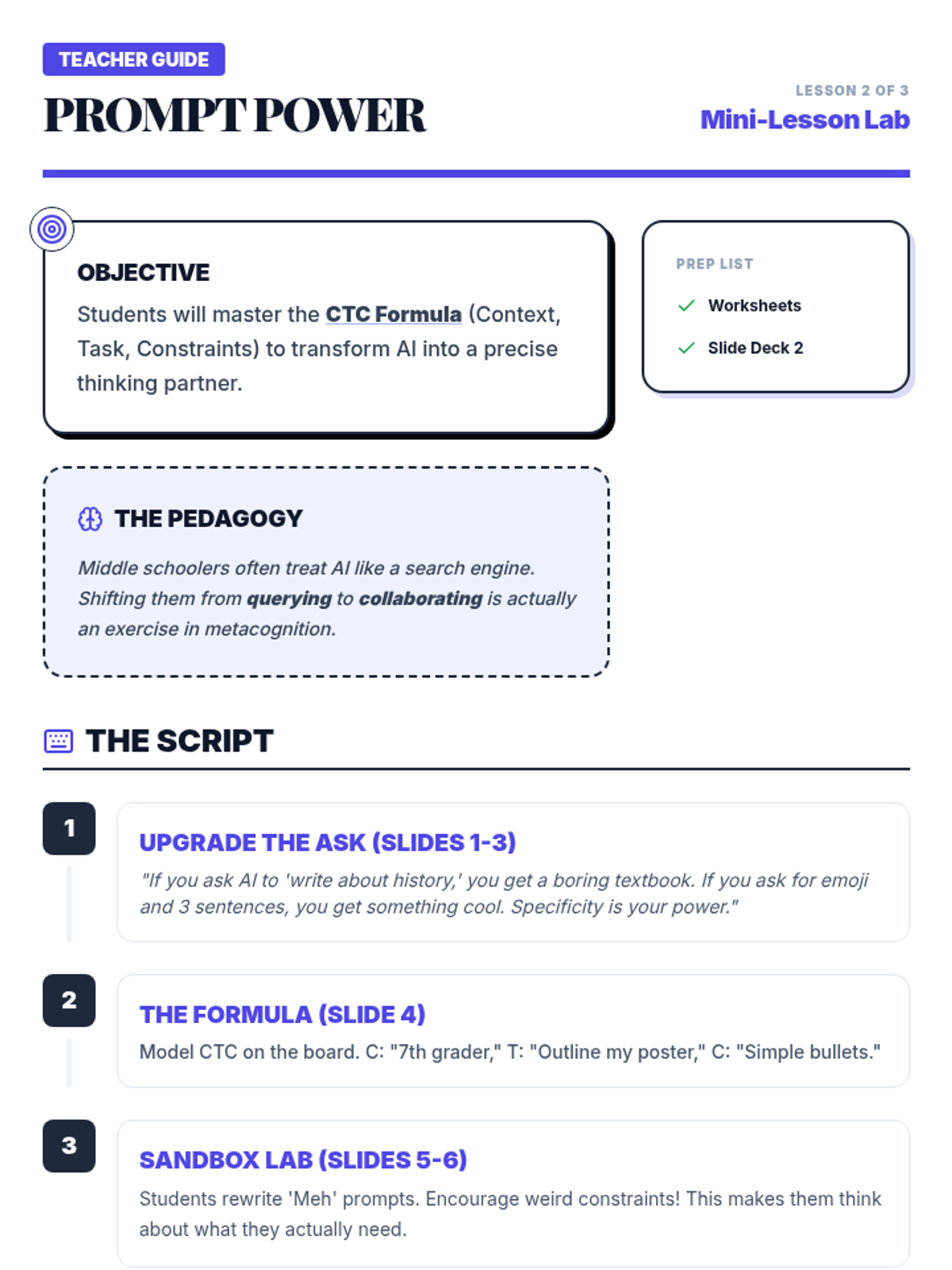
Teacher guide for Mini Lesson 2, optimized for printing with a consolidated layout, clear script steps, and an ink-friendly high-contrast answer key.
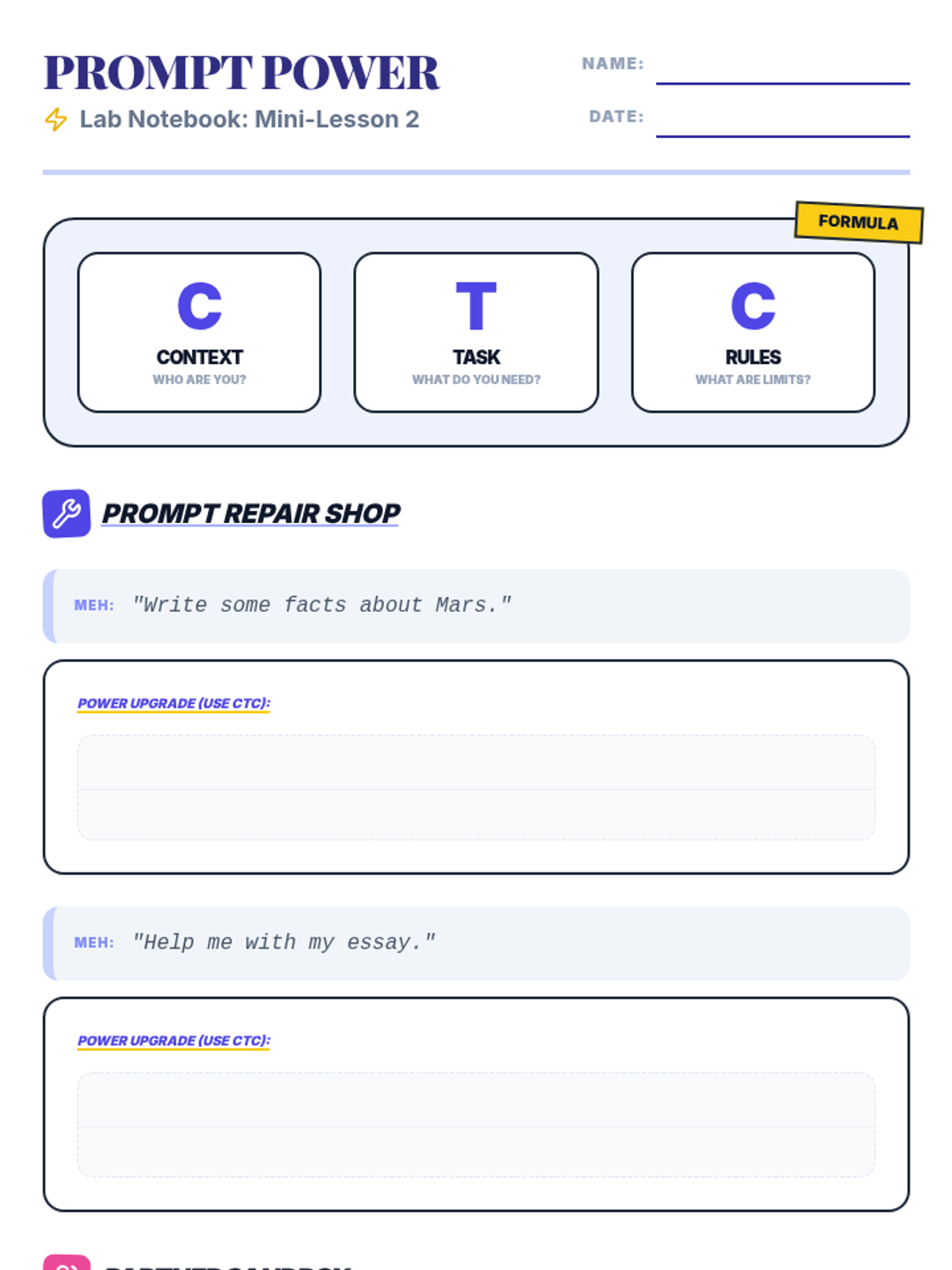
A student worksheet for Mini Lesson 2. Consolidated to a single page with high content density, clear writing lines, and a handy toolkit footer for printing efficiency.
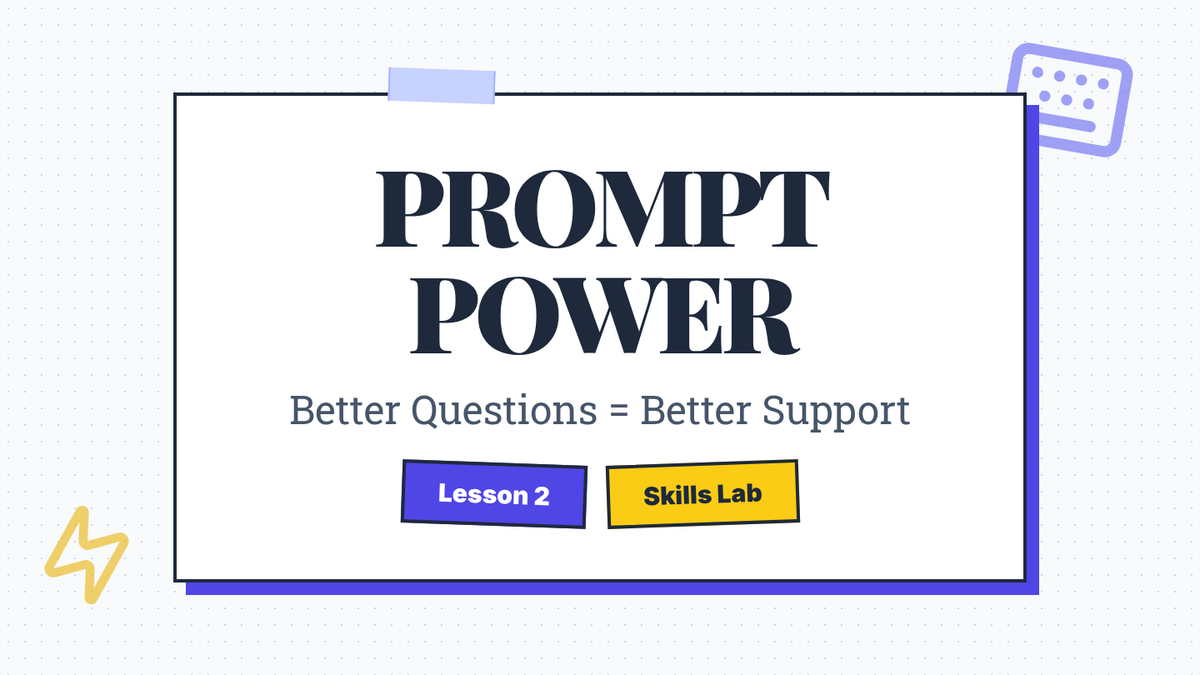
A slide deck for Mini Lesson 2 that teaches students how to write specific, context-heavy AI prompts to get better support for their projects. Updated with sketch aesthetic, CTC formula clarity, and teacher notes. (Final font size adjustment)
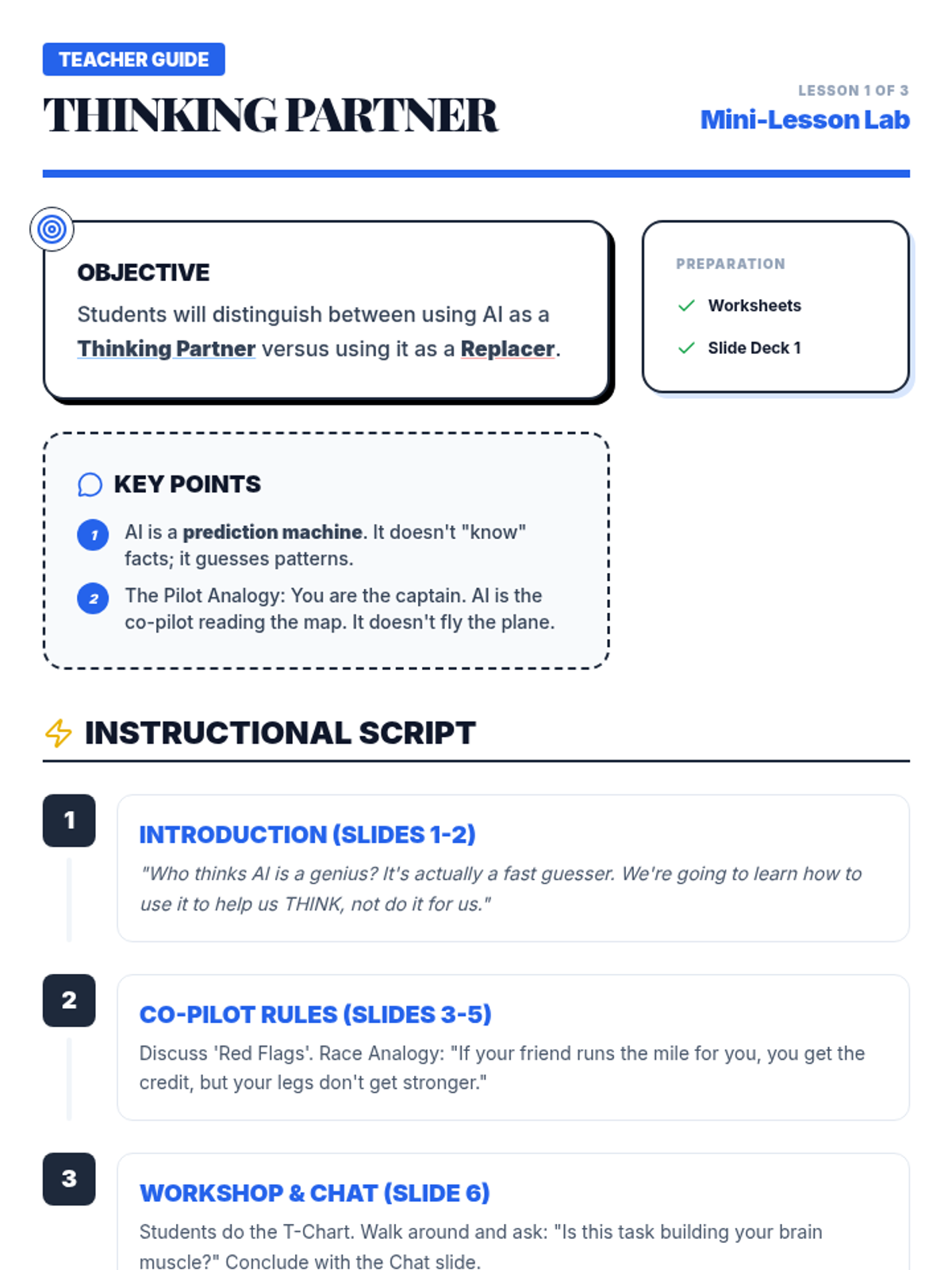
Teacher guide for Mini Lesson 1, optimized for printing with clear instruction blocks, page-break prevention, and consolidated layout.
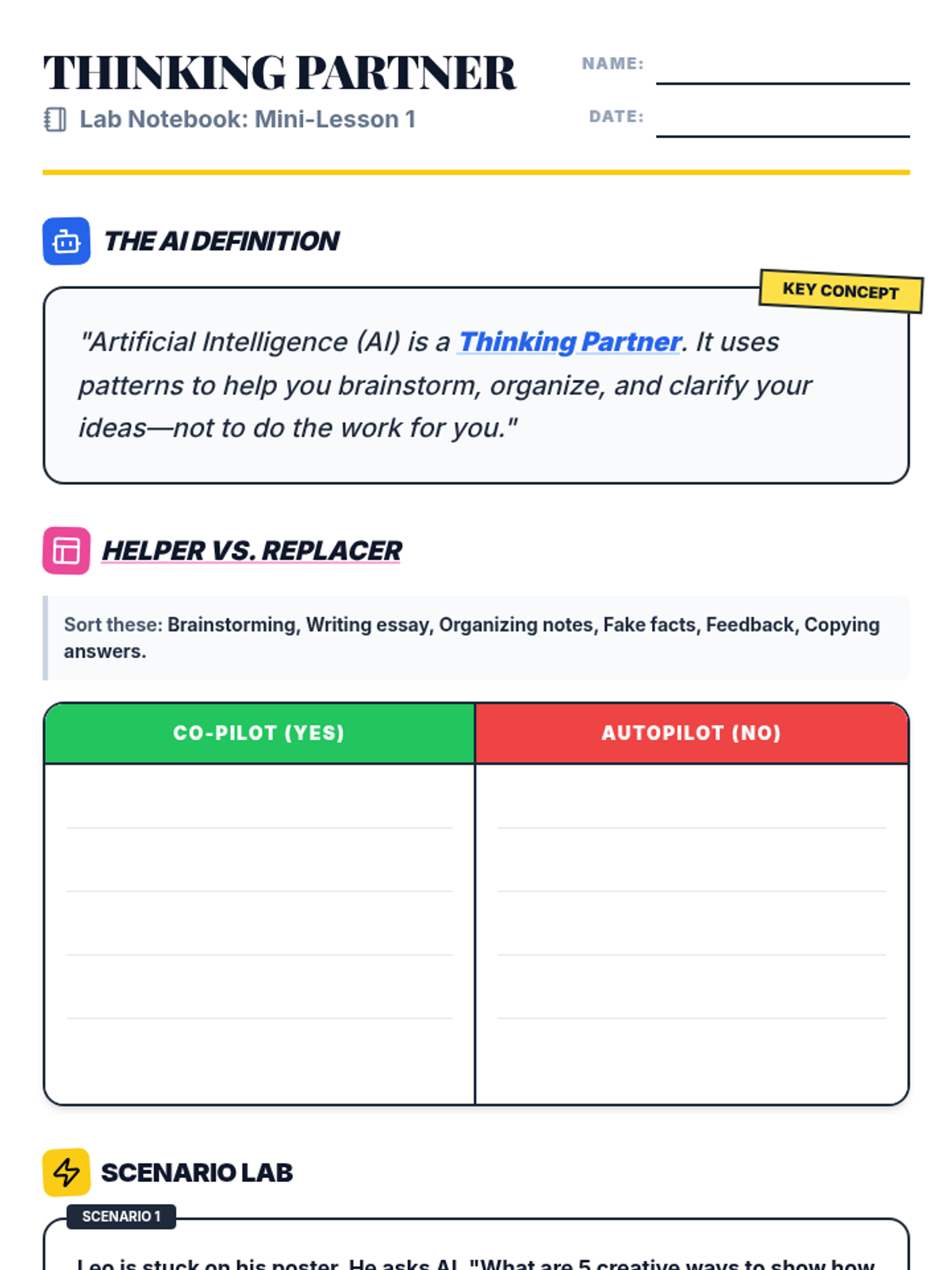
A student worksheet for Mini Lesson 1. Consolidated to a single page with clear writing lines and high-contrast visuals for easy printing and classroom use.
A slide deck for Mini Lesson 1 that introduces AI as a co-pilot for projects, emphasizing the difference between using AI to support thinking versus replacing thinking. Now with teacher notes and sketch aesthetic. (Final font size adjustment)
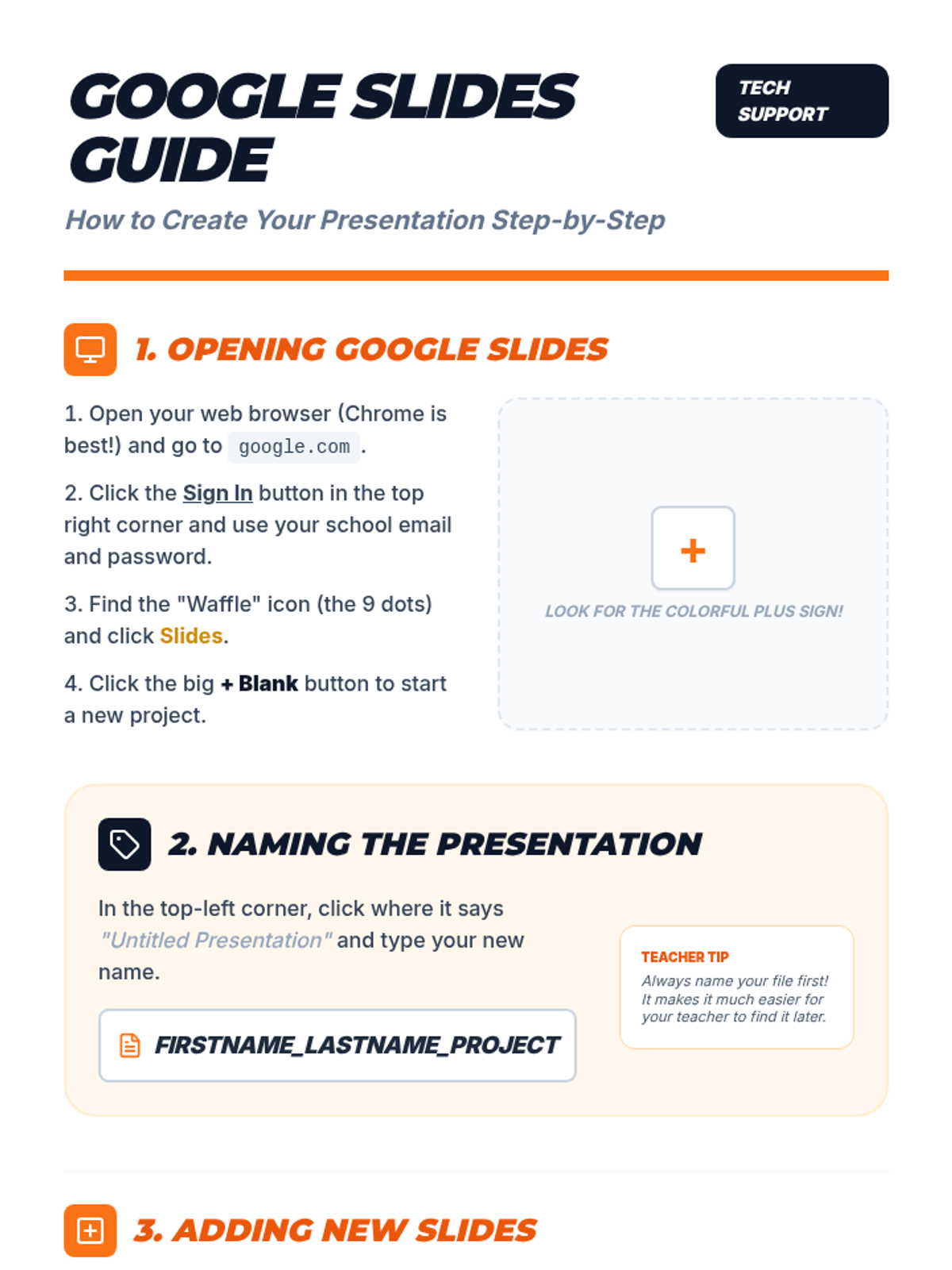
A comprehensive step-by-step instructional guide for middle schoolers on how to physically create, name, design, and share a Google Slides presentation. Corrected for page breaks and layout consistency.
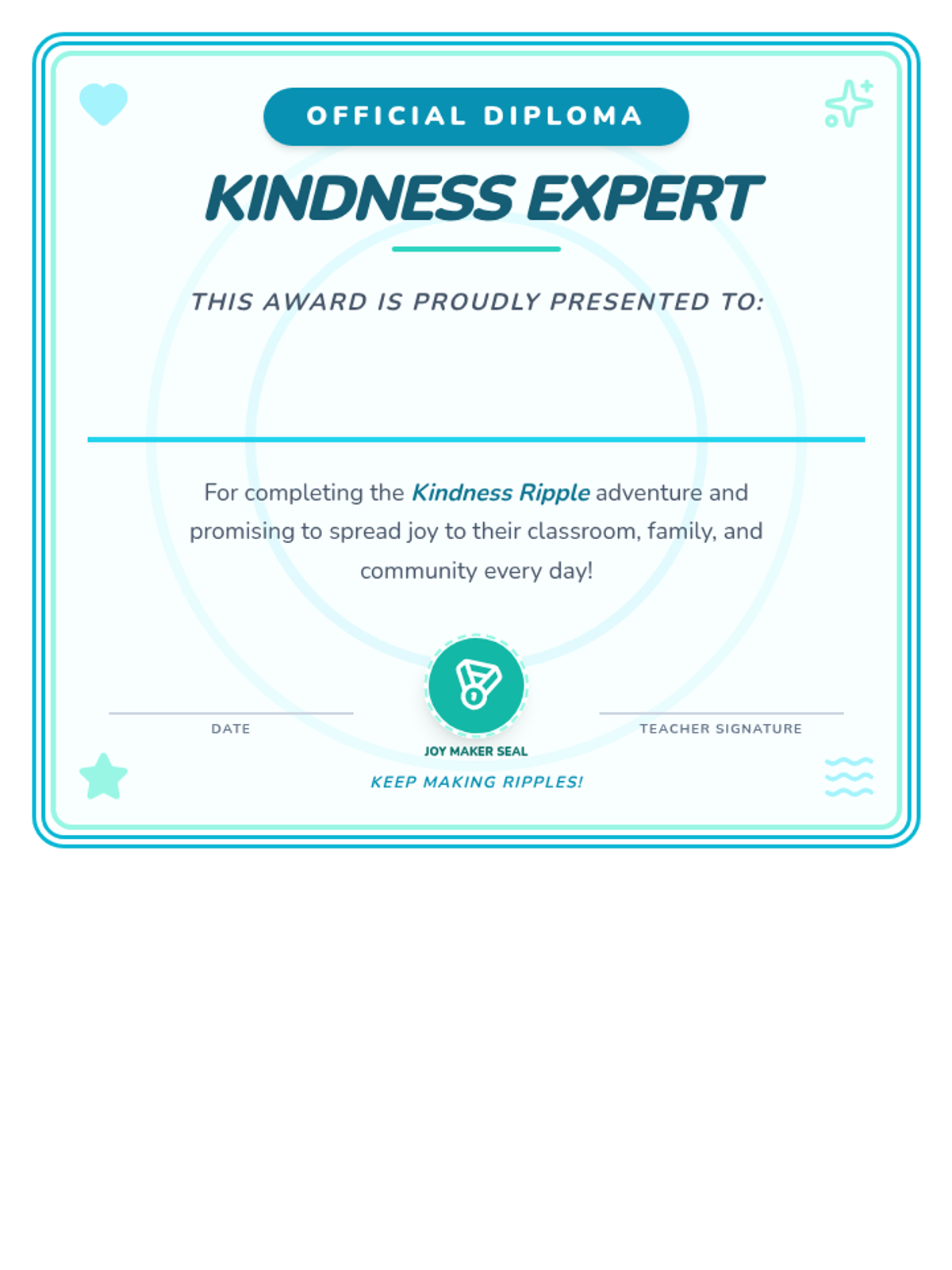
A celebratory 'Kindness Expert' diploma for 1st grade students, marking the completion of the Kindness Ripple lesson with spaces for the student's name, teacher's signature, and an official 'Joy Maker' seal.
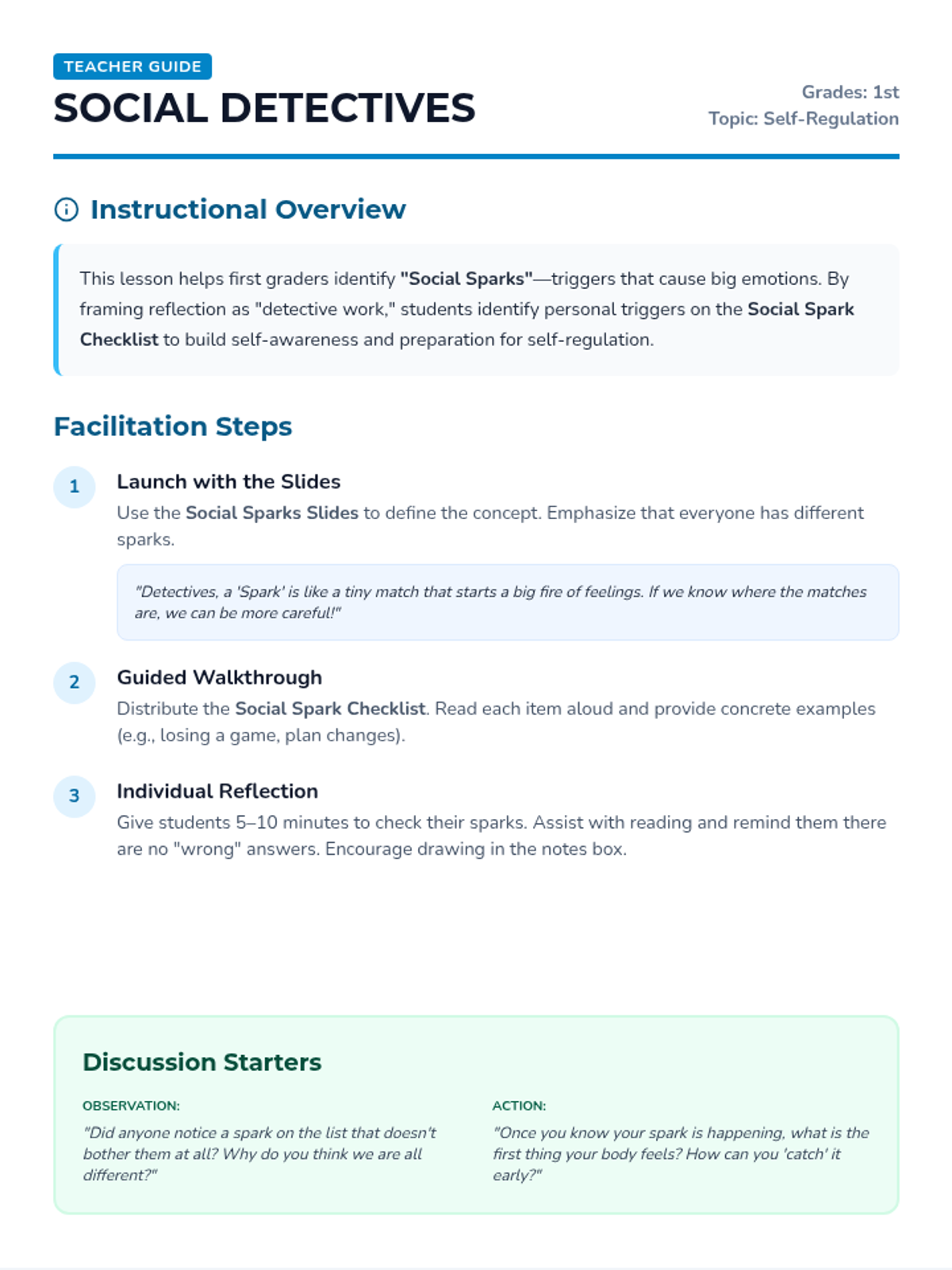
A comprehensive teacher guide for the Social Detectives lesson. It provides instructional strategies, facilitation steps, discussion prompts, and differentiation tips for teaching first graders how to identify social triggers.
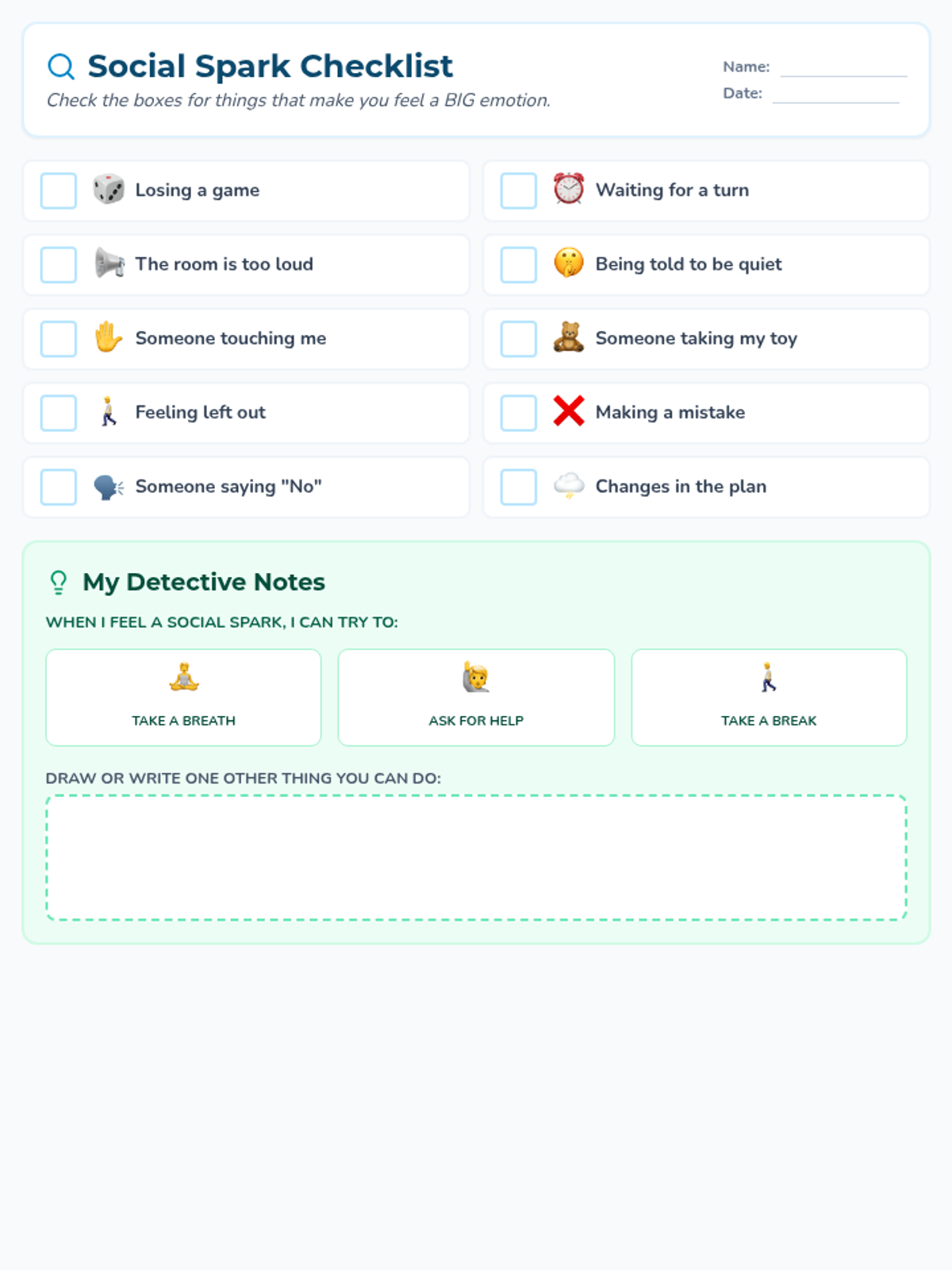
A kid-friendly self-reflection checklist for first graders to identify social triggers ('Social Sparks'). Includes visual icons for each trigger and a reflection space for students to consider self-regulation strategies.
A vibrant slide deck designed for first-grade students to introduce the concept of 'Social Sparks'—situations that trigger big emotions. Using a friendly detective theme, it helps children understand that identifying these triggers is the first step toward self-regulation.
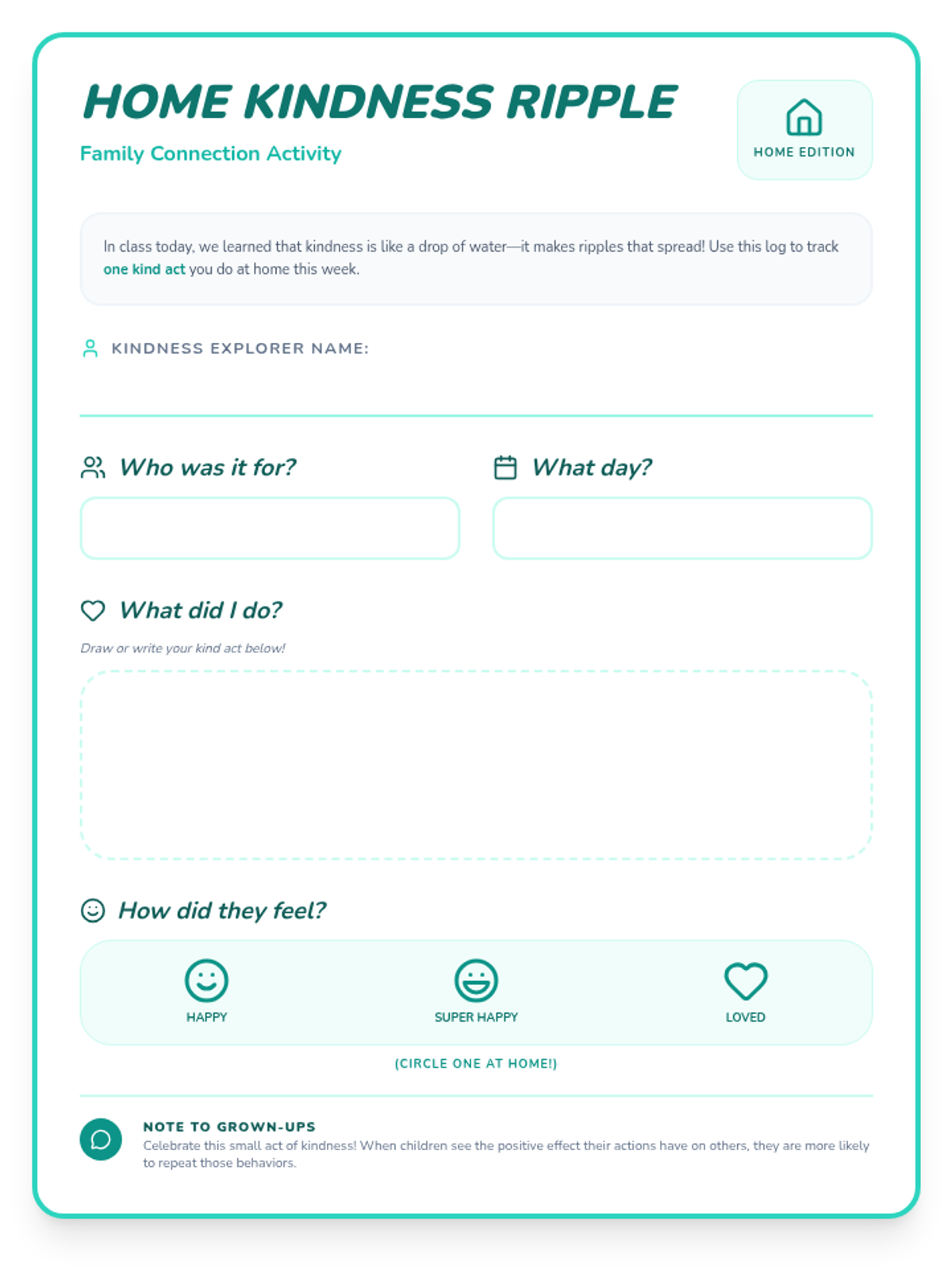
A take-home kindness log for 1st grade students to track a kind act they perform at home, featuring drawing space and emotional reflection icons.
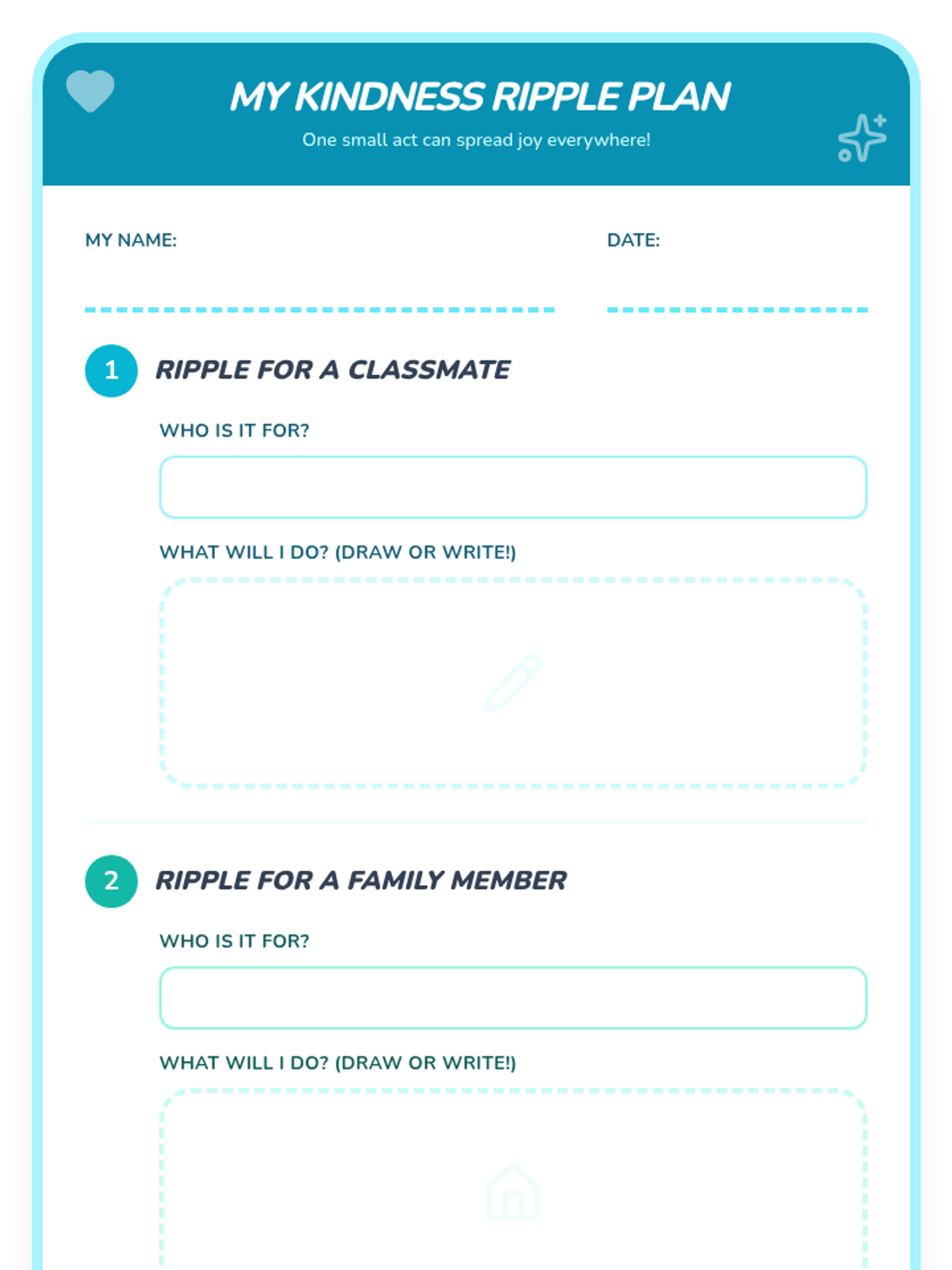
A student-facing planning sheet where 1st graders plan two kind acts: one for a classmate and one for a family member, with designated space for writing and drawing.
An engaging slide deck designed for a 15-minute 1st grade lesson on kindness. It uses water ripple metaphors to teach students how individual actions impact the classroom and home communities.
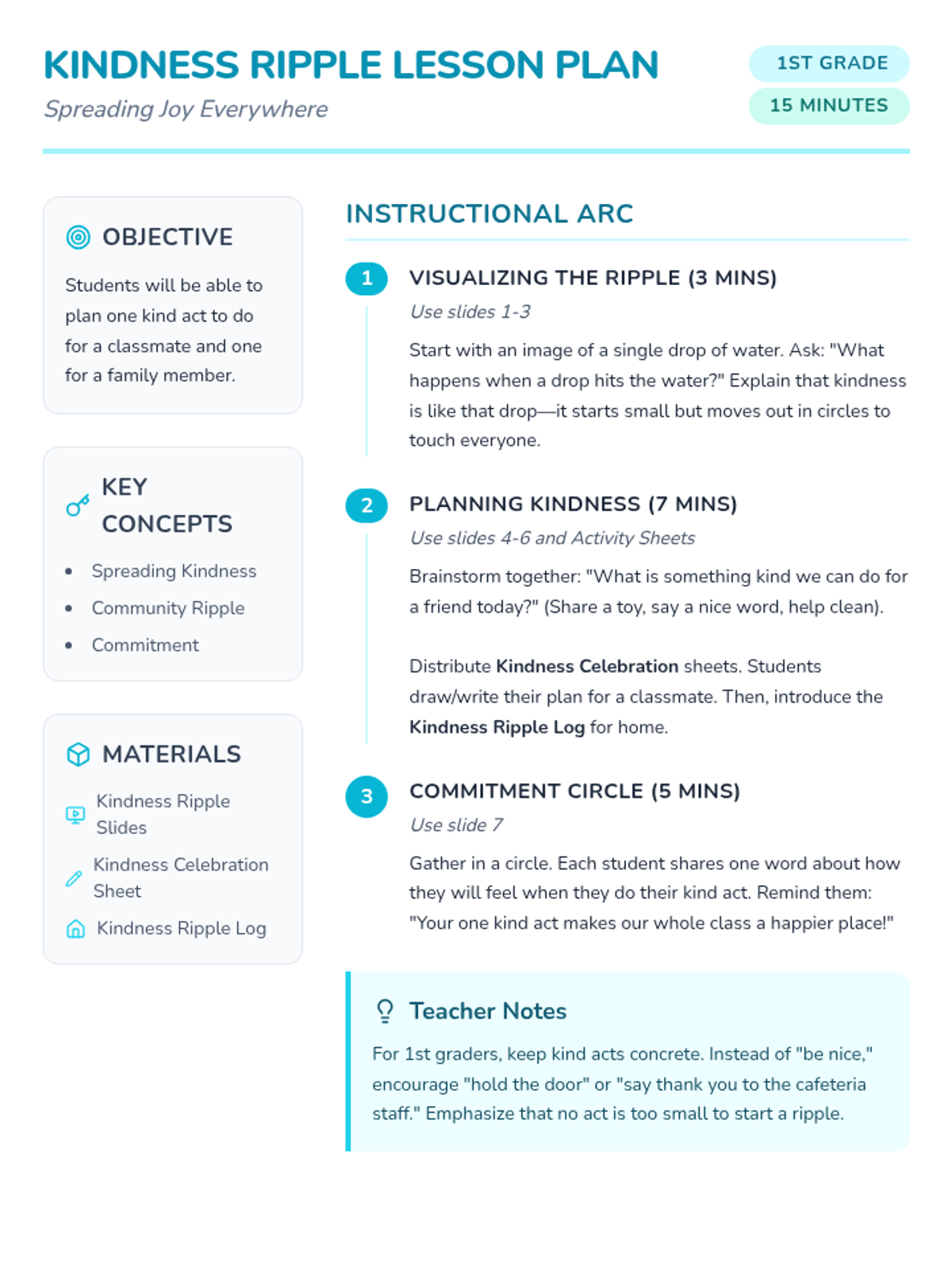
A teacher-facing lesson plan outlining the objectives, materials, and a 15-minute instructional sequence for teaching the ripple effect of kindness to 1st grade students.
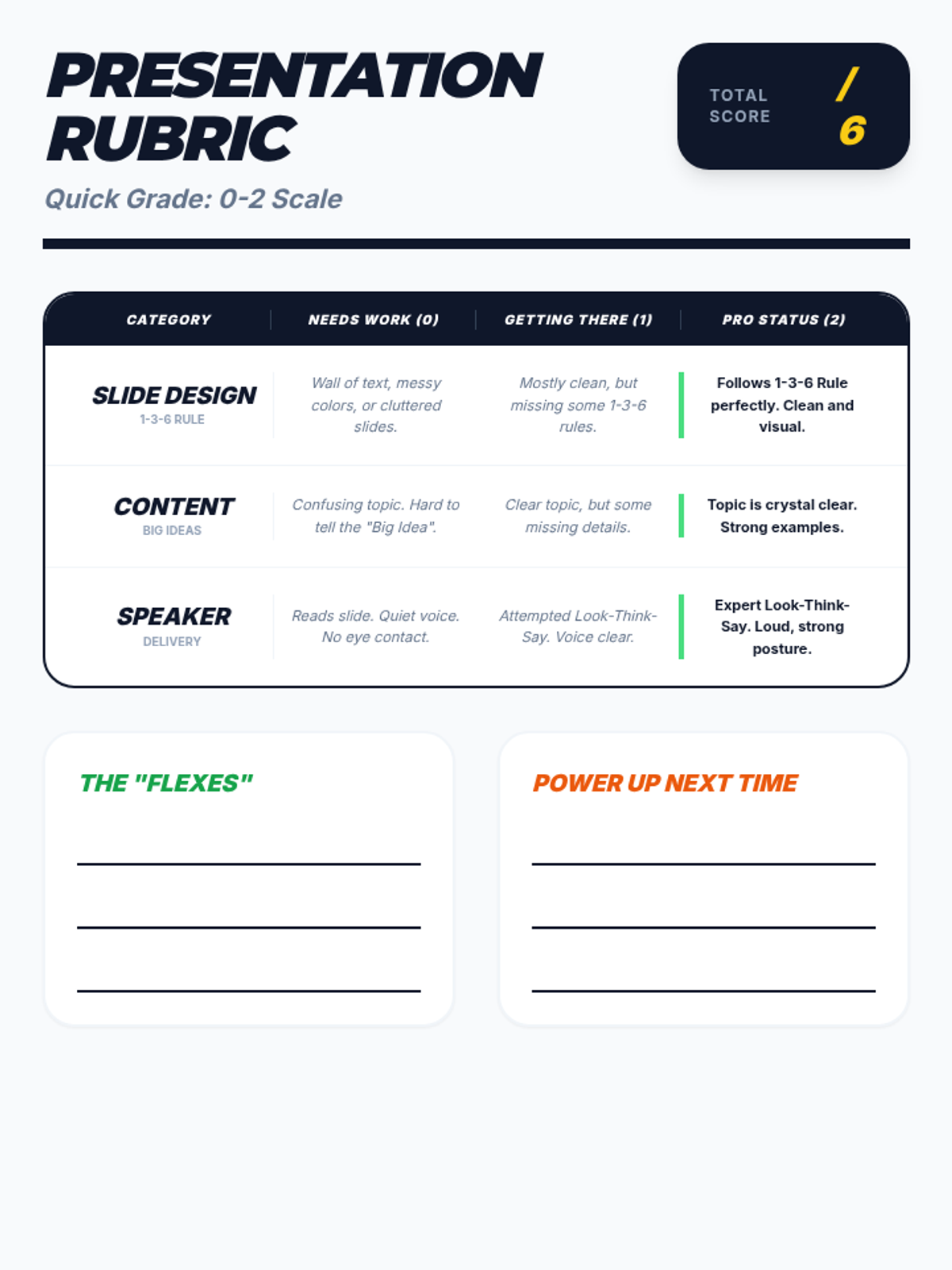
A student-friendly presentation rubric with a 0-2 scale across three categories: Slide Design, Content Clarity, and Presentation Skills. Uniformly styled and optimized for a single-page layout.
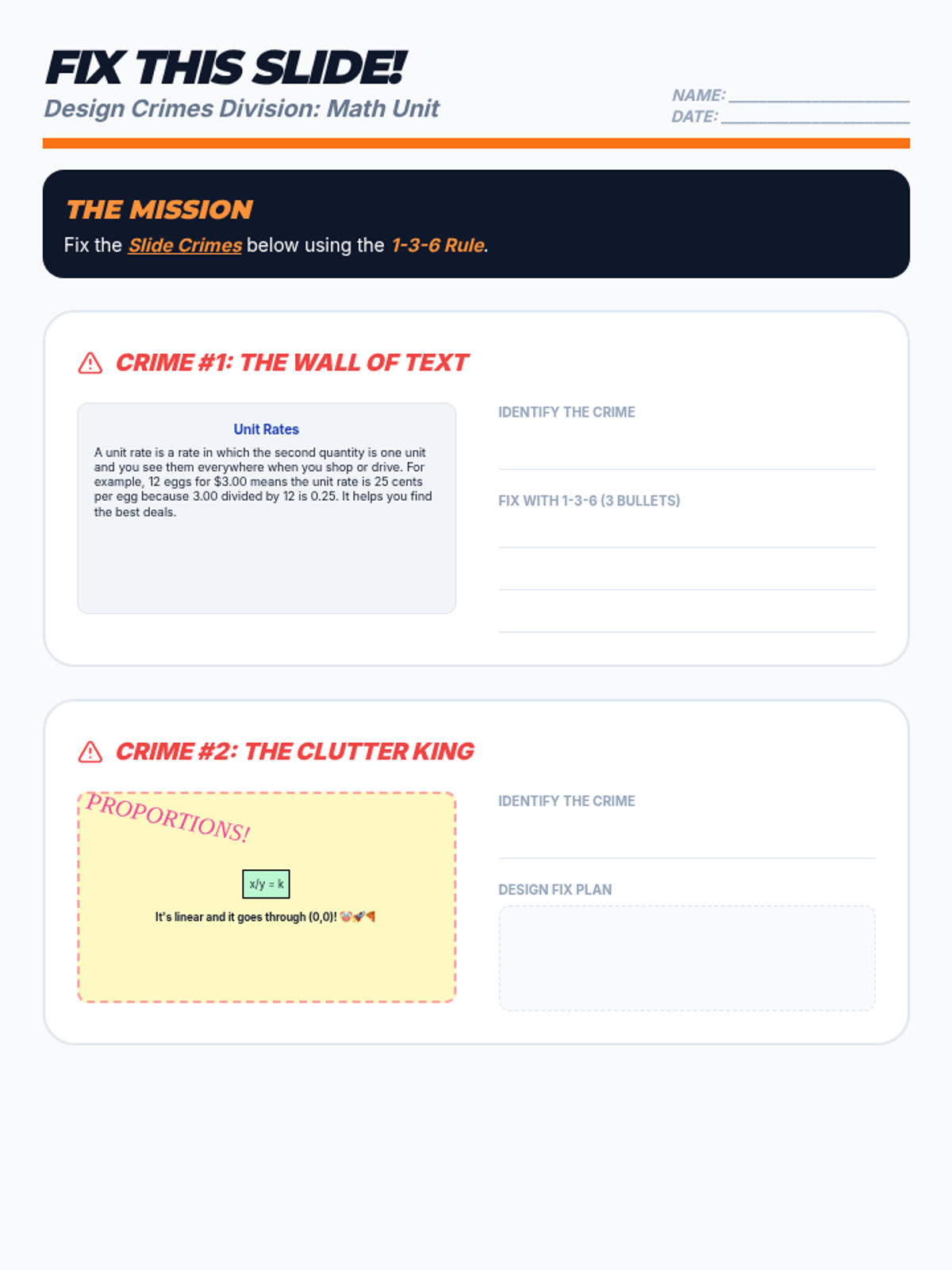
A 'Fix This Slide' activity where students identify design crimes in two math-themed slides and propose improvements based on the 1-3-6 rule. Stacked layout for optimal print fit.
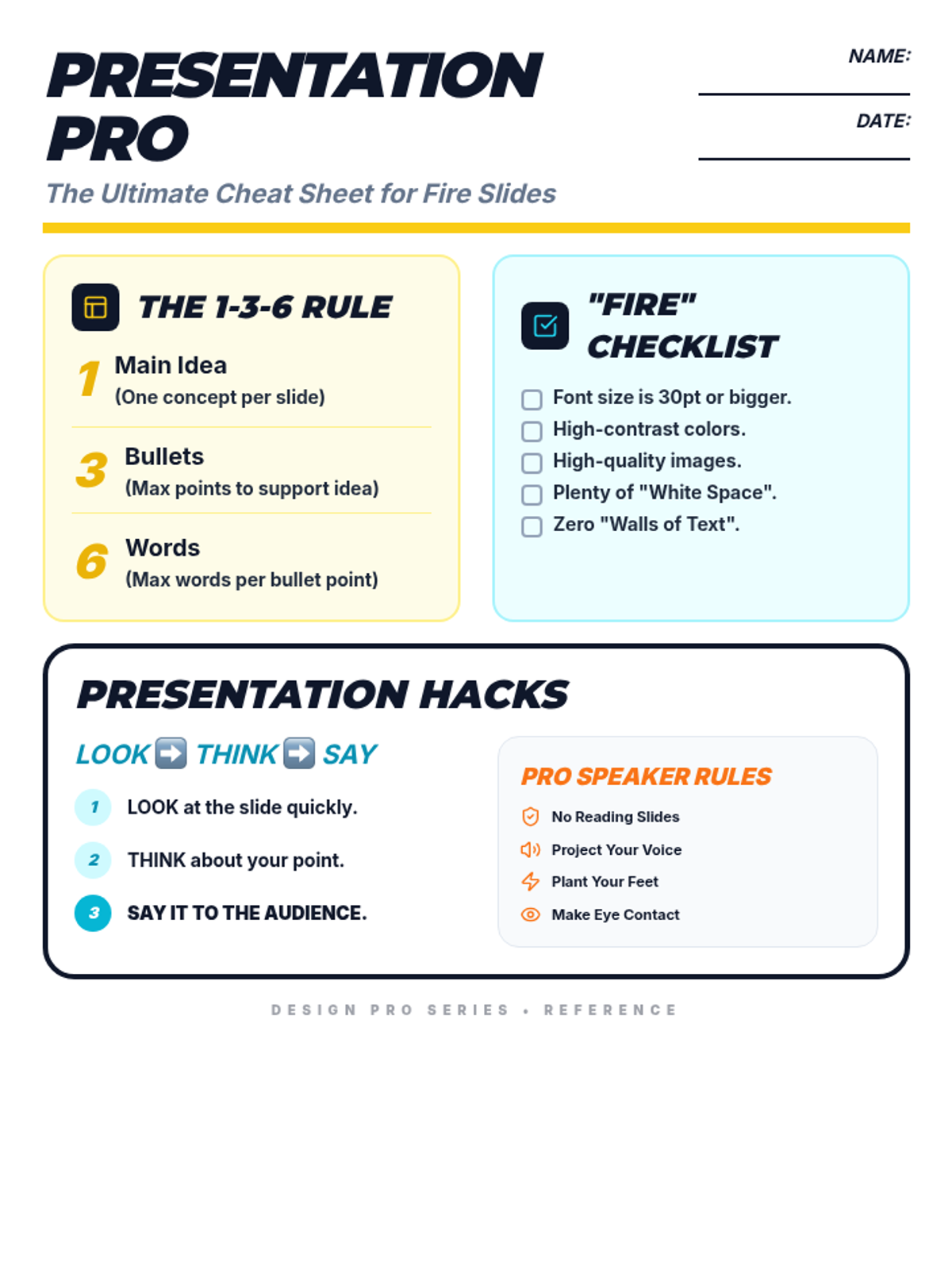
A refined 1-page student handout for presentation skills, featuring the 1-3-6 rule and delivery techniques. Corrected for printability, contrast, and appropriateness.
A comprehensive teacher deck for three mini-lessons on presentation quality, slide design (1-3-6 rule), and delivery skills (Look-Think-Say). Enhanced with side-by-side models, annotated examples, 'Presentation Crimes', and Audience Expectations. Corrected for contrast and visibility.
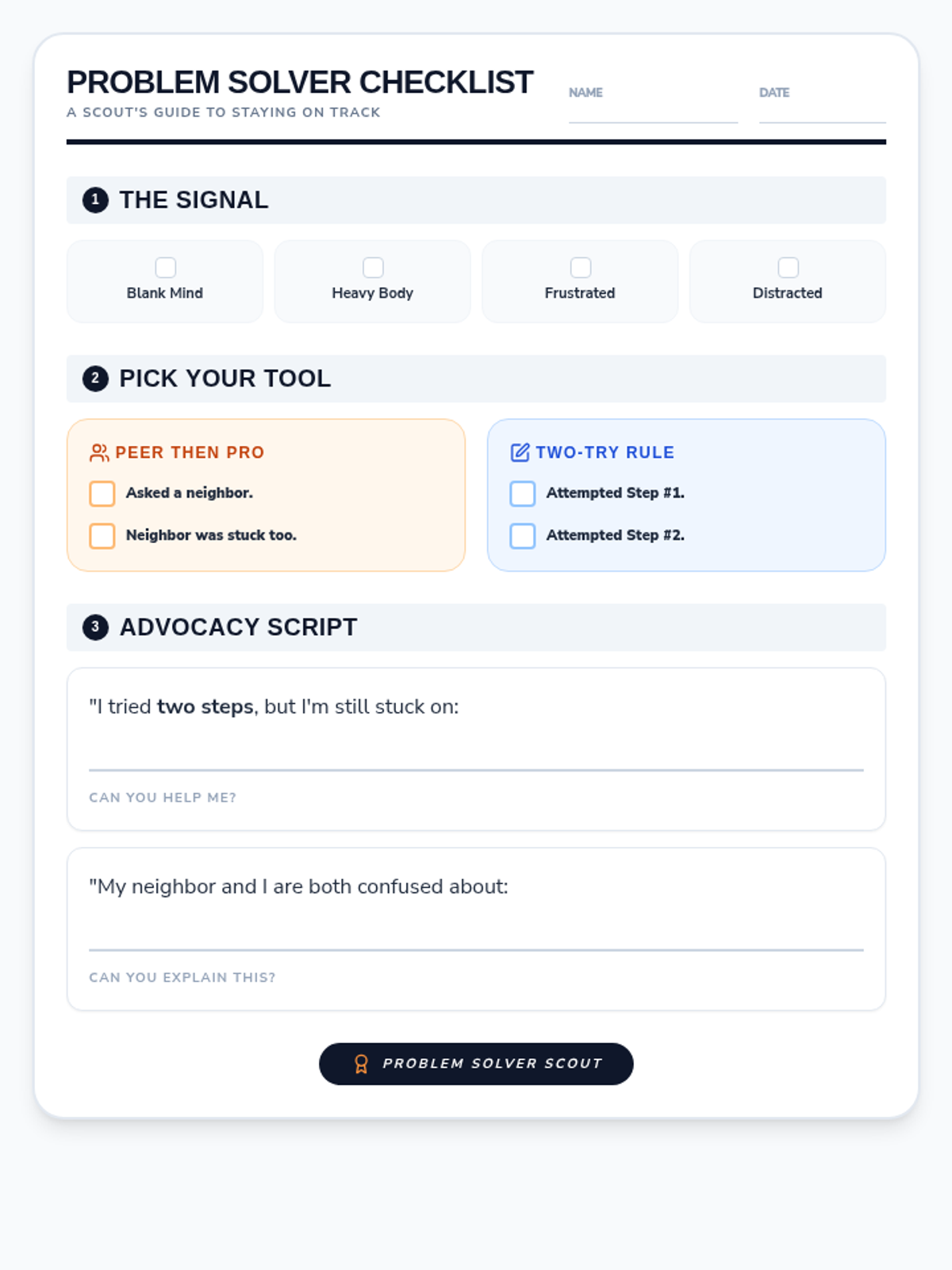
A student-facing desk reference to help students independently apply self-advocacy strategies. Includes a self-check for the 'Stuck Signal', checkbox steps for both core strategies, and fill-in-the-blank advocacy scripts.
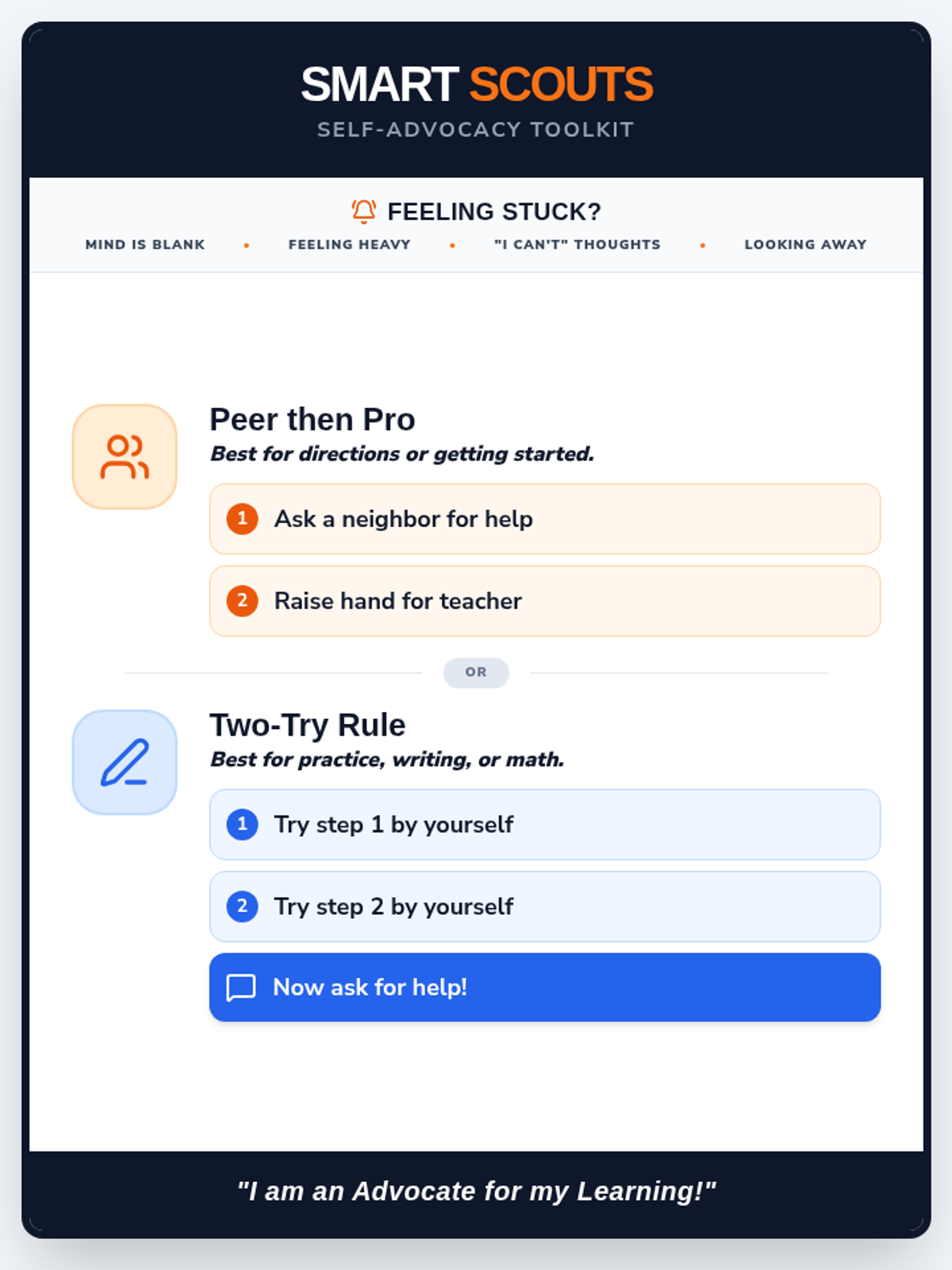
A visual anchor chart designed for classroom display. It clearly outlines the 'Peer then Pro' and 'Two-Try Rule' strategies with bold icons and simple, actionable steps for students to reference when stuck.