A comprehensive teacher guide for facilitating the Colorado Career Compass lesson. Includes talking points for every slide, discussion prompts, and guidance for supporting students as they complete the Career Quest worksheet.
A presentation for students to introduce the Daily Power Tracker system. Updated Level 1 scale description to focus on the need for reminders and work completion.
A teacher implementation guide for the Daily Power Tracker, providing strategies for defining levels and building student accountability. Updated Level 1 description for consistency with student materials.
A daily subject-by-subject tracking chart for students to monitor their readiness, preparation, and work effort using a 1-3 scale. Updated with specific criteria for reminders and independence at each level.
A guide for teachers and staff explaining how to use the Daily Momentum Tracker, including definitions for scoring categories and tips for effective implementation.
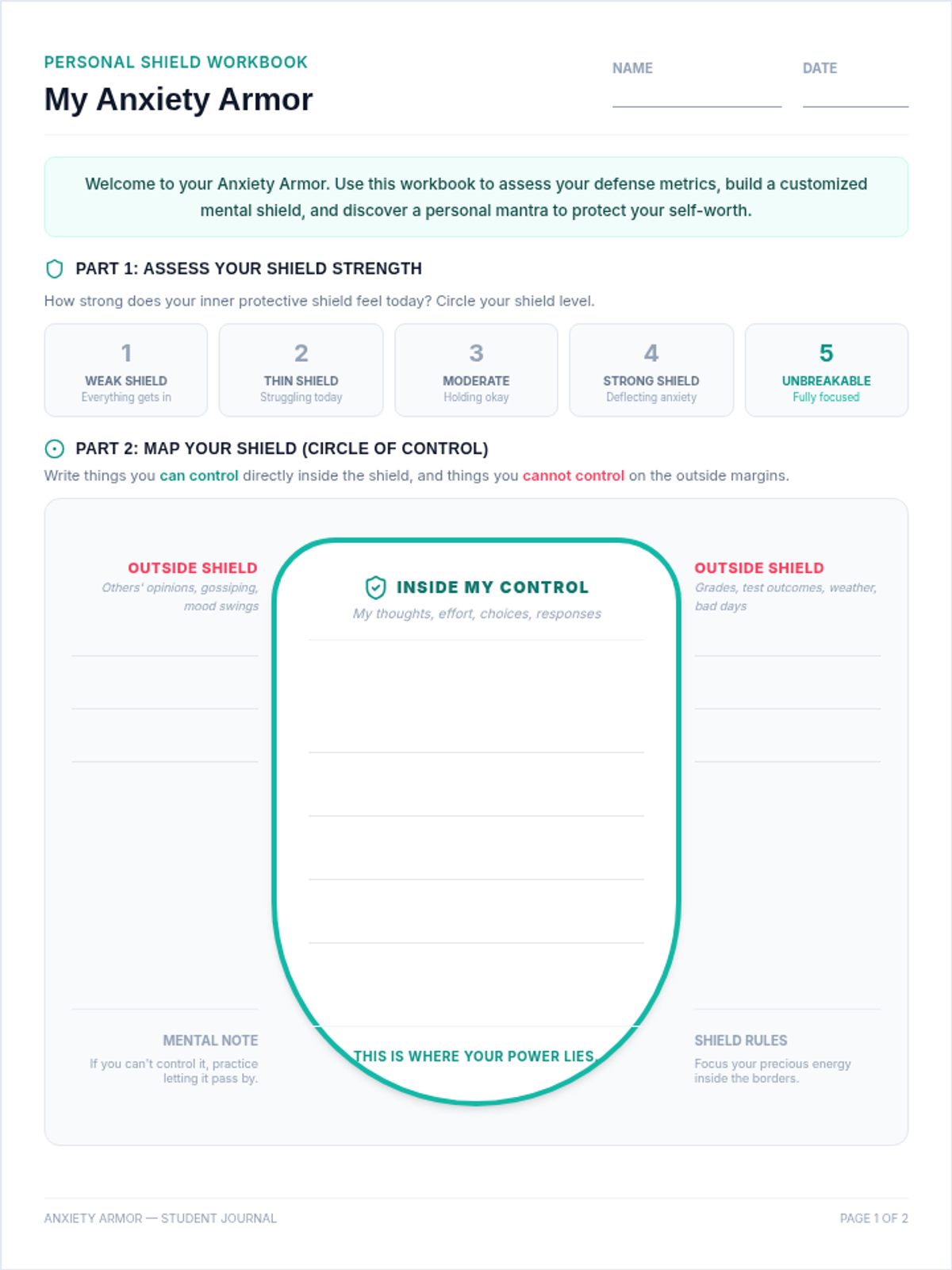
A comprehensive daily tracking sheet for students to monitor behavioral goals and build positive momentum throughout the school day. Features sections for goal setting, period-by-period scoring on readiness and focus, and a final reflection.
A facilitator guide for teachers to lead the Word Wisdom lesson, including learning objectives, key definitions, pacing, facilitation tips for sensitive topics, and an answer guide for I-statements.
A comprehensive teacher guide for the Friendship Navigator lesson, providing slide-by-slide facilitation notes, discussion prompts, and sensitive topic guidance.
An engaging presentation for 6th-grade students to learn about healthy and unhealthy friendship behaviors, featuring interactive discussion prompts and clear visual definitions of flags.
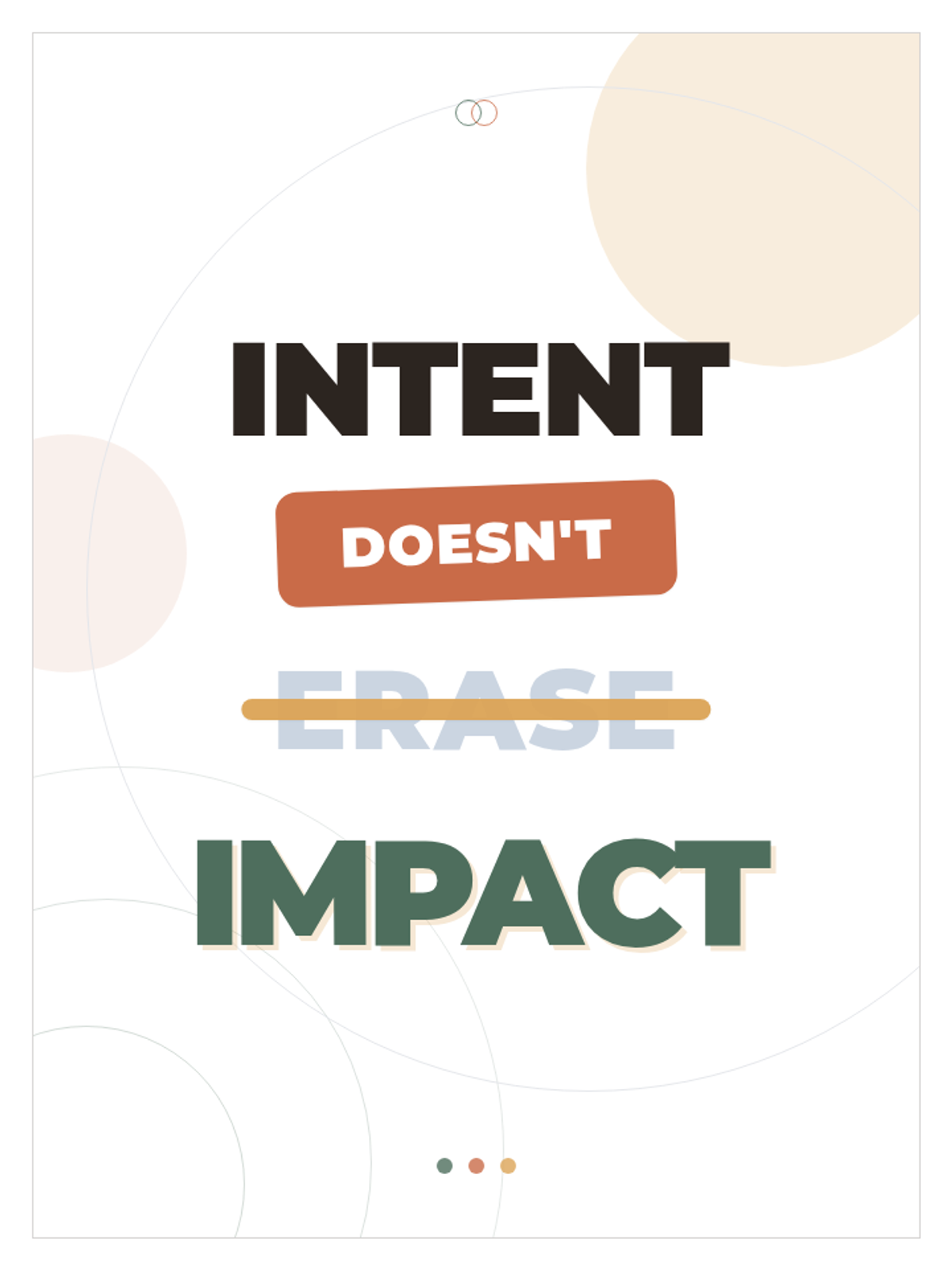
A 5-slide visual presentation to introduce the concepts of professionalism, impact vs. intent, microaggressions, and the mechanics of 'I' statements.
An individual reflection worksheet for students to process concepts of professionalism, the impact of microaggressions, and practicing 'I' statements for conflict resolution.
A refined version of the Friendship Radar worksheet with updated styling, "add your own" options for flags, and expanded journaling space.
A set of 12 printable discussion cards categorized by topic to facilitate small-group conversations about language impact, professionalism, and conflict resolution.
A facilitator guide for counselors or teachers to deliver the Social Blueprint lesson, including pacing, clinical insights, troubleshooting tips, and discussion prompts.
A six-slide presentation designed for teenagers, introducing the concepts of social energy management, social cues (signal vs. noise), friendship quality, and tactical coping skills.
A set of eight visual coping skill cards designed specifically for teenagers, featuring tactical grounding techniques, social scripts, and anxiety management strategies in a modern, tech-inspired aesthetic.
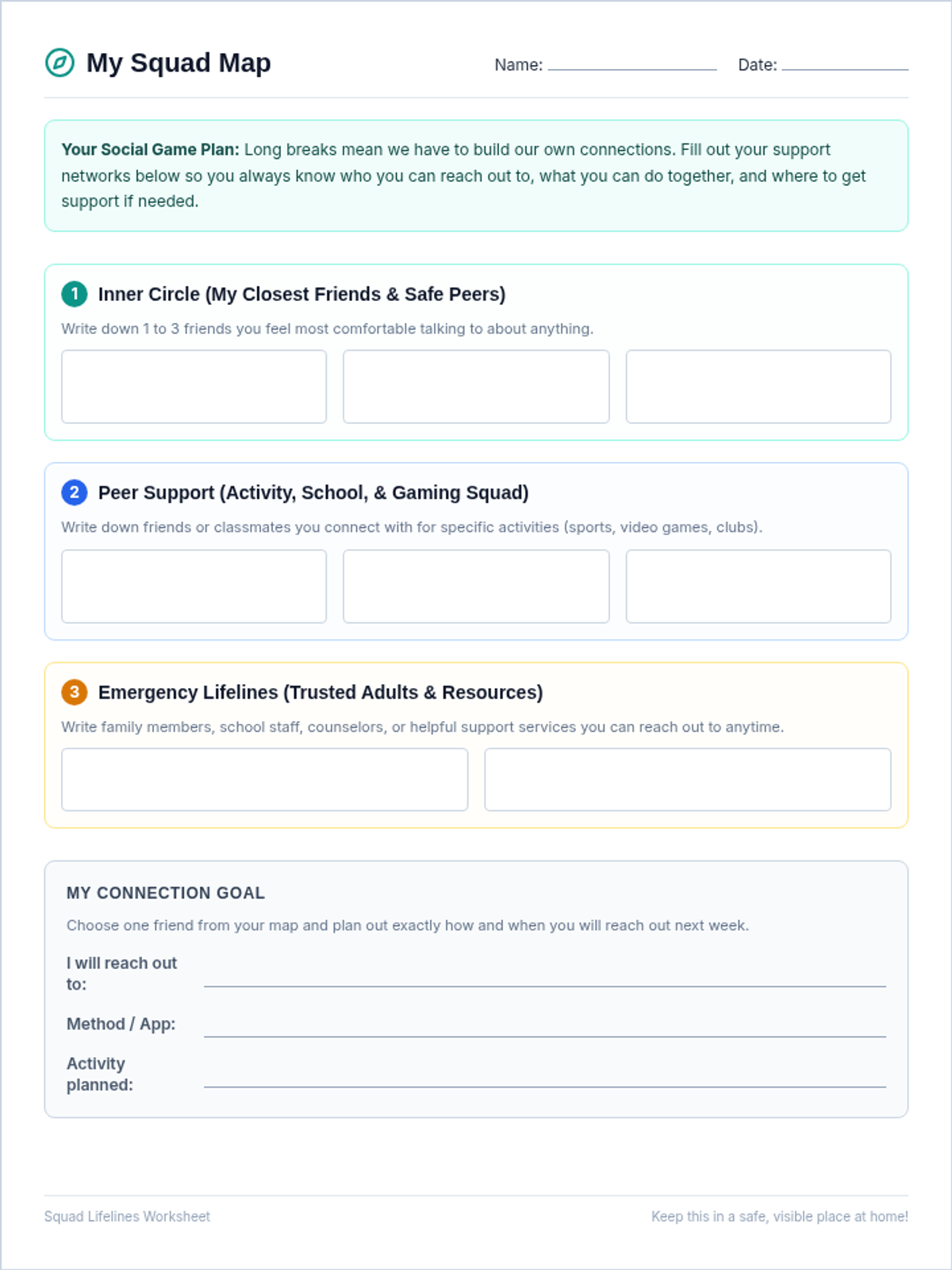
A three-page interactive workbook for teenagers to analyze friendship quality (green vs. red flags), manage their social battery, and map their social circles to better understand their relationship dynamics.
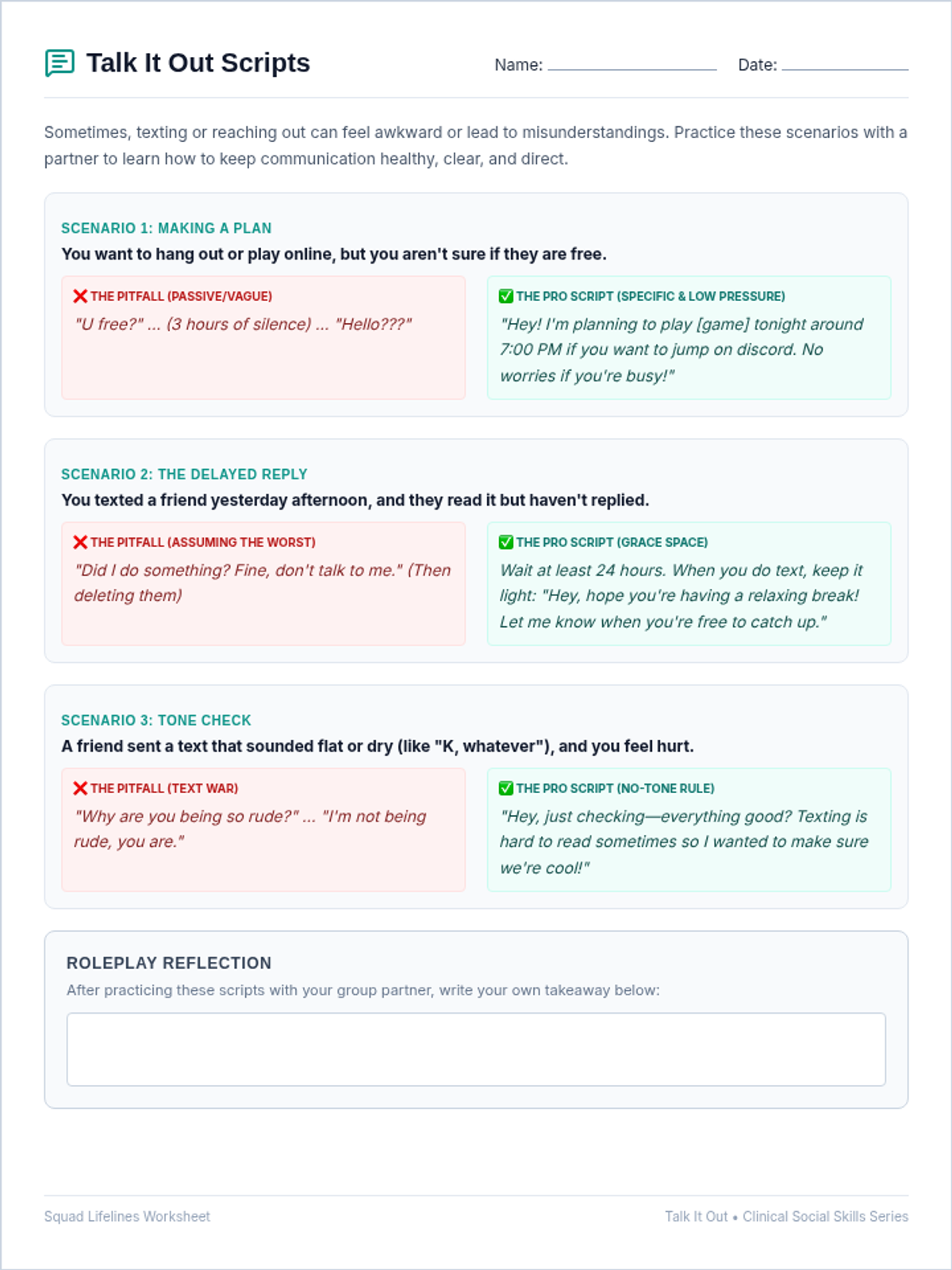
A two-page guide featuring practical, step-by-step social scripts for teenagers to navigate common peer interactions, including joining conversations, setting boundaries during banter, and supporting friends.
A teacher's guide providing instructional strategies, pacing suggestions, and discussion prompts for facilitating the behavioral sequencing lesson.
A generic template for students to map their own personal behavior sequences and plan specific intervention strategies for the future.
A graphic organizer featuring three school-based scenarios where students must map the behavior sequence and suggest interventions to change the outcome.
A step-by-step worksheet guiding students through behavioral sequencing, mapping the triggers (before), actions (during), and impact (after), and identifying points of intervention.
An introductory presentation for the "Action Replay" lesson, visually defining behavioral sequencing (before, during, after) and the concept of interrupting the loop.
A set of 4 printable station signs for Session 4 (The Toolkit). Each sign features high-impact instructions and real-world examples for Mind Mapping, The Blurting Method, and Teach the Wall, plus a bonus guide on Spaced Repetition.
A discussion guide for teachers to lead the closing debrief of the Perspective Pivot lesson, featuring key questions, response starters, and an exit ticket routine.
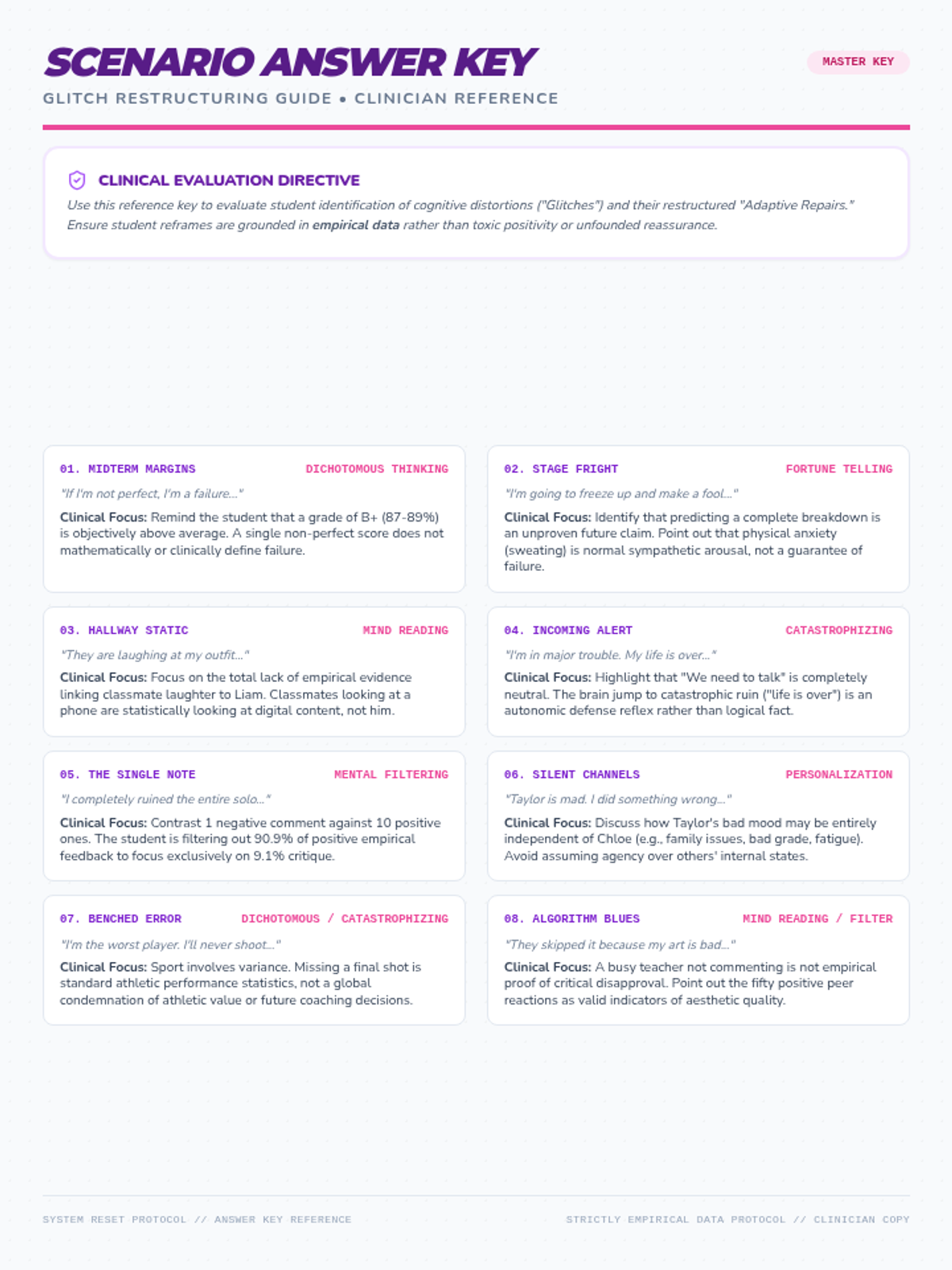
A student worksheet that guides them through the "Perspective Pivot" process of identifying, challenging, and reframing their own test-related cognitive distortions.
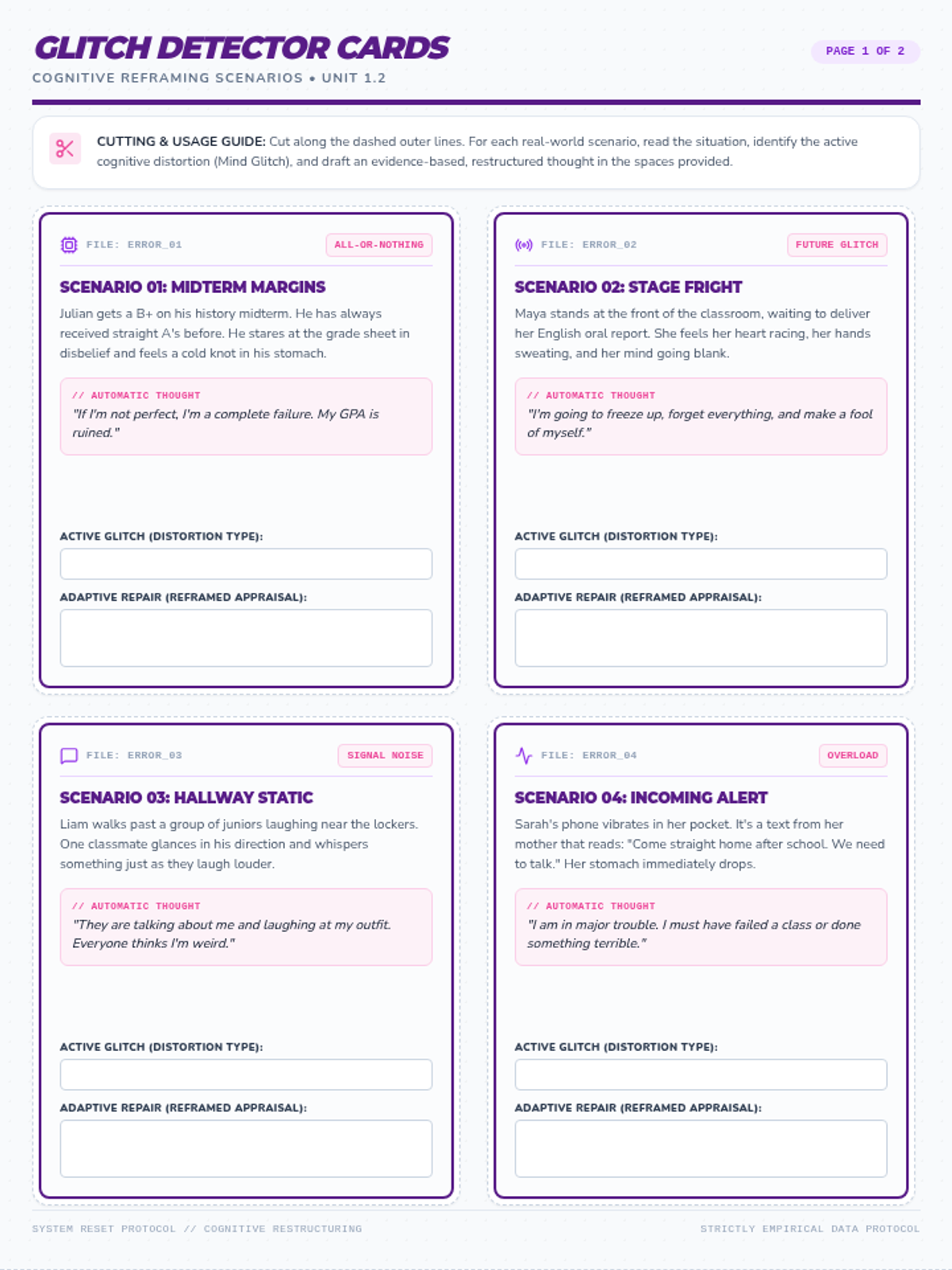
A set of activity cards featuring relatable student scenarios involving cognitive distortions, designed for a group activity where students identify and reframe negative thoughts.
A visual slide deck introducing the concepts of cognitive distortions (All-or-Nothing, Catastrophizing, Labeling) and teaching the "Pivot" technique (Identify, Challenge, Reframe) for test stress.
A set of printable exit tickets for Session 1 of the Academic Rebound program, designed to gauge group connection and perceived safety.
A set of printable exit tickets for Session 2 of the Academic Rebound program, focusing on identifying attendance barriers and planning practical morning routine adjustments.
A detailed teacher-facing lesson plan for "The Perspective Pivot" intervention, covering learning objectives, materials, and a step-by-step instructional procedure for teaching cognitive reframing.
A weekly goal-tracking log and habit-building checklist for students in the Academic Rebound program. It includes spaces for daily reflections and identifies a 'Weekly Big Rock' goal.
A two-page student reflection journal for the first session of the Academic Rebound program. It includes spaces for an 'Honest Audit' of past academic struggles, reflection on the group's movement activity, and commitment to the established group norms.
A high-level facilitator's guide outlining the final 6-week Academic Rebound program sequence, including session themes and core instructional strategies.
A 5-question post-program audit for students to self-assess their growth in key areas like attendance, time management, study strategies, advocacy, and mindset after completing the 6-week program.
A 5-question pre-program audit for students to self-assess their confidence and knowledge in key areas like attendance, time management, study strategies, advocacy, and mindset.
A comprehensive 1-page grading rubric for the Career Quest project, evaluating research quality, visual design, oral presentation, and citations.
A 2-page research organizer for students to record salary data, educational requirements, job outlook, and typical professional tasks while citing their sources.
A 15-slide instructional presentation providing step-by-step research tips for middle school students, including how to use government databases, evaluate sources, and organize data for a career project.