Teacher discussion guide for Lesson 3. Provides pedagogical background on workspace boundaries, specific Socratic questions for student engagement, and case studies for classroom debate.
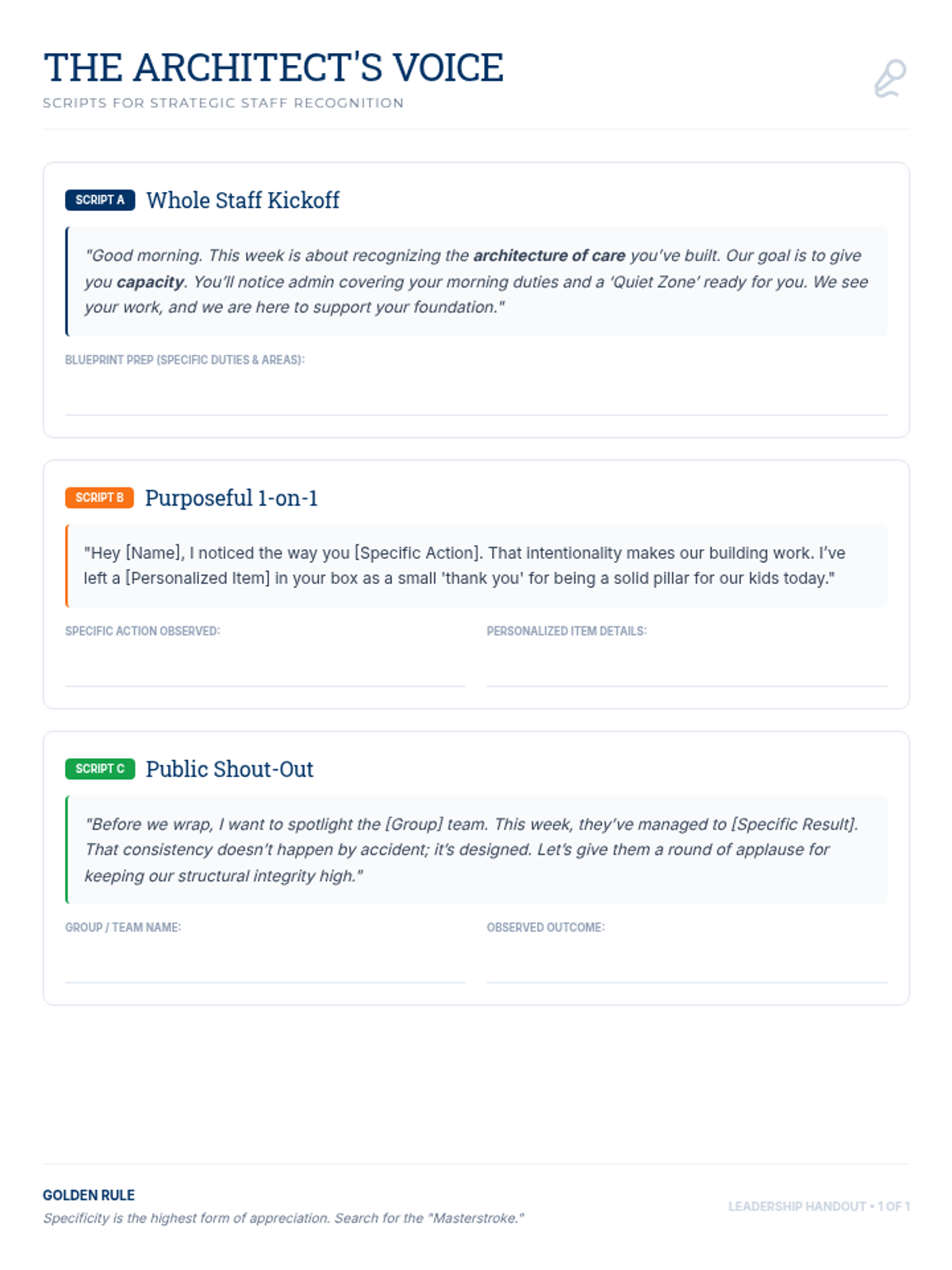
A set of professionally crafted speaking scripts for school leaders, providing templates for whole-staff kickoffs, purposeful 1-on-1 recognition, and high-impact public shout-outs. Revised to keep scripts together and fit on a single page.
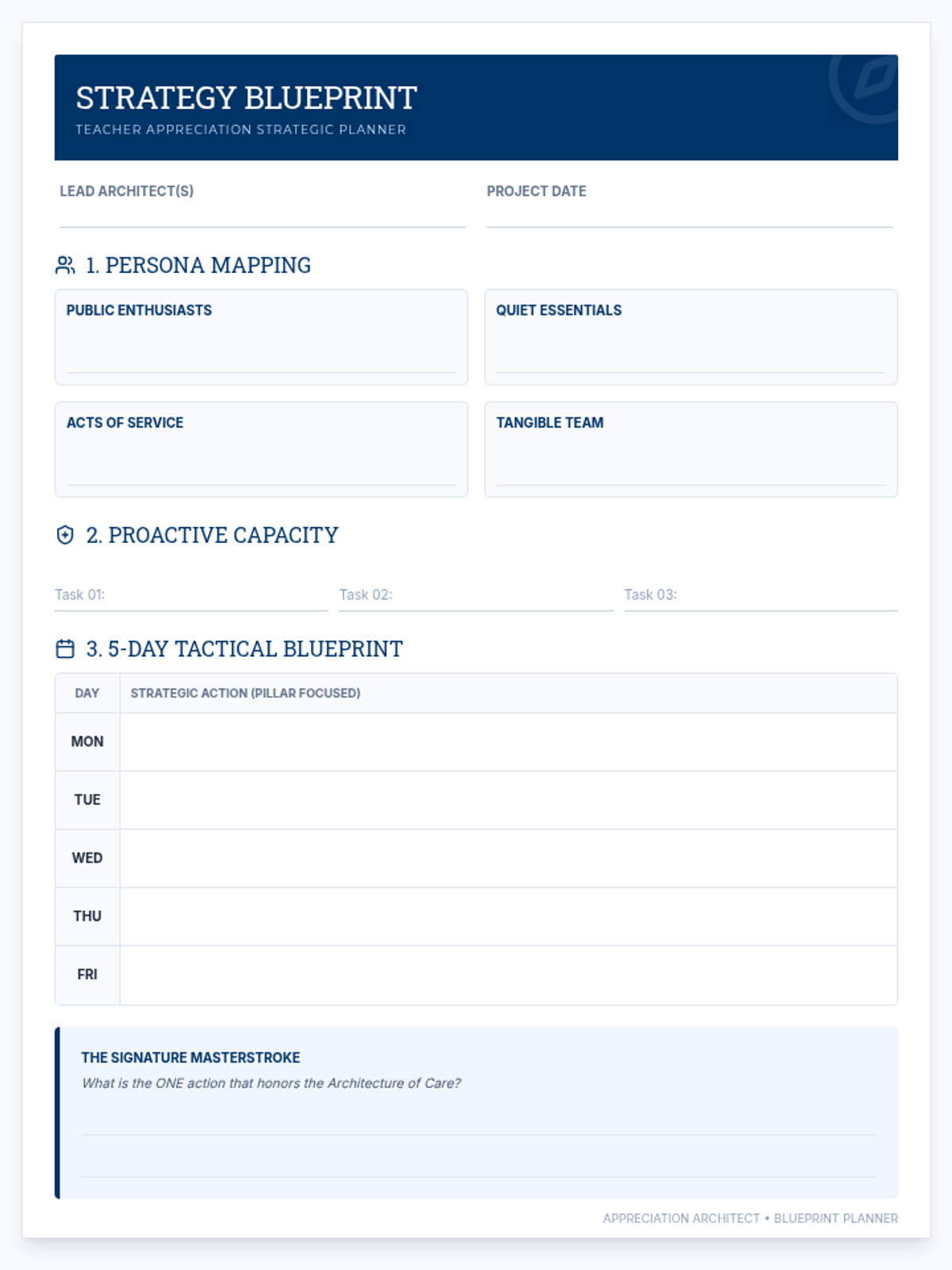
A planning worksheet for school leadership teams to map out their Teacher Appreciation Week strategy, featuring persona mapping, capacity-building solutions, and a 5-day tactical blueprint. Revised to ensure all content fits on one page with ample writing space.
A 7-slide presentation deck titled 'The Appreciation Architect', using a blueprint-inspired visual theme. It covers the pitfalls of generic recognition and introduces a strategic three-pillar framework (Personalized, Proactive, Purposeful) for school leaders.
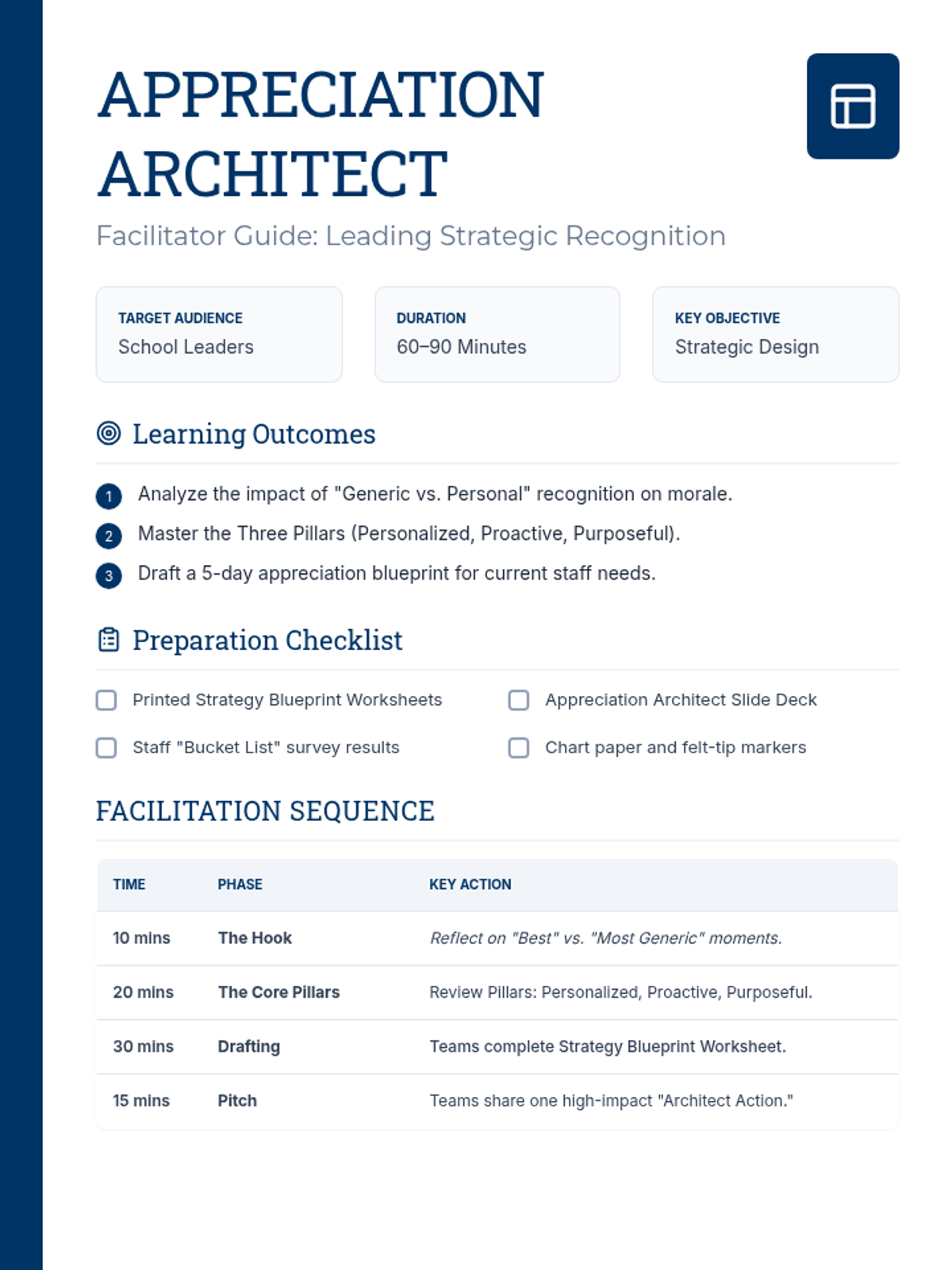
A comprehensive facilitator guide for school leaders, providing a step-by-step framework for teaching the 'Appreciation Architect' strategy, including learning outcomes, preparation checklists, and deep-dive facilitation notes. Revised for better page flow and contrast.
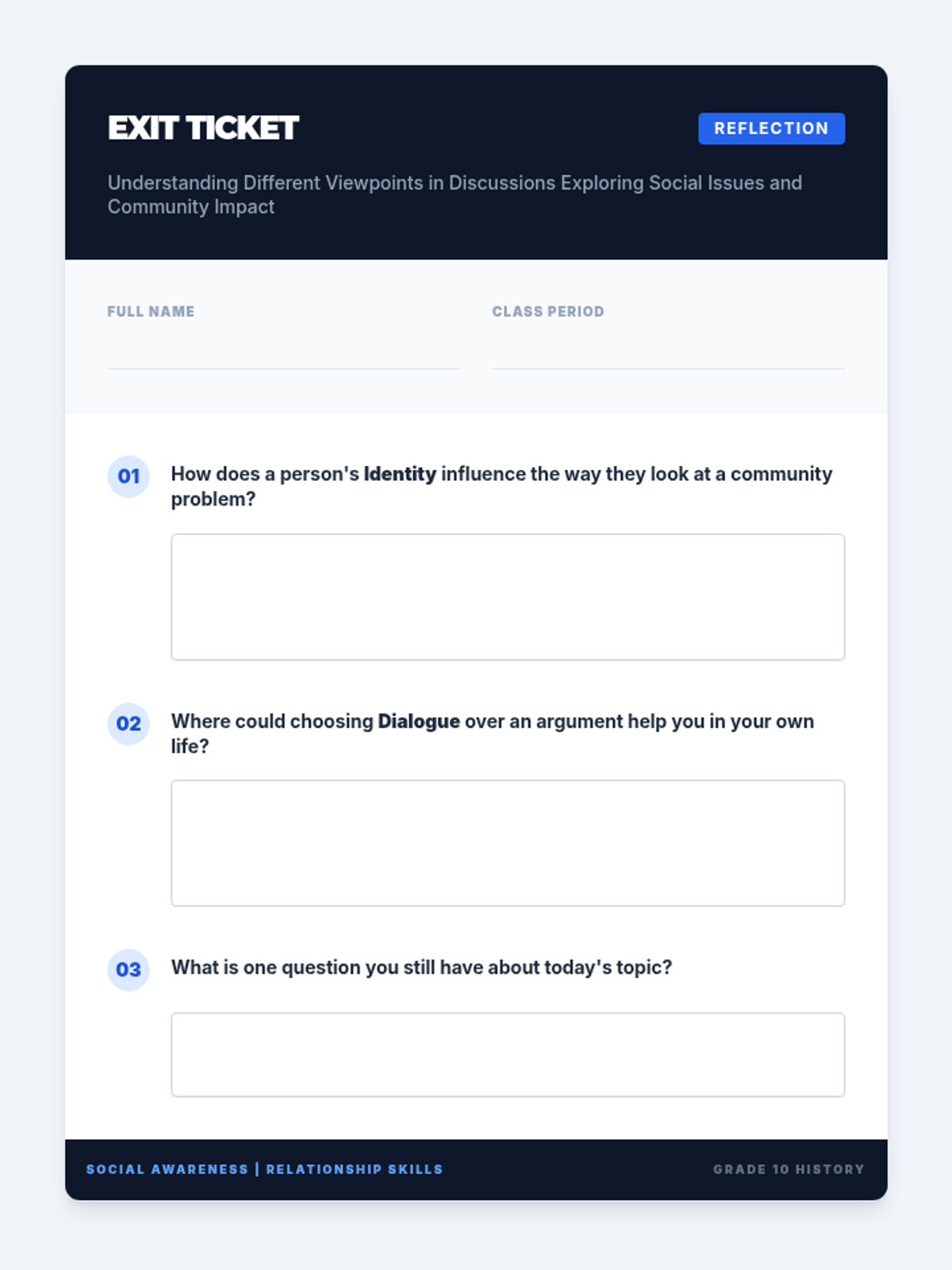
A self-reflective exit ticket for students to evaluate their understanding of community viewpoints and the application of dialogue in real-life social issues.
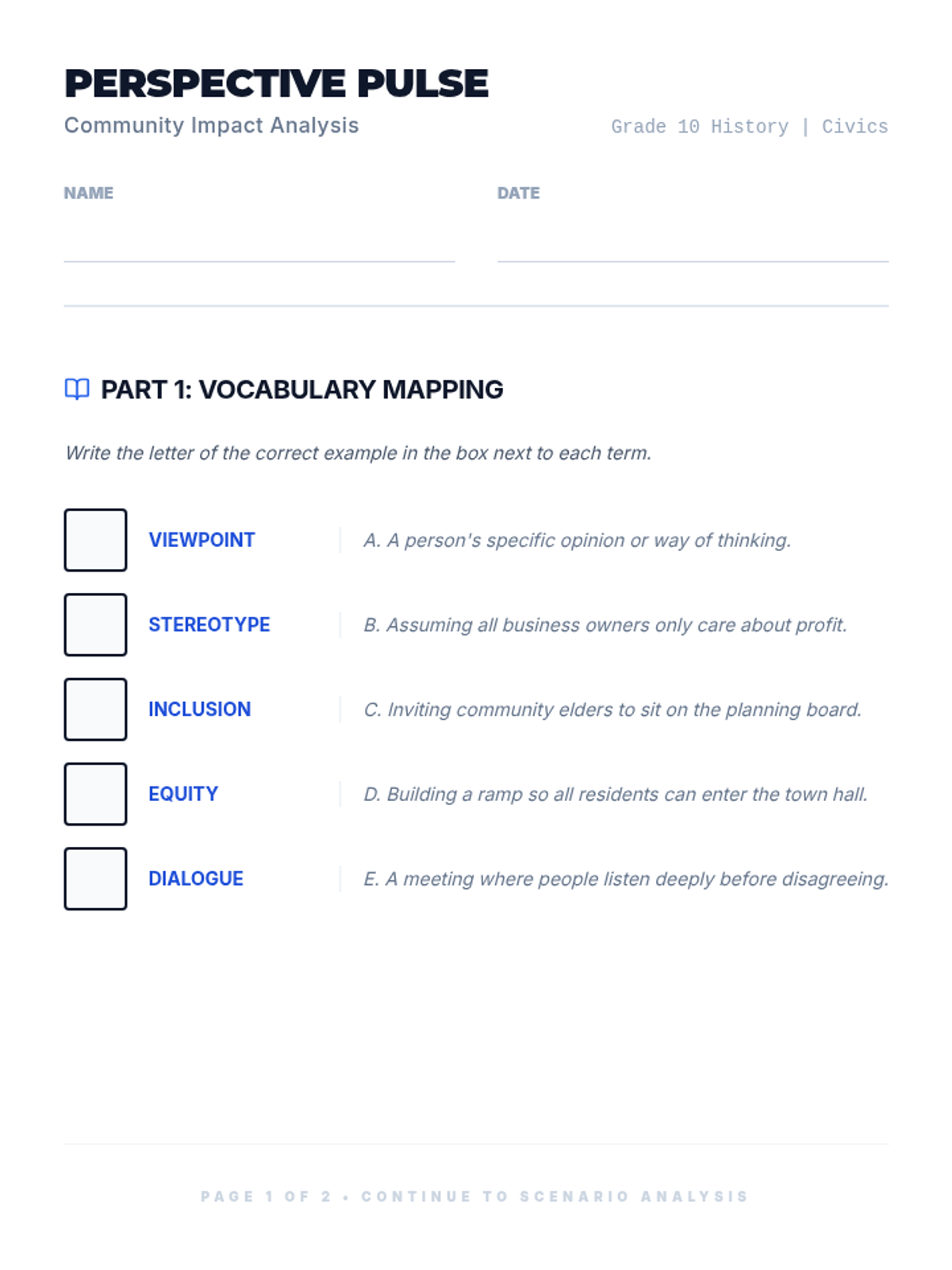
A student worksheet designed to analyze community social issues through multiple viewpoints, incorporating vocabulary application and scenario-based reflection.
A visual presentation for a Grade 10 lesson on community viewpoints, including objective, key vocabulary, dialogue standards, and a case study challenge.
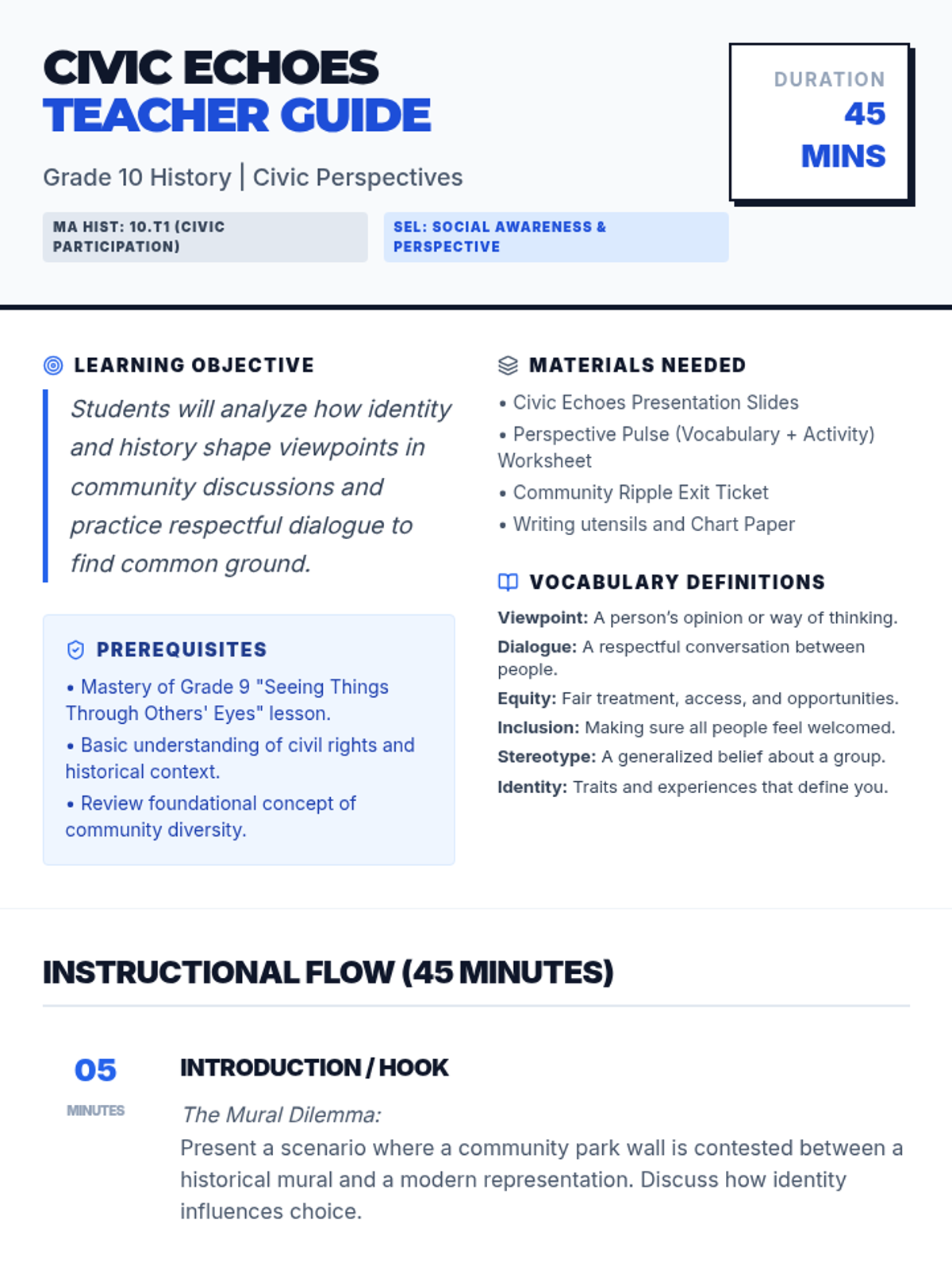
A detailed teacher guide for a Grade 10 History lesson on community viewpoints, featuring a 45-minute instructional flow, discussion questions, and vocabulary definitions.
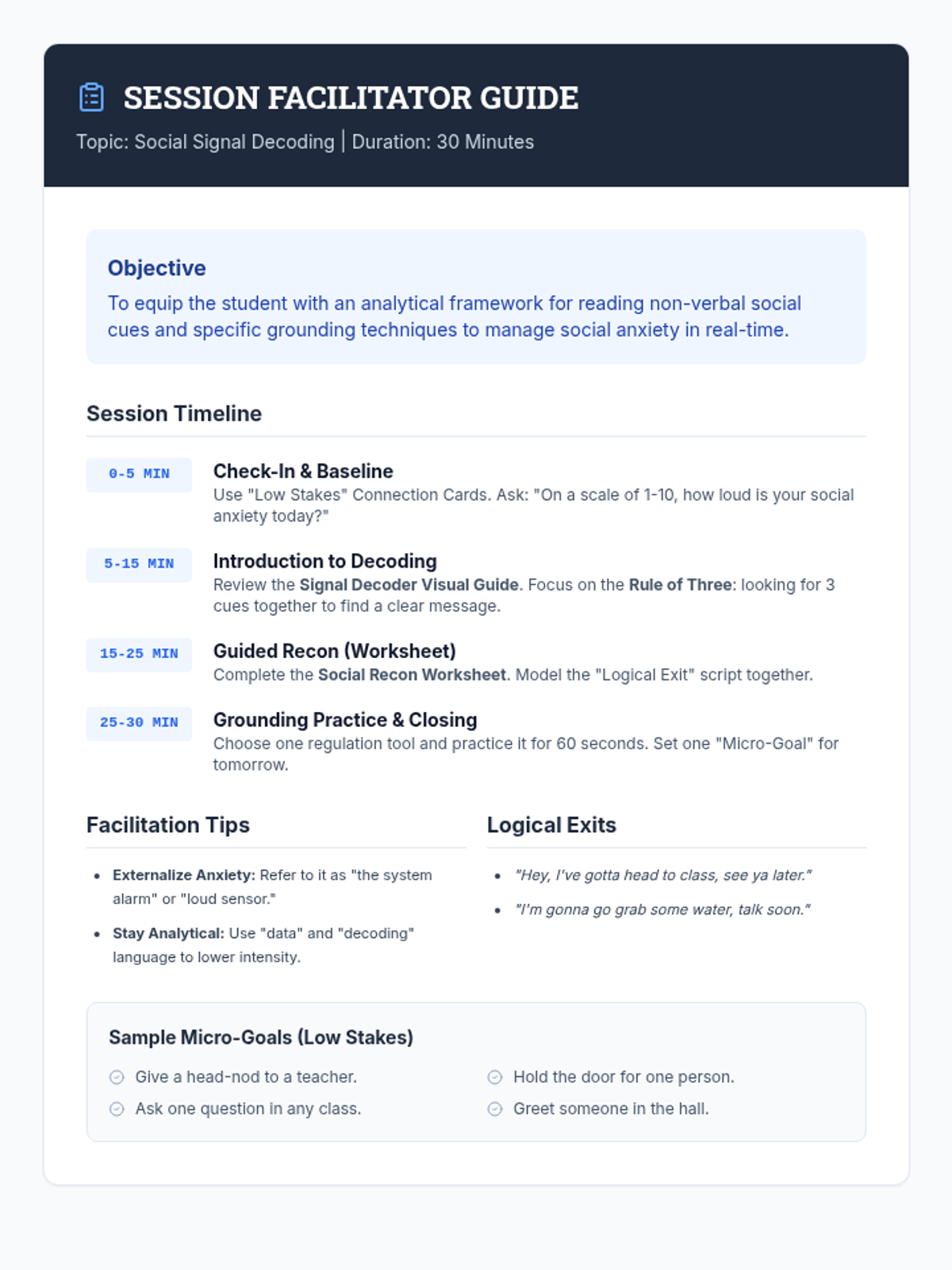
A facilitator guide for a 30-minute counseling session, providing a timed structure, check-in prompts, and strategies for coaching a student through non-verbal decoding and anxiety regulation.
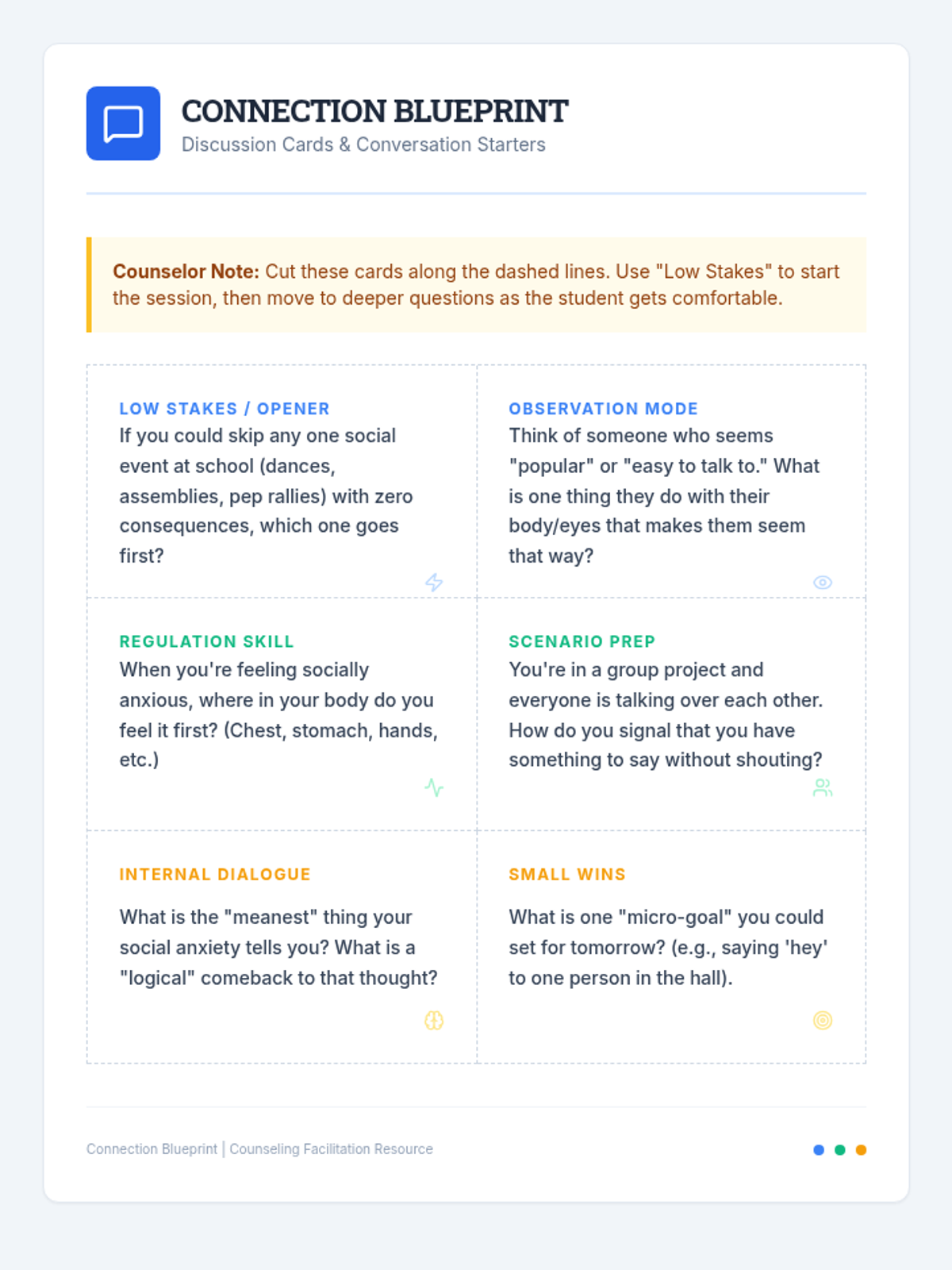
A set of conversation cards for a counselor to use with a 9th grade student, ranging from low-stakes icebreakers to deeper reflections on social anxiety and non-verbal communication.
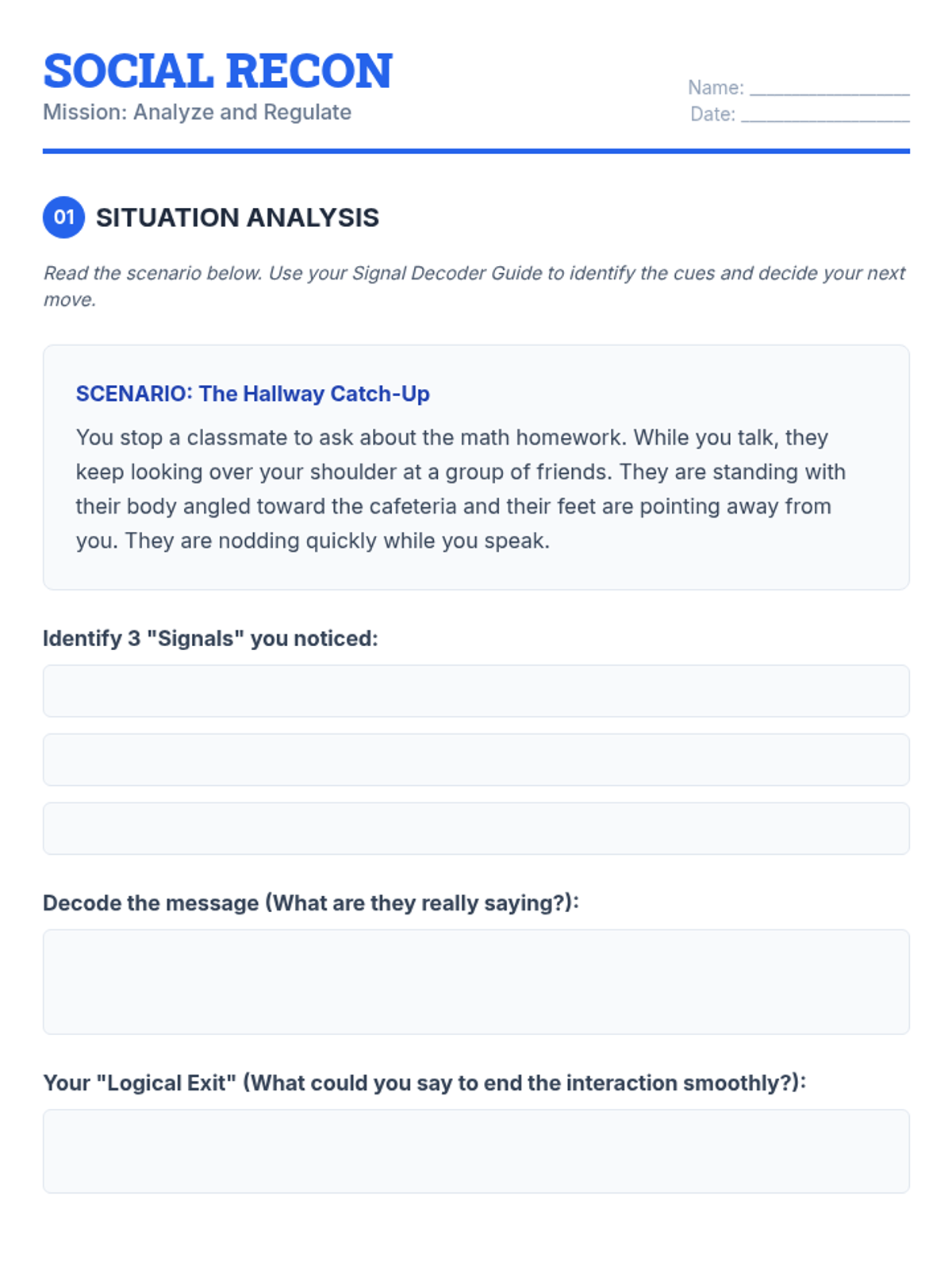
A practice worksheet where students analyze a social scenario using non-verbal cues and select anxiety regulation strategies to use in school settings.
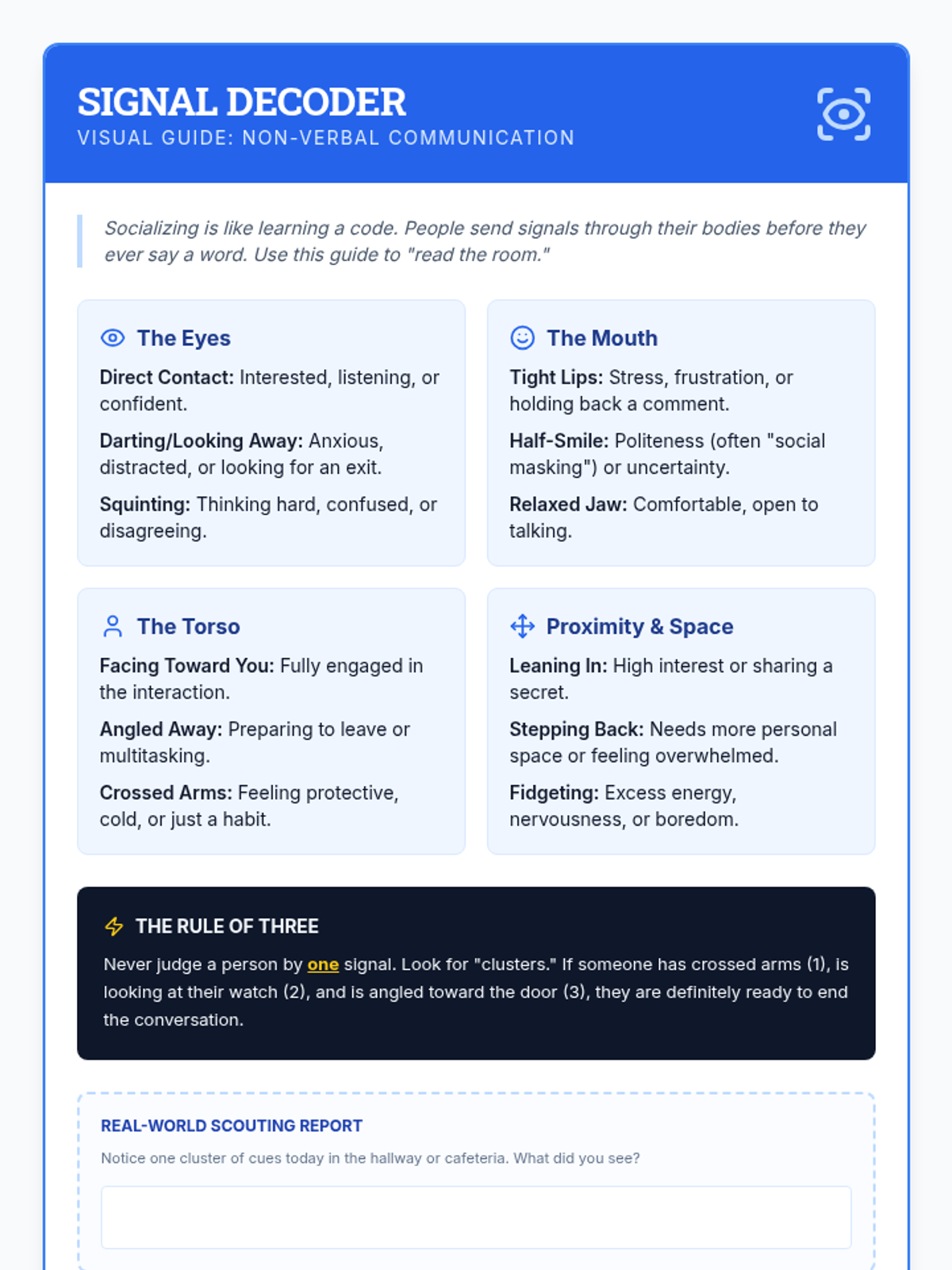
A visual guide for high school students to decode non-verbal social cues like eye contact, posture, and proximity. It uses a "signal decoder" theme to make social observation feel analytical and manageable.
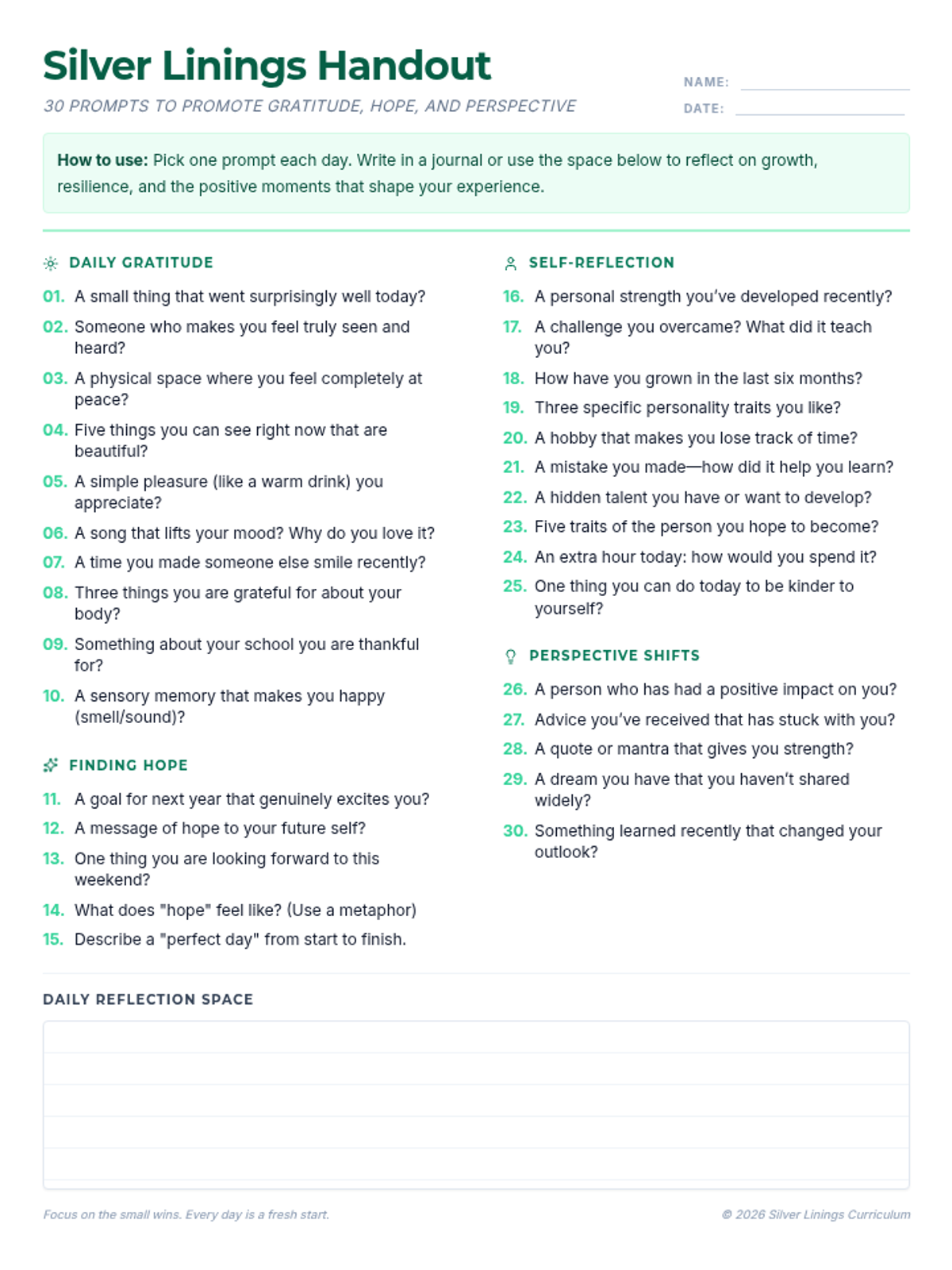
A clean, organized handout for high school students featuring 30 journal prompts categorized by gratitude, hope, self-reflection, and perspective shifts. The design uses a calming emerald and slate color palette with a dedicated space for a daily reflection.
A visual presentation that breaks down the steps of digital outreach, the 1-to-1 rule, and strategies for handling silence or rejection with emotional resilience. Ideal for direct instruction or group discussion.
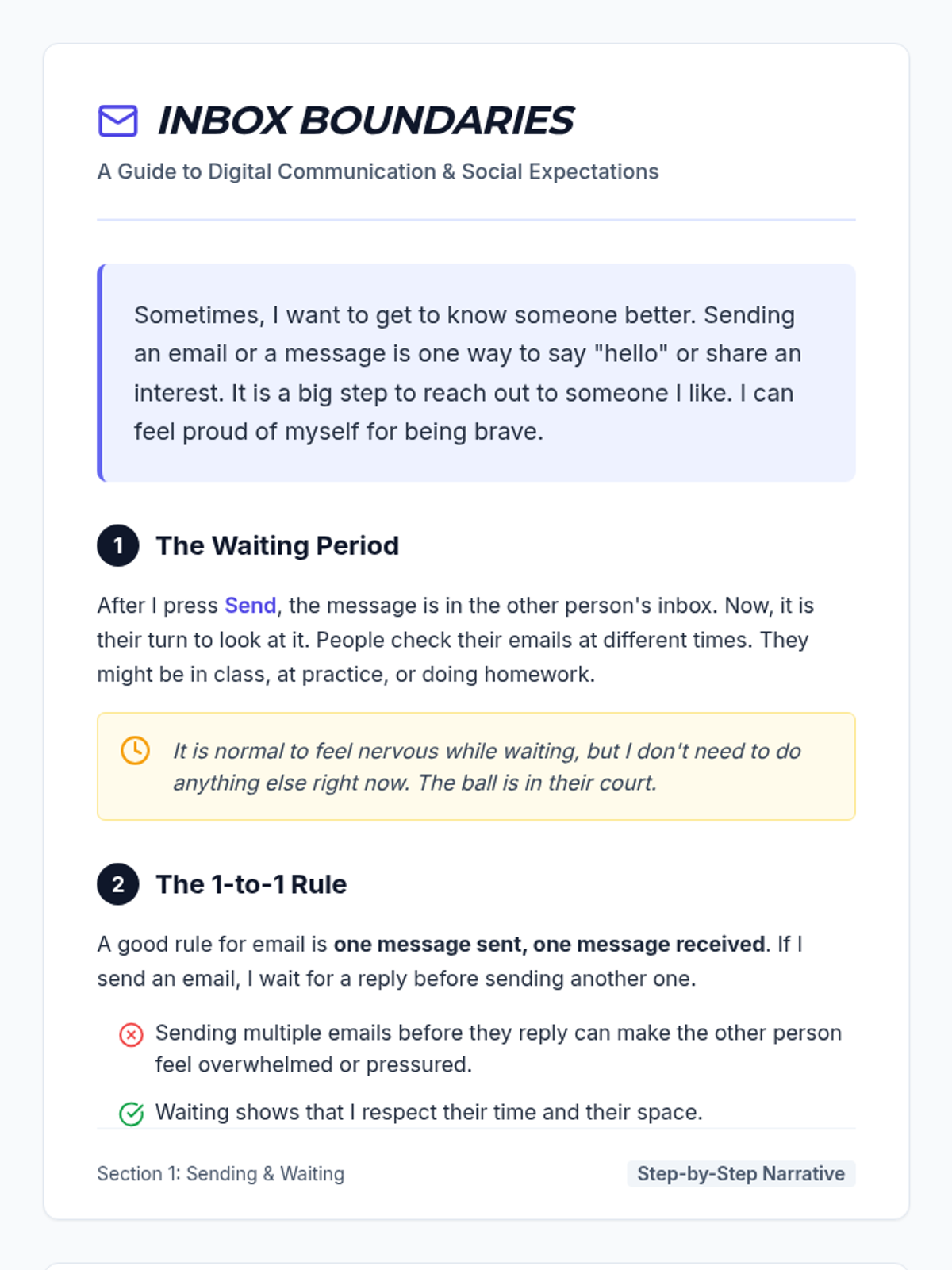
A structured social narrative document designed for high school students. It covers digital boundaries, the 'one-to-one' email rule, and healthy emotional coping strategies for handling rejection or silence in communication.