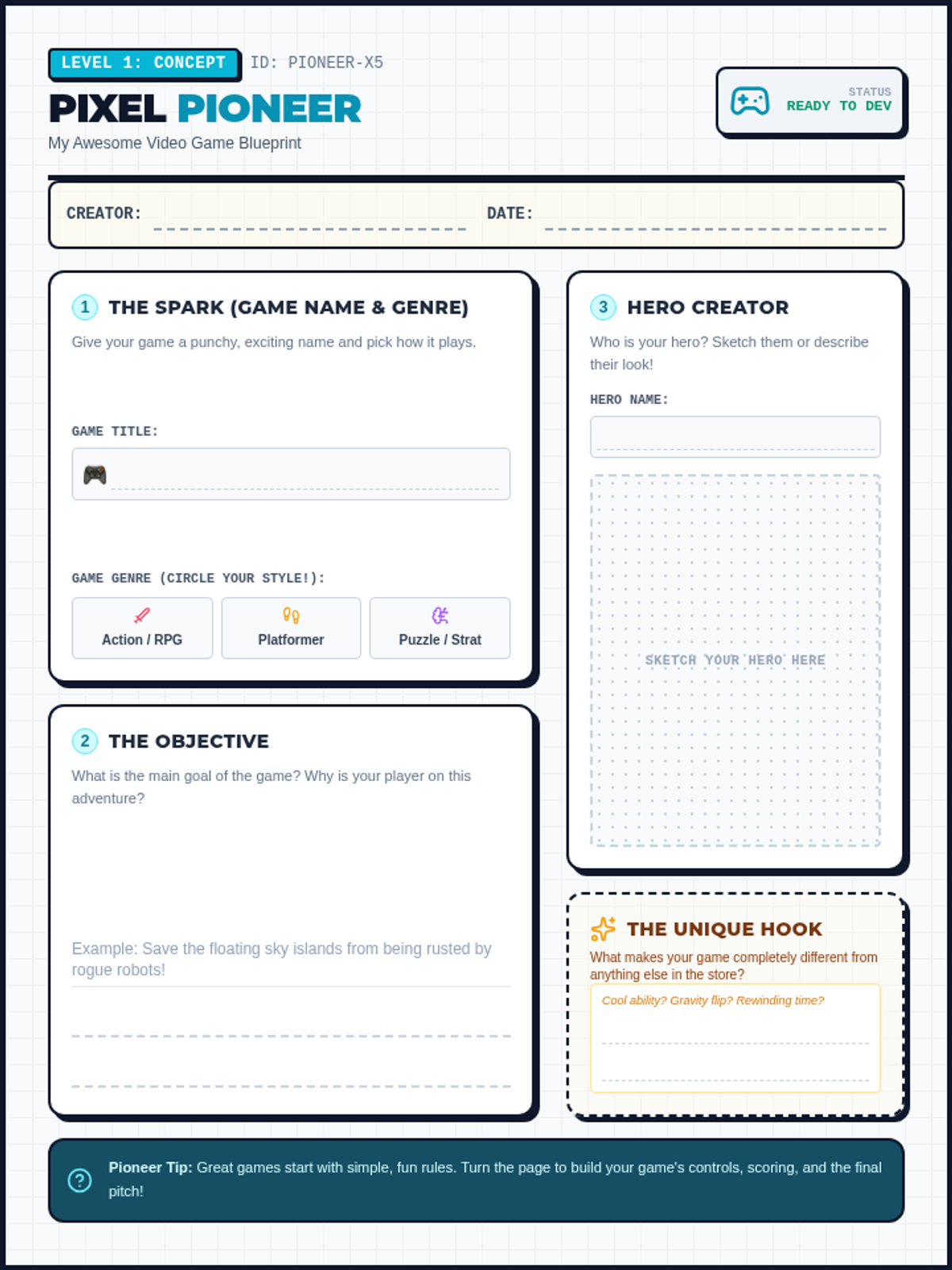
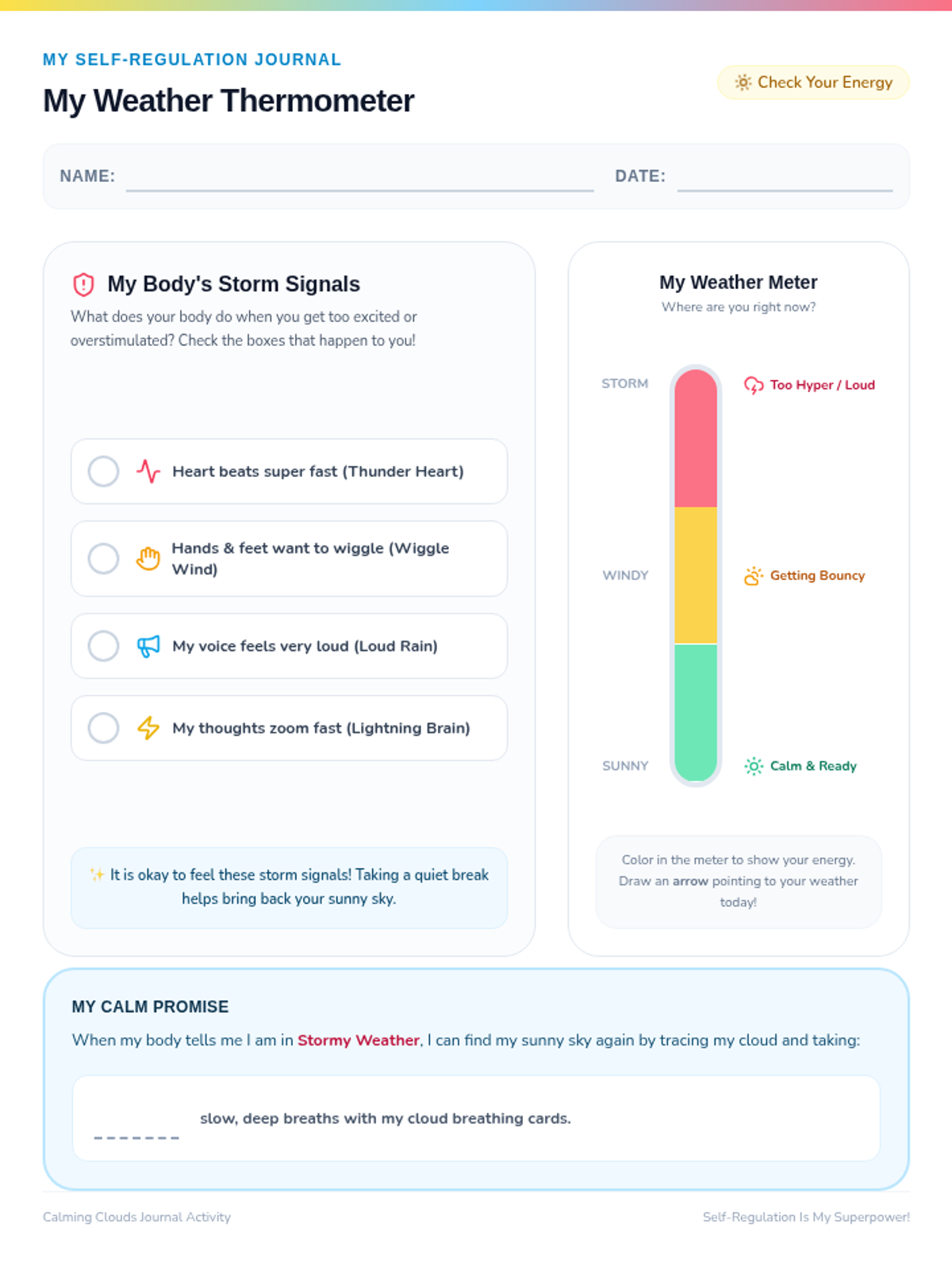
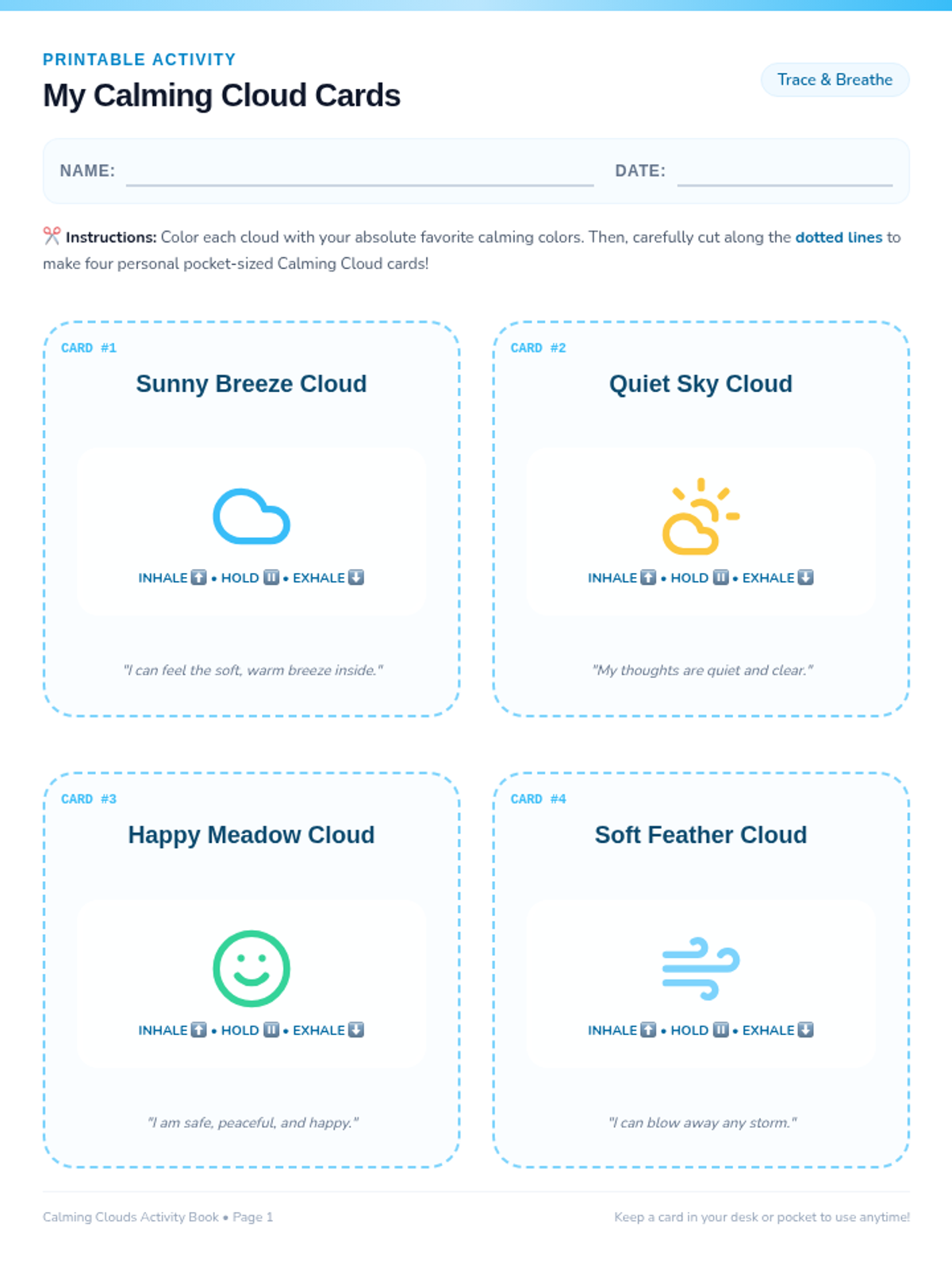
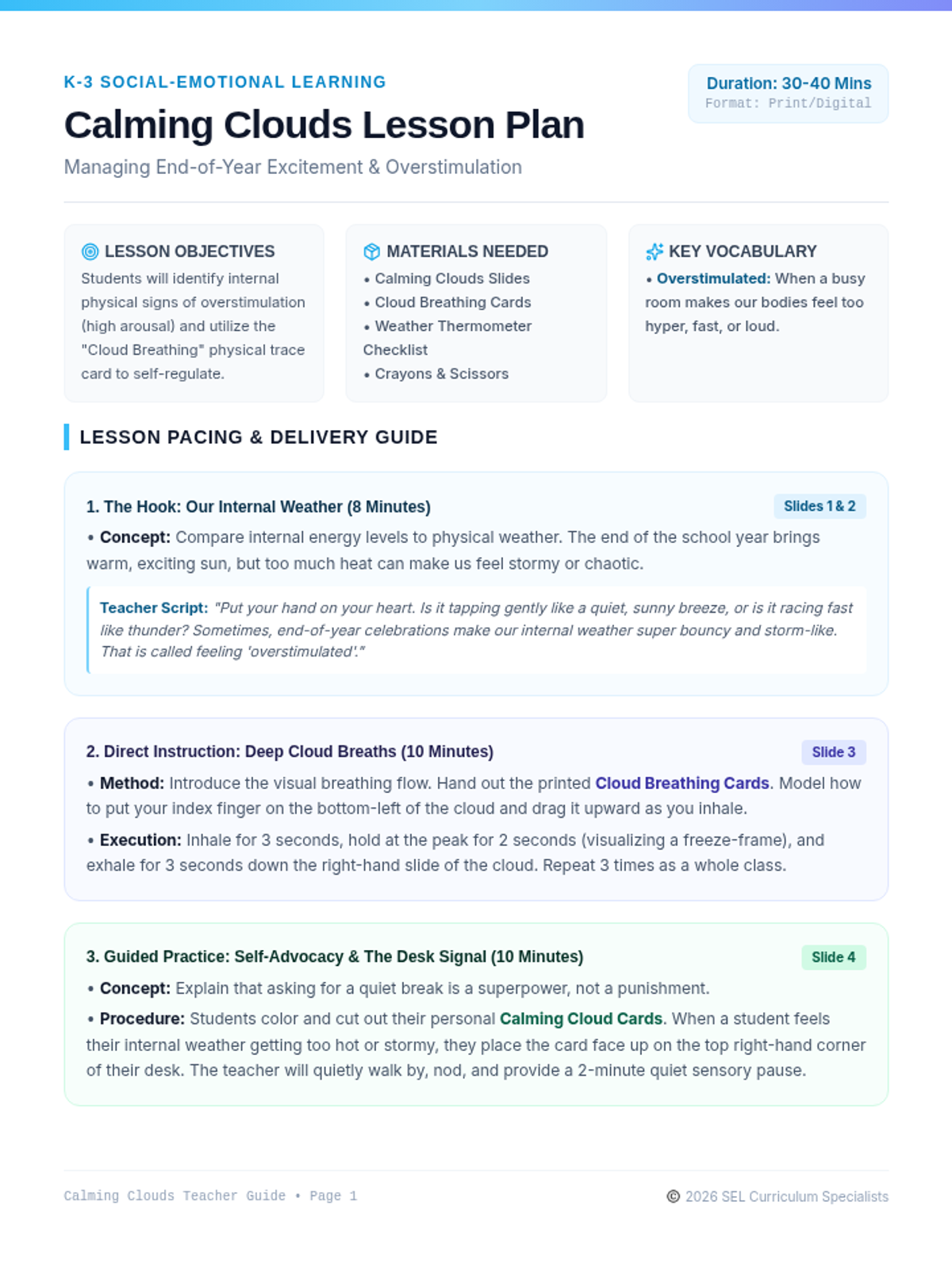
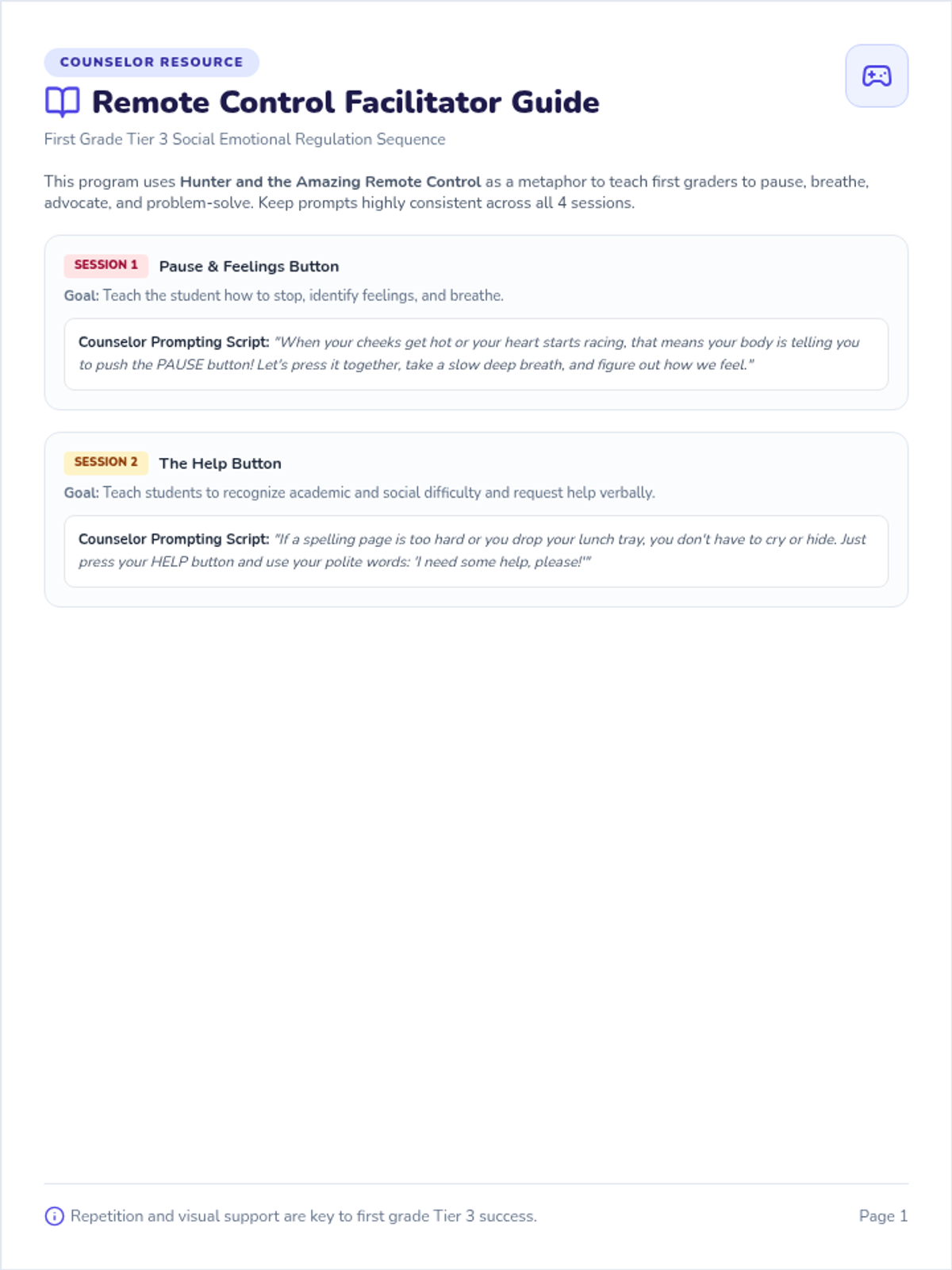
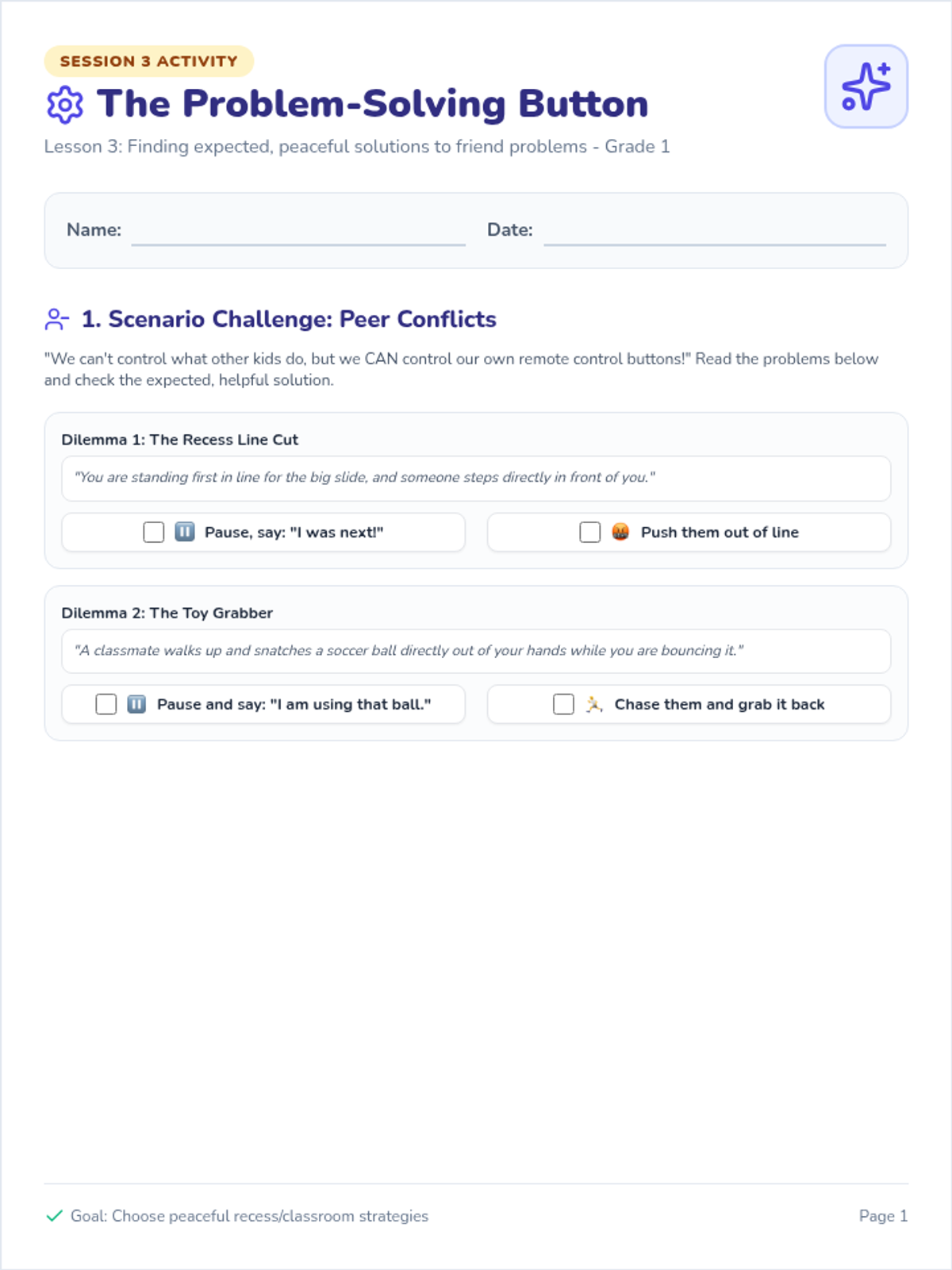
Simplified 1st-grade facilitator guide for the Junior Advocacy Boost. Features a distinct purple/teal visual theme, scripted prompts for easy delivery, and large, clear instructions. No bundled pages for maximum clarity. Condensed to a single page.
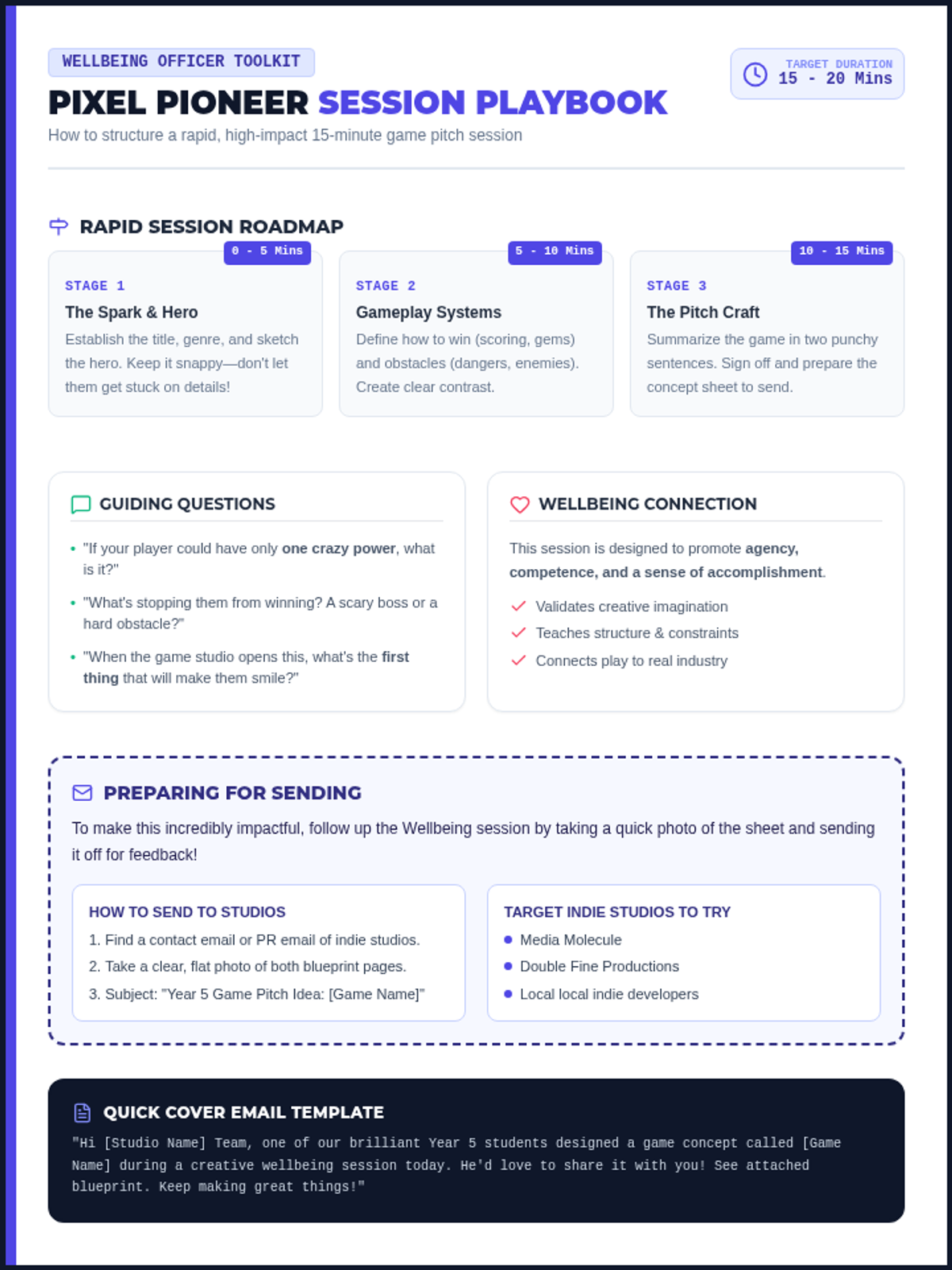
A student-facing worksheet for identifying the three states of mind (Reasonable, Emotion, and Wise) using the Hindenburg airship metaphor. Revised for single-page layout and increased writing space.
A student-facing worksheet for identifying the three states of mind (Reasonable, Emotion, and Wise) using the Hindenburg airship metaphor. Includes an incident report section for personal reflection.
Parent guide for Week 2 of the Survival and Salvage DBT program, introducing the 'Wise Mind' concept using aviation metaphors for autism-friendly communication.
Counselor guide for Week 2 of the Survival and Salvage DBT program, focusing on the 'Wise Mind' skill using the Hindenburg as a metaphor for balancing logic and emotion.
A student-facing worksheet for practicing the 'Observe' skill in DBT, themed around a Titanic sonar search mission. Includes space for recording external, internal, and cognitive 'pings'. Revised to fit a single page and provide better writing space.
Parent guide for Week 1 of the Survival and Salvage DBT program, explaining the 'Observe' skill and providing home-based strategies for children with HFA.
Counselor guide for Week 1 of the Survival and Salvage DBT program, focusing on the 'Observe' mindfulness skill using a Titanic sonar metaphor.
A guide for IAs on facilitating physical and digital organization lessons. Provides actionable strategies for 'The Binder Blitz' and digital file management, including specific scripting and weekly maintenance routines.
A visual worksheet for organizing physical and digital spaces. Includes a 'Purge' list for cleaning backpacks, a blueprint drawing area for designing a study space, and a digital checklist for organizing computer files. High-engagement design for intermediate students.
Slides for Lesson 3 focused on physical and digital organization. Introduces the concepts of 'Inventory Management' for binders/backpacks and 'Arena Optimization' for the study environment. Uses modern gaming aesthetics to keep students engaged in organizational habits.
A facilitation resource for IAs providing specific strategies for supporting students with time management. Includes discussion prompts, pacing advice, and troubleshooting tips for addressing 'time blindness' and timer anxiety.
A time-tracking and scheduling worksheet for intermediate students. Features a 'Prediction Lab' for estimating task duration and a 'Power Interval Tracker' to implement the Pomodoro technique. Designed with clear work areas for students to record their progress.
Presentation slides for Lesson 2, focusing on time estimation and the Pomodoro (Power Interval) technique. Uses high-energy, gaming-inspired visuals to teach intermediate students about 'time blindness' and scheduling buffers.
A facilitation guide for teachers and IAs, providing pacing, discussion prompts, delivery instructions, and differentiation strategies for the Mission Prioritization lesson. Includes specific tips for supporting intermediate students with executive functioning challenges.
A task management worksheet for intermediate students. Includes an 'Inventory' section for brainstorming tasks, a 2x2 priority grid for sorting, and a 'Quest Decomposition' area for breaking down complex assignments. Designed for handwriting with clear student work areas.
Interactive slides for Lesson 1 of Brain Boss, introducing students to the Priority Power-Up grid and the concept of 'Quest Decomposition' for large assignments. High-contrast, retro-game aesthetic designed for engagement.
A revised school counselor follow-up and feedback form. It features a new introductory referral sentence, detailed intervention logs with dates and goals, a dedicated 'At this time' status section, and a professional closing message inviting continued collaboration. Now includes 'Outside Referral' in next steps.
A printable resource featuring four portable 'Pocket Cards'. Revised to fit on a single page, improved contrast for printing, and added clear cutting guides.
A student worksheet focused on practicing 'I' statements and applying the Peace Path Protocol to specific conflict scenarios. Revised for better layout consistency, increased writing space, and improved contrast. Final version fits on one page.
A visual slide deck to guide students through the steps of the Peace Path Protocol, featuring clear headings, icons, and practice scenarios. Revised for better text contrast and layout alignment.
A detailed lesson plan for teachers to introduce the Peace Path Protocol, including learning objectives, a hook, step-by-step instruction, and practice scenarios.