A student-facing interest inventory worksheet for 6th graders. Features a checklist of common leisure activities, a "This or That" comparison section, and short-answer prompts using simple sentence structures. Revised to fit on a single page.
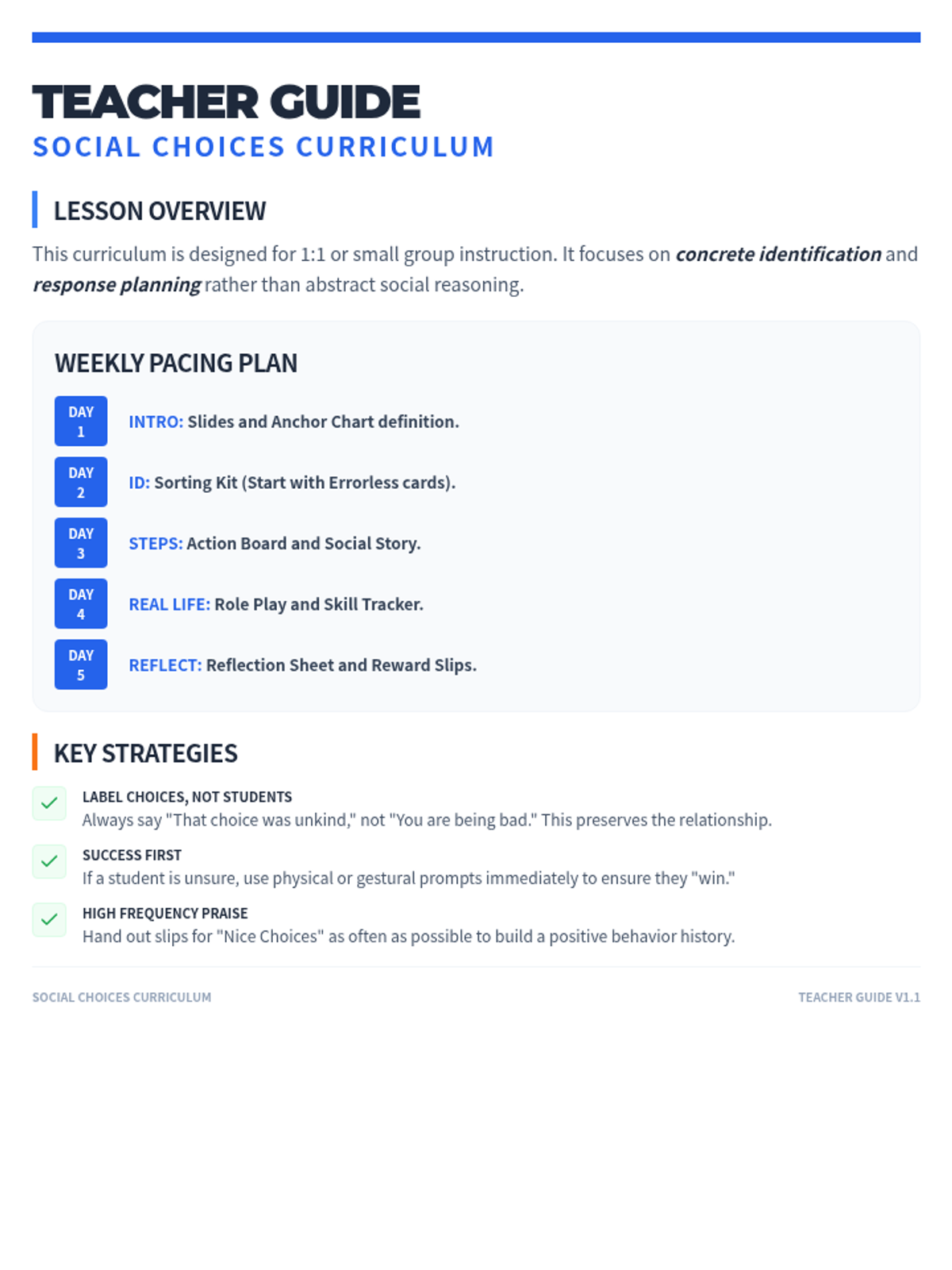
A teacher delivery guide providing a 5-day pacing plan, implementation strategies, and pedagogical tips. Revised to fit on a single page with improved layout.
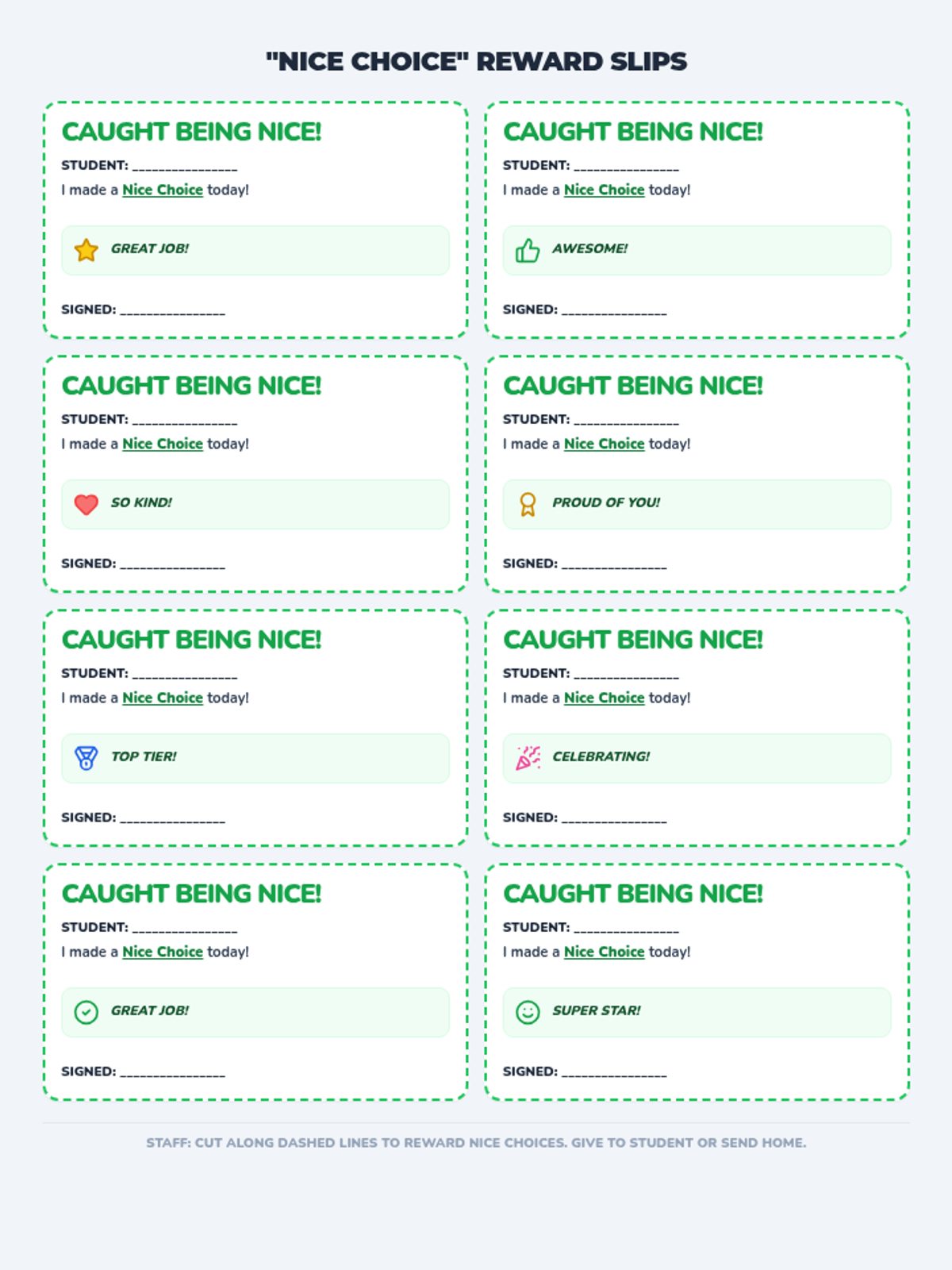
Small, printable reward slips for staff to hand out when they "catch" a student making a nice choice. Revised to include 8 slips per page and a student name field. Revised for print-readiness.
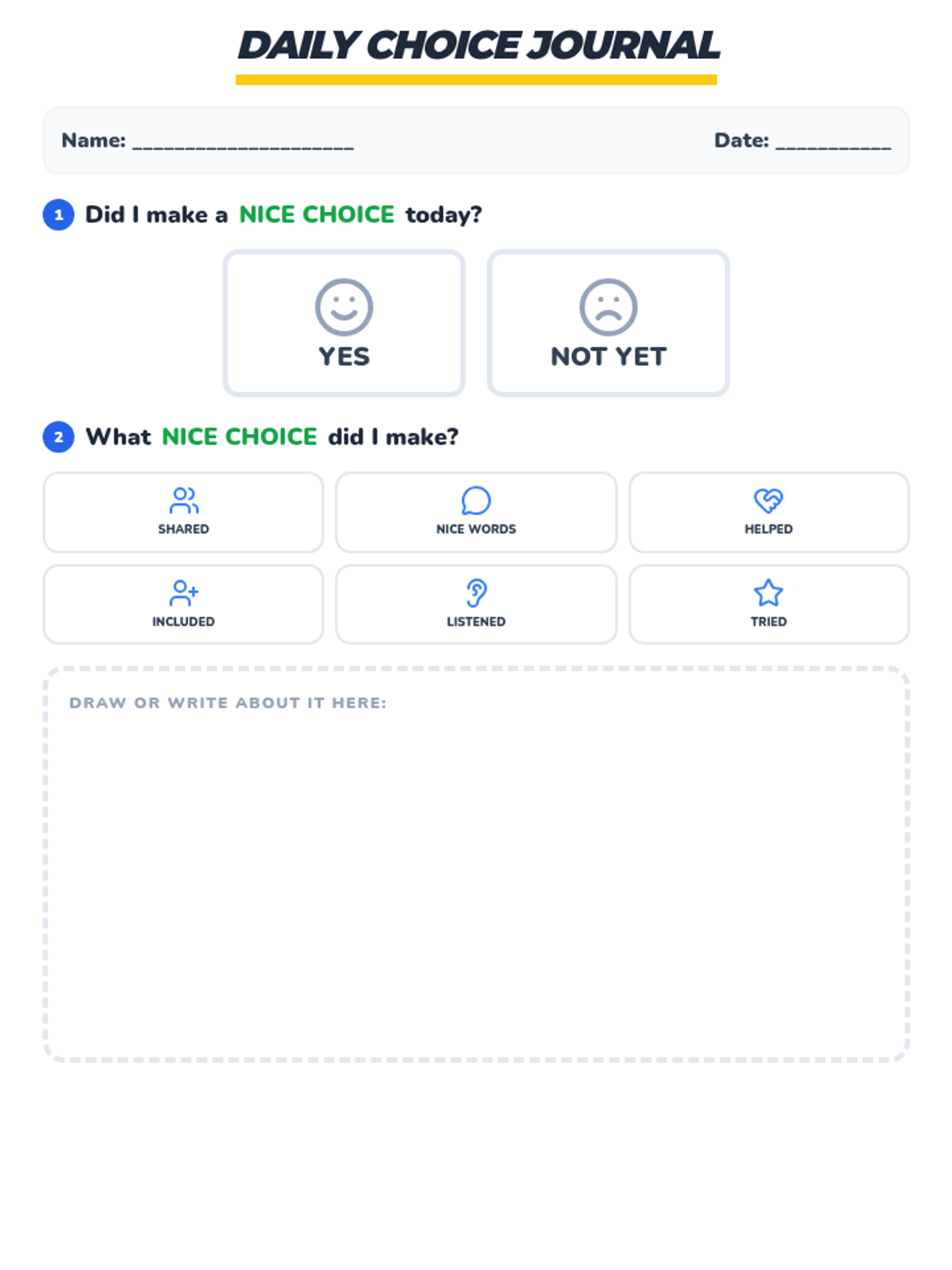
A simple, visually supported daily reflection sheet for students to self-assess their choices. Revised to fit on one page with neutral answer options and robust drawing area.
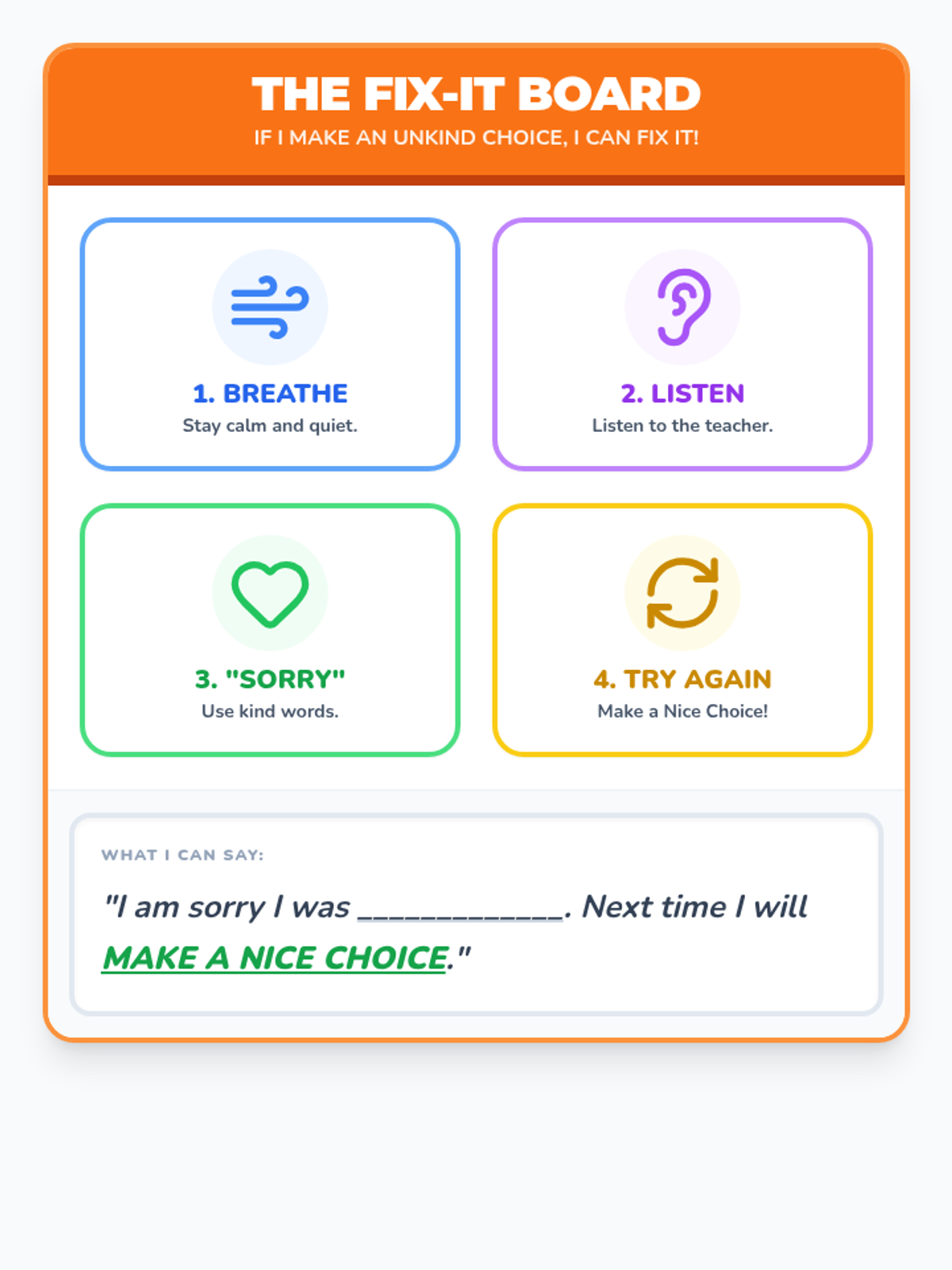
A visual response board for students to use when they have made an unkind choice, guiding them through the steps of calming down, listening, apologizing, and trying again. Revised to fit on a single page.
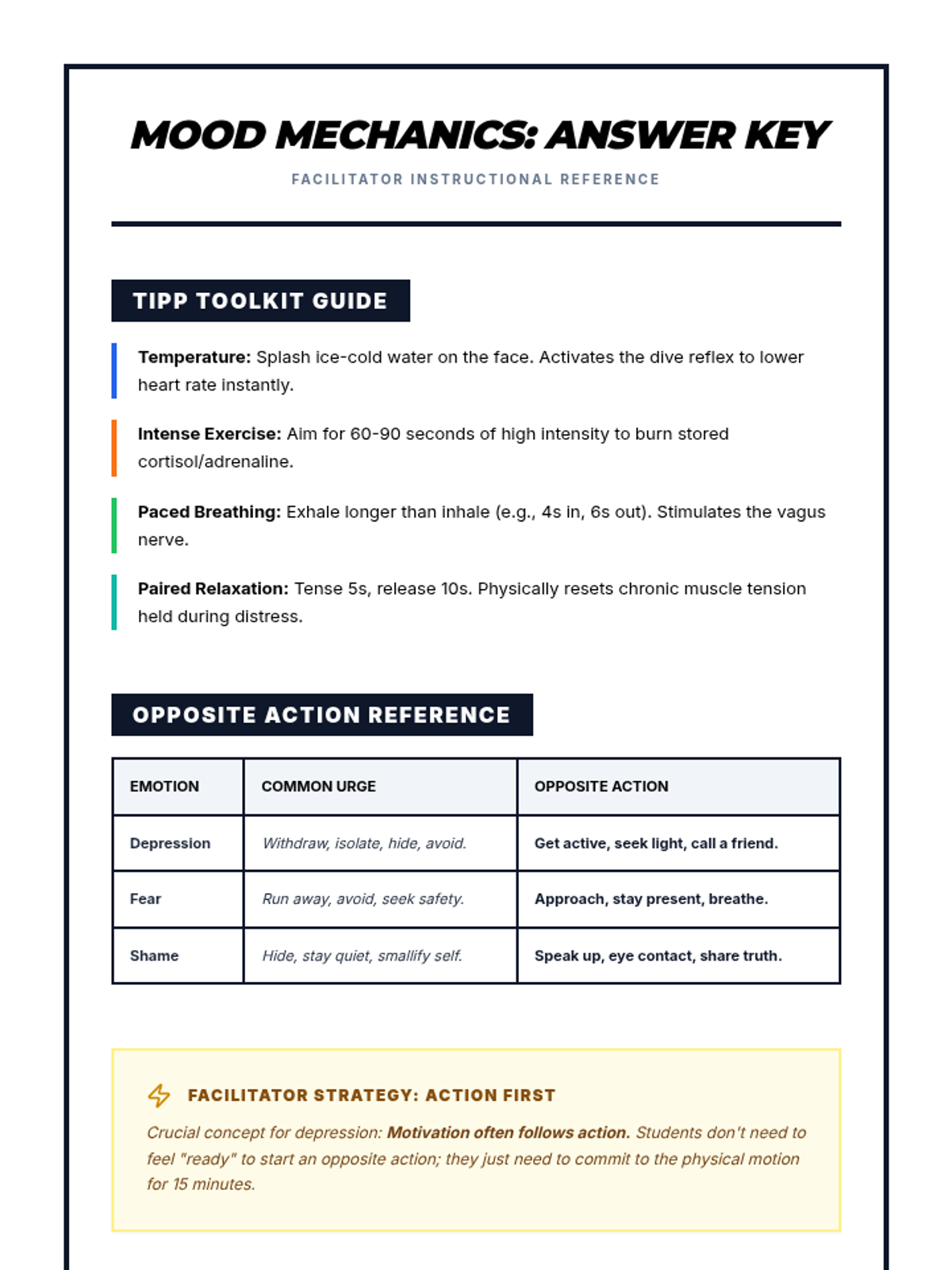
A teacher-facing resource providing example answers and instructional guidance for the TIPP Toolkit and Opposite Action worksheets, with a specific focus on behavioral activation for depression.
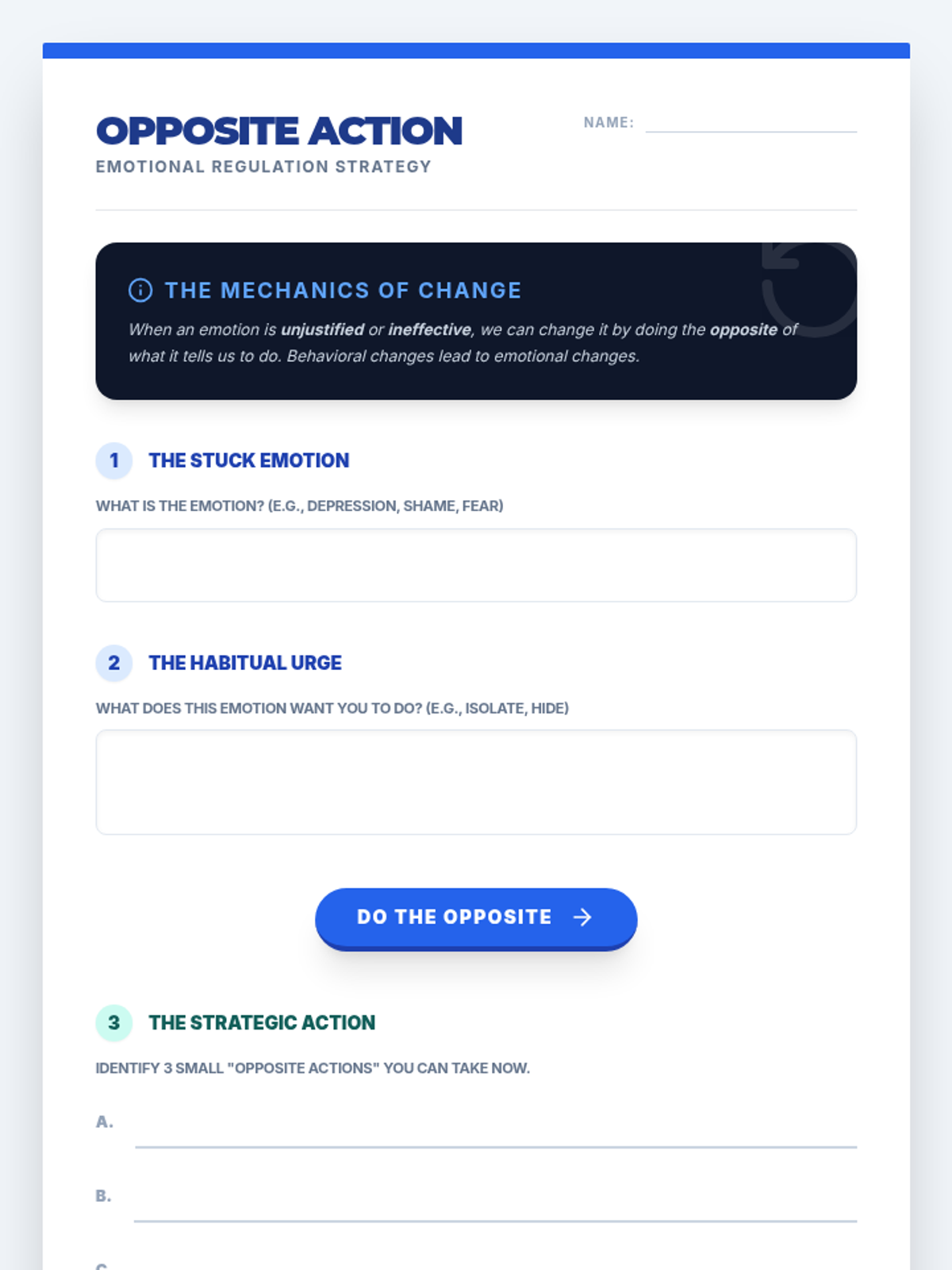
A student worksheet for identifying emotional urges associated with depression and planning 'Opposite Actions' to break negative behavioral cycles, featuring a step-by-step mapping process.
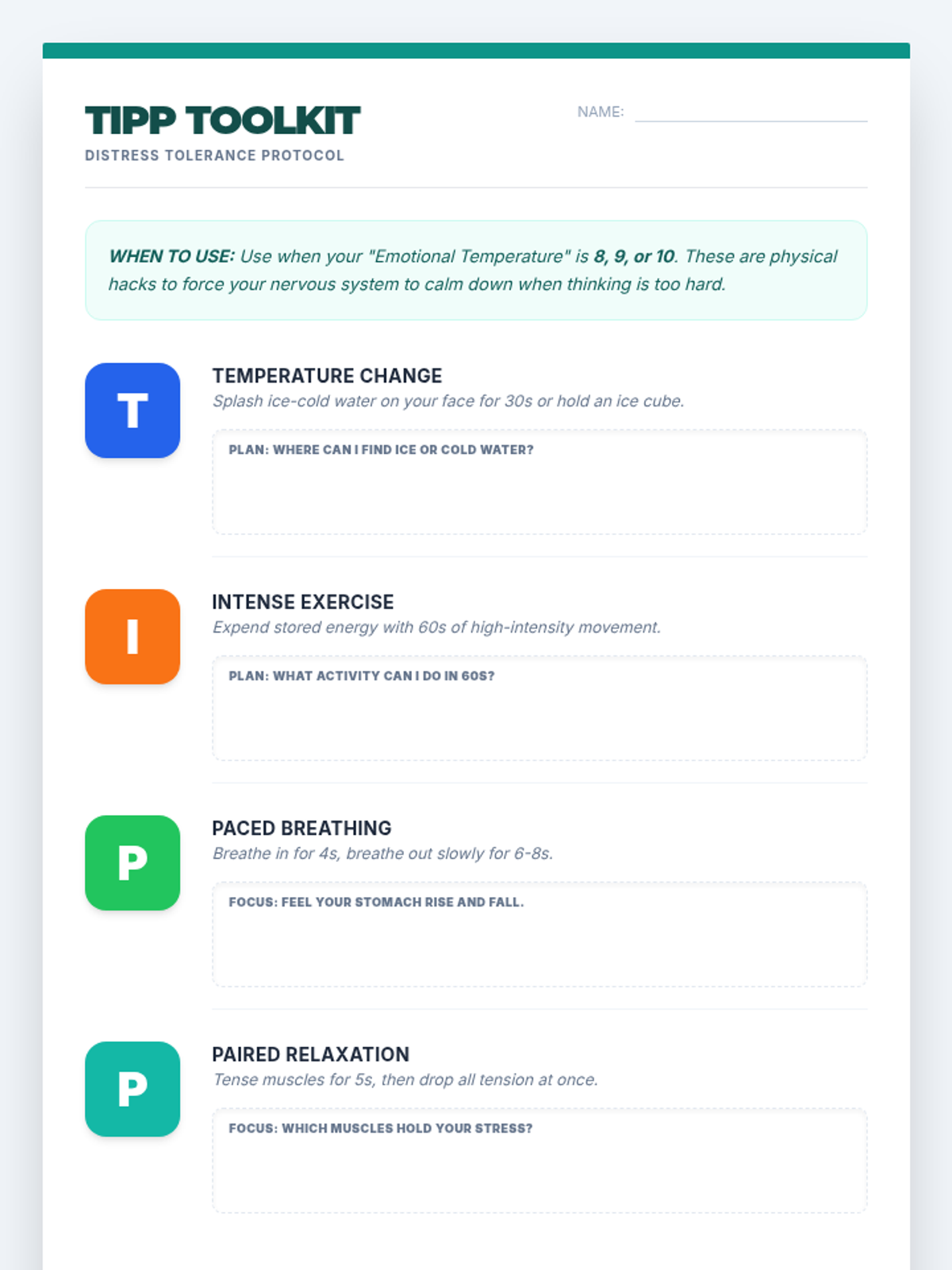
A structured student worksheet for practicing the TIPP (Temperature, Intense exercise, Paced breathing, Paired muscle relaxation) skill set, including planning areas for identifying personalized crisis interventions.
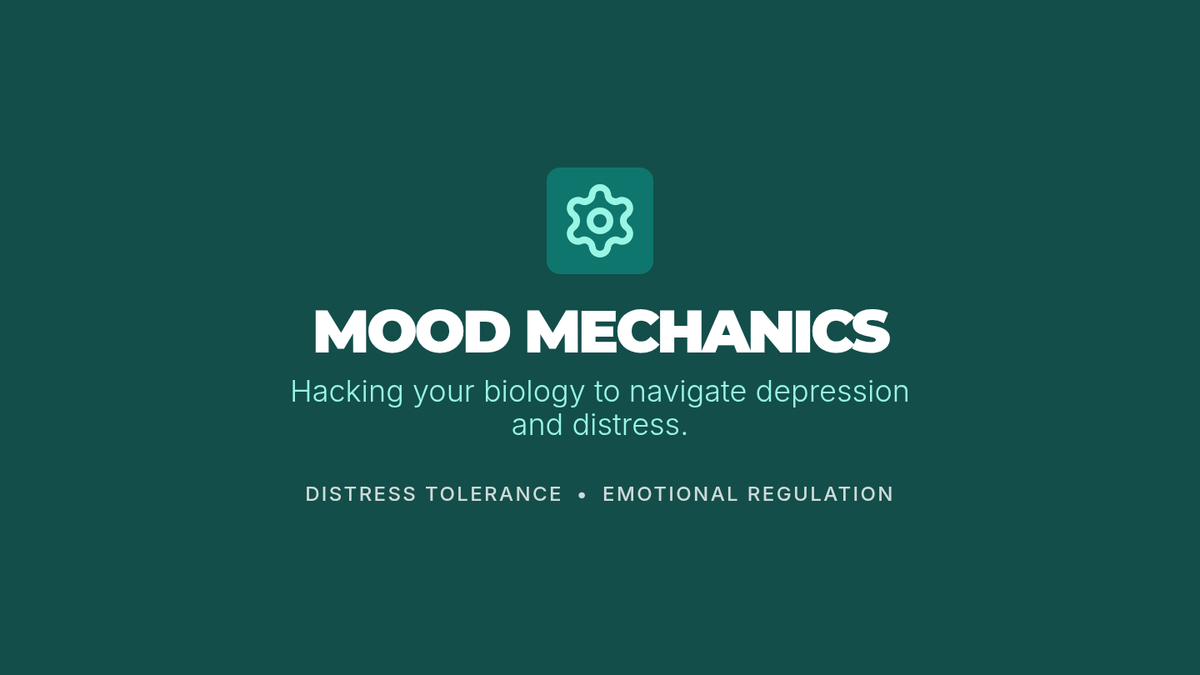
A visually engaging slide deck titled 'Mood Mechanics' that introduces students to Distress Tolerance (TIPP) and Emotional Regulation (Opposite Action) through metaphors of biological 'hacking' and car engine 'redlining'.
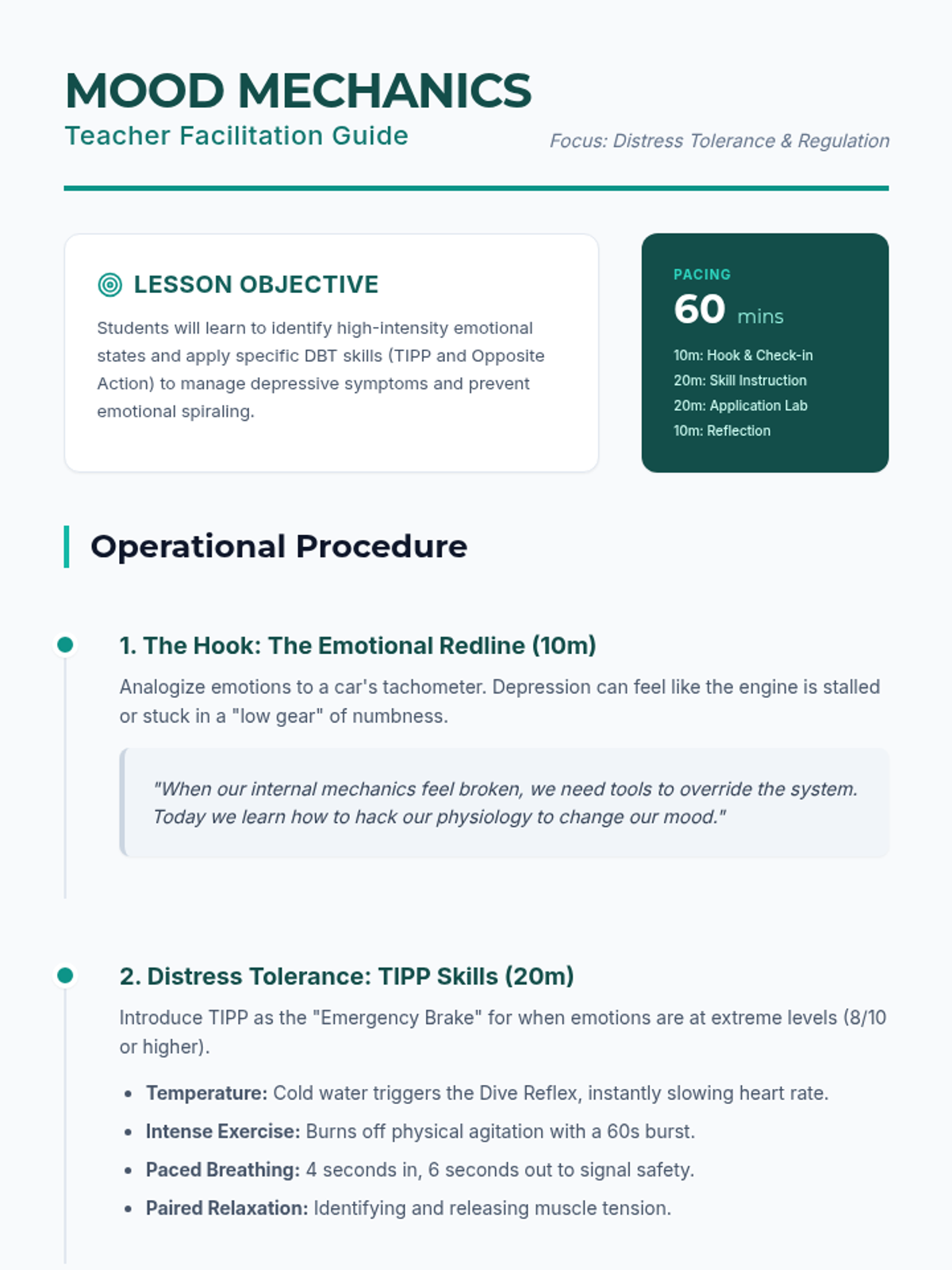
A comprehensive teacher guide for the Mood Mechanics lesson, featuring learning objectives, a detailed instructional sequence, and a toolkit of DBT skills (TIPP and Opposite Action) tailored for managing depression.
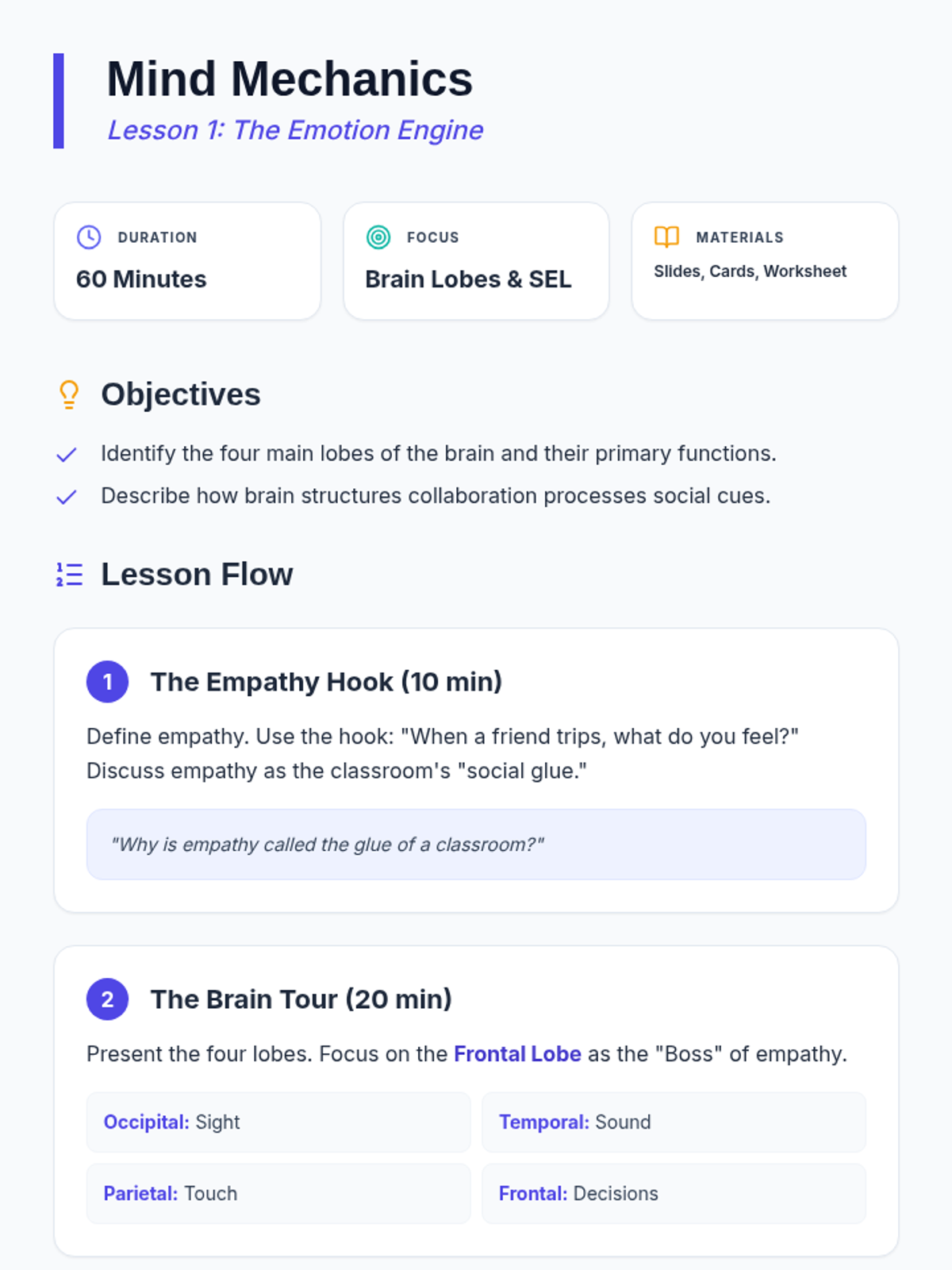
A detailed teacher guide for the 'Emotion Engine' lesson, including pacing, instructional steps, discussion prompts, and differentiation strategies.
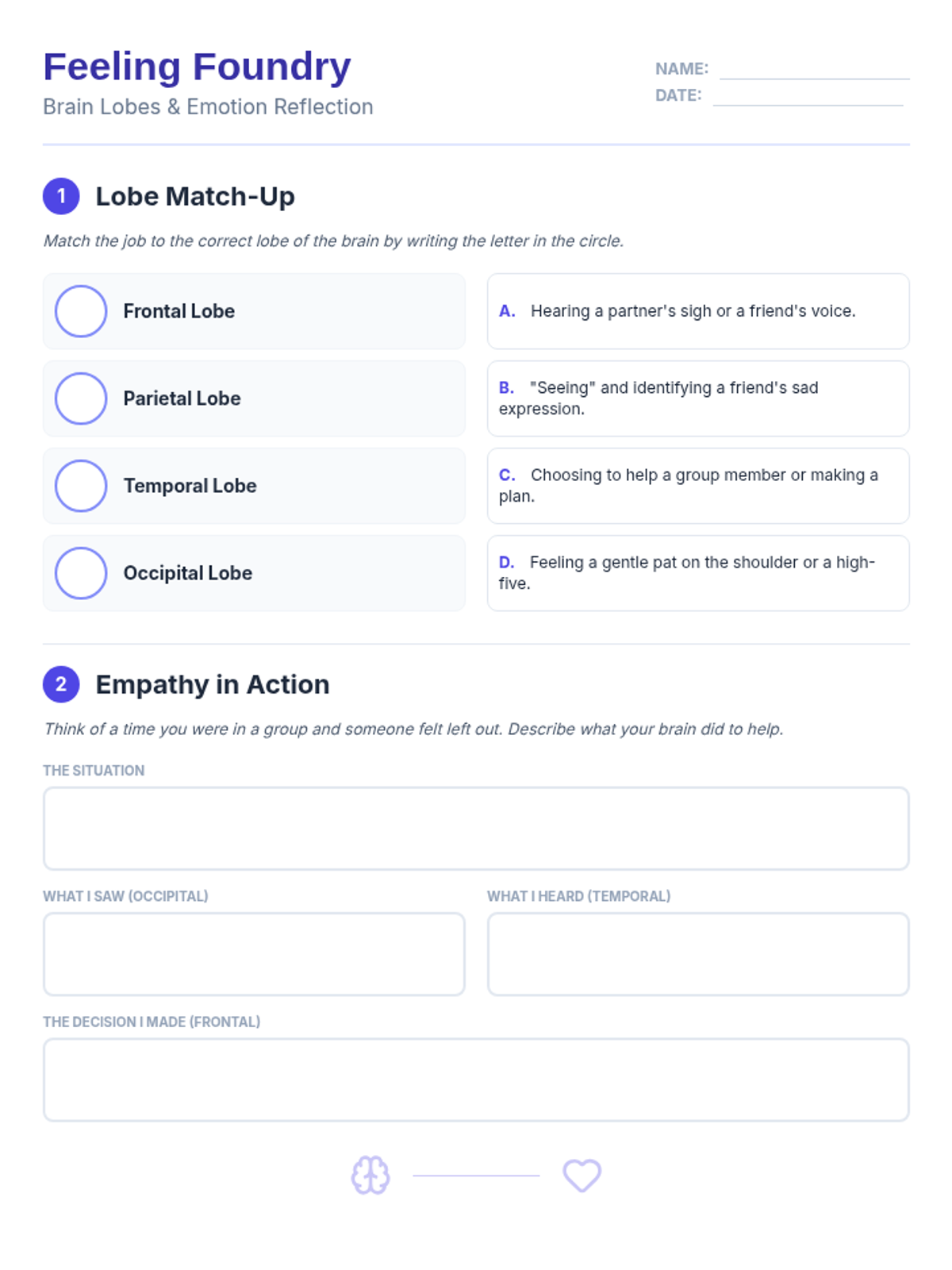
A student worksheet for matching brain lobes to their social-emotional functions and reflecting on a personal experience using empathy.
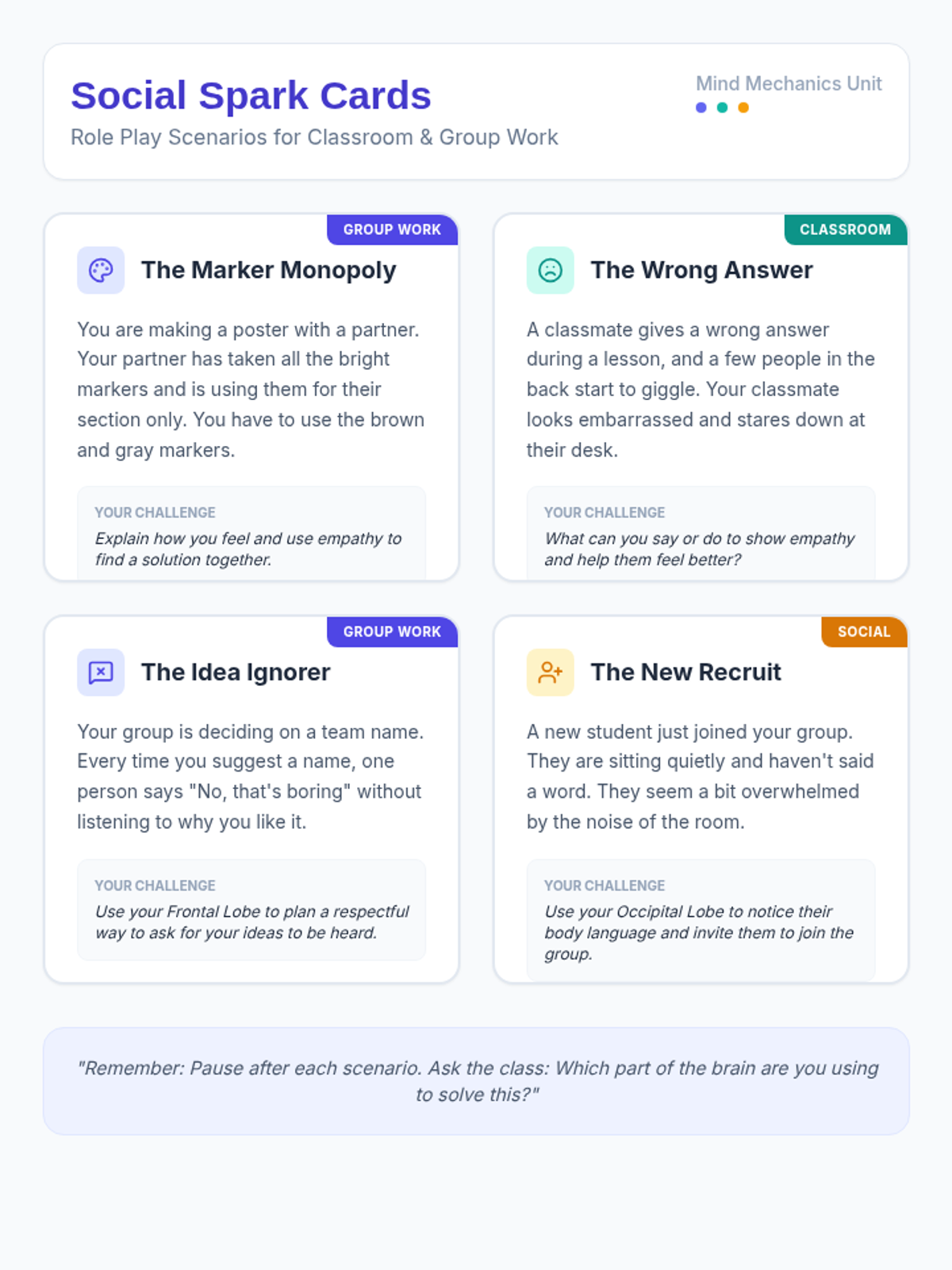
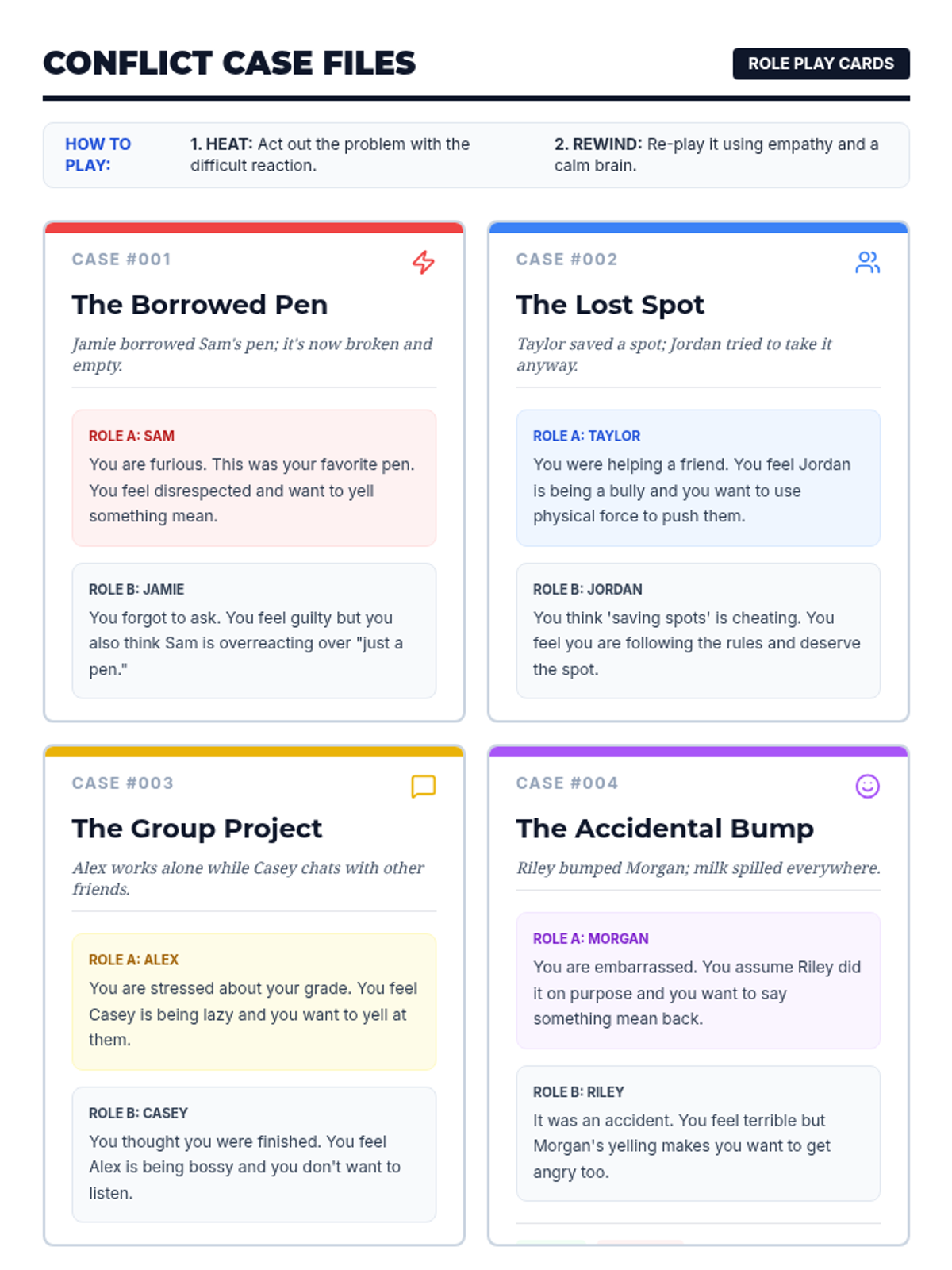
A set of role-play scenario cards focusing on common classroom and group work challenges, designed to practice empathy and social skills.
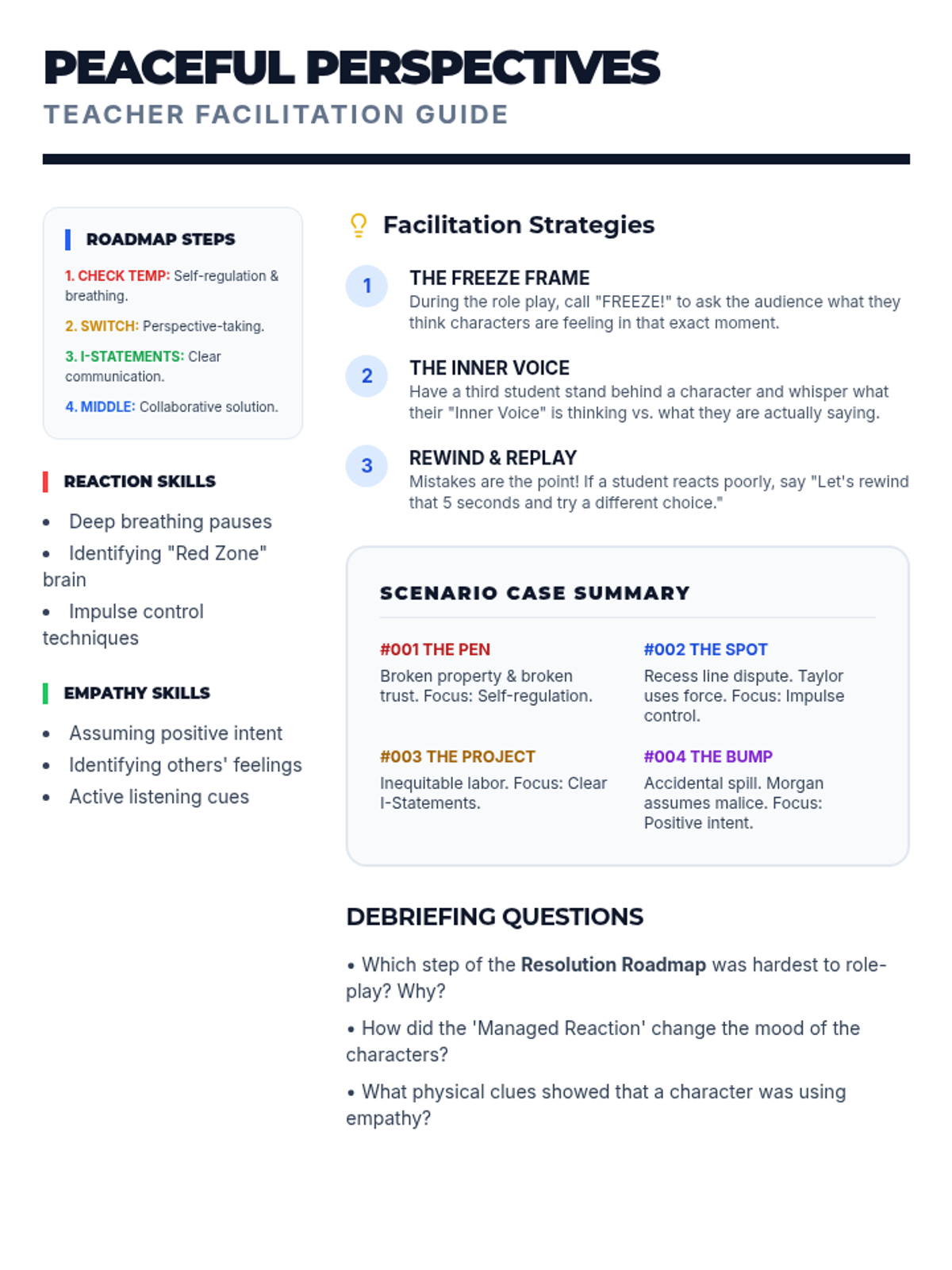
A teacher-facing guide for facilitating the 'Peaceful Perspectives' lesson. It includes learning objectives, key concepts for empathy and reaction management, and active facilitation strategies like 'Freeze Frame' and 'Inner Voice' role-play techniques.
Interactive slide deck introducing empathy, the four lobes of the brain (Frontal, Parietal, Temporal, Occipital), and how they function during social group work.
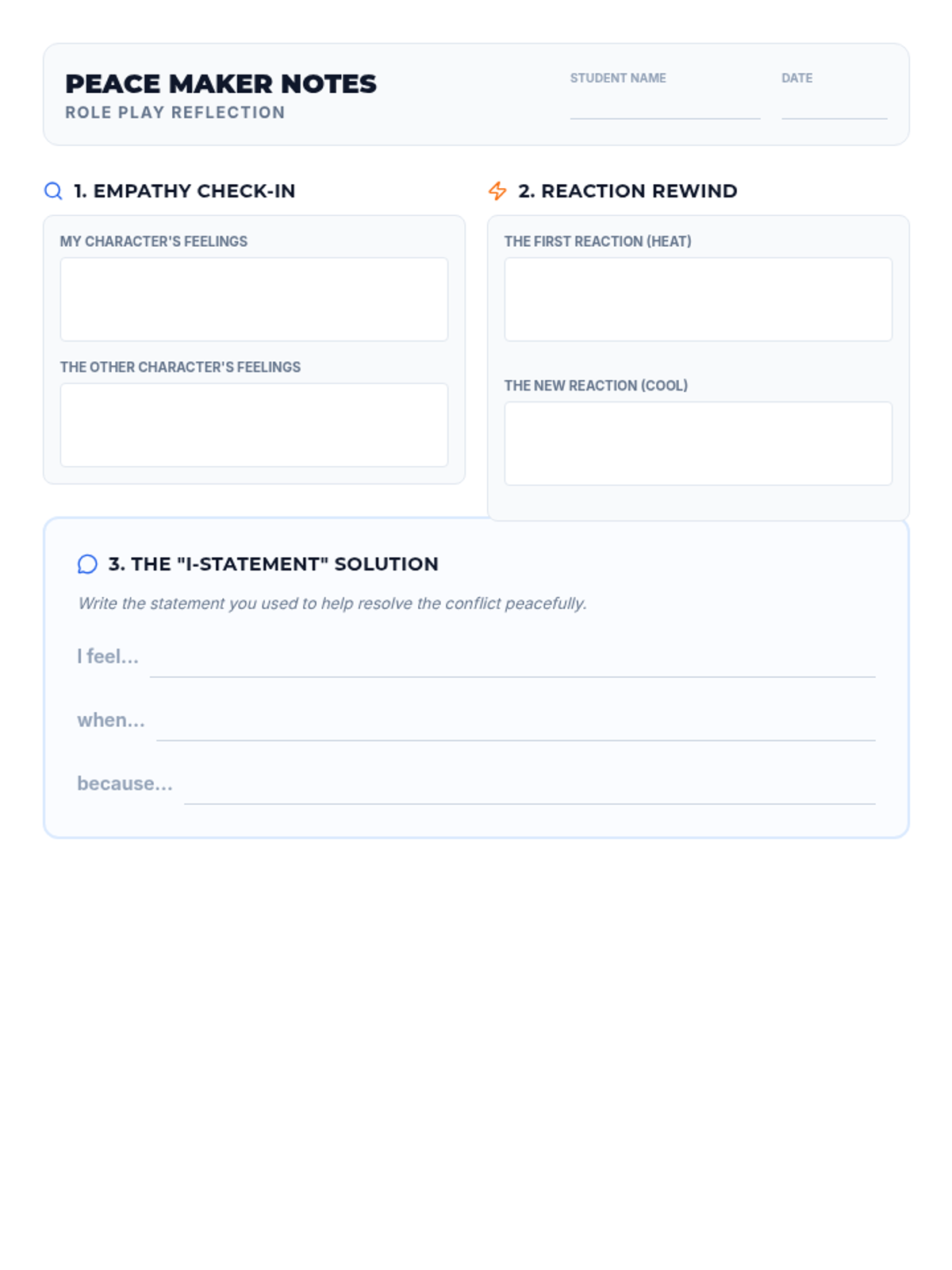
A student reflection worksheet to accompany the conflict role play activity. It guides students through analyzing perspectives, comparing initial vs. managed reactions, and practicing 'I-Statements' for effective resolution.
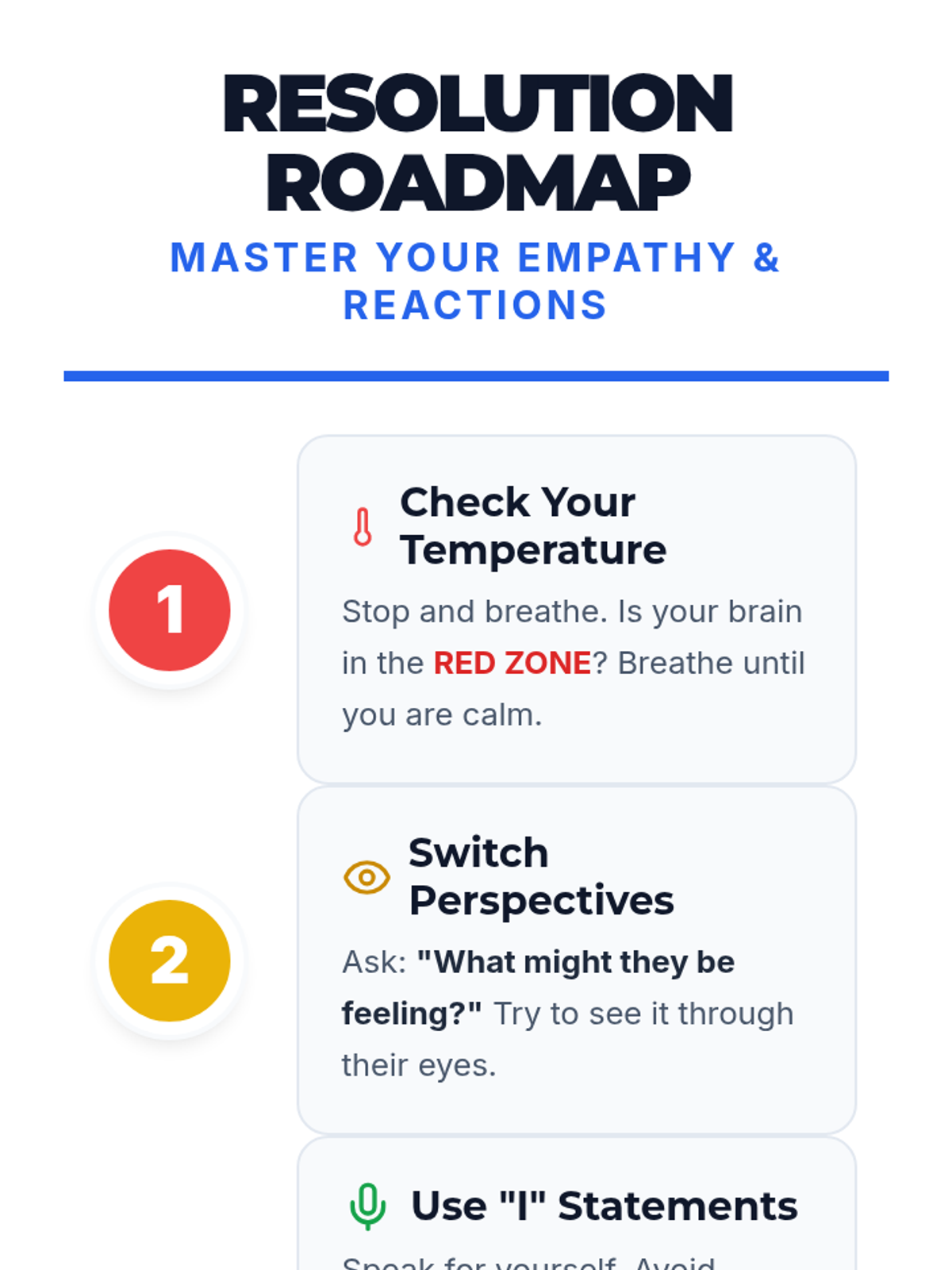
A visual anchor chart detailing a four-step 'Resolution Roadmap' for conflict management. It emphasizes self-regulation, empathy, 'I' statements, and collaborative problem-solving with clear, actionable steps and visual cues.
A set of four detailed conflict resolution scenario cards designed for small group role-play. Each card features a unique 'case' with character descriptions, a specific conflict point, and identified focus skills for empathy and reaction management.
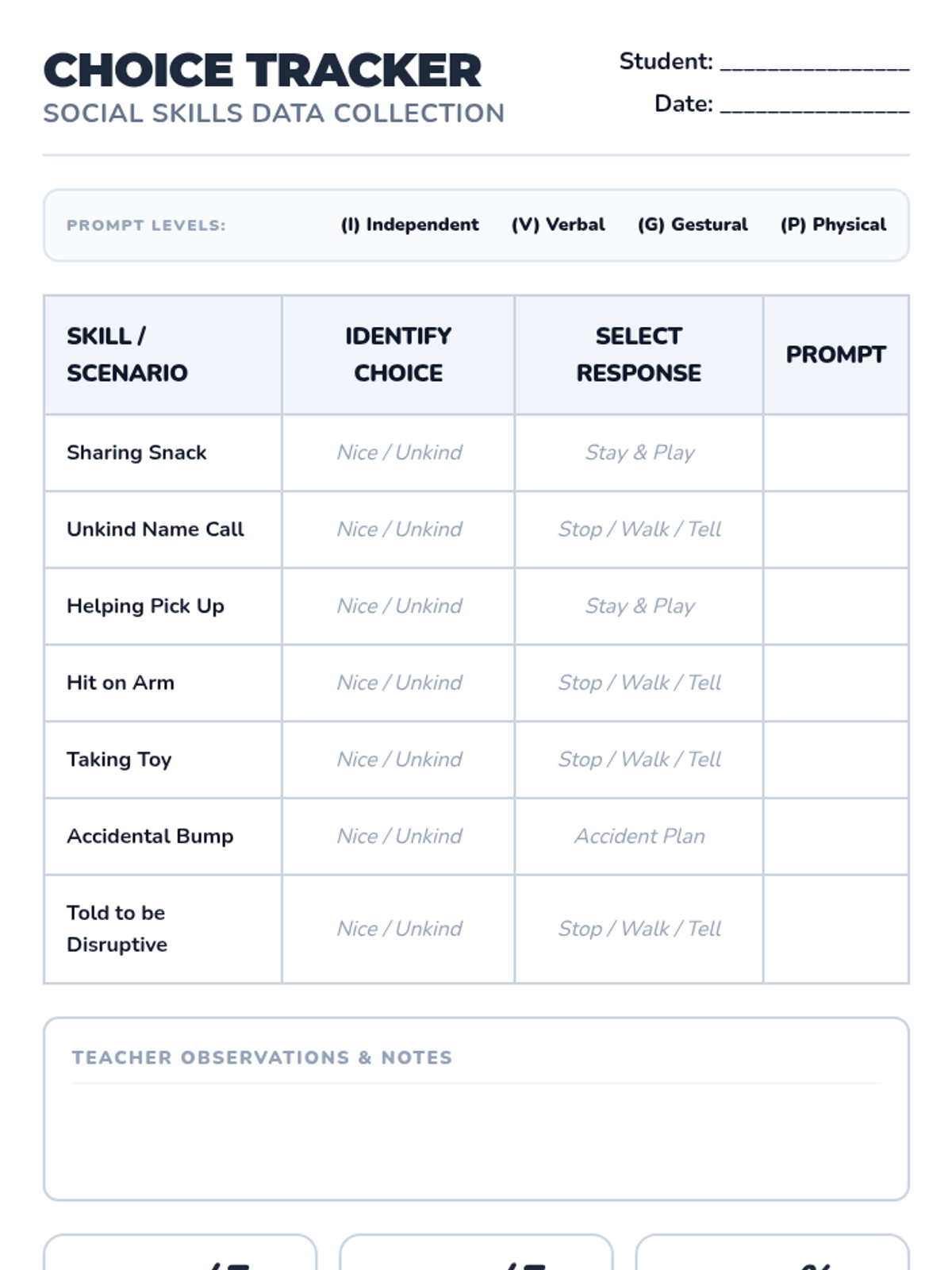
A data collection sheet designed for tracking student progress in identifying nice vs. unkind behaviors and selecting appropriate responses. Now includes 7 scenario tracking rows.
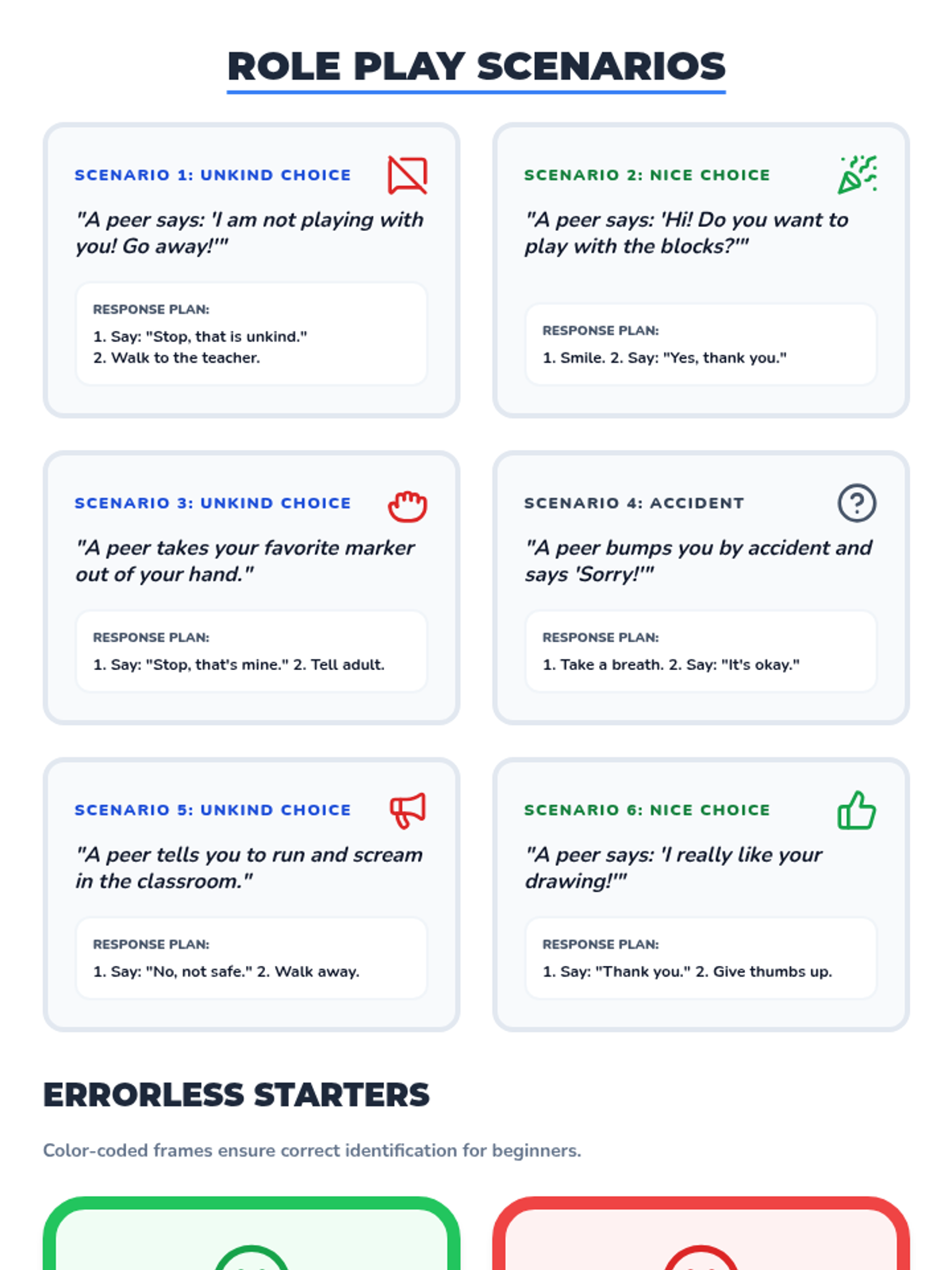
A revised resource pack with expanded role-play scenarios, vertical stacking for errorless cards to prevent overflow, and high-contrast staff instructions. Uses "Nice Choice" and "Unkind Choice". Revised for print-readiness.
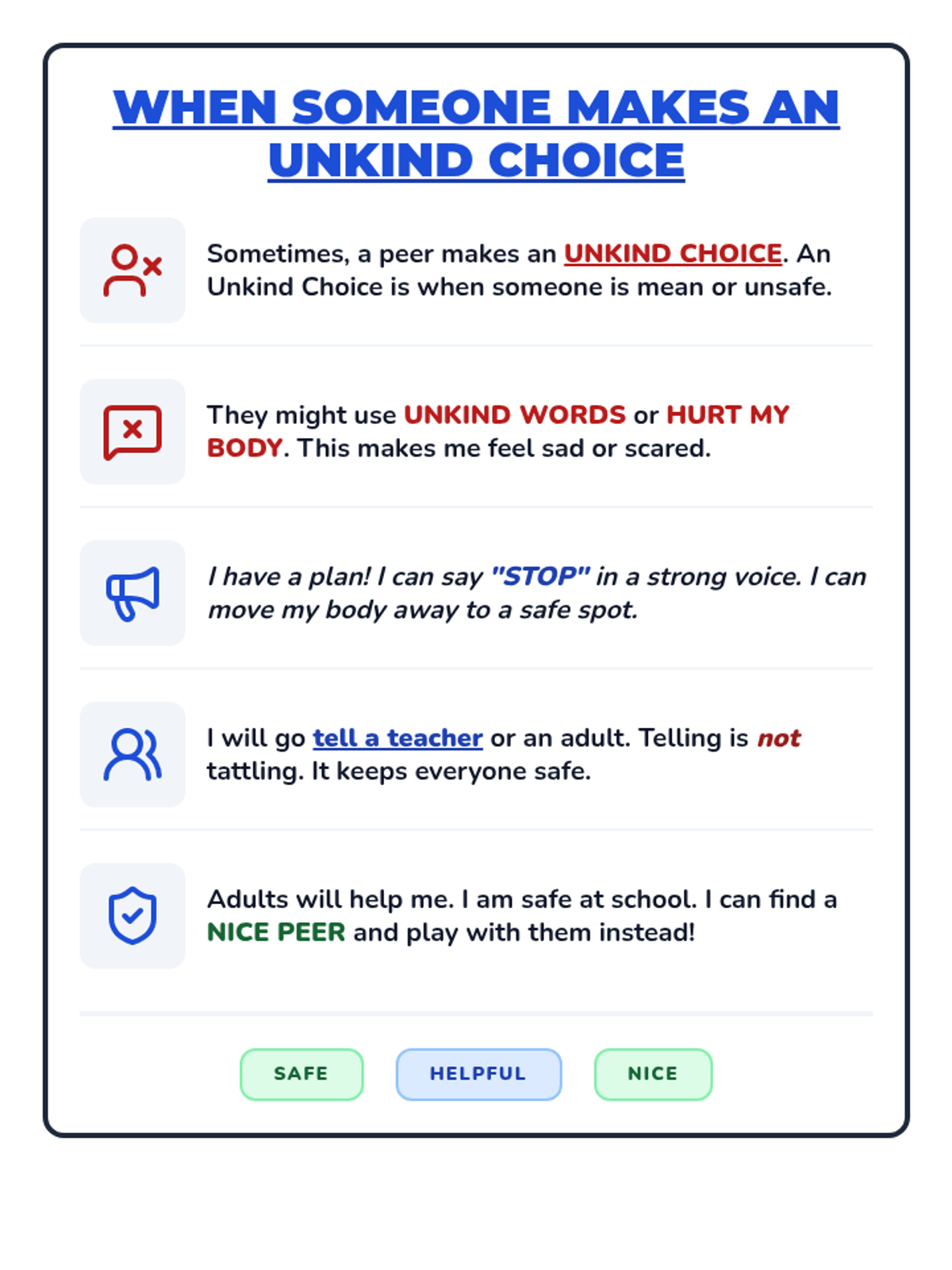
A revised social story that fits entirely on one page, explaining what to do when someone makes an "Unkind Choice" using concrete steps.