An interactive role-play activity for practicing active listening skills, featuring four realistic scenarios and a reflection guide for speakers, listeners, and observers.
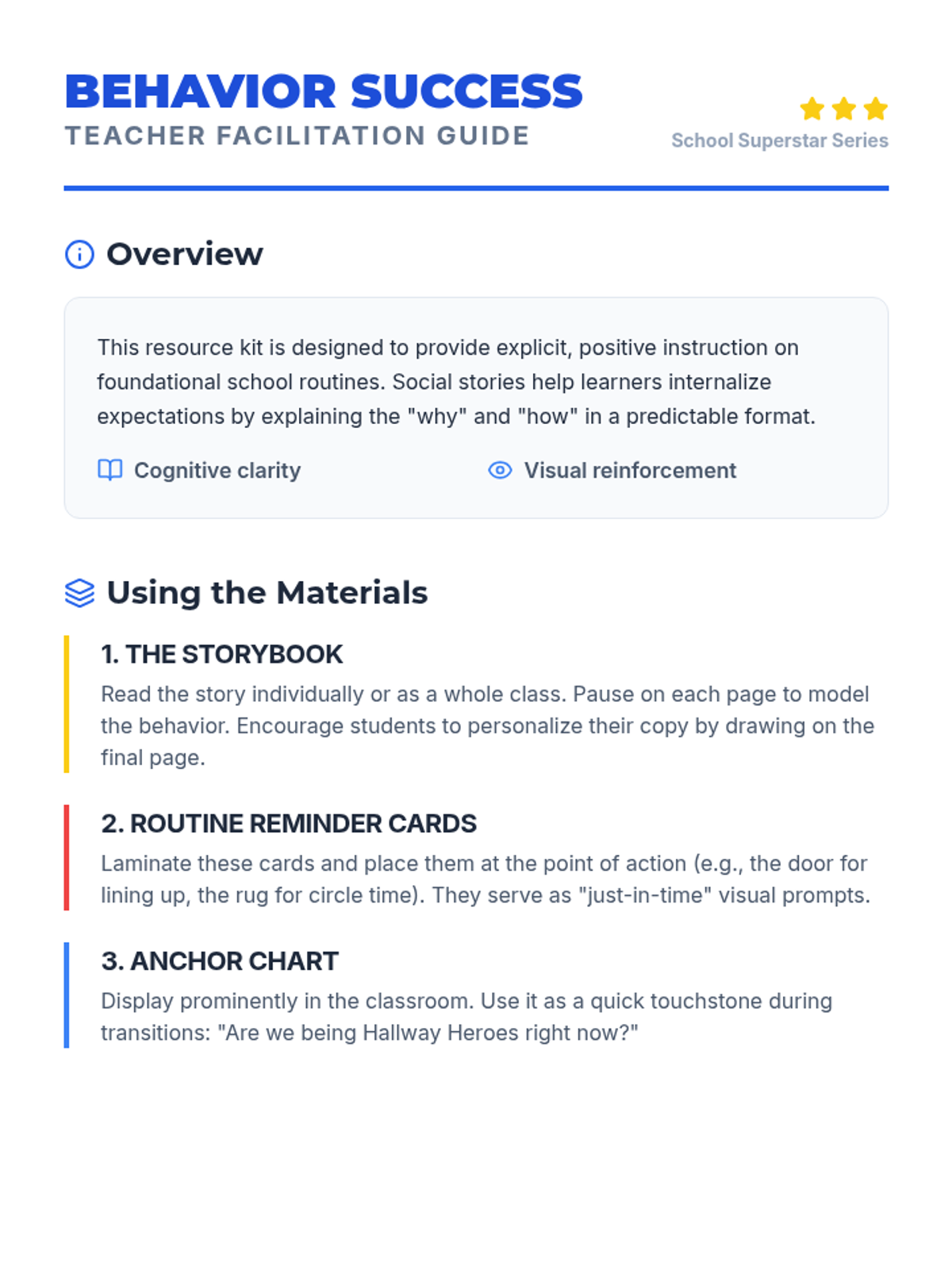
A teacher-facing facilitation guide providing instructional strategies, pacing suggestions, and practical tips for implementing the School Superstar social story and visual aids in the classroom.
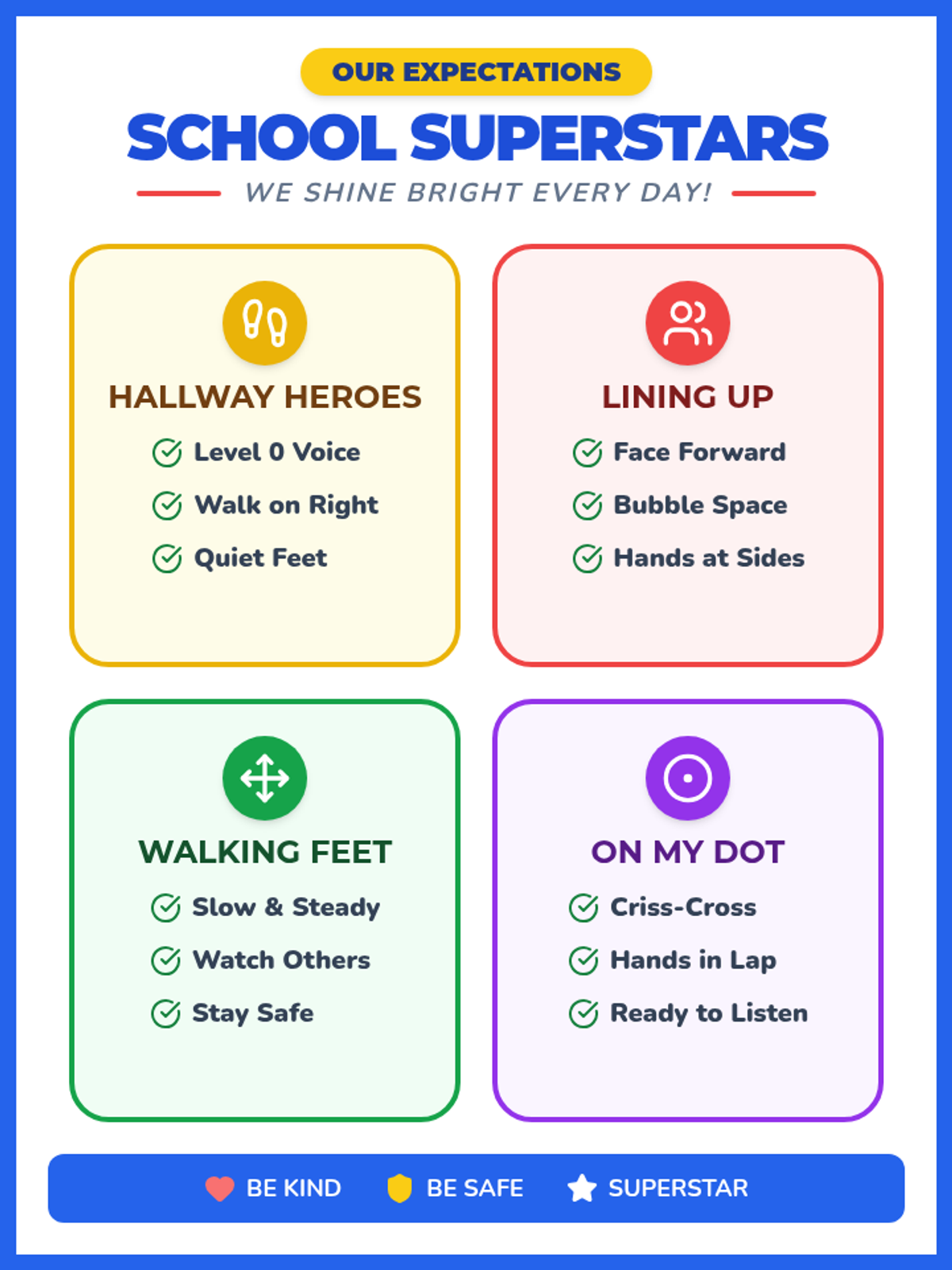
A high-impact, single-page anchor chart summarizing the four key behavioral expectations: Hallway Hero, Lining Up, Walking Feet, and Circle Time Dot. Uses clear icons, vibrant colors, and simplified bullet points for classroom display.
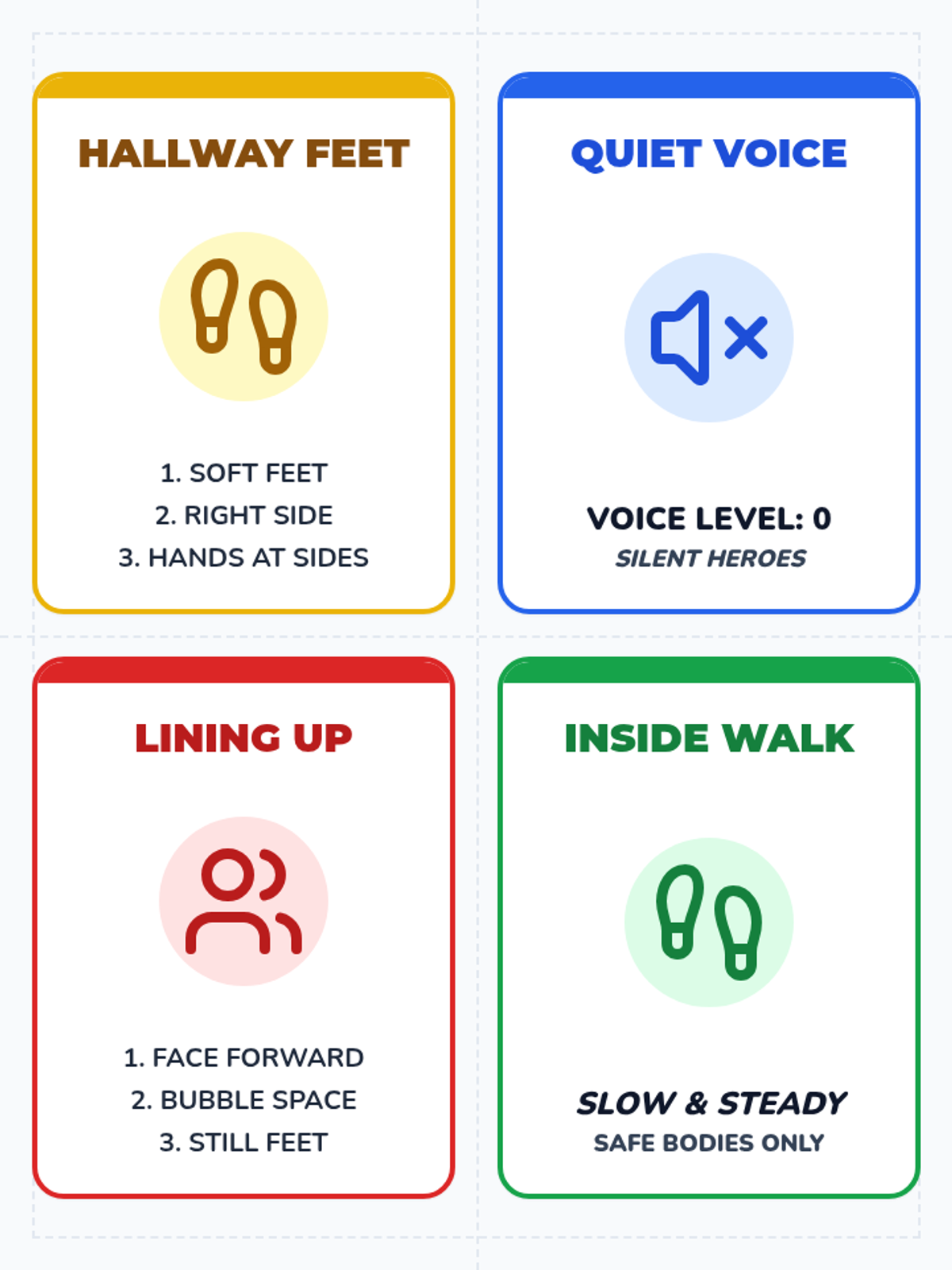
A 2-page set of printable visual sequence cards (8 cards total) that provide quick-reference reminders for hallway behavior, voice levels, lining up, walking feet, circle time posture, and self-reflection. Designed to be cut out and laminated for classroom use.
A 7-page social story document designed to teach young students the expected behaviors for hallway walking, lining up, classroom safety, and circle time participation. It features engaging illustrations (emojis/icons), clear step-by-step instructions, and a personalized cover and drawing page.
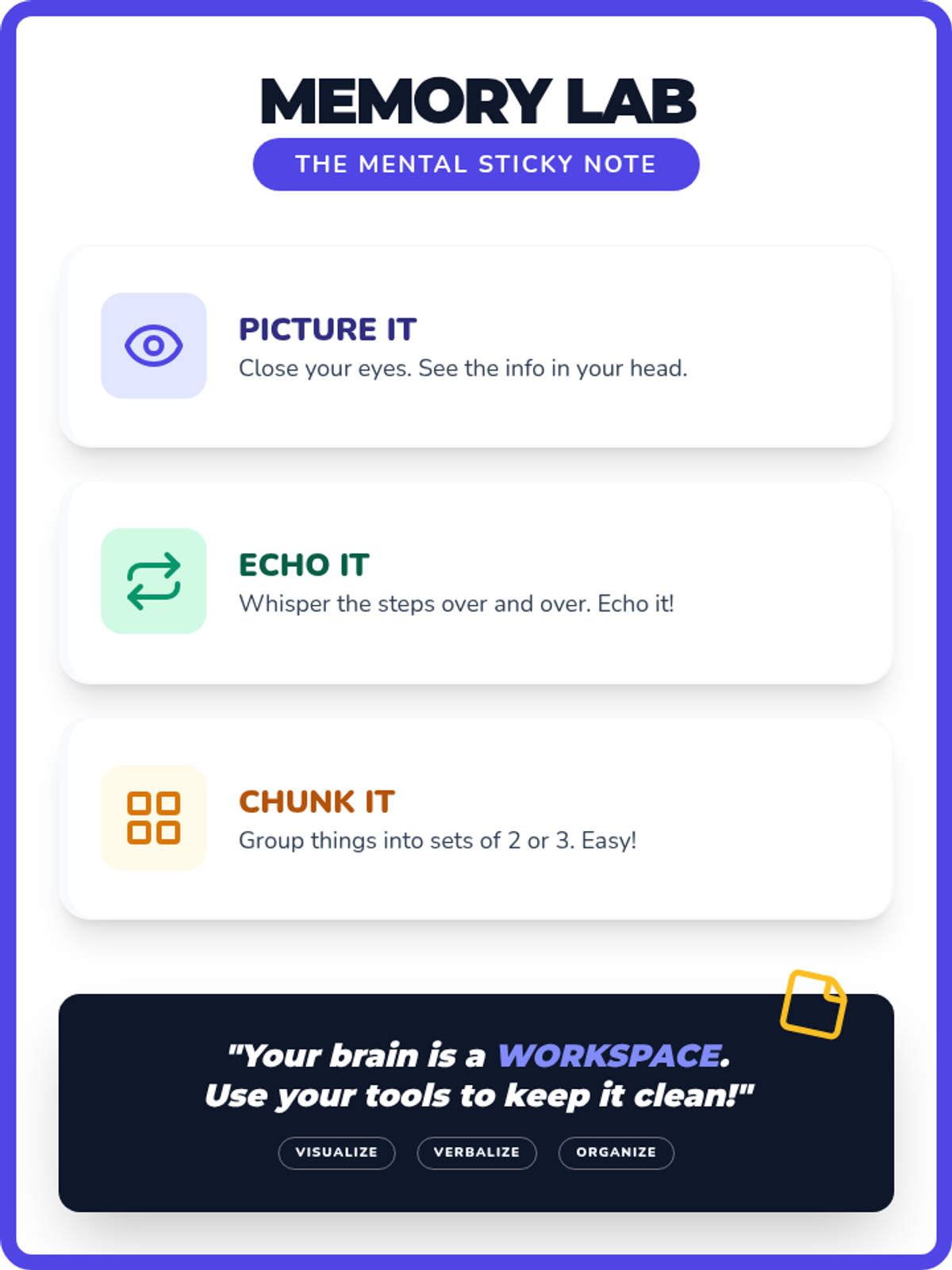
A bold, instructional anchor chart for working memory. It uses large icons and simple slogans to reinforce 'Picture It', 'Echo It', and 'Chunk It' as foundational cognitive strategies.
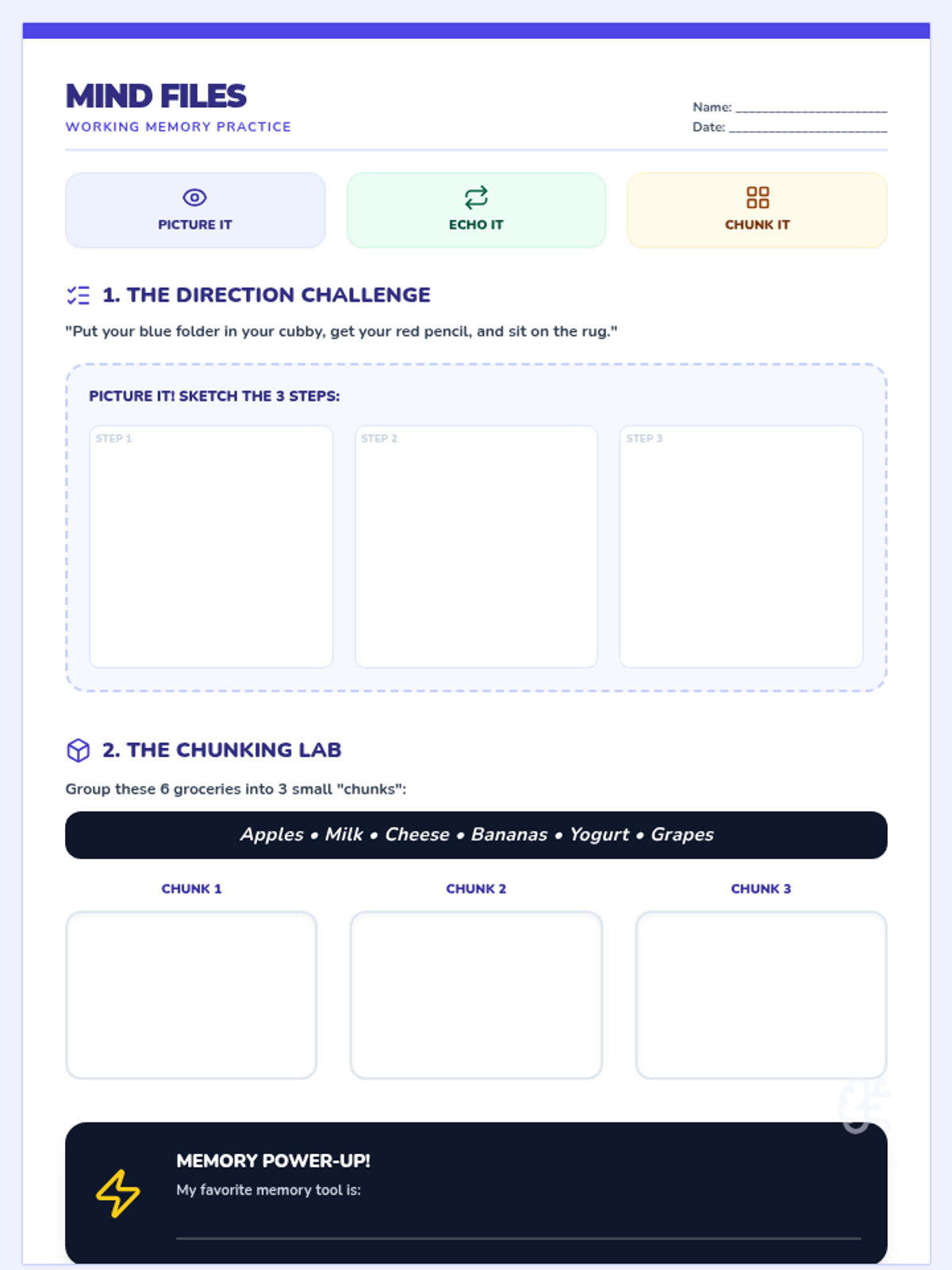
A worksheet for working memory skills. It features two hands-on activities: 'The Direction Challenge' for visualization and 'The Chunking Lab' for grouping information, helping students apply cognitive strategies to real-world tasks.
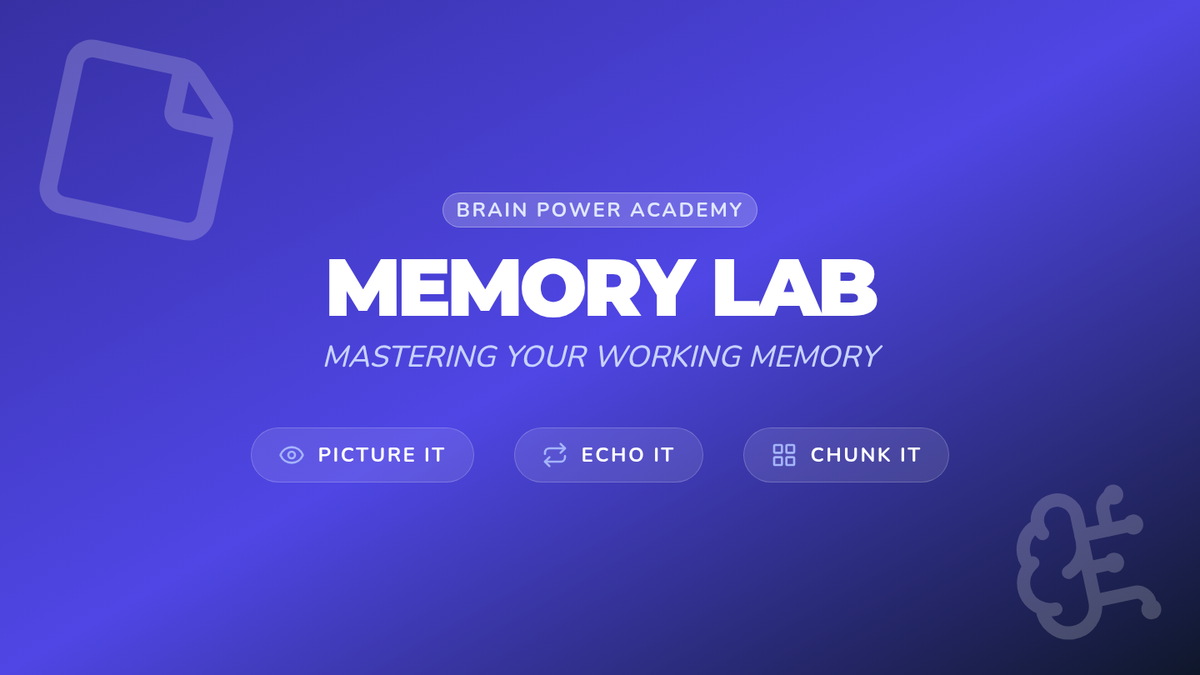
An instructional slide deck for working memory. It defines working memory using the 'Mental Sticky Note' metaphor and teaches three core strategies (Picture It, Echo It, Chunk It) through a series of engaging memory challenges.
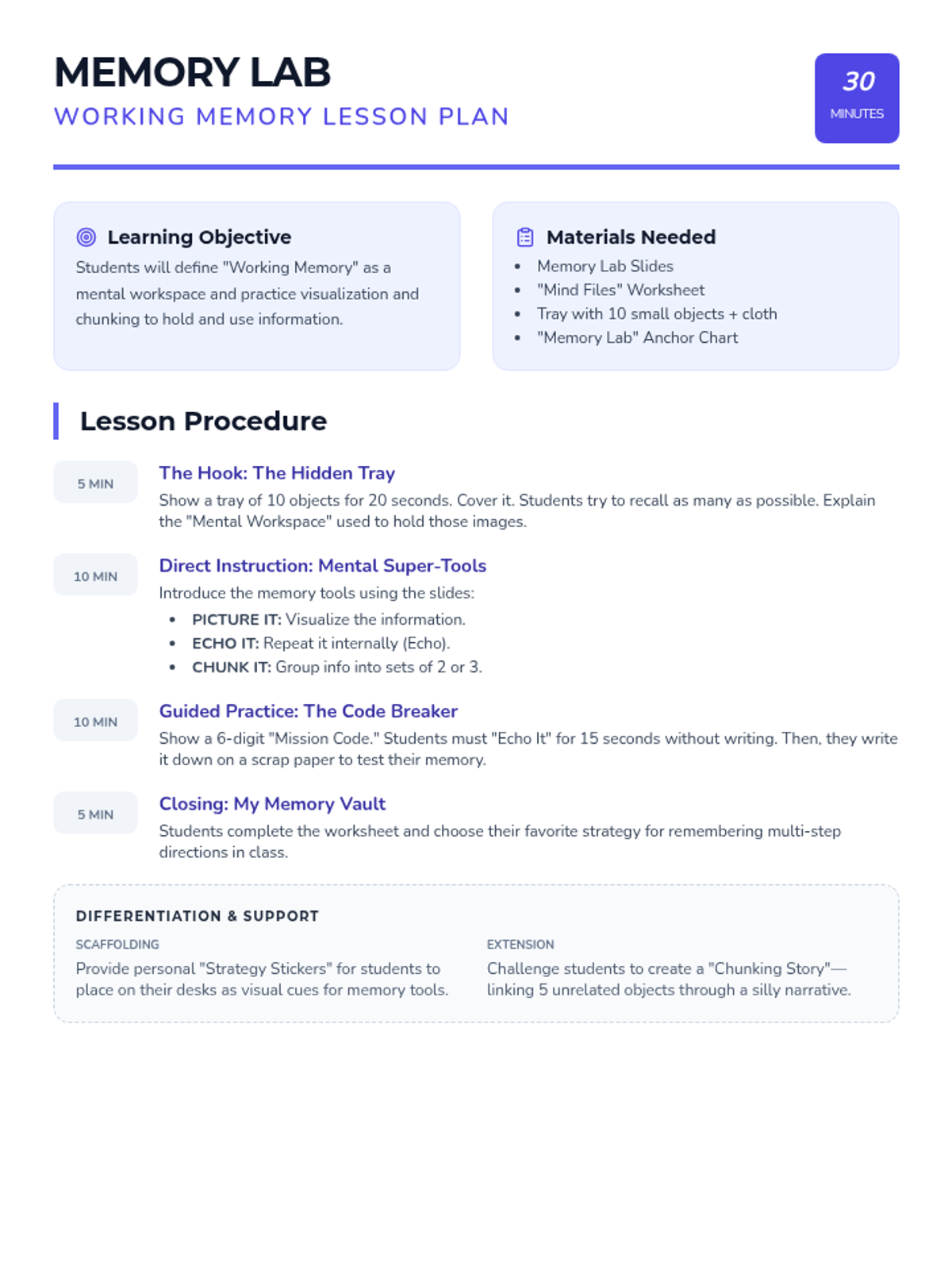
A 30-minute lesson plan for teachers on working memory. It introduces students to the 'Mental Workspace' and teaches strategies like visualization, echoing, and chunking to improve information retention.
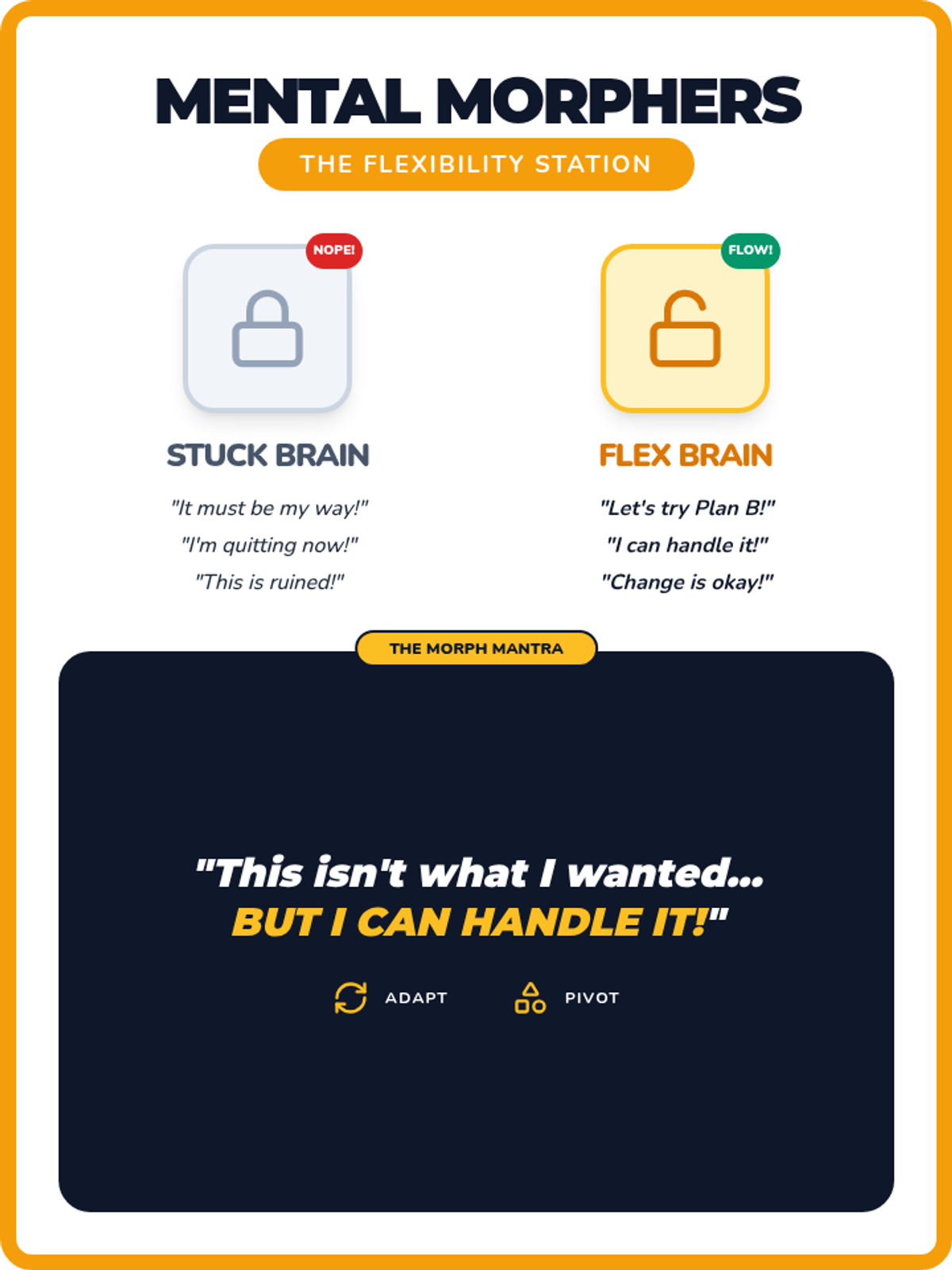
A high-contrast anchor chart for flexible thinking. It visually contrasts 'Stuck Brain' versus 'Flex Brain' and features the 'Mental Morph' mantra in a bold call-out box for easy classroom reference.
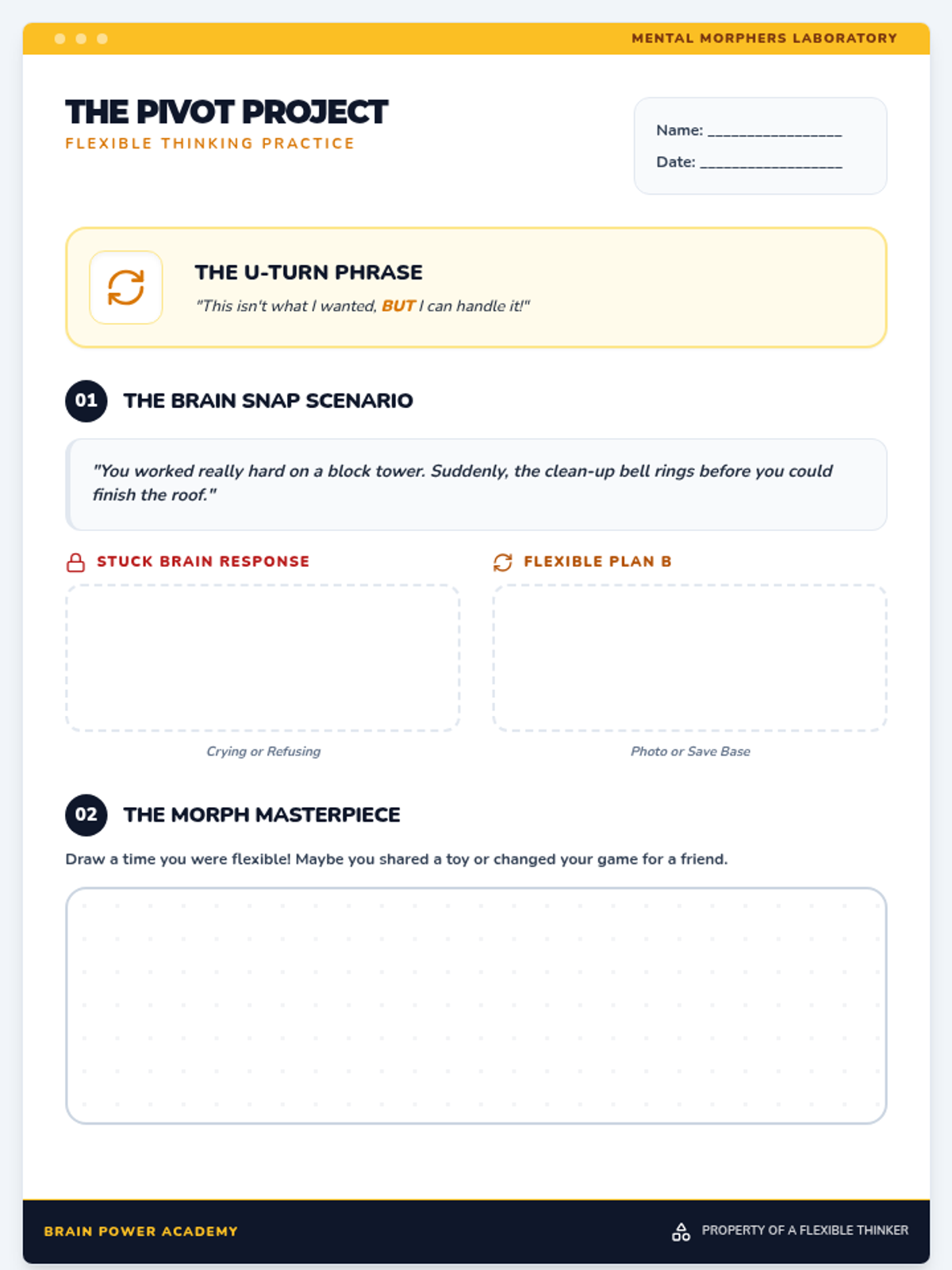
A student worksheet for flexible thinking. It presents a 'Brain Snap' scenario and asks students to contrast a 'Stuck' response with a 'Plan B' alternative, plus a drawing area to visualize their own flexible moments.
A dynamic slide presentation for flexible thinking. It contrasts 'Stuck' vs. 'Flexible' brains, teaches the 'Mental U-Turn' self-talk strategy, and provides a 'Morph Challenge' to practice finding multiple solutions to a change in plans.
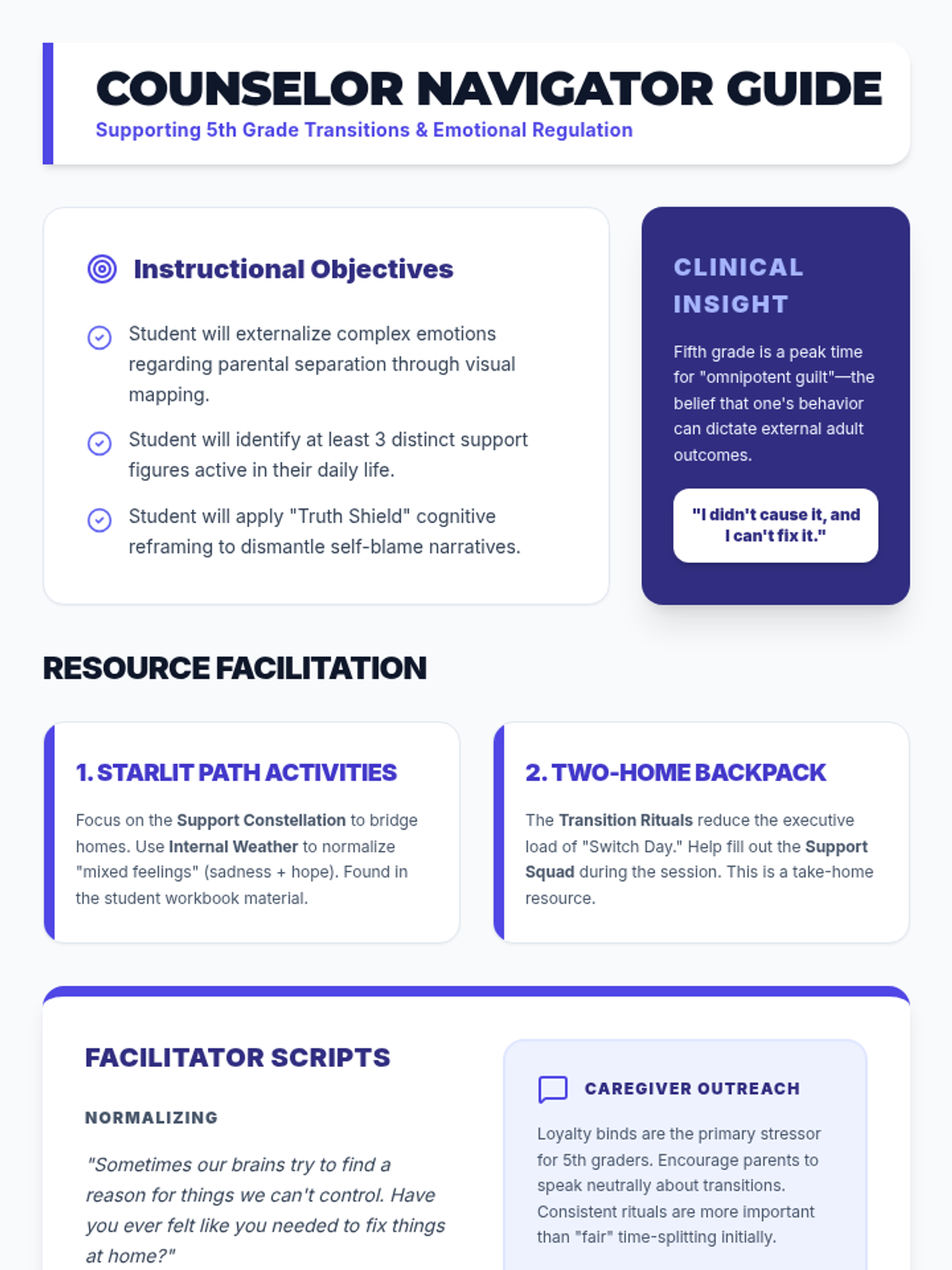
A facilitator guide for school counselors or therapists working with students experiencing parental separation. Includes instructional objectives, guiding questions for sessions, and strategies for using the accompanying resources effectively.
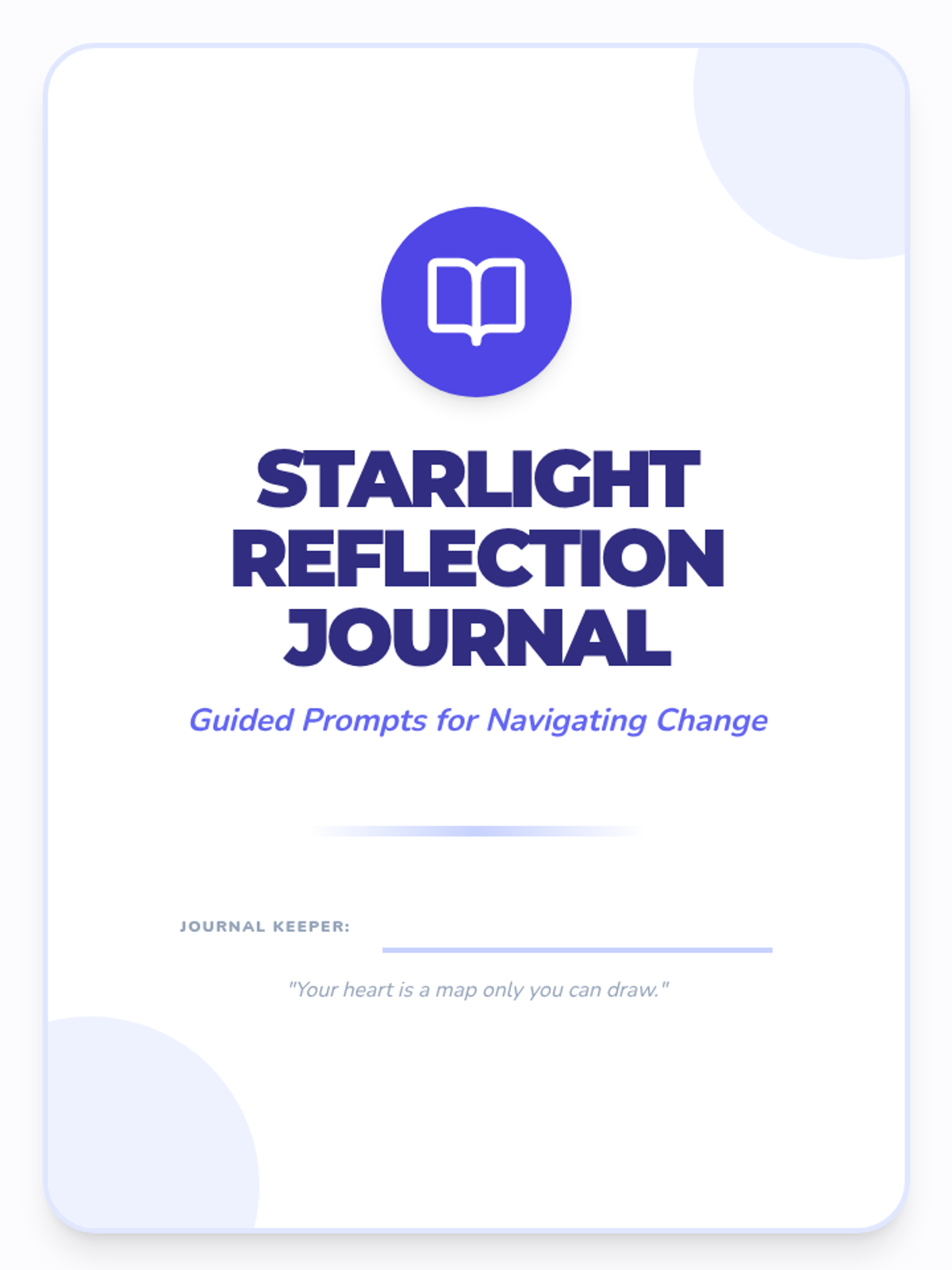
A guided reflection journal featuring structured prompts for emotional processing, managing transitions between homes, and reinforcing self-worth. Designed for a student navigating parental separation.
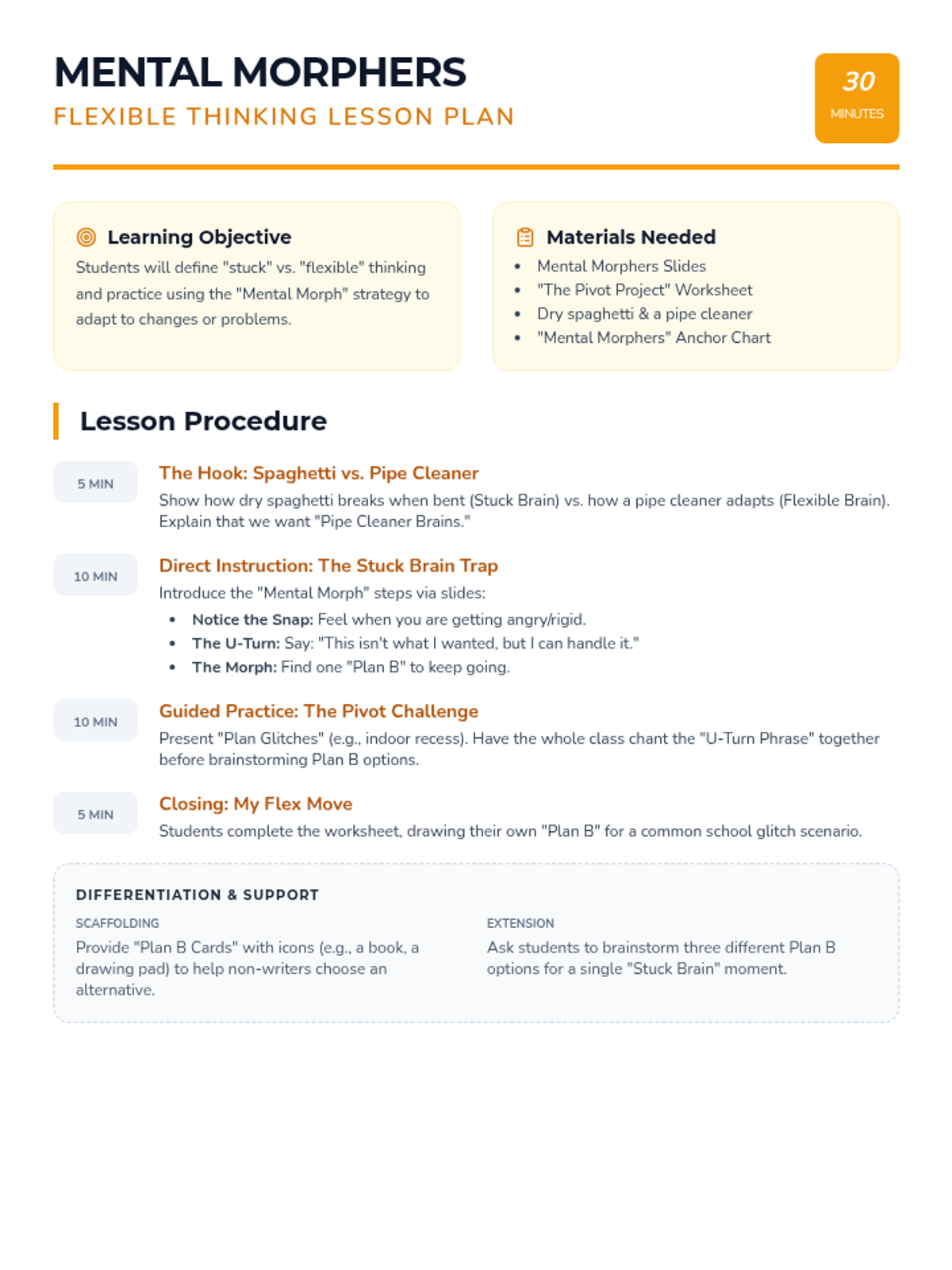
A detailed 30-minute lesson plan for teachers on flexible thinking. Using the 'Mental Morphers' concept, it helps students move from 'stuck' to 'flexible' thinking using the 'Spaghetti vs. Pipe Cleaner' analogy.
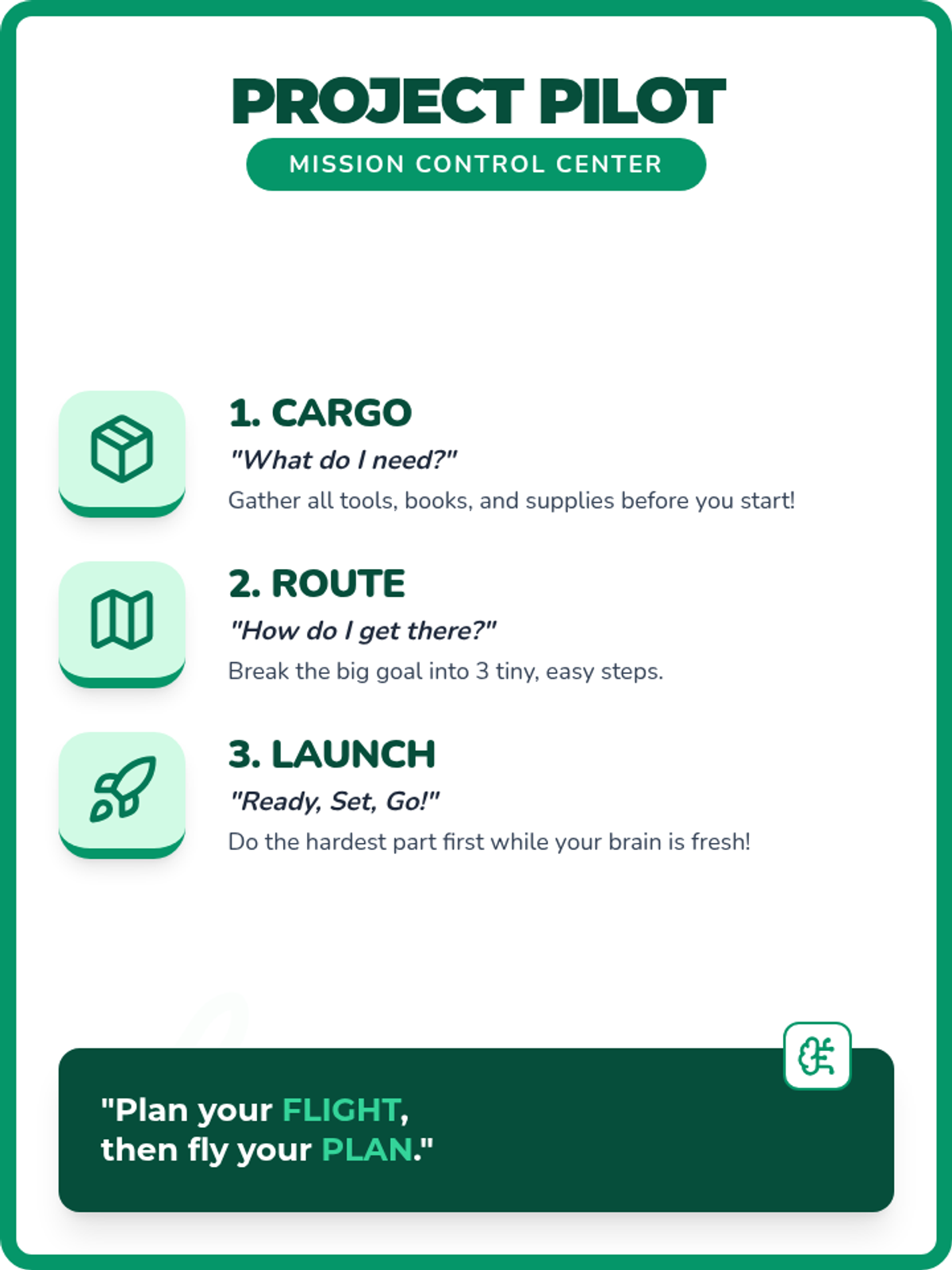
A bright, aviation-themed anchor chart for organization skills. It highlights the 'Cargo, Route, Launch' planning strategy with bold graphics and an inspiring motto.
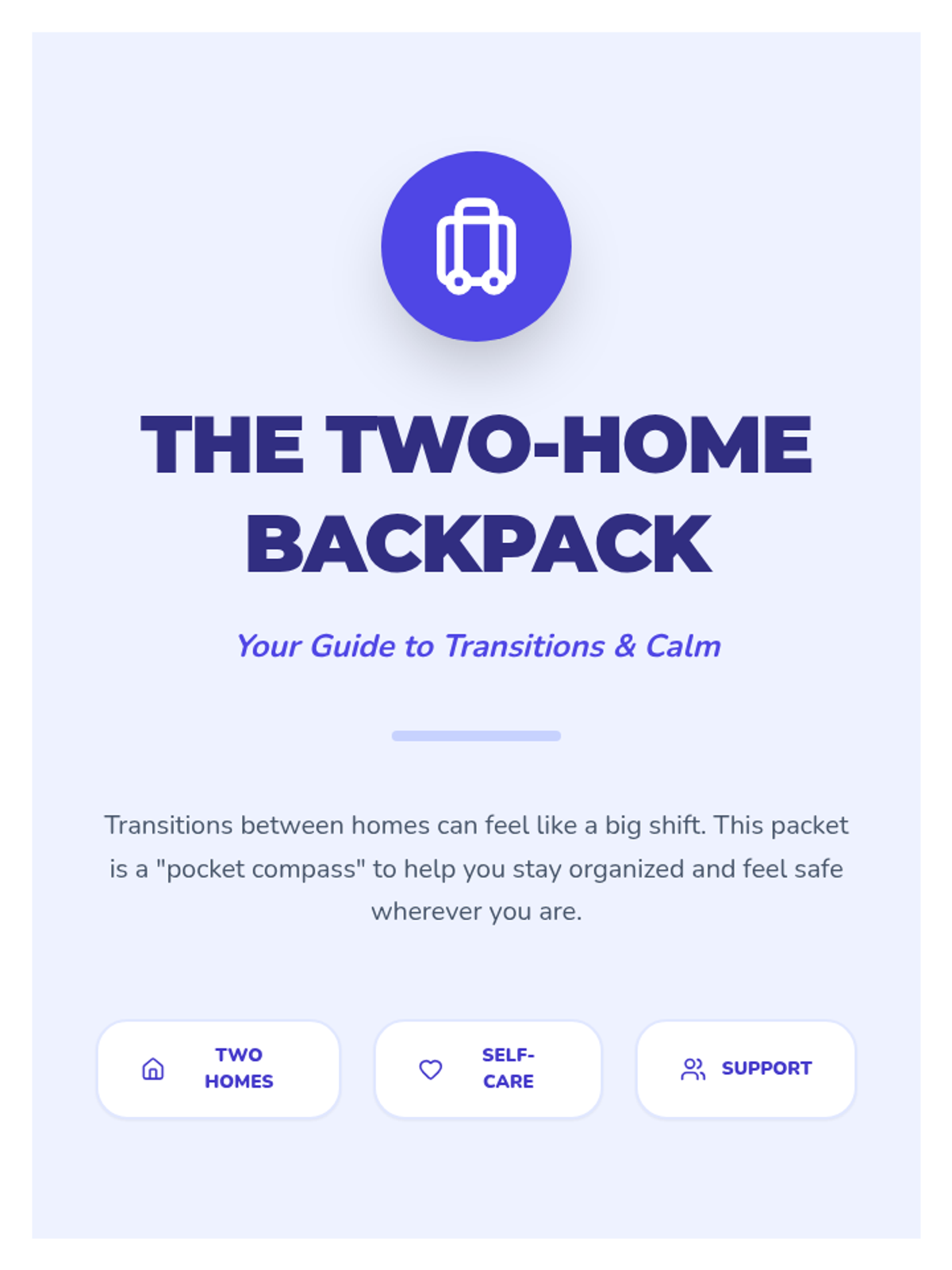
A take-home support packet for a student navigating transitions between two households. Includes practical packing checklists, emotional transition rituals, a support system contact directory, and positive affirmation cards.
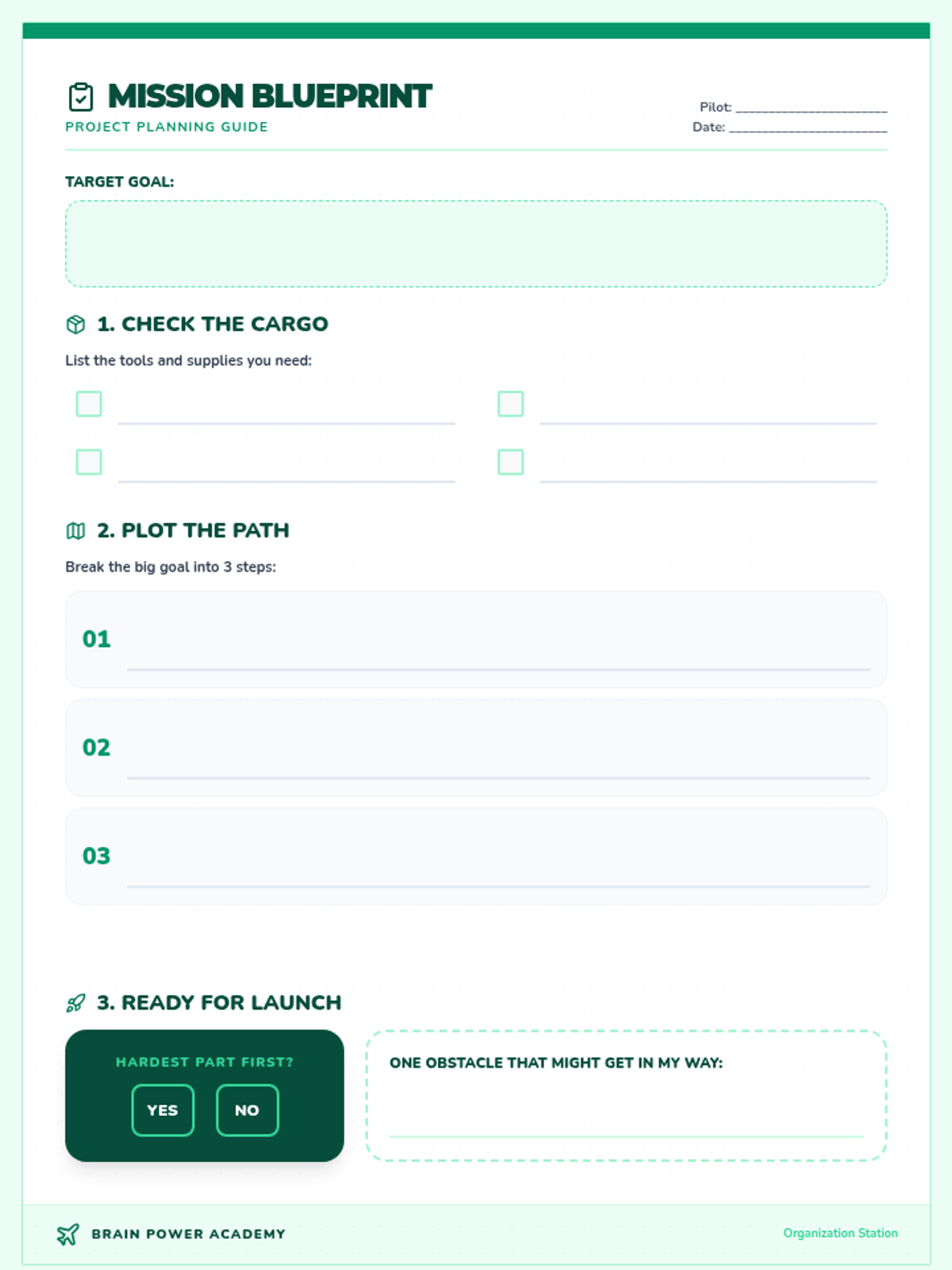
An organization worksheet styled as a 'Mission Blueprint'. It guides students through identifying required supplies (Cargo), breaking a goal into three steps (Path), and selecting the most challenging task to tackle first (Launch).
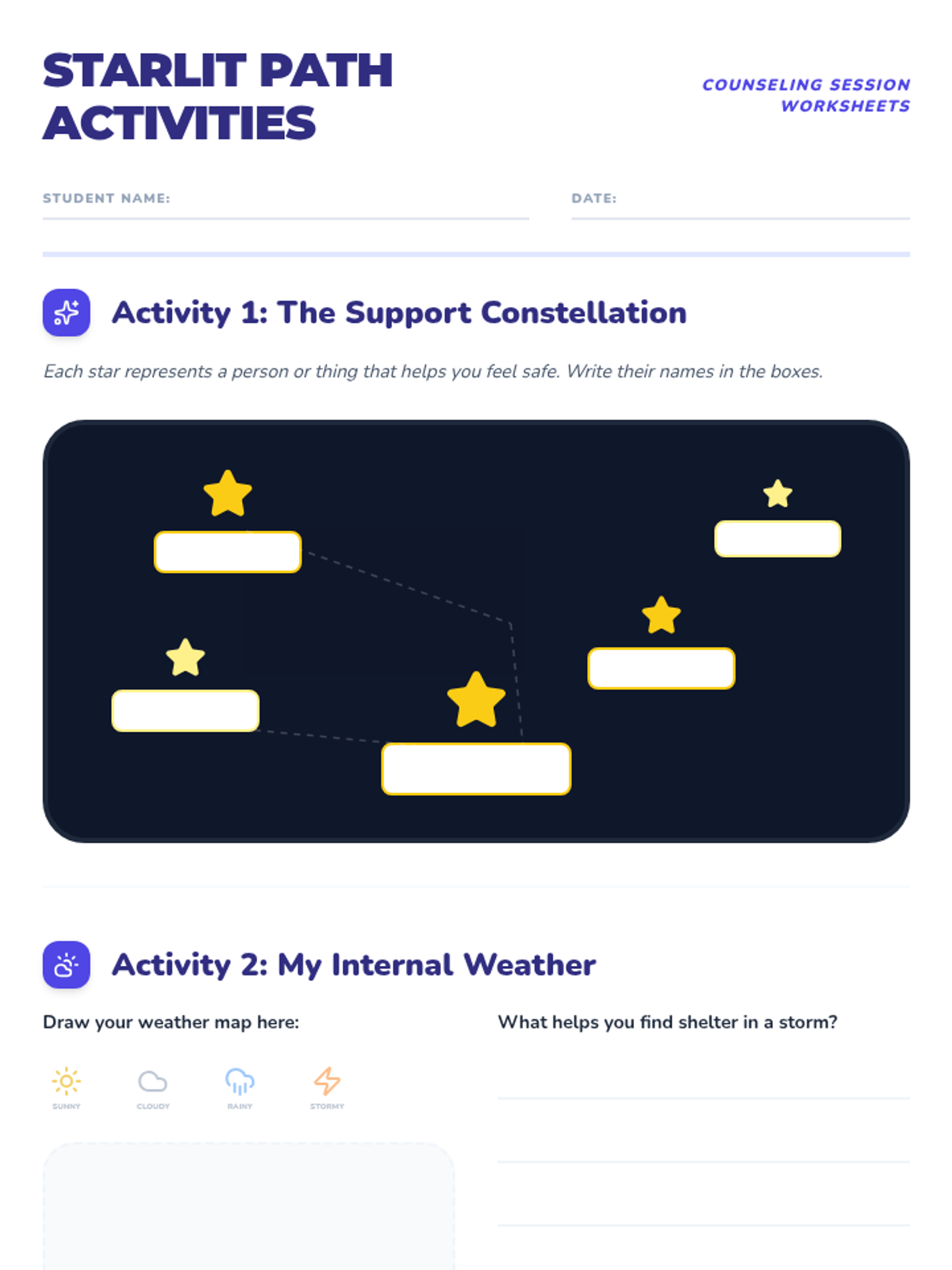
A set of interactive counseling worksheets for a student experiencing parental separation. Includes activities for mapping support systems, identifying emotions, and refuting self-blame through "Truth Shield" statements.
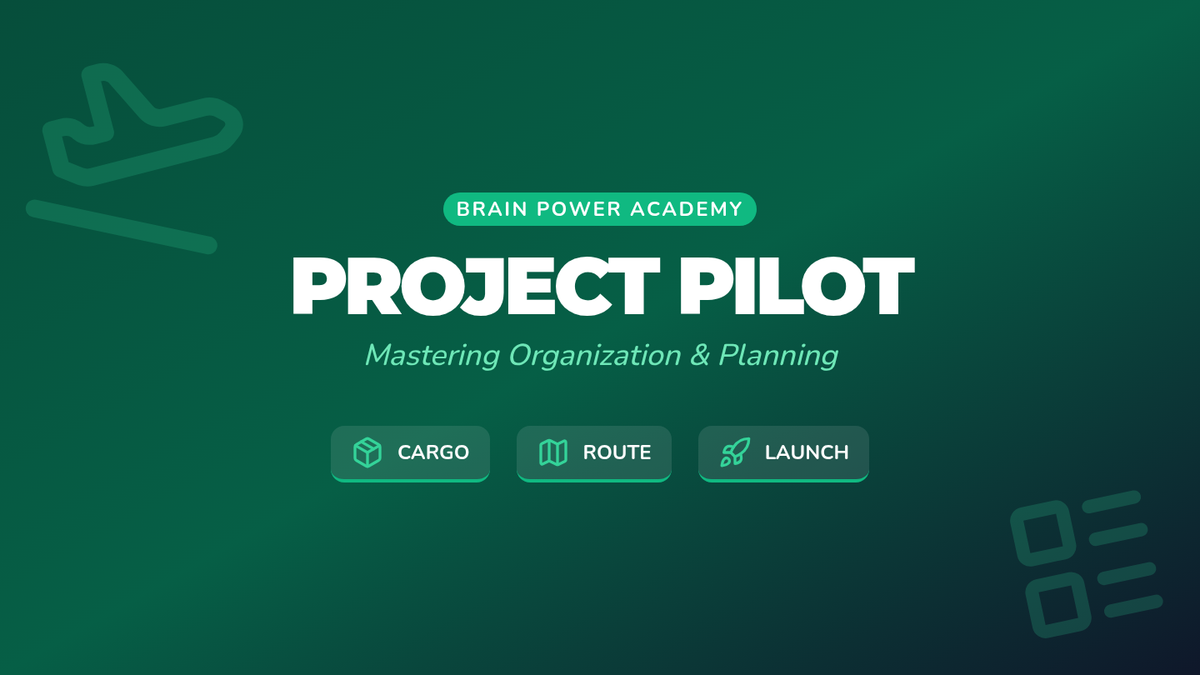
A slide presentation for teaching organization and planning. Uses an aviation-themed 'Project Pilot' metaphor with clear steps (Cargo, Route, Launch) and a collaborative sandwich-making planning challenge.
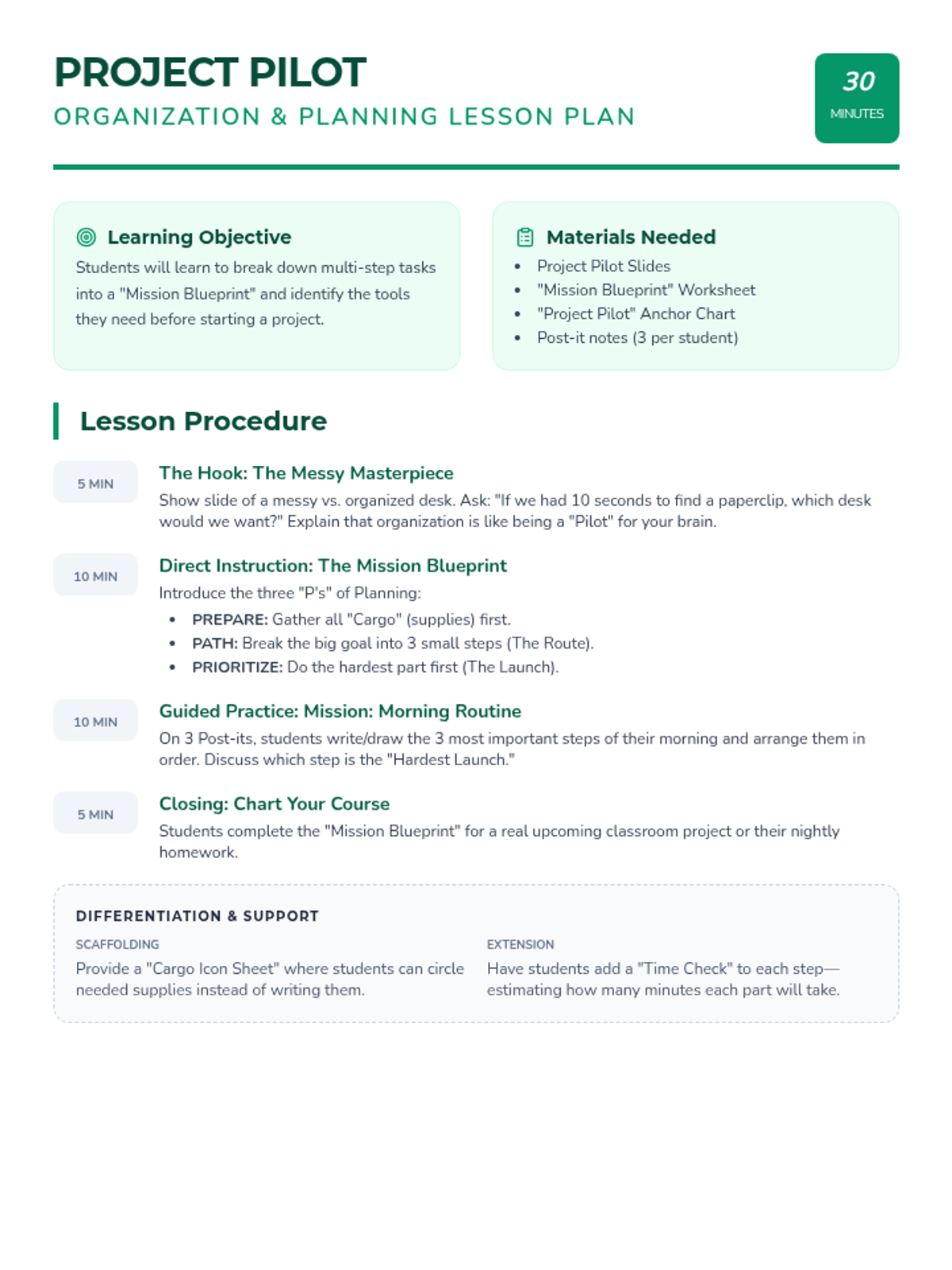
A detailed 30-minute lesson plan for teachers on organization and planning. Uses the 'Project Pilot' metaphor to help students learn how to break tasks into steps and prepare materials.
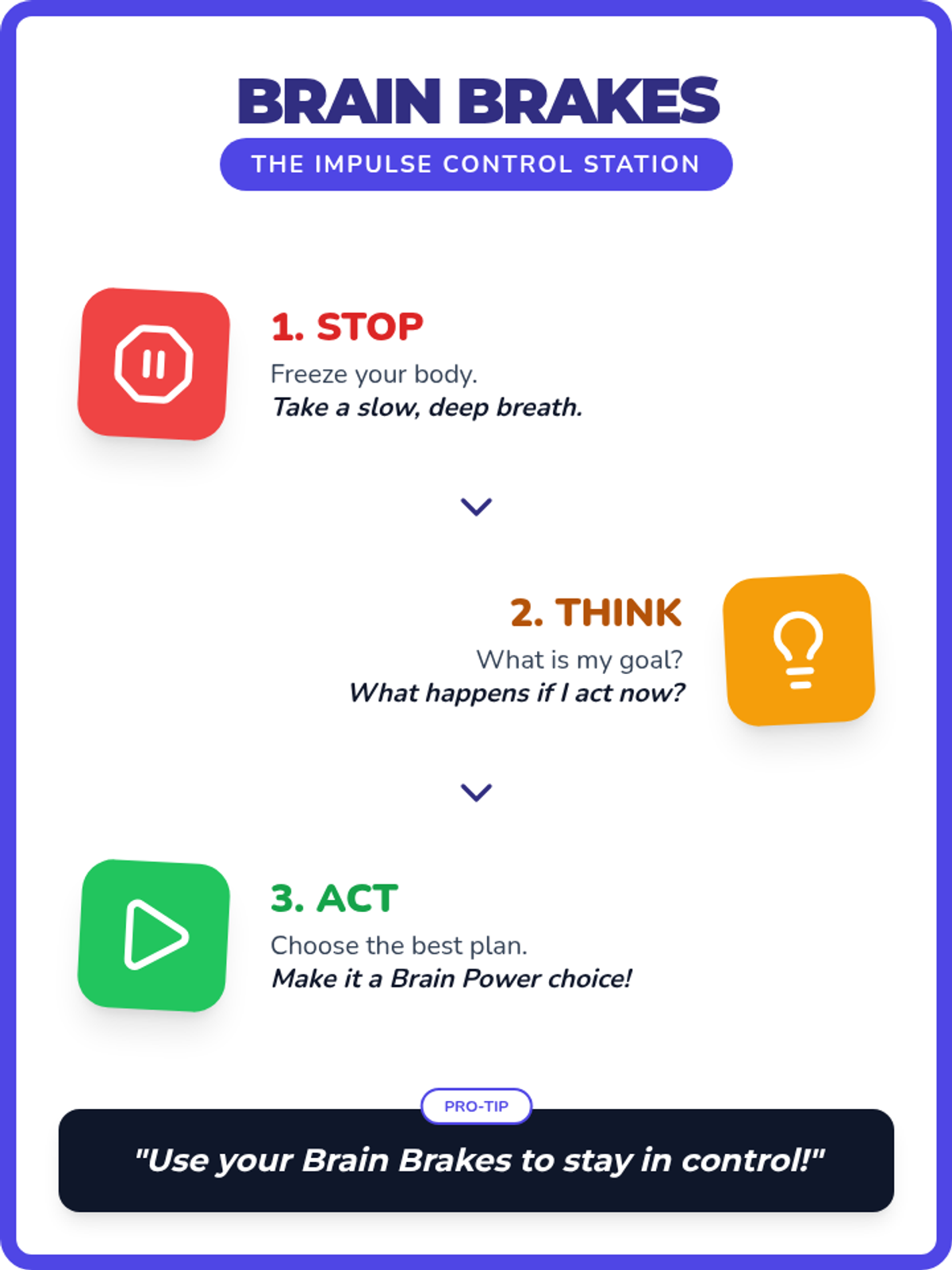
A bold, high-contrast anchor chart for classroom display. It visually reinforces the three steps of 'Stop, Think, Act' with large icons and simple, actionable language.
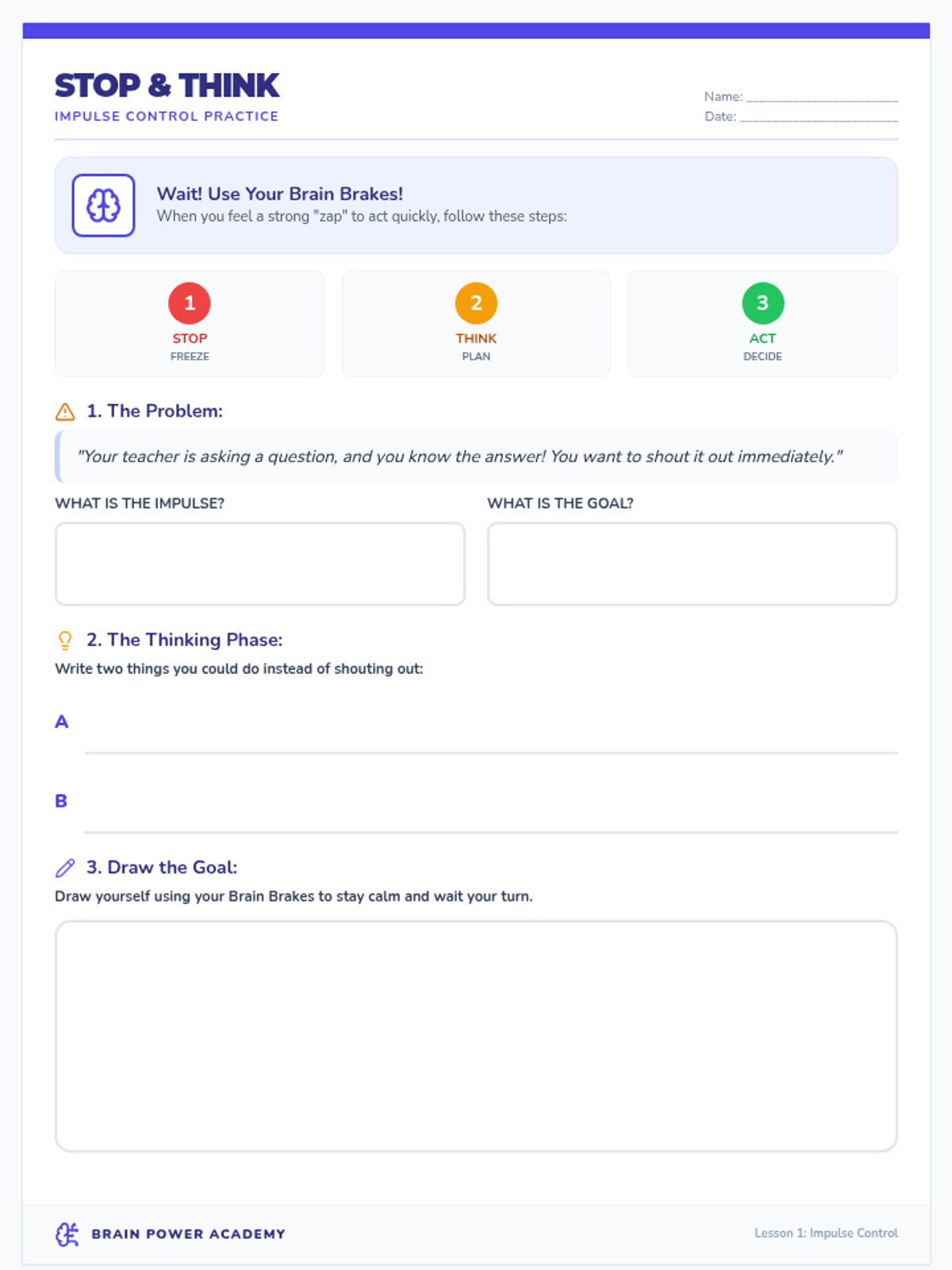
A student worksheet for practicing impulse control. It guides students through a specific scenario, asking them to identify the impulse, the goal, and brainstorm better alternatives using the 'Stop, Think, Act' model.
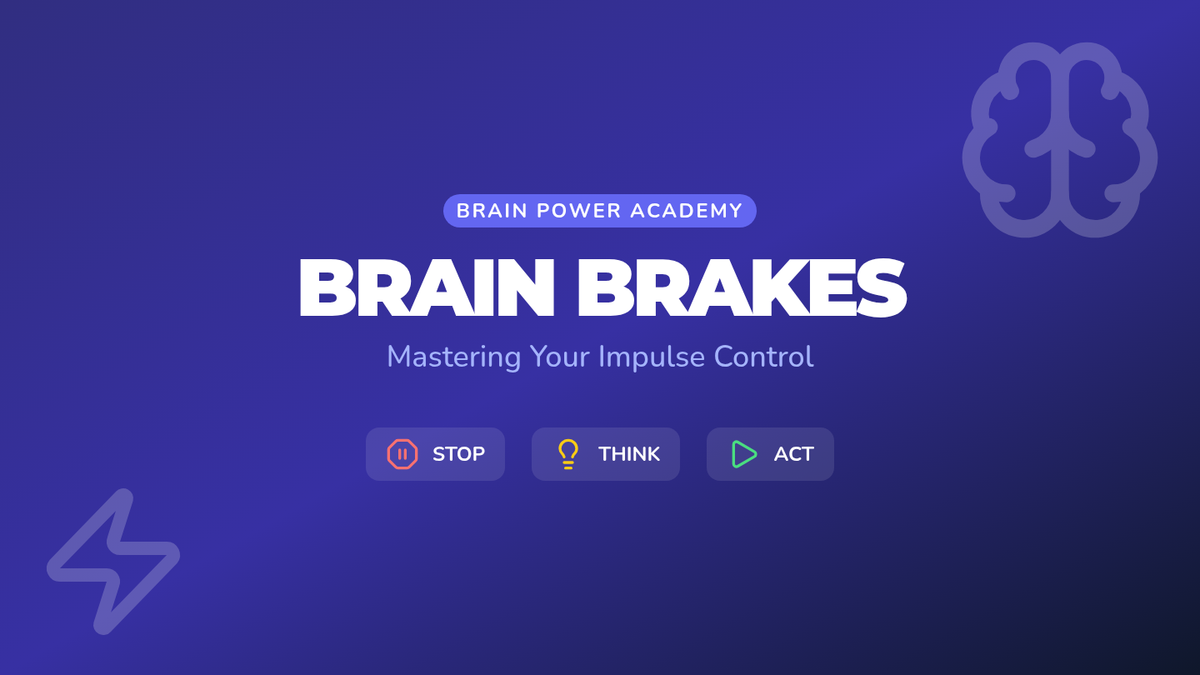
Engaging classroom presentation slides for the Brain Brakes lesson. Uses a high-contrast dark theme for titles and clear, vibrant visuals to explain the 'Stop, Think, Act' process with a scenario challenge.
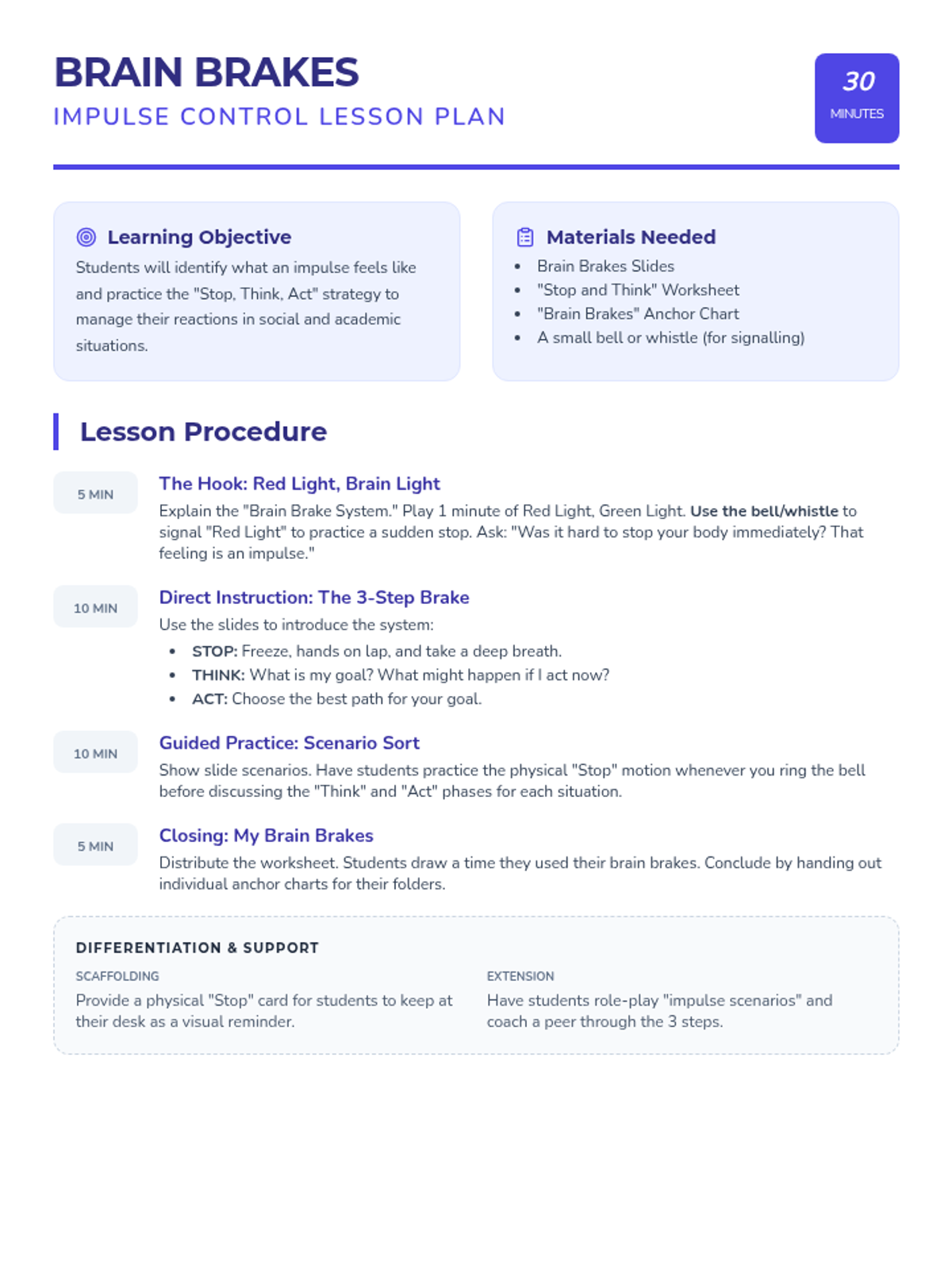
A detailed 30-minute lesson plan for teachers focusing on teaching impulse control to elementary students through the metaphor of 'Brain Brakes'. Includes procedures, learning objectives, and differentiation strategies.
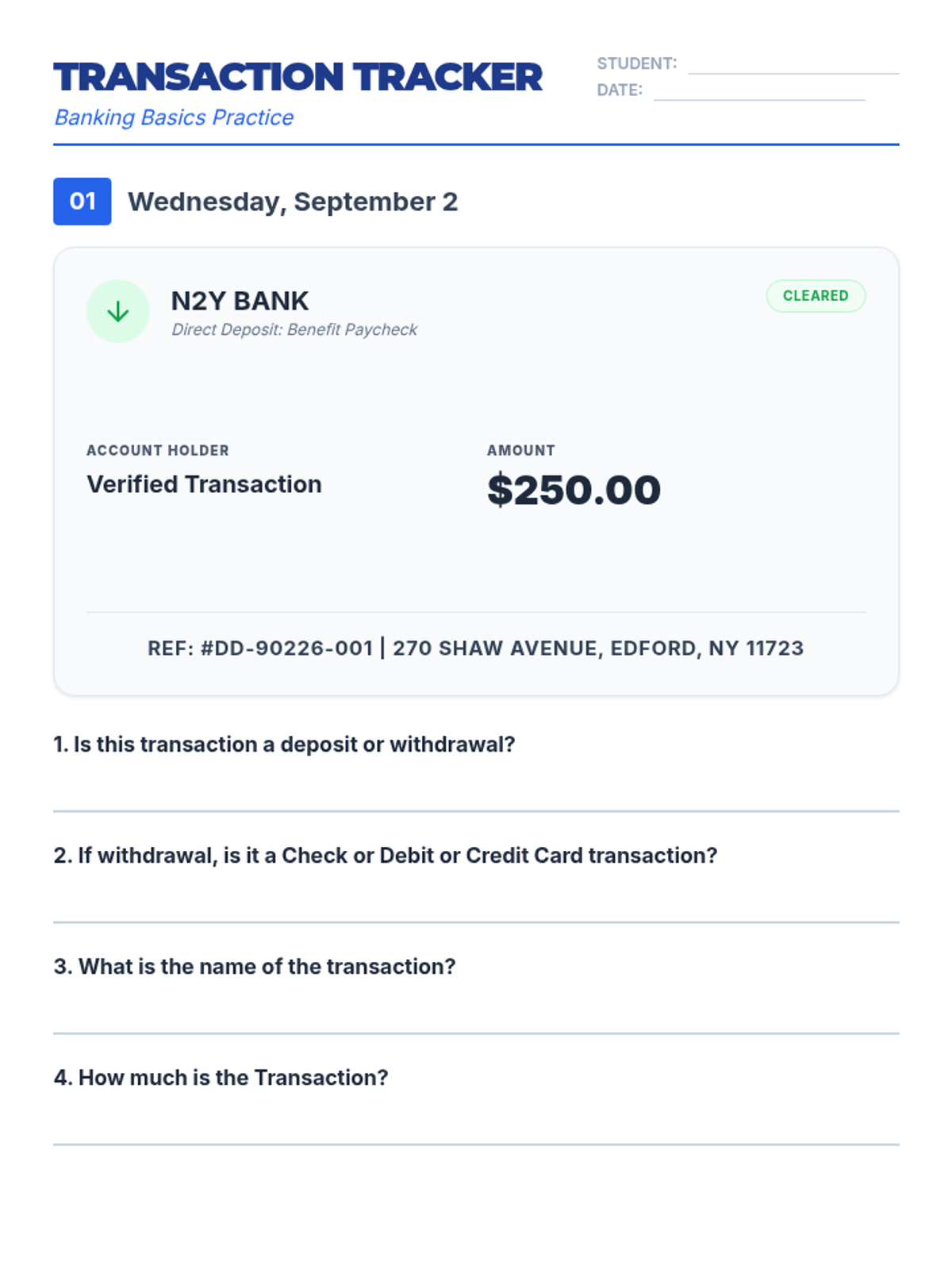
A complete September transaction tracker worksheet set including all 18 transaction records from the provided curriculum, featuring enlarged, high-contrast address fonts for better readability.
An instructional presentation for students on executive function skills. Covers the 1-2-3 Rule for prioritization, time estimation hacks (the buffer rule), and strategic environment mapping (school vs. home) using a high-impact mission-control aesthetic.
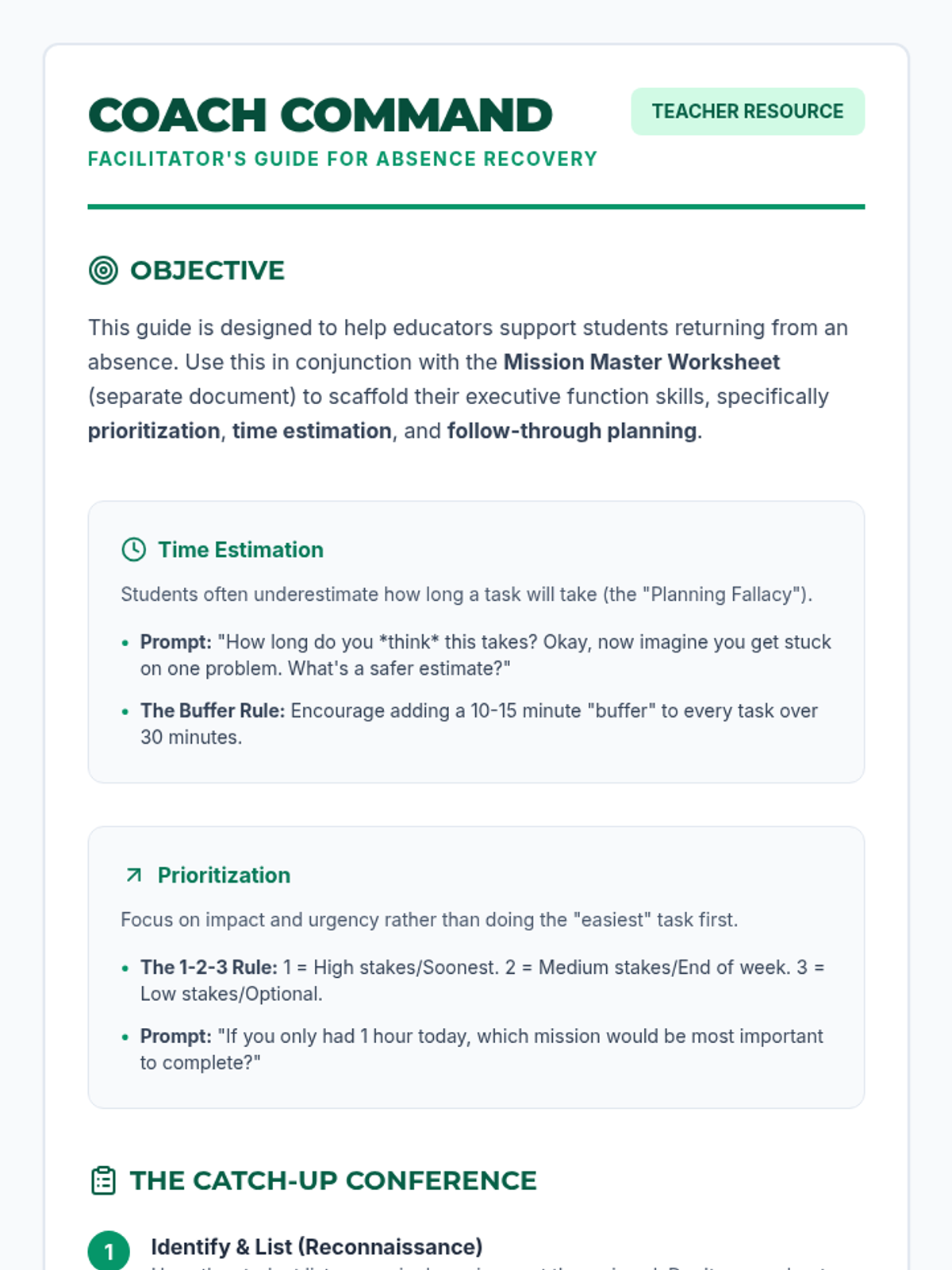
A teacher-facing guide to facilitate an absence-recovery conference. Provides specific coaching prompts for time estimation, prioritization techniques, and a step-by-step facilitation framework for supporting executive function skills.
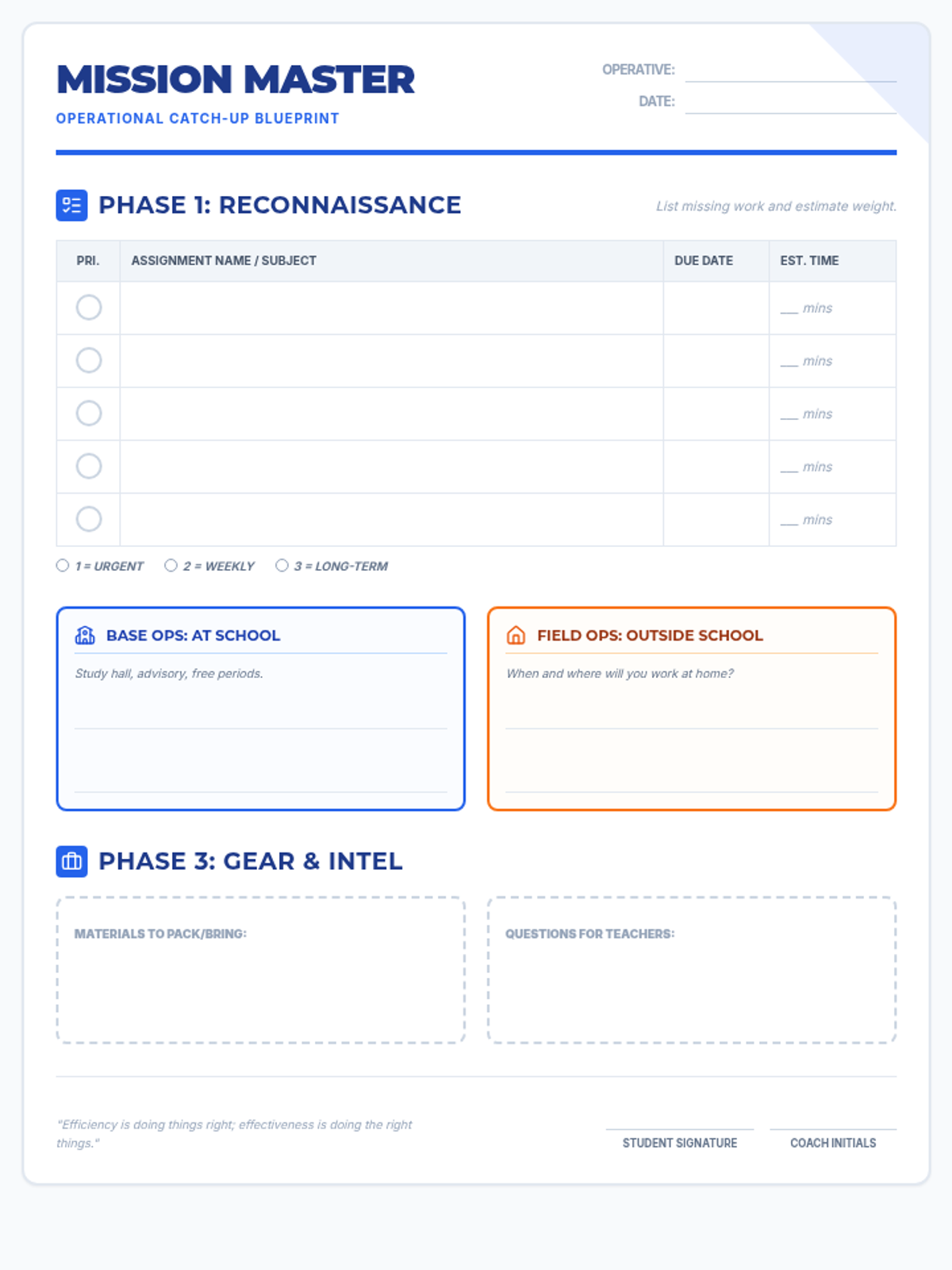
A structured student-facing planning tool for managing missing work after an absence. Includes sections for task prioritization, time estimation, and school vs. home action planning with a professional mission-control aesthetic.