A culminating project where students write and perform a story featuring figurative language. Peers identify the figurative elements used during the performances.
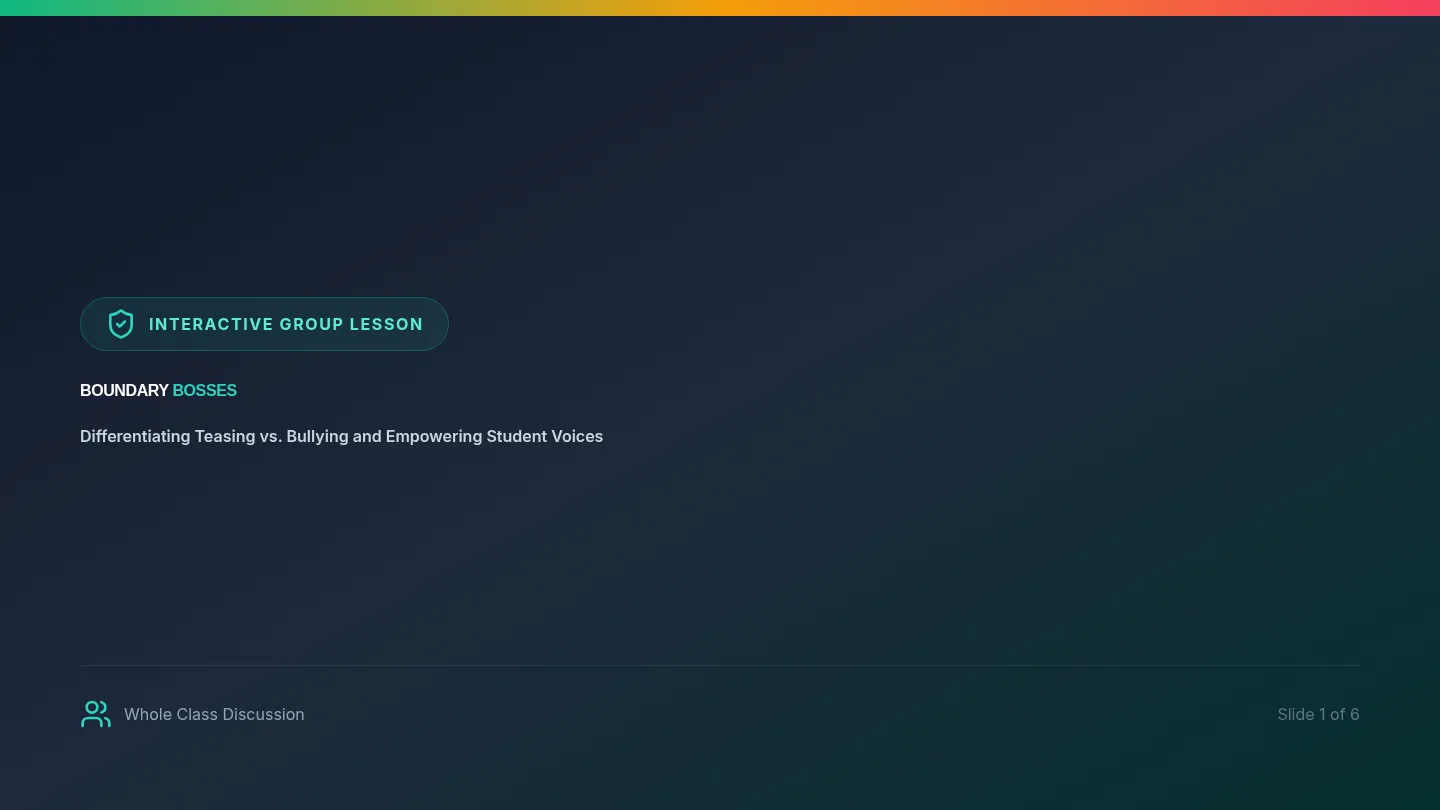
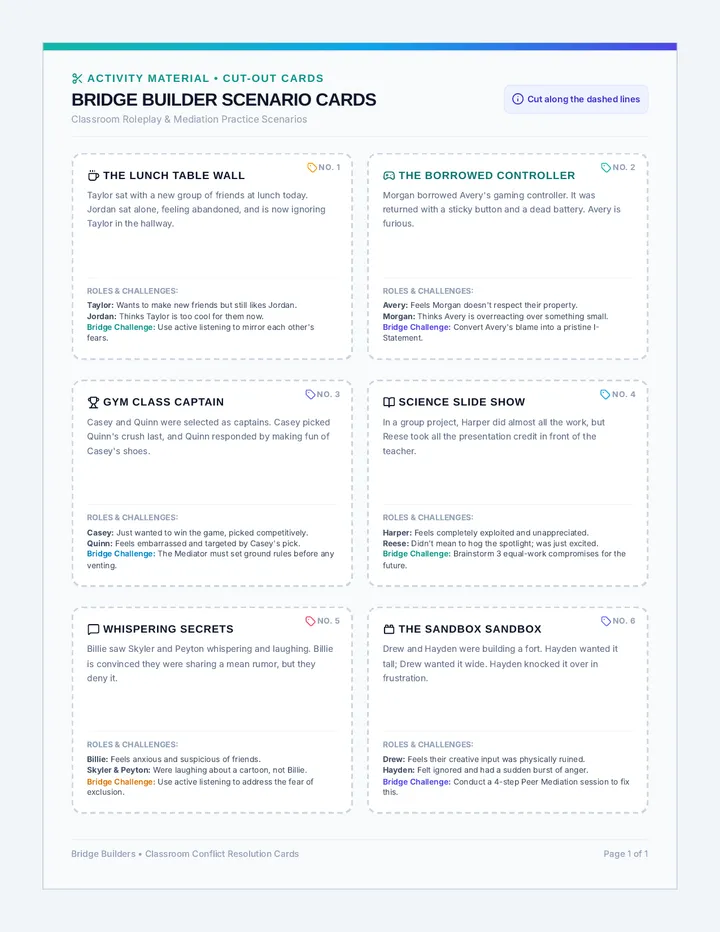
This lesson introduces students to essential conflict resolution strategies and emotional intelligence vocabulary. Students will learn to navigate social challenges using Kelso's Choices, I-Messages, and the STEP model, while also exploring the importance of healthy boundaries.
Students practice three specific strategies for accepting "no" (Stay Calm, Say Okay, Move On) through role-play and reflective activities.
Students identify that hearing "no" is a common experience and explore the feelings that arise when they don't get what they want. They learn the 'Stop and Breathe' technique.
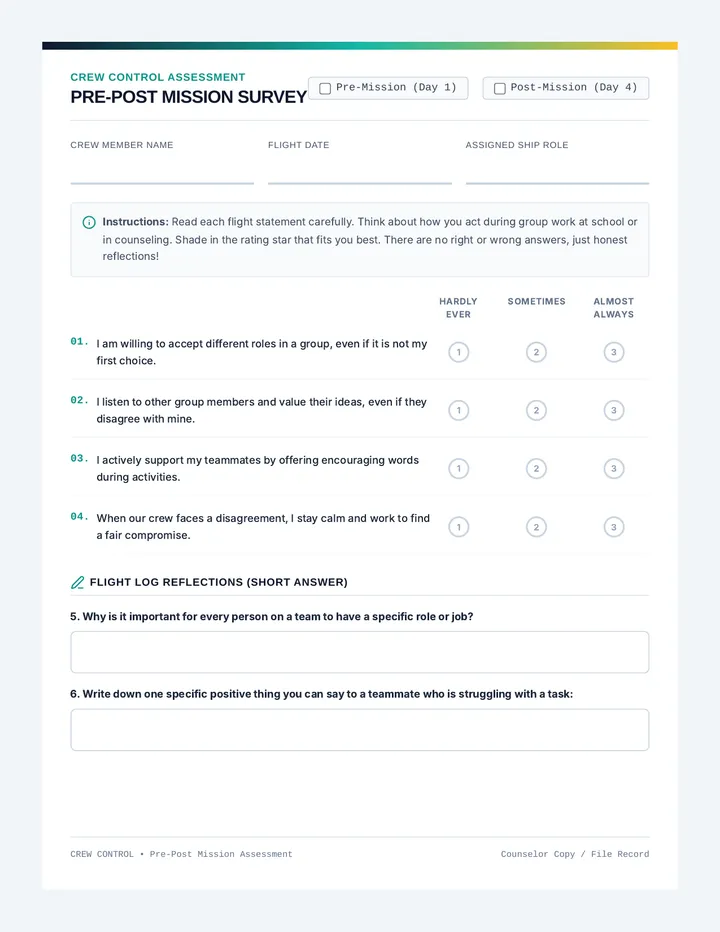
Assessment tools designed to measure student growth in empathy, communication, and relationship skills. Includes a 5-question pre-test and post-test aligned with ASCA standards to track program impact.
A final review and celebration session where students complete a comprehensive assessment of the 6-week Kindness Crew series. Focuses on reinforcing key terminology and reflecting on personal growth.
Synthesizes the previous five weeks into a personal commitment and a shared classroom vision. Students design a 'Culture of Kindness' blueprint and make a formal pledge to their community.
Moves from interpersonal kindness to community advocacy and inclusion. Students learn the difference between standing by and standing up, practicing ways to expand their social circles and support others.
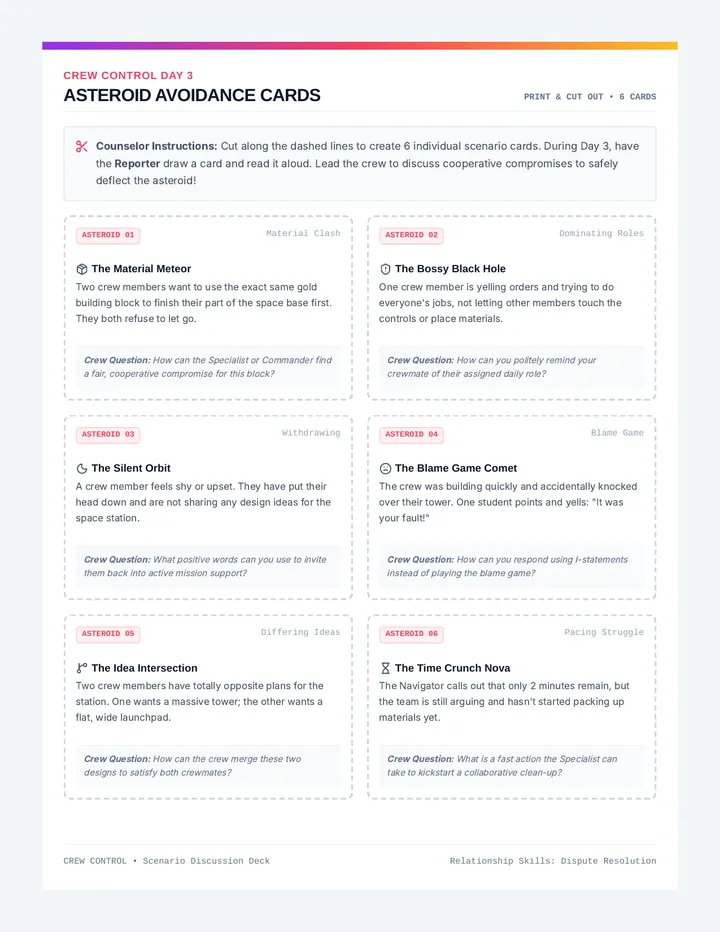
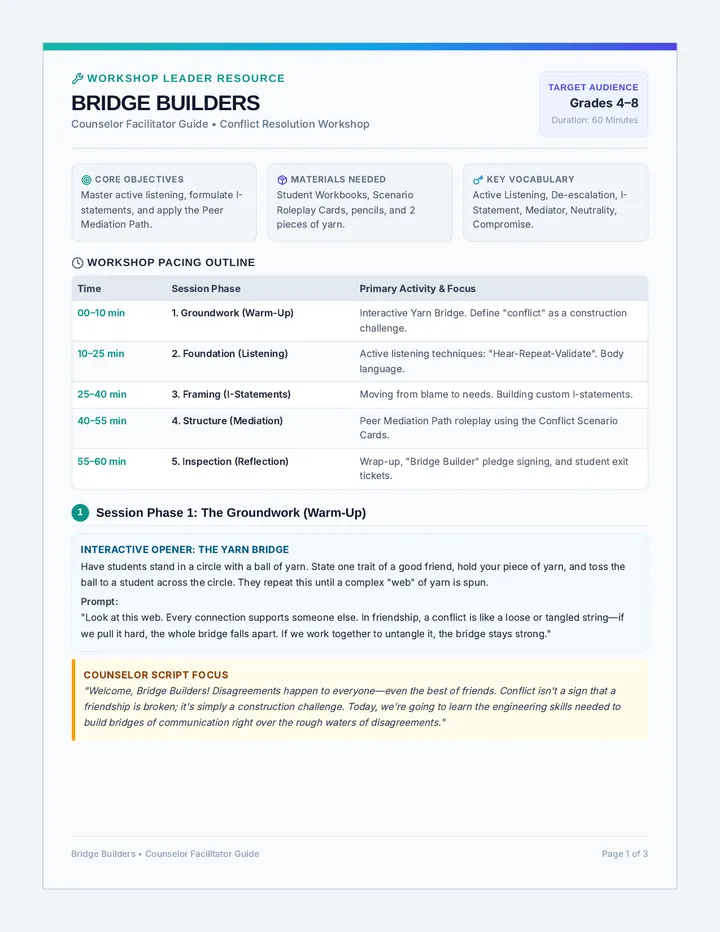
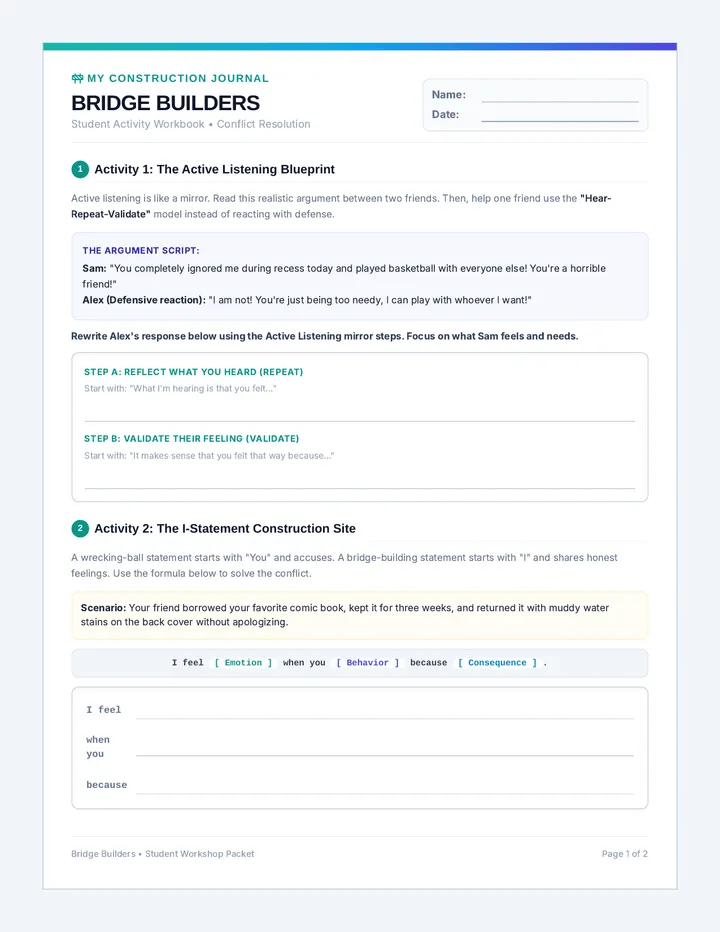
Teaches assertive communication and the principle of Positive Intent during disagreements. Students learn to use 'I' messages to bridge gaps and resolve conflicts without sacrificing kindness.
Explores the nuances of communication, including tone of voice and body language. Students learn that 'how' we say something is as important as 'what' we say in building connections.