This lesson explores the essential qualities of a good friend, fostering positive social skills and empathy among 3rd-6th grade students through engaging activities and media.
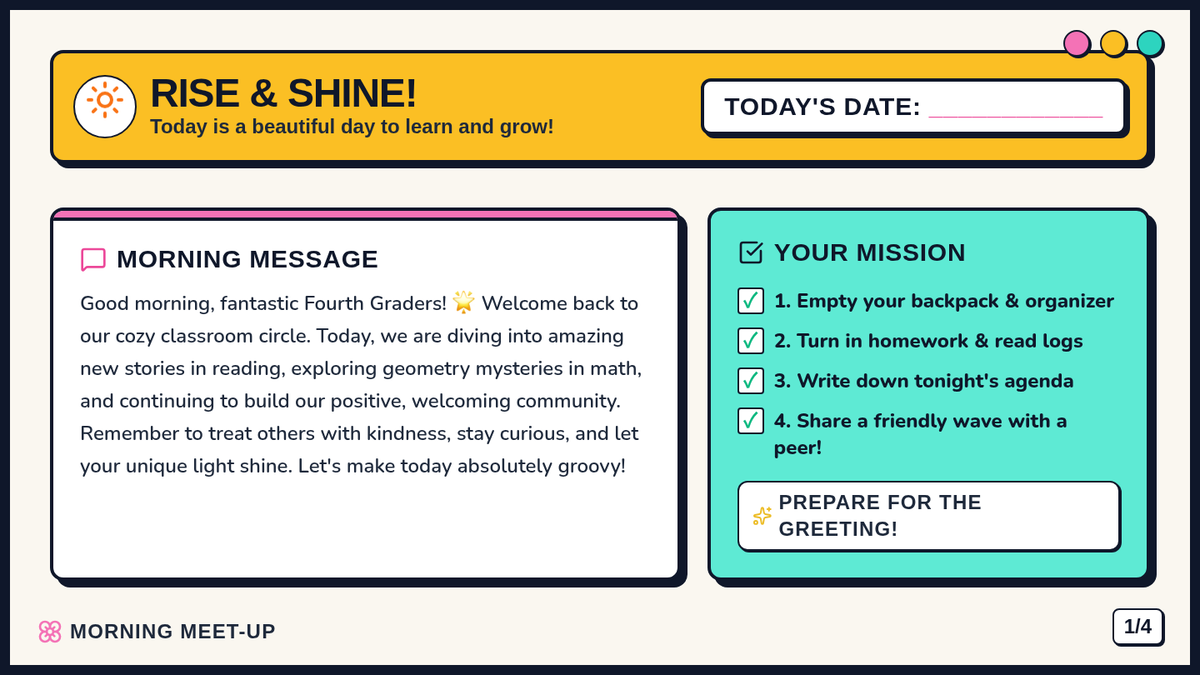
A vibrant, interactive morning meeting sequence designed to start the school day with positive 4th-grade energy. Features retro-inspired slide activities to foster community, sharing, and collaborative play.
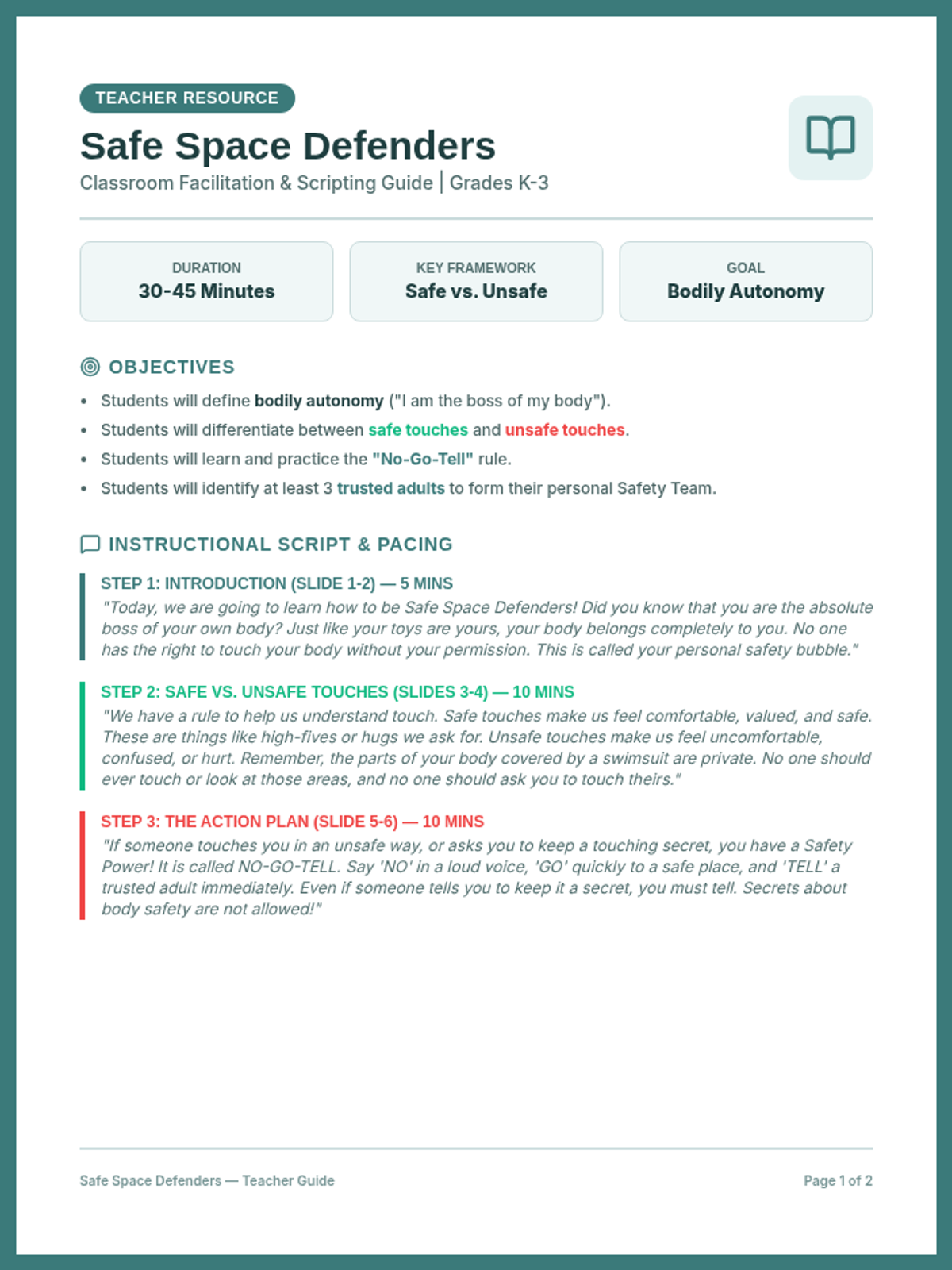
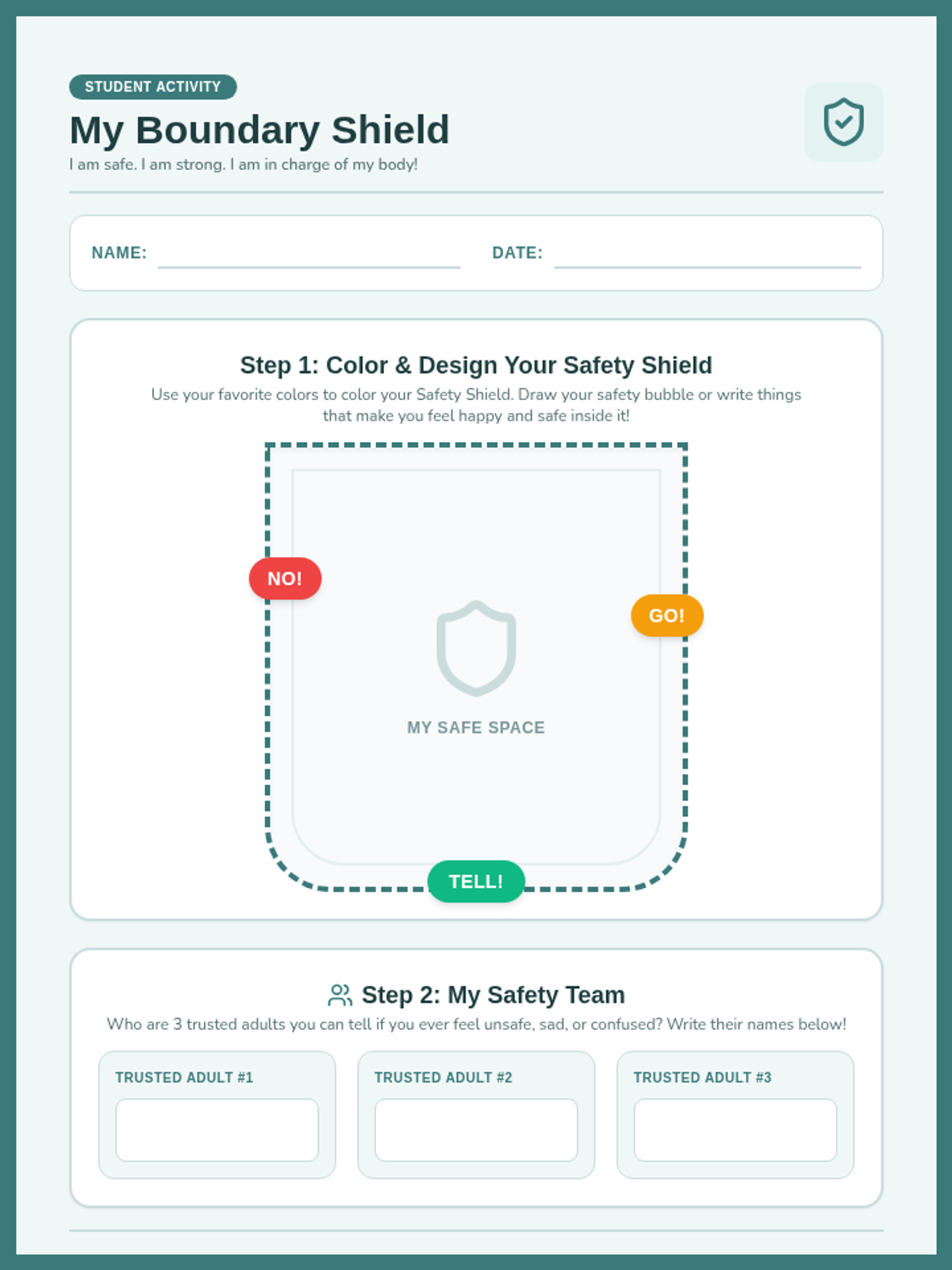
A sensitive and empowering Social-Emotional Learning (SEL) lesson designed to teach elementary students the concepts of safe versus unsafe touches, bodily autonomy, and how to identify and communicate boundaries with trusted adults.
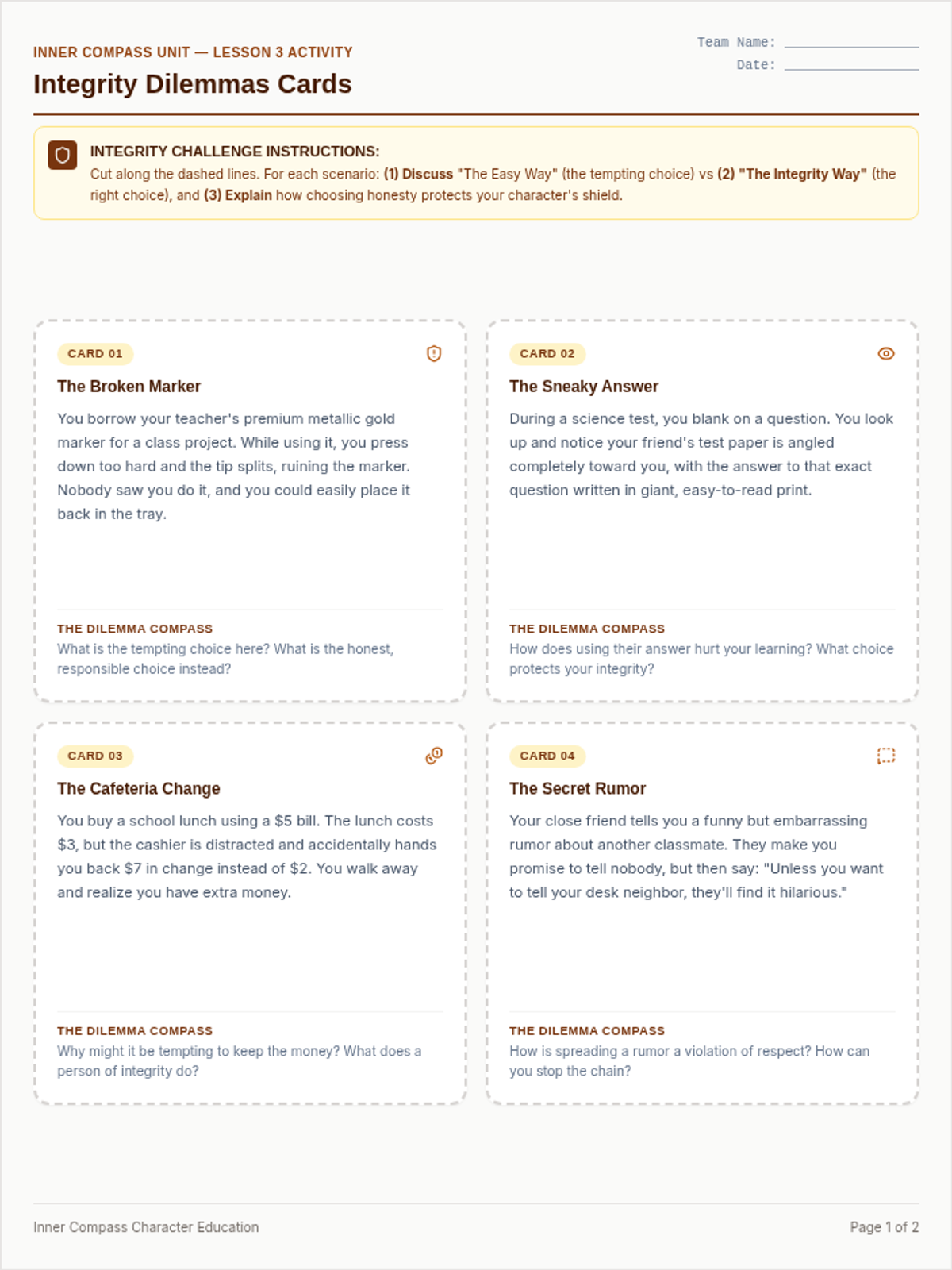
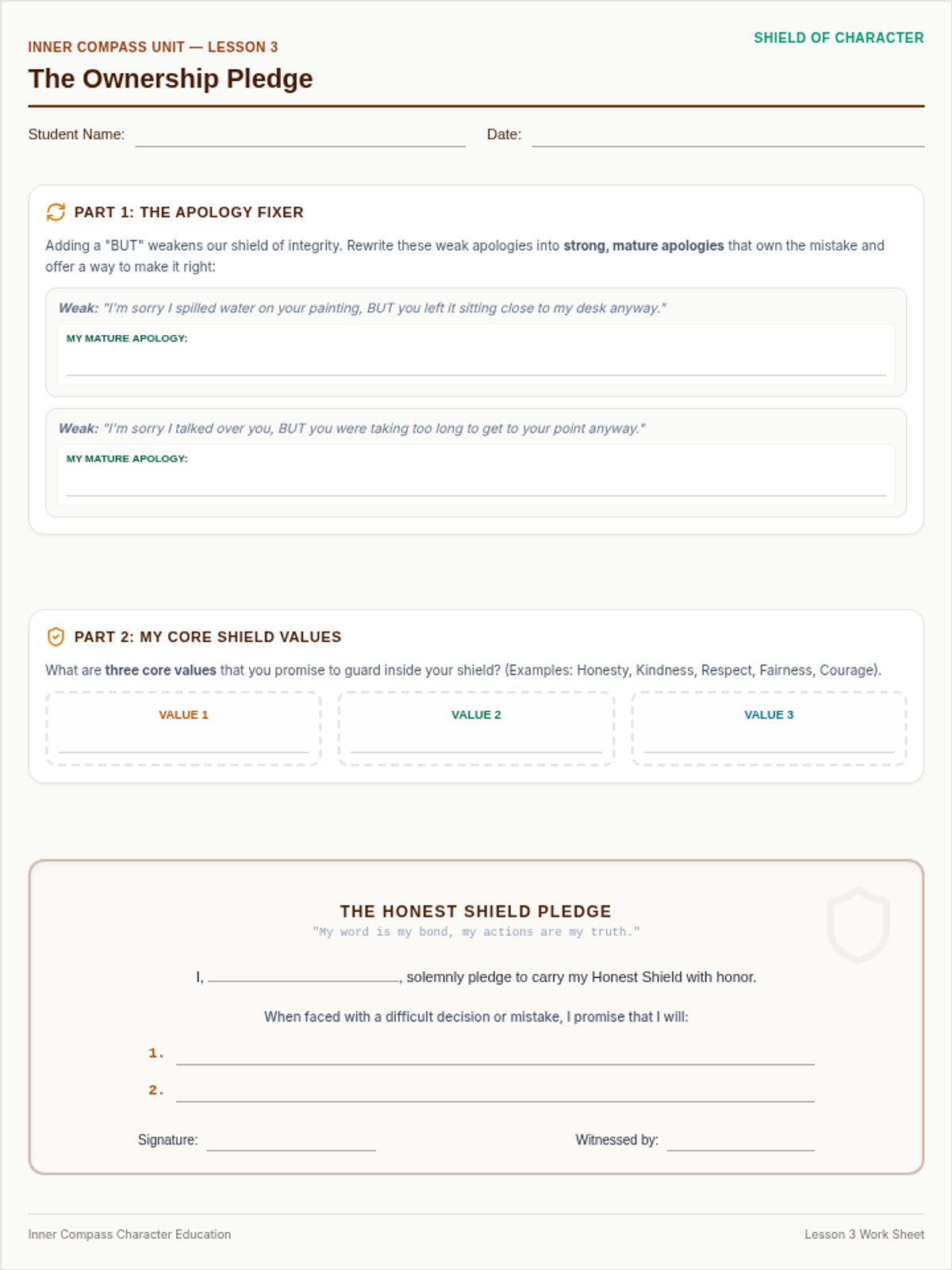
Students investigate responsibility, honesty, and integrity. They learn to make difficult choices, take ownership of mistakes, and construct a personal pledge for moral character.
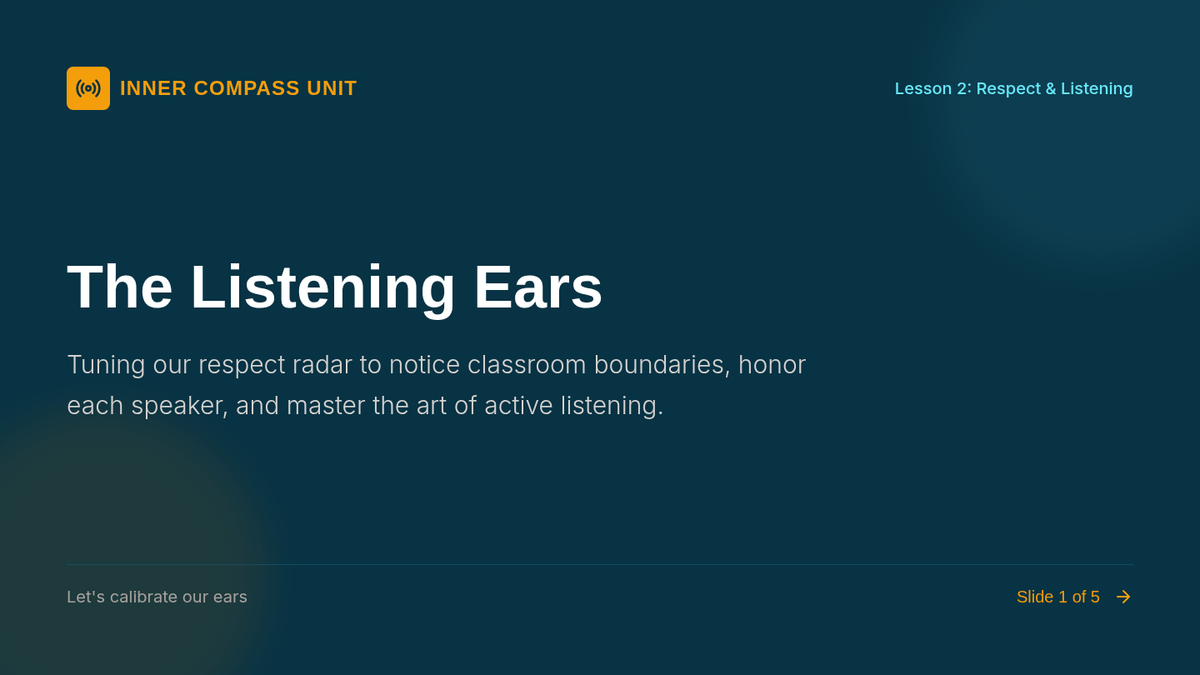
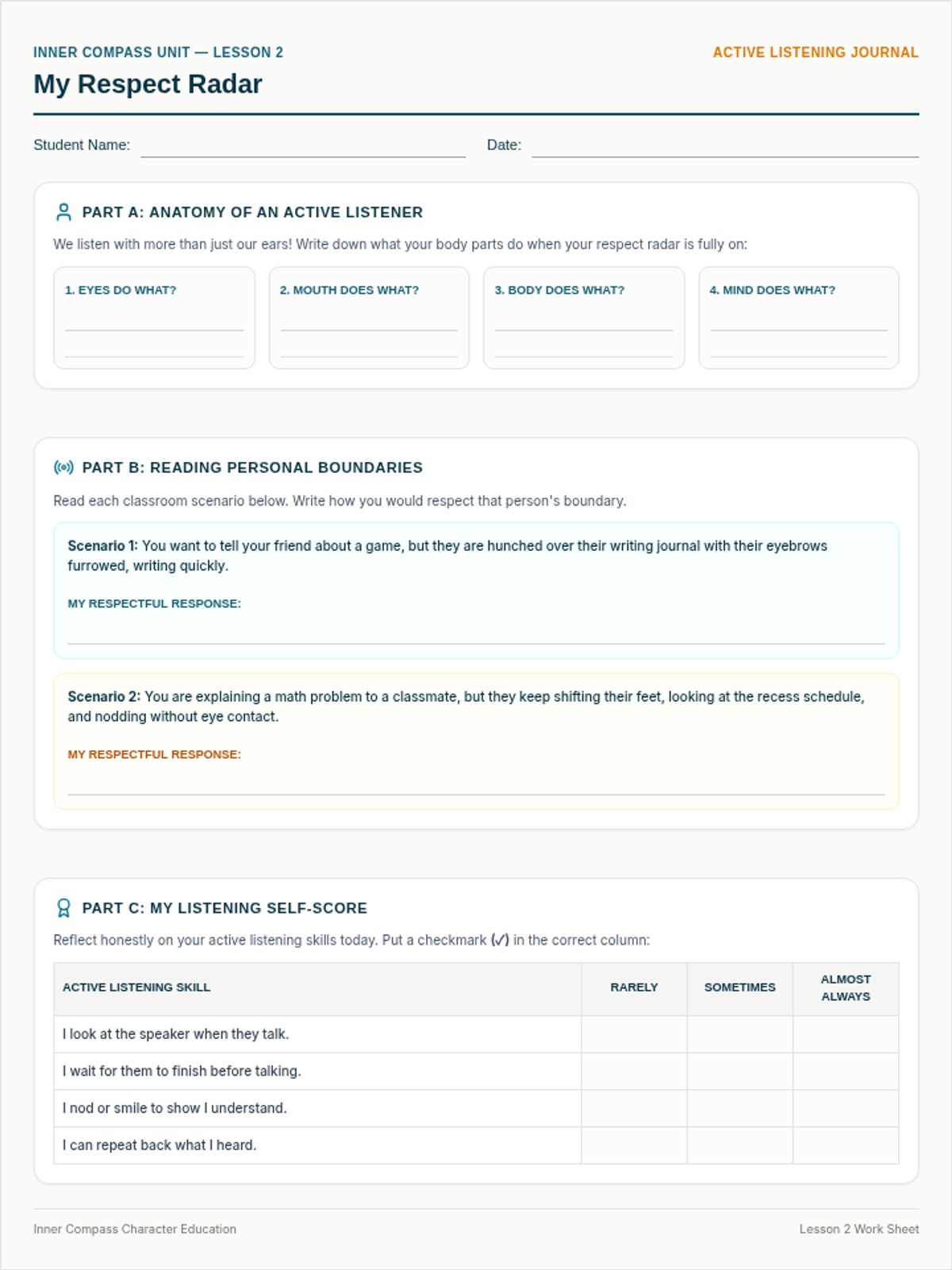
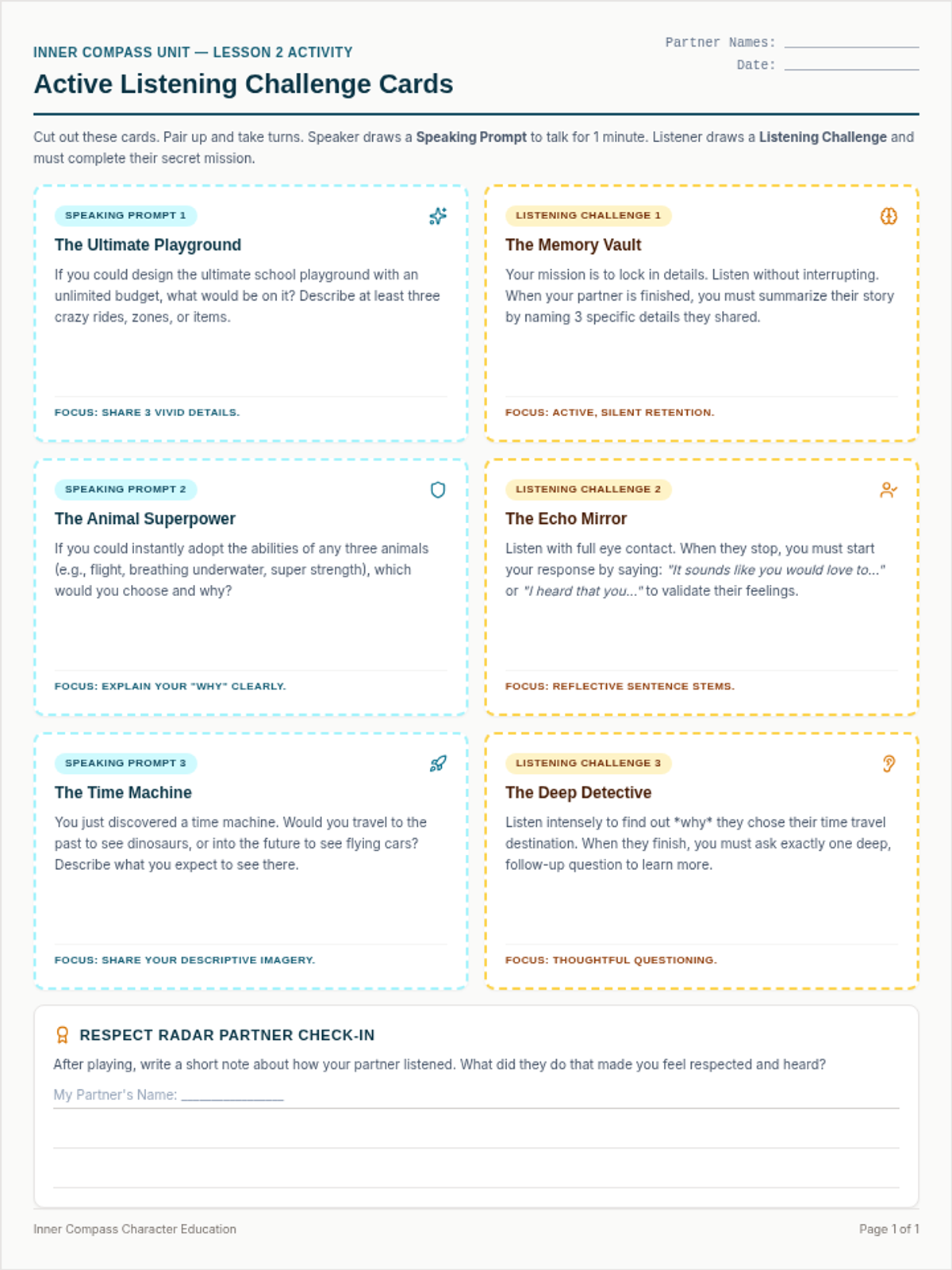
Students learn respect and active listening techniques. They engage in verbal exercises and boundary-setting activities to build effective communication and mutual respect.
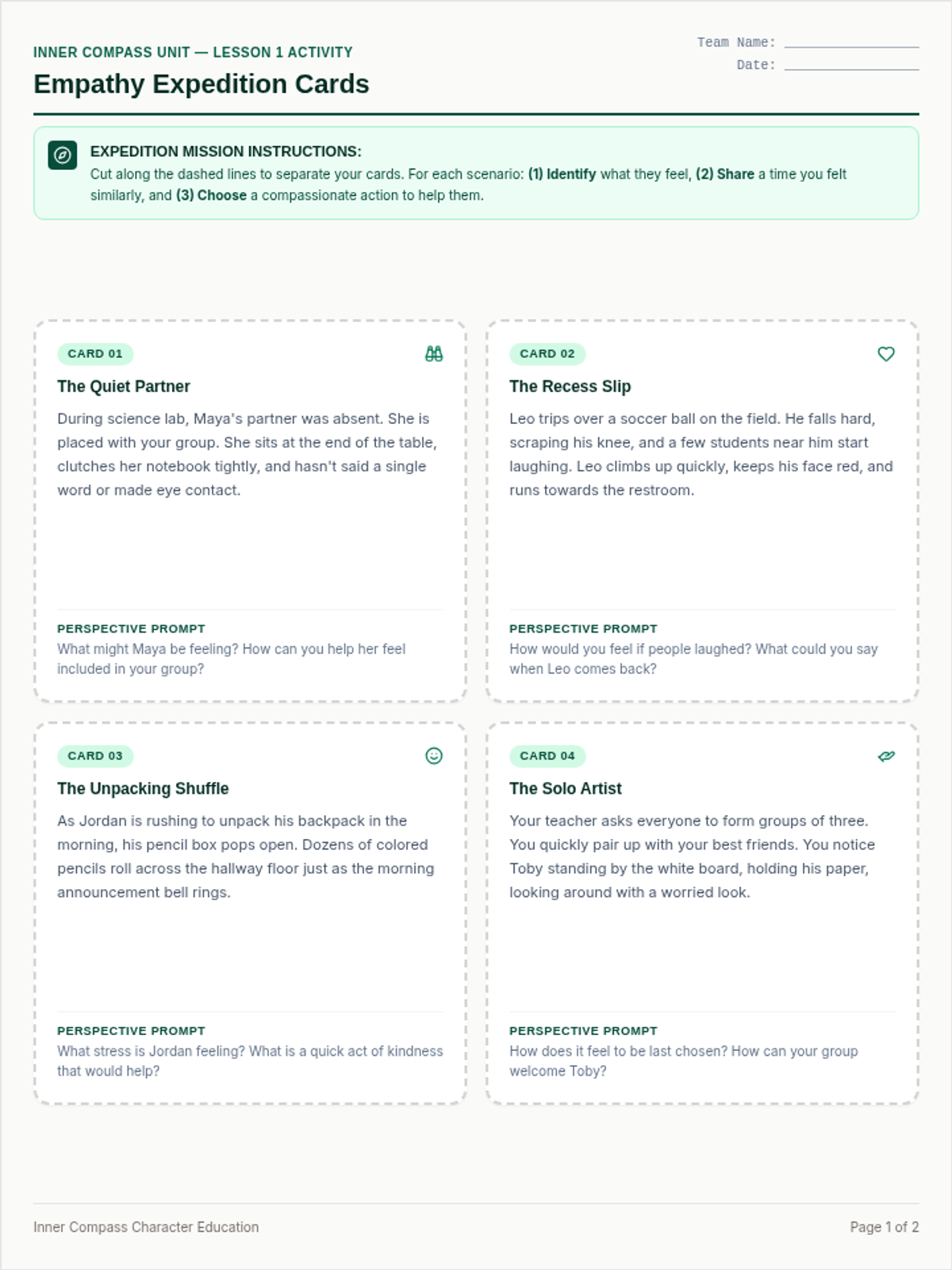
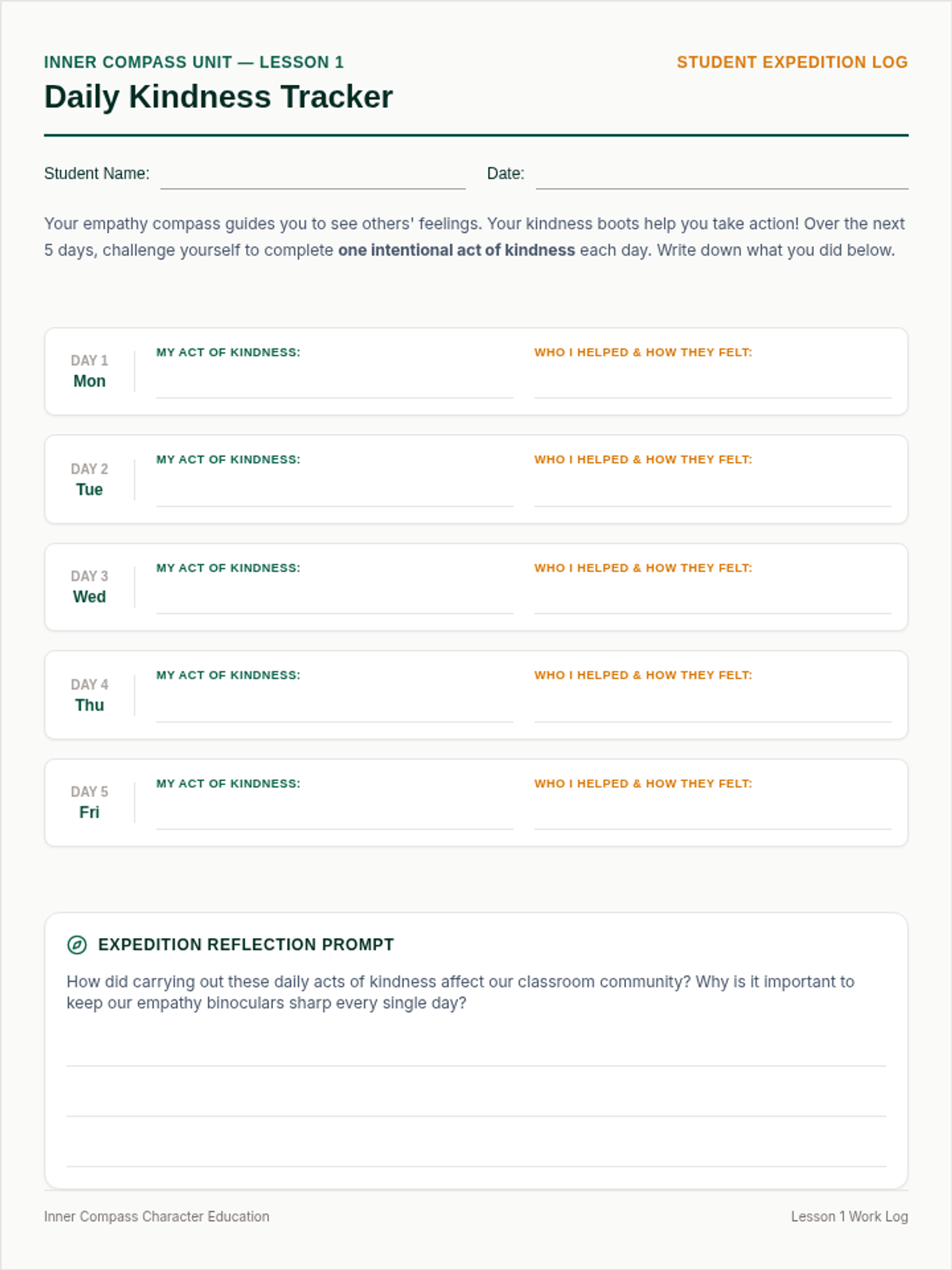
Students explore the power of empathy and kindness. Through looking at perspectives and performing small acts of helpfulness, students build connection and support in the classroom.
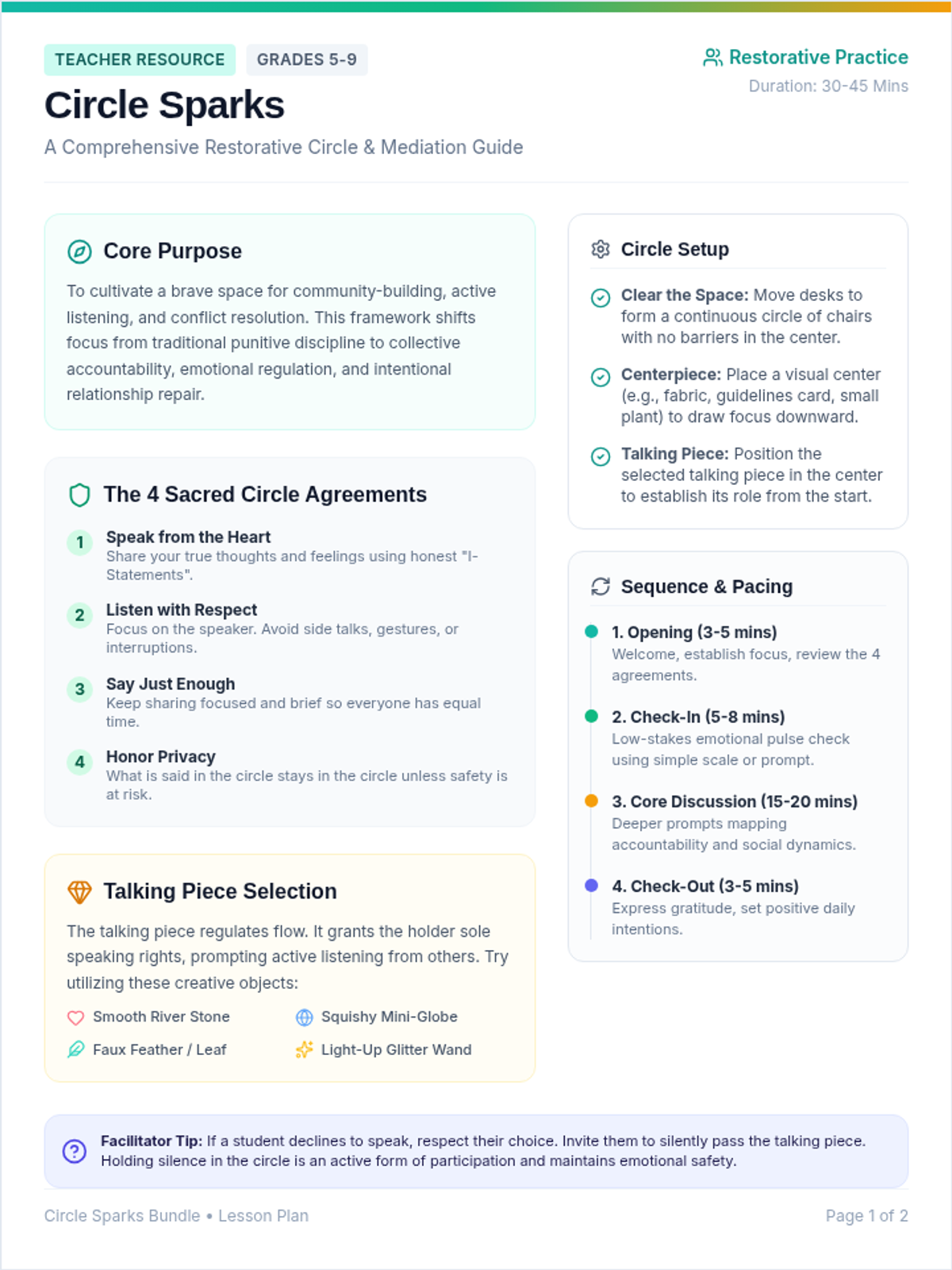
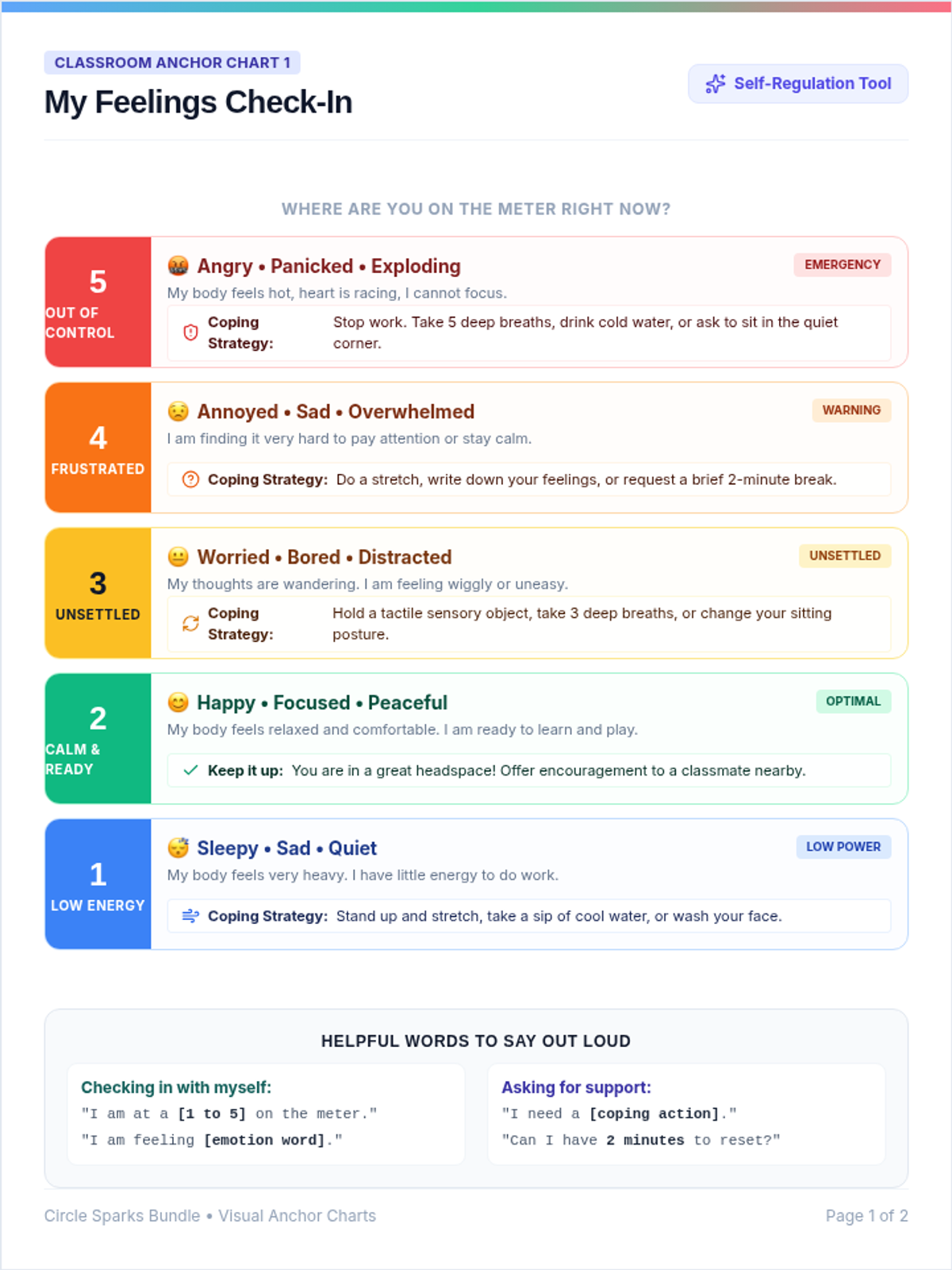
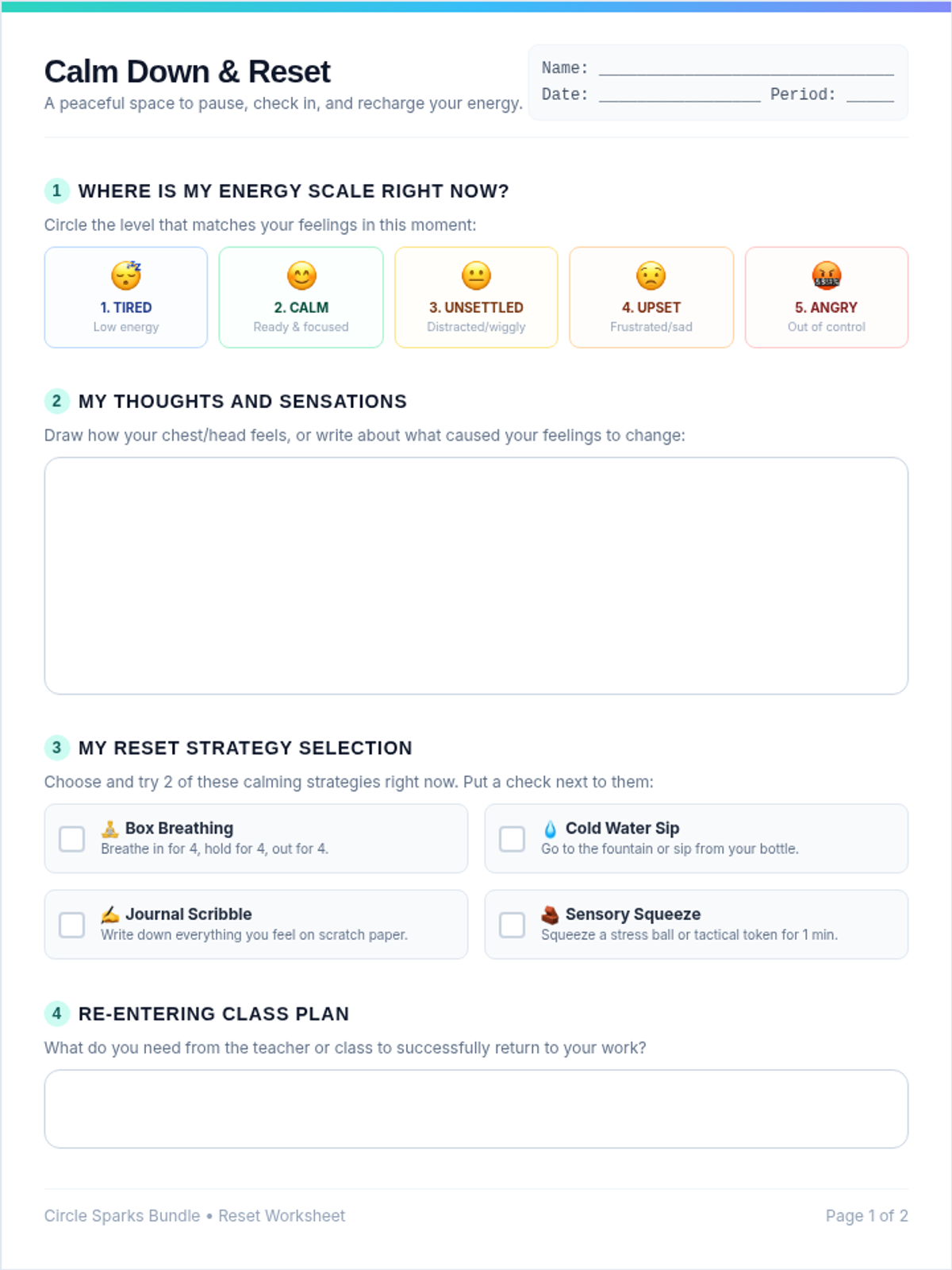
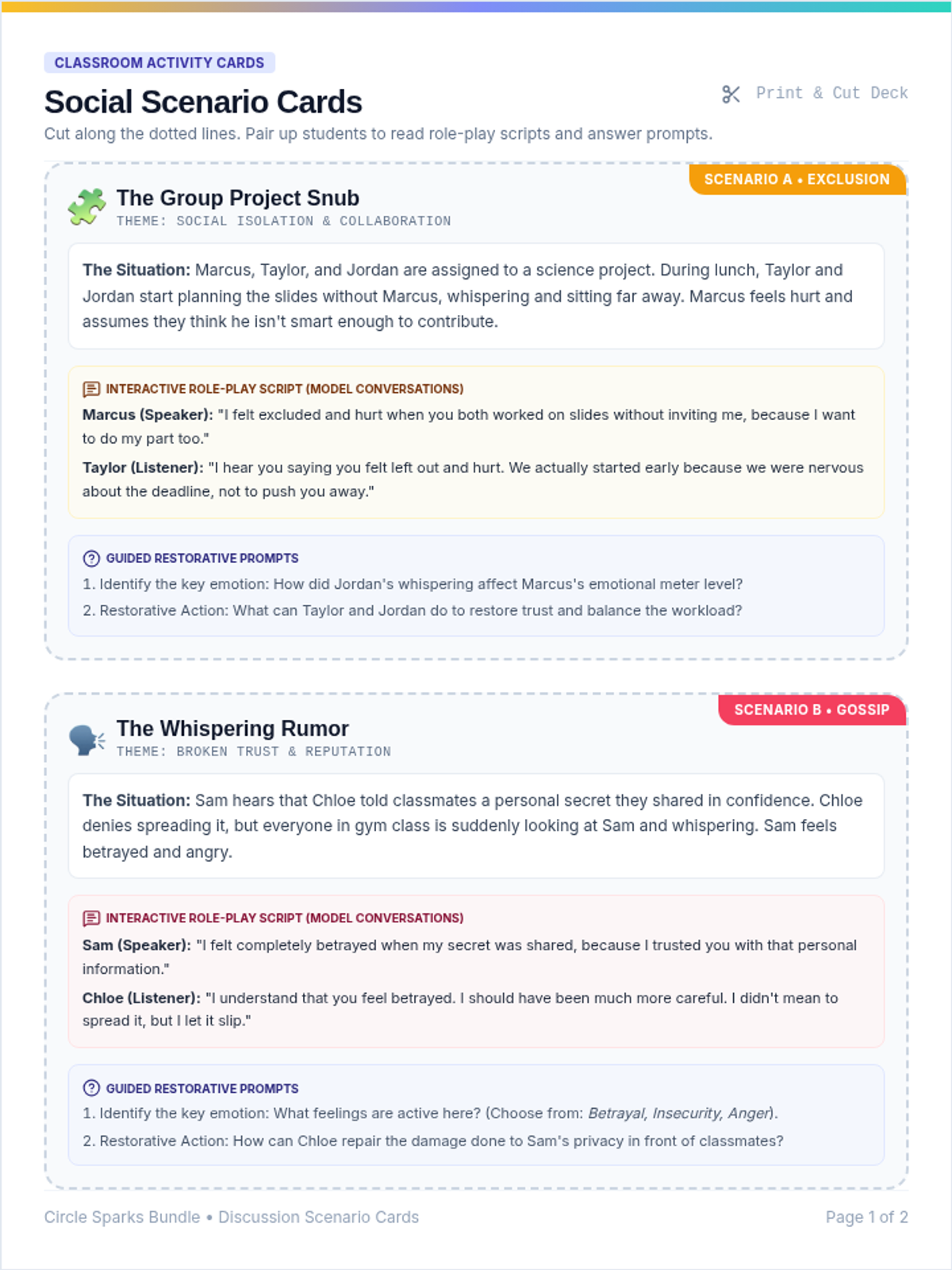
A comprehensive restorative justice lesson bundle designed to foster social-emotional learning, conflict resolution, and self-regulation through structured circle practices, visual anchor charts, visual reflection sheets, and real-world peer scenarios.
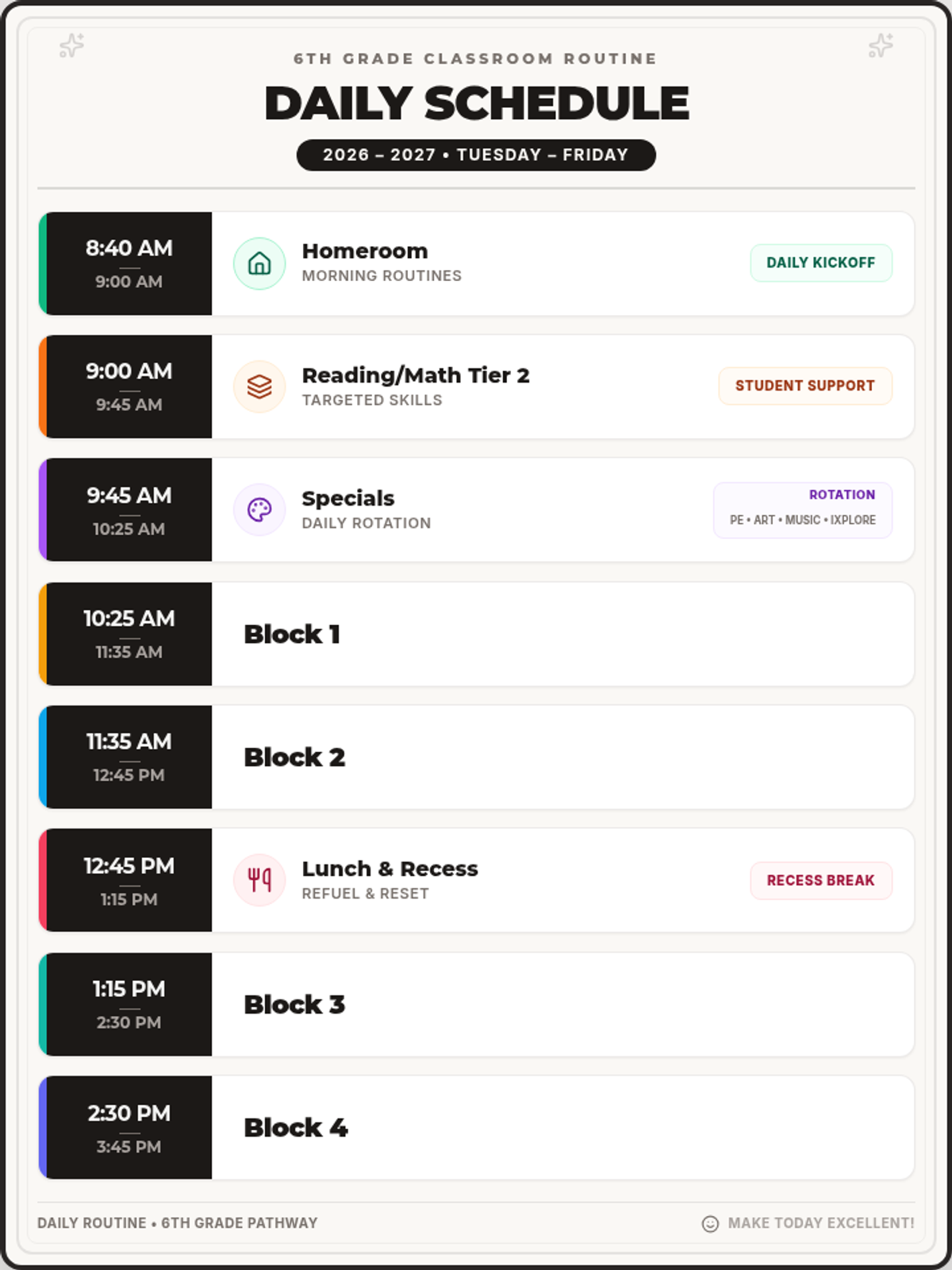
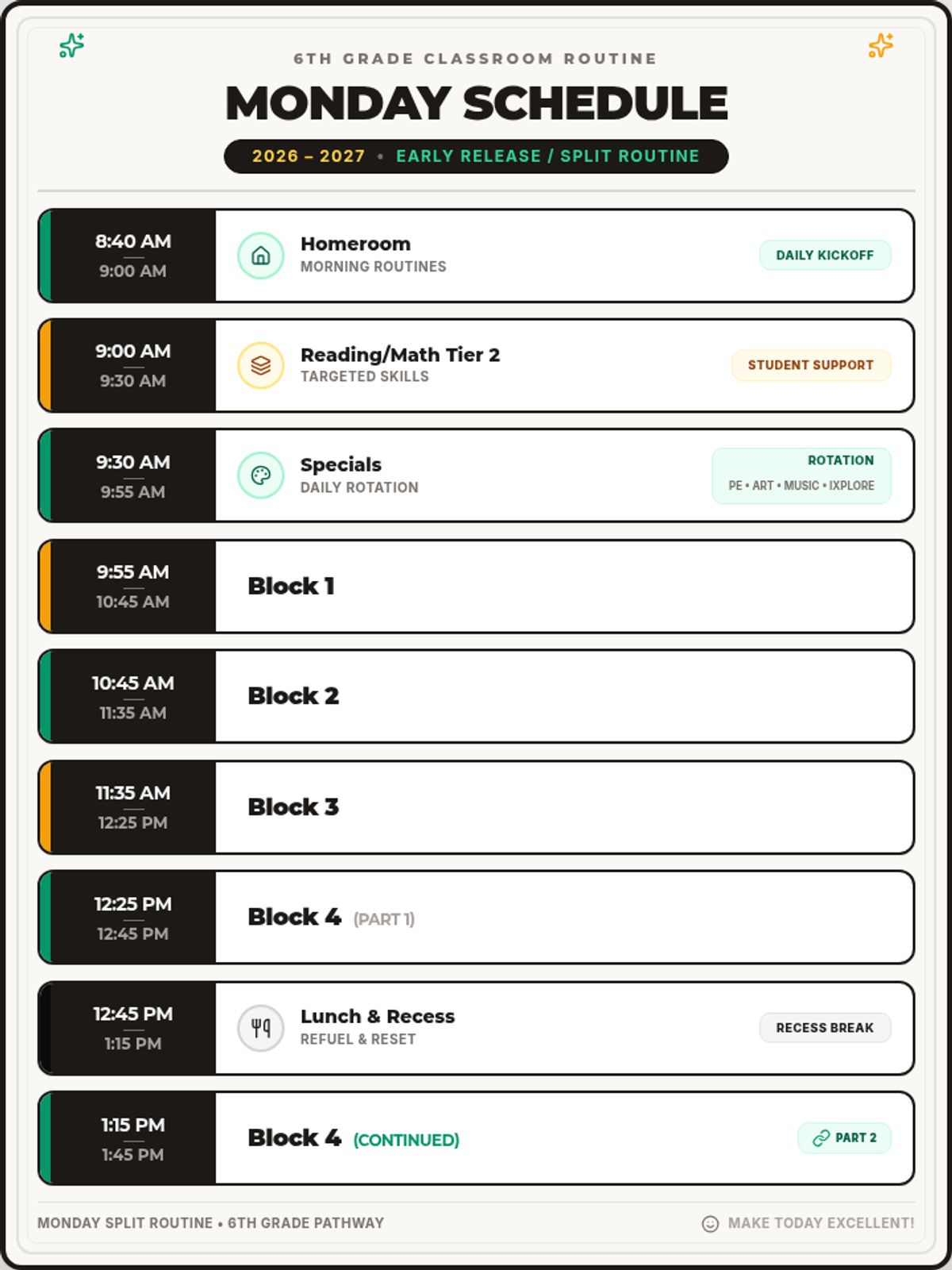
A collection of beautifully formatted schedule posters for a 6th-grade classroom, including the Tuesday-Friday routine and the modified Monday early-release/split routine.
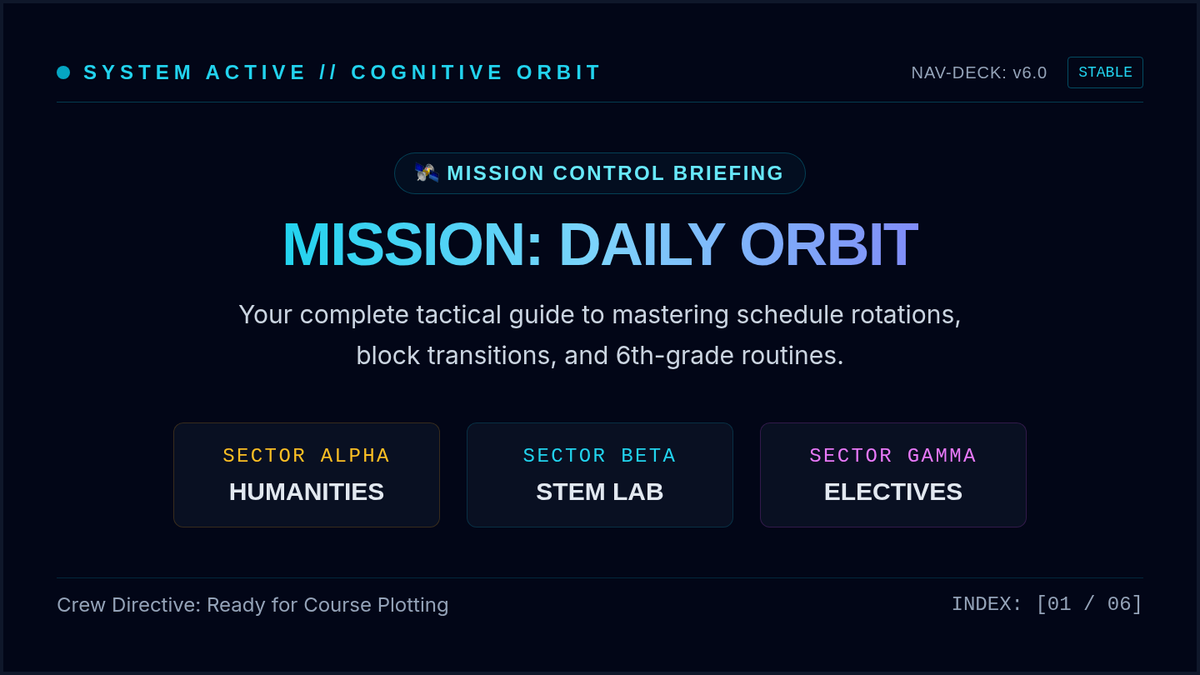
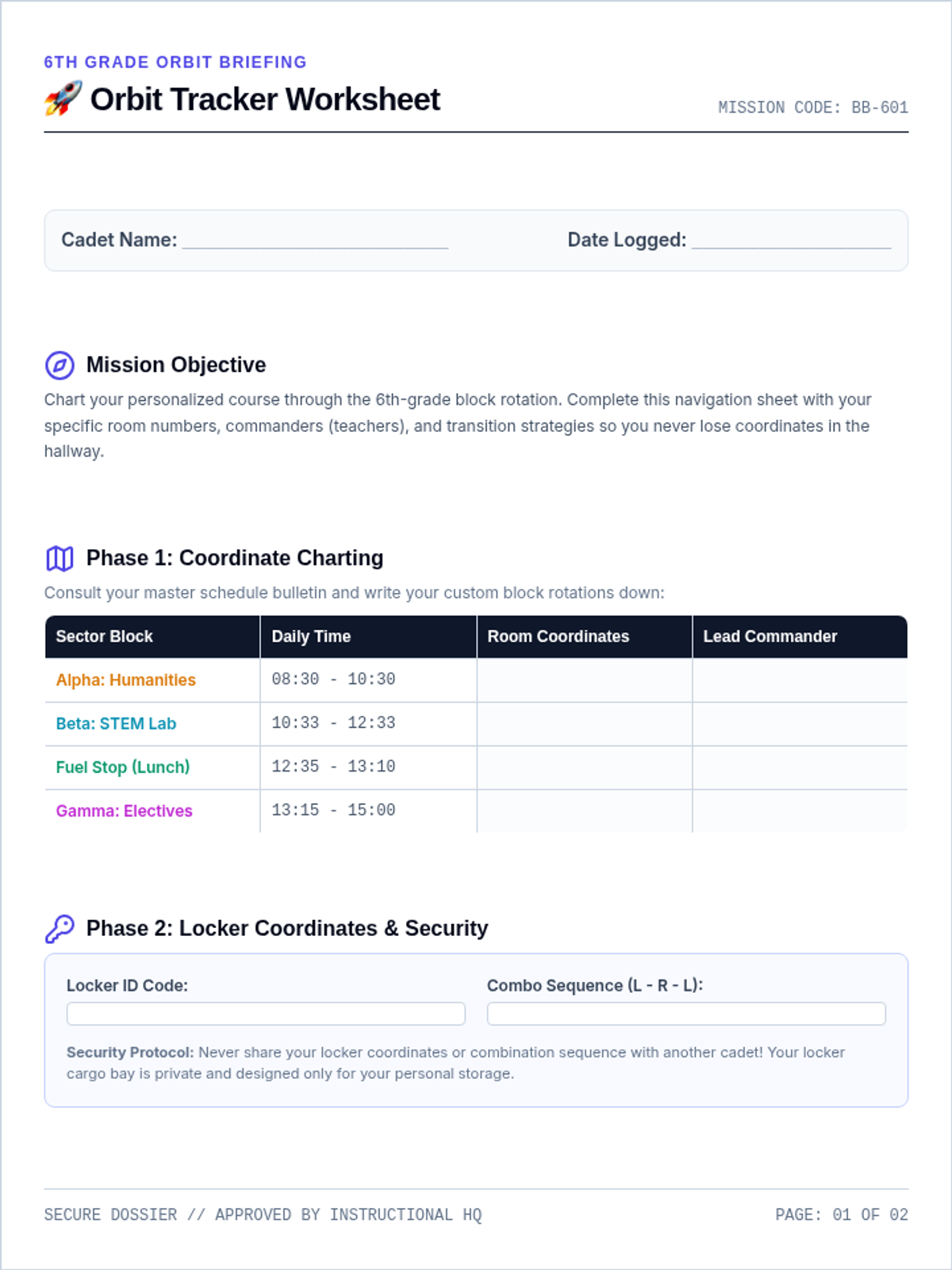
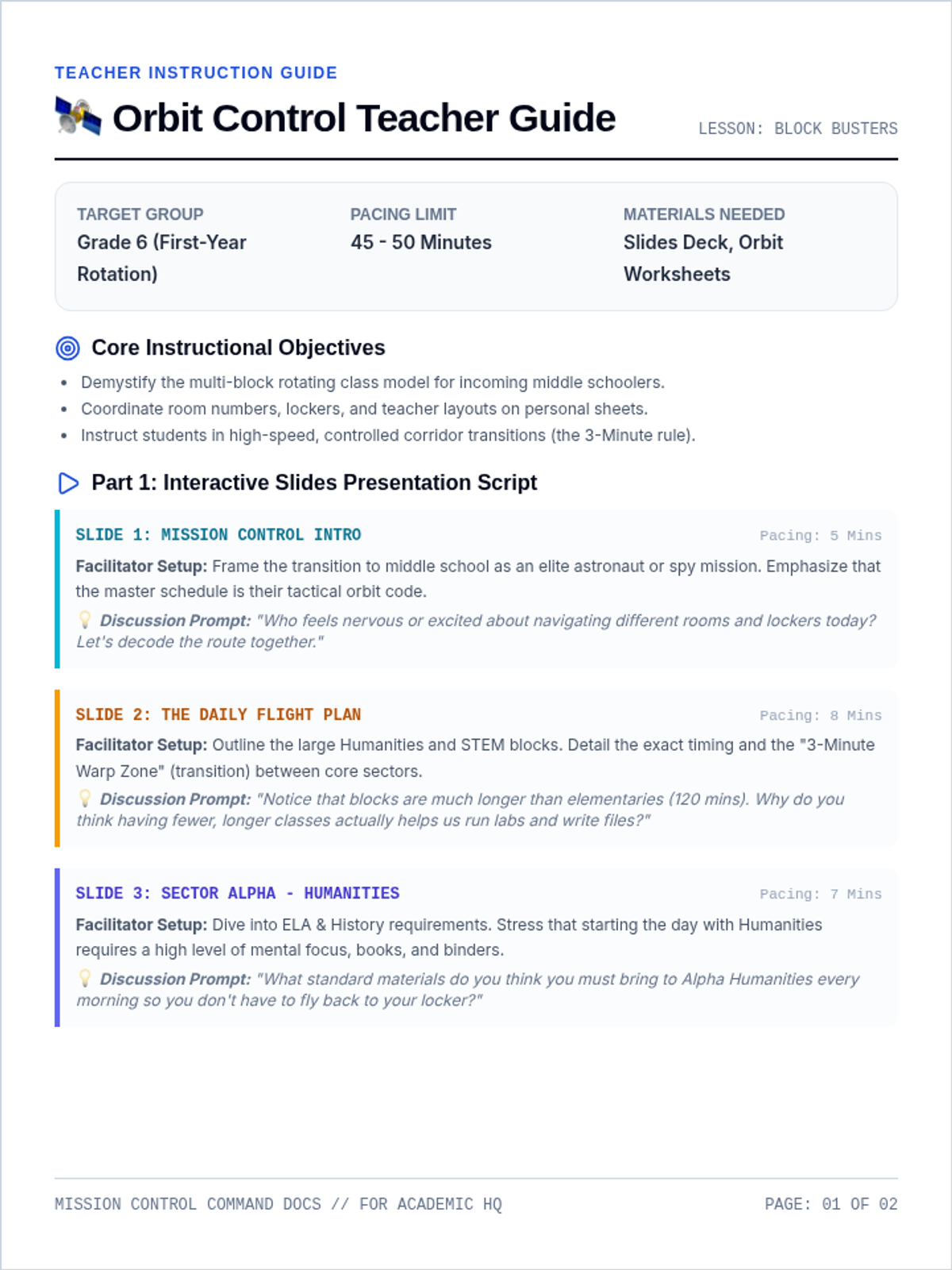
A lesson helping 6th-grade students master their daily schedule, understand block rotations, and successfully navigate transitions between humanities, STEM, and electives.
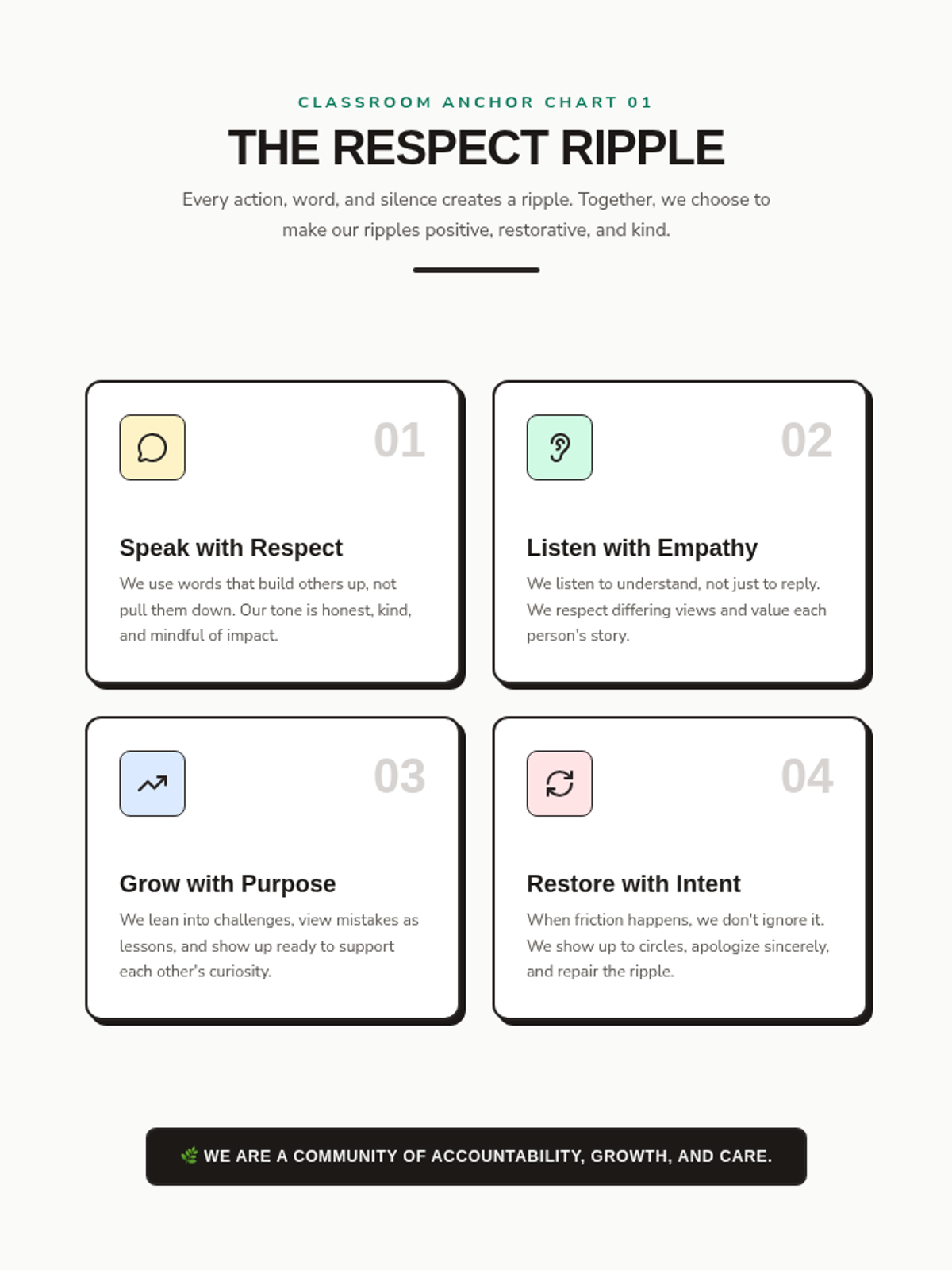
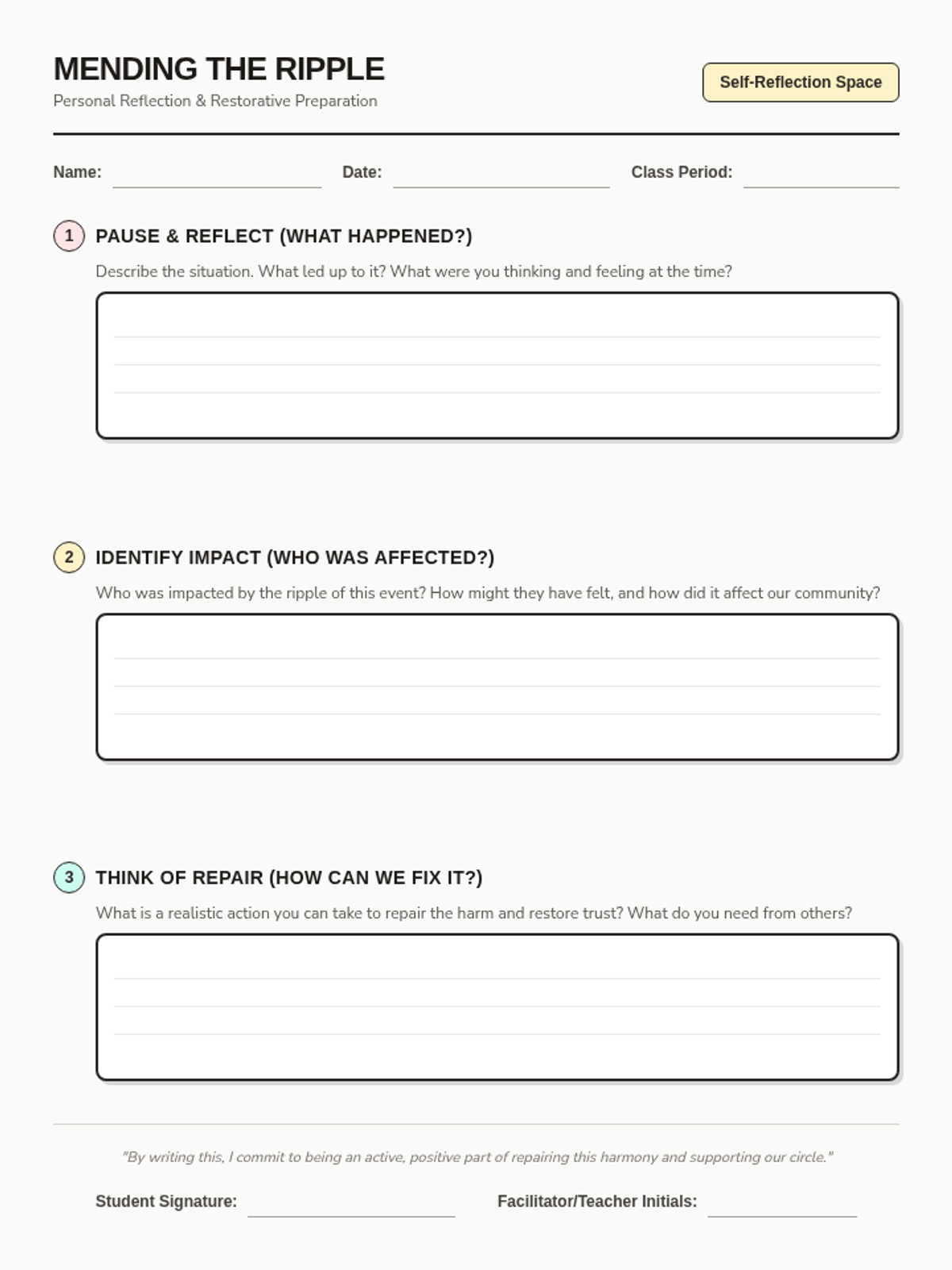
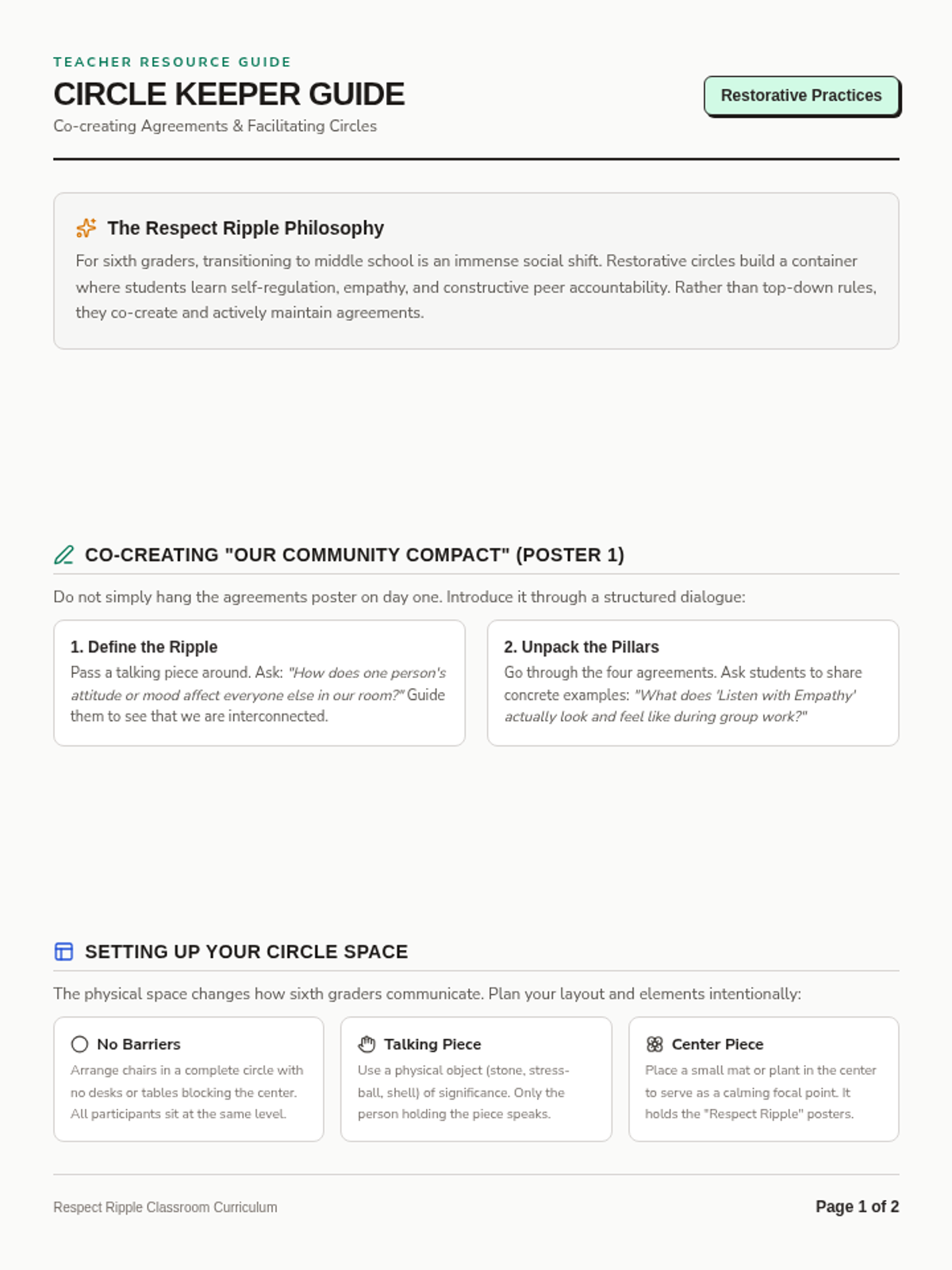
A restorative, community-focused set of materials for 6th grade classrooms. Includes large, clean visual anchor charts (posters) for agreements, restorative dialogue, and repairing harm, plus a student reflection worksheet and a teacher guide for hosting circle discussions.
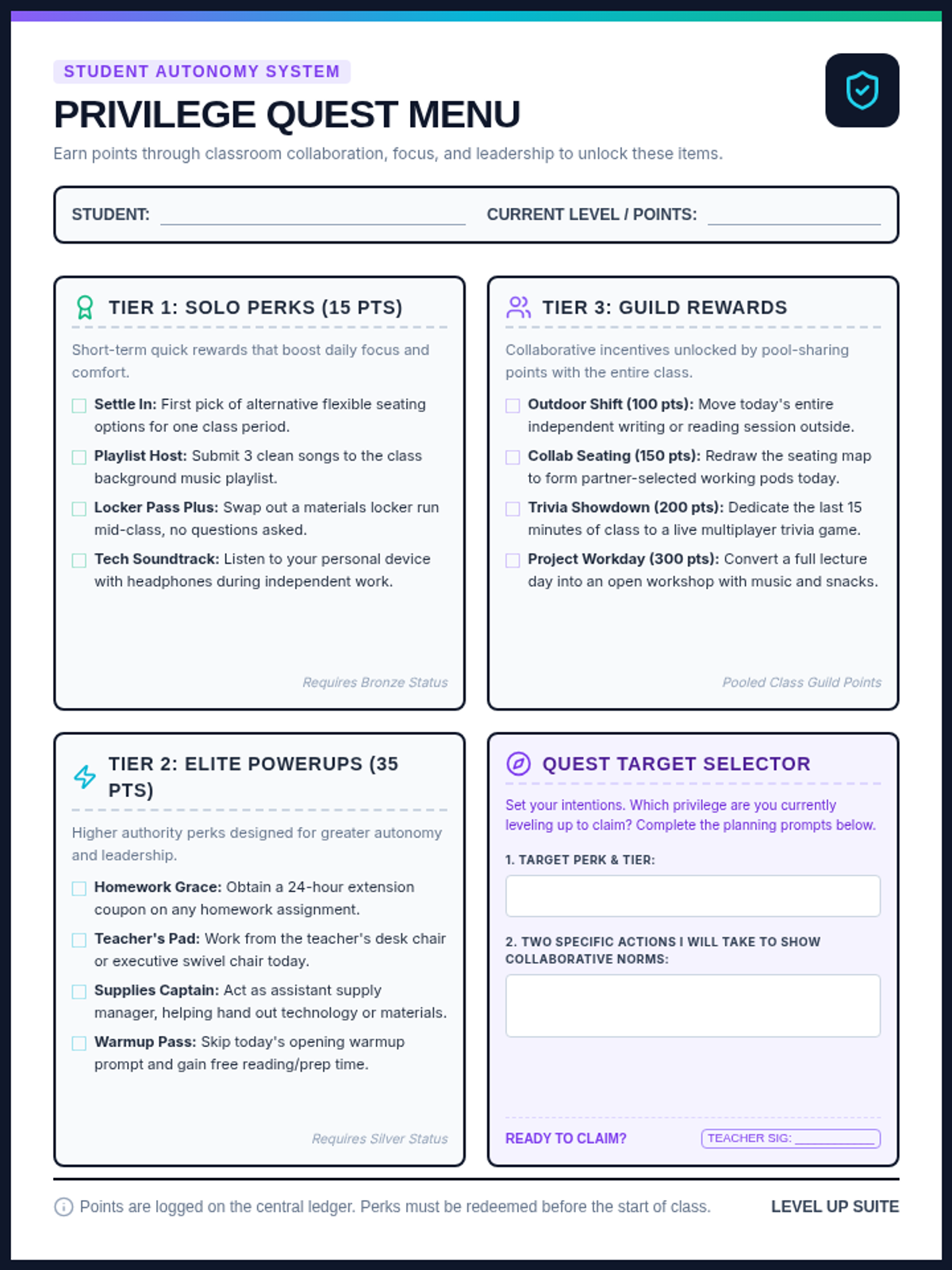
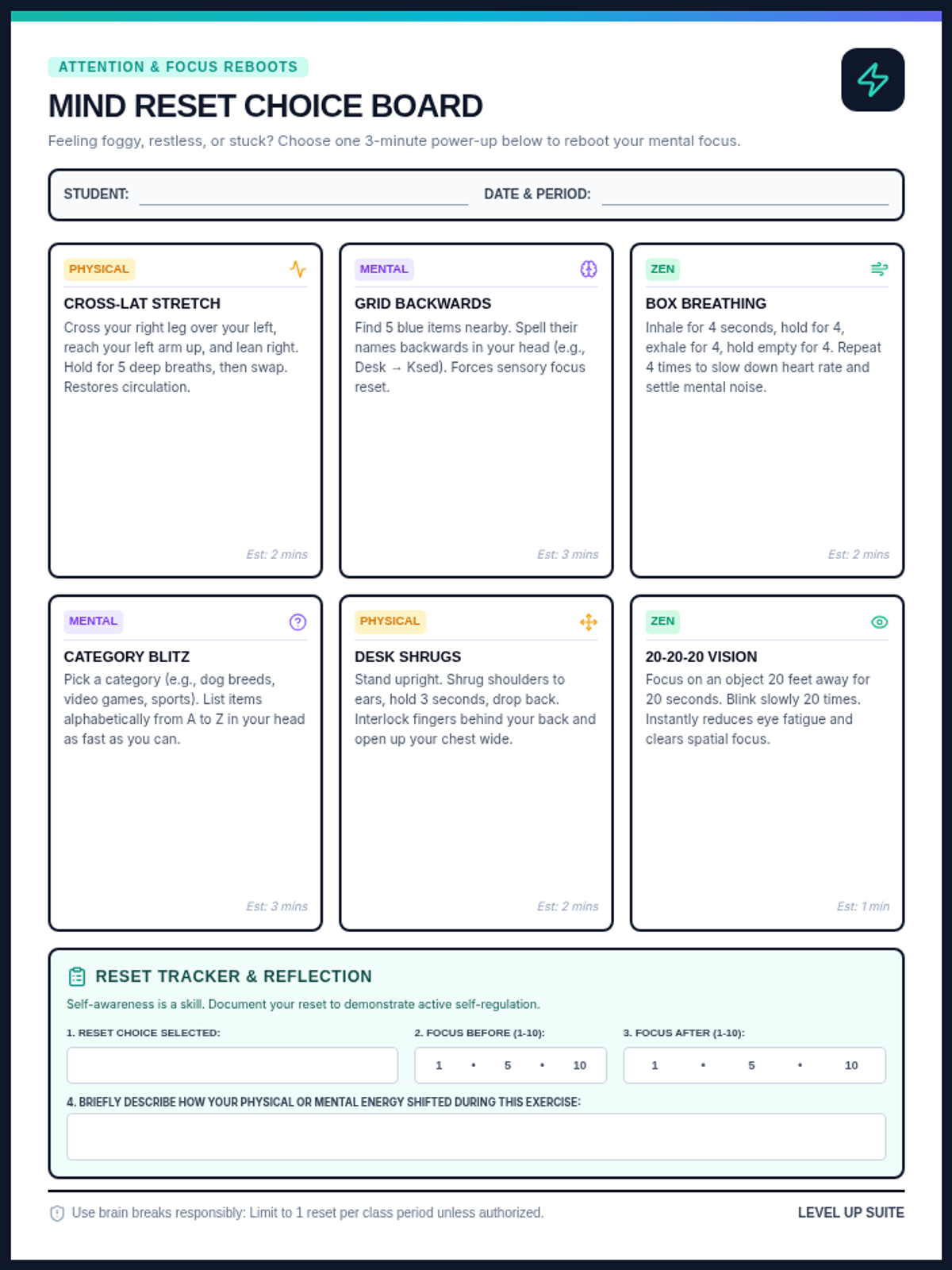
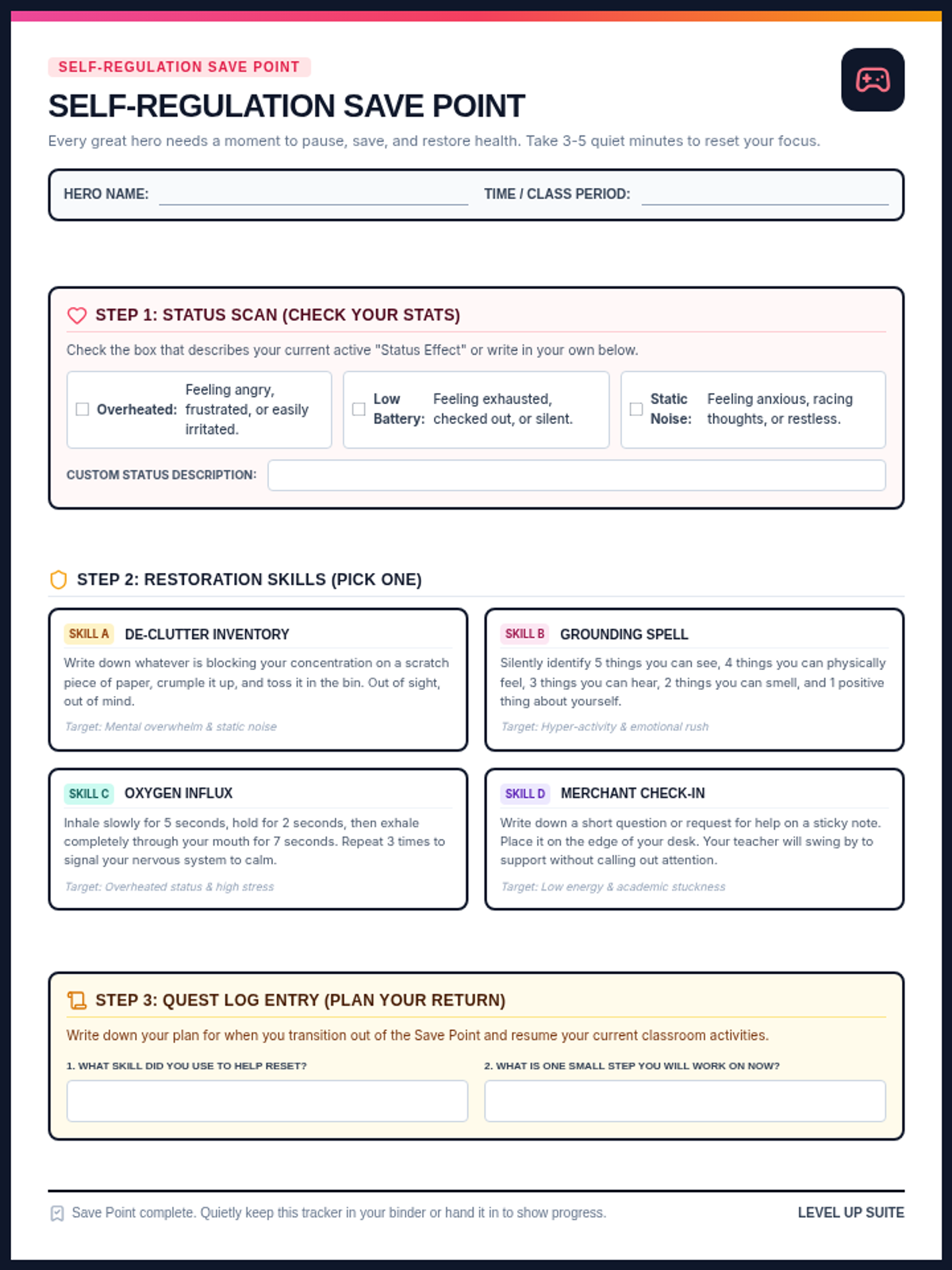
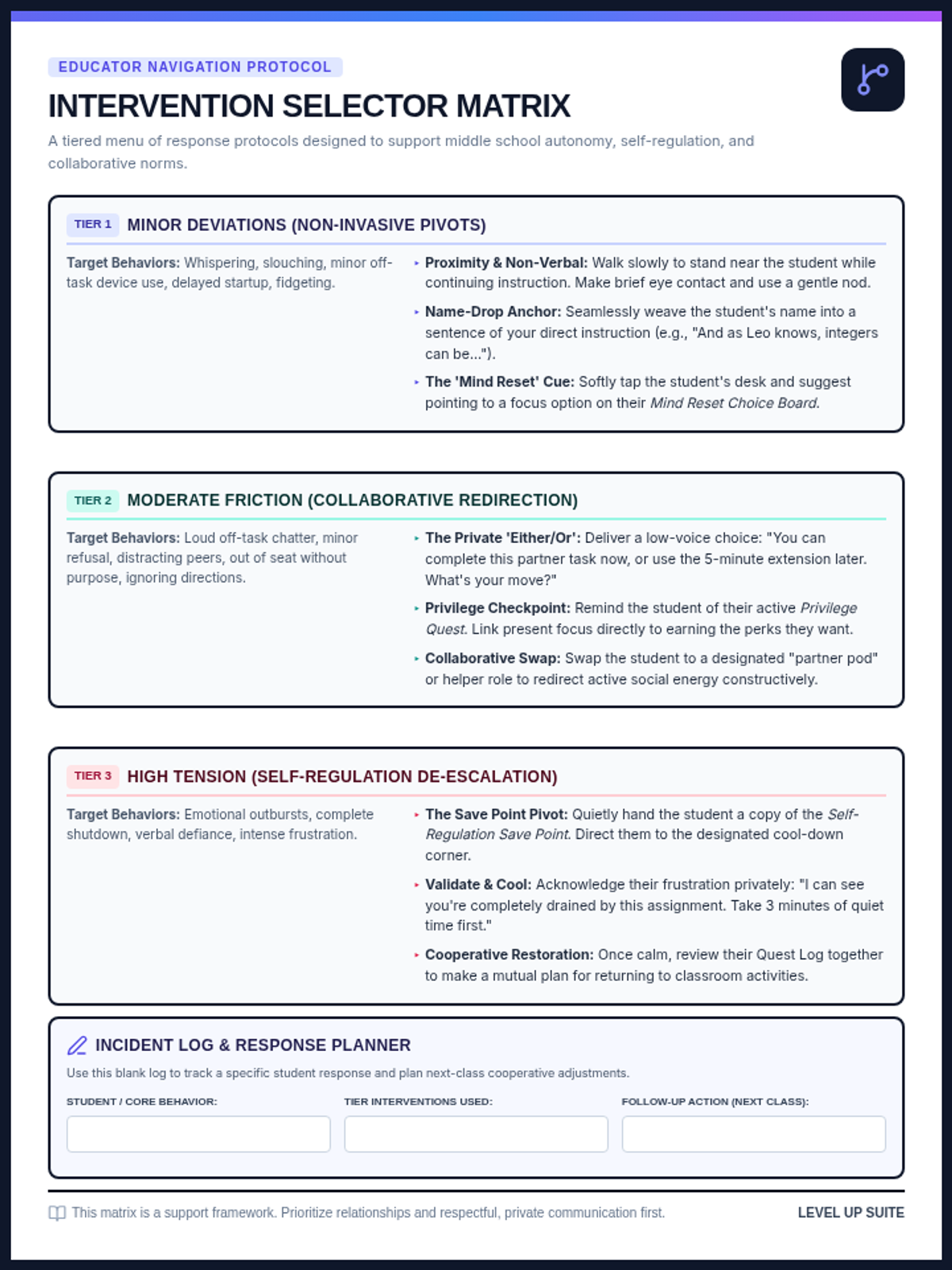
A comprehensive classroom management toolkit designed specifically for middle schoolers, emphasizing autonomy, self-regulation, and collaborative norms. It contains a privilege menu, a brain-break choice board, a student coping guide, and a teacher intervention selector.
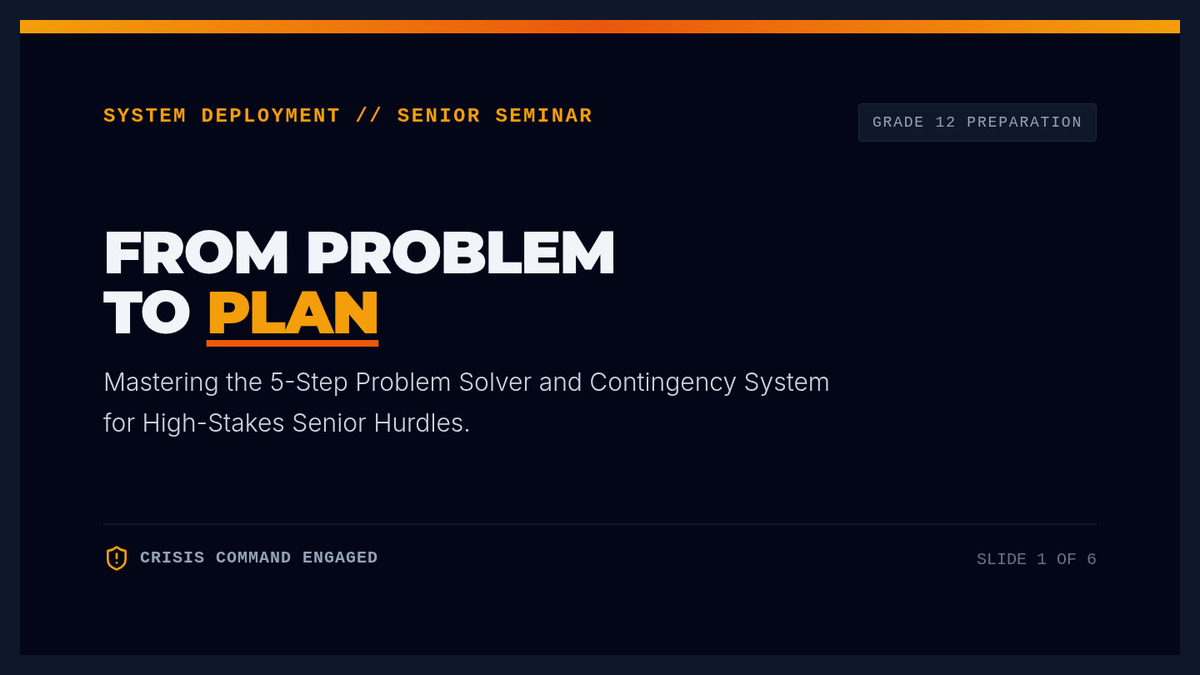
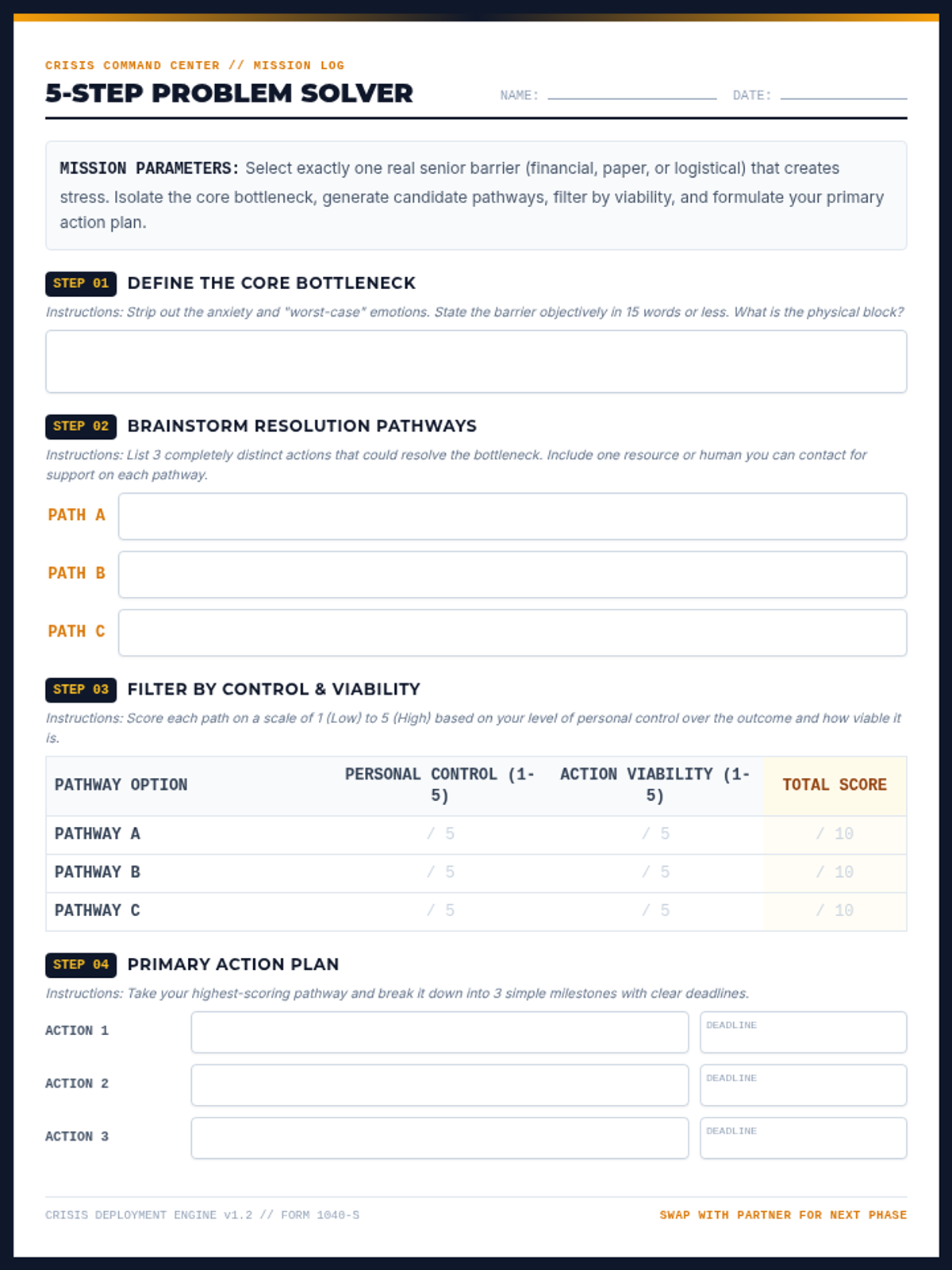
A high-impact 45-minute lesson for 12th graders to master problem-solving under pressure. Students learn a structured 5-step framework, analyze common senior barriers (financial, logistical, time), and build actionable backup plans with concrete contingencies.
A 45-minute lesson designed for 12th graders to analyze their punctuality habits, understand the high stakes of reliability in high school and the workplace, and build a concrete, personalized reliability plan.
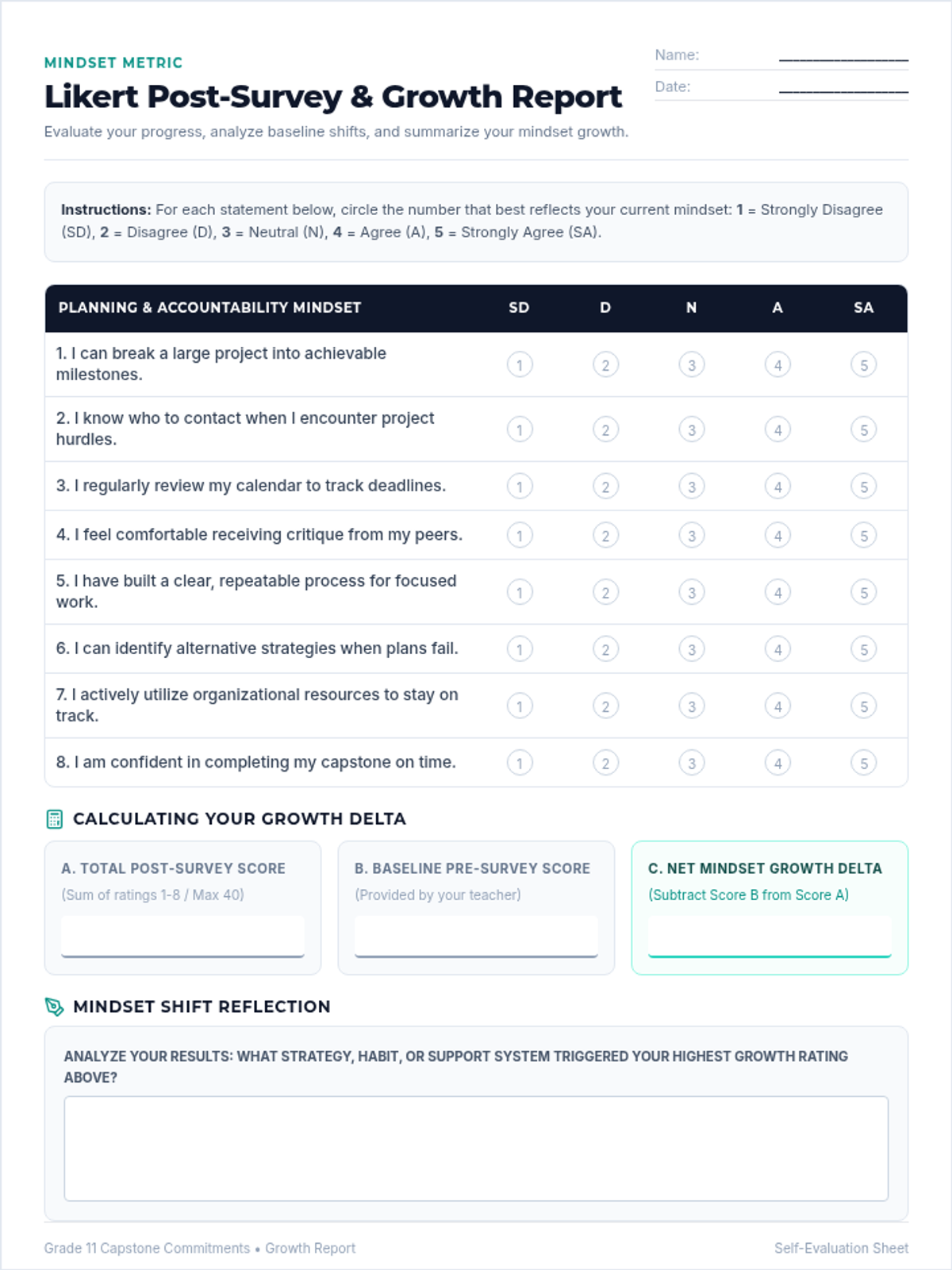
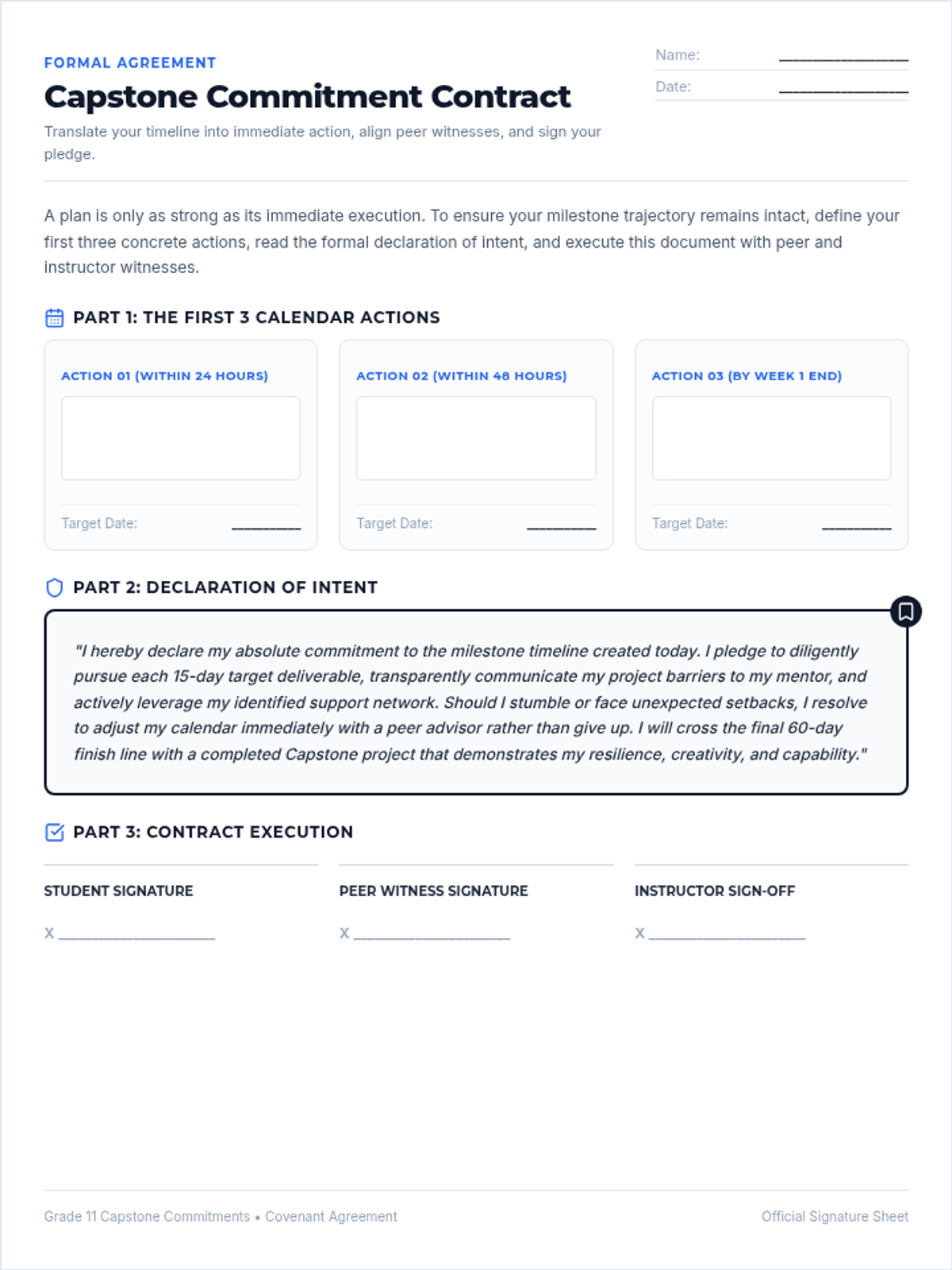
A 45-minute lesson for 11th graders to finalize their 60-day milestone plans, reflect on growth using a Likert post-survey, and make a formal commitment contract for their capstone projects.
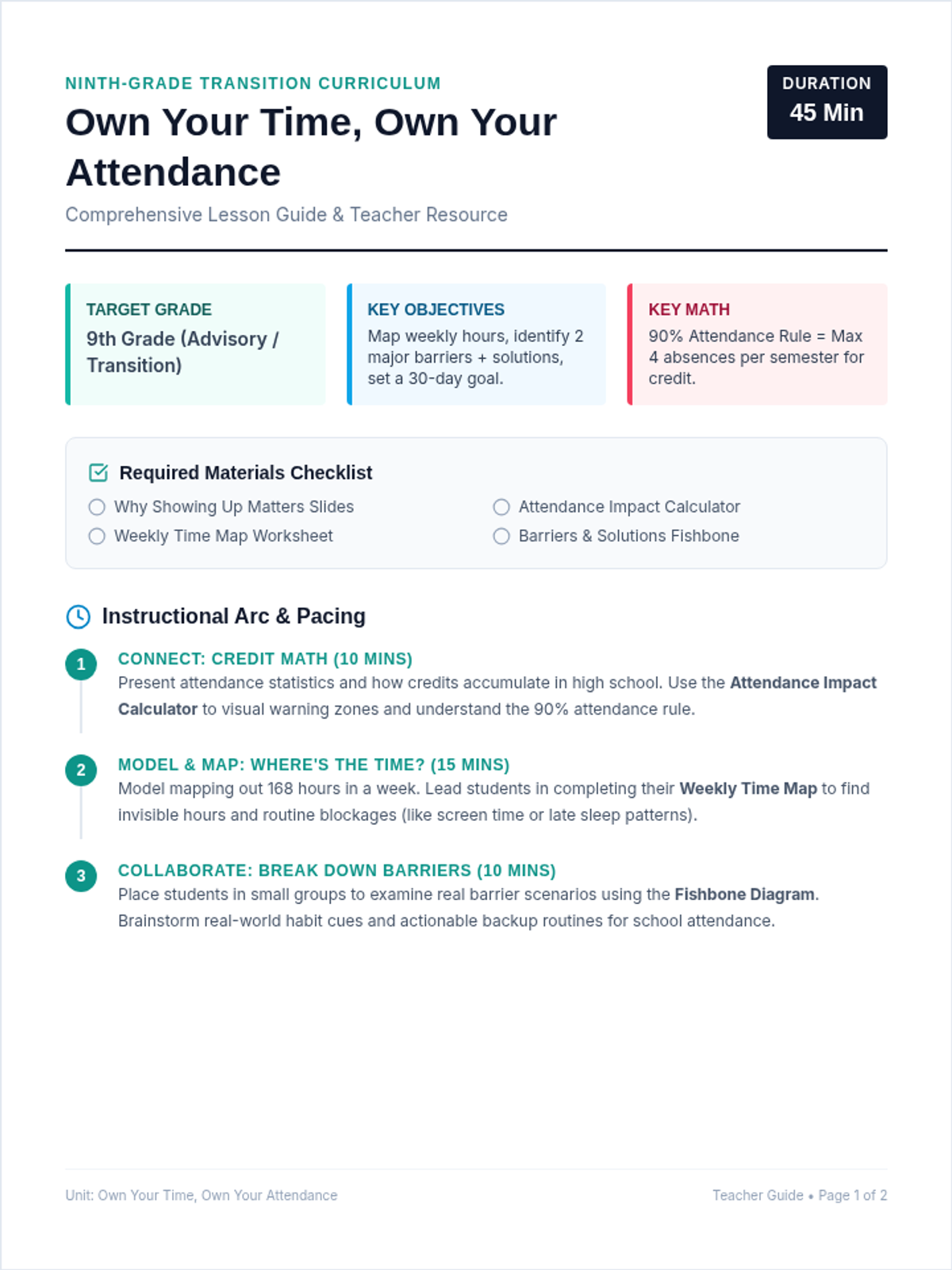
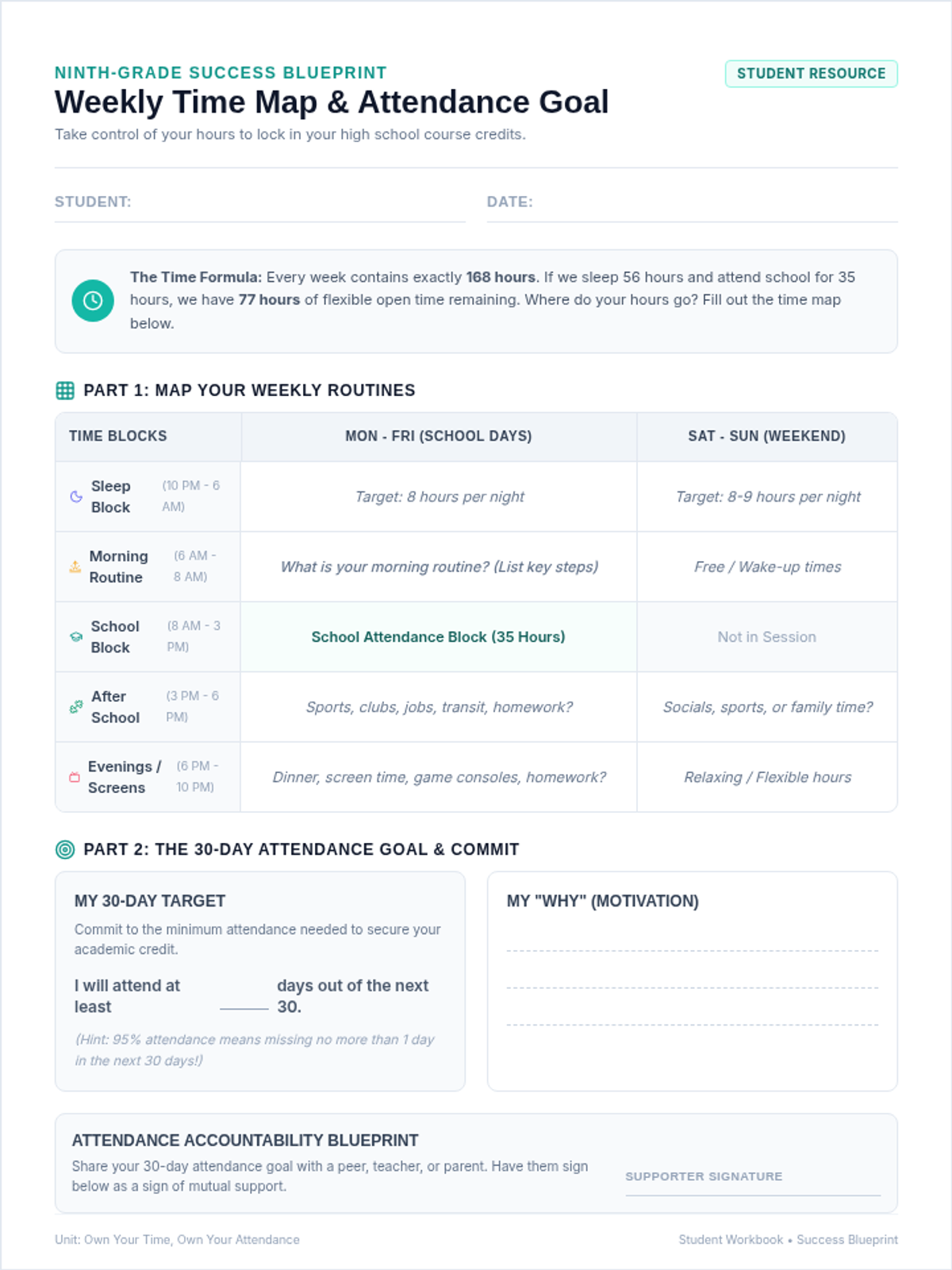
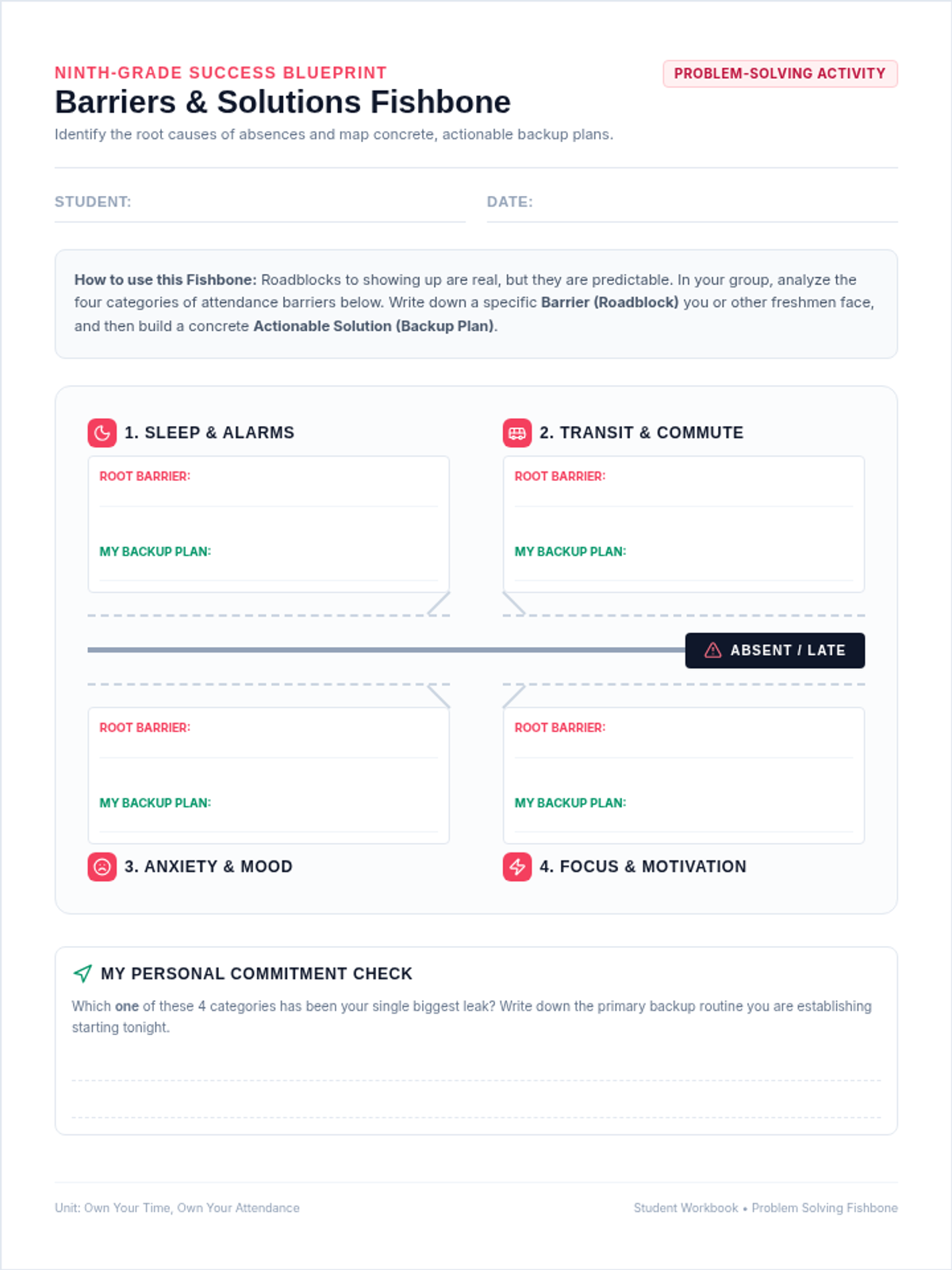
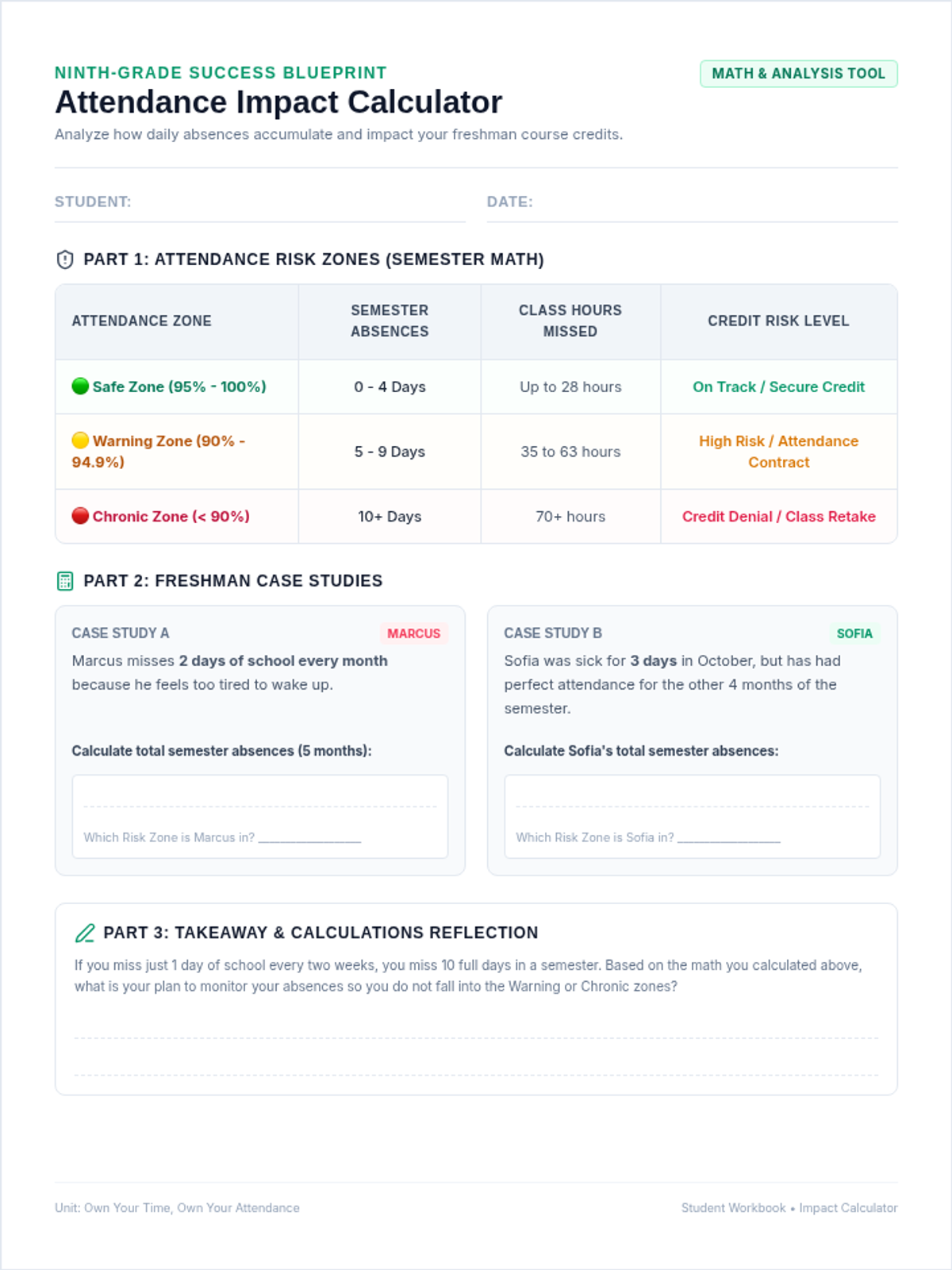
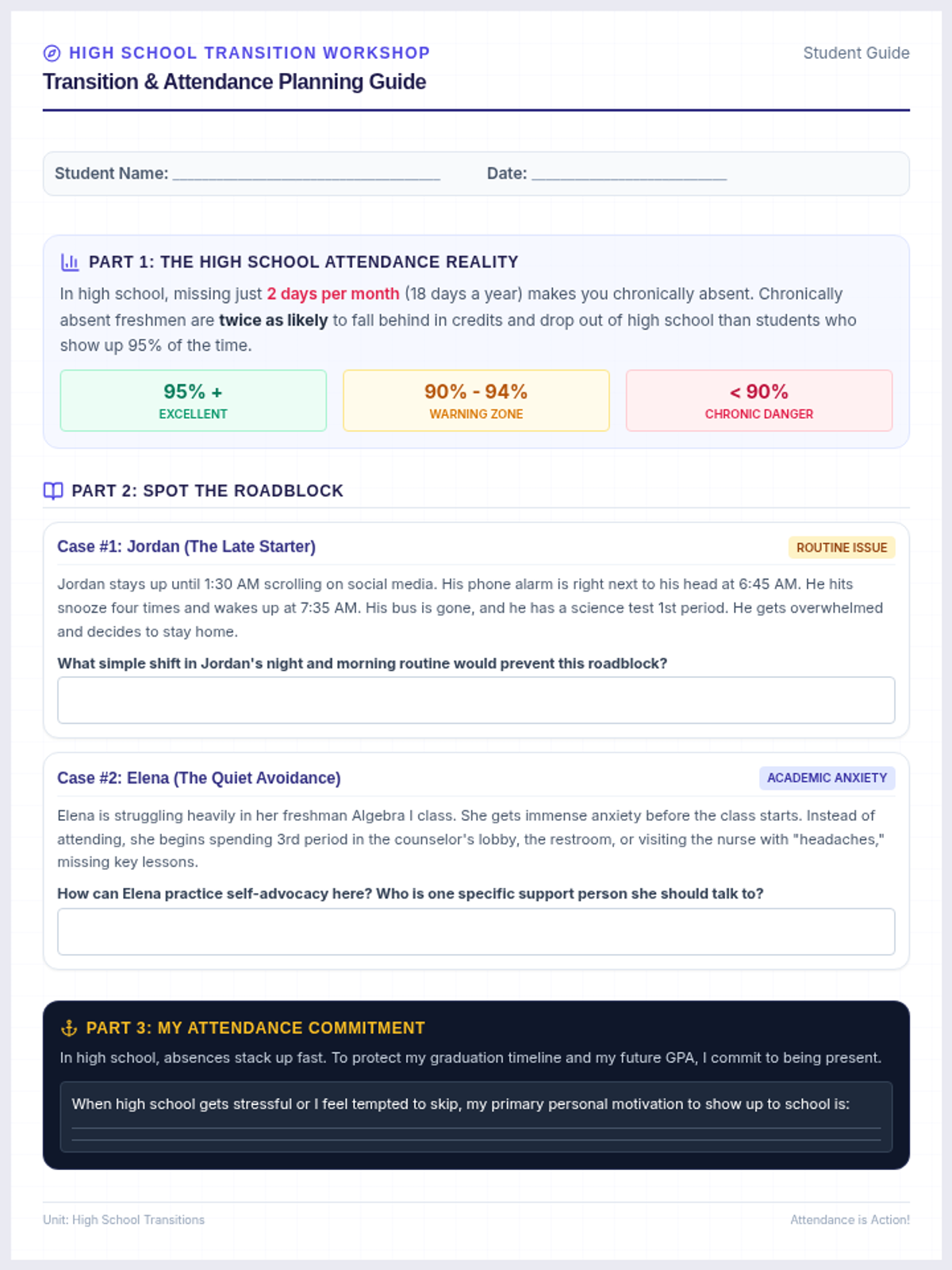
A high school transition lesson designed for 9th graders to understand the direct connection between daily attendance, high school credit acquisition, and time management. Students analyze their weekly schedules, map out barriers using a fishbone diagram, and commit to a 30-day attendance goal.
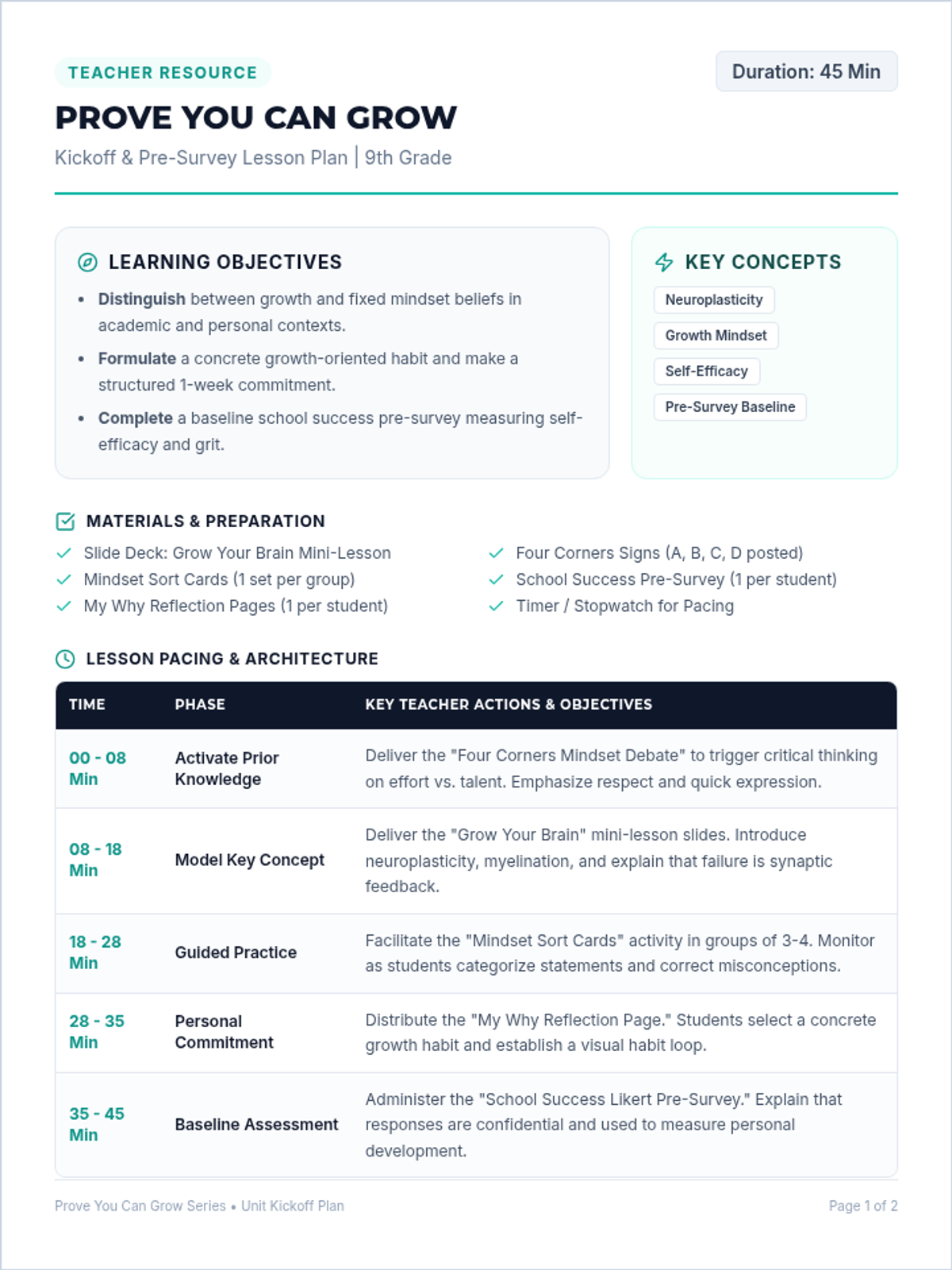
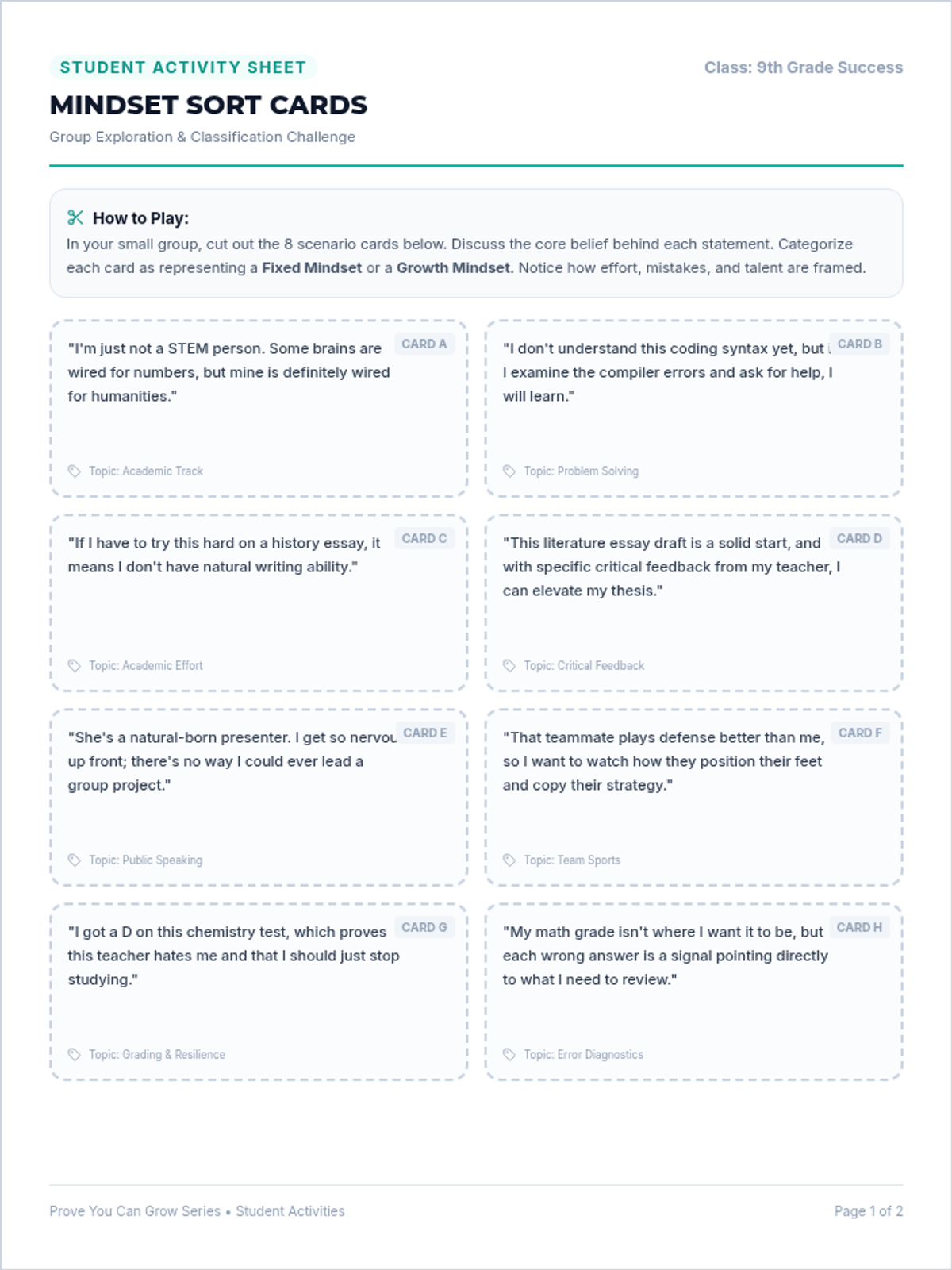
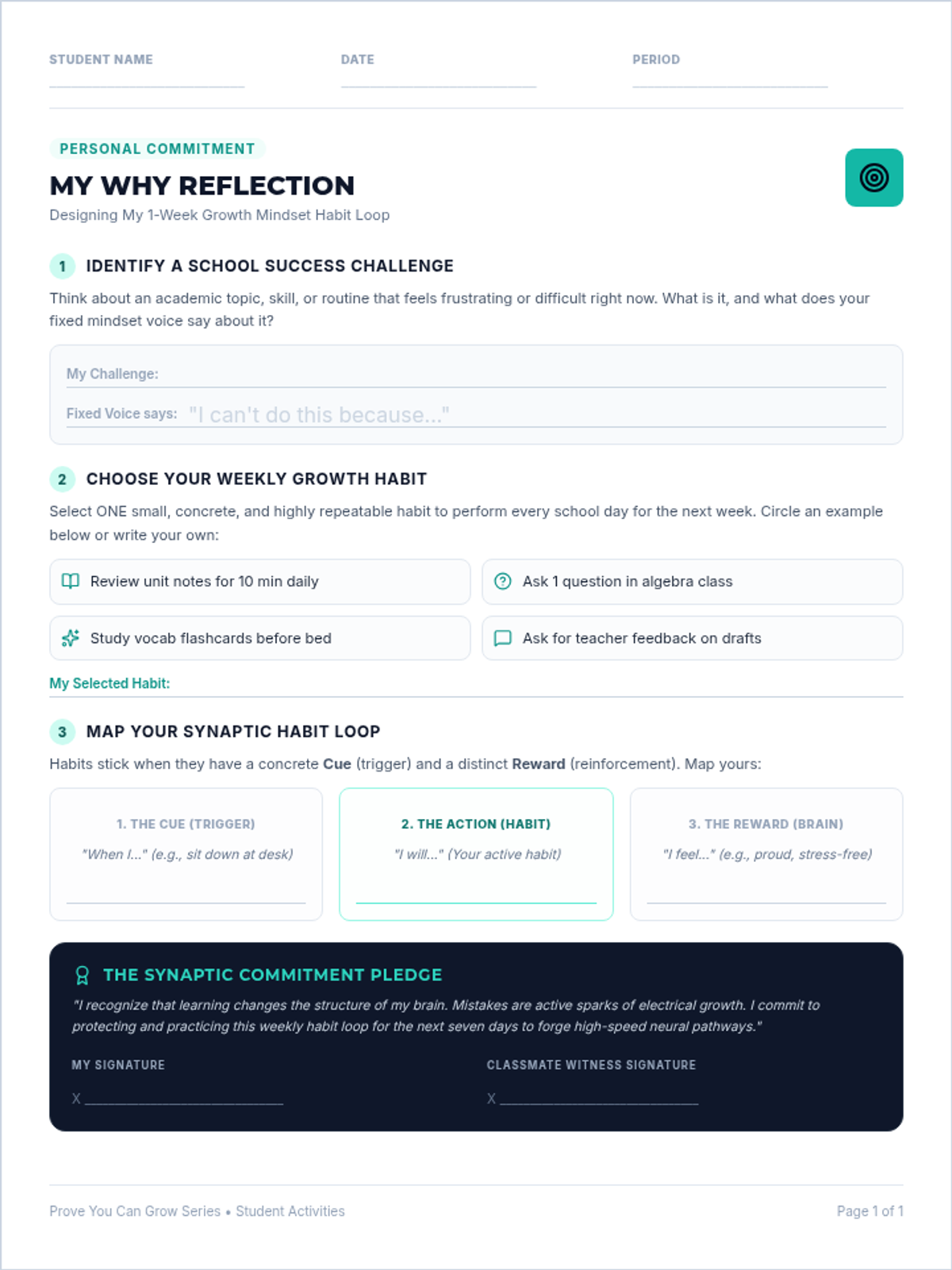
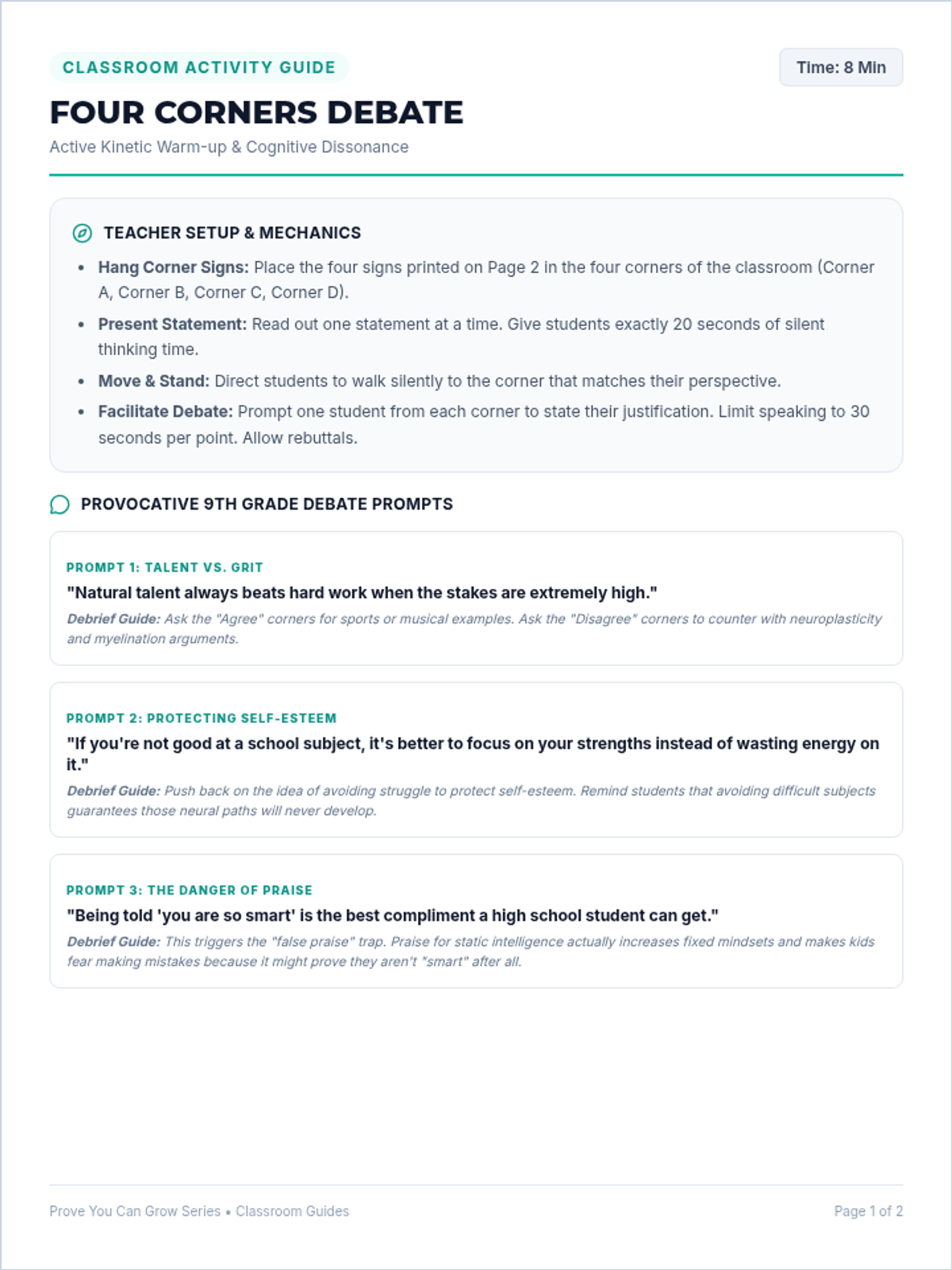
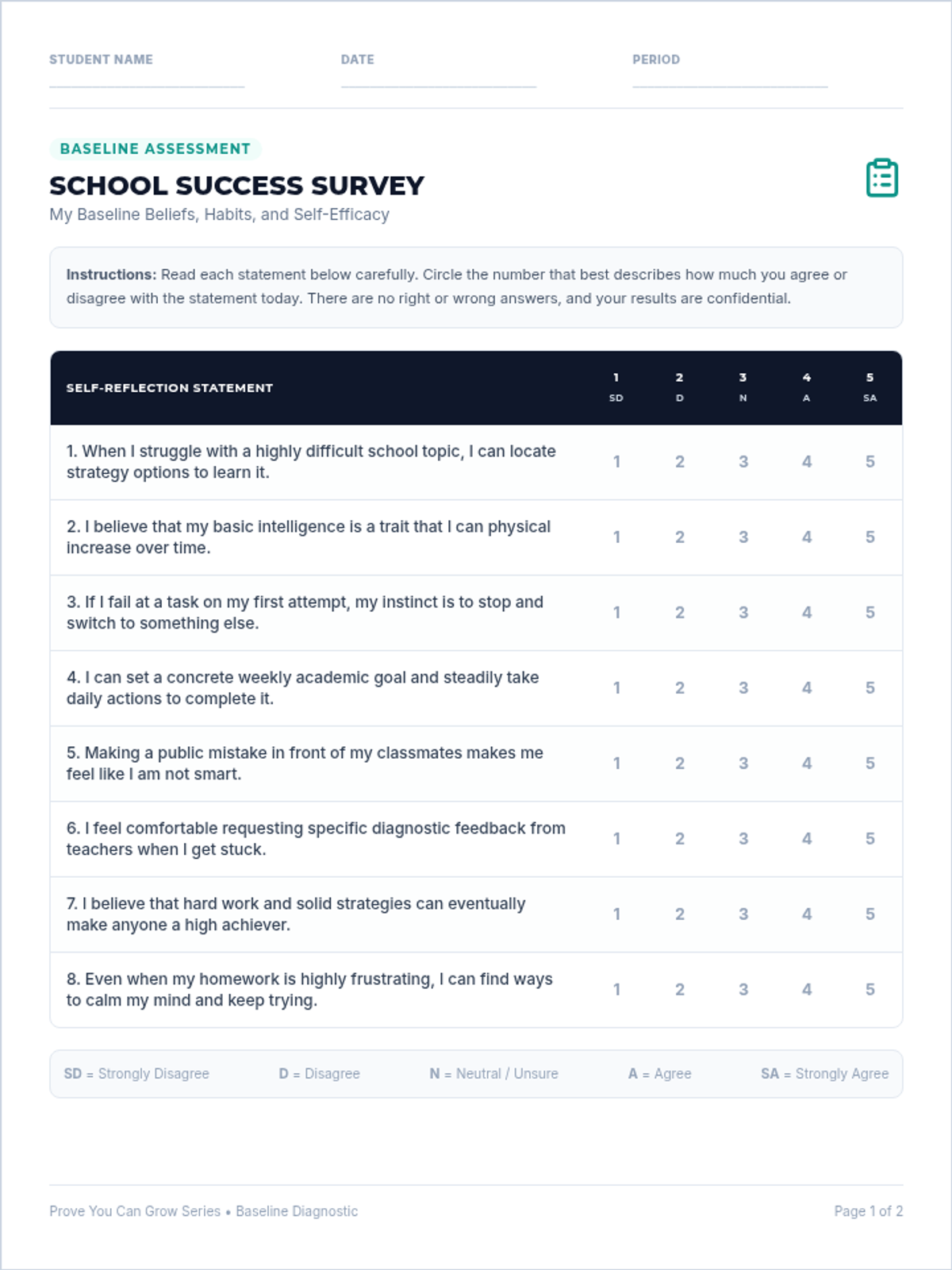
A kickoff lesson introducing 9th graders to growth mindset, neuroplasticity, and self-efficacy. Students engage in collaborative activities, analyze their mindsets, make a personal growth commitment, and complete a baseline school success pre-survey.
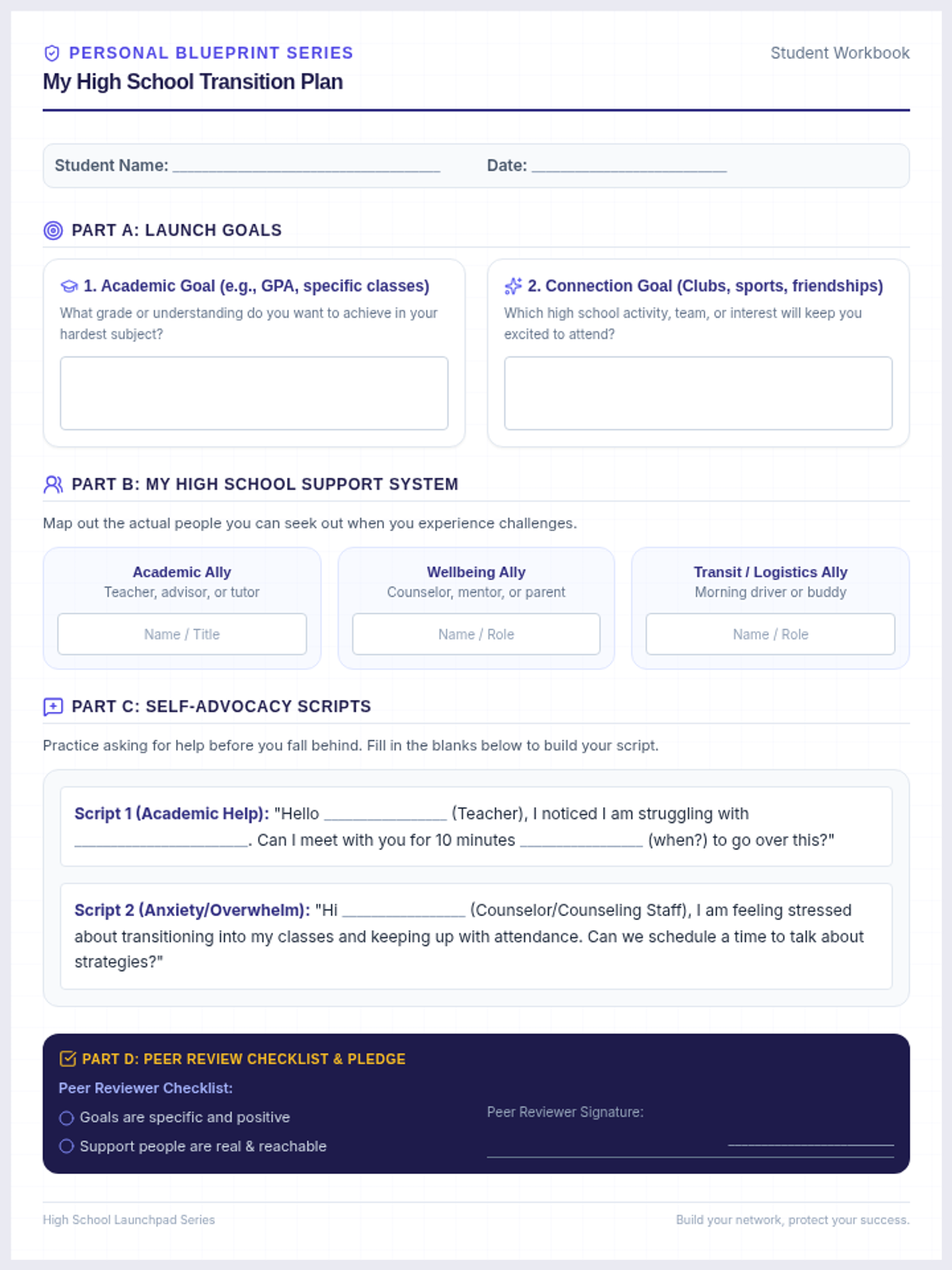
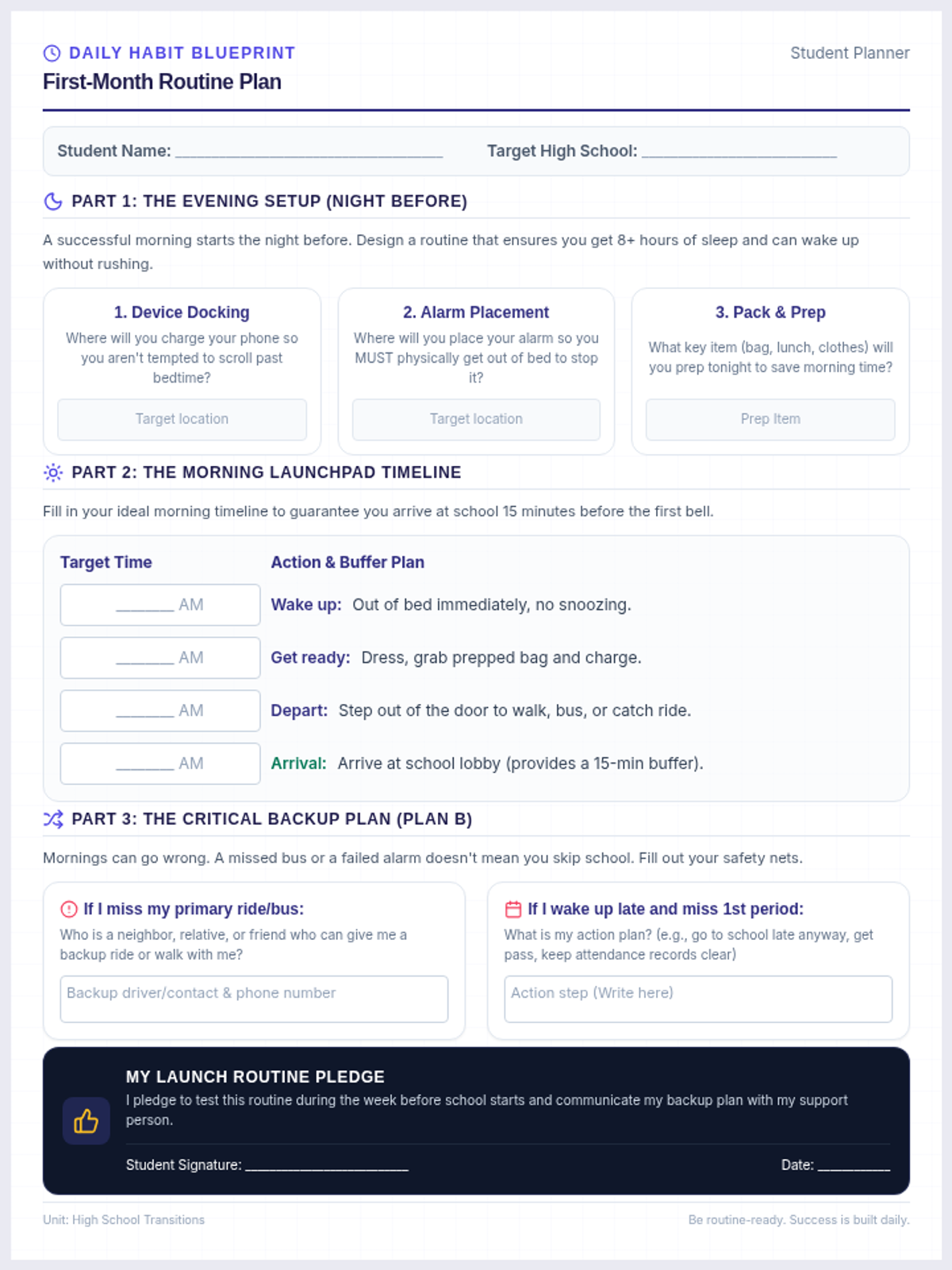
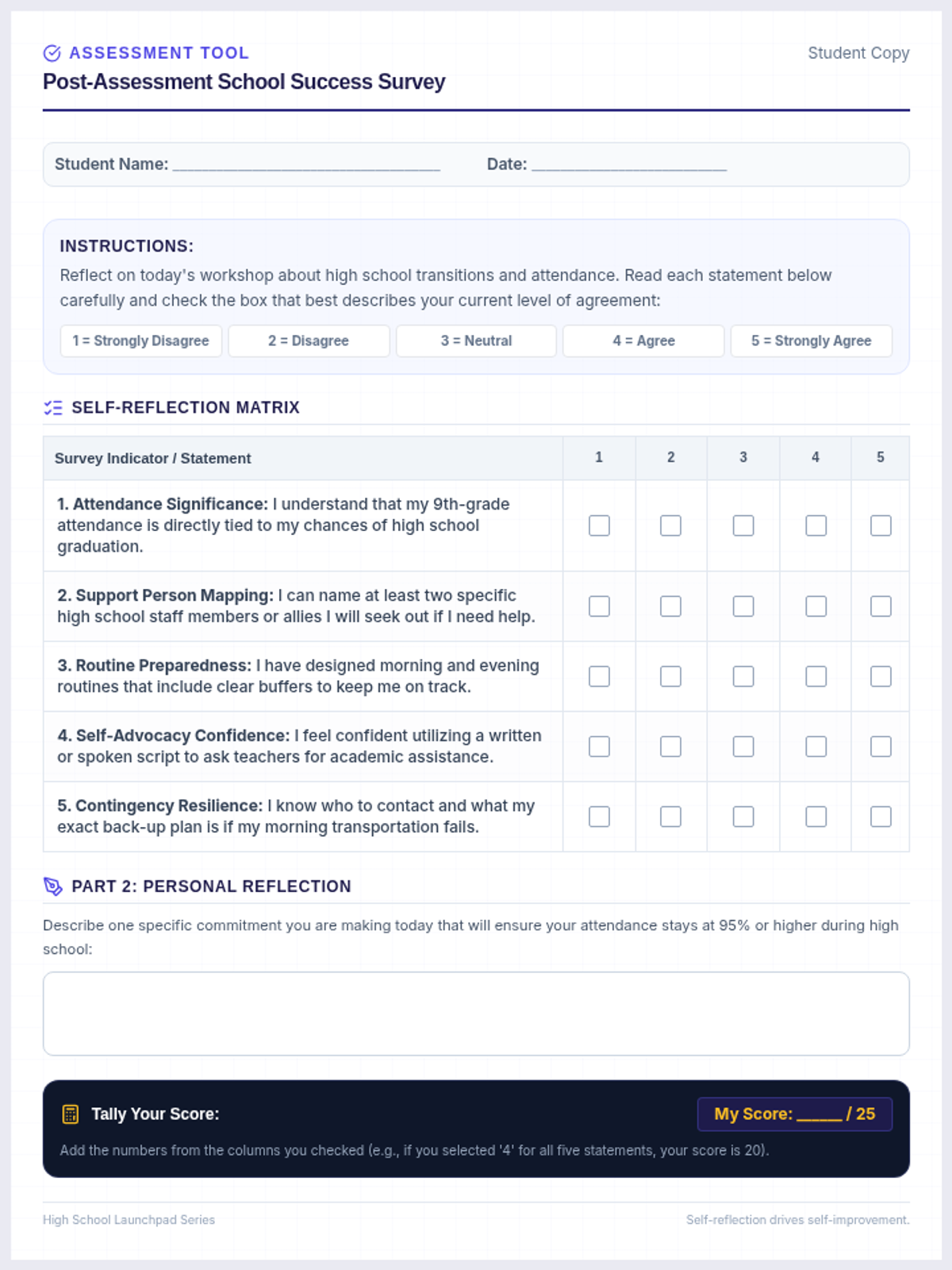
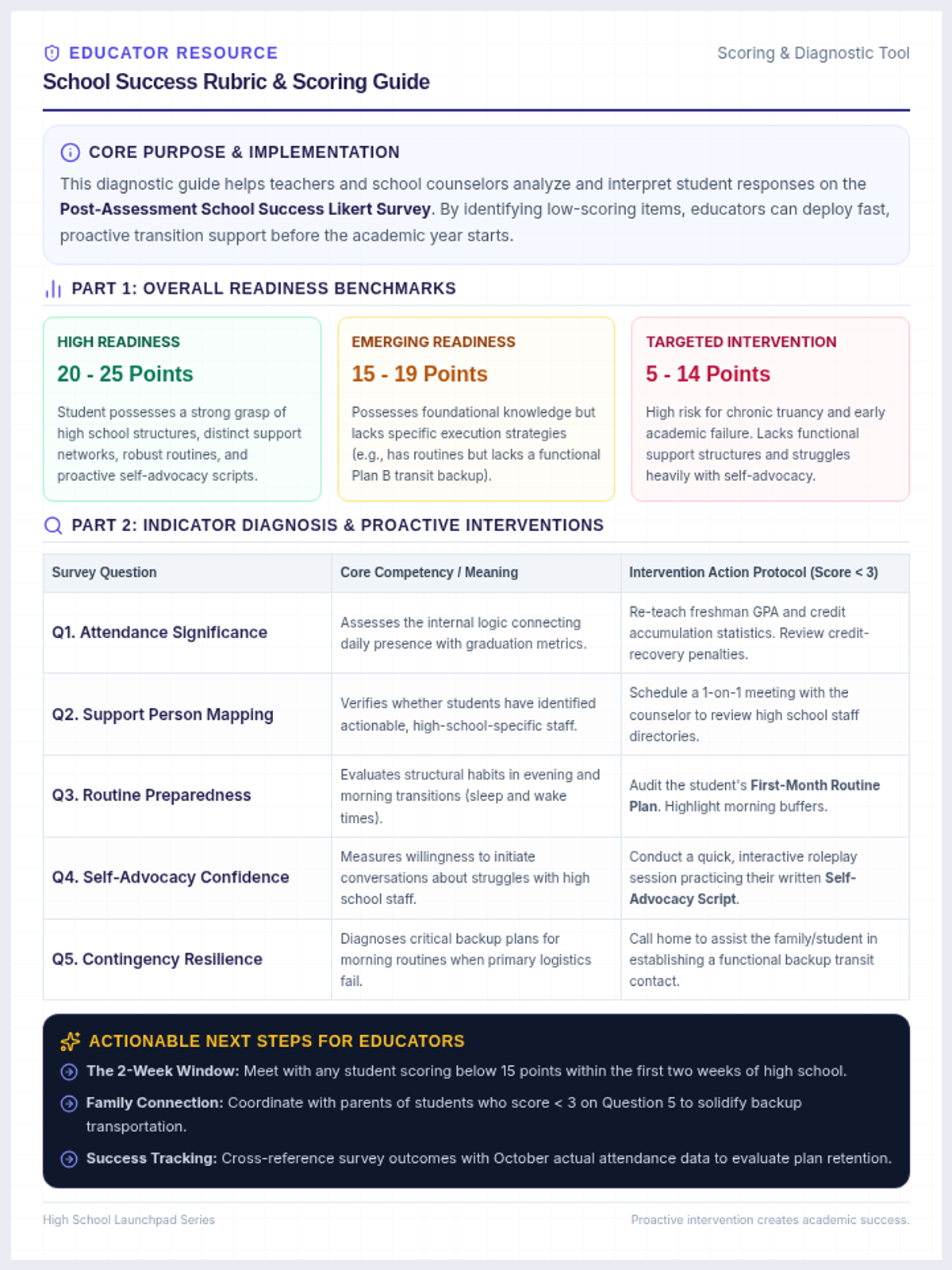
A comprehensive 45-minute lesson for 8th graders transitioning to high school, focusing on the link between attendance and academic success, building a personal transition plan with support networks, designing daily routines, and self-assessing readiness.
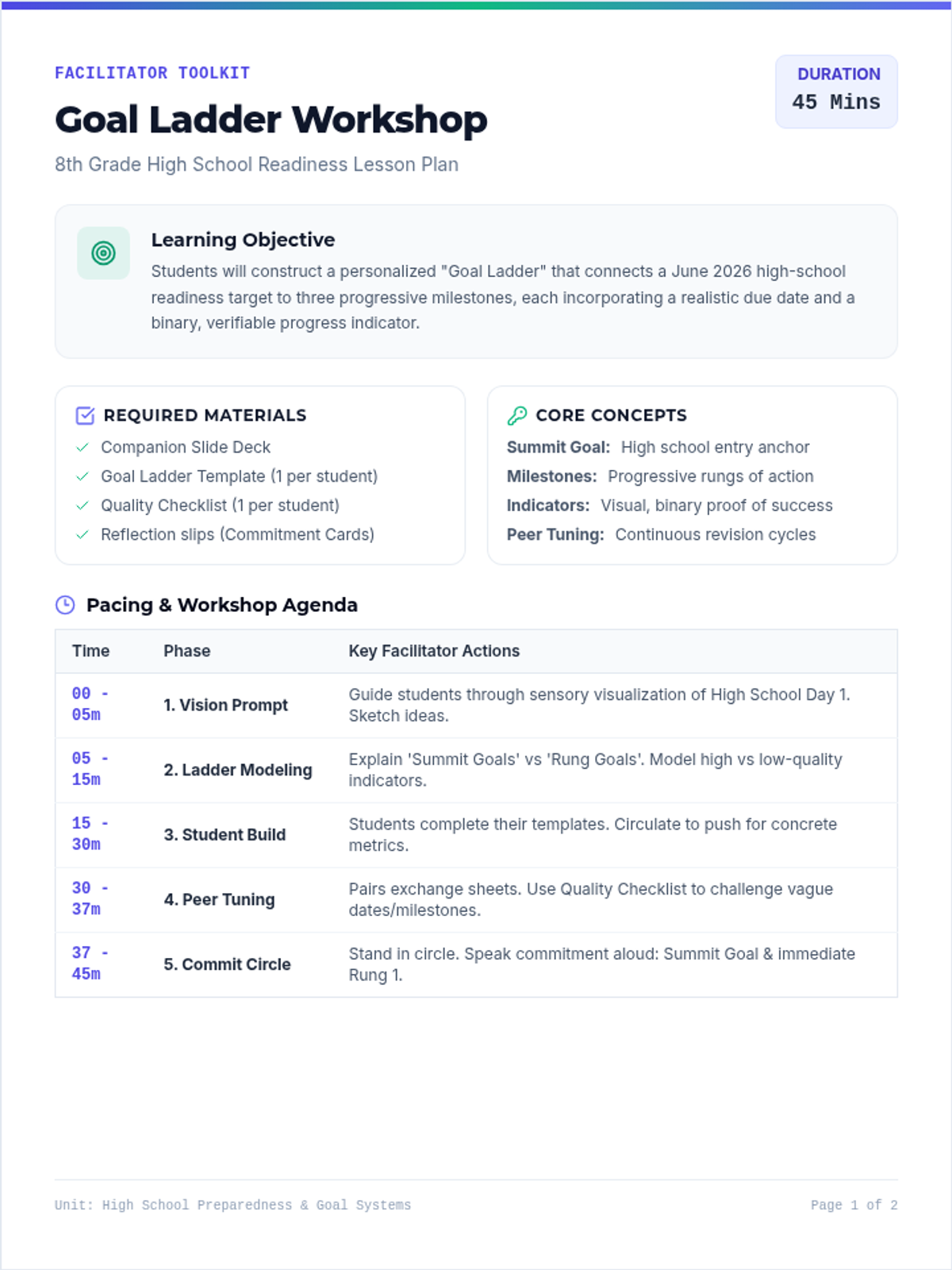
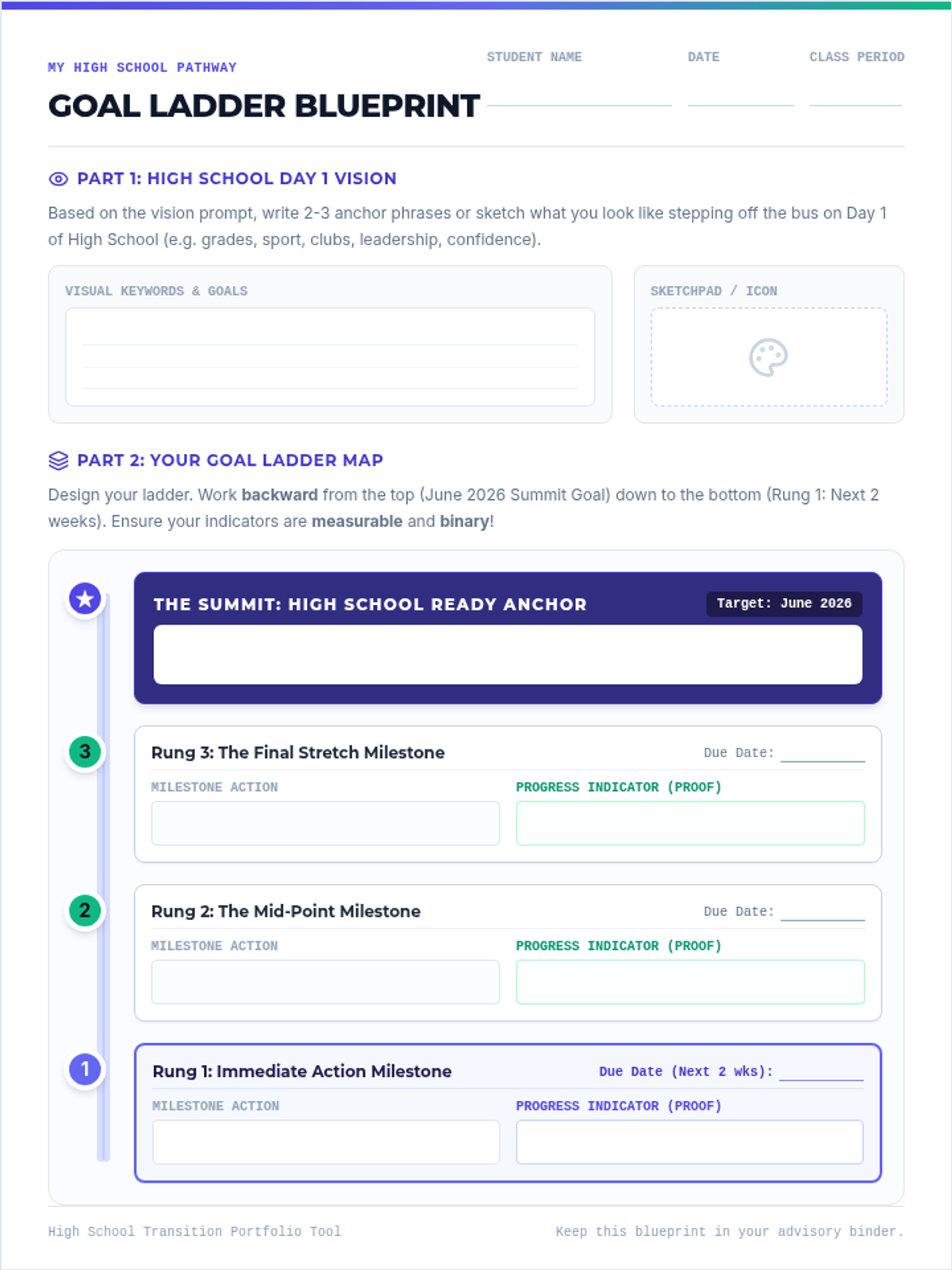
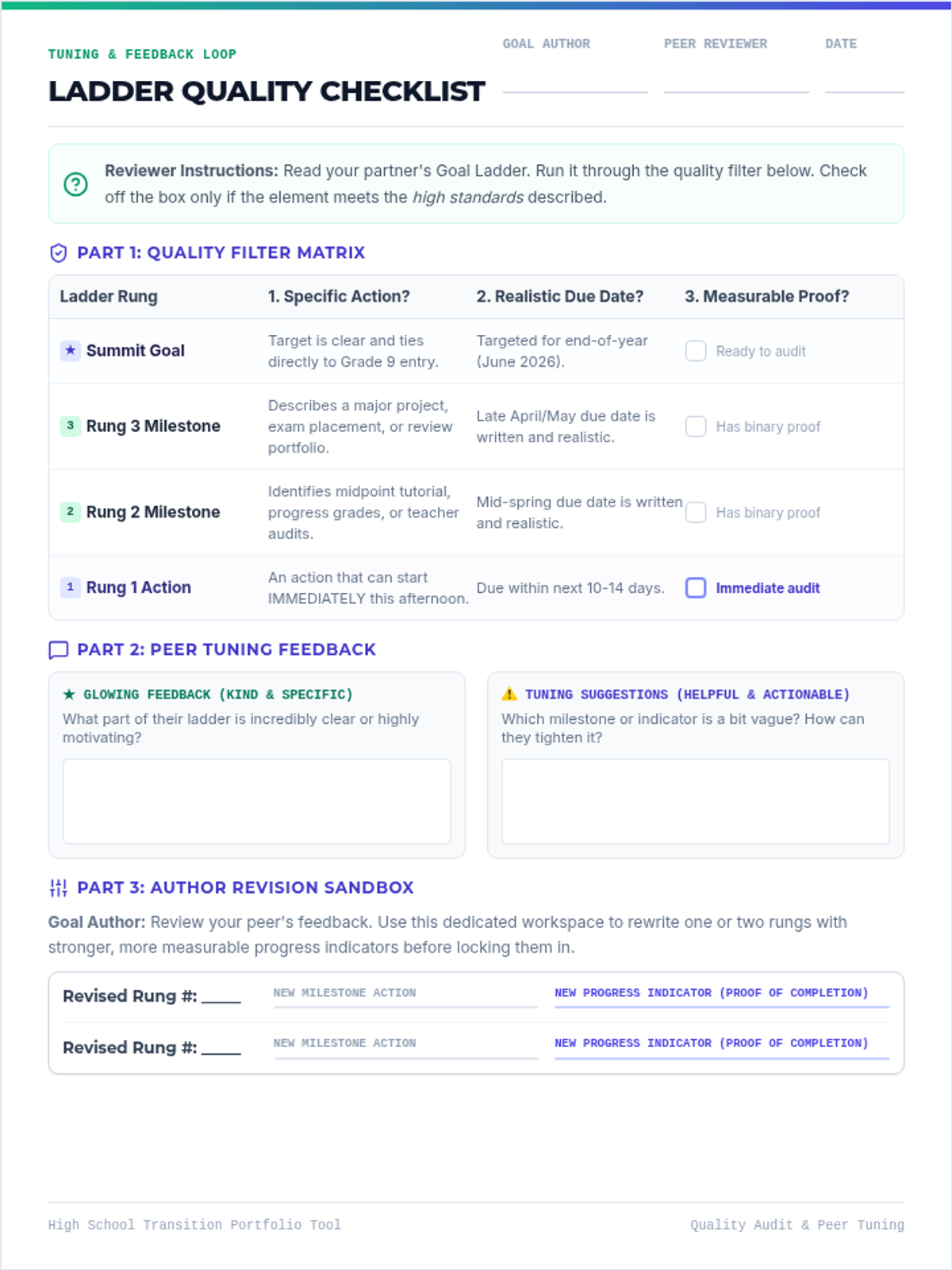
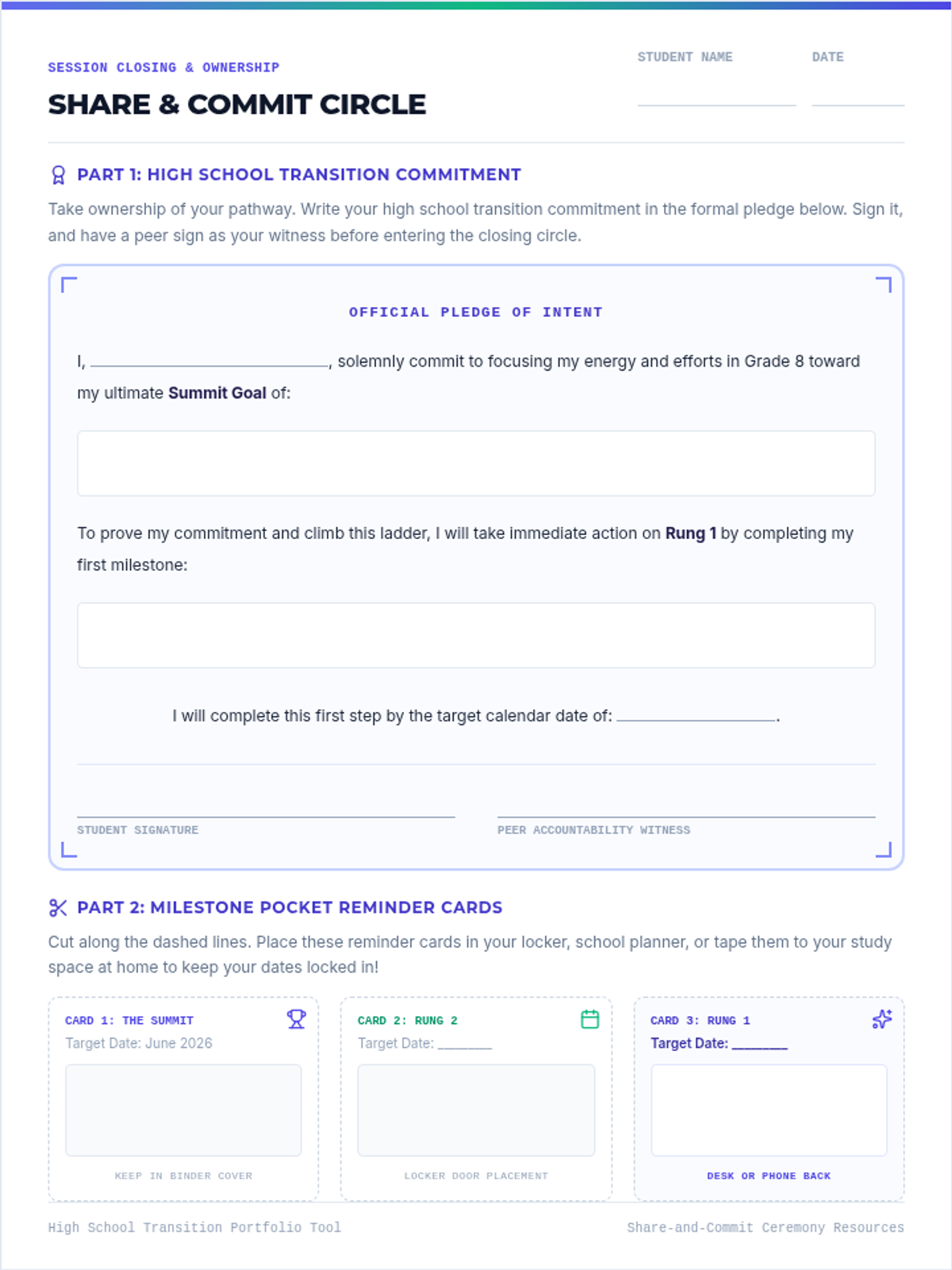
An interactive 8th-grade lesson designed to help students transition to high school by translating long-term visions into concrete, actionable steps. Students create a structured goal ladder with three milestones, specific due dates, and measurable progress indicators, followed by peer feedback and a share-and-commit circle.
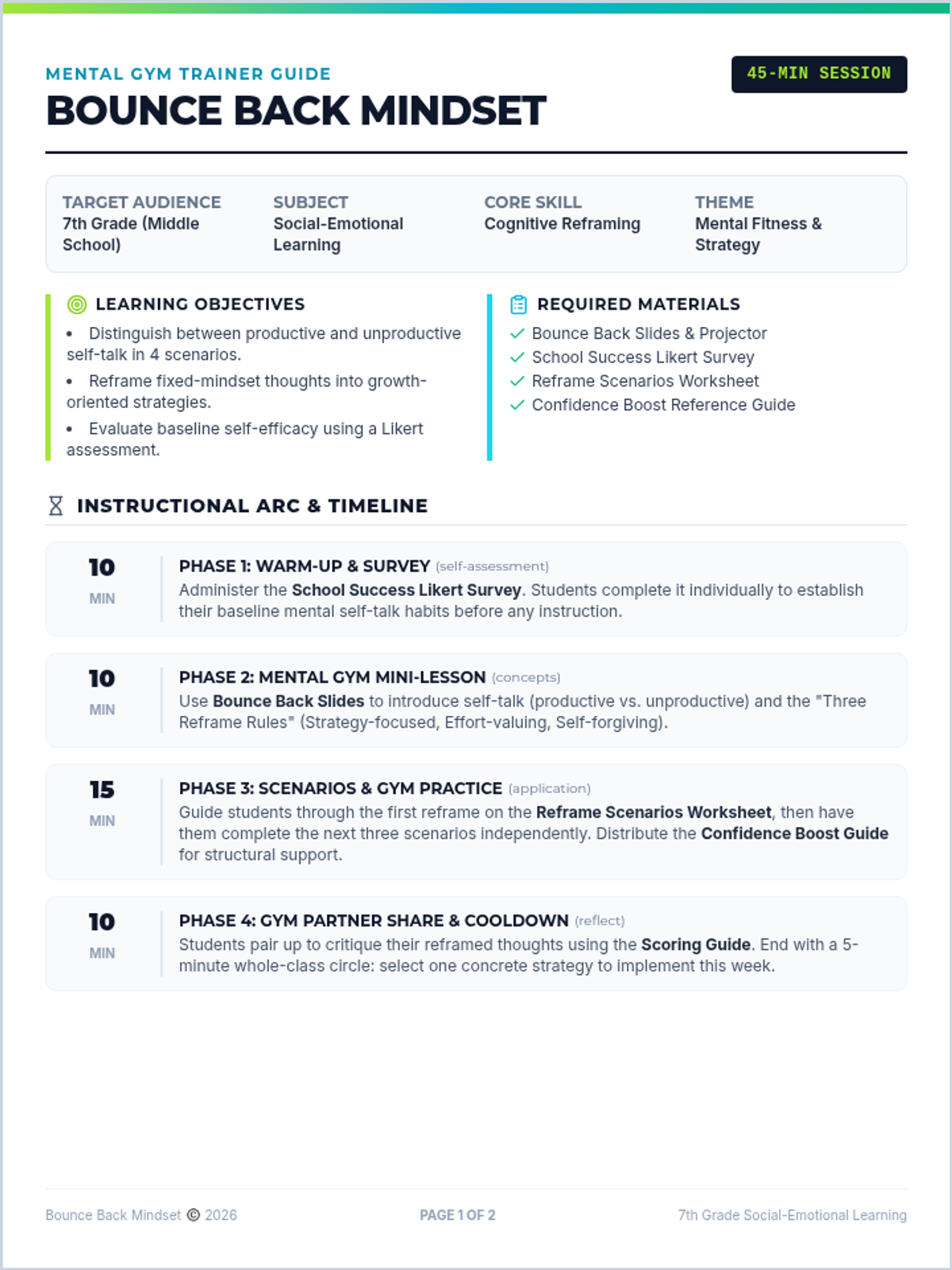
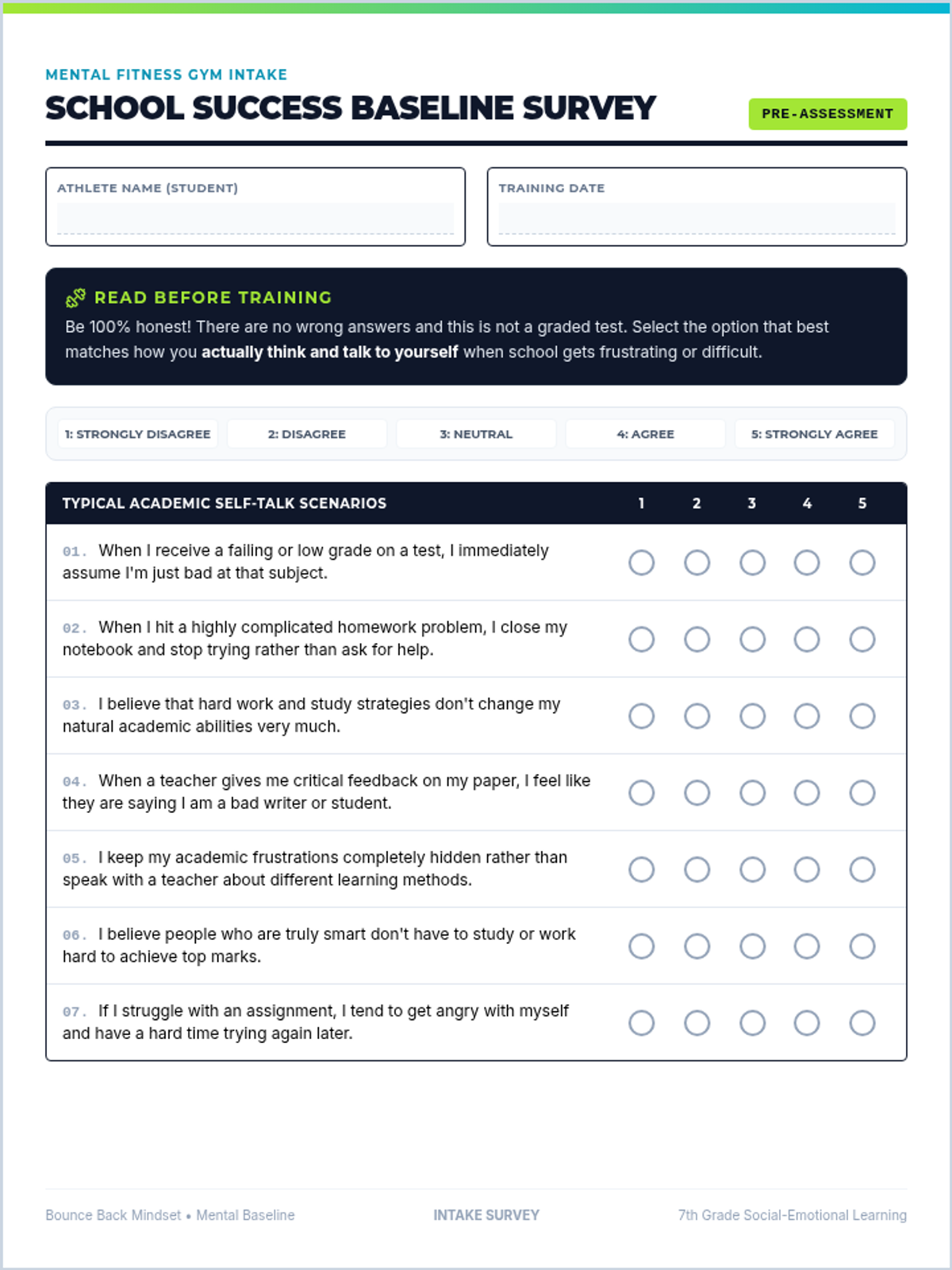
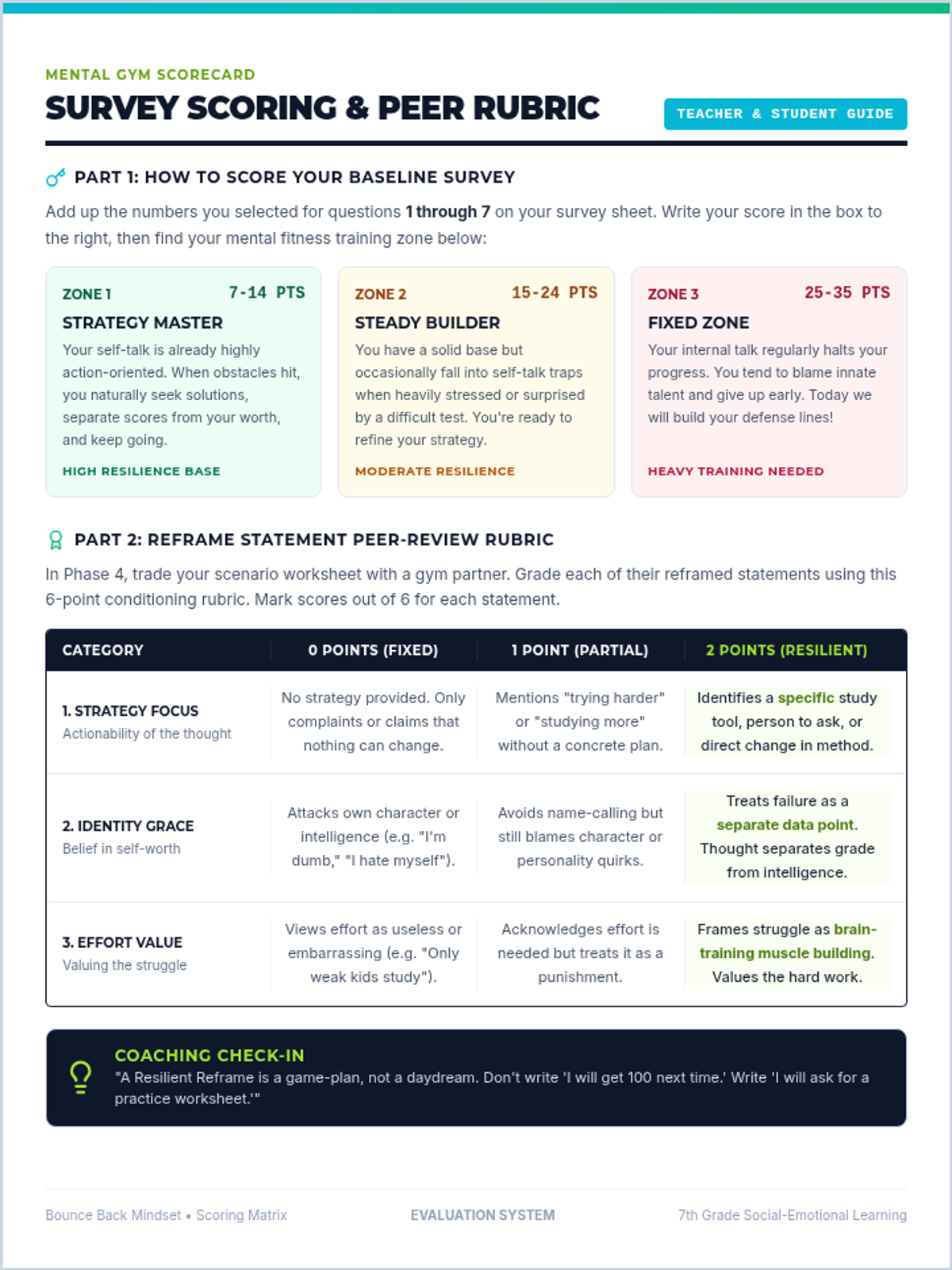
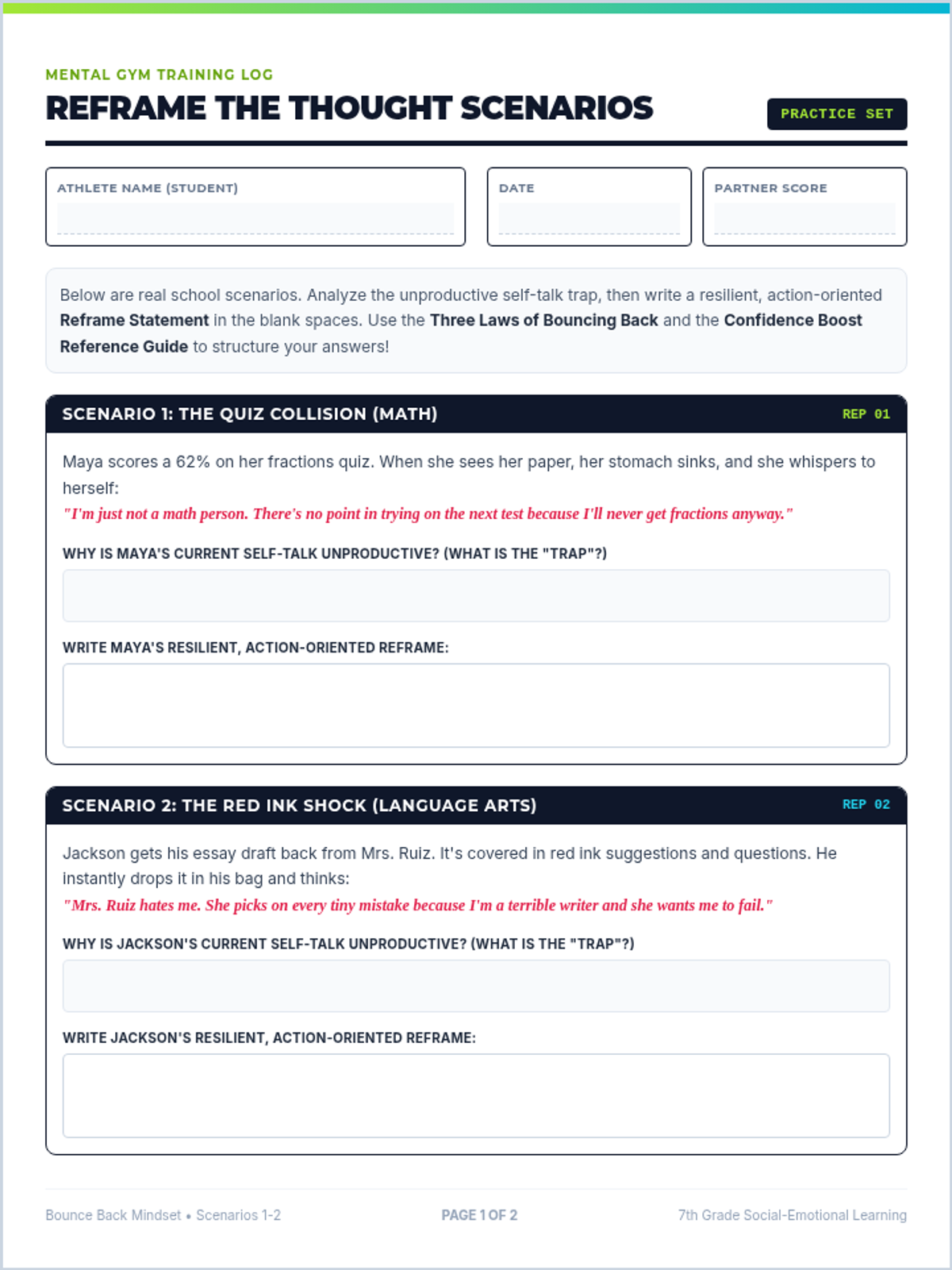
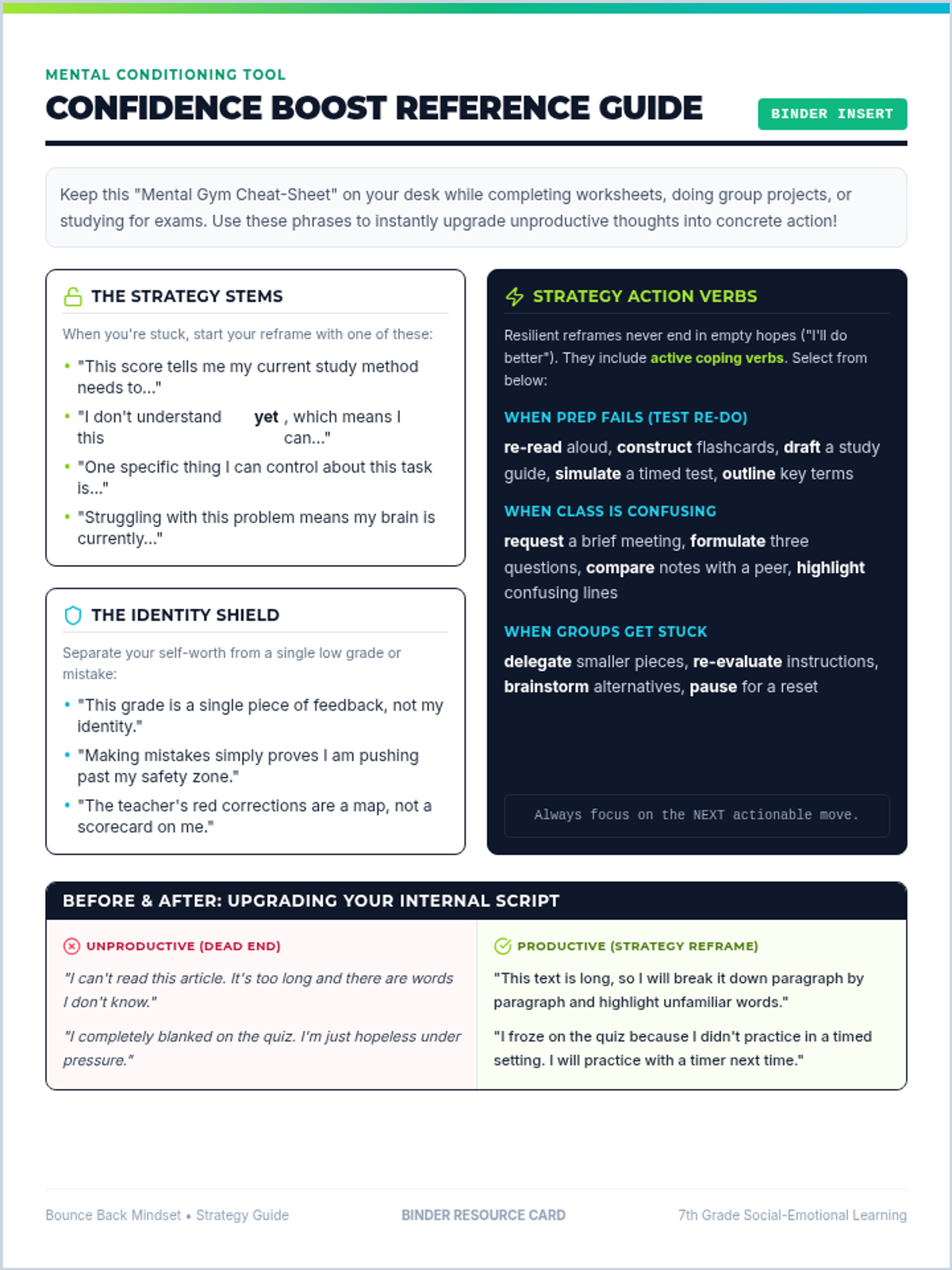
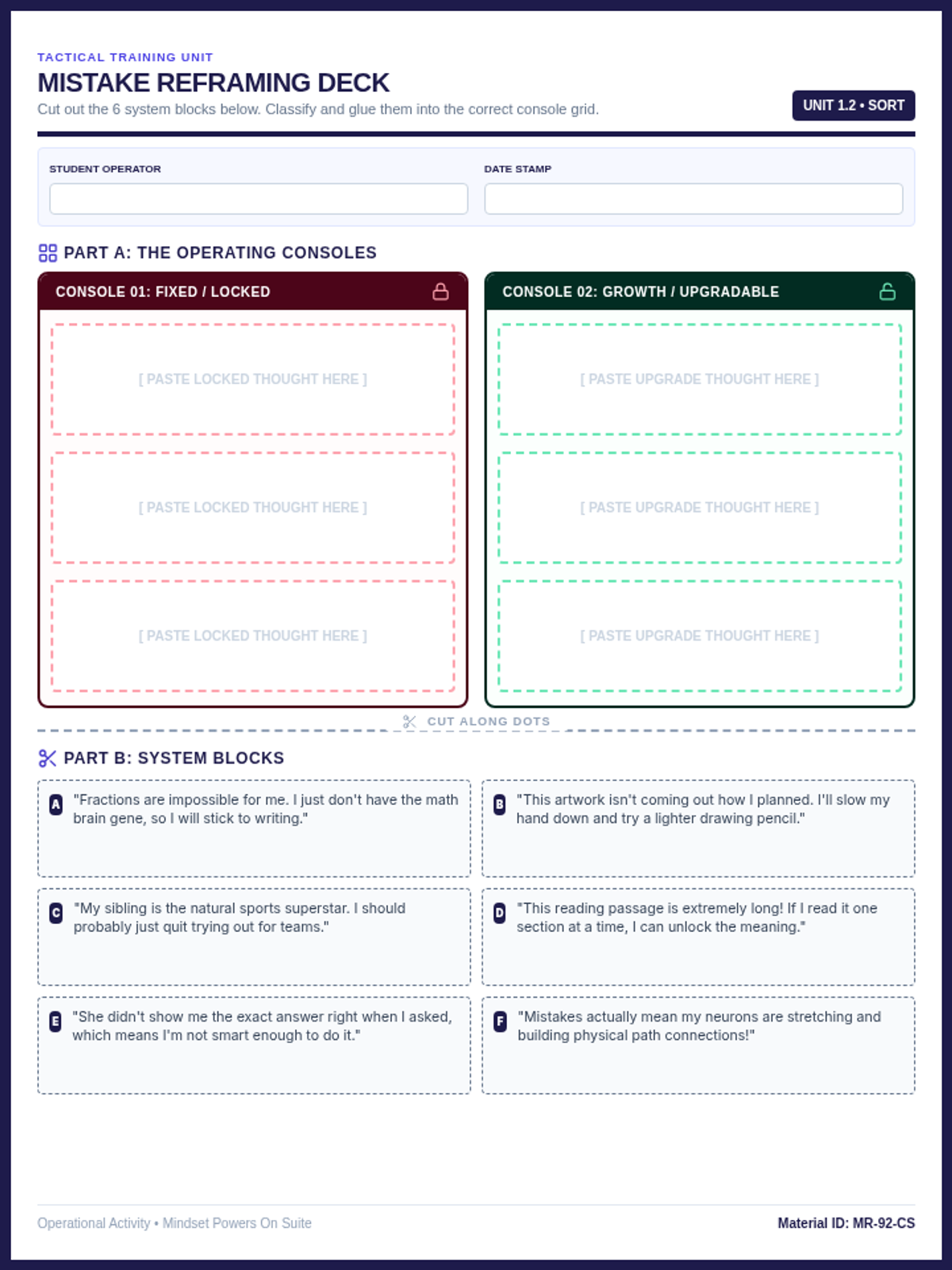
A 45-minute social-emotional learning lesson for 7th graders to explore cognitive reframing, distinguish between productive and unproductive self-talk, and practice applying growth-oriented strategies to academic setbacks.
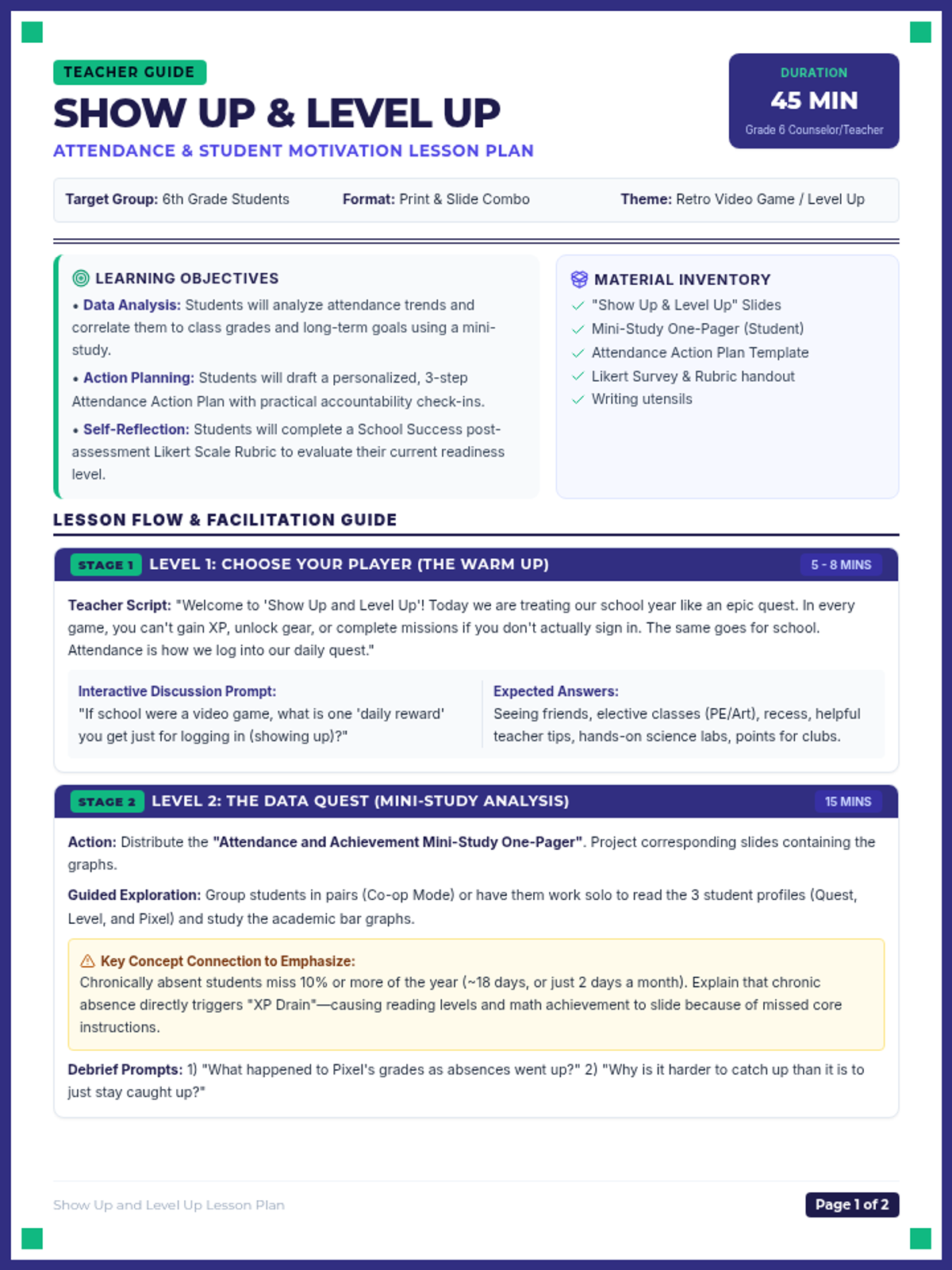
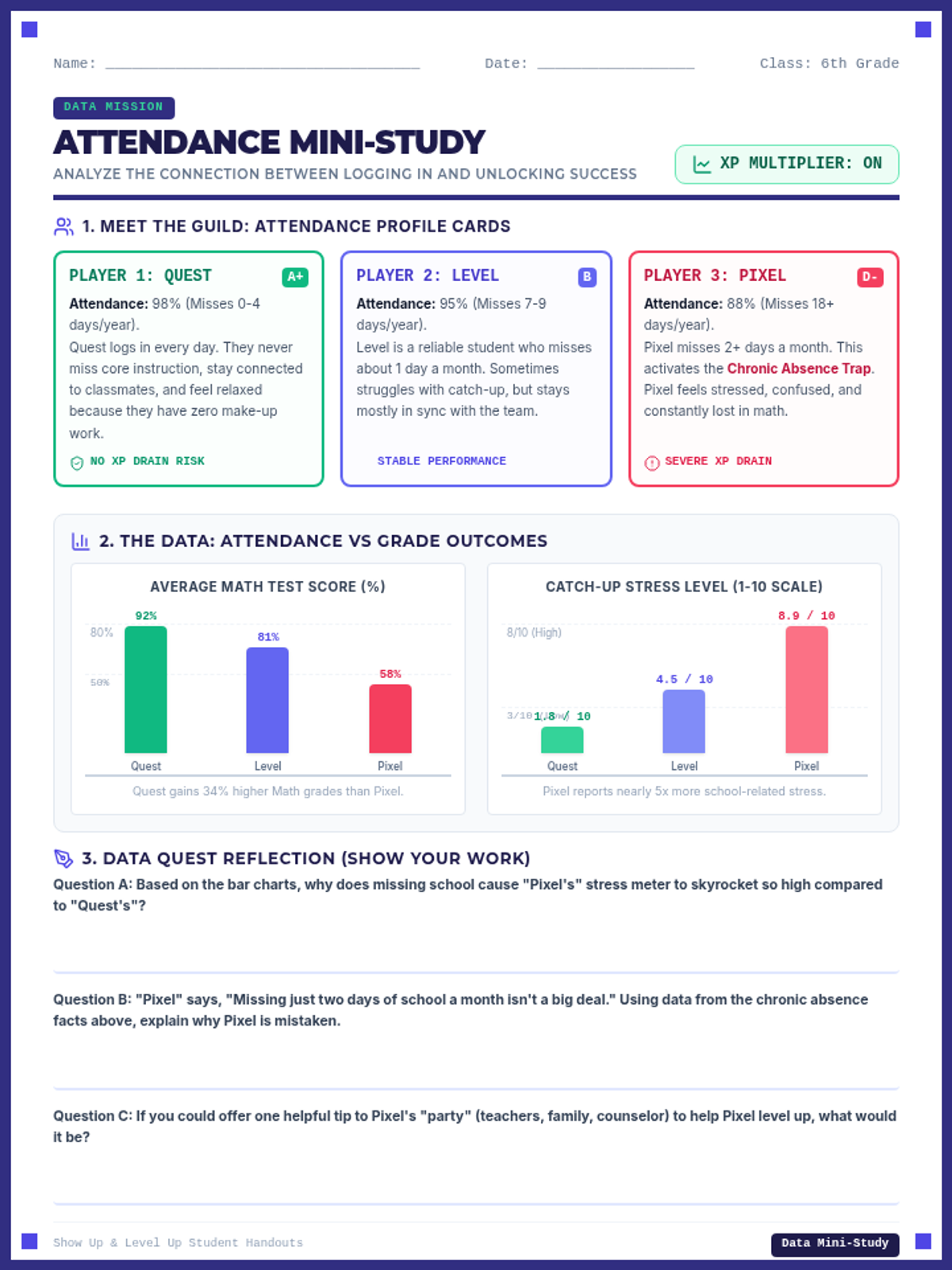
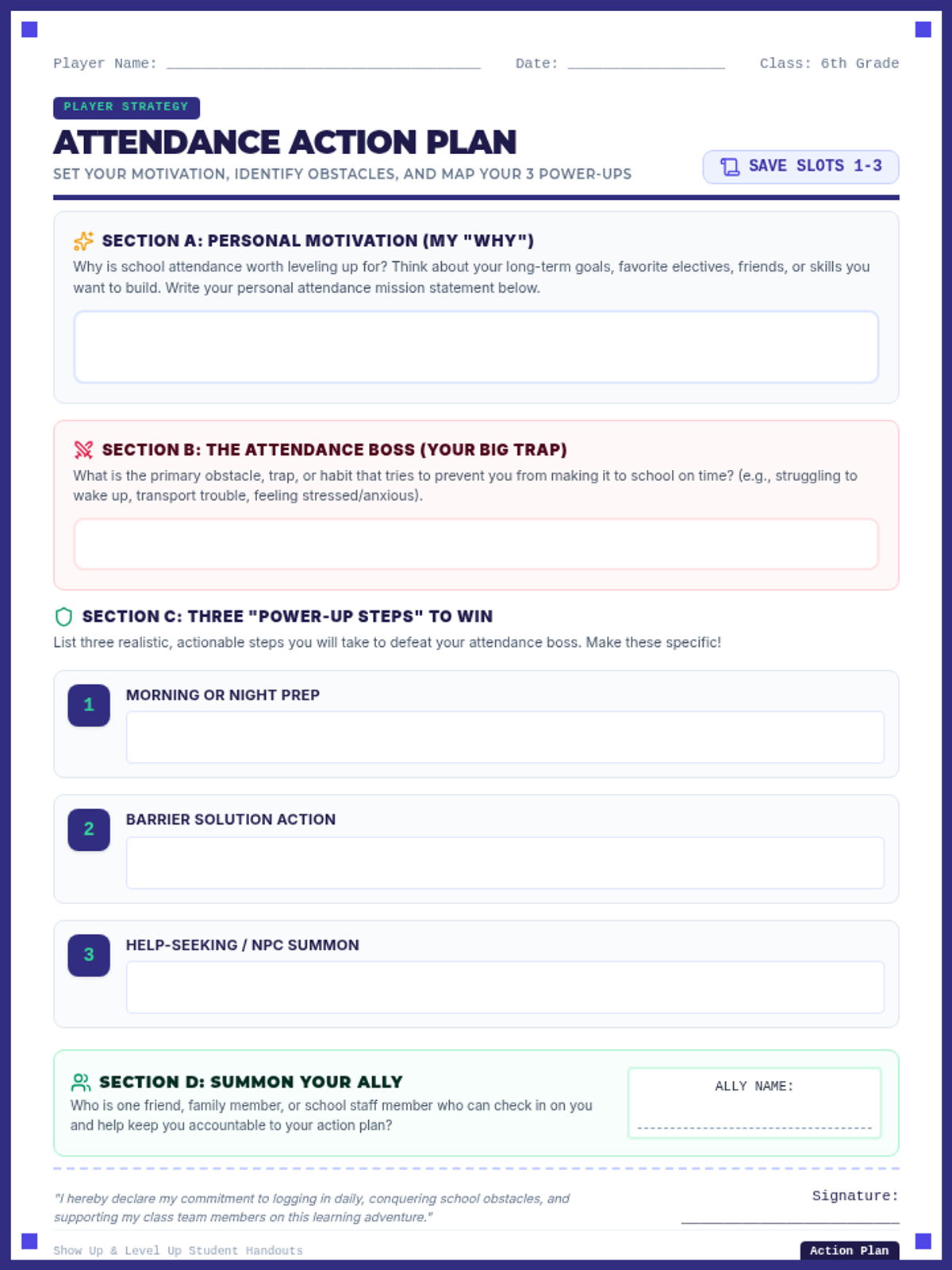
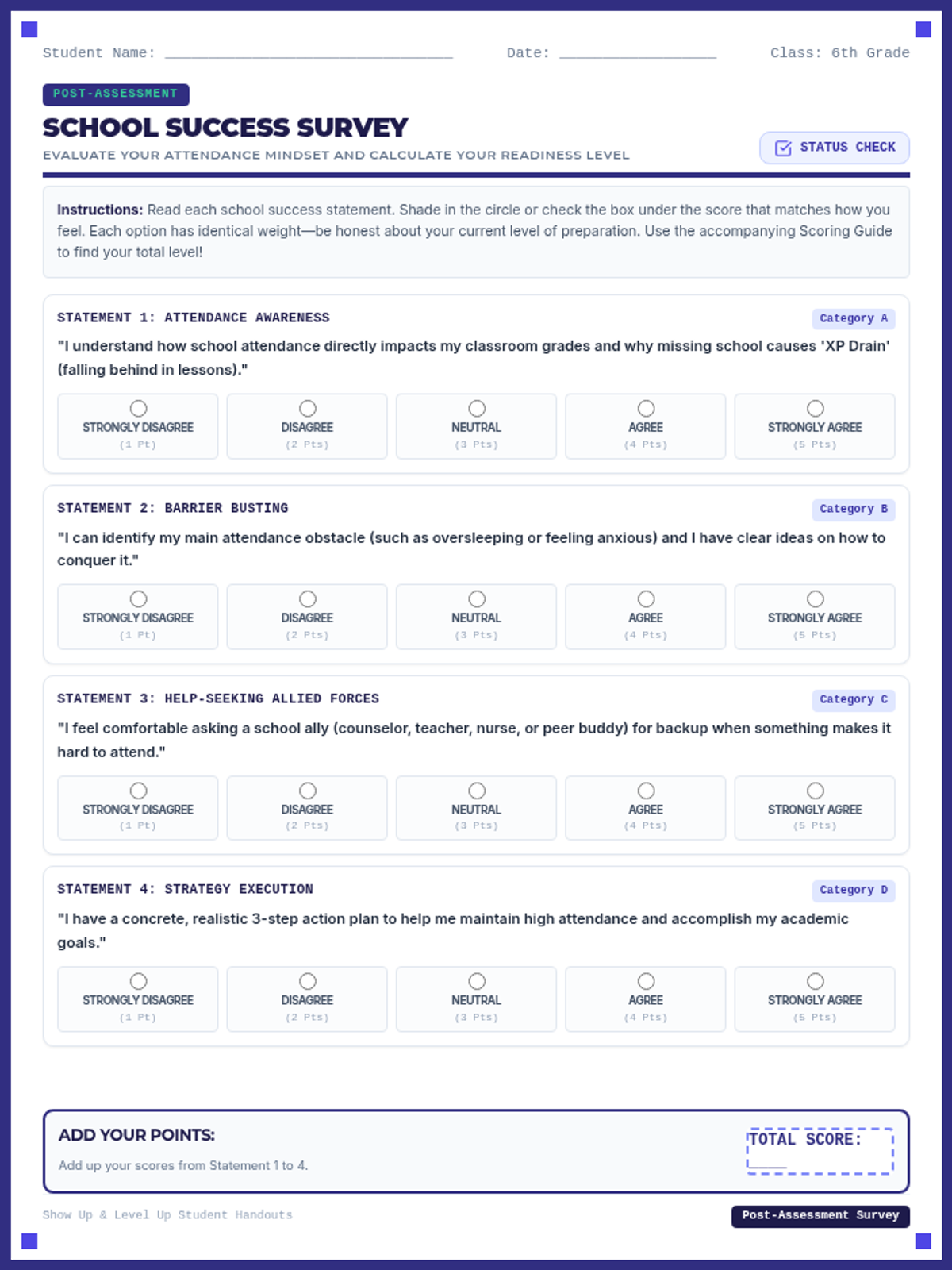
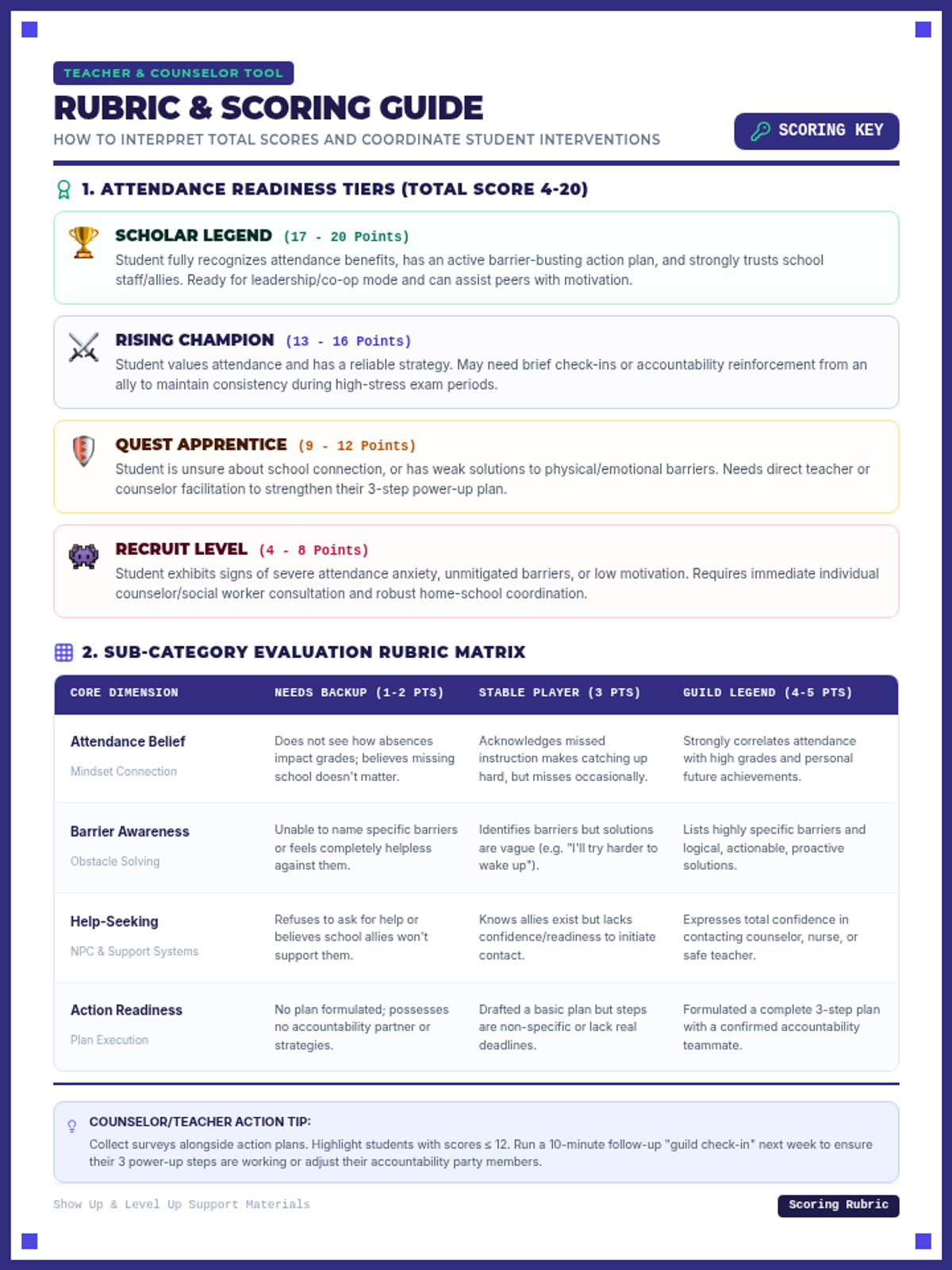
A 45-minute lesson for 6th grade designed to explore how school attendance directly impacts academic success, student confidence, and future goals. Students analyze data, brainstorm solutions to common barriers, and draft an action plan.
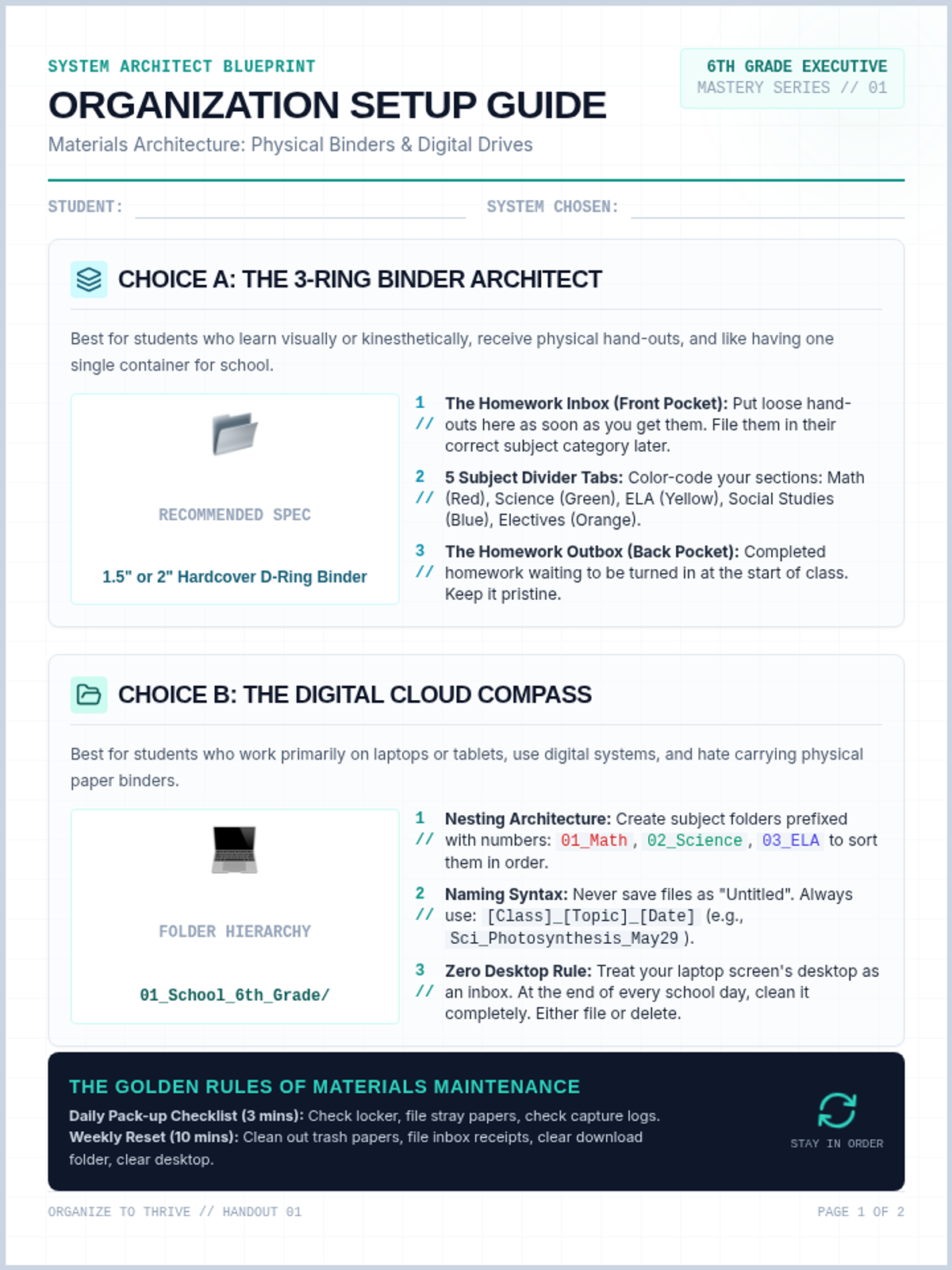
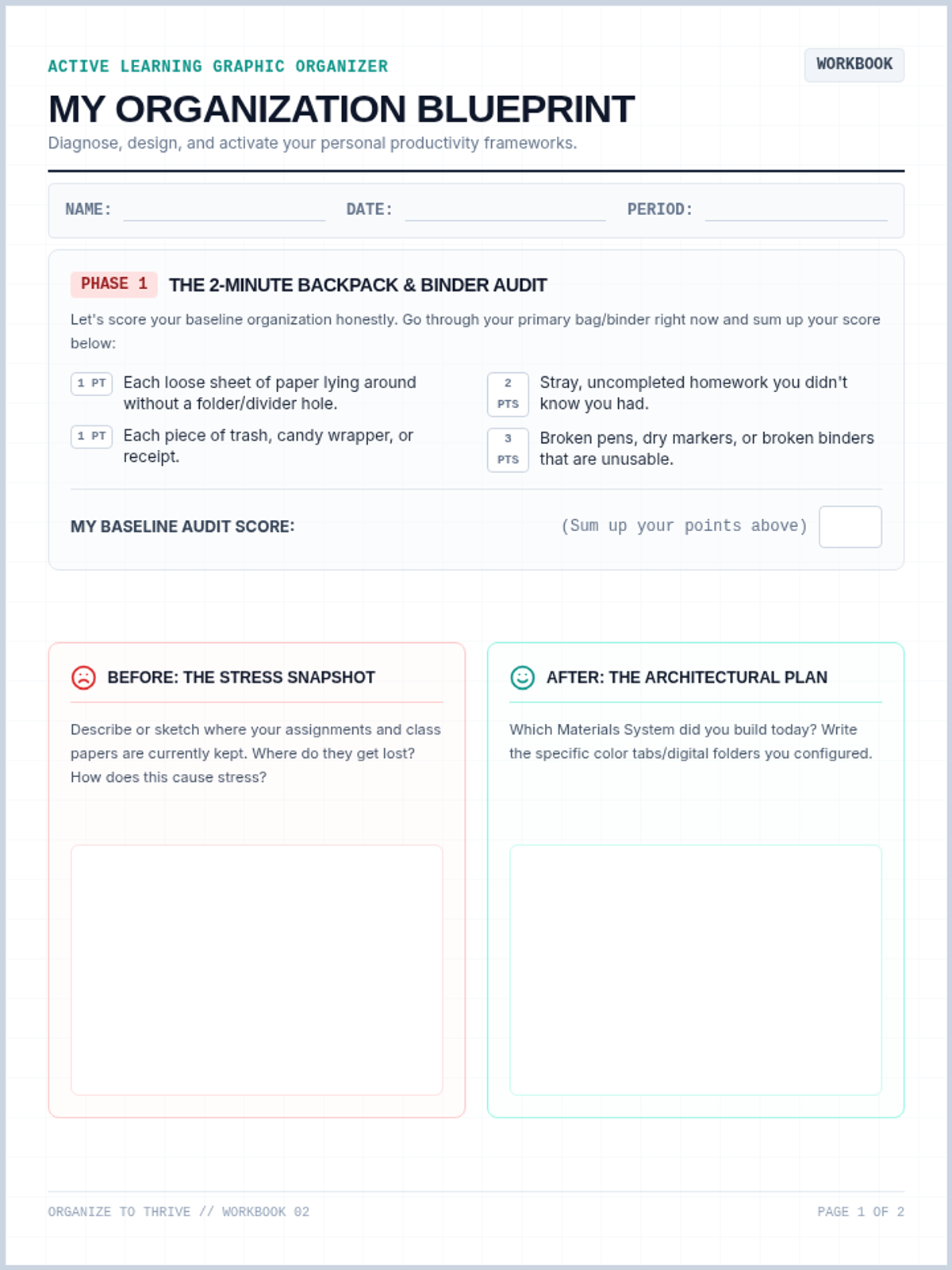
A practical, hands-on lesson designed to help 6th-grade students establish effective organizational and assignment capture systems. Students audit their current materials, select and build a binder or digital folder system, explore assignment-tracking tools, and practice logging tasks to reduce executive dysfunction and stress.
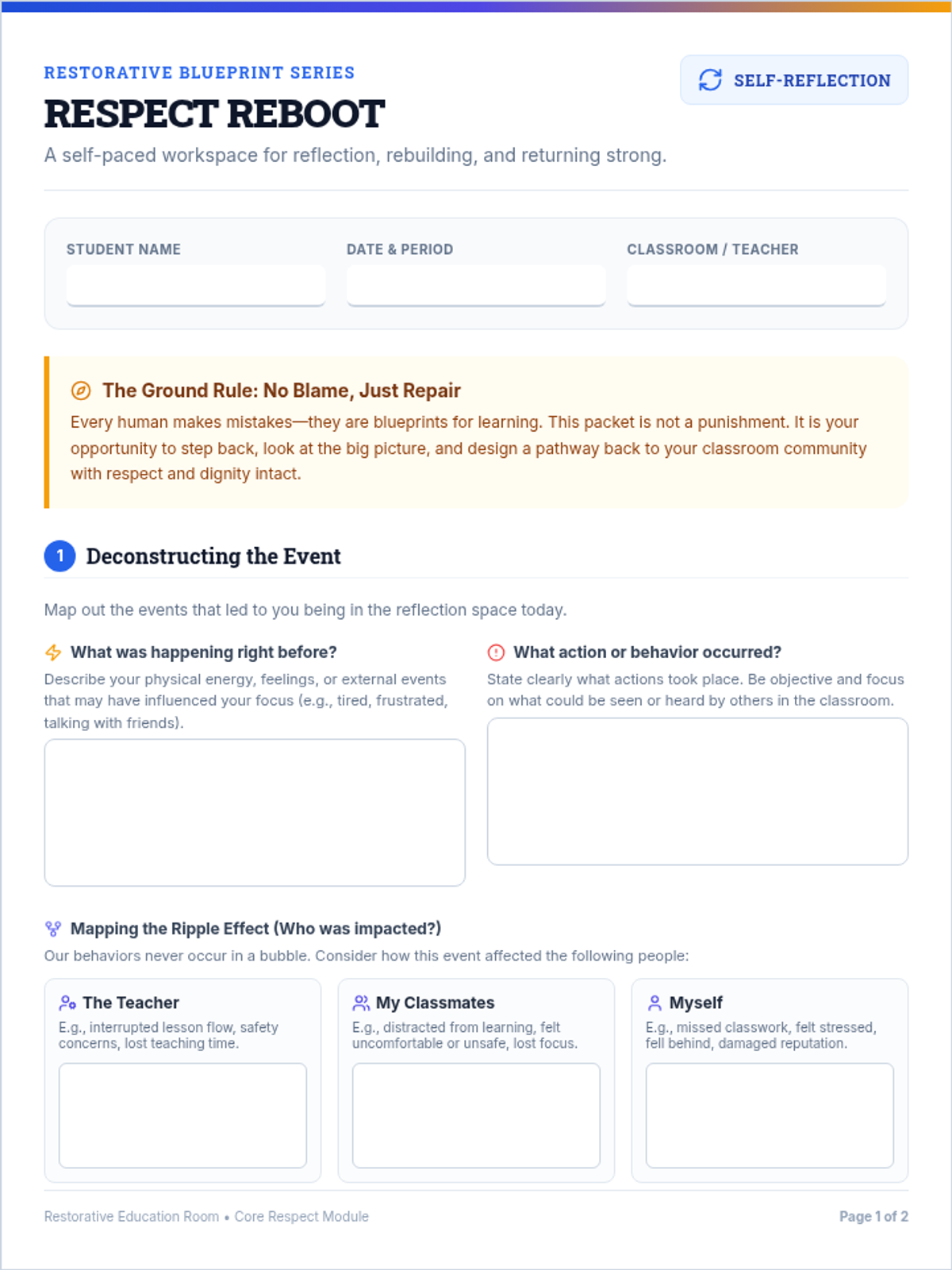
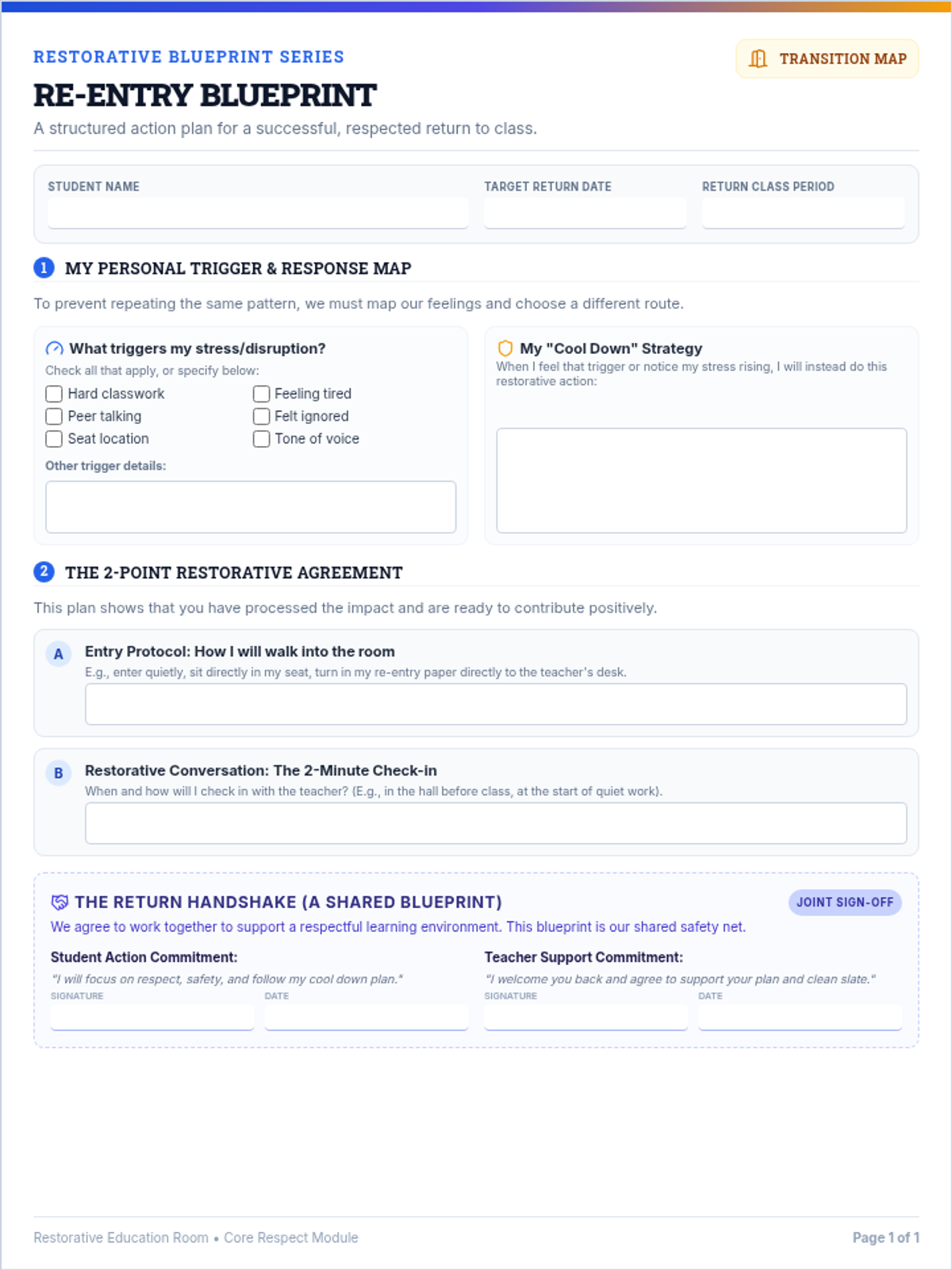
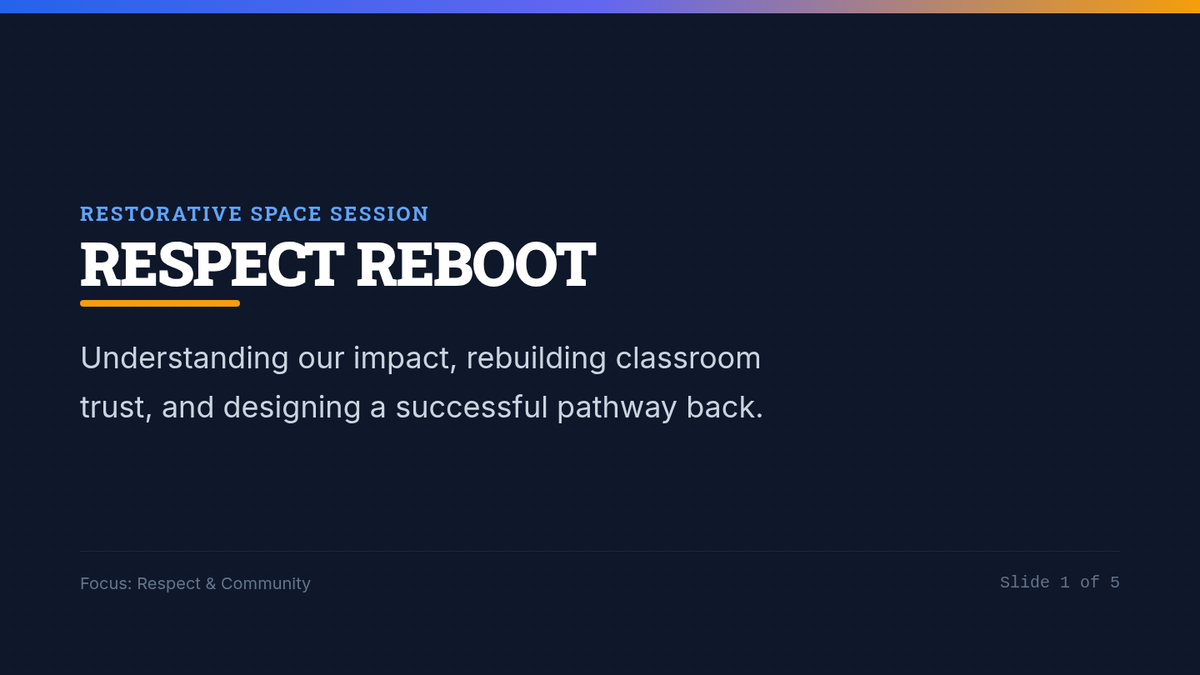
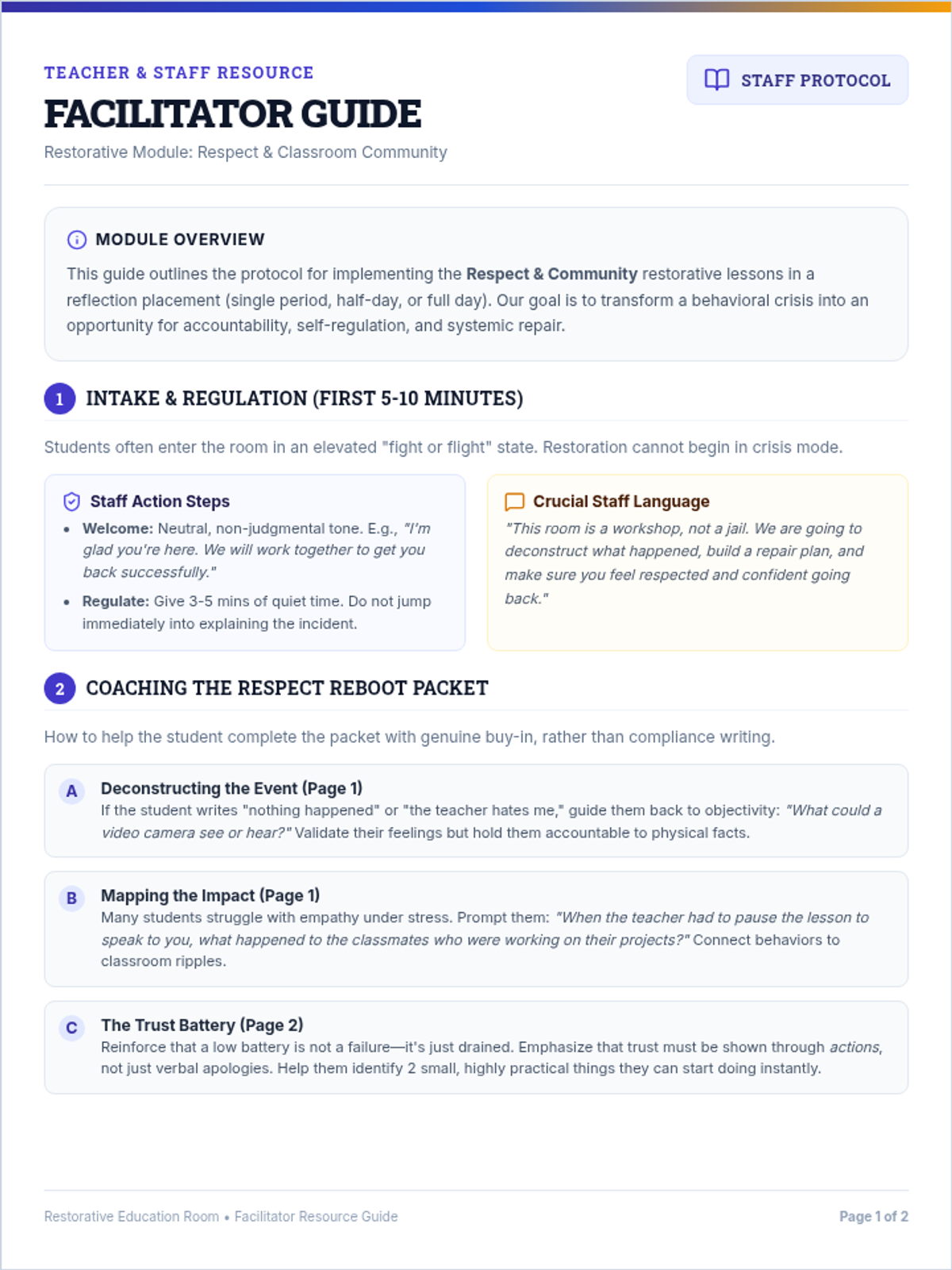
A restorative module focusing on understanding behavior impact, rebuilding classroom trust, and respecting authority. Includes a self-paced reflection packet, transition blueprint, guiding slides, and a facilitator guide.
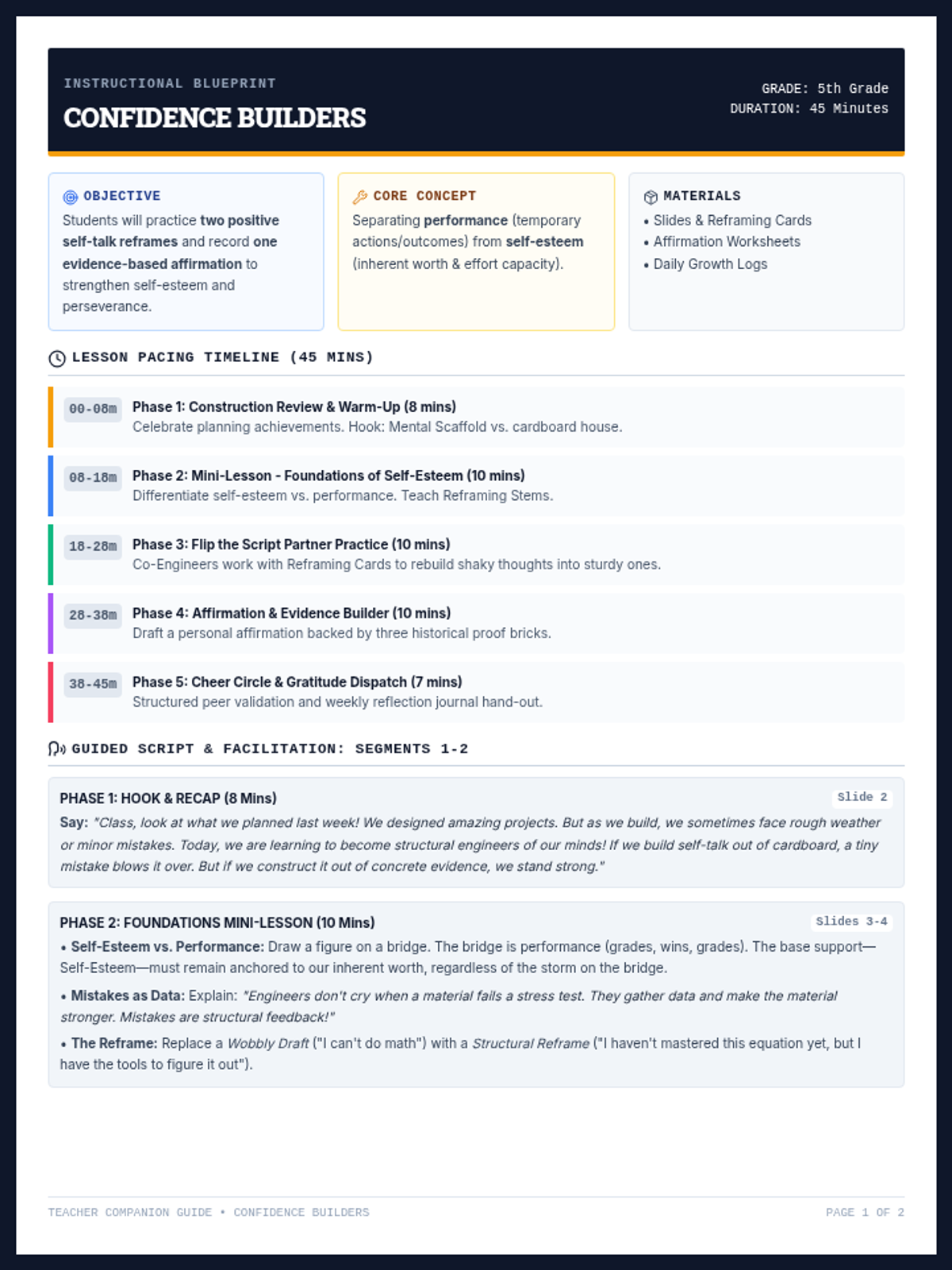
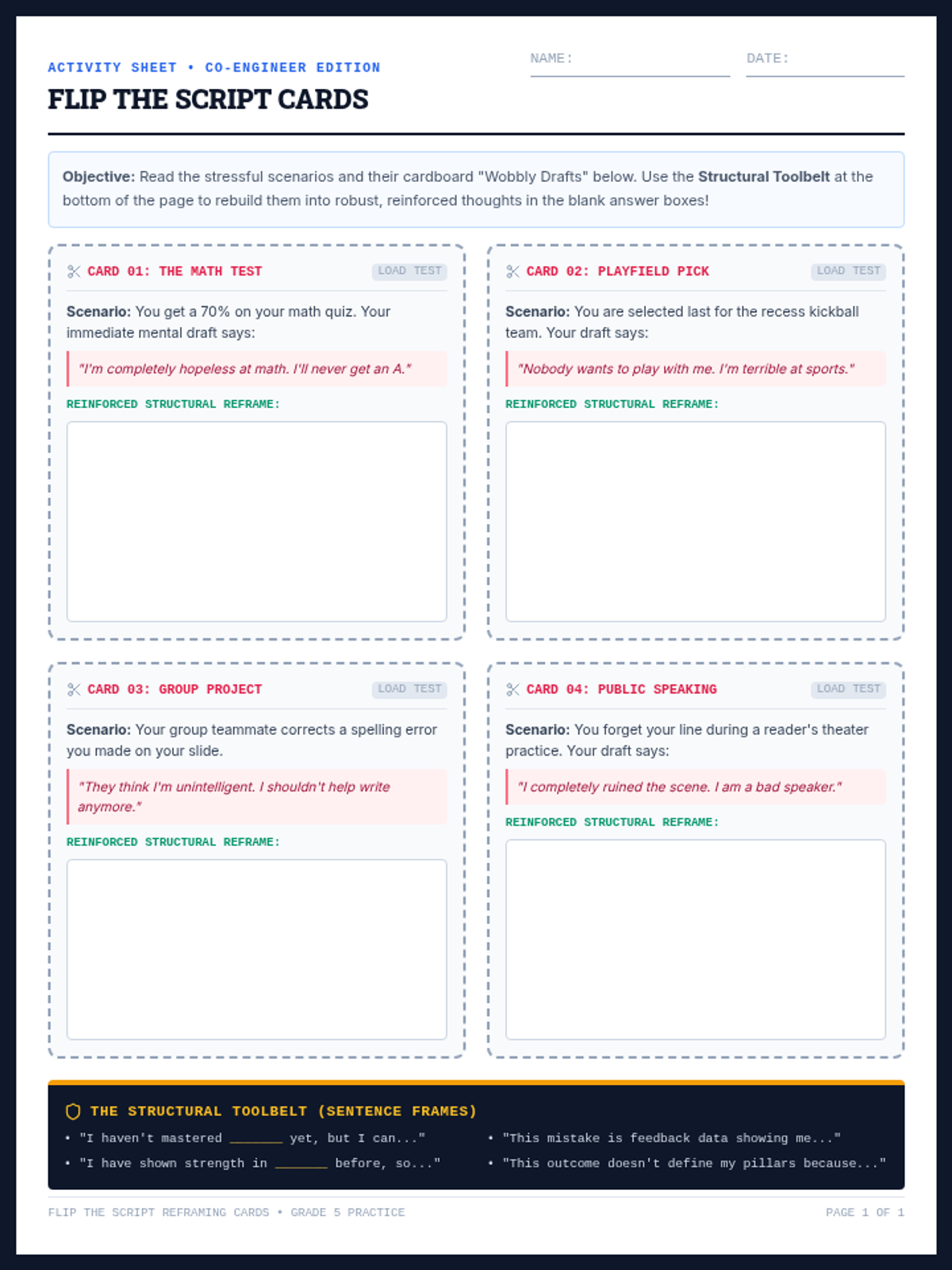
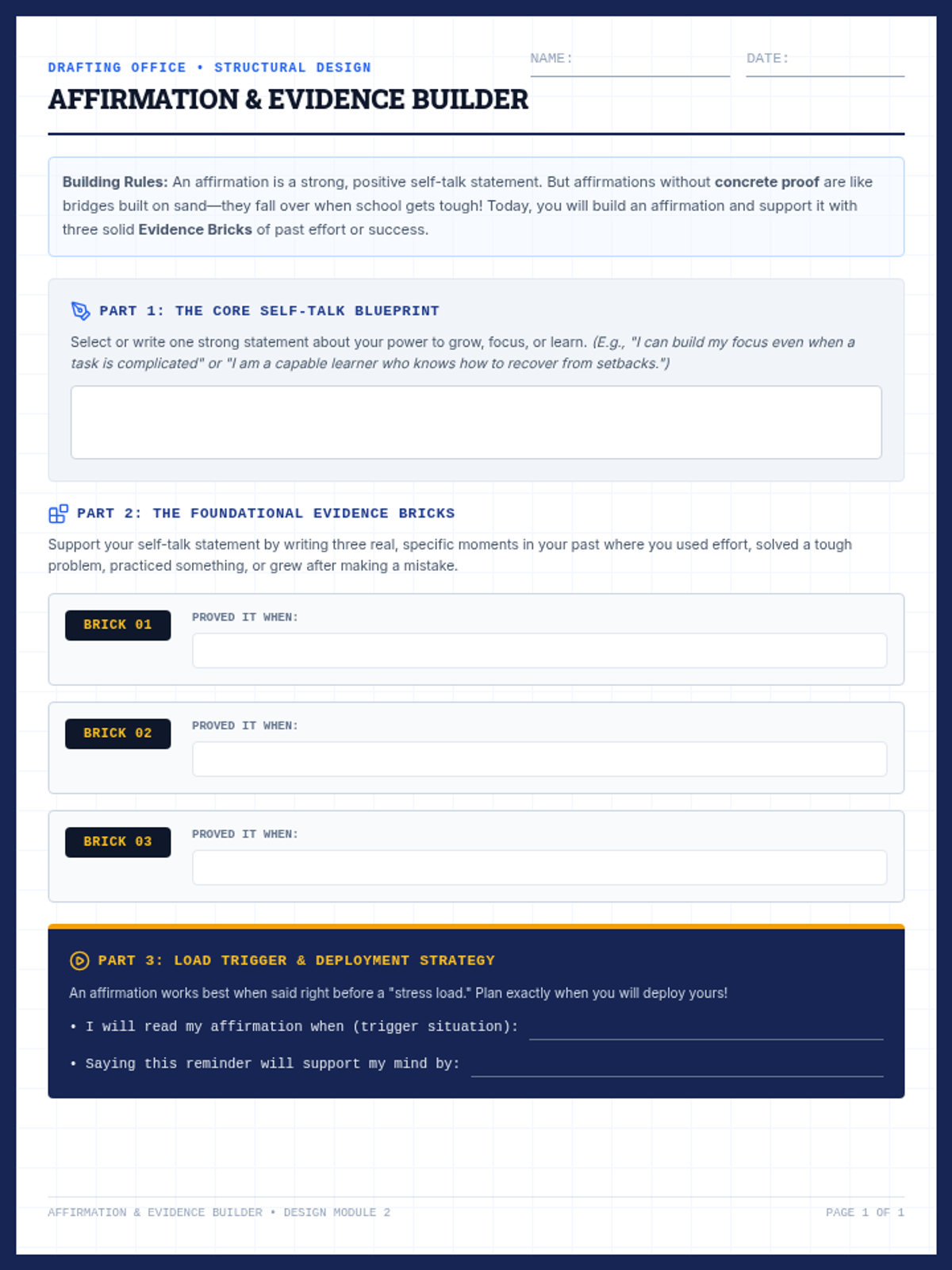
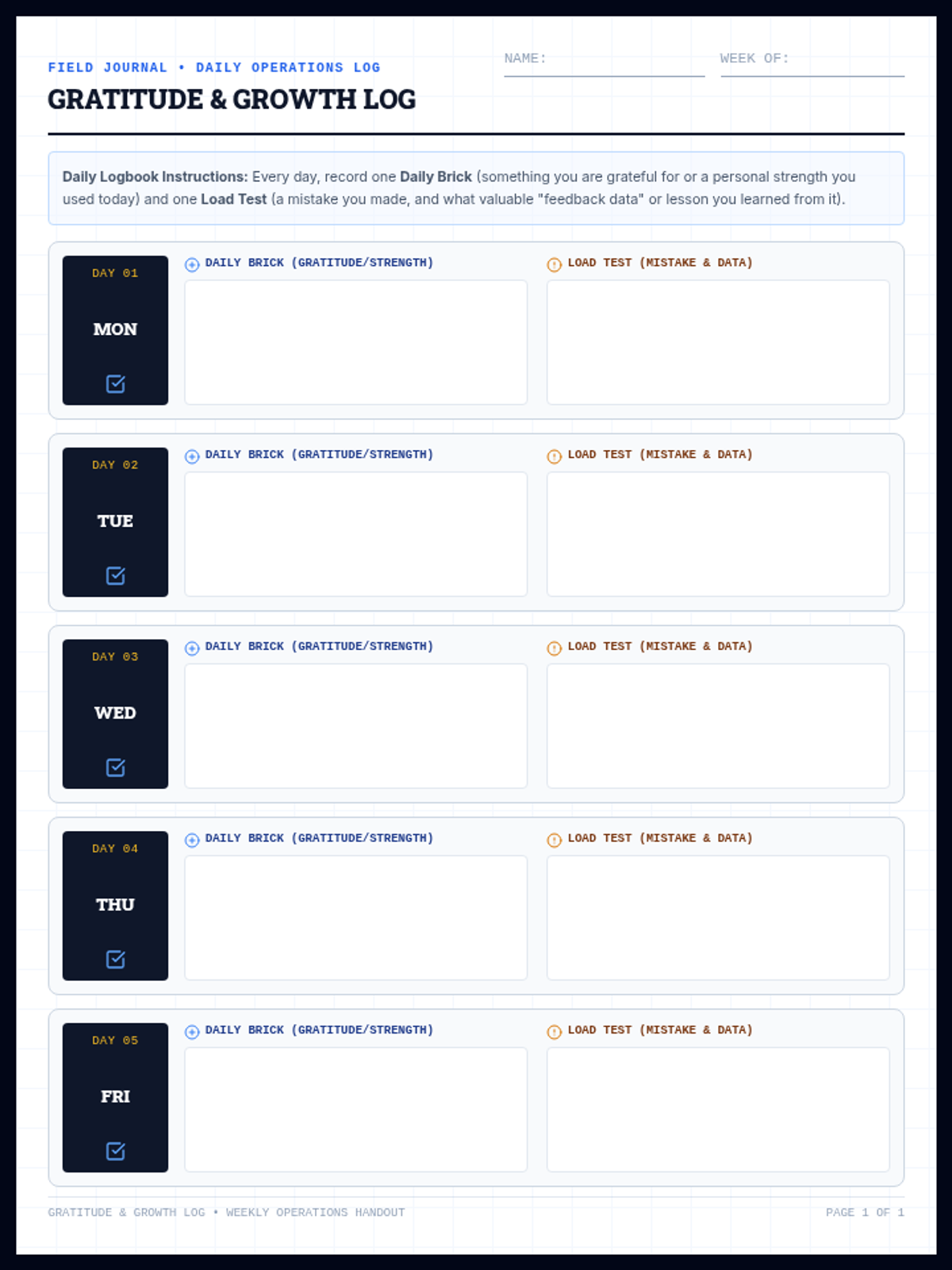
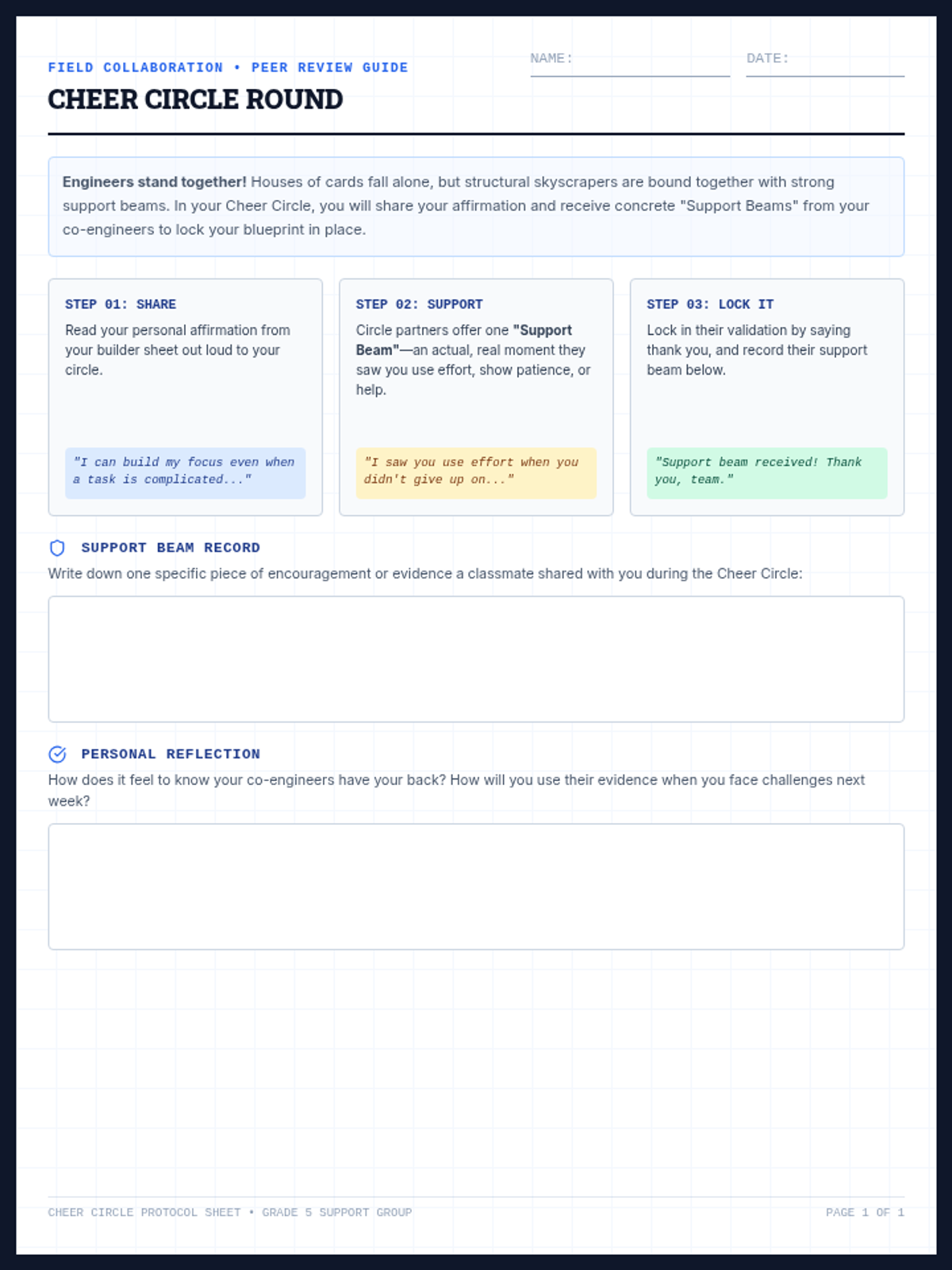
A comprehensive 45-minute lesson for 5th graders to build robust self-talk skills and establish evidence-based affirmations. Through blueprint-themed interactive activities, students learn to distinguish performance from self-esteem, reframe negative thoughts using concrete strategies, and give/receive peer encouragement.
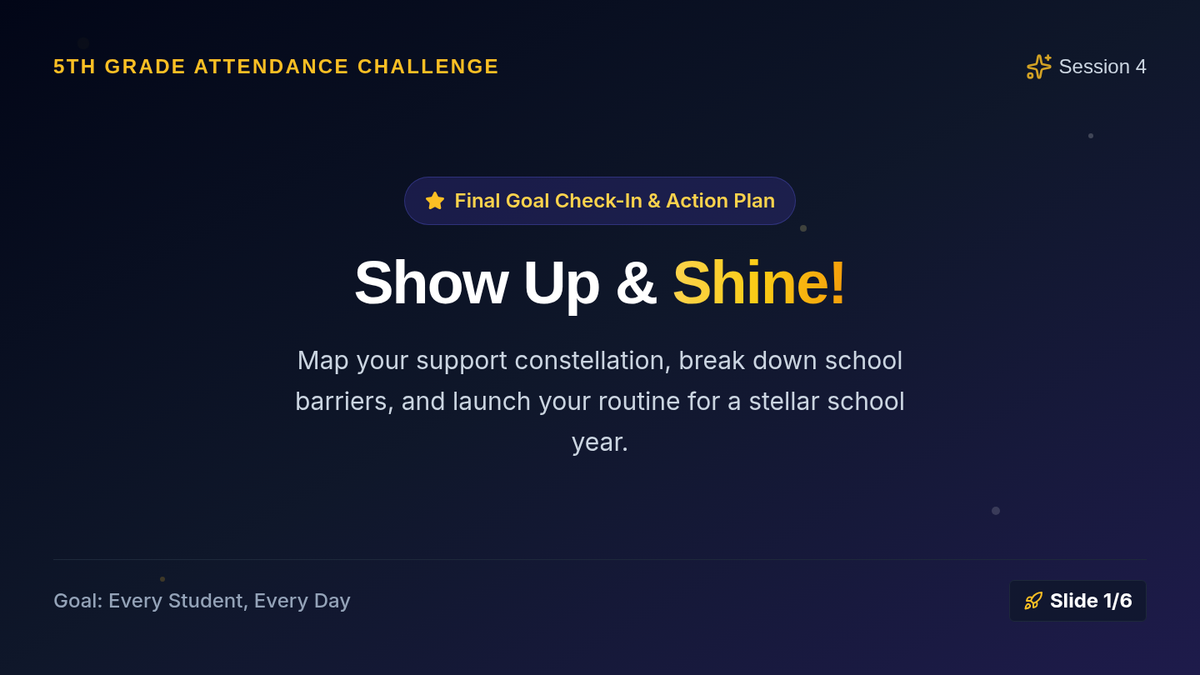
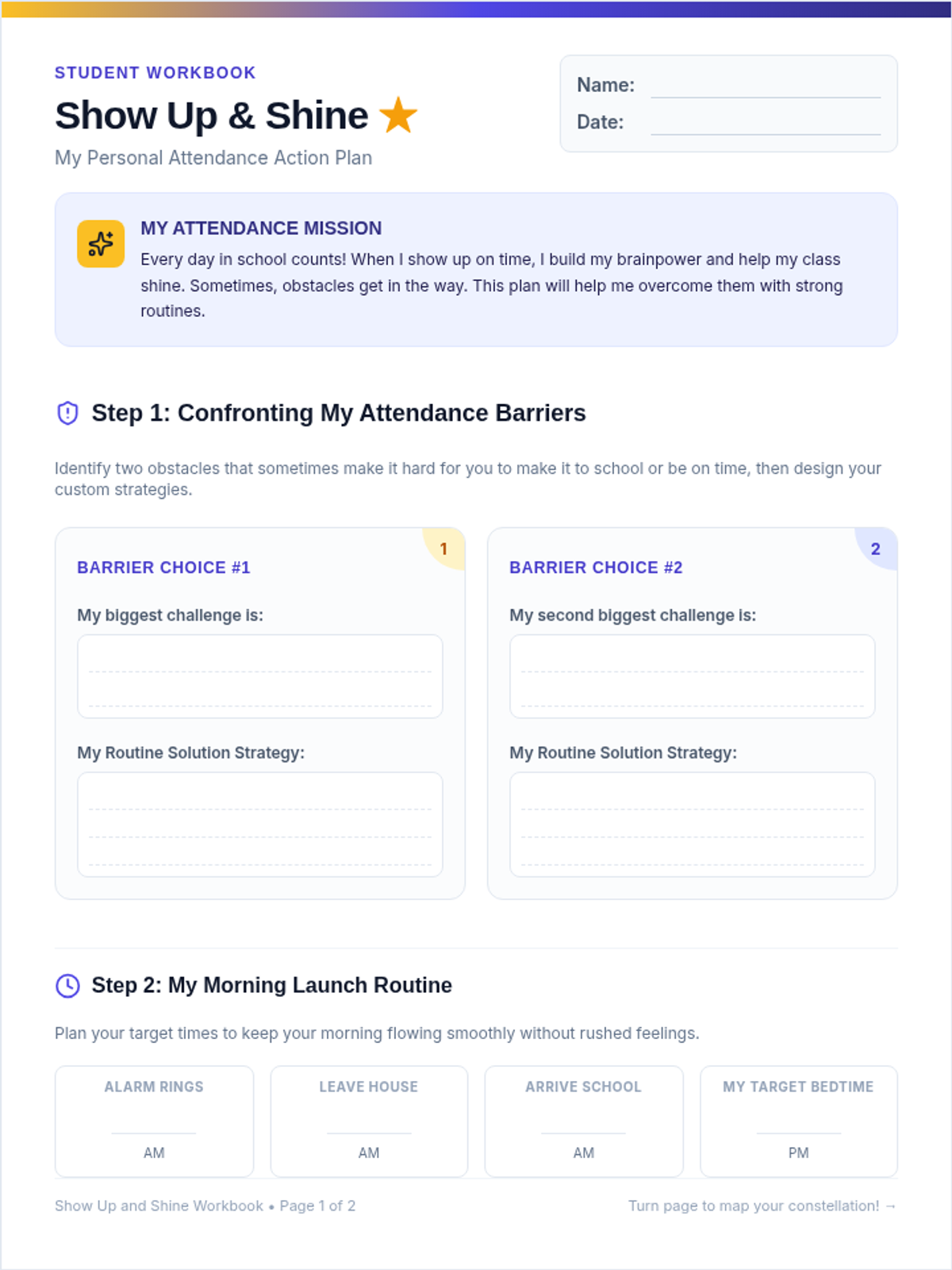
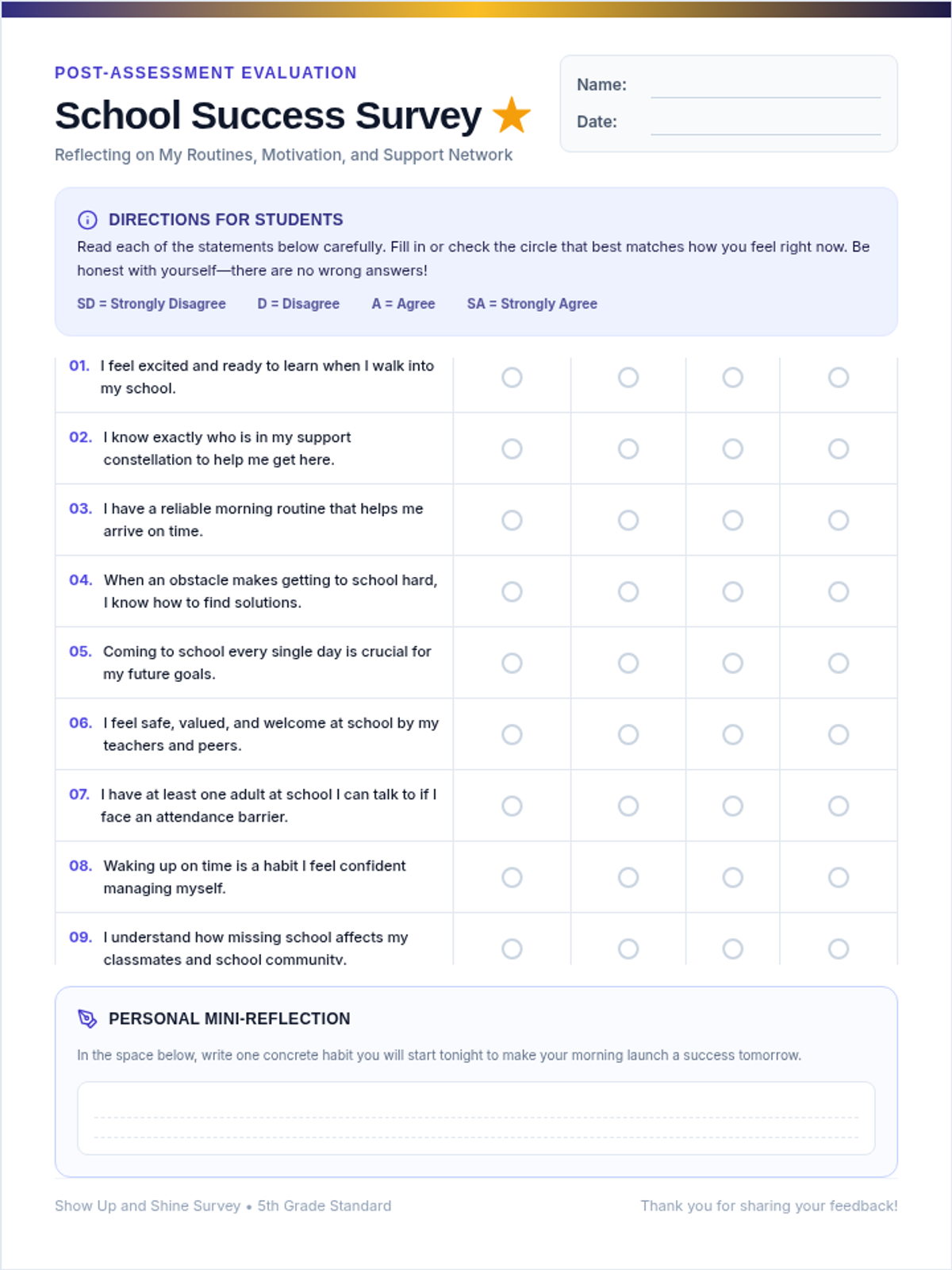
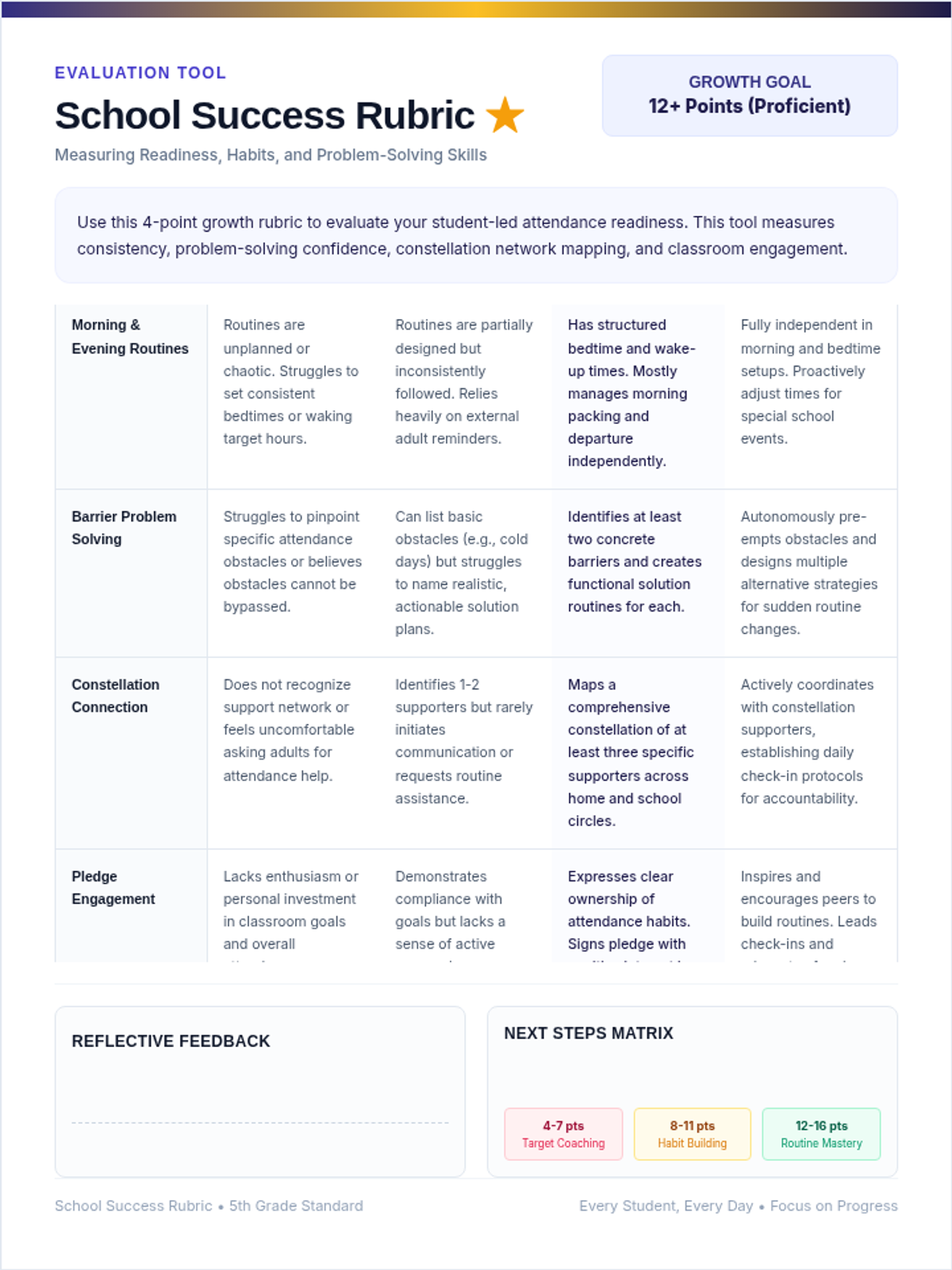
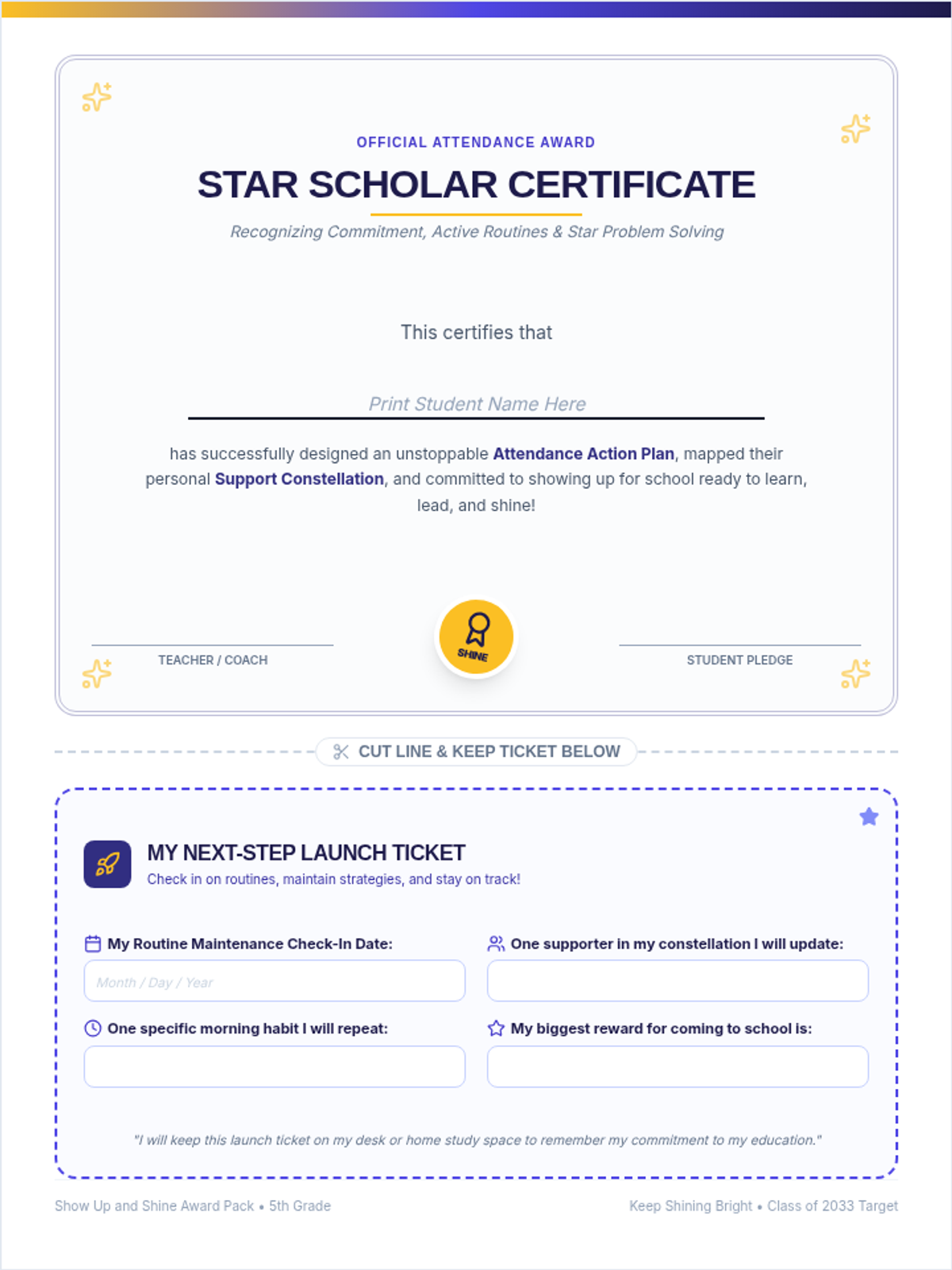
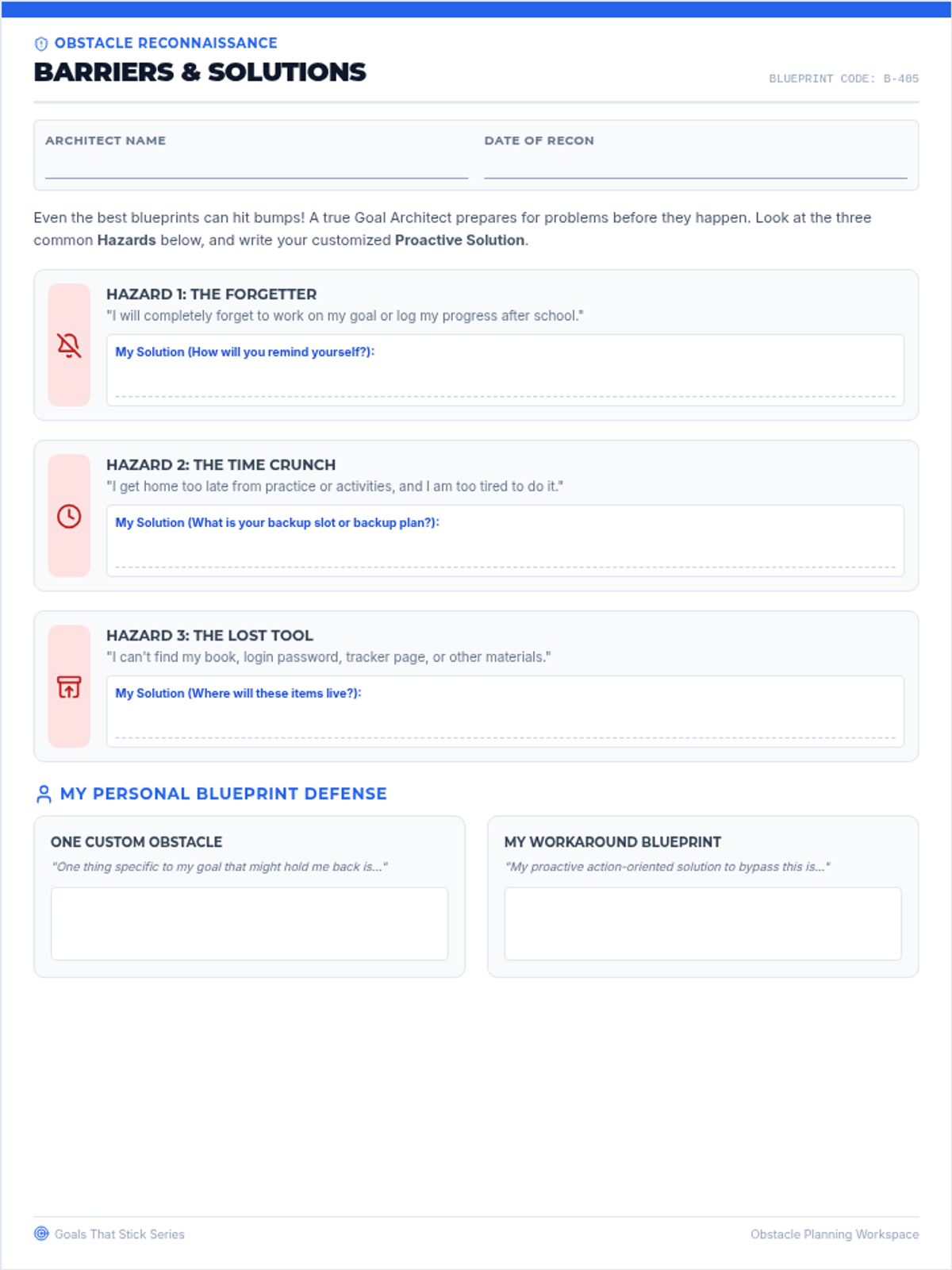
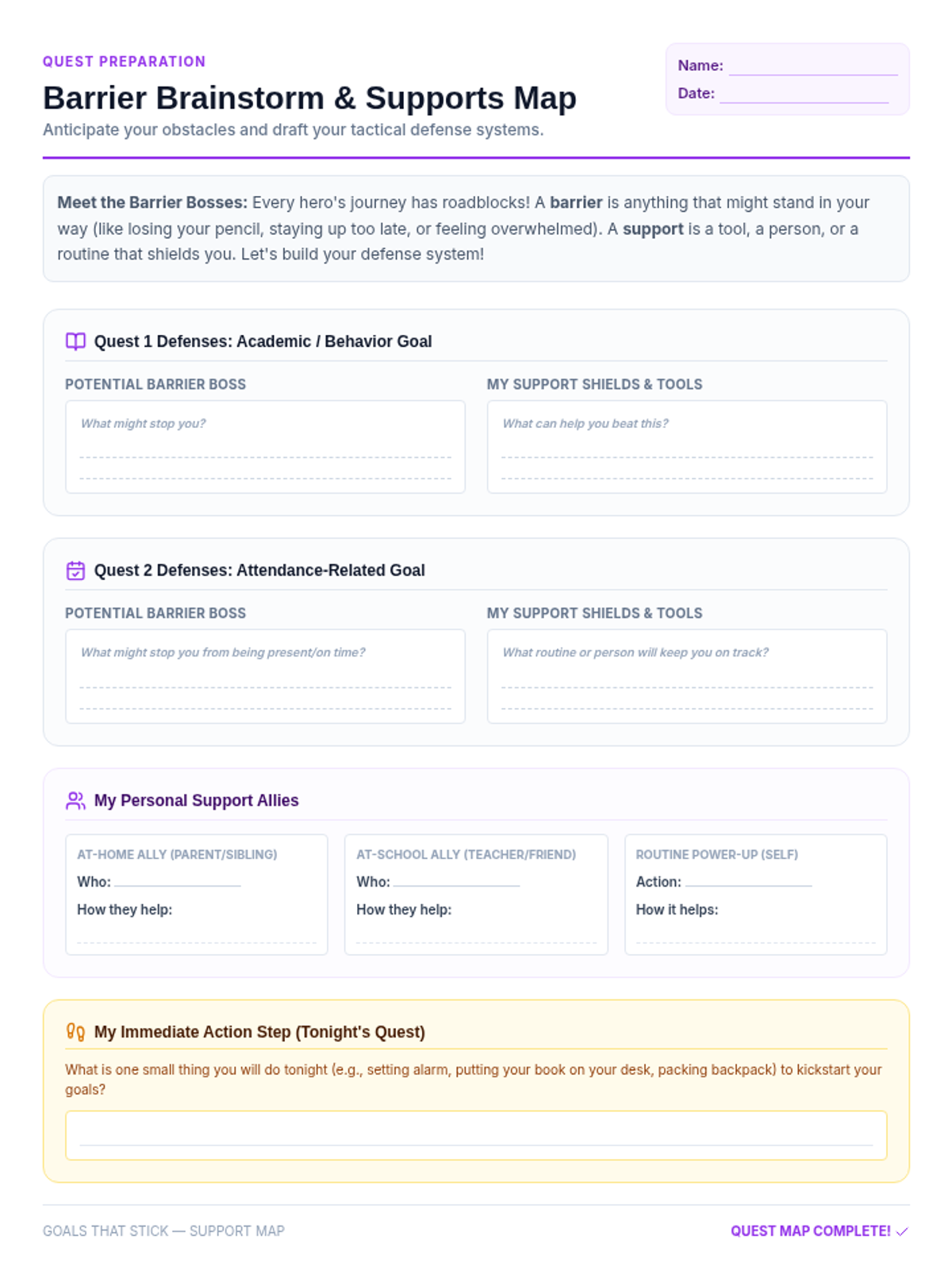
A high-impact 45-minute lesson for 5th grade that helps students overcome school attendance barriers, map their support networks, and celebrate growth using customized planning tools and reflection surveys.
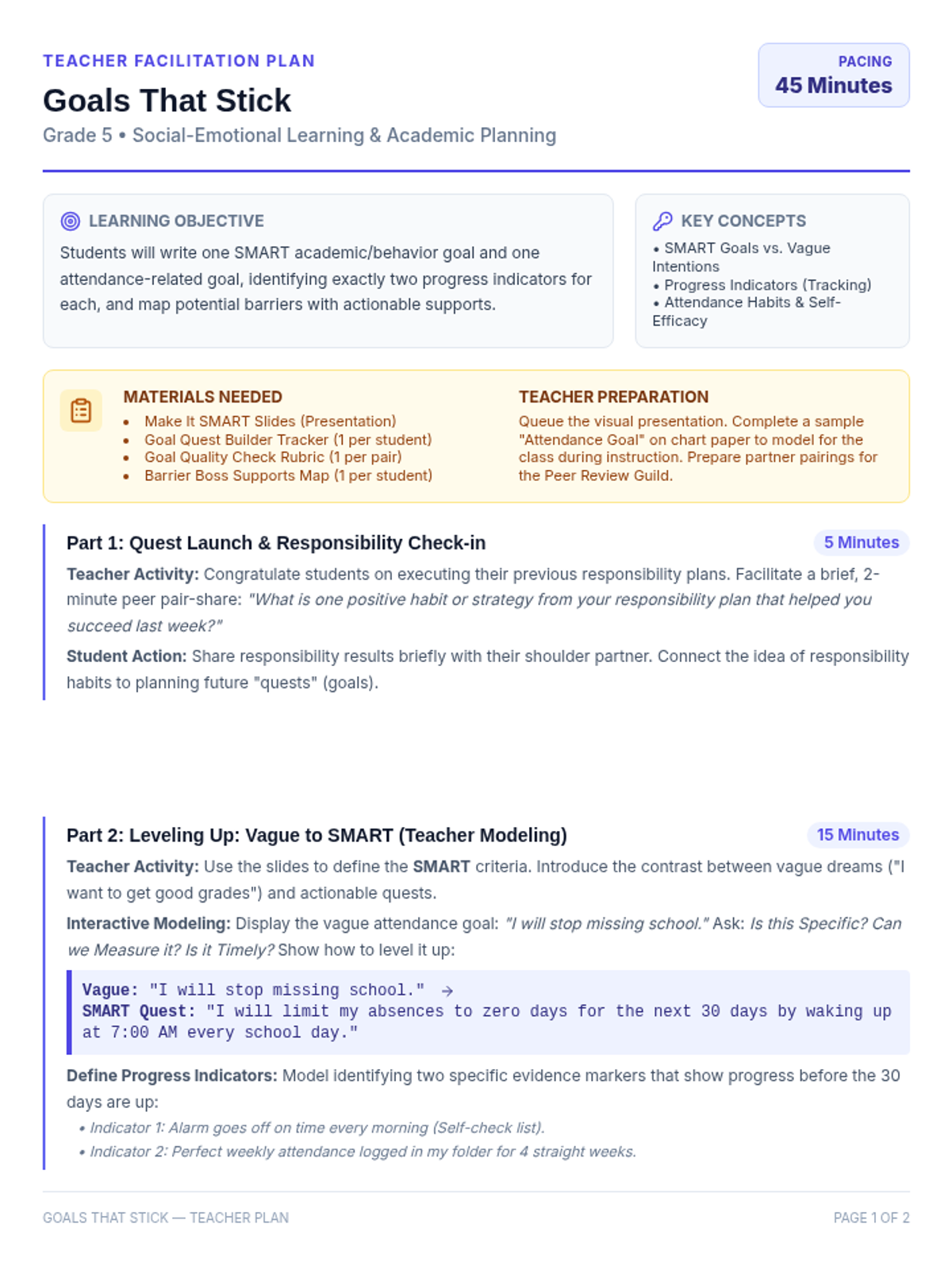
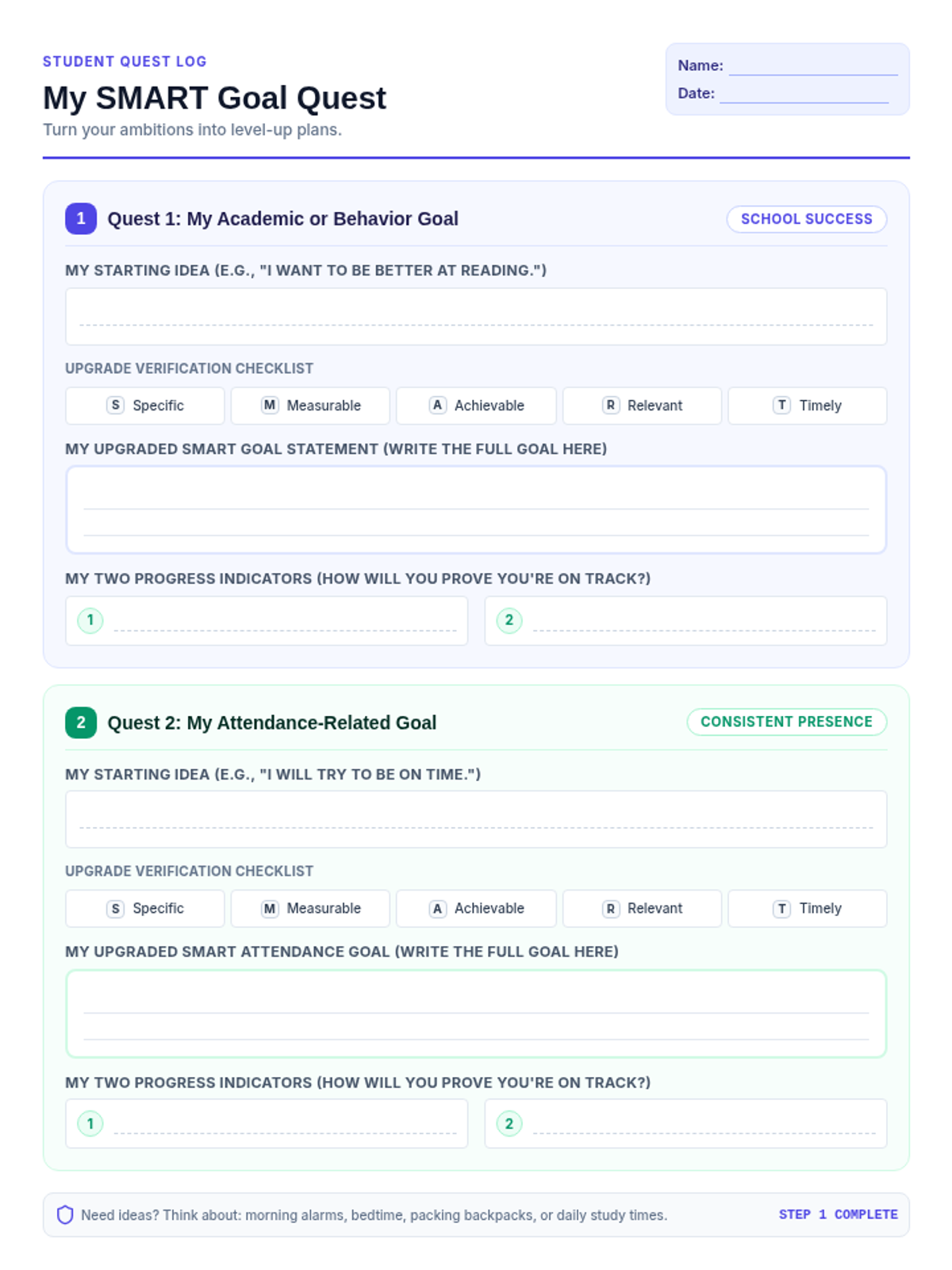
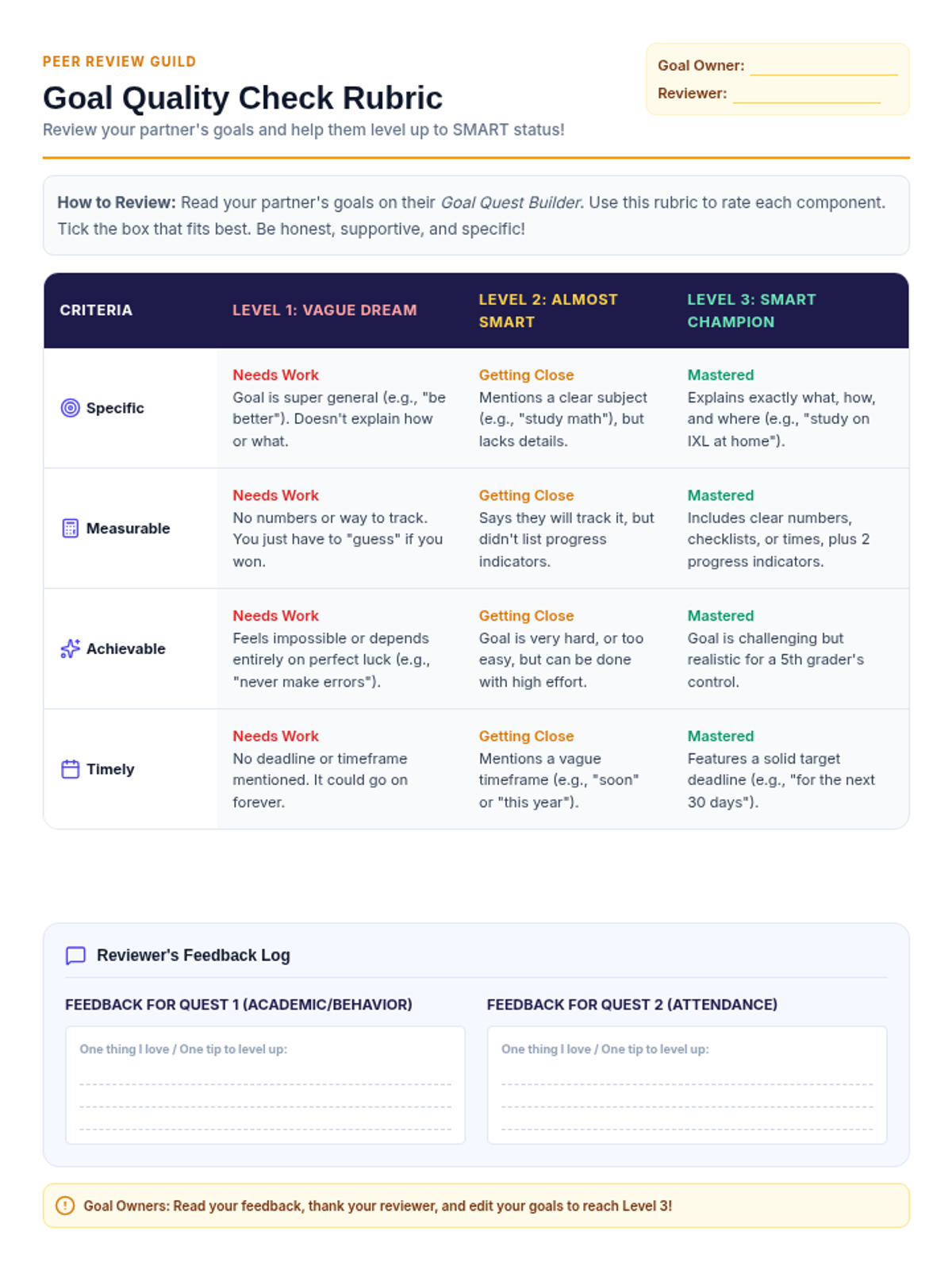
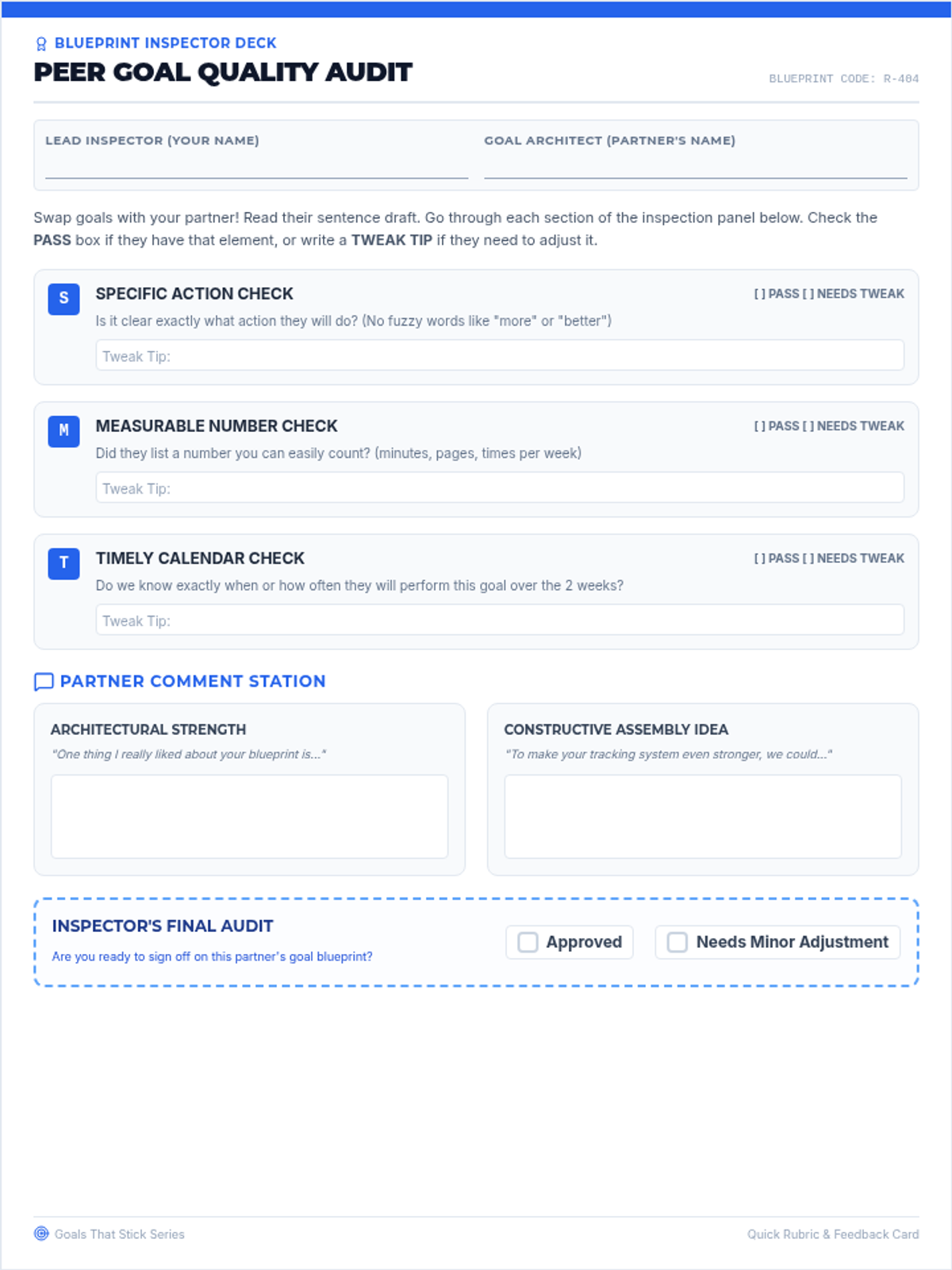
A 45-minute lesson designed for 5th-grade students to master the art of writing SMART academic/behavior and attendance goals. Students learn to define progress indicators, anticipate barriers, and use peer feedback to design achievable action plans.
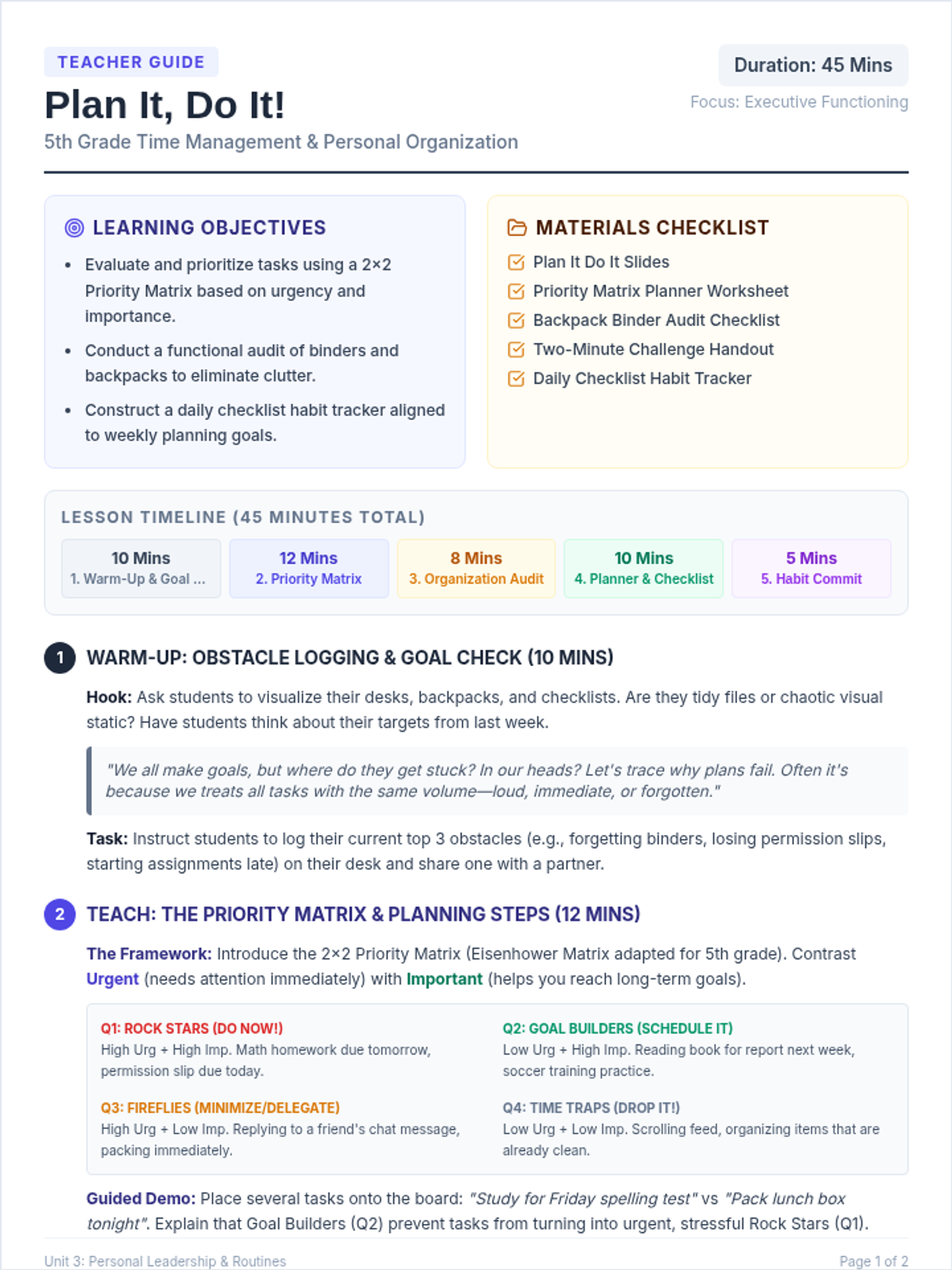
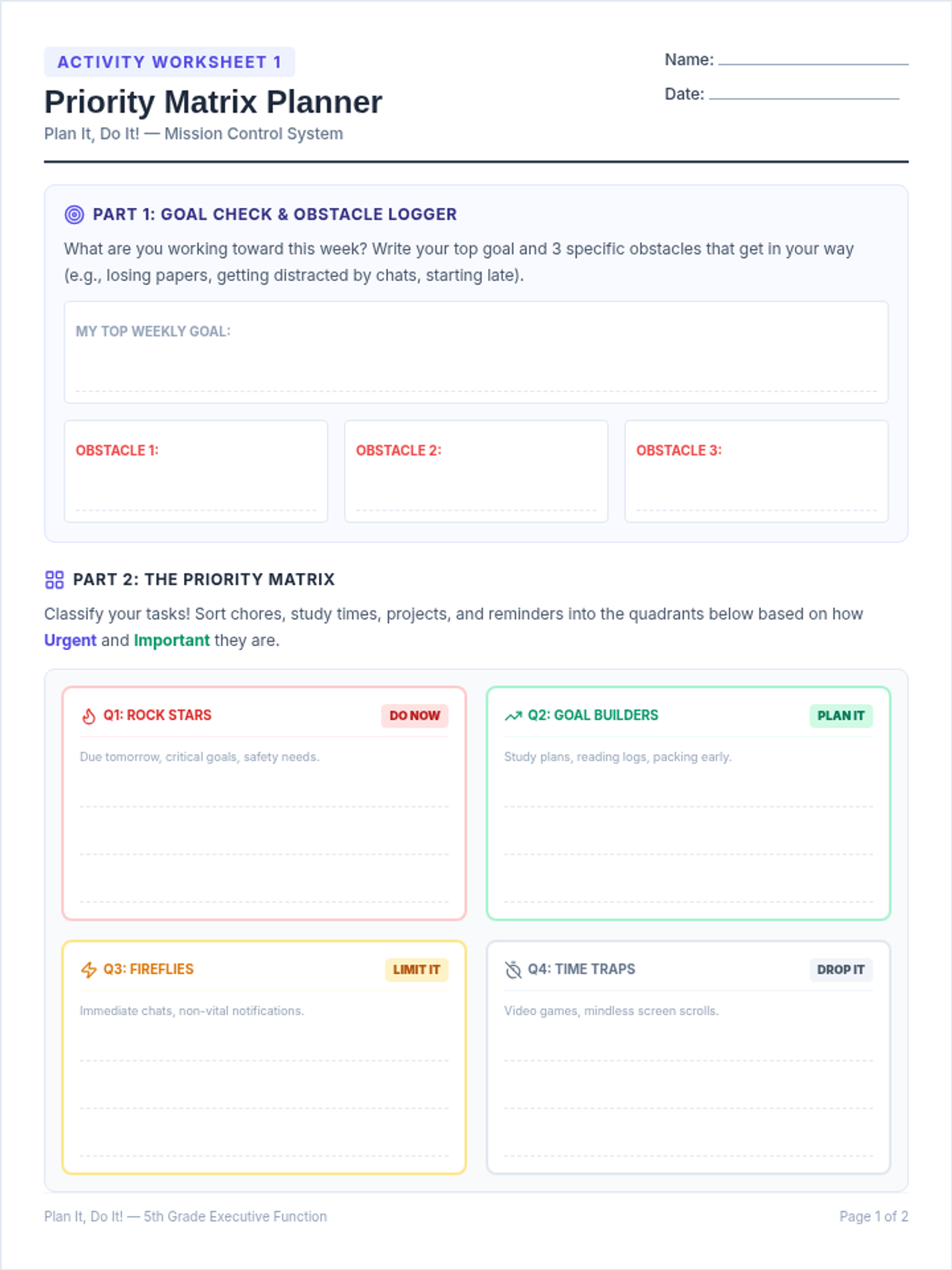
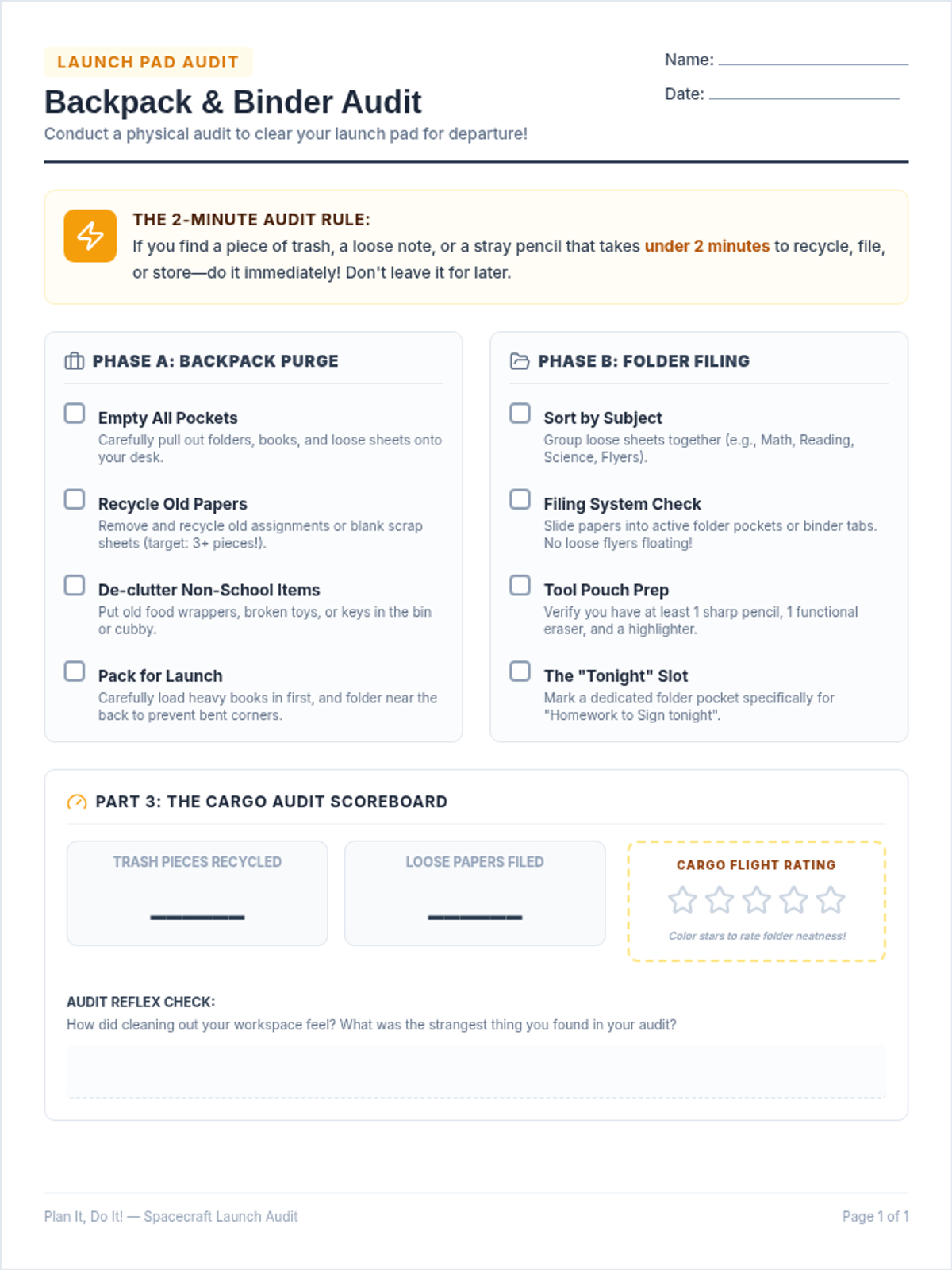
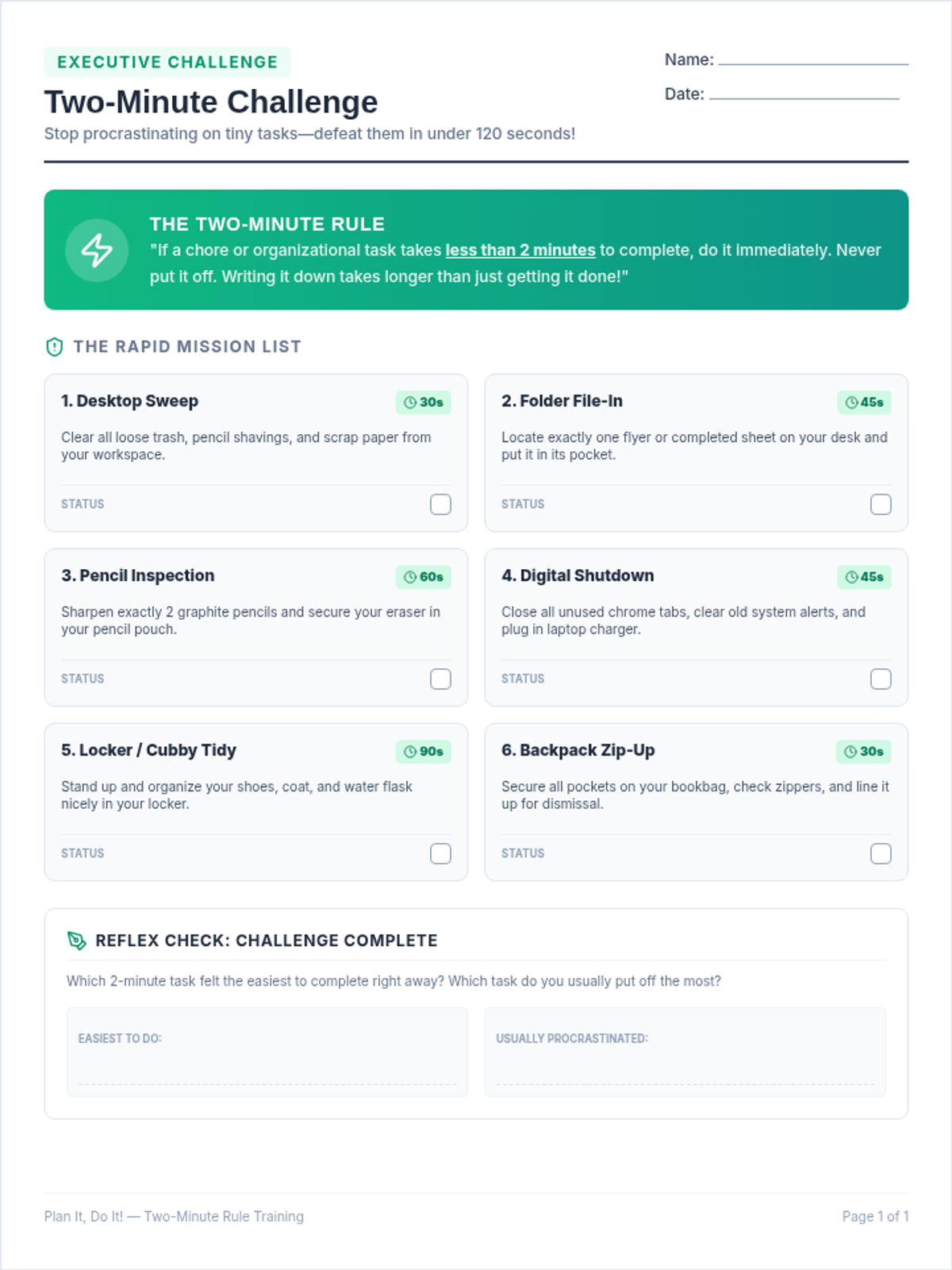
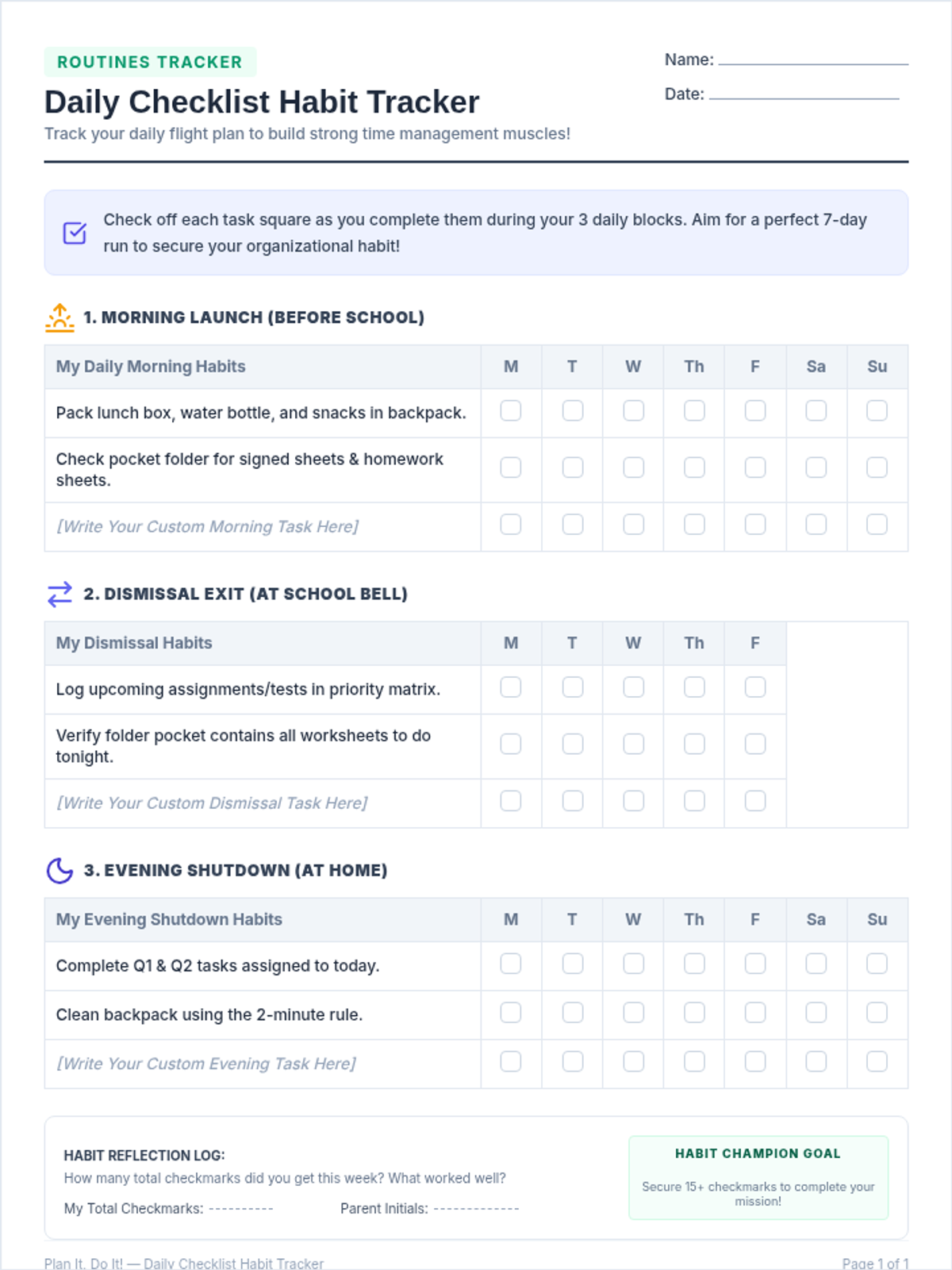
A hands-on lesson designed to teach 5th-grade students practical time management and organizational skills, including task prioritization with a matrix, binder/backpack auditing, and building sustainable daily checklists.
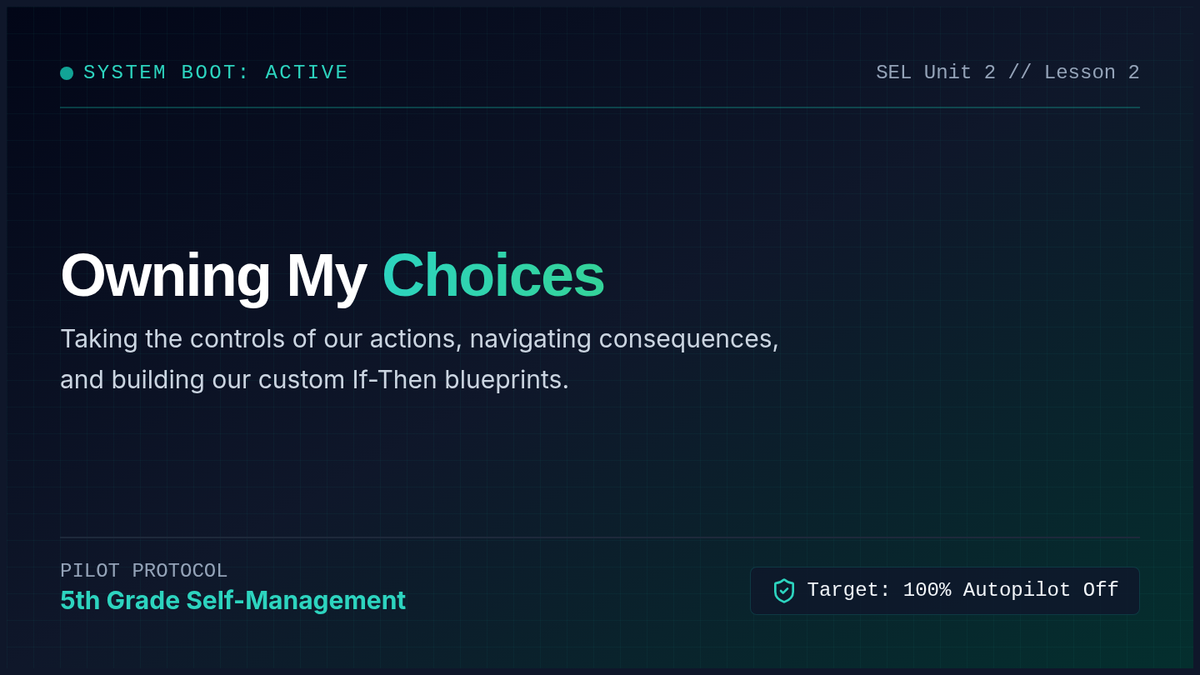
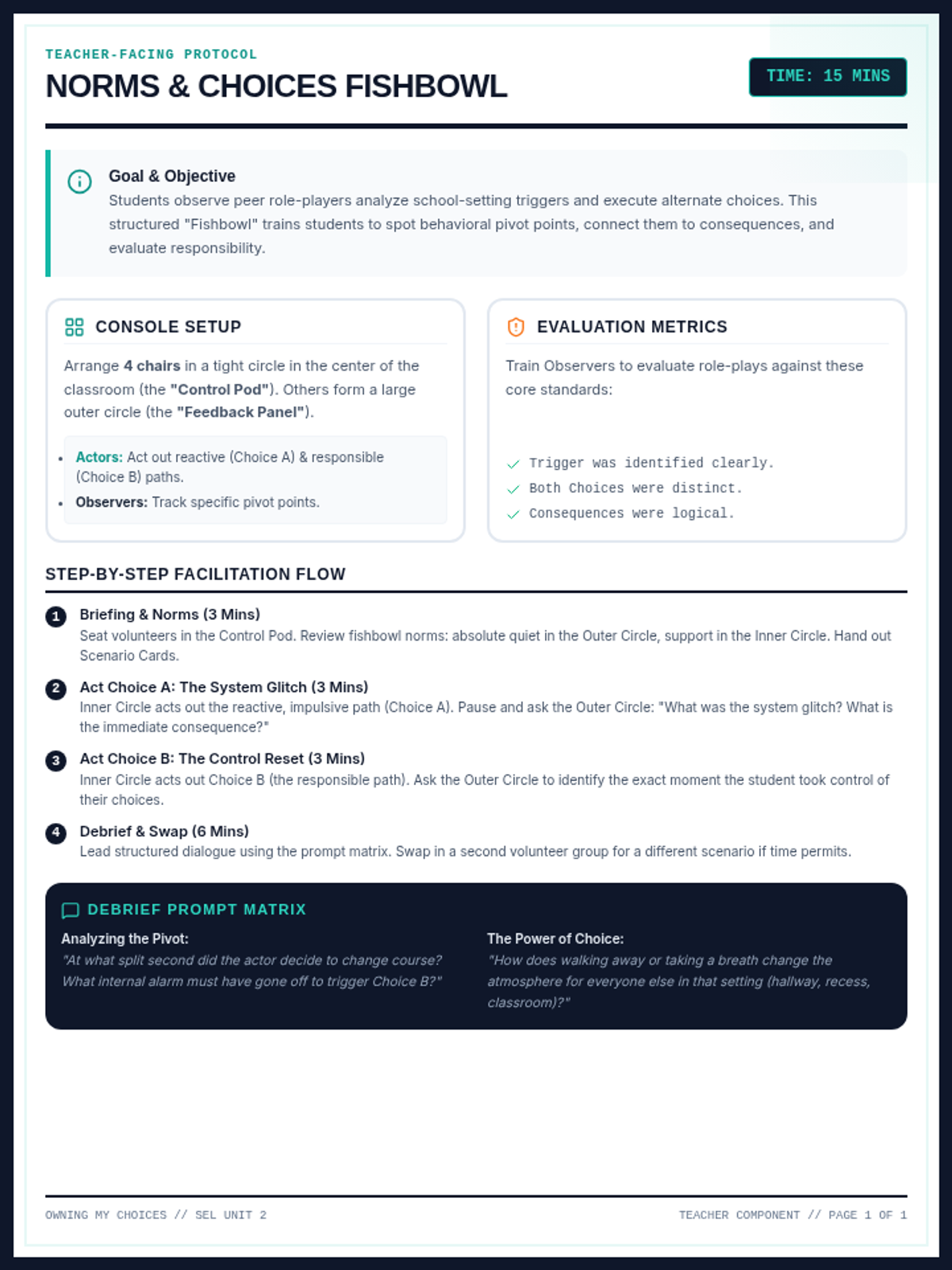
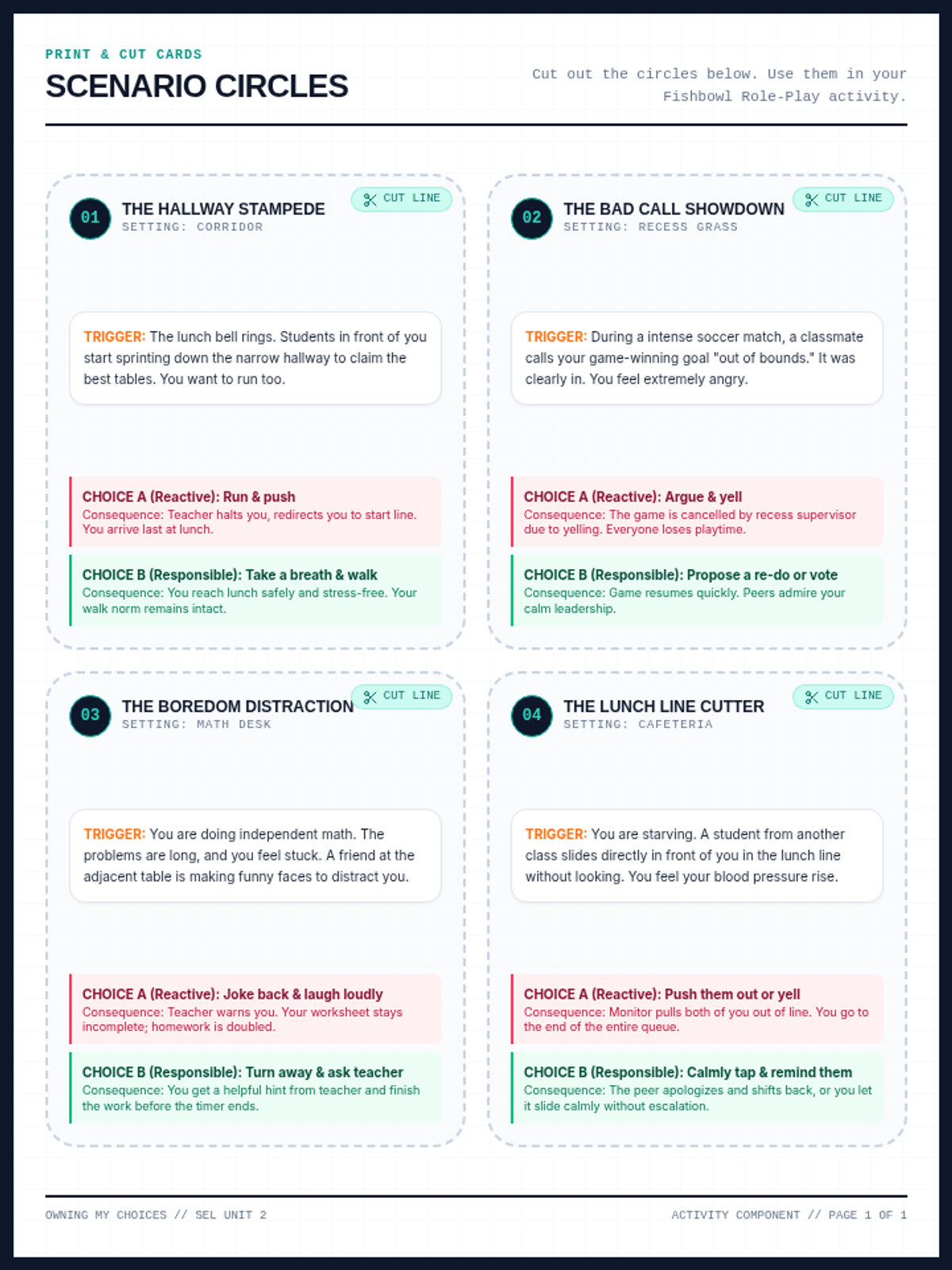
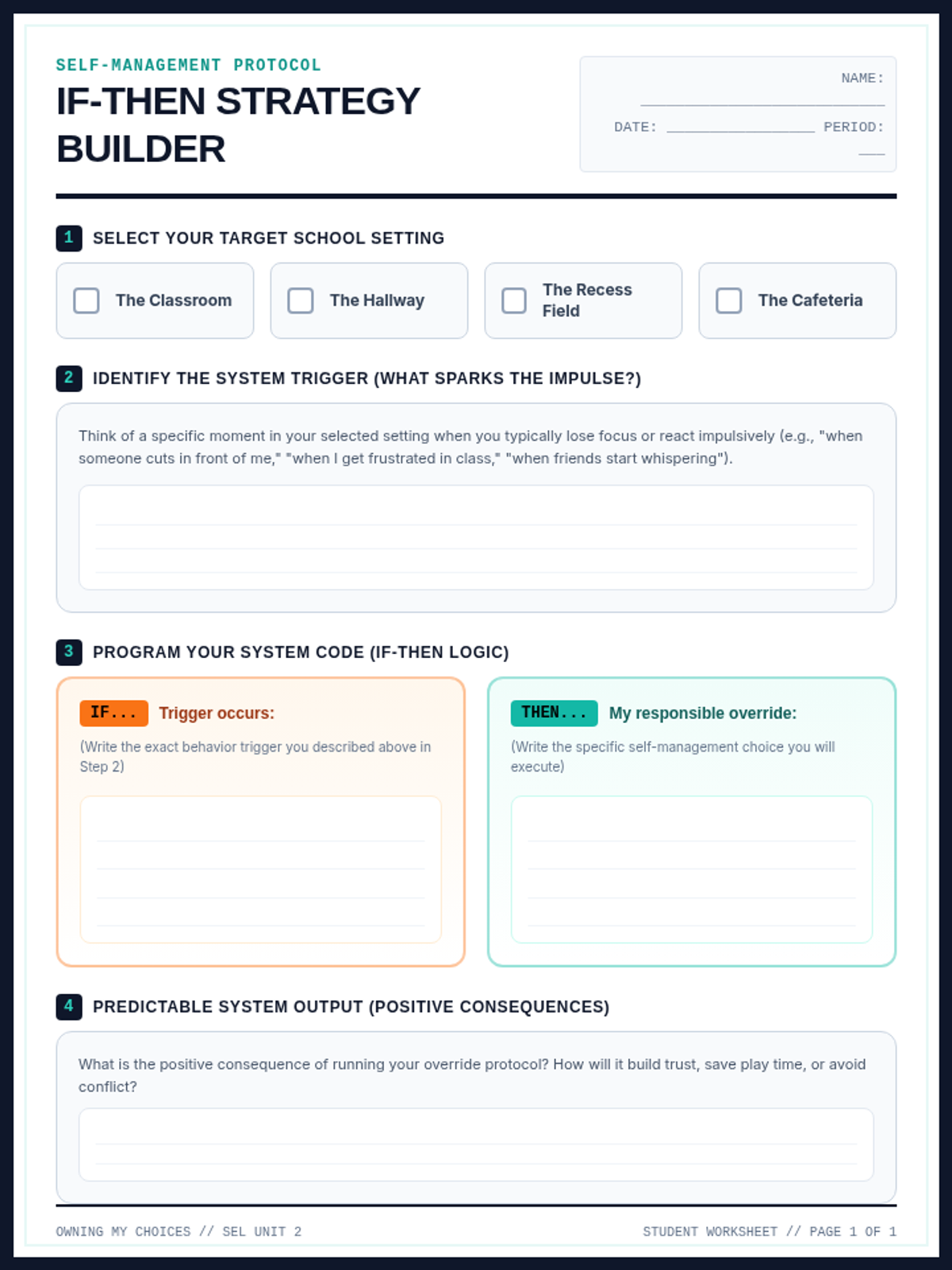
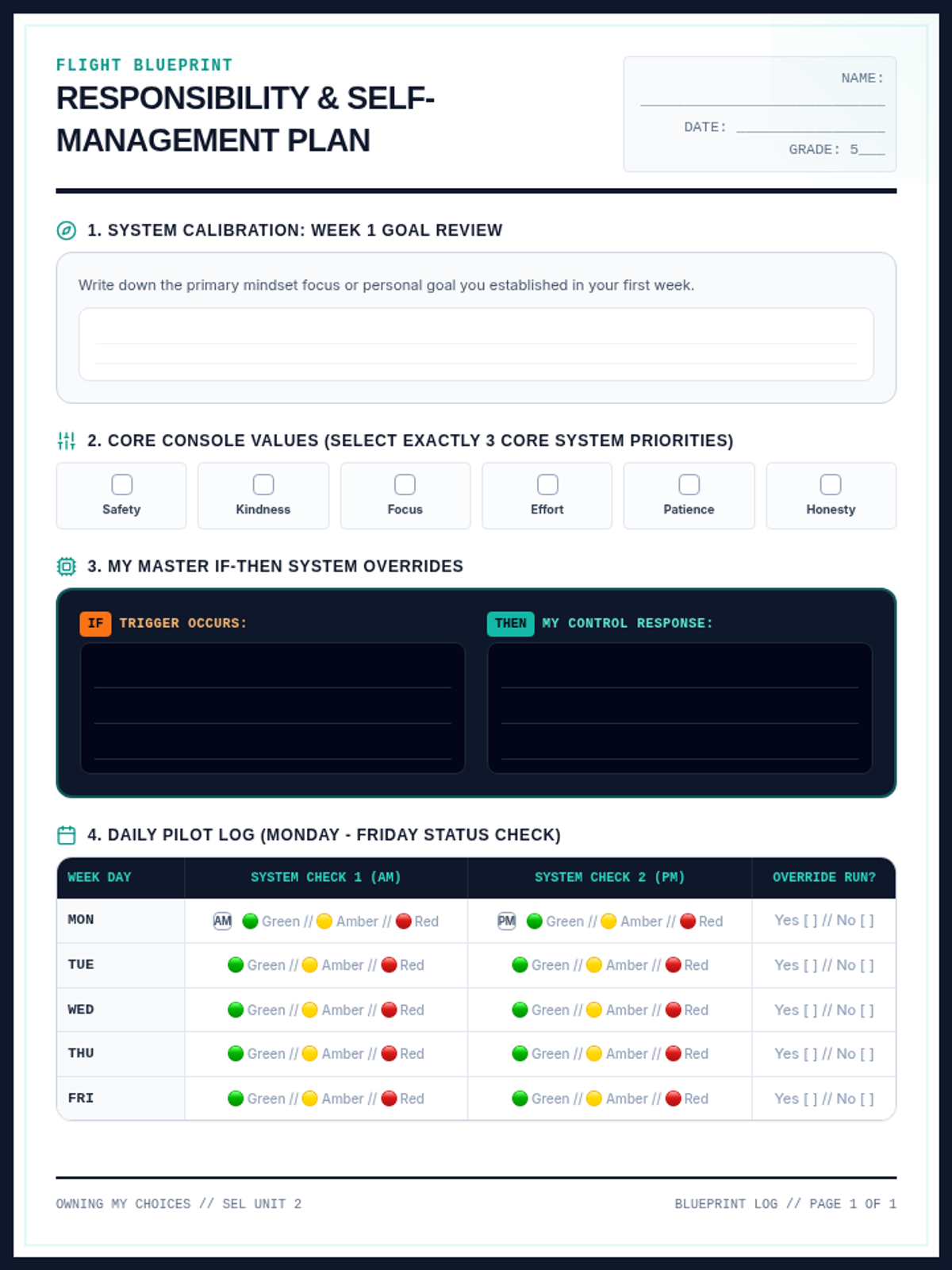
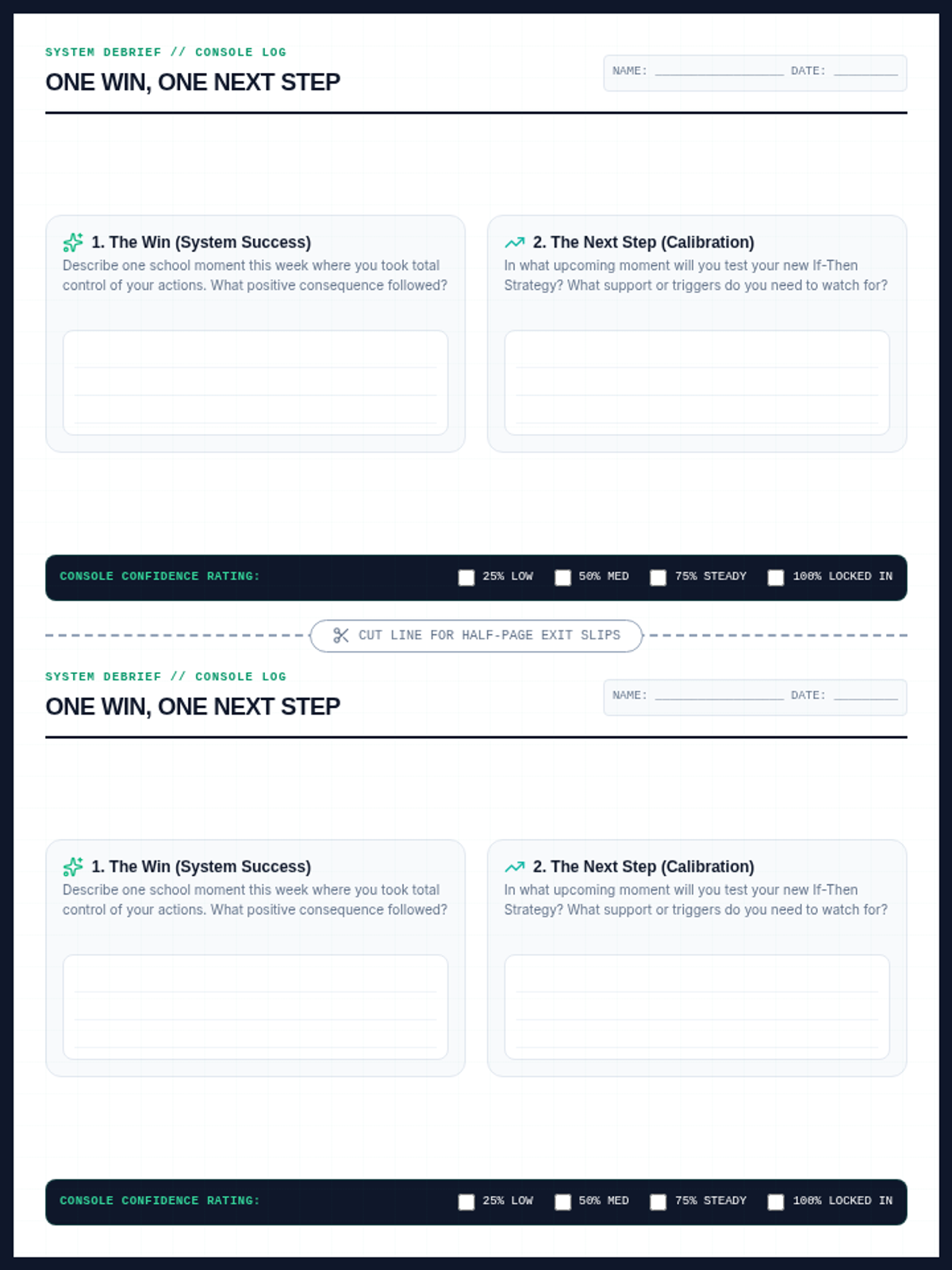
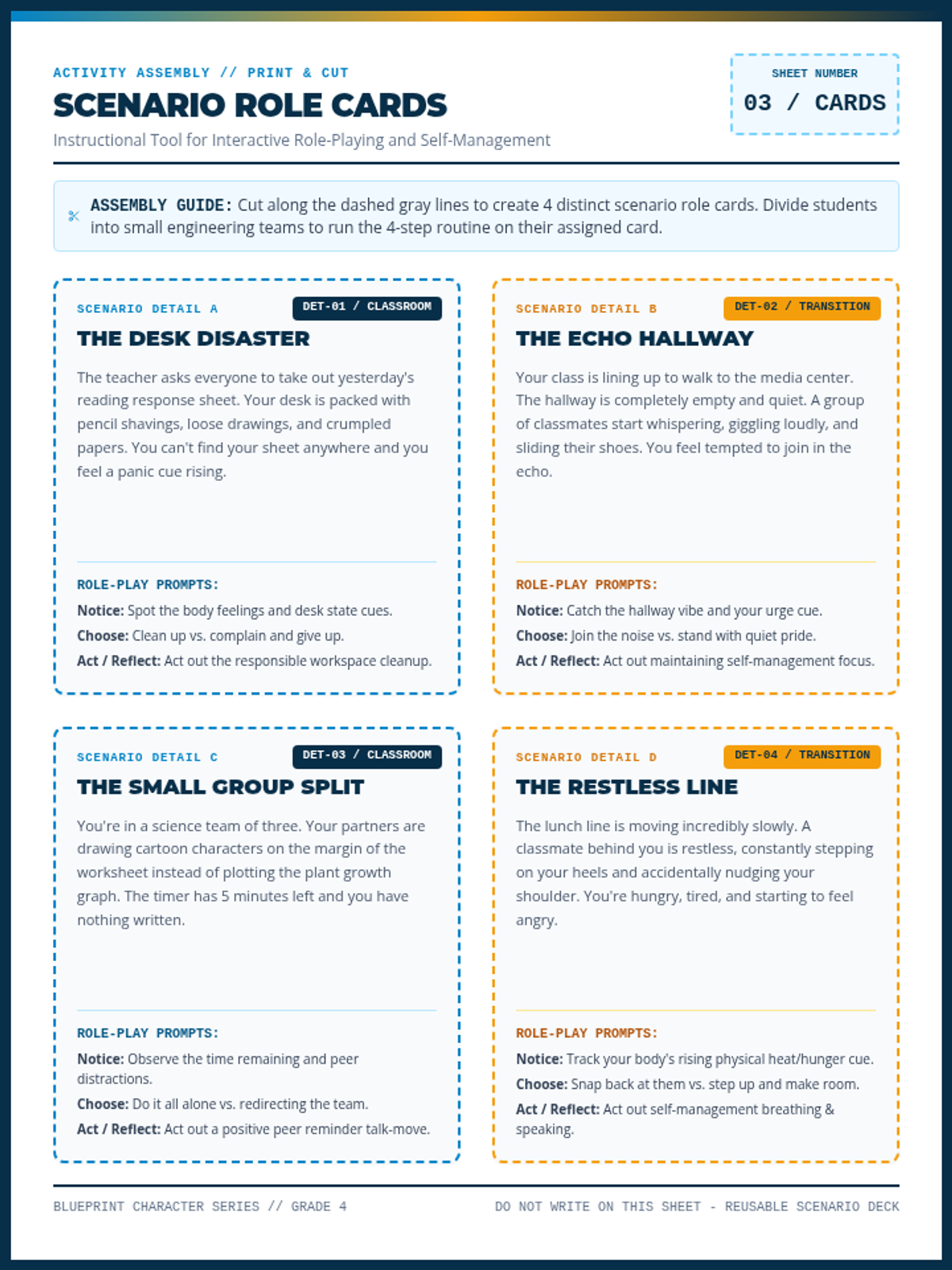
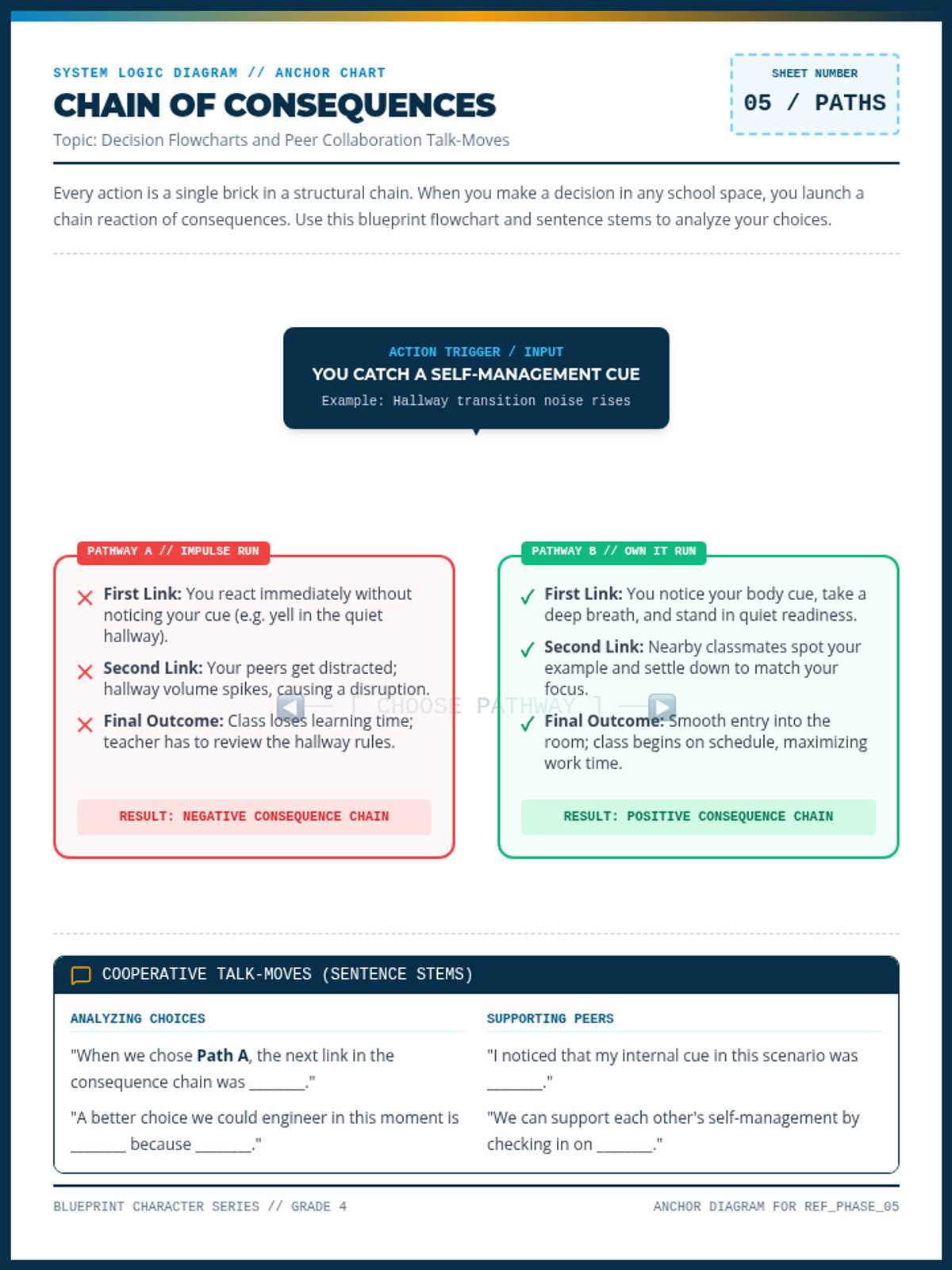
A 45-minute social-emotional learning lesson for 5th grade that explores the connection between behavior and consequences, helping students build personal responsibility. Through interactive role-play and a fishbowl discussion, students analyze school scenarios and draft their own actionable if-then strategy to navigate challenging settings like the hallway, recess, or classroom.
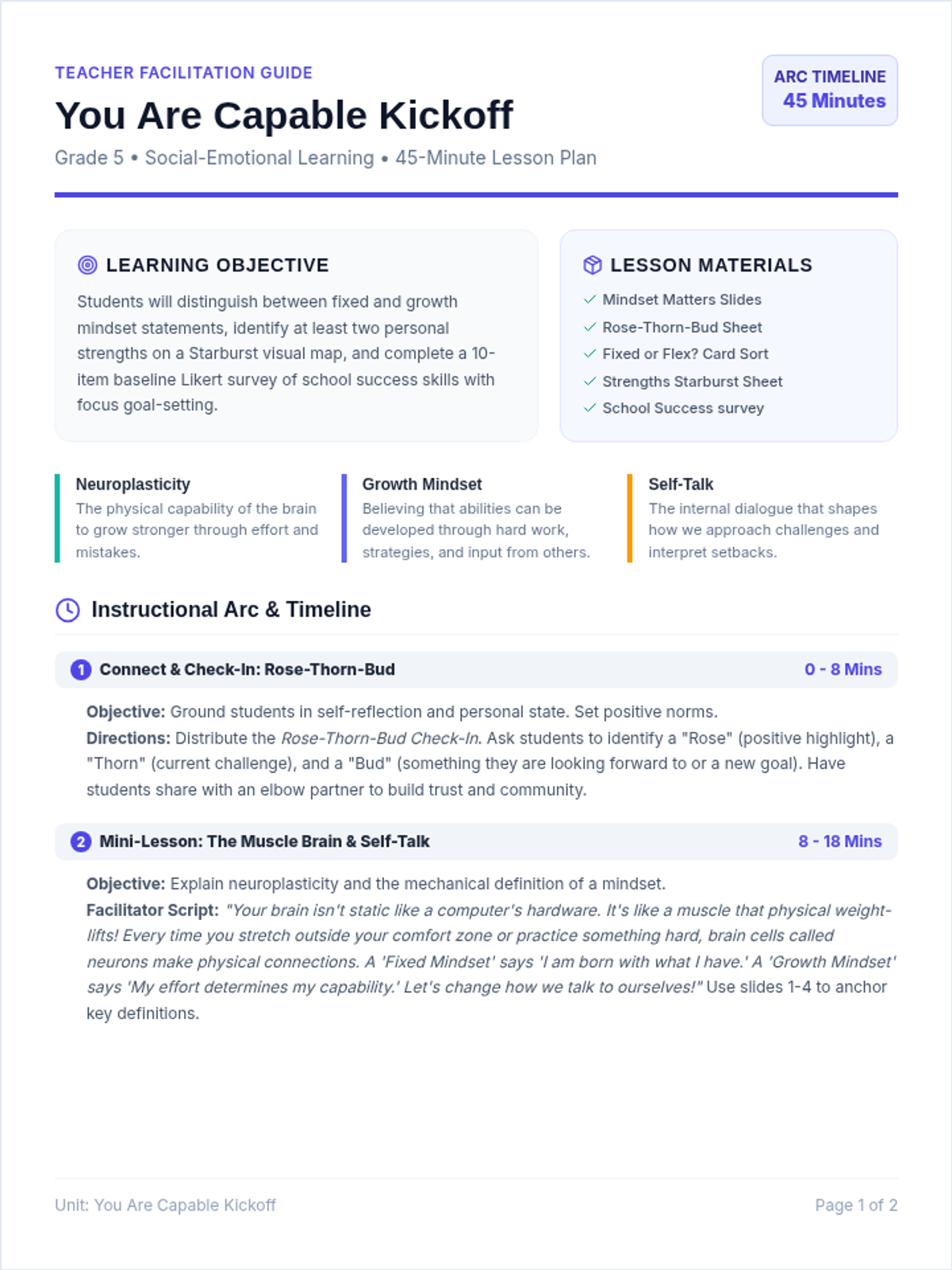
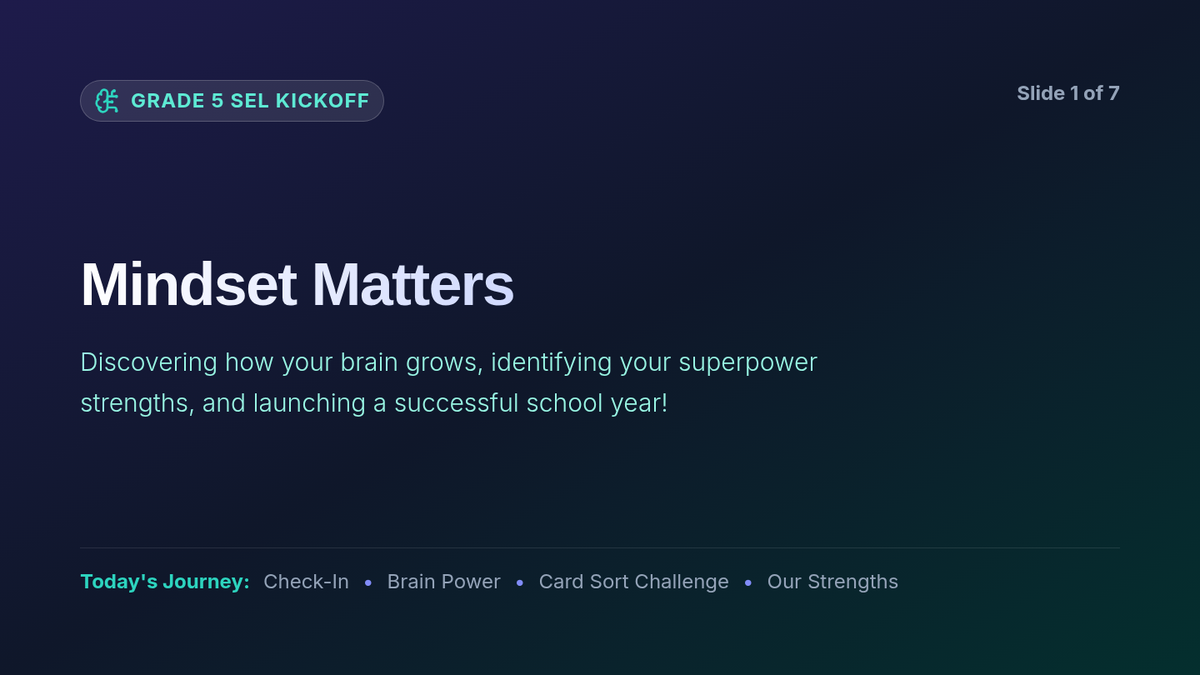
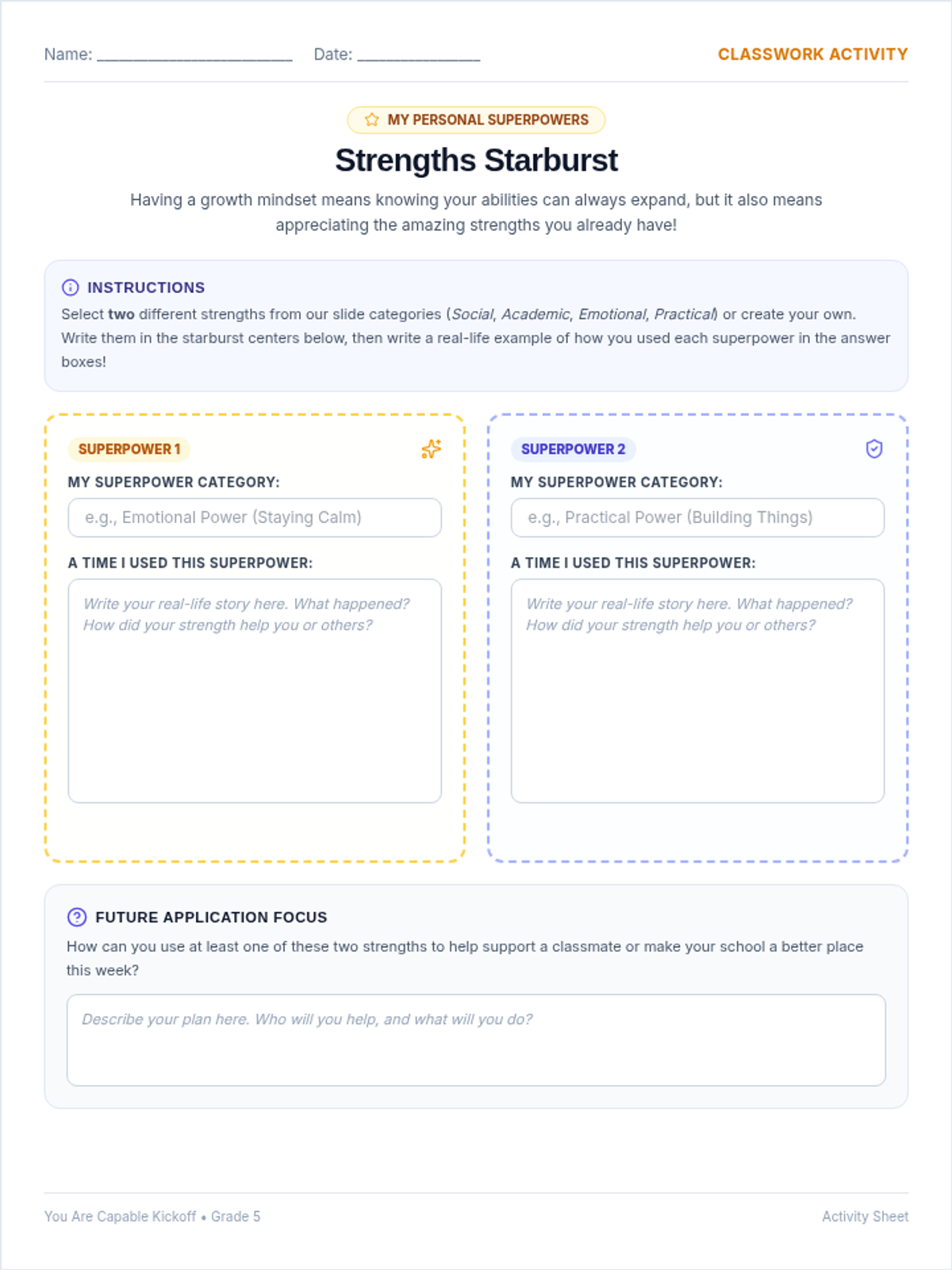
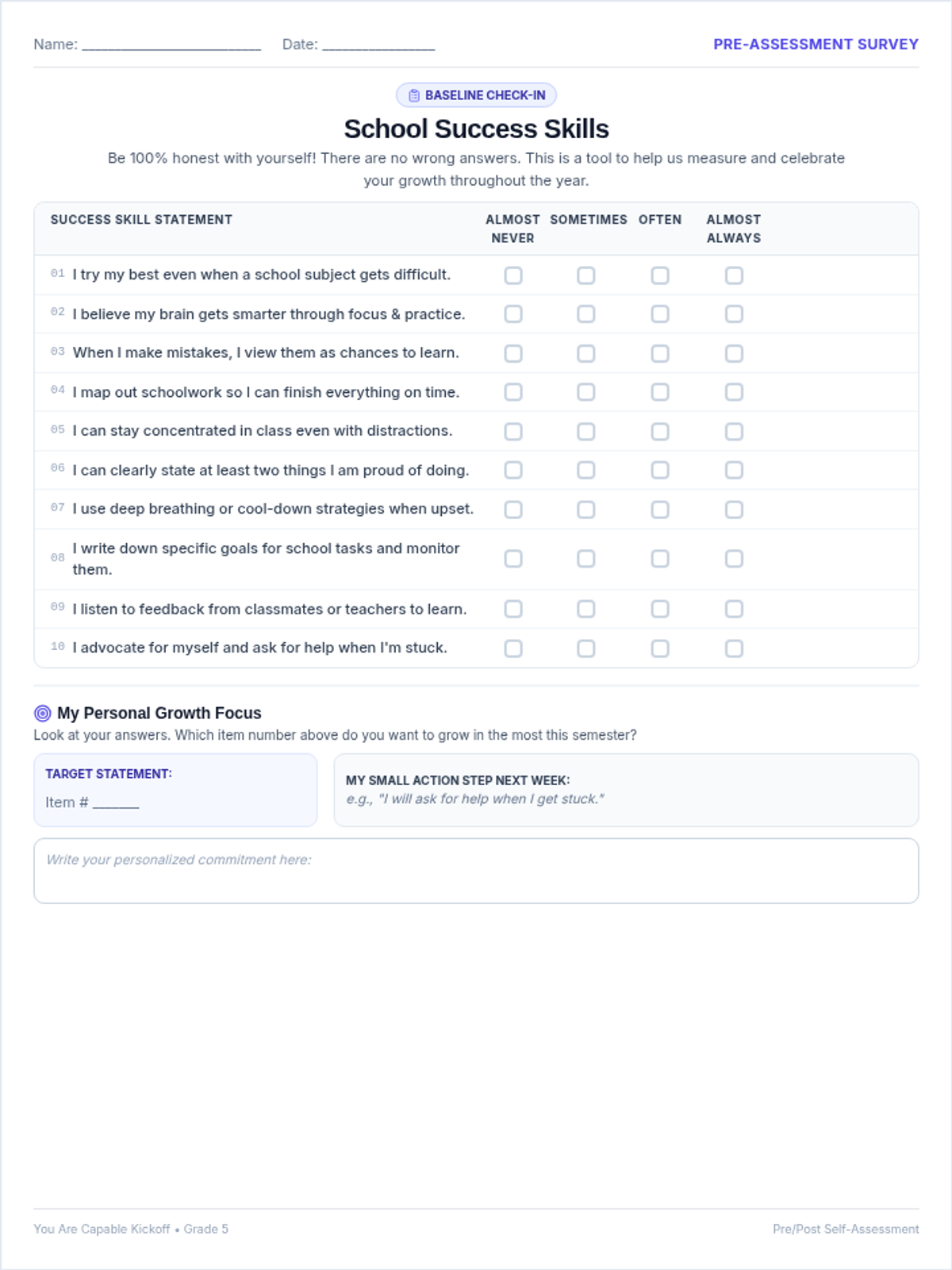
A 45-minute social-emotional learning kickoff lesson for 5th graders that introduces growth mindset, neuroplasticity, and personal strengths, culminating in a 10-item baseline survey of school success skills.
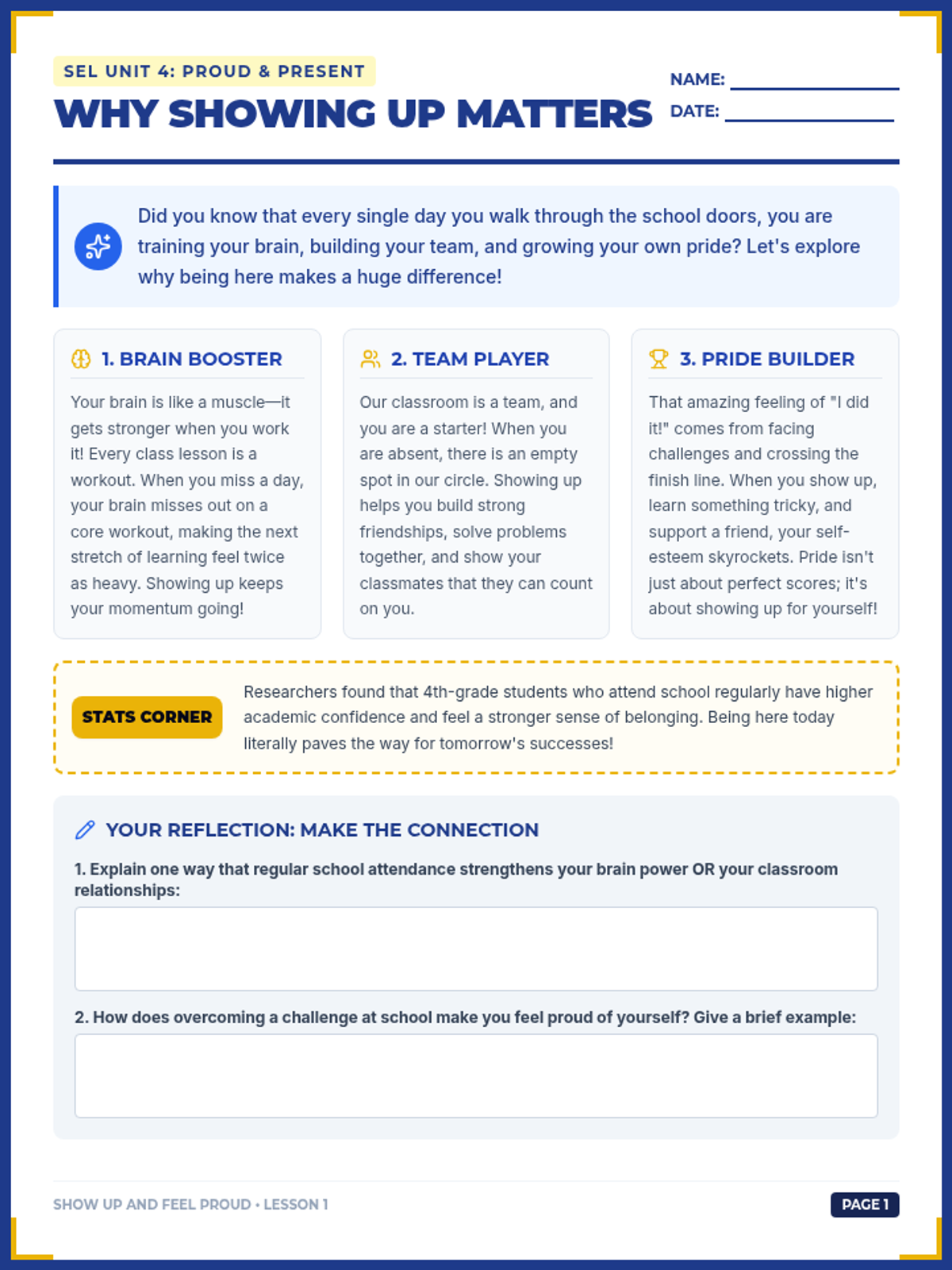
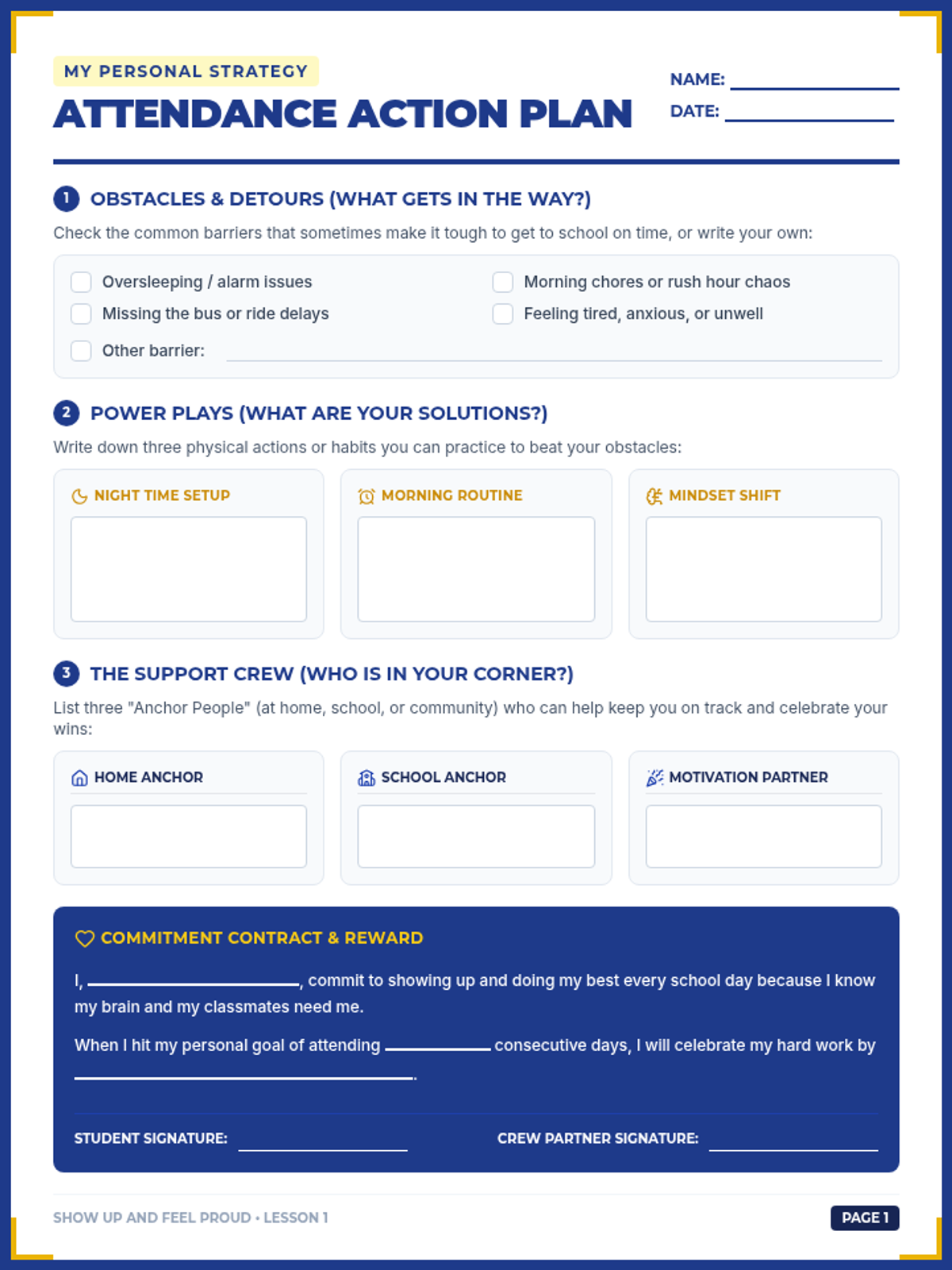
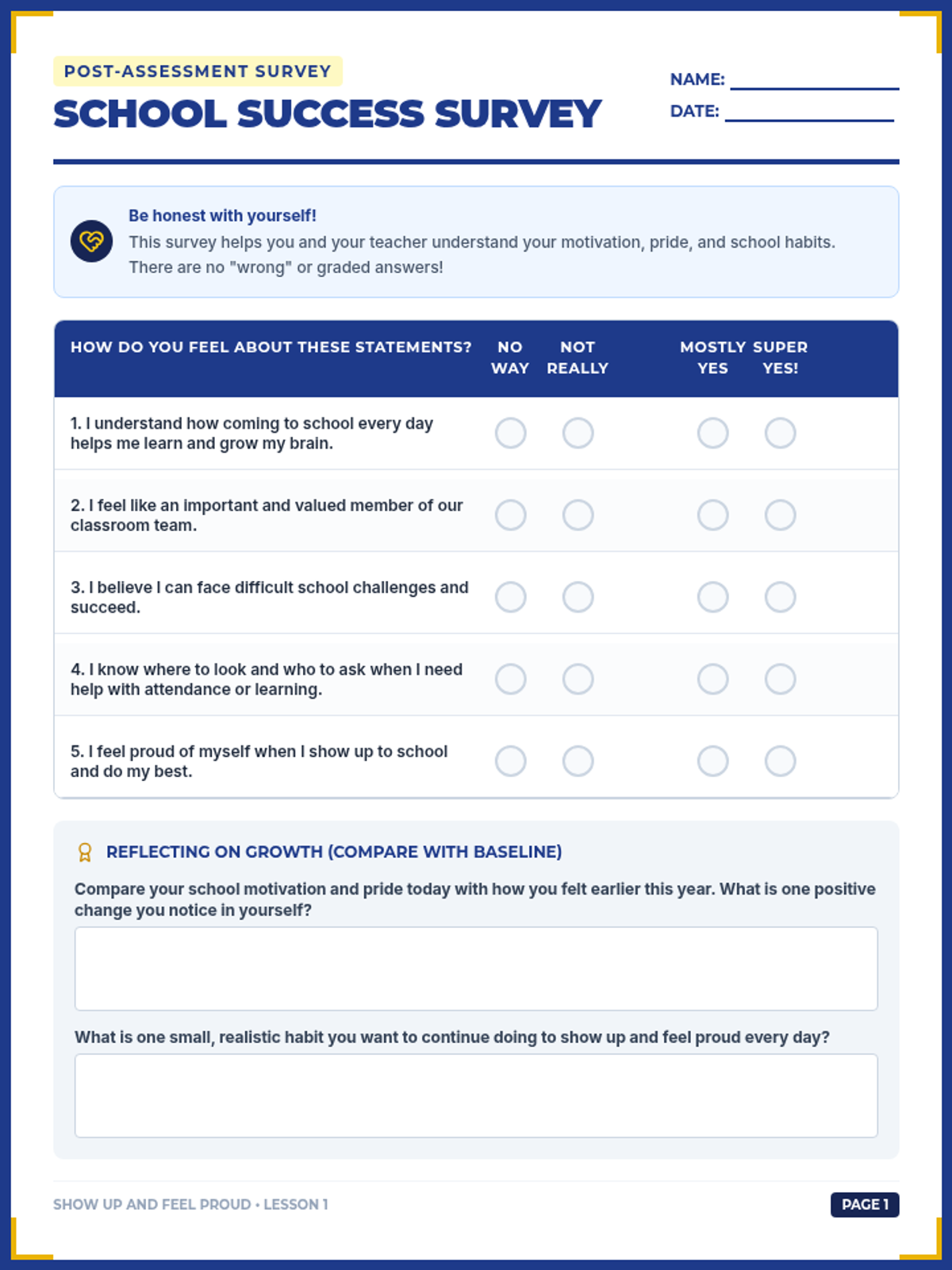
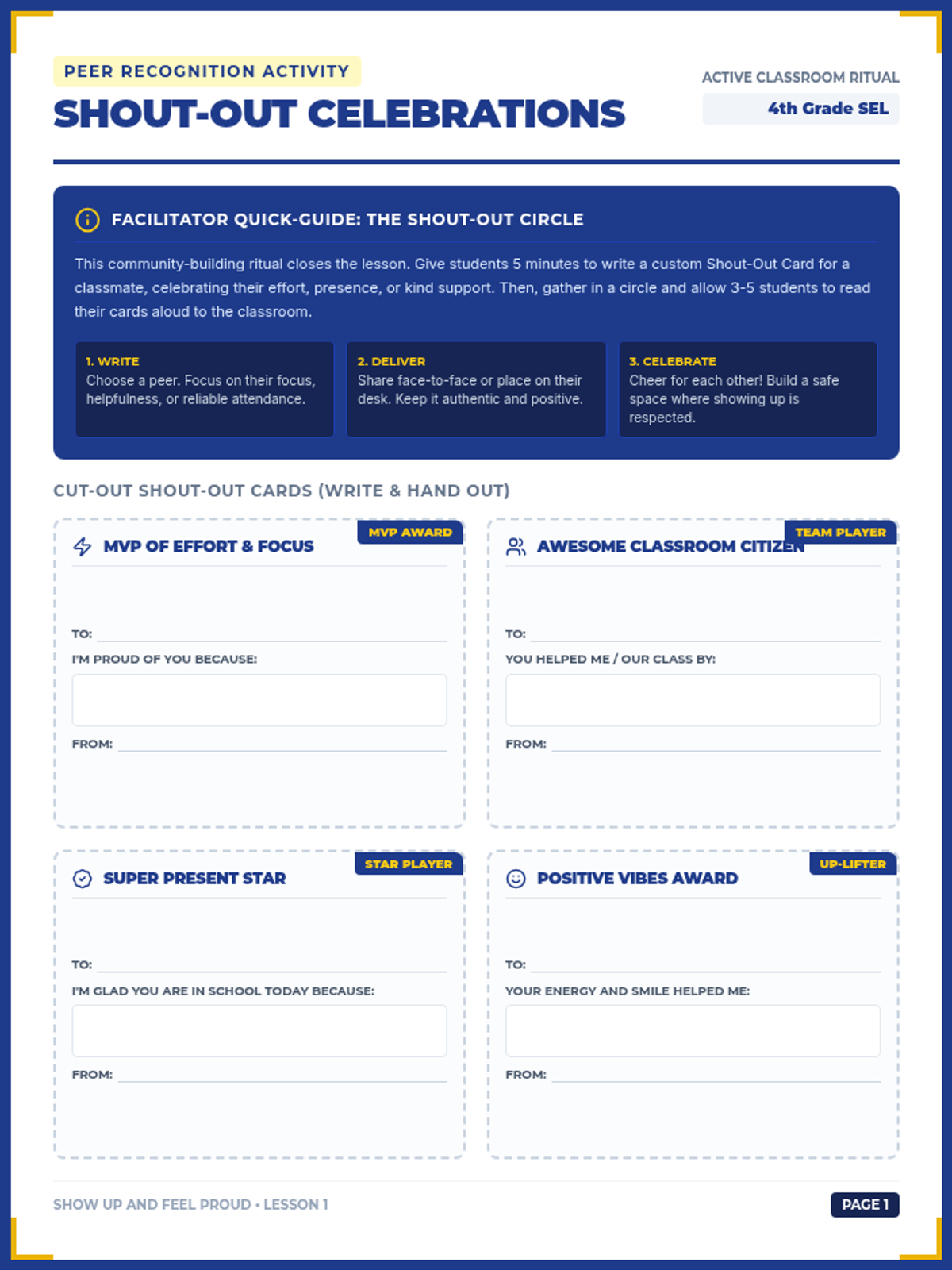
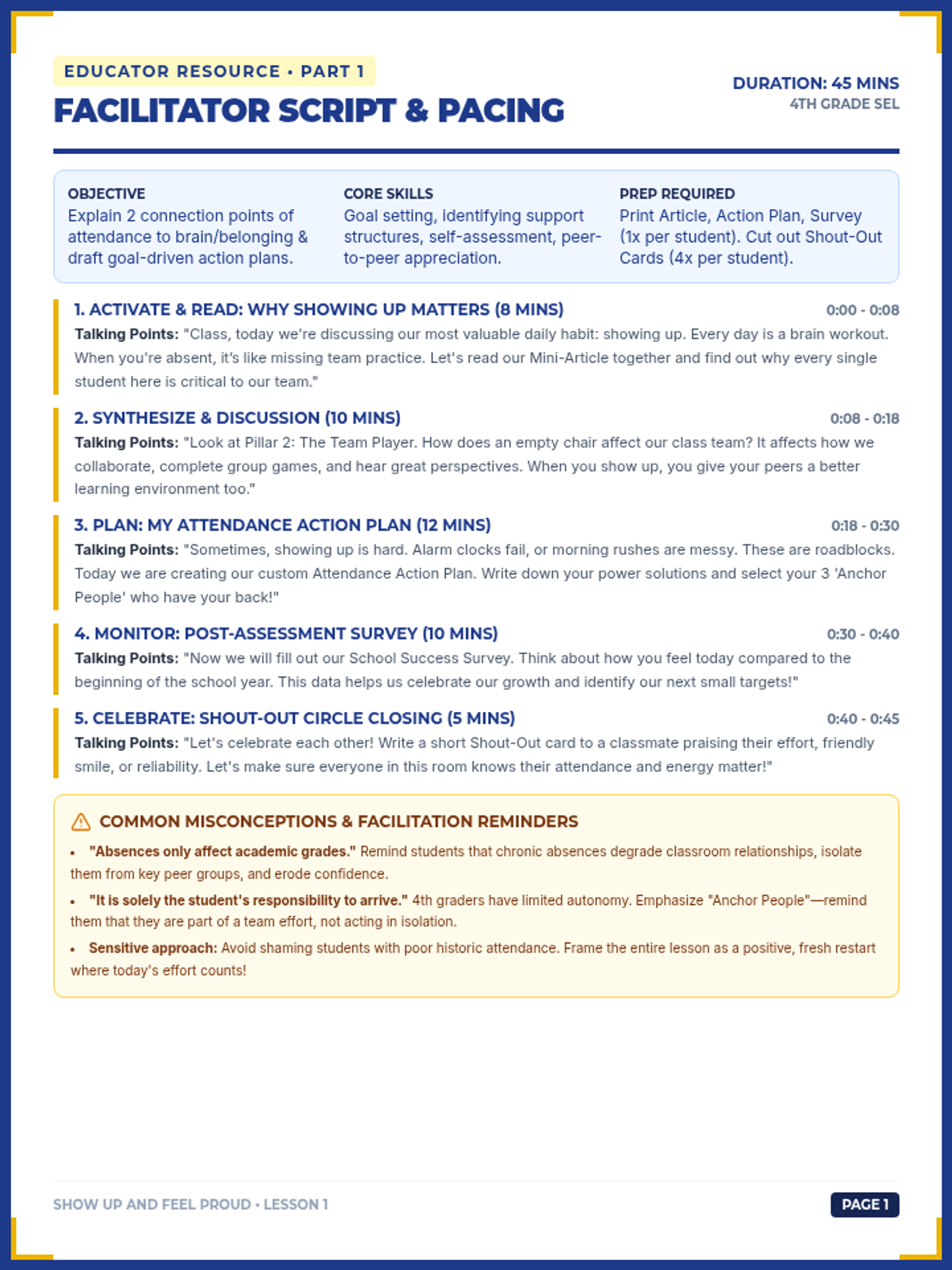
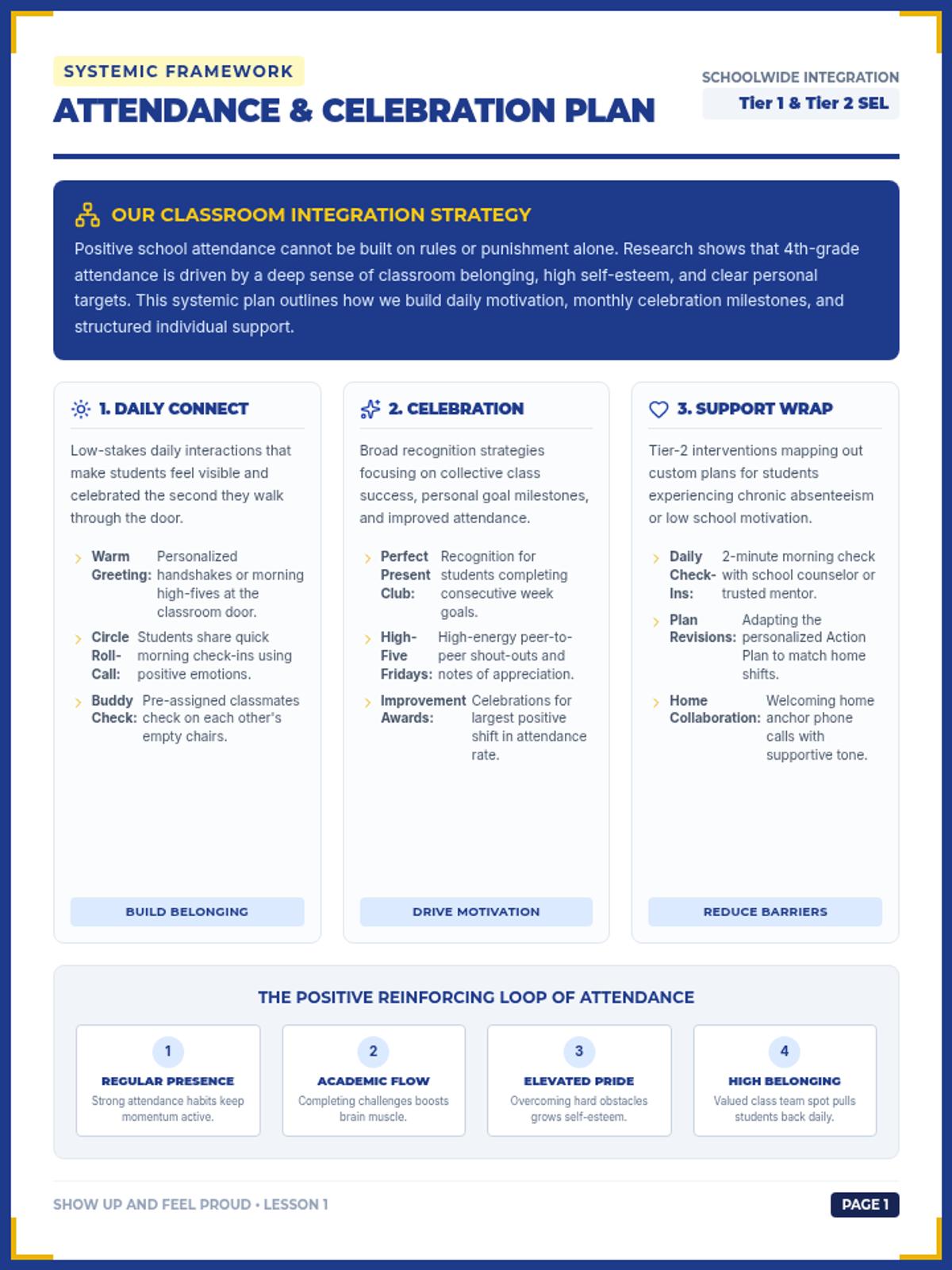
A 45-minute 4th-grade social-emotional learning lesson focusing on the connection between regular school attendance, academic success, and personal self-esteem. Students analyze a short text, design a personalized attendance action plan, complete a self-assessment, and celebrate their growth.
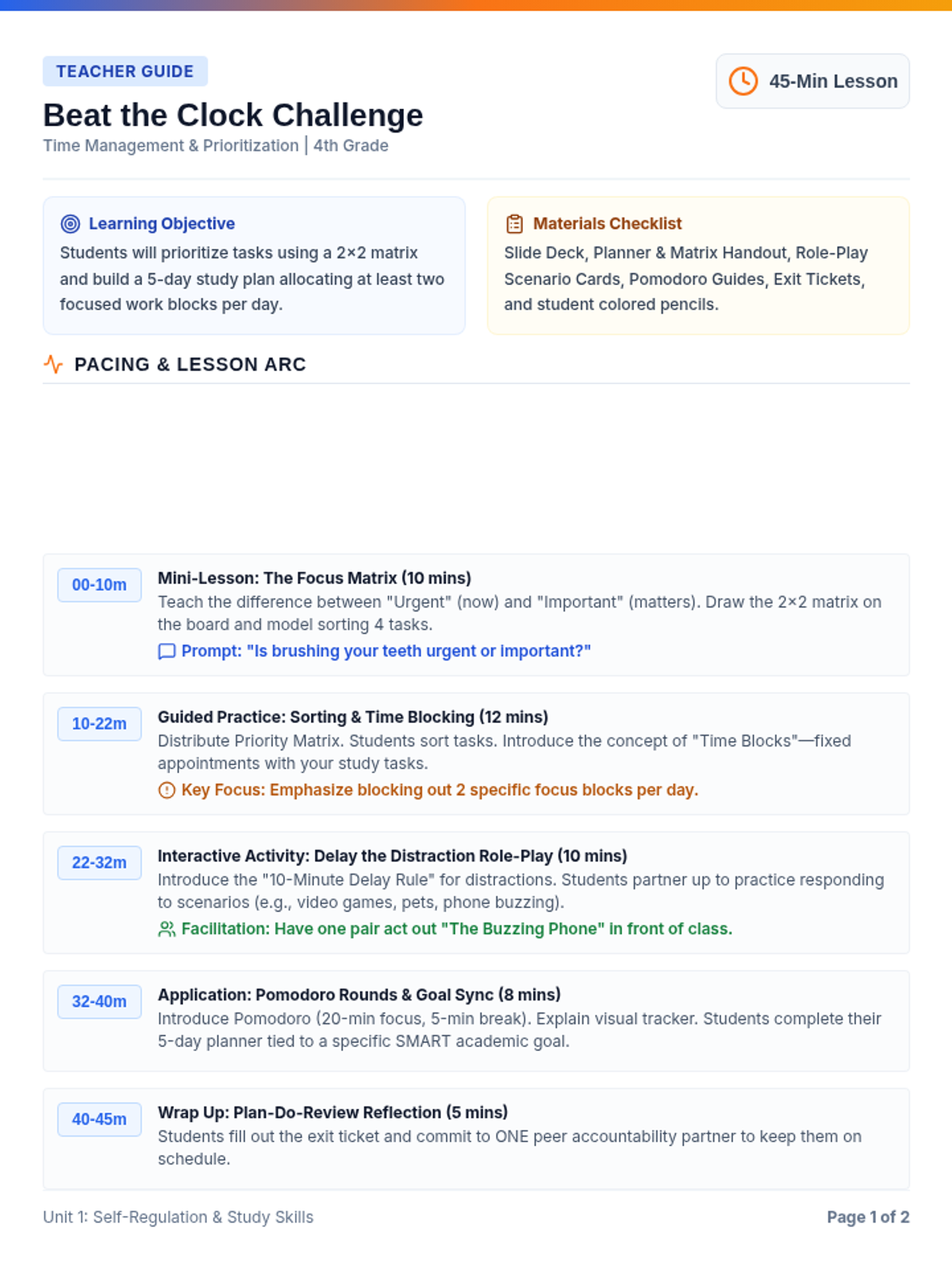
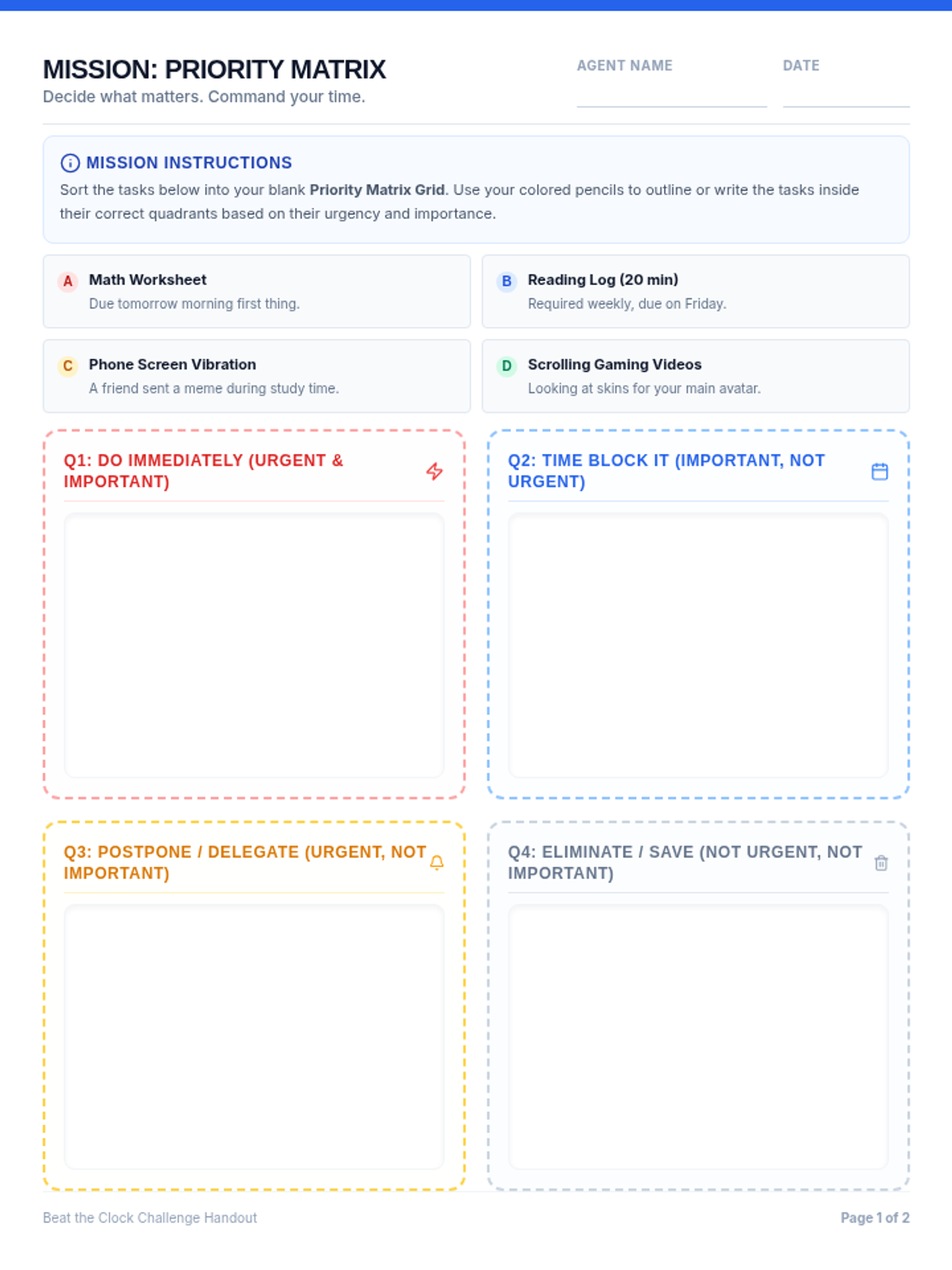
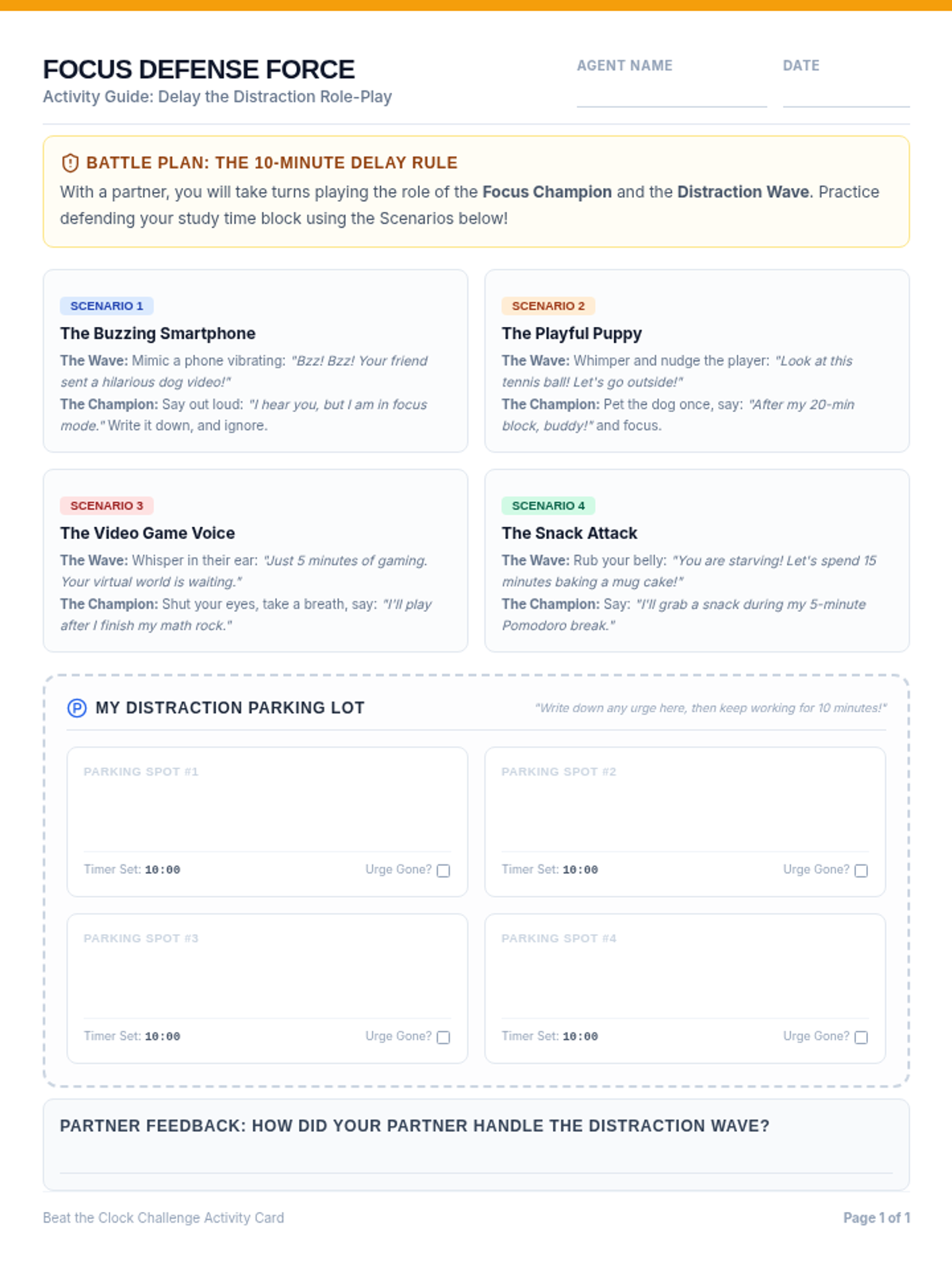
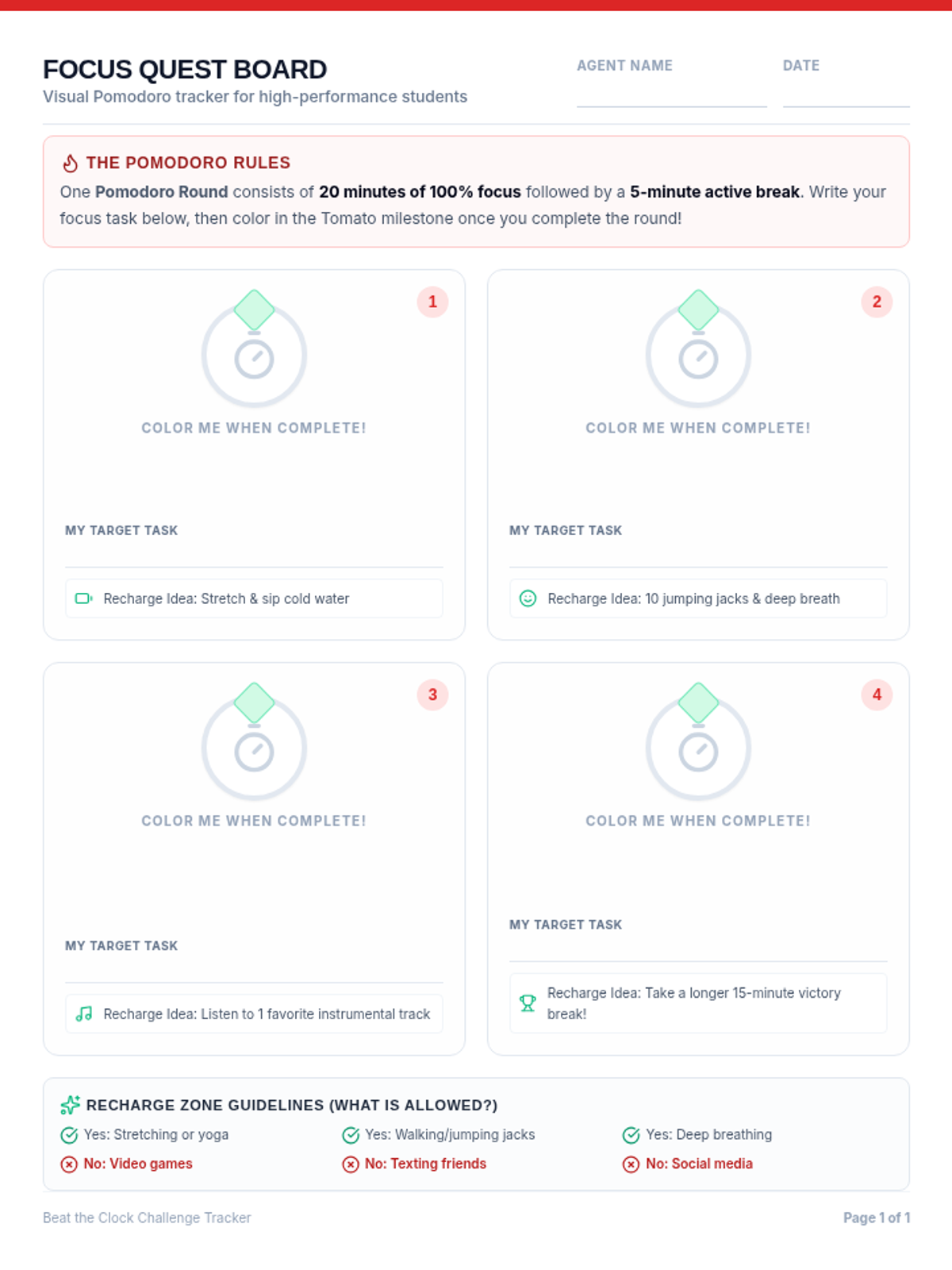
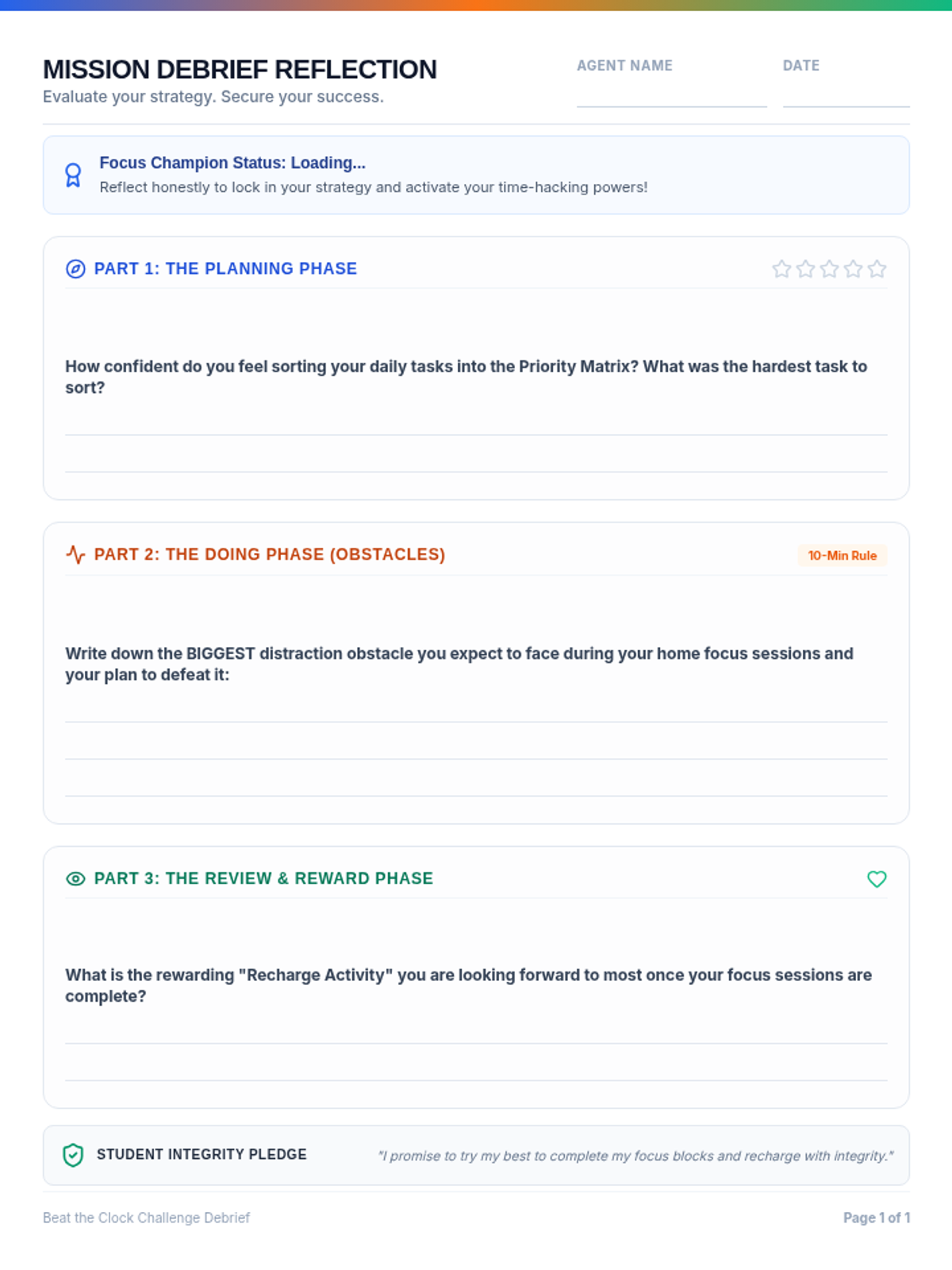
A highly interactive 4th-grade lesson on time management where students learn to prioritize tasks using a 2x2 importance/urgency matrix, block out study times, role-play distraction management, and create a realistic 5-day homework plan.
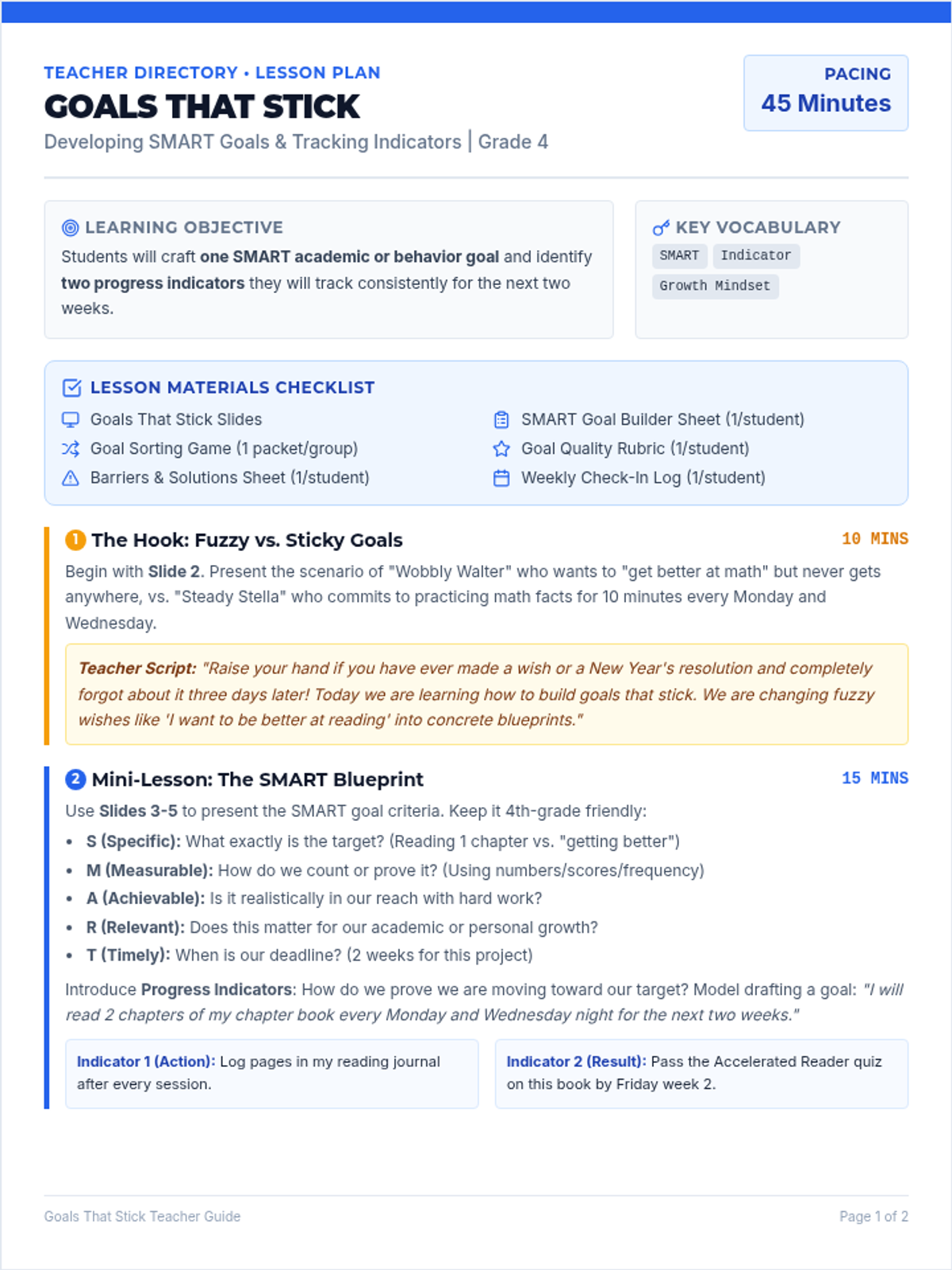
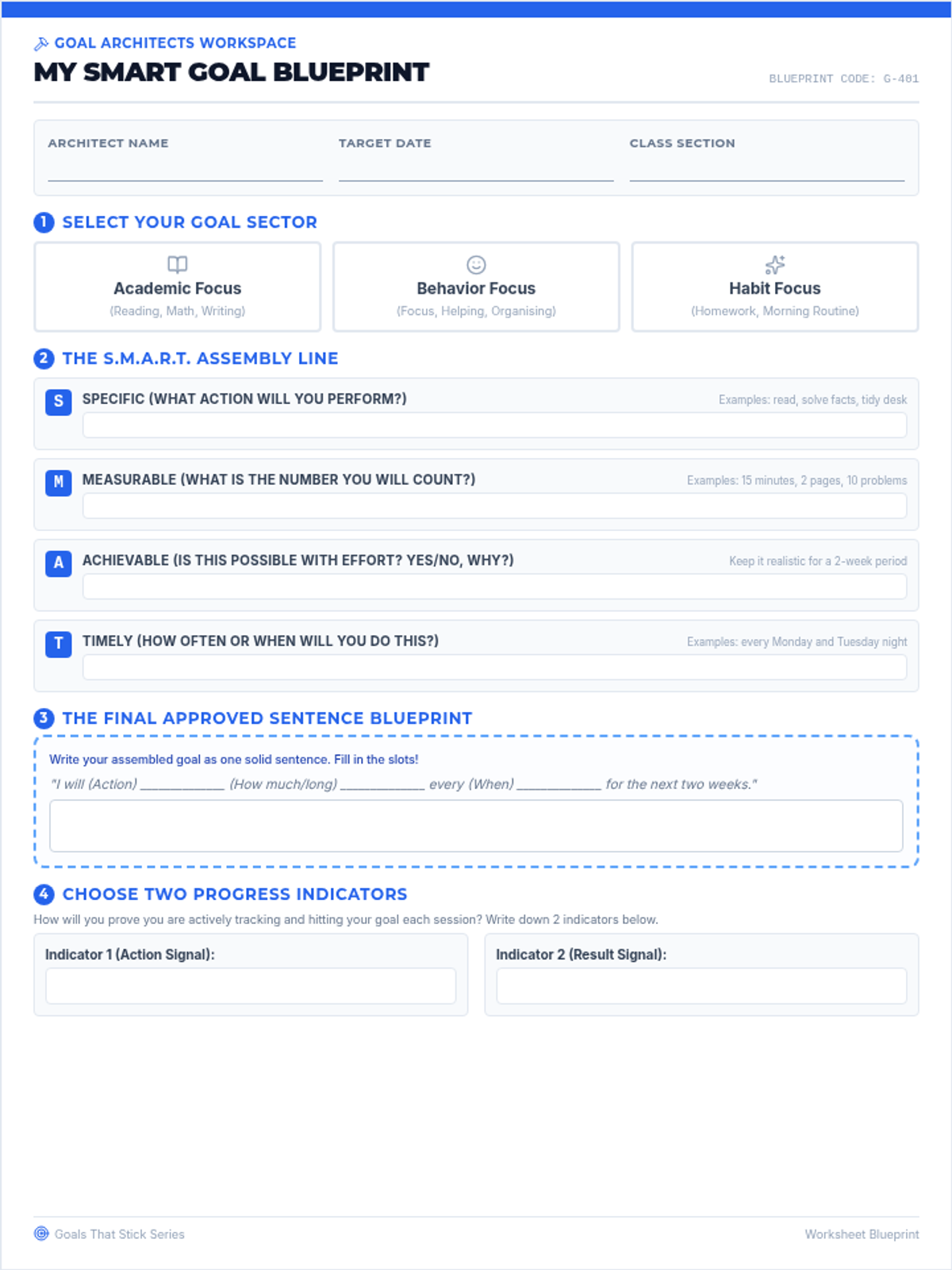
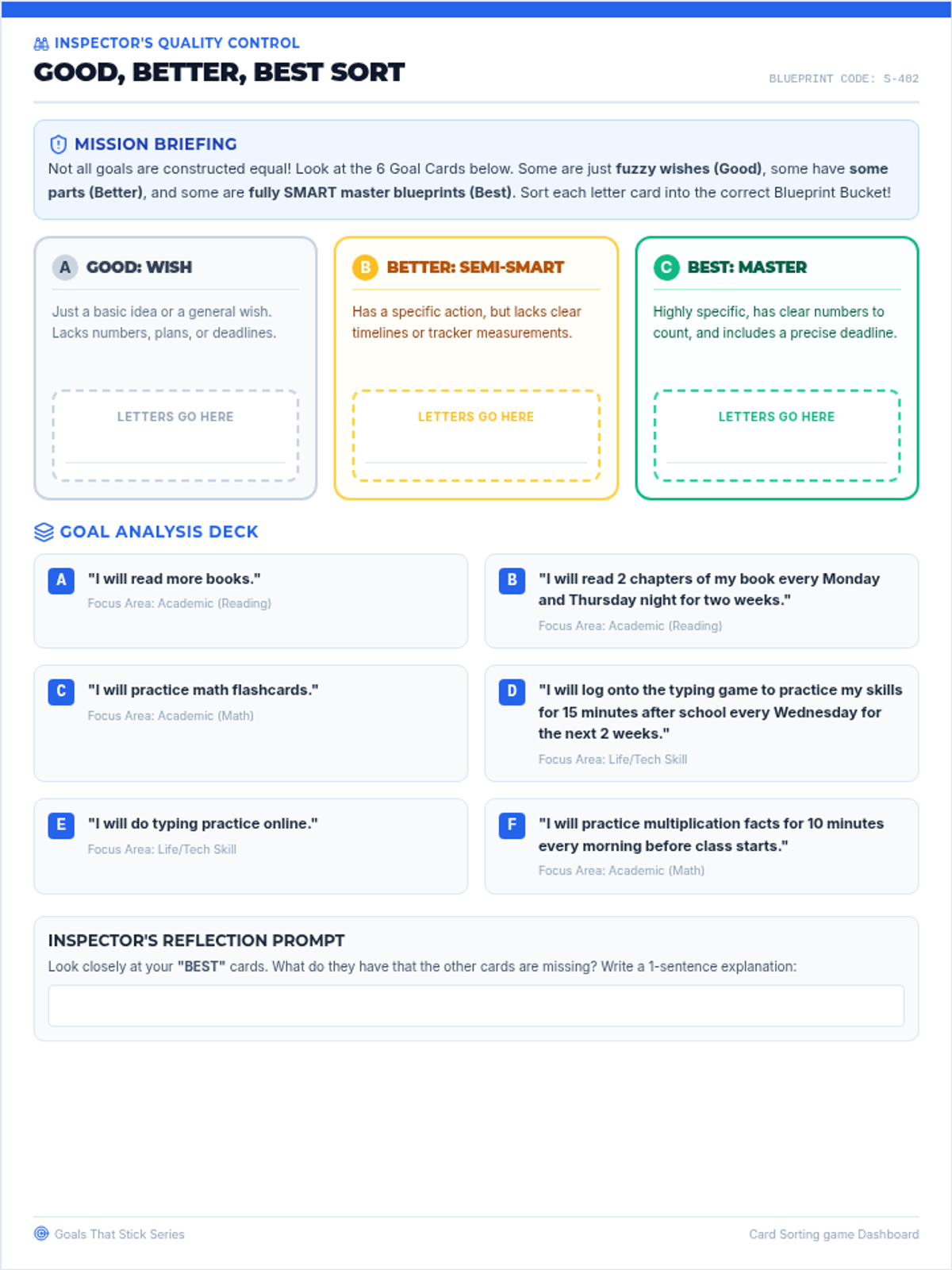
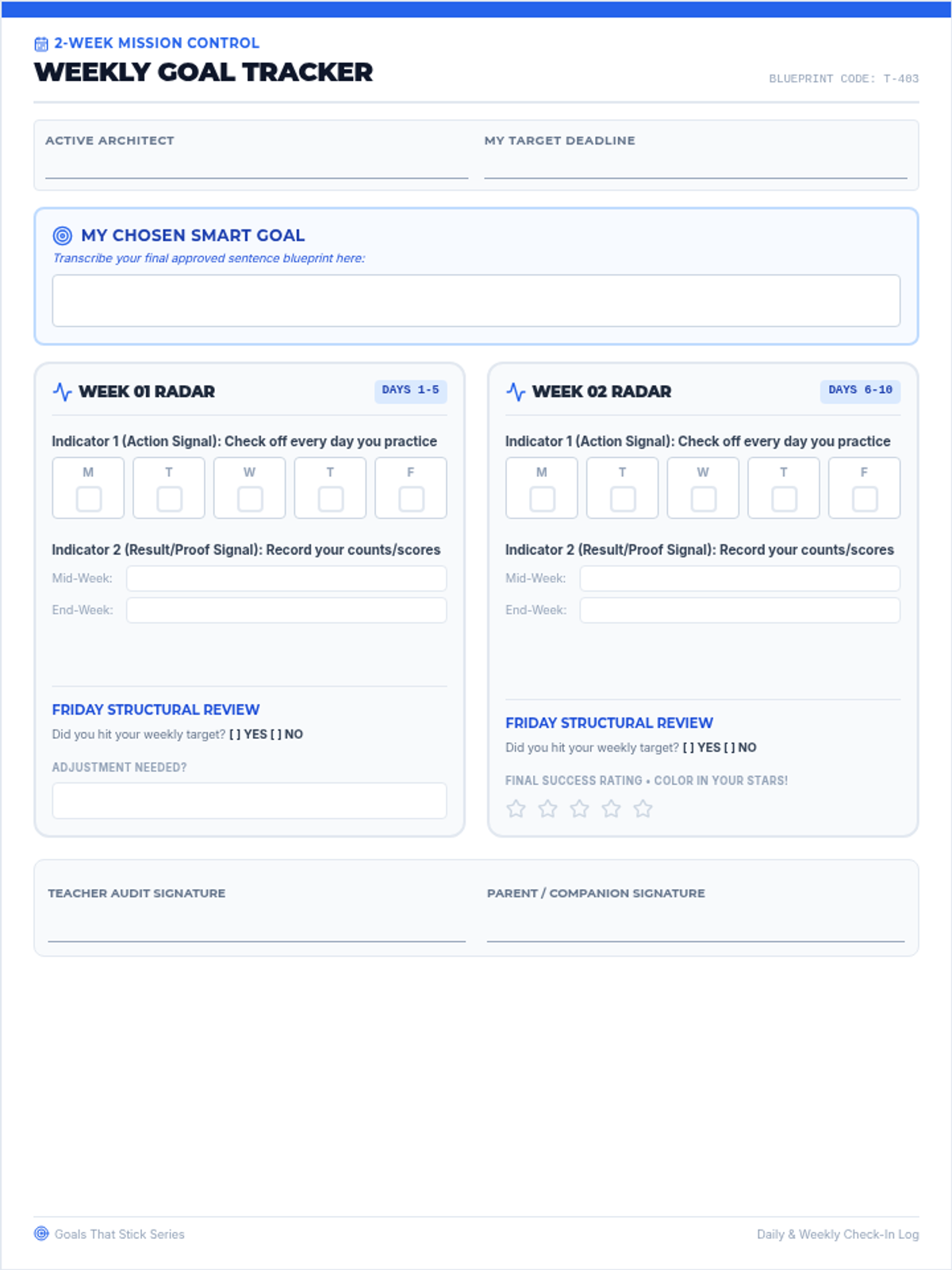
A 45-minute lesson designed for 4th graders to introduce the SMART goal framework. Students learn how to transform vague wishes into concrete, measurable goals, align them with tracking indicators, brainstorm solutions to barriers, and set up a two-week tracking routine.
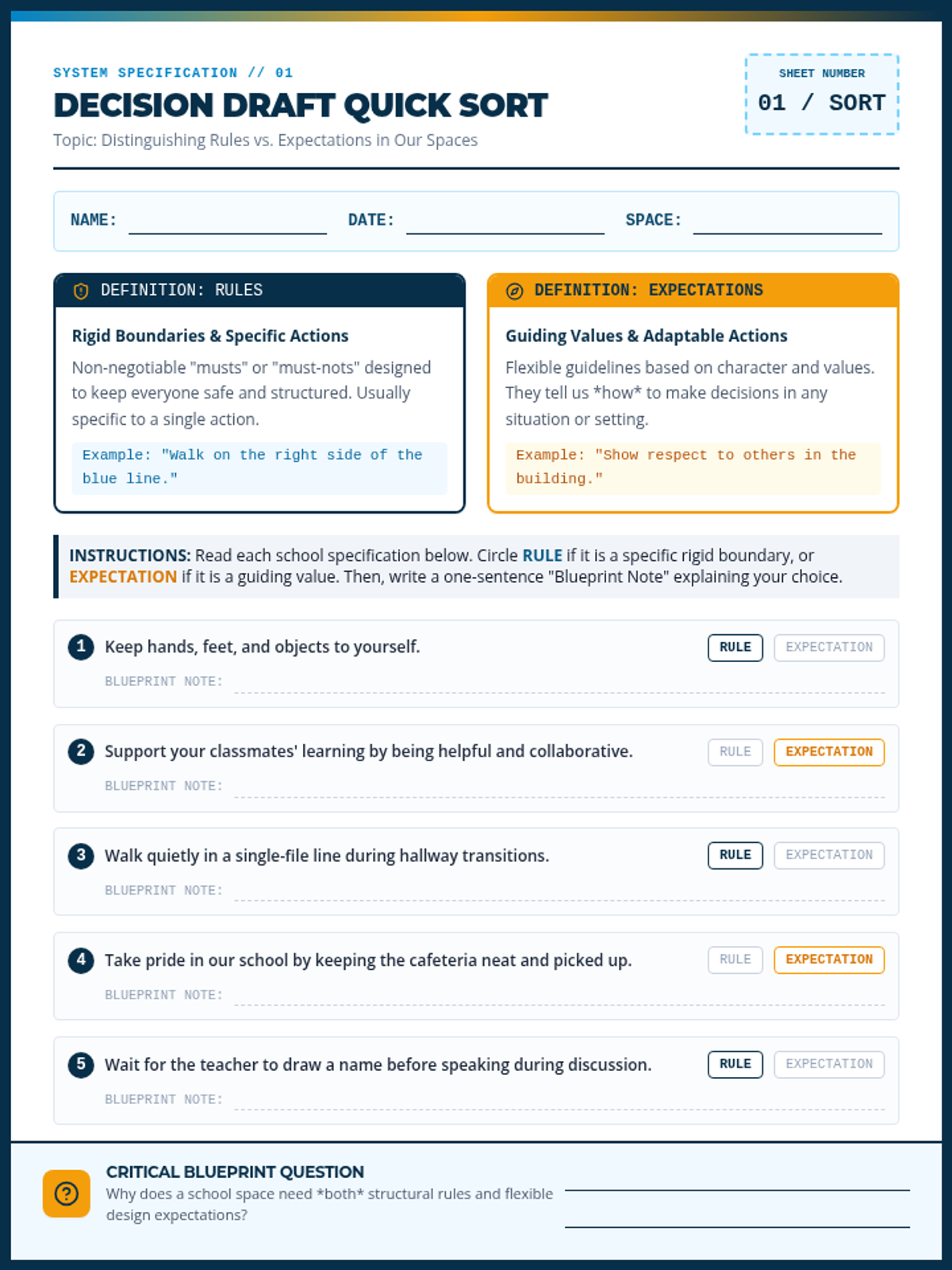
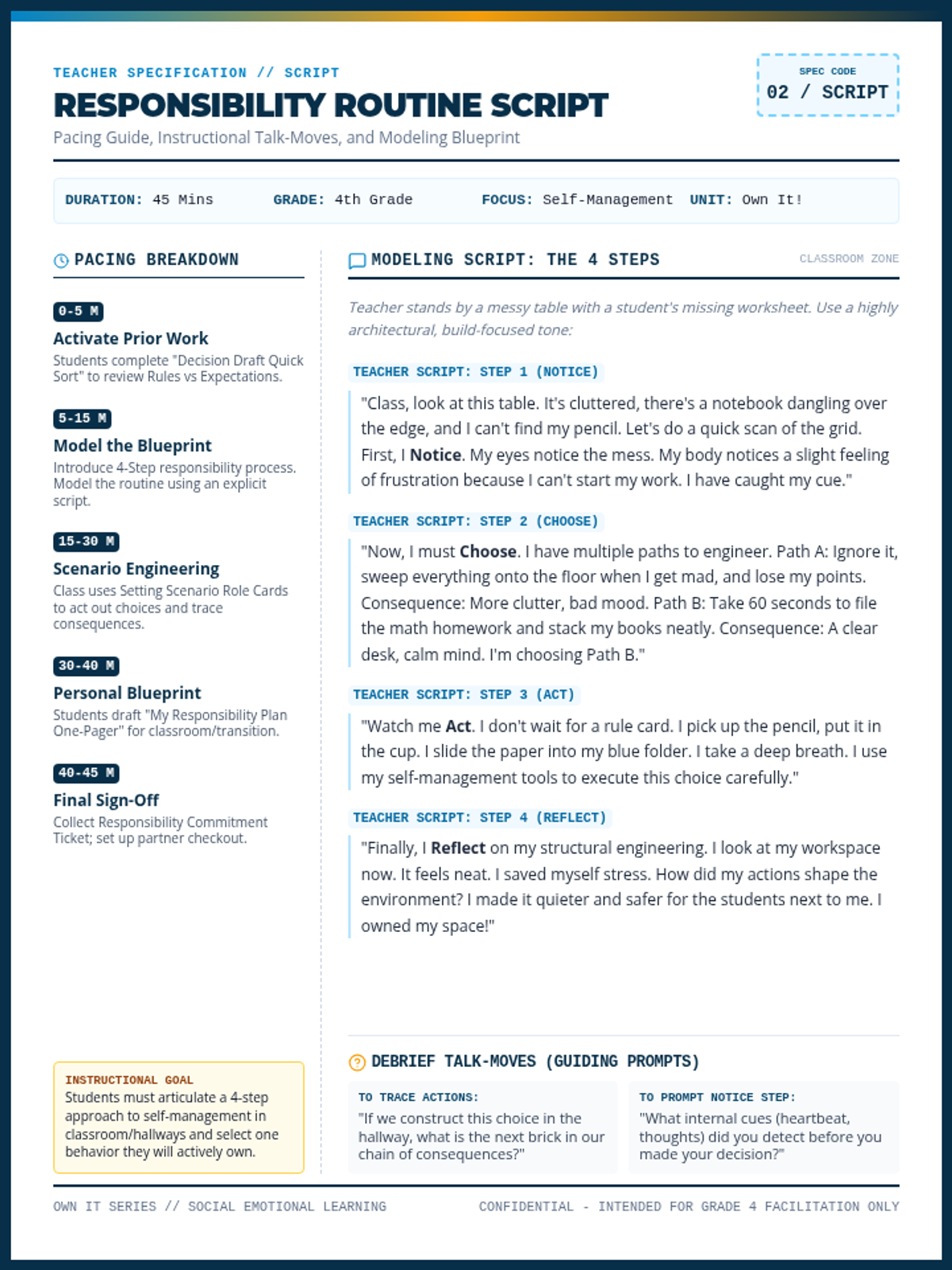
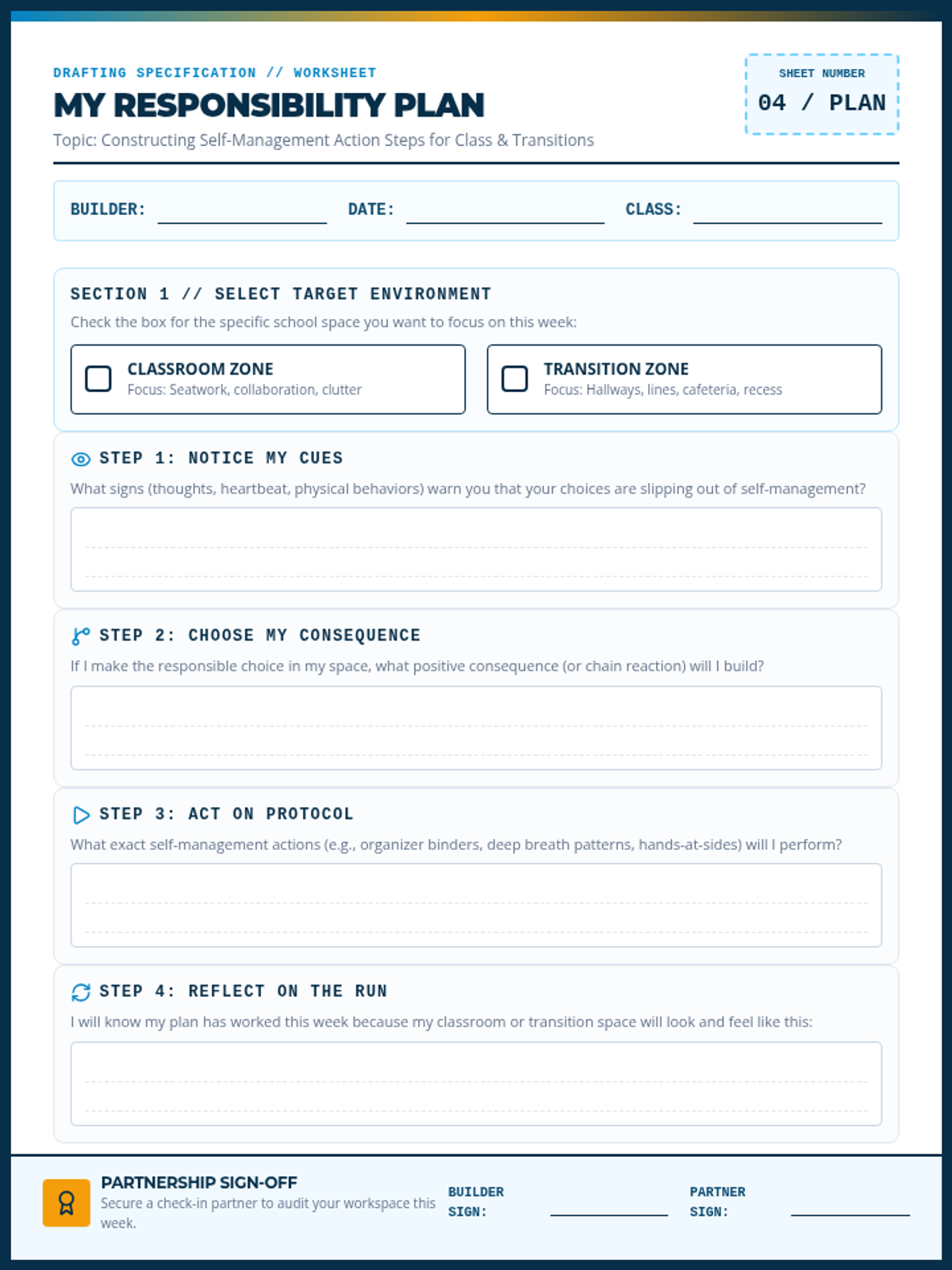
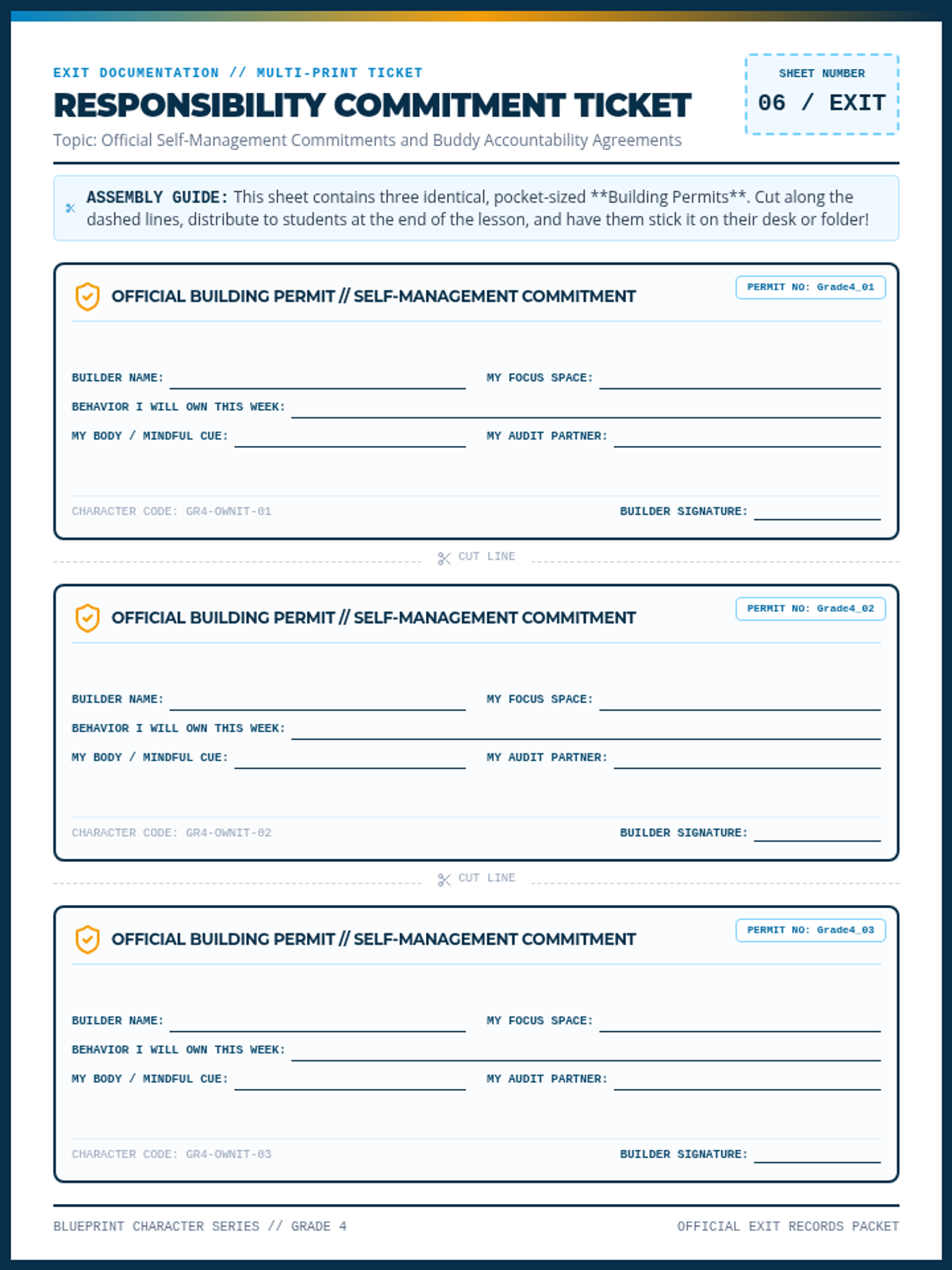
A 45-minute social-emotional learning lesson for 4th graders to master self-management and personal responsibility. Students analyze rules versus expectations, learn a 4-step responsibility process, and draft a personal action plan for classrooms and school transitions.
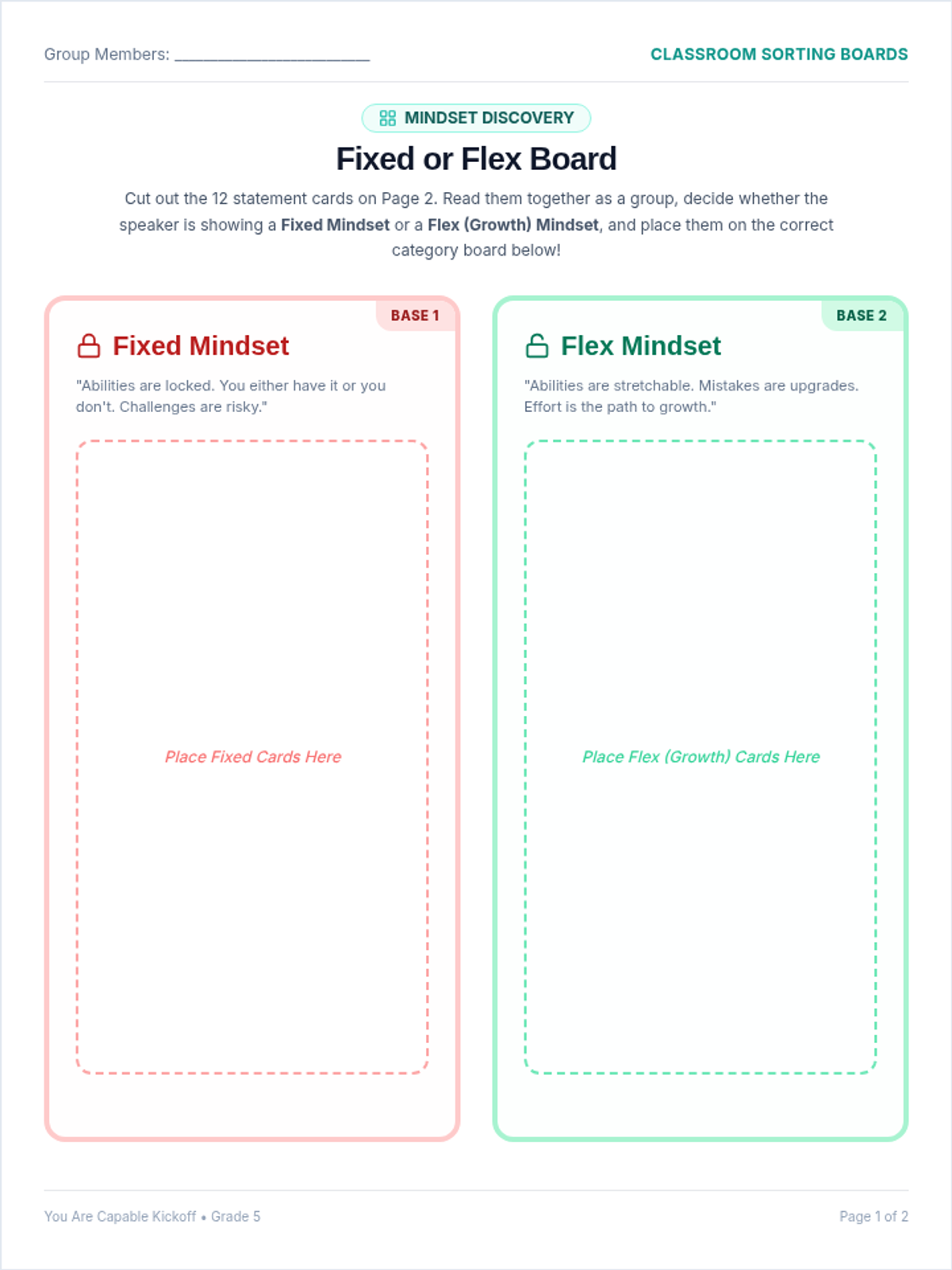
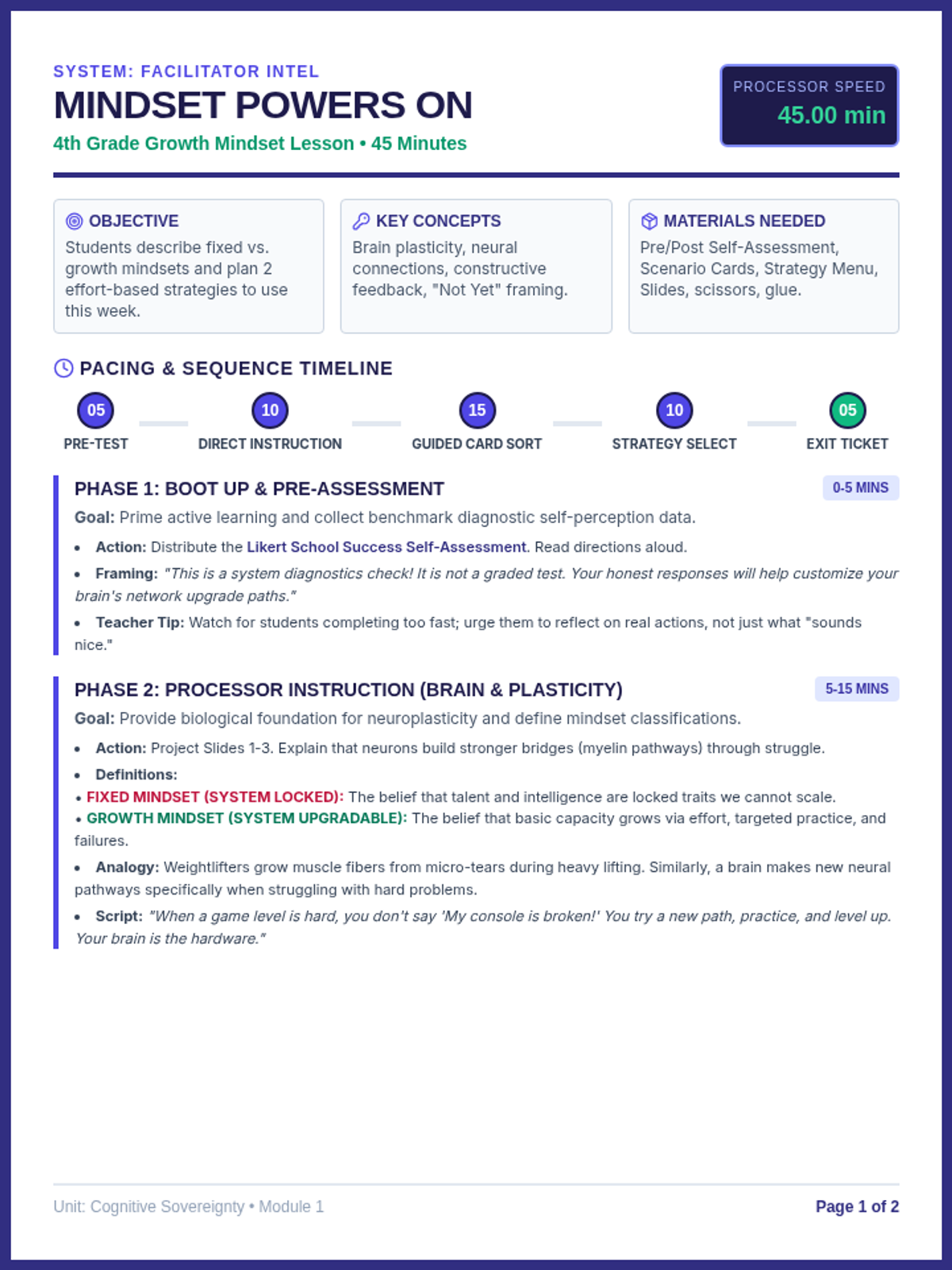
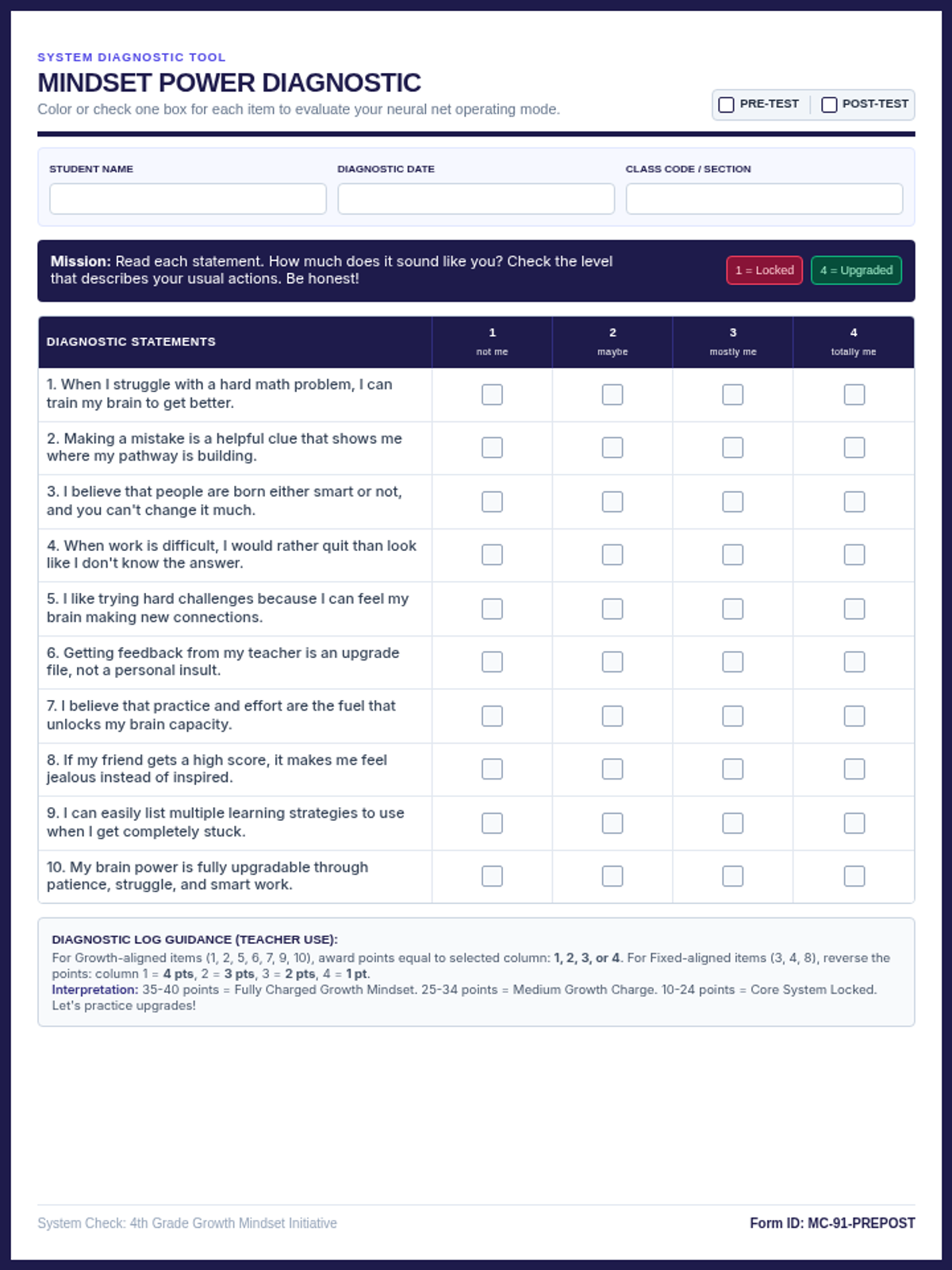
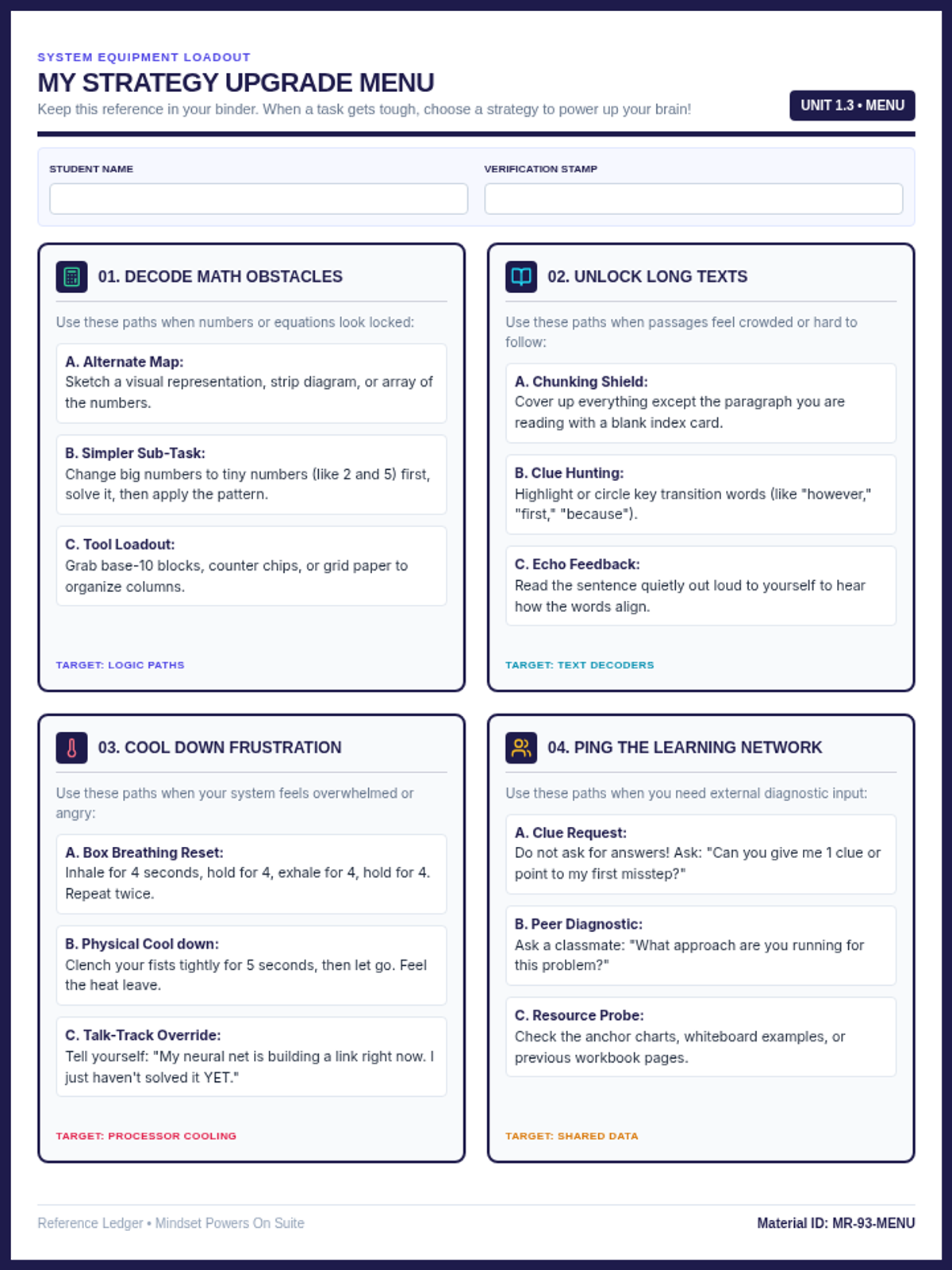
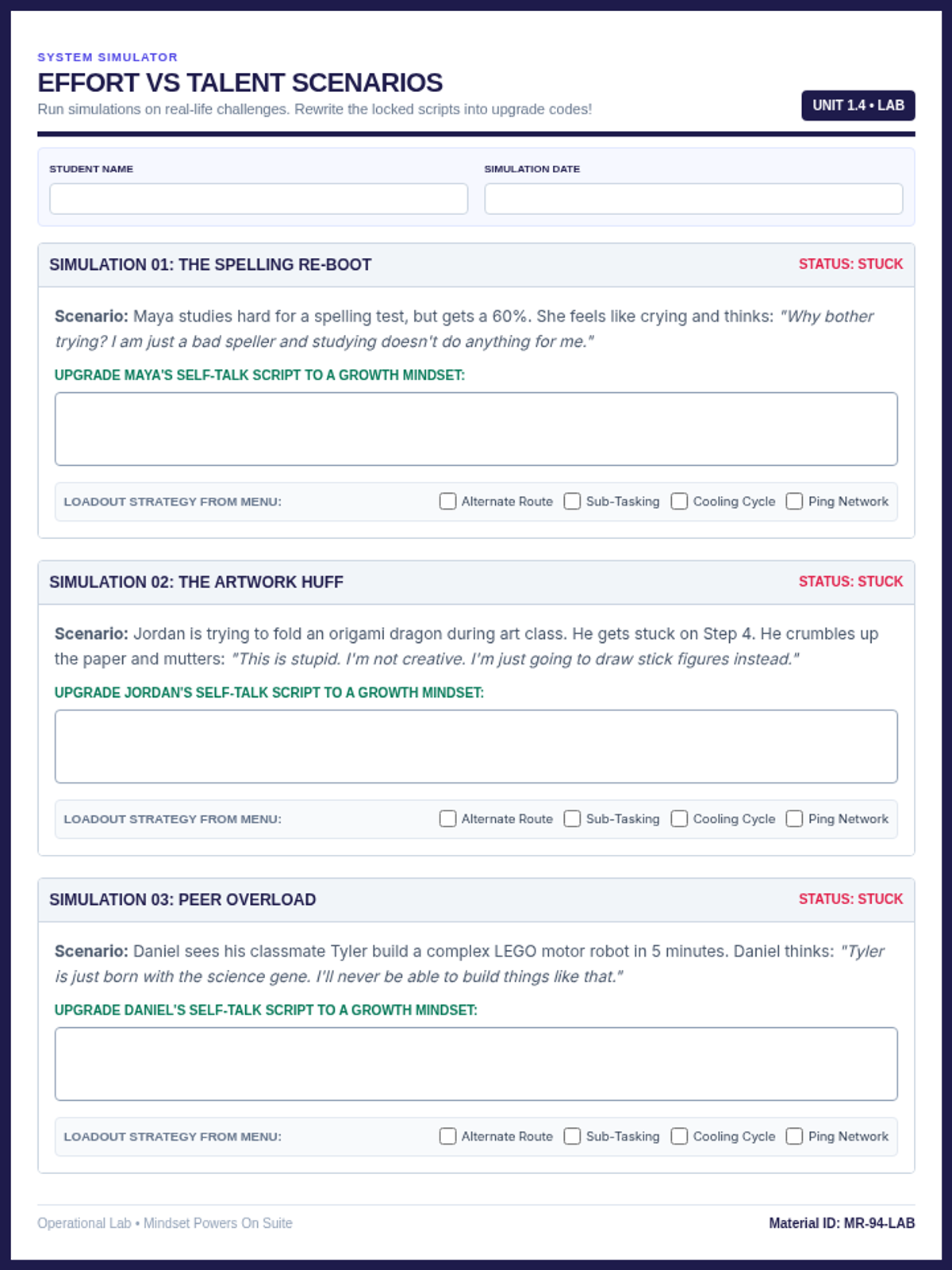
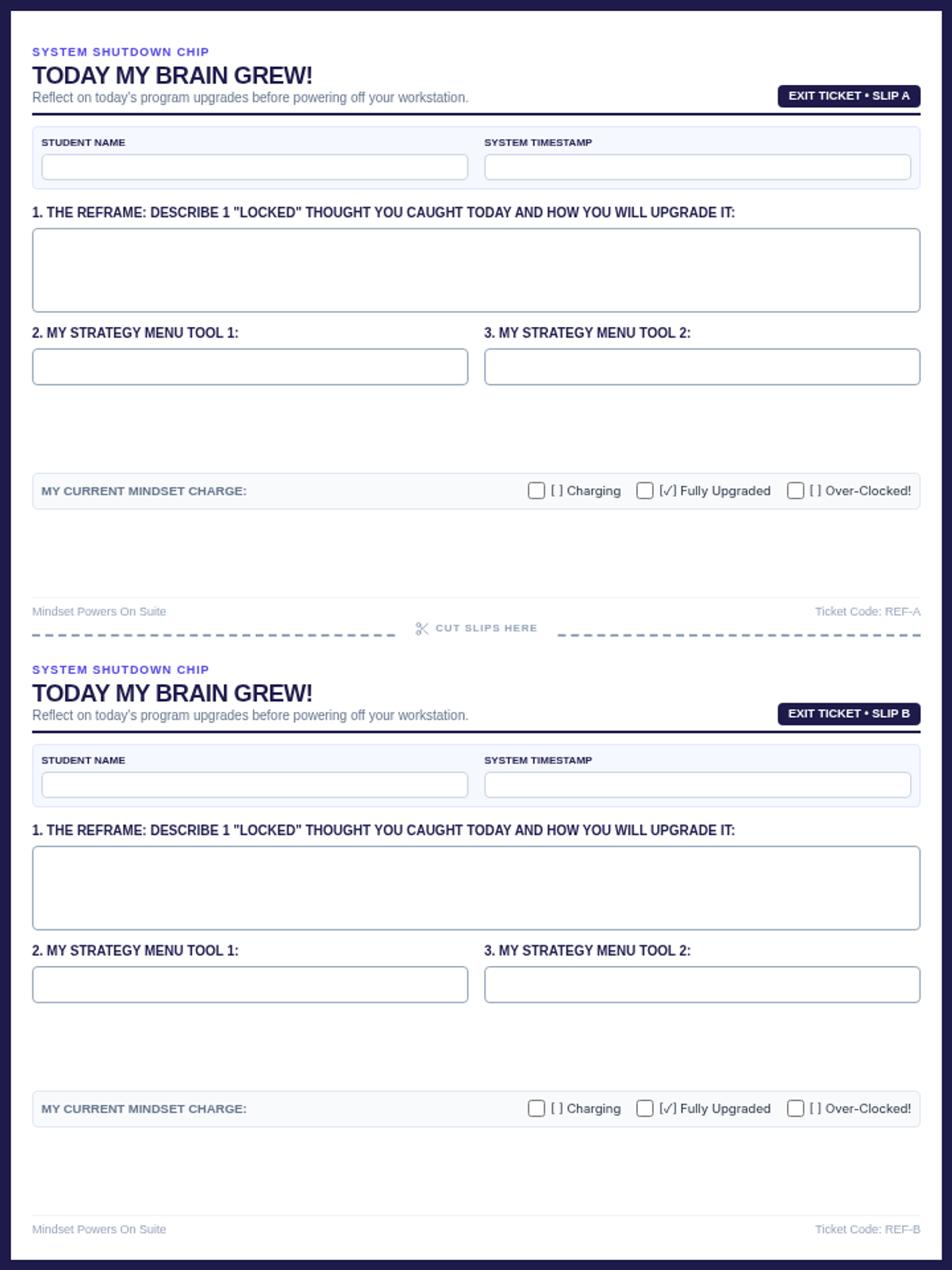
A 45-minute lesson for 4th graders on growth vs. fixed mindset. Students learn that effort and strategies build brain power, complete a self-assessment, sort growth mindset statements, and choose personal growth strategies.
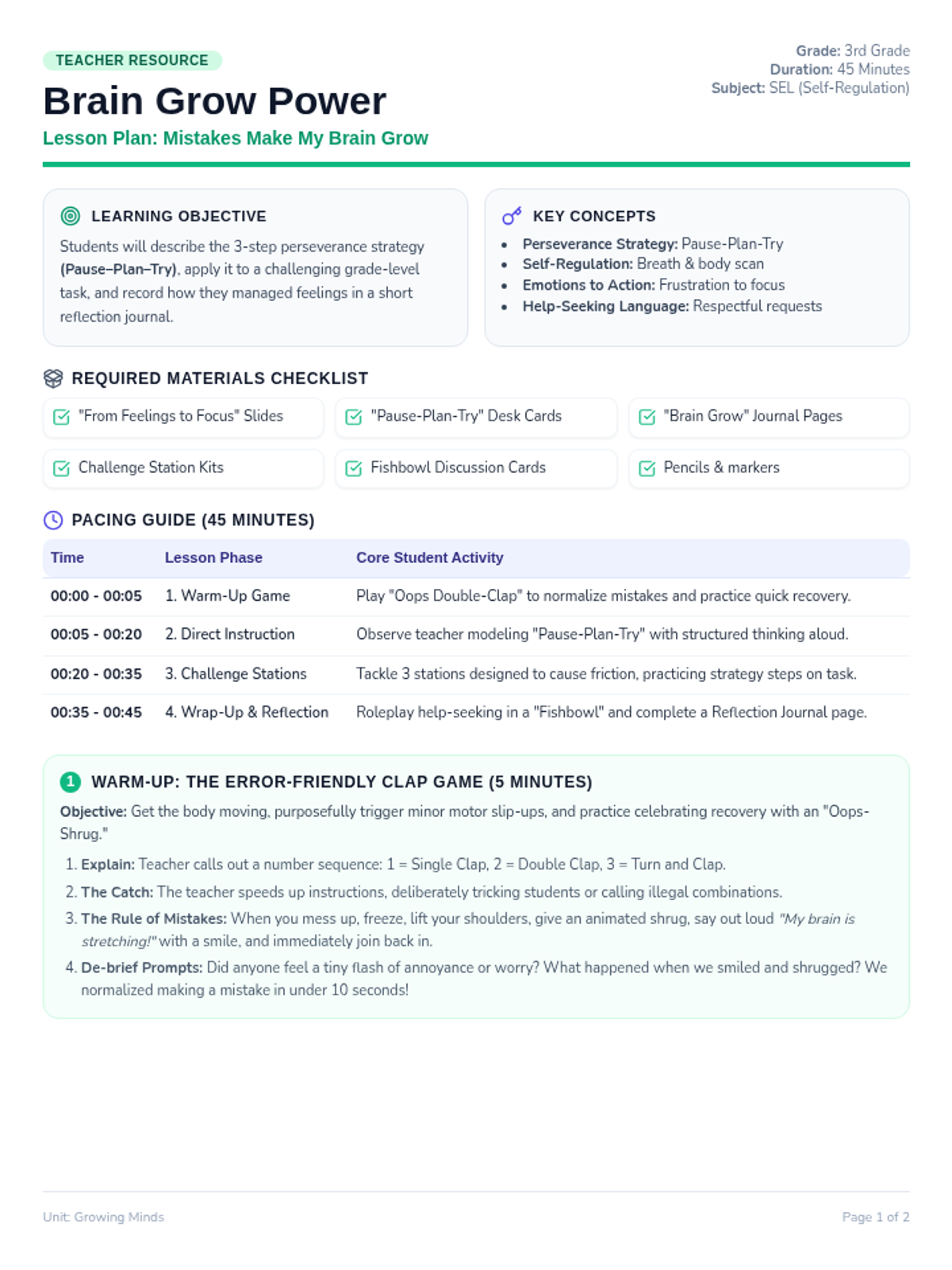
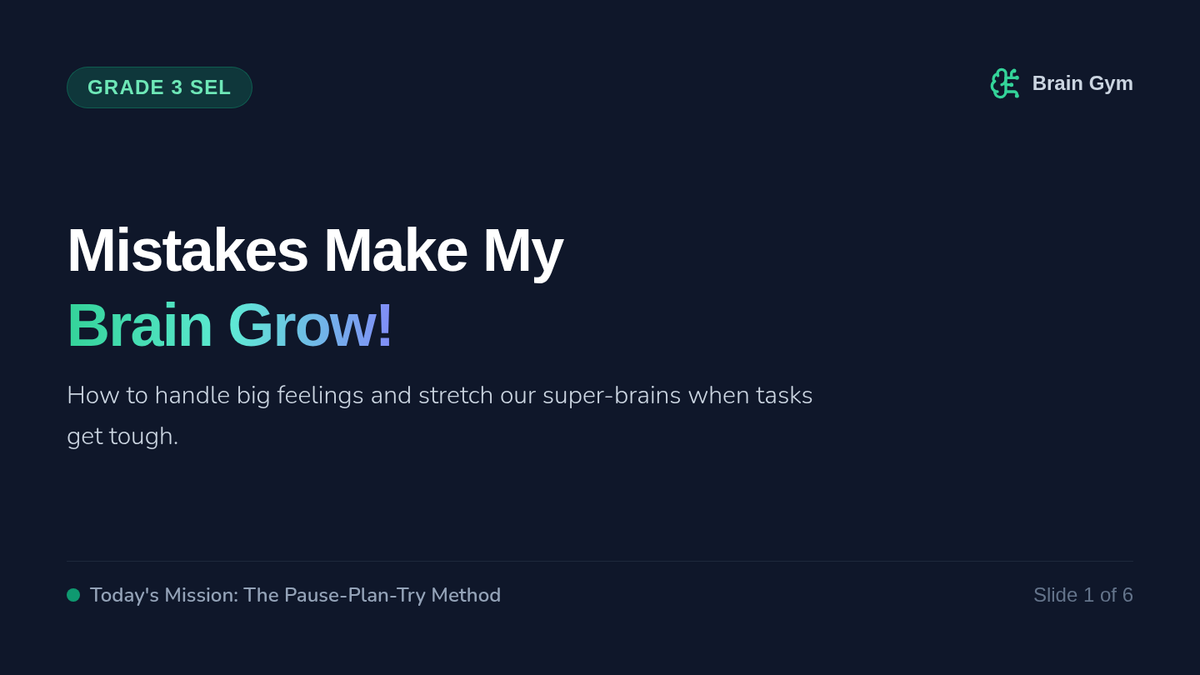
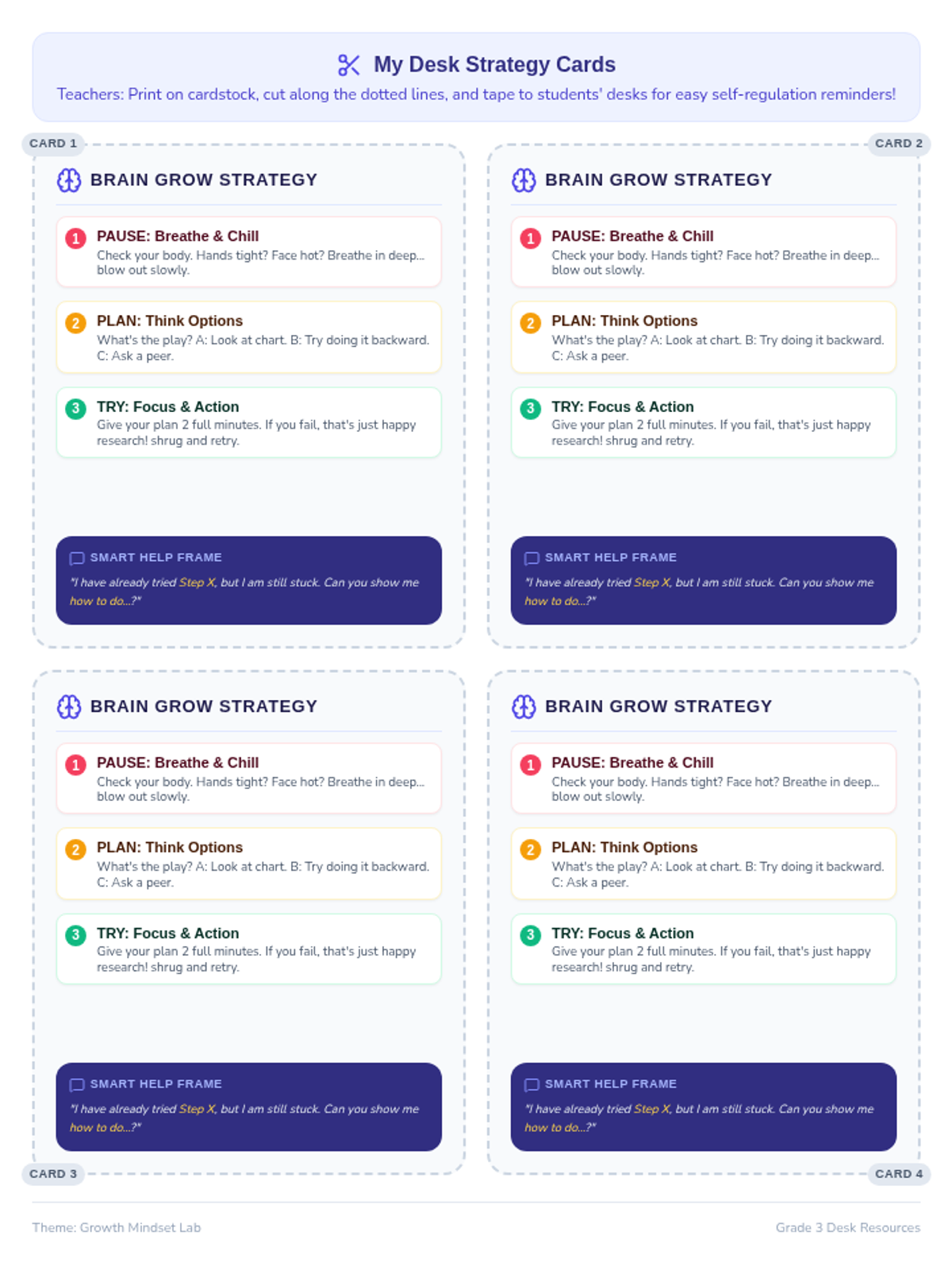
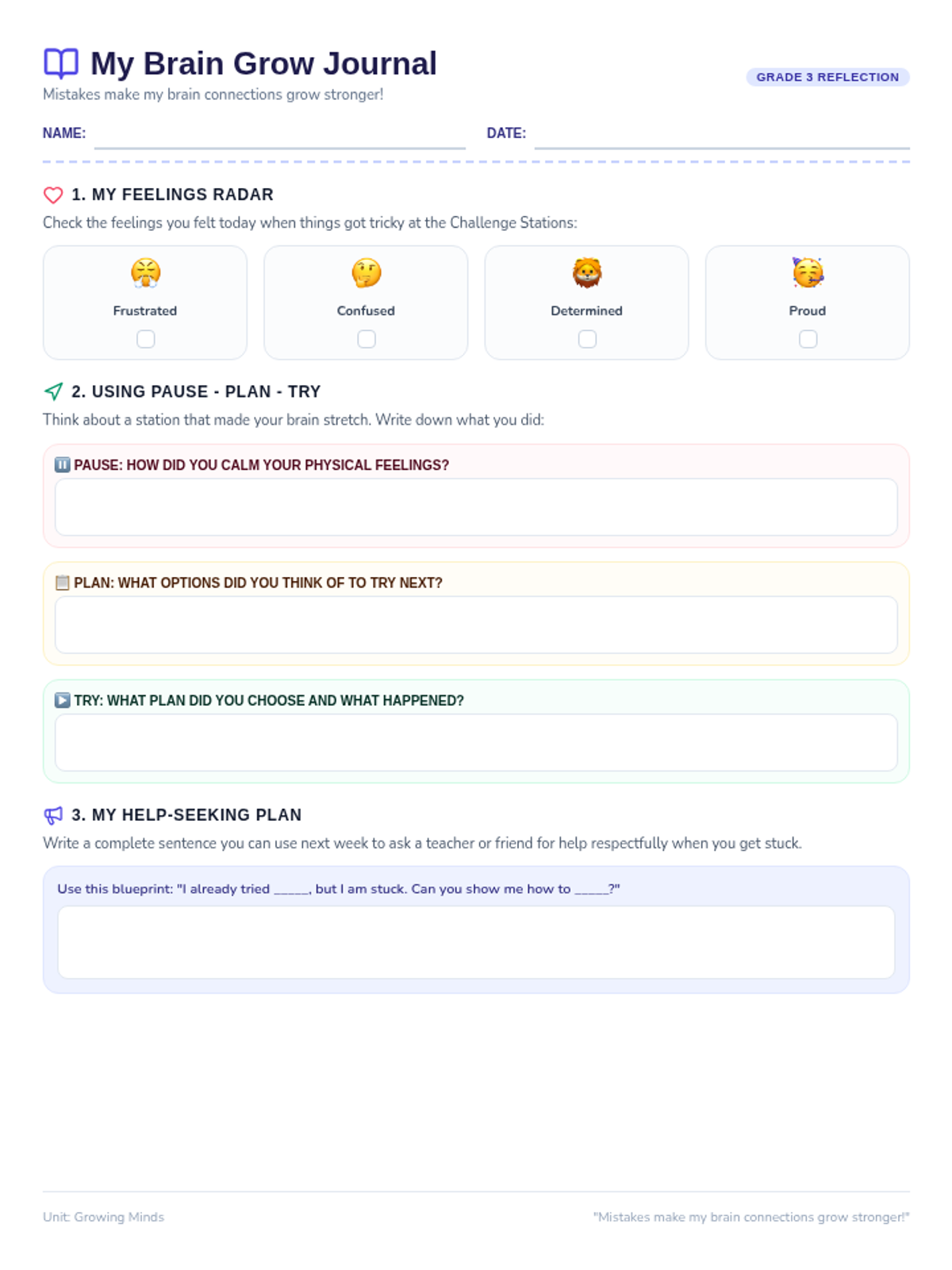
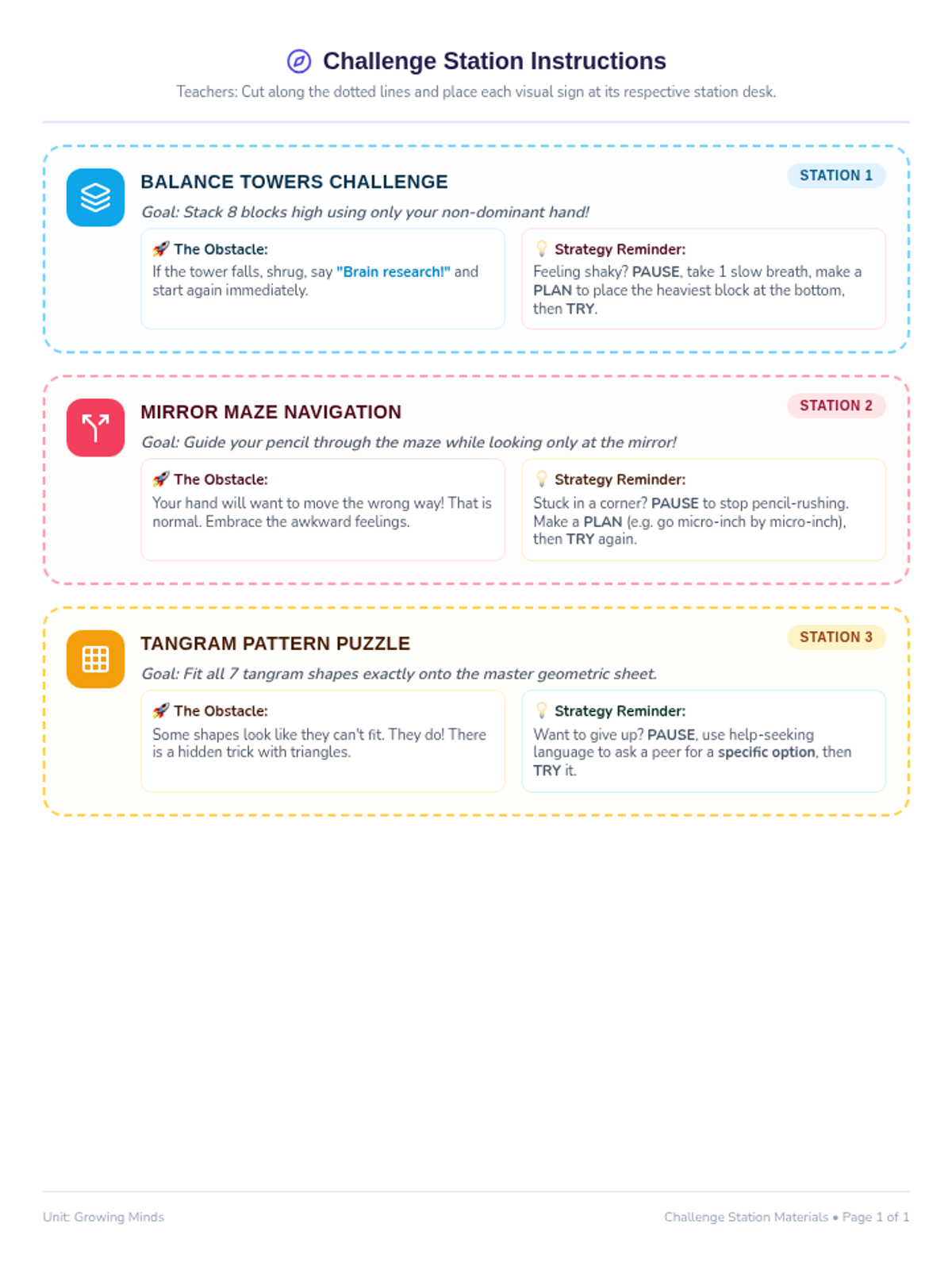
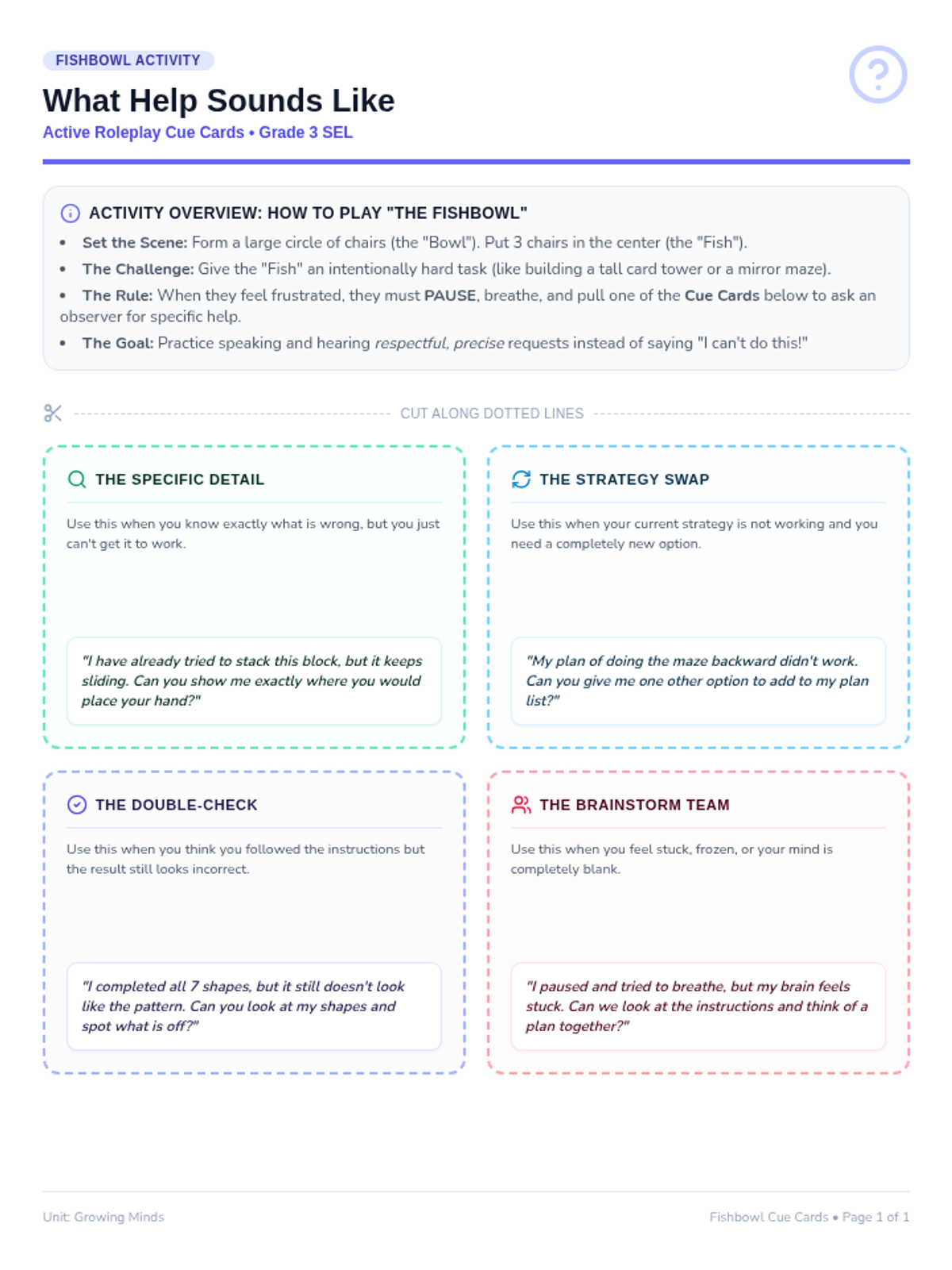
A 45-minute social-emotional learning lesson for 3rd graders that introduces the 'Pause-Plan-Try' perseverance strategy. Students learn to normalize mistakes, navigate challenging emotions, use self-regulation techniques, and apply productive help-seeking language.