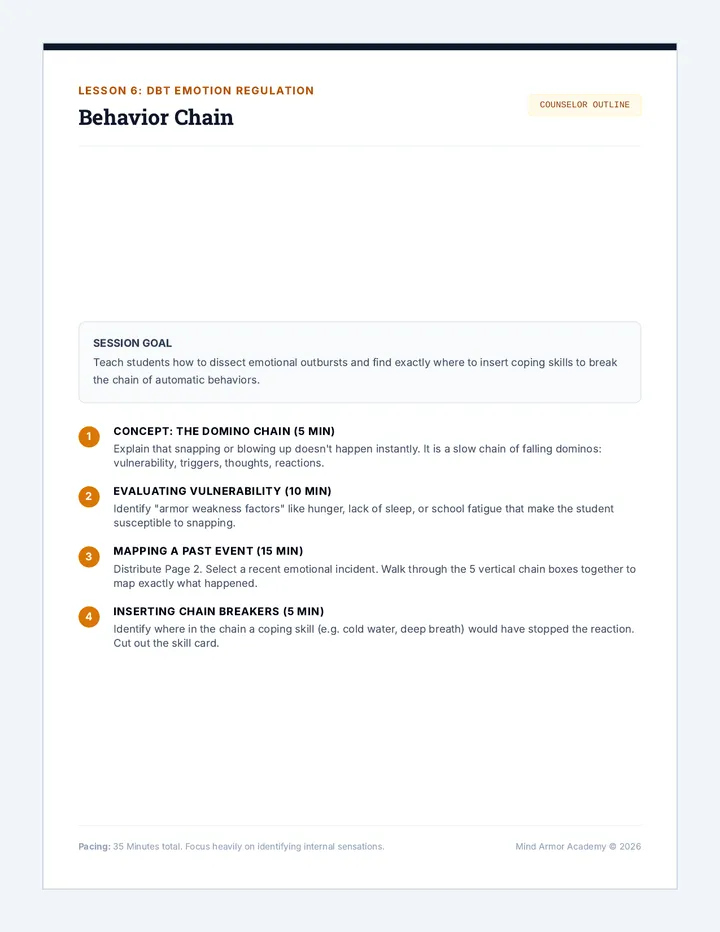
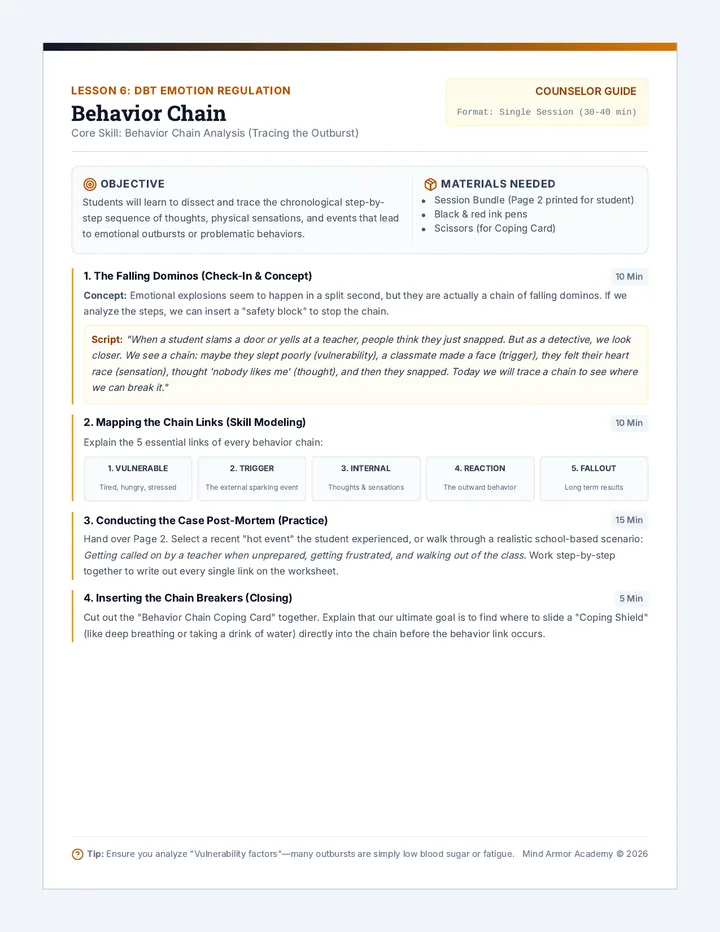
An engaging 1-session lesson for 8th graders where students learn to identify and manage common emotions, building emotional intelligence and communication skills through interactive activities and reflection.
A goal-setting workshop where students 'reverse engineer' a long-term aspiration into immediate, manageable steps. Focuses on clarity, motivation, and overcoming potential obstacles.
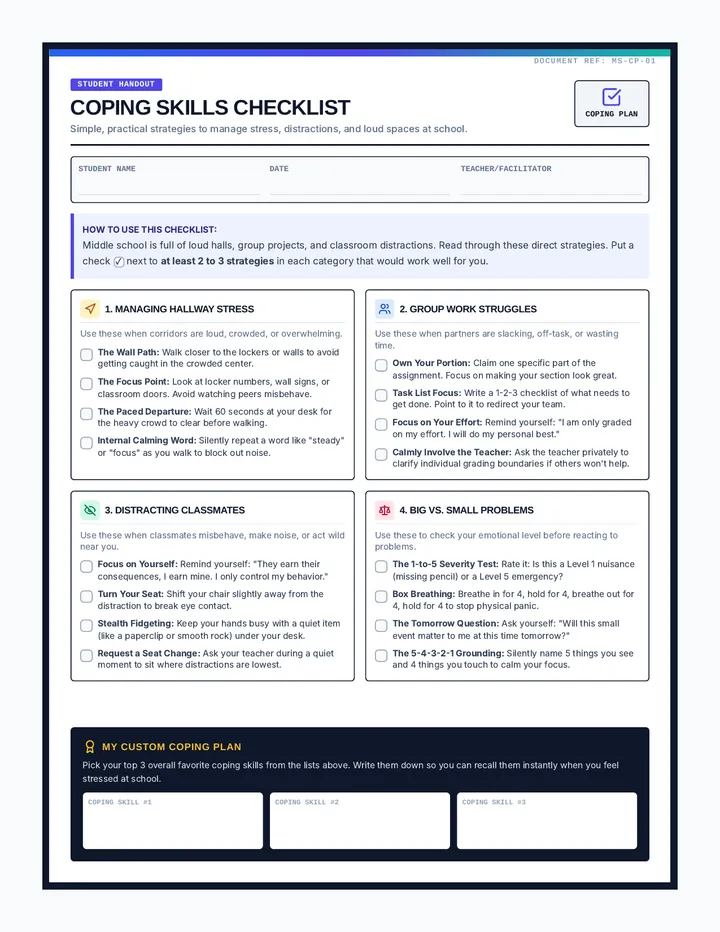
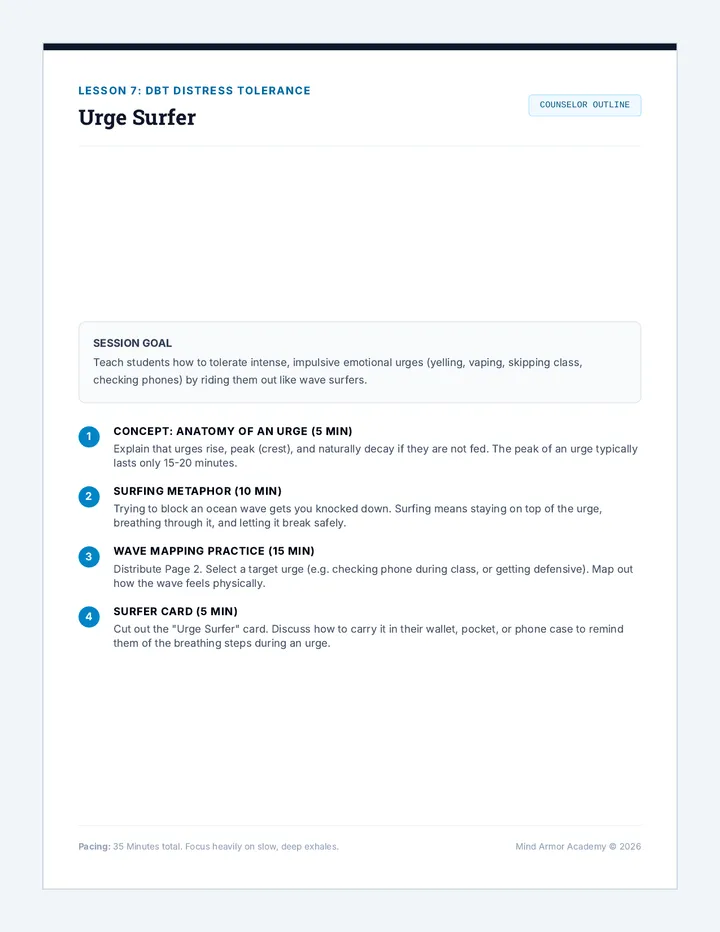
Students identify personal stress triggers and develop a 'relief valve' system of coping strategies. The lesson focuses on recognizing physical signs of stress and planning proactive responses.
Students explore the layers of their identity, distinguishing between how they see themselves and how they are perceived by others. Includes a guided activity to create a multi-layered identity map.
The final summit project where campers create their own 'Vibe Check' Zine—a personalized guide to their own relationship rights and standards.
A deep dive into fairness and power dynamics. Campers learn the difference between 'Leader-Leader' and 'Leader-Follower' dynamics in healthy relationships.
Normalizing rejection as part of the camp experience. Campers build a 'Resilience Toolkit' and learn how to bounce back from social setbacks.
A session focused on the 'Friendship Circle.' Campers use the Time Slice activity to visualize how to keep their 'bunkmate bonds' strong while catching feelings.
Campers learn to identify physical 'vibe checks'—gut feelings that signal safety or discomfort—and practice trusting their compass in social situations.
The introductory materials for the Brain Glitch Defense curriculum, including the facilitator guide, roadmap, and core objectives.
The core lesson of the Brain Glitch series, introducing cognitive distortions as 'system glitches' and using a cooperative board game to teach students how to identify and debug them.
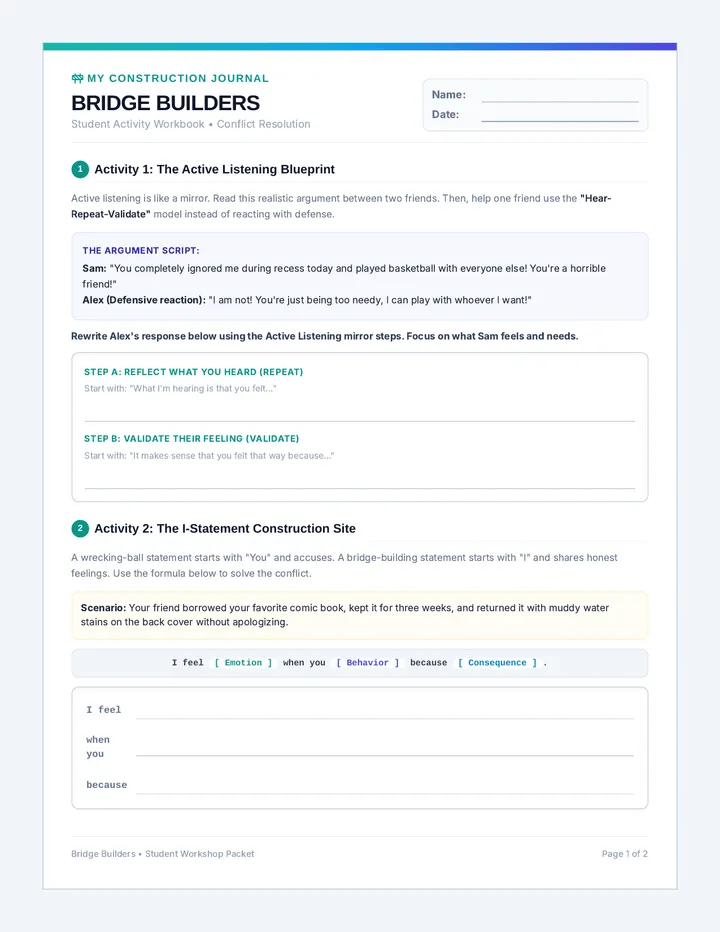
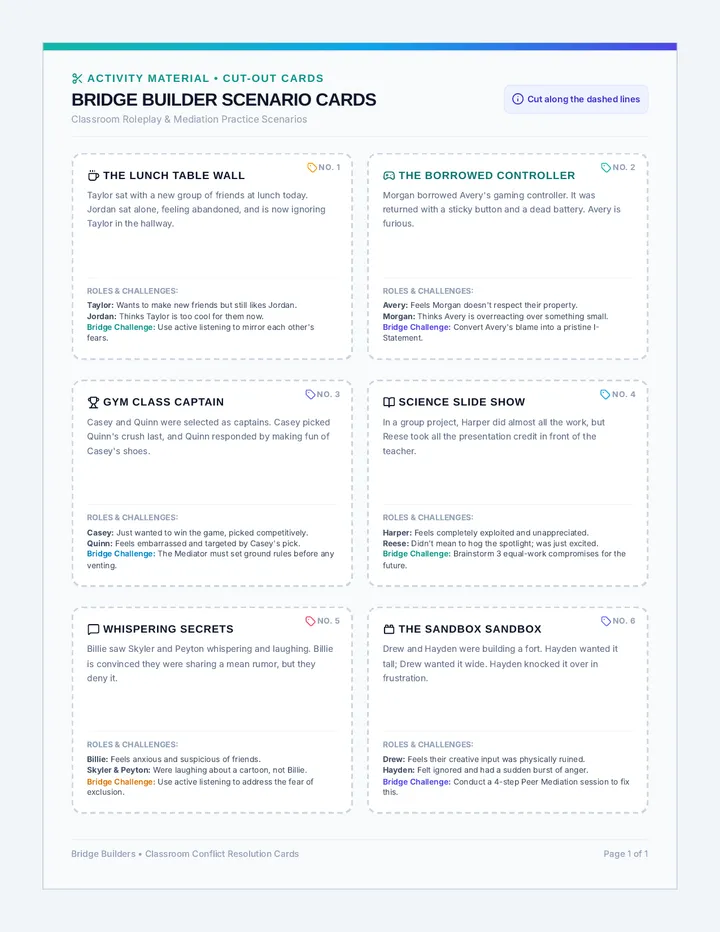
A high-speed micro-lesson designed to give students actionable strategies for de-escalating conflicts with peers and teachers in under 10 minutes. Updated with the Peace Protocol framework.
Focuses on building daily routines and taking ownership of school materials and assignments to foster academic independence.
Introduces growth mindset concepts to help students view challenges and mistakes as opportunities for improvement rather than failures.
Explores the shifting nature of middle school friendships, setting healthy boundaries, and practicing inclusive social habits.
Empowers students to communicate their needs to teachers and peers using respectful, effective language and scripts.
Teaches students how to break down large projects into manageable steps and accurately estimate task duration to prevent procrastination.
A quick, celebratory check-in for 8th graders as they prepare for high school. Includes a student flyer for goal-setting and a teacher guide for facilitating the transition discussion.
A lesson focused on analyzing the arguments and perspectives within the text 'The Digital Paper Trail', specifically looking at the ethics and legality of using social media in hiring.
A lesson exploring how building strong interpersonal connections with teachers, peers, and school staff can make daily school life smoother, more supportive, and more efficient.
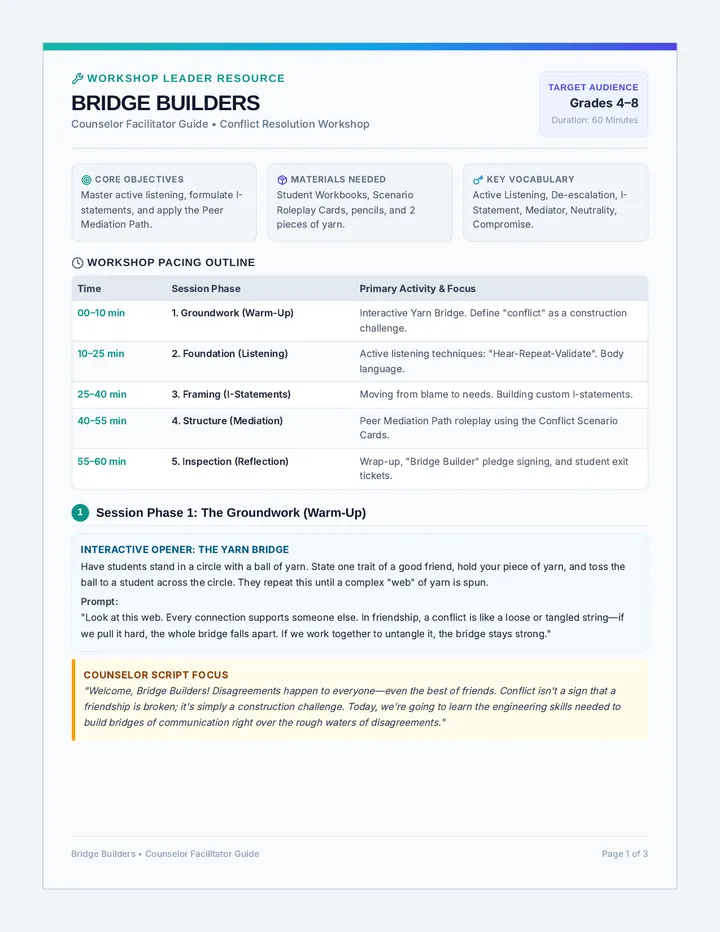
A dynamic lesson where students engage in movement-based 'icebreakers', a collaborative bridge-building craft, and reflective discussions on what makes a team successful.
This lesson helps students identify personal barriers to school attendance, set actionable attendance goals, and reflect on the connection between presence and their future aspirations. It also provides teachers with a supportive framework for family communication regarding attendance.
An intensive lesson focusing on the immediate impact of theft and lying, using a peer case study to bypass defensive shut-down mechanisms.