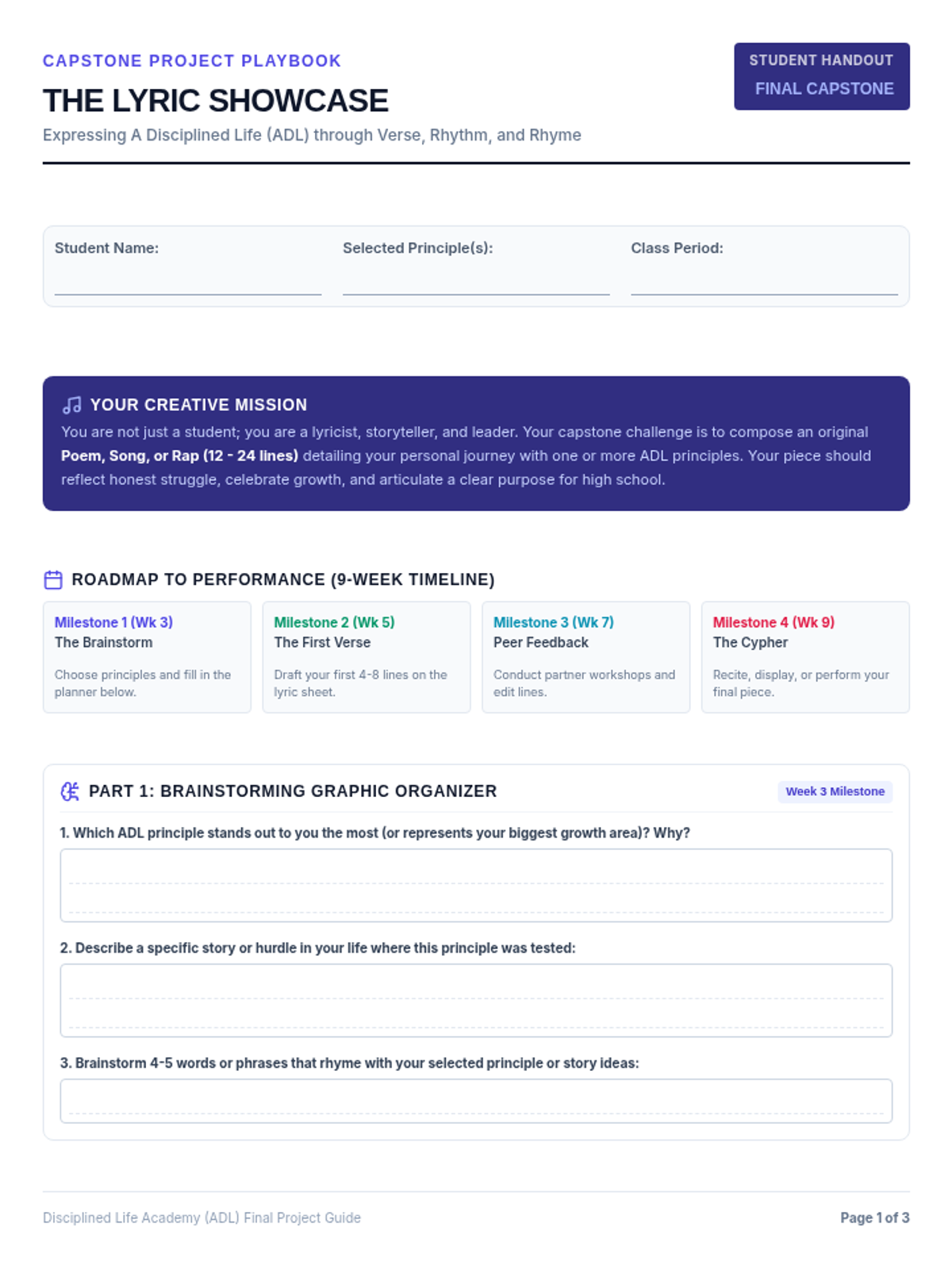
Focuses on the personal core principles: Love yourself, Be positive, and Walk with a purpose. Students explore self-identity and set a baseline for their high school experience.
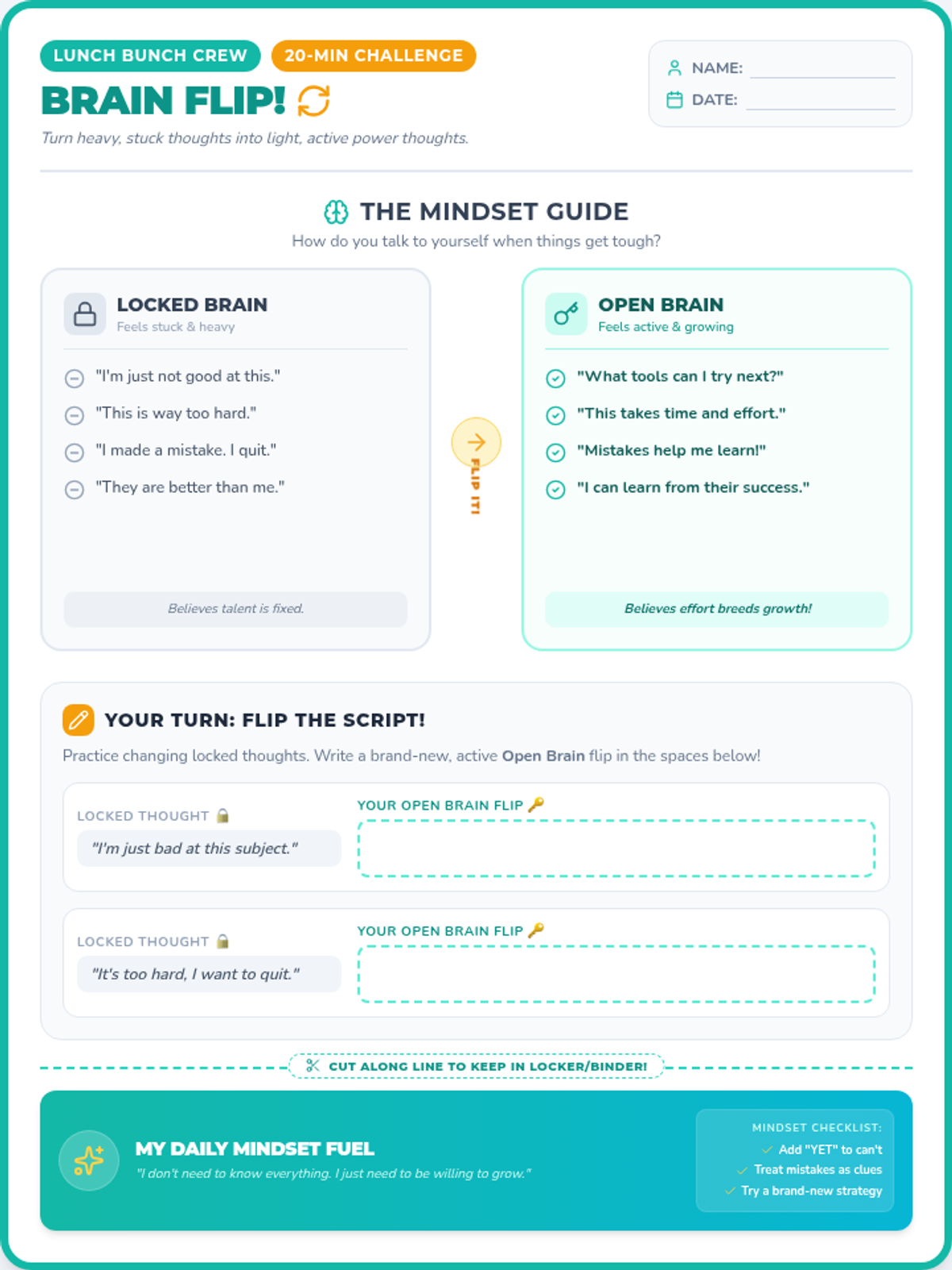
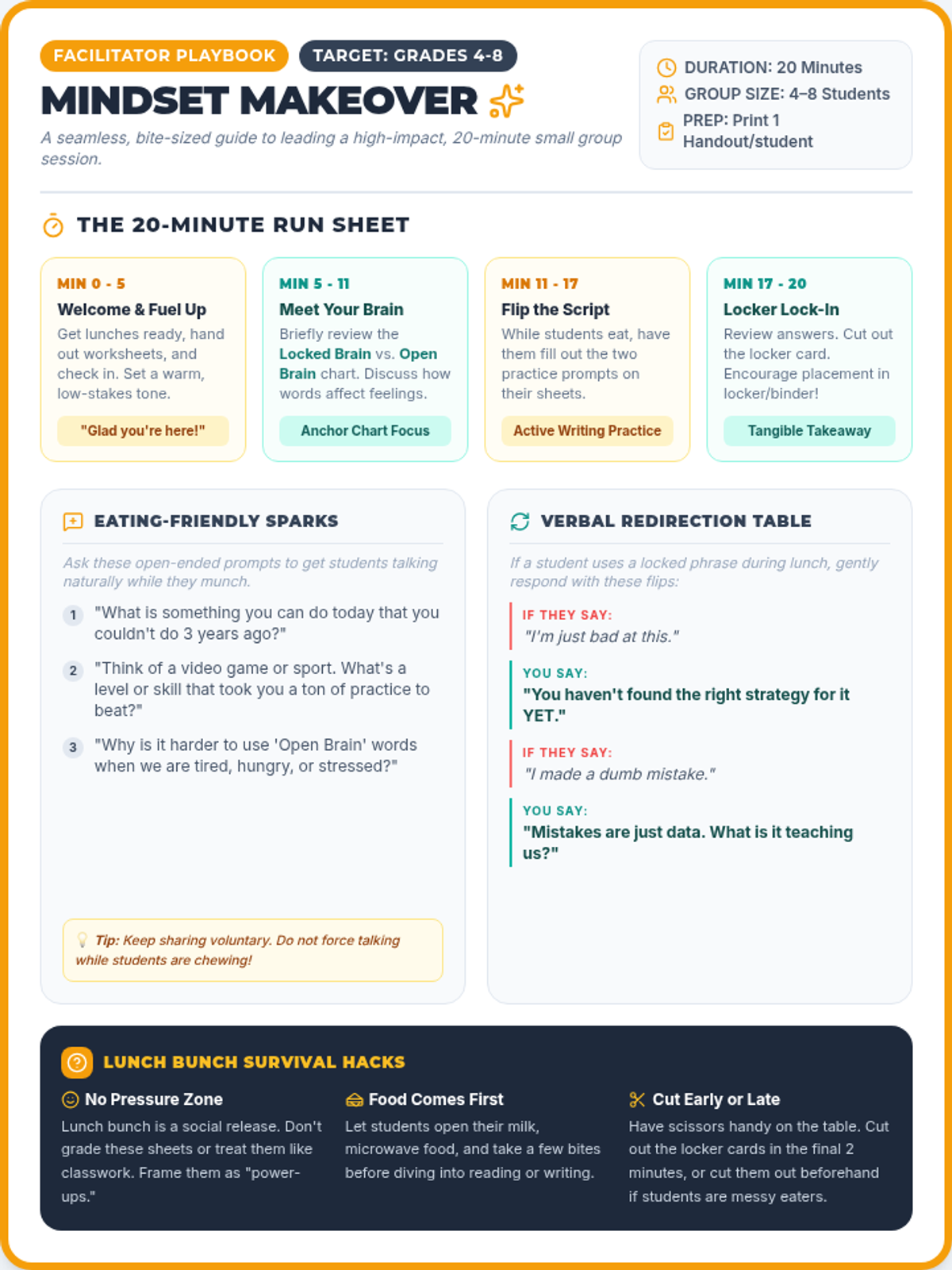
A fast-paced, engaging 20-minute lunch bunch lesson focused on growth mindset. Students learn to recognize their fixed-mindset inner critic and practice 'flipping' negative self-talk into helpful, actionable growth mindset phrases.
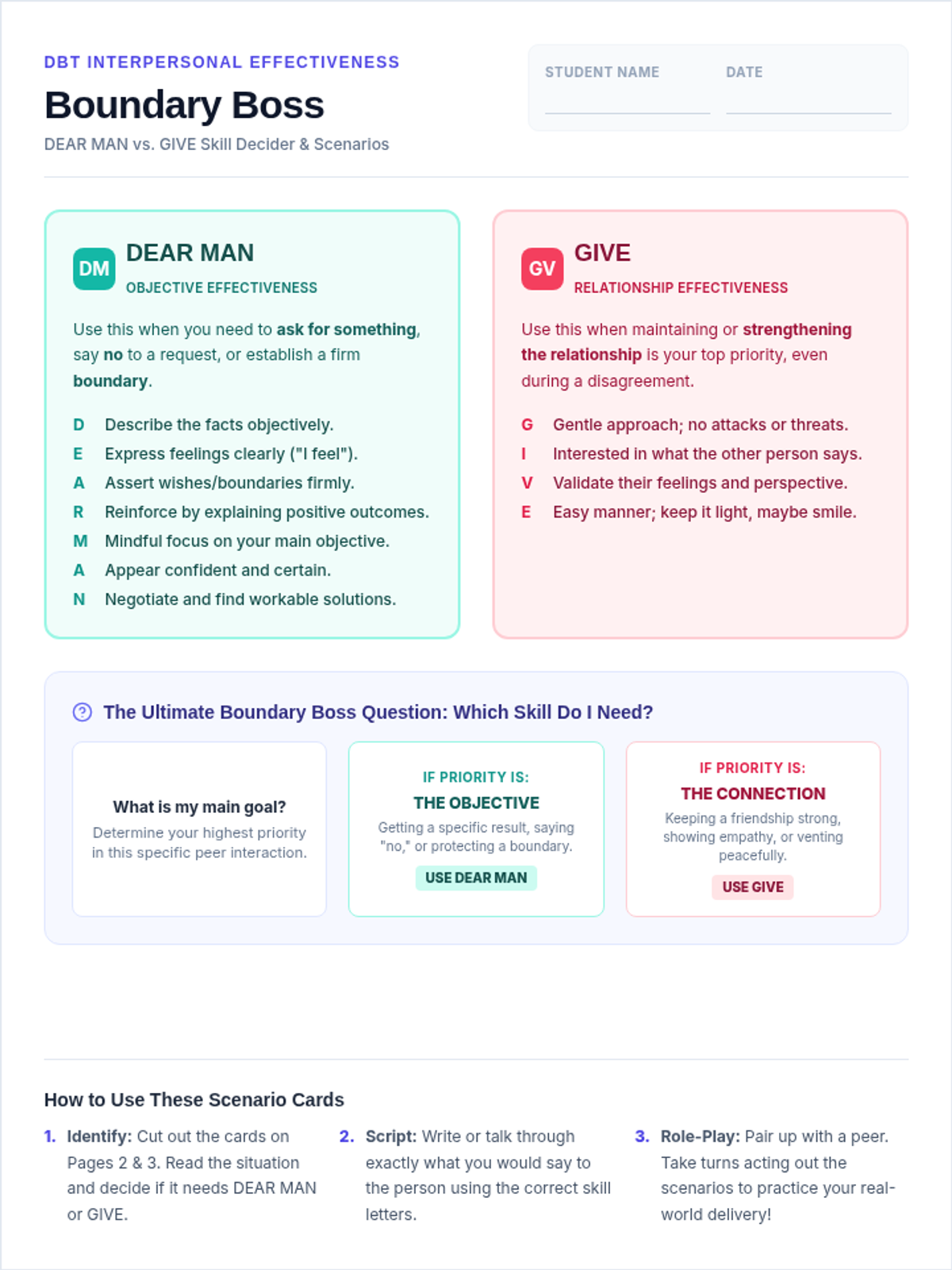
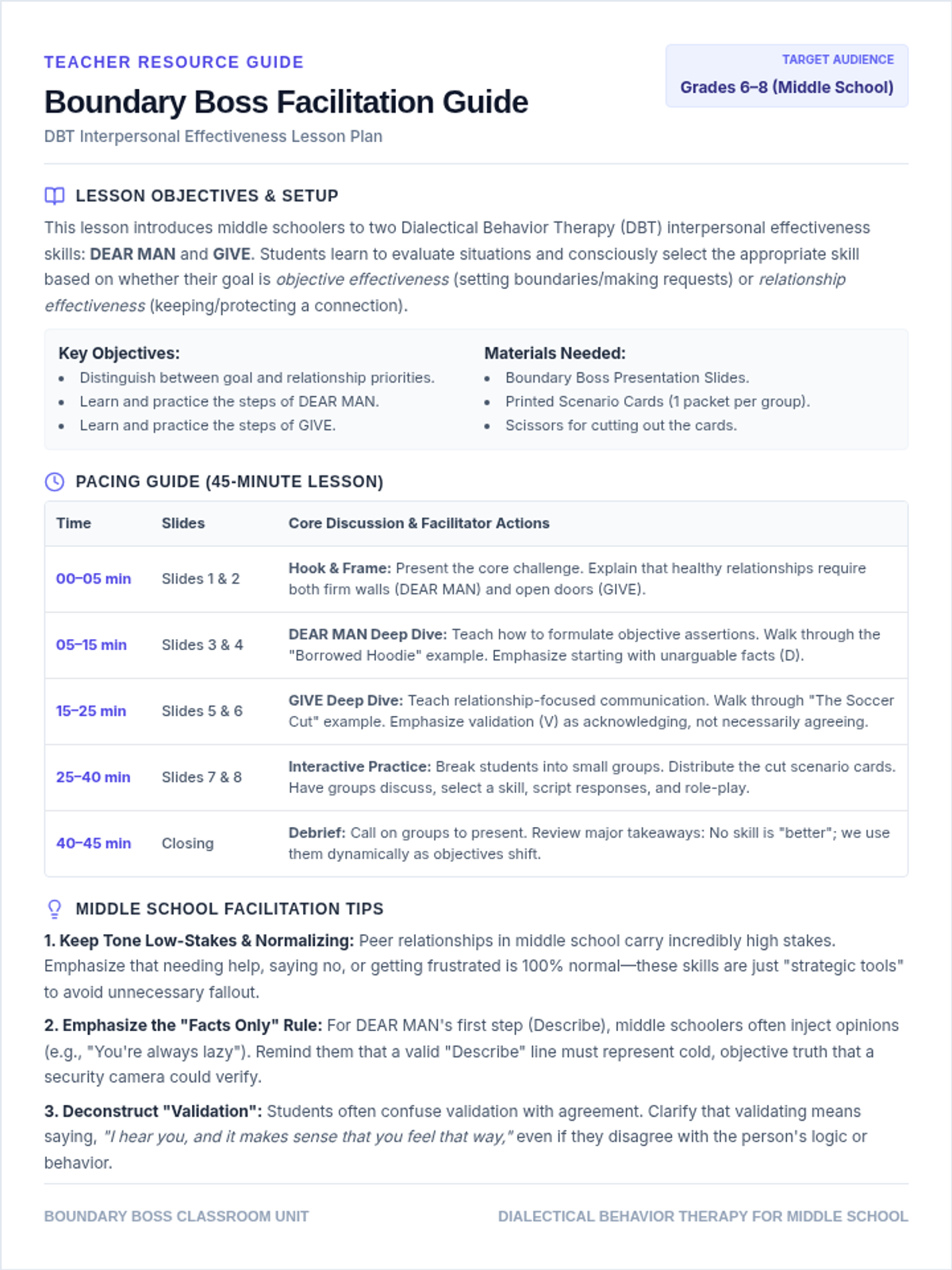
A middle school DBT interpersonal effectiveness lesson. Students learn when and how to use DEAR MAN (for objective boundaries and requests) versus GIVE (for relationship maintenance) through relatable peer conflict, rumor, and boundary scenarios.
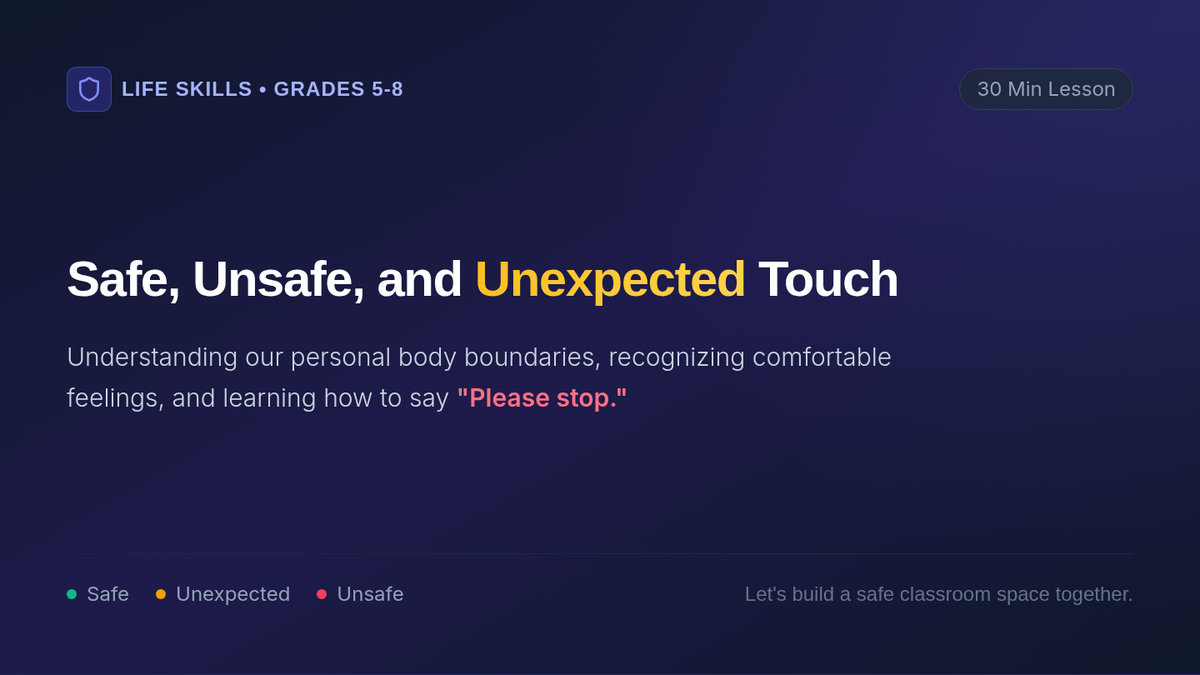
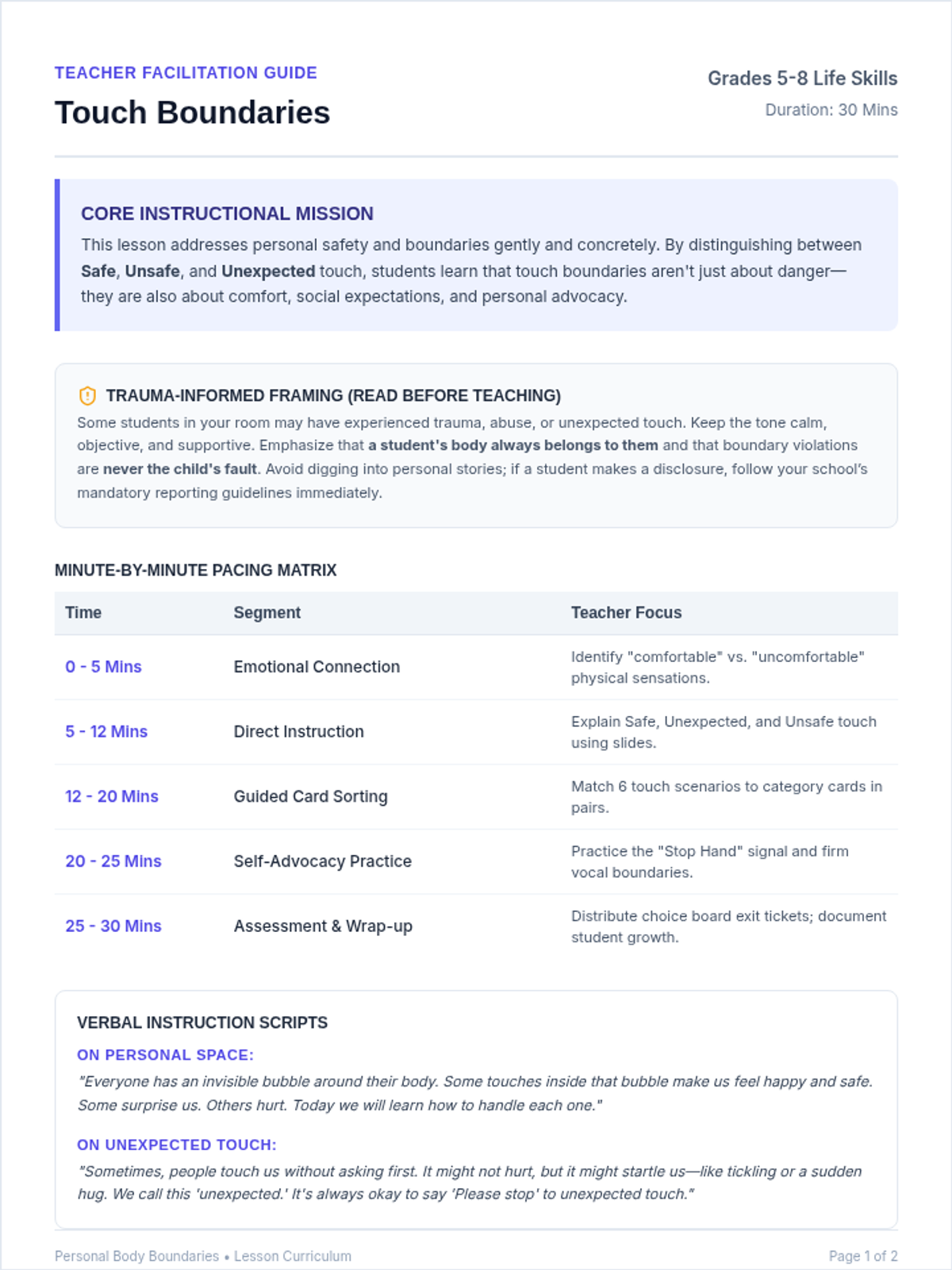
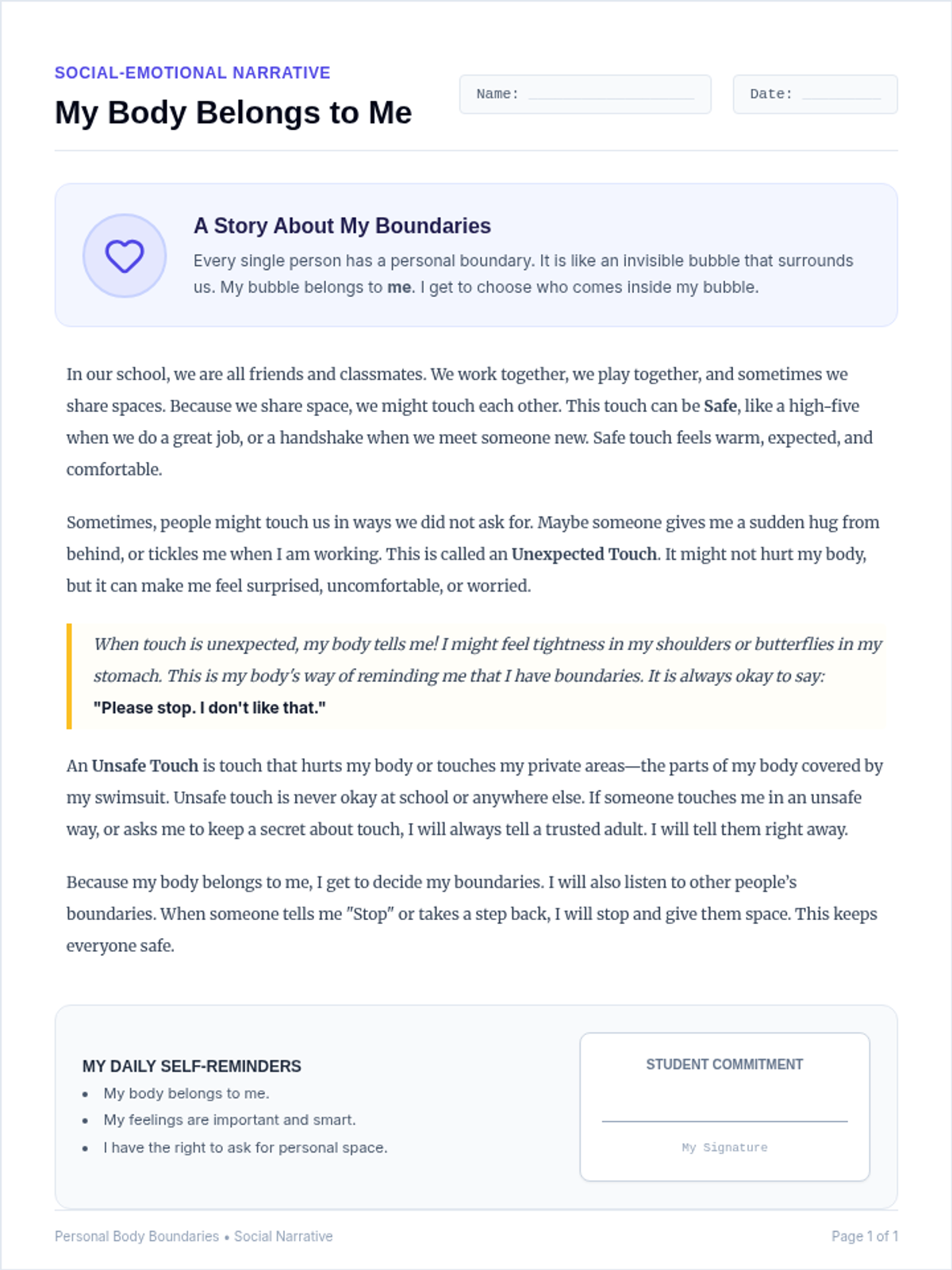
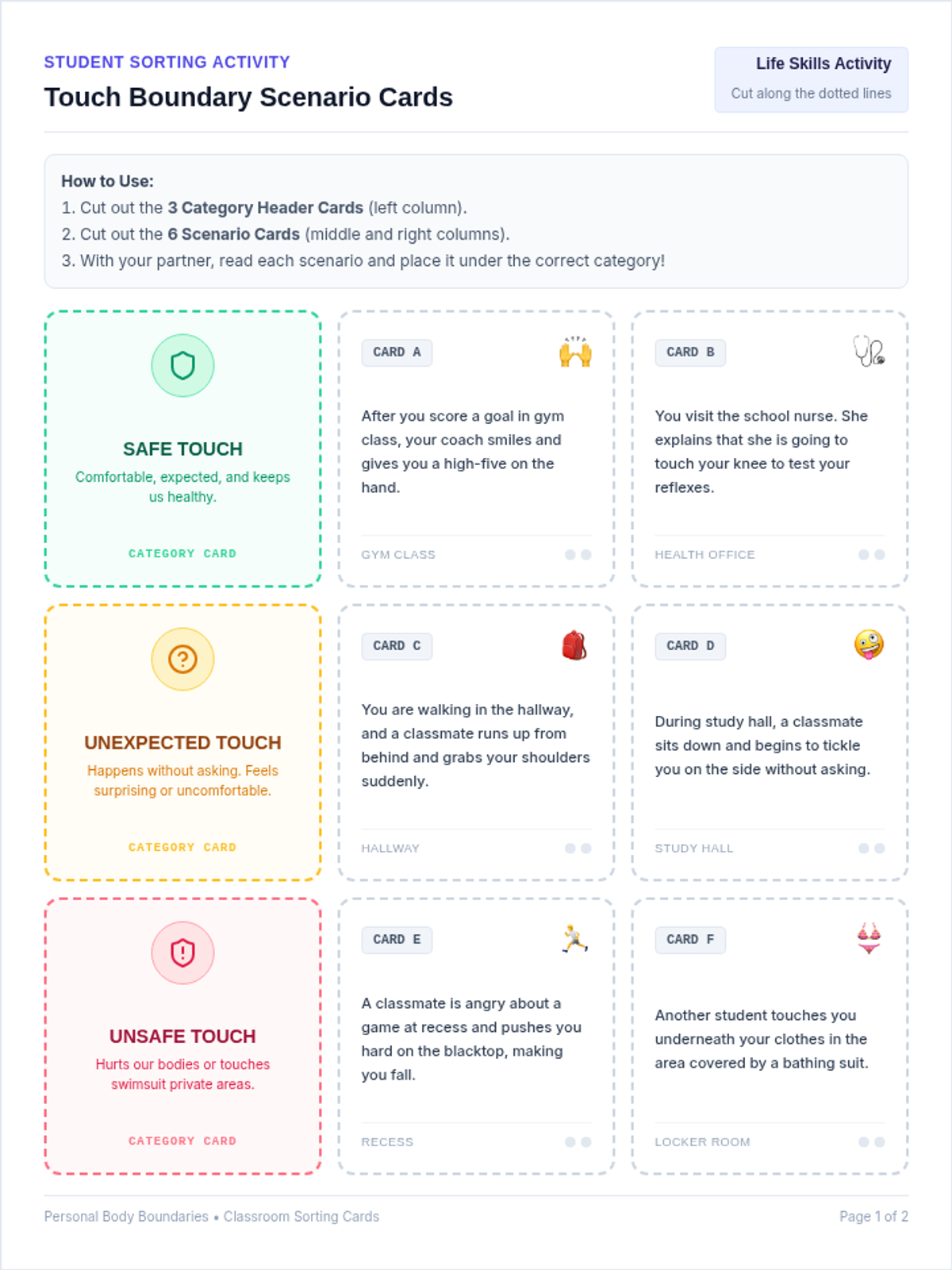
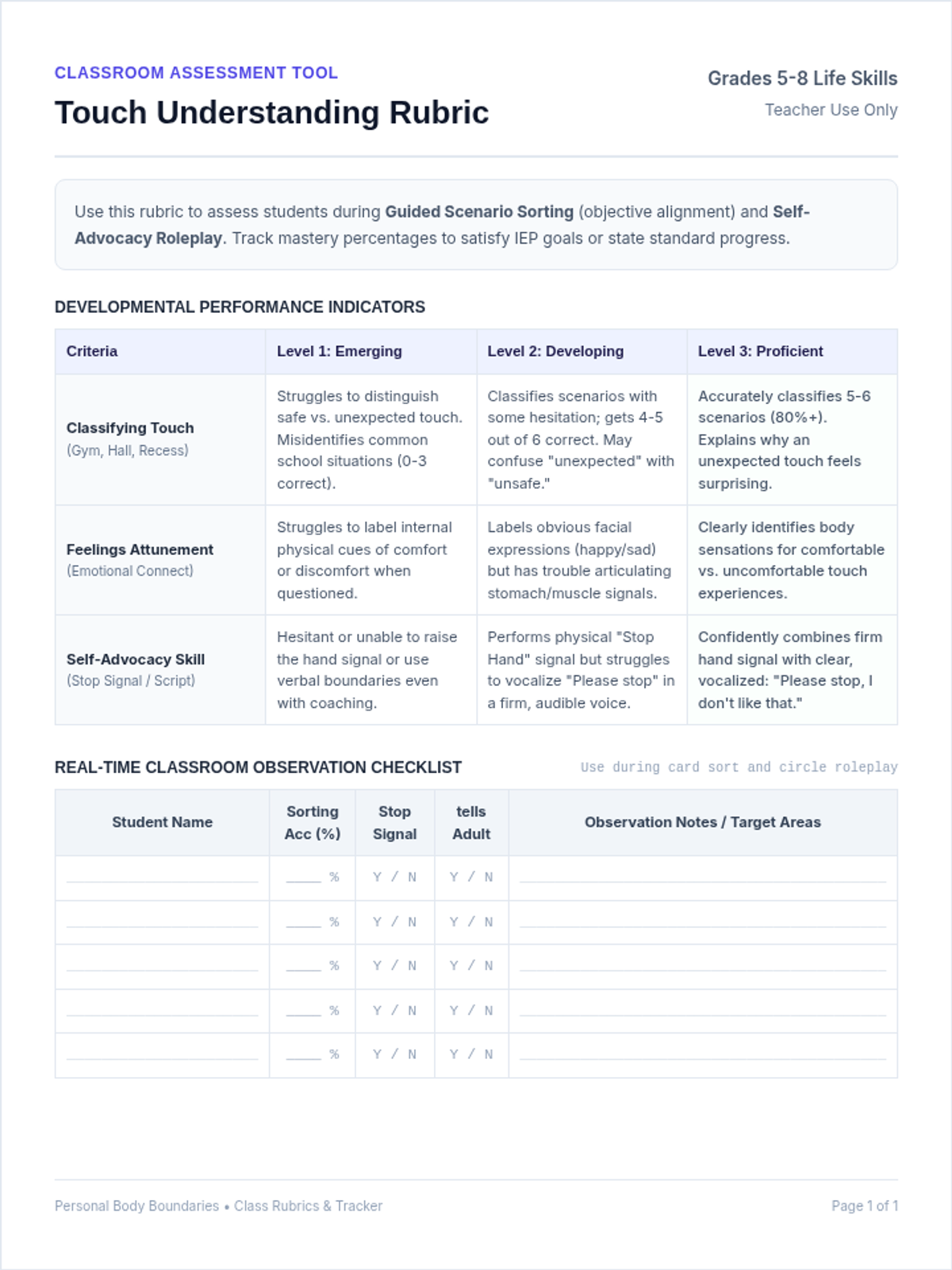
A 30-minute Life Skills lesson for Grades 5-8 on distinguishing Safe, Unsafe, and Unexpected Touch. Students learn clear definitions, sort common school scenarios using visual supports, and practice self-advocacy through hands-on roleplay and exit tickets.
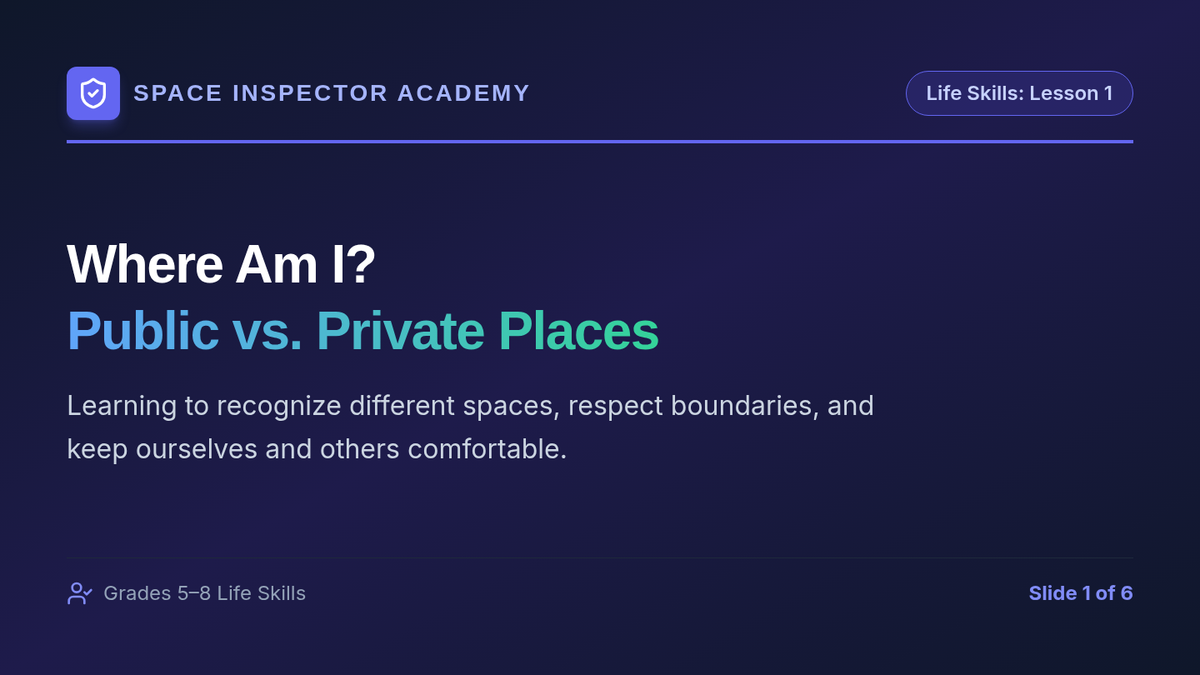
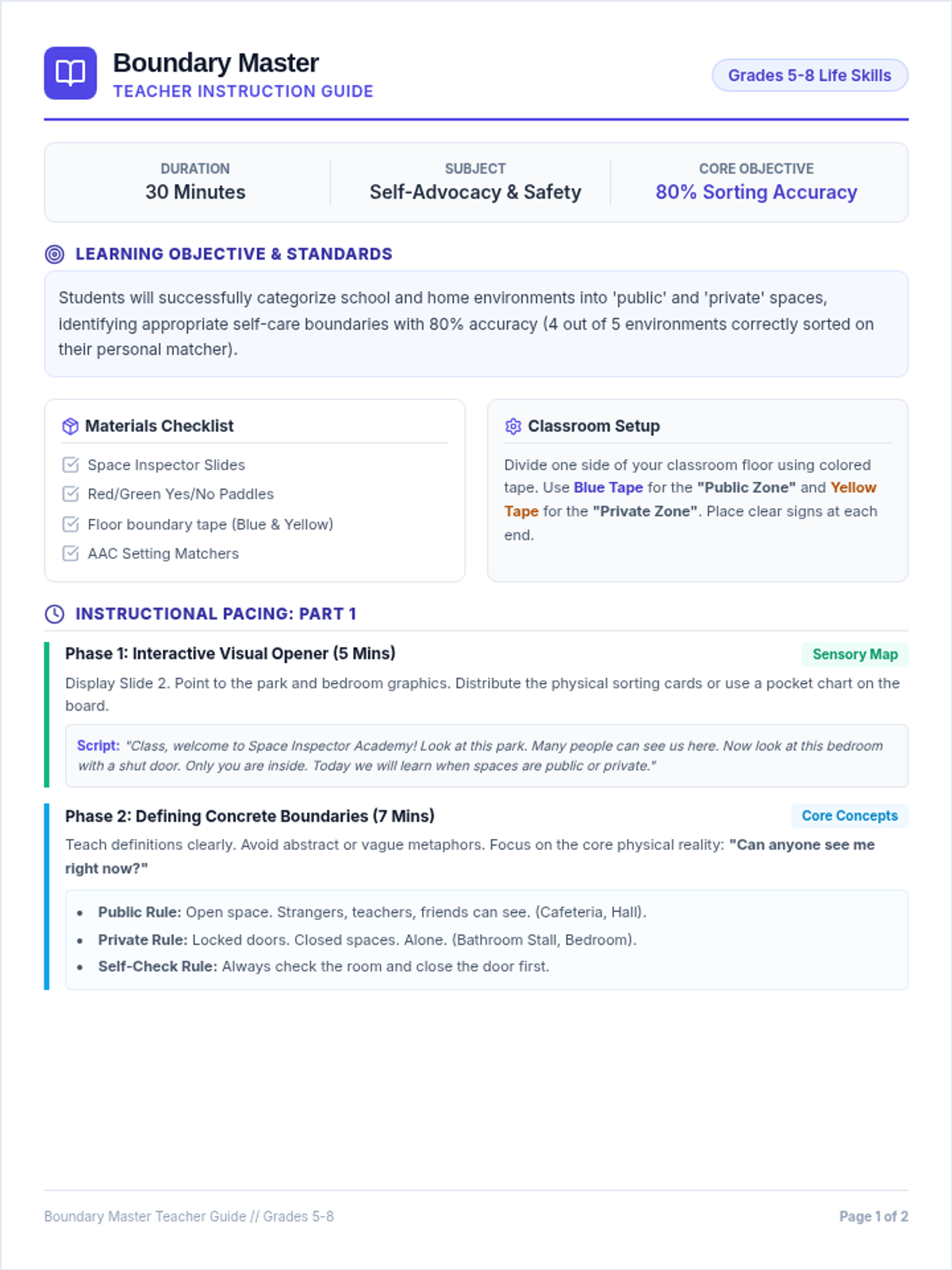
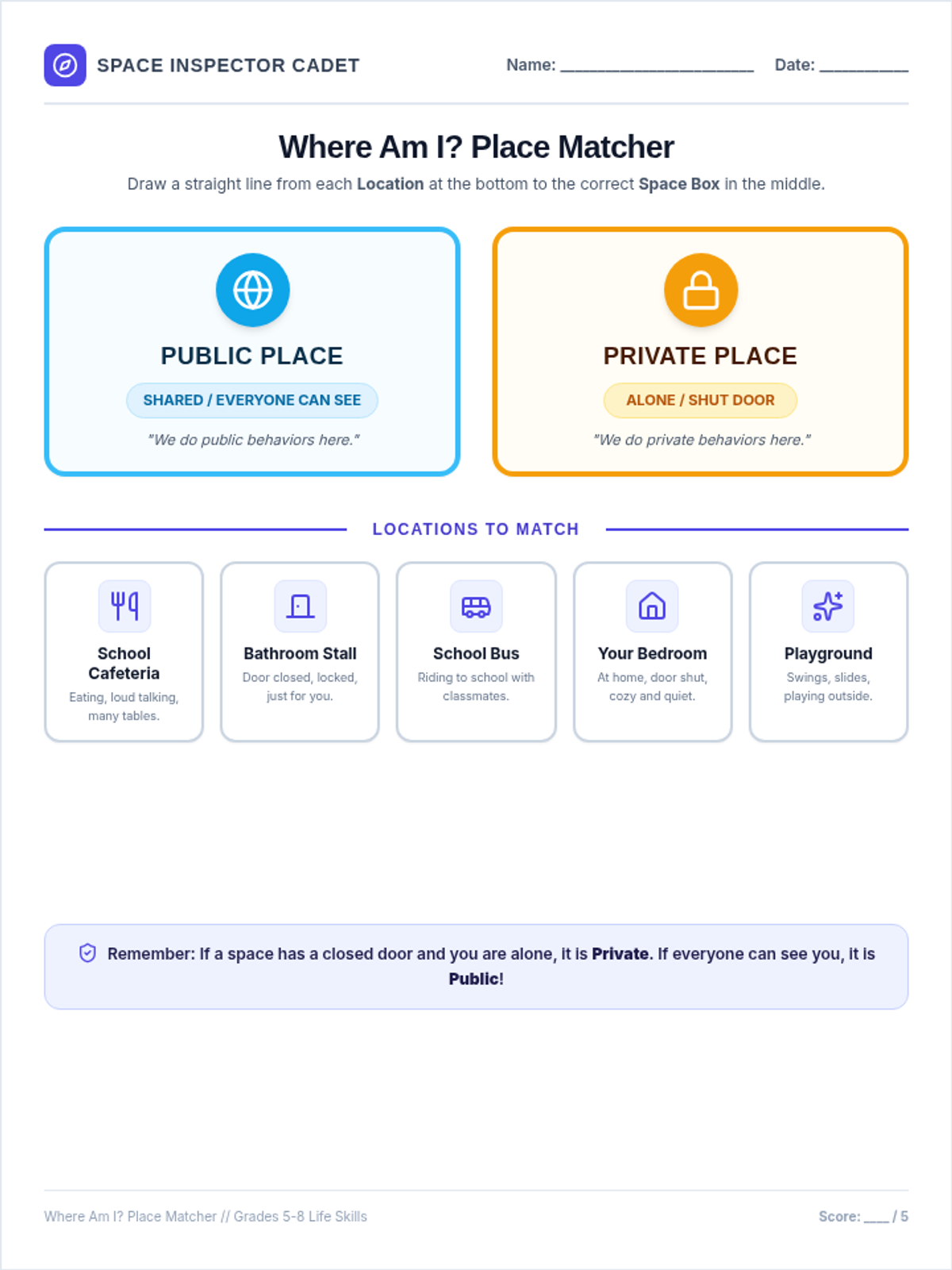
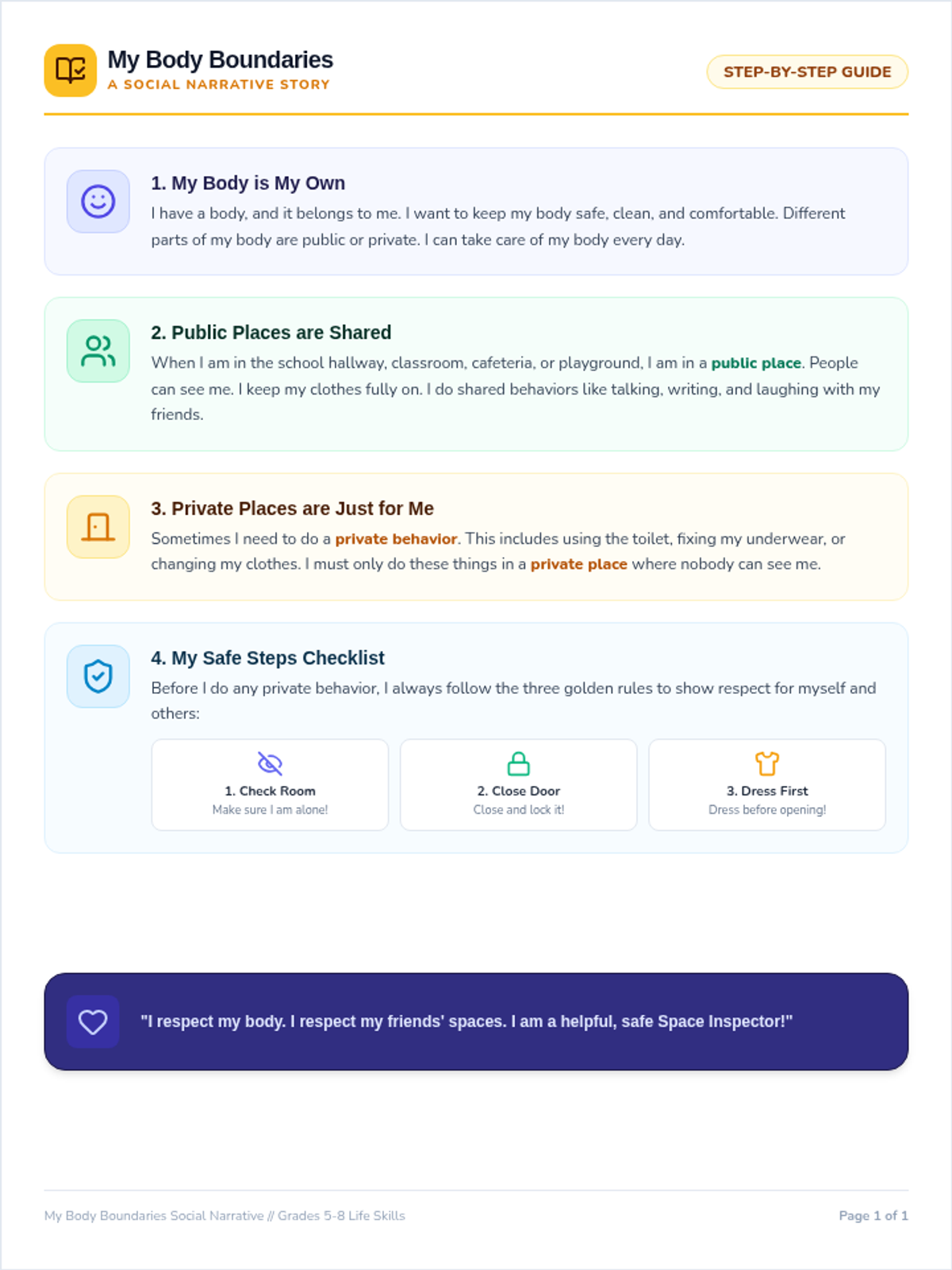
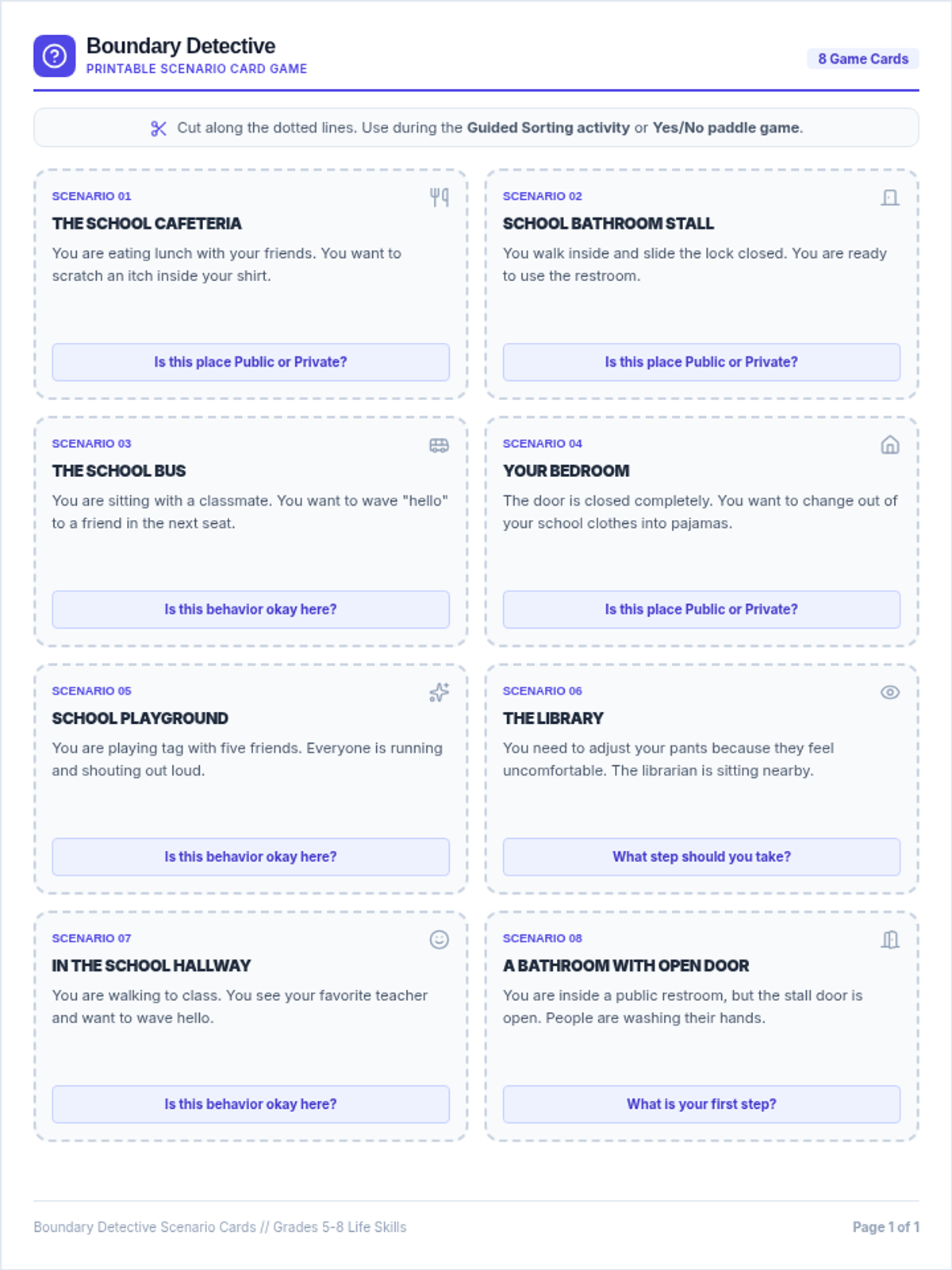
A practical Life Skills lesson for Grades 5-8 focusing on distinguishing between public and private spaces, recognizing appropriate behaviors for each, and applying concrete boundaries to promote safety and personal dignity.
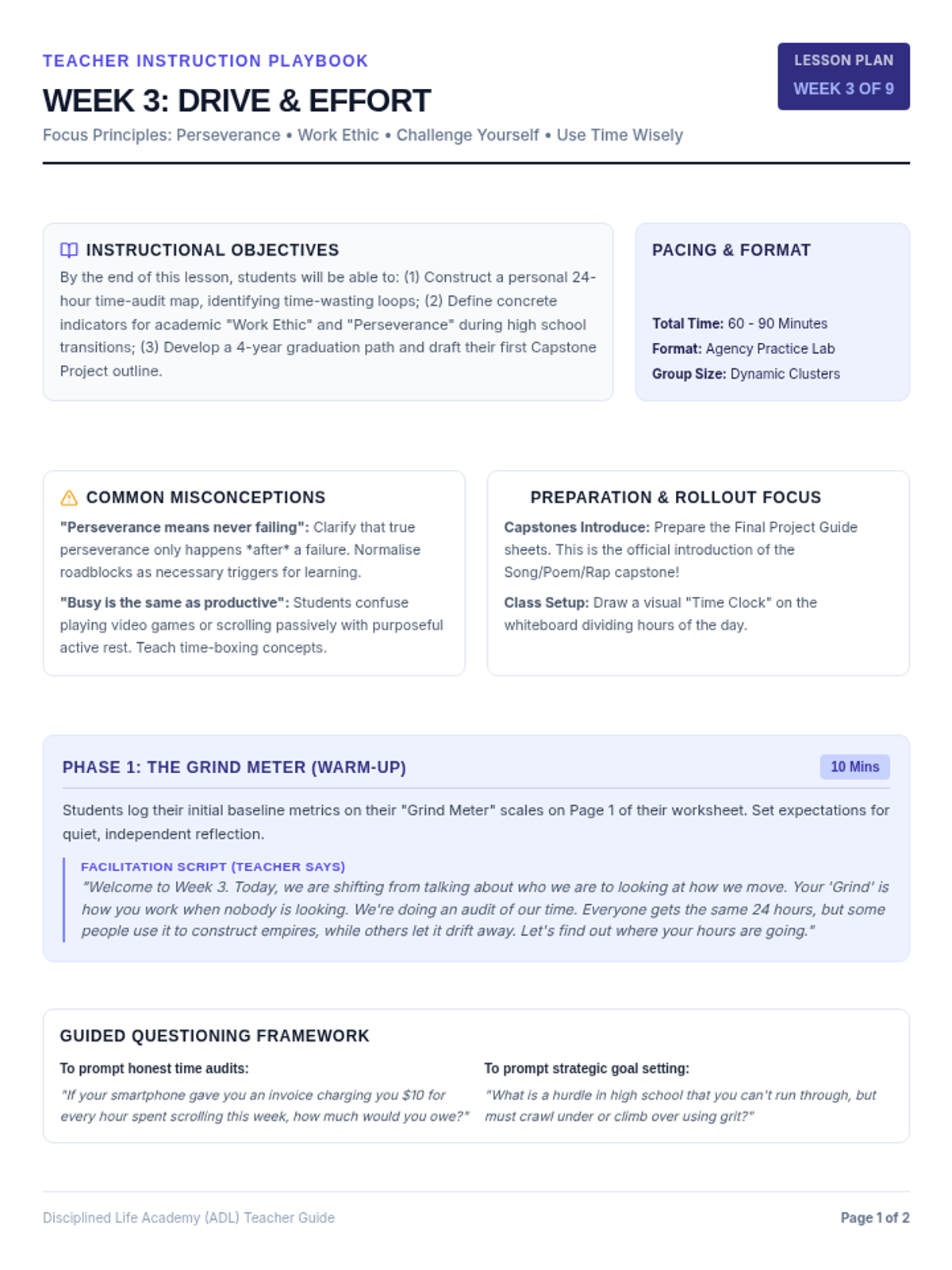
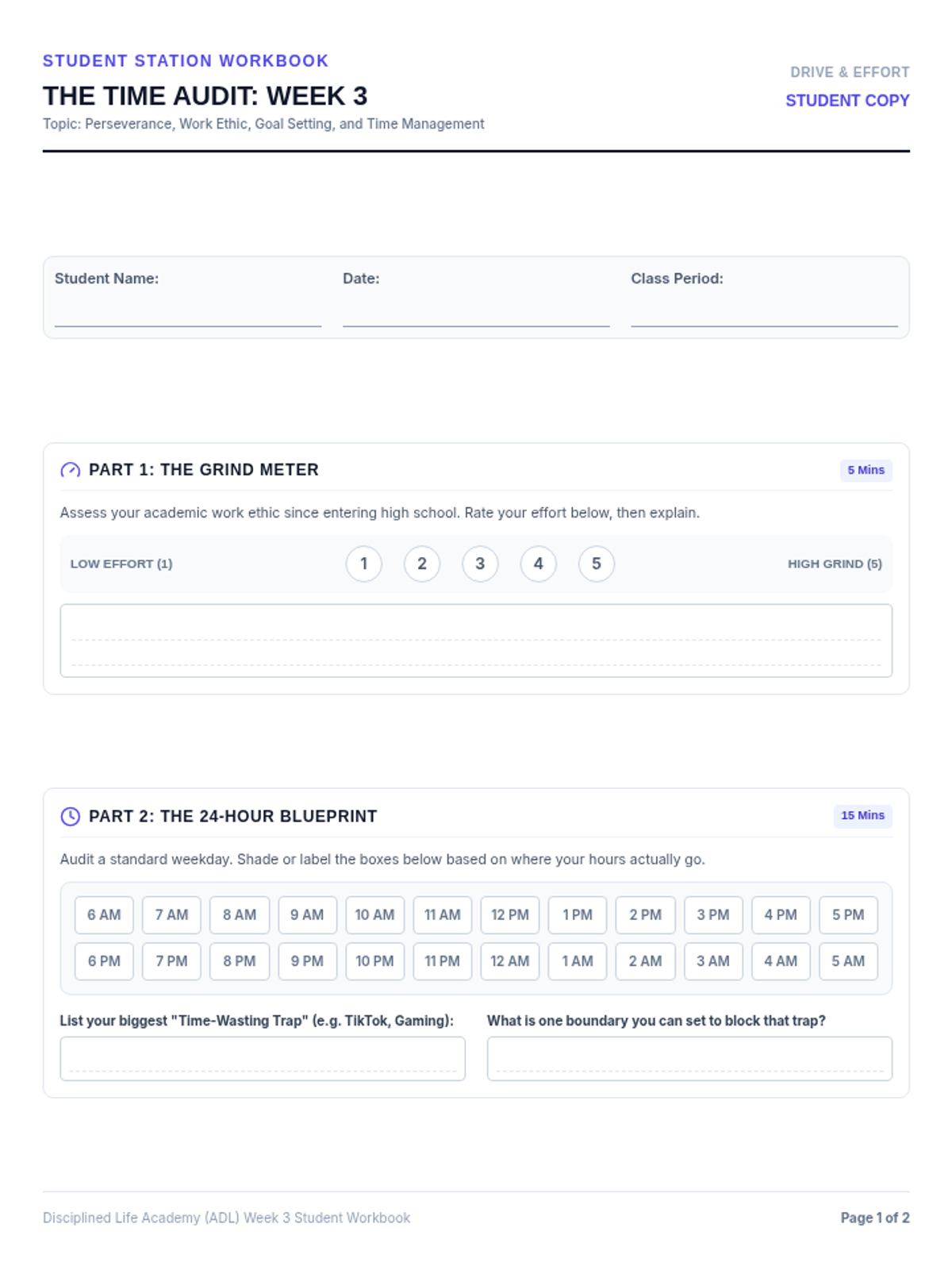
Addresses personal agency: Demonstrate perseverance, Demonstrate a work ethic, Challenge yourself, and Use your time wisely. Students learn goal-setting, academic stamina, and time management.
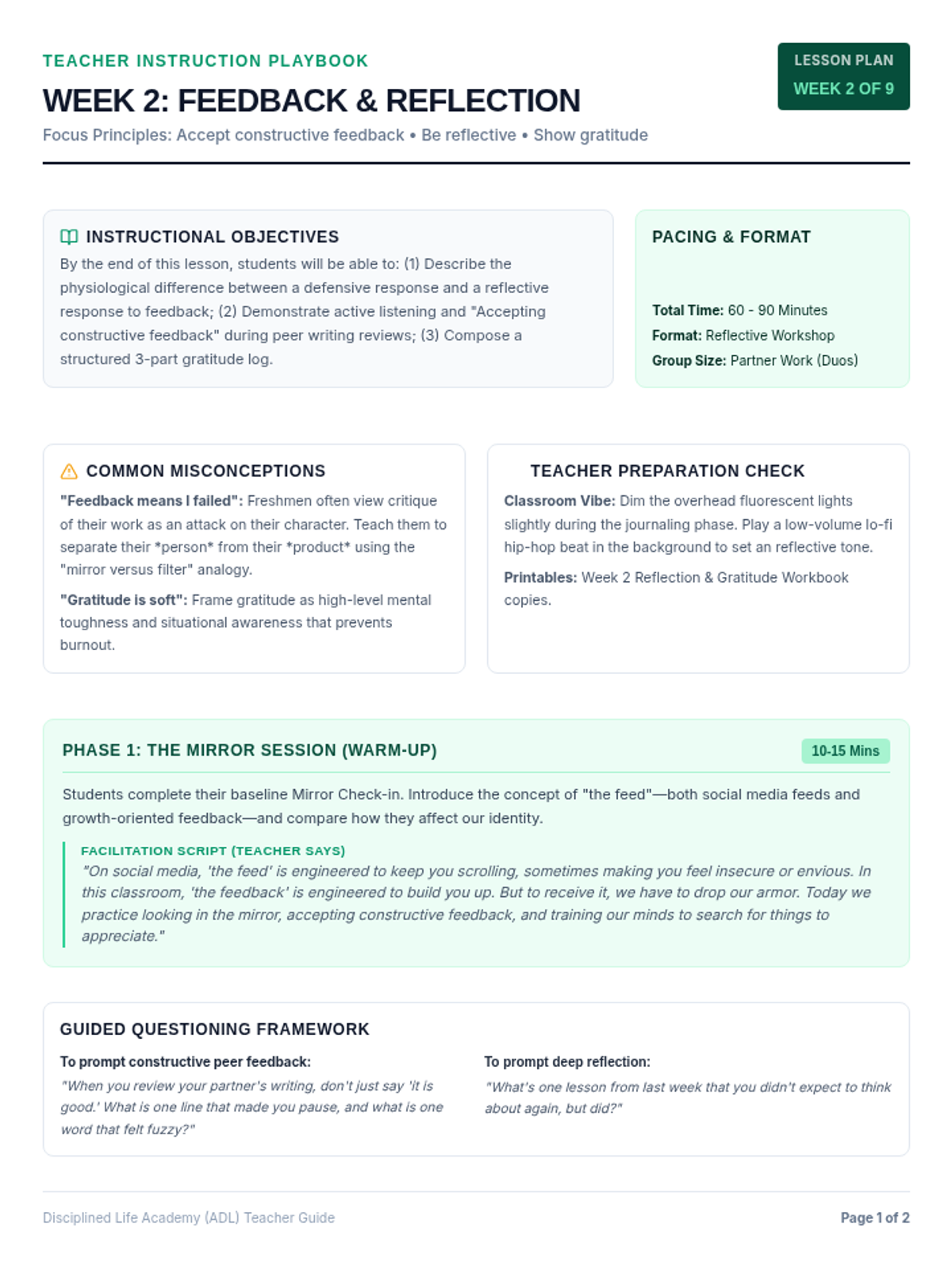
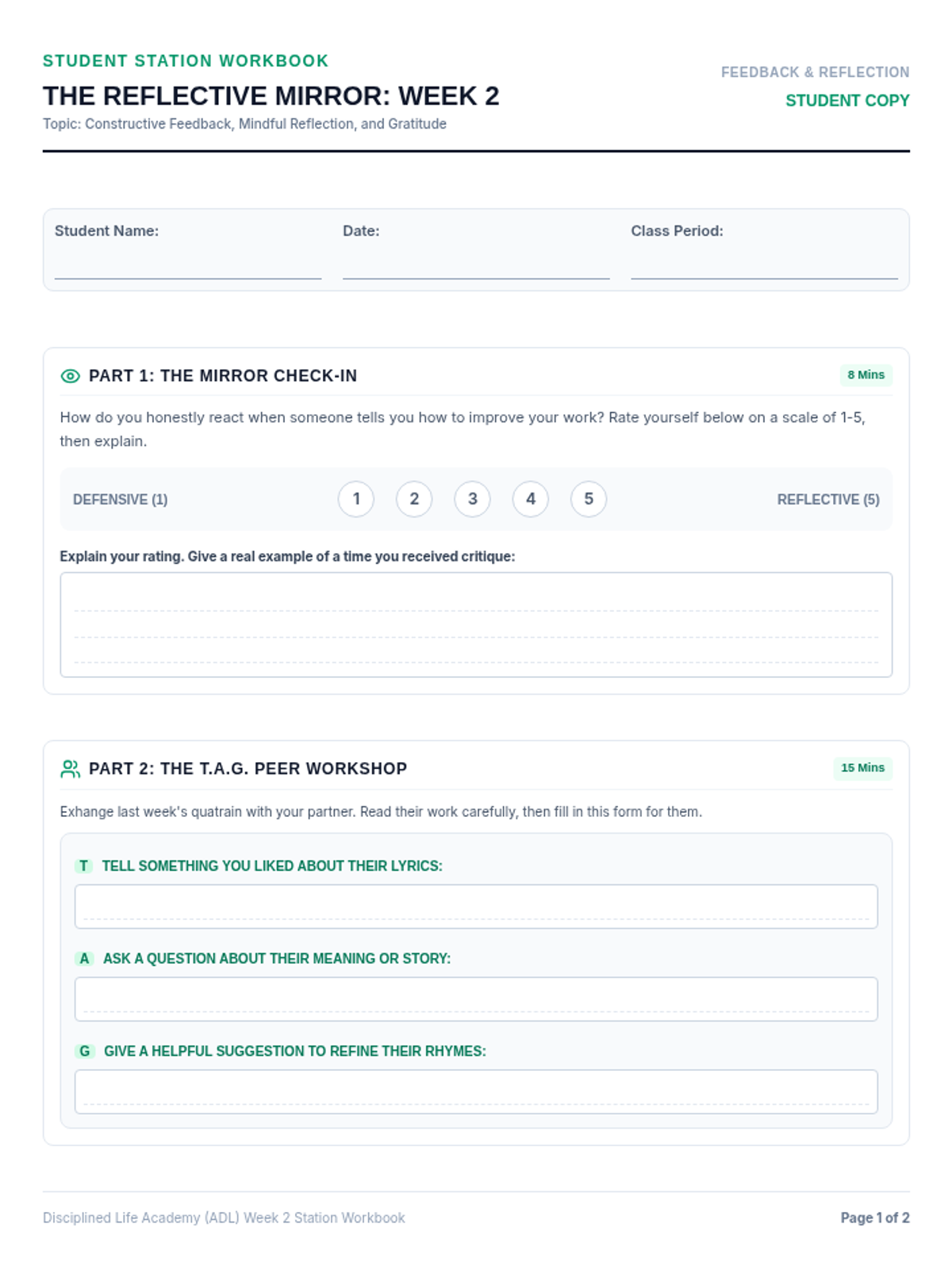
Introduces the principles: Accept constructive feedback, Be reflective, and Show gratitude. Students learn how to receive feedback constructively and practice mindfulness through gratitude journaling.
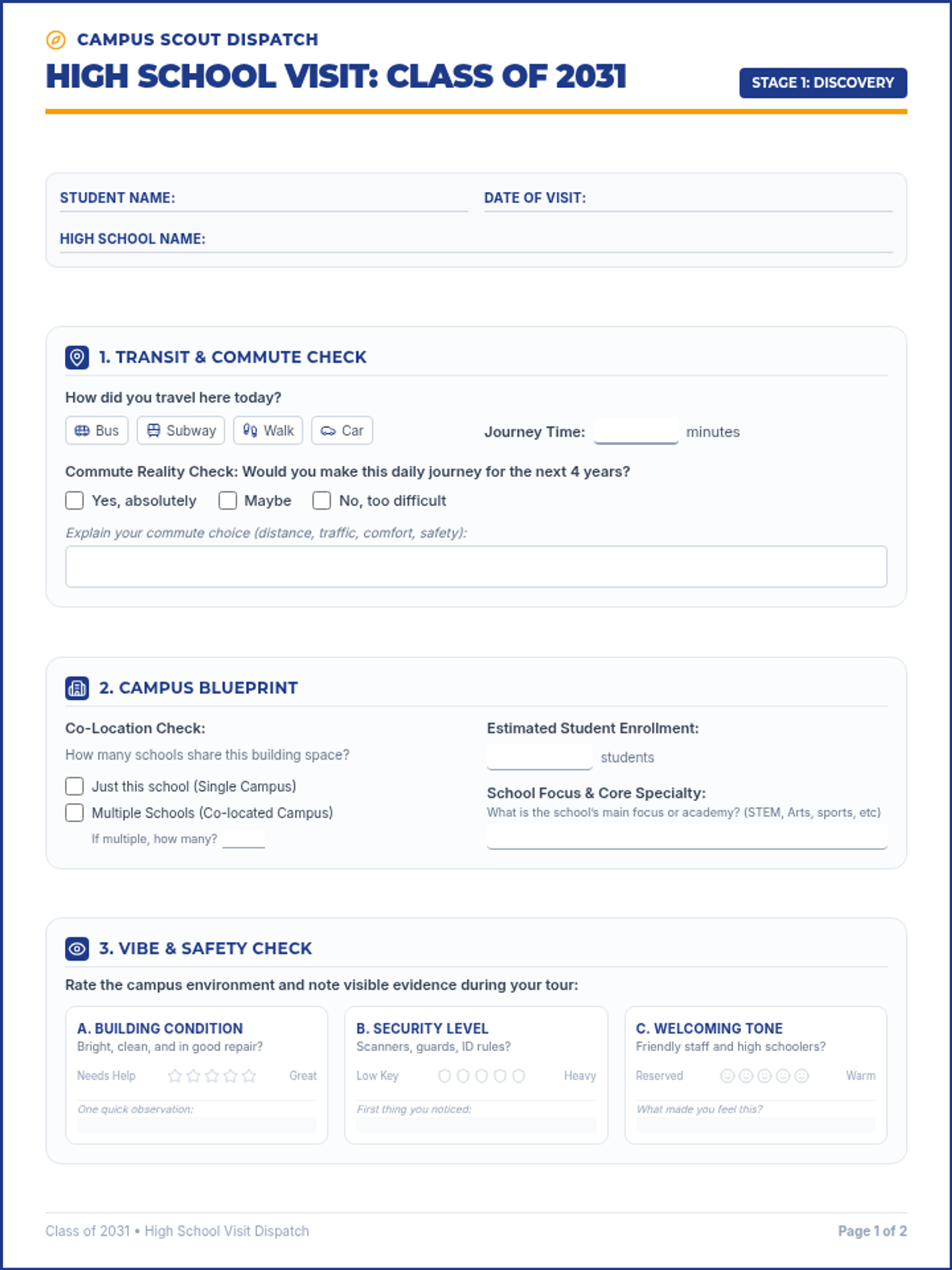
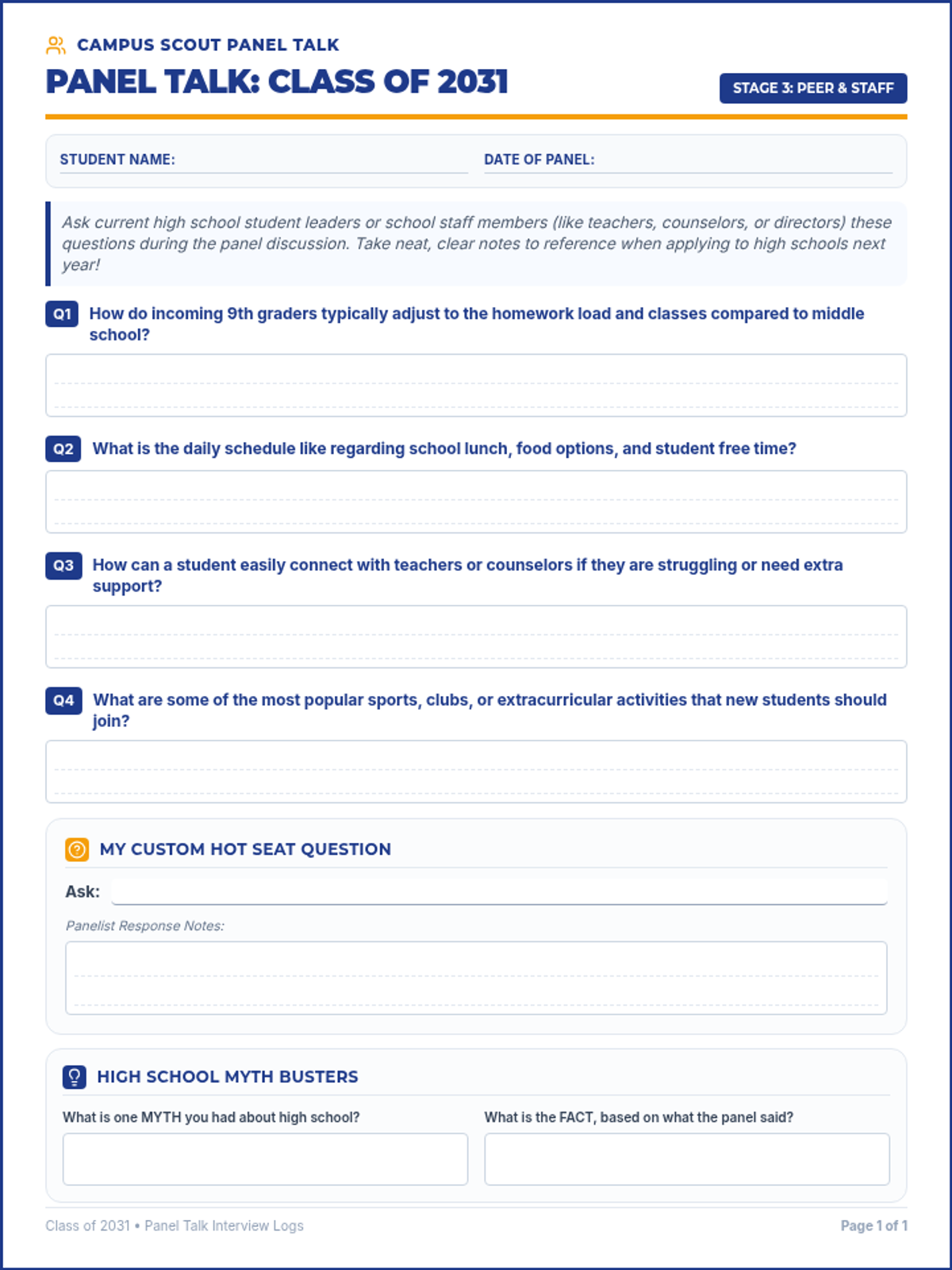
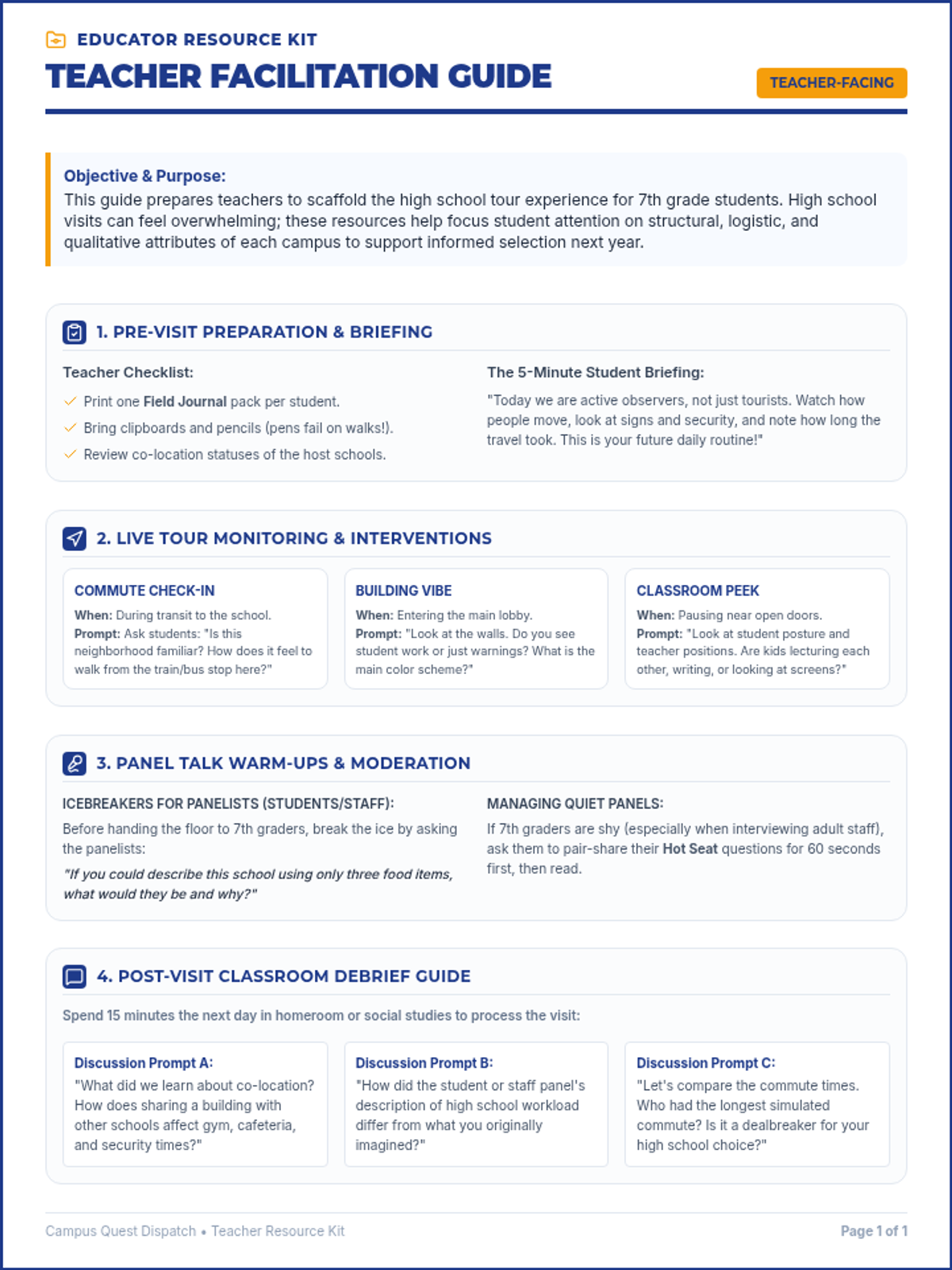
A comprehensive preparation and reflection kit for 7th graders embarking on high school visits. It includes a field observation guide, a student-panel interview sheet, and a teacher facilitation guide.
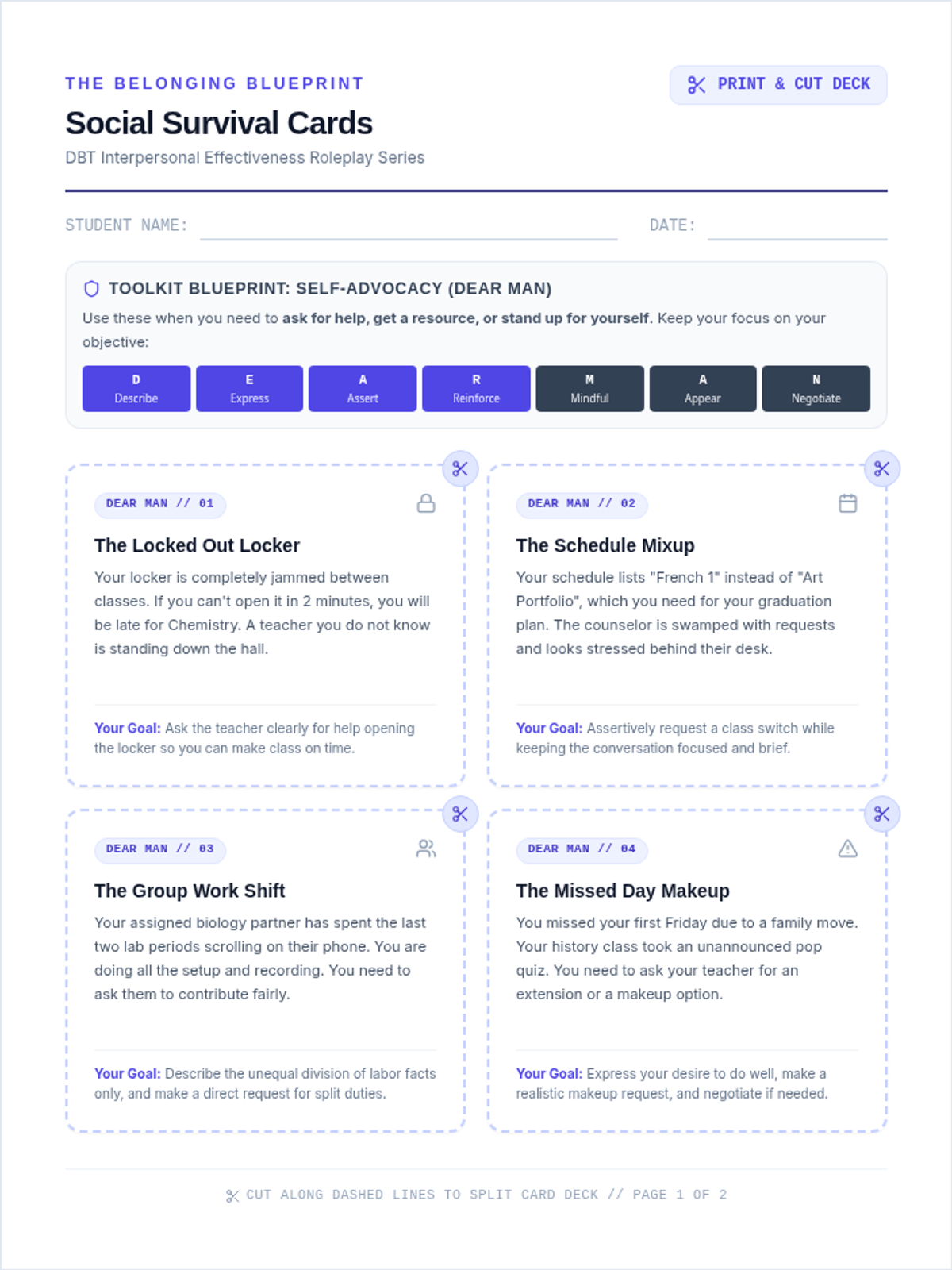
A DBT-informed lesson designed to help students navigate interpersonal connections at a new school. This lesson introduces and practices the DEAR MAN strategy for clear self-advocacy and the GIVE skillset for building warm, authentic relationships.
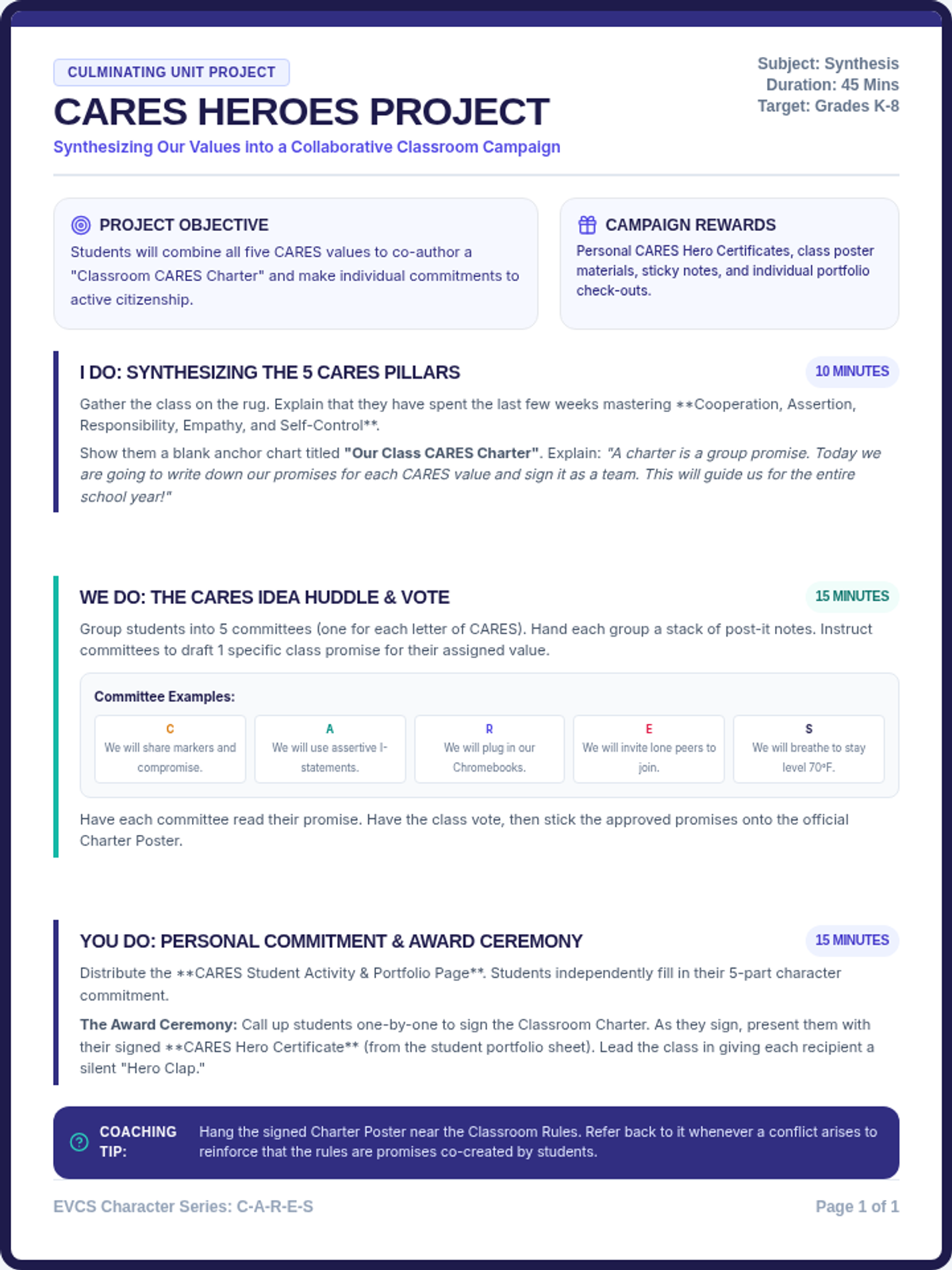
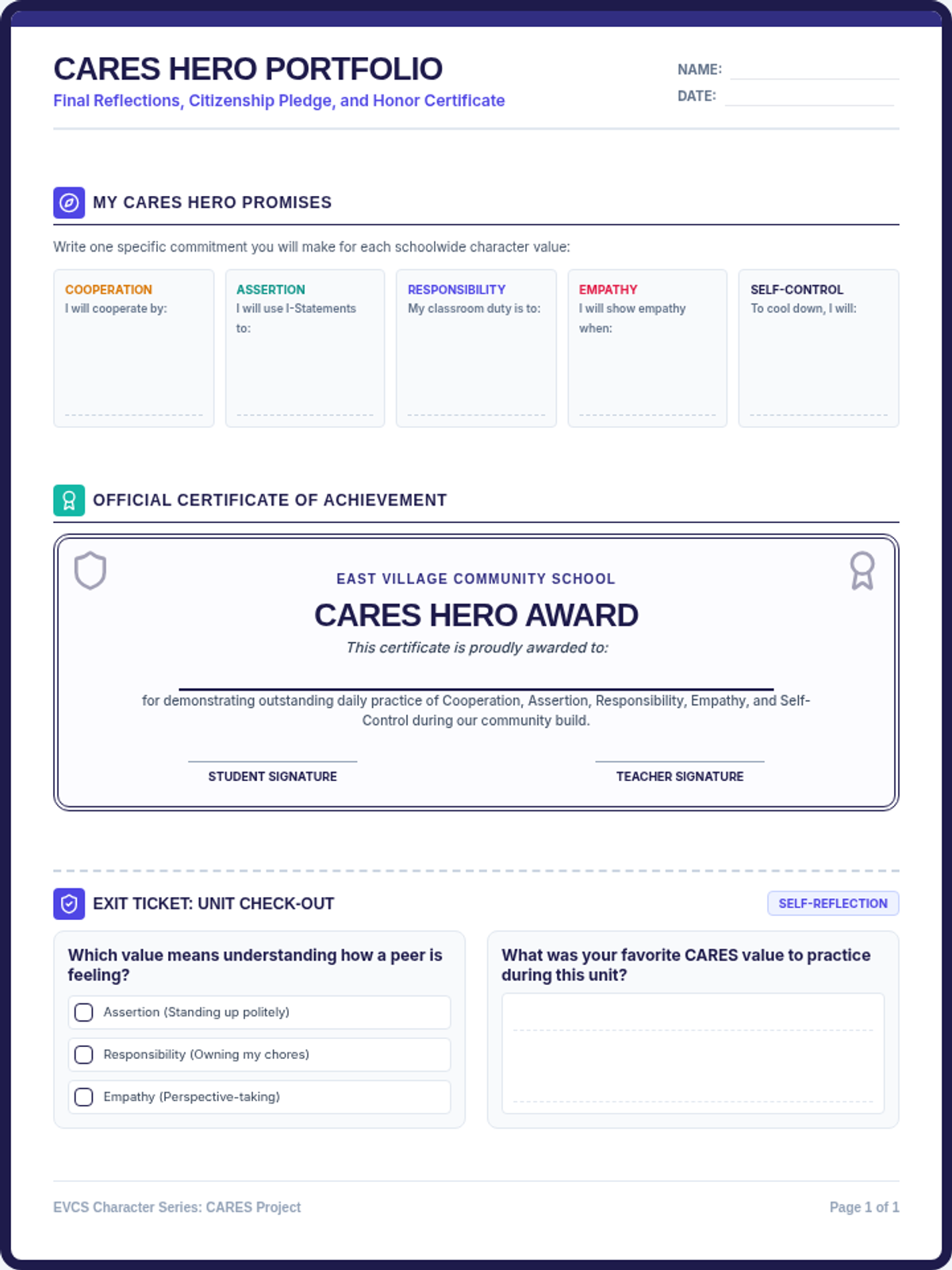
A culminating reflection and community project lesson where students synthesize all five CARES values. Students create a class pledge, award certificates, and design a community action project to show their learning.
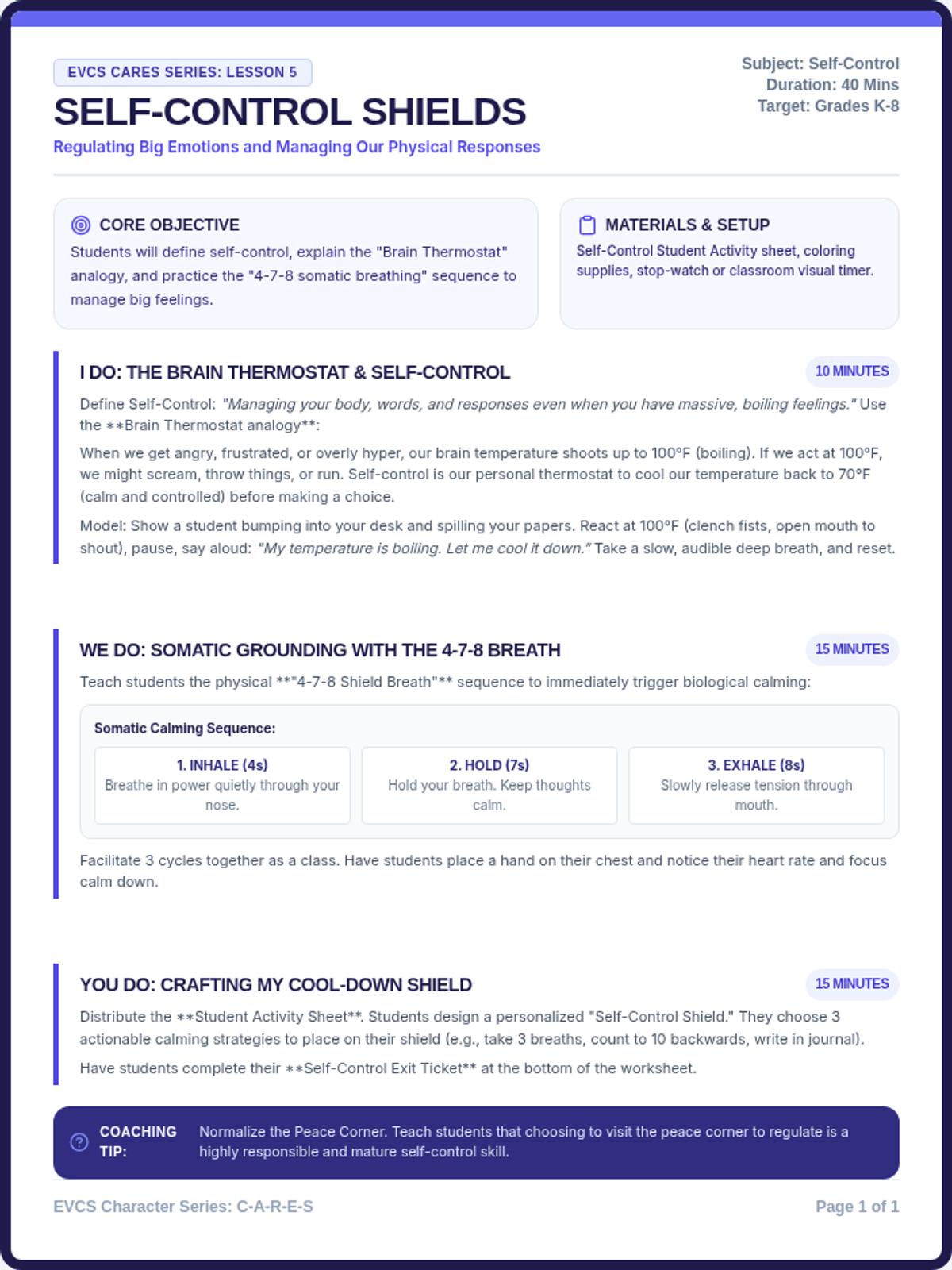
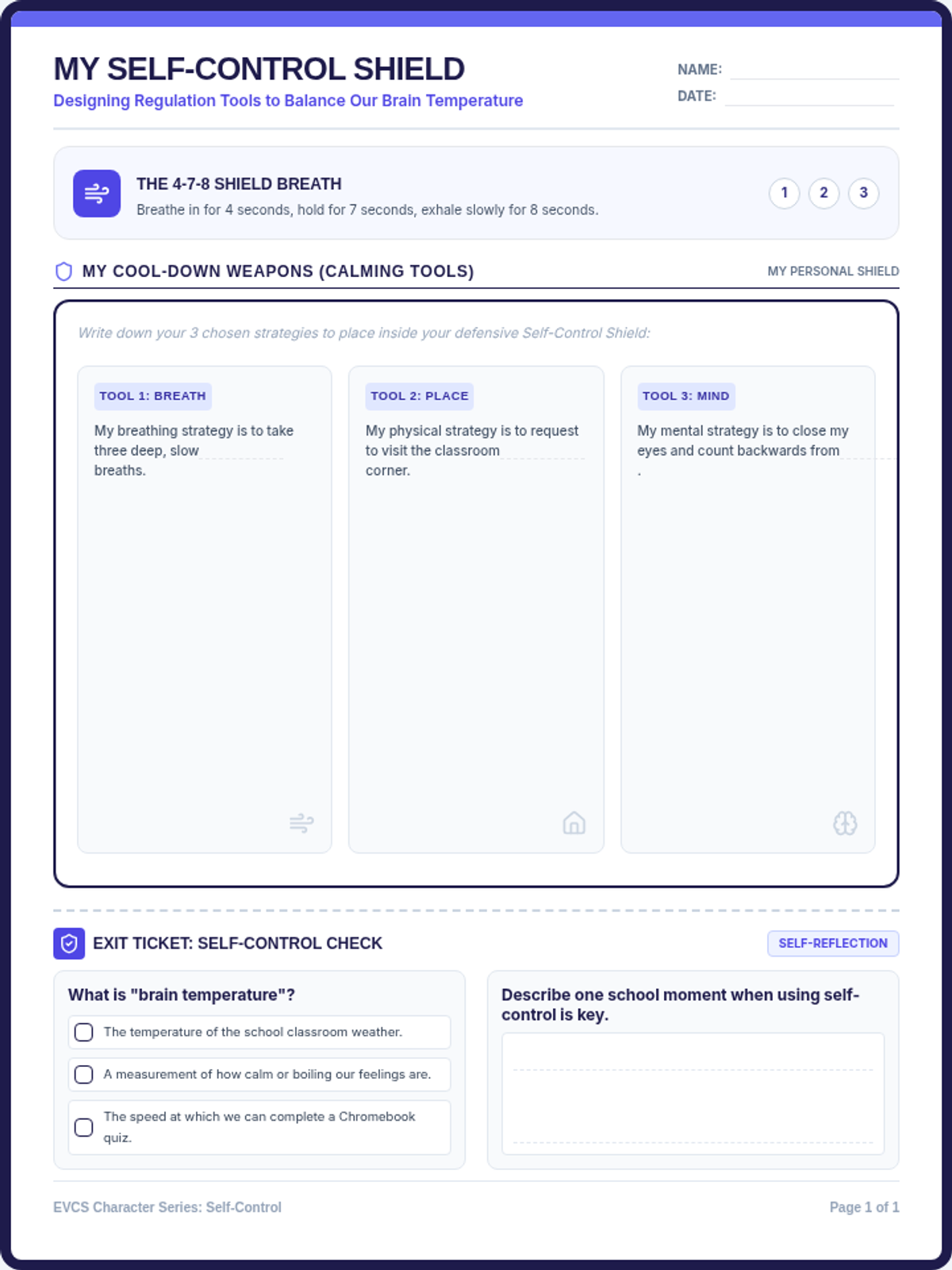
A social-emotional learning lesson centered on self-control, emotional regulation, and mindfulness. Students practice somatic grounding and cool-down techniques to manage big emotions in real-time.
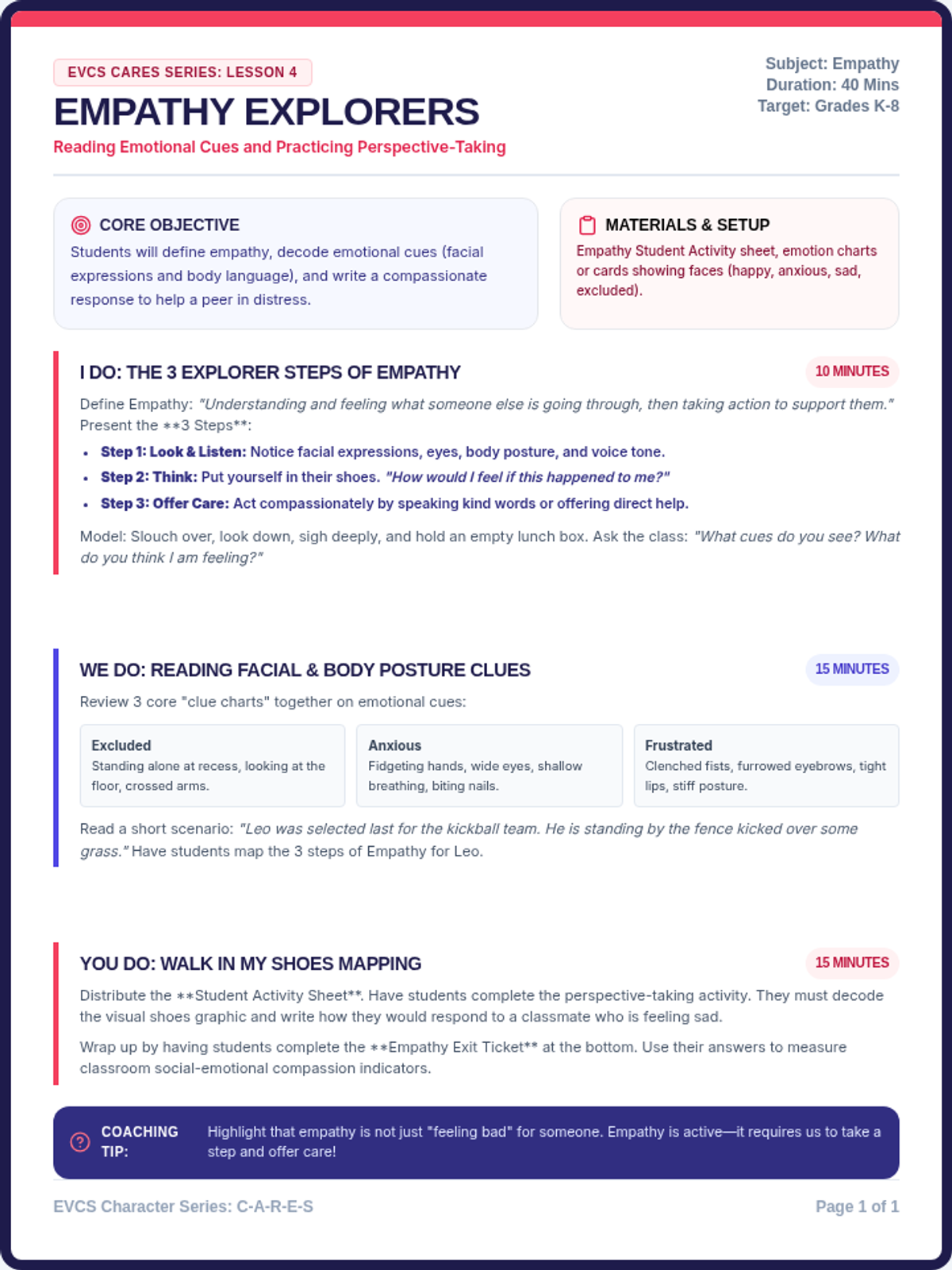
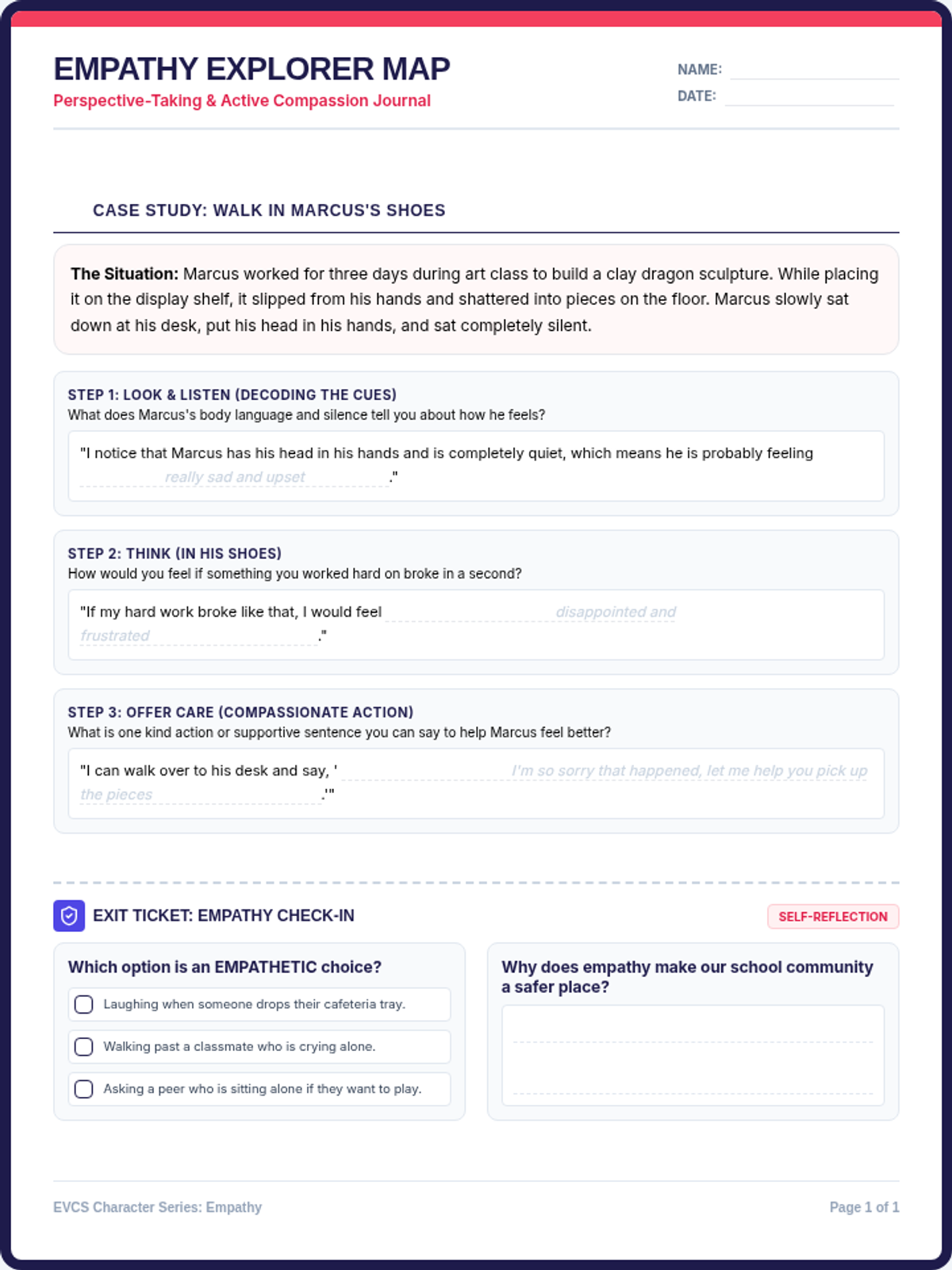
A social-emotional learning lesson on empathy, active compassion, and perspective-taking. Students learn to recognize emotional cues in others and practice walking in someone else's shoes to solve social dilemmas.
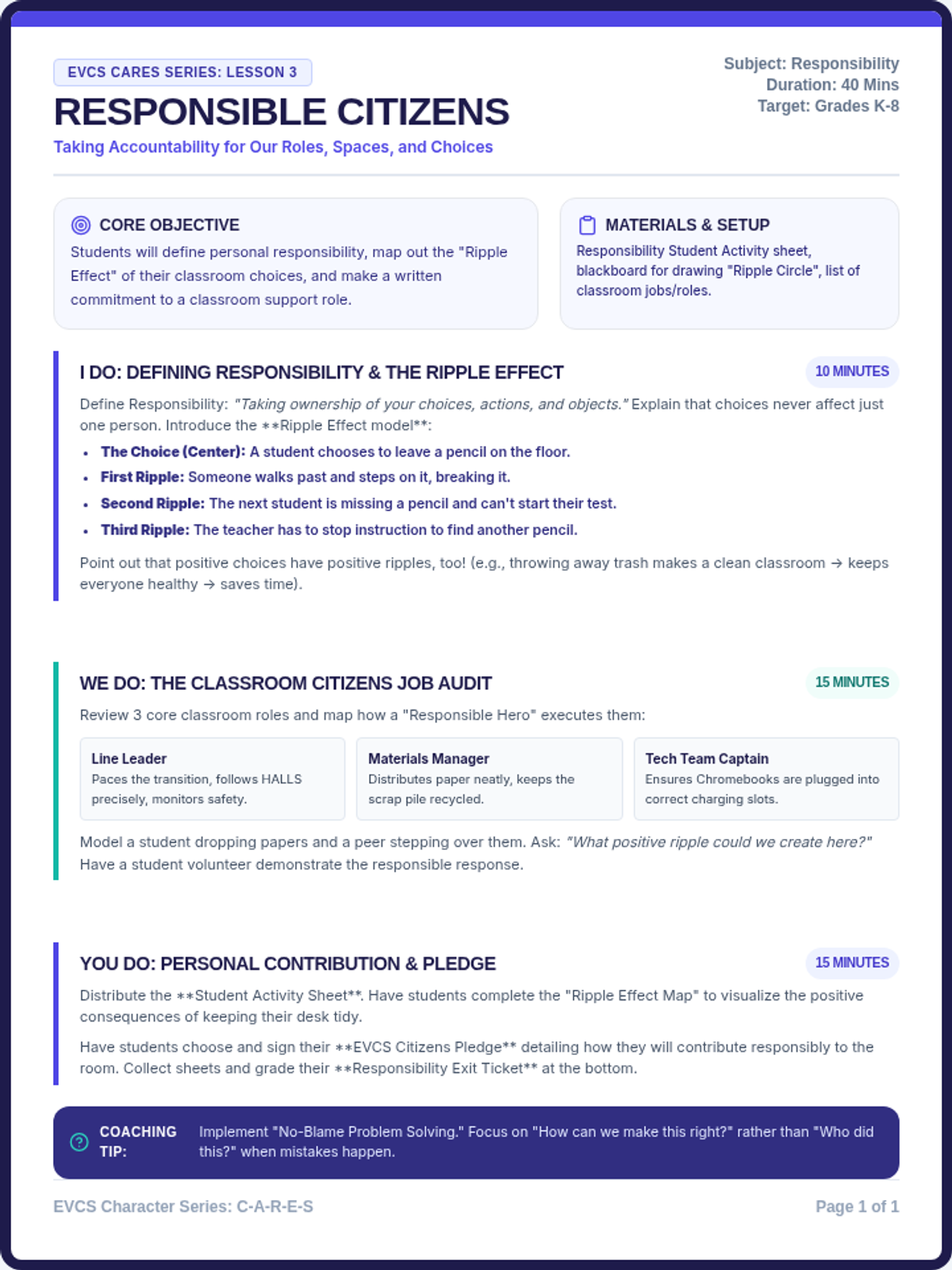
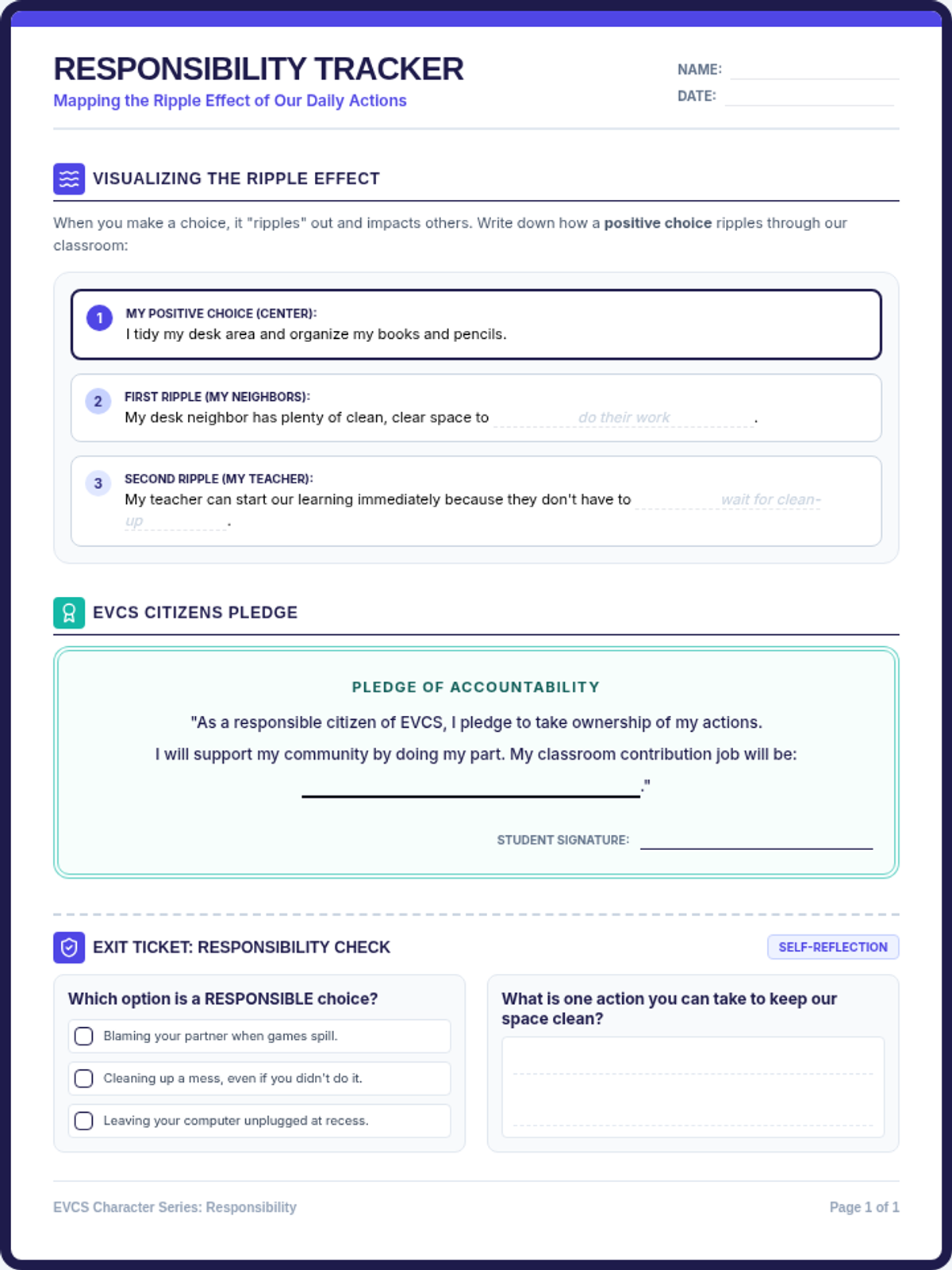
A social-emotional learning lesson teaching personal accountability, civic responsibility, and classroom roles. Students identify how their individual choices affect the safety and success of the whole community.
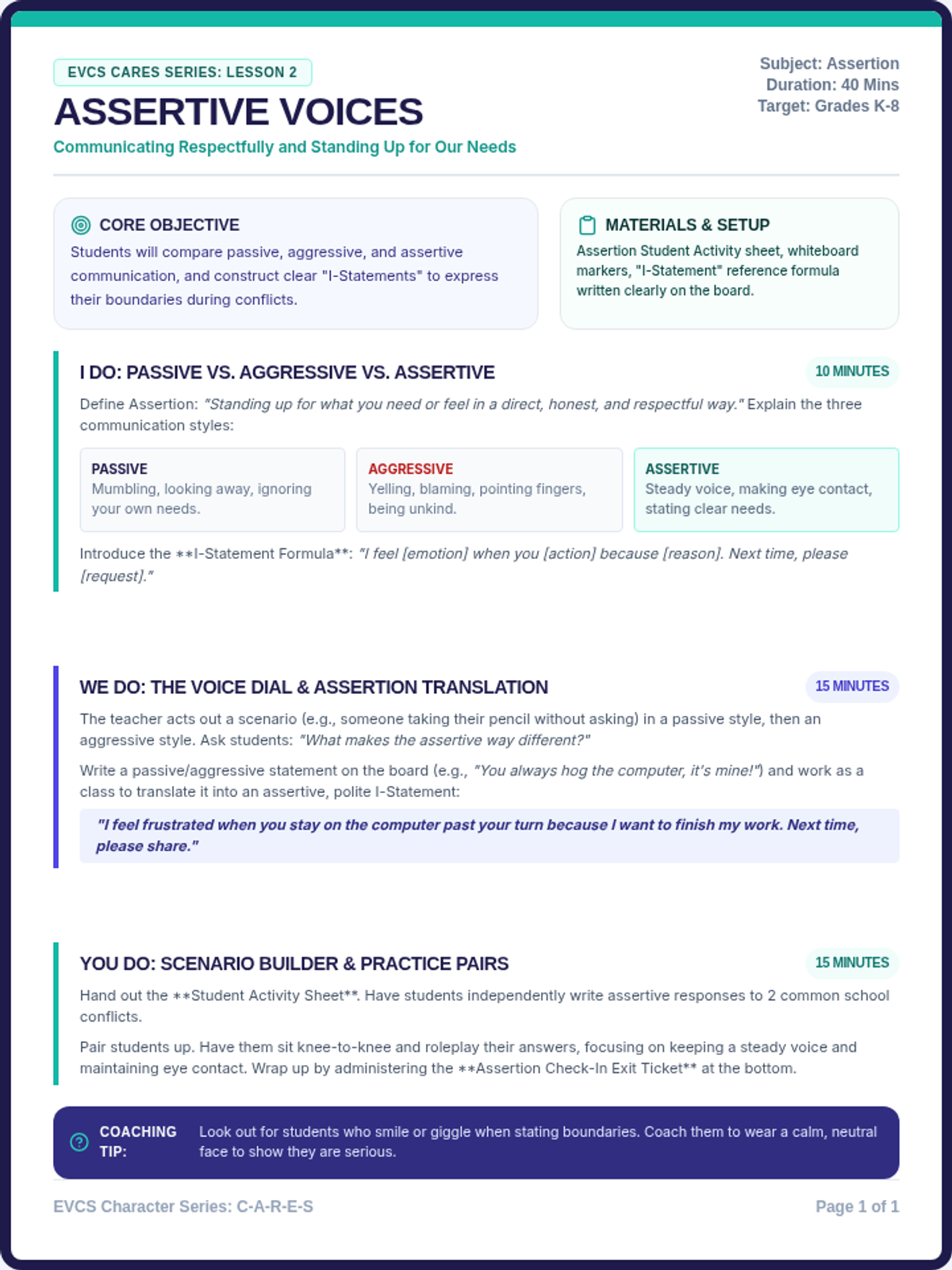
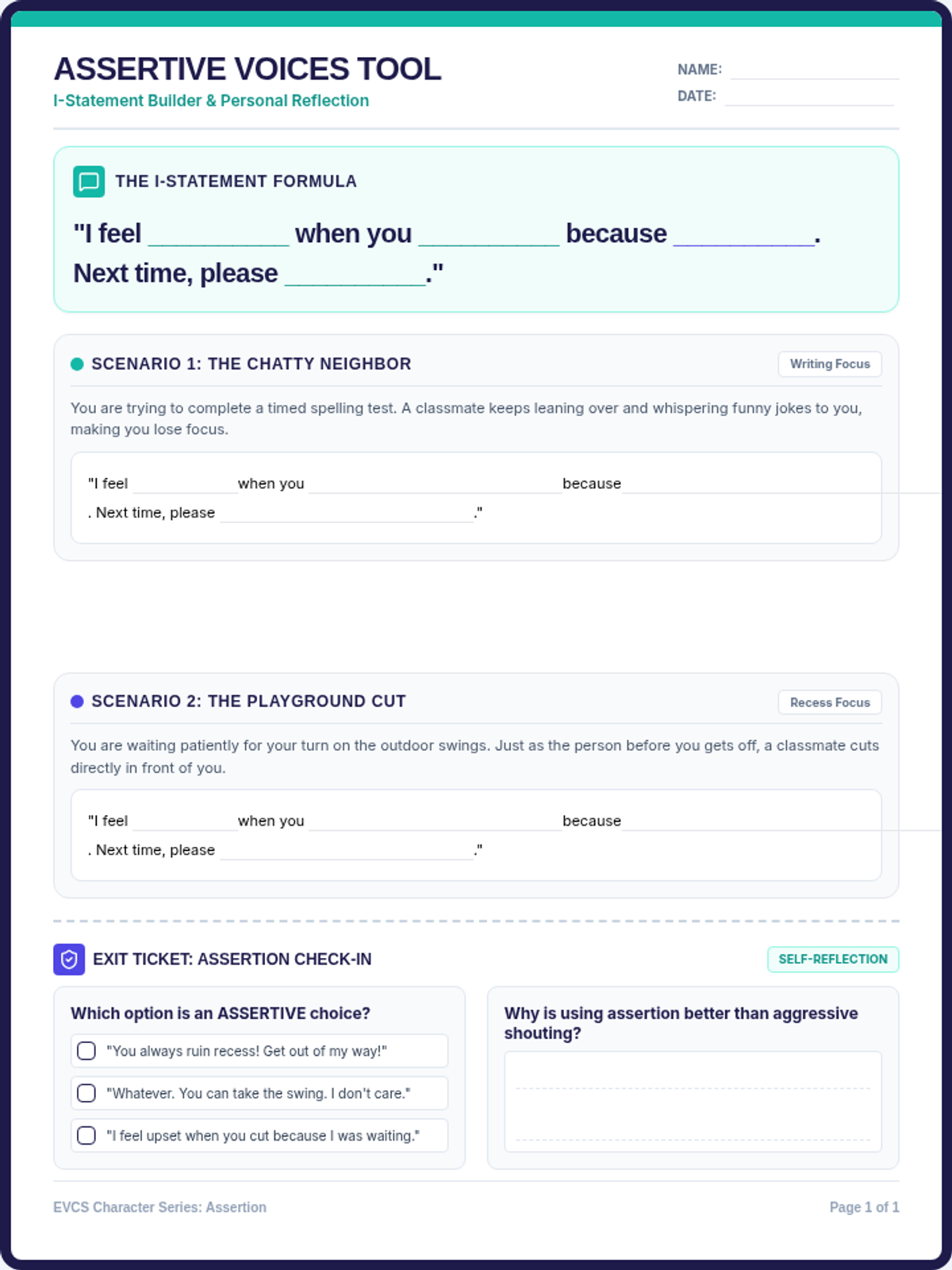
A social-emotional learning lesson focused on assertive communication, active listening, and setting respectful boundaries. Students practice using "I-Statements" to express their needs and opinions respectfully.
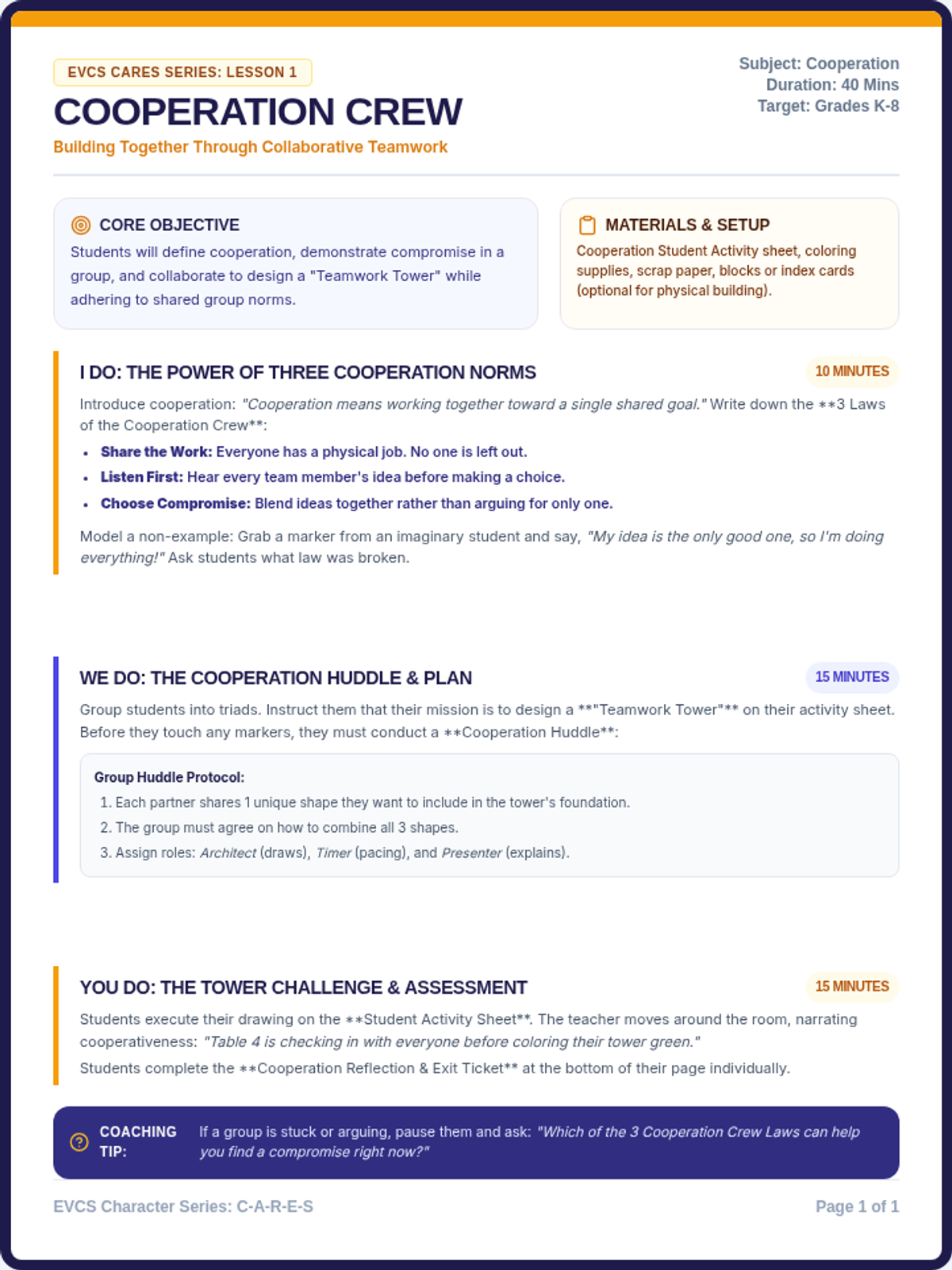
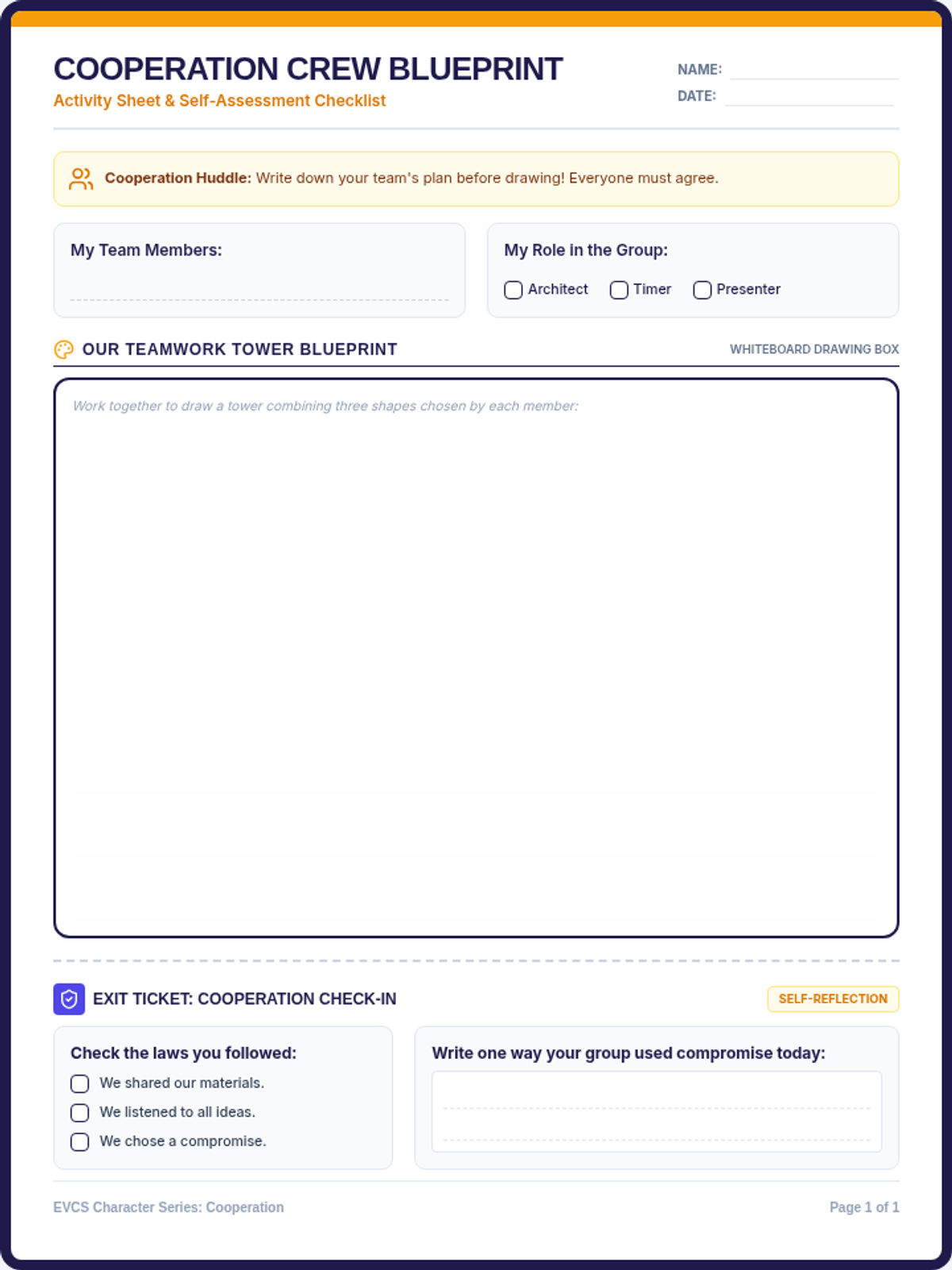
A social-emotional learning lesson focusing on cooperation, collaborative problem solving, and group agreement. Students explore how to share ideas, compromise, and build together as a team.
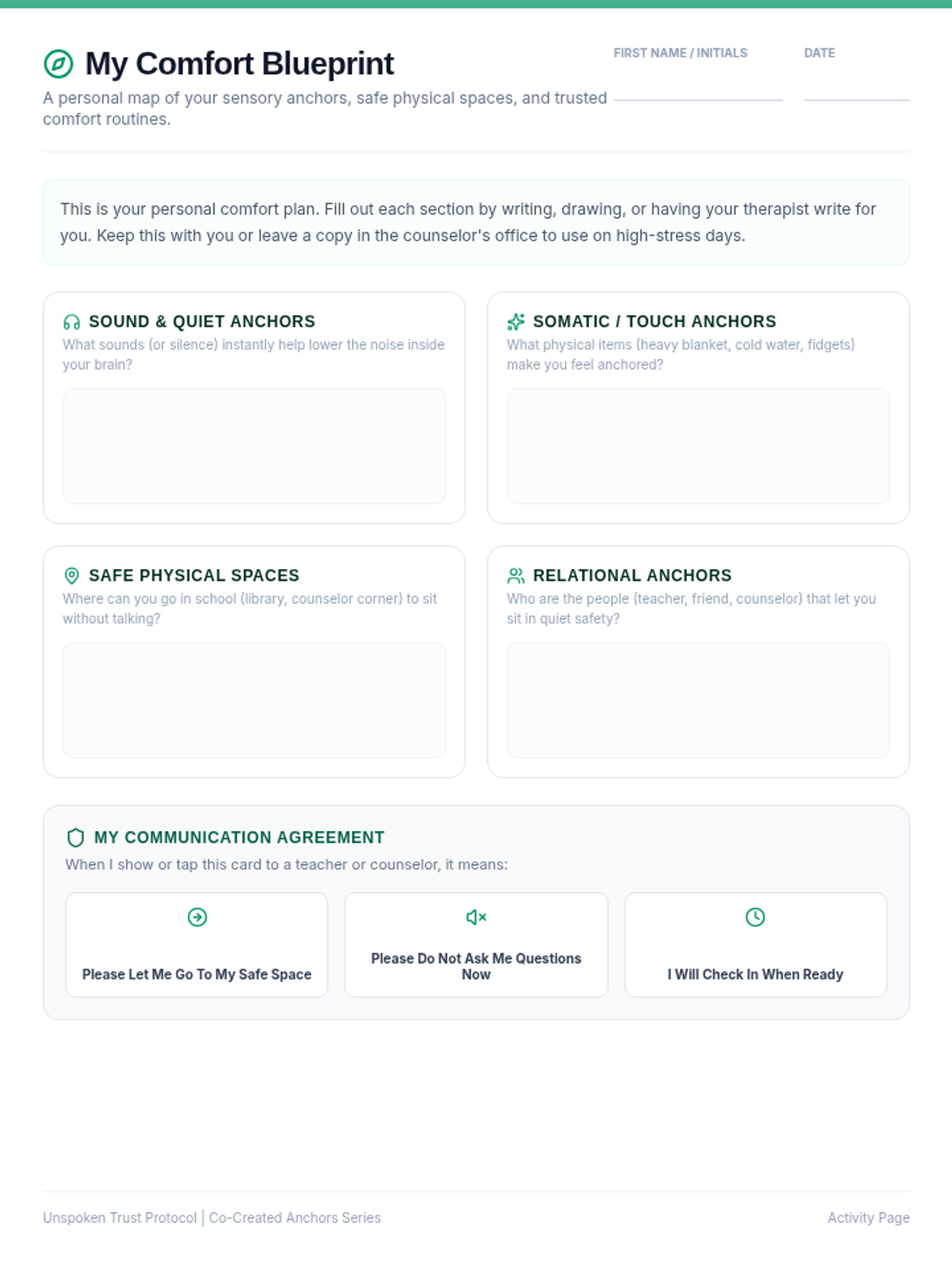
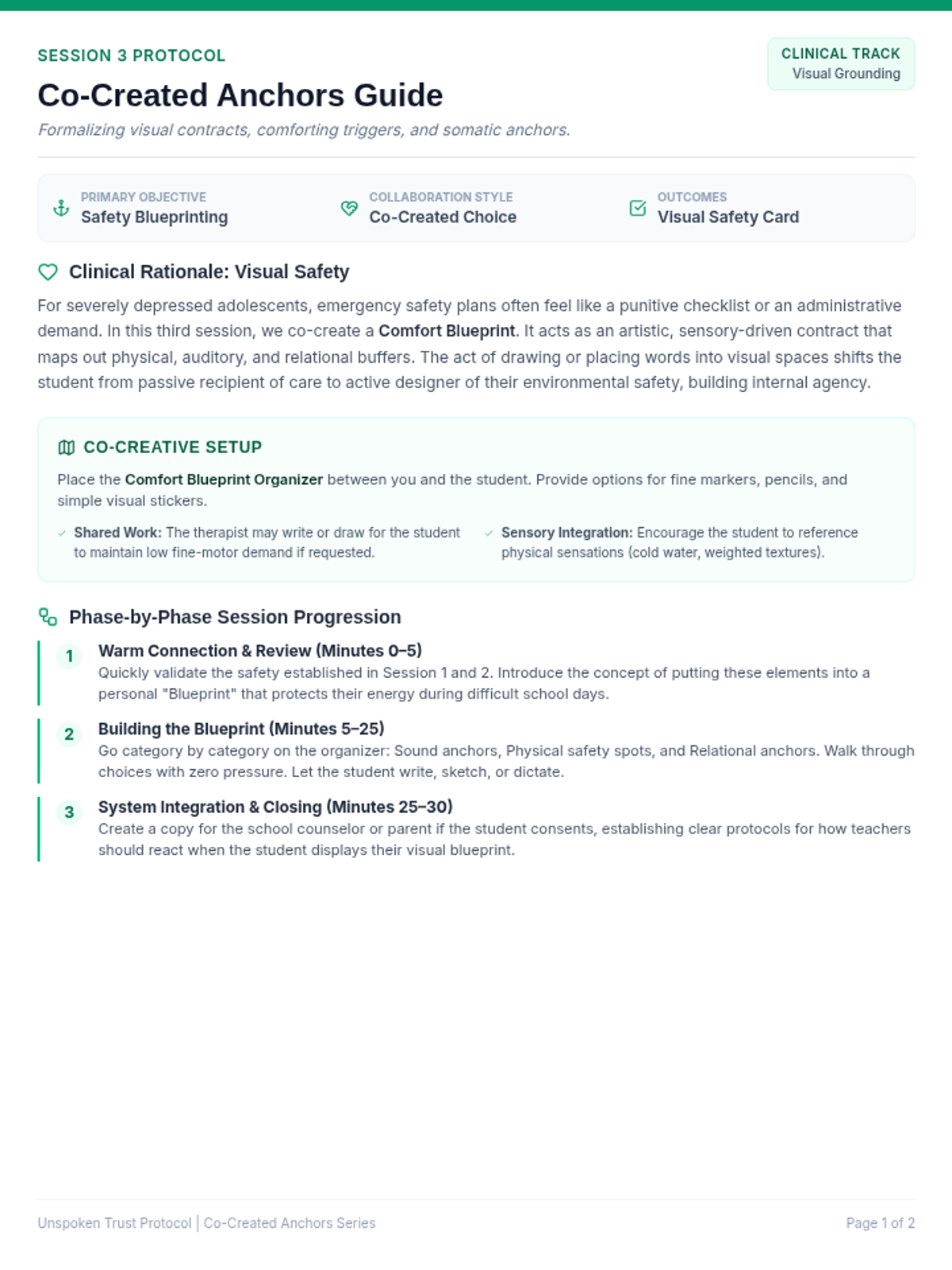
Collaboratively identifies safety signals, grounding mechanisms, and sensory anchors. Translates these into a visual "Comfort Blueprint" contract to provide the student with a sense of control and predictability.
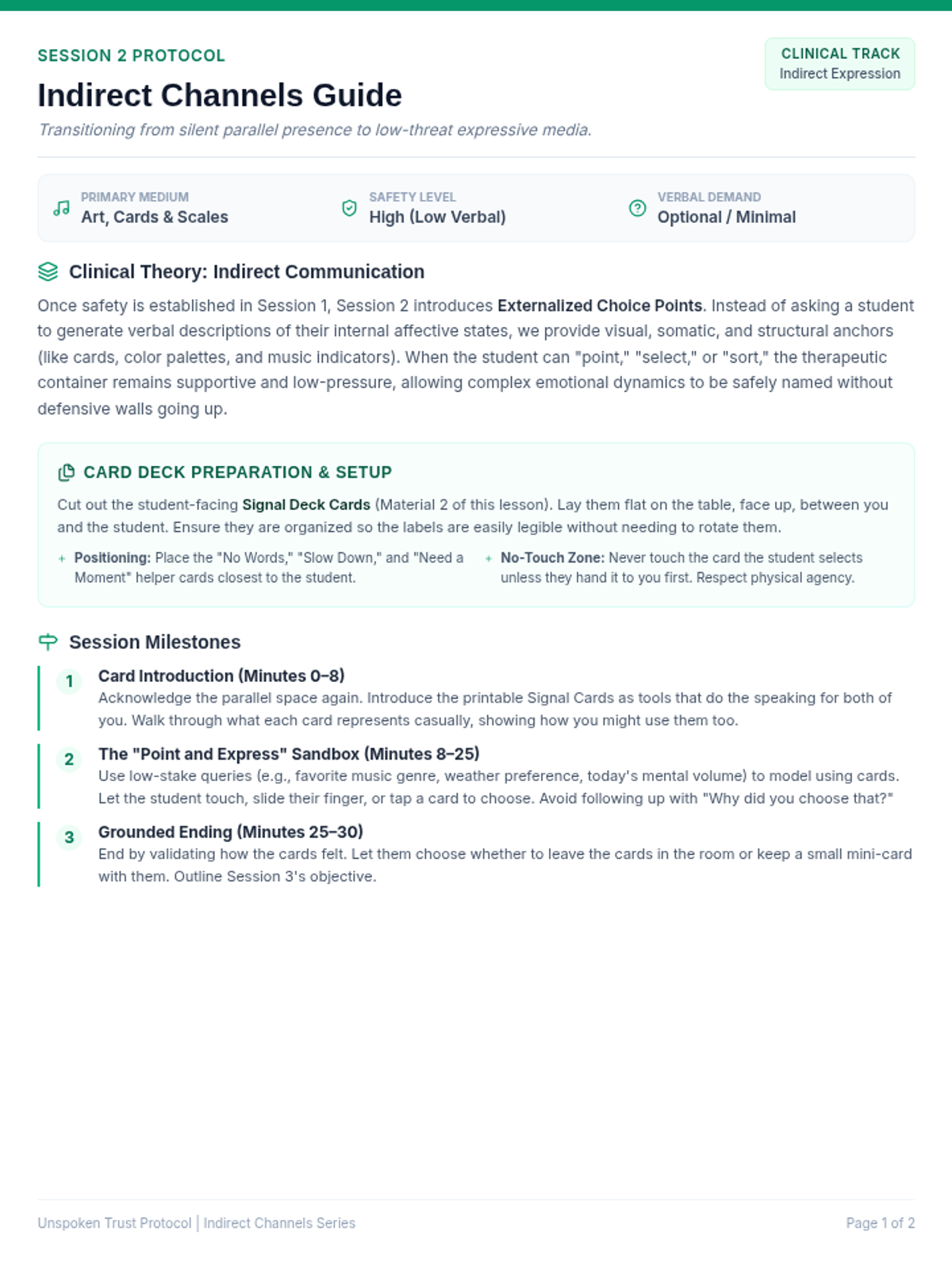
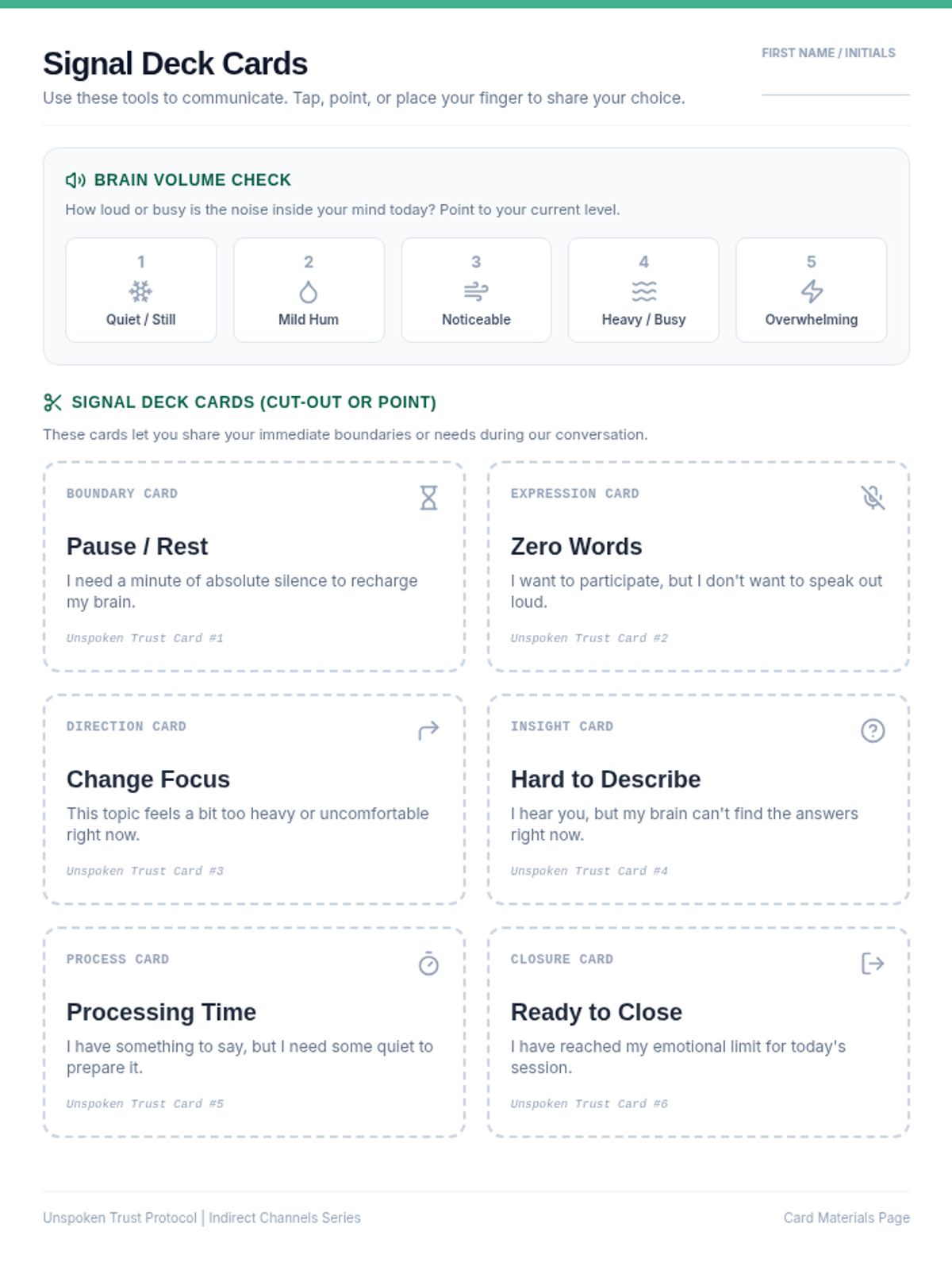
Introduces low-risk communication options that bypass direct face-to-face dialogue. Focuses on visual tools, somatic signaling, and music/art selection as safe expressive media.
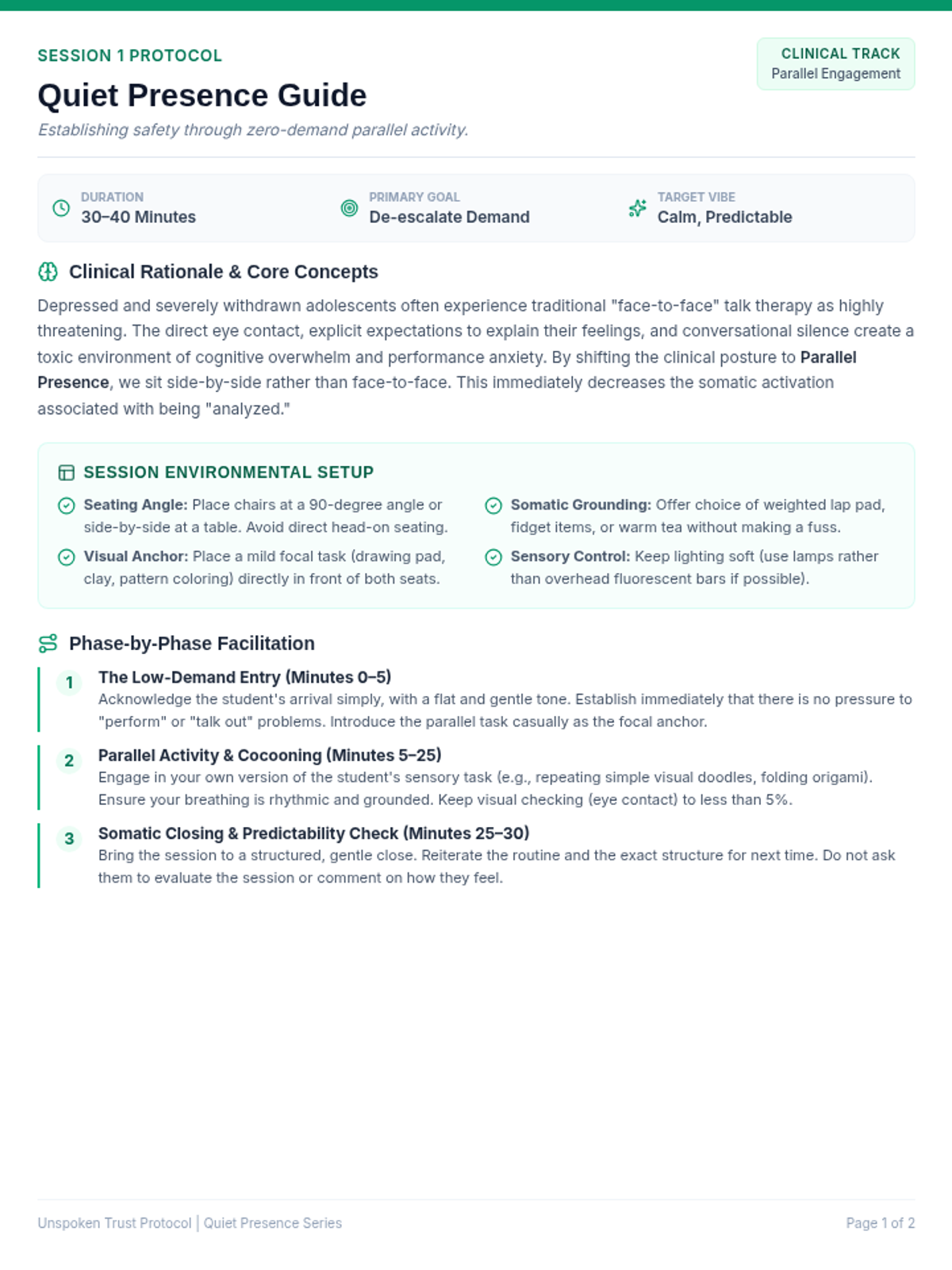
Establishes a zero-pressure physical and emotional space where the student feels no demand to speak. Focuses on parallel activity, clear non-verbal boundaries, and sensory regulation.
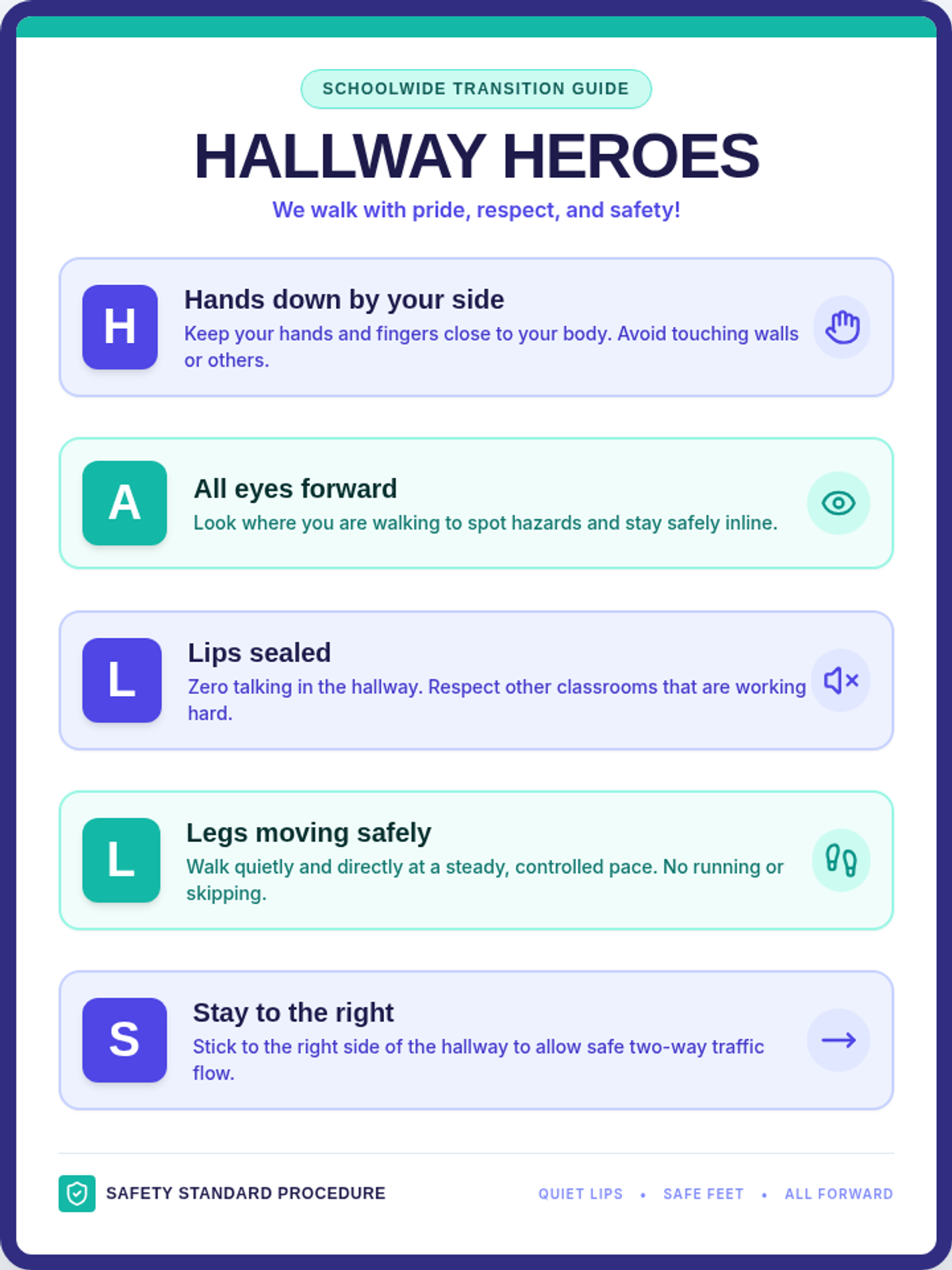
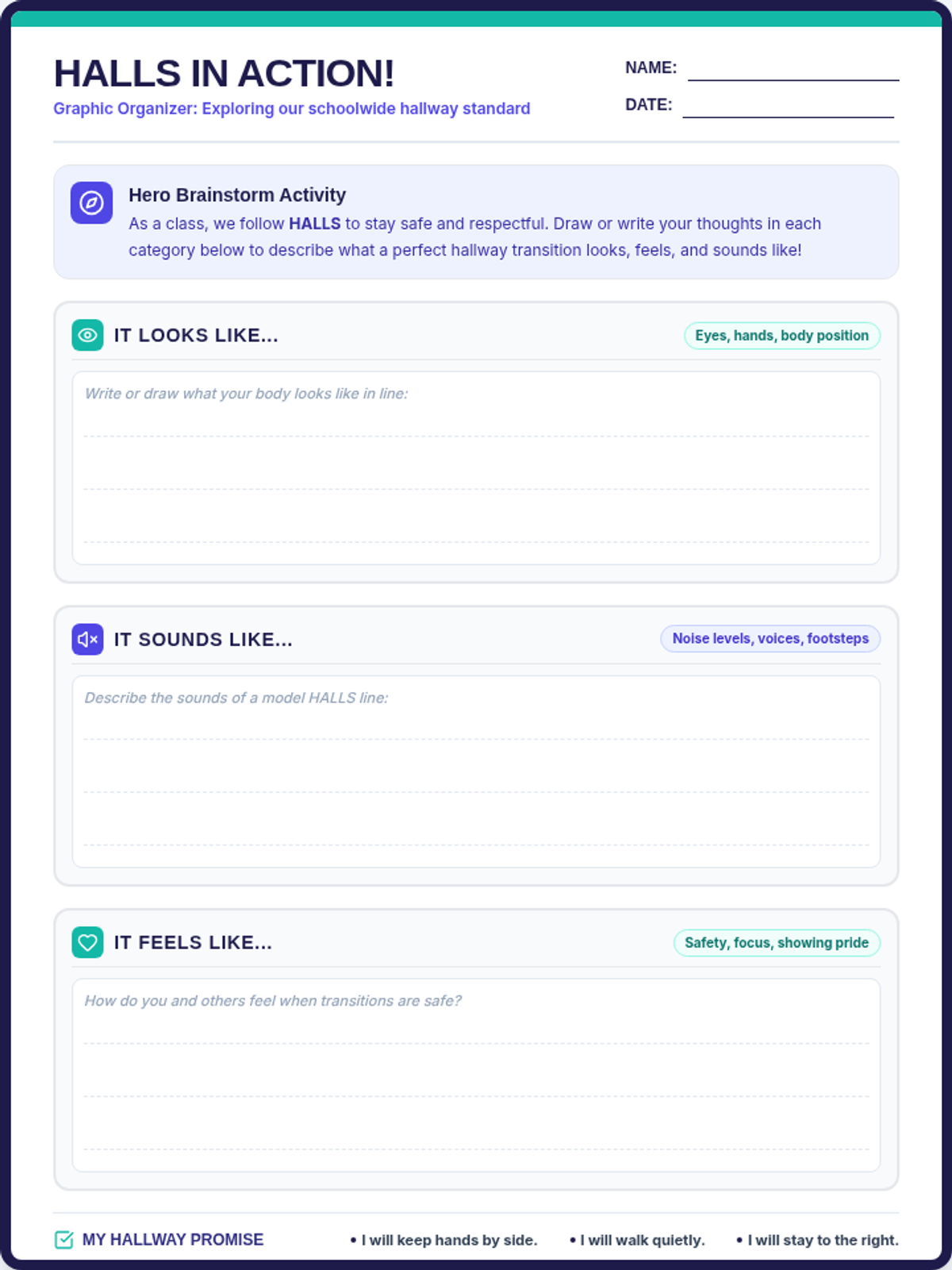
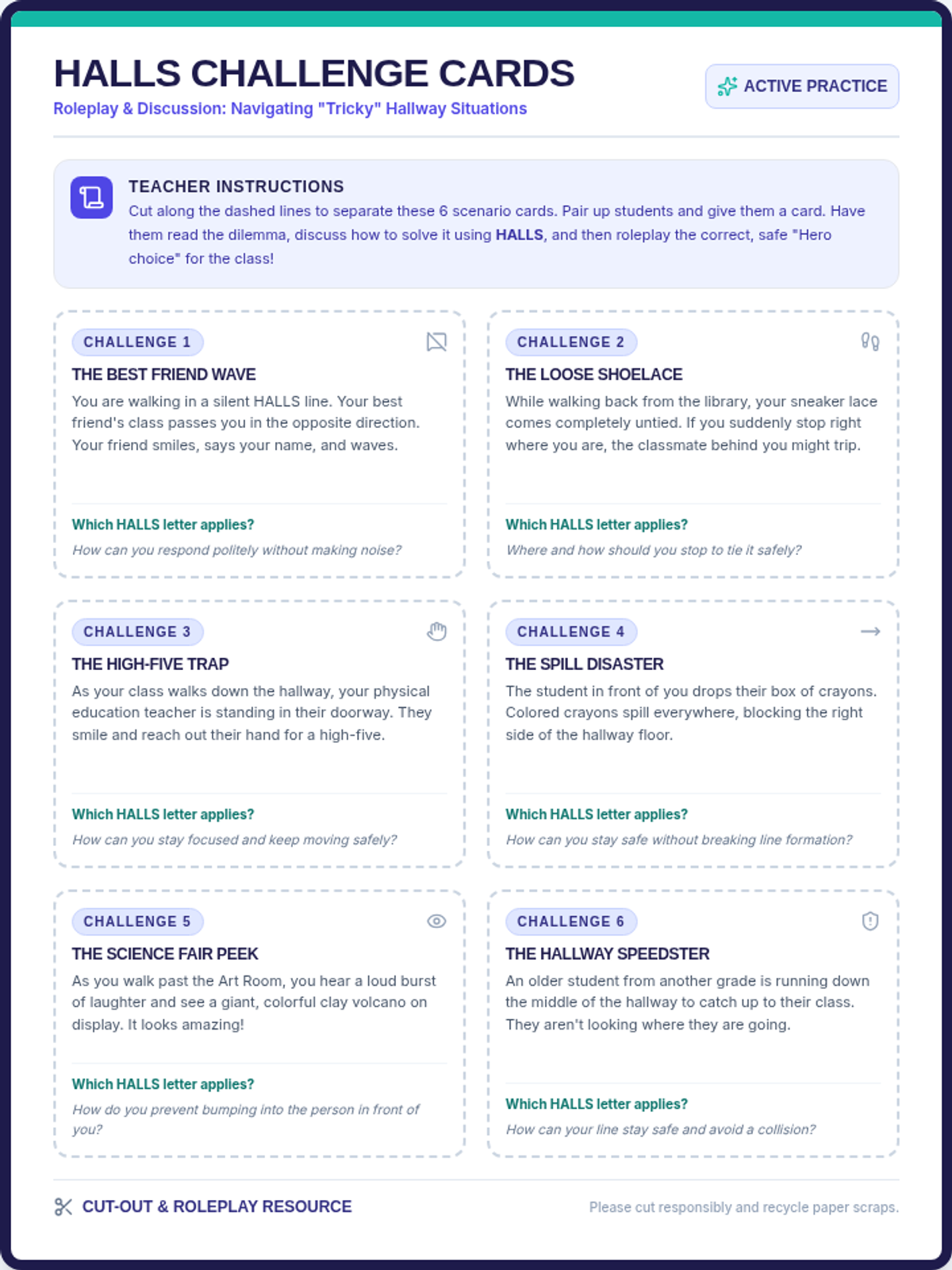
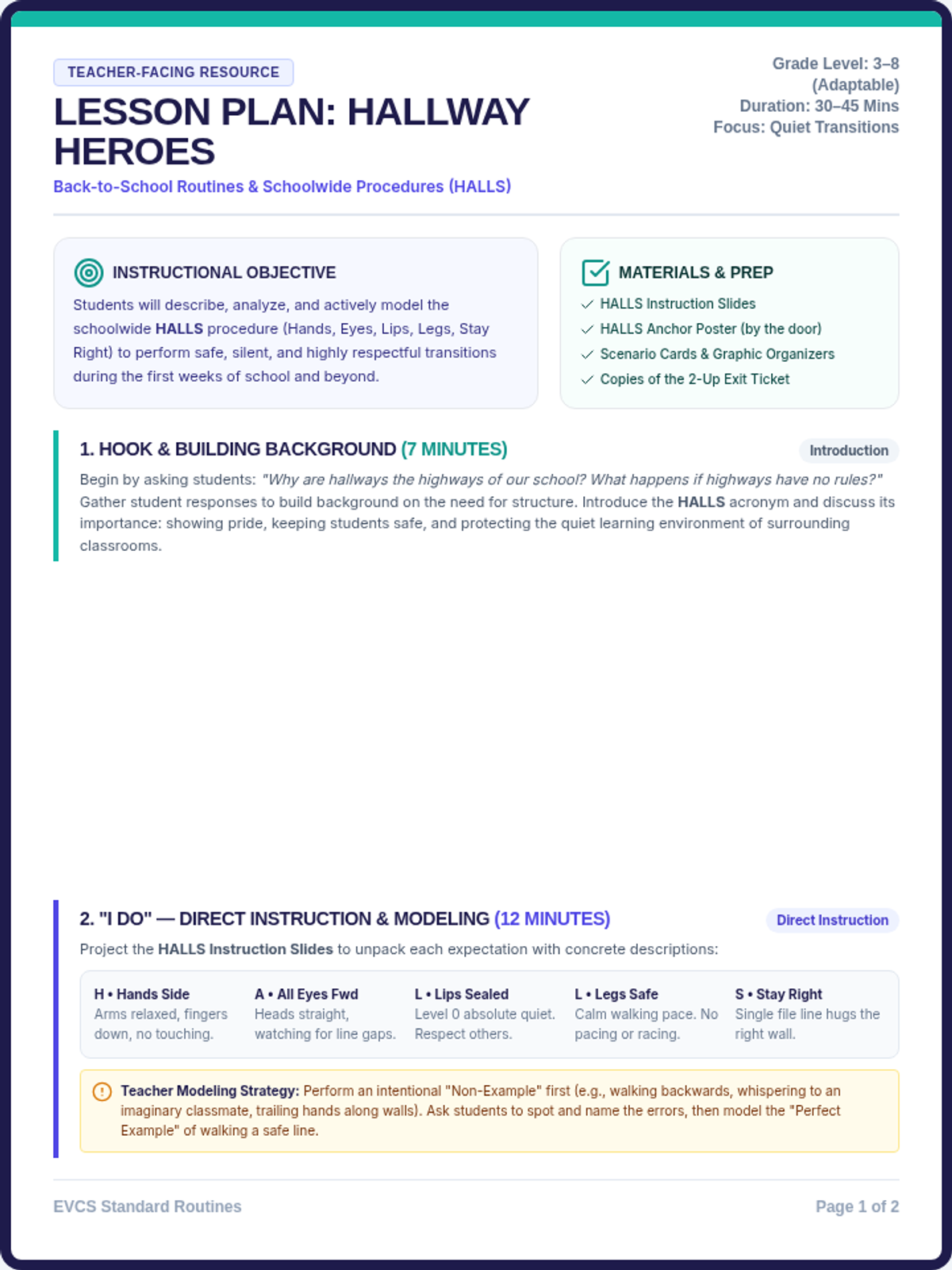
A beginning-of-the-year lesson teaching students the schoolwide HALLS procedure for safe and respectful hallway transitions. This lesson covers explicit teacher modeling, interactive student roleplay, and self-assessment of the HALLS expectations.