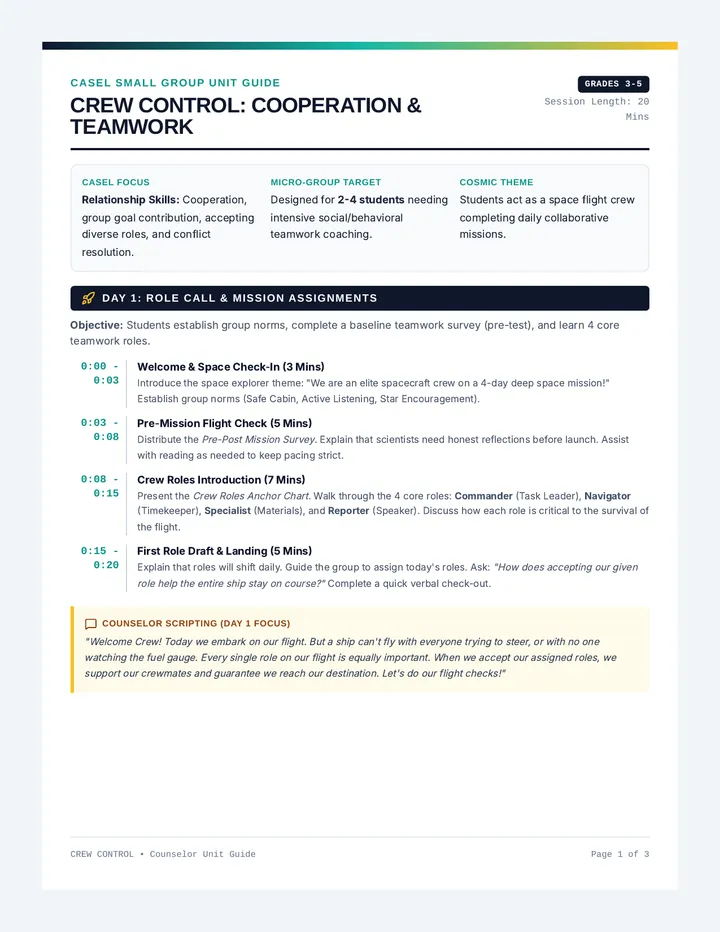
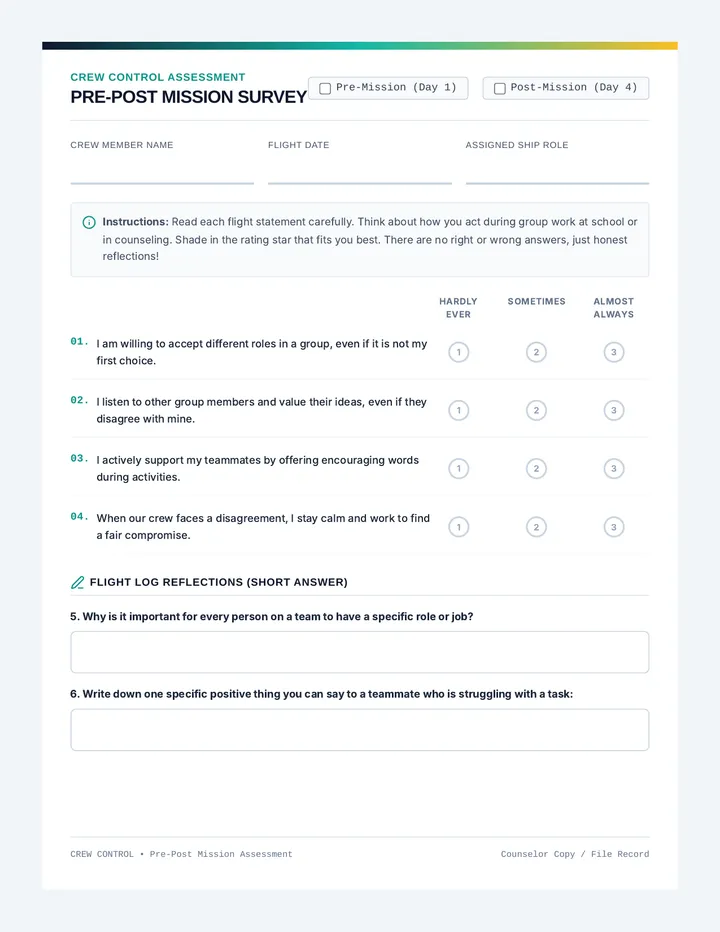
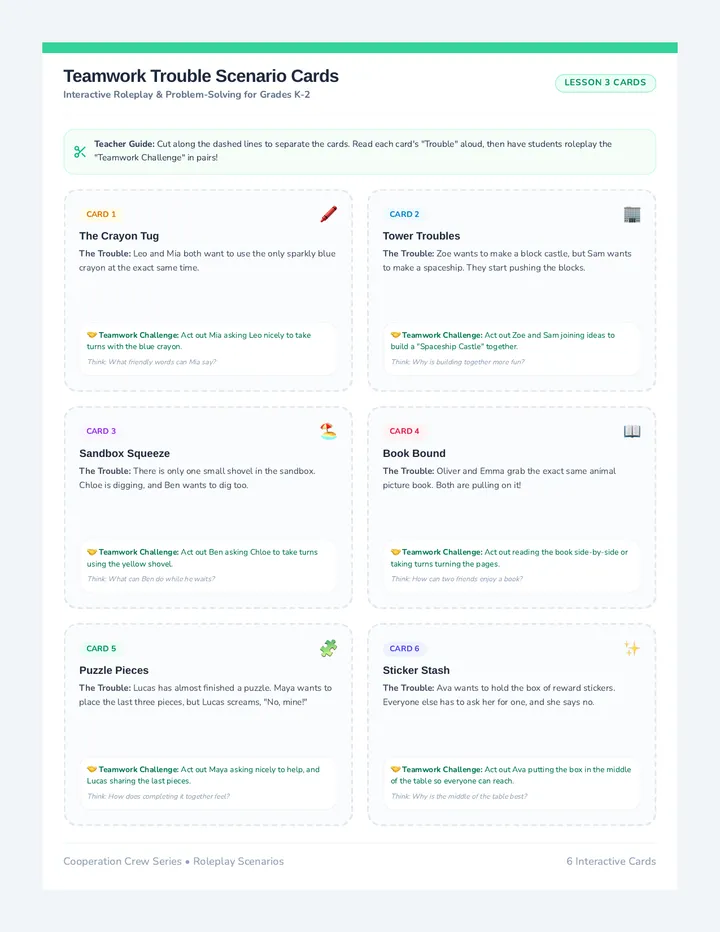
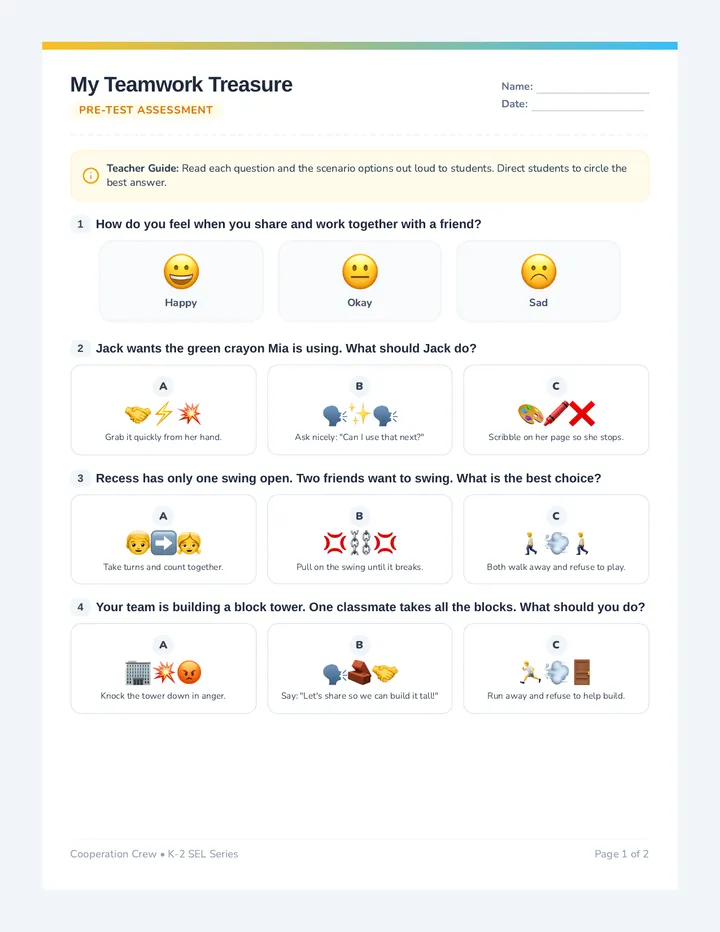
Weather Art Lesson Plan
A lesson plan for 3rd-grade teachers focusing on weather as a metaphor for emotions. Includes instructional steps for a guided art activity that connects environmental observation with internal self-awareness.
Weather Art Slide Deck
A bright and engaging slide deck for 3rd-grade students. It uses weather metaphors to teach emotional expression through art elements (color, line, shape). Features clear, simple instructions and vibrant visuals.
Weather Feelings Art Guide
A student planning guide for the Weather Art project. Helps 3rd-grade students organize their ideas about weather types, associated feelings, and artistic choices (color, line, shape) before creating their final piece.
Discussion Art & Our Weather Feelings
A set of discussion prompts for teachers to lead a class debrief after the Weather Art project. Focuses on individual artistic choices and the diversity of emotional responses to the environment.
Cool Down My Art Mood
A printable cool-down reflection slip for the Weather Art lesson. Students record their final emotional state using a symbol or color.