Students are introduced to the Pomodoro technique and other time-boxing methods. They practice working in focused bursts with structured breaks designed to replenish cognitive resources without creating attention residue.

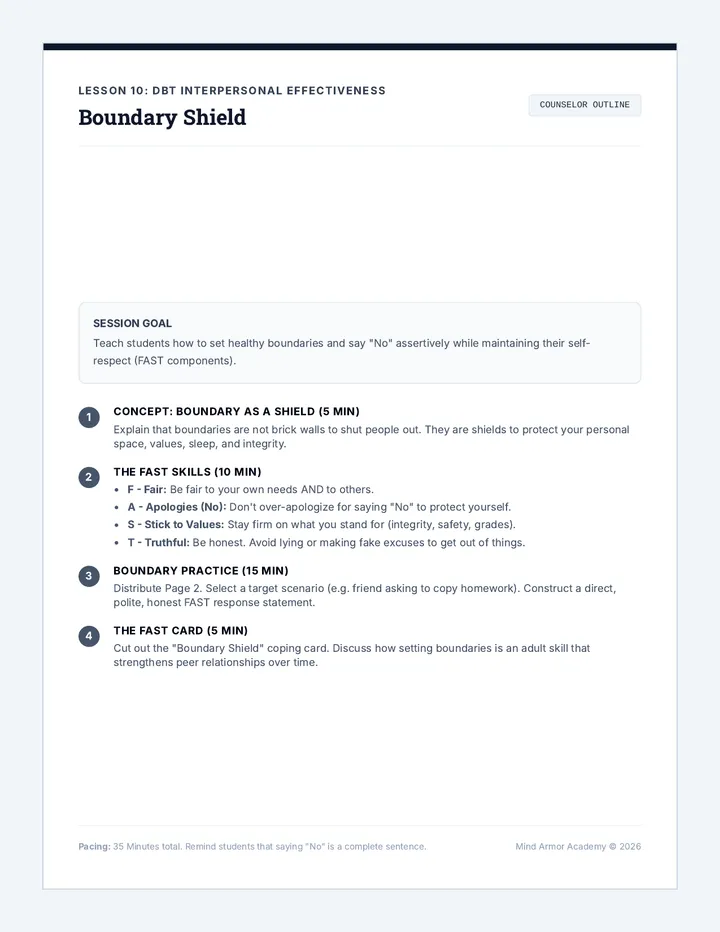
A comprehensive workshop for high schoolers to define personal space and communication needs before summer, using scenario analysis and boundary-setting scripts to protect mental energy.
A foundational digital literacy intervention designed for SLIFE students to master essential school platforms like Canvas, ClassLink, and school email. This lesson includes a diagnostic screener, instructional slides, and a progress-tracking passport for students.
Students explore a futuristic high school hallway and tech lab to identify 'glitches' in social communication. They learn to decode body language and facial expressions in complex social situations.
A lesson for middle schoolers on the art of professional email communication, focusing on scheduling meetings with clarity and courtesy.
Students will learn to identify and highlight essential information in job-related texts like resumes and job postings using specific scanning and self-monitoring strategies.
A comprehensive lesson on self-regulation where students identify stress triggers and build a personalized toolkit of mindfulness and grounding strategies.
A comprehensive lesson on professional and academic email etiquette, featuring scenarios ranging from school help to job applications. Students learn the structure of a formal email and practice writing their own digital correspondence.
A comprehensive guide for high school juniors to navigate the college application process, focusing on self-discovery through YouScience and research through Scoir.
A dynamic conversation game where students practice active listening and non-verbal communication through 'Talker' prompts and 'Listener' challenges. Students learn to recognize and use body language to show they are truly engaged in a conversation.
A lesson designed for high school students to differentiate between appropriate apologies and over-apologizing, featuring social scripts and alternative communication strategies.
A self-reflection follow-up lesson focused on identifying emotional triggers and practicing coping strategies to manage stress and pressure.
This lesson prepares students for the social complexities of workplace feedback, focusing on active listening, de-escalation techniques, and professional growth.
Creating a personalized wellness plan and celebrating the completion of the Mindset Medics training.
Mapping out professional and personal resources, and understanding when and how to involve a trusted adult.
Practicing the skills needed to approach a friend, express concern, and offer support through active listening.
Developing immediate response strategies for crises and understanding the 'ALGEE' action plan (Ask, Listen, Give, Encourage, Encourage).
Teaching students how to spot red flags and warning signs in their peers that might indicate a mental health struggle.
Exploring the difference between sadness and depression, and how to identify when 'the blues' become something more serious.
Identifying the physical and emotional signs of stress and anxiety, and learning basic grounding techniques.
Introduction to the group, establishing norms, and defining the role of a 'Mindset Medic' in recognizing mental health needs.
Students learn practical budgeting skills for college life and analyze the long-term financial implications of different educational and career choices.
An introduction to the complex world of college financing, focusing on financial aid terminology, types of aid, and understanding the total cost of attendance.
Students explore their personal values, strengths, and interests to identify career paths that align with their authentic selves.
A restorative lesson designed to help students understand the importance of staying awake and engaged in class, focusing on personal success and classroom community respect.