A practical, direct program for fathers to build empathy, reduce conflict defensiveness, and see home interactions through their child's perspective. It includes a workbook, facilitator guide, and take-home tools.
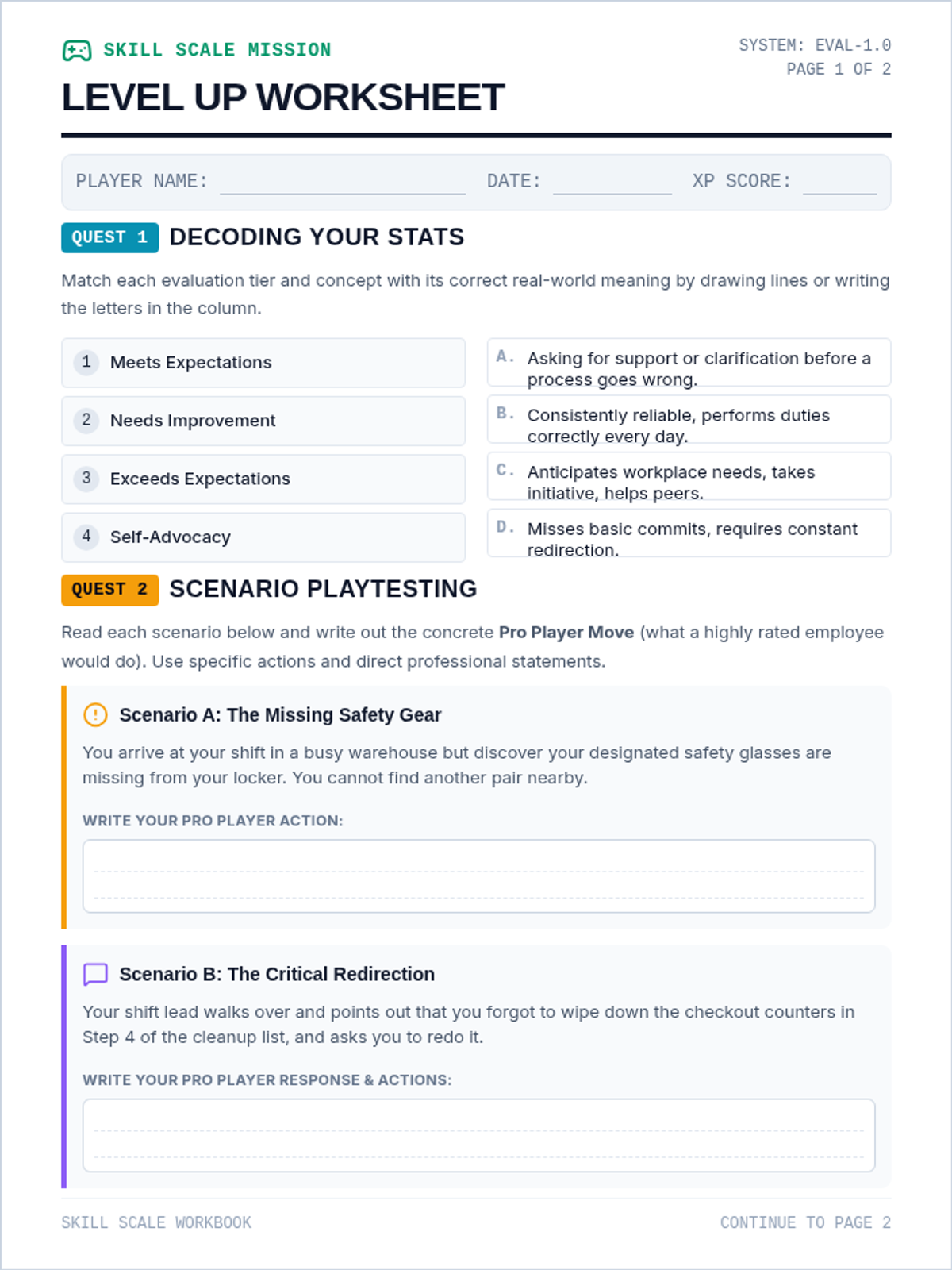
A foundational lesson introducing students to workplace evaluations, soft skills, and constructive feedback. Students learn how to interpret rubrics and use performance feedback as a tool for career advancement.
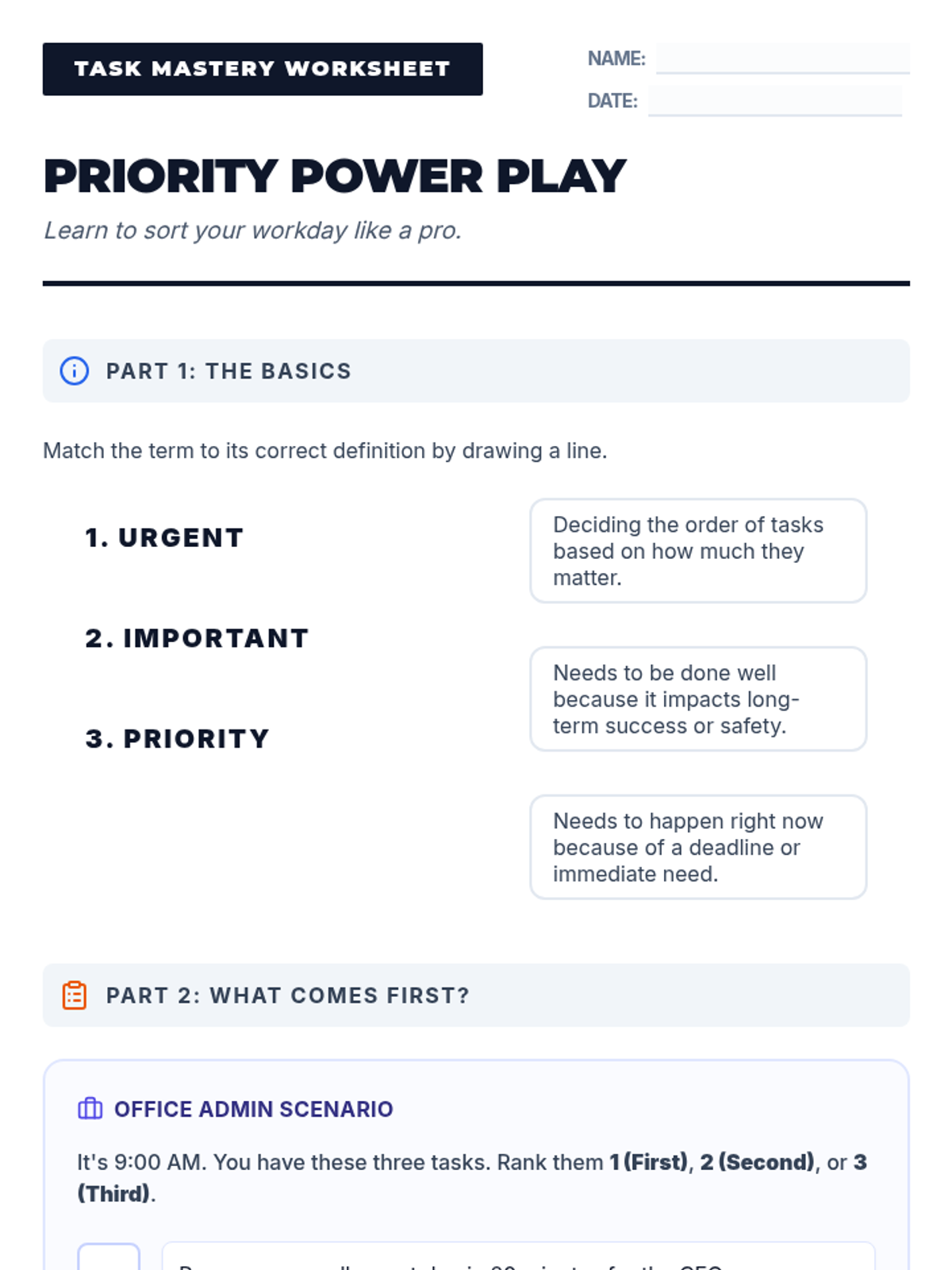
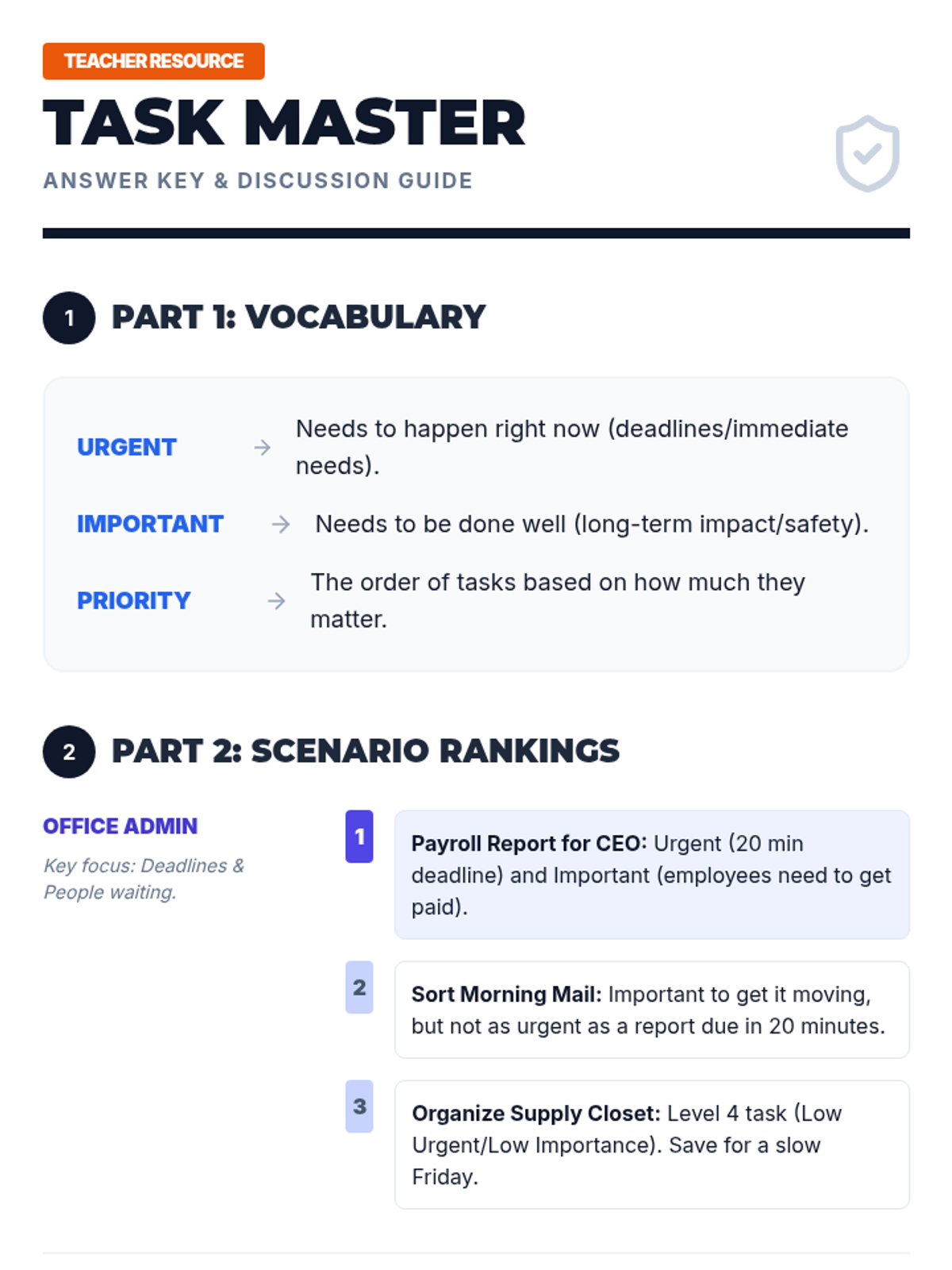
A comprehensive lesson on workplace prioritization and task management across food service, office, and janitorial roles. Students learn to distinguish between urgent and important tasks using real-world scenarios.
A cognitive-behavioral lesson designed to help individuals identify fearful self-talk, expose underlying cognitive distortions, and construct healthy, reality-based alternative narratives. This lesson guides learners through actionable reframing protocols for social anxiety, perfectionism, and worst-case scenarios.
A therapeutic lesson designed for telehealth sessions to guide young adults in managing social anxiety. It teaches emotion labeling, grounding, deep breathing, cognitive reframing, and structured role-play.
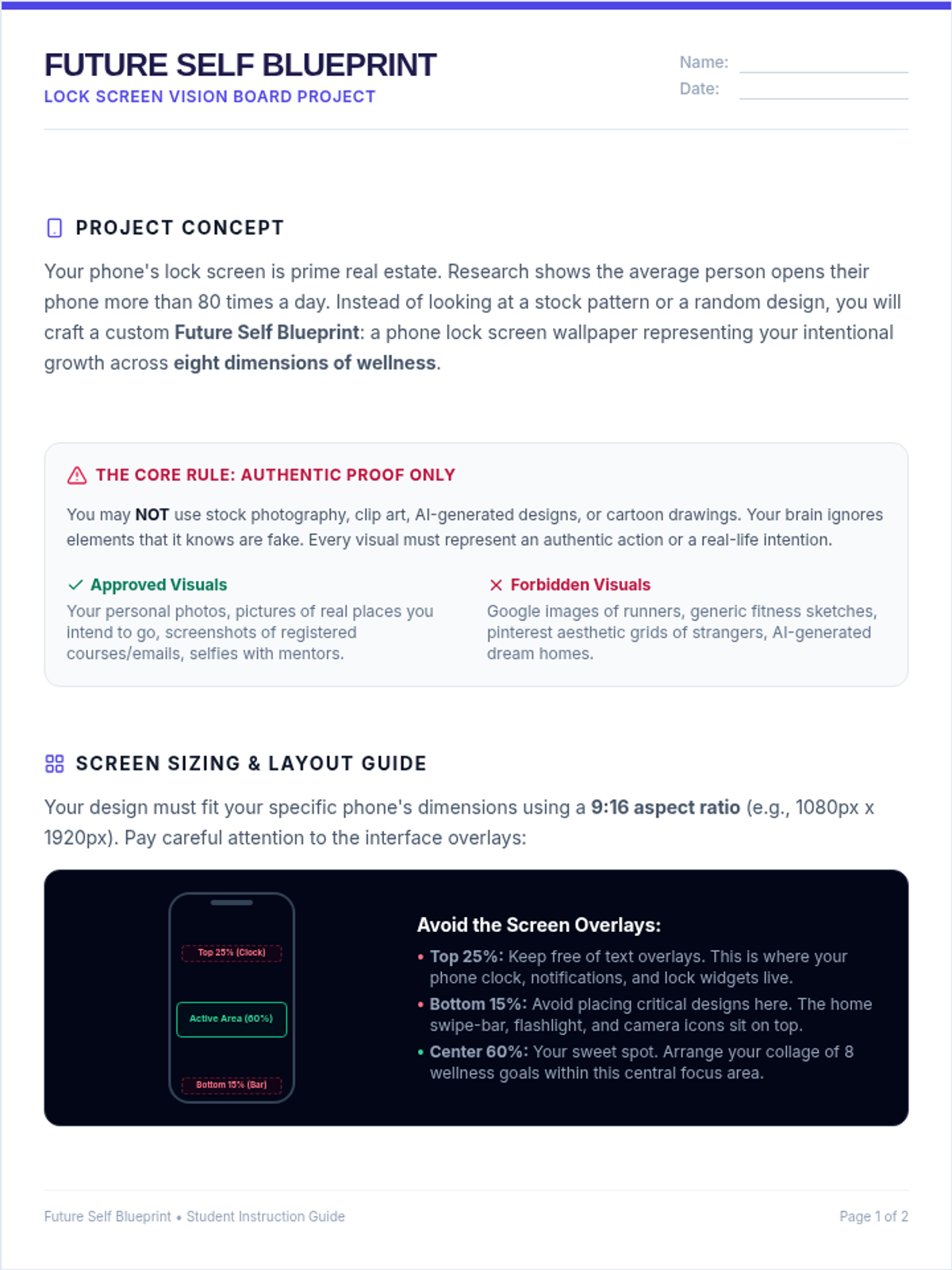
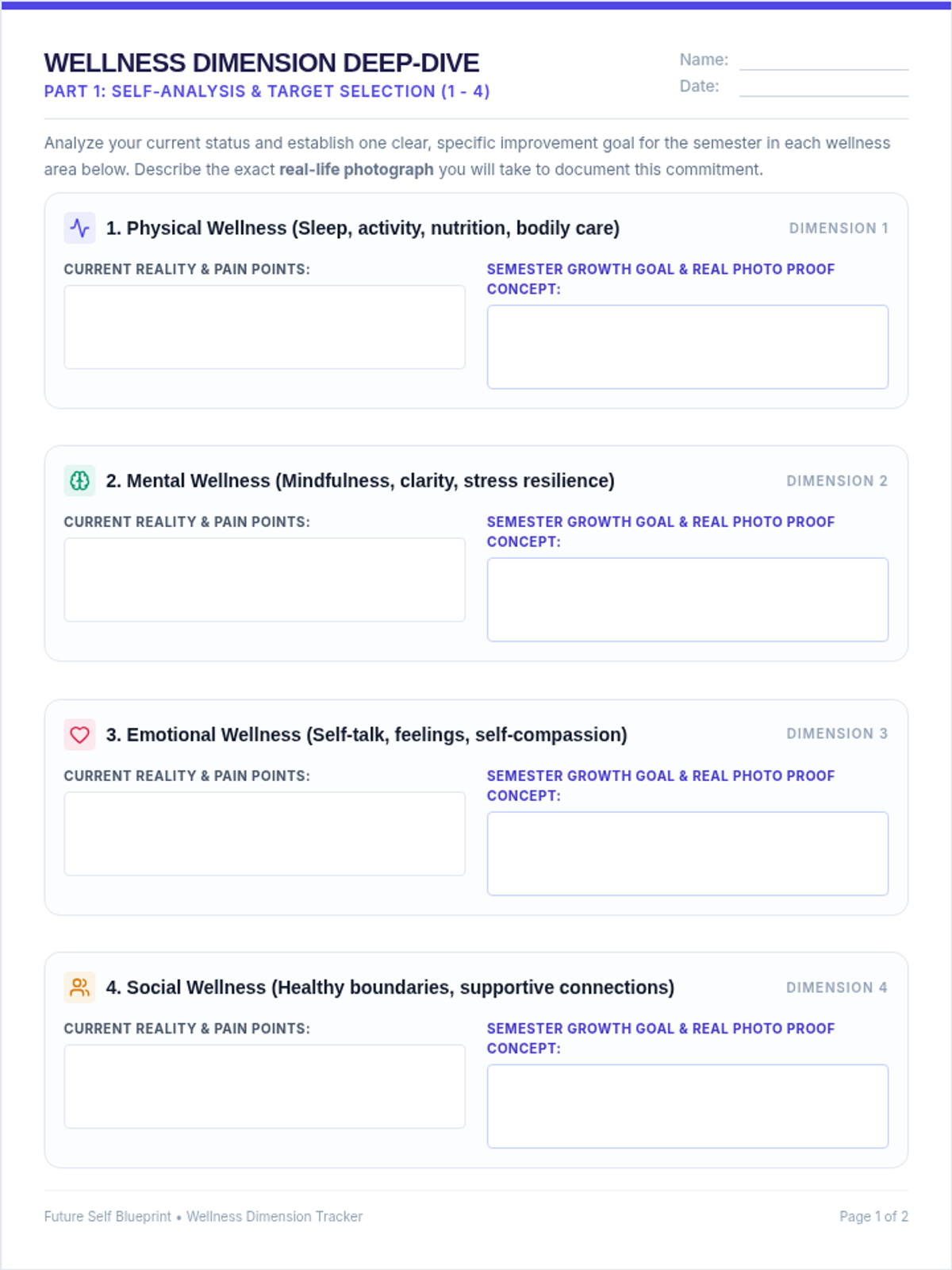
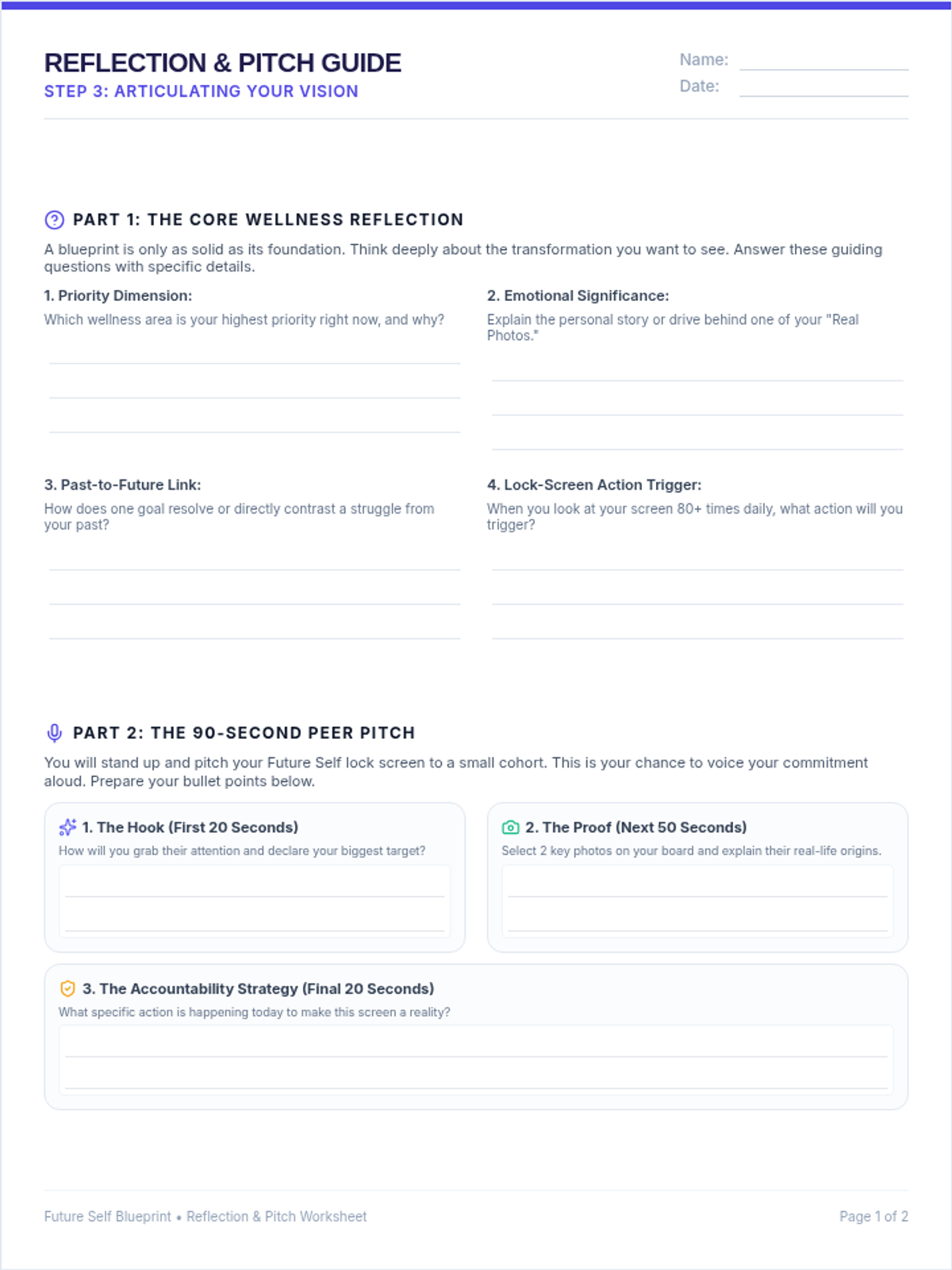
A final project lesson where students design a phone screen-saver vision board using authentic, non-stock photography to document their growth across eight dimensions of wellness. Includes introduction slides, planning worksheets, brainstorming organizers, and evaluation rubrics.
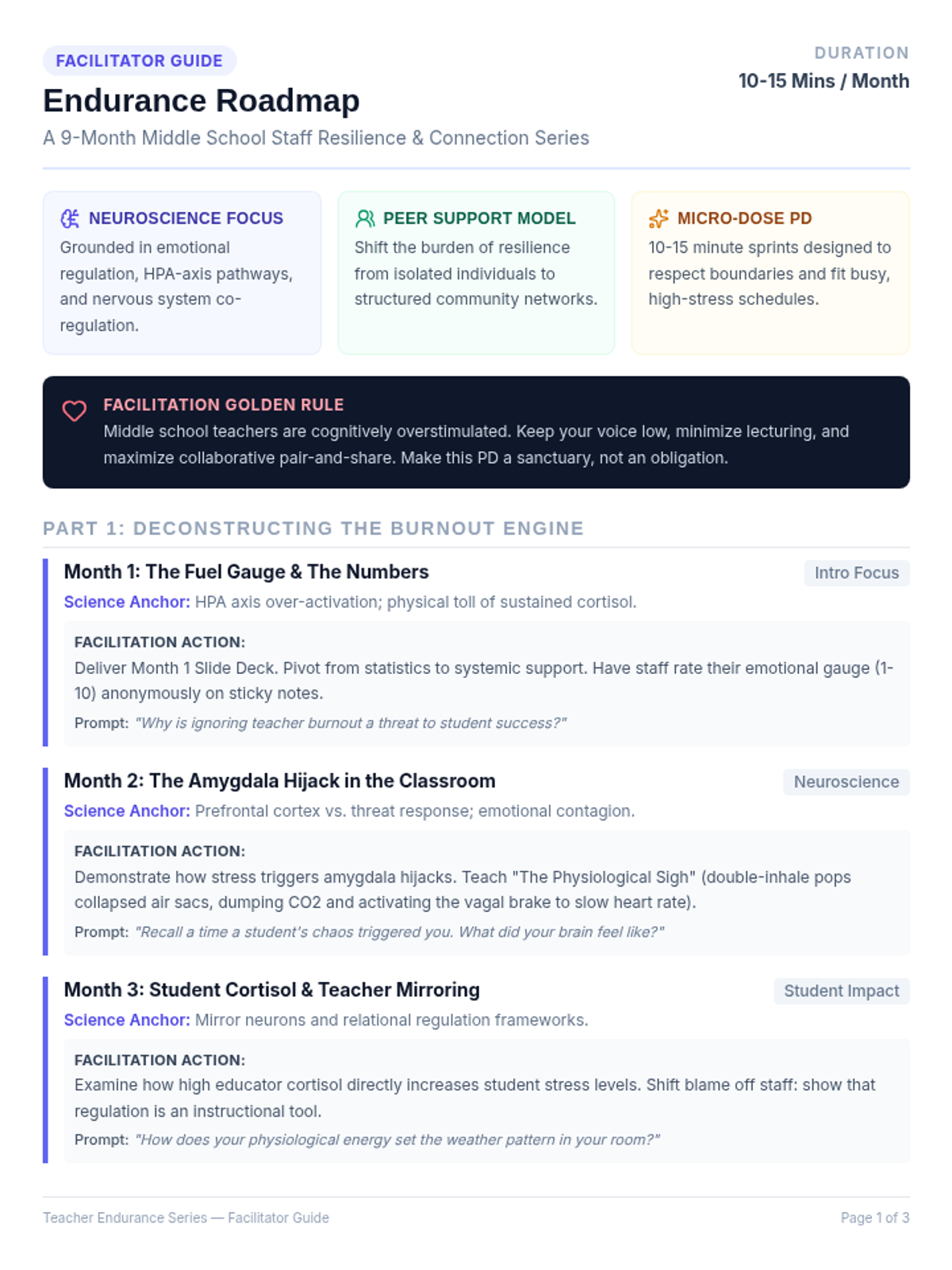
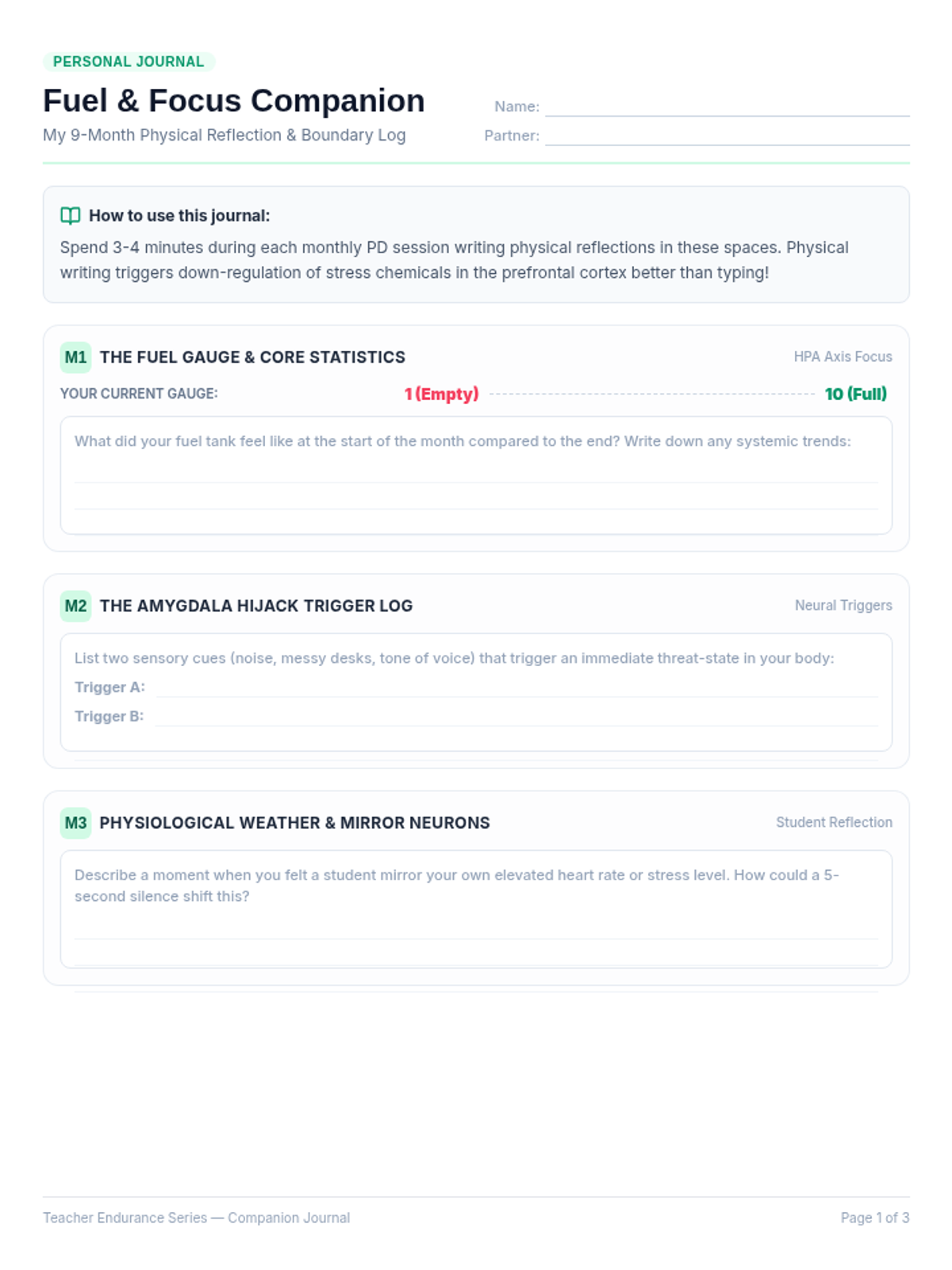
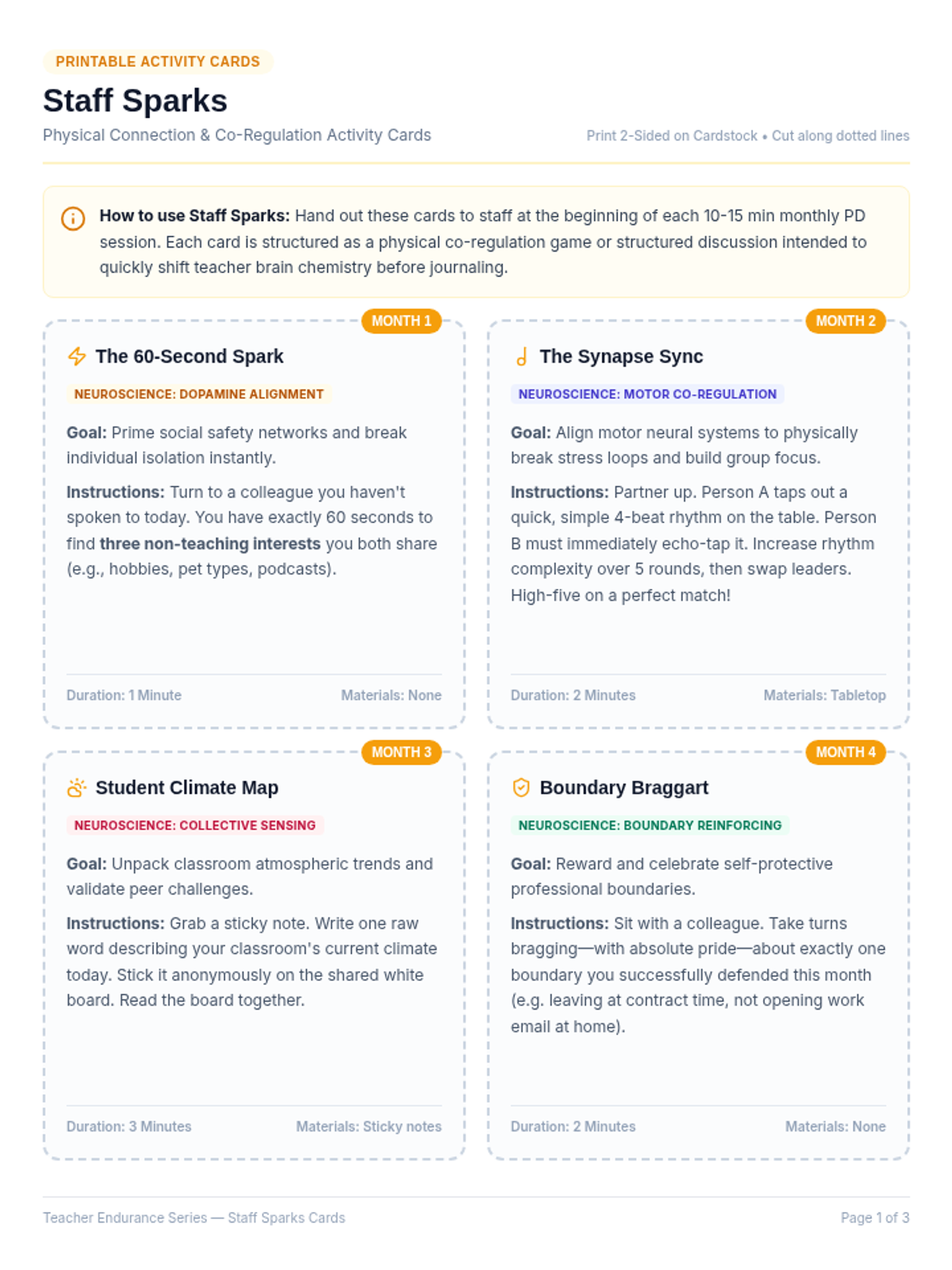
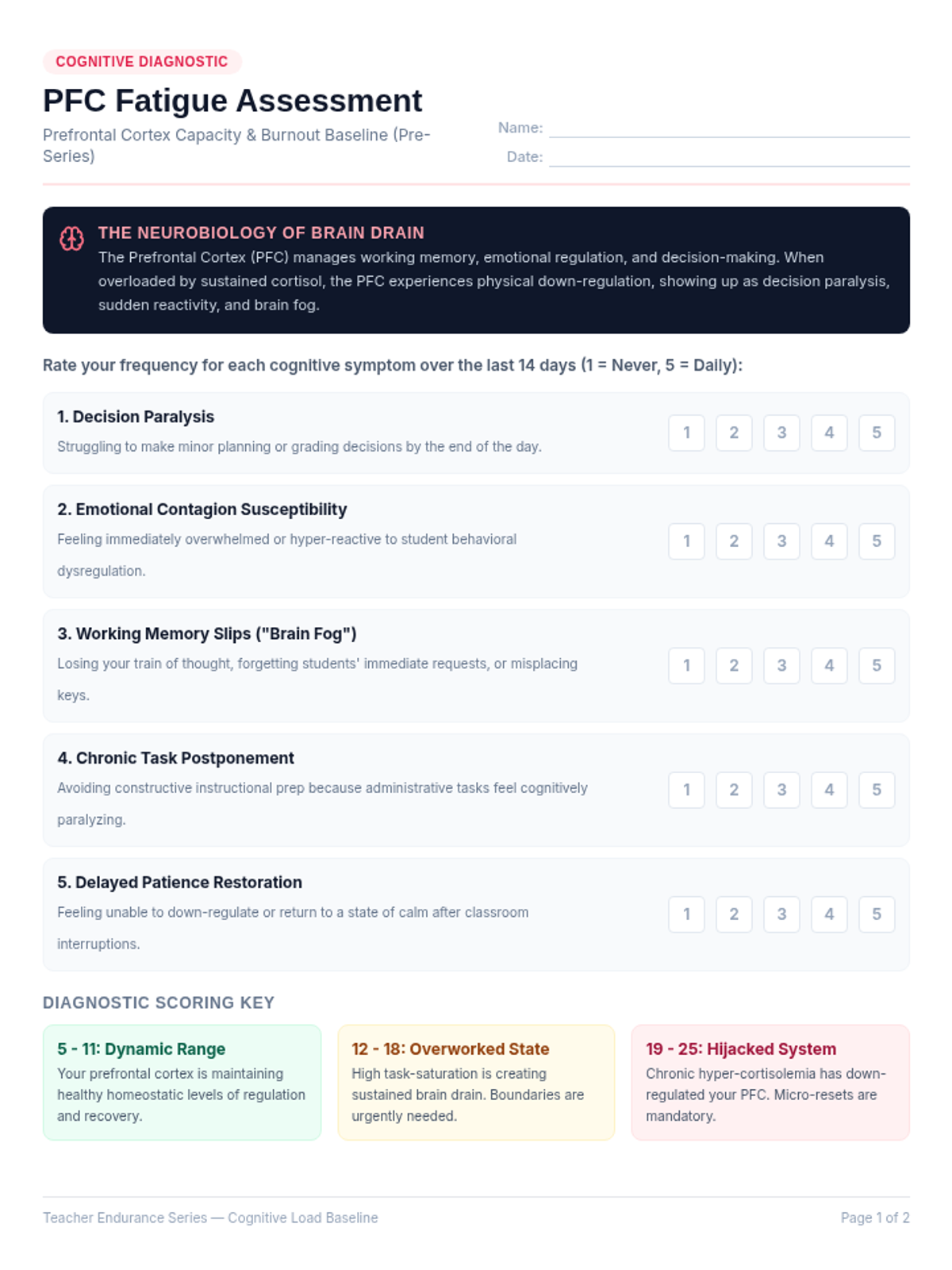
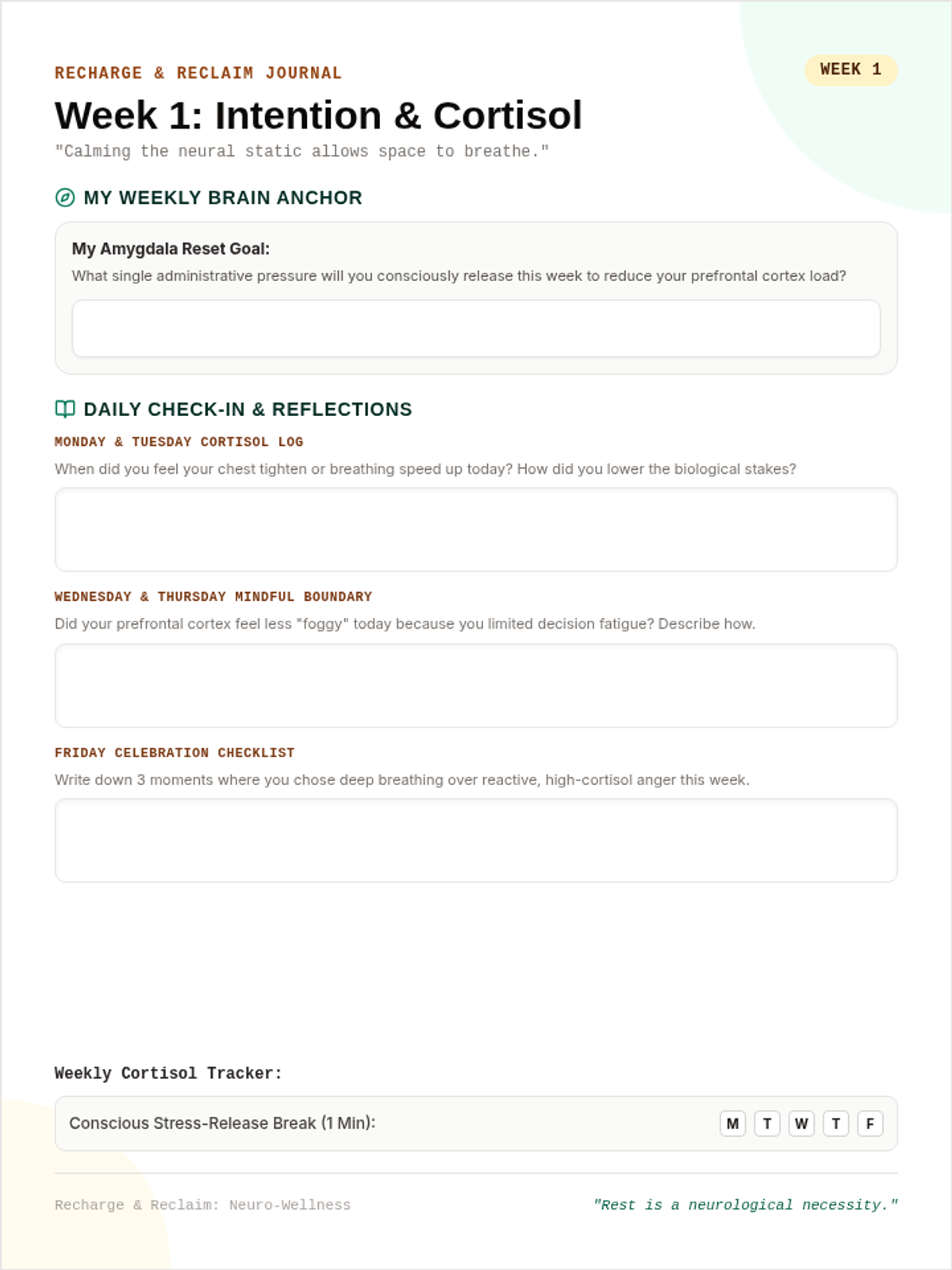
A comprehensive, 9-month professional development series designed to help middle school educators understand the neuroscience of burnout, build resilience, foster peer support, and cultivate practical self-care micro-habits.
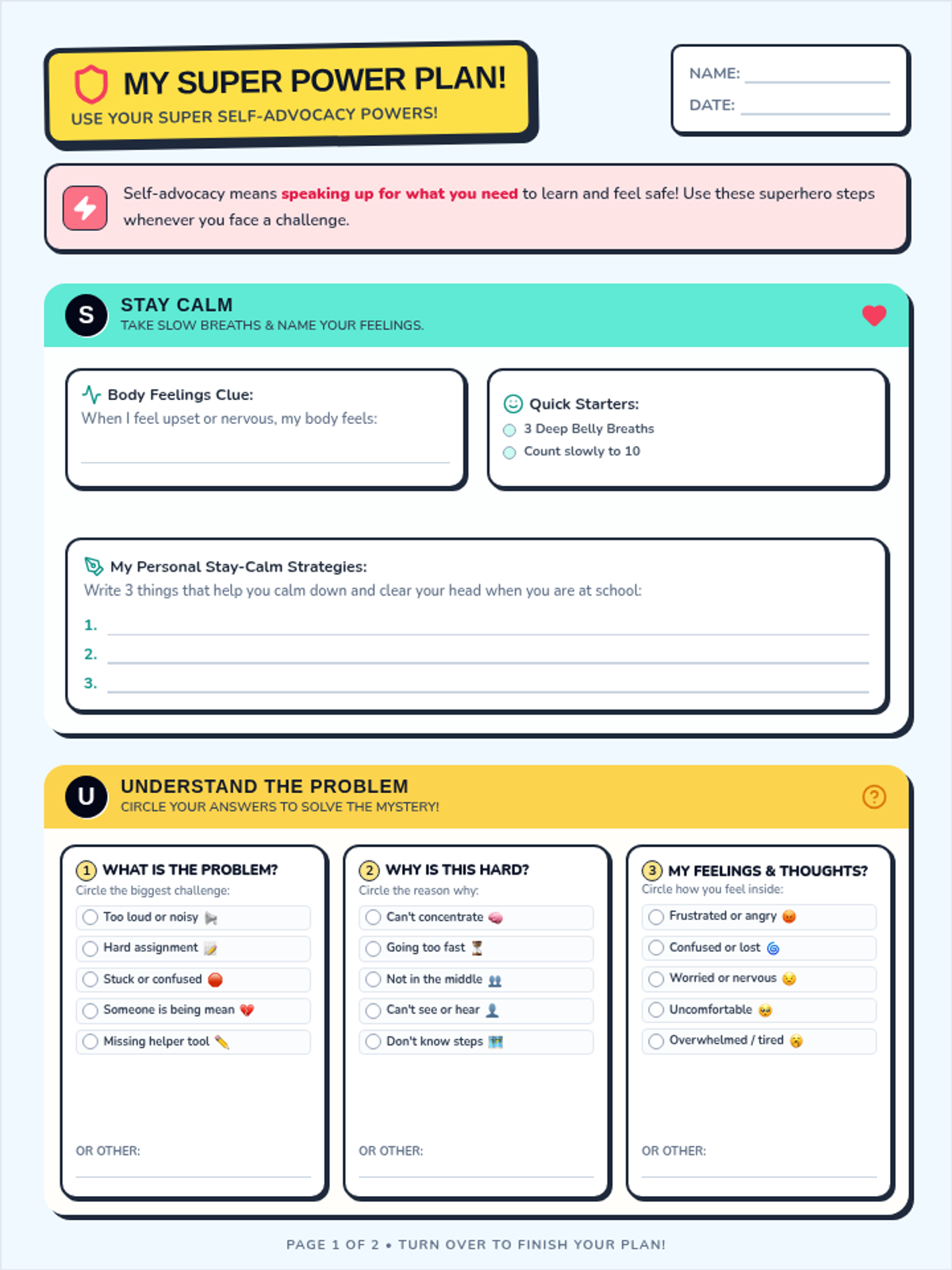
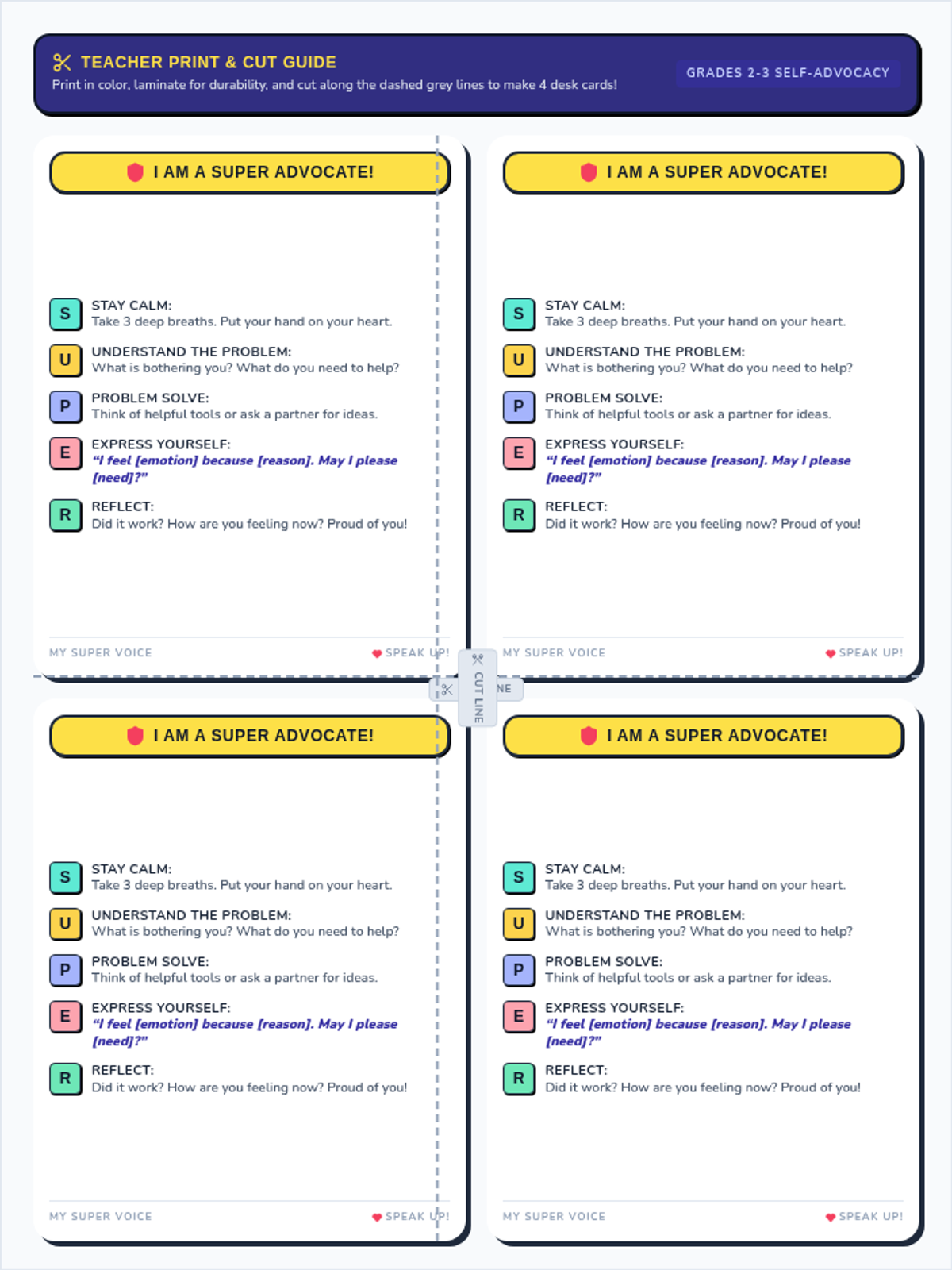
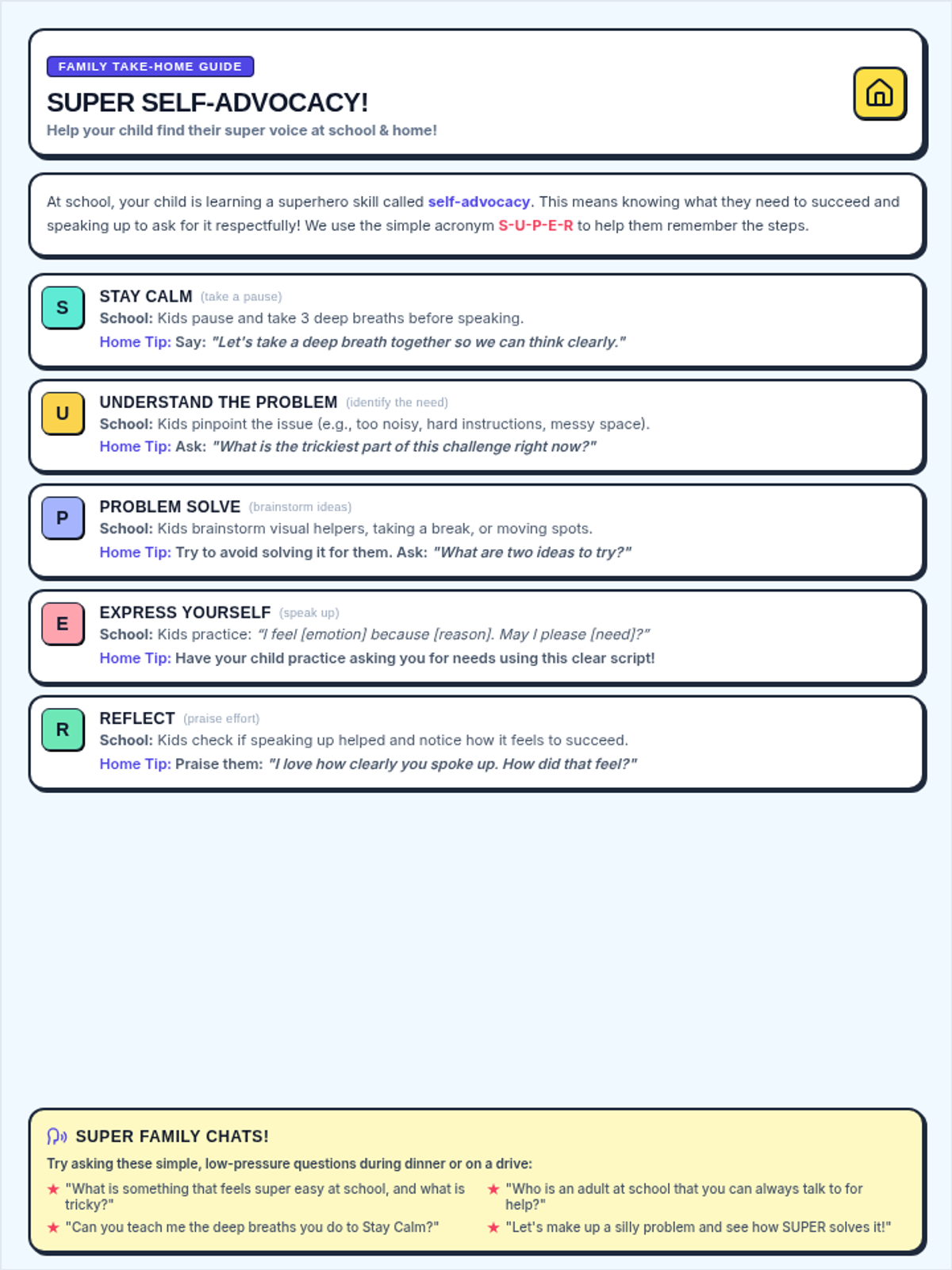
A lesson package focused on teaching middle elementary students (grades 2-3) the SUPER self-advocacy strategy: Stay Calm, Understand, Problem Solve, Express, and Reflect. It includes a student-facing comic-themed graphic organizer, a printable desktop anchor chart, and a take-home parent flyer.
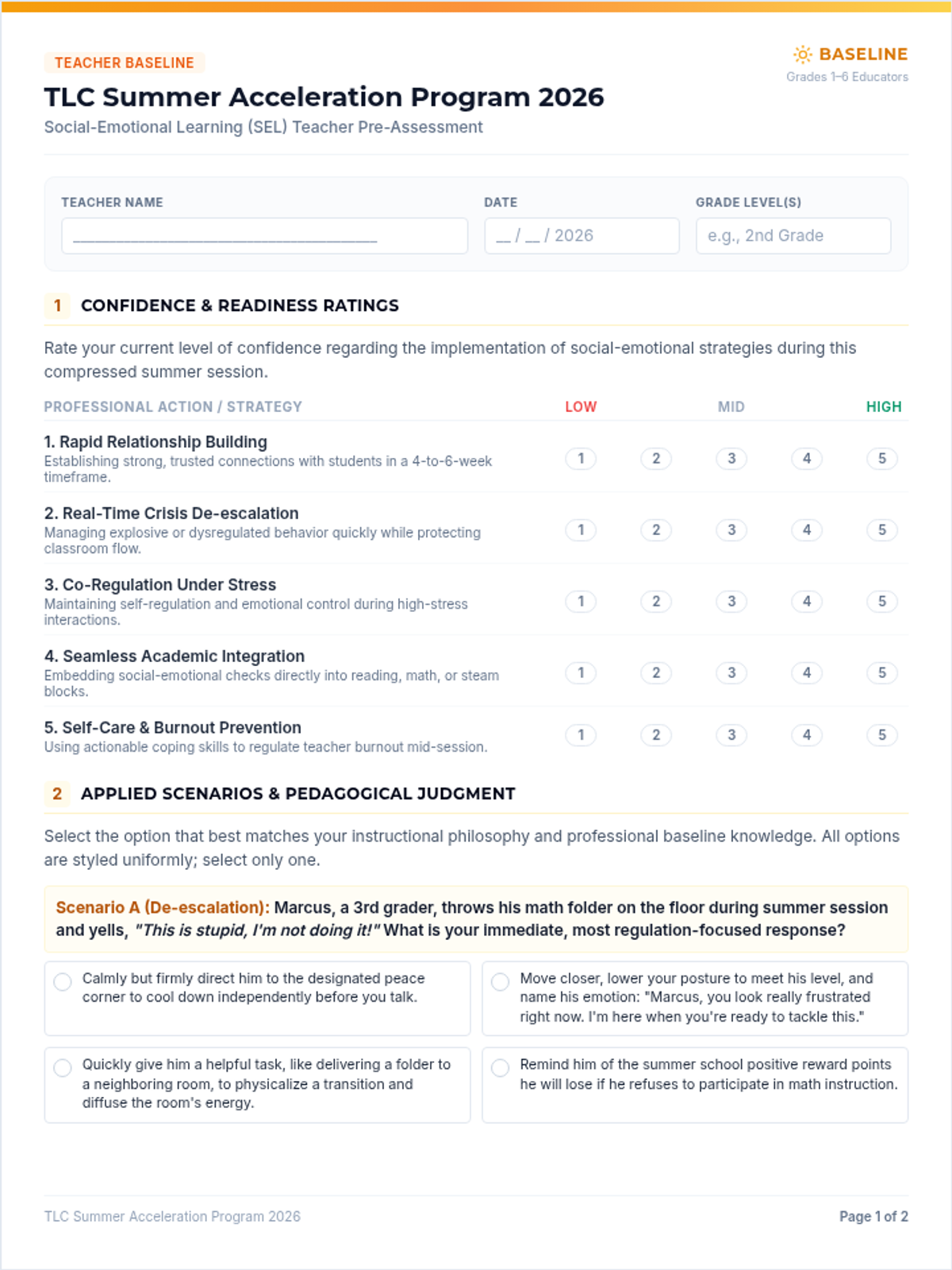
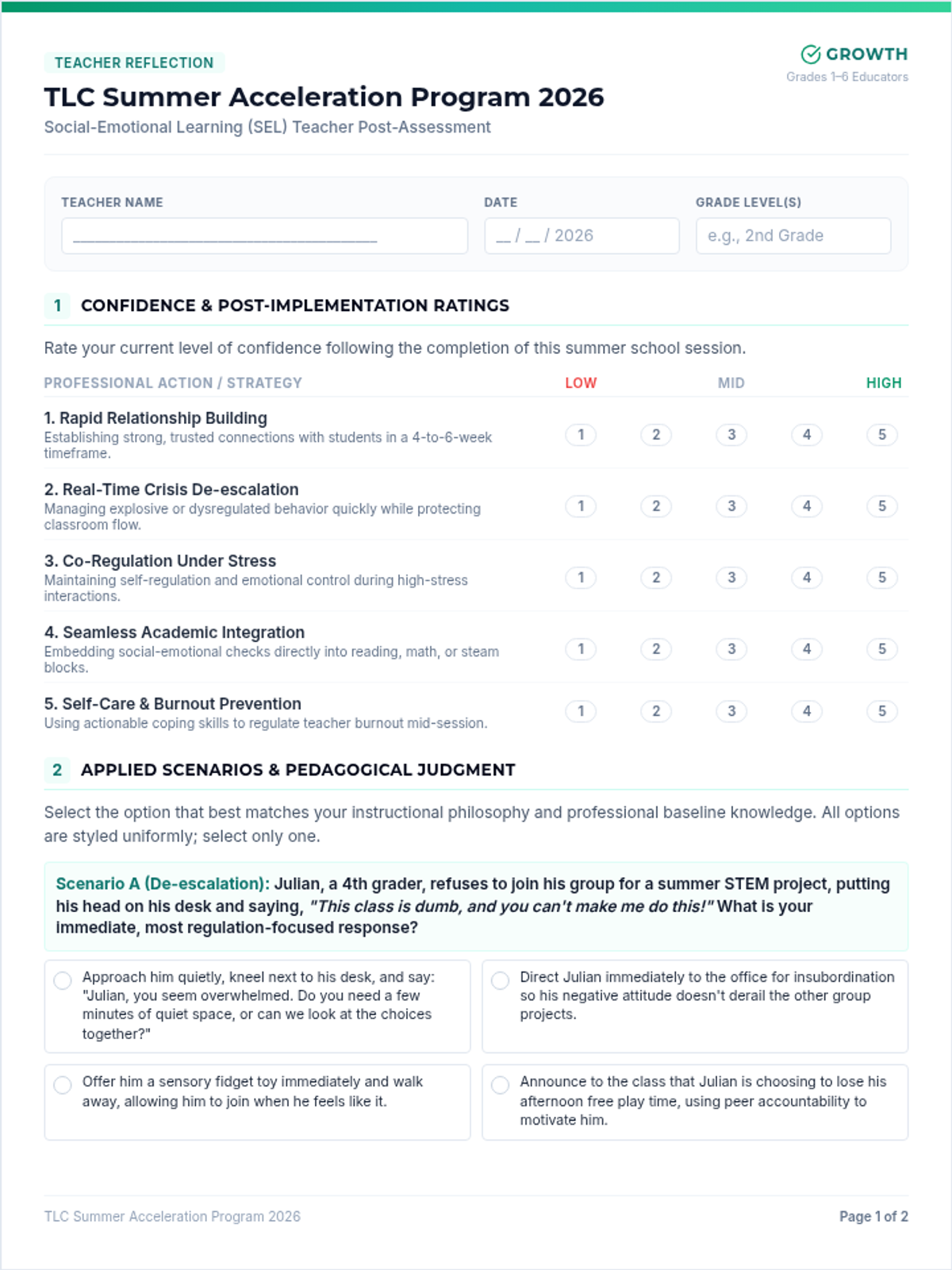
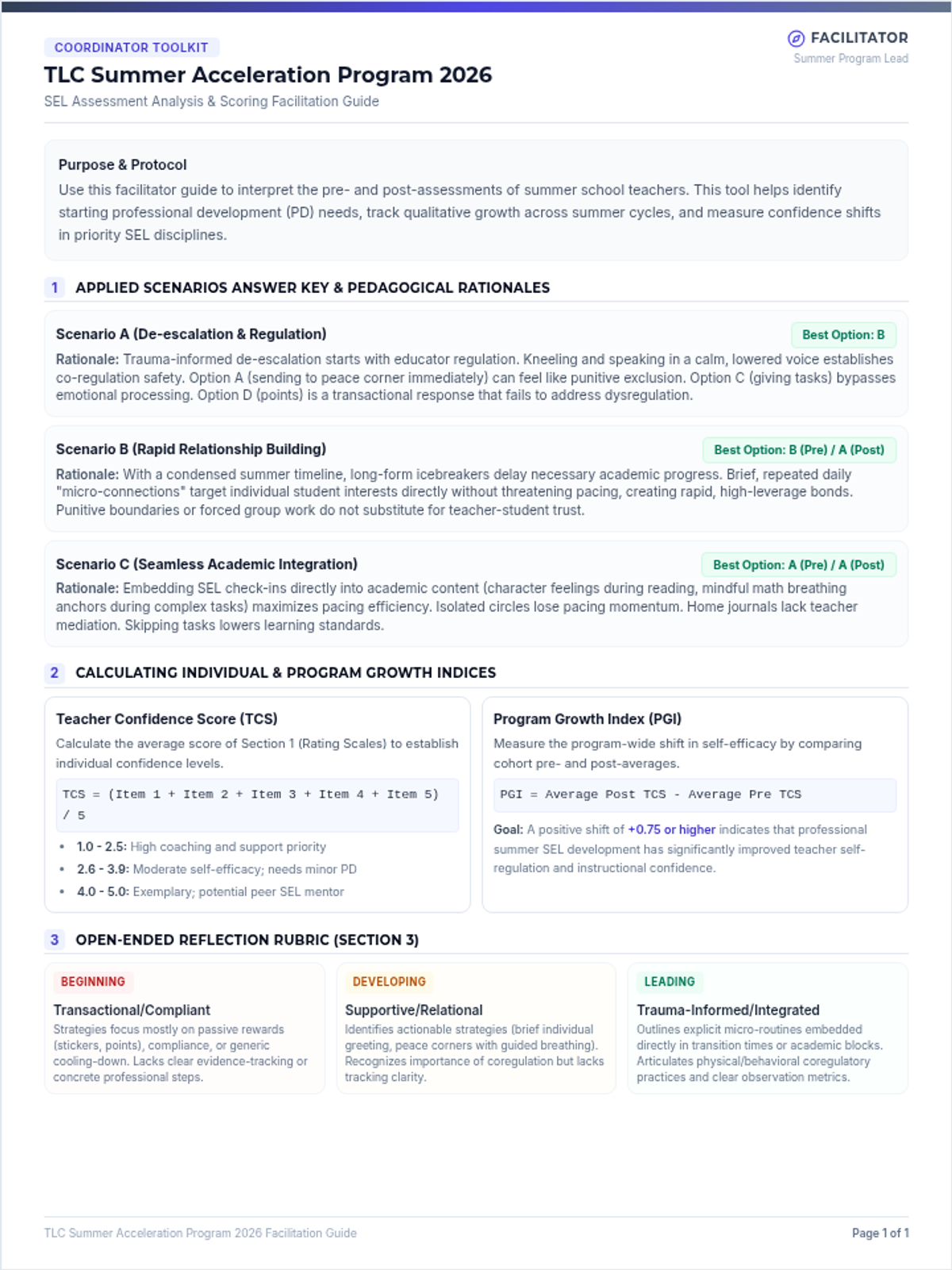
A comprehensive pre- and post-test system designed to assess elementary school teachers' knowledge, confidence, and reflective practices regarding social-emotional learning (SEL) during short-term summer school programs. These tools measure growth in key areas like de-escalation, relationship-building, self-care, and academic integration.
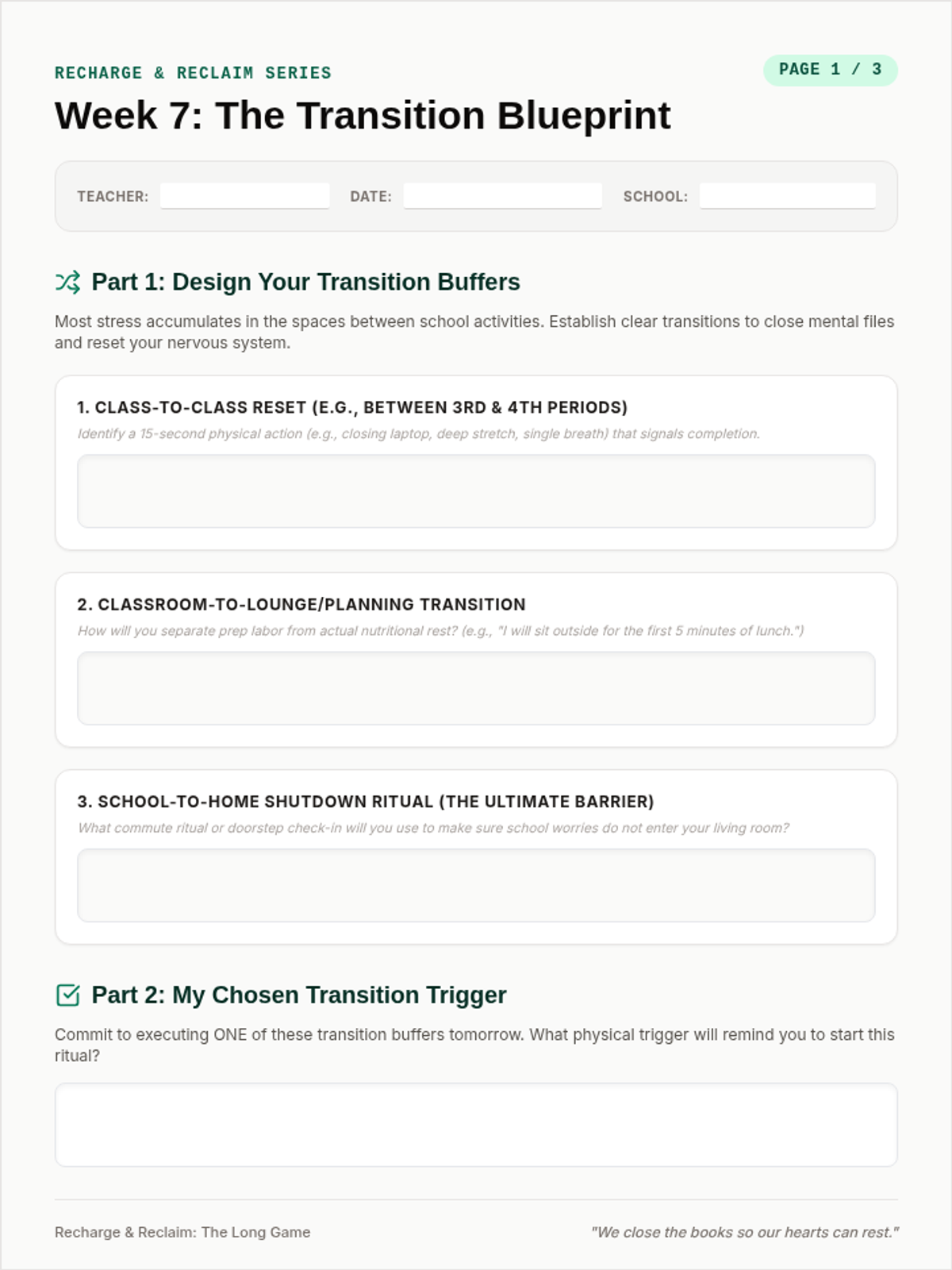
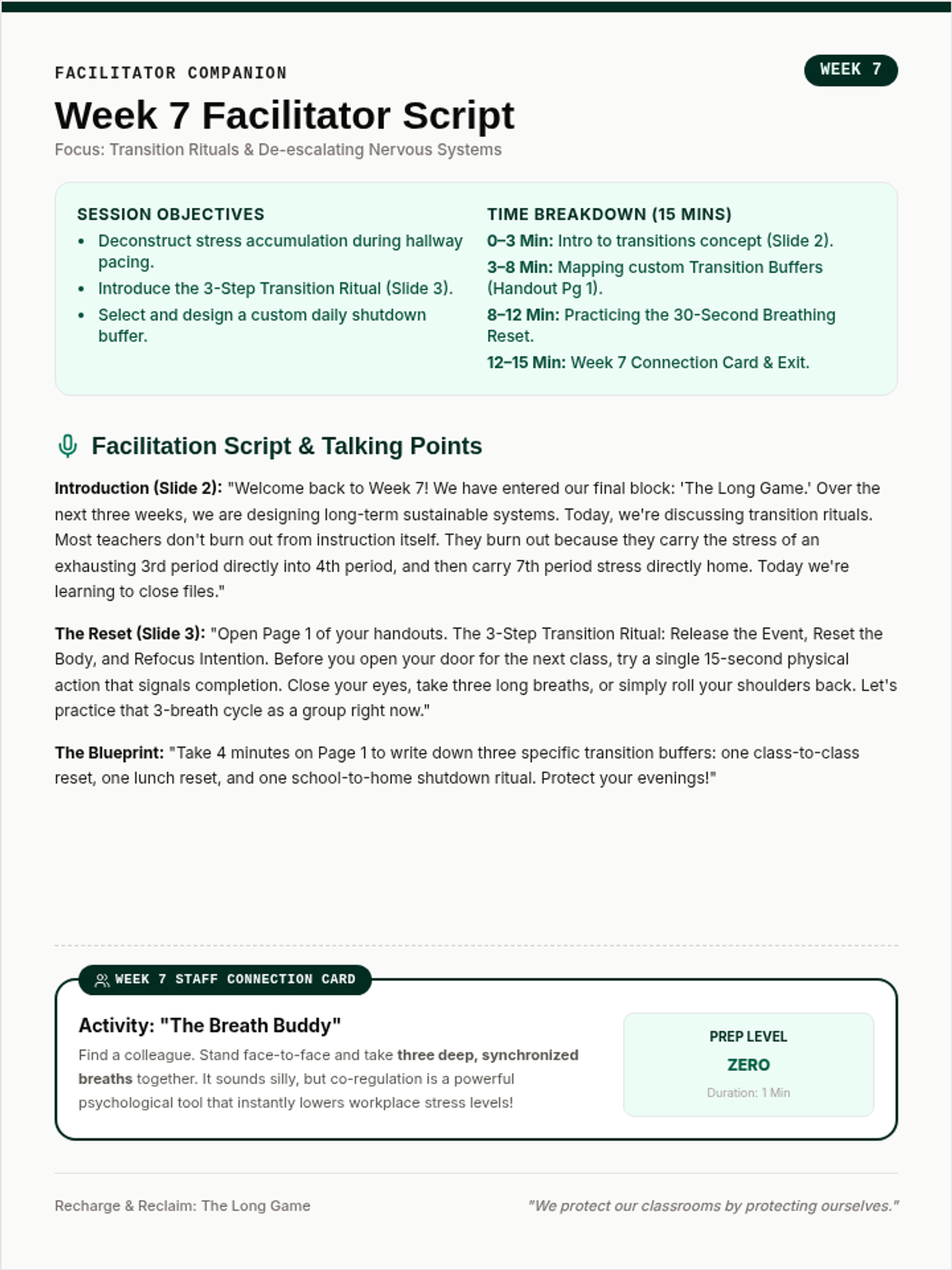
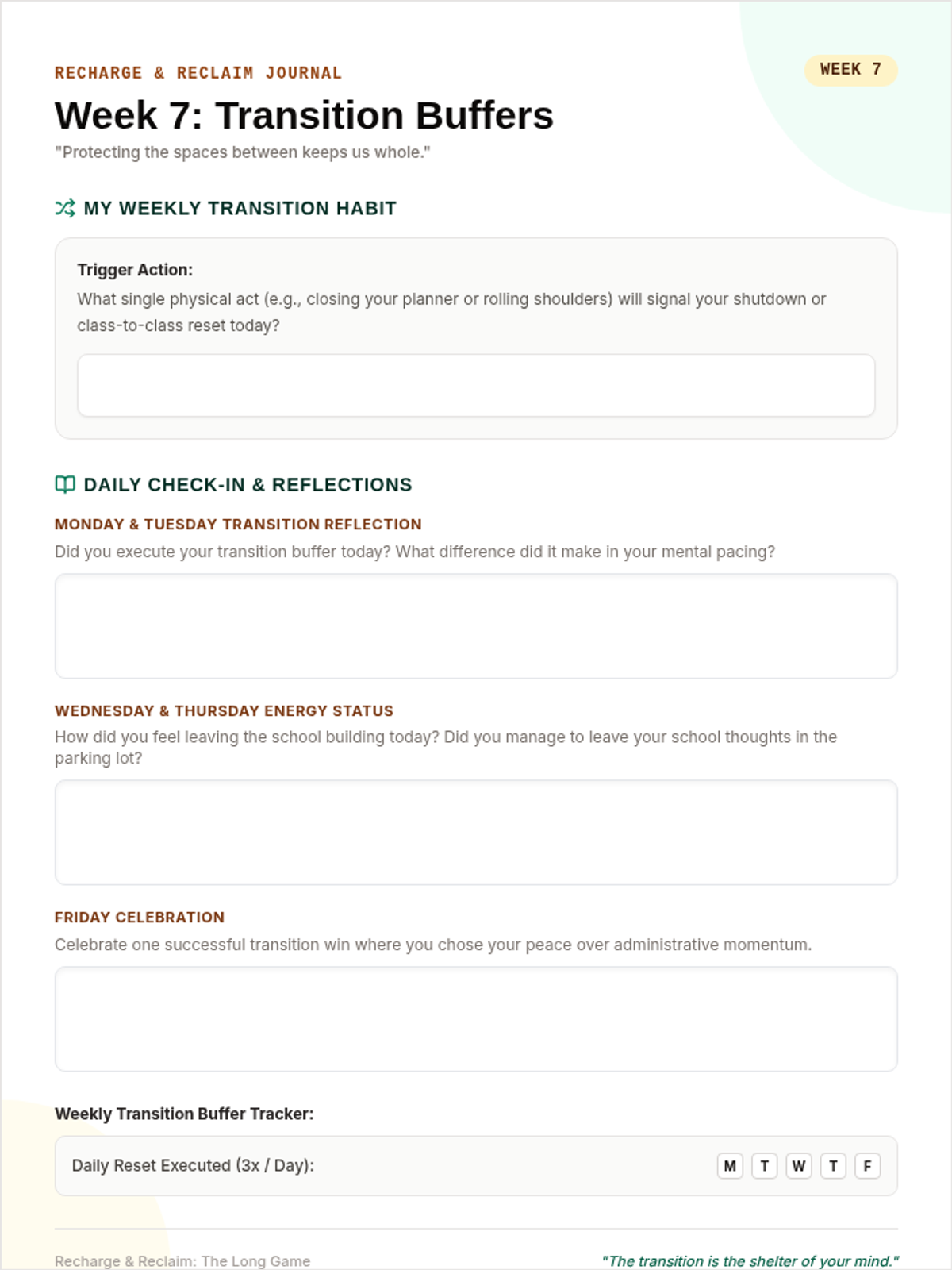
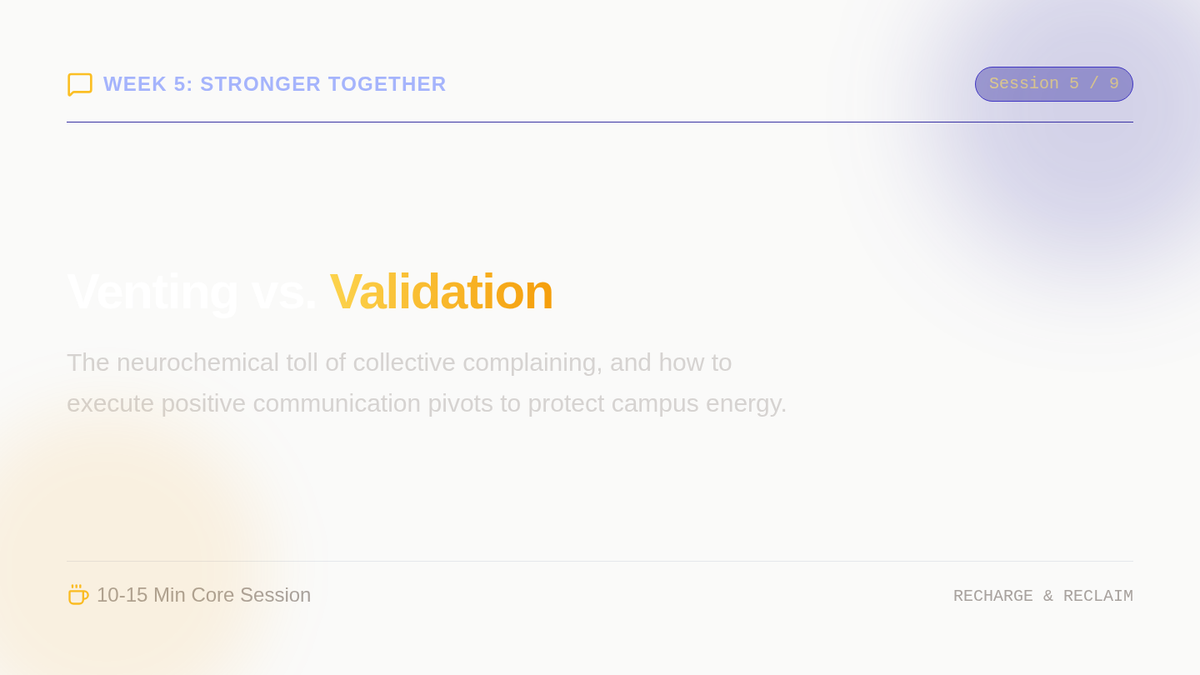
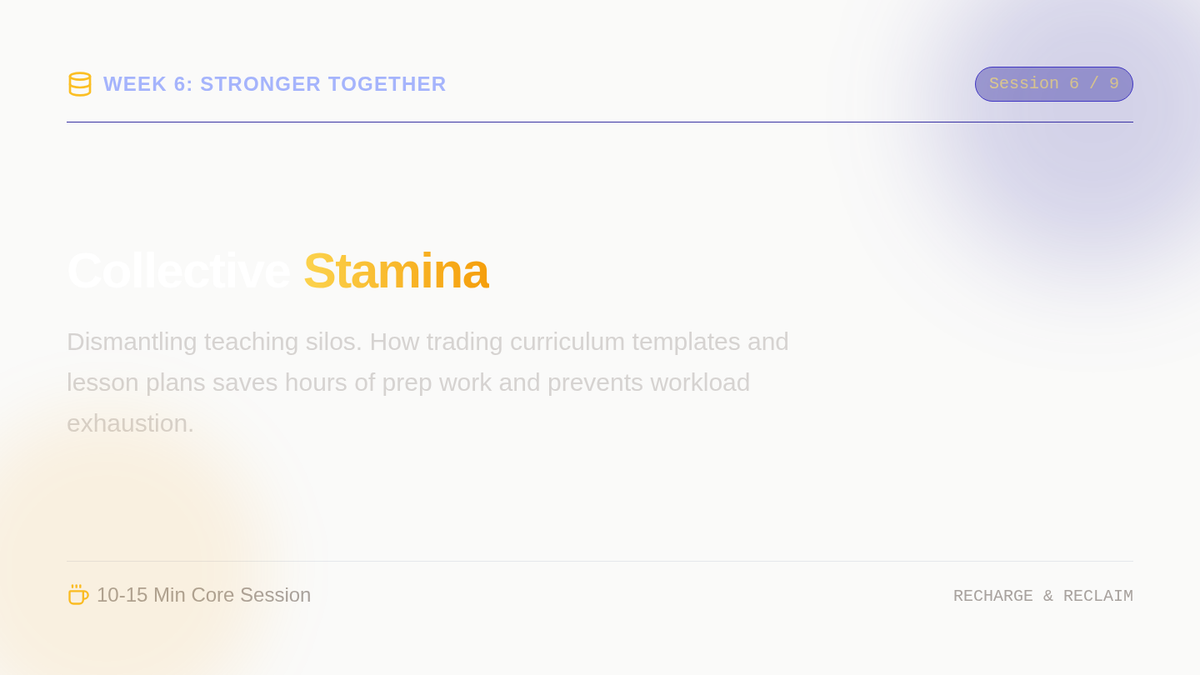
Weeks 7-9 of the self-care PD series, focusing on building long-term endurance, celebrating wins, and designing sustainable teacher lifestyles.
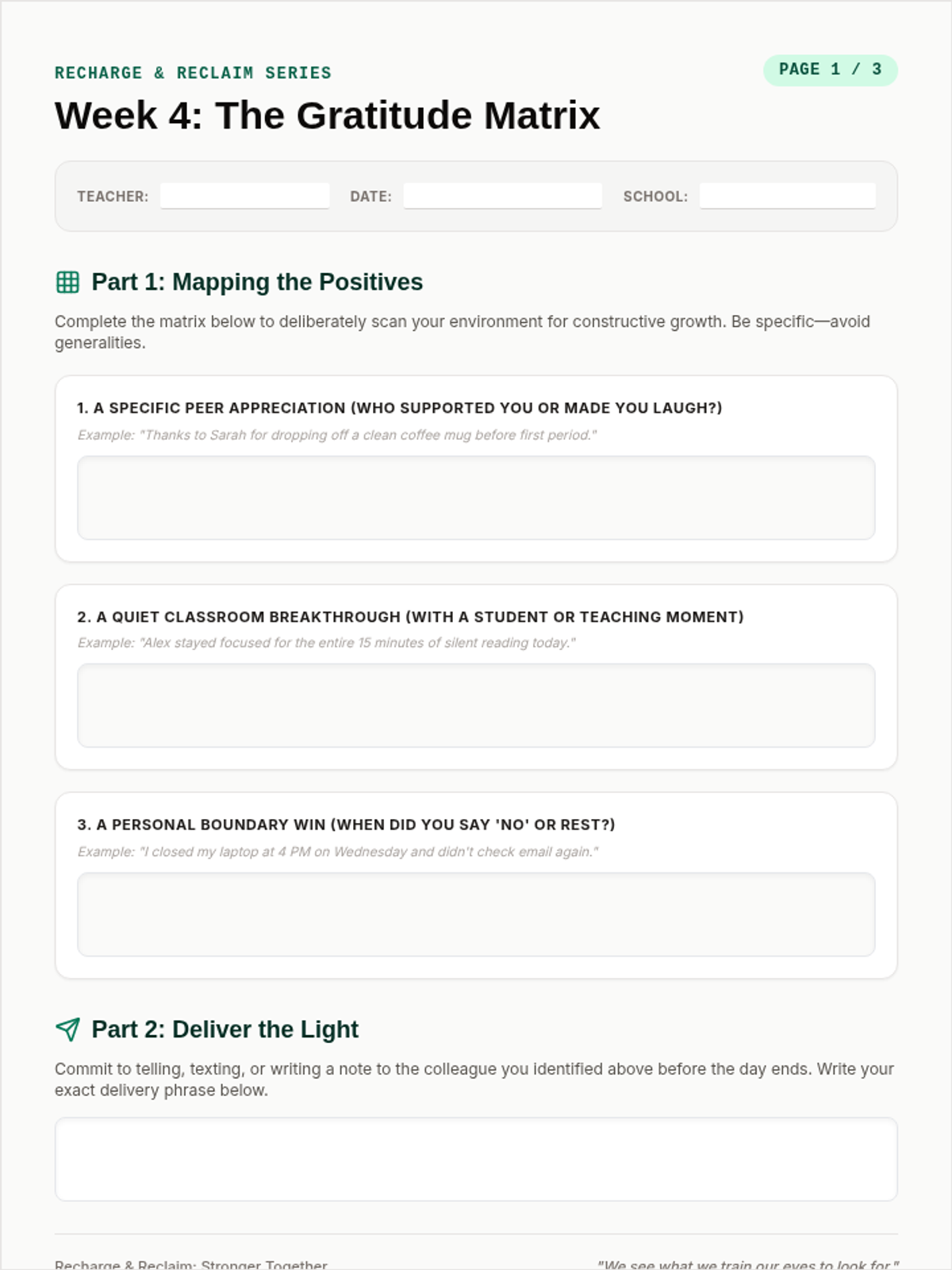
Weeks 4-6 of the self-care PD series, focusing on building a collaborative peer-support network, cultivating gratitude, and leveraging shared teacher wisdom.
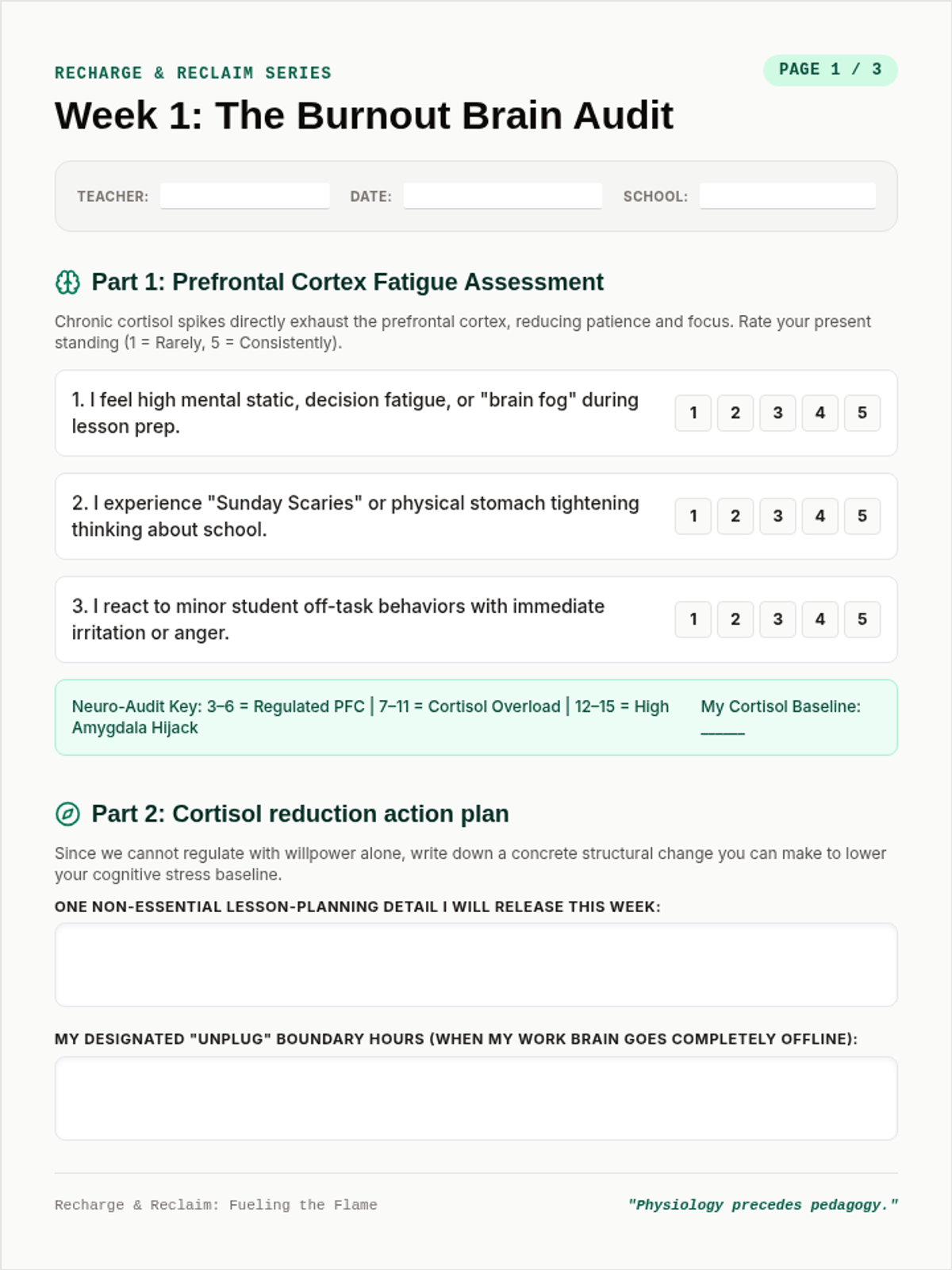
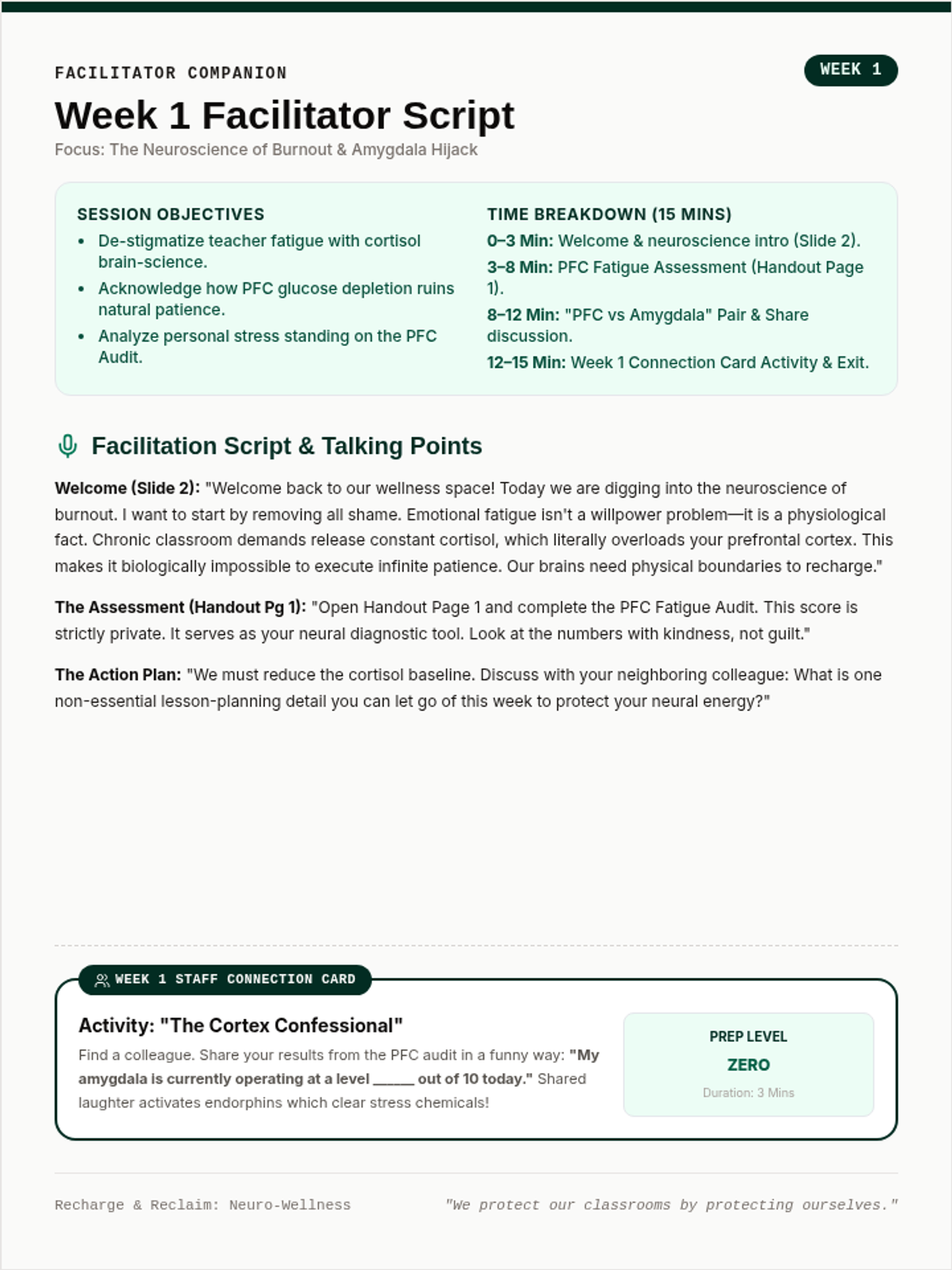
Weeks 1-3 of the self-care PD series, focusing on individual foundation-building, establishing sustainable professional boundaries, and re-anchoring in professional purpose.
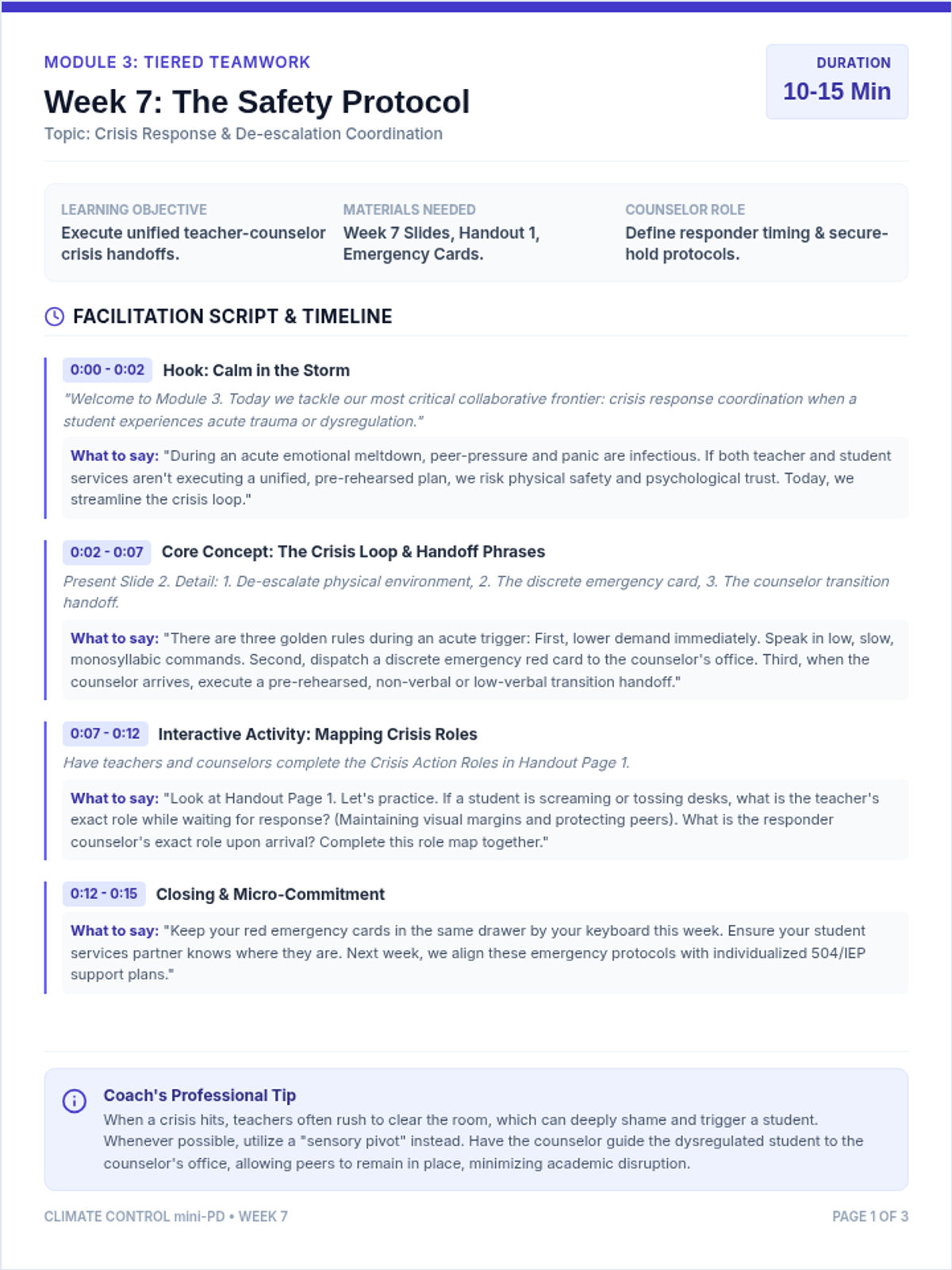
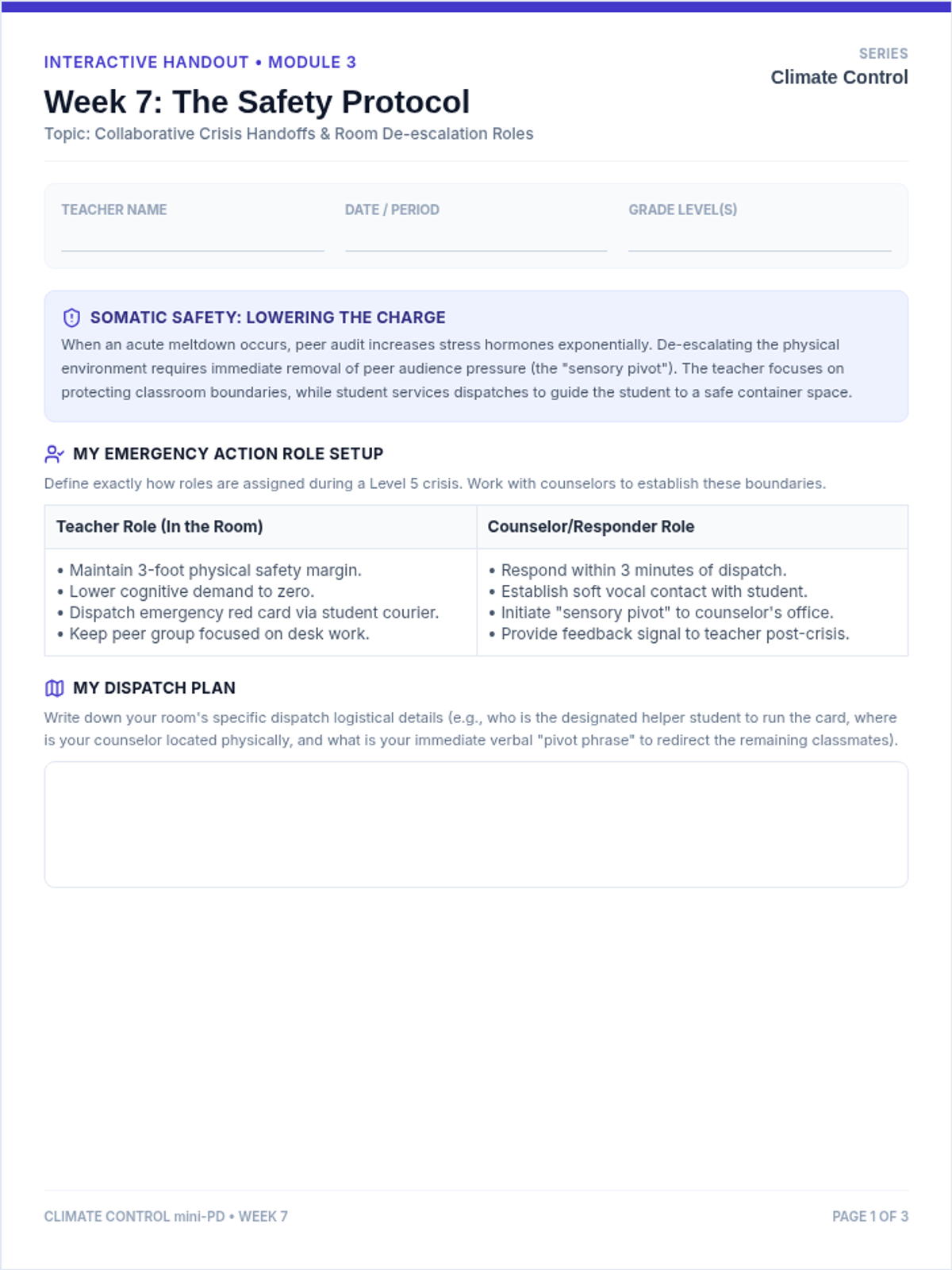
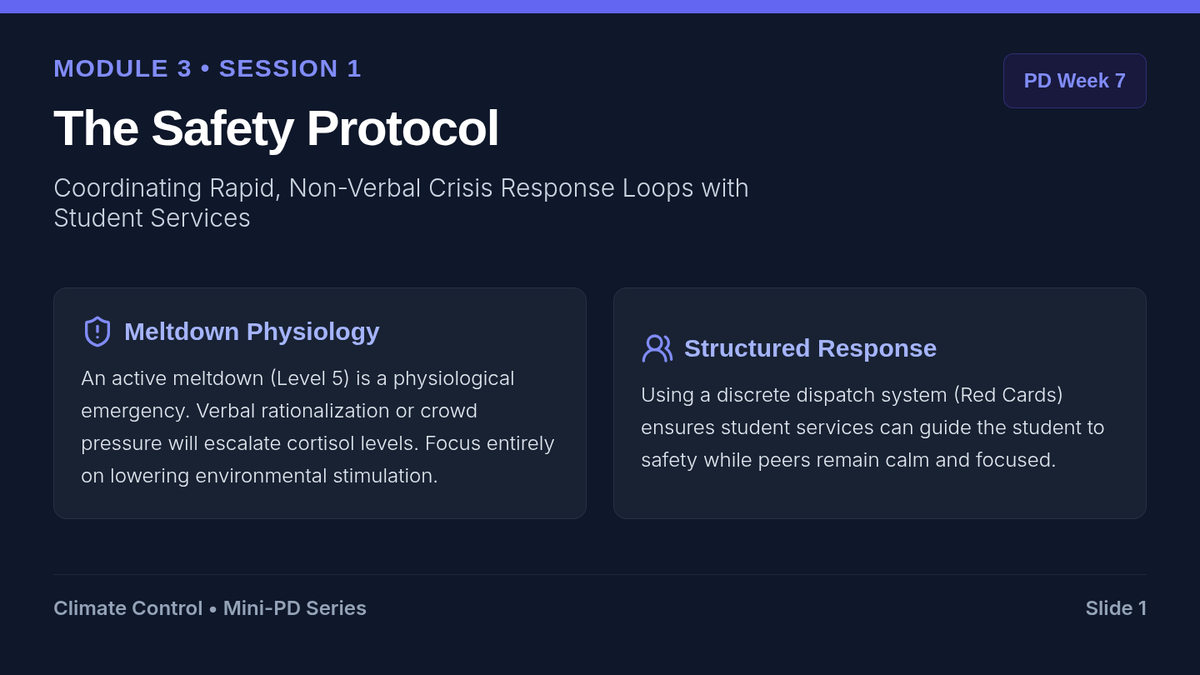
Weeks 7-9 of the mini-PD series. This module covers crisis response coordination, aligning classroom tiers with individualized support plans, and joint counselor-teacher team reflection and self-care.
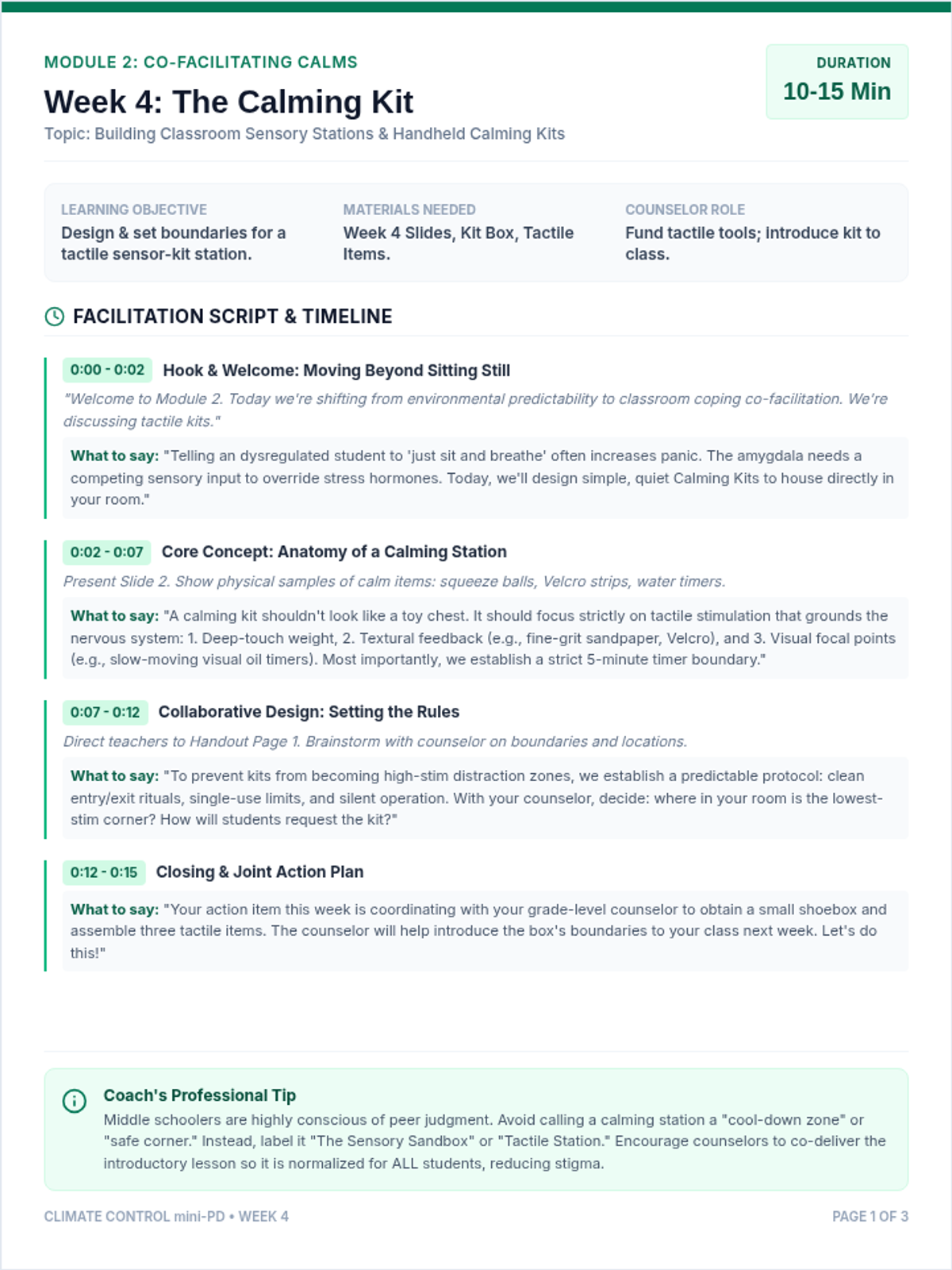
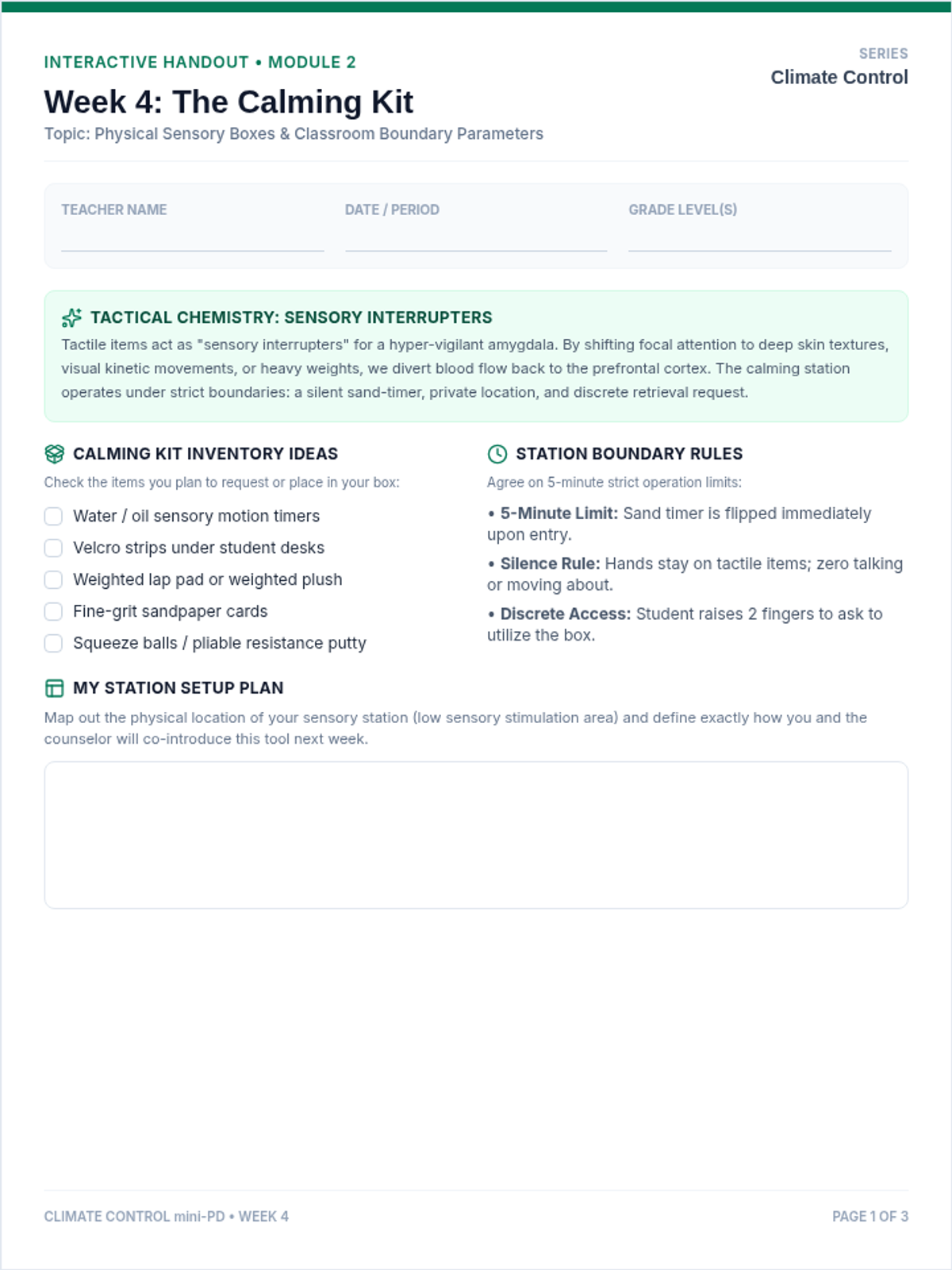
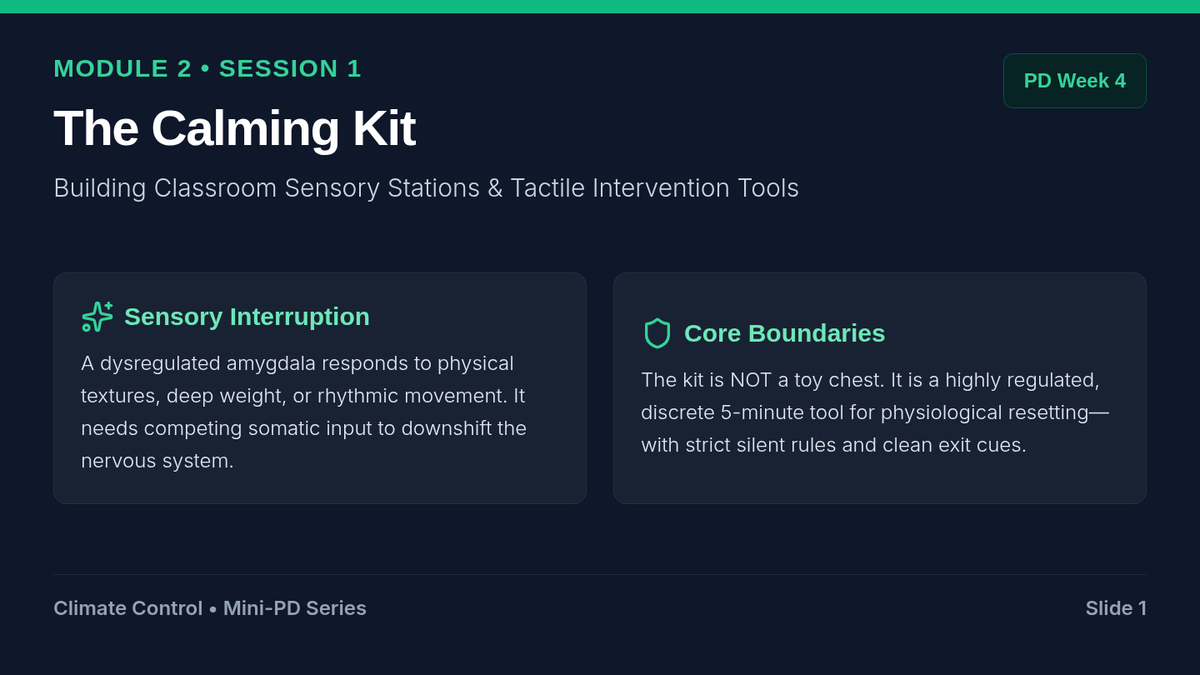
Weeks 4-6 of the mini-PD series. This module covers introducing self-regulation kits, co-facilitating physical and cognitive grounding strategies with counselors, and teaching students to scale their emotional state.
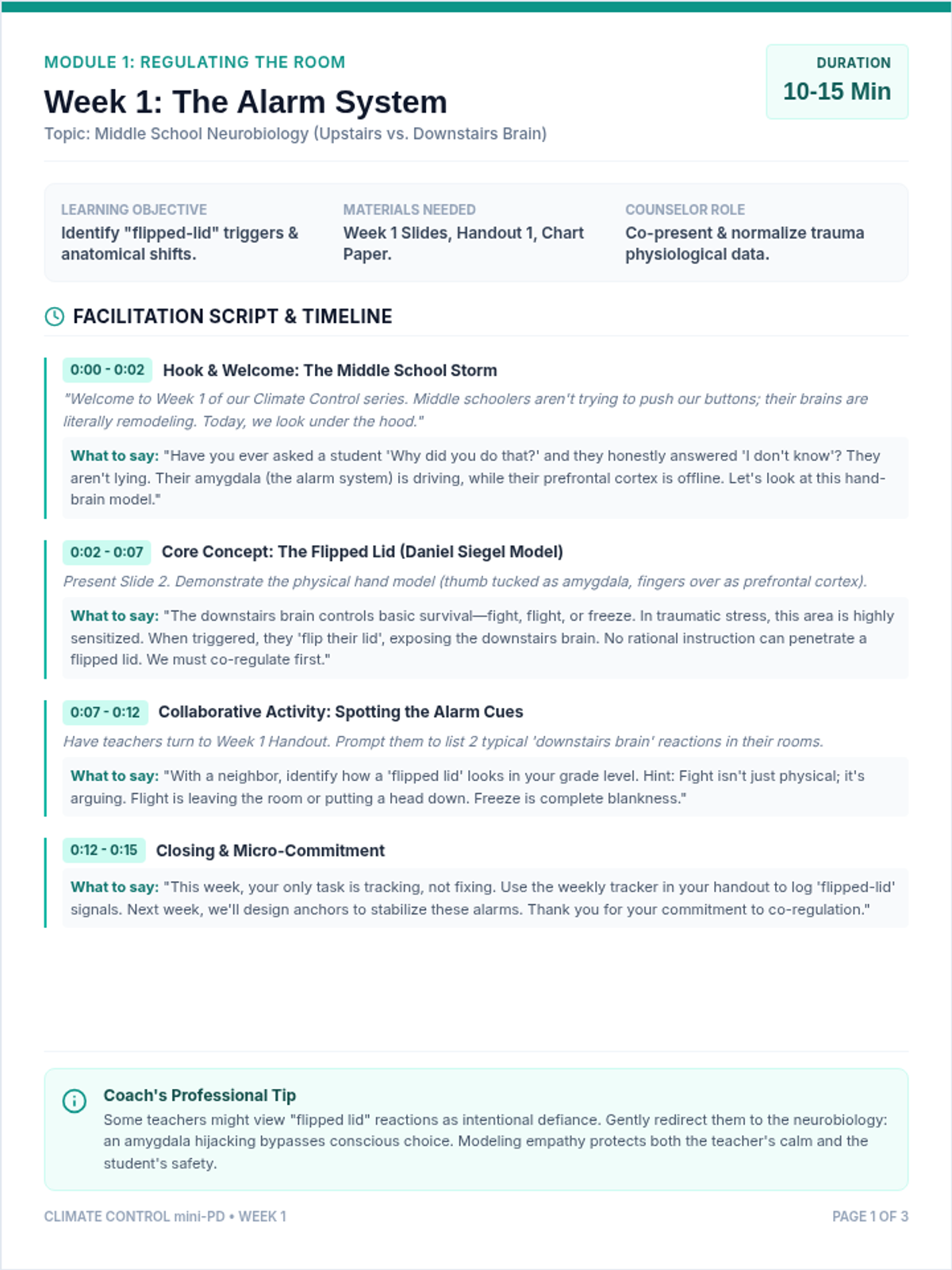
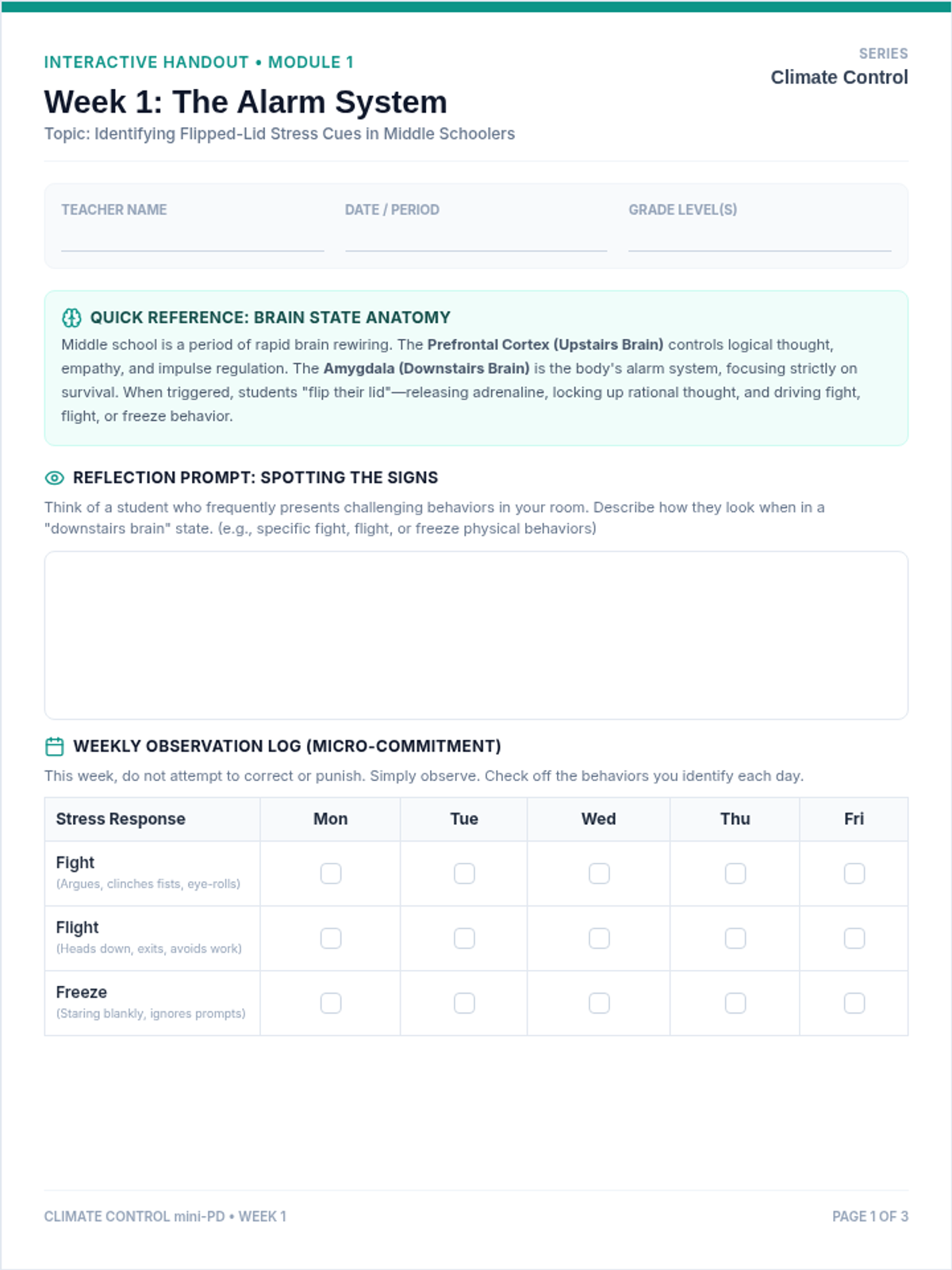
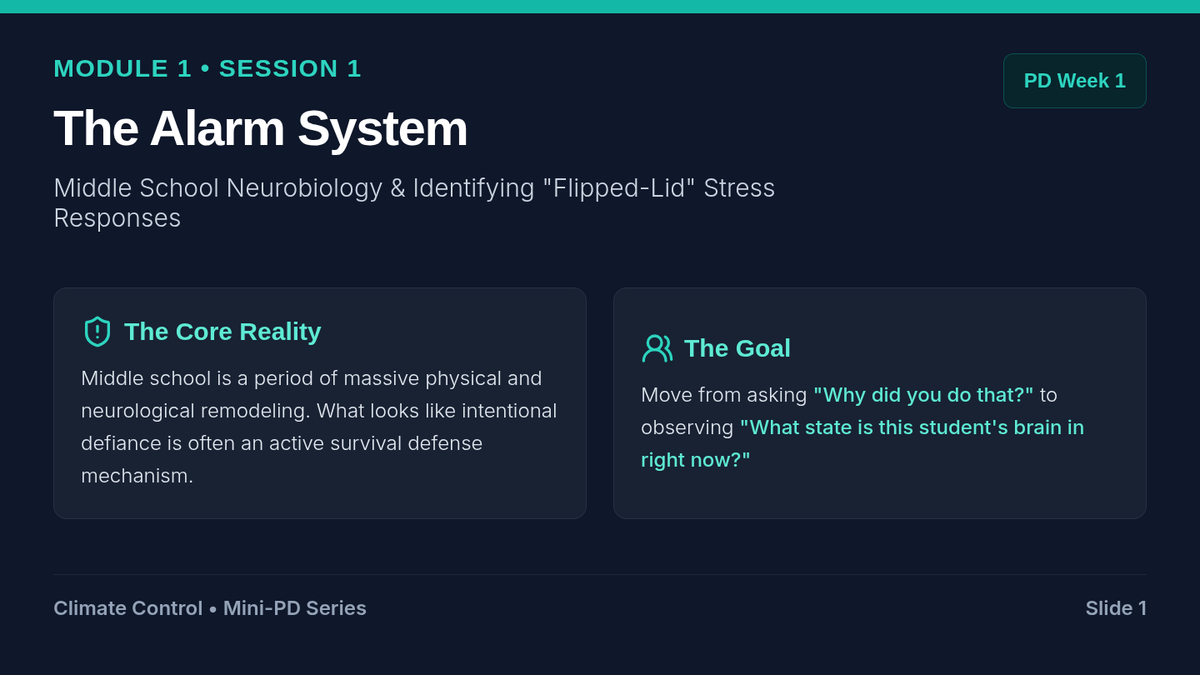
Weeks 1-3 of the mini-PD series. This module covers trauma-informed foundations, middle school neurobiology (upstairs vs. downstairs brain), establishing environmental predictability, and introducing counselor partnerships.
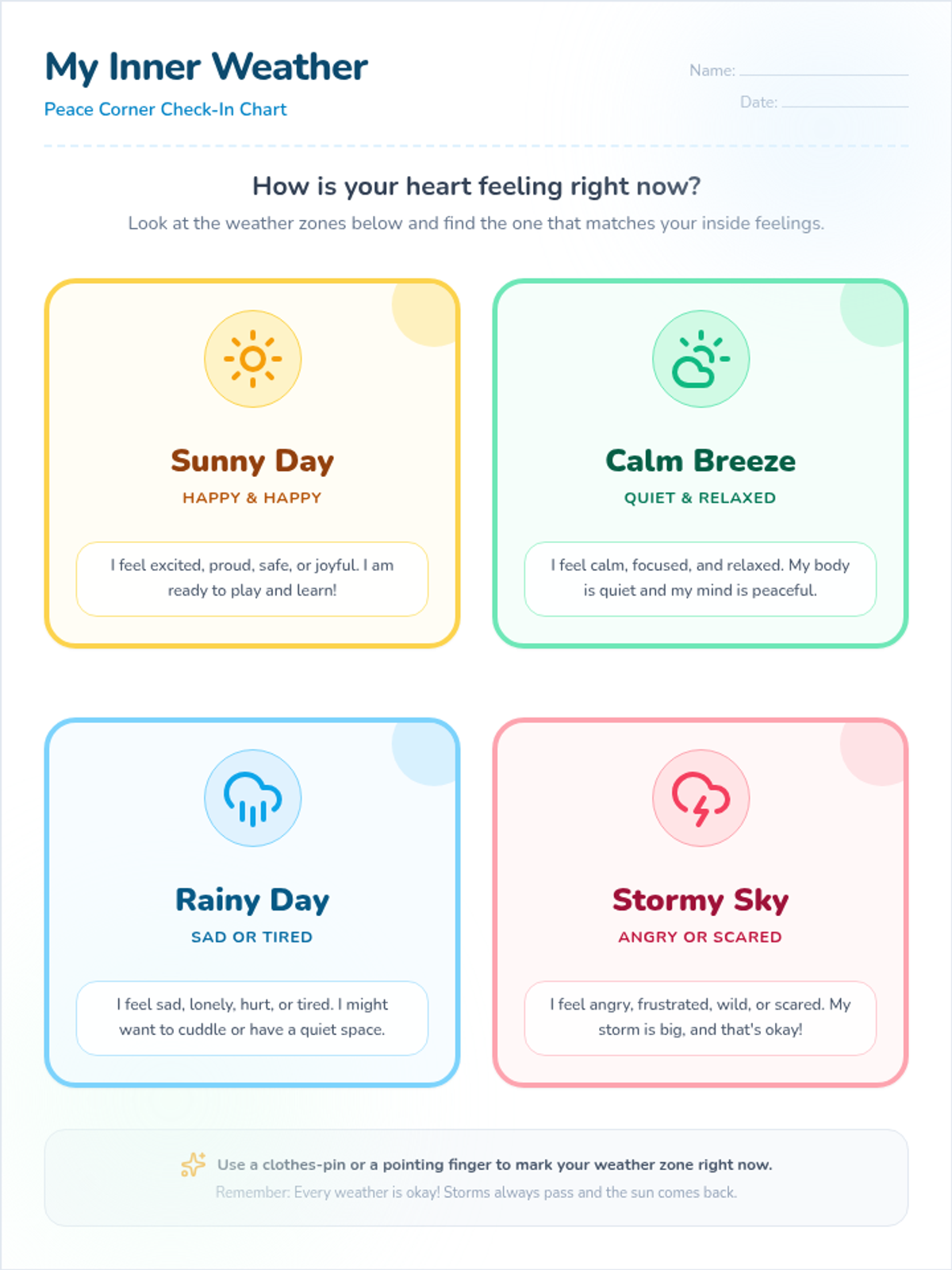
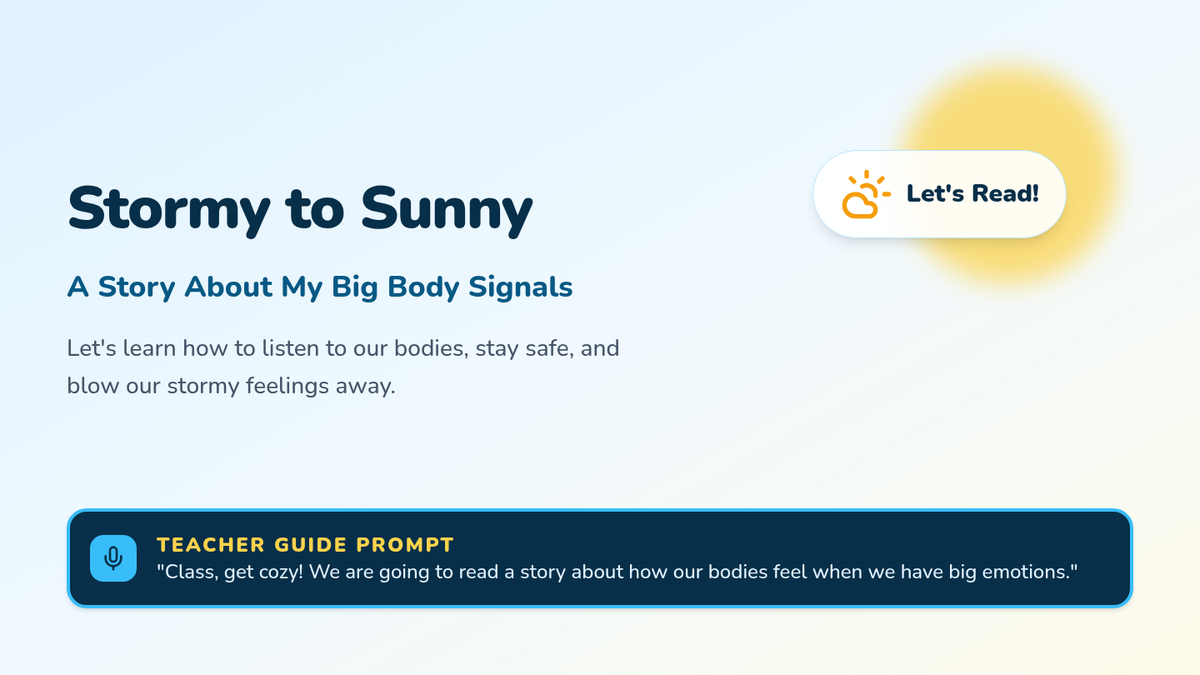
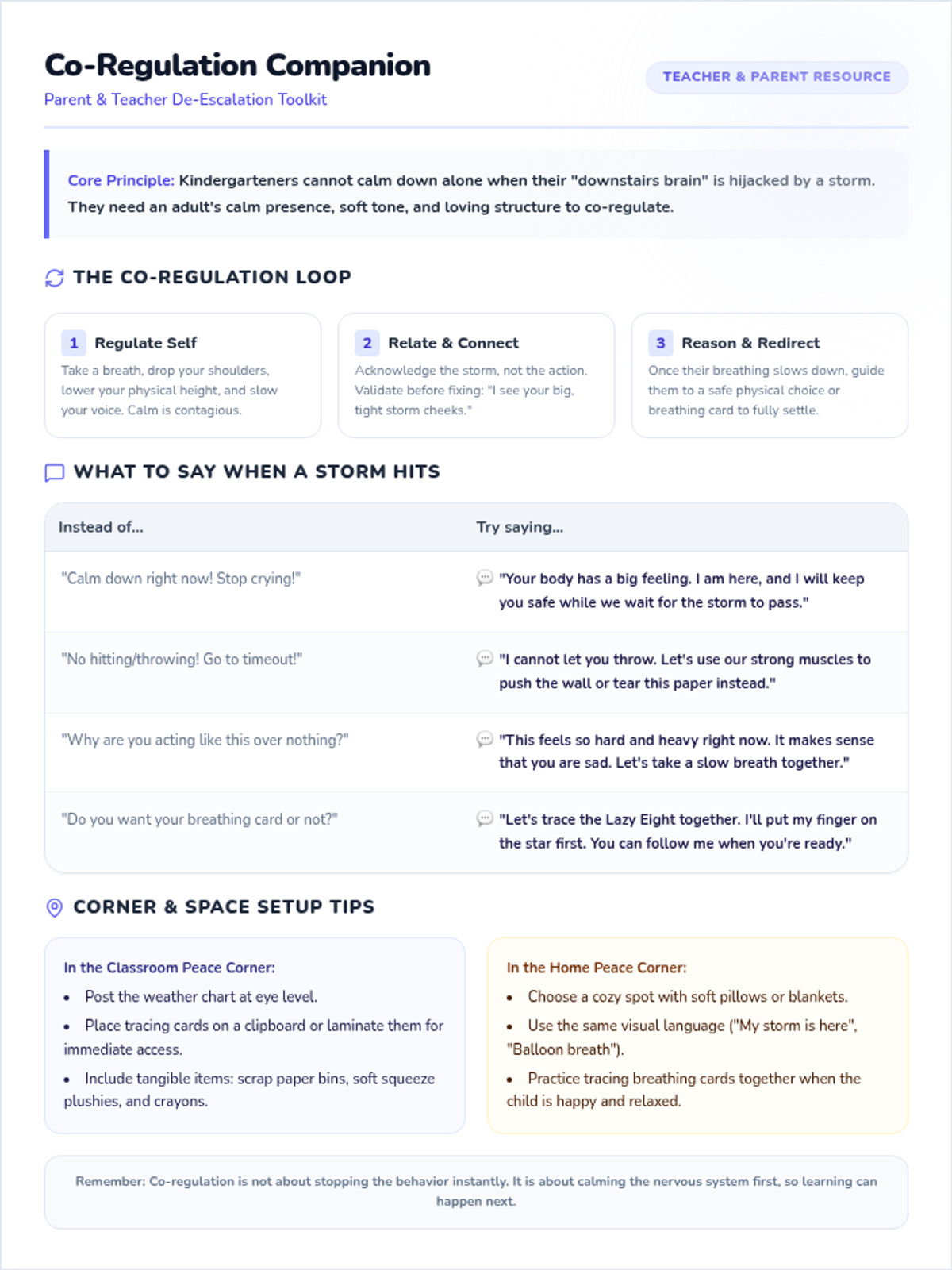
A comprehensive toolkit designed for kindergarteners experiencing big emotions. It includes a printable Calm Down Kit for a classroom peace corner, an interactive read-aloud social story about body signals, and a practical parent-teacher co-regulation guide with communication logs.
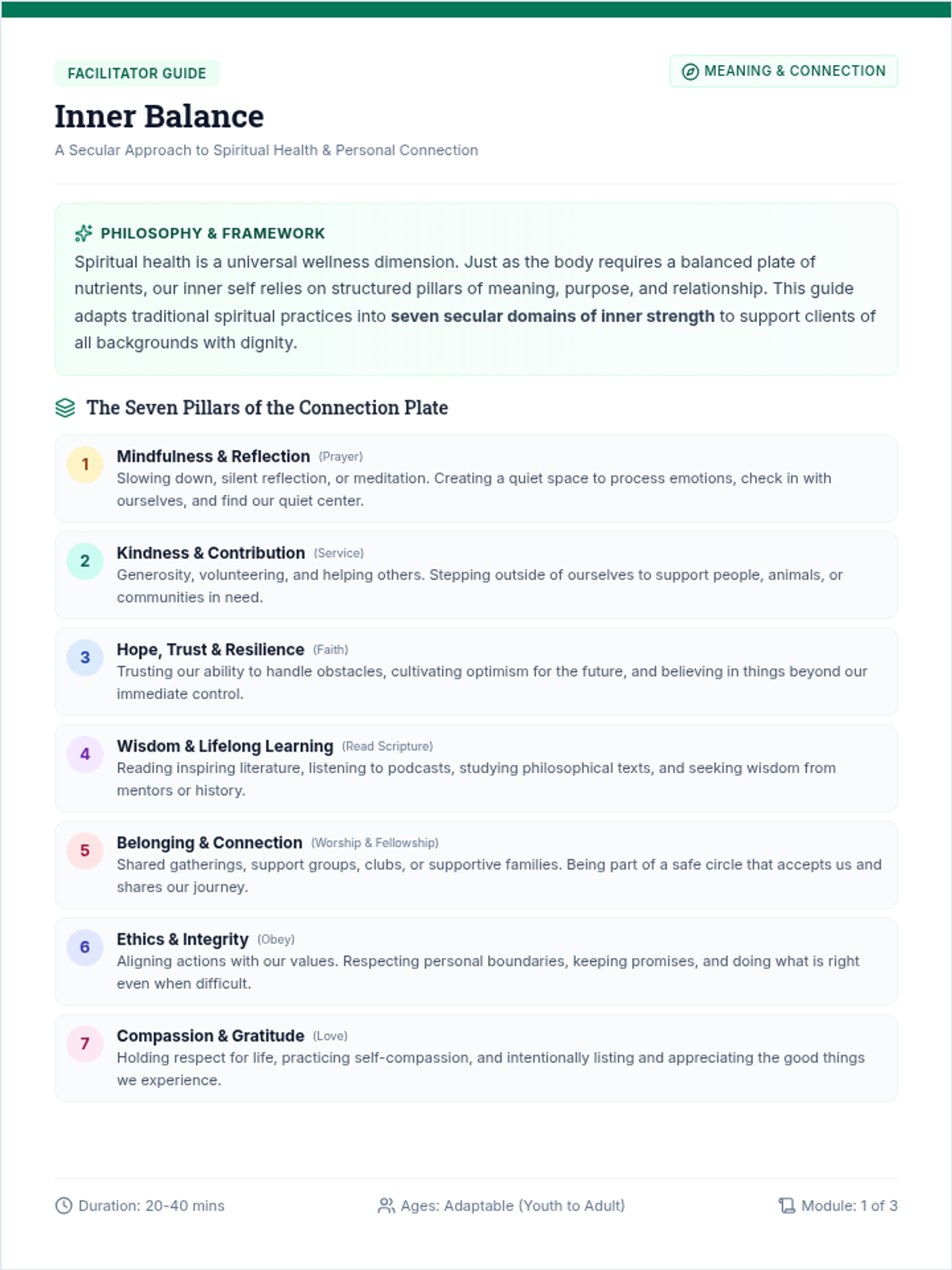
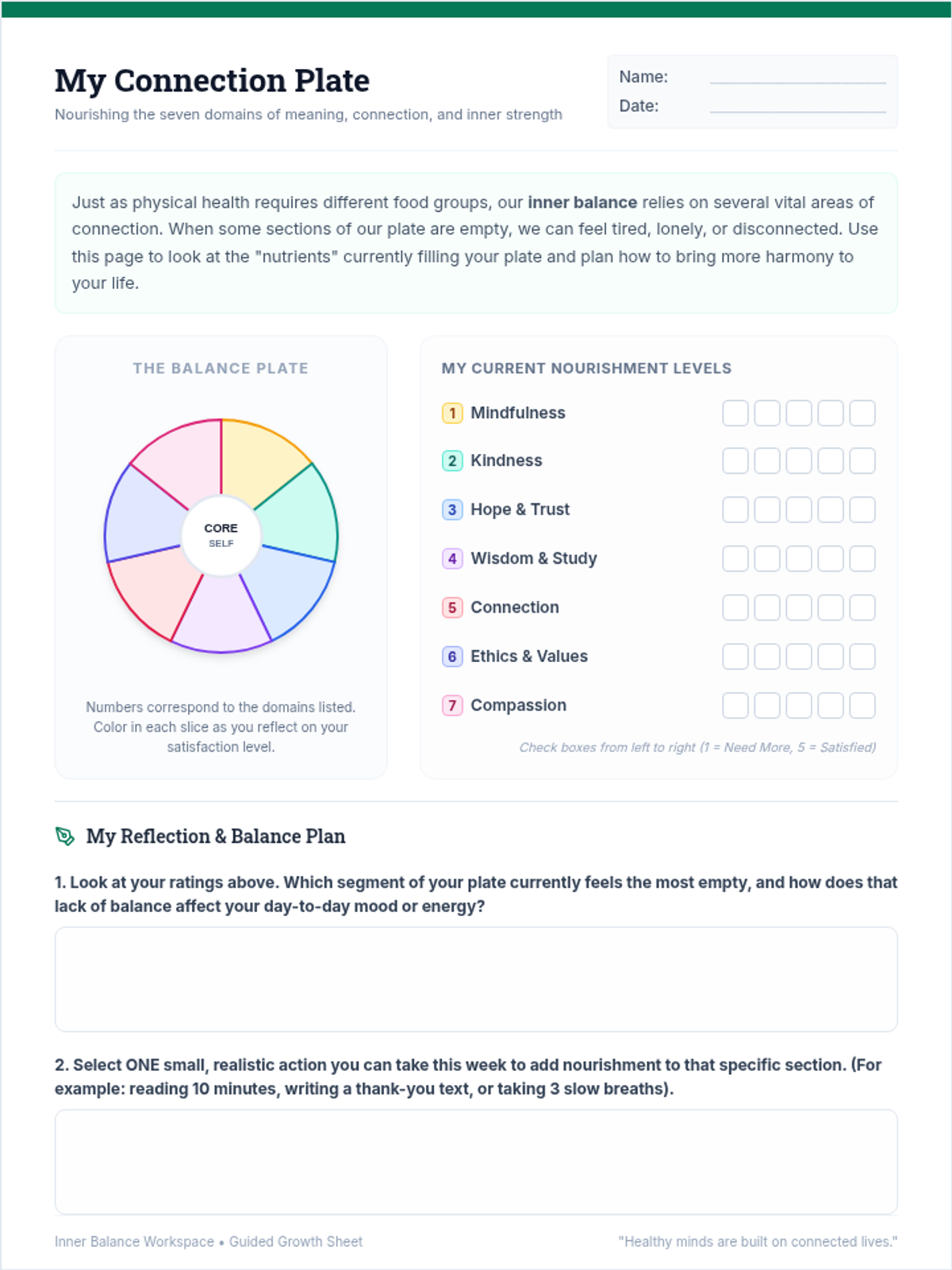
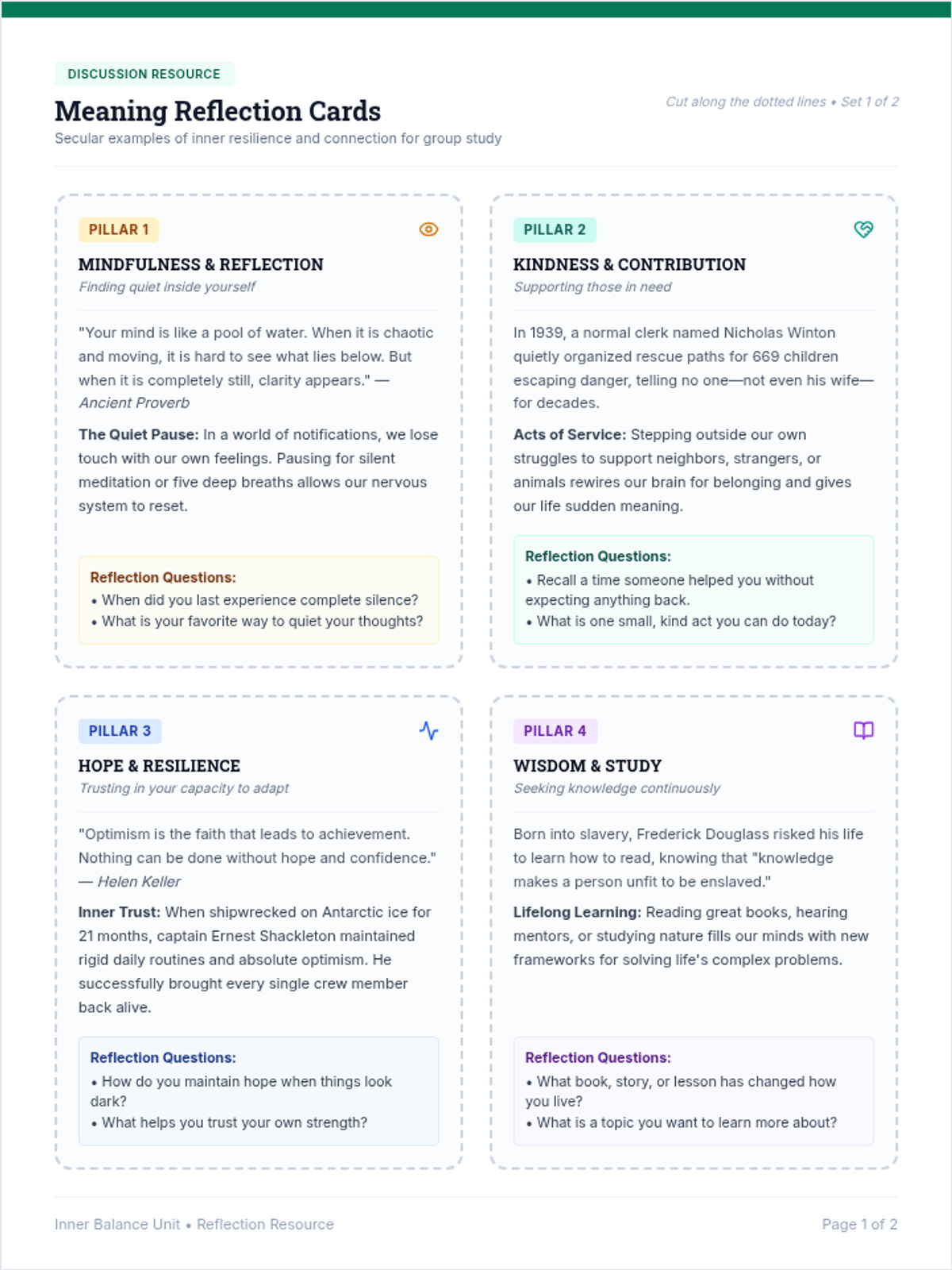
A secular lesson on spiritual well-being, focusing on seven domains of meaning, connection, and inner strength. It adapts the 'food plate' concept into an 'inner balance plate' suitable for clients of all backgrounds.
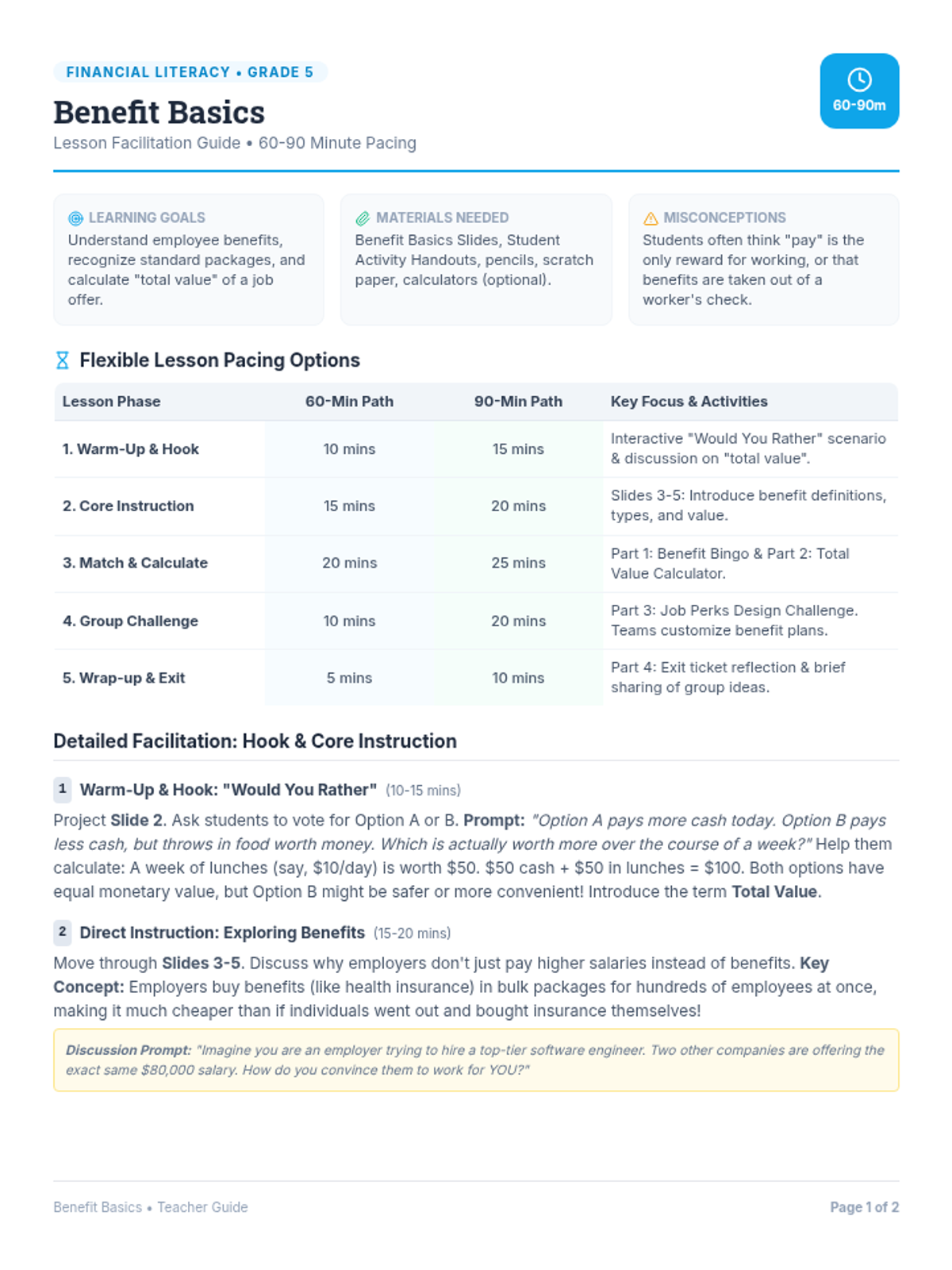
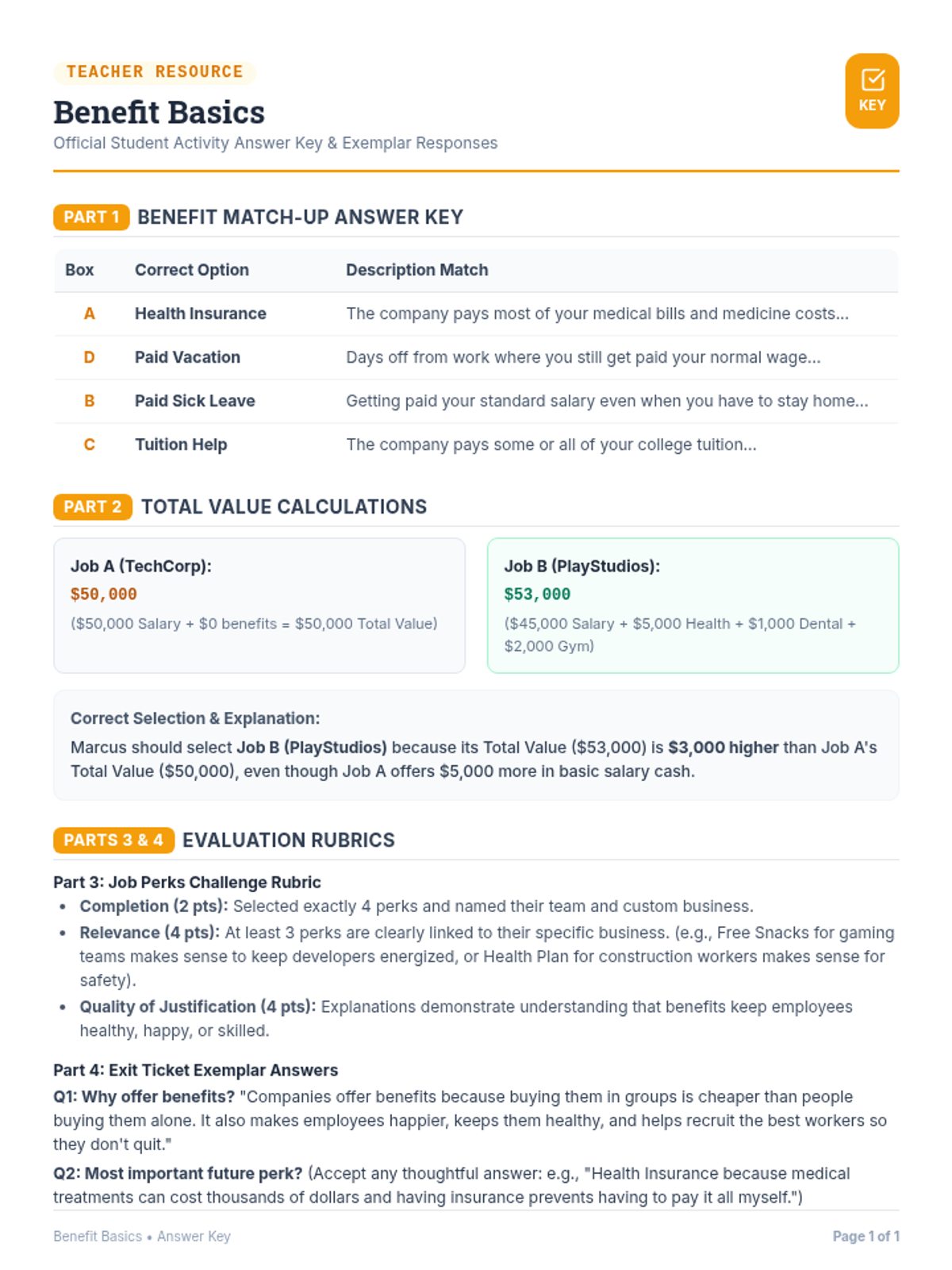
A comprehensive financial literacy lesson introducing adult learners at a 5th-grade reading level to employee benefits, their forms, and how they add total value beyond a basic salary. It includes an interactive slide deck with built-in activities, an answer key, and a teacher guide.
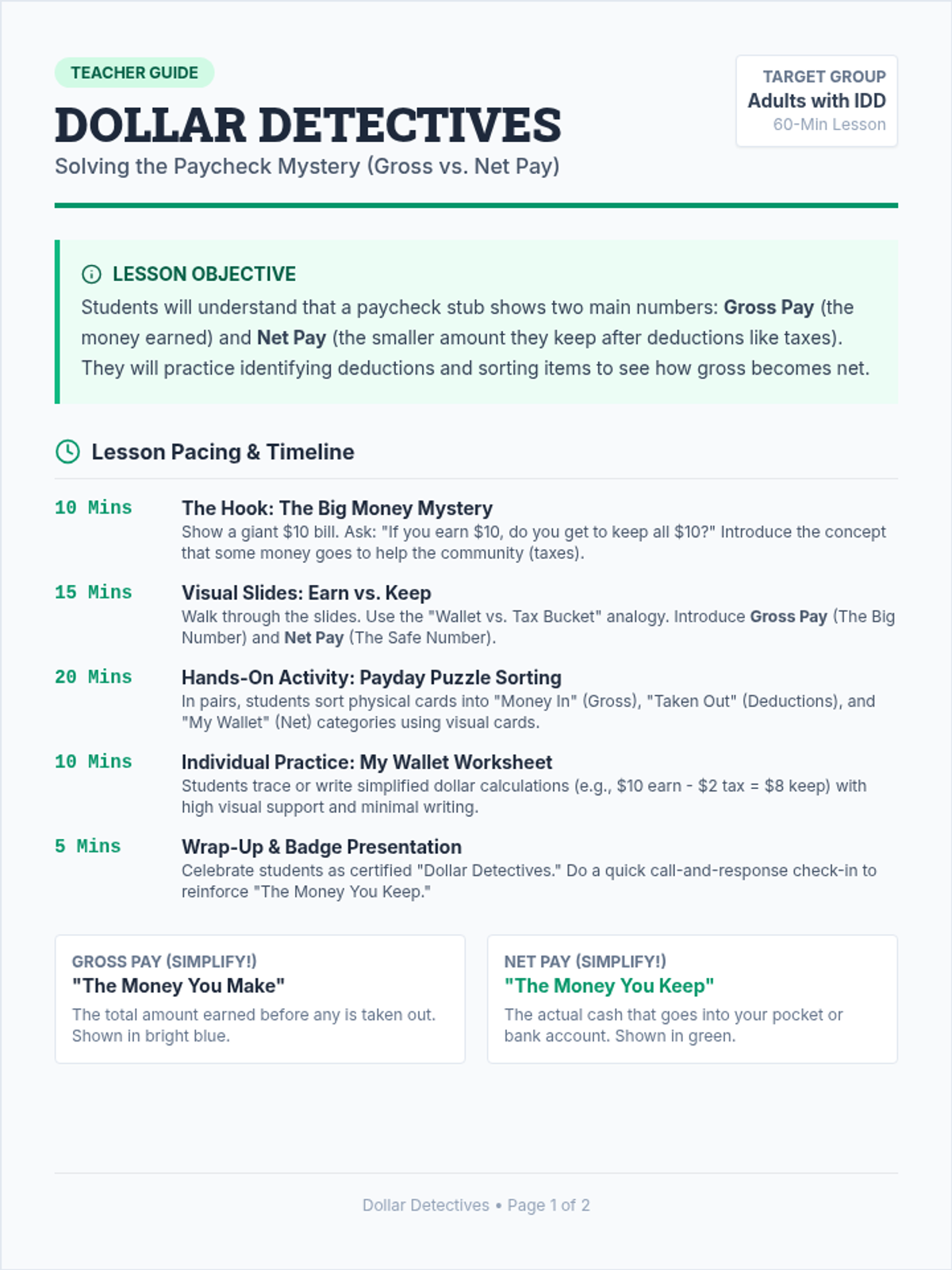
An interactive, highly visual vocational math lesson designed for adults with IDD to practice tracking hours worked, calculating total hours, and double-checking pay stubs for accuracy.