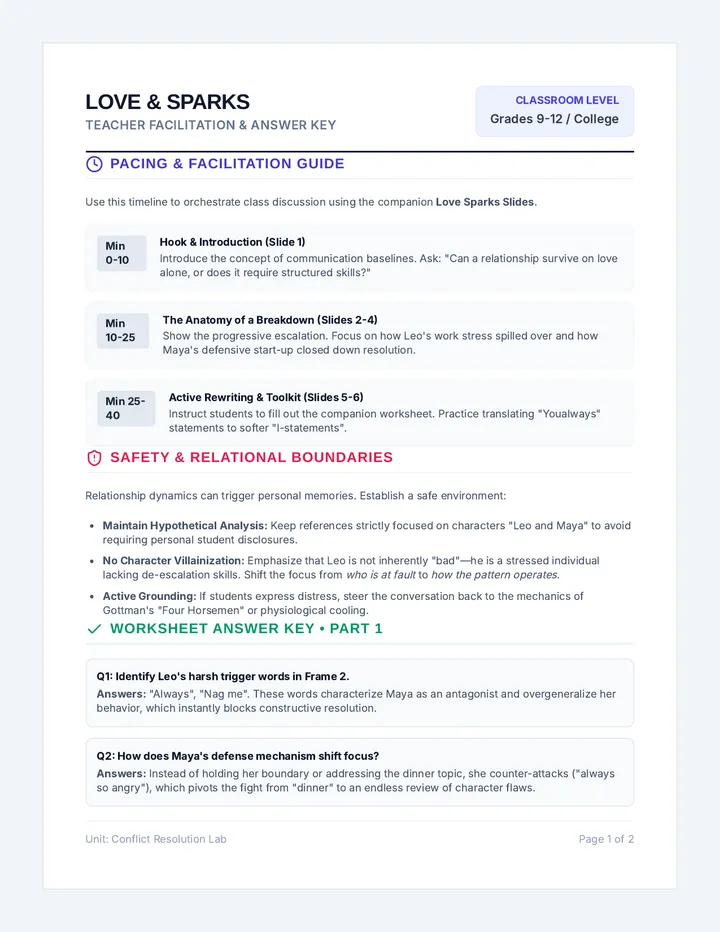
Think It Through Teacher Guide
A detailed lesson plan for teaching the STOPP impulse control routine to 9th graders, including a timed instructional sequence and materials checklist.
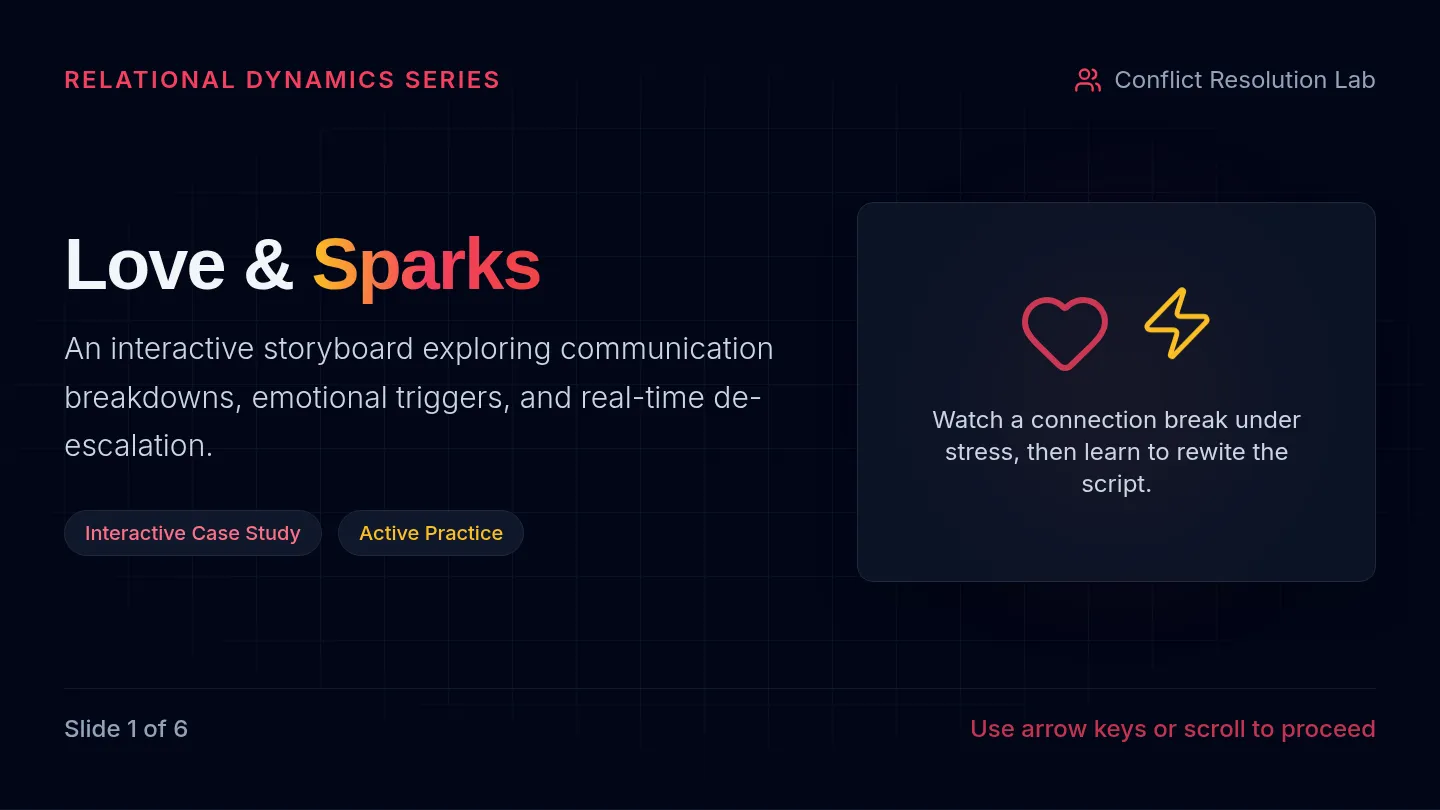
Think It Through Slides
A 10-slide presentation guiding students through the STOPP impulse control routine with visuals, scenarios, and role-play instructions.
Do Now Trigger Tally
A warm-up worksheet for students to identify and track personal triggers and impulses from their recent experiences.
Spin-a-Scenario Wheel
An instructional game board featuring eight common school scenarios for students to practice applying the STOPP routine.
STOPP Planner
A structured worksheet for students to map out their specific STOPP routine response for a chosen scenario or personal trigger.
Role-Play Scenario Cards
Printable cards featuring eight school-based scenarios for guided impulse control role-play practice.
My Replacement Plan Journal
A structured reflective journal for students to solidify their impulse control plan and identify personal cues for the STOPP routine.
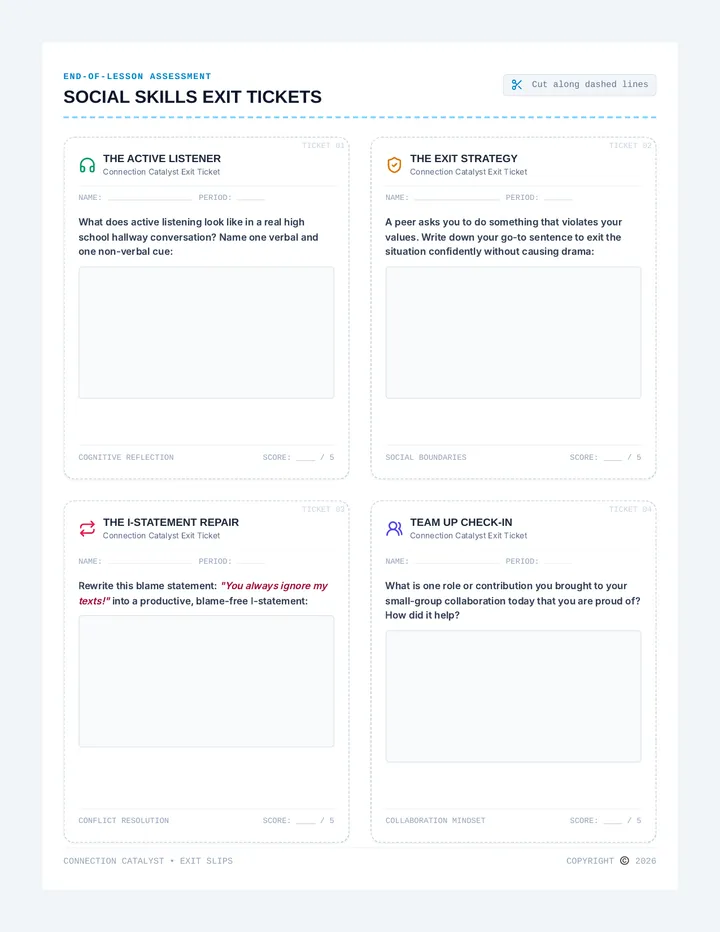
Exit Ticket One Cue
A set of four printable exit tickets for students to identify a personal trigger and a replacement behavior as a lesson wrap-up.