A comprehensive restorative counseling session designed to help a student take accountability for testing disruptions, process the emotional aftermath of getting in trouble, and create a concrete plan to repair relationships and behaviors.
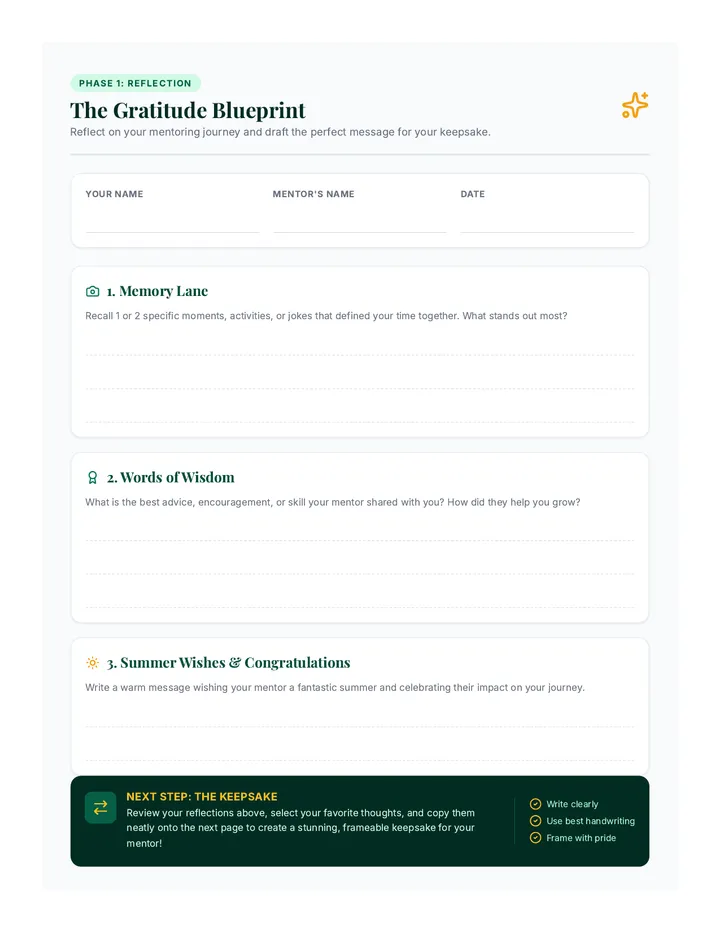
A heartfelt lesson designed to guide mentees through reflecting on their journey with their mentors, writing meaningful thank-you messages, and creating a beautiful framed keepsake.
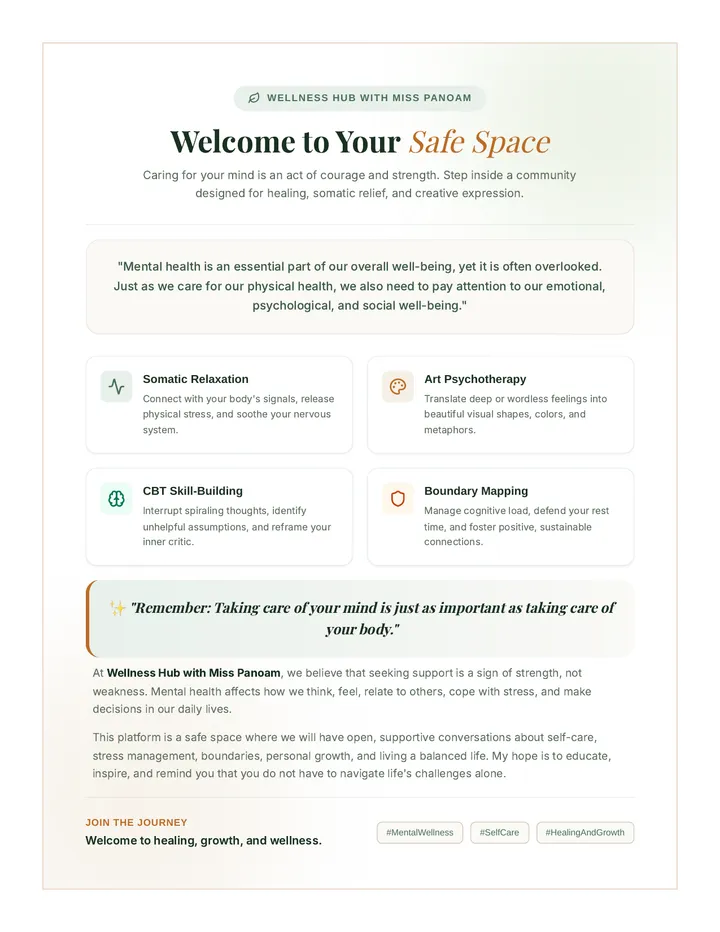
An elegant, welcoming visual announcement page introducing the Wellness Hub with Miss Panoam, designed for counseling psychology, art therapy, and somatic mindfulness support.
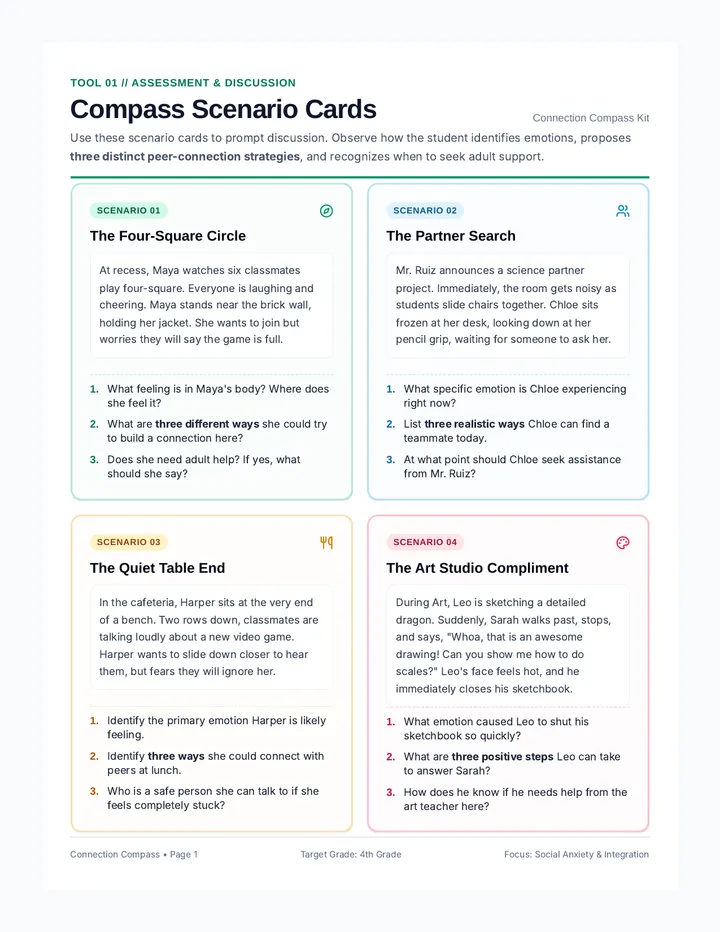
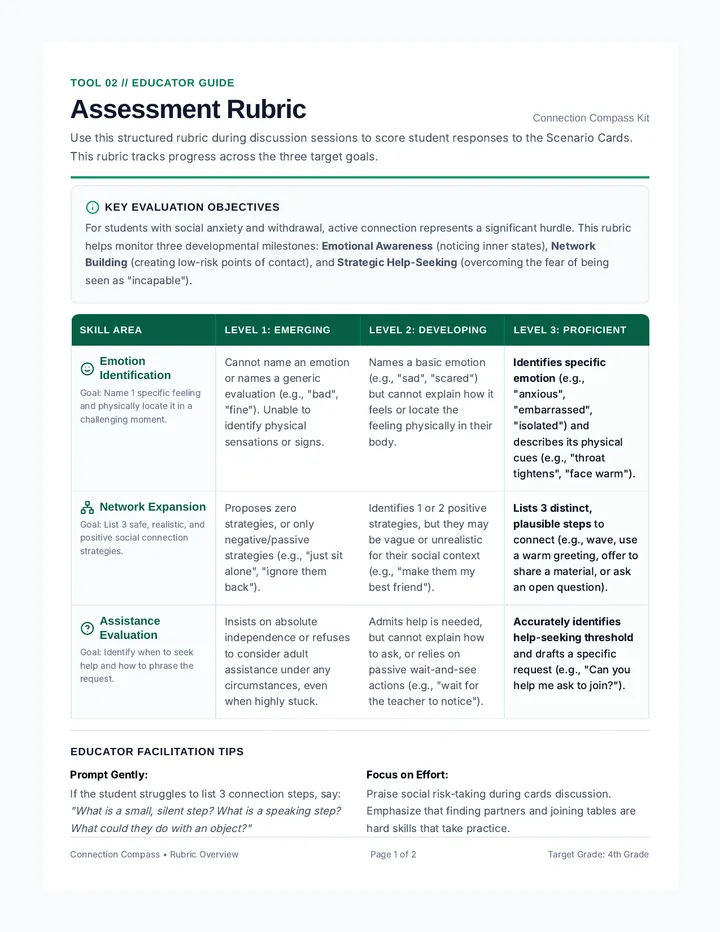
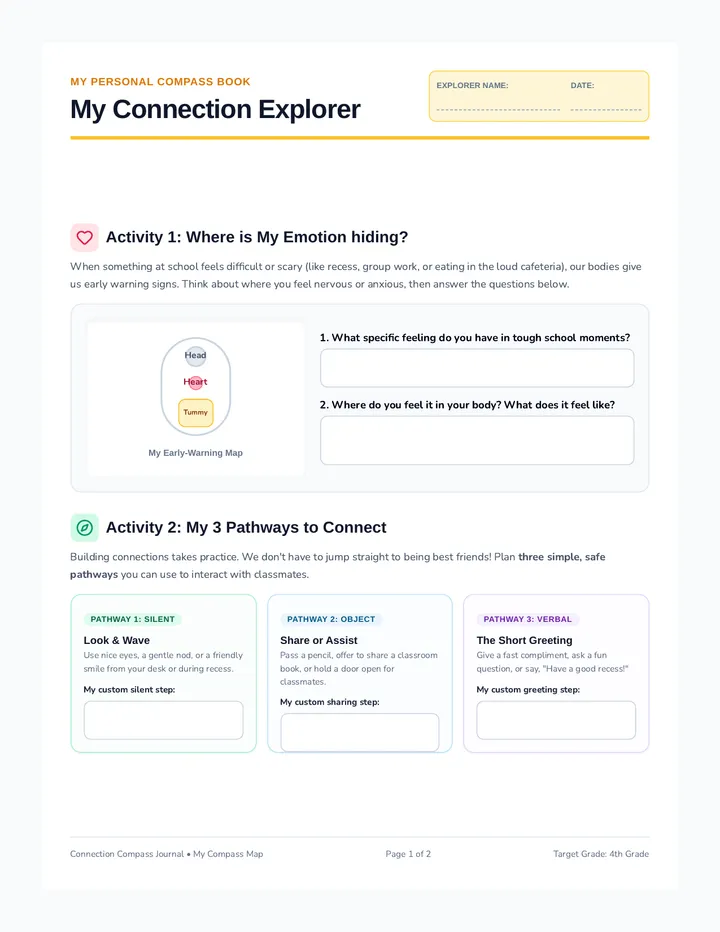
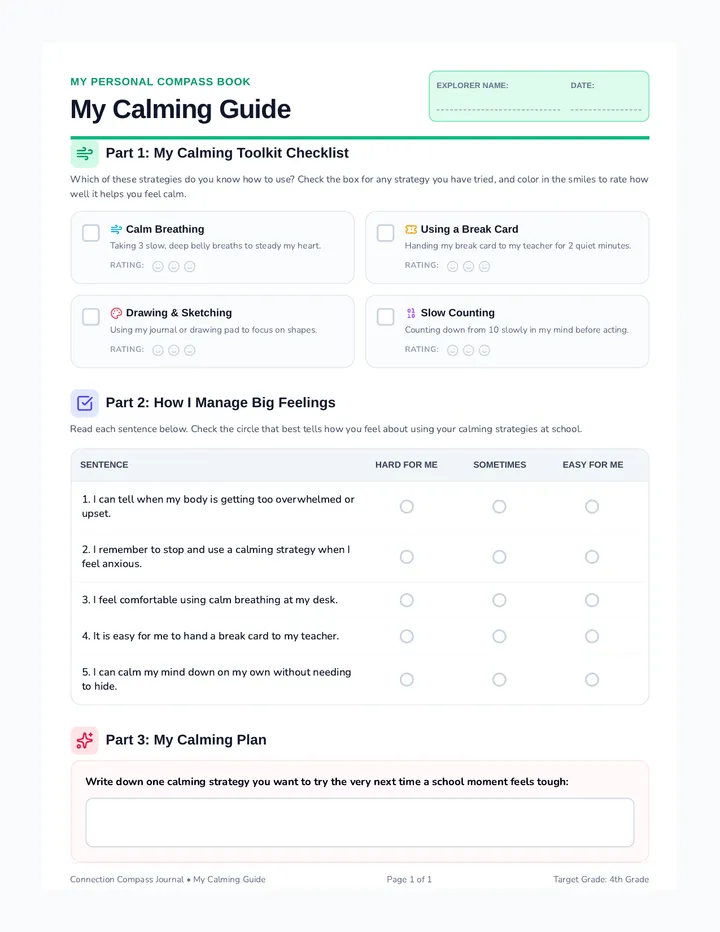
A comprehensive progress monitoring and intervention kit designed to help 4th-grade students experiencing social anxiety and withdrawal. The kit includes situational scenario cards, an educator assessment rubric, and a student self-reflection journal to build emotional awareness, expand peer connections, and develop help-seeking behaviors.
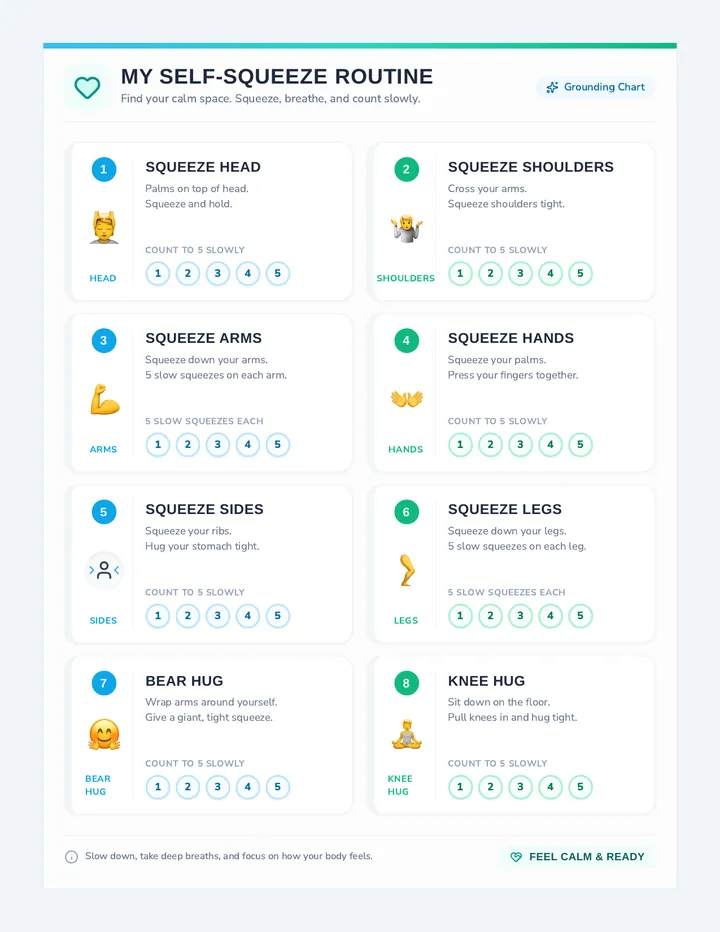
A pediatric grounding and sensory regulation lesson featuring a self-squeeze physical therapy routine to help students self-soothe and calm down.
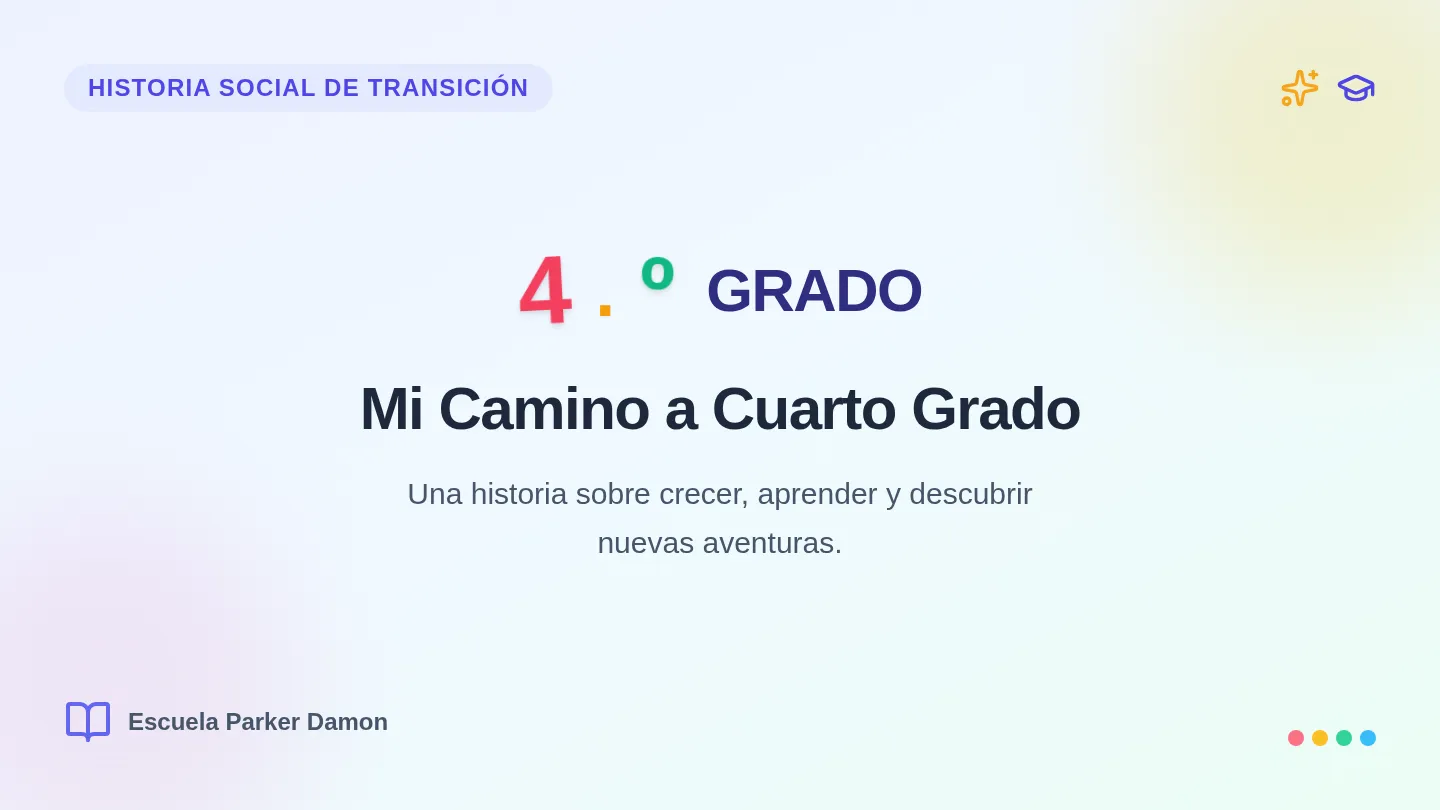
Una lección de transición diseñada para estudiantes que ingresan a 4.º grado, enfocada en prepararlos socioemocionalmente para su nueva escuela, nuevos maestros y rutinas diarias.
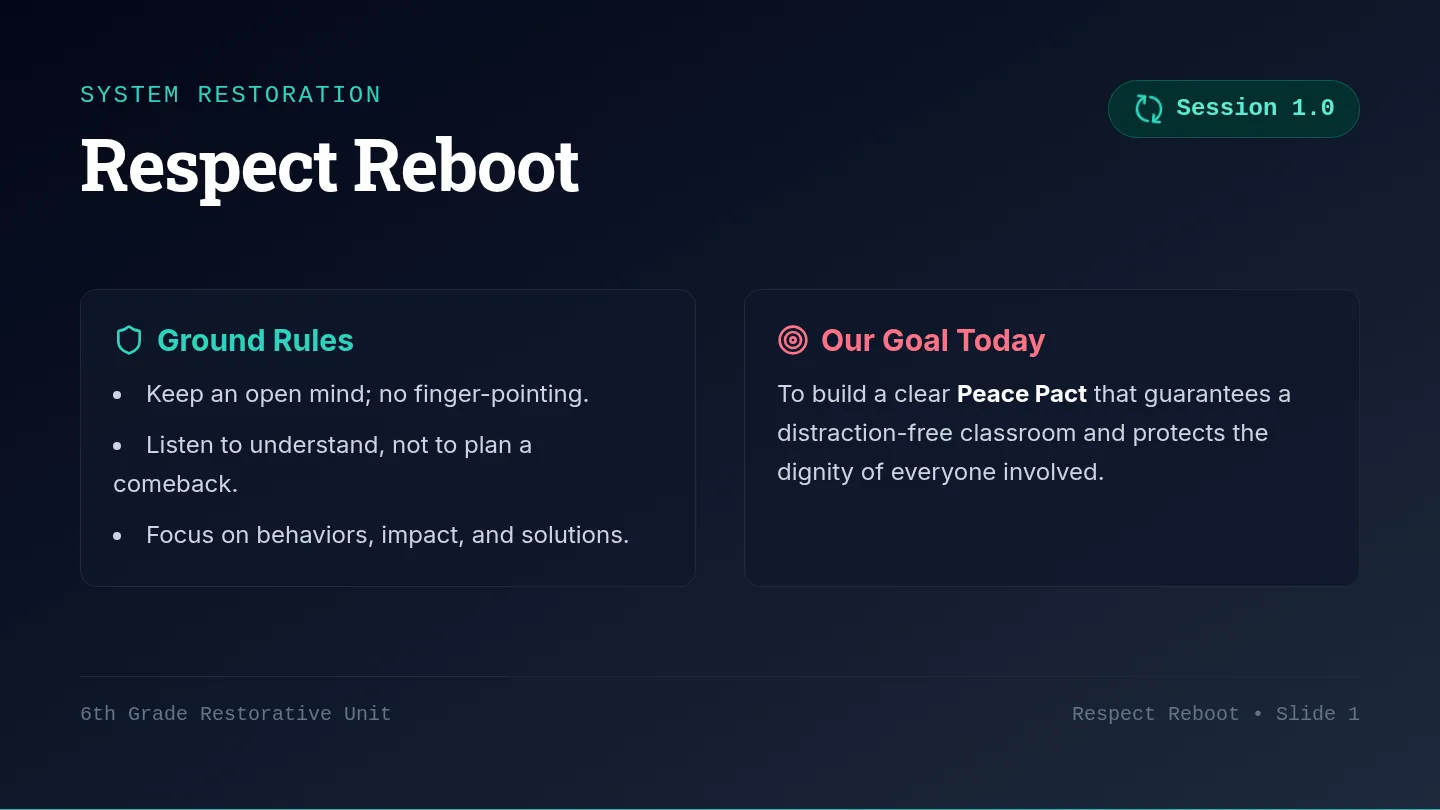
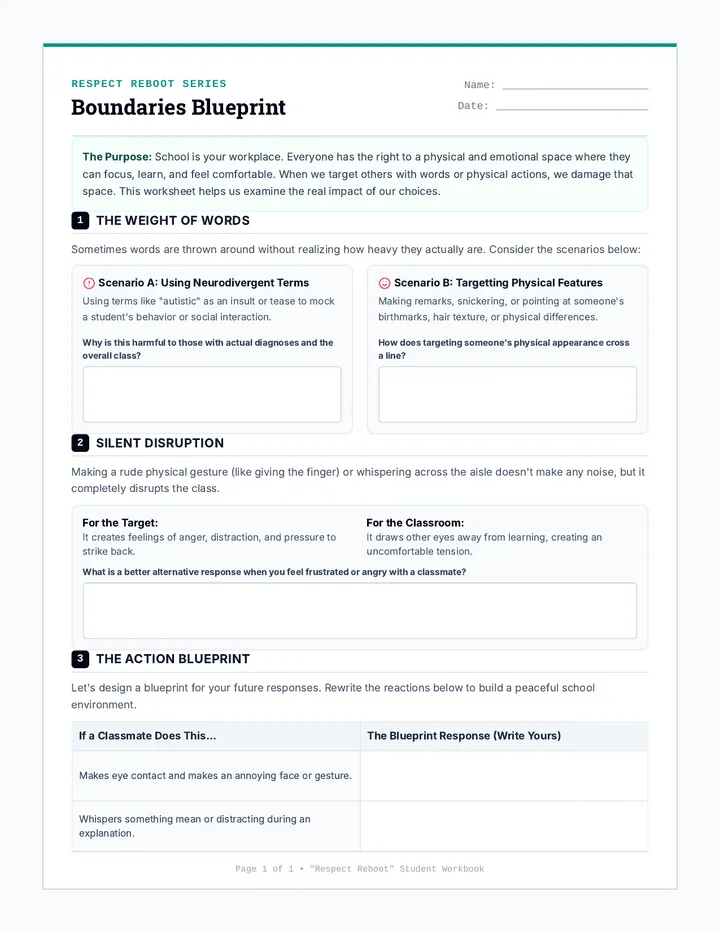
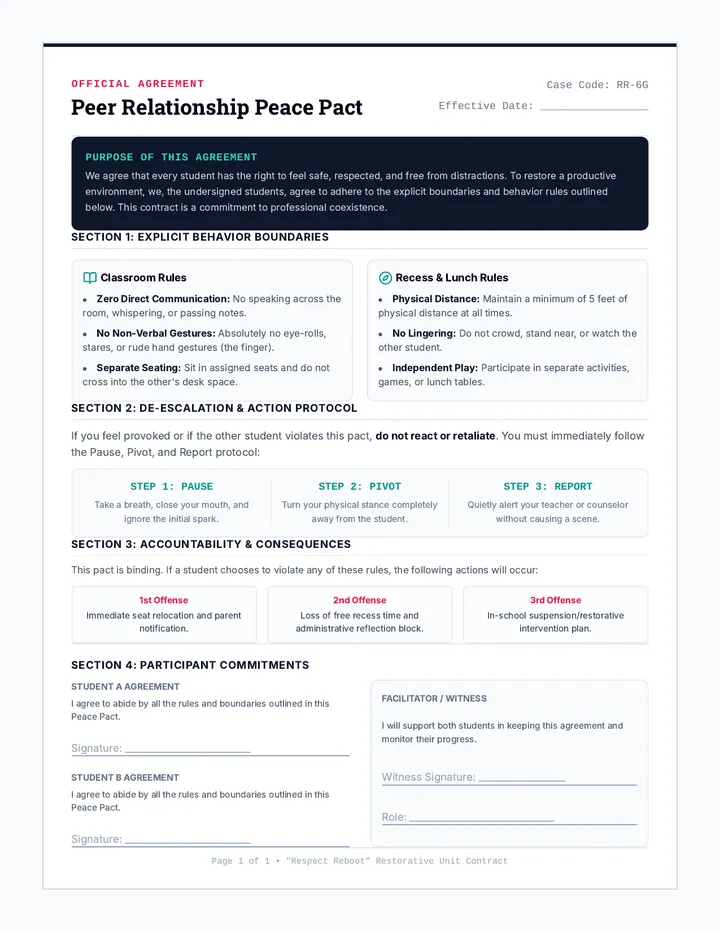
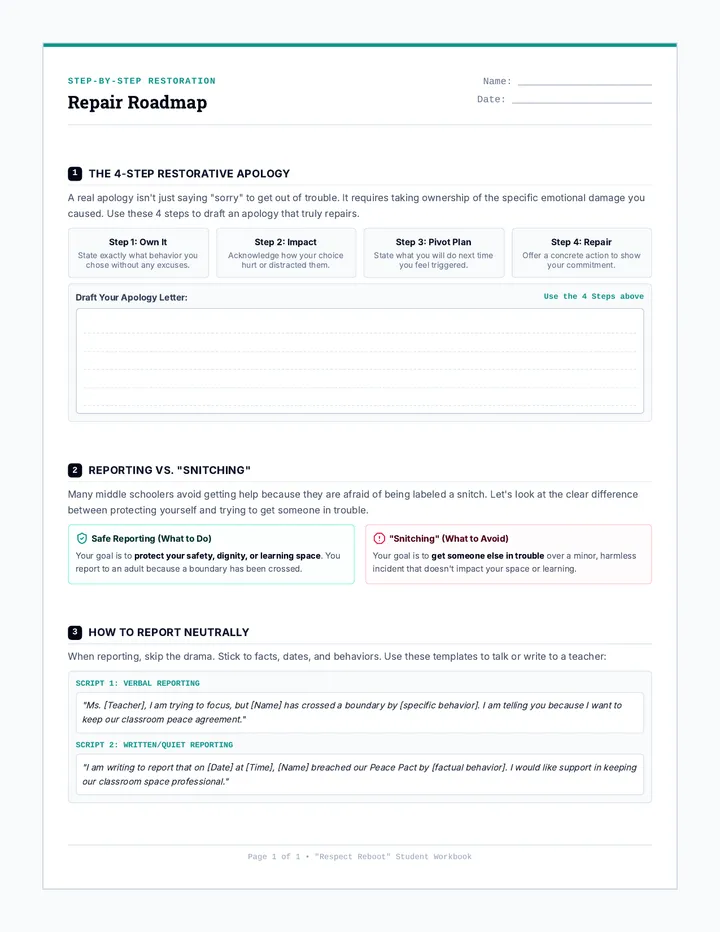
A restorative behavior intervention lesson designed for sixth-grade students in conflict, focusing on empathy, setting clear boundaries, and learning healthy reporting habits.
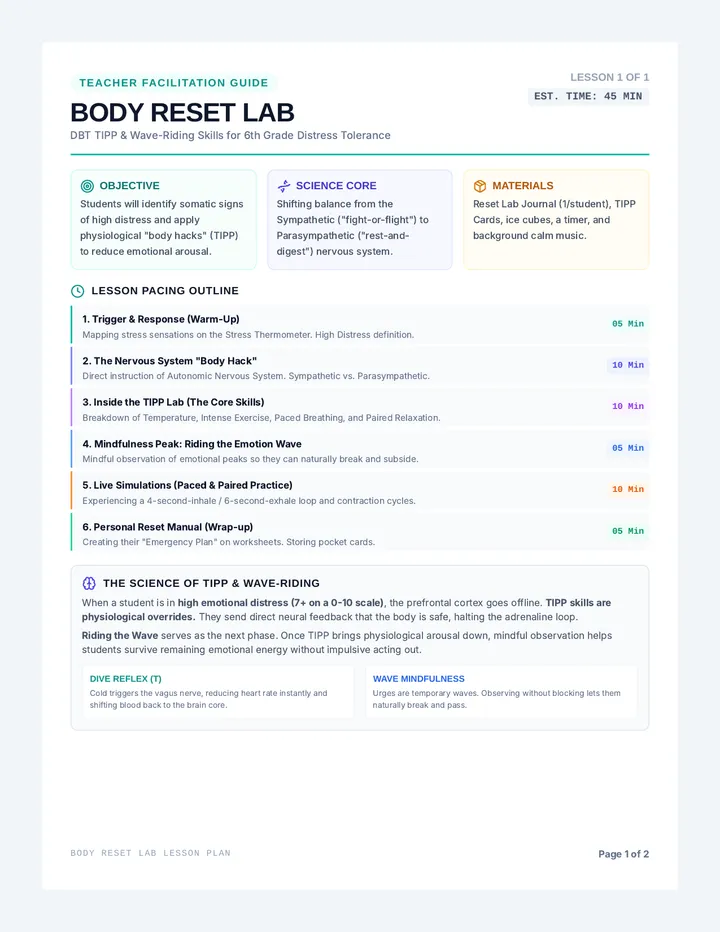
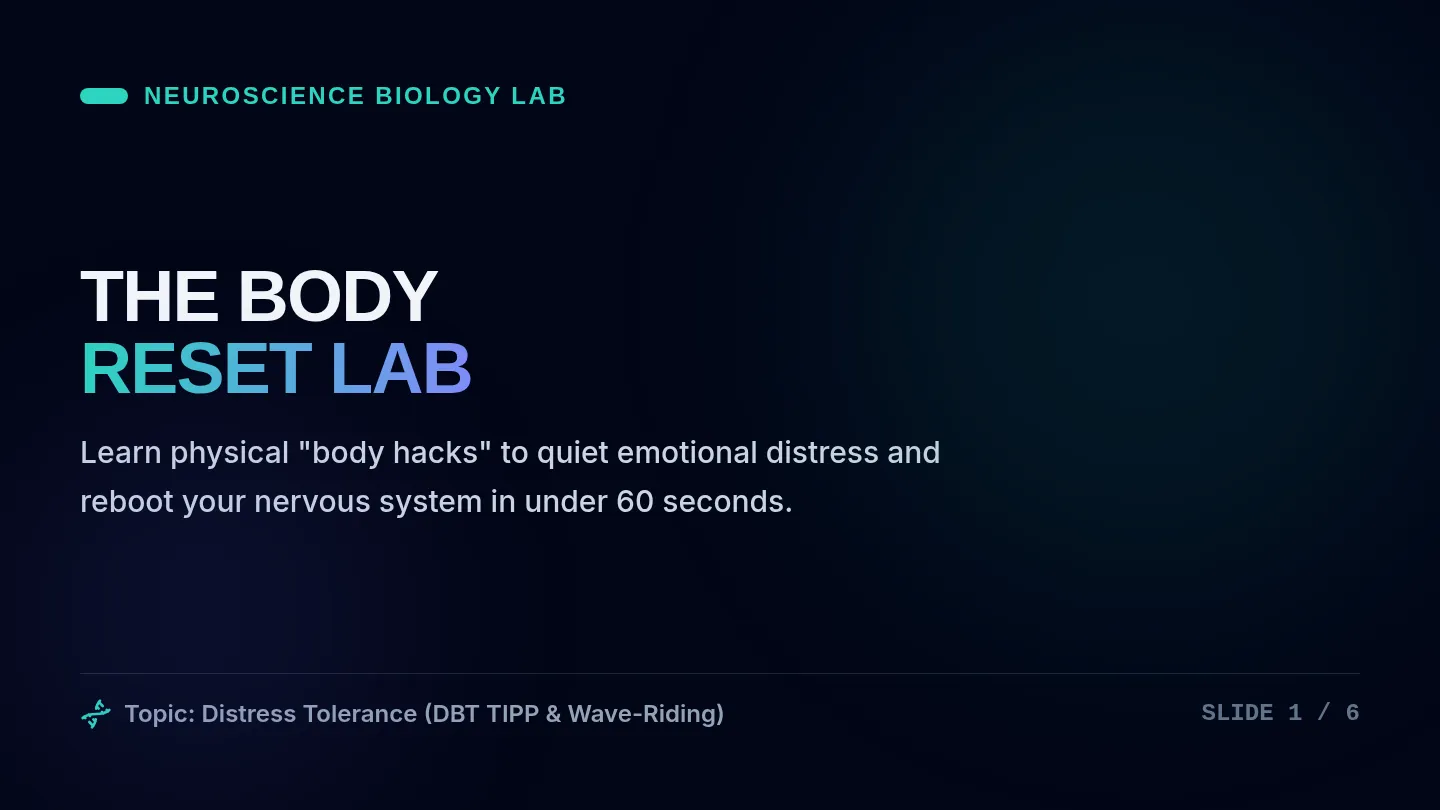
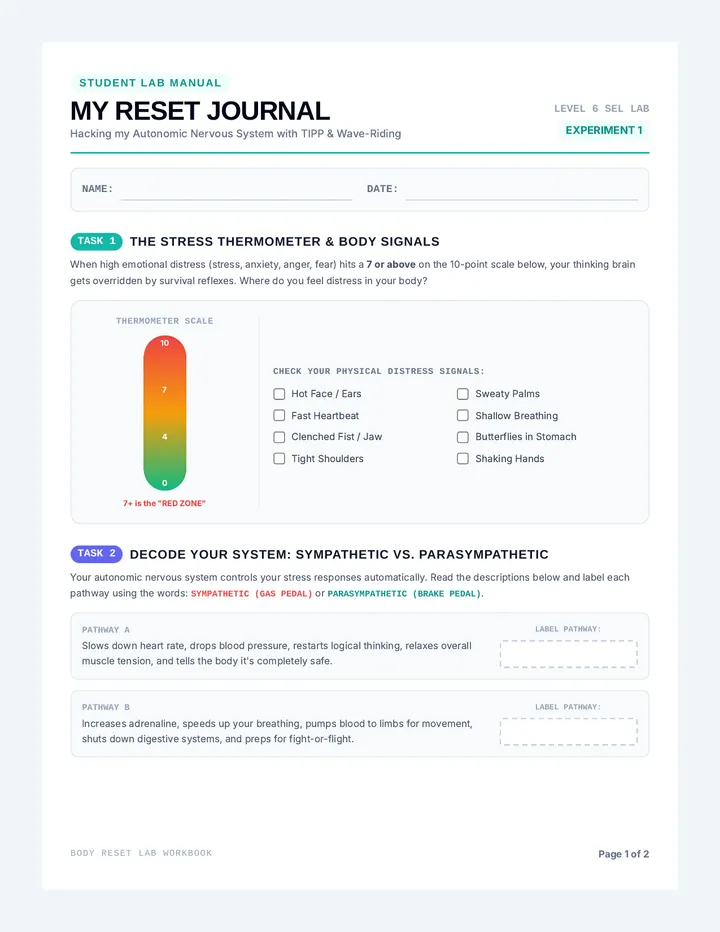
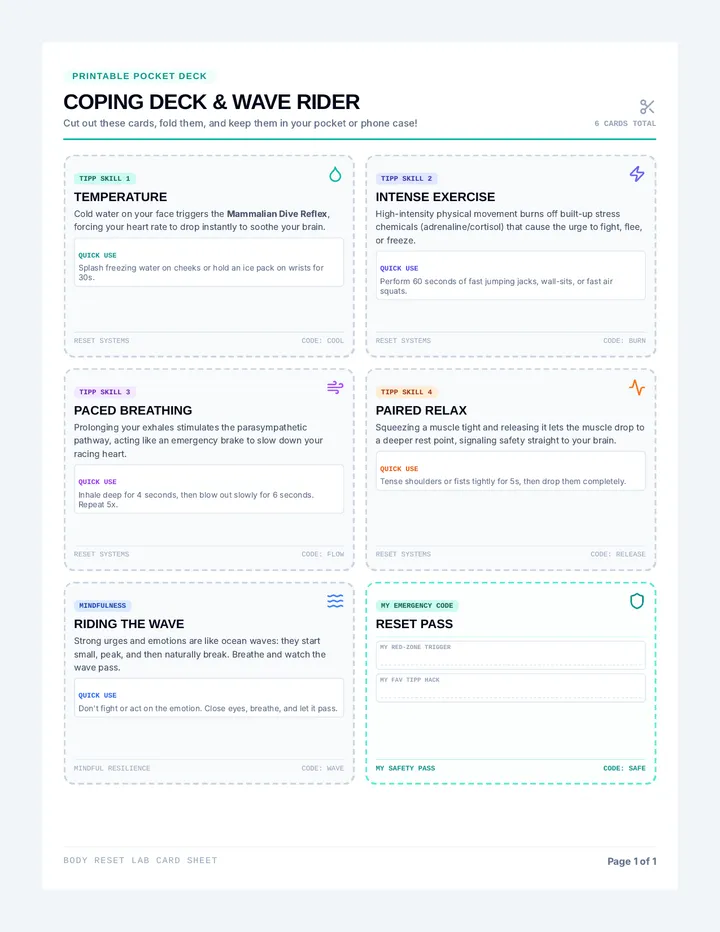
A 6th-grade Social-Emotional Learning (SEL) lesson introducing the DBT TIPP skills (Temperature, Intense exercise, Paced breathing, Paired muscle relaxation) as a physical 'body hack' to manage high emotional distress. Students learn how the autonomic nervous system works and build a personalized 'body reset' manual.
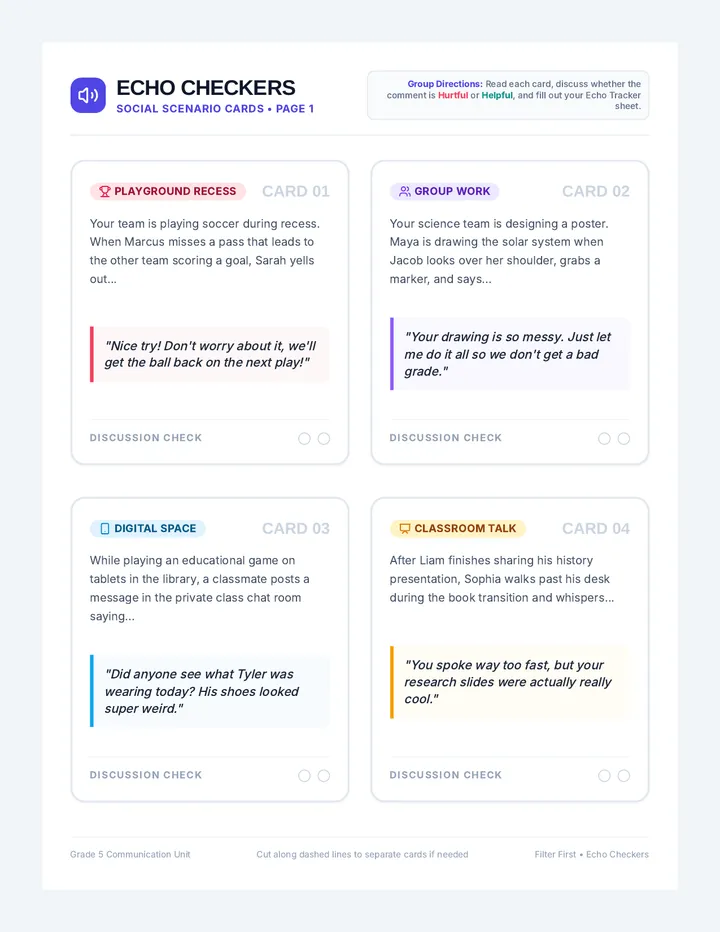
A lesson for 5th graders to analyze peer communication across recess, group work, and digital settings. Students learn to distinguish between helpful and hurtful comments and practice constructive reframing.
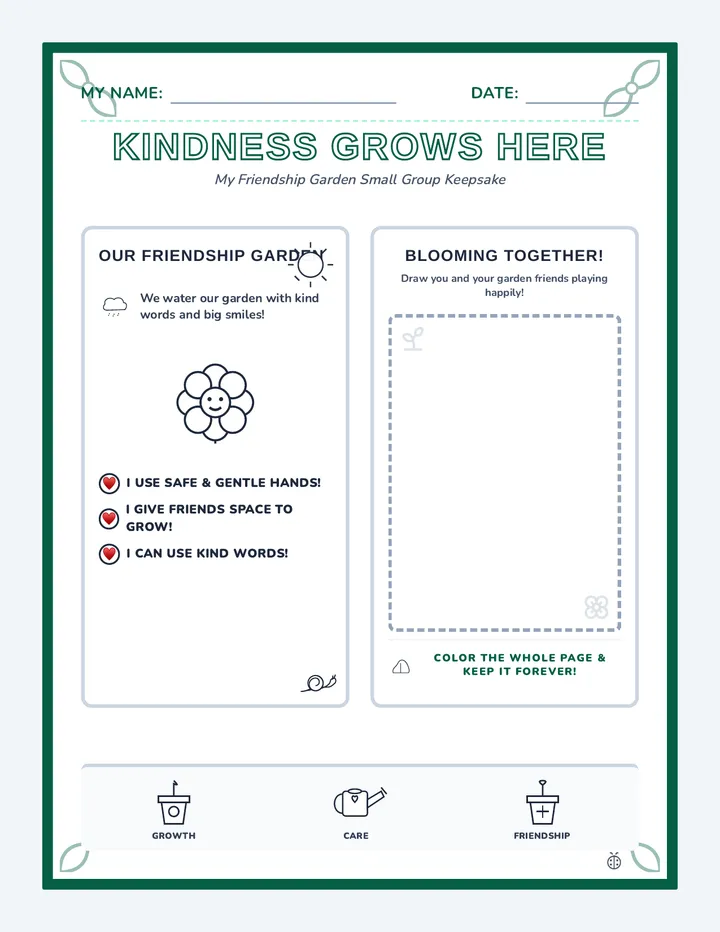
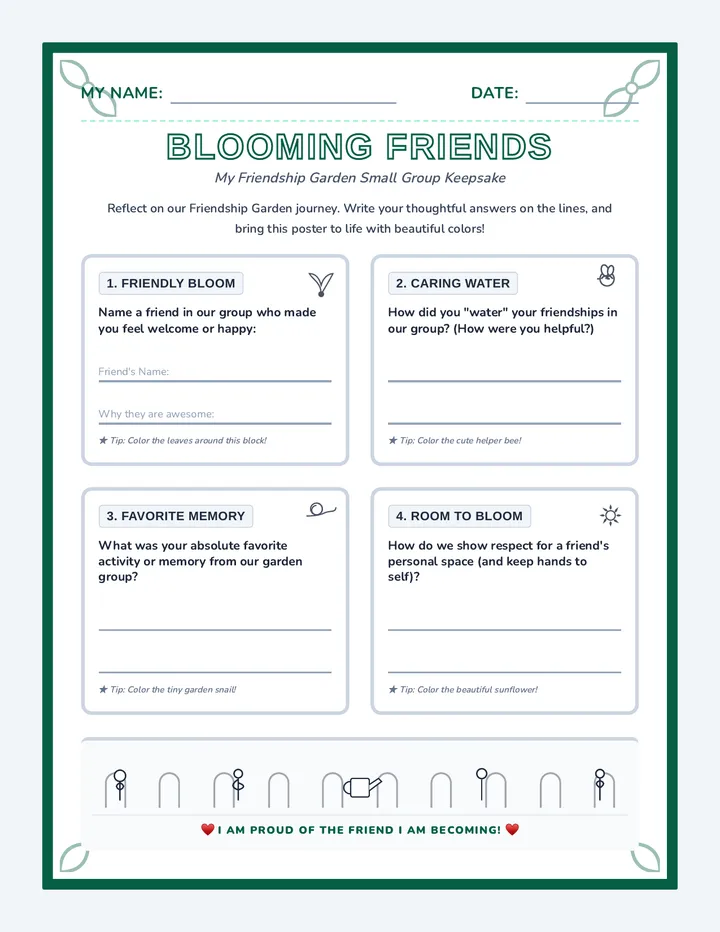
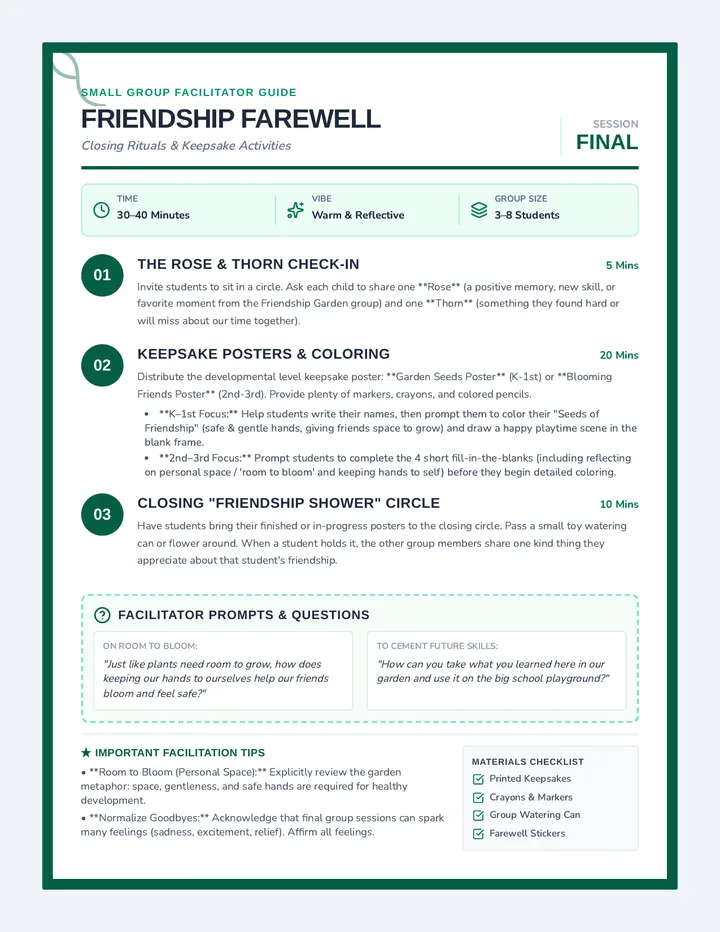
A warm, reflective closing lesson for the Friendship Garden small group. It provides students with creative keepsake coloring posters tailored to their grade levels to celebrate their growth and positive relationships.
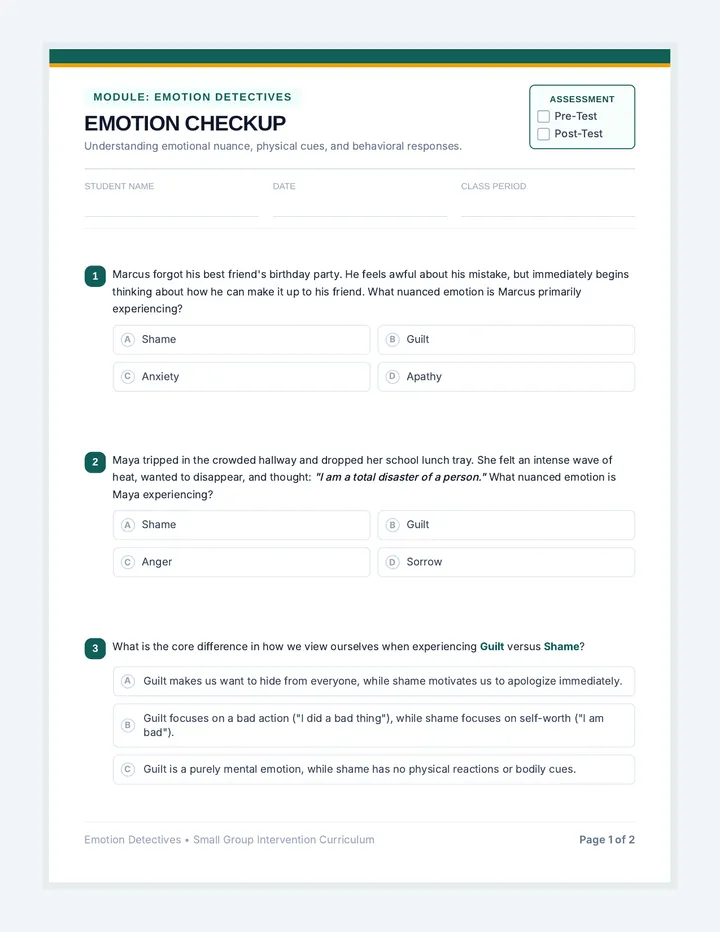
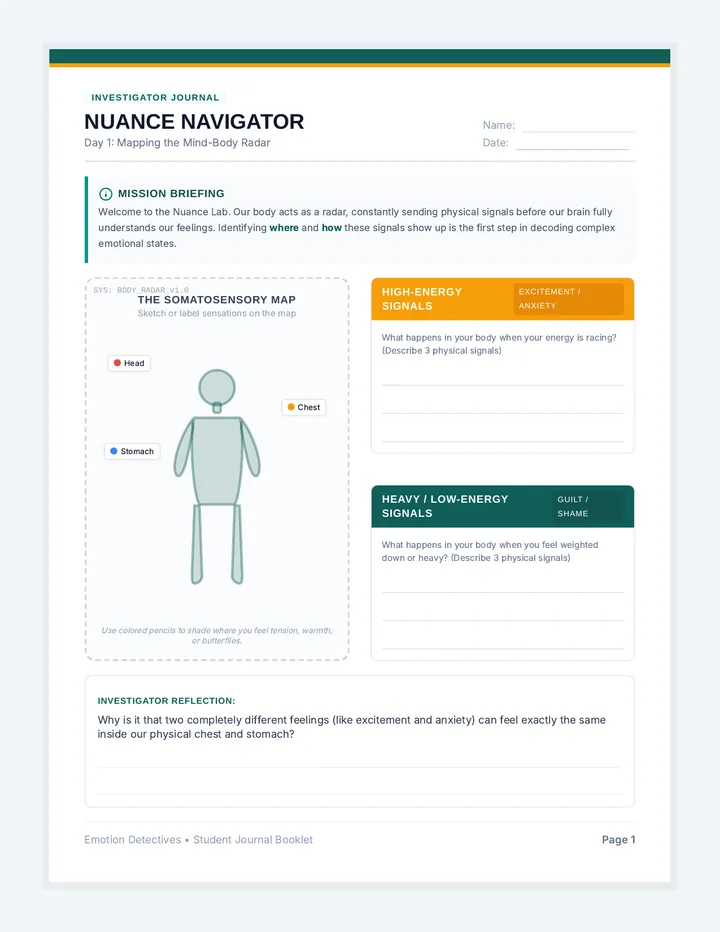
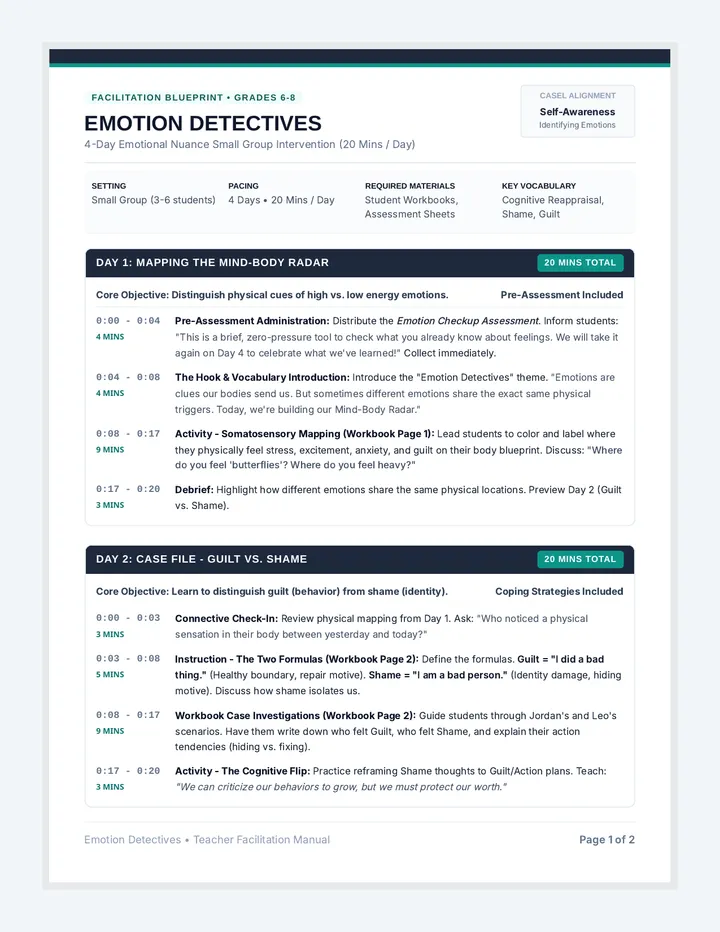
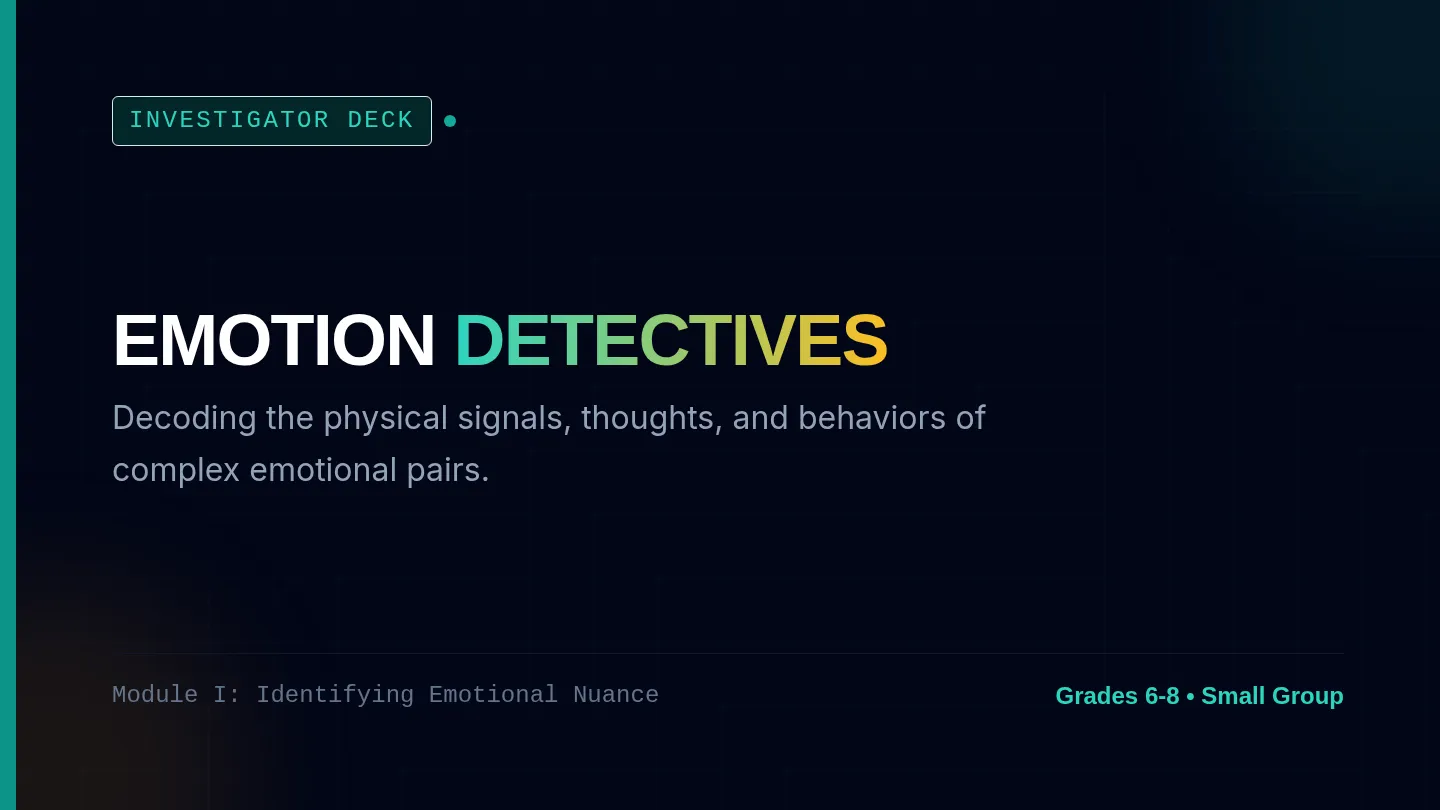
A 4-day small group intervention for grades 6-8 focusing on self-awareness and emotional nuance. Students explore the physical, cognitive, and behavioral distinctions between complex emotional pairs like guilt versus shame and excitement versus anxiety.
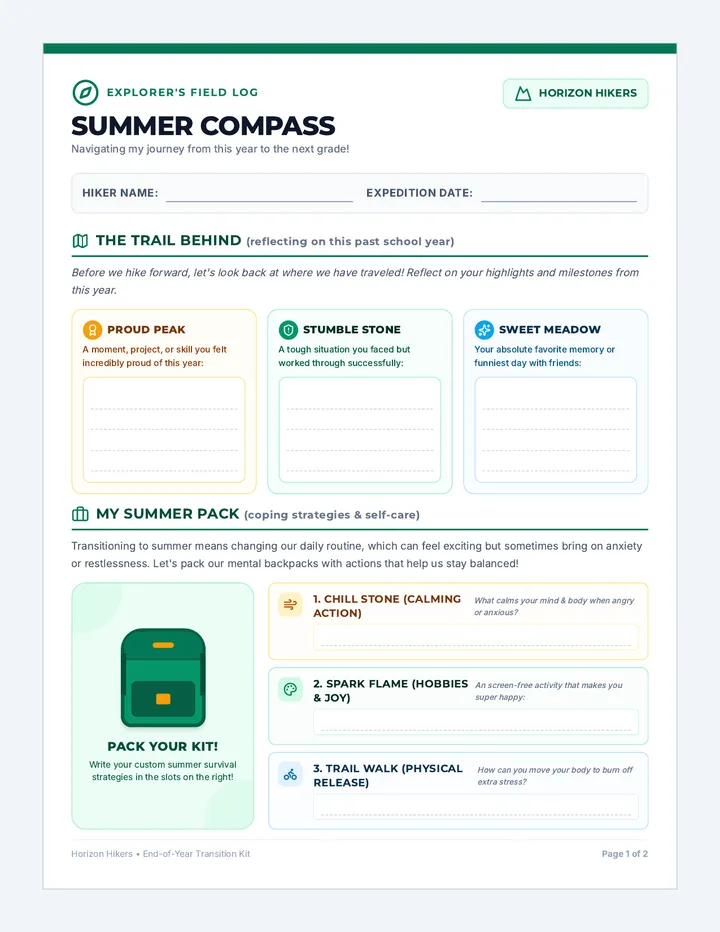
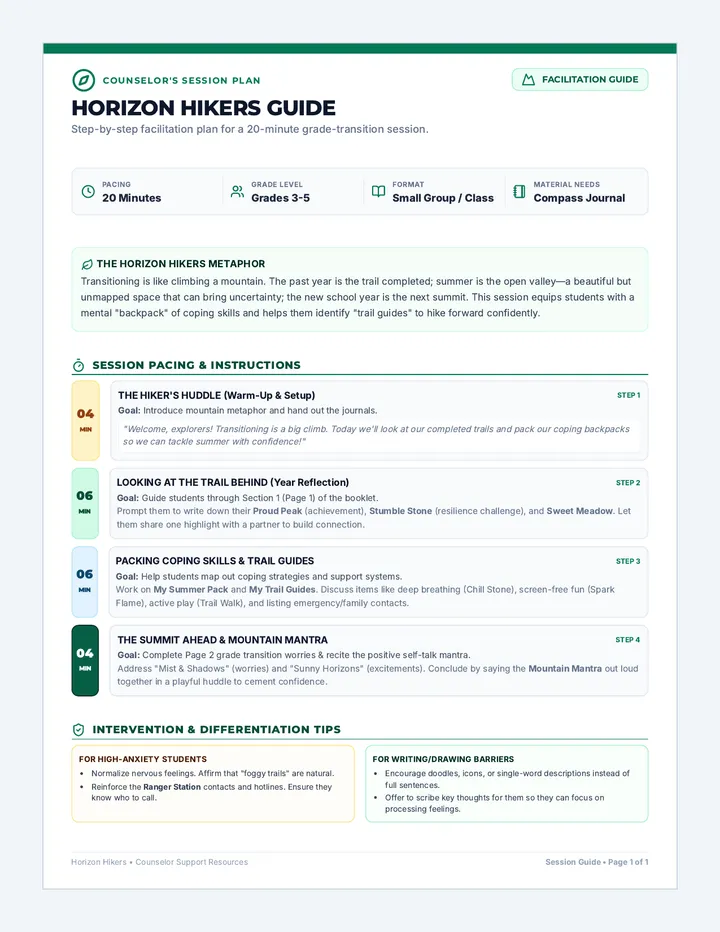
A supportive transition lesson for upper elementary students to reflect on the past year, create a visual coping plan for summer, and build confidence for entering the next grade.