A comprehensive personal finance lesson where students learn to manage income, expenses, and savings through a realistic budget simulation and decision-making activities.
A comprehensive lesson designed for 7th grade students to identify and shift away from co-dependent 'trauma bonding' behaviors toward healthy, resilient friendship boundaries. It focuses on the 'both can be true' philosophy—acknowledging hard things while maintaining individual emotional ownership.
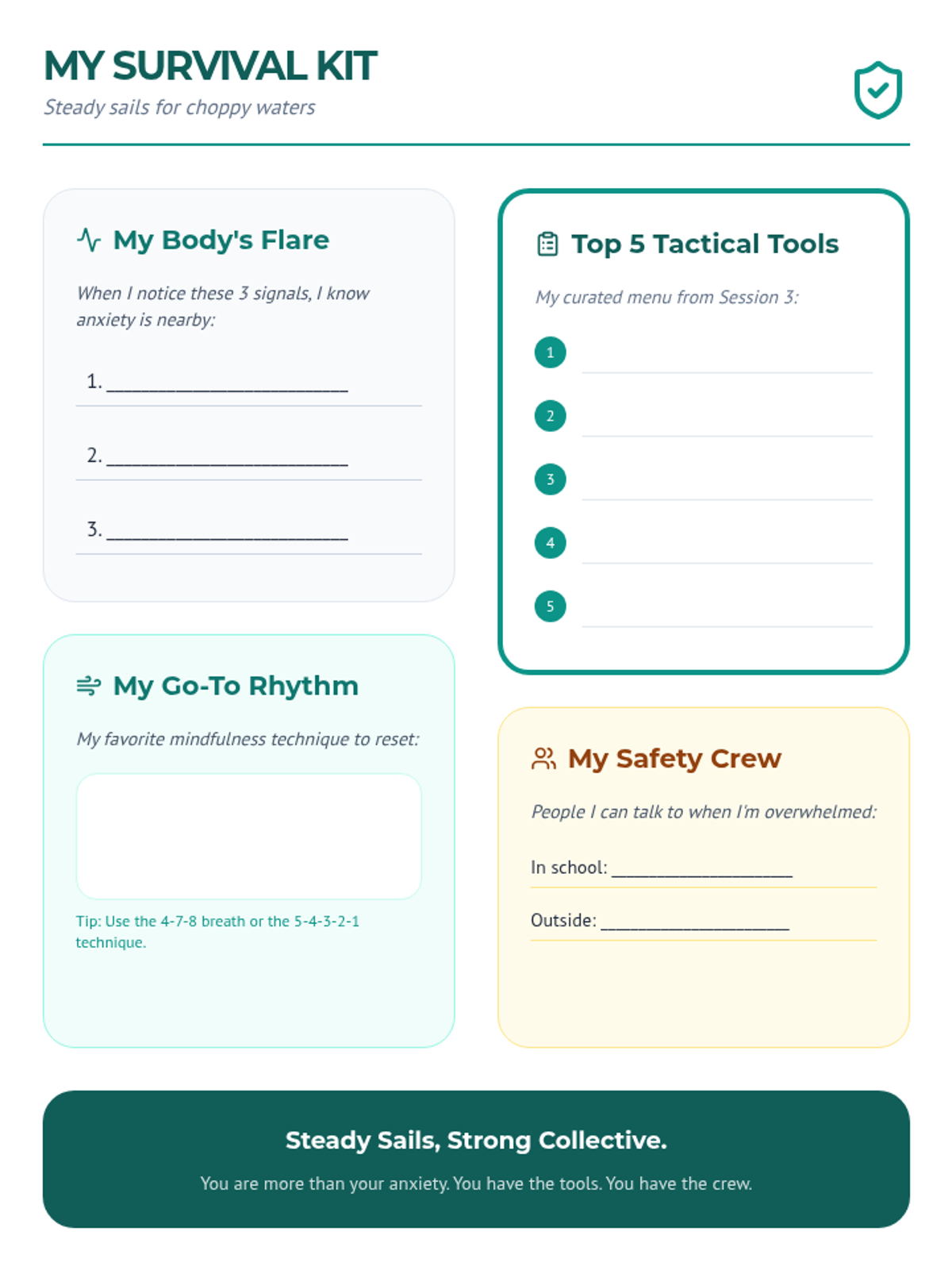
A comprehensive collection of evidence-based coping strategy handouts for middle schoolers, focusing on the biological and psychological 'why' behind each technique. Designed for 7th-grade boys with a tactical, engineering-inspired 'Survival Guide' aesthetic.
A lesson designed for early elementary students to learn the social mechanics of making friends, specifically focusing on starting conversations, asking questions, and discovering shared interests through a social story and interactive cards.
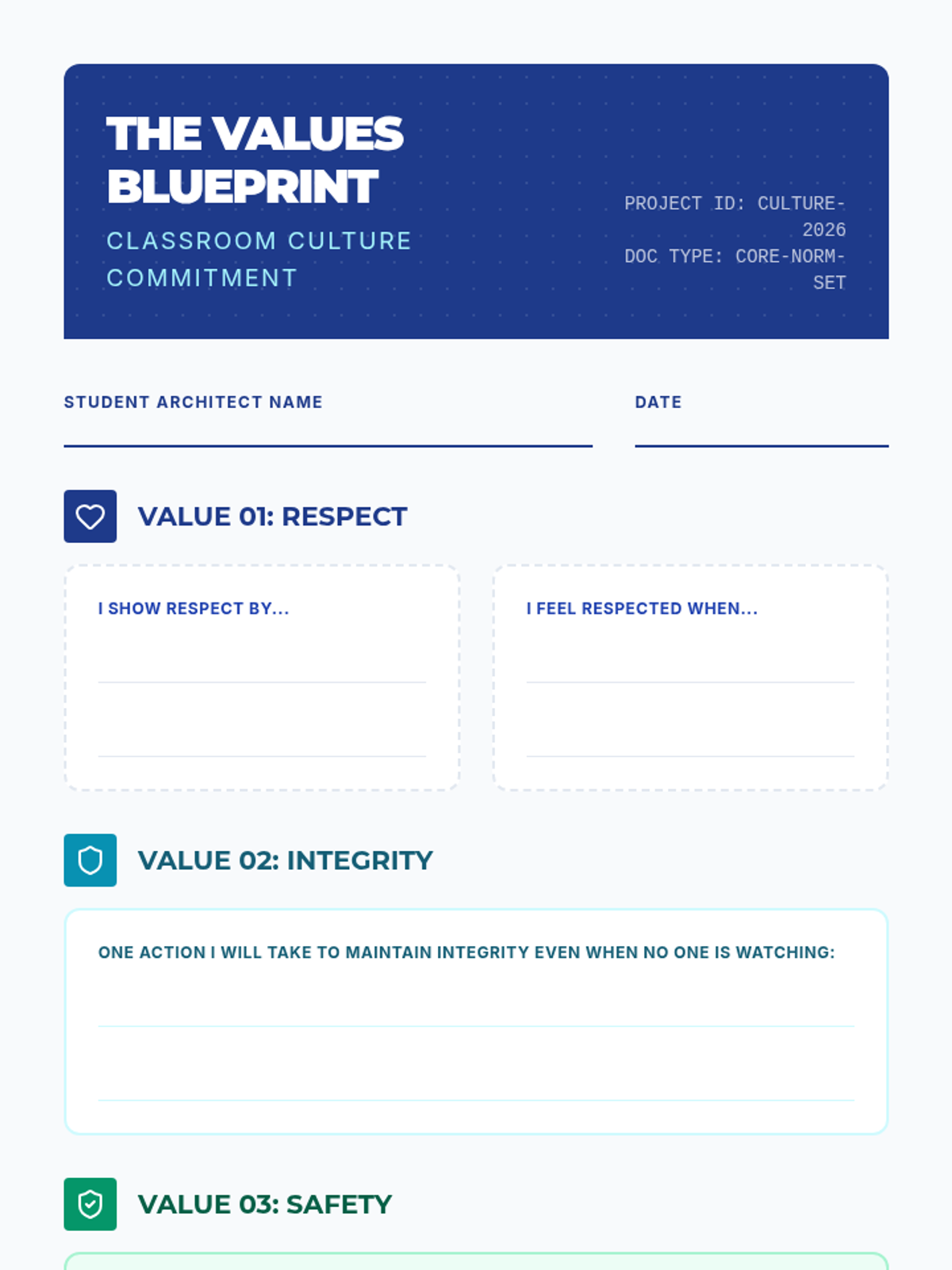
A large-group SEL lesson focused on character, exploring the concept of doing the right thing even when no one is watching through interactive discussions and reflective activities.
A social thinking lesson based on the "Body in the Group" ocean adventure, teaching kindergarteners how physical proximity and orientation show interest and participation.
A lesson for 4th graders exploring the importance of honesty, the impact of lies on trust, and how to tell the truth even when it's hard.
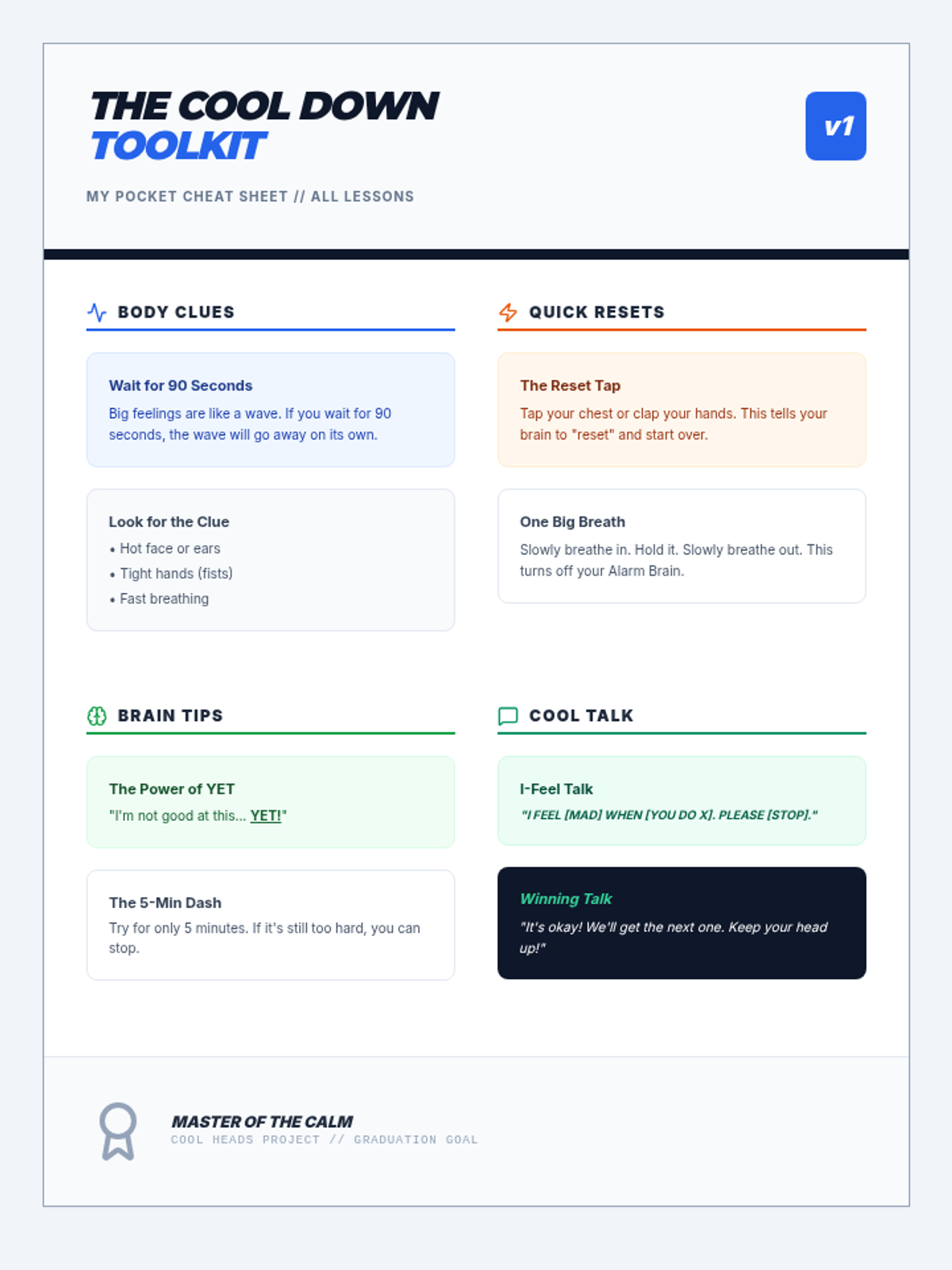
A lesson focused on developing emotional intelligence through identifying and practicing various coping strategies and regulation techniques.
A lesson for kindergarteners to establish foundational classroom expectations, focusing on active listening, following directions, and cooperating as a "Classroom Crew."
A lesson introducing 4th graders to emotional regulation and practical coping strategies for managing big feelings like anger, frustration, and anxiety.
A lesson focused on fostering a culture of kindness within the school community, targeting interactions between students and teachers through discussion and active practice.
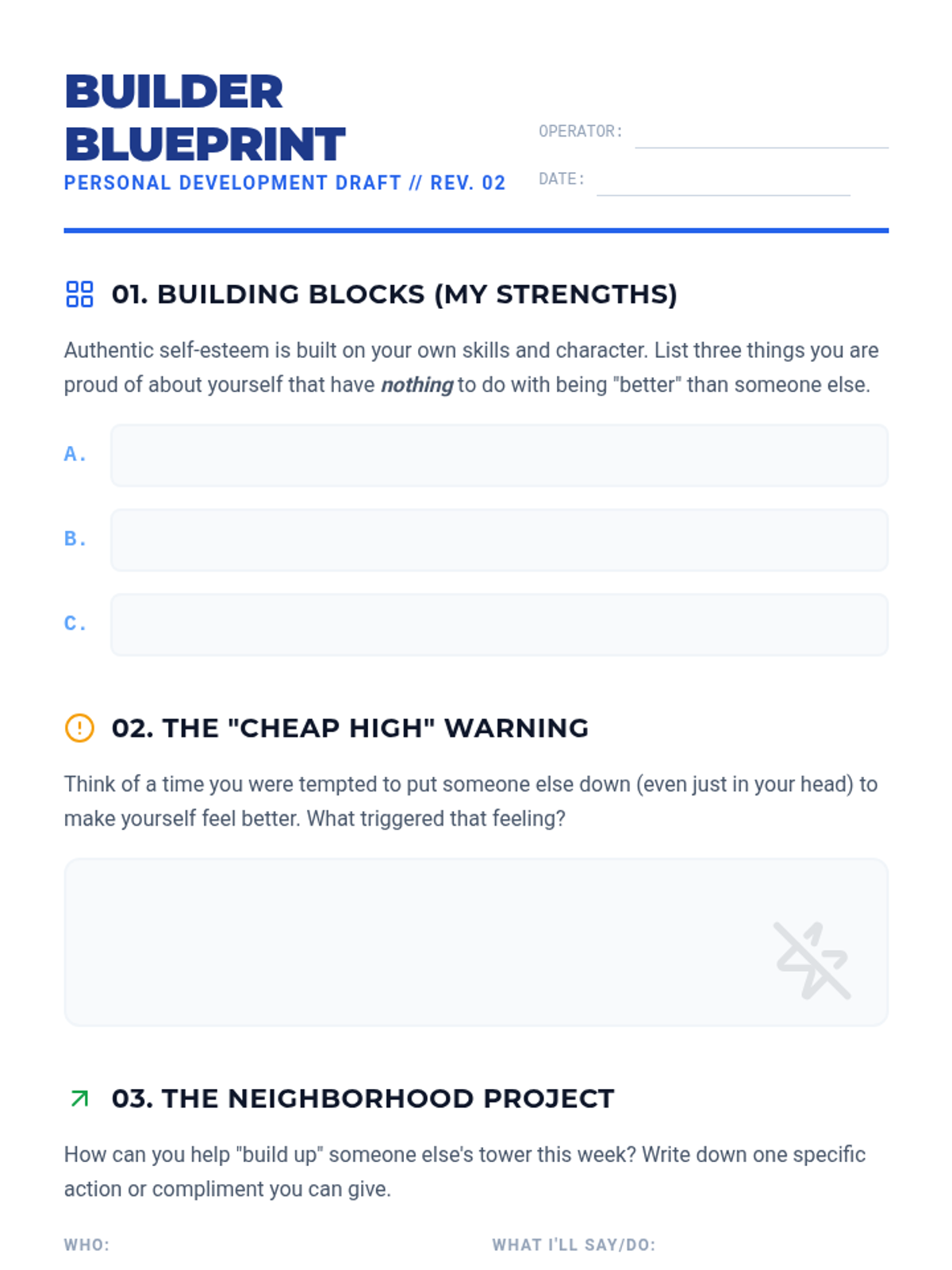
A comprehensive lesson exploring the motivations behind academic dishonesty and the long-term impact of cheating on personal integrity and community trust. Students analyze realistic scenarios and build a personal 'blueprint' for ethical decision-making.
A guide for students and staff on how to safely navigate and respond to physical conflicts in a school setting, focusing on de-escalation, safety, and restorative practices.
Students investigate the physical manifestations of low self-esteem and depression. They learn to identify the 'Bio-Feedback Loop' where body language and physical sensations reinforce negative self-perception.
Students conduct movement experiments to see how physical activity impacts their mindset. They observe the difficulty of maintaining a low mood while engaging in high-energy positive actions.
Using complex character scenarios, students apply behavioral activation principles to analyze social-emotional challenges. They diagnose negative feedback loops and prescribe evidence-based action interventions.
Students practice role-playing the transition from recognizing a negative feeling to choosing a positive action. They use 'Joy Menus' to simulate real-world application of emotional regulation strategies.
In this culminating lesson, students create a personal 'Bounce-Back Plan' emergency card. They identify three specific actions they can take when feeling low to build resilience and autonomy.
A nautical-themed lesson focusing on decision-making skills for middle-grade students, introducing the 'Pause, Plot, Pilot' framework to navigate tricky situations and peer pressure.
A lesson focused on teaching students self-regulation techniques through mindful breathing, featuring the infinity loop strategy.