A 30-minute lesson for high school seniors focused on identifying stress management techniques and creating a personalized wellness plan. Students will watch a video, engage in discussion, and build a toolkit for their mental well-being.
Students master the technical side of search, from basic search engine mechanics to advanced database filters and professional inquiry tools.
Focuses on the art of inquiry, teaching students how to transform broad interests into specific research questions and effective search keywords.
Students explore the modern information landscape, learning to distinguish between library resources, databases, and the open web across various academic levels.
Analyze workplace culture, professional communication, and business ethics through the lens of the high-stakes fashion industry in 'The Devil Wears Prada'. Students will explore how technology facilitates modern business and the ethical dilemmas of rapid-fire corporate environments.
Students learn the importance of professional document formatting and hierarchy, setting up a formal business proposal template with structured headings and standardized typography.
Students conduct a market research sprint, interviewing classmates to validate their product ideas and learning to 'pivot' based on real user feedback and data synthesis.
Students learn the difference between leading and open-ended questions, developing a research table and interview script to gather unbiased feedback from potential customers.
Students explore the concepts of target markets and customer empathy, moving from personal preferences to identifying specific user needs and mapping out a "Day in the Life" for their ideal customer.
Students explore the fundamental economic concepts of scarcity and opportunity cost, applying them to product development by making difficult trade-offs between competing features within a limited resource budget.
Students learn to identify consumer "pain points" as opportunities for innovation, moving from recognizing everyday frustrations to conceptualizing business solutions.
A final assessment covering application preparation, interview techniques, and professional workplace etiquette.
A comprehensive lesson on navigating the termination phase of the student-counselor relationship, focusing on celebrating growth, managing emotions, and planning for the future.
A calm, nature-themed 60-minute psychoeducation session for teens focused on the normative and adaptive nature of emotions, featuring interactive slides and discussion prompts.
A 30-minute small group counseling session focused on exploring self-identity through values, strengths, and future aspirations. Students work in pairs to reflect on their internal "blueprint" and share insights with one another.
A 30-minute small group counseling session designed for two students to explore their core values, strengths, and future aspirations through a structured "blueprint" metaphor.
A dynamic lesson designed to empower job seekers by reframing 'asking for help' as a professional strength. Participants learn who to ask, how to phrase requests for various scenarios (including accommodations and status updates), and practice through interactive roleplay.
A high-energy teamwork activity where participants must coordinate movements using strings to control a single marker and trace complex paths.
A lesson exploring the critical differences between professional and social communication, helping students identify when to use each style and how to 'level up' their messaging.
A goal-setting workshop where students 'reverse engineer' a long-term aspiration into immediate, manageable steps. Focuses on clarity, motivation, and overcoming potential obstacles.
Students identify personal stress triggers and develop a 'relief valve' system of coping strategies. The lesson focuses on recognizing physical signs of stress and planning proactive responses.
Students explore the layers of their identity, distinguishing between how they see themselves and how they are perceived by others. Includes a guided activity to create a multi-layered identity map.
Students will learn to identify common financial scams, protect their personal information online, and understand the steps to take if they become a victim of identity theft.
An introduction to the world of credit, covering how credit scores work in Canada, the difference between credit and debit, and the true cost of borrowing money.
Students will explore the power of compound interest, understand the difference between simple and compound growth, and set SMART financial goals using Canadian savings tools like TFSAs.
Students will master the daily operations of a bank account, including using debit cards, avoiding common fees, using mobile banking apps safely, and tracking their spending.
Students will learn the difference between checking and savings accounts, compare different banking institutions, and identify the specific documents required to open an account as a minor.
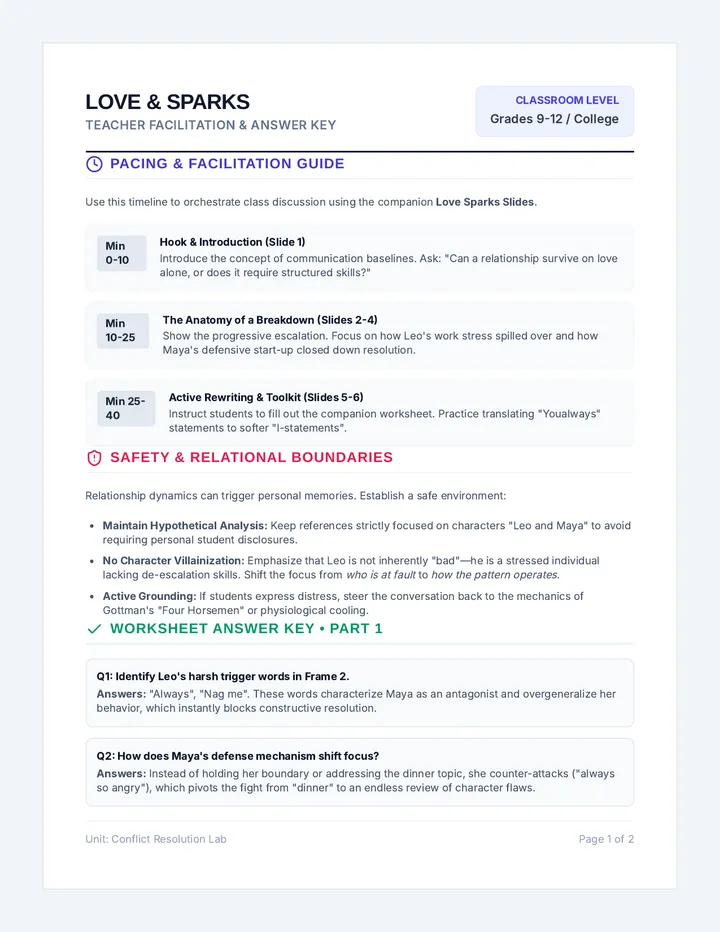
A high-speed micro-lesson designed to give students actionable strategies for de-escalating conflicts with peers and teachers in under 10 minutes. Updated with the Peace Protocol framework.
A reflective closing session to celebrate achievements and set intentions for the upcoming transition.