An introduction to reflective strategies like 'Stop, Think, Act' and 'Pros and Cons' to help a student slow down and think through social situations.
No materials in this lesson yet.
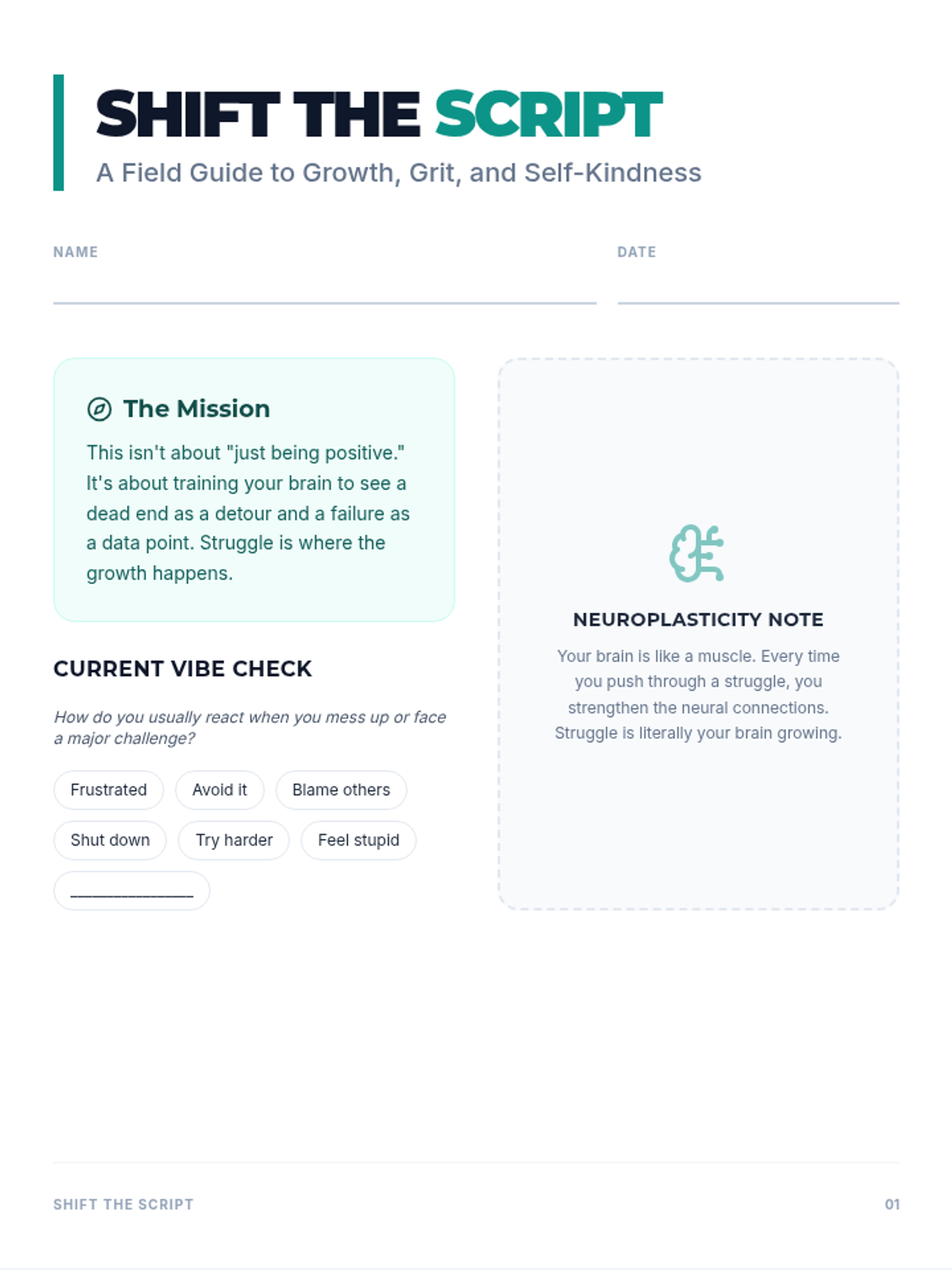
A comprehensive guide focusing on developing a growth mindset, reframing failure as a learning opportunity, and practicing self-compassion during setbacks.
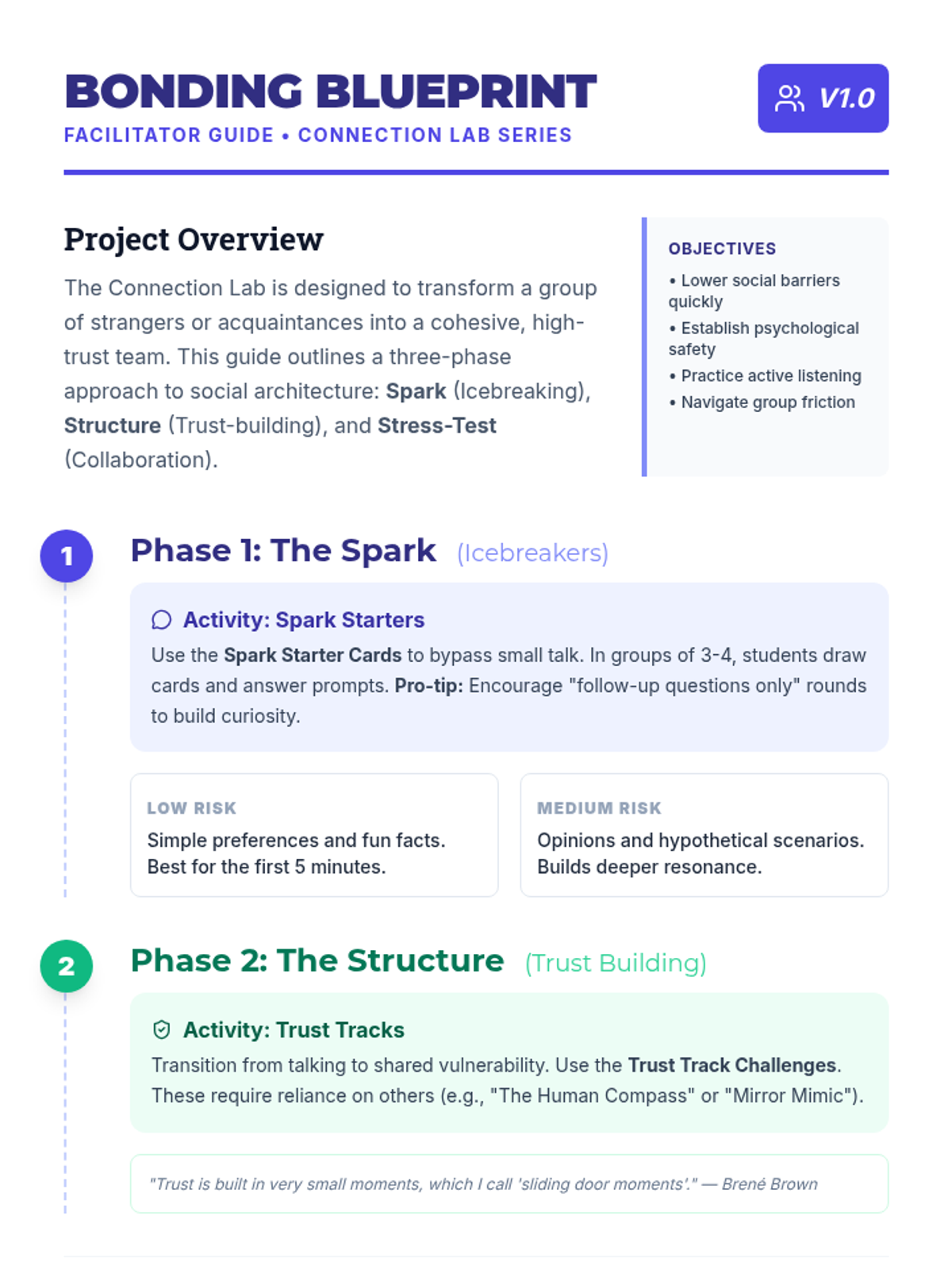
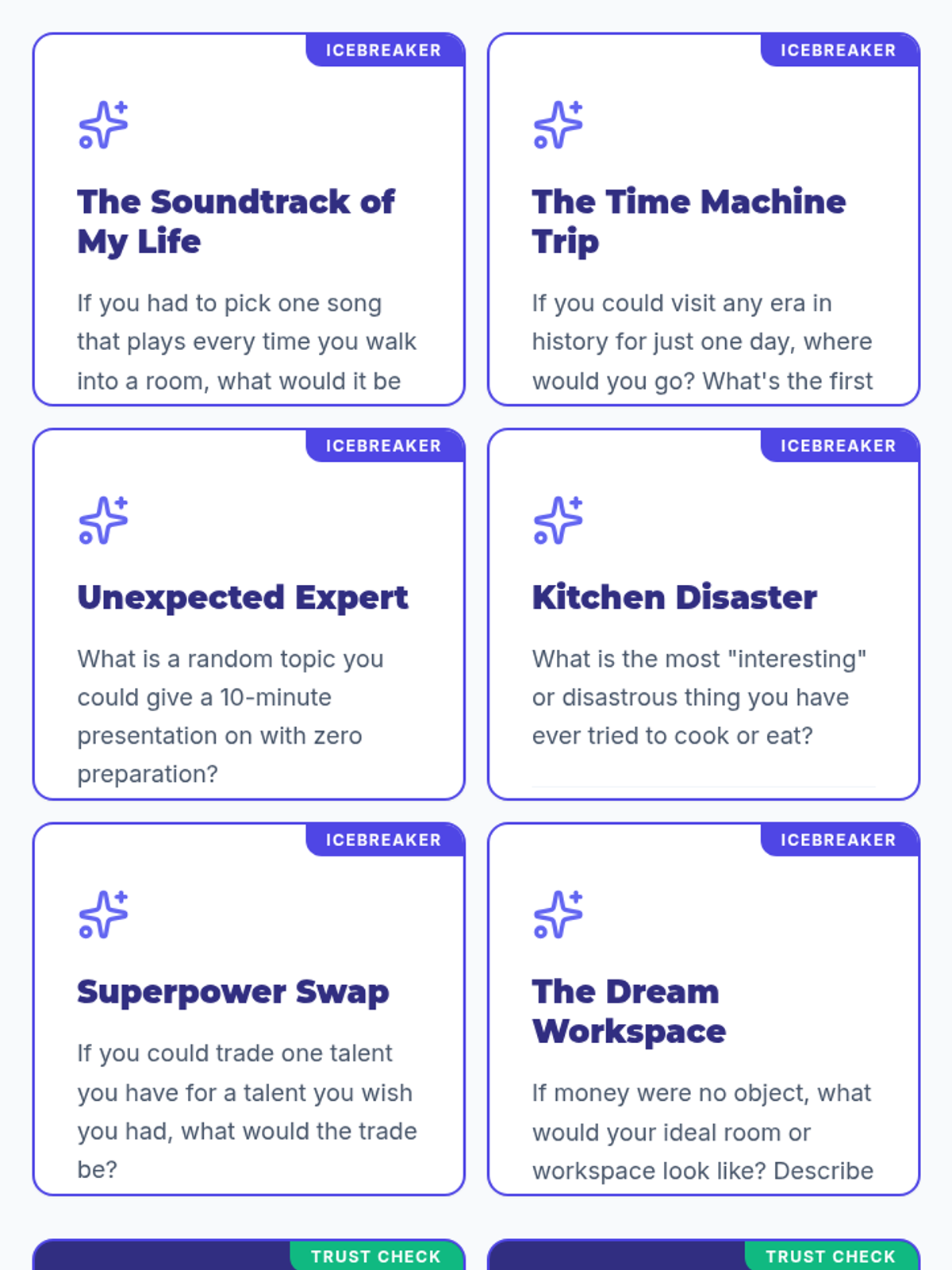
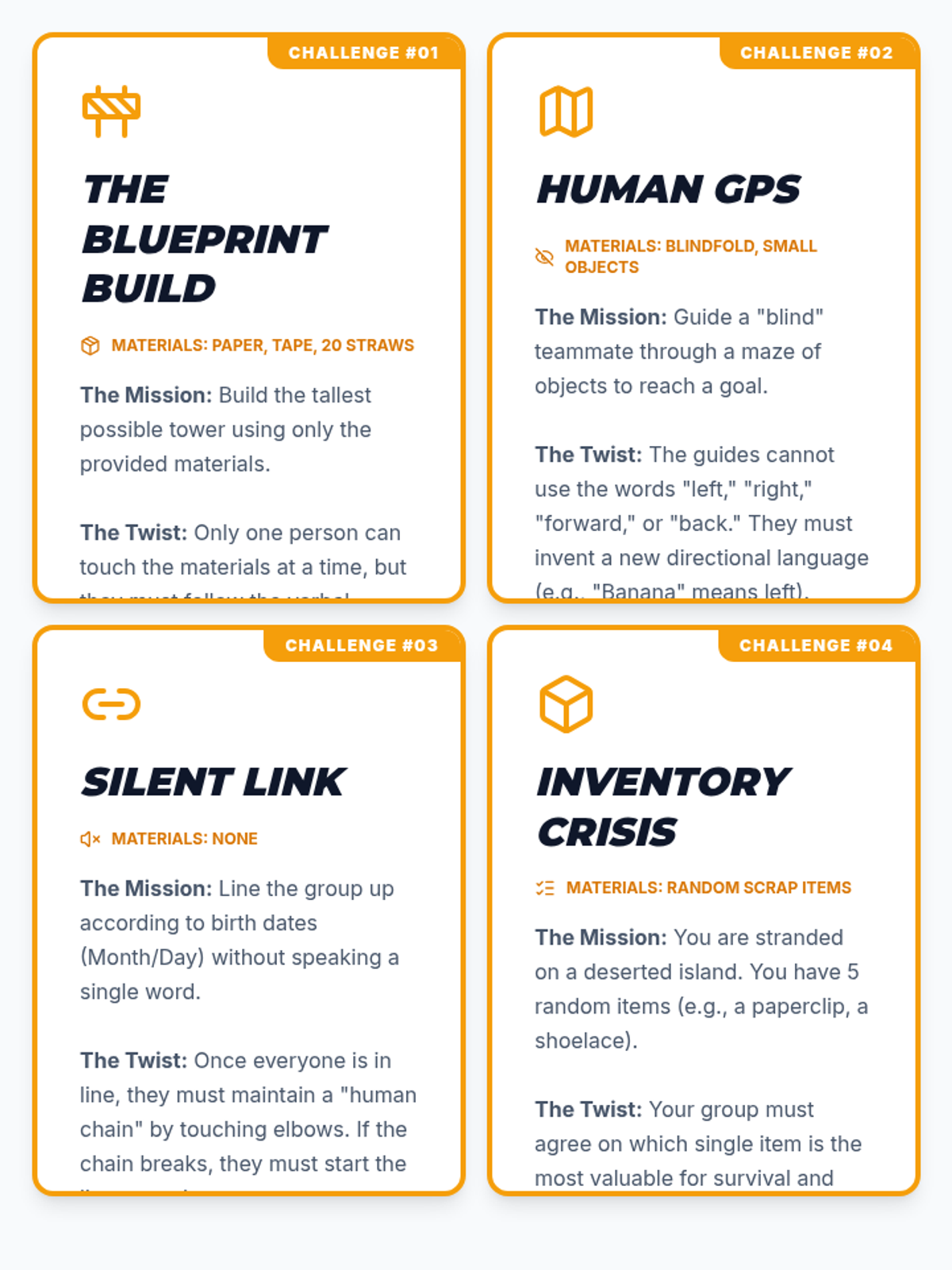
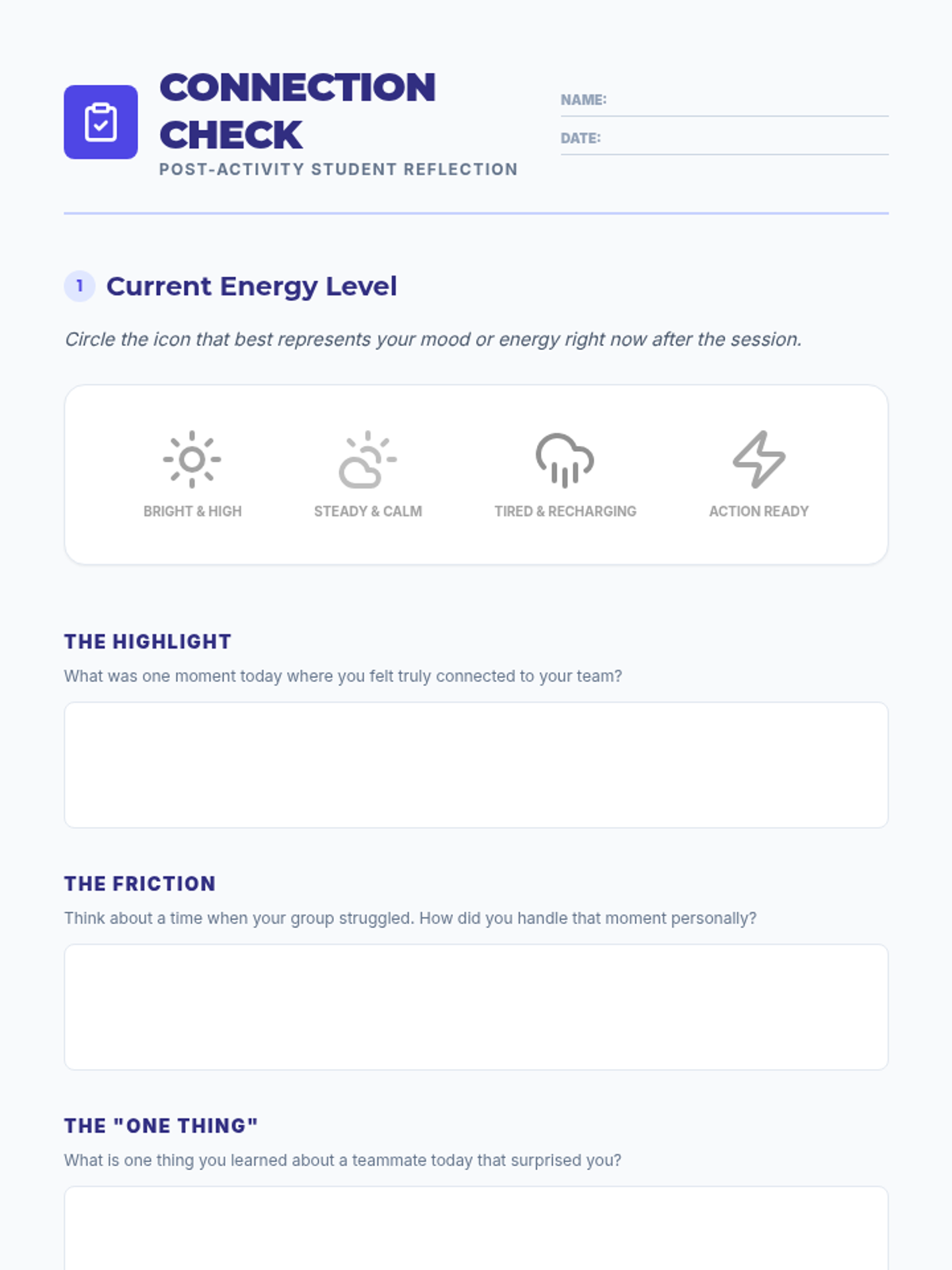
A comprehensive toolkit for small groups to build social bonds, establish trust, and master collaborative challenges through structured interaction.
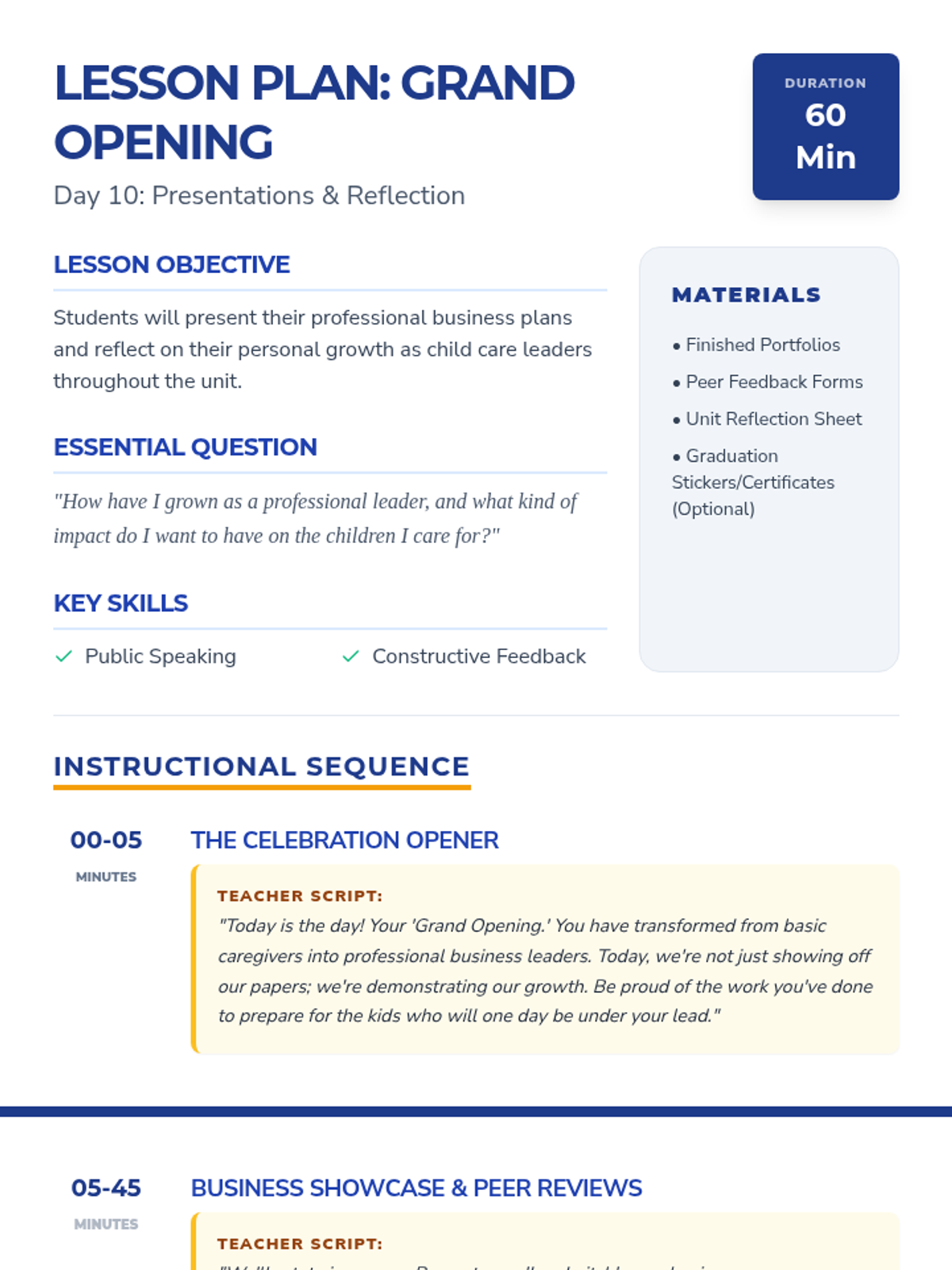
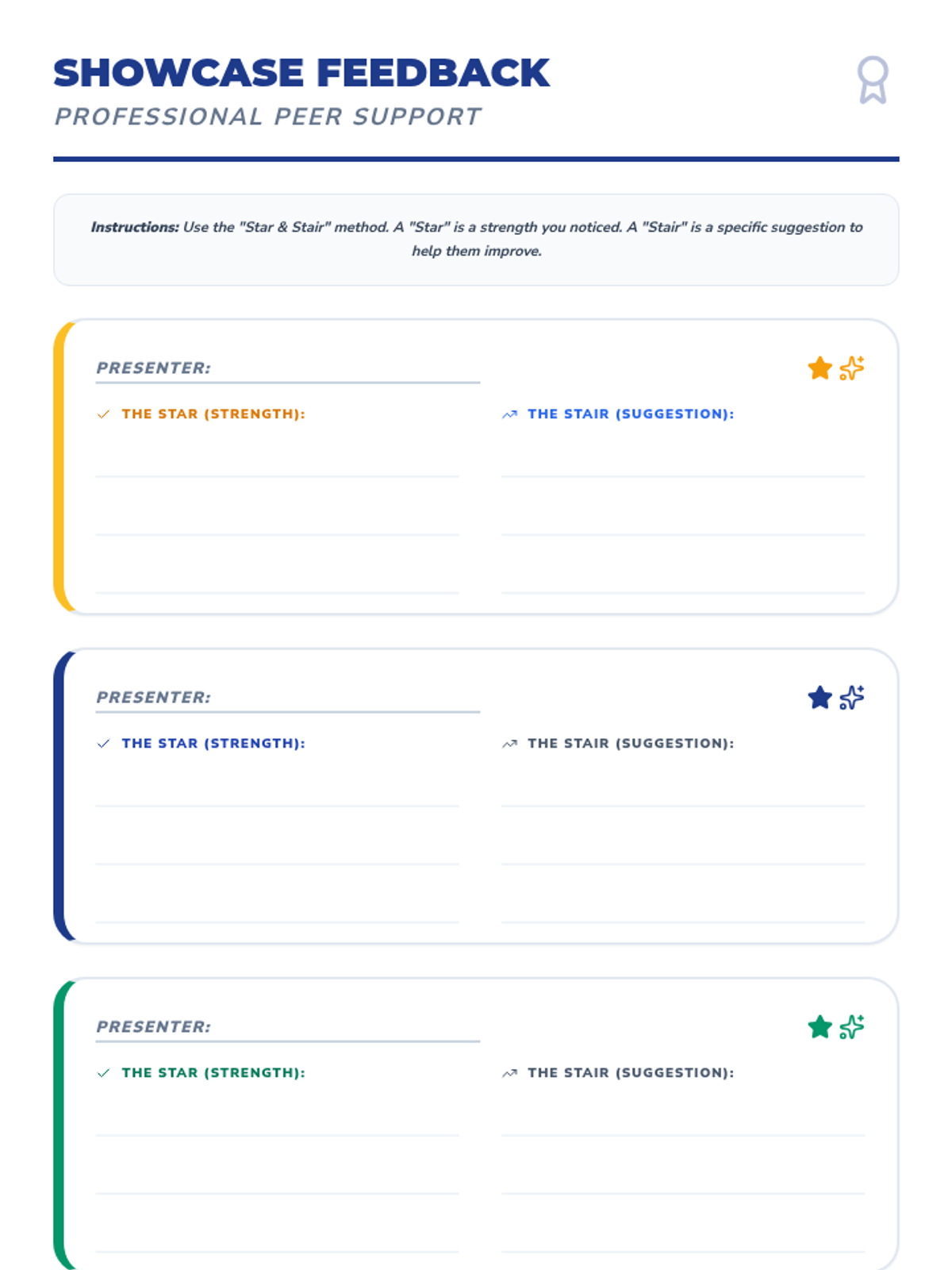
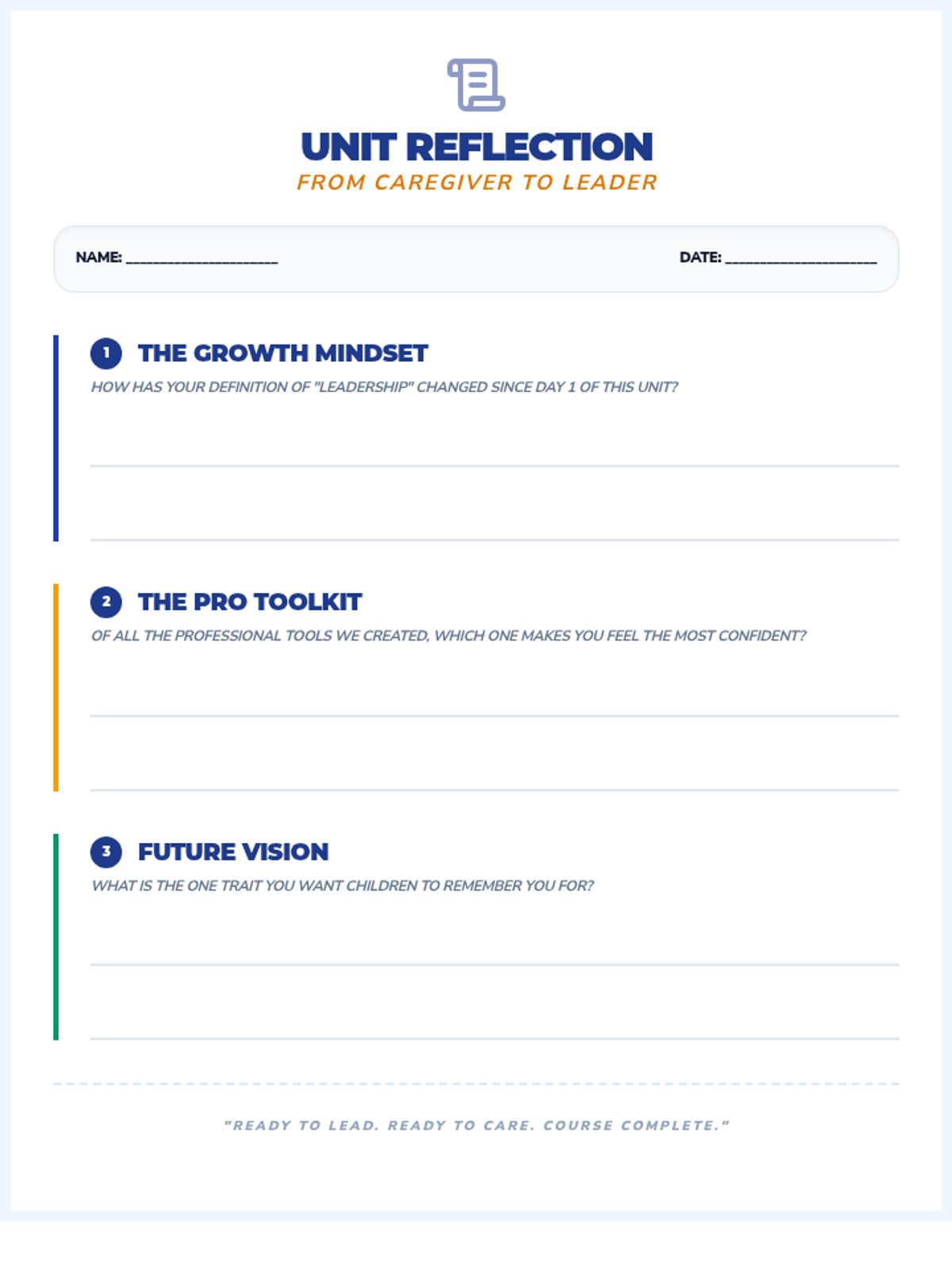
Students present their professional business plans and reflect on their growth as childcare leaders throughout the unit.
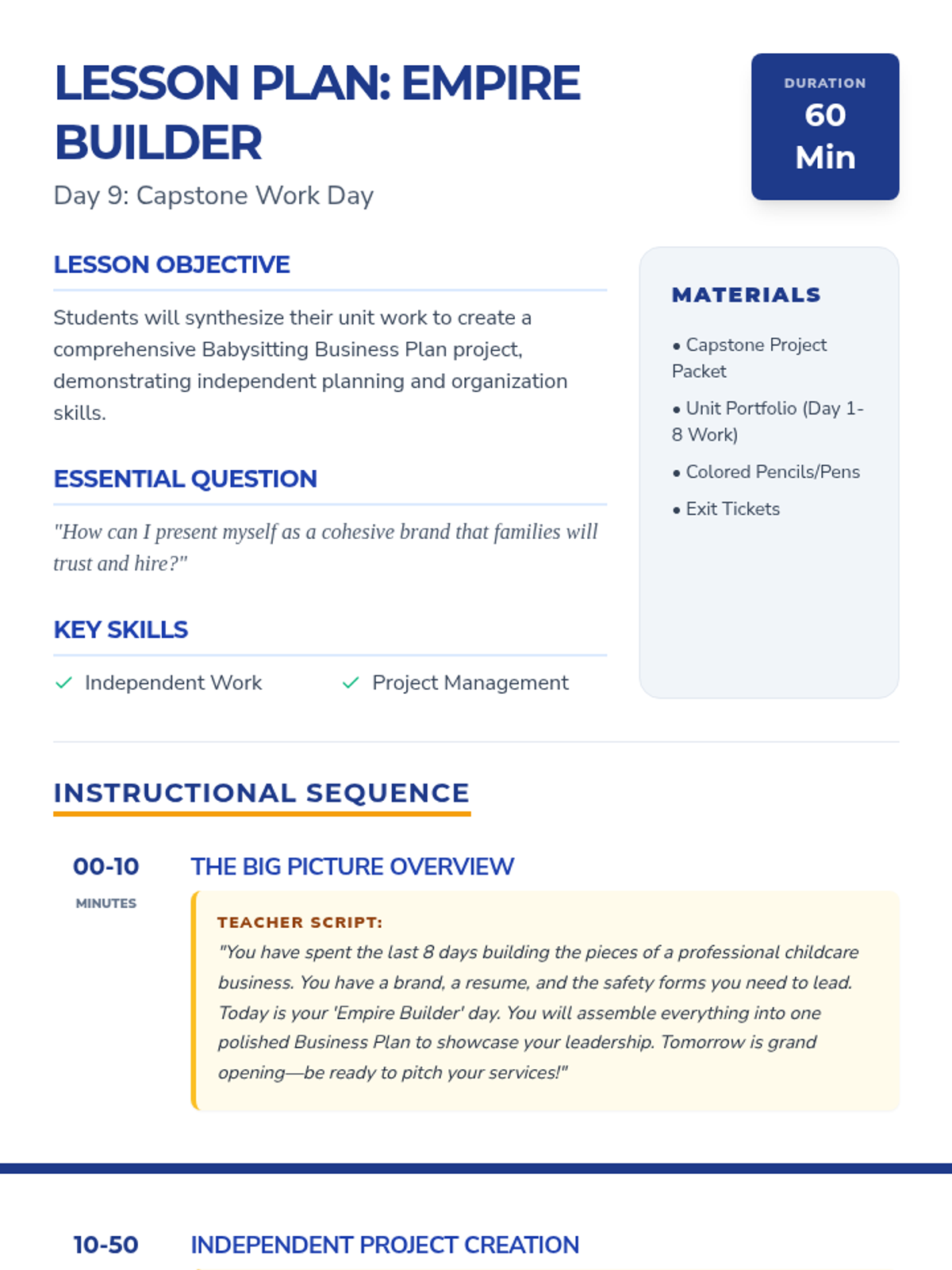
Students work independently to synthesize their unit work into a comprehensive Babysitting Business Plan capstone project.
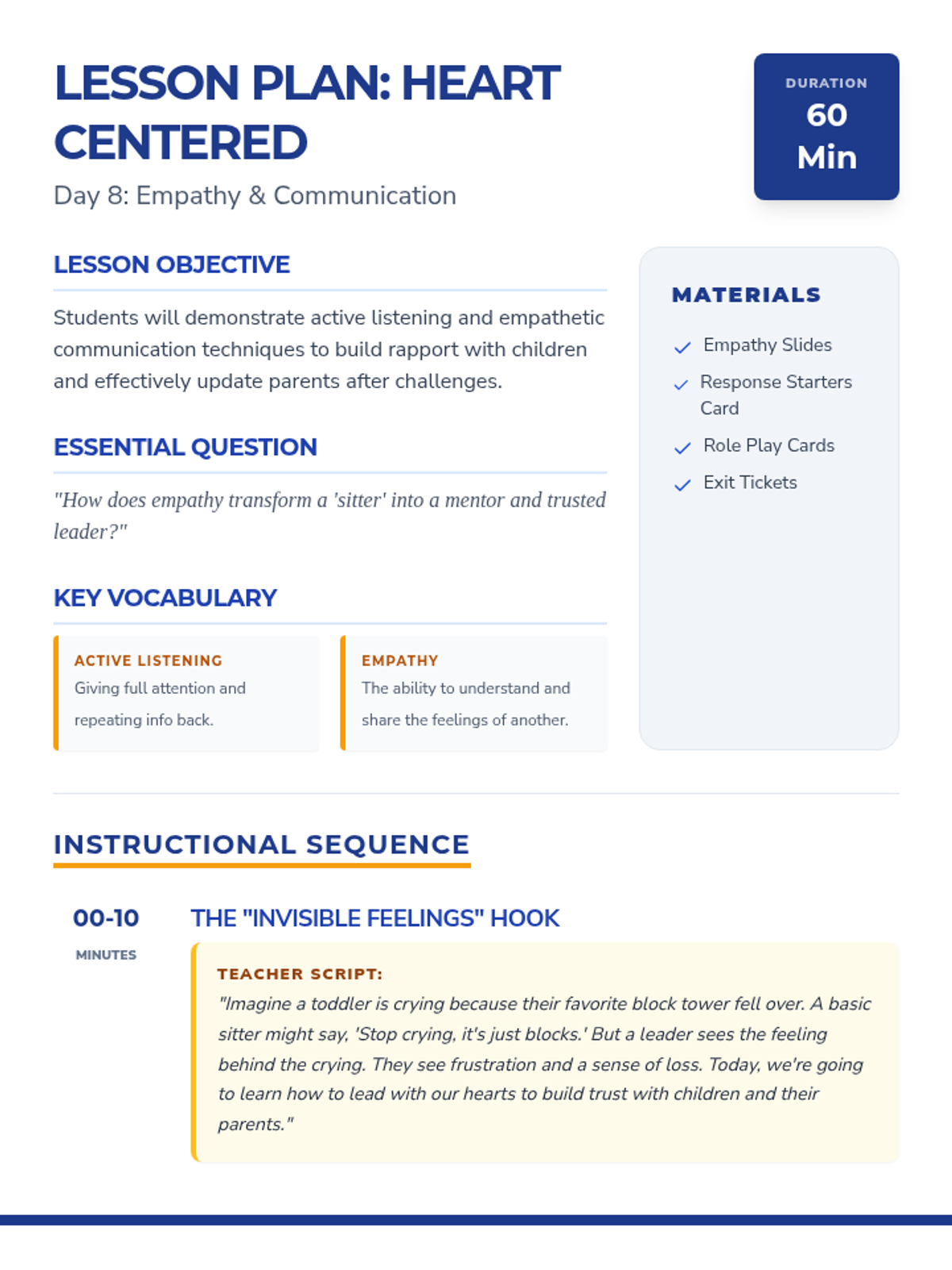
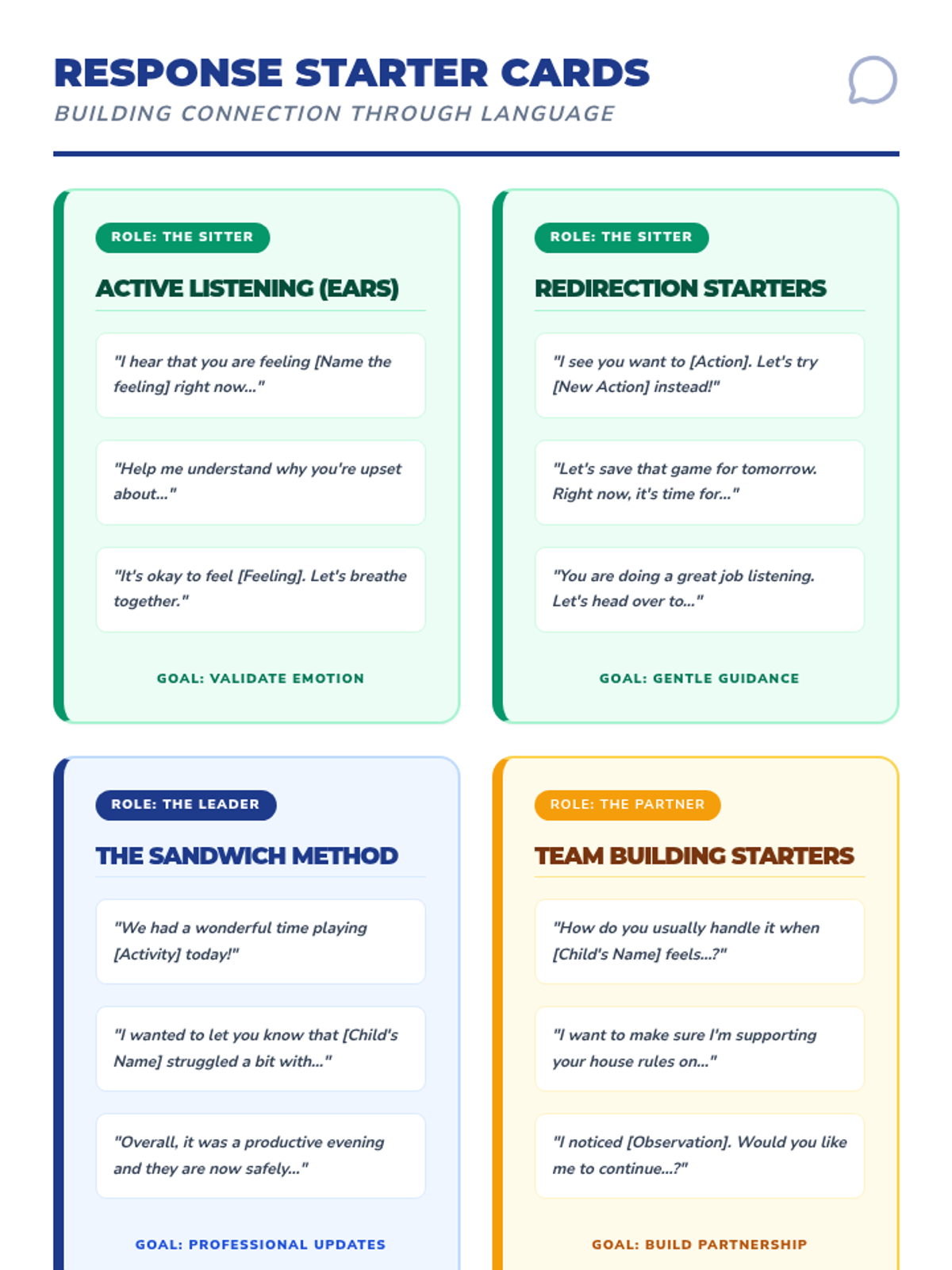
Students practice active listening and empathetic communication strategies to build rapport with children and effectively update parents.
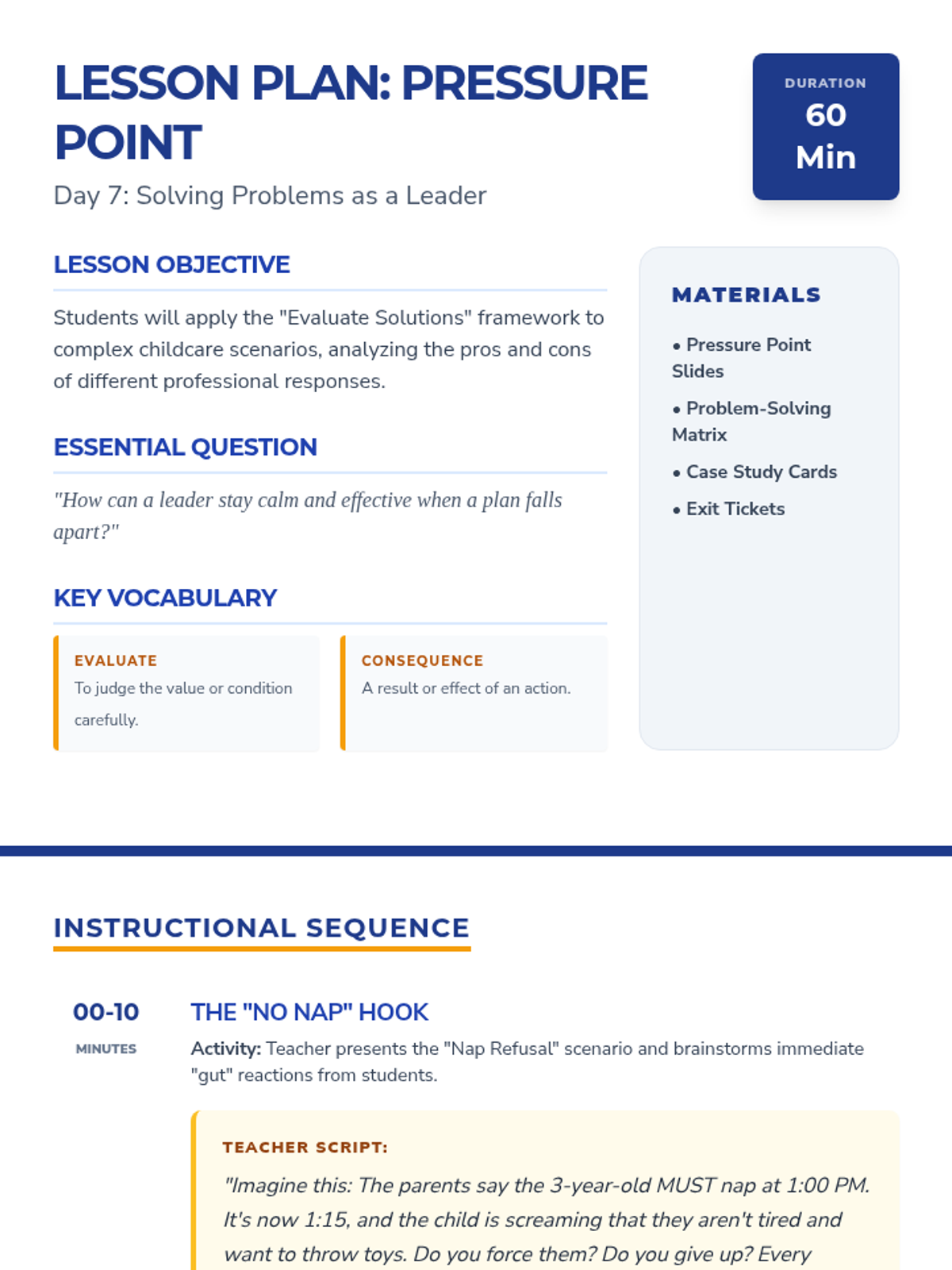
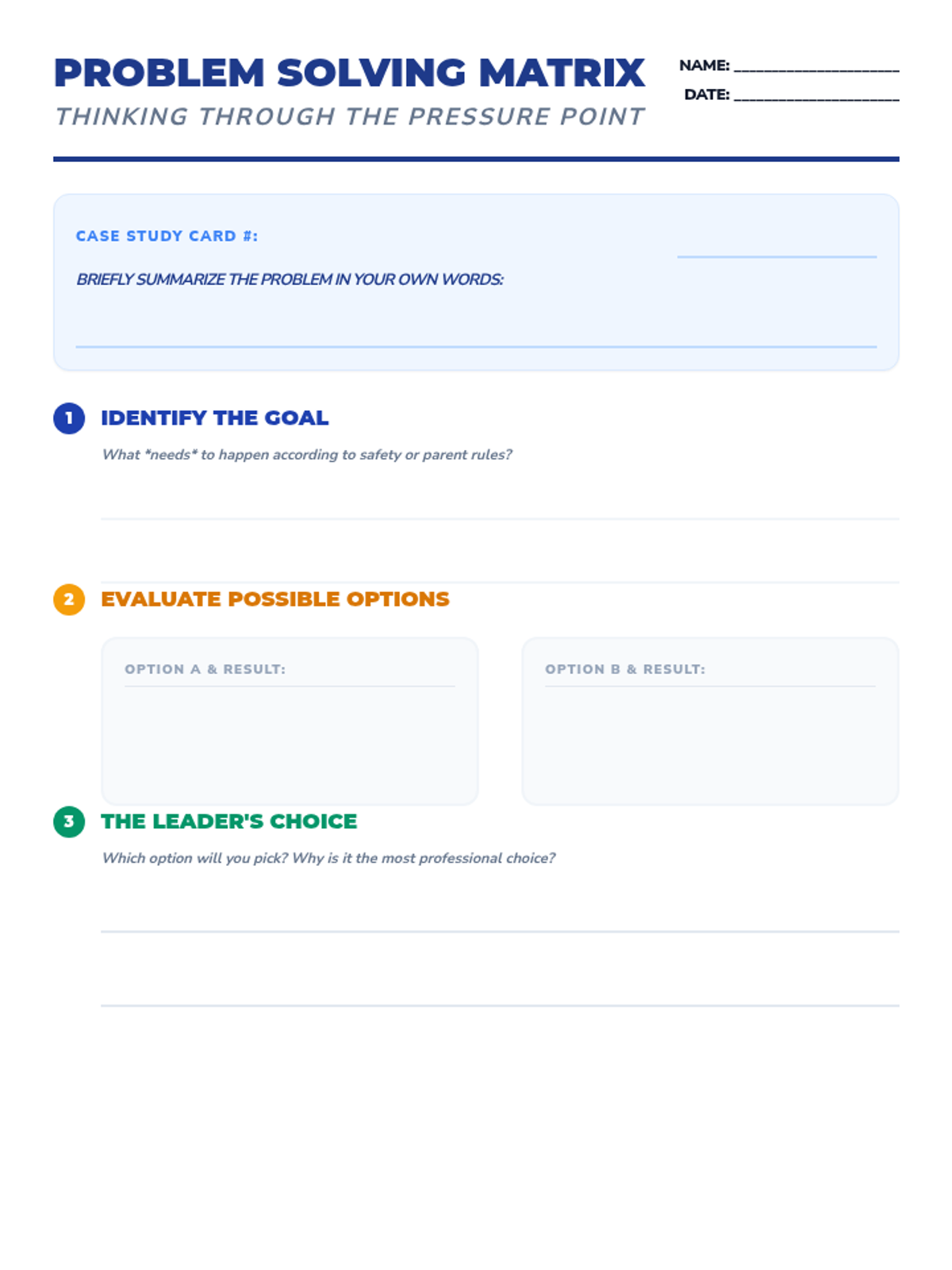
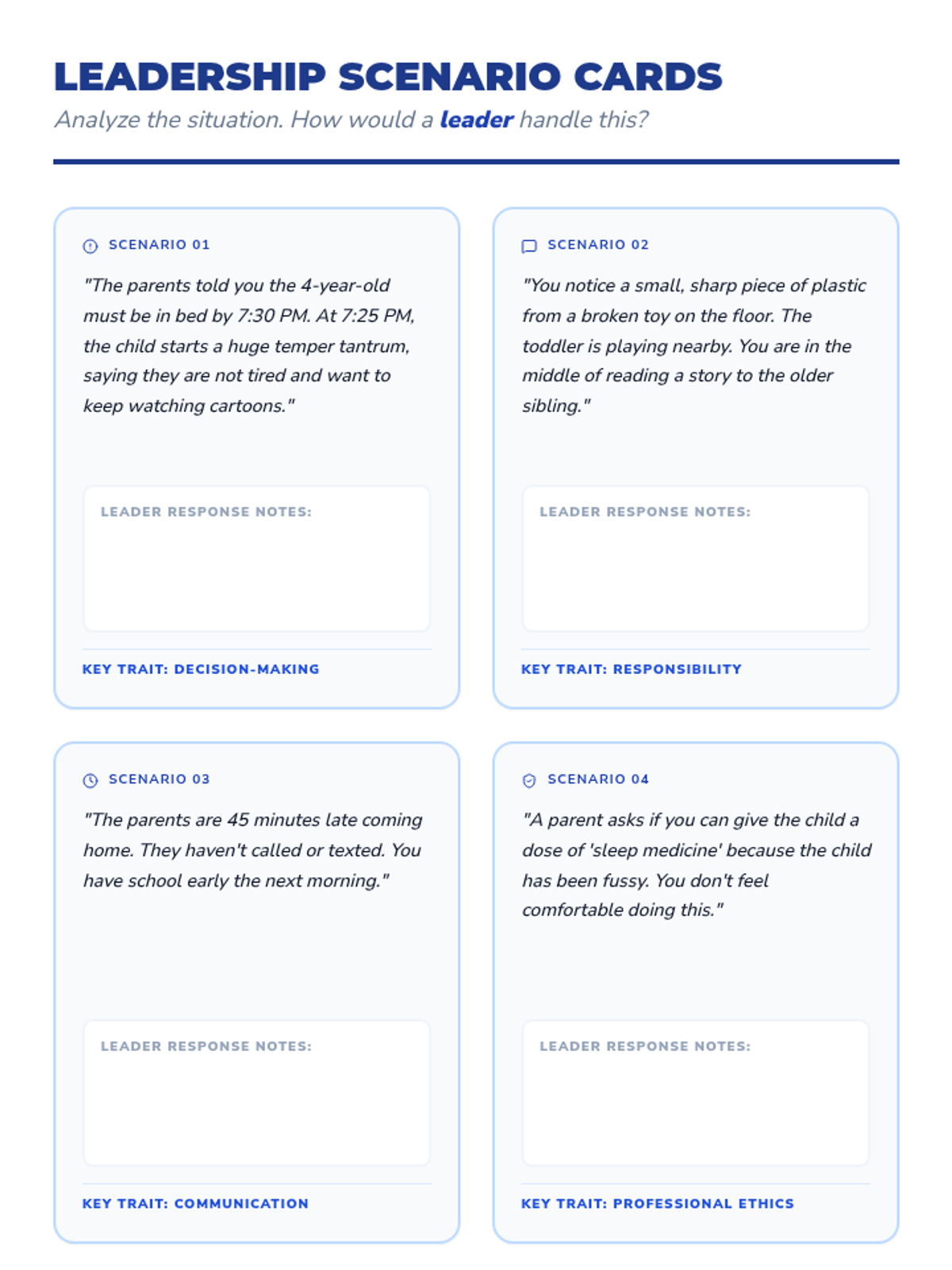
Students apply leadership traits to complex childcare scenarios, evaluating different solutions for behavioral and safety challenges.
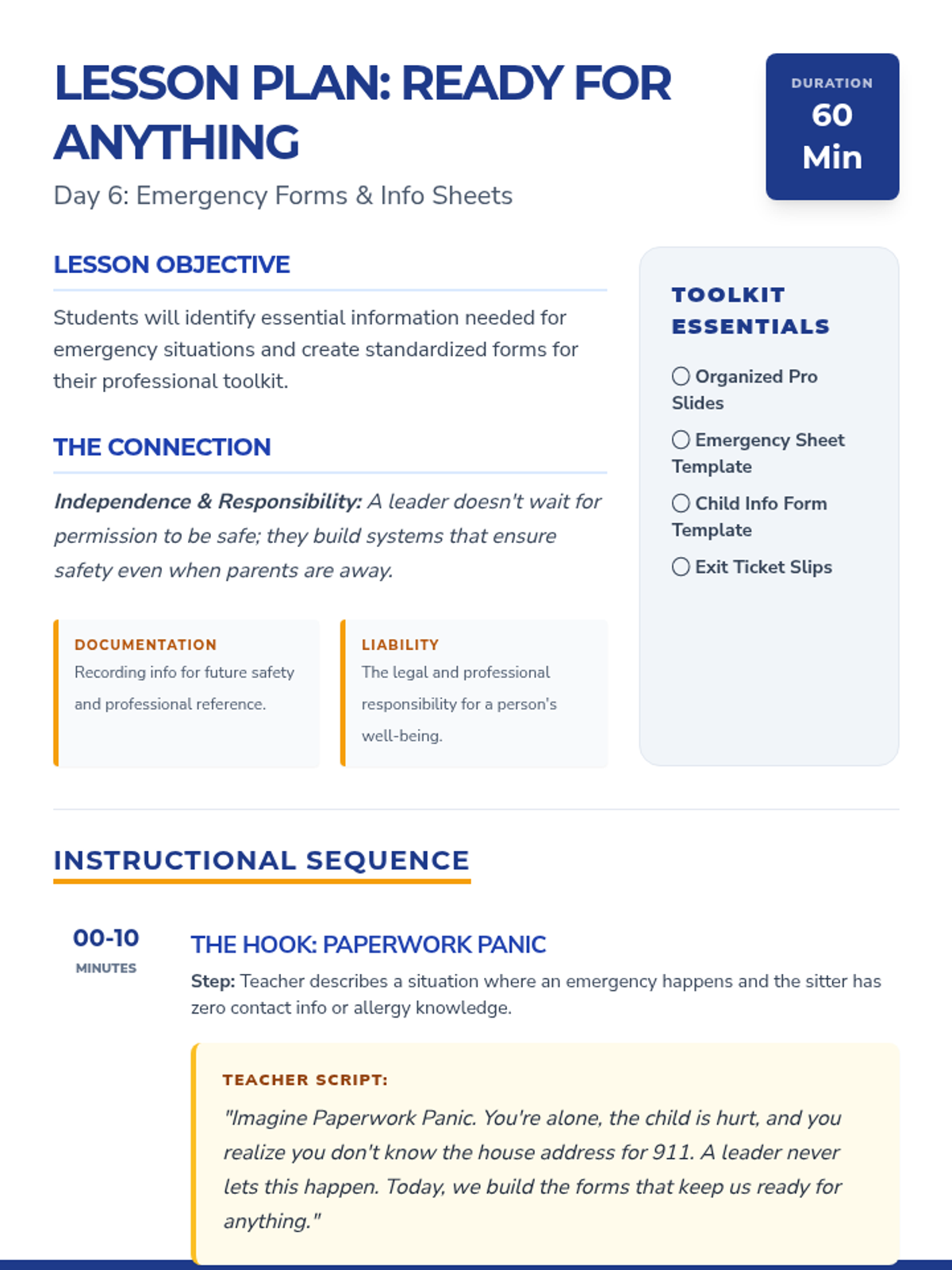
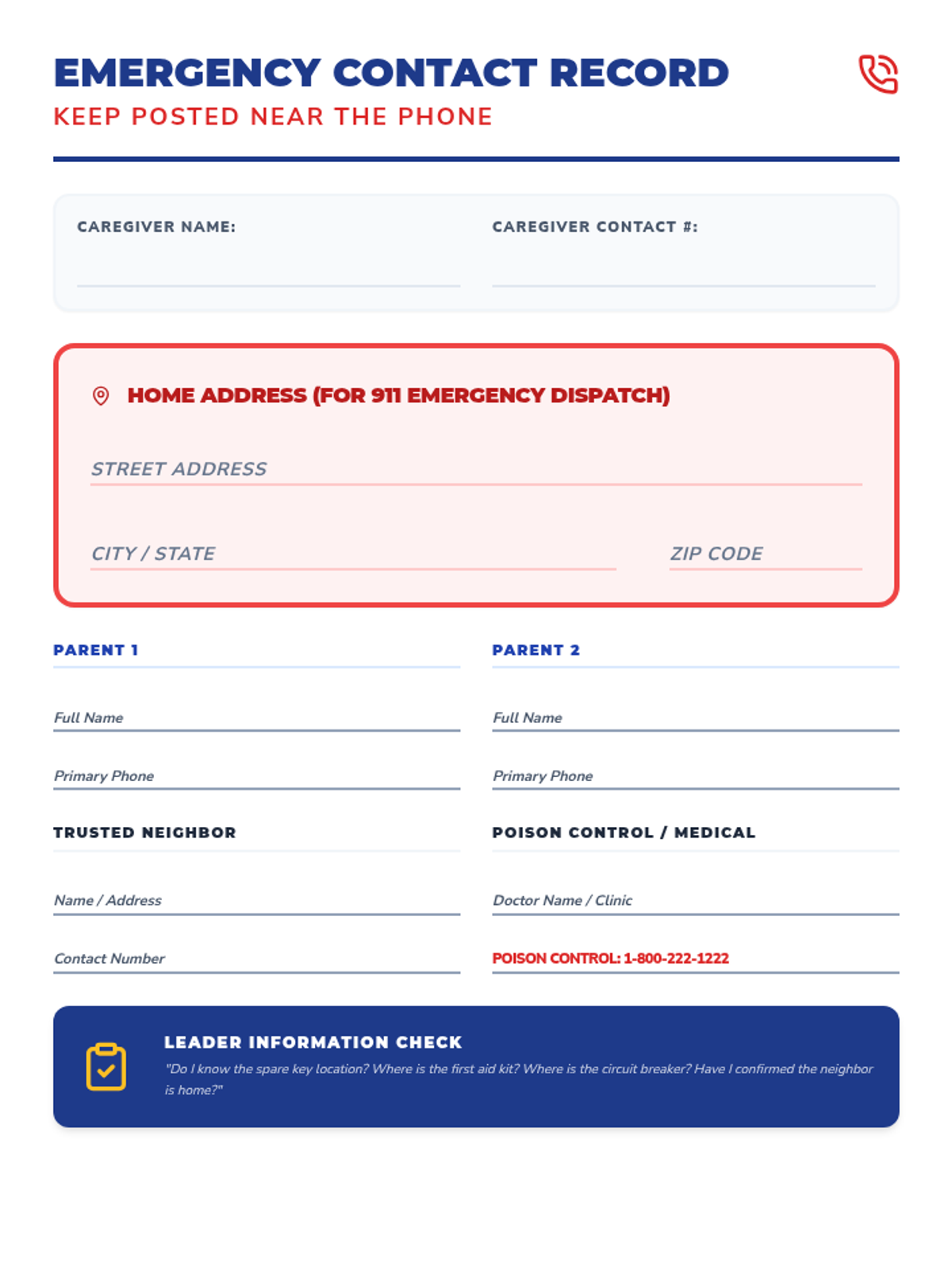
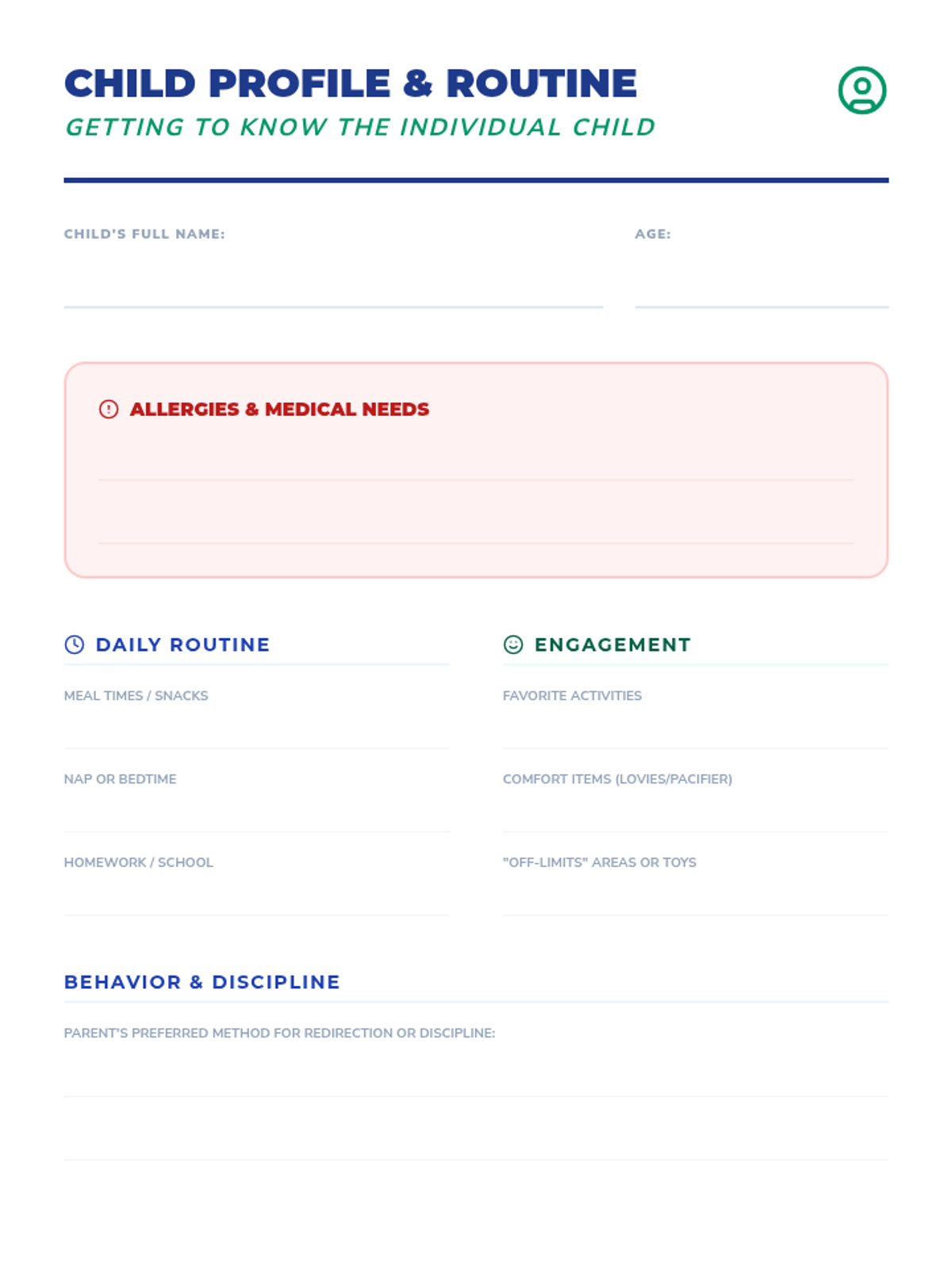
Students learn the importance of documentation and organization by creating essential emergency and routine information forms for their professional childcare toolkit.
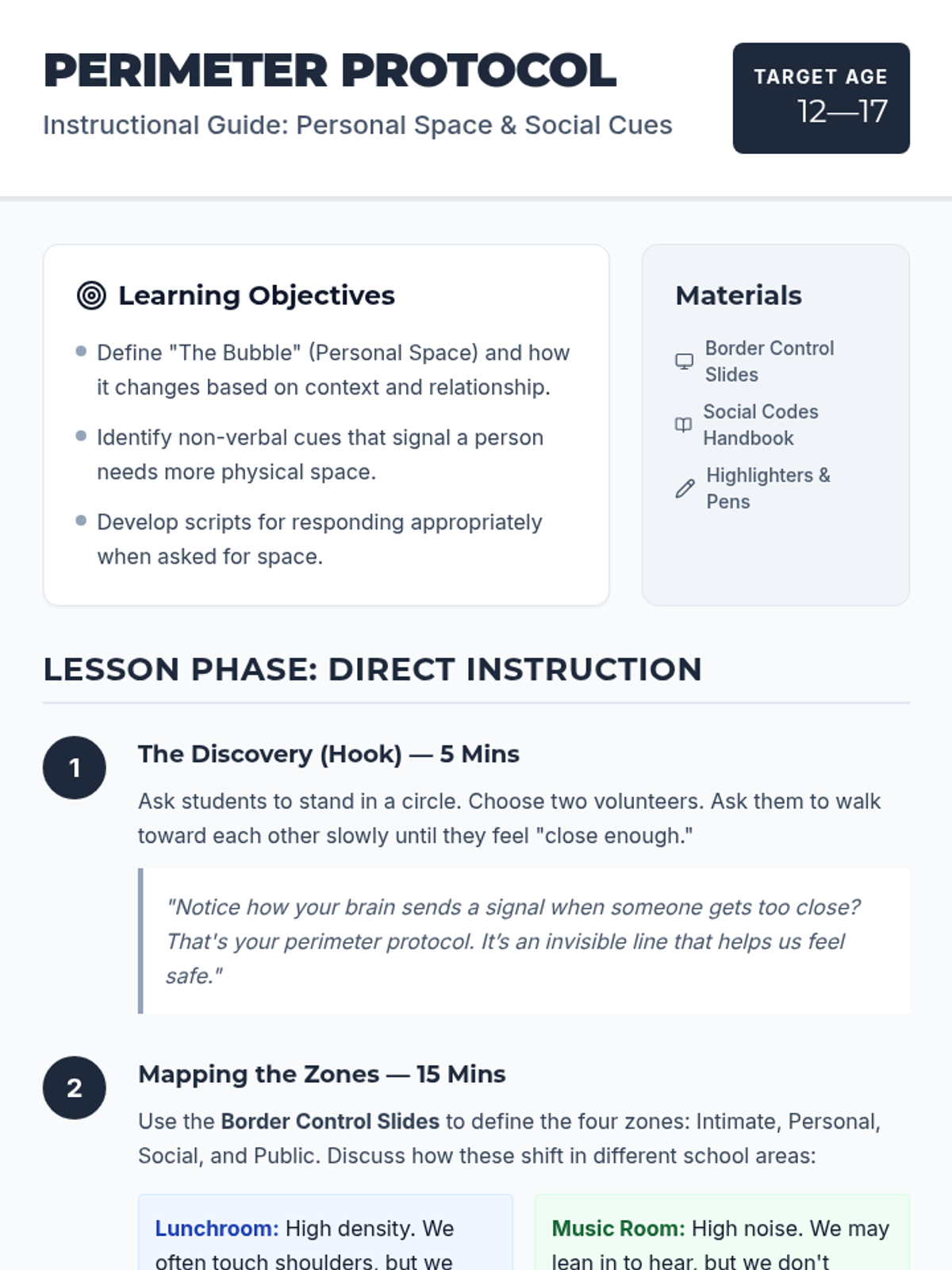
This lesson focuses on identifying personal space boundaries and interpreting the body language of others to adjust social proximity effectively.
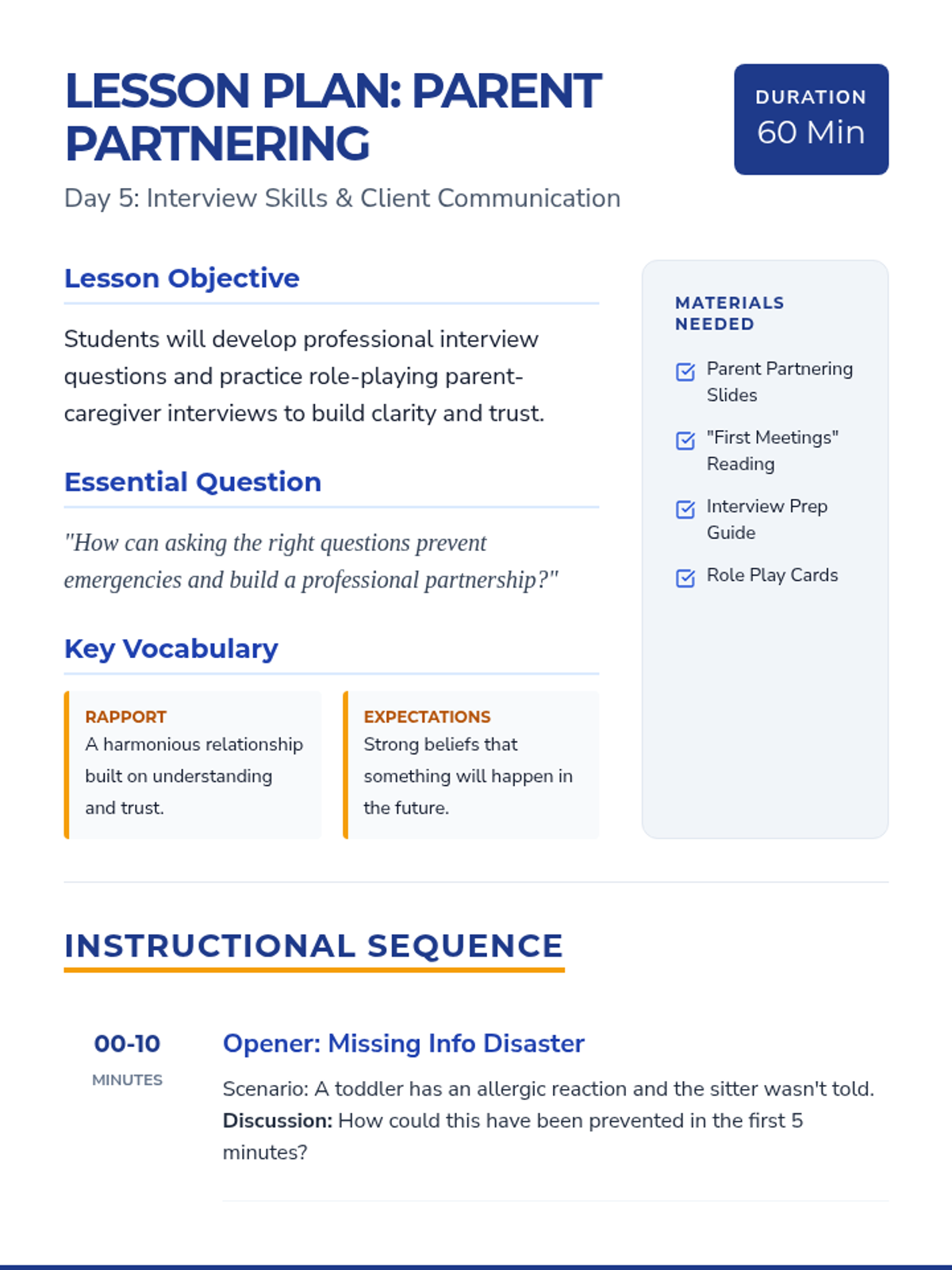
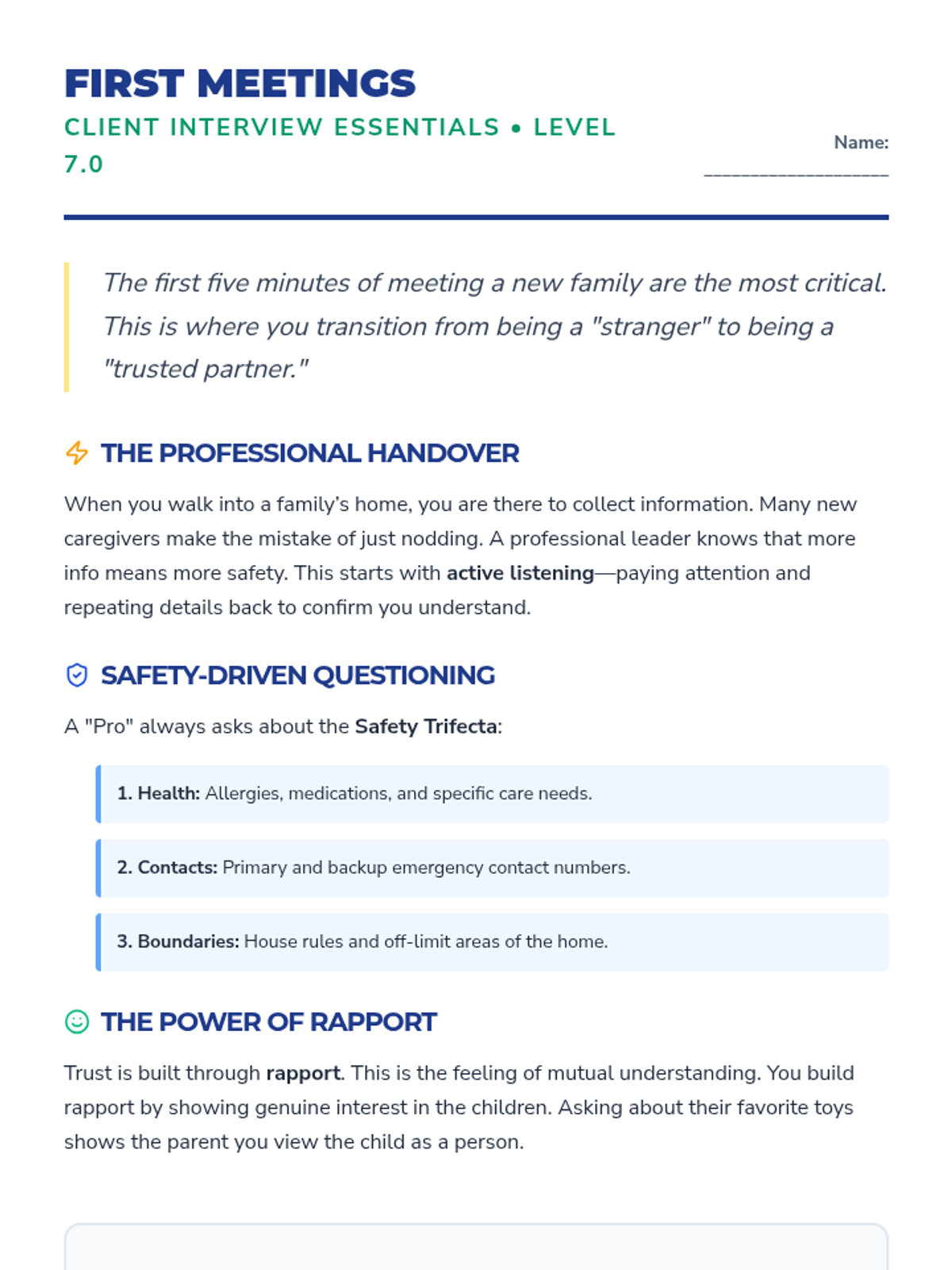
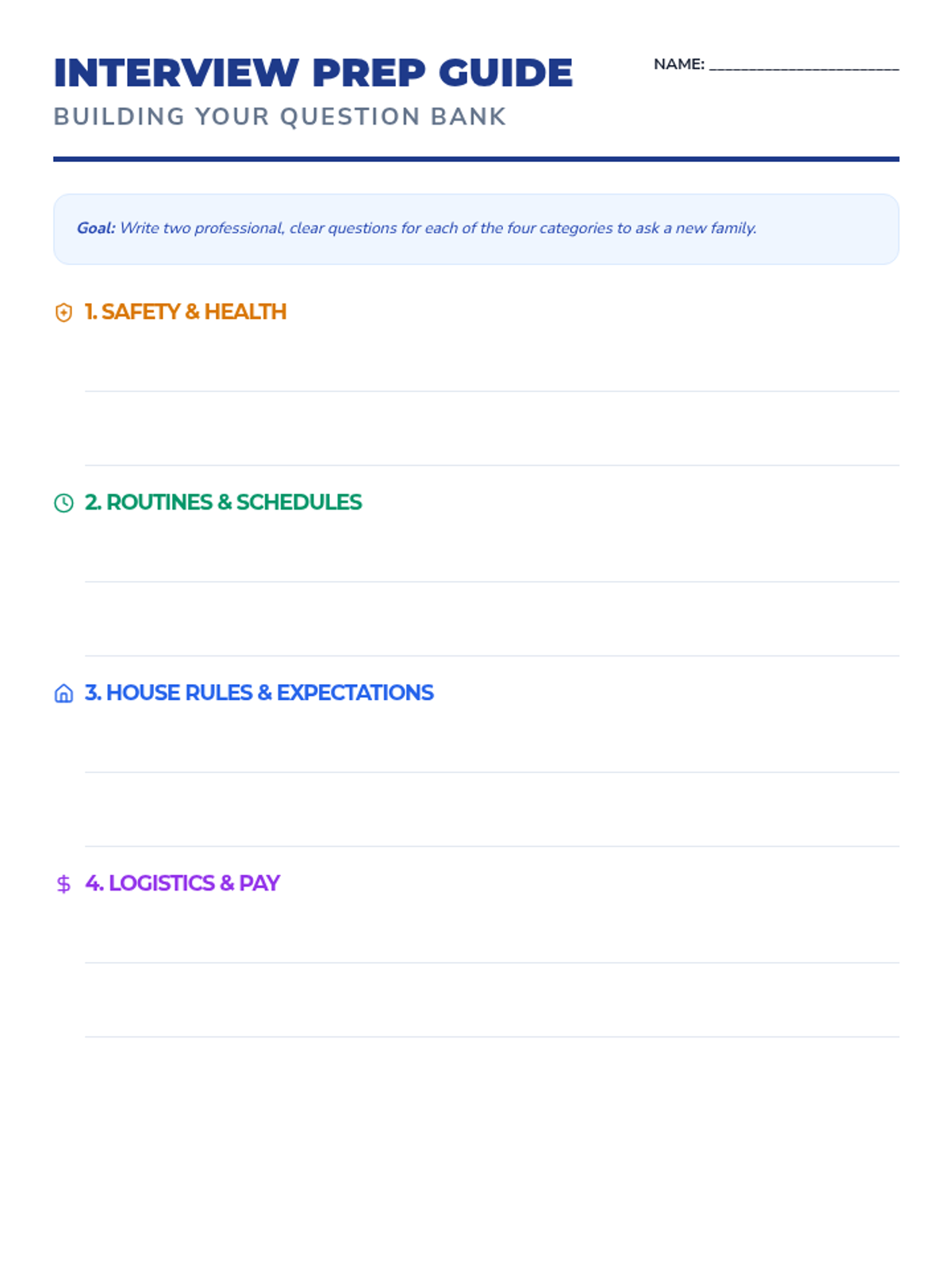
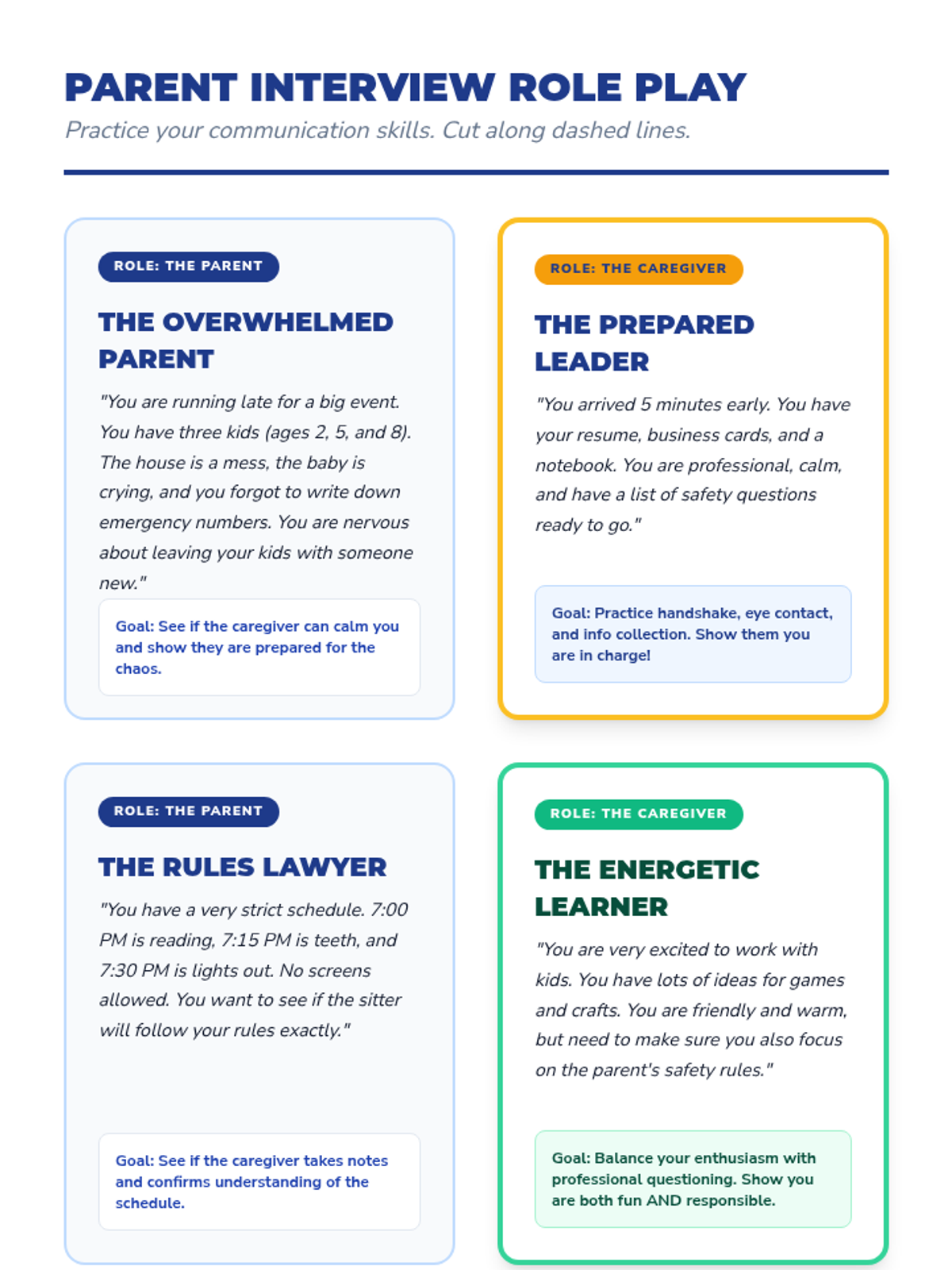
Students develop and practice interview skills, focusing on asking the right questions to build trust and clarity with potential clients.
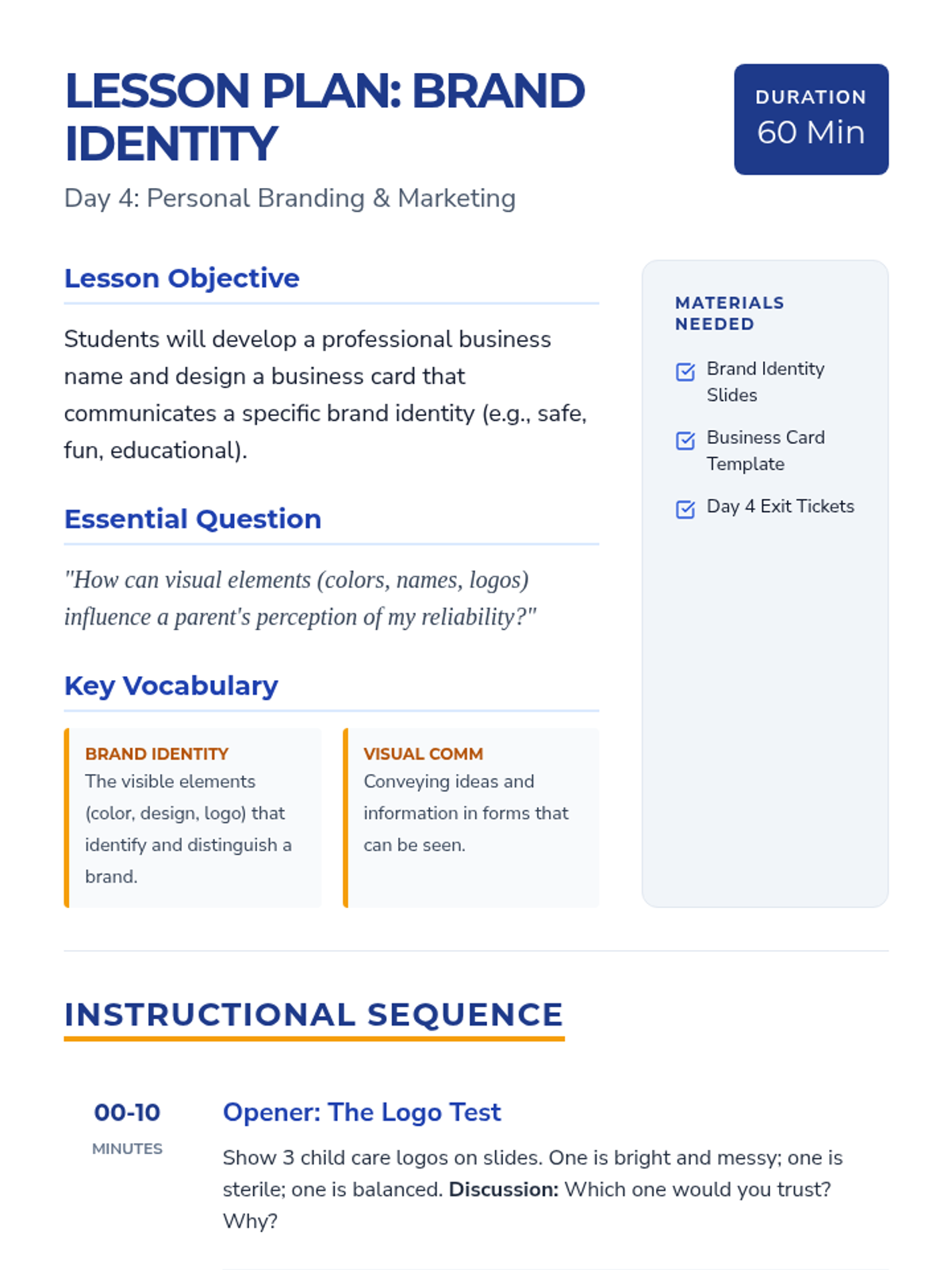
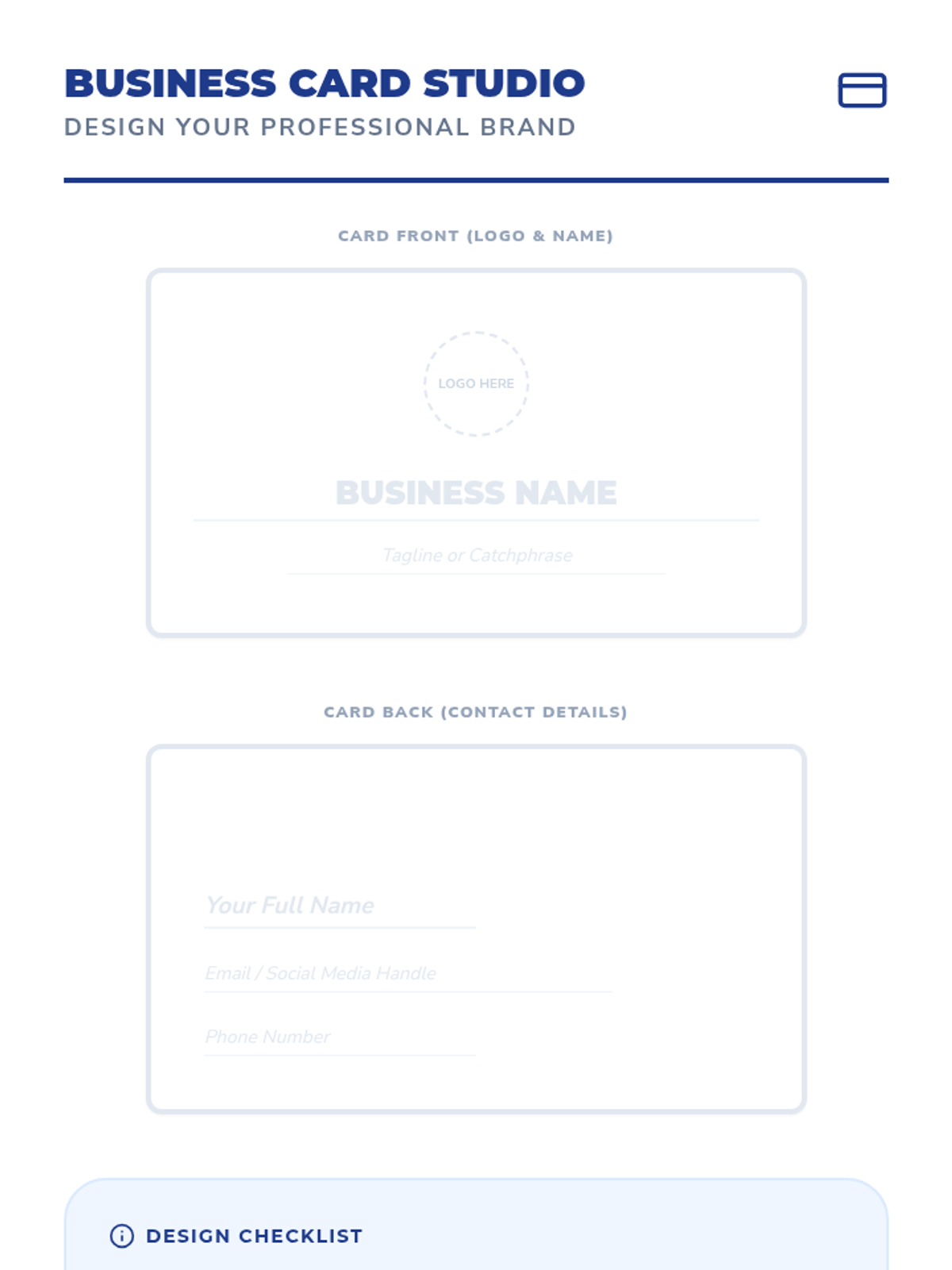
Students explore personal branding, develop a business name, and design business cards to present a professional image to families.
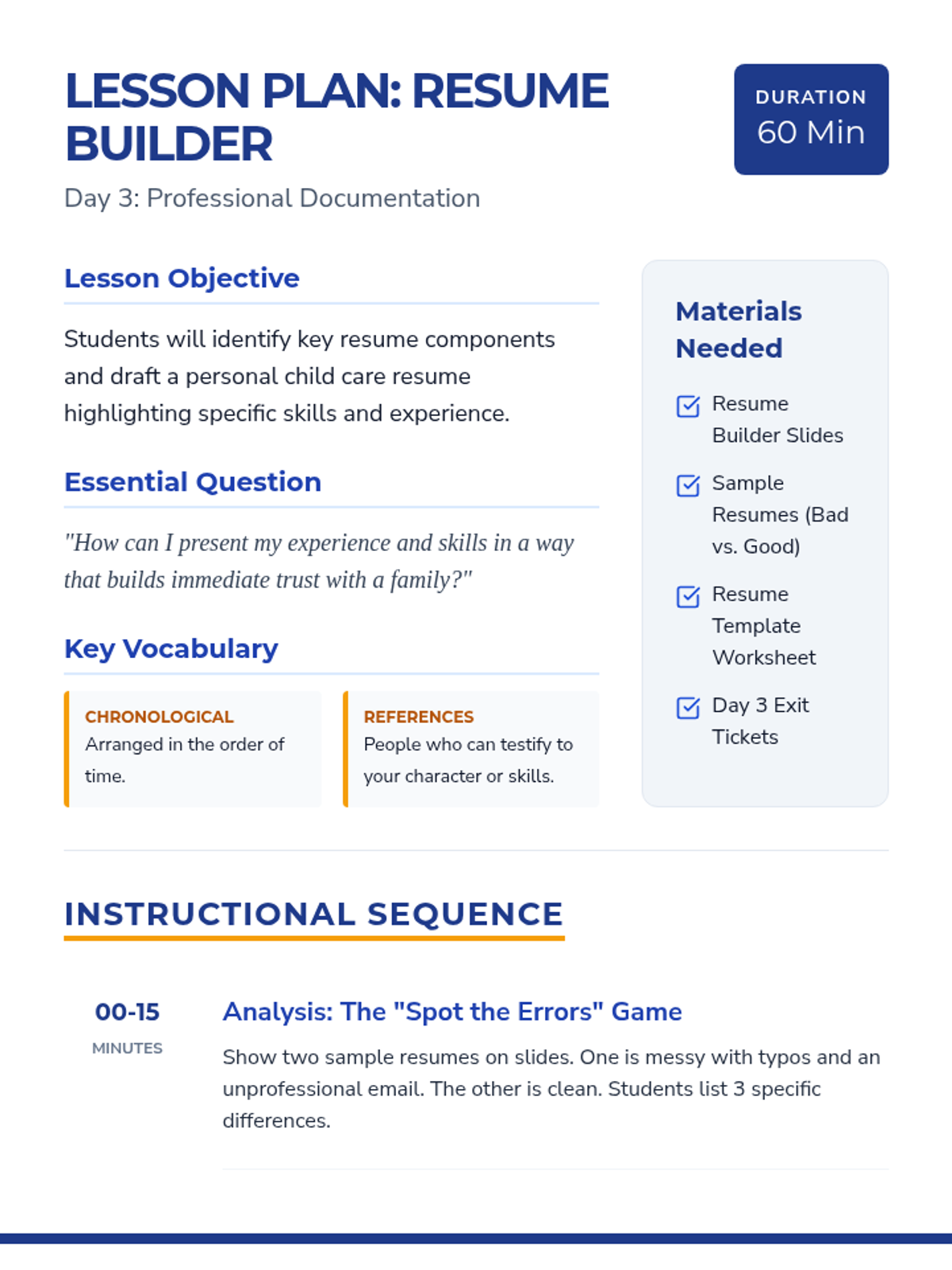
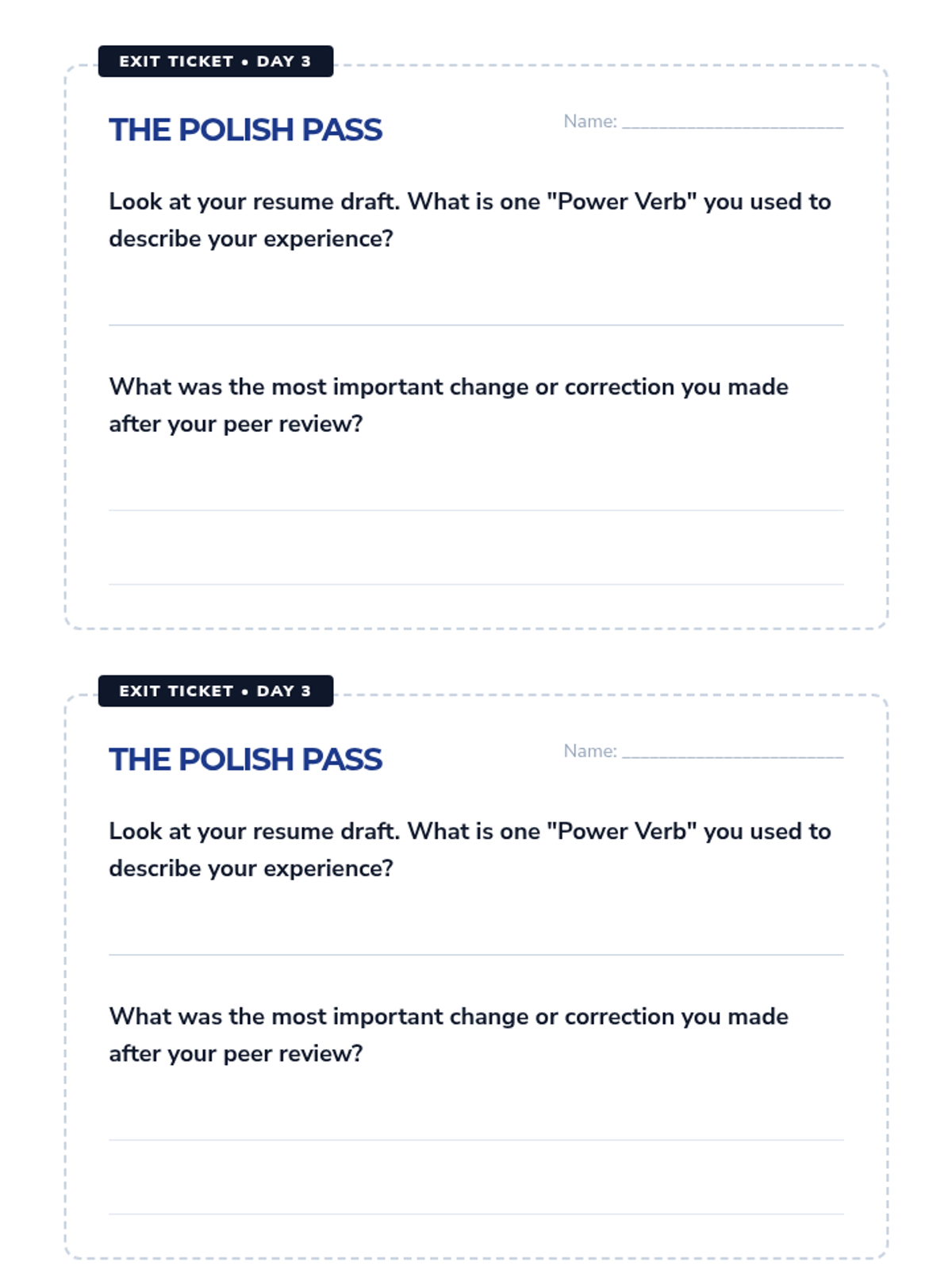
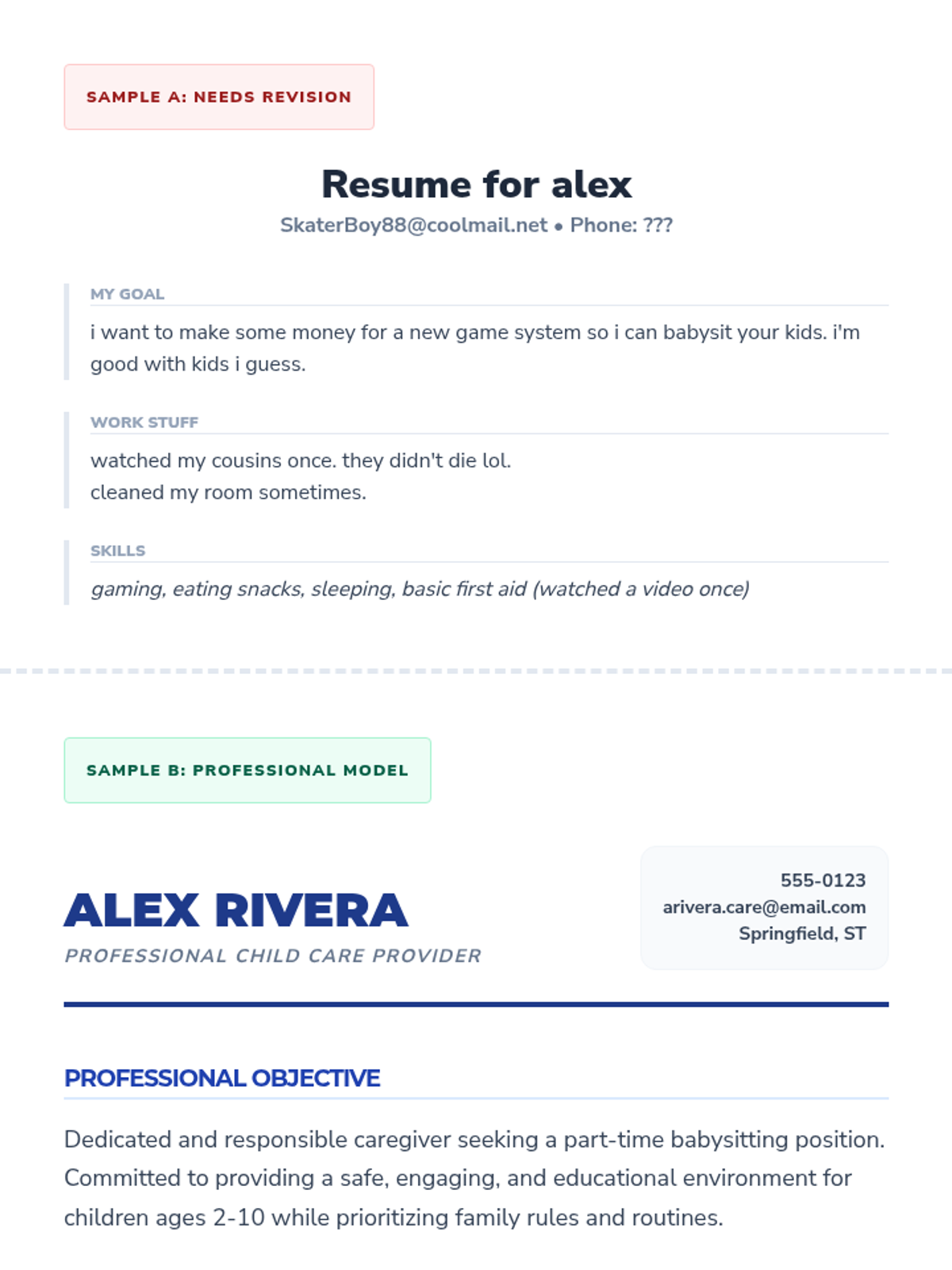
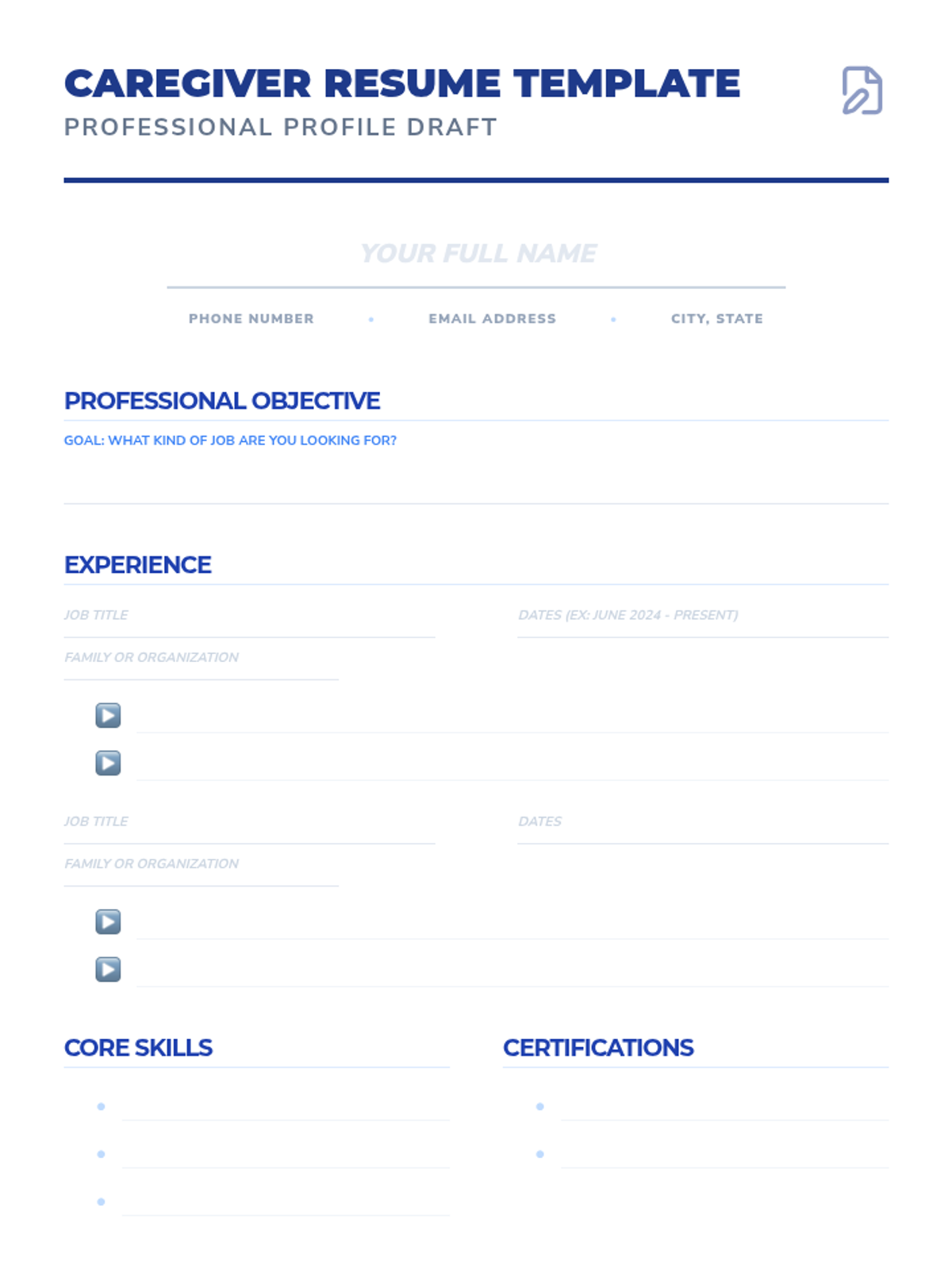
Students learn the components of a professional resume, analyze samples, and draft their own babysitting or child care resumes.
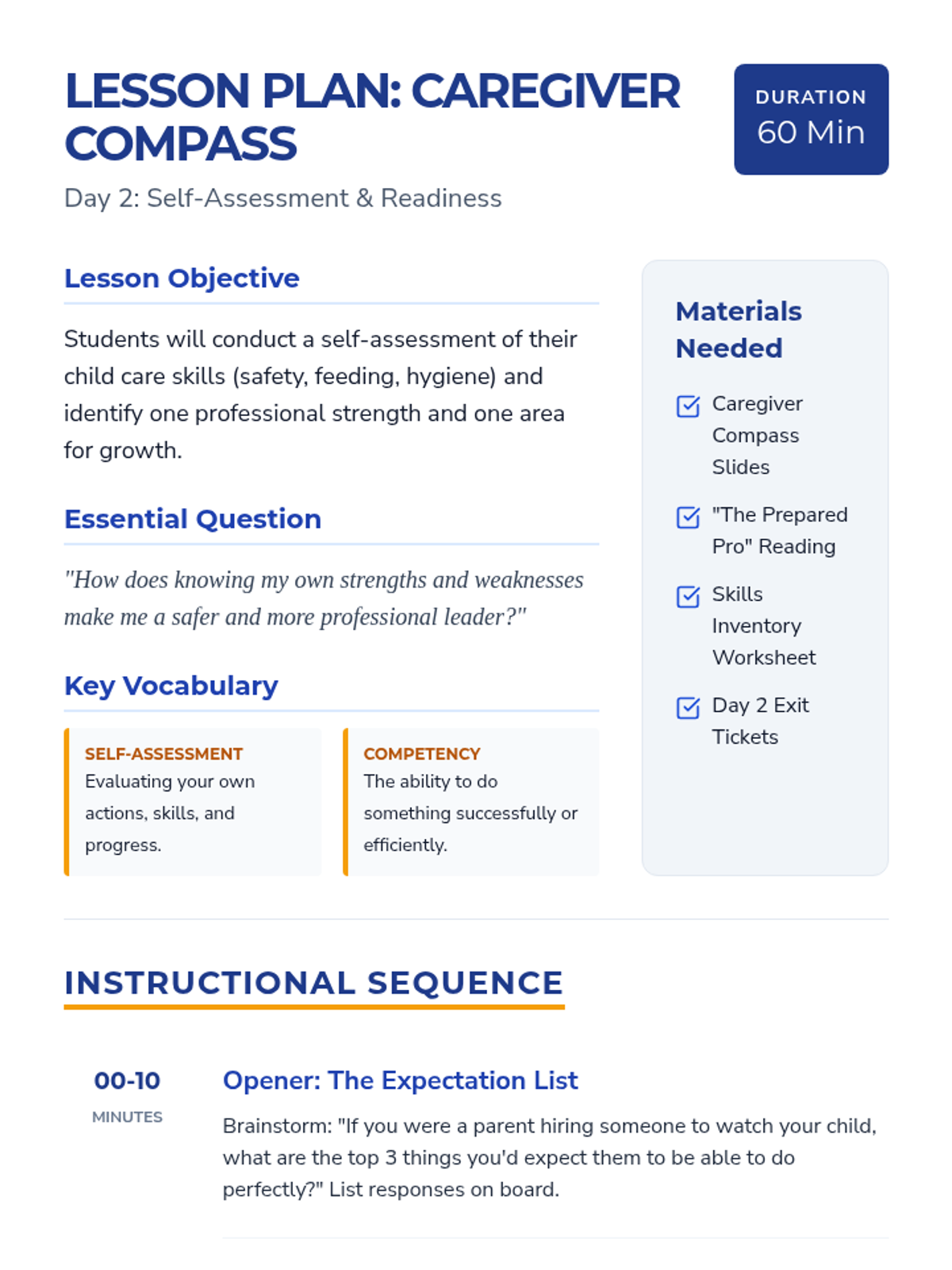
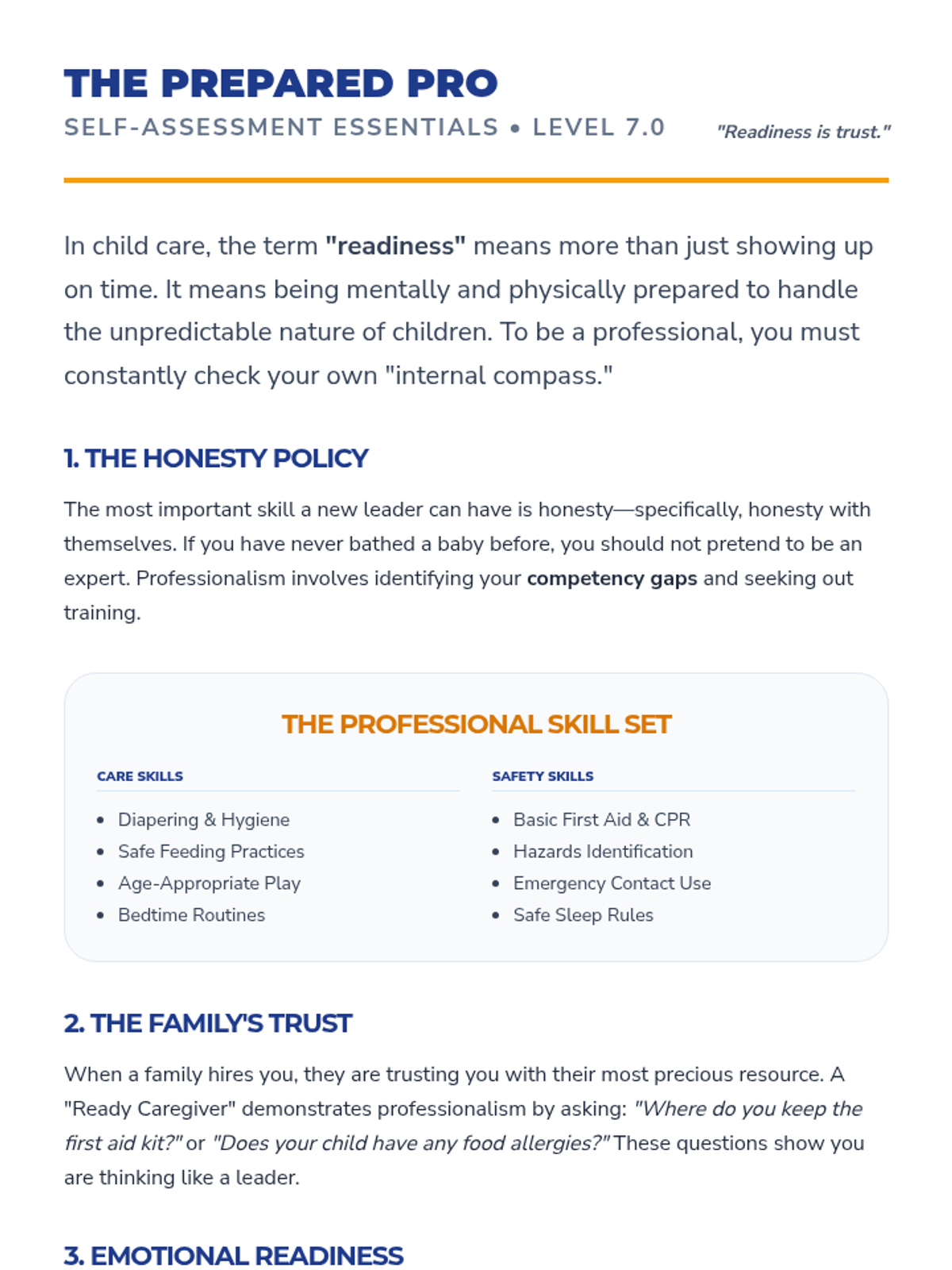
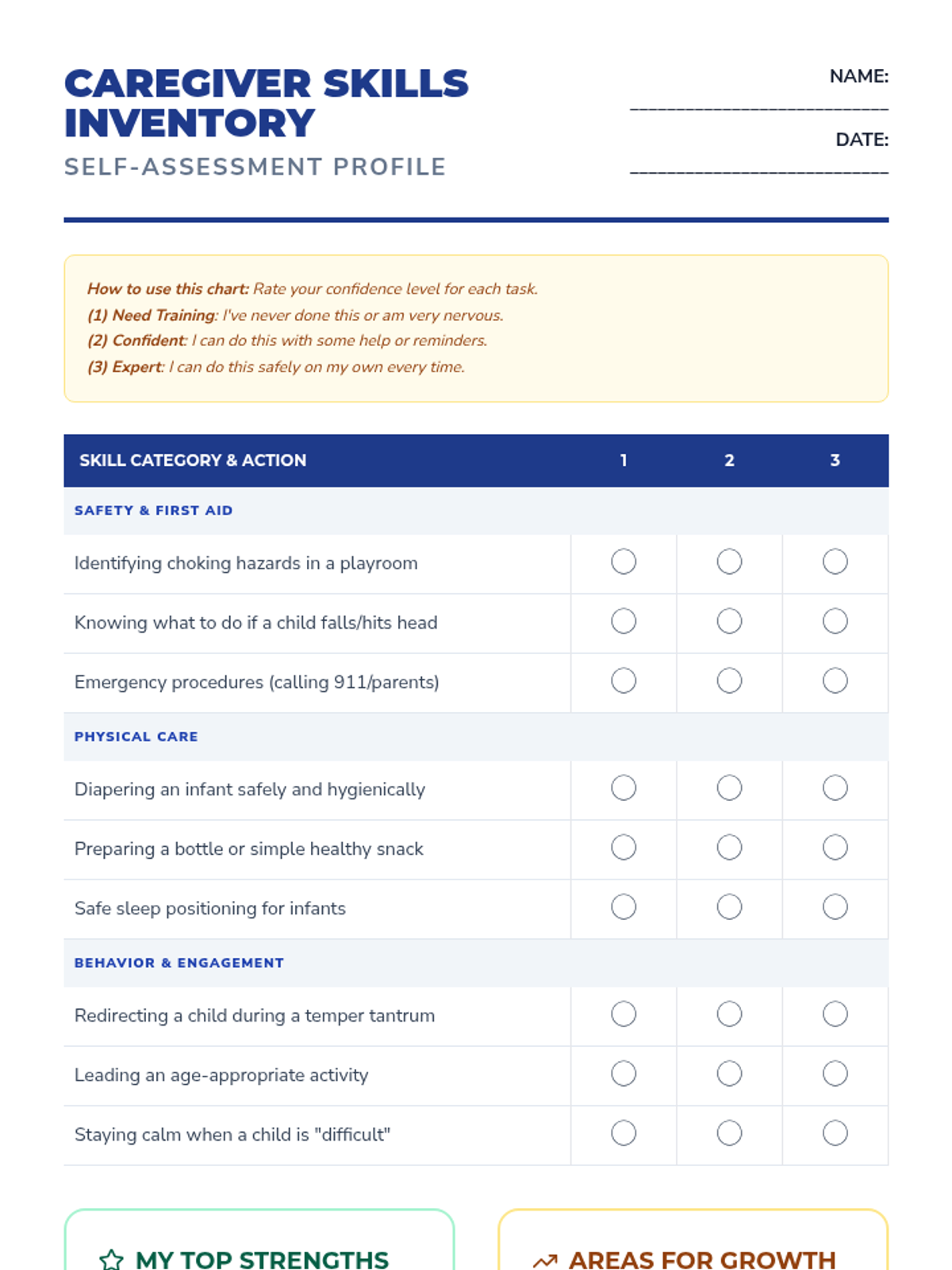
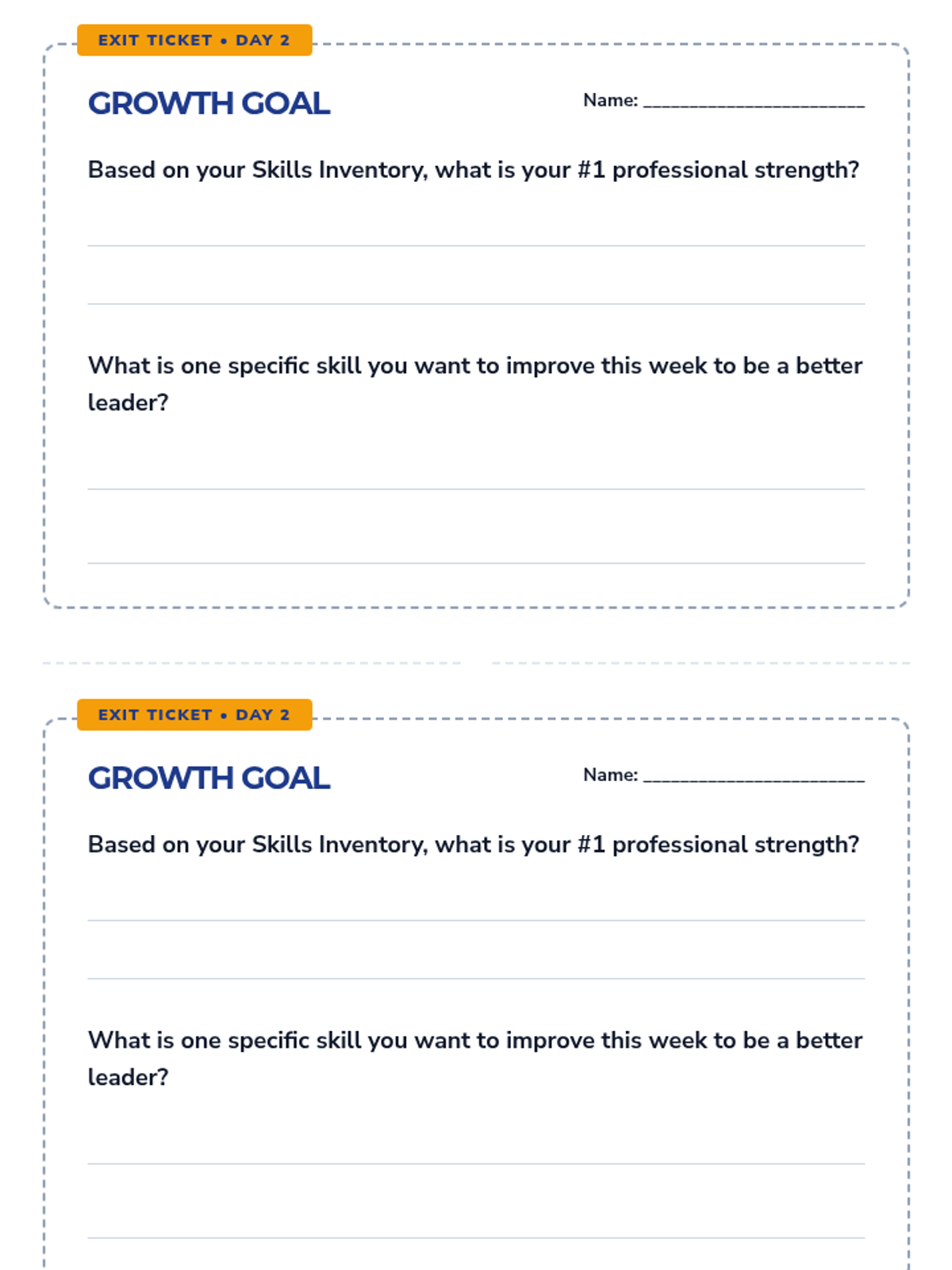
Students conduct a self-assessment of their child care skills, identifying strengths and areas for growth to prepare for professional responsibilities.
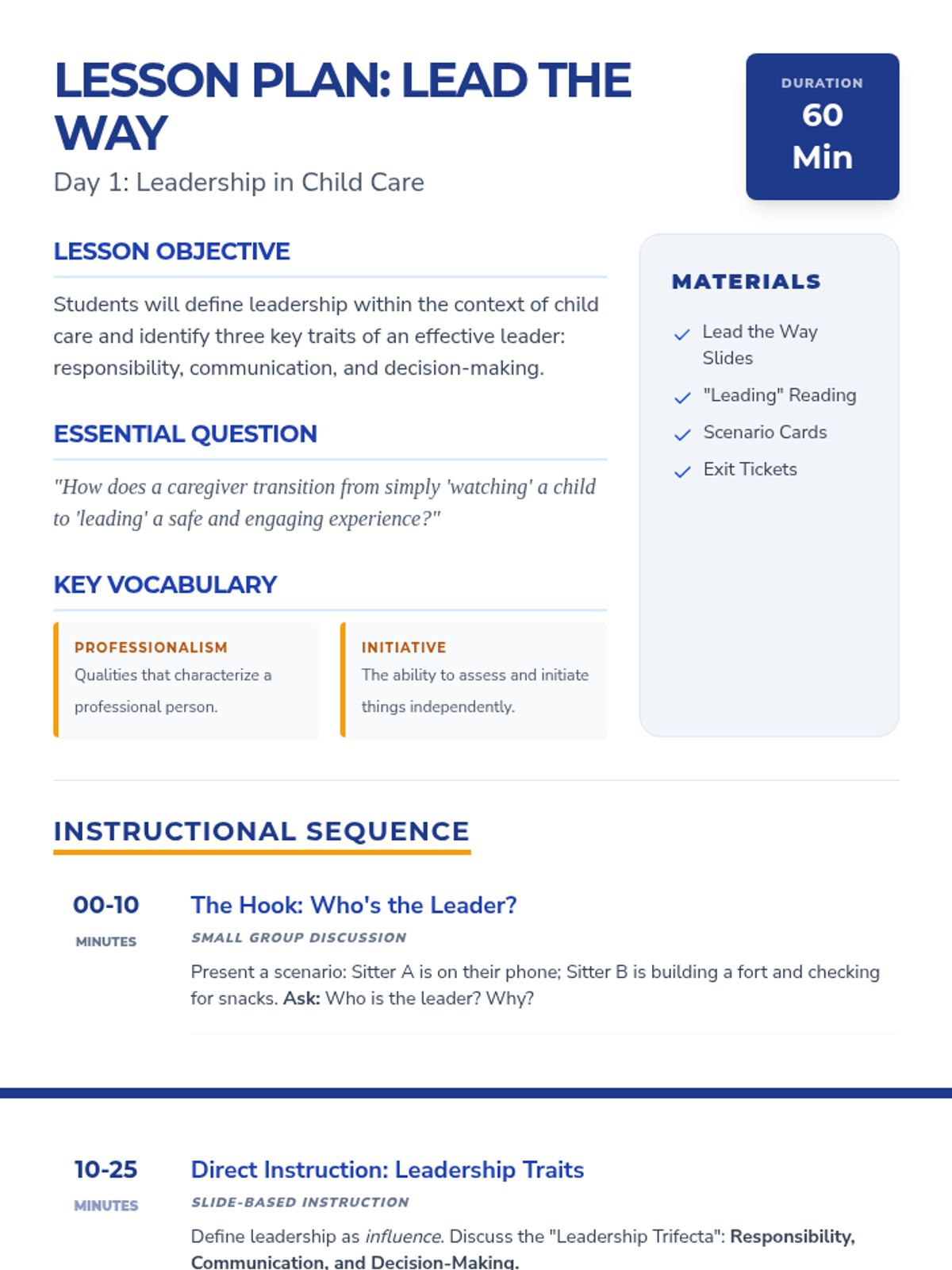
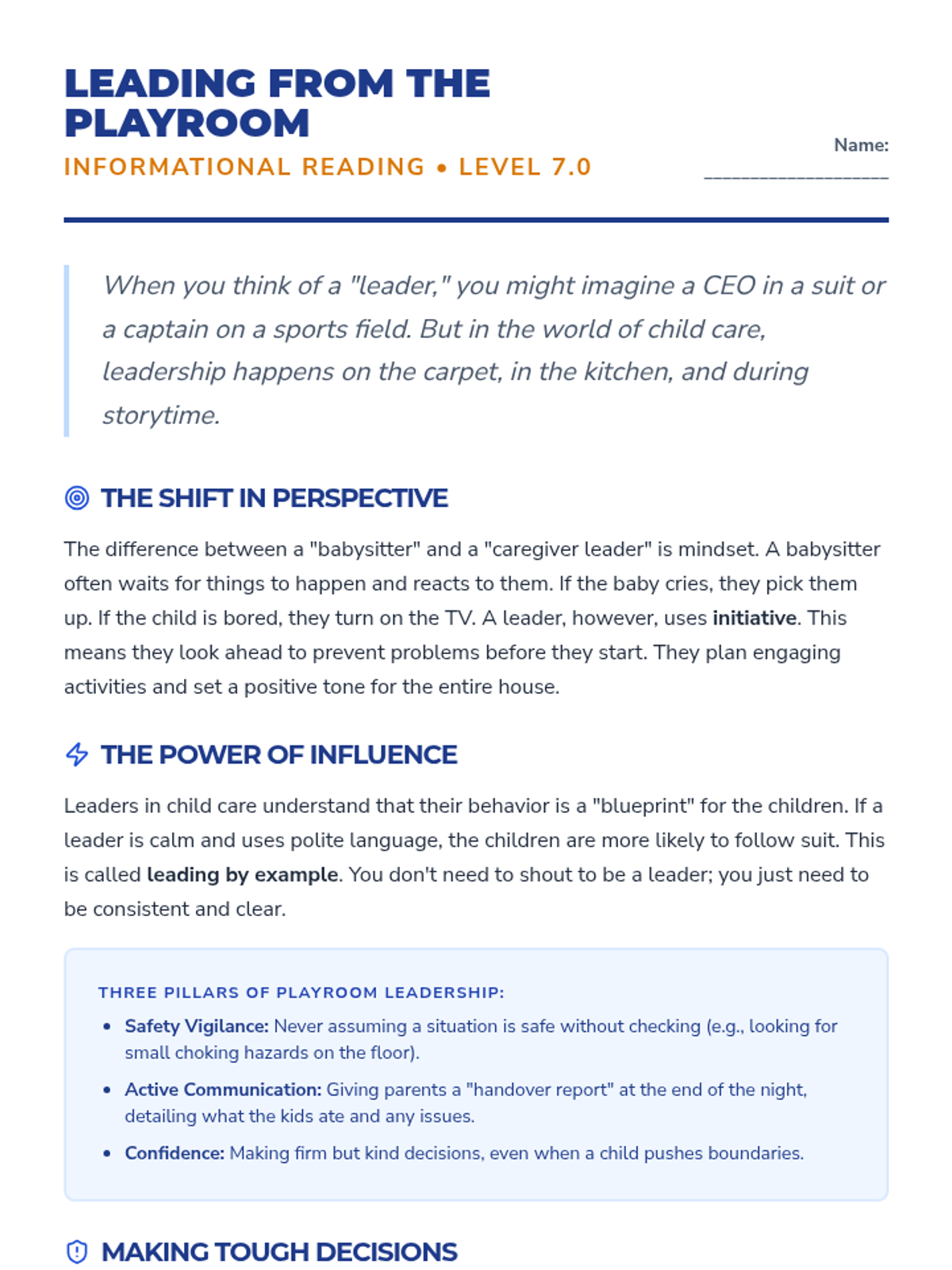
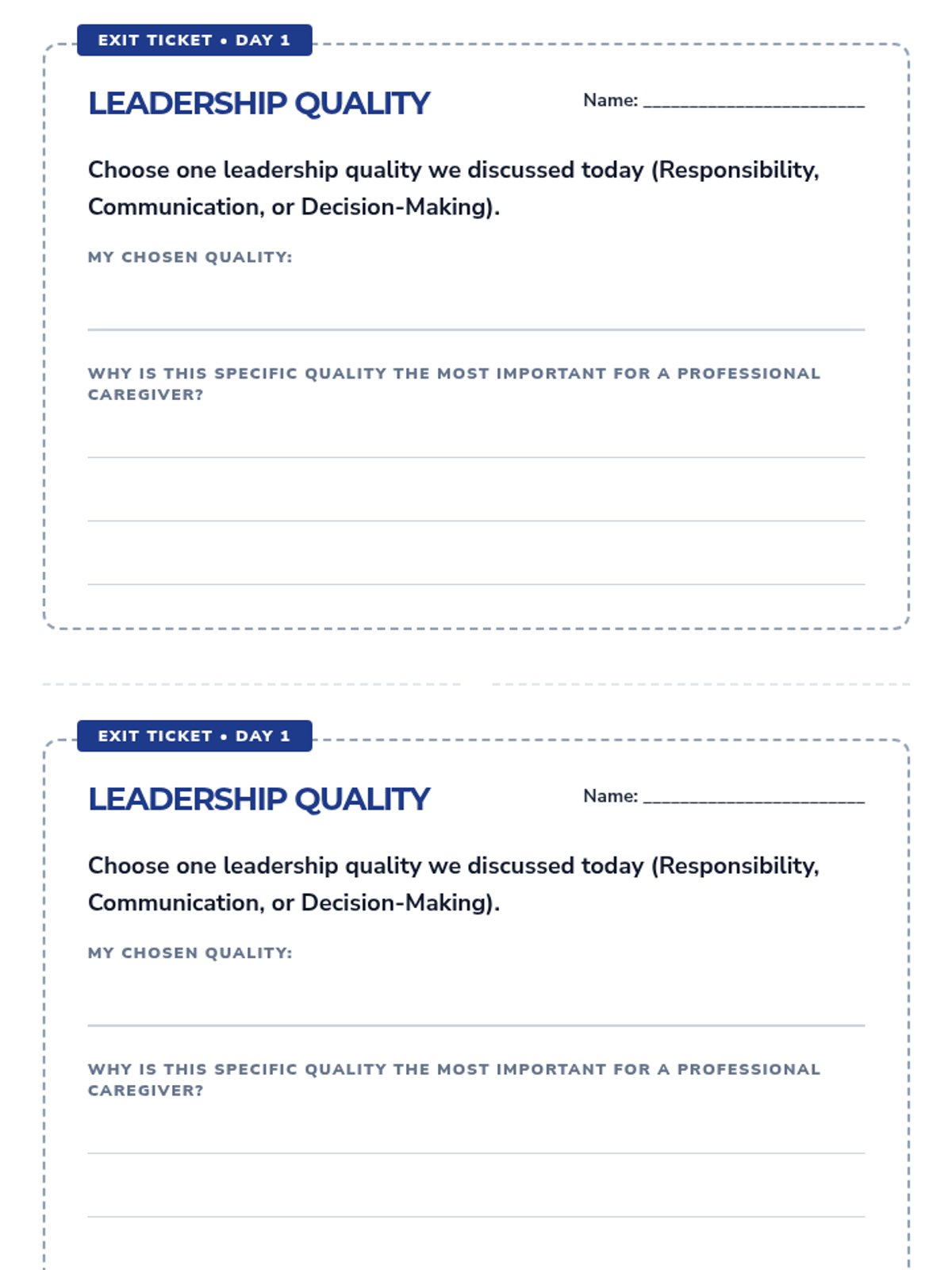
Students define leadership in a child care context, identify key traits of effective leaders, and analyze scenarios to practice professional decision-making.
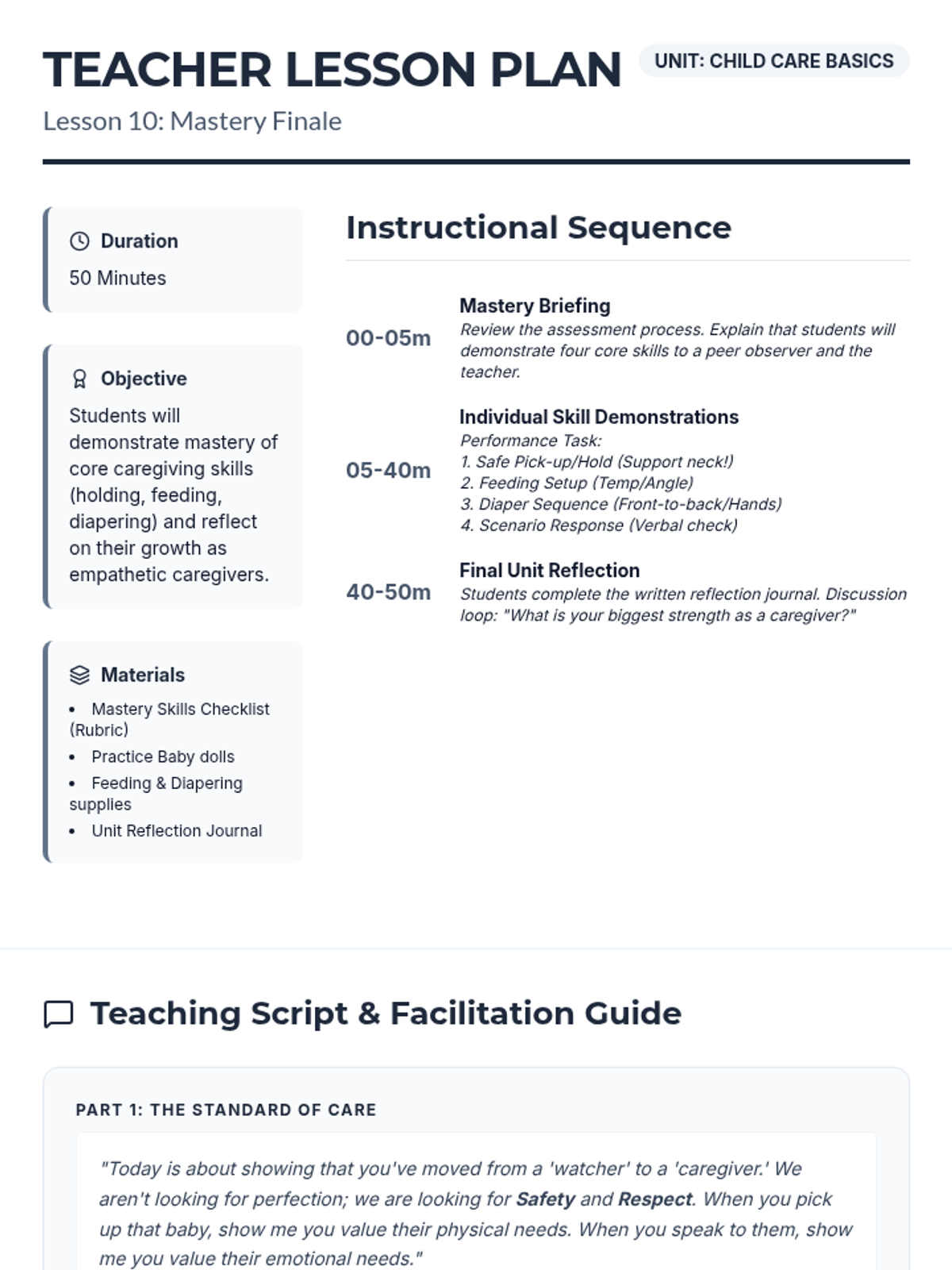
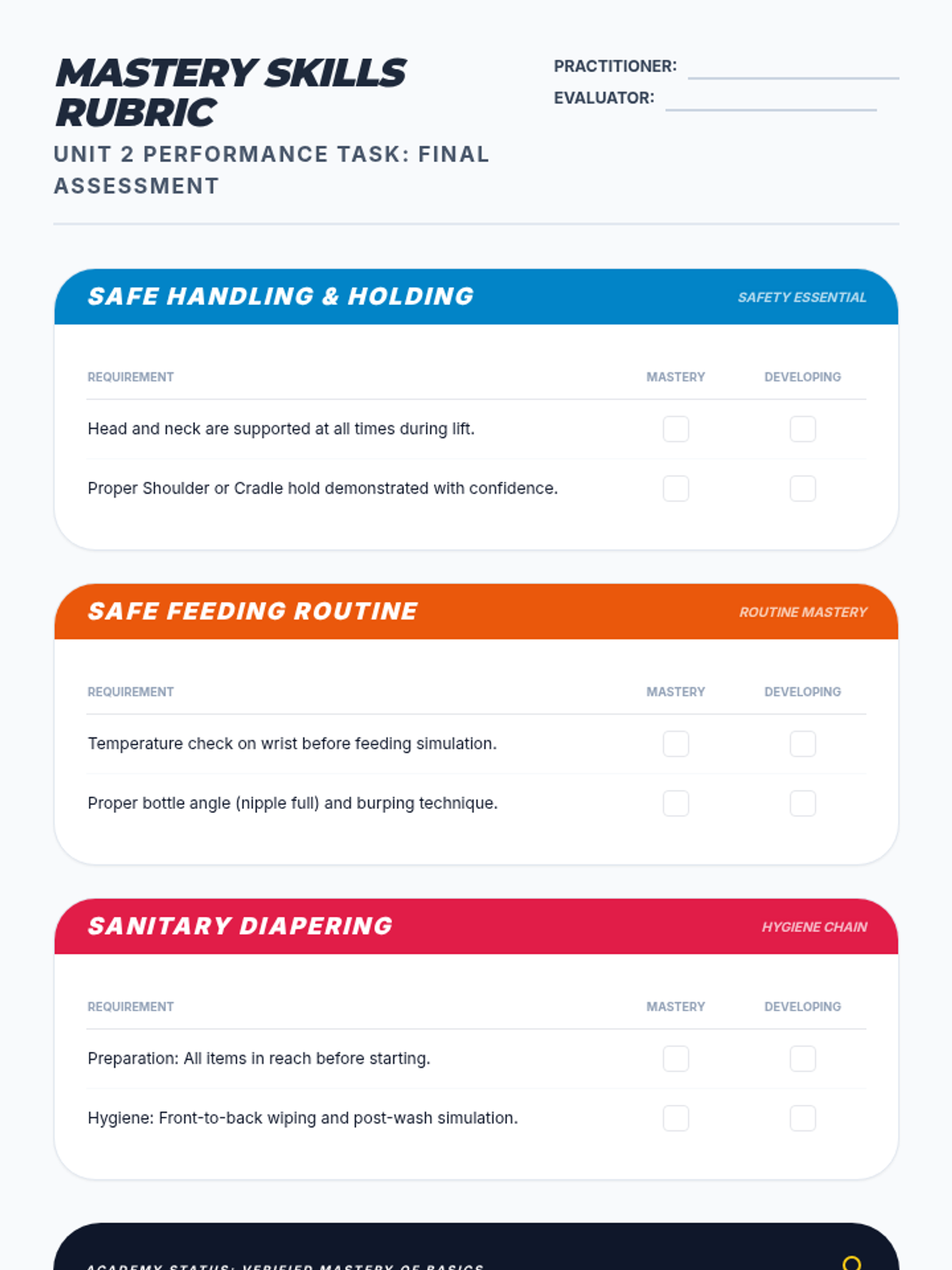
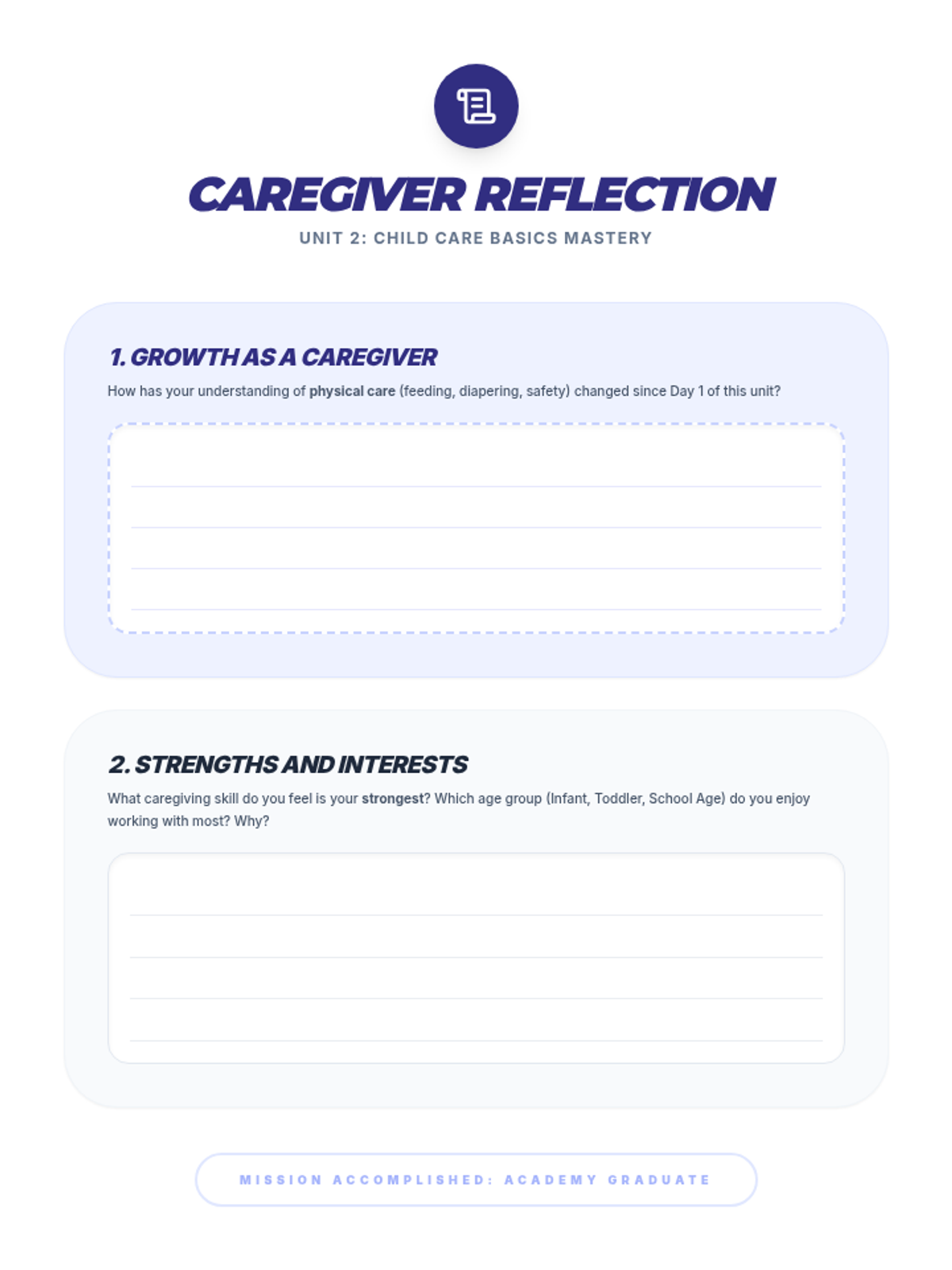
The final unit assessment where students demonstrate skill mastery and reflect on their growth as caregivers throughout the unit.
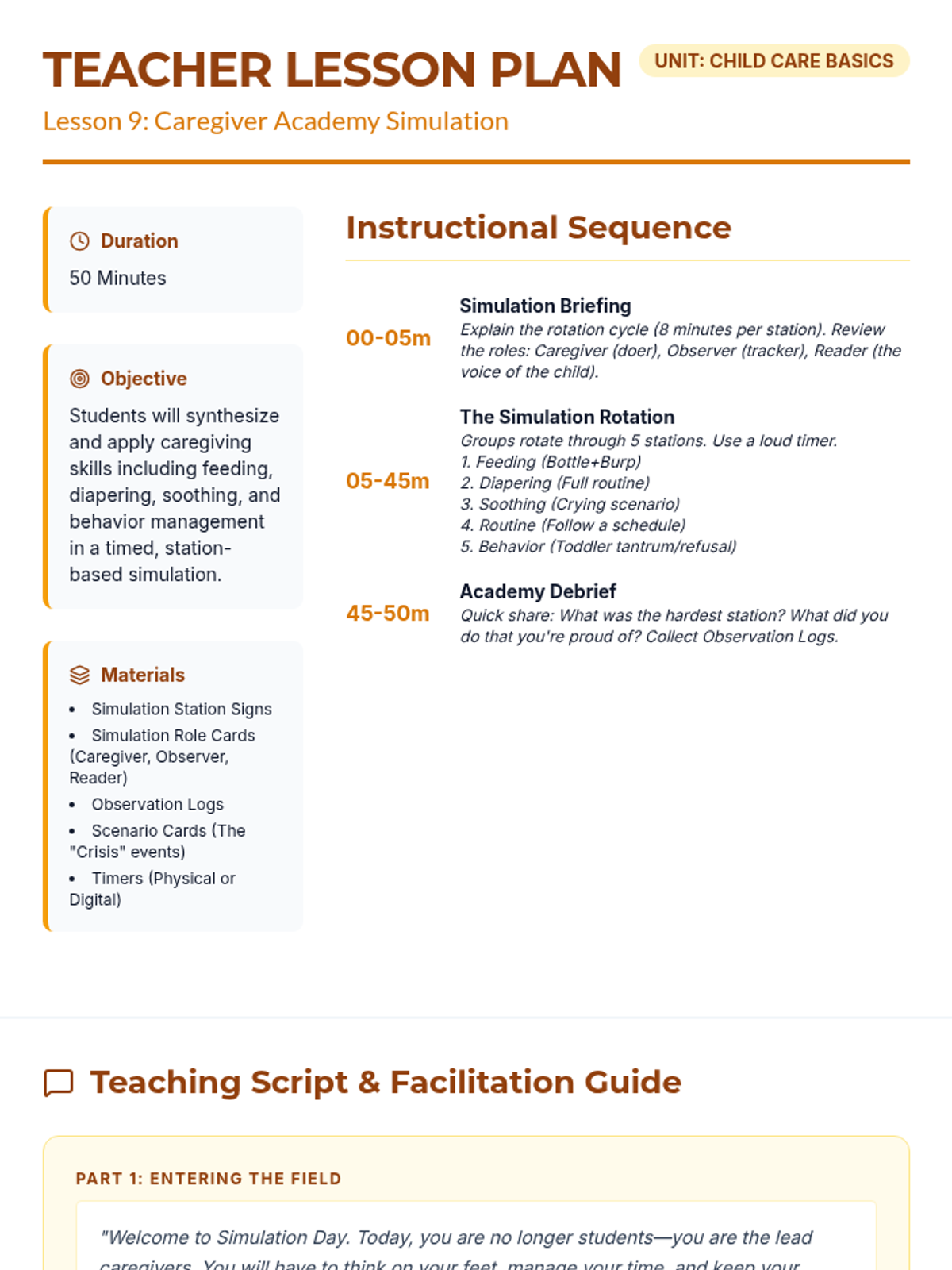
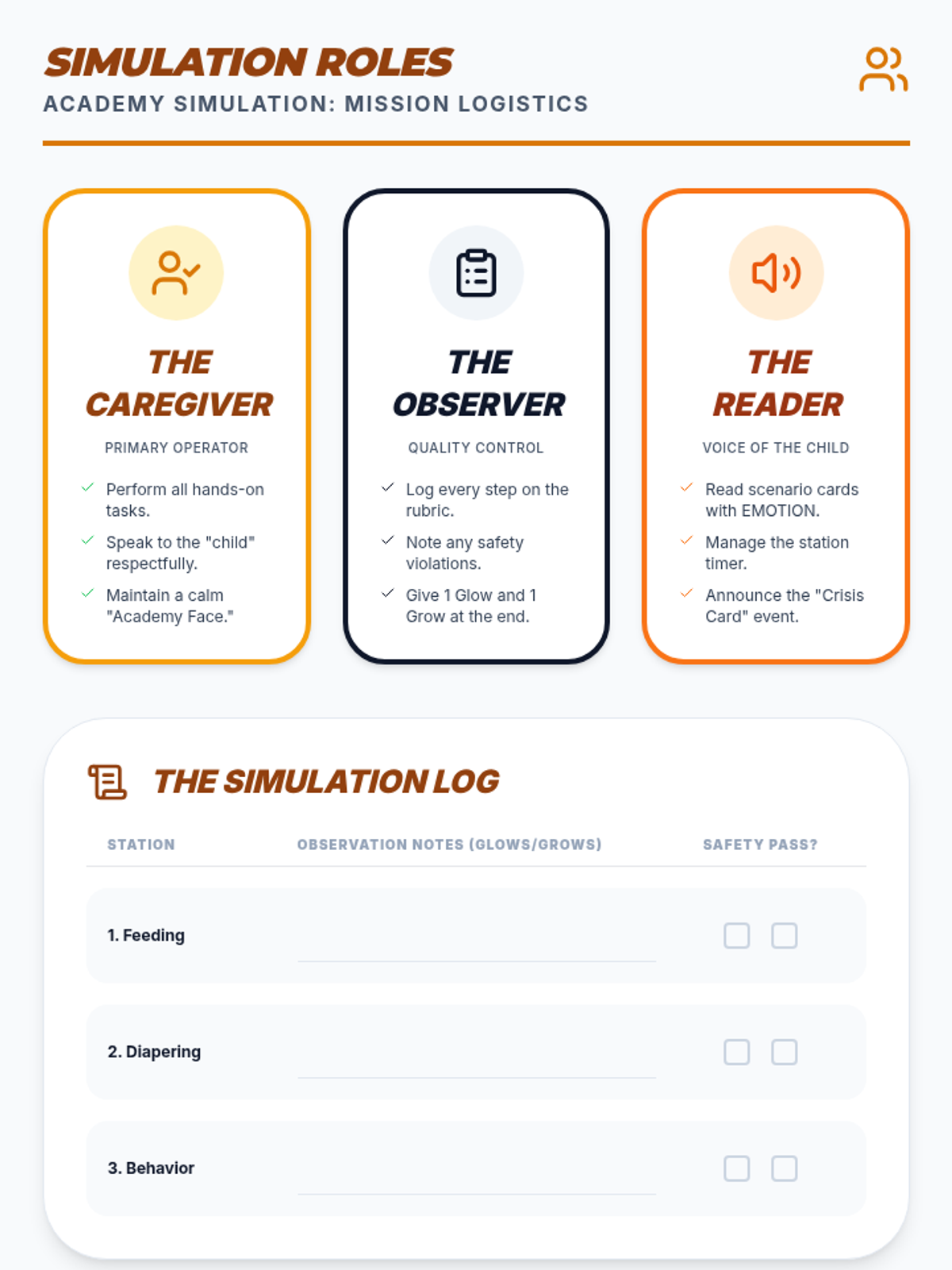
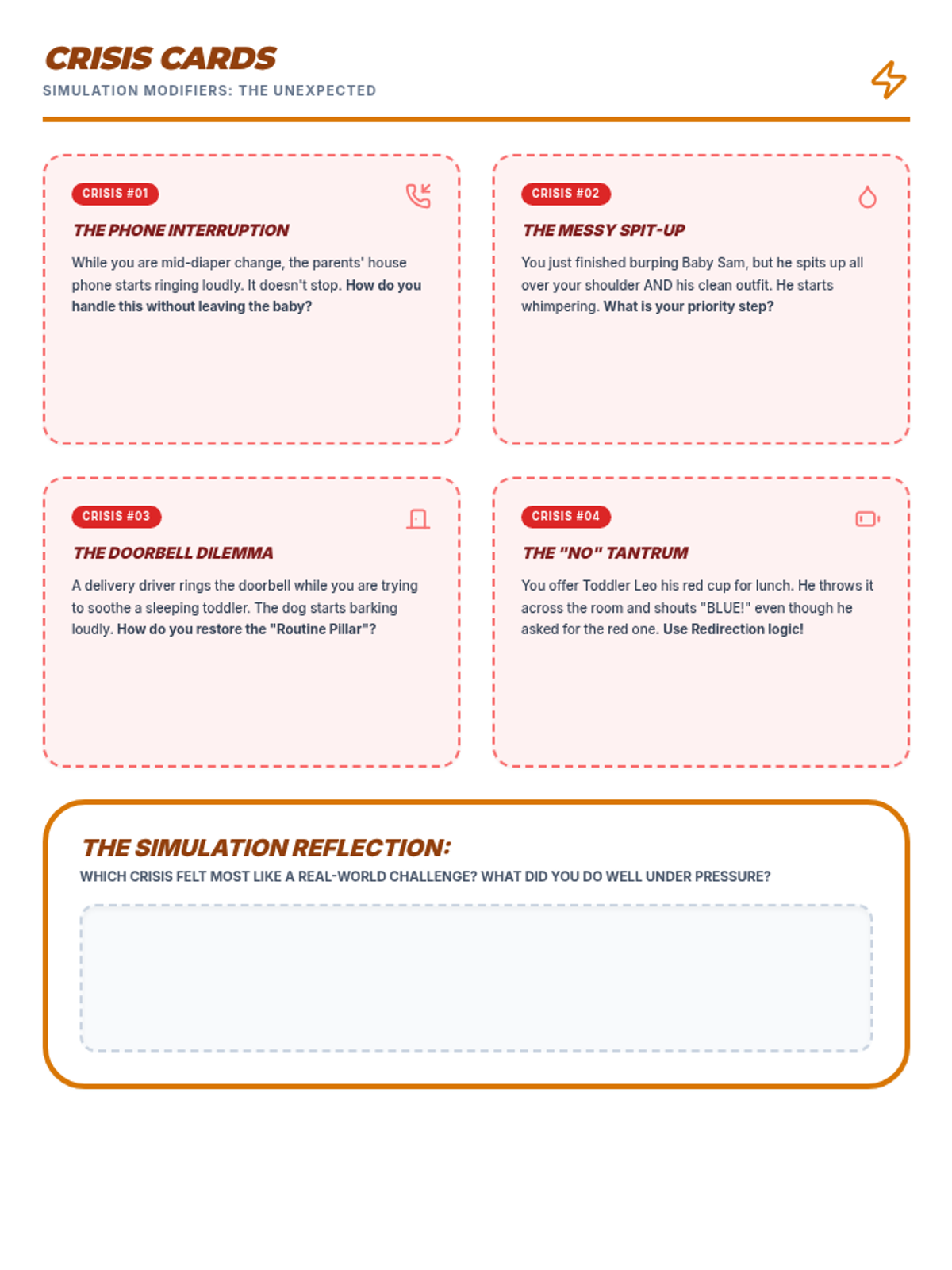
A high-stakes, station-based simulation where students apply all their caregiving skills in a "day in the life" scenario.
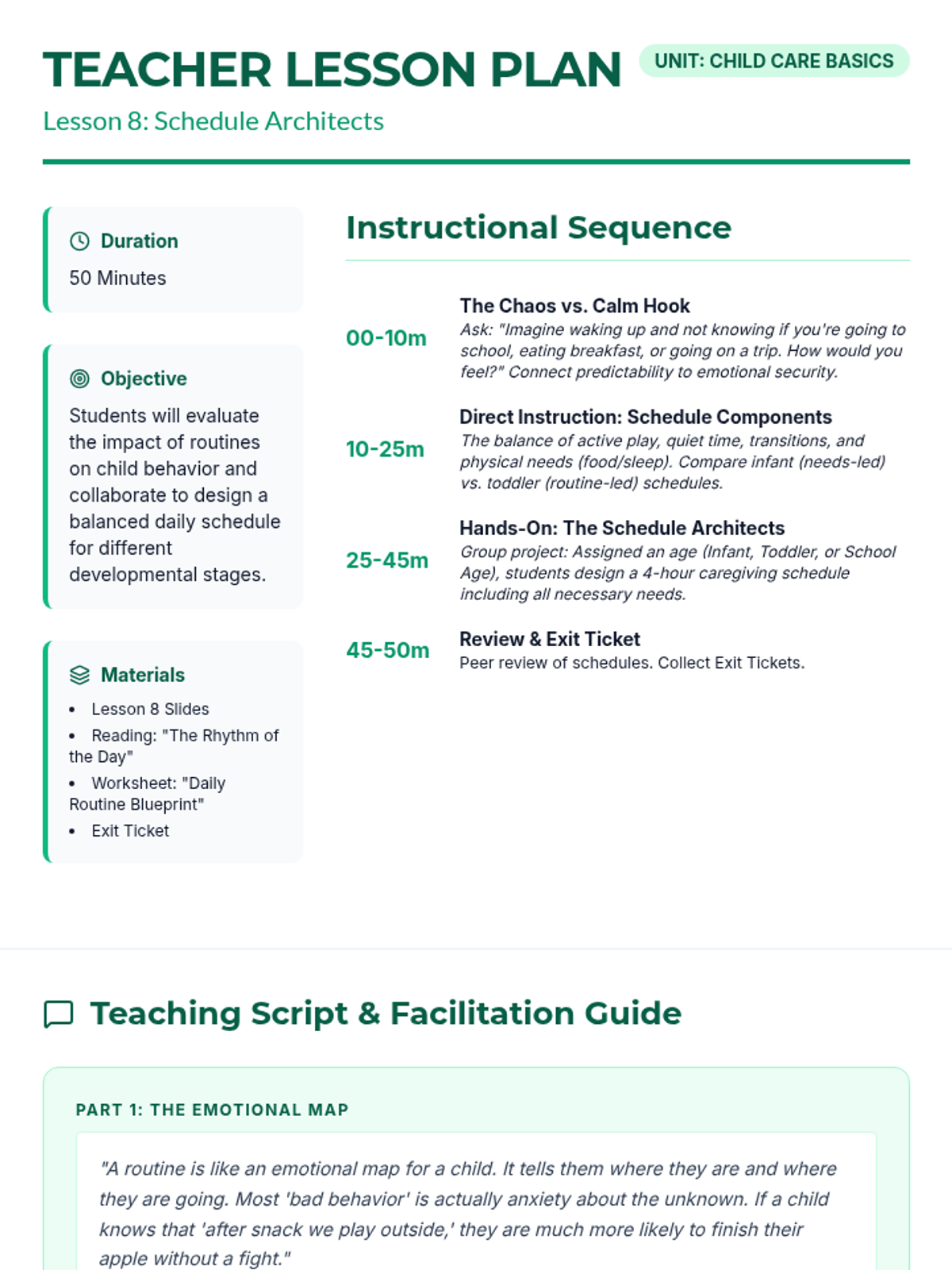
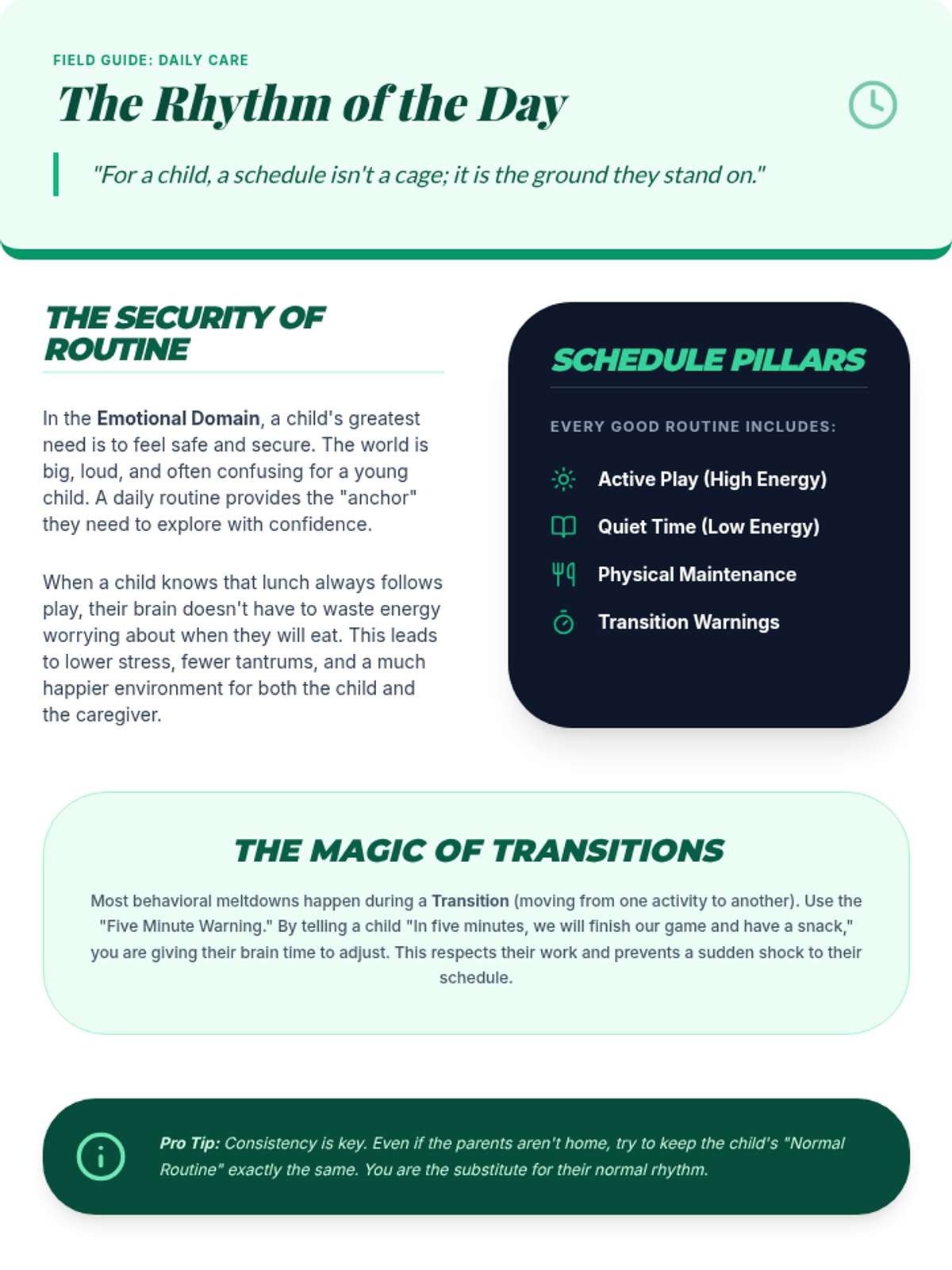
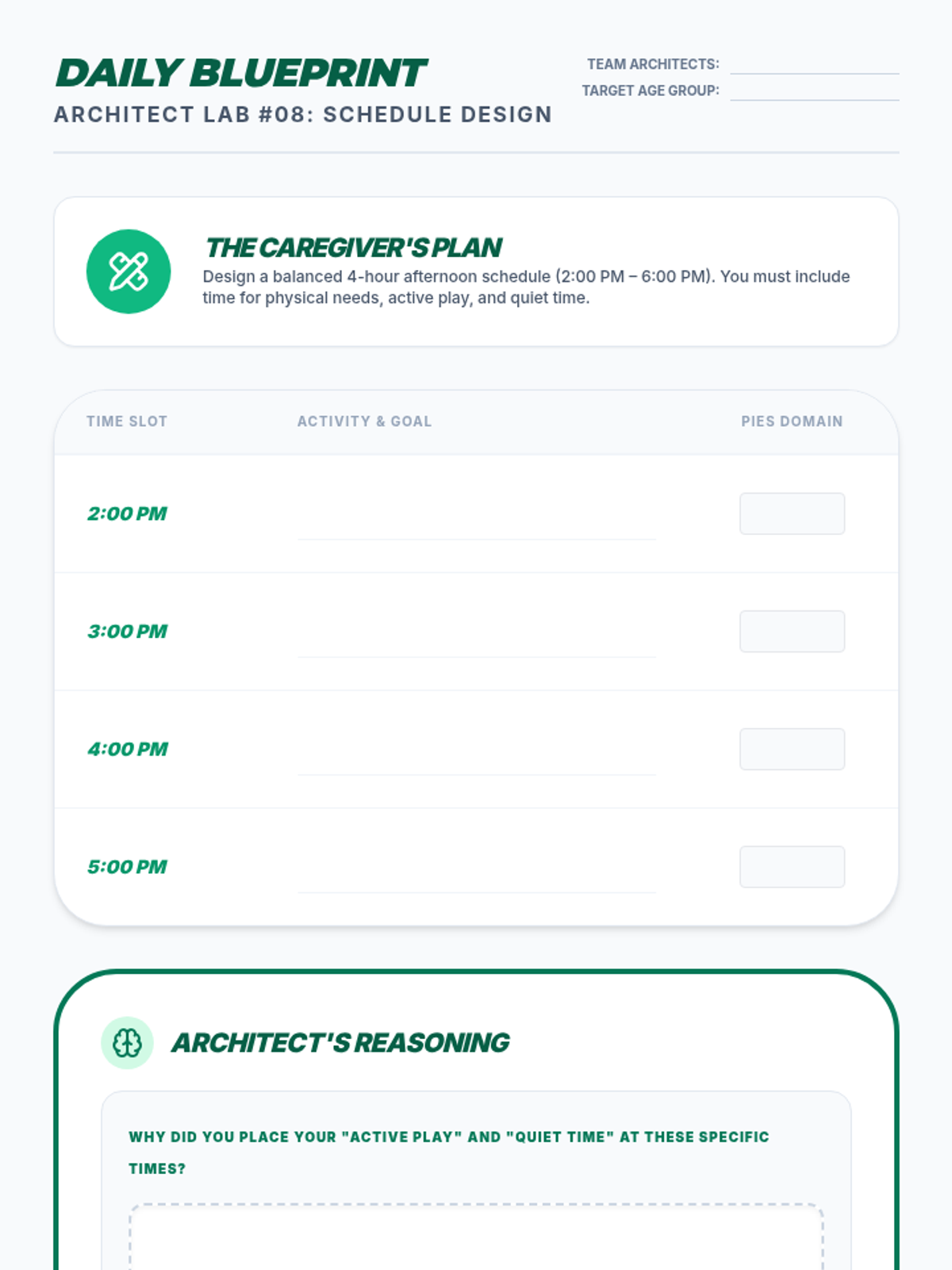
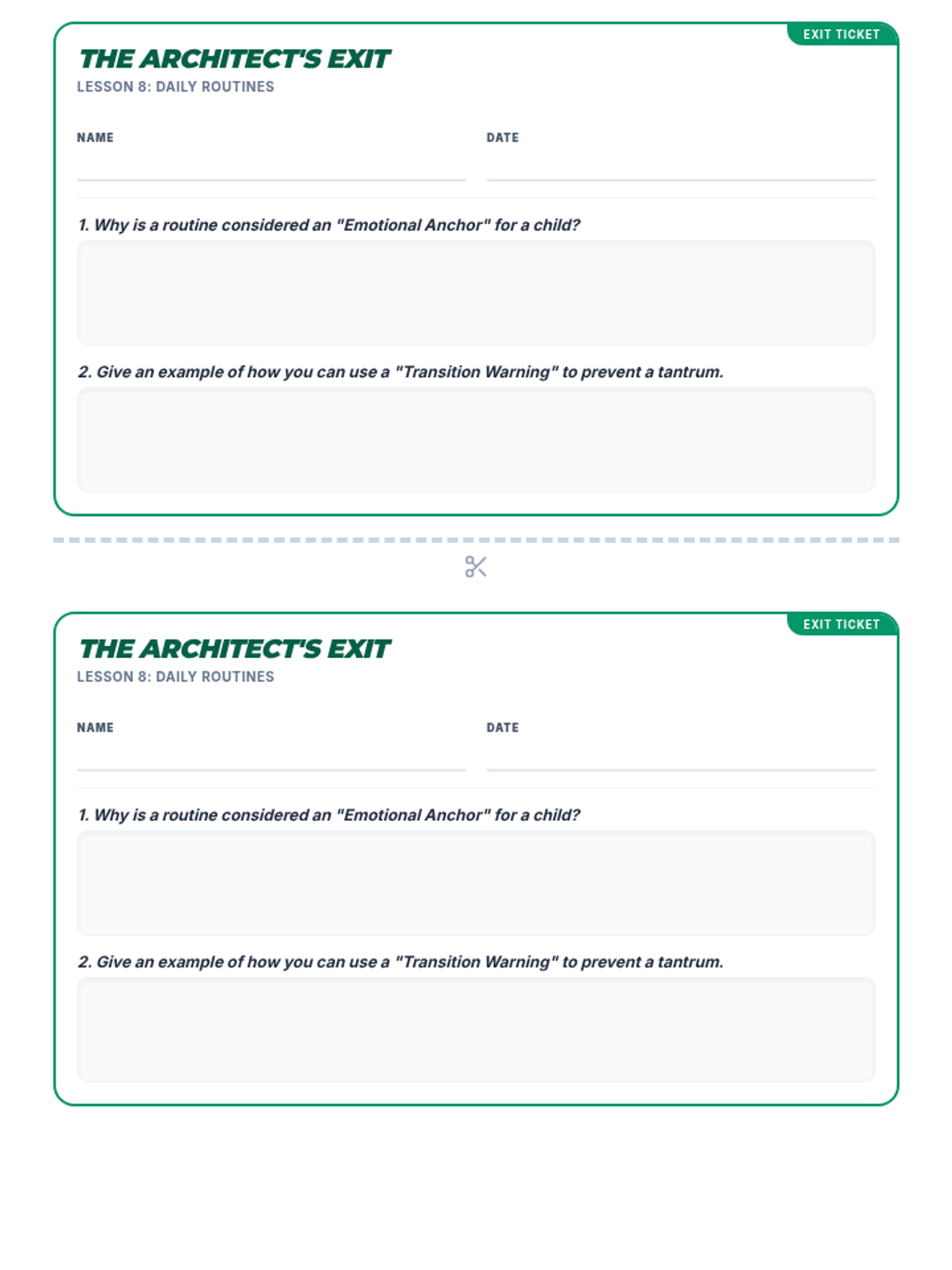
Analyzing how structured schedules support positive behavior and collaborating to design a balanced daily routine for different age groups.
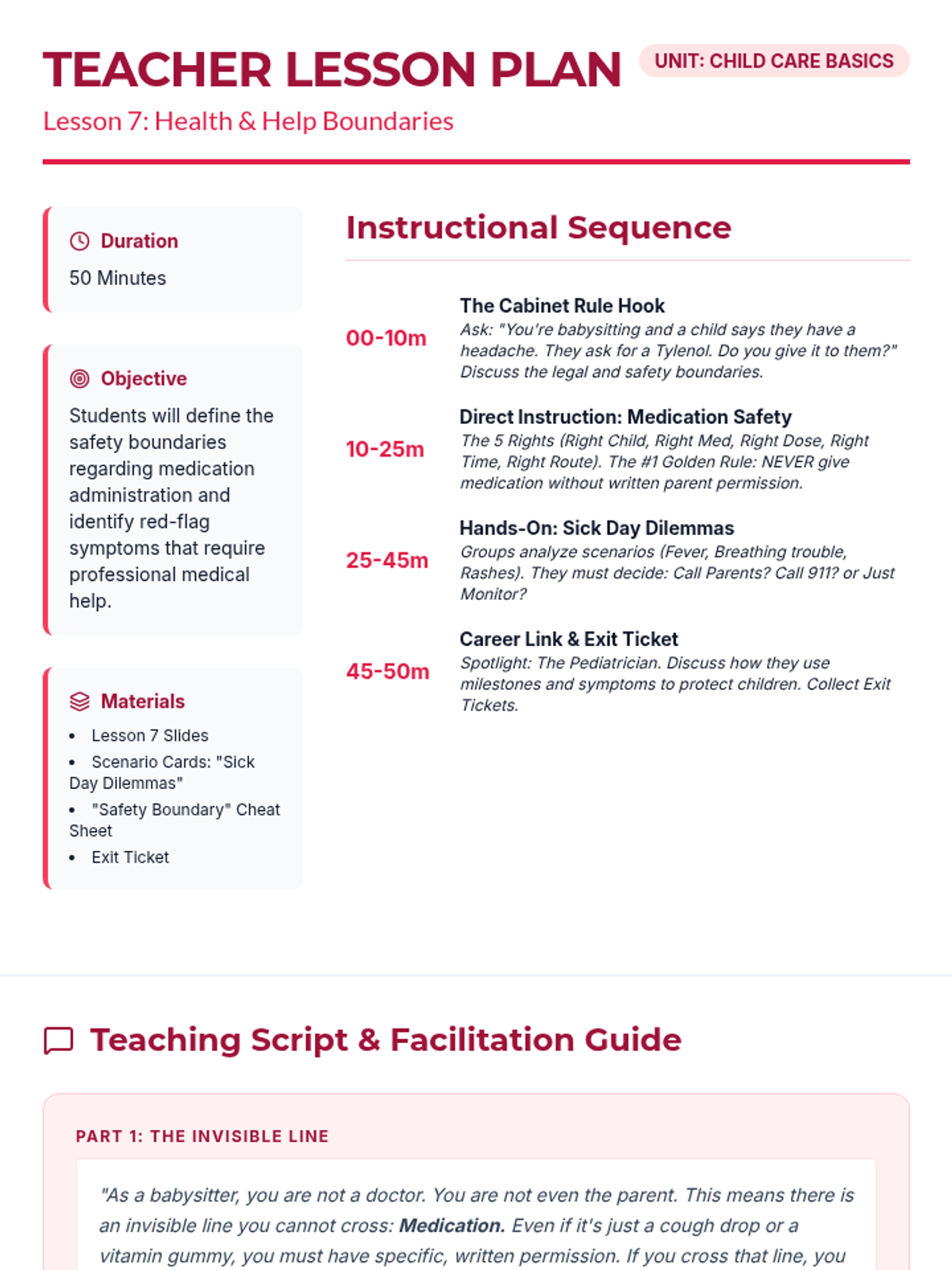
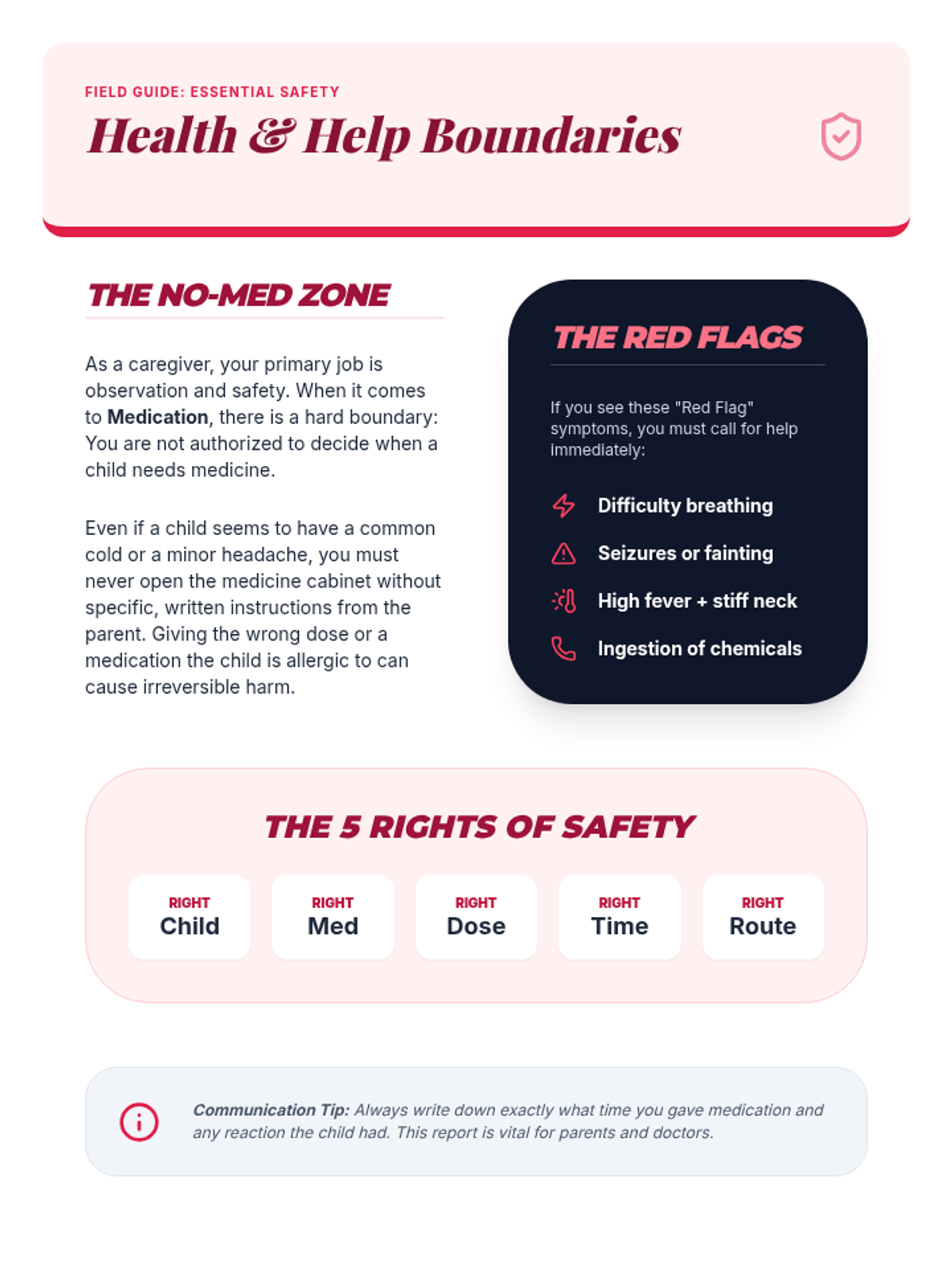
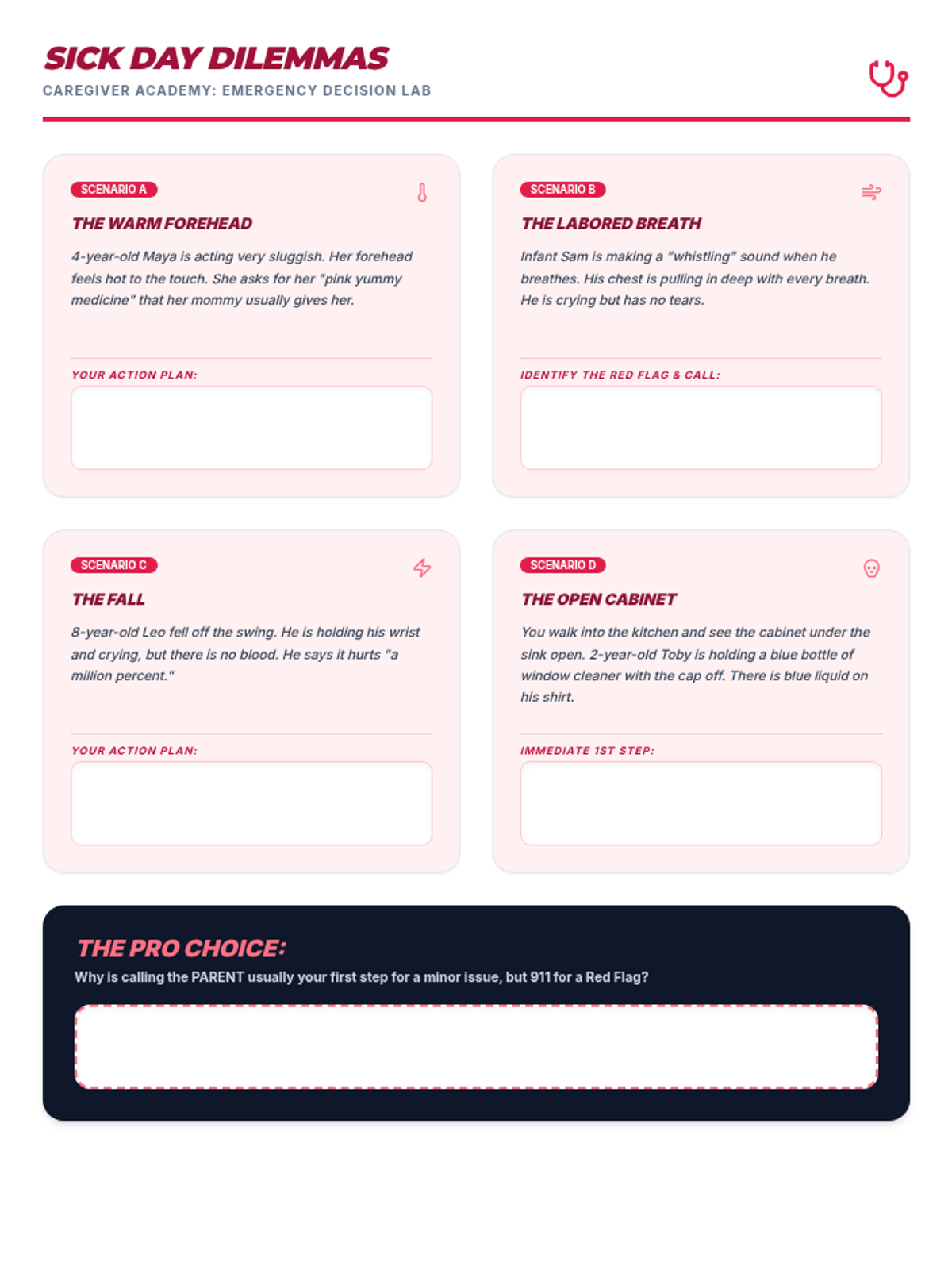
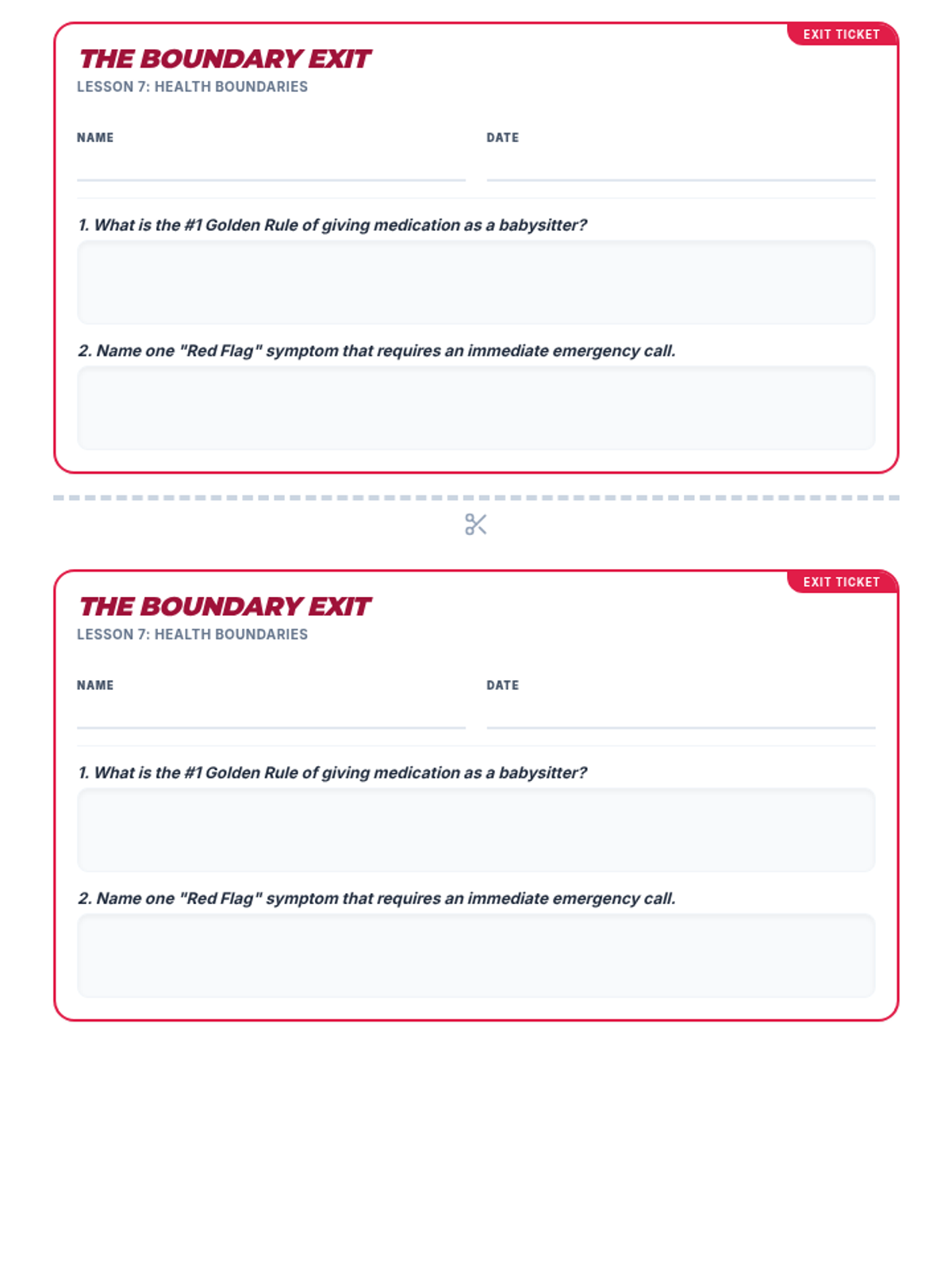
Understanding the safety boundaries of medication and identifying when a child needs professional medical help, featuring a career link to pediatrics.
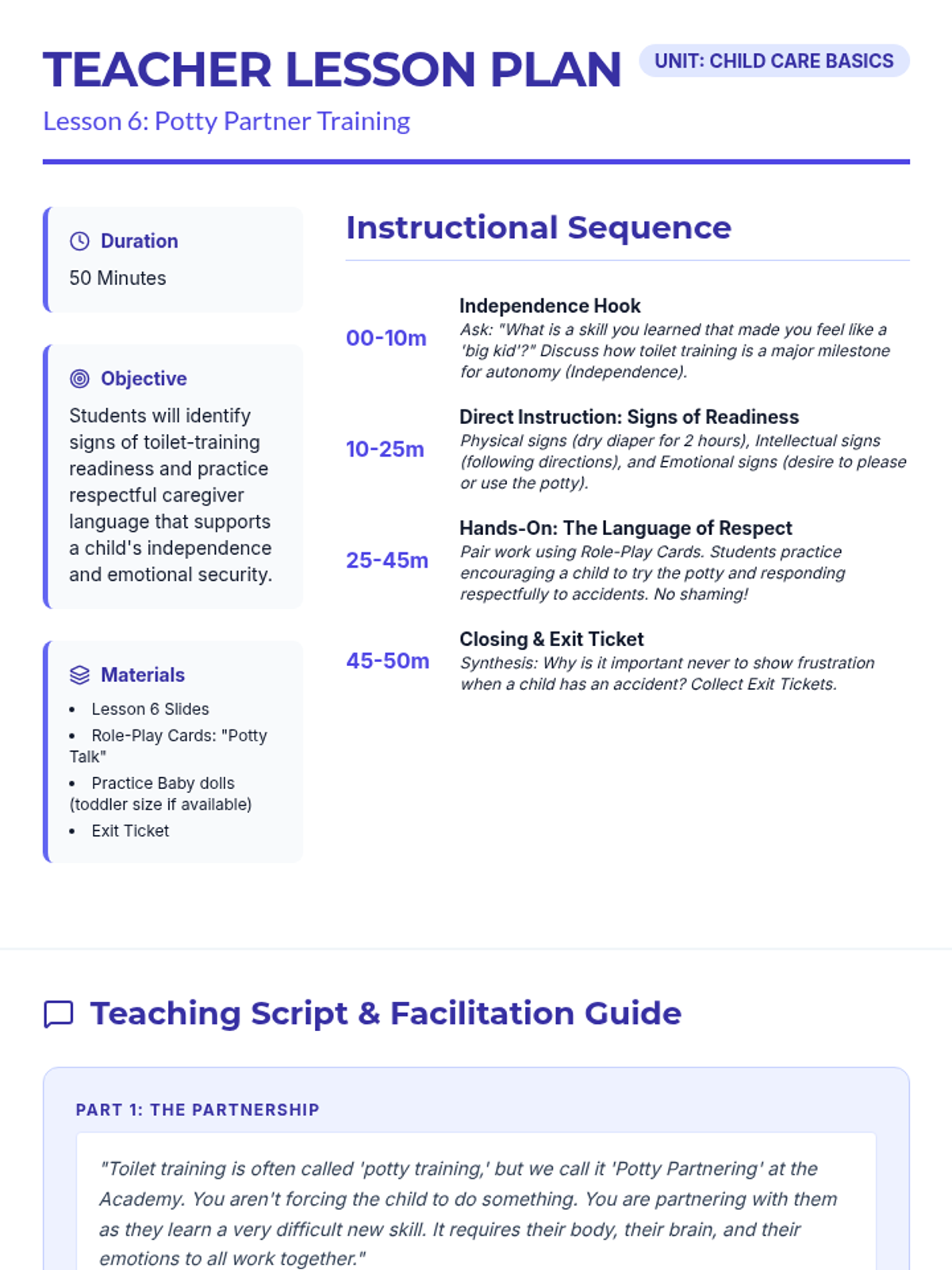
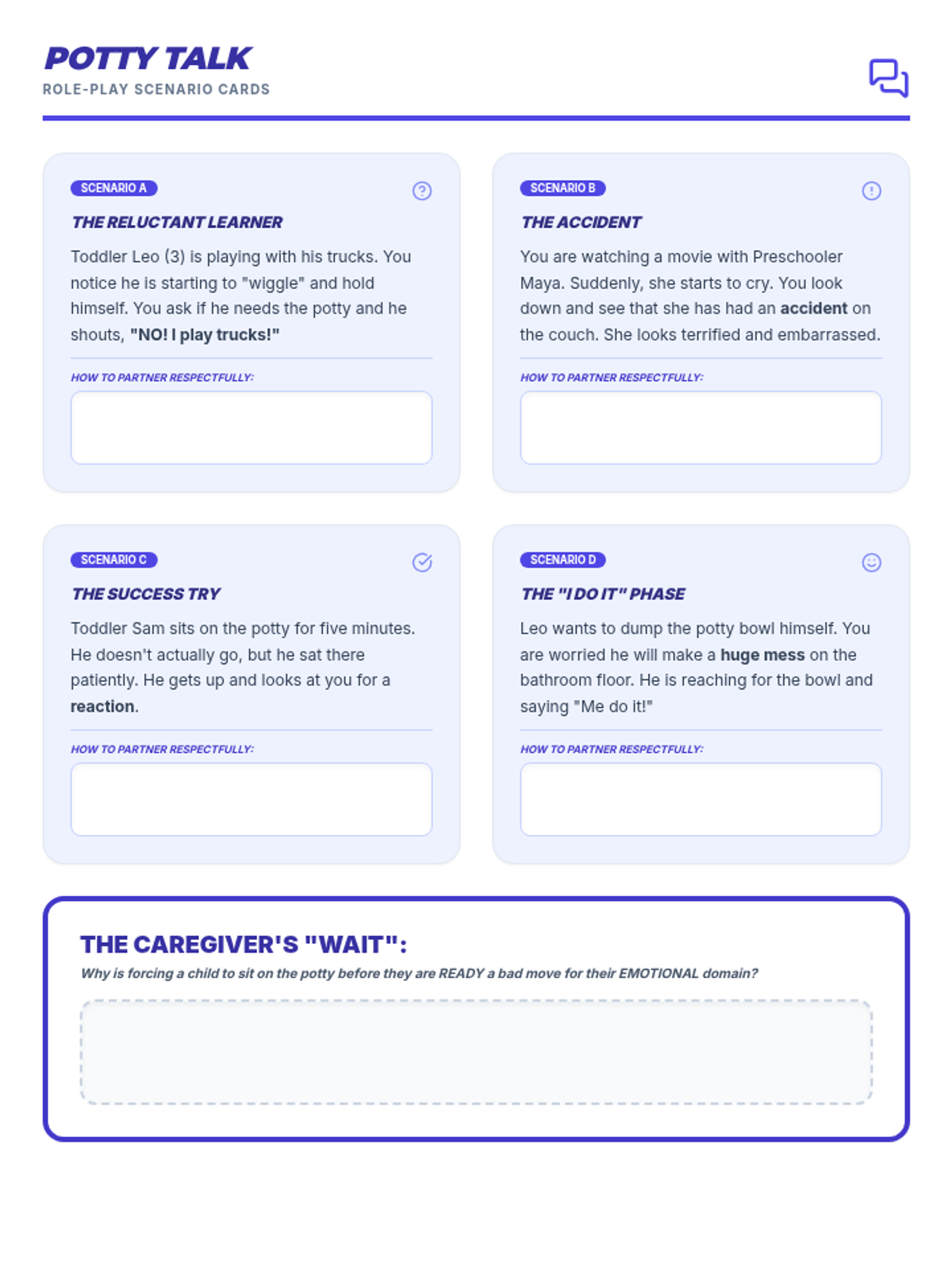
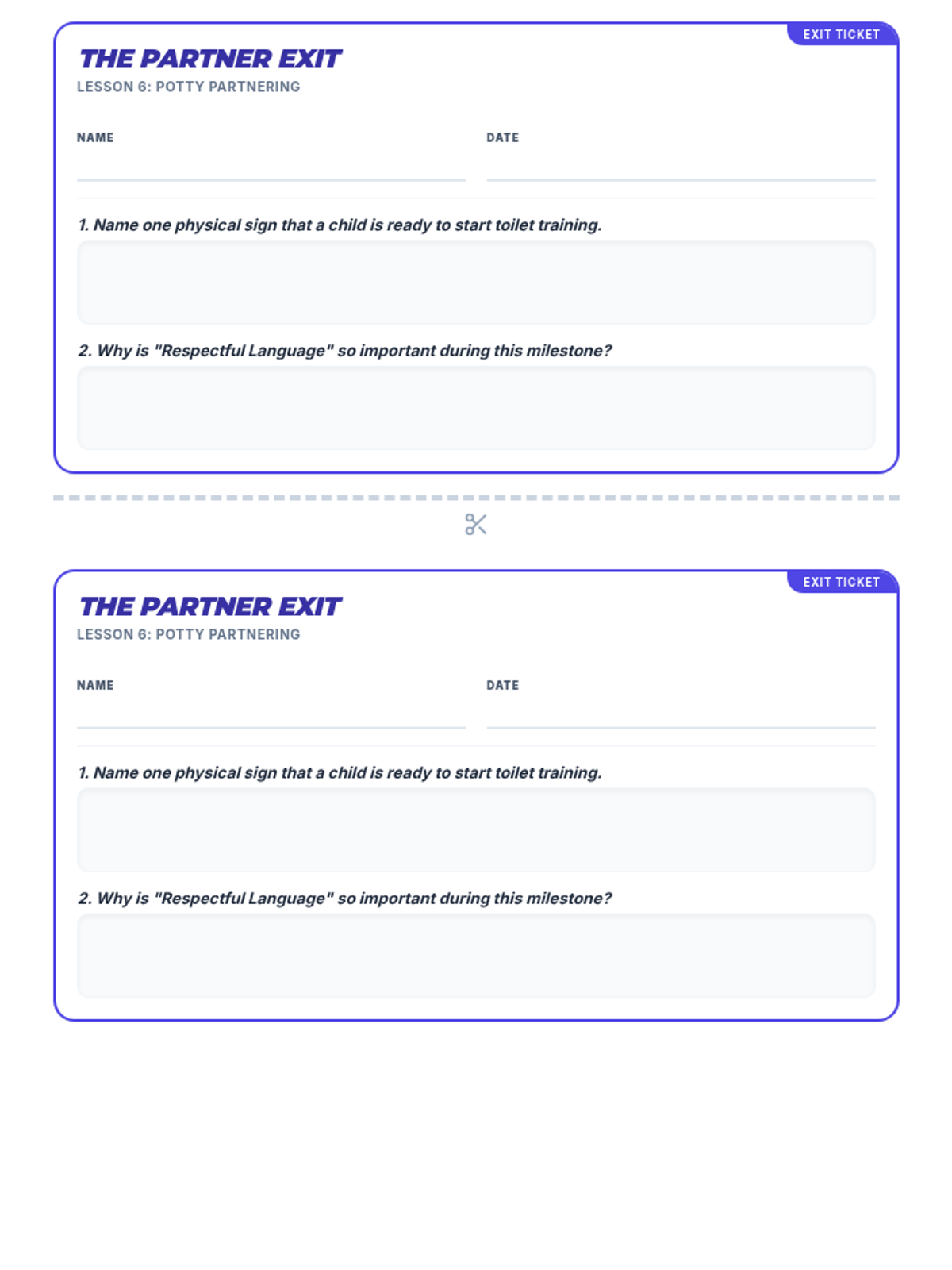
Learning respectful ways to support a child's transition to independence through toilet training, focusing on signs of readiness and encouraging language.