Students learn the STAR (Situation, Task, Action, Result) method for structuring behavioral anecdotes and practice turning vague statements into impactful stories.
A visually-driven lesson designed for 9th-grade students with low literacy skills to understand why they avoid difficult tasks and learn simple strategies to start working. The lesson uses a 'System Error' theme to de-stigmatize task avoidance as a brain-based response.
A social-emotional learning lesson for high schoolers exploring the psychological roots of task avoidance, focusing on how stress, trauma, and the brain's survival instincts can hinder academic focus.
A lesson focused on non-traditional grounding techniques for teenagers, moving beyond basic breathing exercises to explore physical, mental, and object-based anchors.
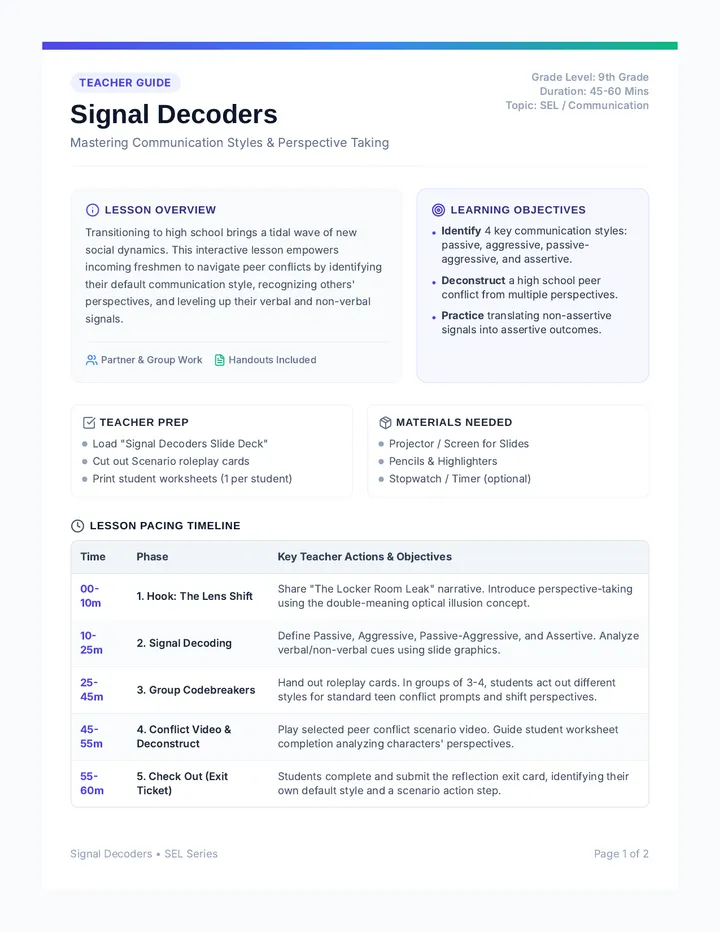
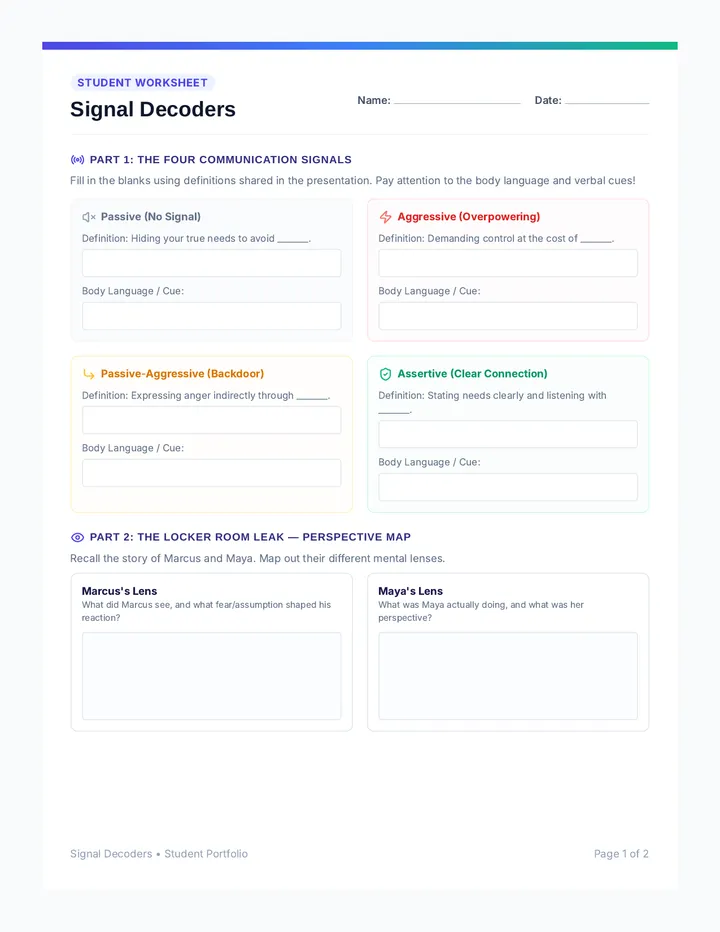
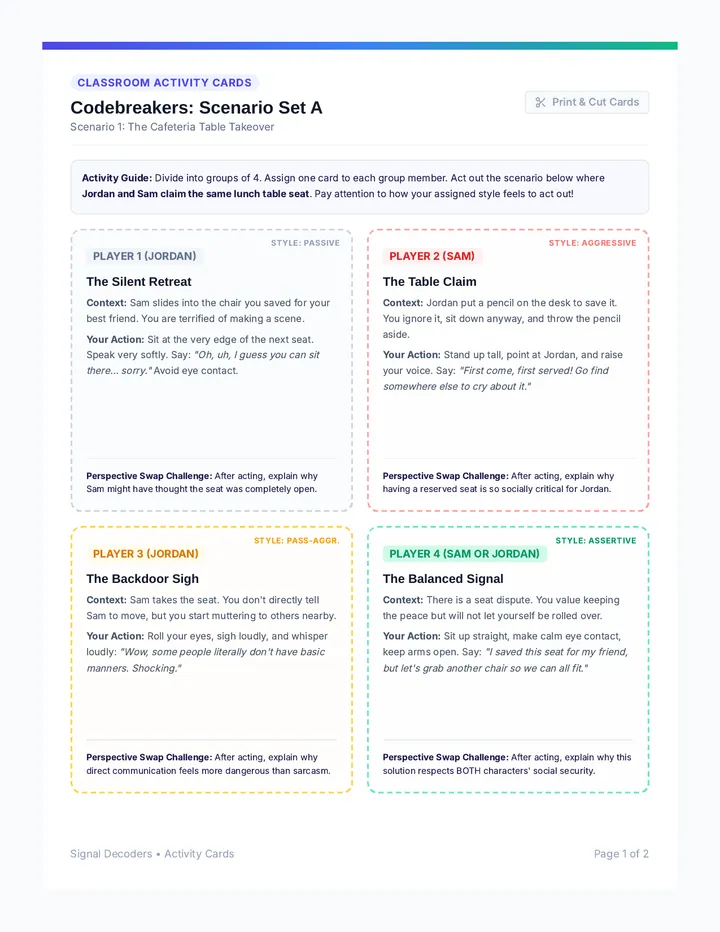
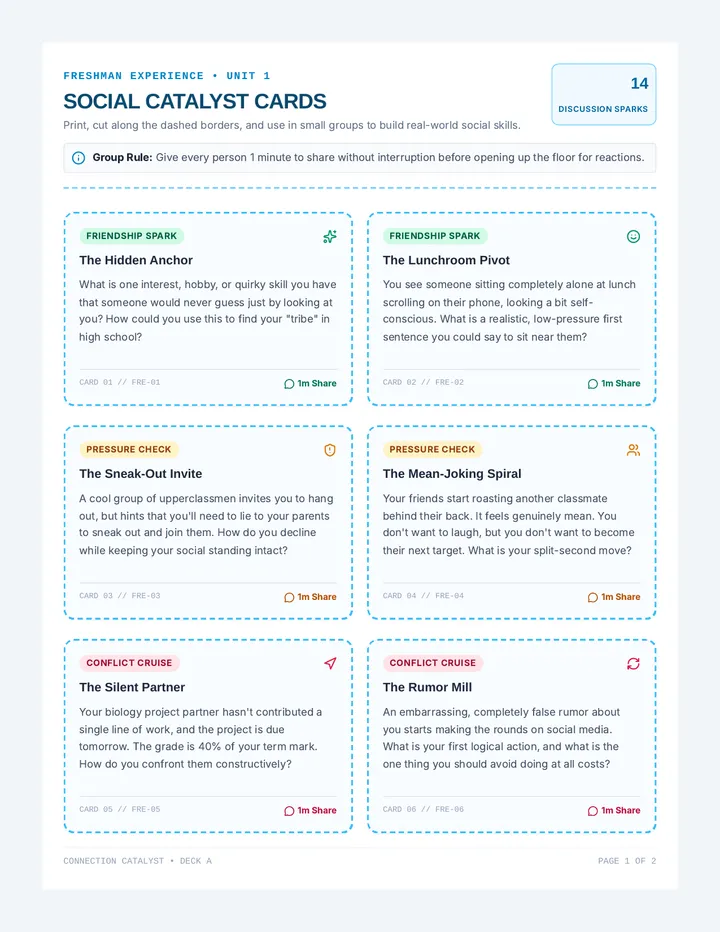
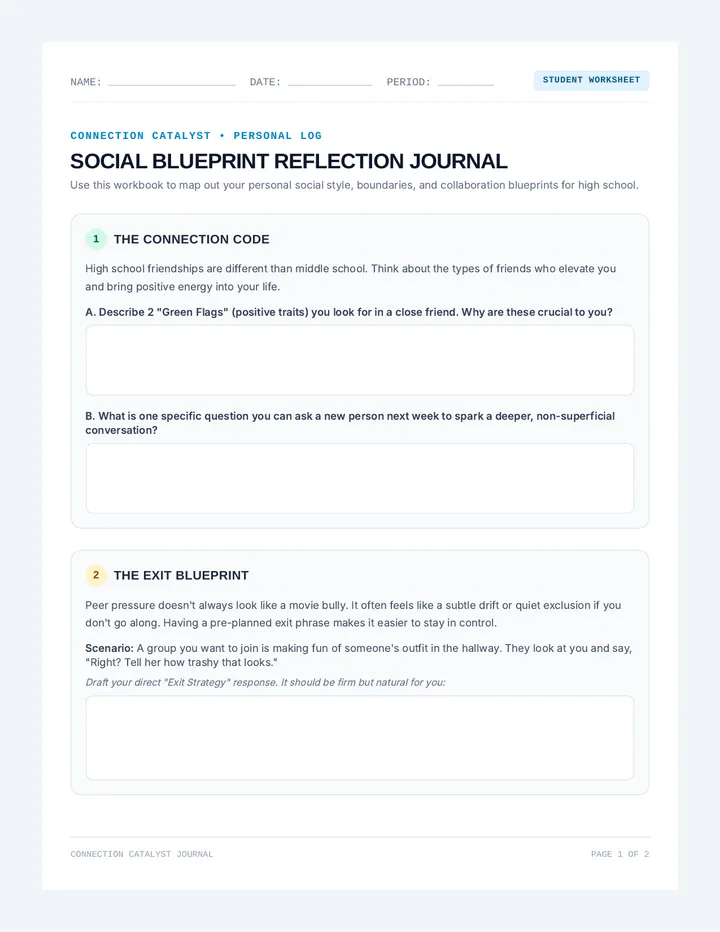
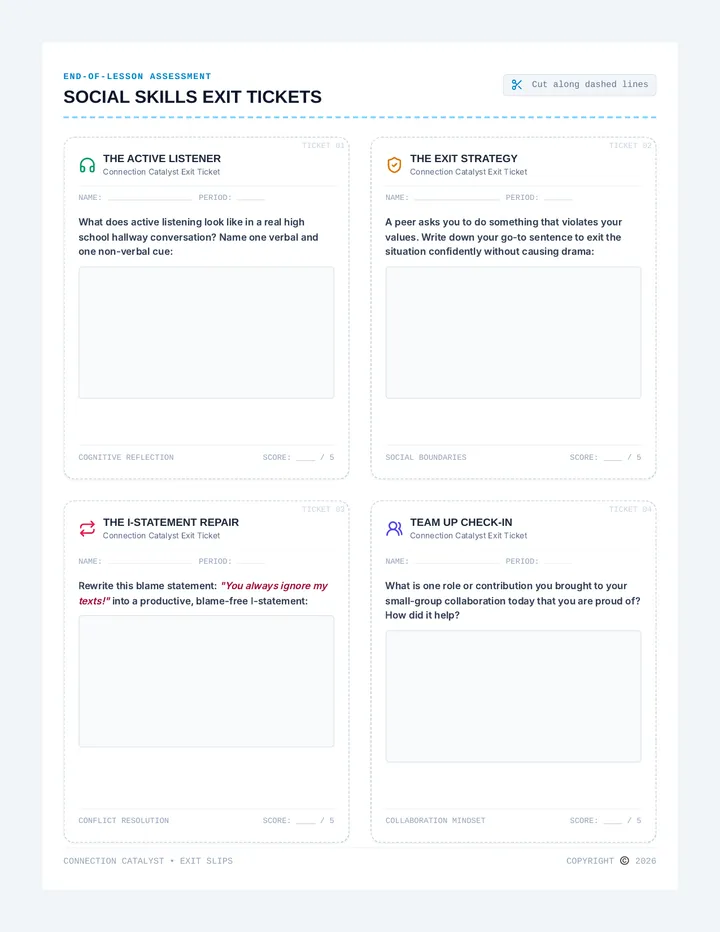
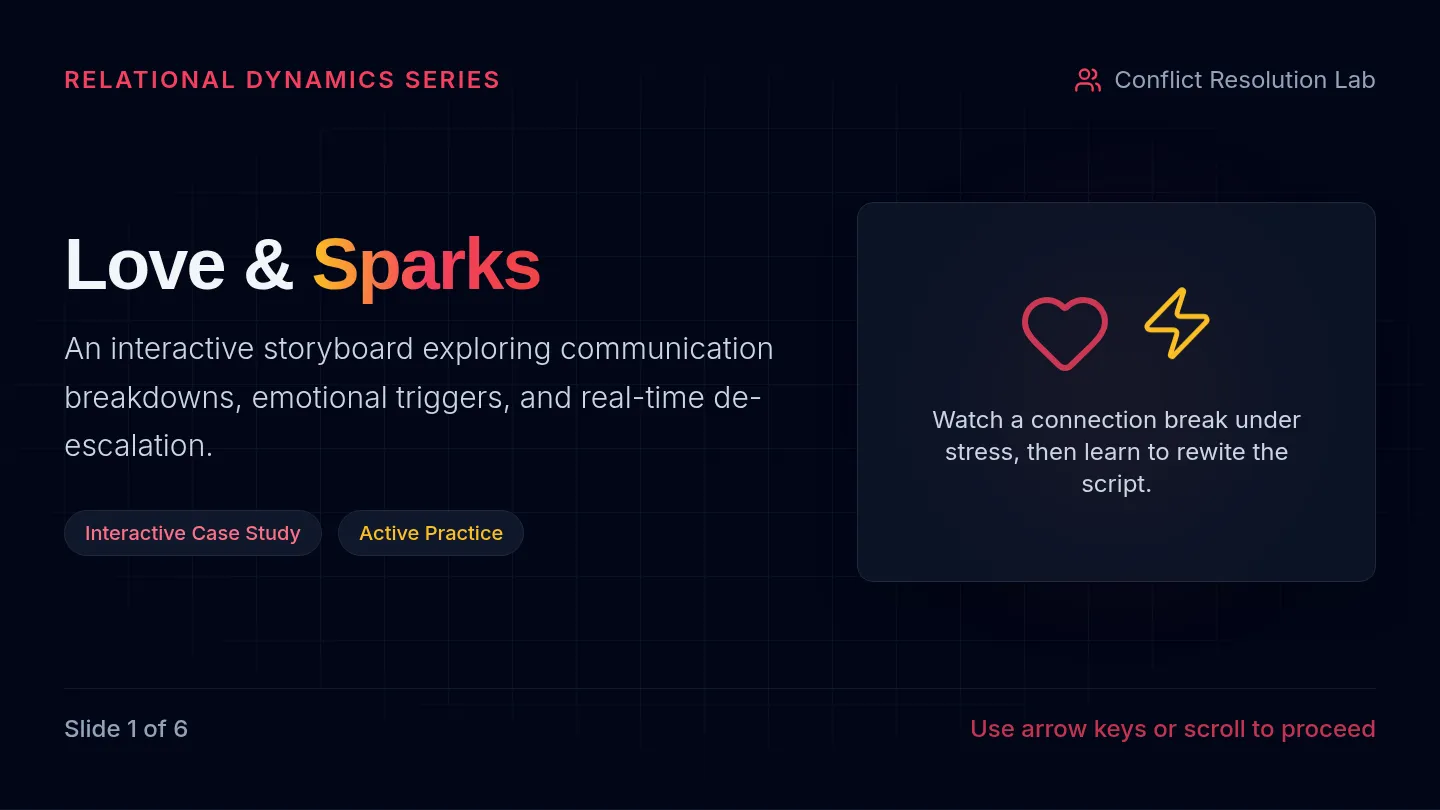
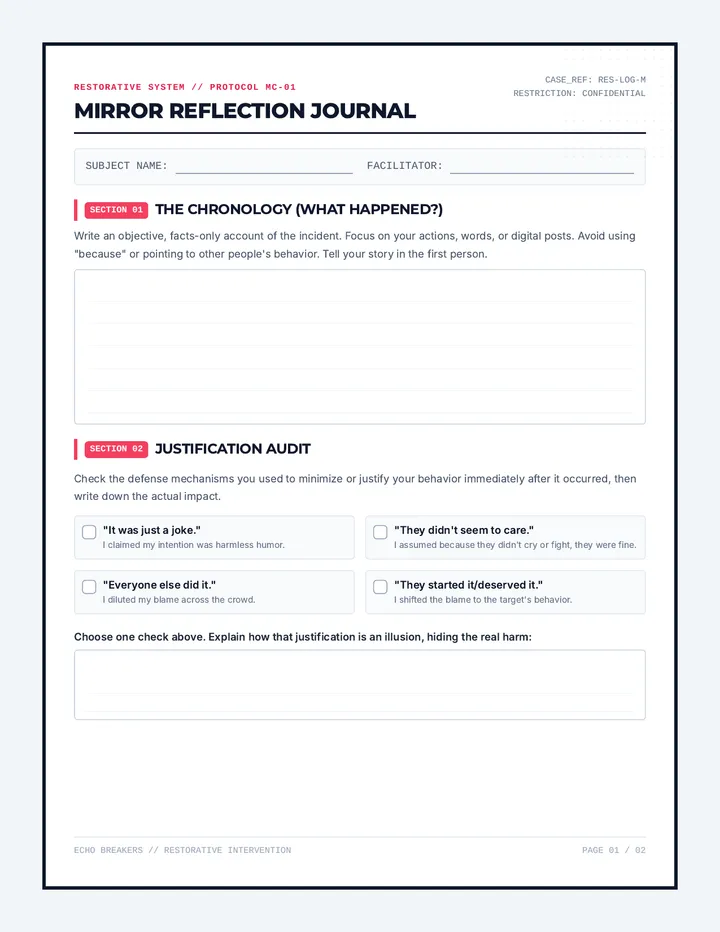
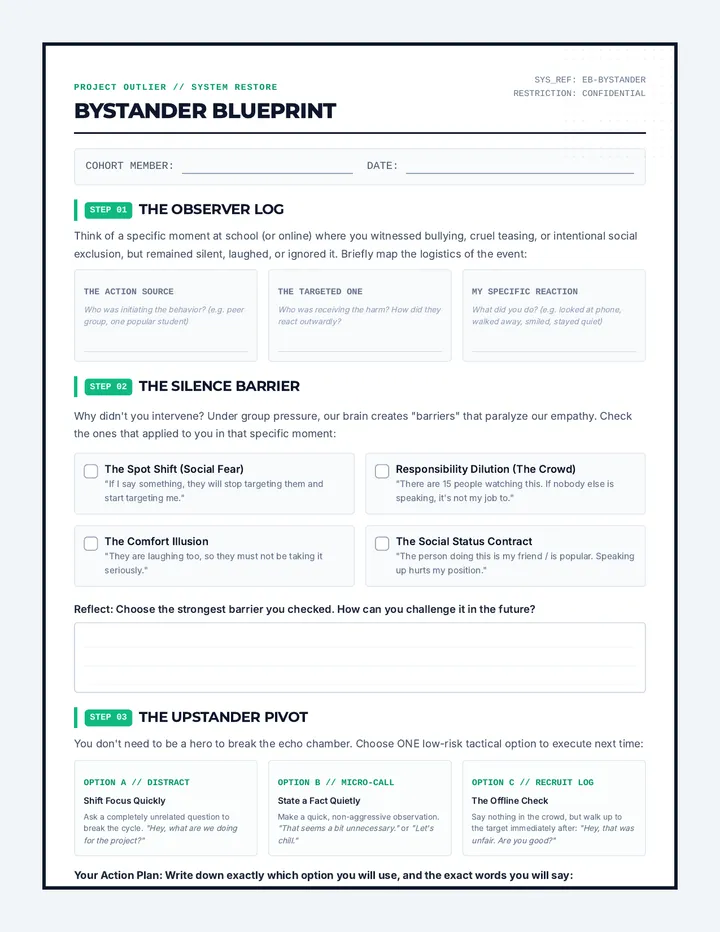
Focuses on deconstructing personal conflicts through multiple lenses, specifically addressing the gap between personal feelings and external impact in school and peer environments.
A high-authenticity, zero-material icebreaker that encourages high school students to share 'behind-the-scenes' moments from the year to build empathy and peer connection.
A life skills lesson designed for high schoolers to create personalized, age-appropriate morning and night hygiene routines using a visual checklist format. Students plan their steps and customize a template for daily use.
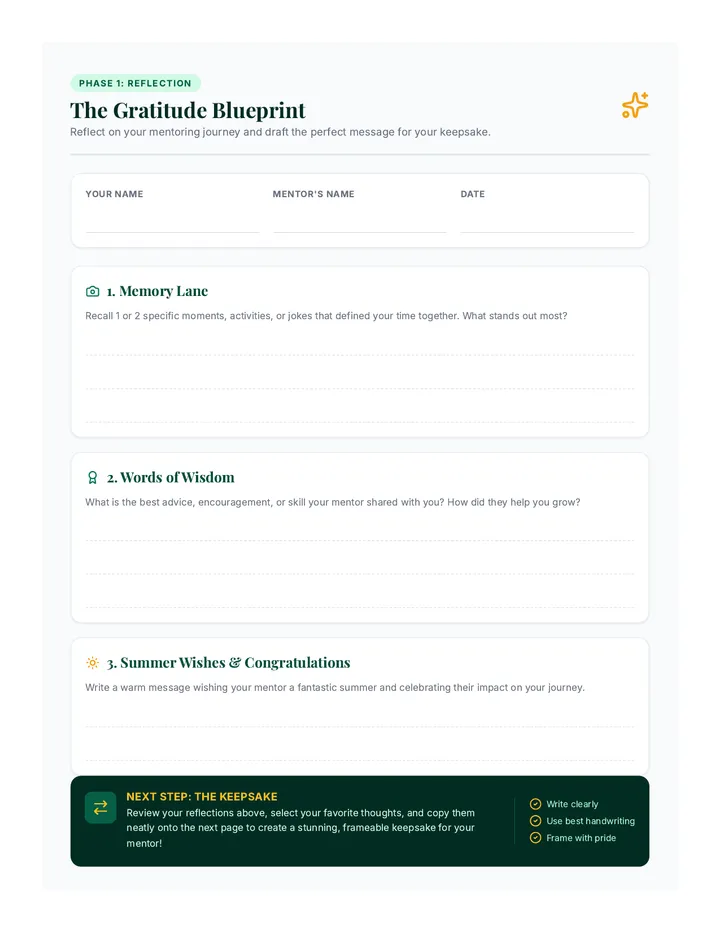
A quick-fire, 10-minute icebreaker that bridges end-of-year reflection with summer goal-setting and peer appreciation.
A high-energy, in-class simulation where students apply their knowledge of meal planning, unit pricing, and grocery store layout to navigate a 'Supermarket Showdown'.
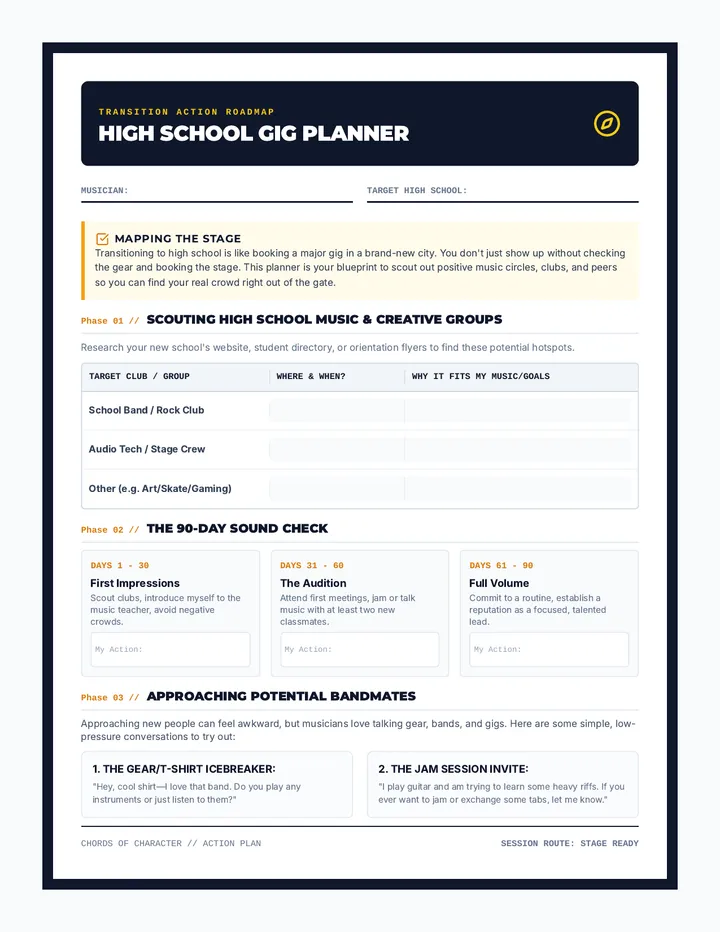
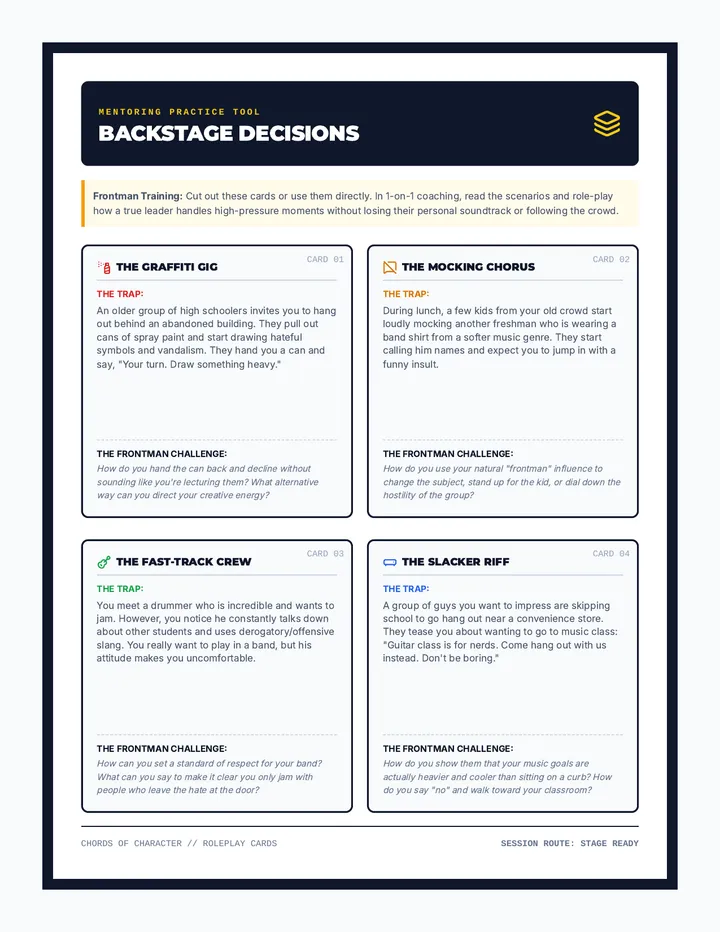
A specialized counseling unit for 8th-grade students transitioning to high school. Focuses on academic accountability, social-emotional independence, and administrative coordination for high-stakes school transitions.
A social skills focused lesson teaching life skills students how to make a professional first impression through a smile, a firm handshake, and a simple verbal greeting. Includes video examples and a structured practice routine.
This lesson uses a barbering-inspired theme to help students reflect on the impact of truancy and class-walking on their long-term career goals. It focuses on professionalism, accountability, and the direct connection between classroom behavior and future success in the barbering industry.
A collection of grade recovery action plans for various elective classes, designed to help failing students get back on track with clear, actionable steps.