Students analyze visual data to identify trends, spikes, and anomalies. They practice looking at the 'big picture' of behavior over time to distinguish between isolated incidents and consistent patterns.
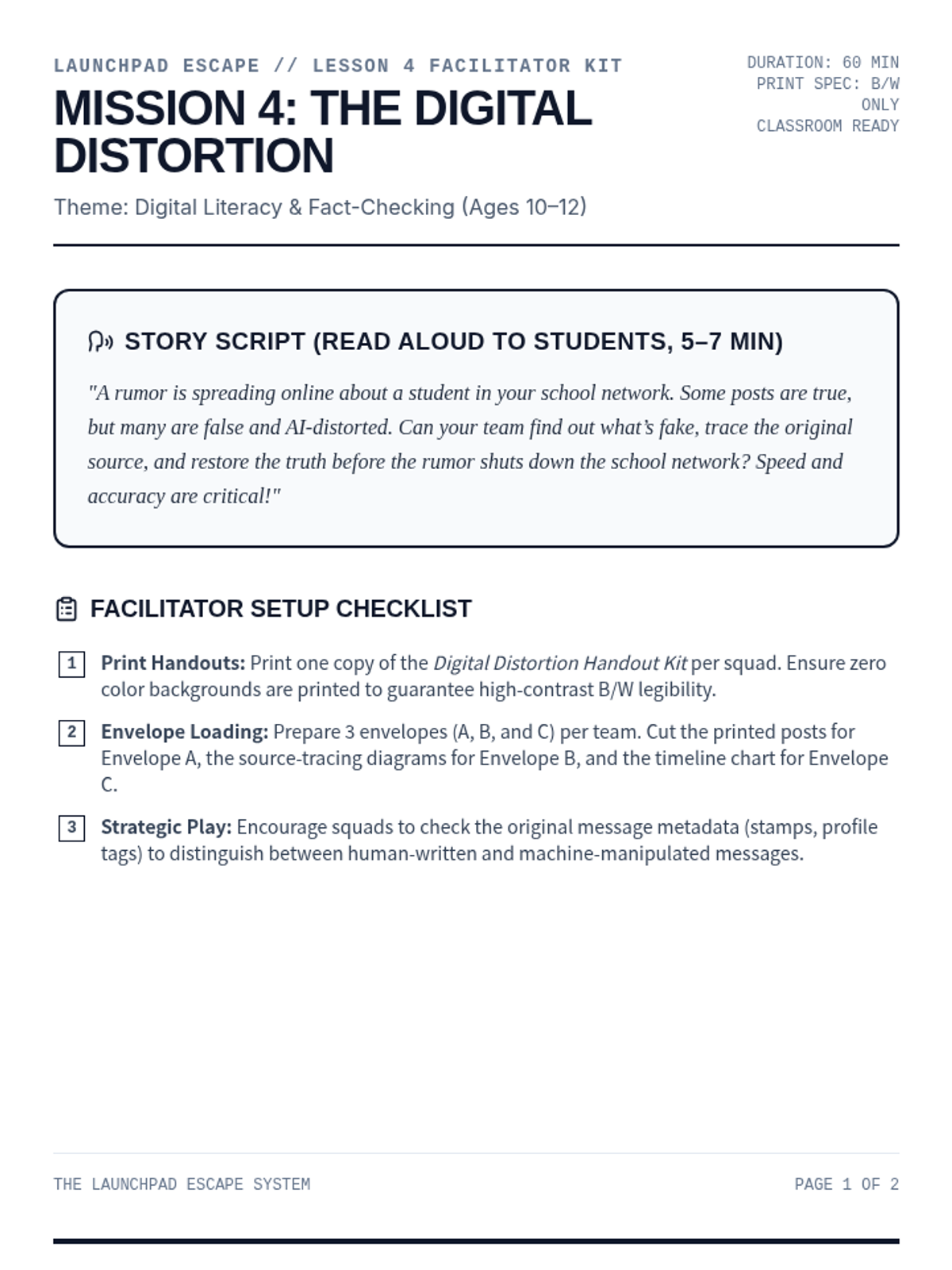
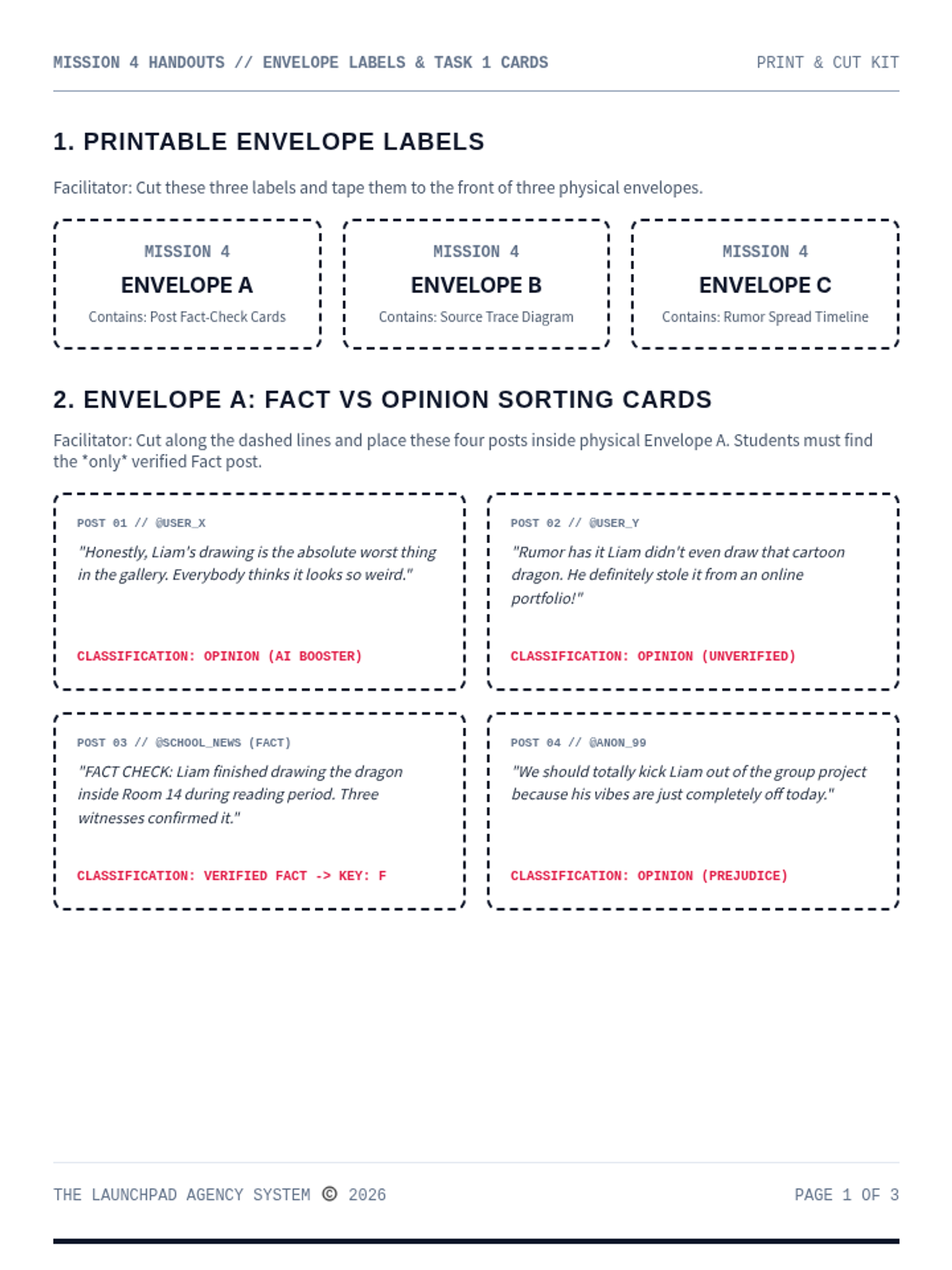
An online misinformation and fact-checking escape room for Ages 10-12. Recruits sort fact vs. opinion, trace original message sources, and reconstruct truth timelines to stop rumors.
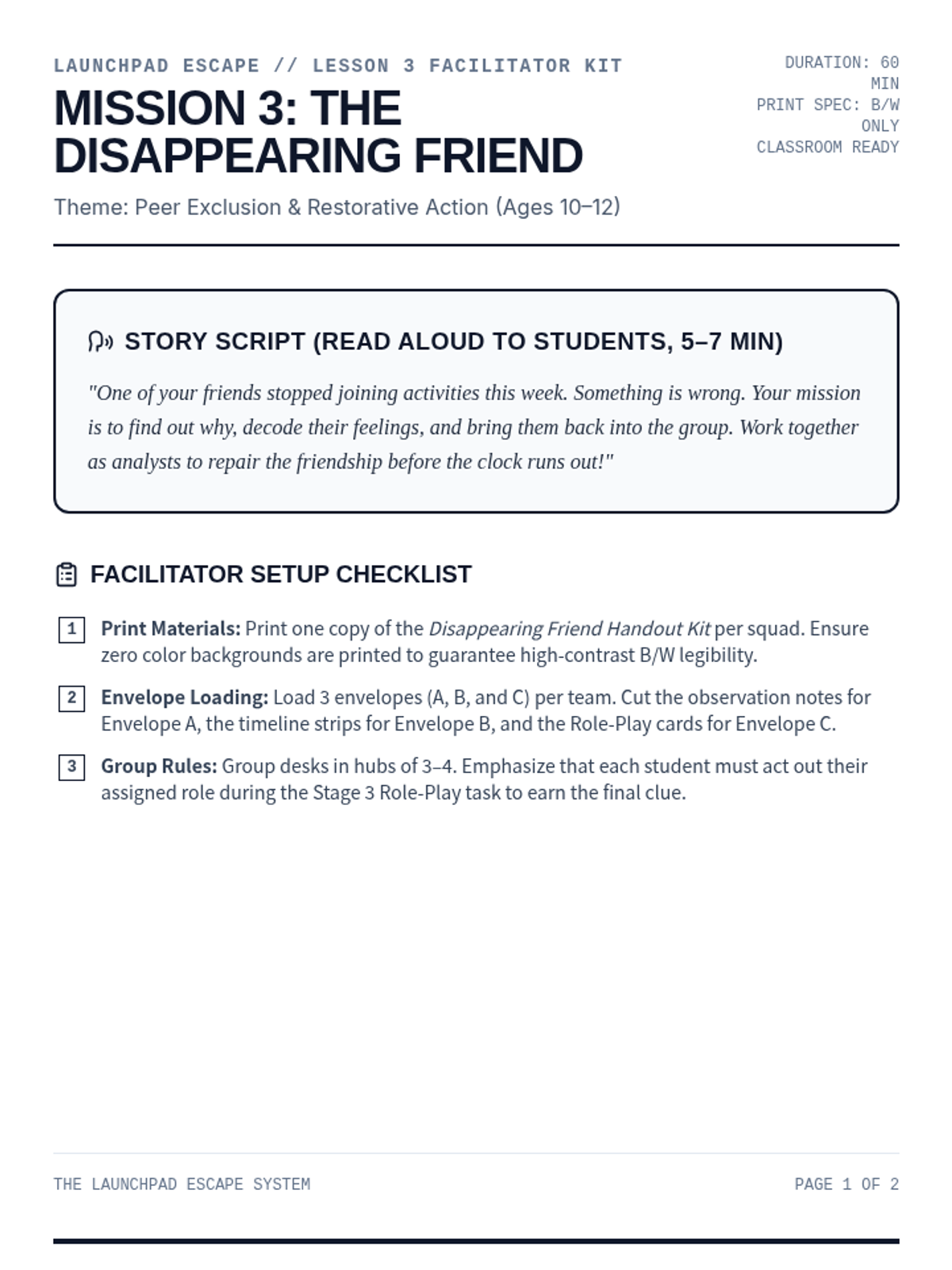
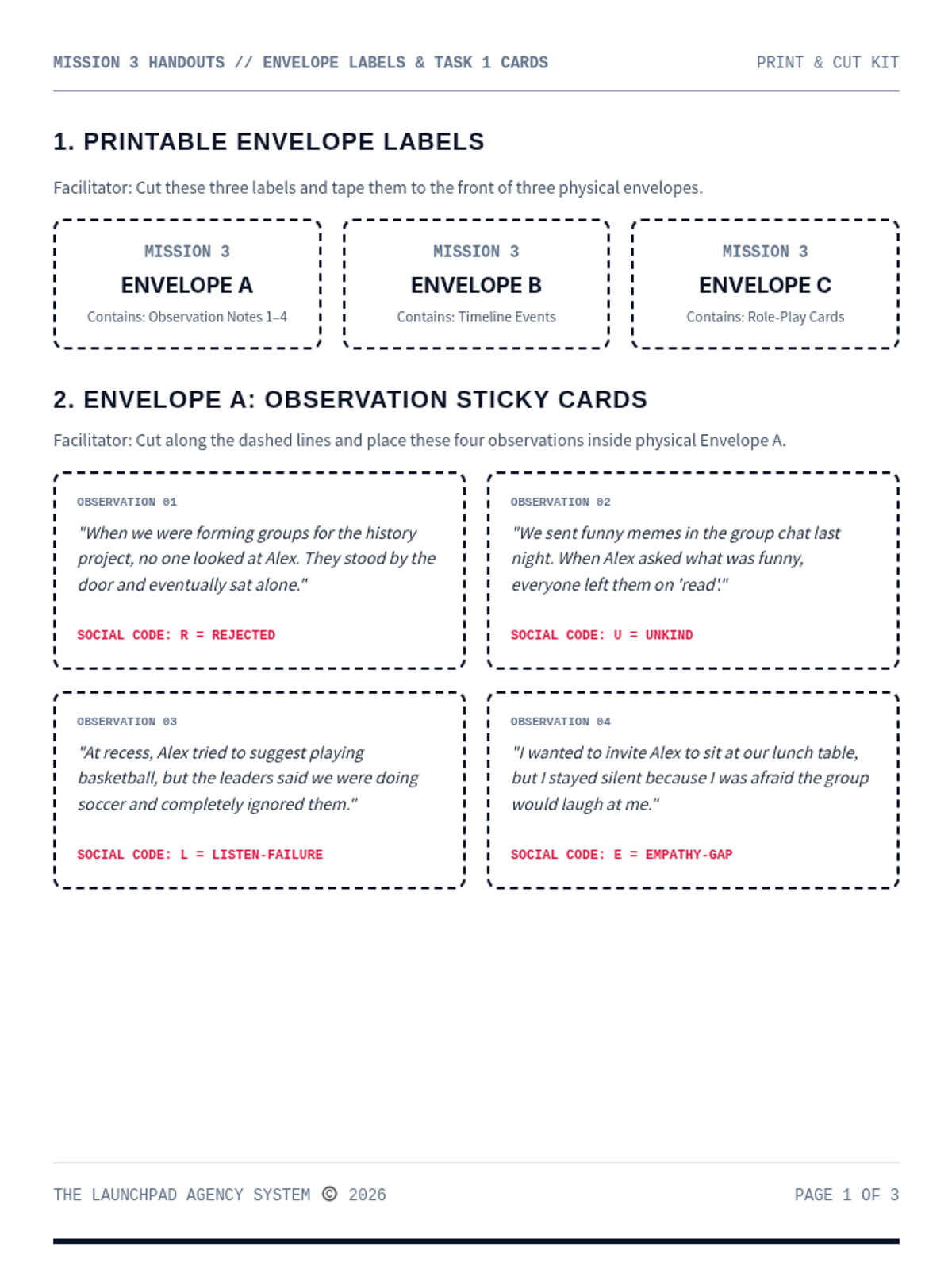
A chronological reconstruction and peer exclusion escape room for Ages 10-12. Recruits analyze sticky-note observations, identify missed social interactions, and role-play restorative de-escalation scripts.
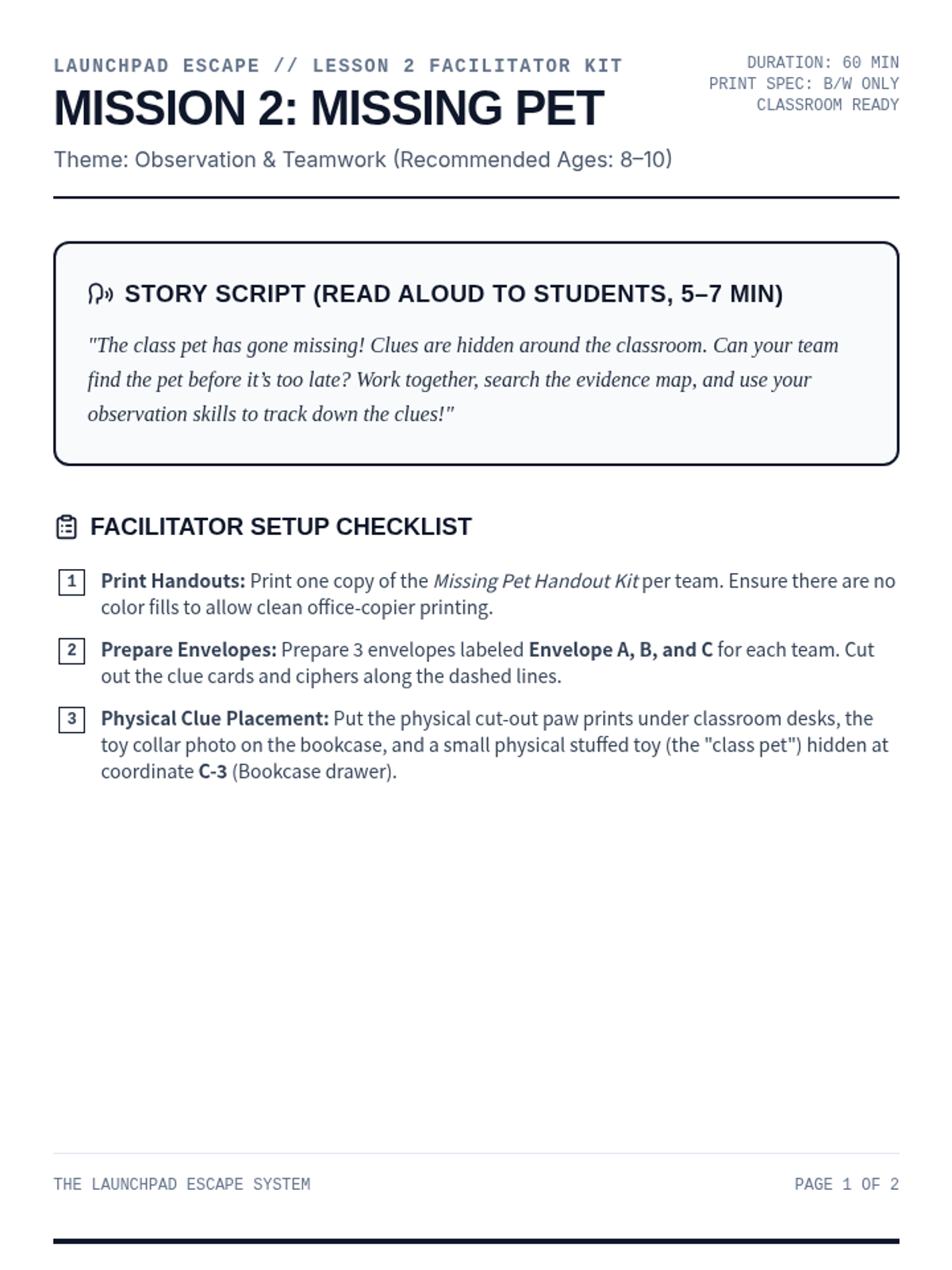
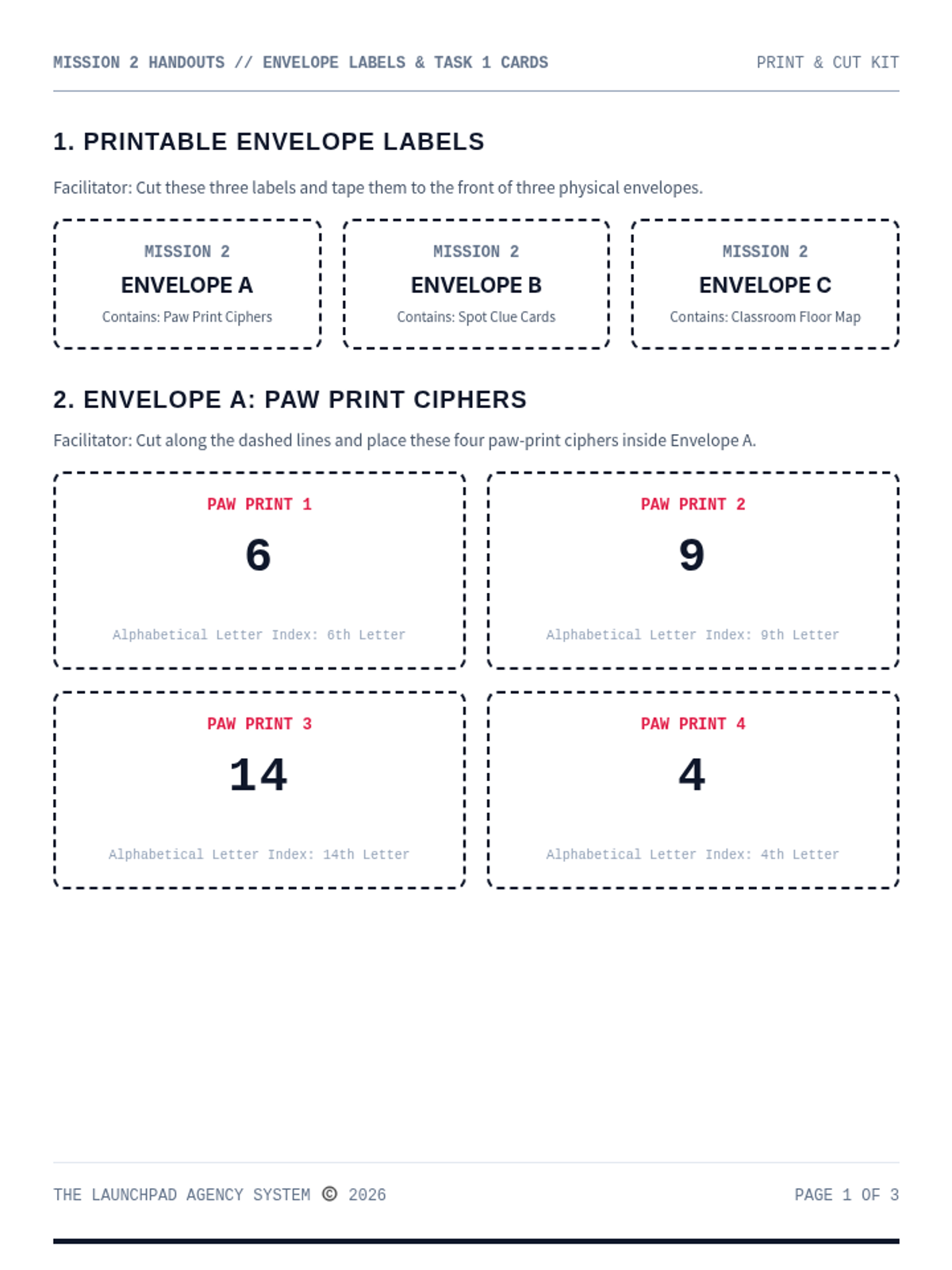
An observation-based escape mission for Ages 8-10. Recruits decode paw ciphers, match footprint evidence to classroom hiding spots, and compile a team map to find the missing class pet.
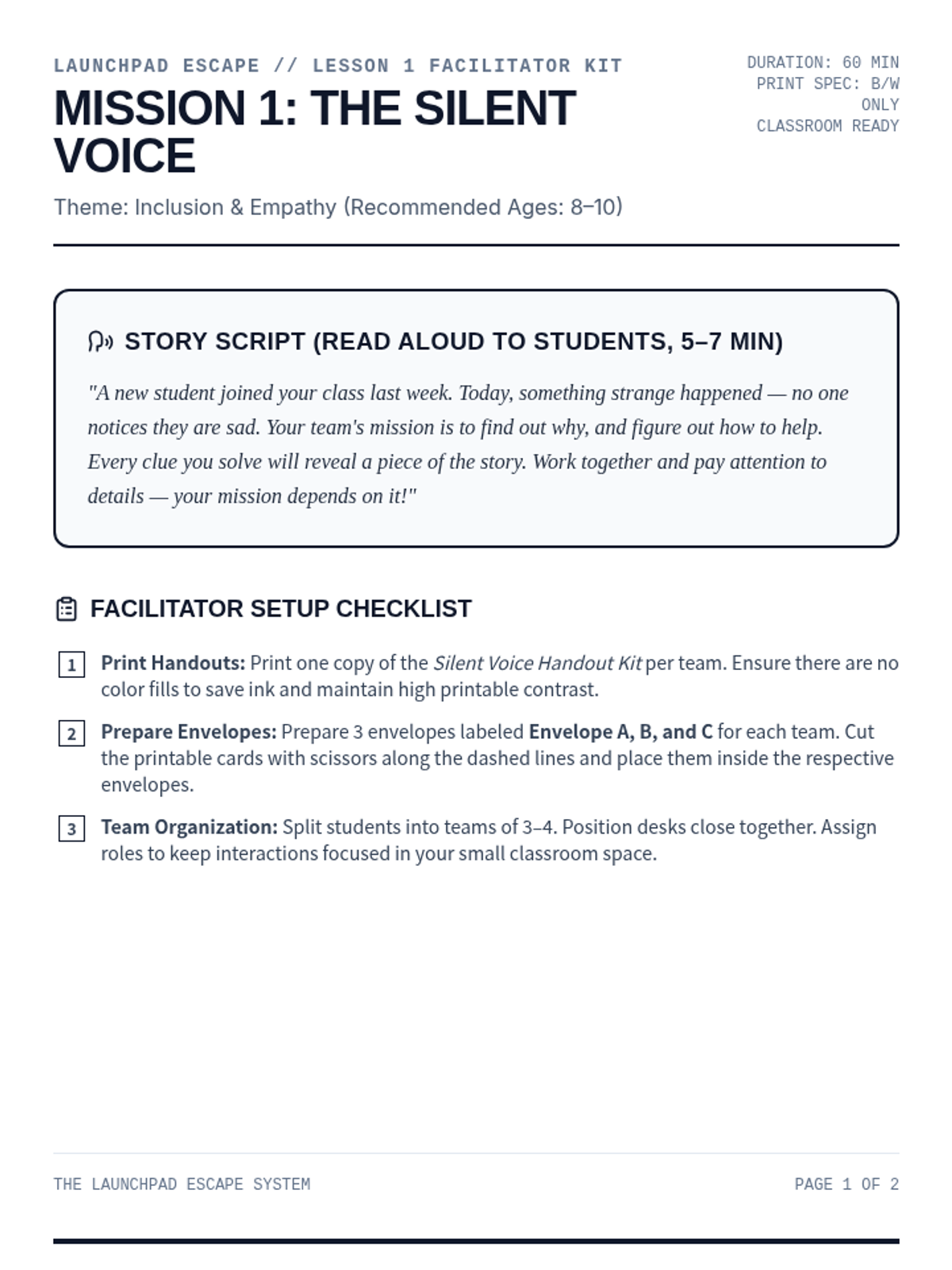
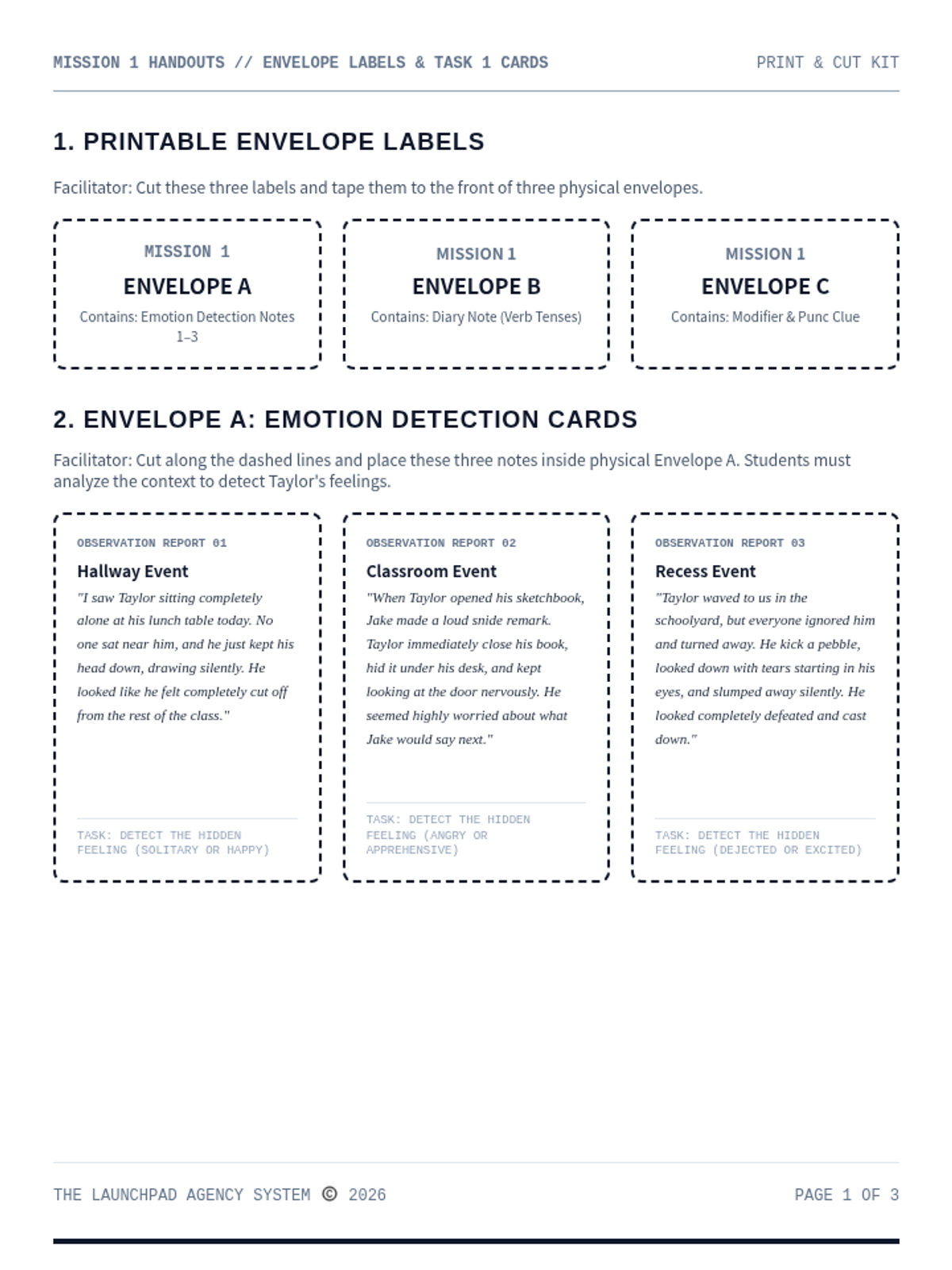
A cooperative social escape room for Ages 8-10 focused on inclusion and empathy. Recruits sort desk messages, build a timeline, and decode perspective cards to support a lonely classmate.
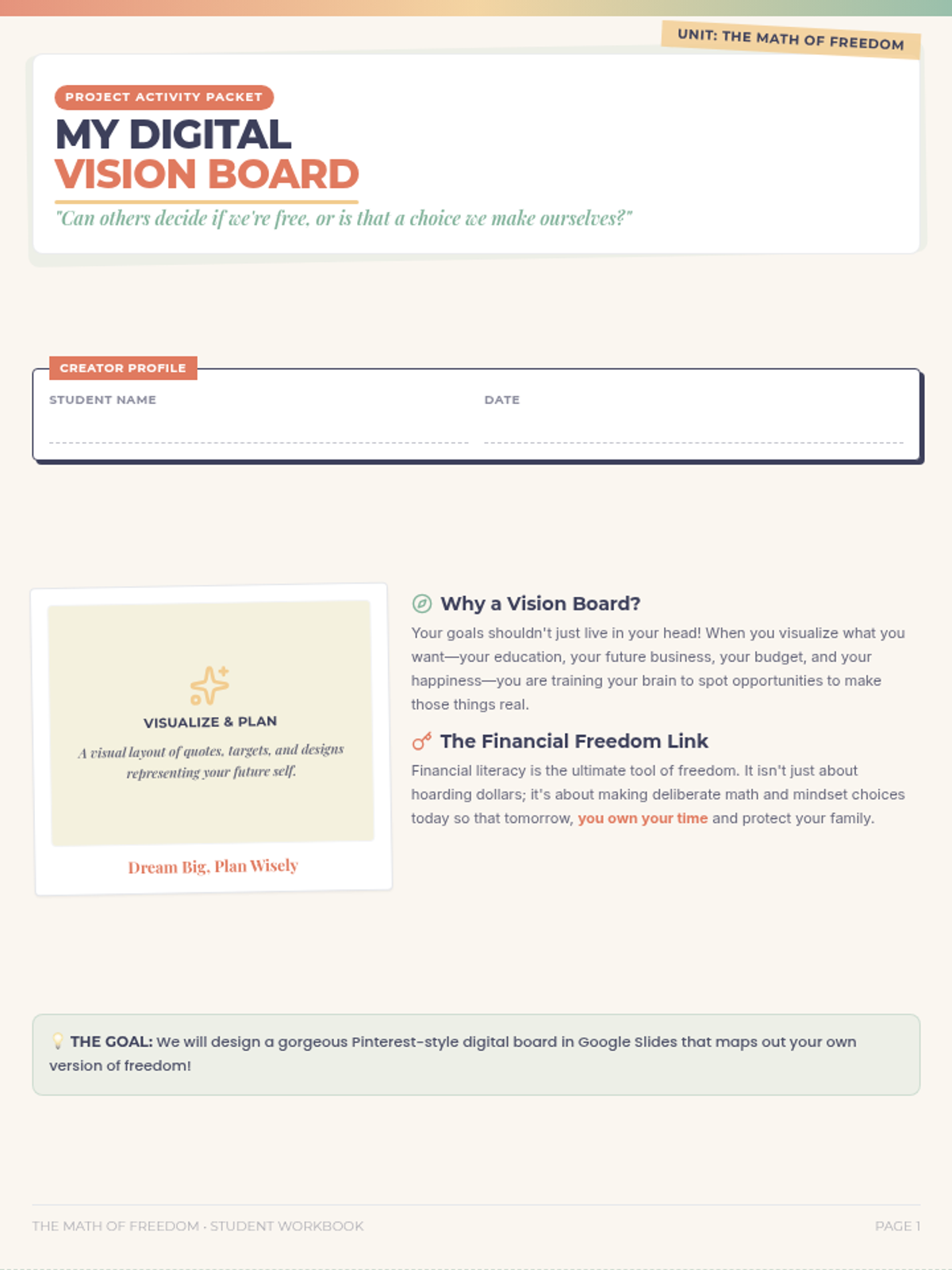
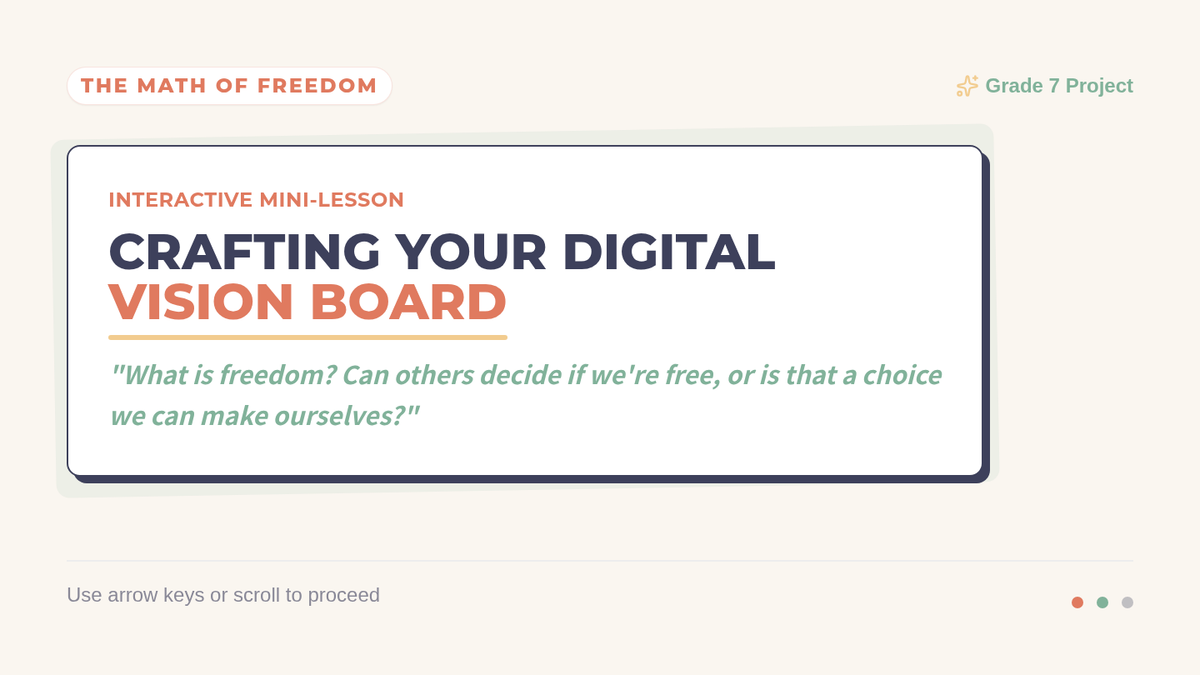
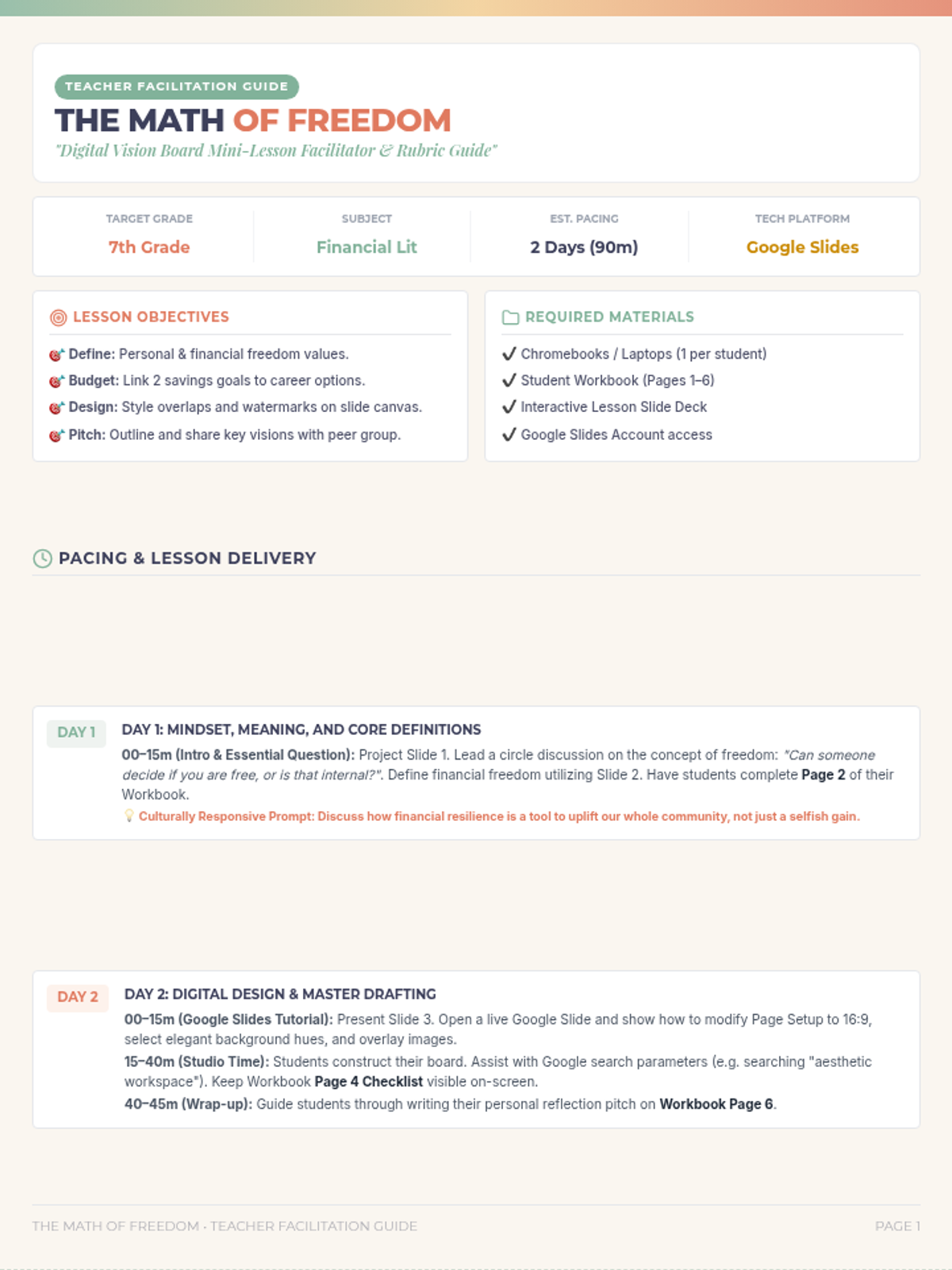
An empowering financial literacy lesson where 7th-grade students define personal and financial freedom, learn digital design skills, and create an aesthetic digital vision board in Google Slides representing their future goals.
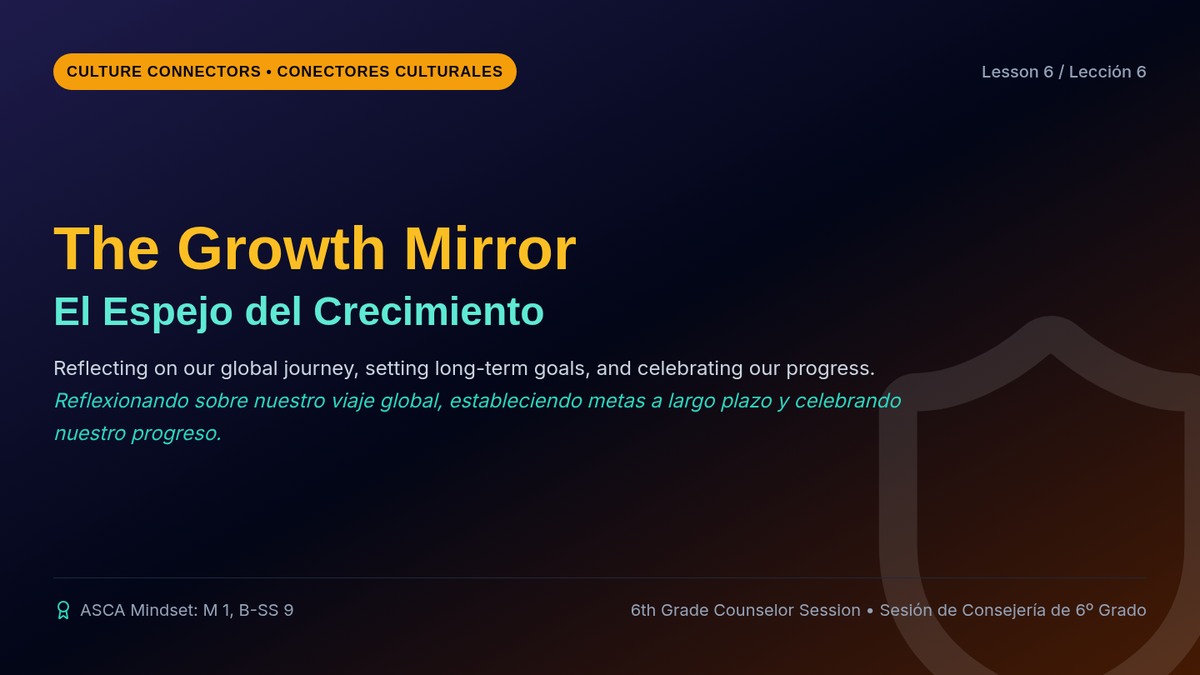
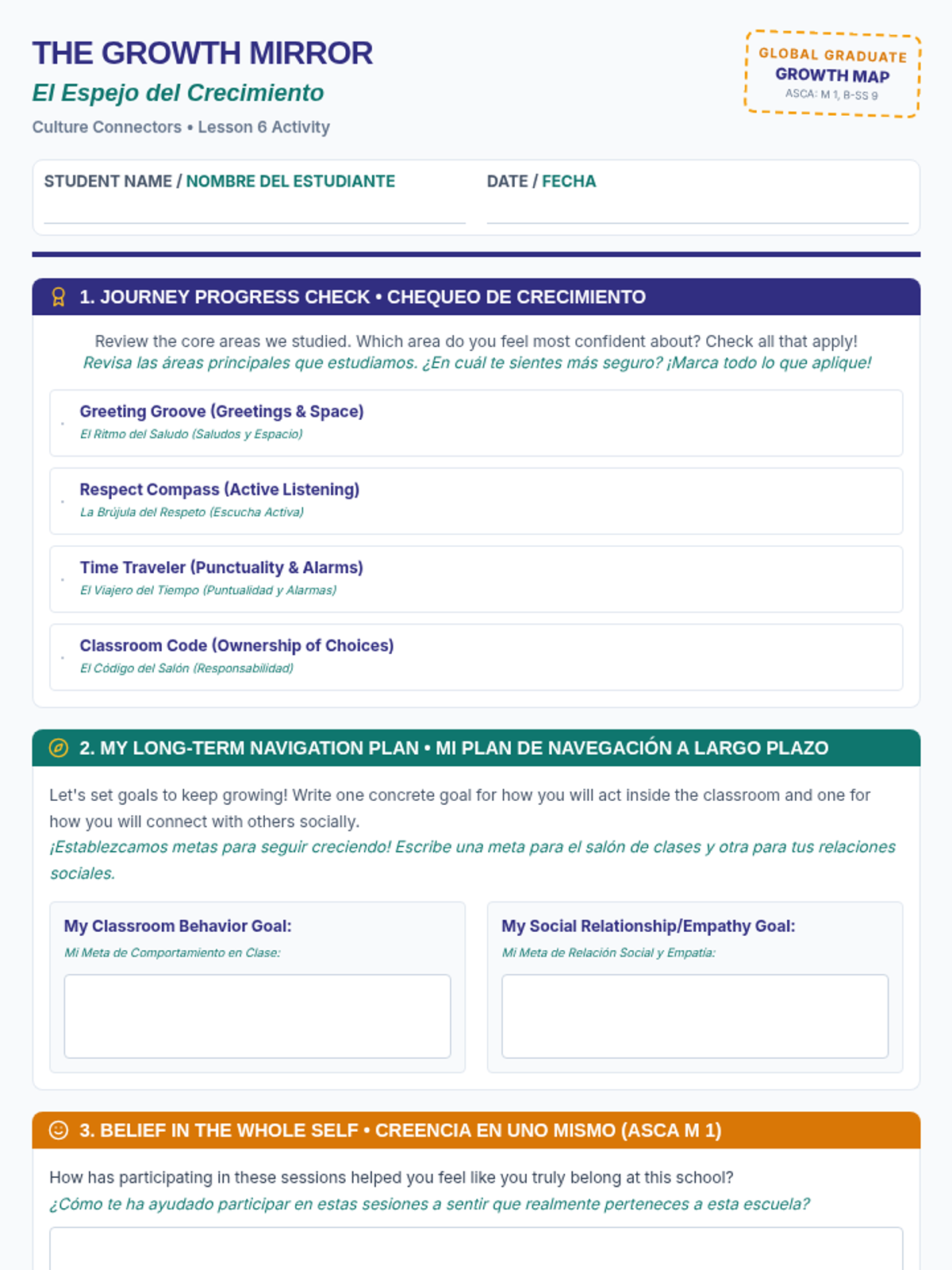
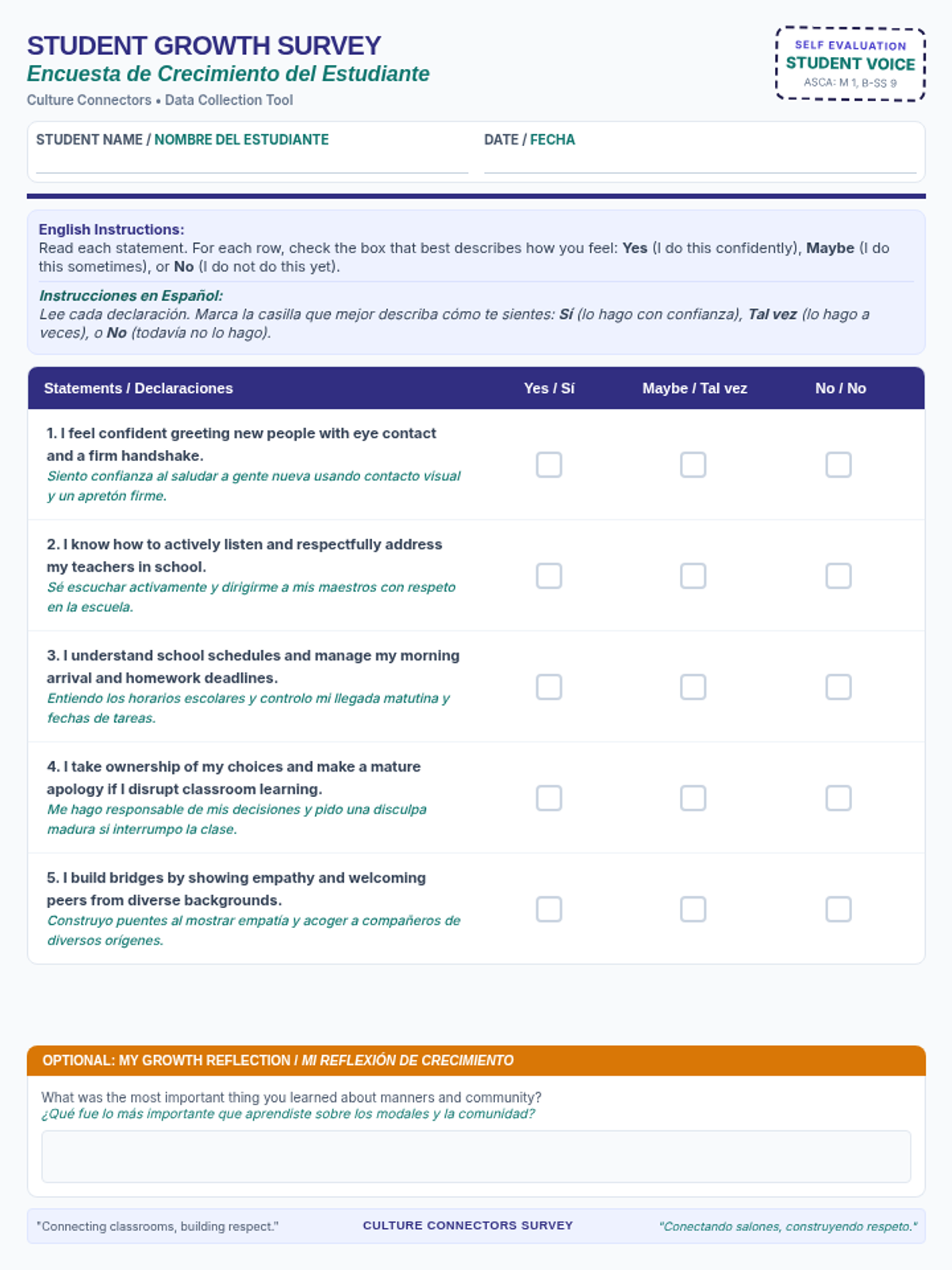
Encourages self-reflection and belief in the development of the whole self. Students reflect on their growth throughout the curriculum and complete personal goal-setting plans. Includes bilingual Likert scales for data collection.
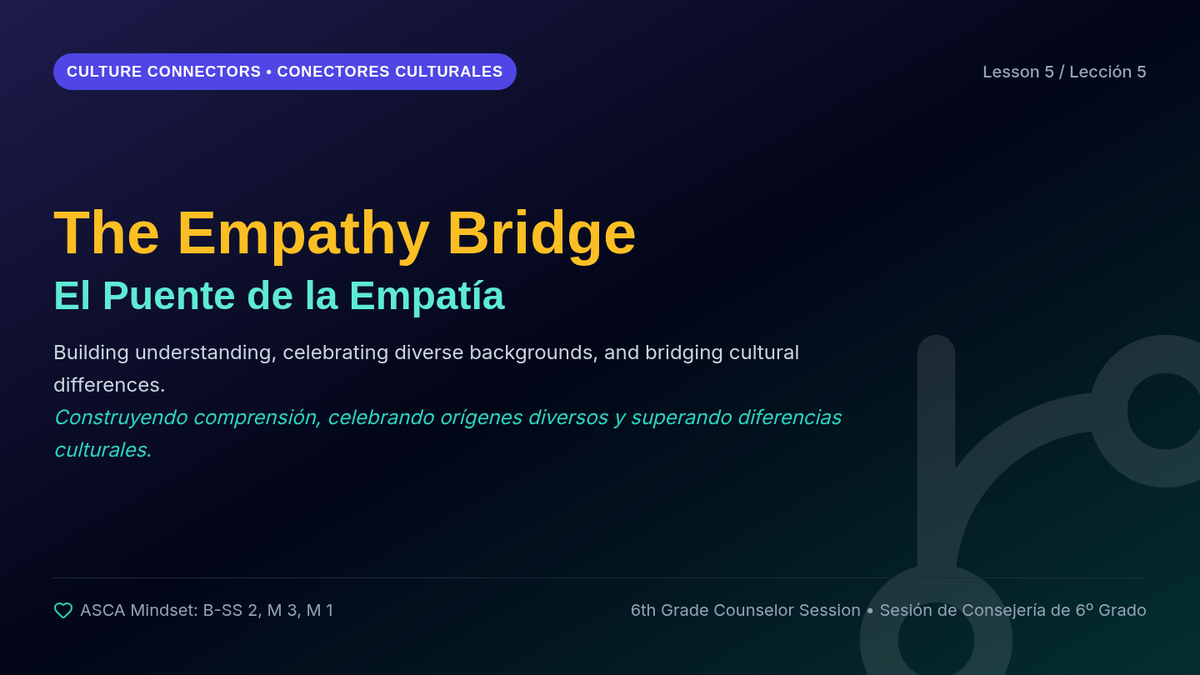
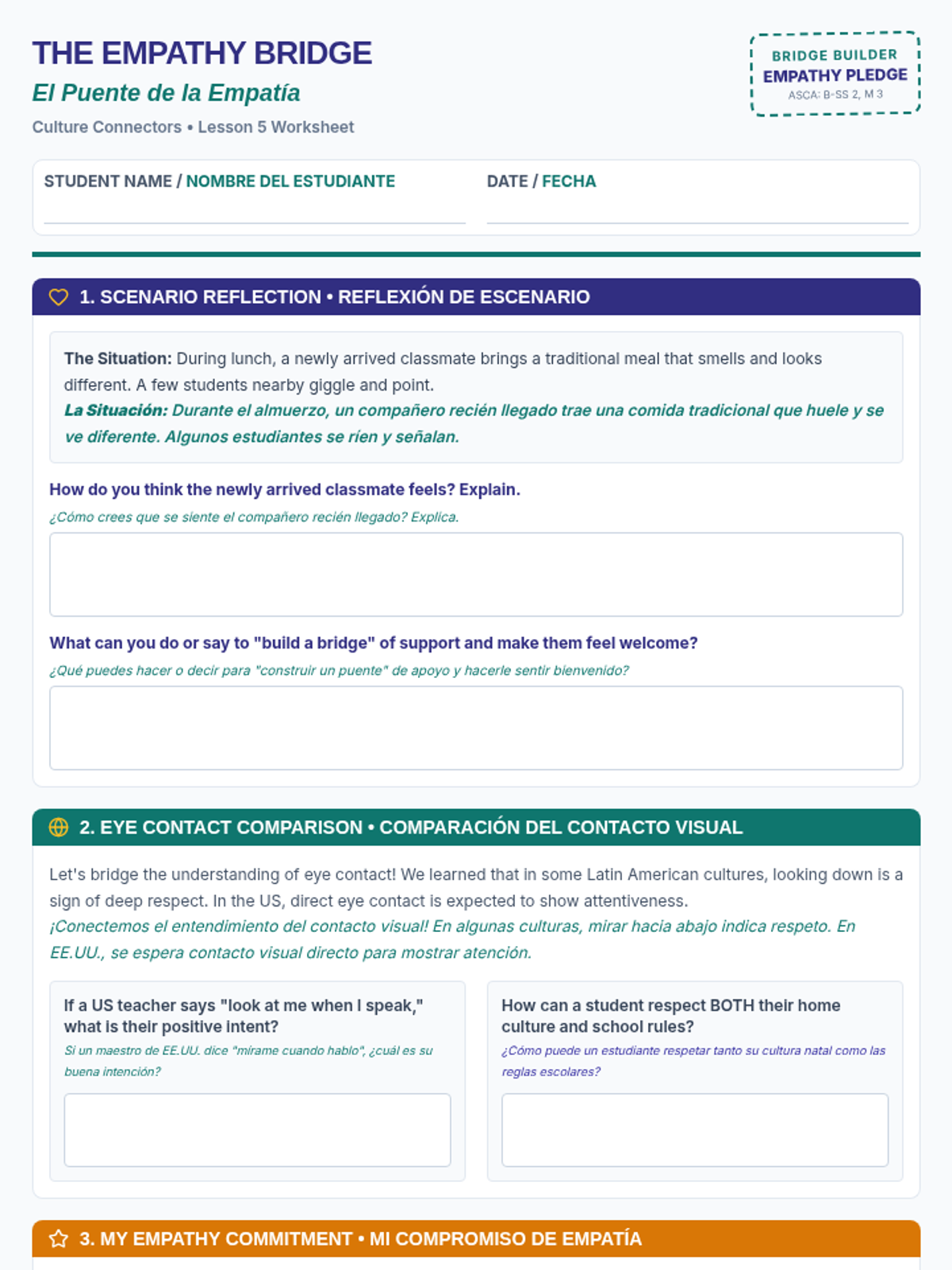
Explores perspective-taking, diversity, understanding cultural differences in expectations, and resolving social conflicts respectfully. Helps students find common ground while celebrating unique cultural identities.
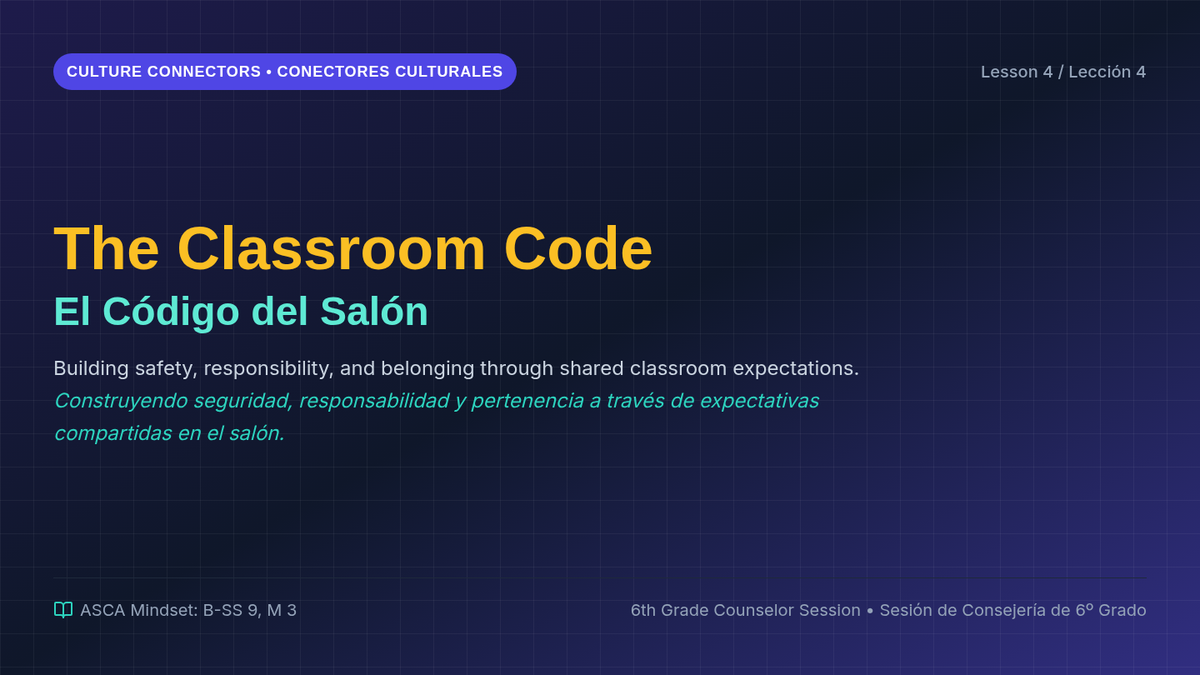
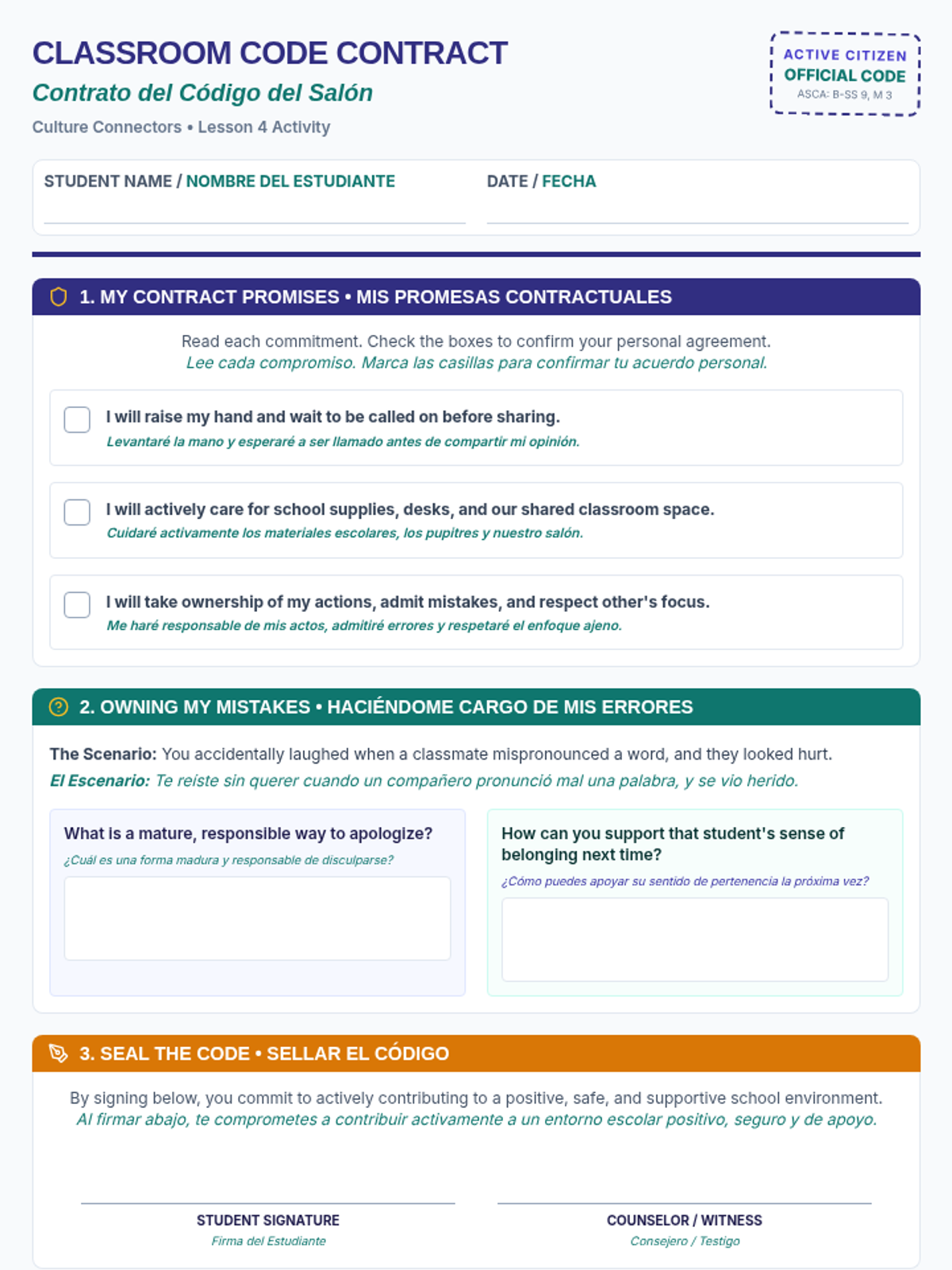
Guides students through classroom behavior expectations, raising hands, active participation, and taking ownership of school behavior to foster a strong sense of school community belonging.
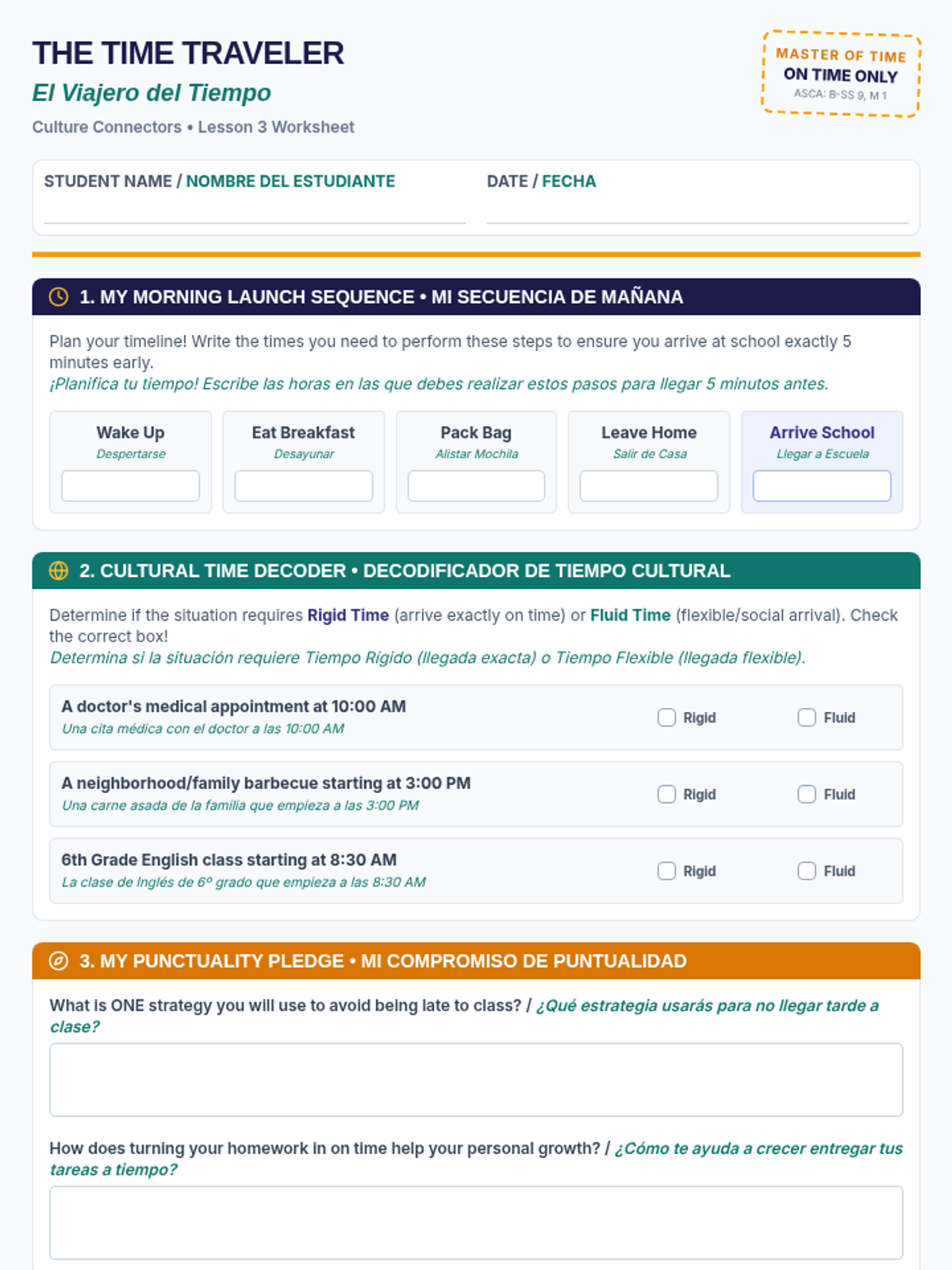
Covers punctuality, deadlines, and time expectations in academic and social settings. Helps students understand the cultural differences in time concepts while developing school success habits.
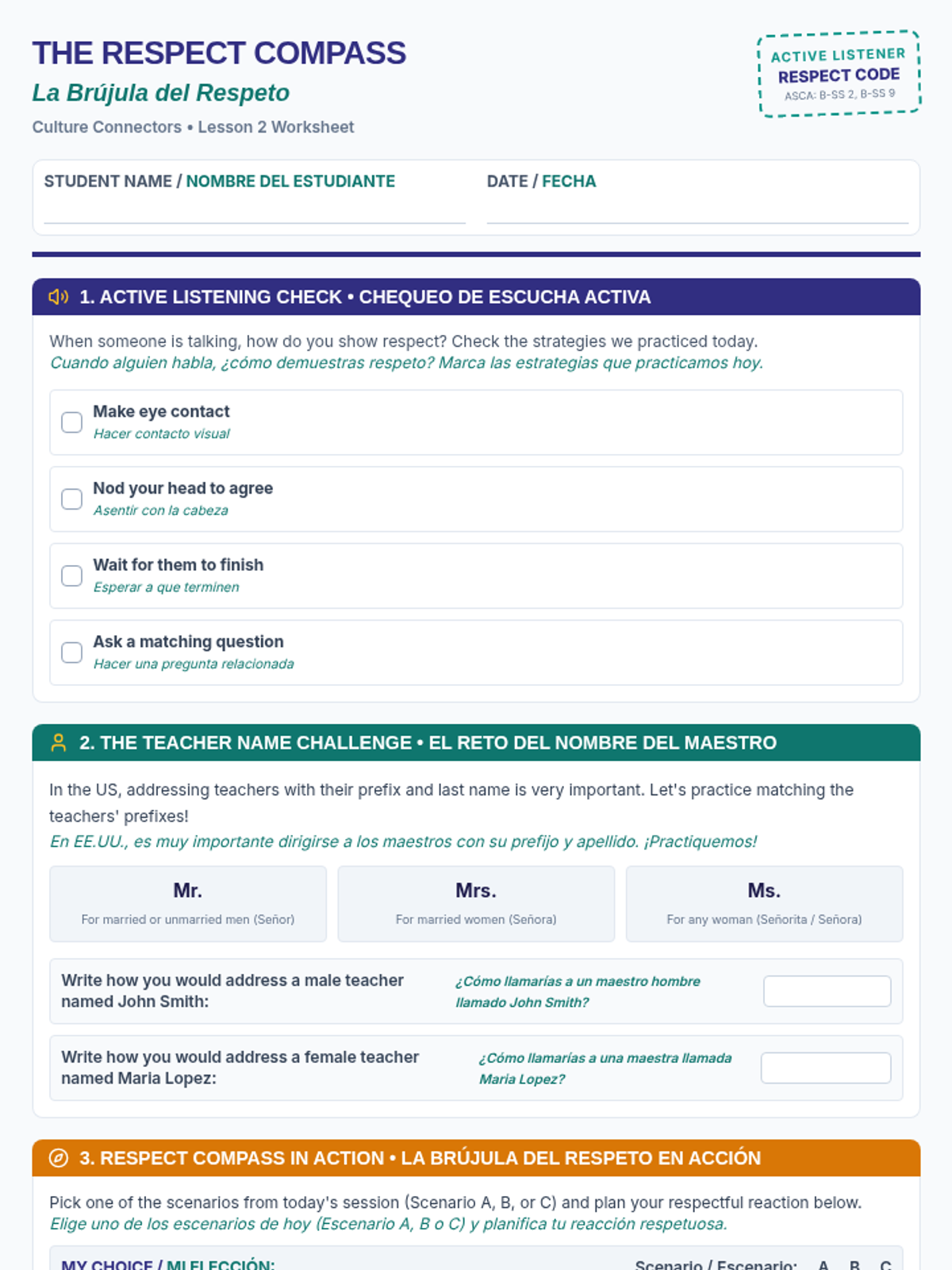
Explores active listening, manners, and showing respect to teachers, peers, and authority figures. Students practice bilingual courtesy terms and cross-cultural respectful communication.
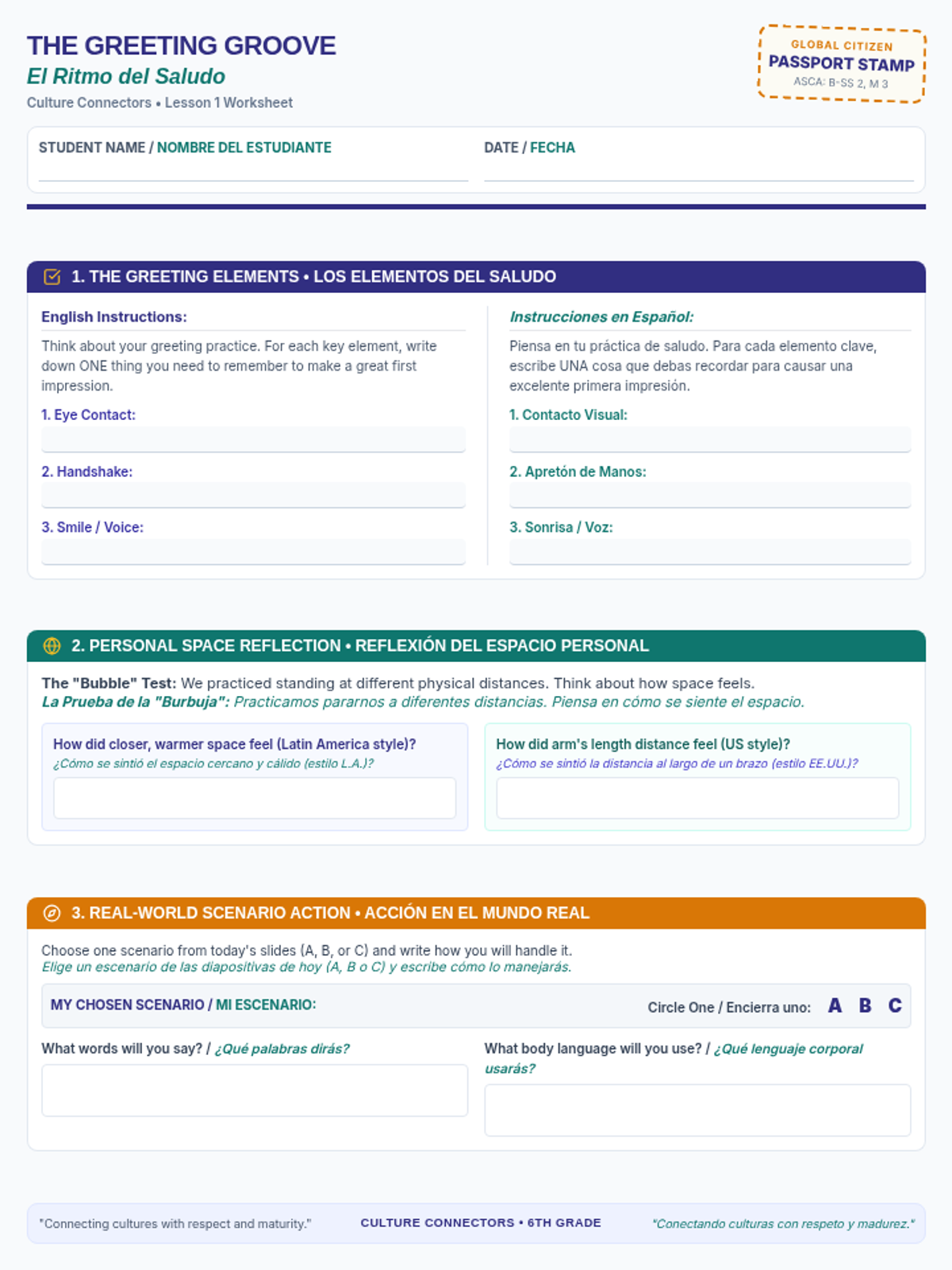
Focuses on greetings, eye contact, handshakes, and physical space in the US vs. Latin America. Students learn the mechanics of a positive first impression in various cultural contexts.
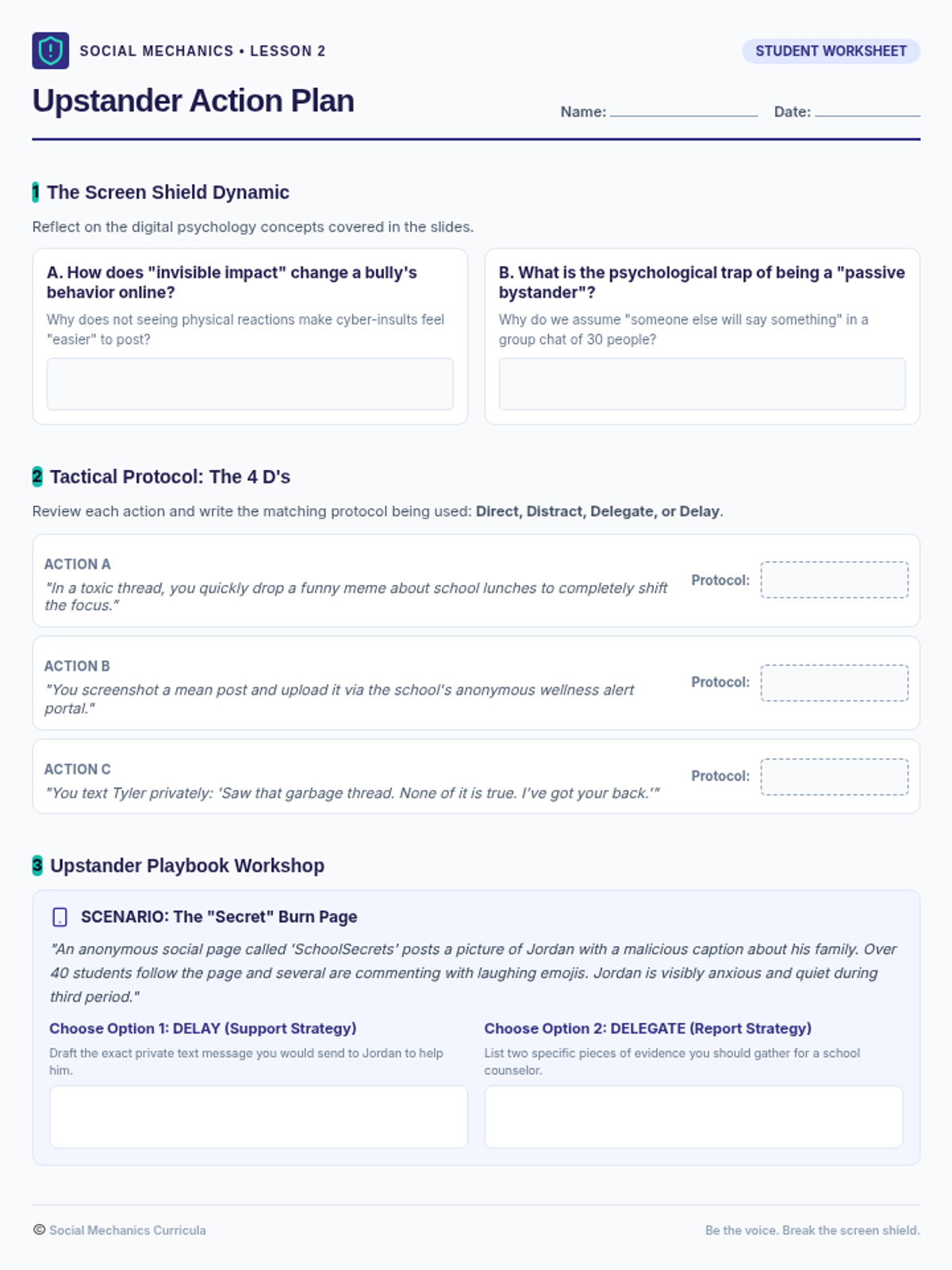
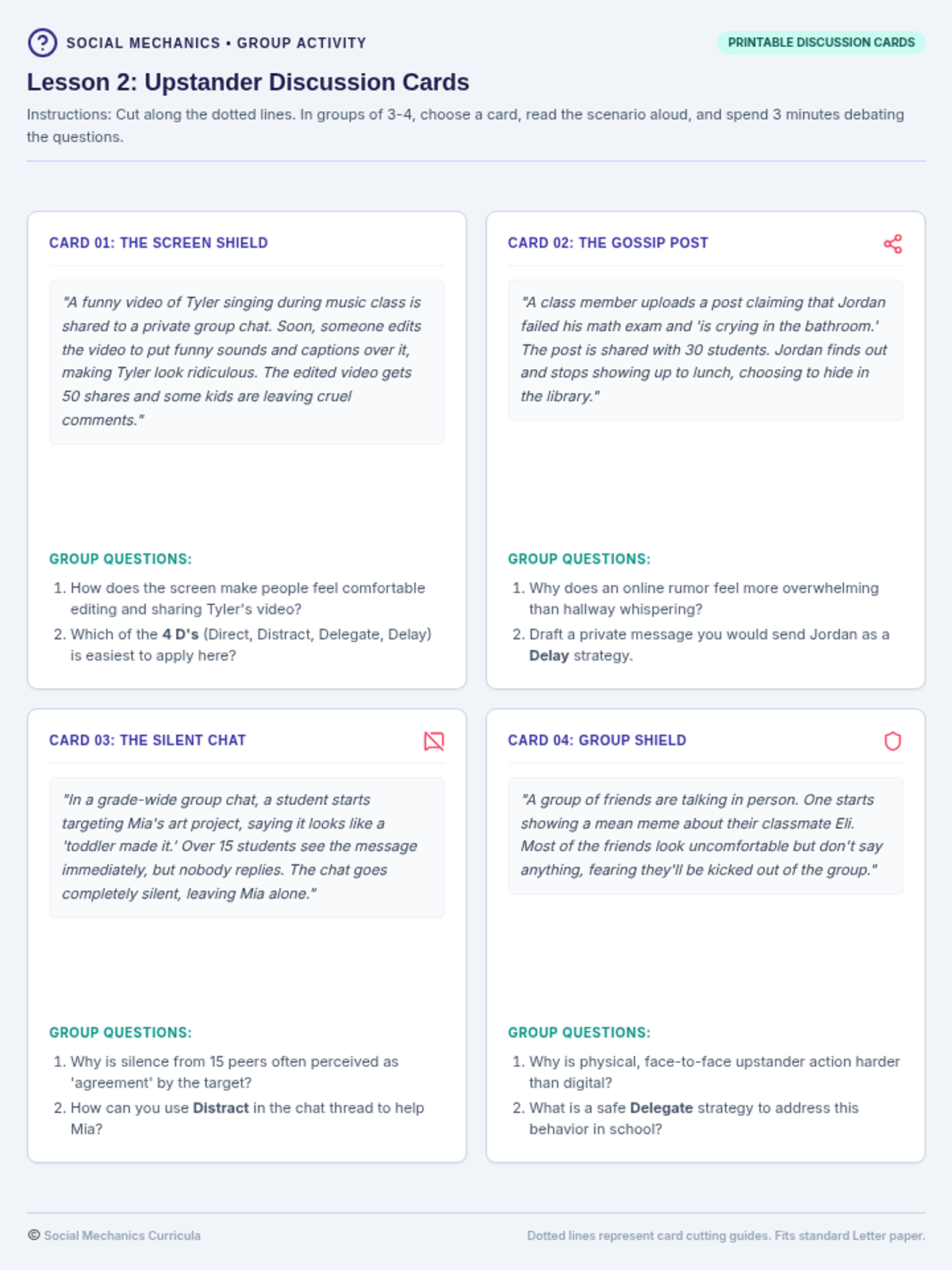
Focuses on the dynamics of cyberbullying, social media responsibility, and the critical transition from silent bystander to proactive upstander.
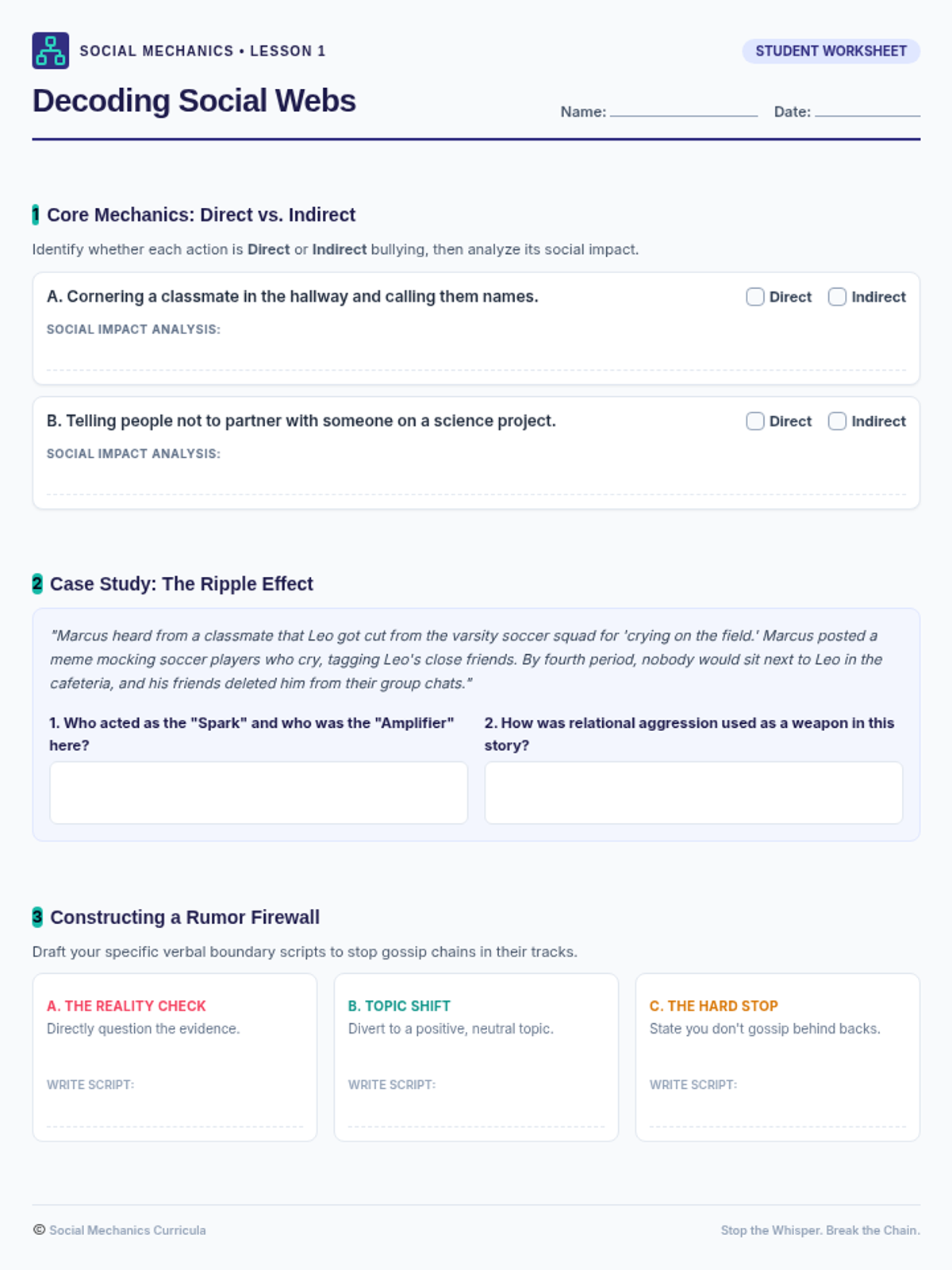
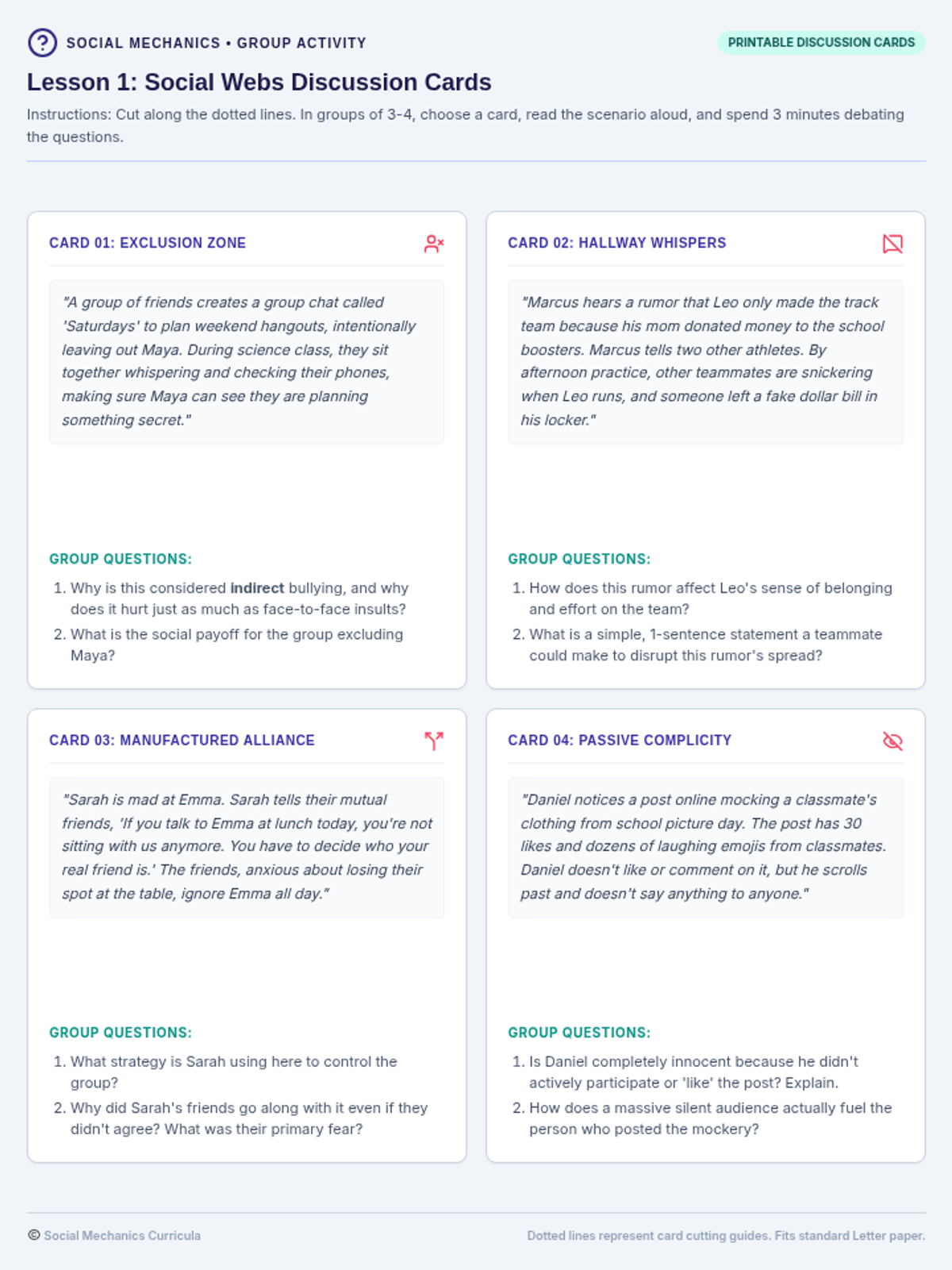
Focuses on identifying direct vs. indirect bullying, recognizing relational aggression and rumors, and understanding how these behaviors impact middle school communities in person and online.
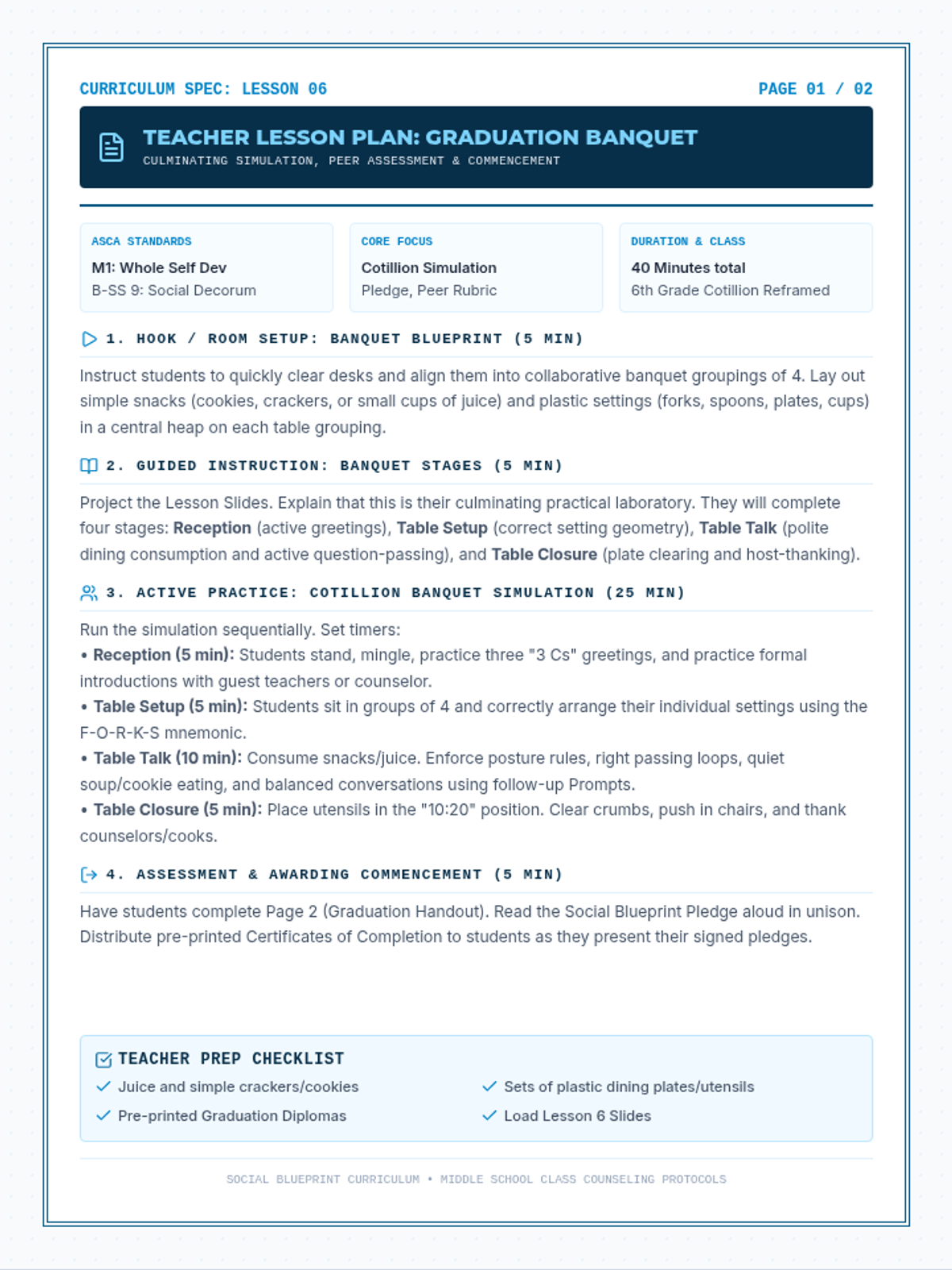
A culminating interactive simulation and graduation ceremony where students showcase all skills learned (dining, introductions, public deportment) and receive certificates of completion.