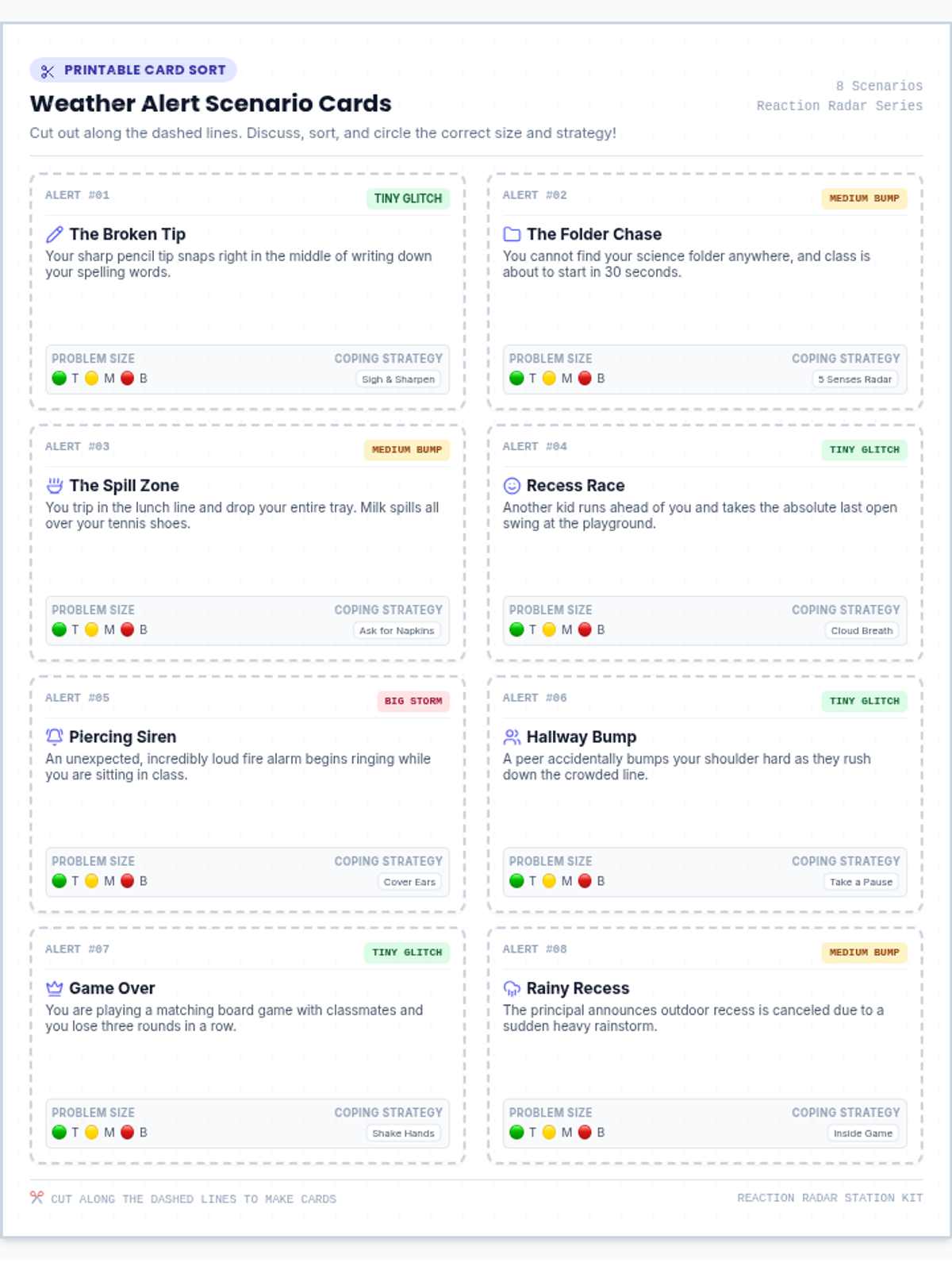
An intensive laboratory session focused on analyzing complex fifth-grade social situations, reading micro-signals, and parsing body language in challenging environments like the cafeteria, hallway, and classroom.
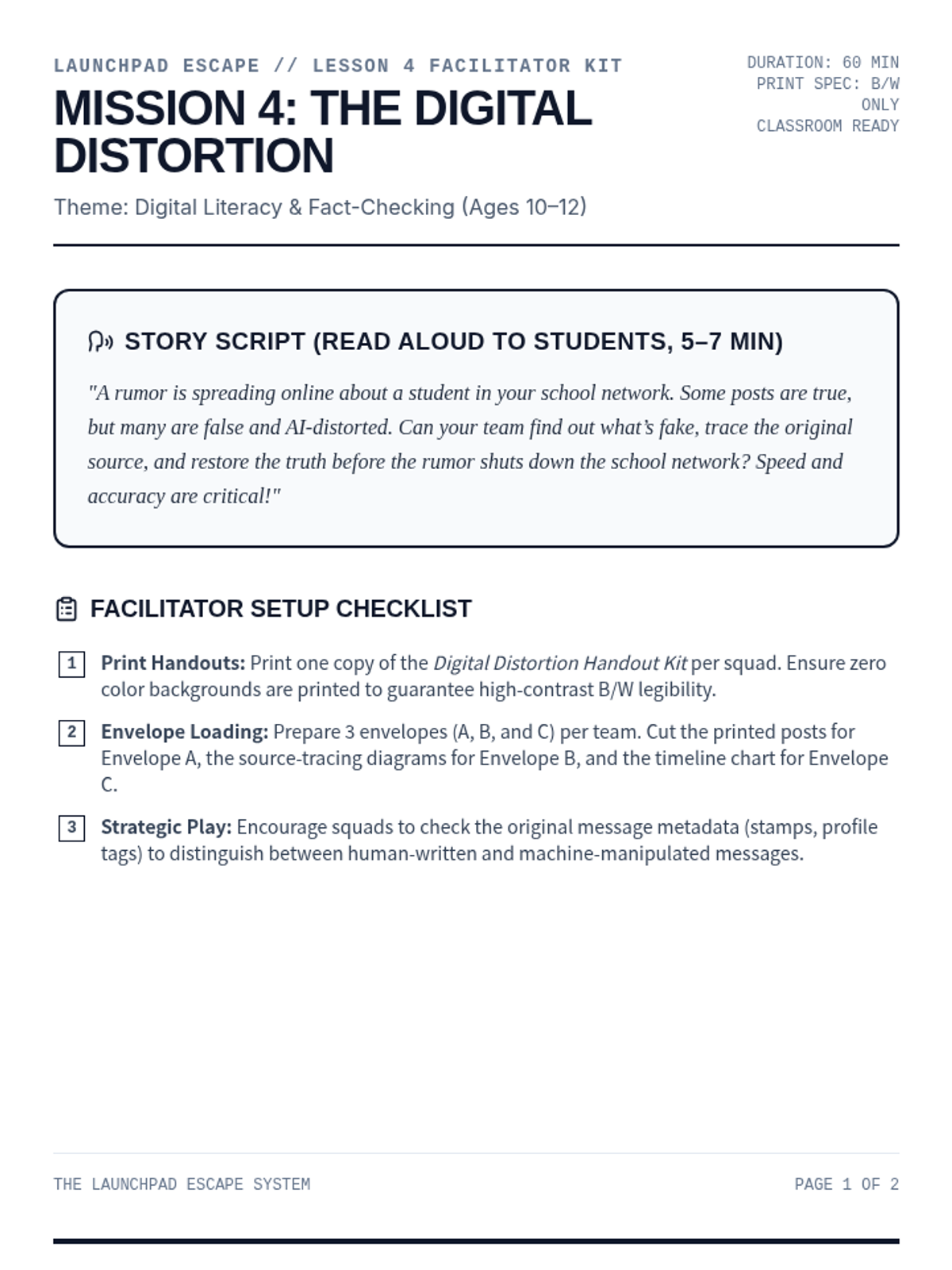
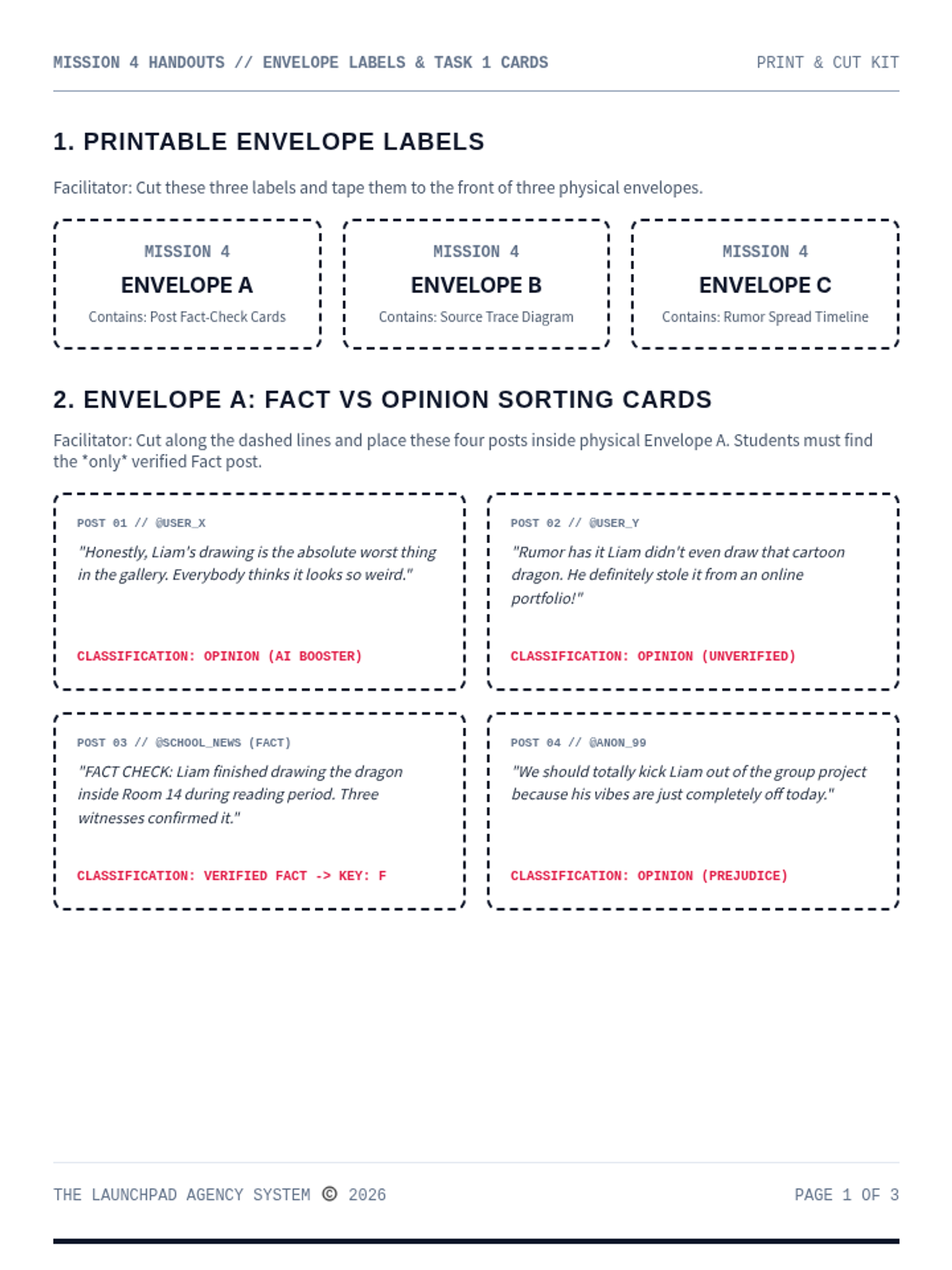
An online misinformation and fact-checking escape room for Ages 10-12. Recruits sort fact vs. opinion, trace original message sources, and reconstruct truth timelines to stop rumors.
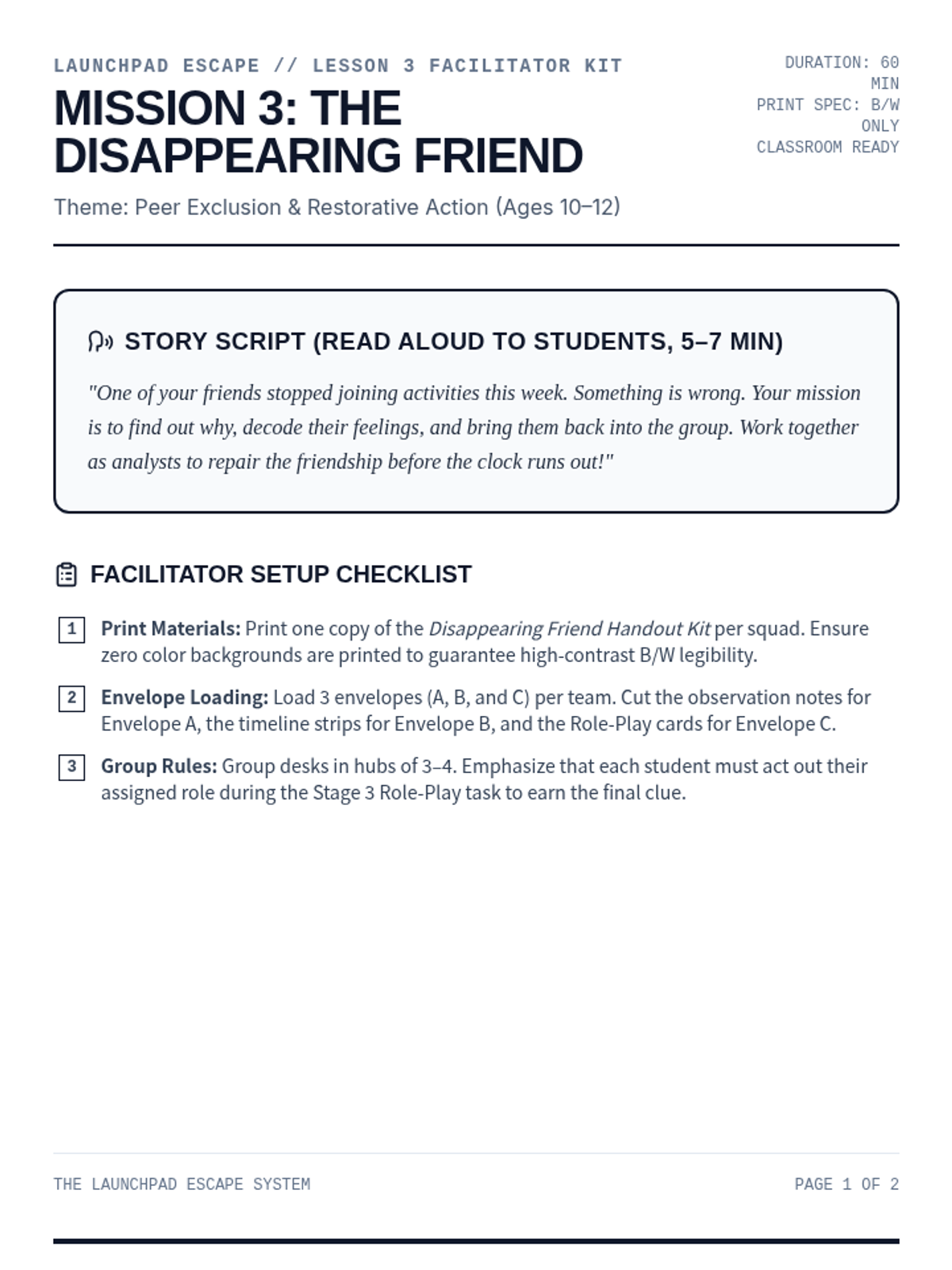
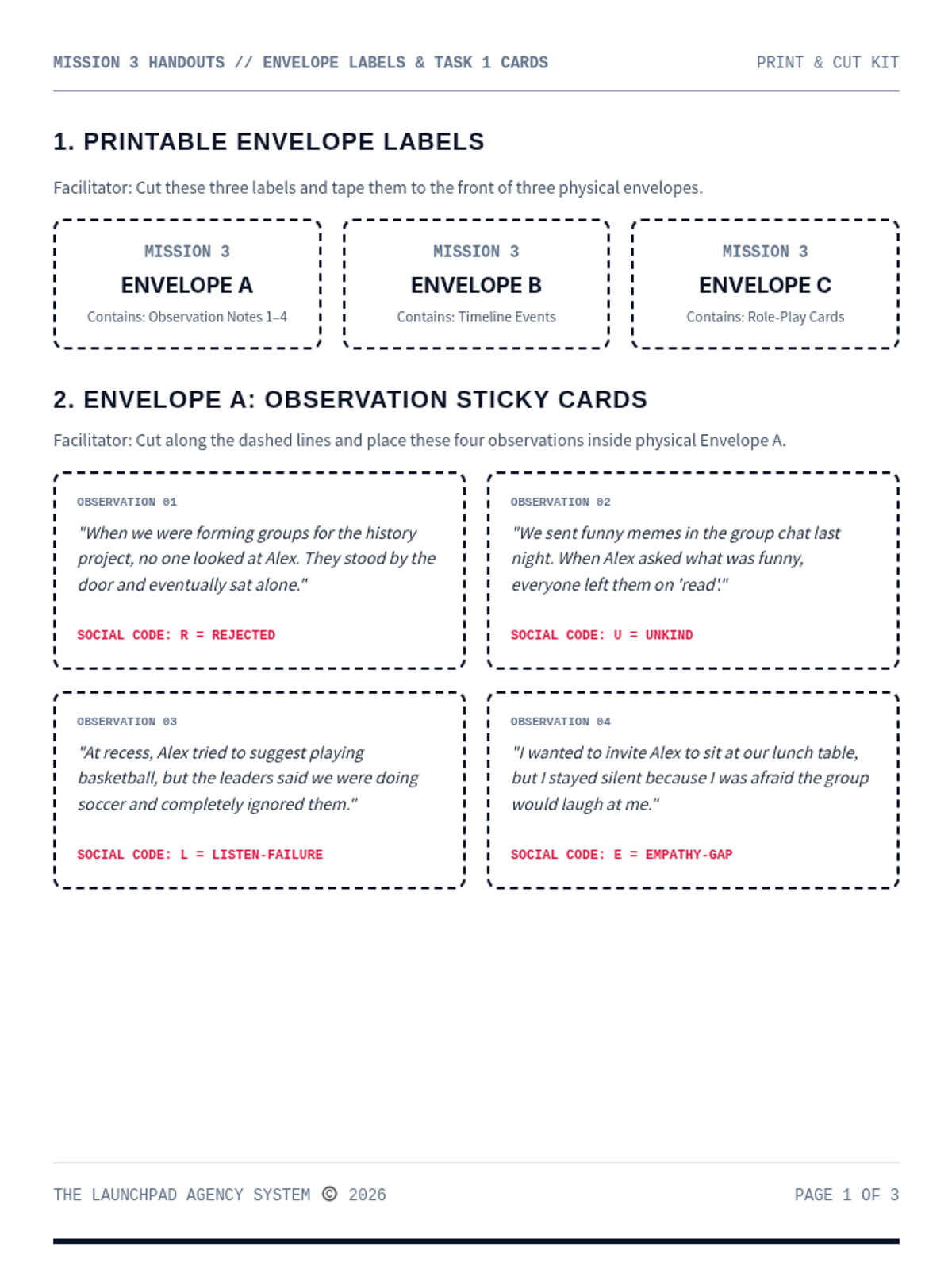
A chronological reconstruction and peer exclusion escape room for Ages 10-12. Recruits analyze sticky-note observations, identify missed social interactions, and role-play restorative de-escalation scripts.
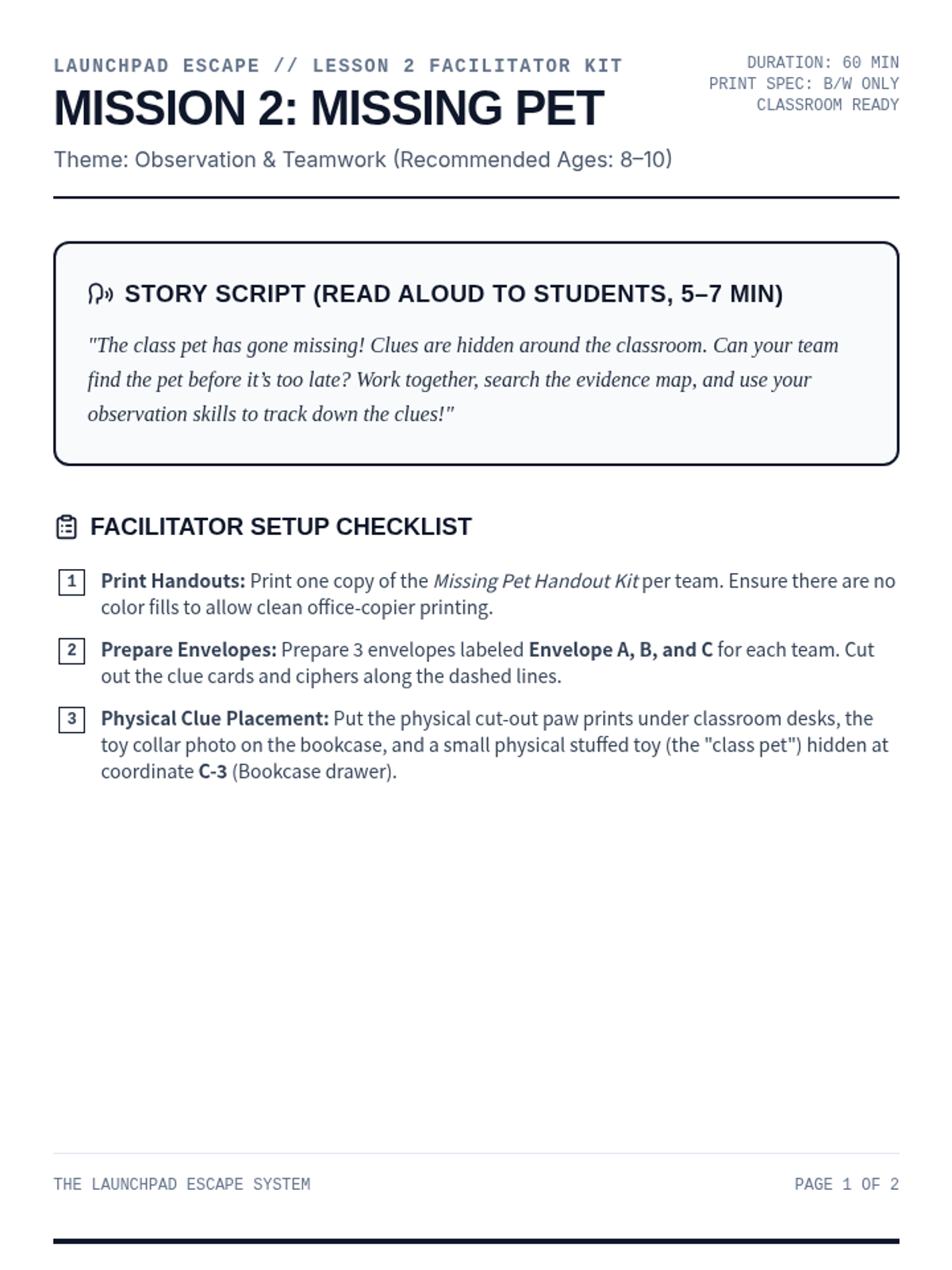
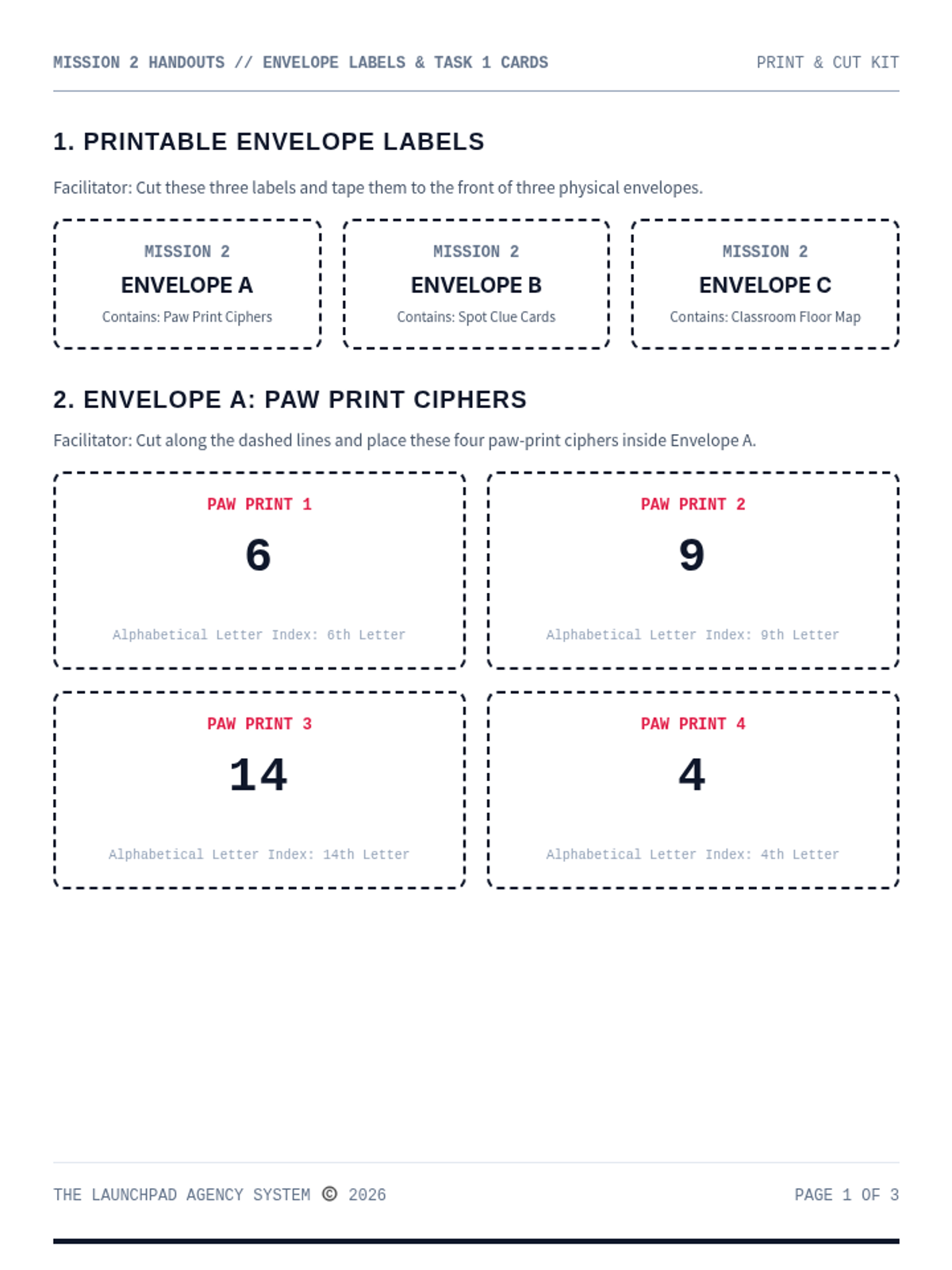
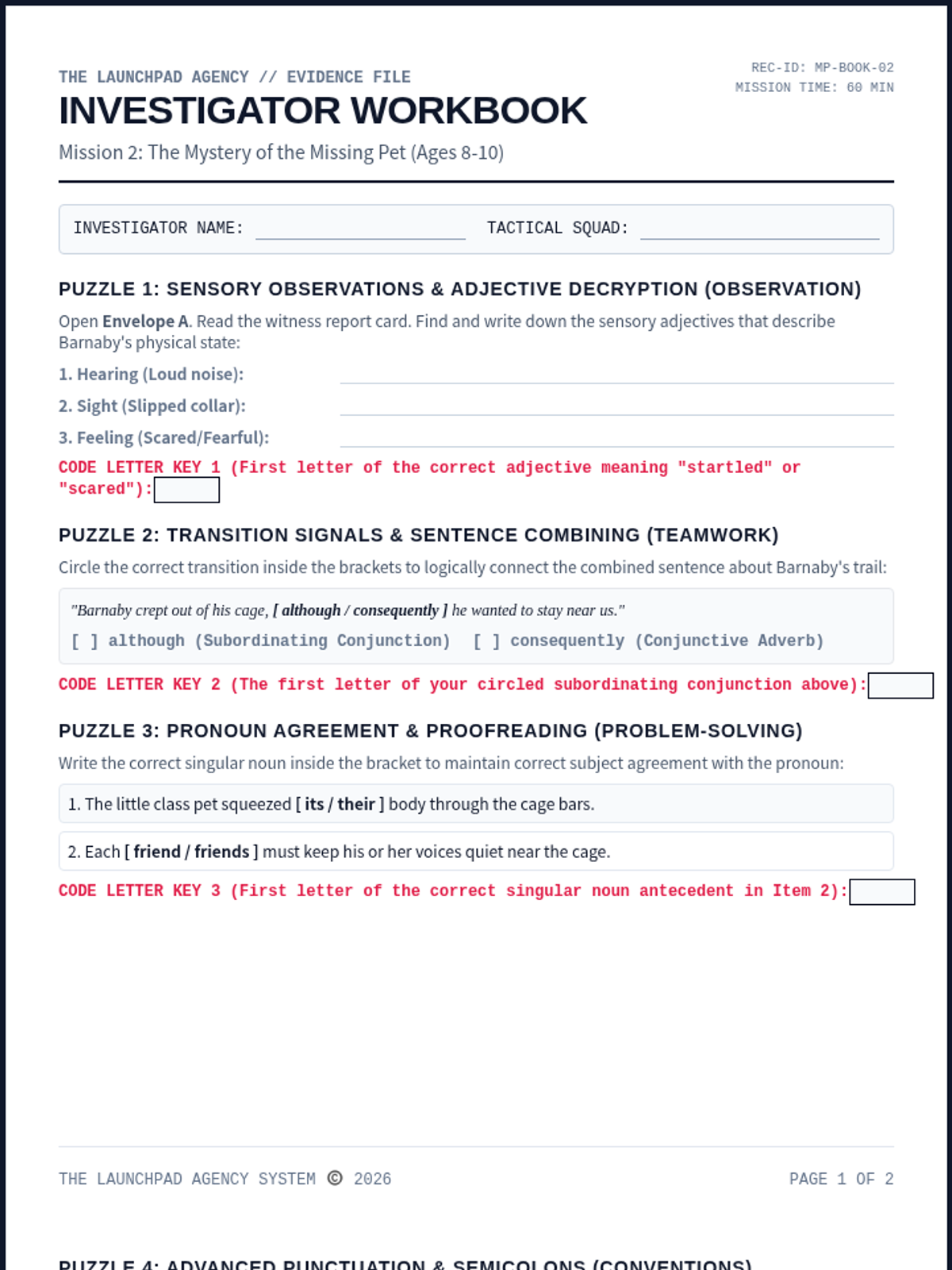
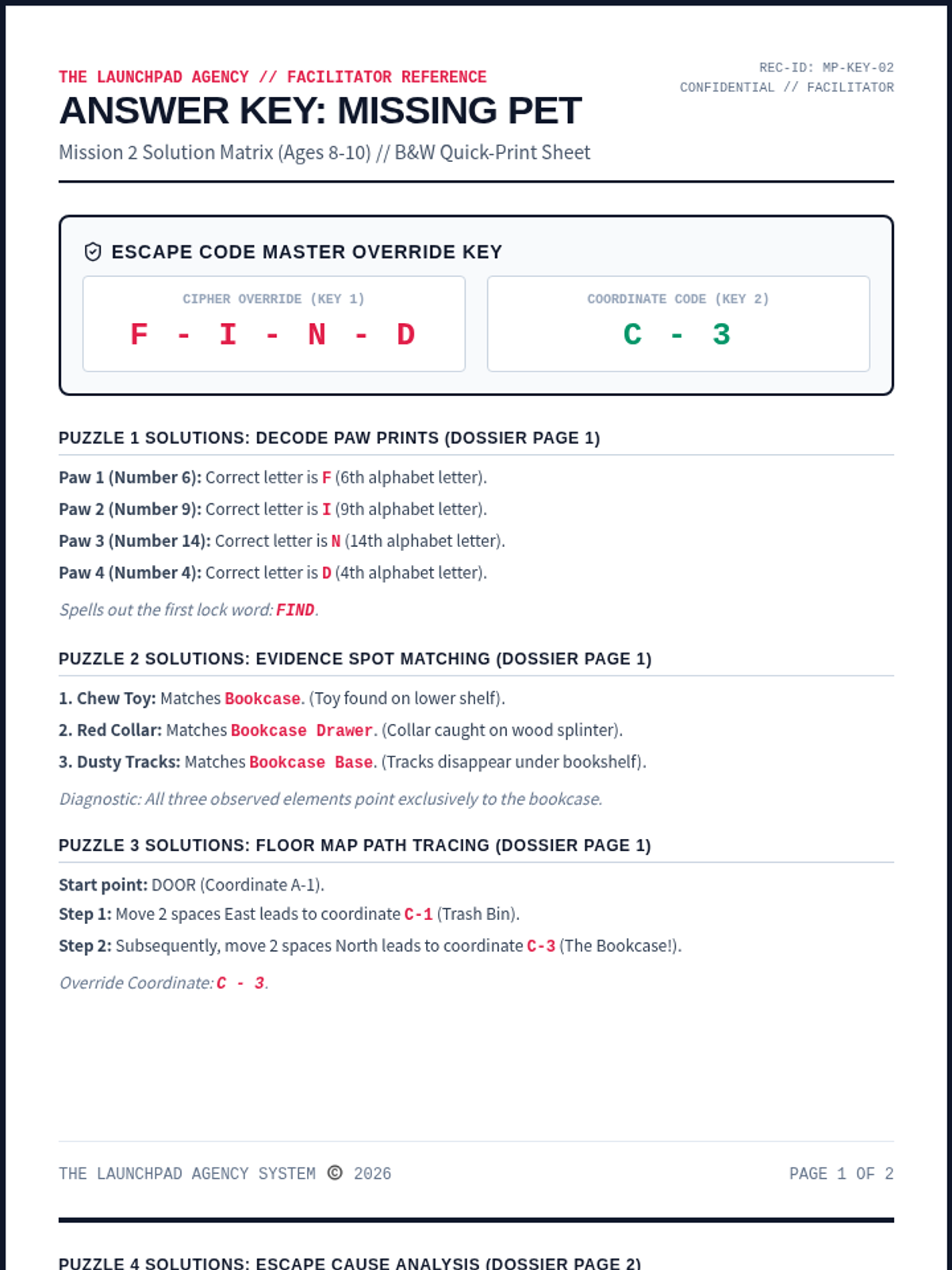
An observation-based escape mission for Ages 8-10. Recruits decode paw ciphers, match footprint evidence to classroom hiding spots, and compile a team map to find the missing class pet.
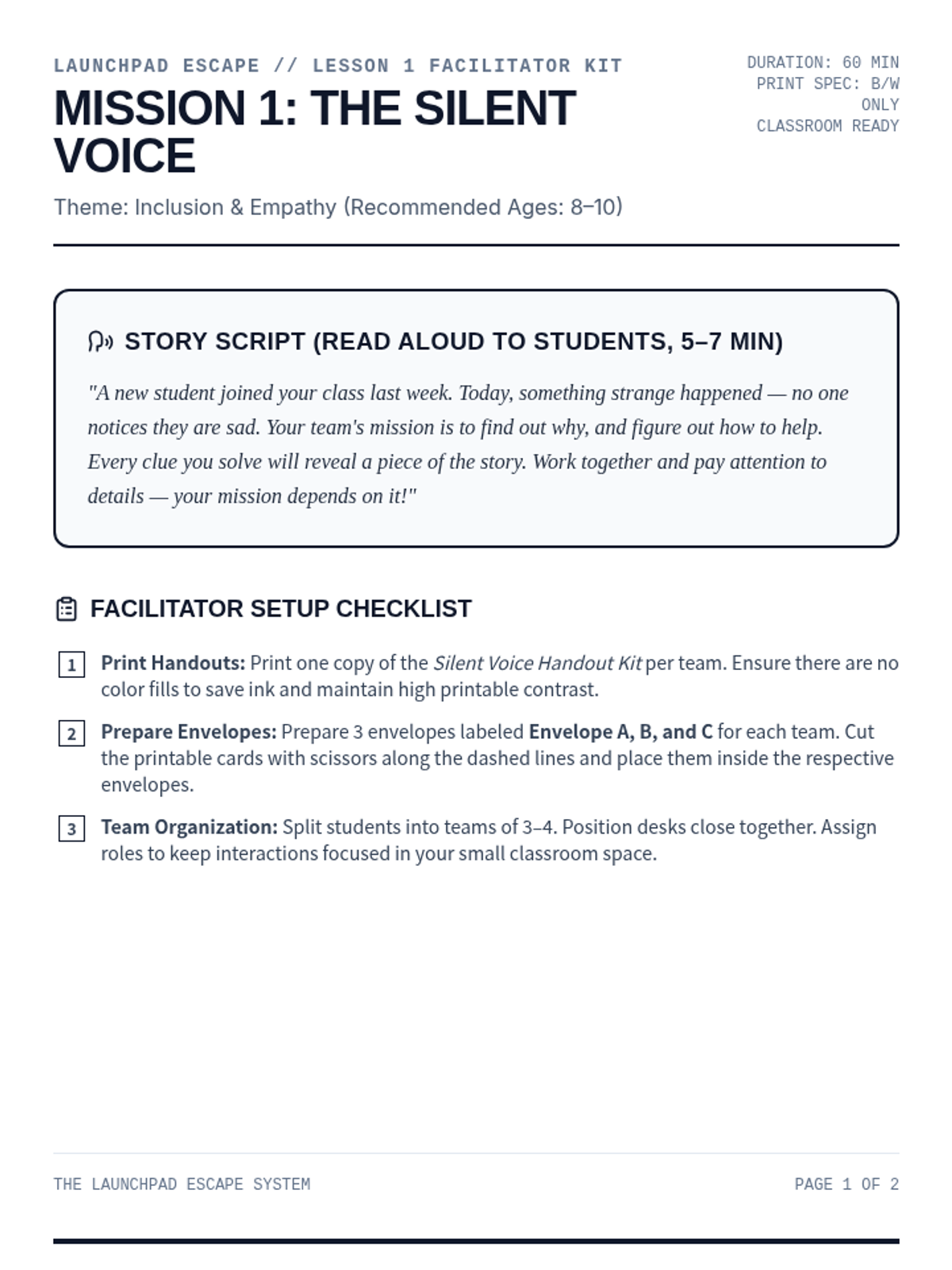
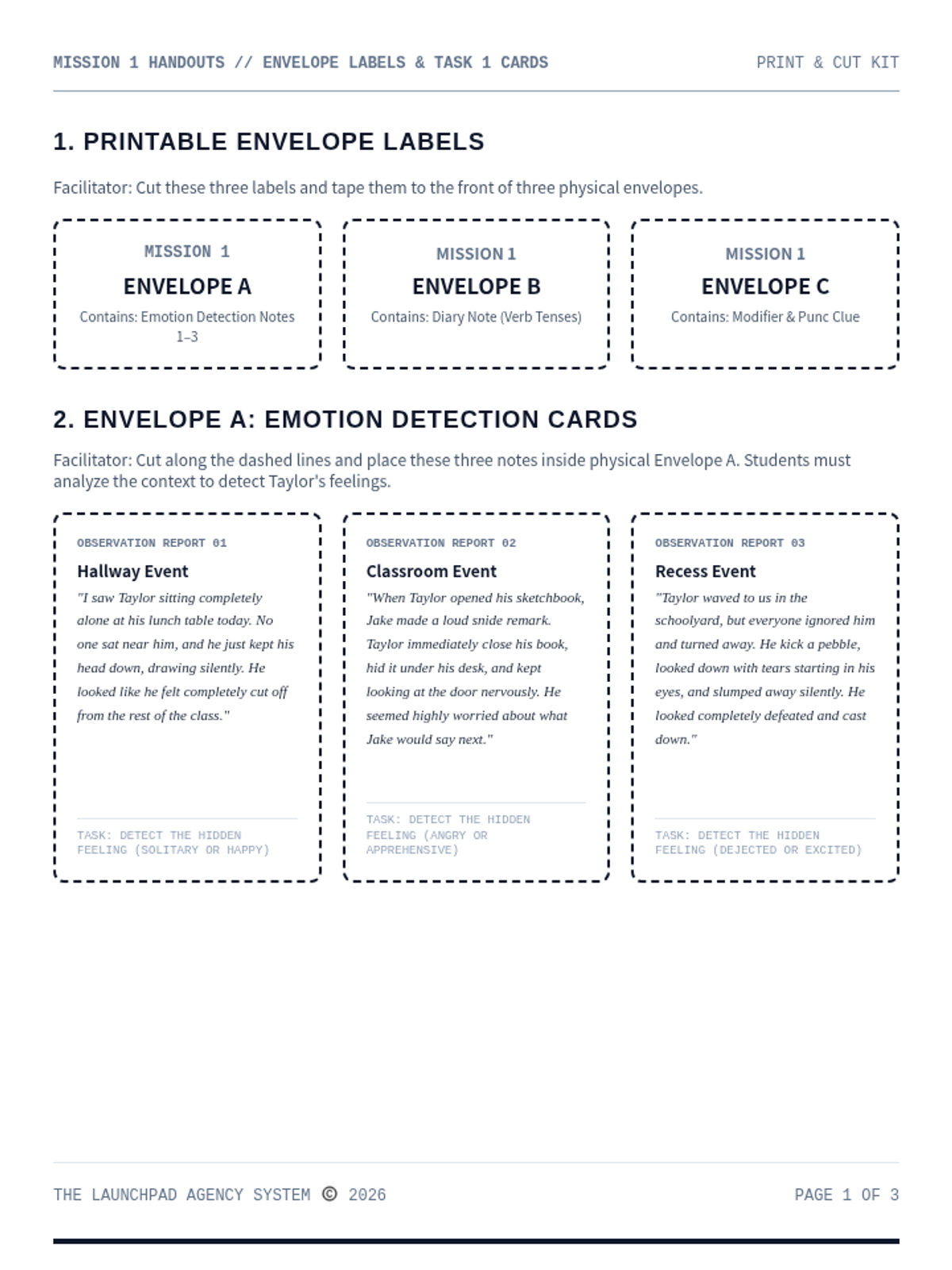
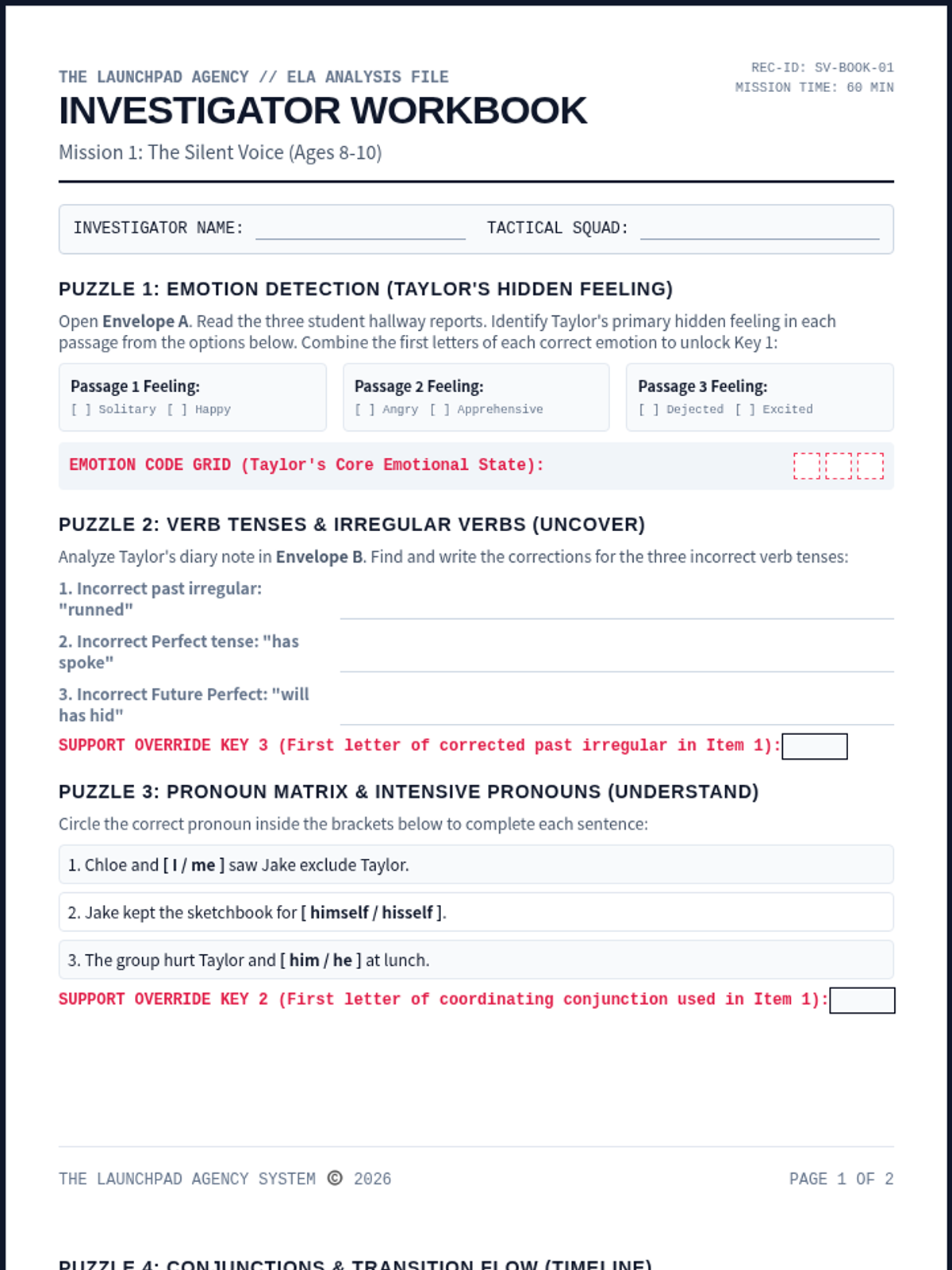
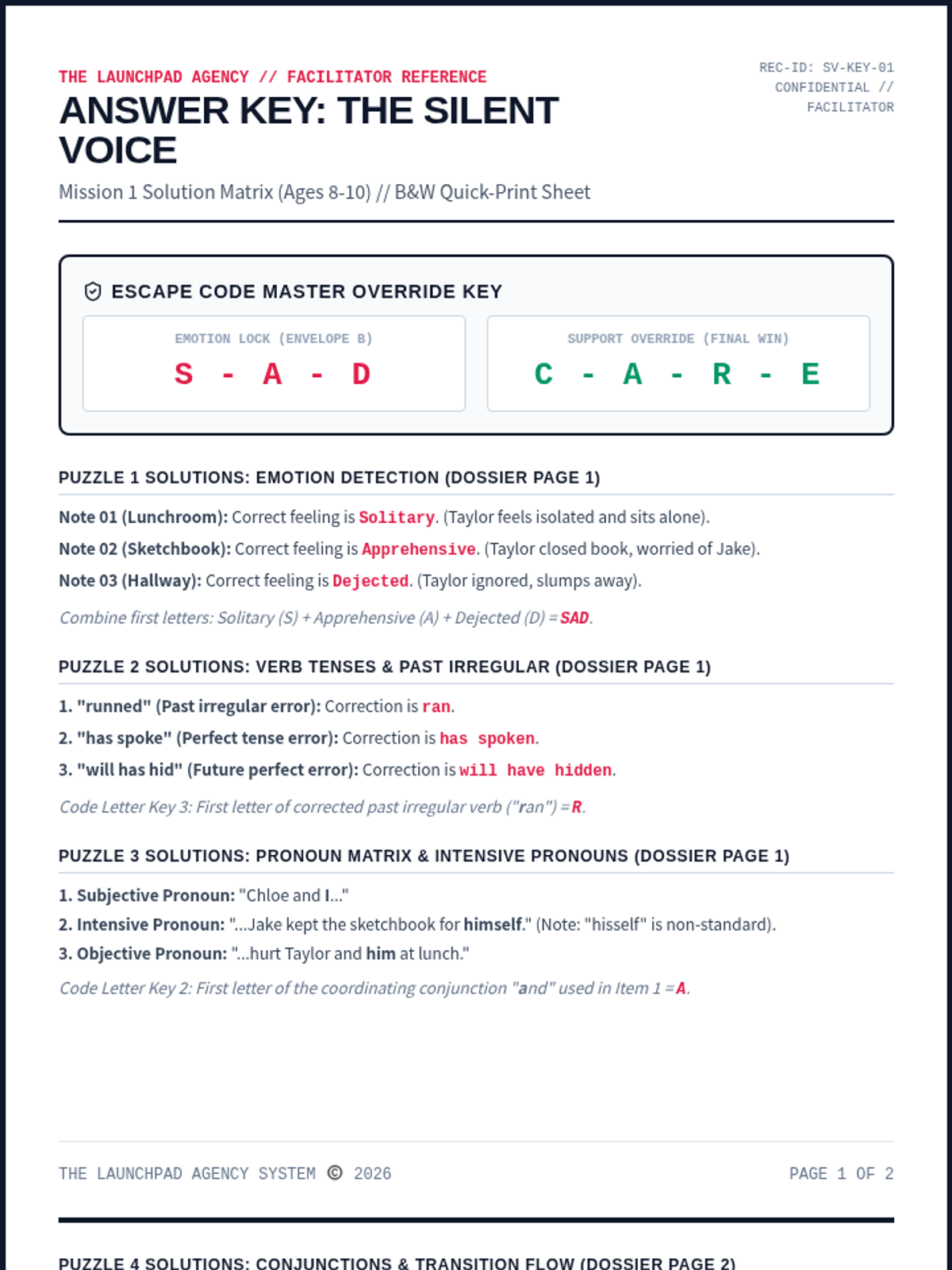
A cooperative social escape room for Ages 8-10 focused on inclusion and empathy. Recruits sort desk messages, build a timeline, and decode perspective cards to support a lonely classmate.
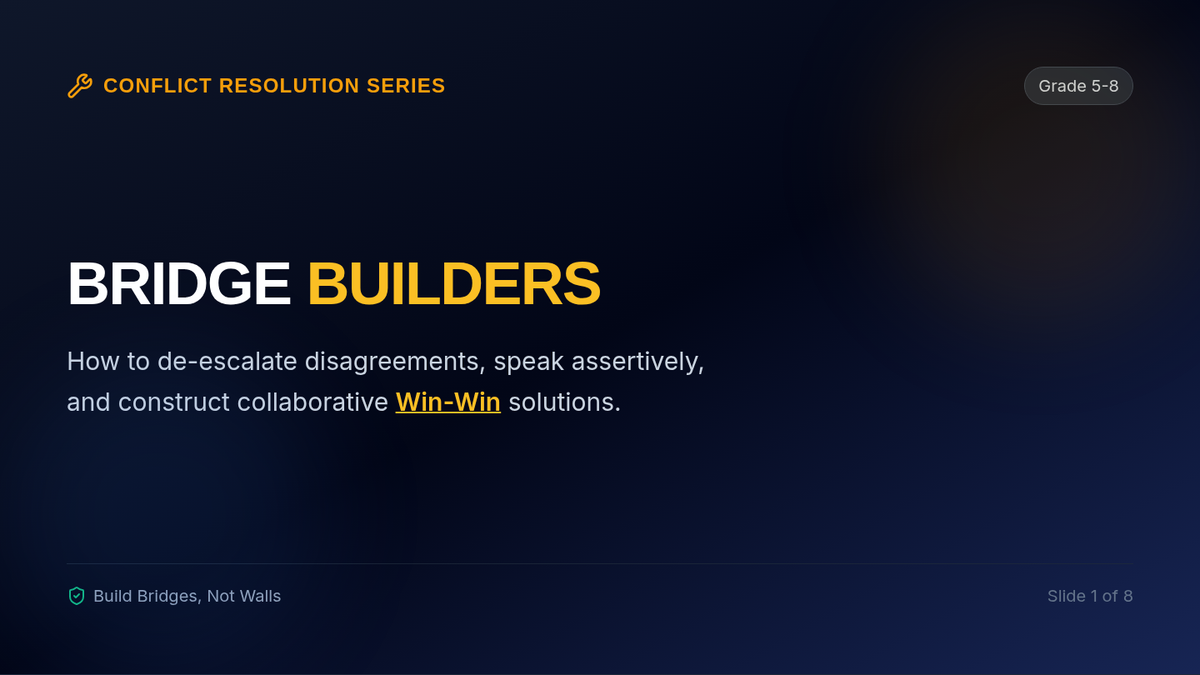
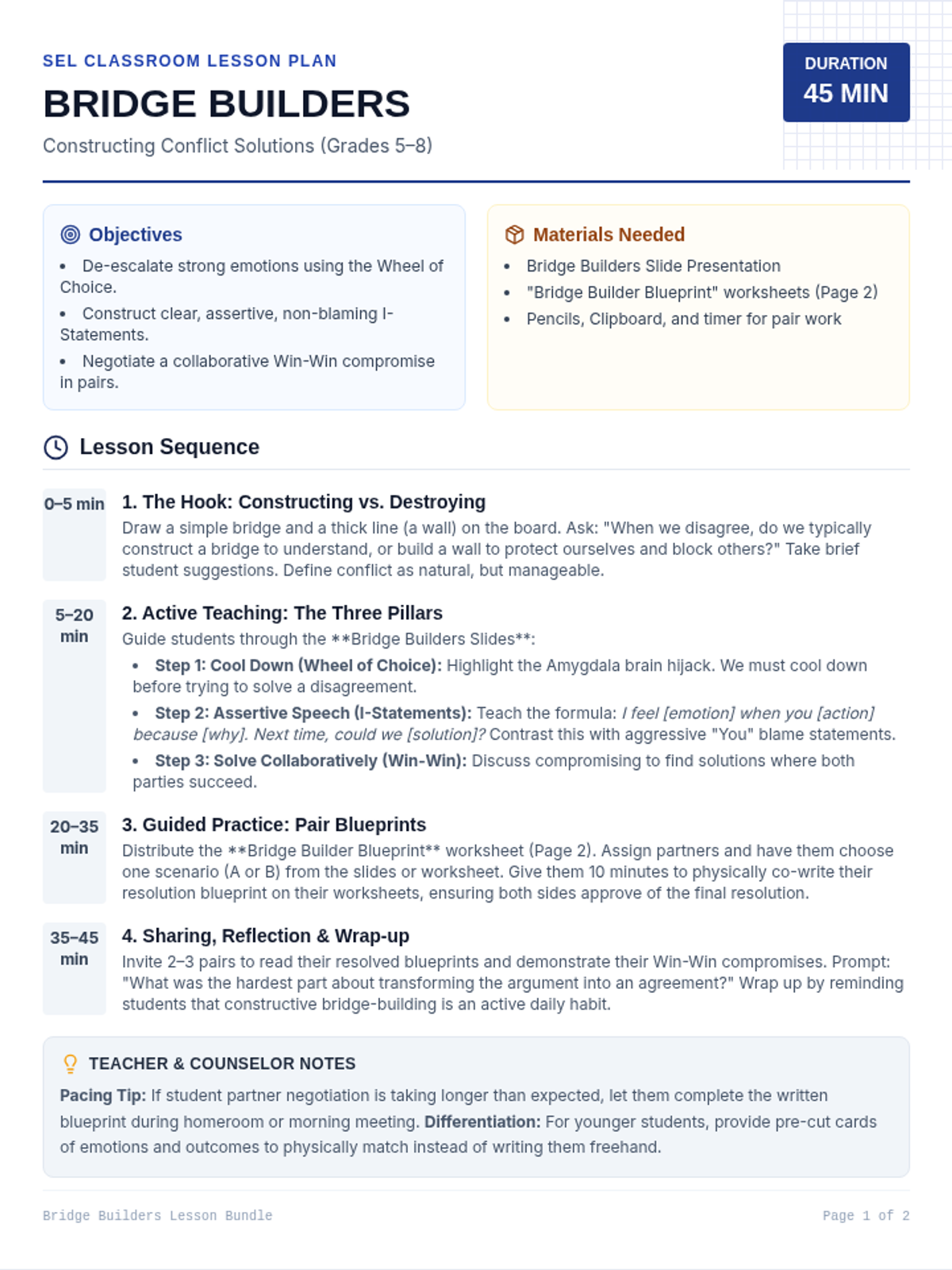
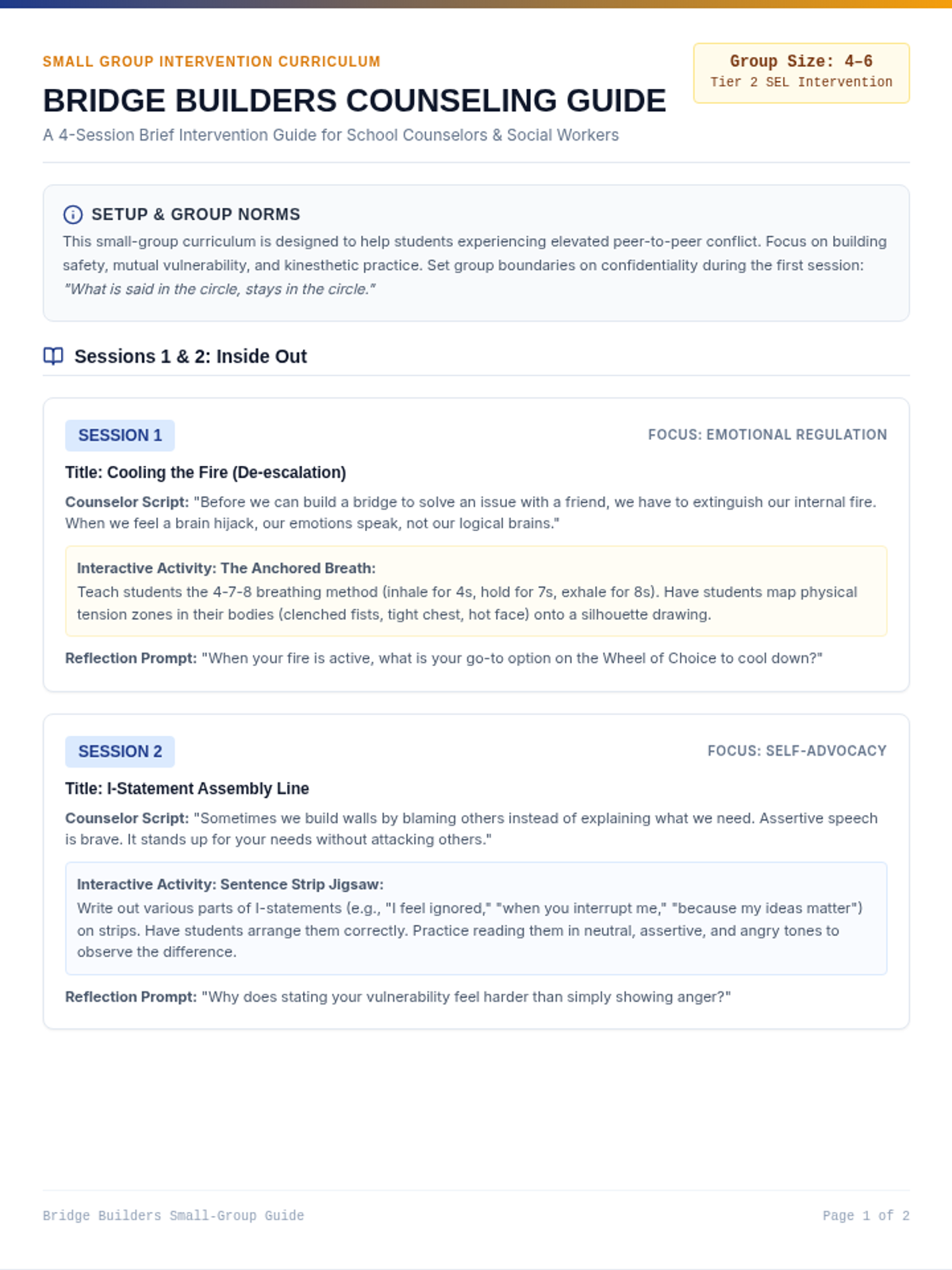
A comprehensive social-emotional learning lesson package designed to teach middle-grade students how to de-escalate conflicts, communicate assertively using I-Statements and Active Listening, and negotiate collaborative Win-Win solutions. Includes visual presentation slides, a complete 45-minute classroom lesson plan with an integrated student activity sheet, and a specialized small-group counseling guide.
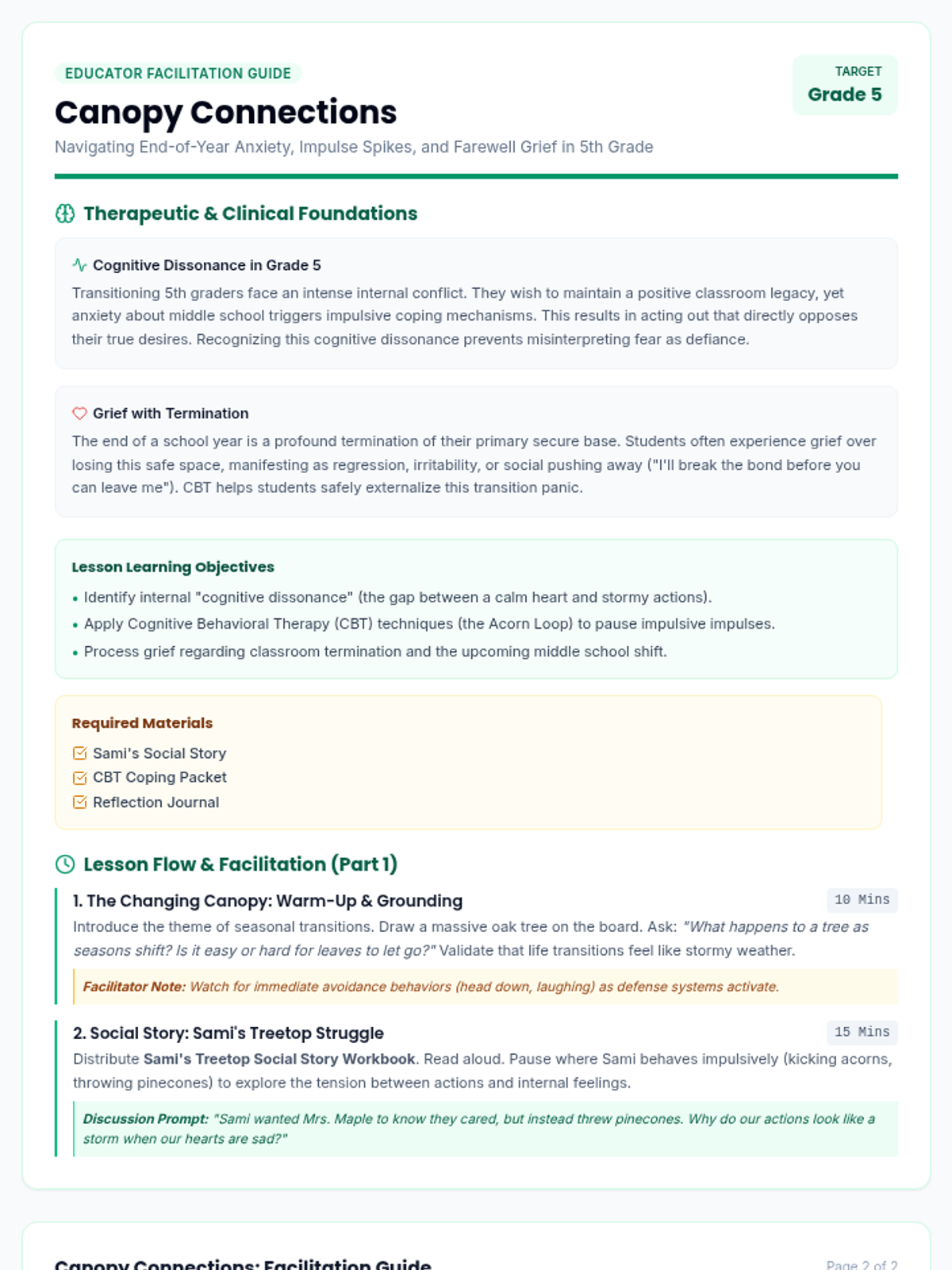
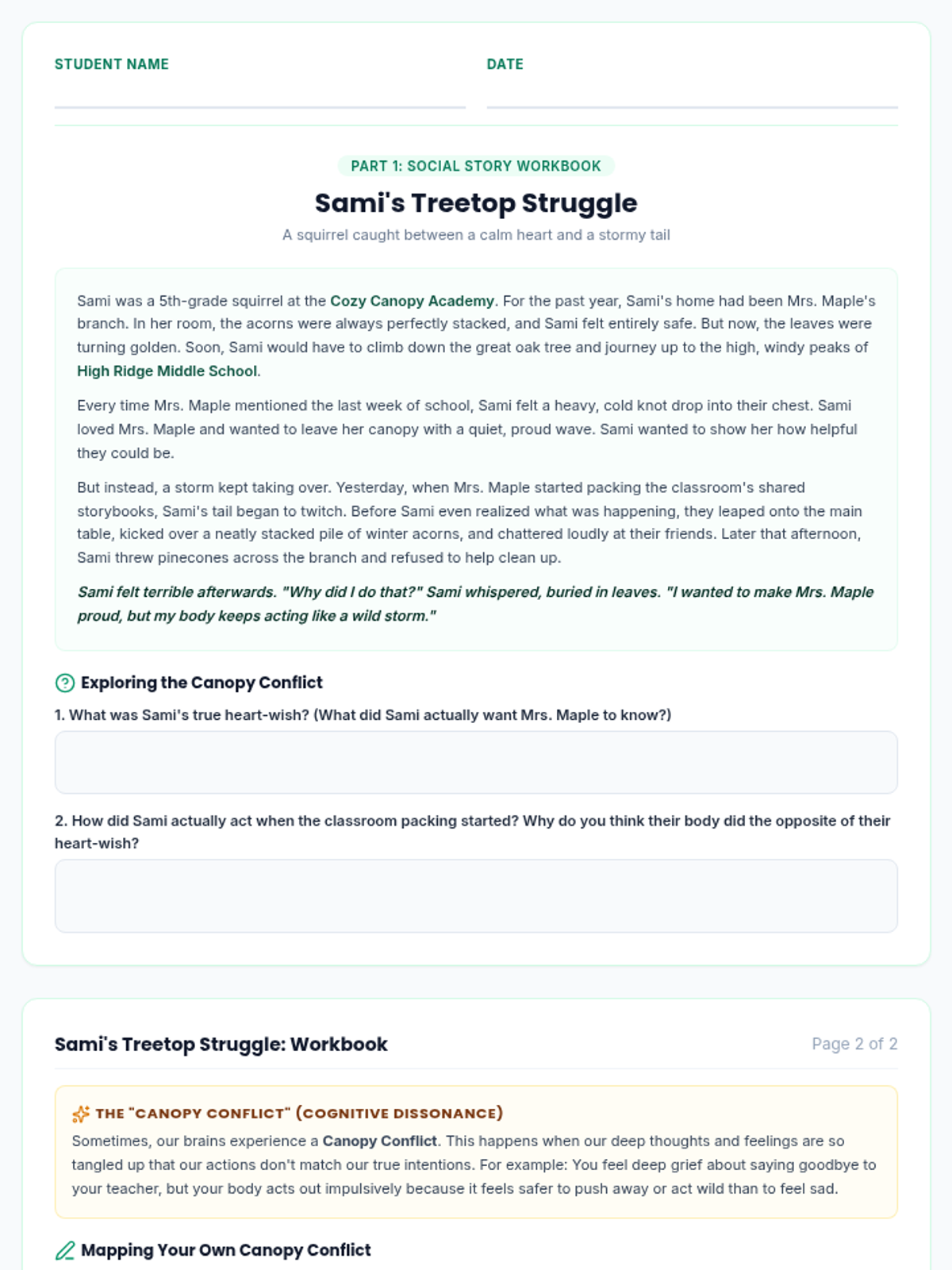
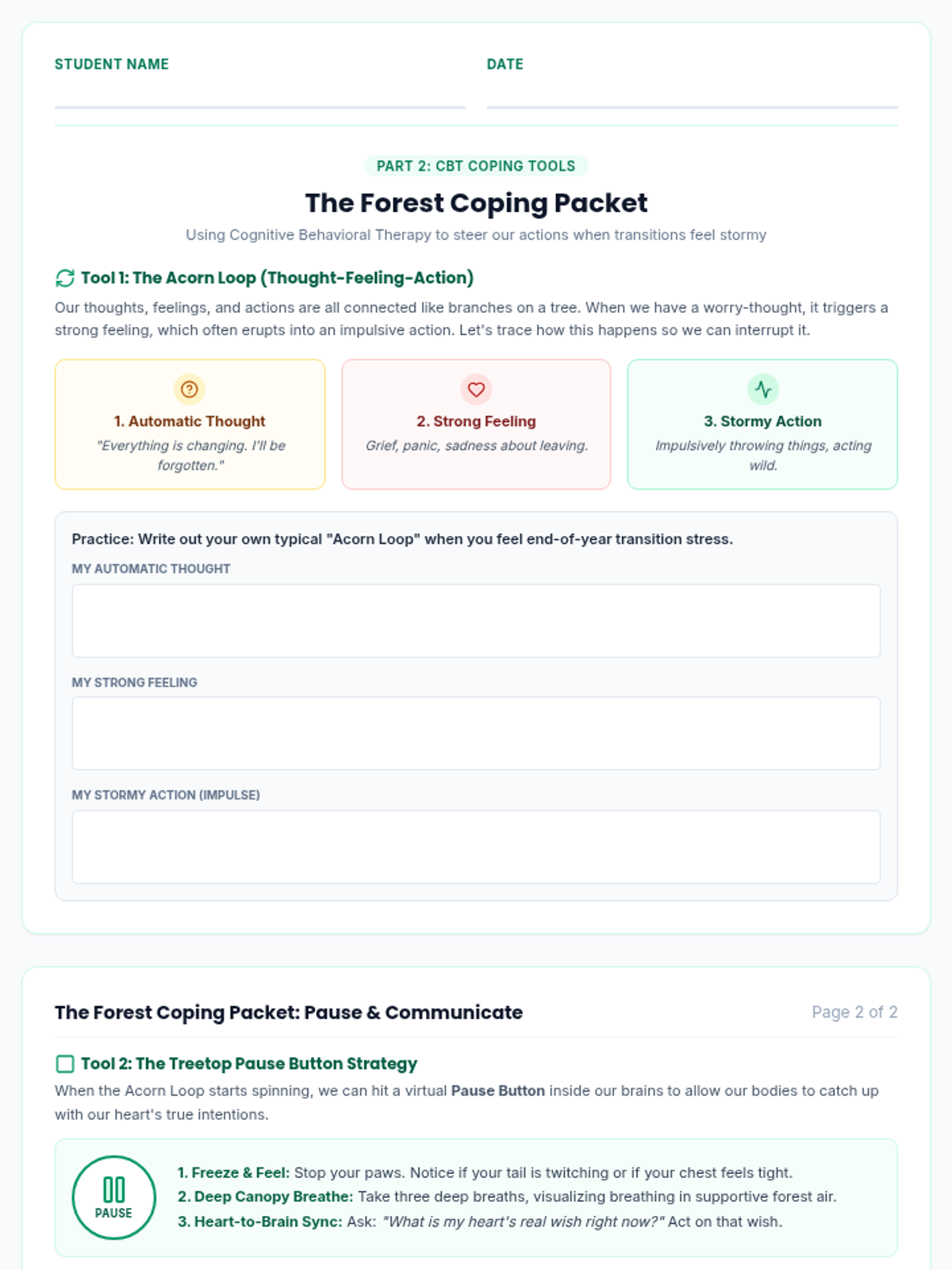
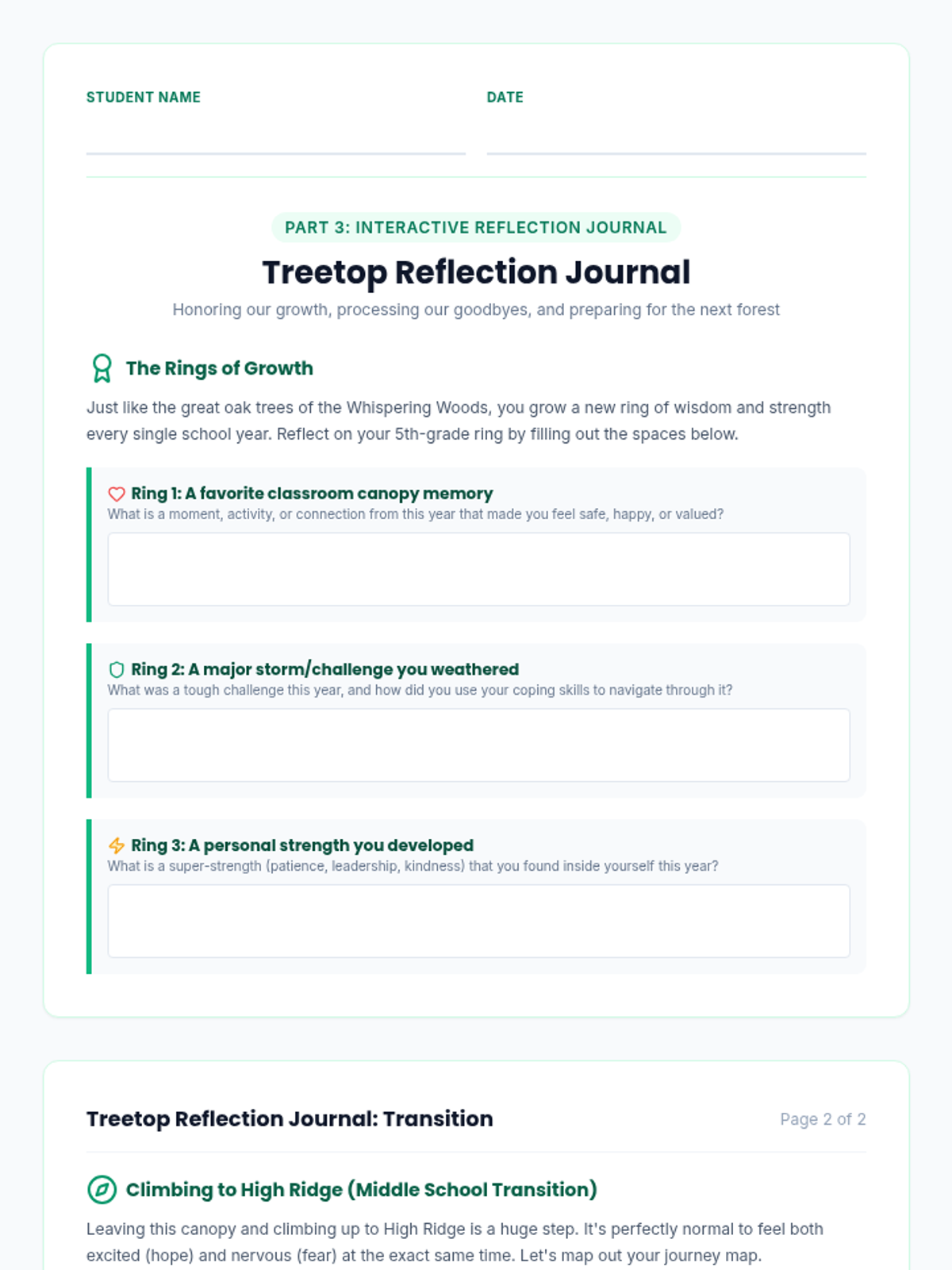
A therapeutic transition lesson designed to help 5th-grade students process end-of-year anxiety, grief over saying goodbye, and cognitive dissonance in impulse control. Through the social story of Sami the Squirrel, students explore self-regulation, learn CBT coping strategies, and complete a closure-focused reflection journal.
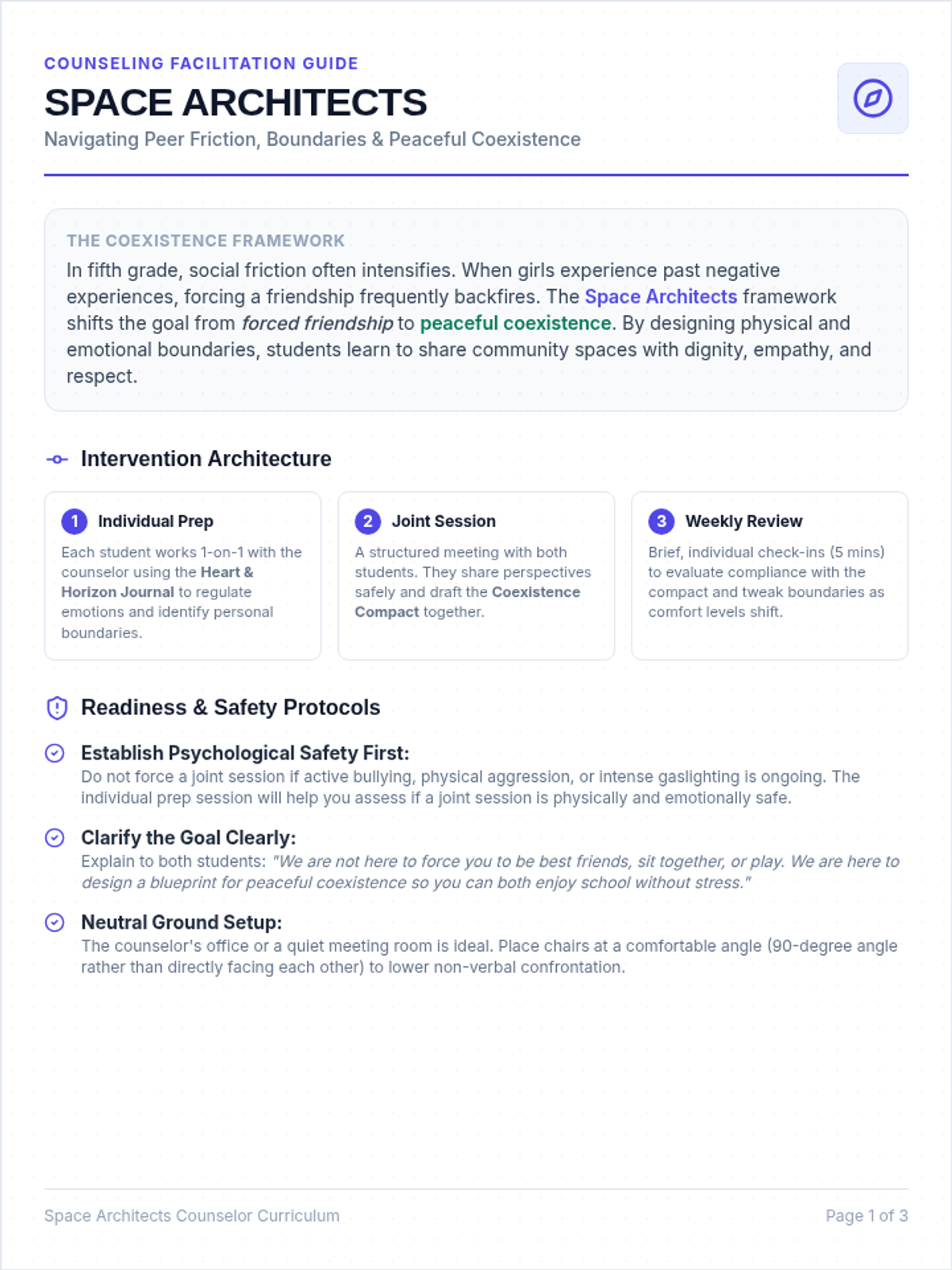
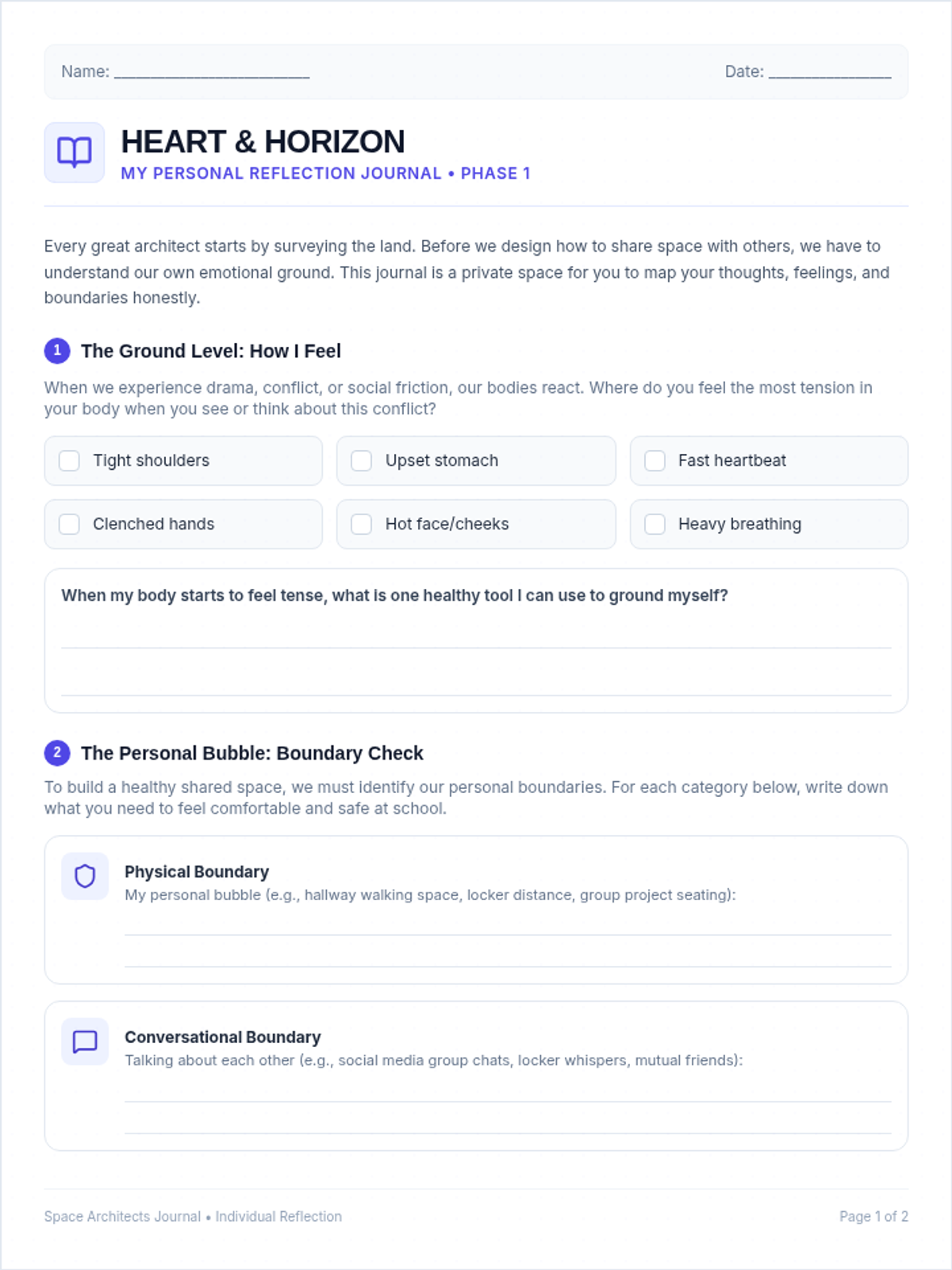
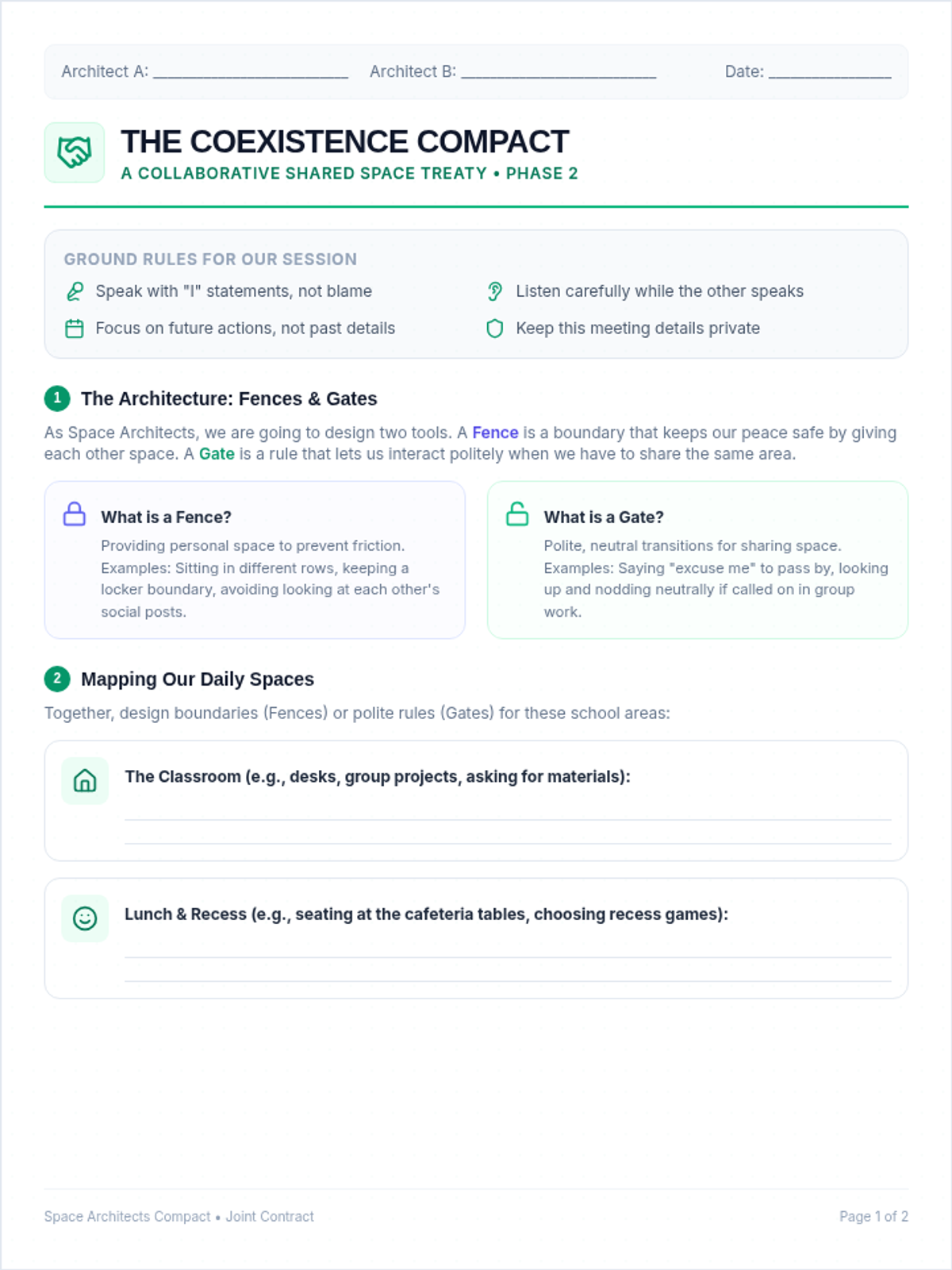
A structured counseling intervention designed for fifth-grade girls experiencing peer conflict and social friction. This lesson guides students through individual emotional regulation, perspective-taking, and a collaborative boundary-setting contract to establish peaceful coexistence.
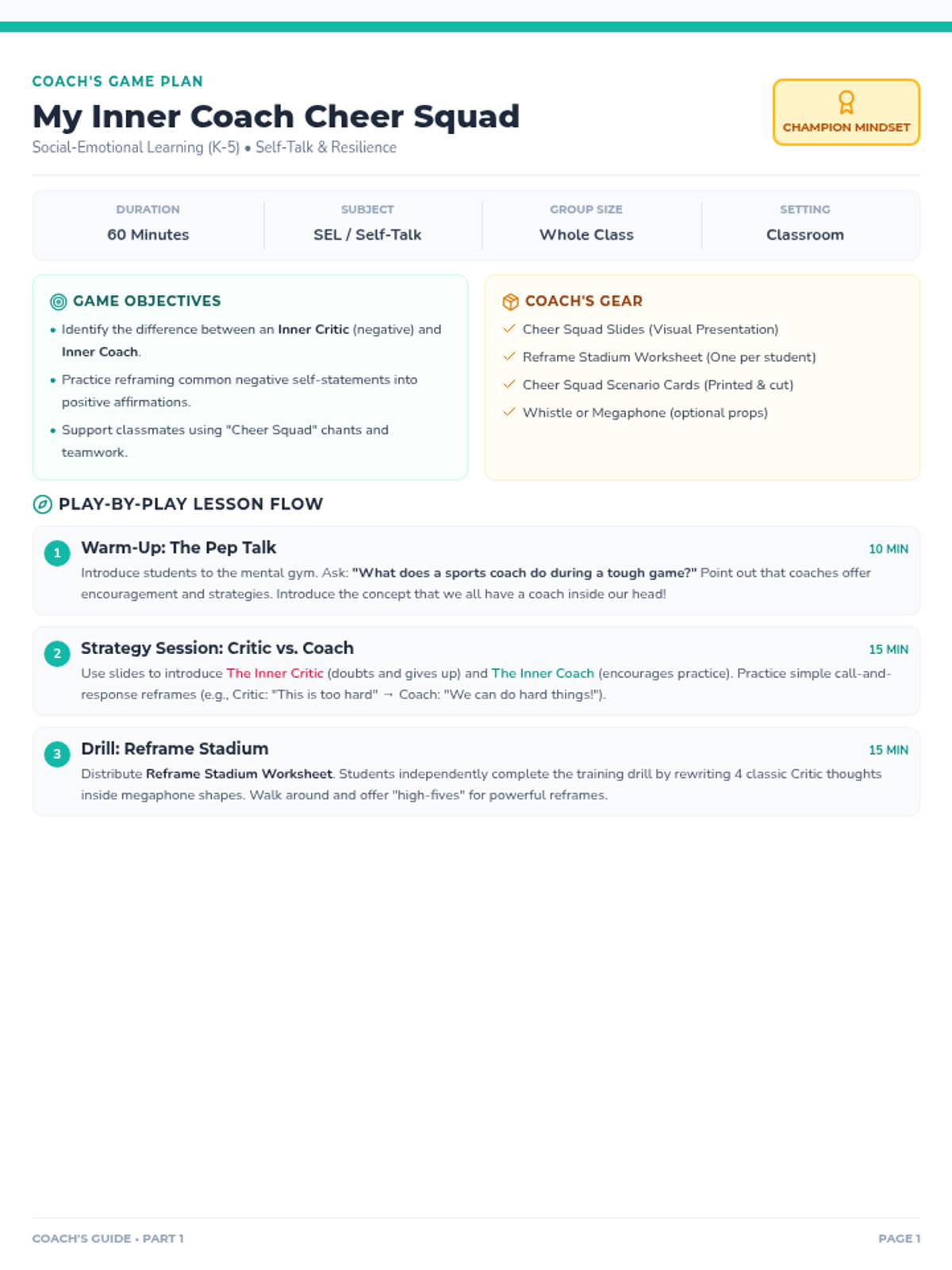
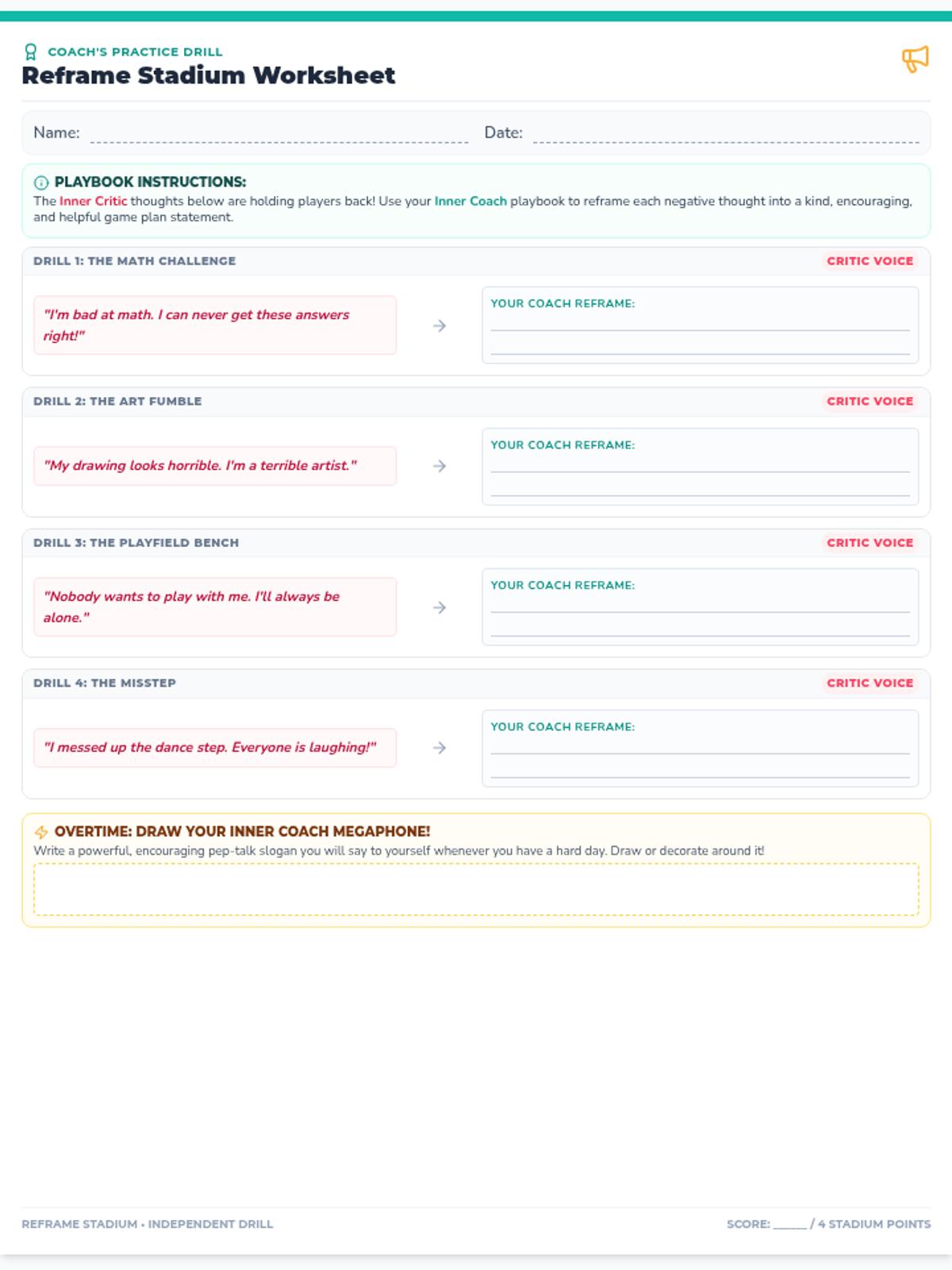
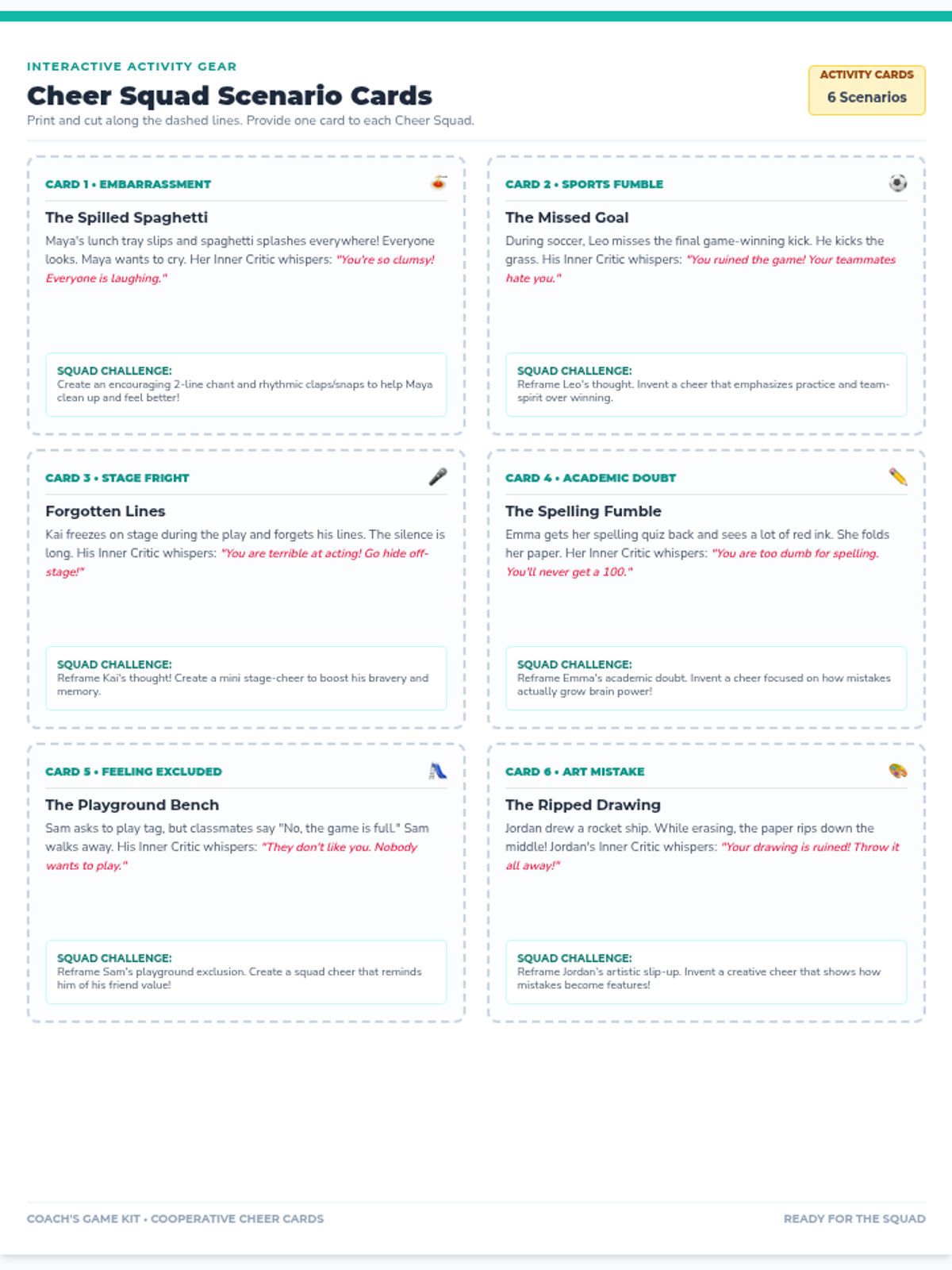
A complete social-emotional learning lesson for K-5 students to develop positive self-talk and resilience. Students learn to reframe negative self-talk into empowering inner-coach coaching statements through a sports-playbook theme, complete with interactive scenario cards, a playbook worksheet, and a visual slide deck.
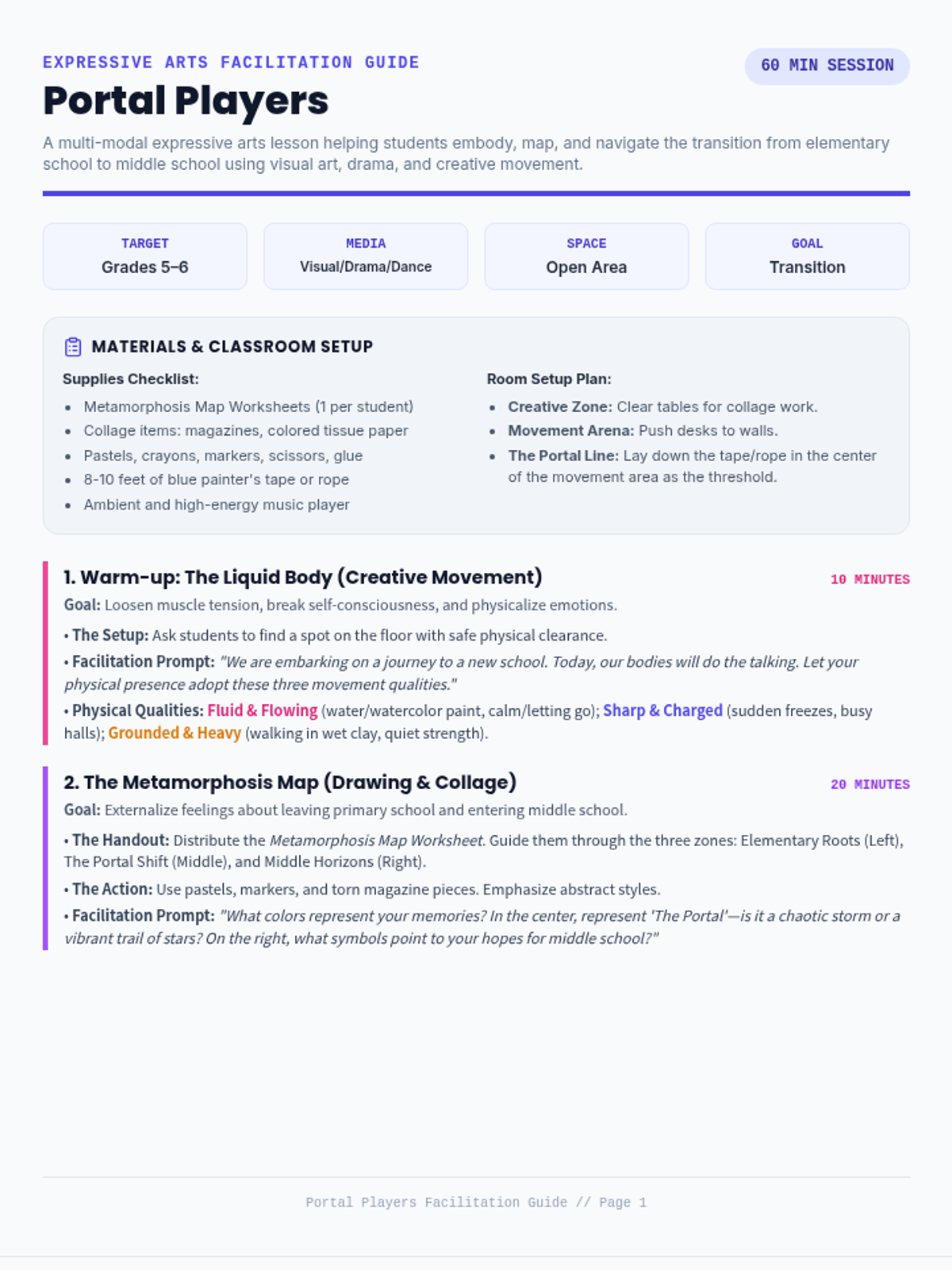
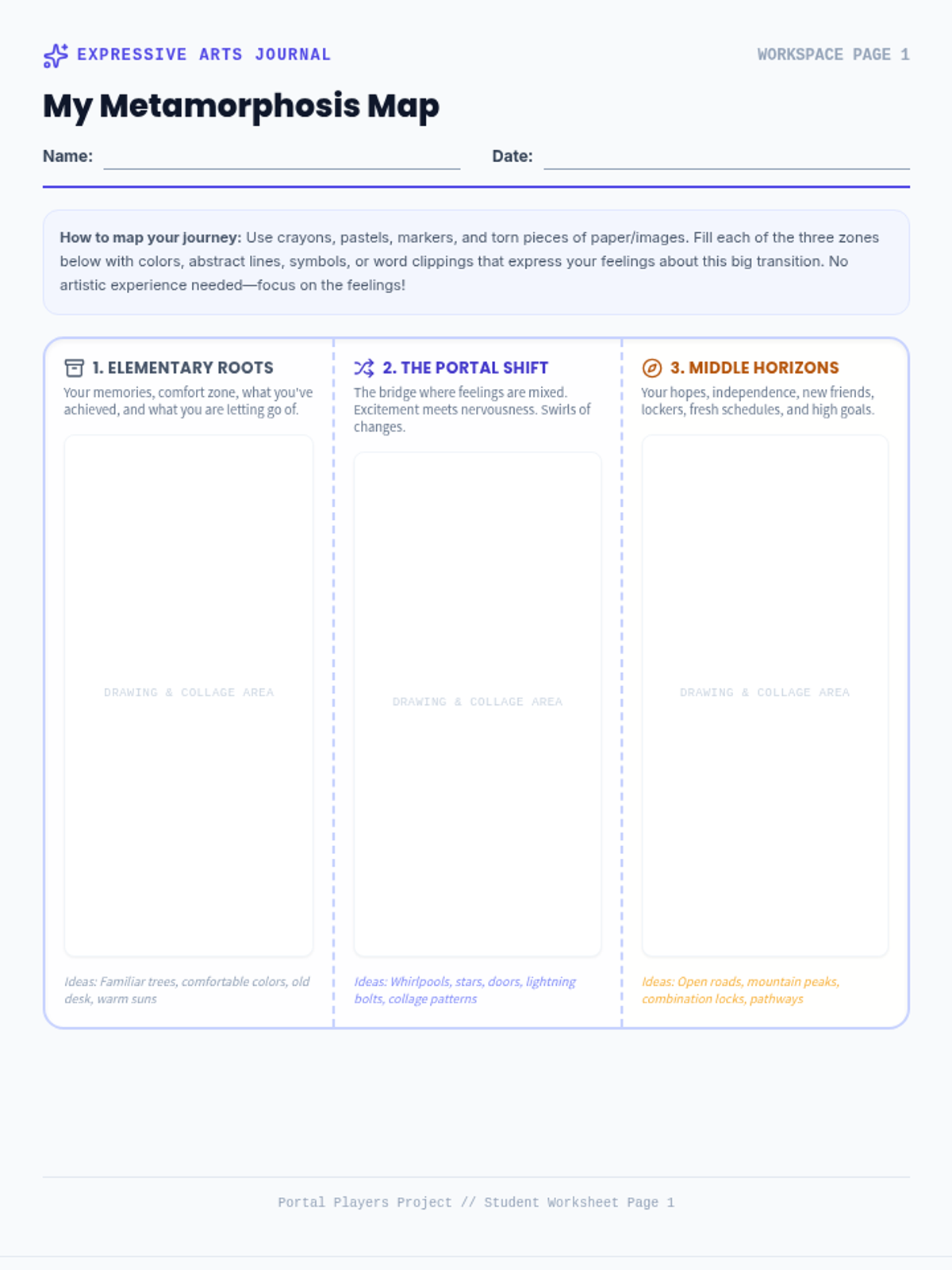
An expressive arts lesson designed to support students transitioning to middle school. Through drawing, collage, drama, role-play, and movement, students map their feelings, practice real scenarios, and physically embody growth and confidence.
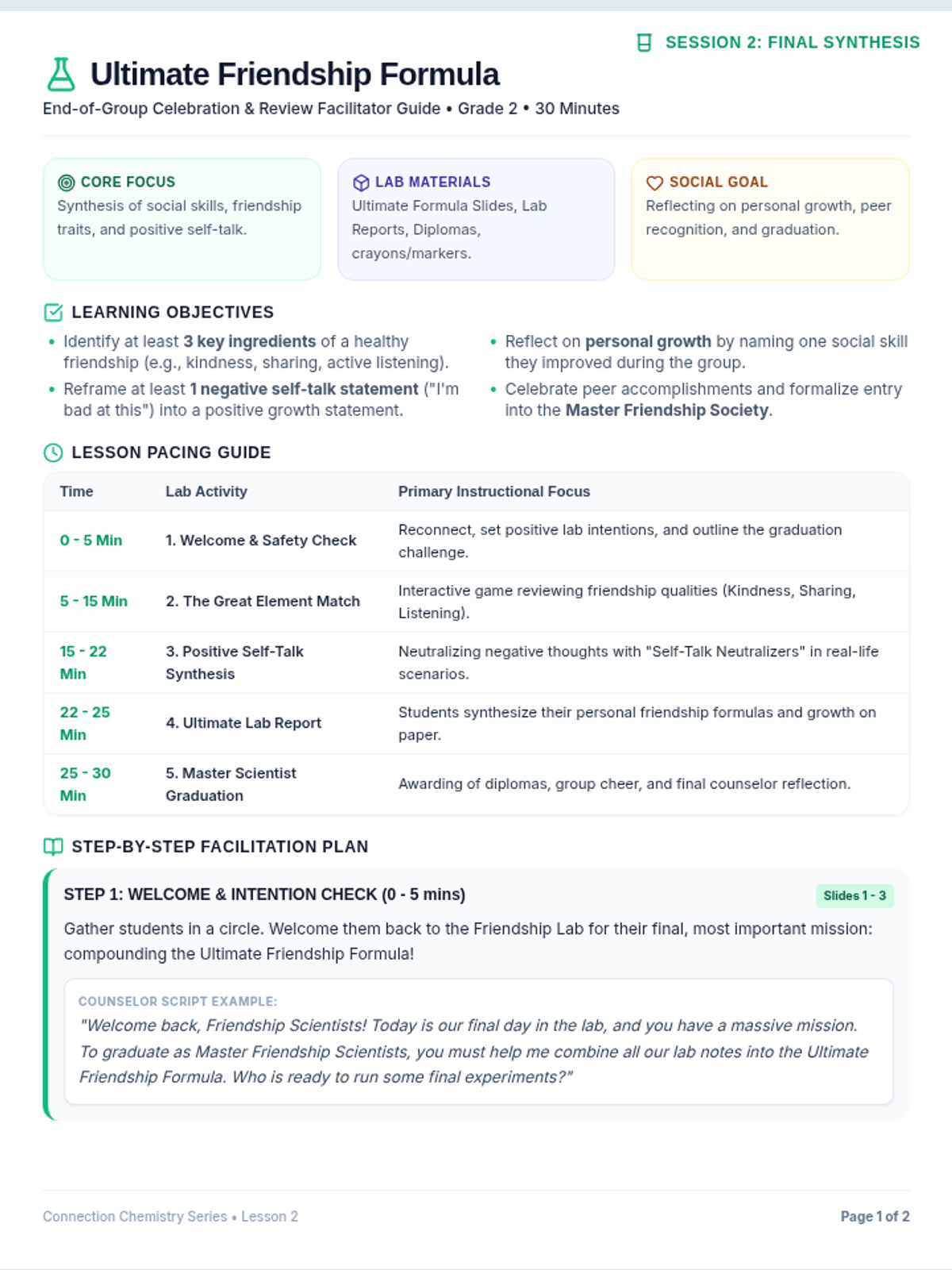
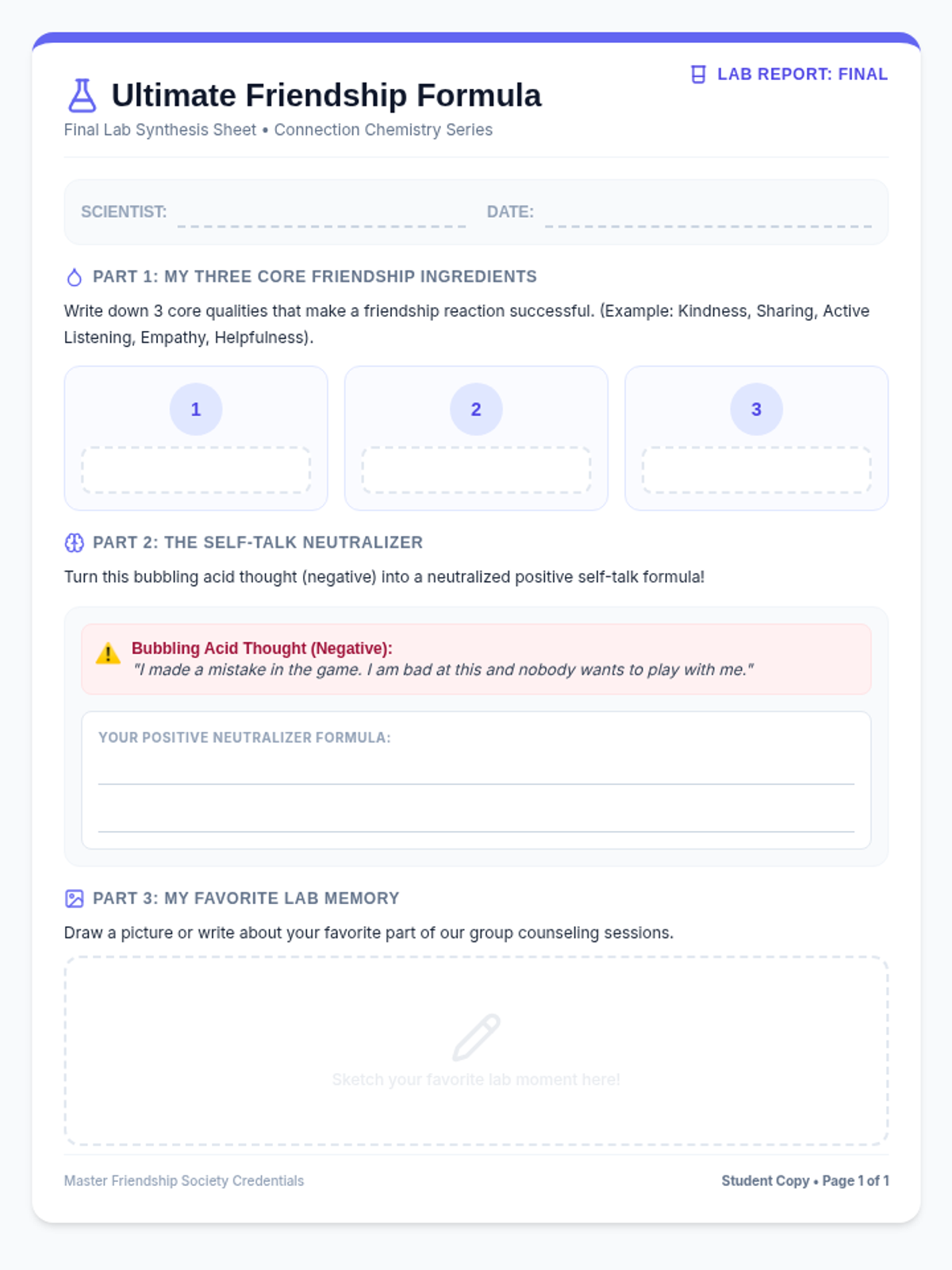
A celebratory 30-minute end-of-group session where 'Friendship Scientists' synthesize their learnings on social skills, friendship qualities, and positive self-talk into a master formula for lasting connections, concluding with a graduation ceremony.
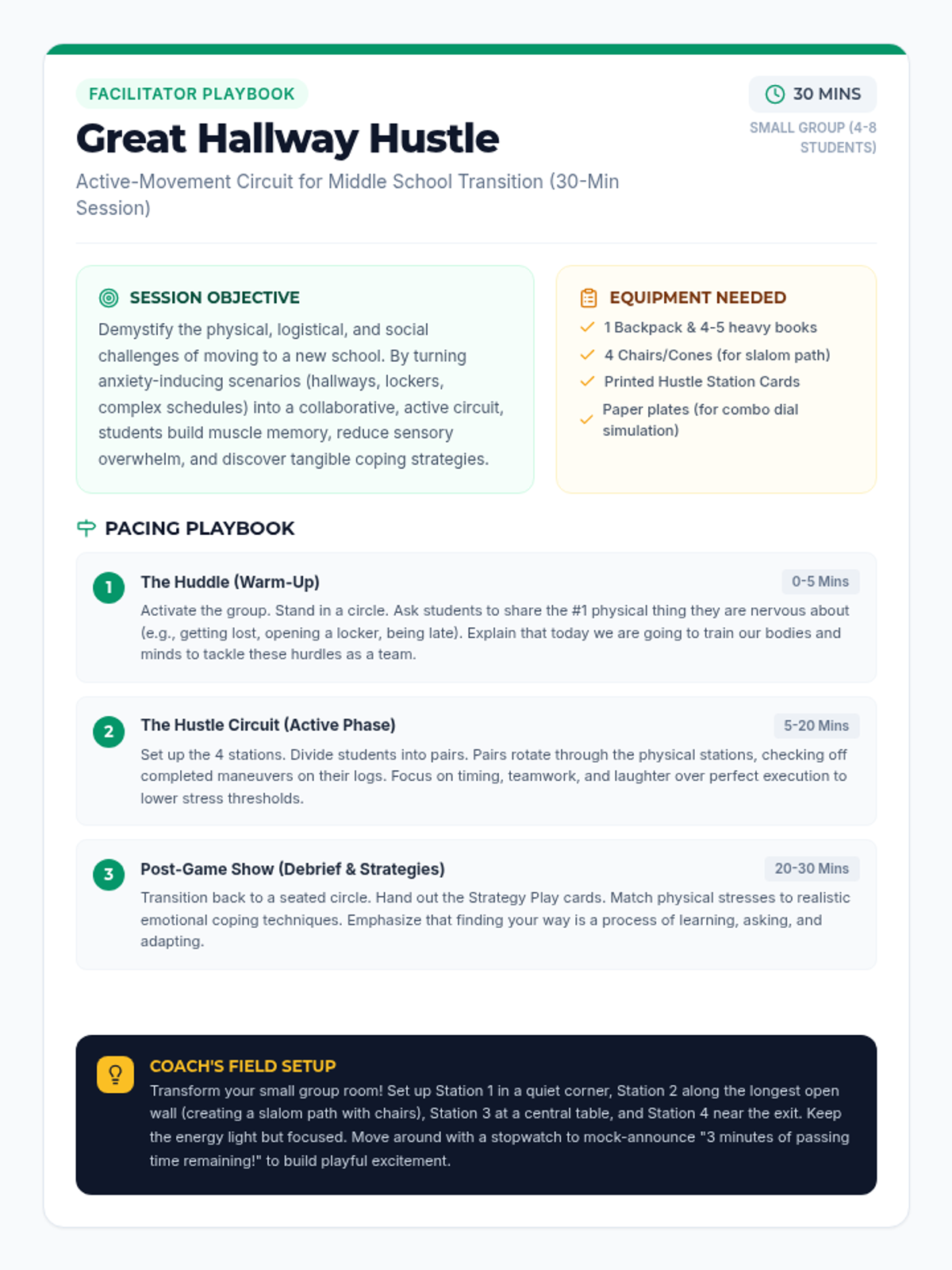
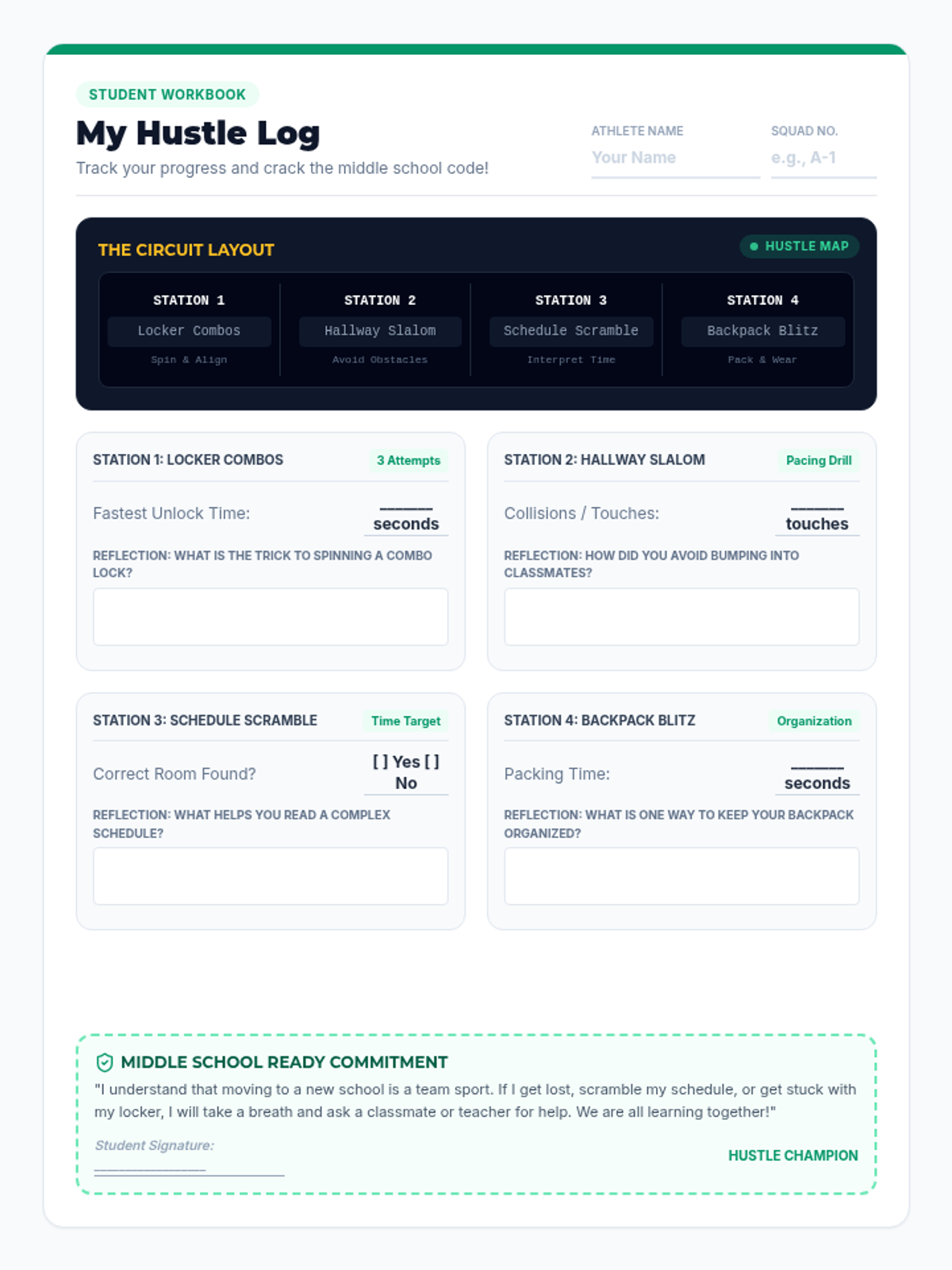
A 30-minute small group session that uses a high-energy movement circuit to address the transition concerns of moving to a new middle school, simulating lockers, hallways, backpacks, and schedules.
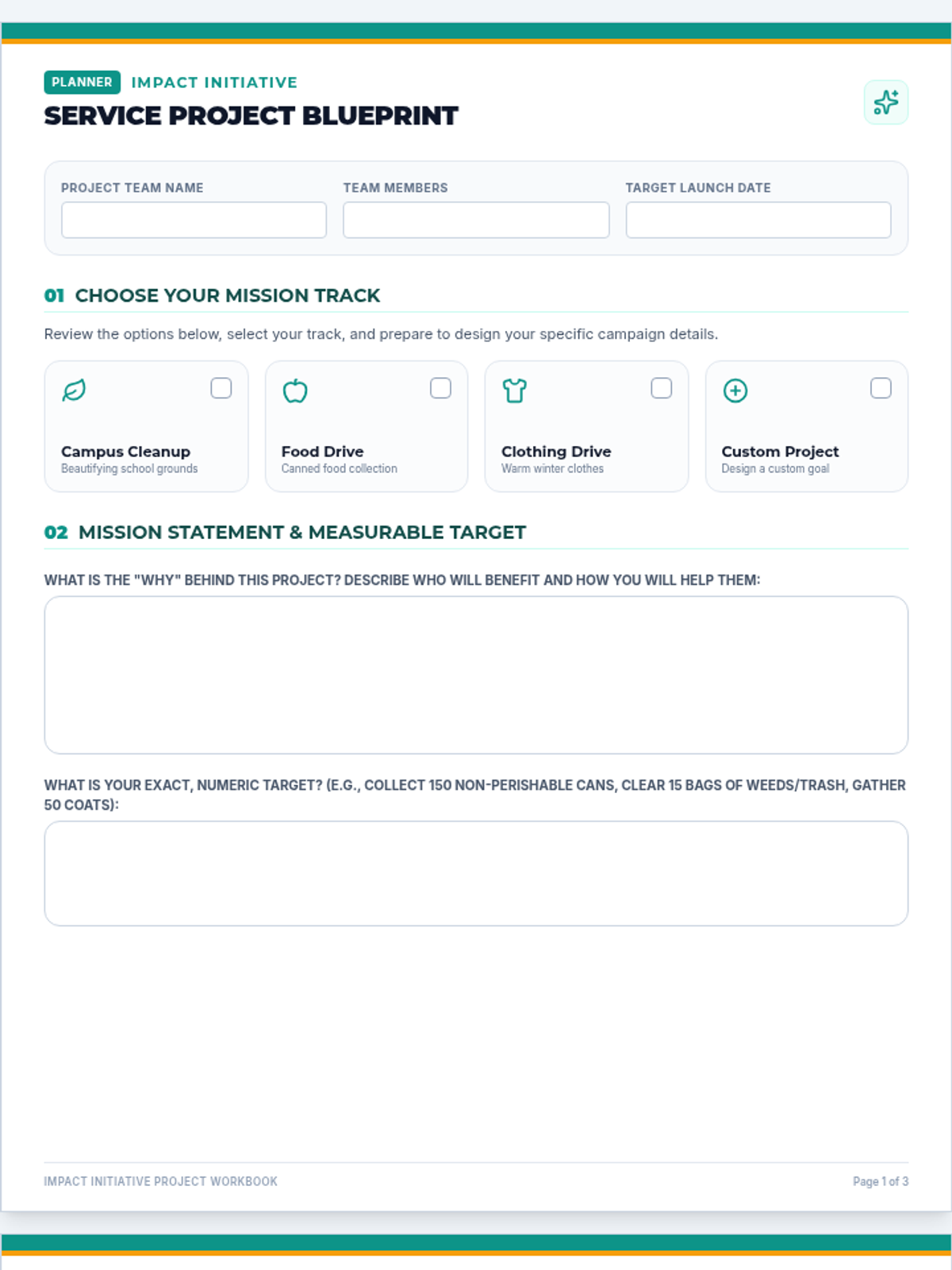
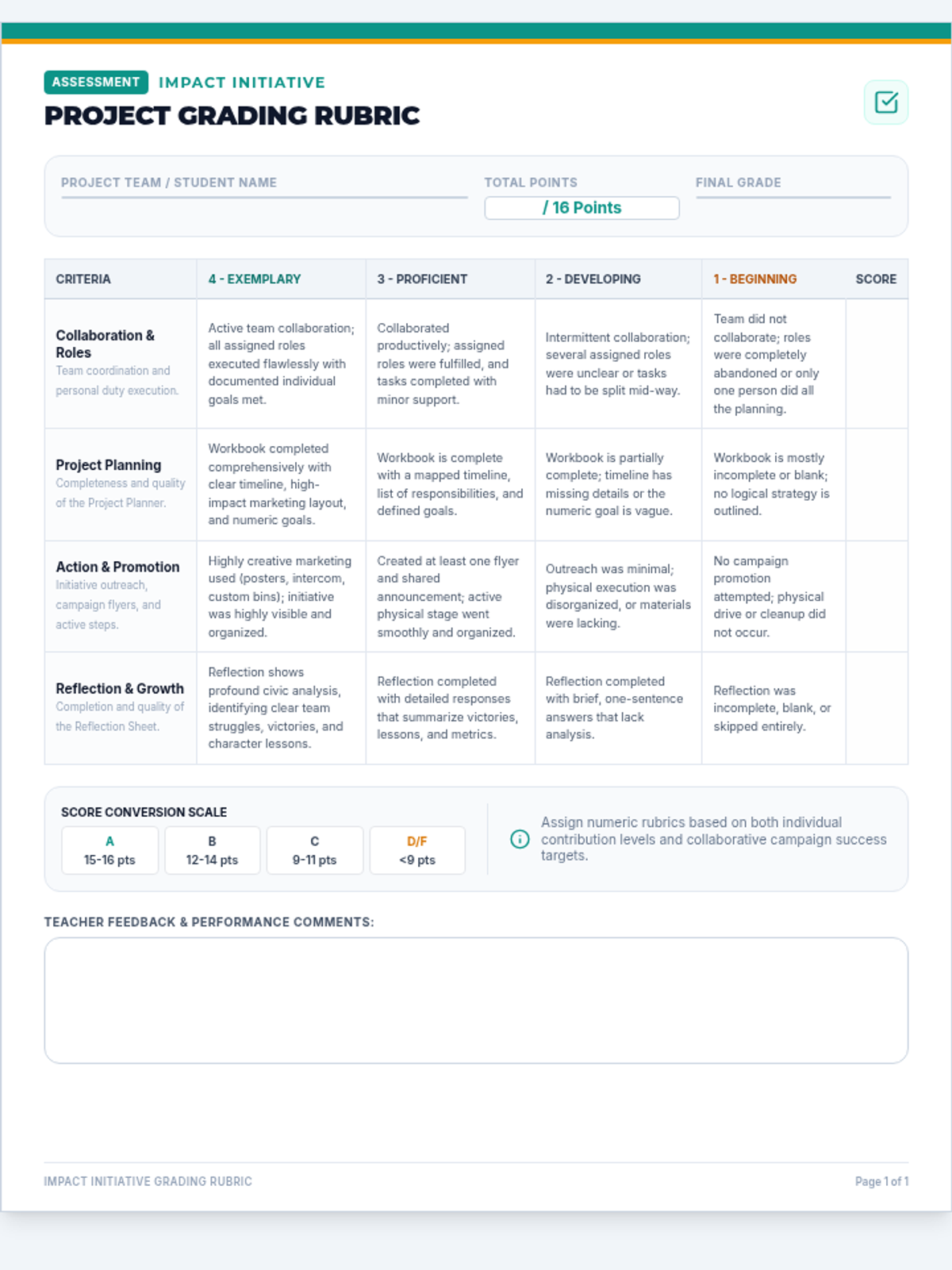
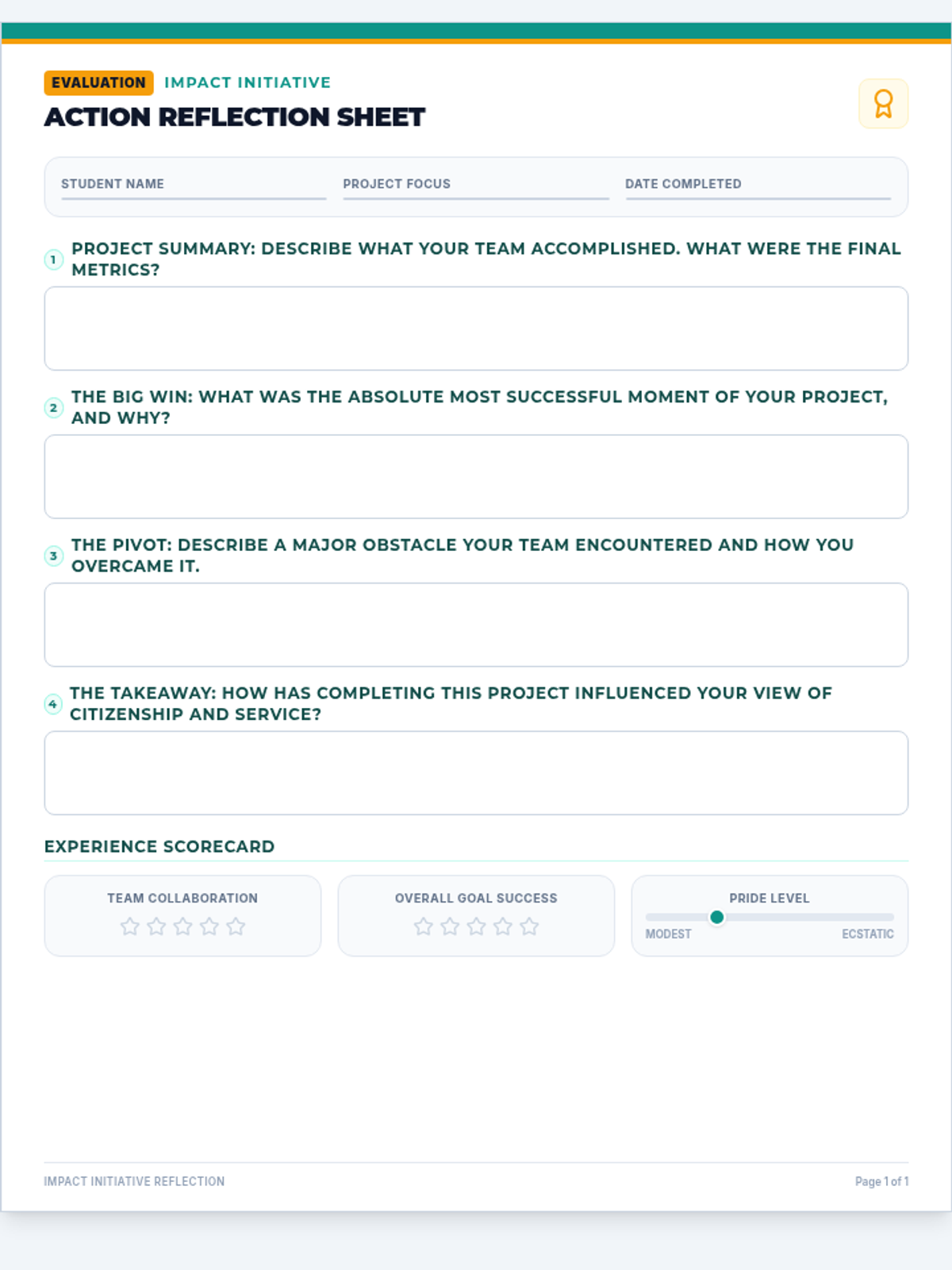
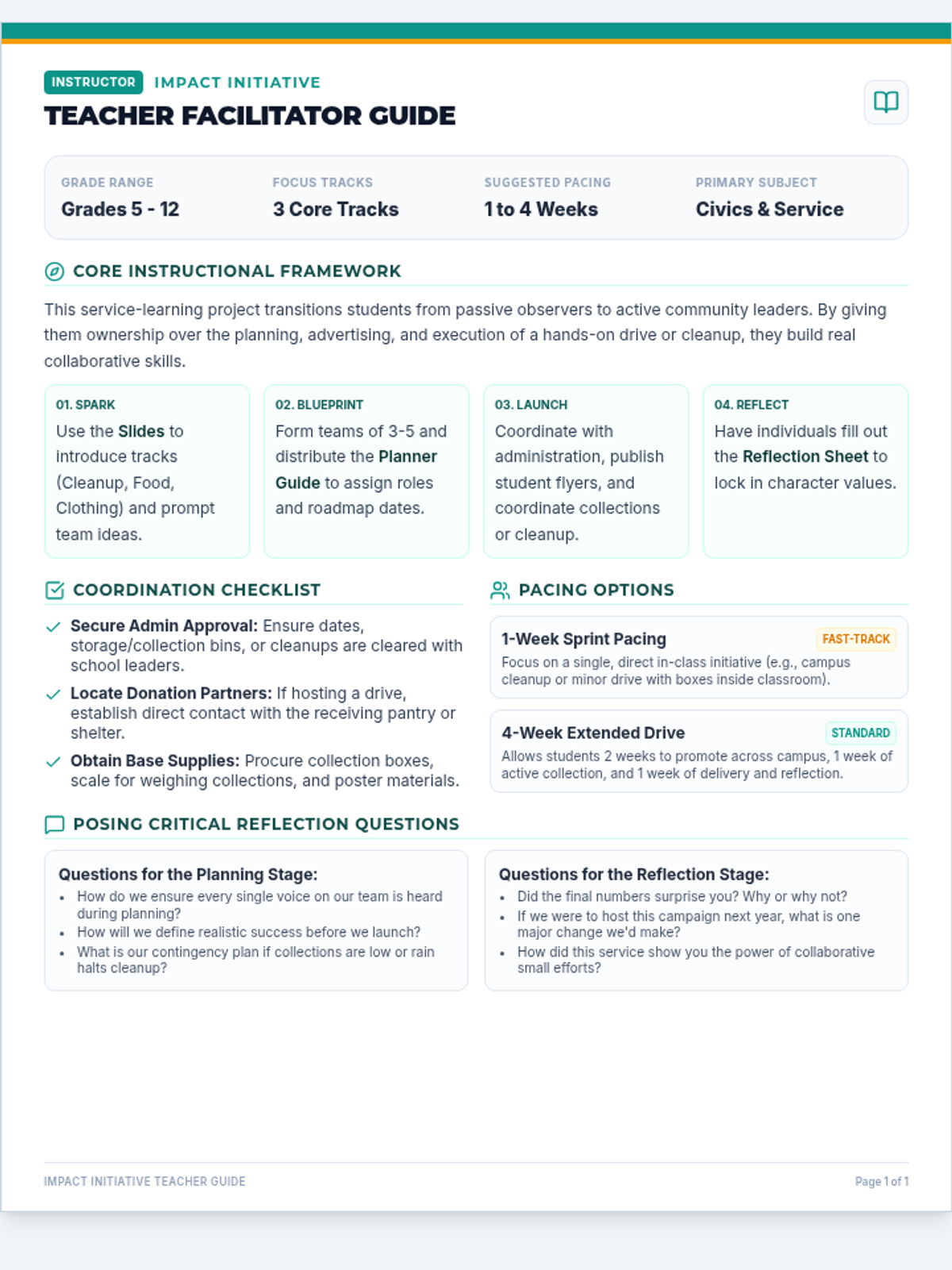
A service-learning lesson where students plan, execute, and reflect on a community service project of their choice (school campus cleanup, food drive, or clothing drive). It includes interactive presentation slides, a step-by-step project planning guide, a simplified reflection worksheet, and a teacher facilitation guide.
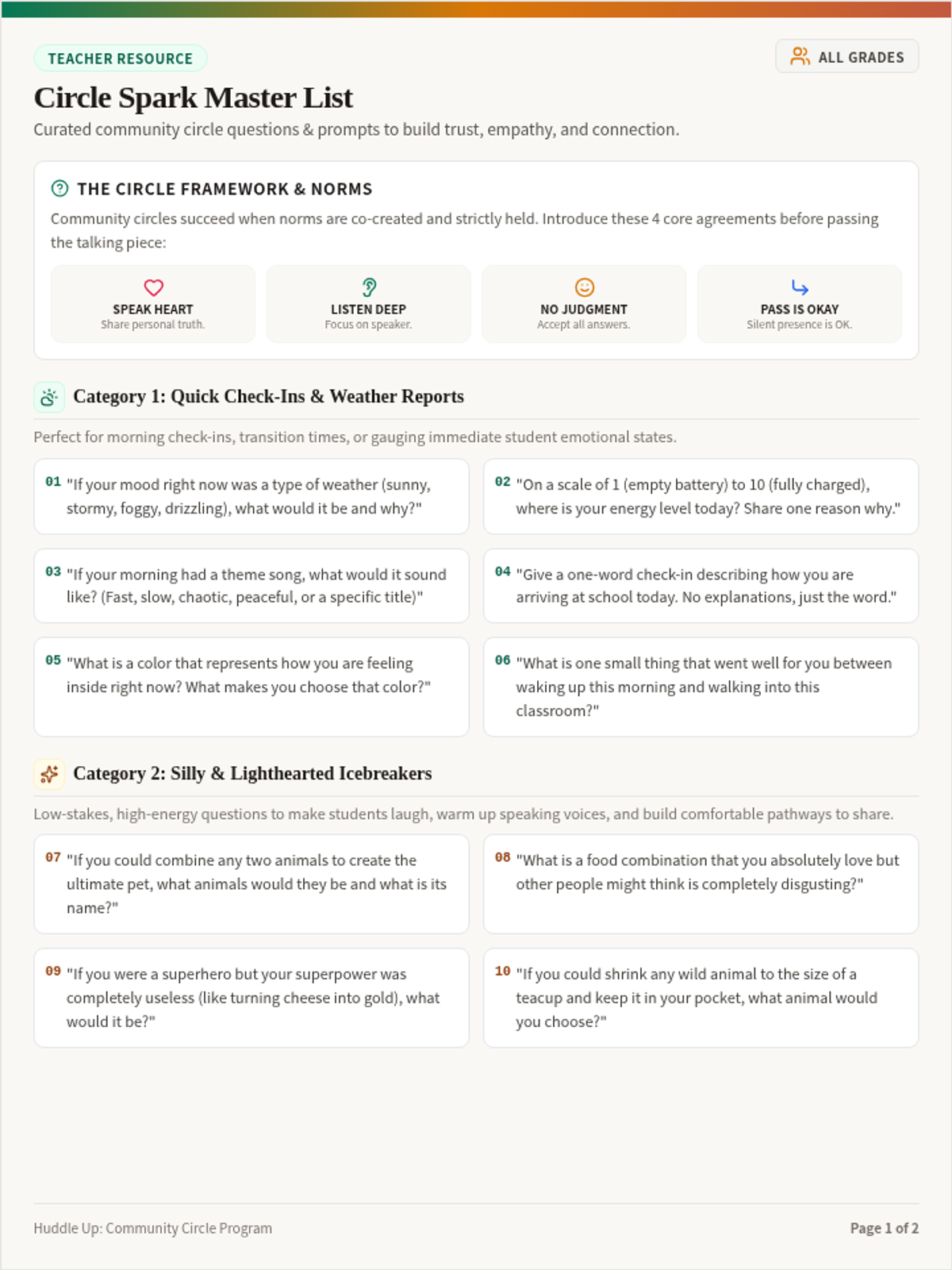
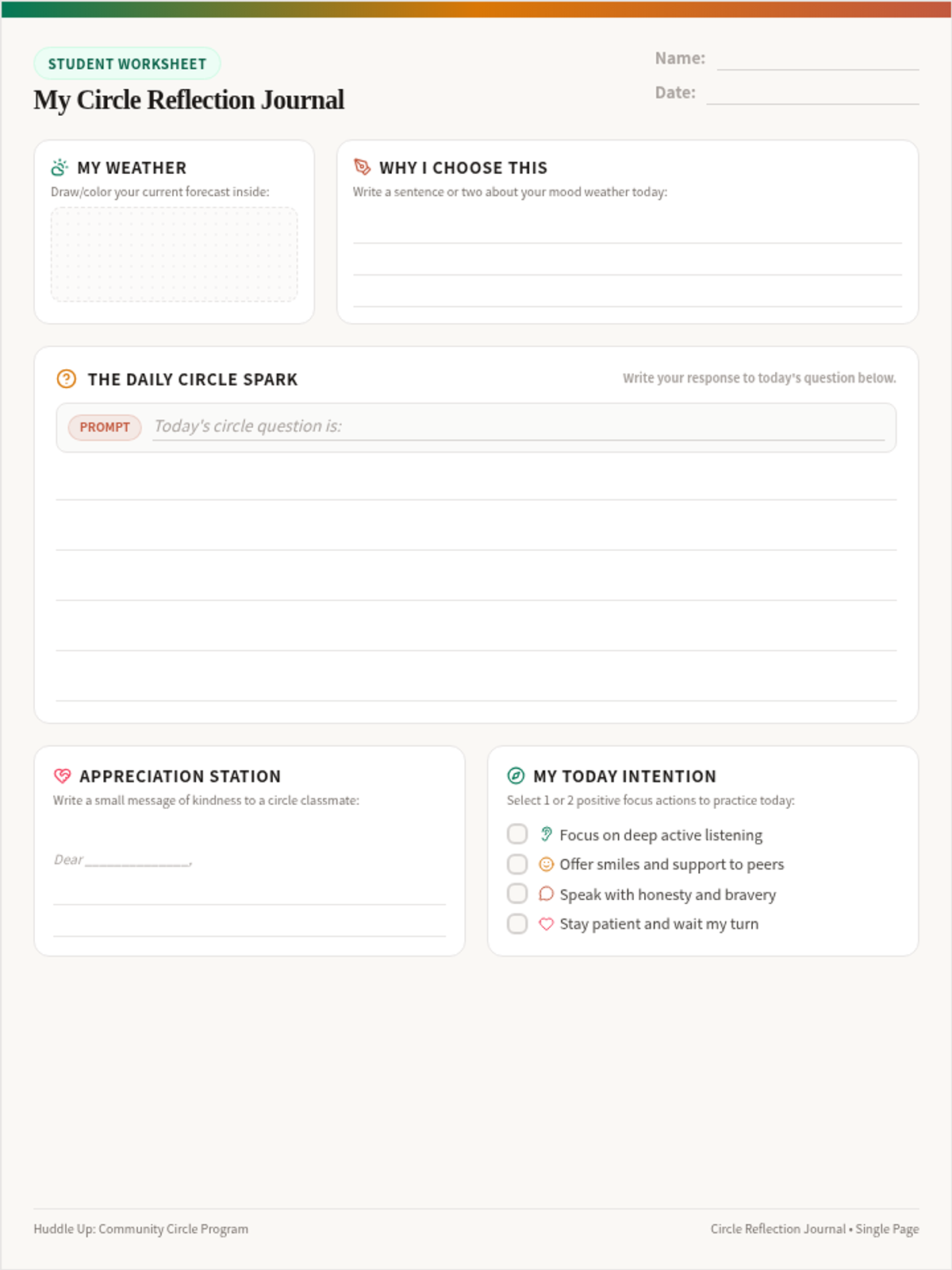
A complete toolkit to establish, run, and maintain engaging daily or weekly community circles that foster empathy, build classroom relationships, and check in on students' social-emotional well-being.
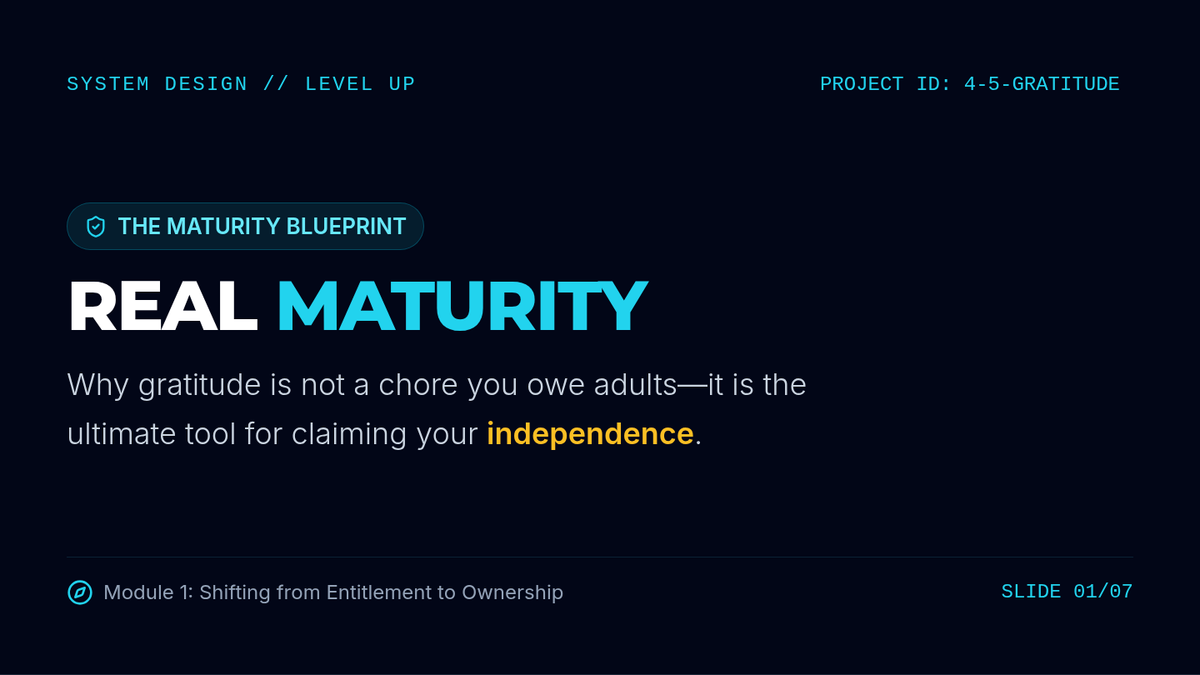
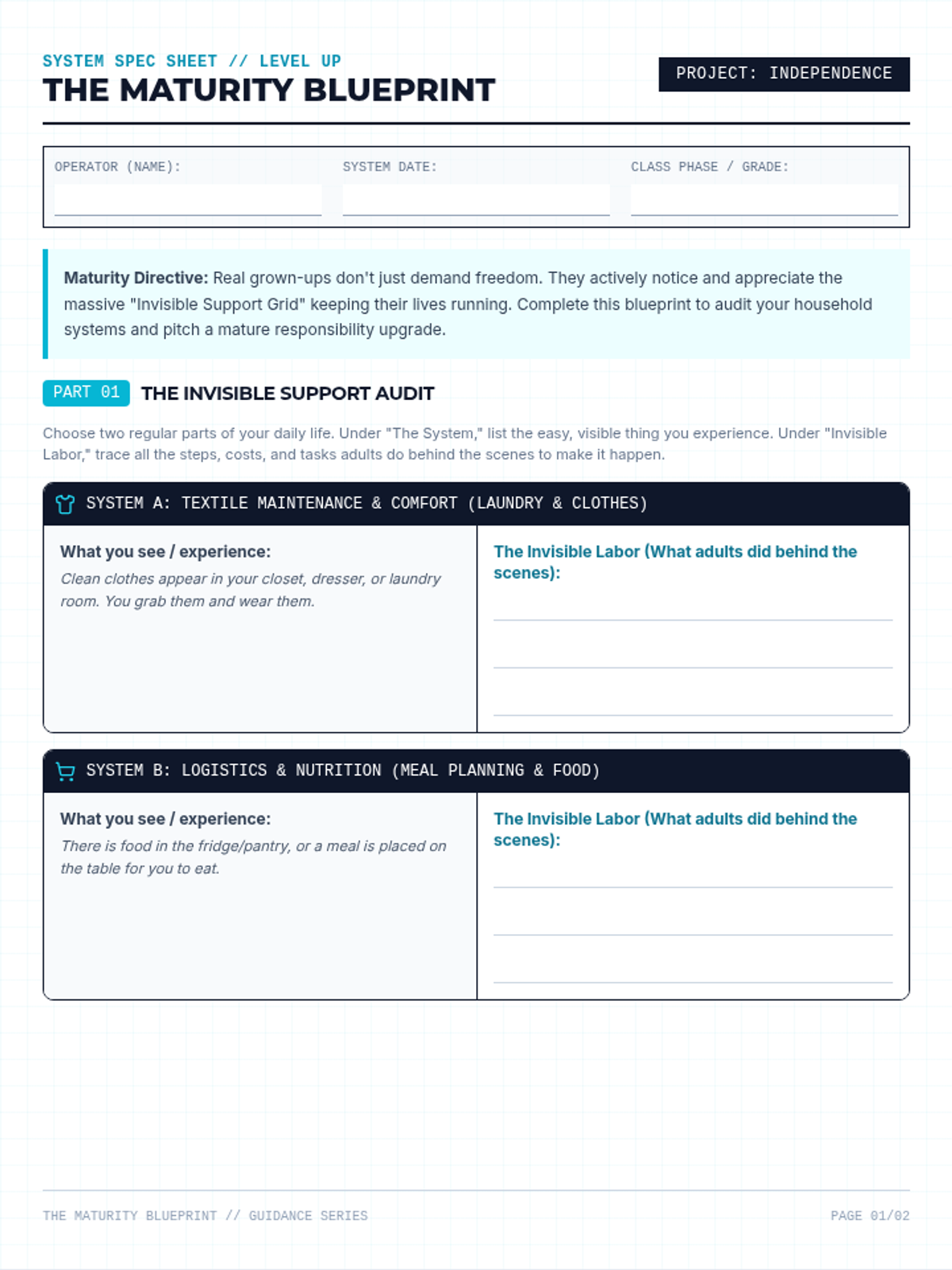
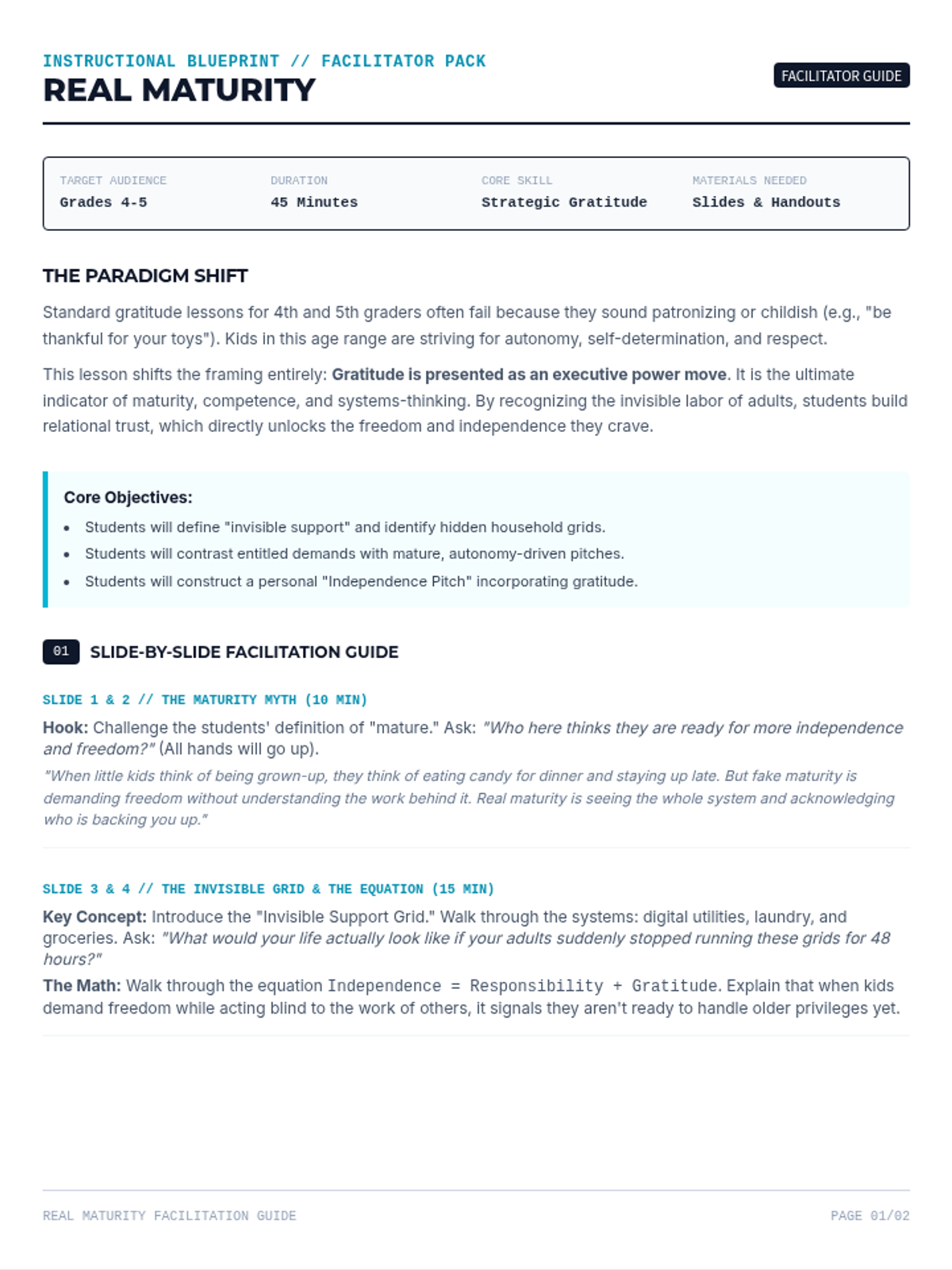
A guidance lesson for 4th and 5th graders that reframes gratitude not as a chore, but as the ultimate marker of independence and real maturity. Students explore the "invisible support network" that powers their lives and learn to take ownership of their appreciation.
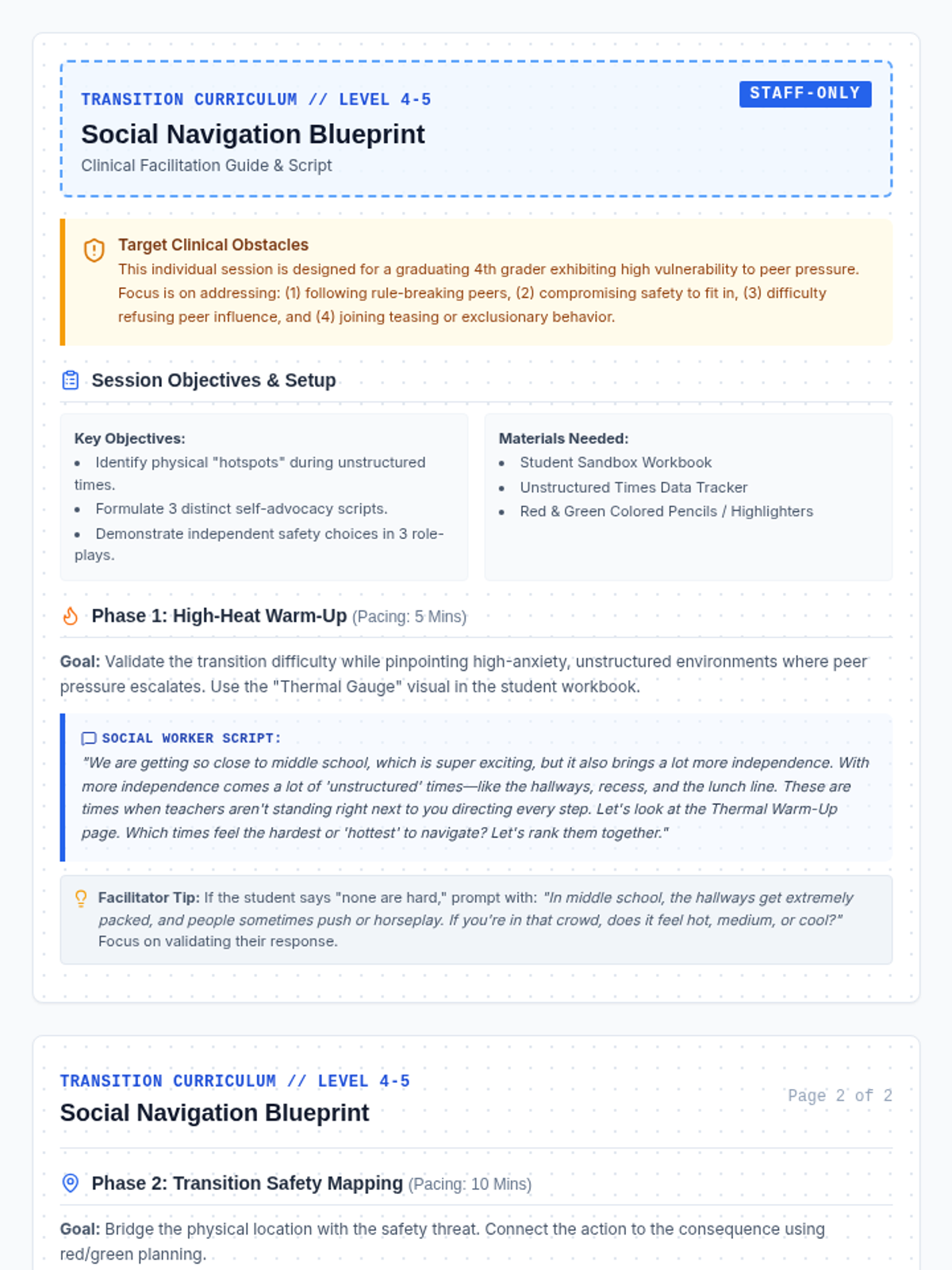
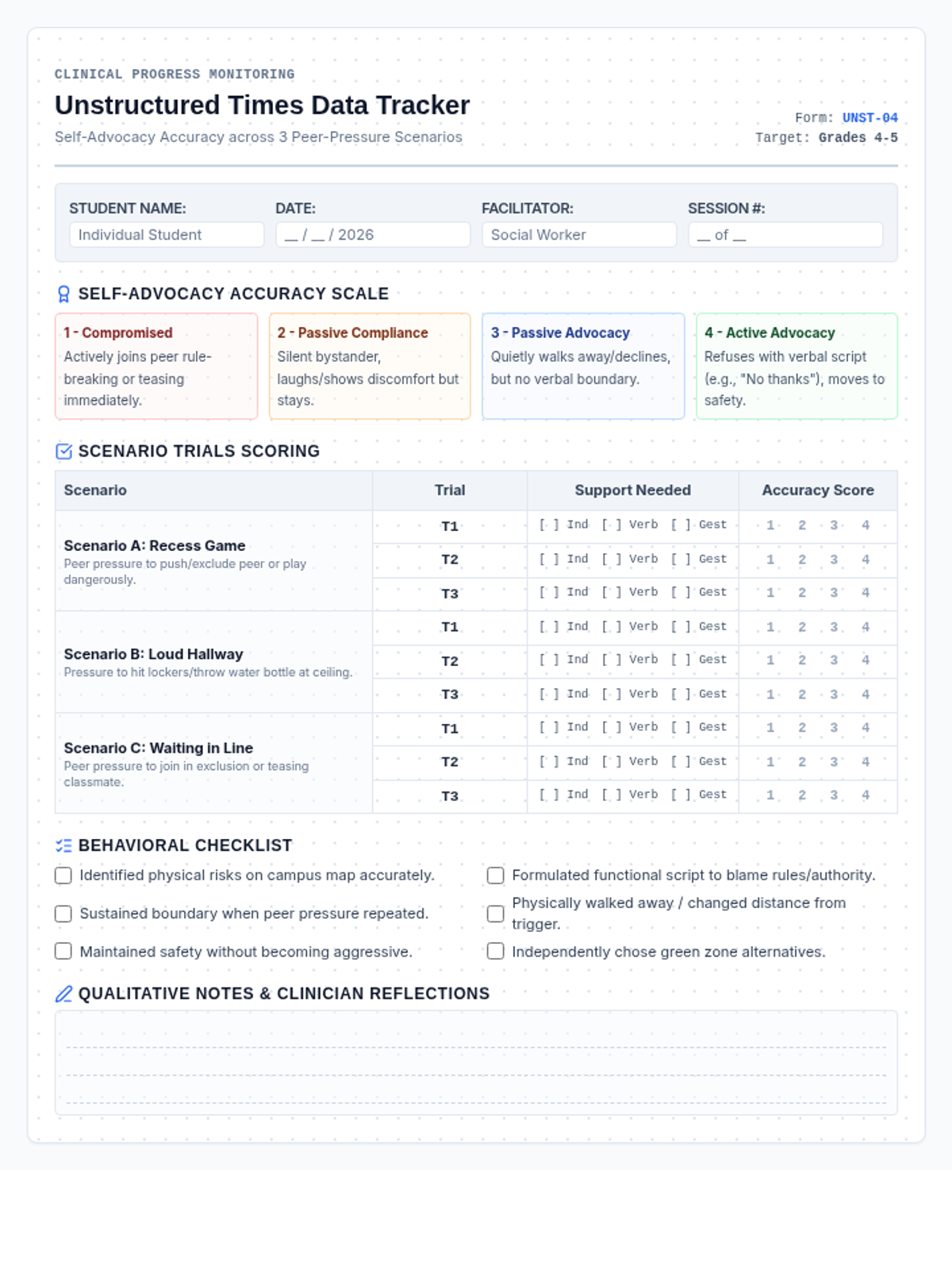
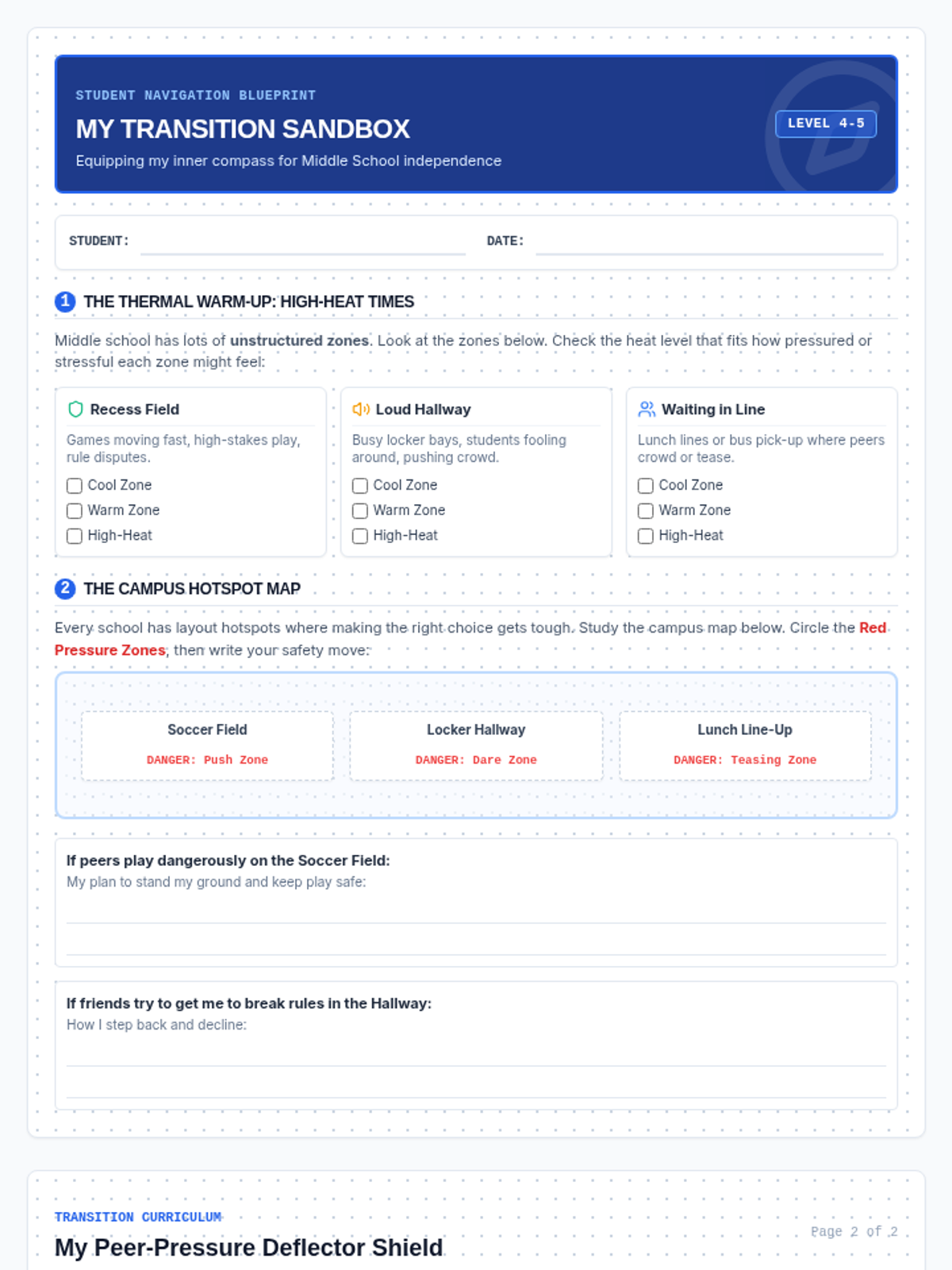
A targeted individual transition lesson designed for a graduating 4th-grade student. Focuses on equipping the student with self-advocacy tools and decision-making frameworks to navigate high-risk, unstructured school zones (recess, hallways, lines) while under peer pressure.
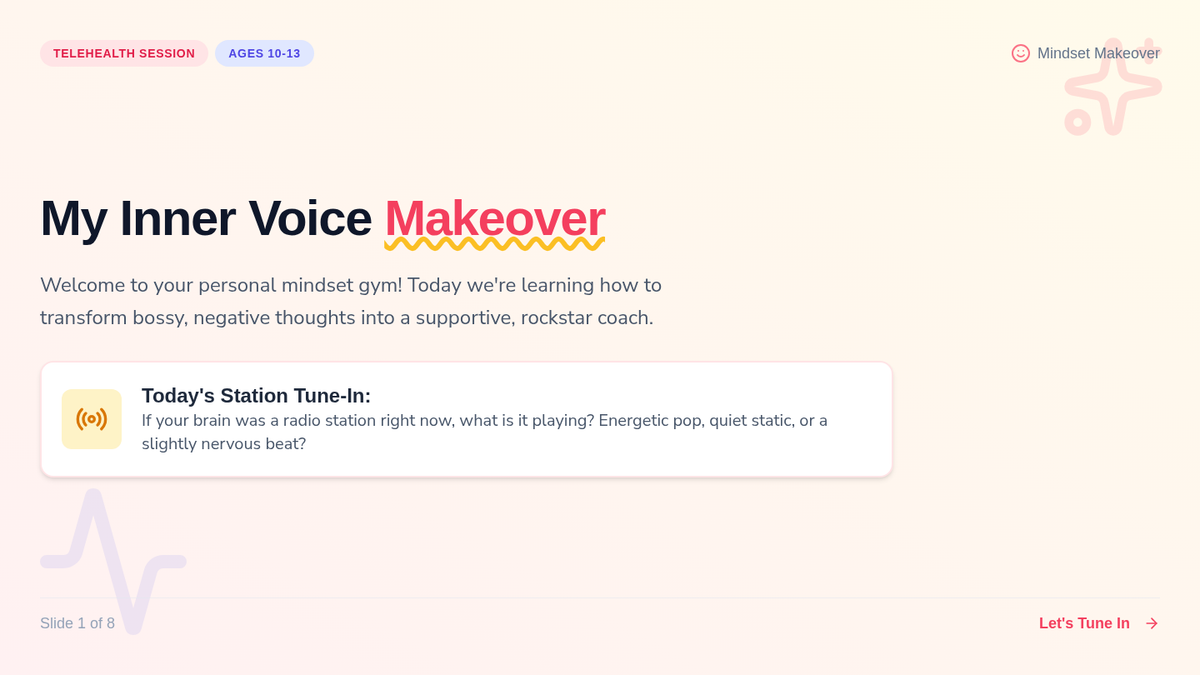
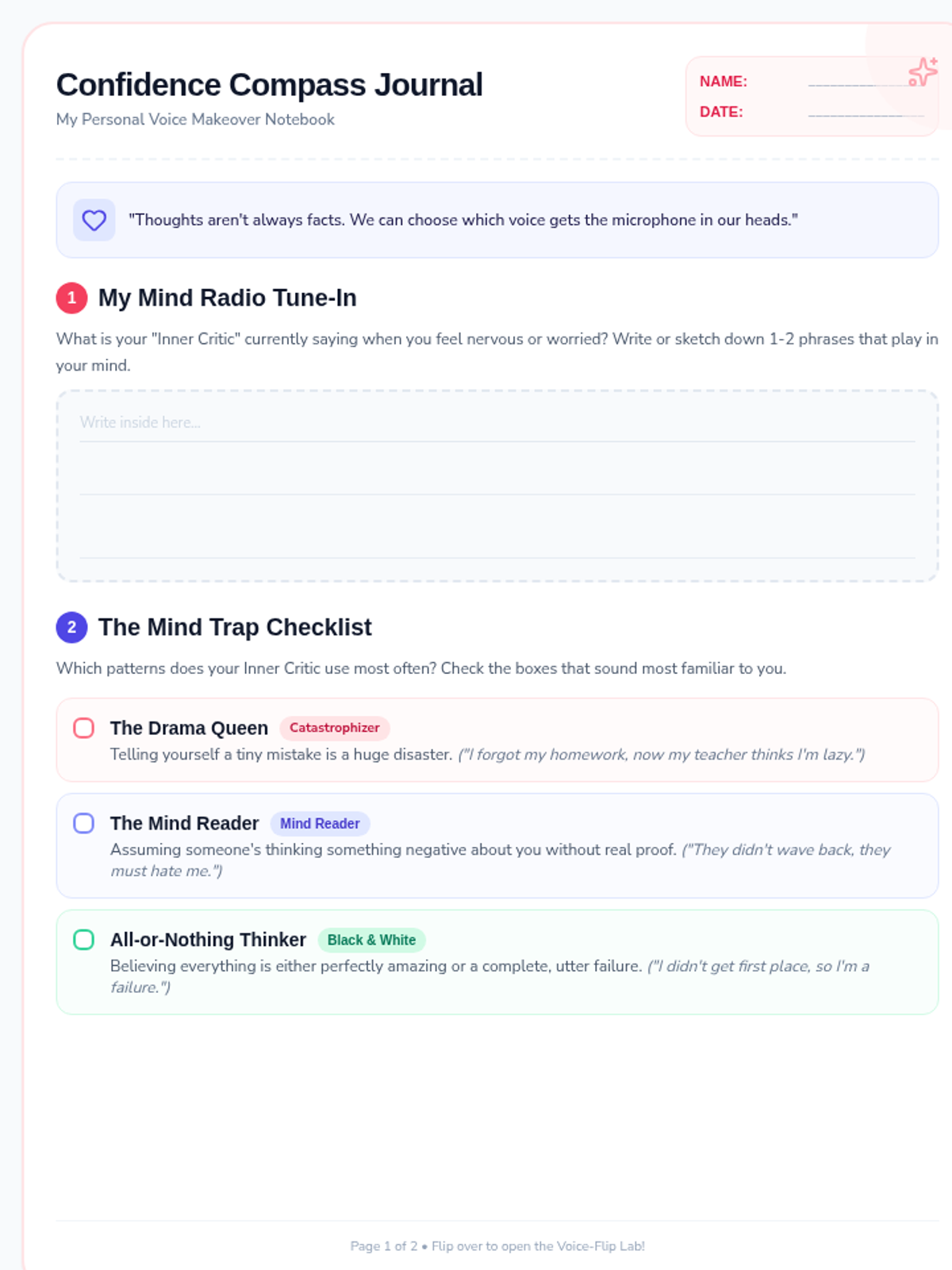
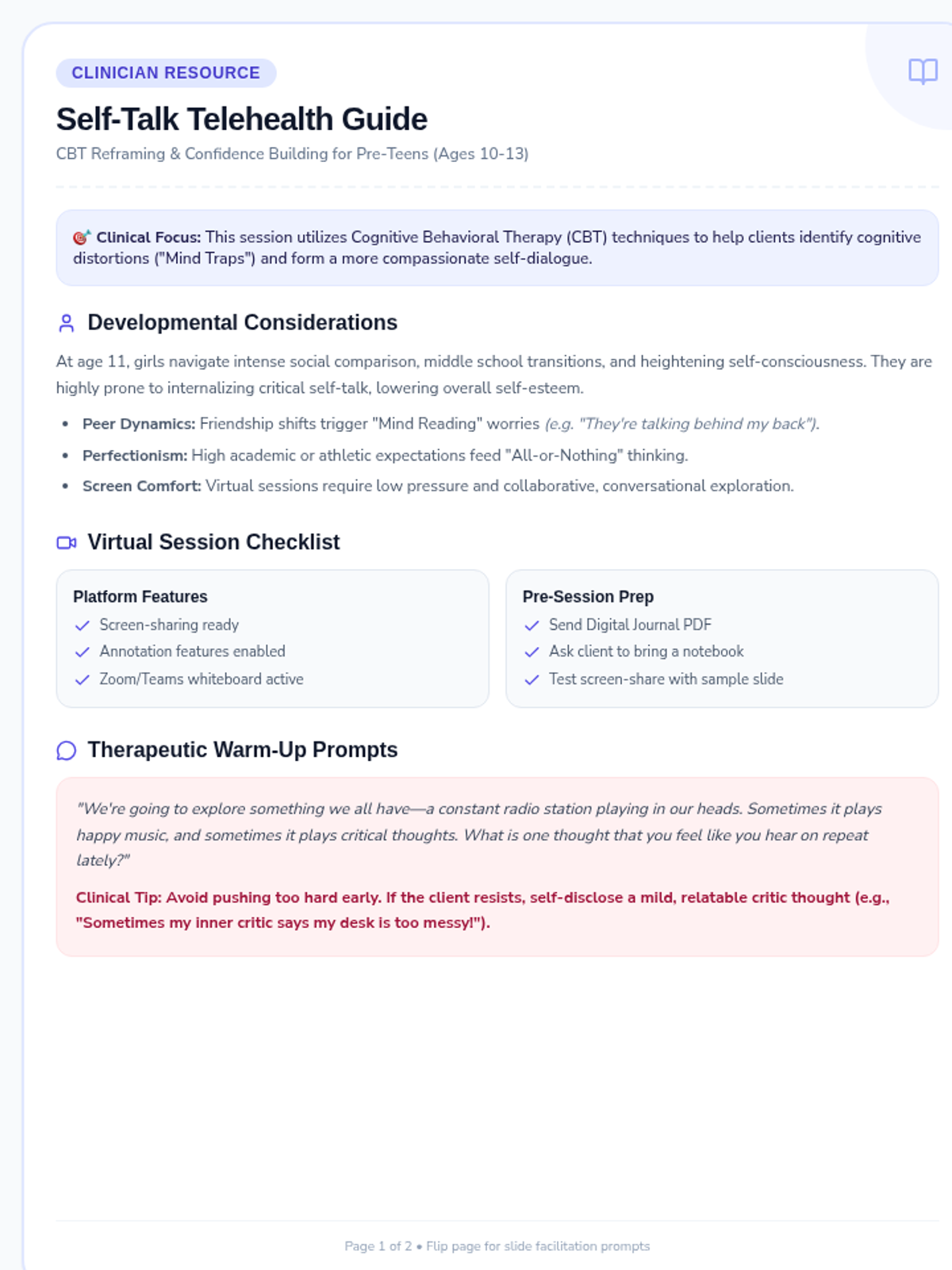
A teletherapy-optimized lesson designed for pre-teens (specifically 11-year-old girls) to recognize, challenge, and reframe negative self-talk into realistic, empowering self-belief. This CBT-based session uses engaging, developmental metaphors suitable for virtual screen-sharing.
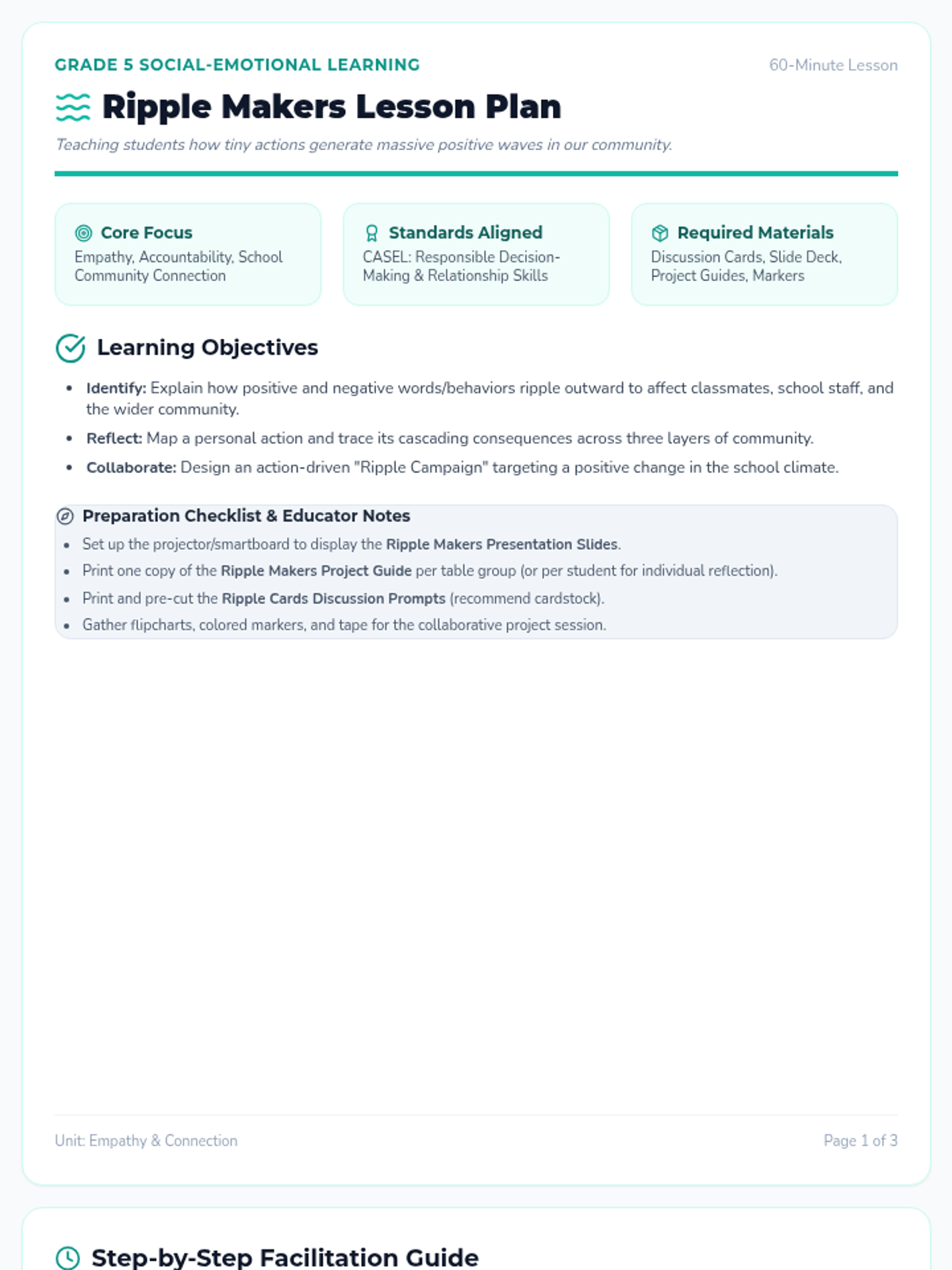
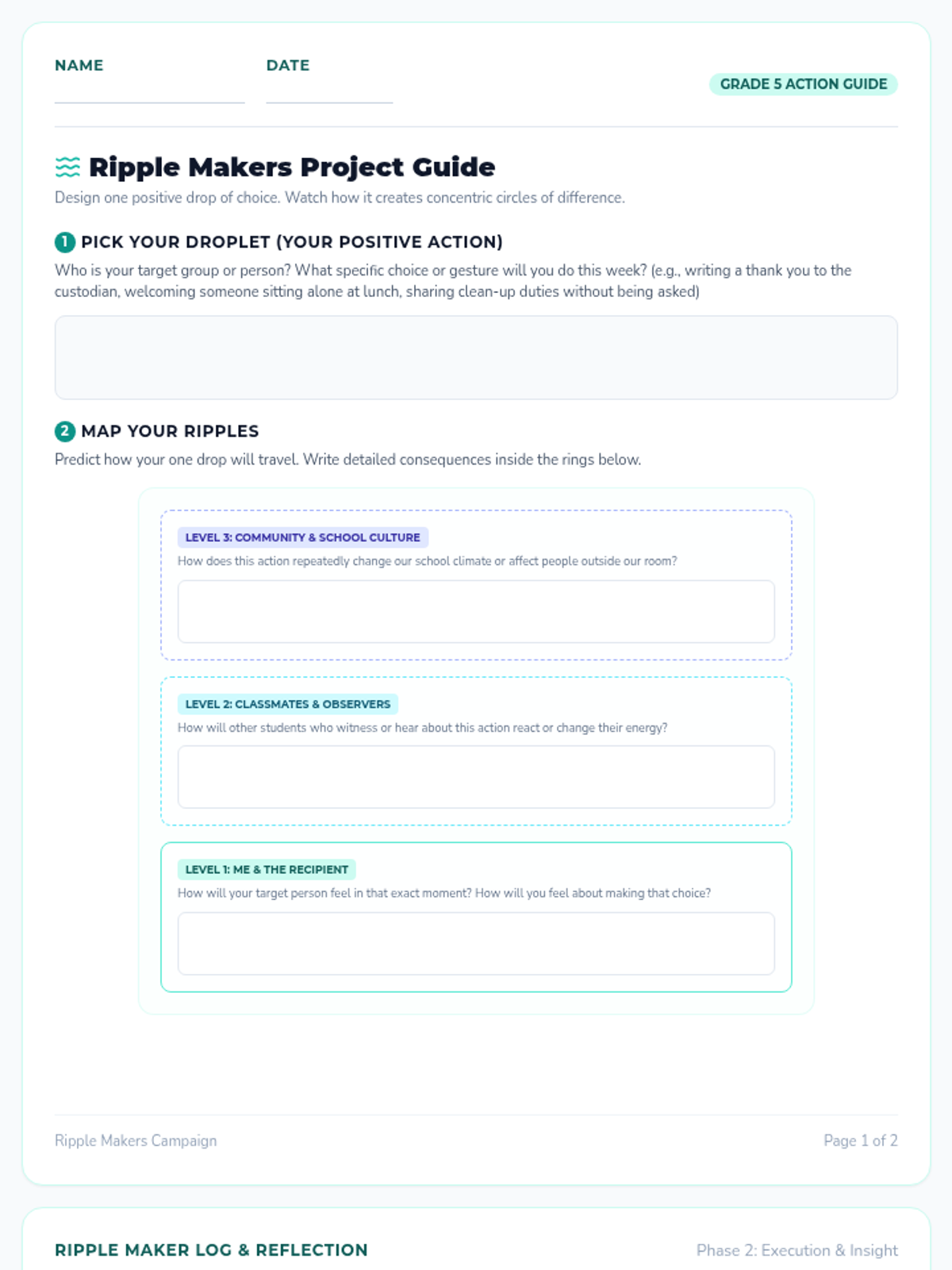
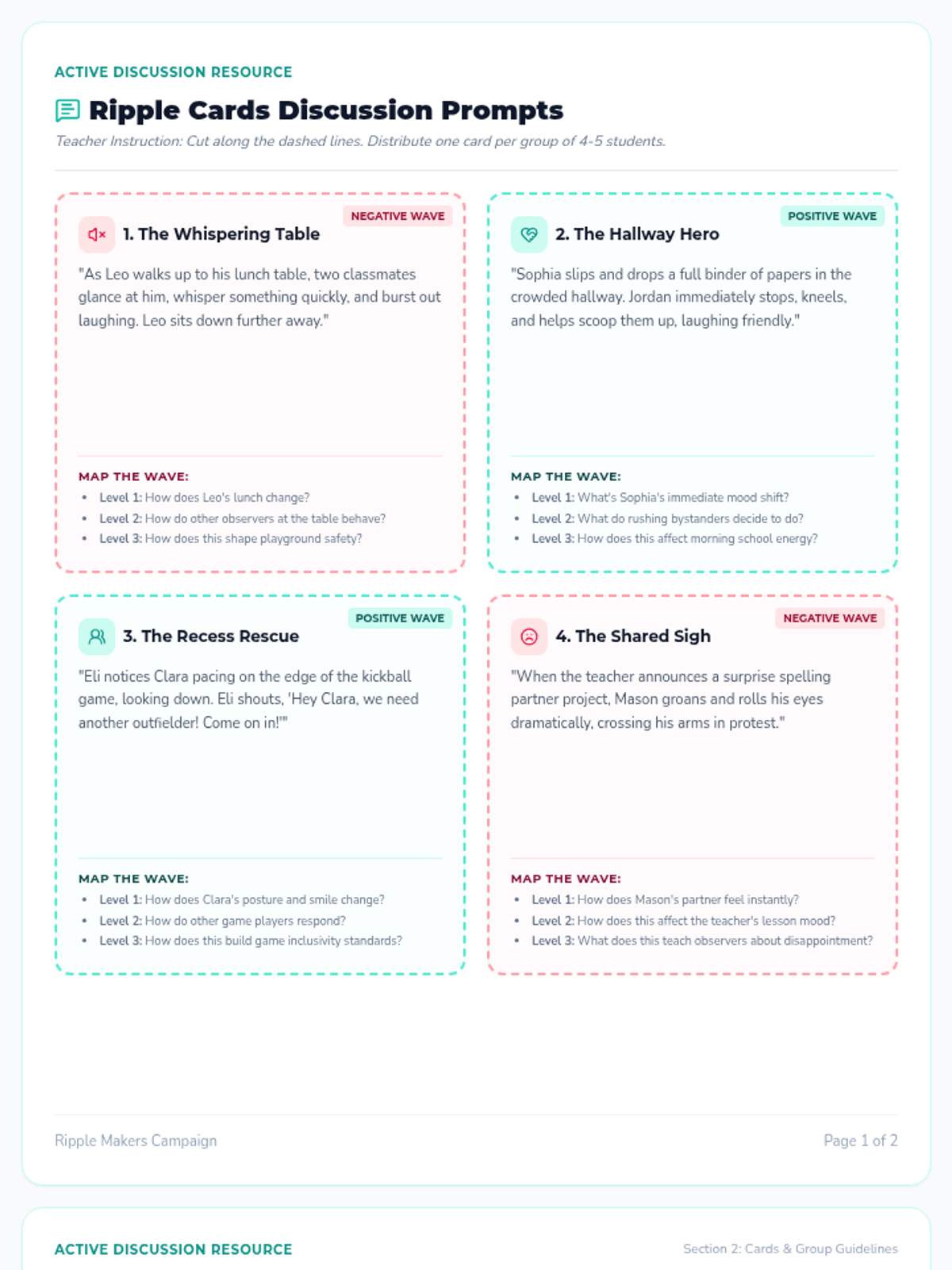
An empathetic Grade 5 lesson focusing on how individual actions ripple out to affect classmates, school, and the wider world through group discussions, real-life scenarios, and a collaborative action project.
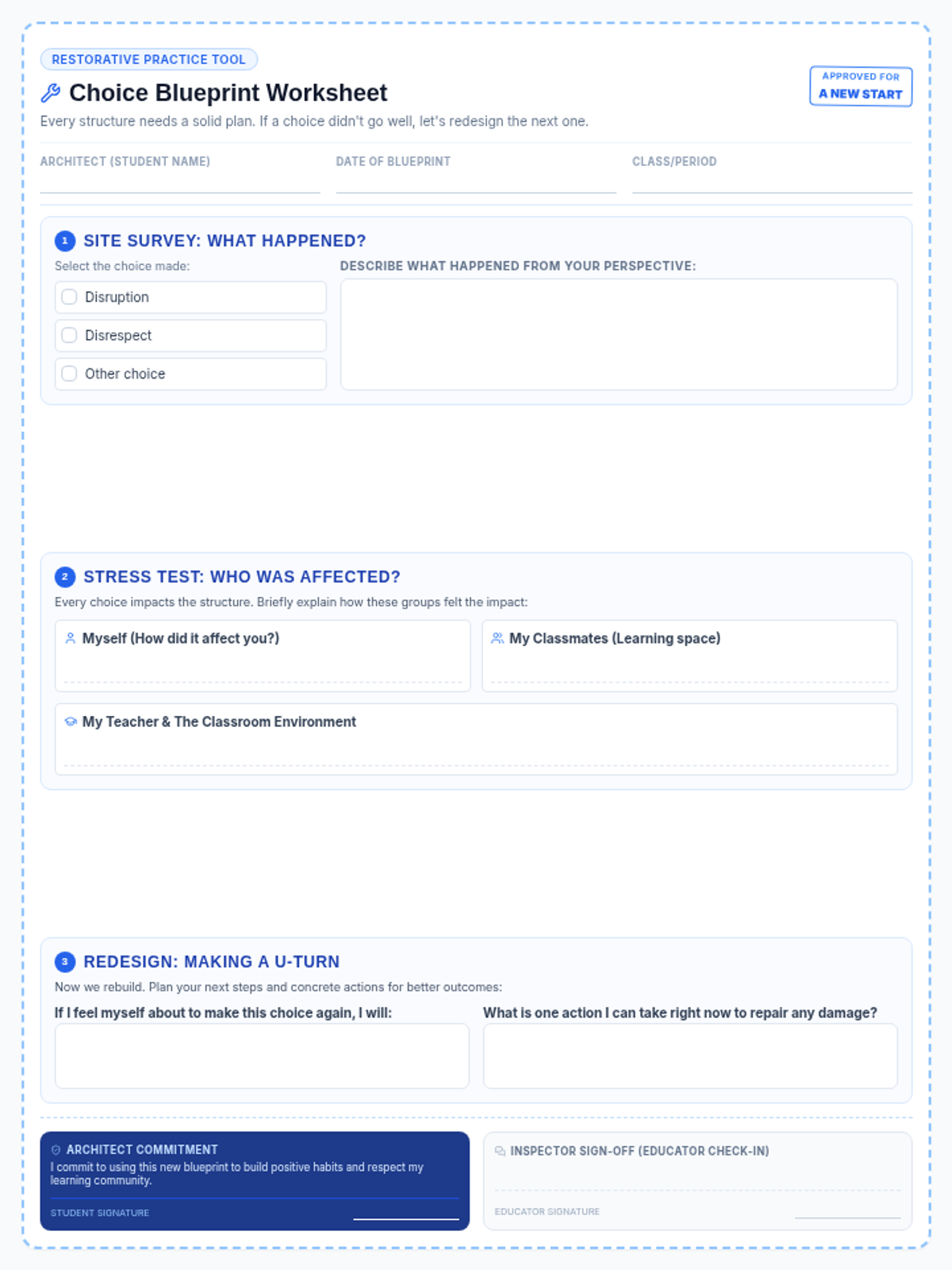
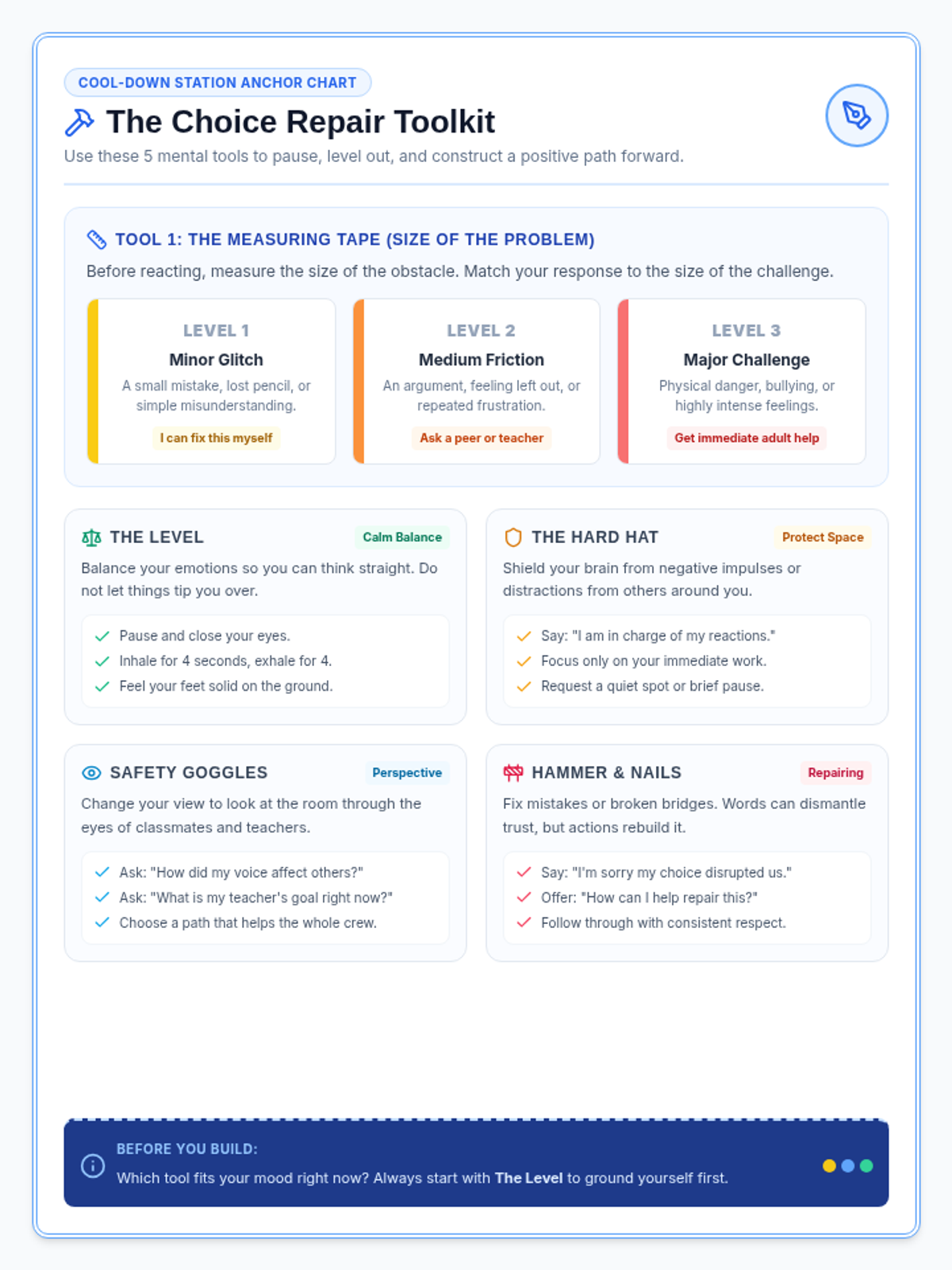
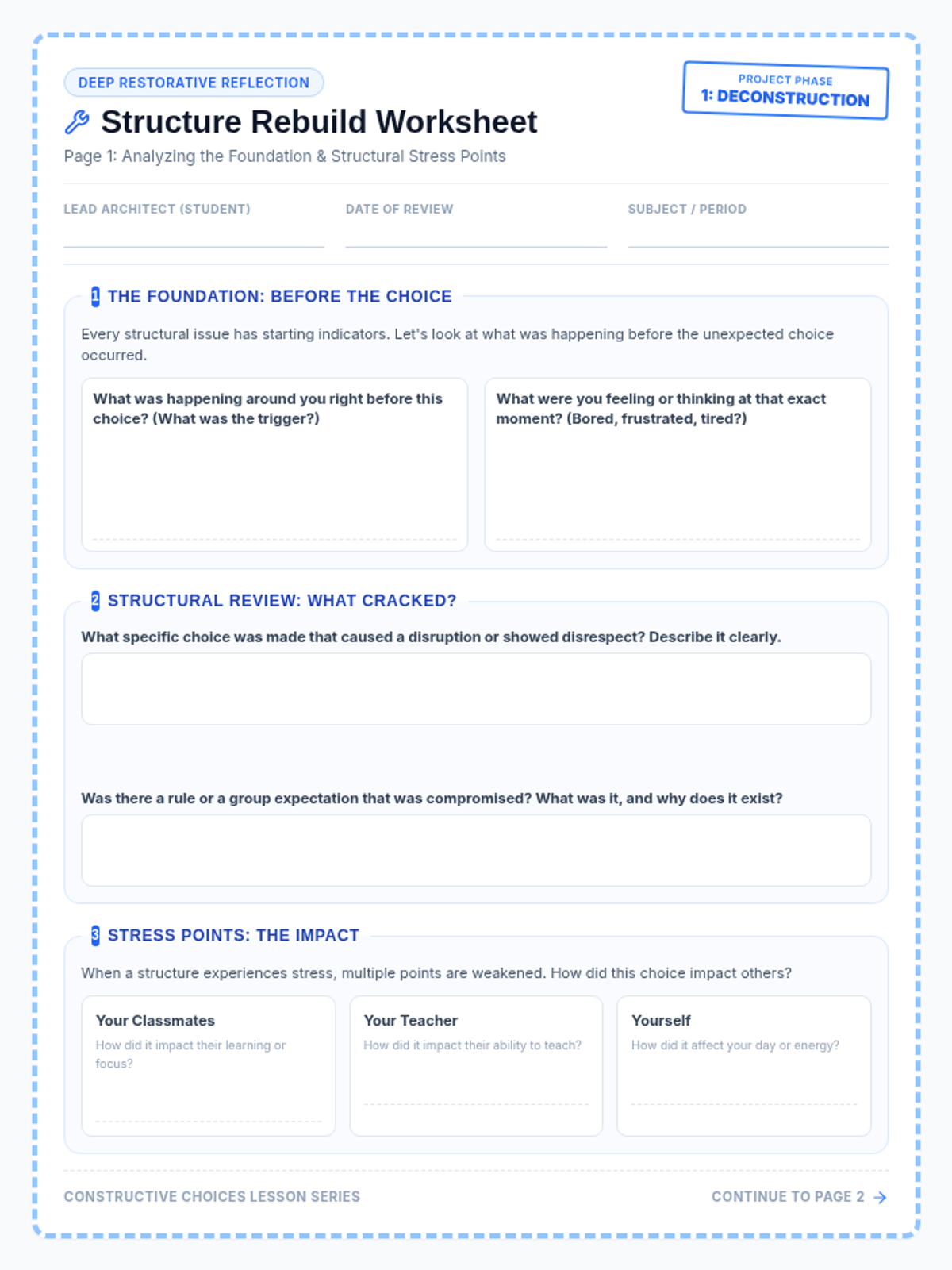
A restorative instruction set focusing on helping students pause, evaluate behavior impacts, and build a positive plan for respectful classroom engagement.
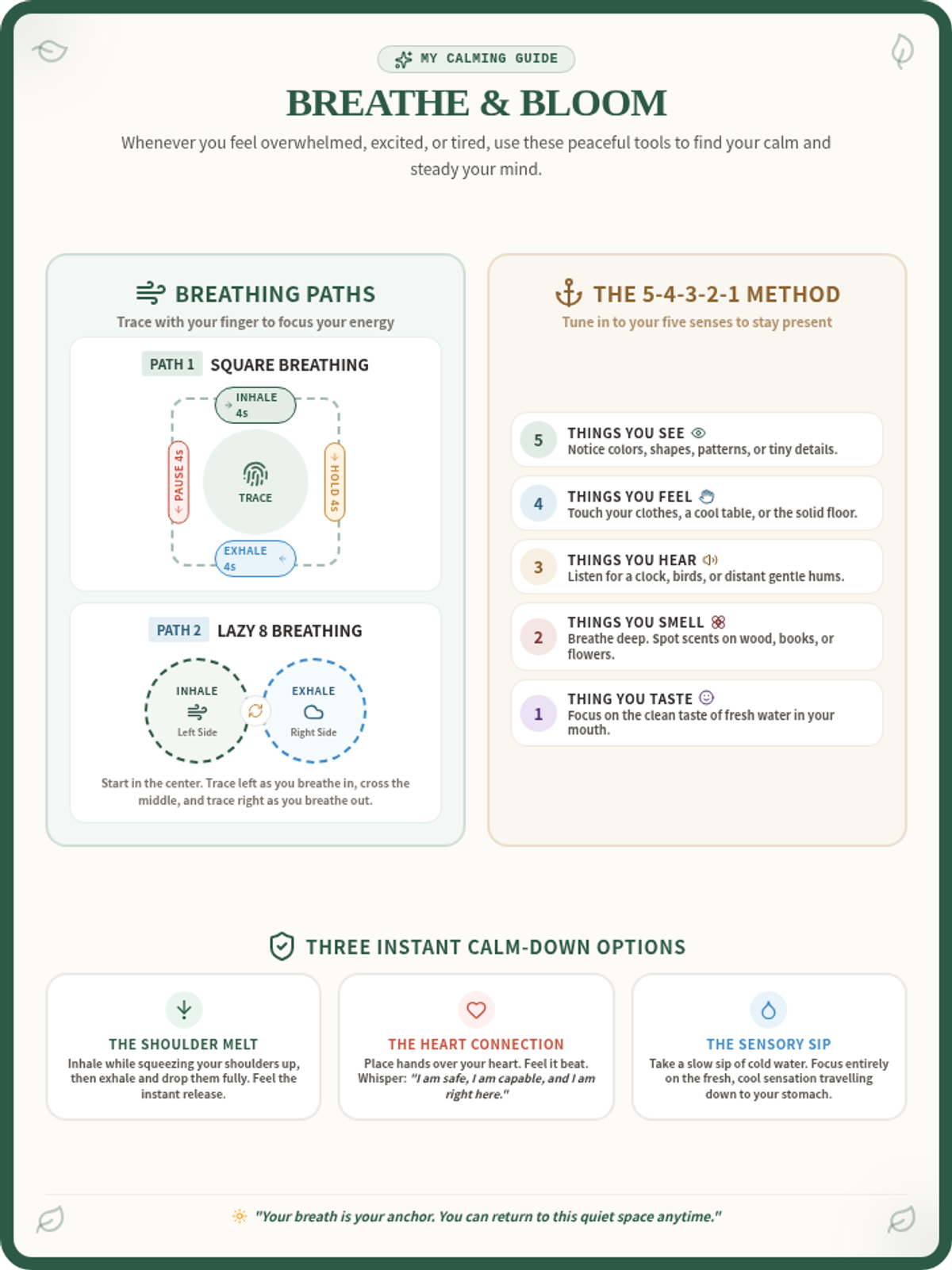
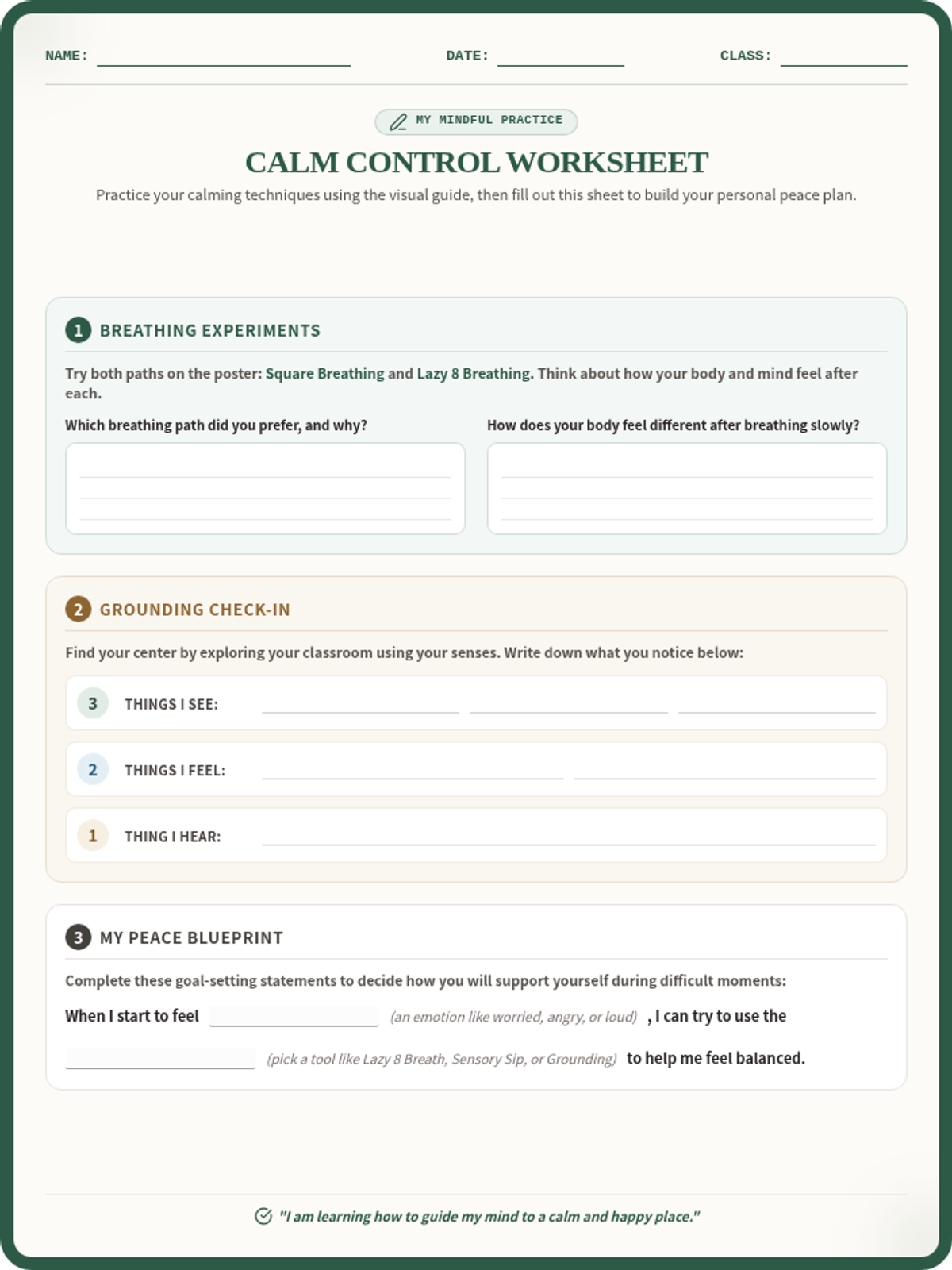
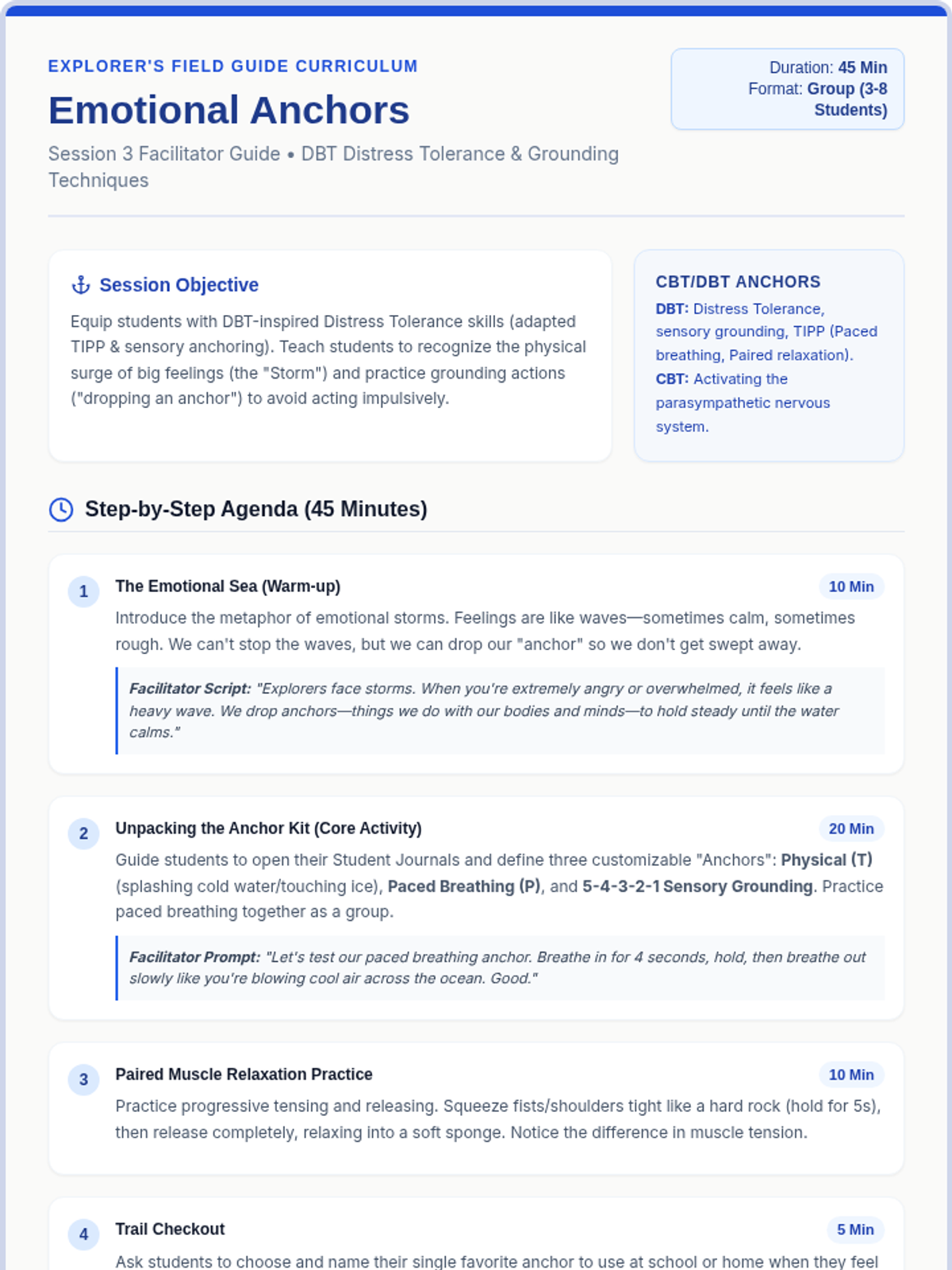
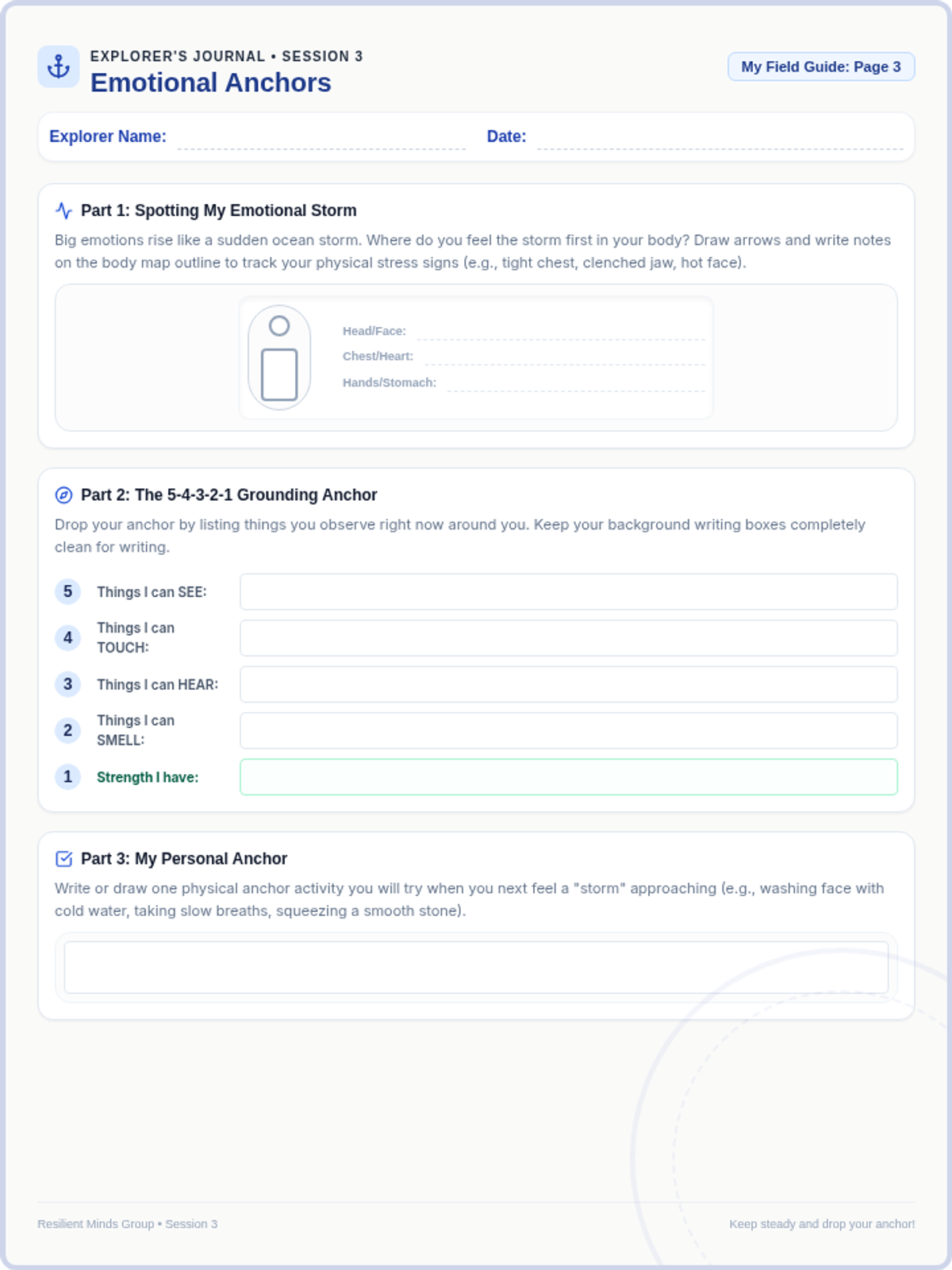
A supportive social-emotional lesson designed to help students discover and practice key deep breathing, sensory grounding, and mindfulness techniques for daily emotional regulation.
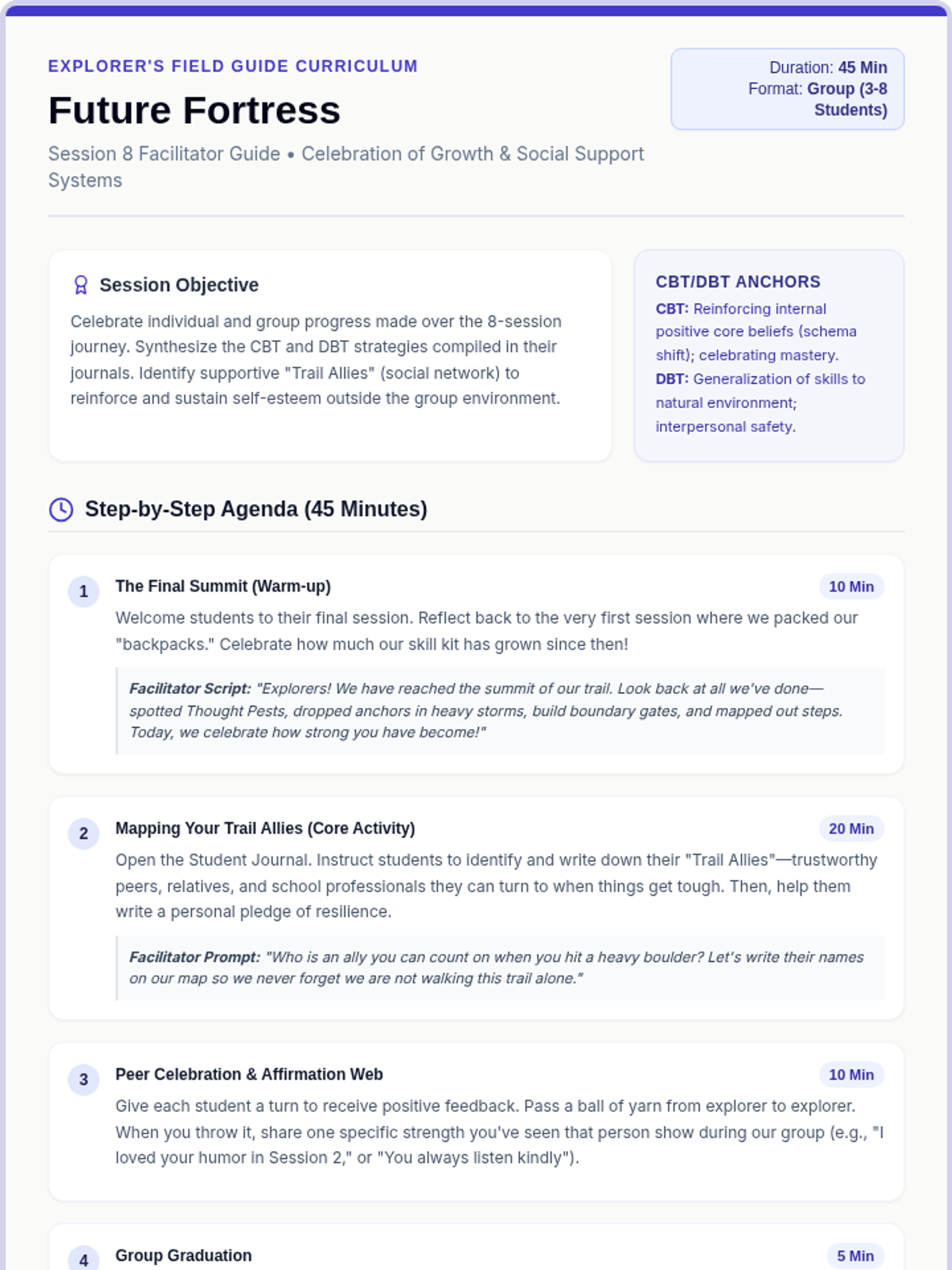
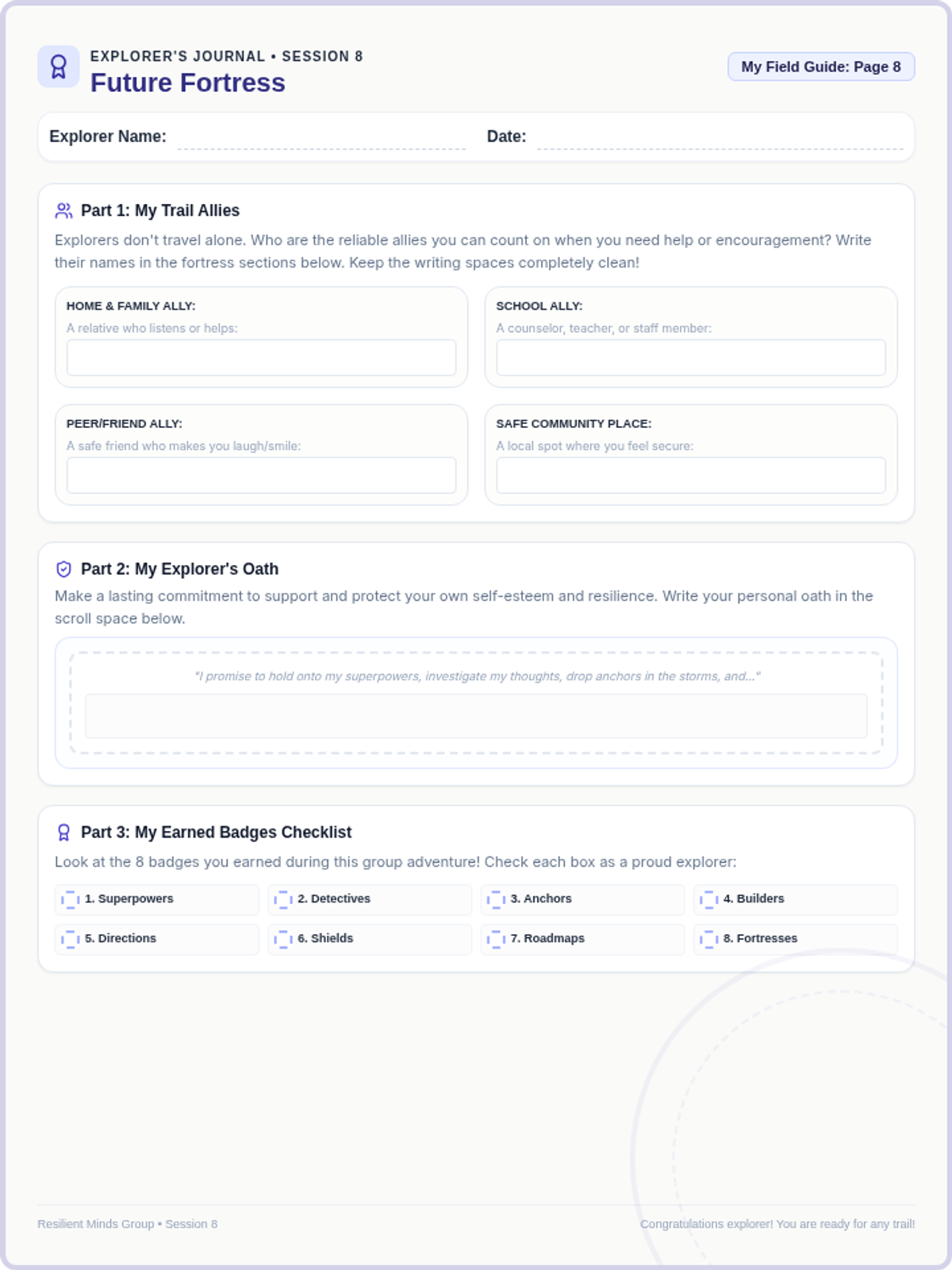
Students review their 8-session Explorer's Field Guide, celebrate growth, identify supportive 'trail allies' (social support), and pledge a personal self-esteem commitment.
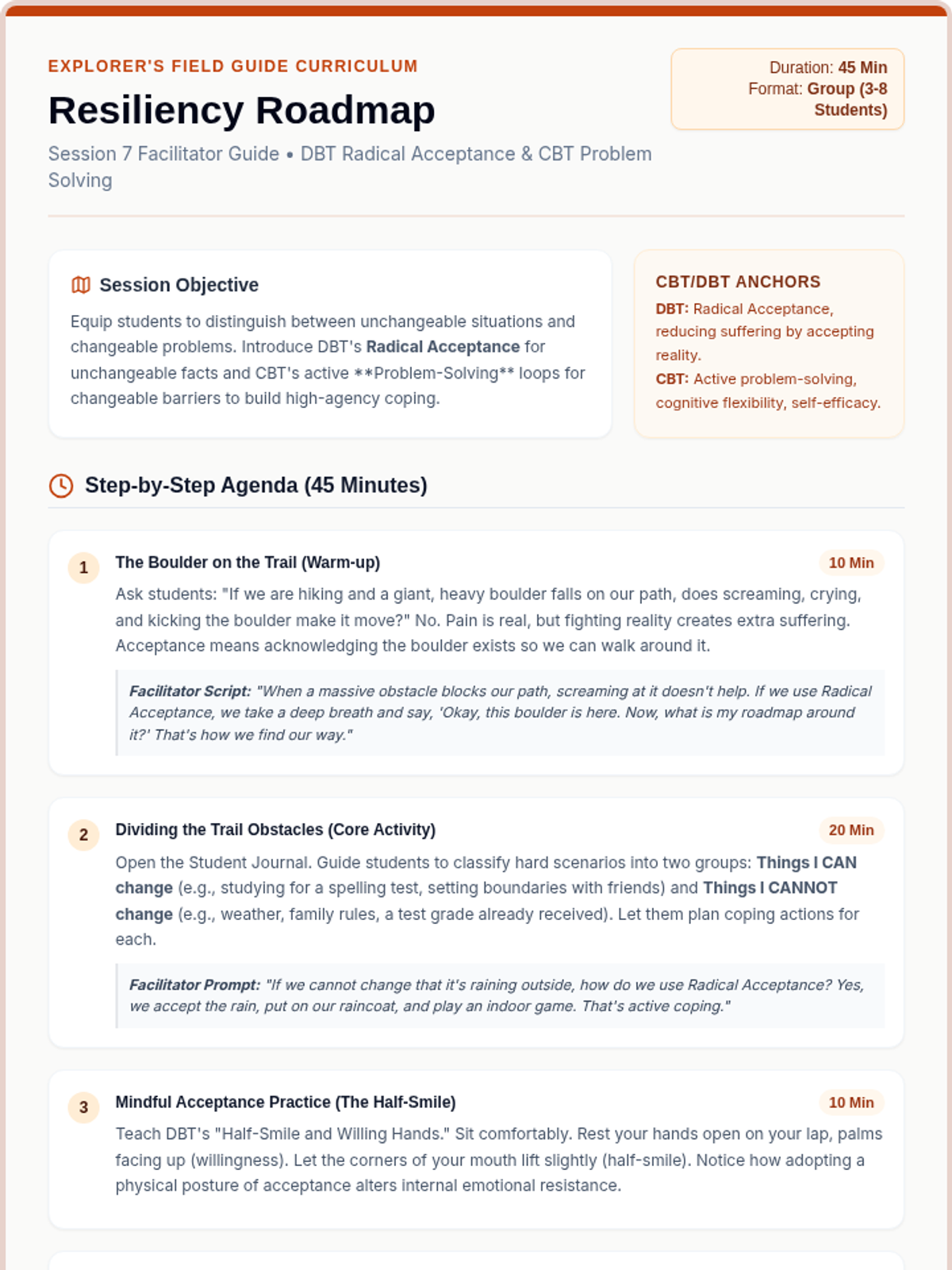
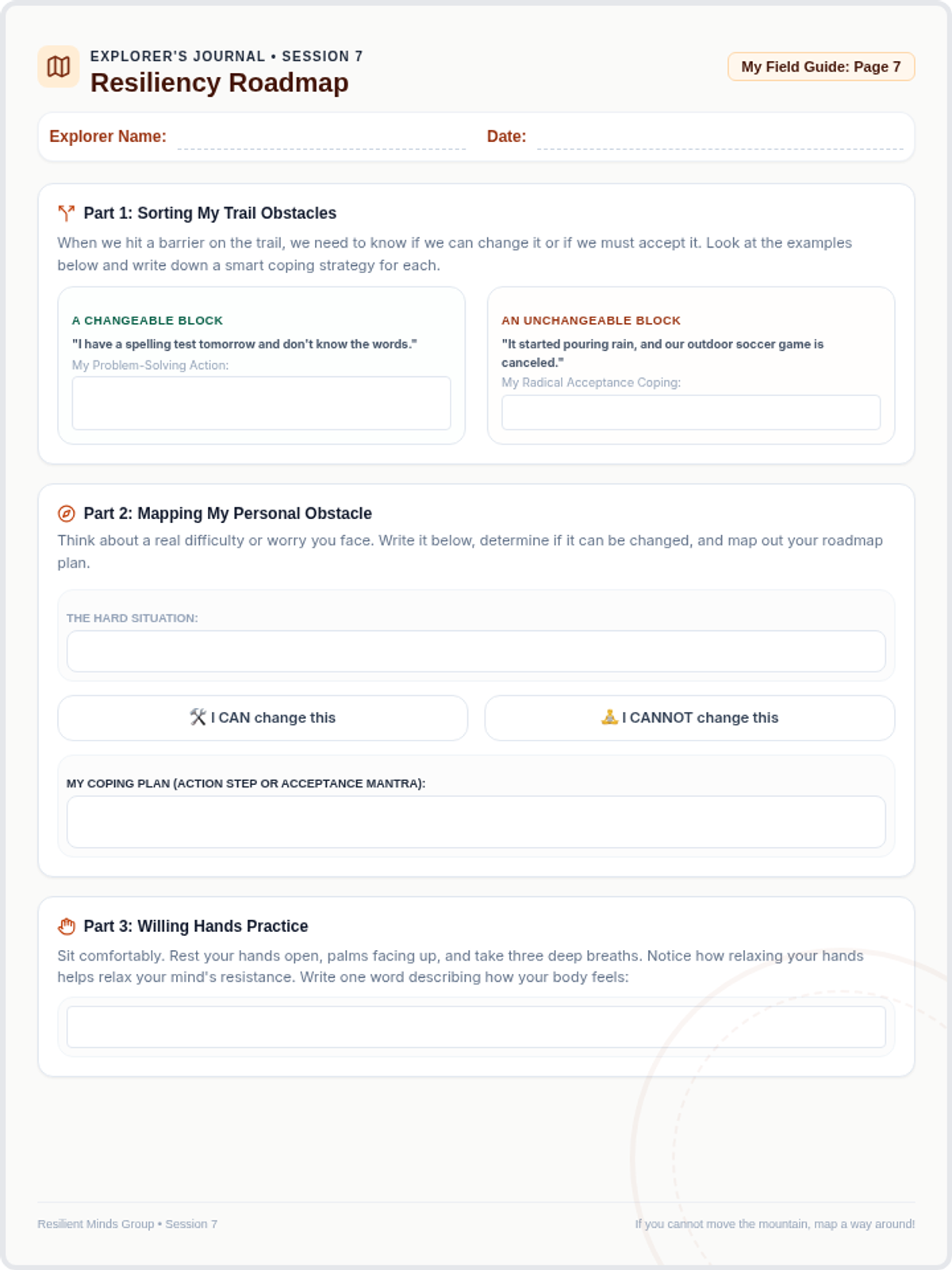
Students construct personalized coping strategies, blending CBT active problem-solving steps with DBT Radical Acceptance to navigate unchangeable difficulties.
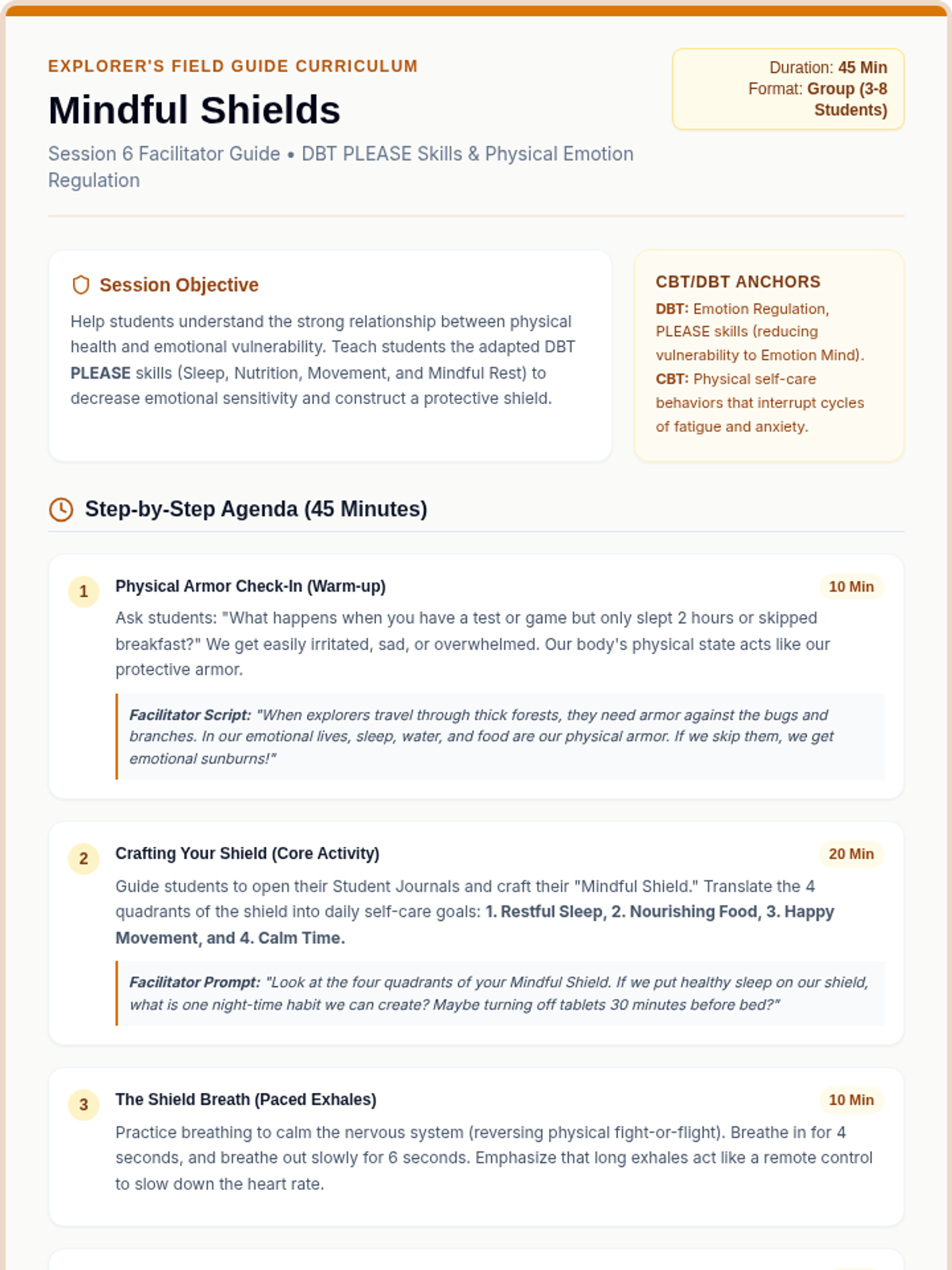
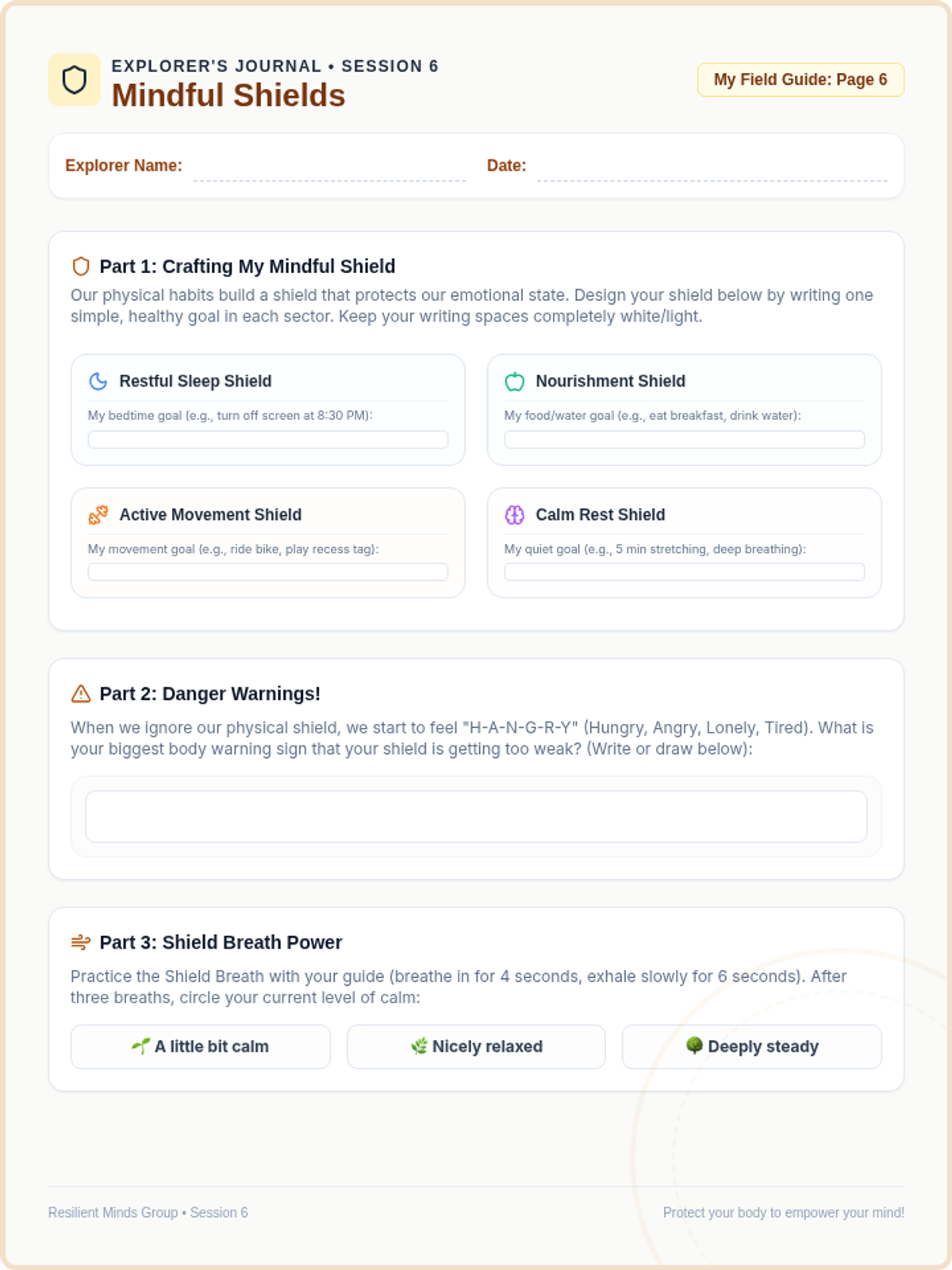
Students examine the physical body-mind connection, identifying stress triggers and learning DBT physical self-care (PLEASE) and emotional regulation strategies.
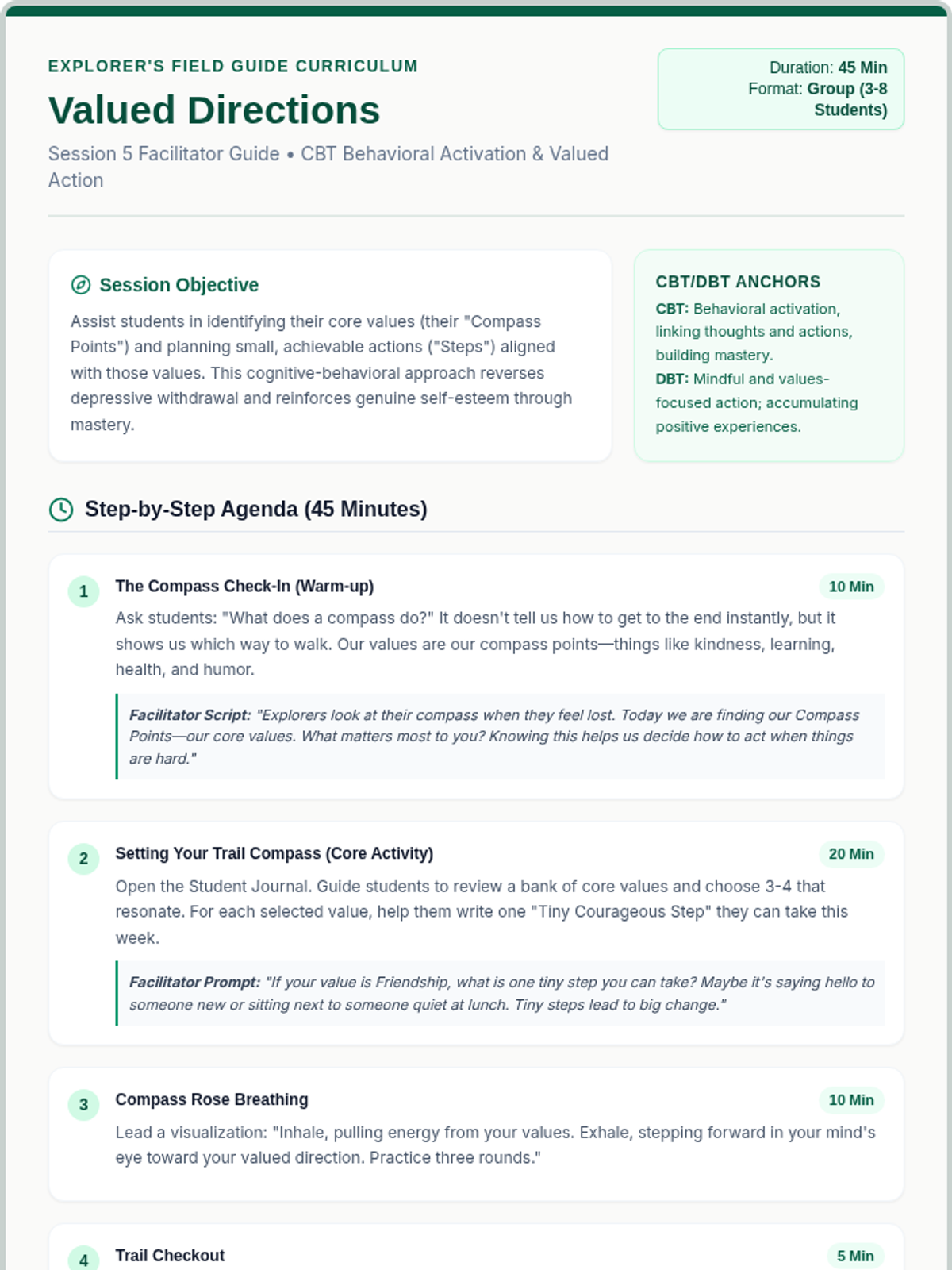
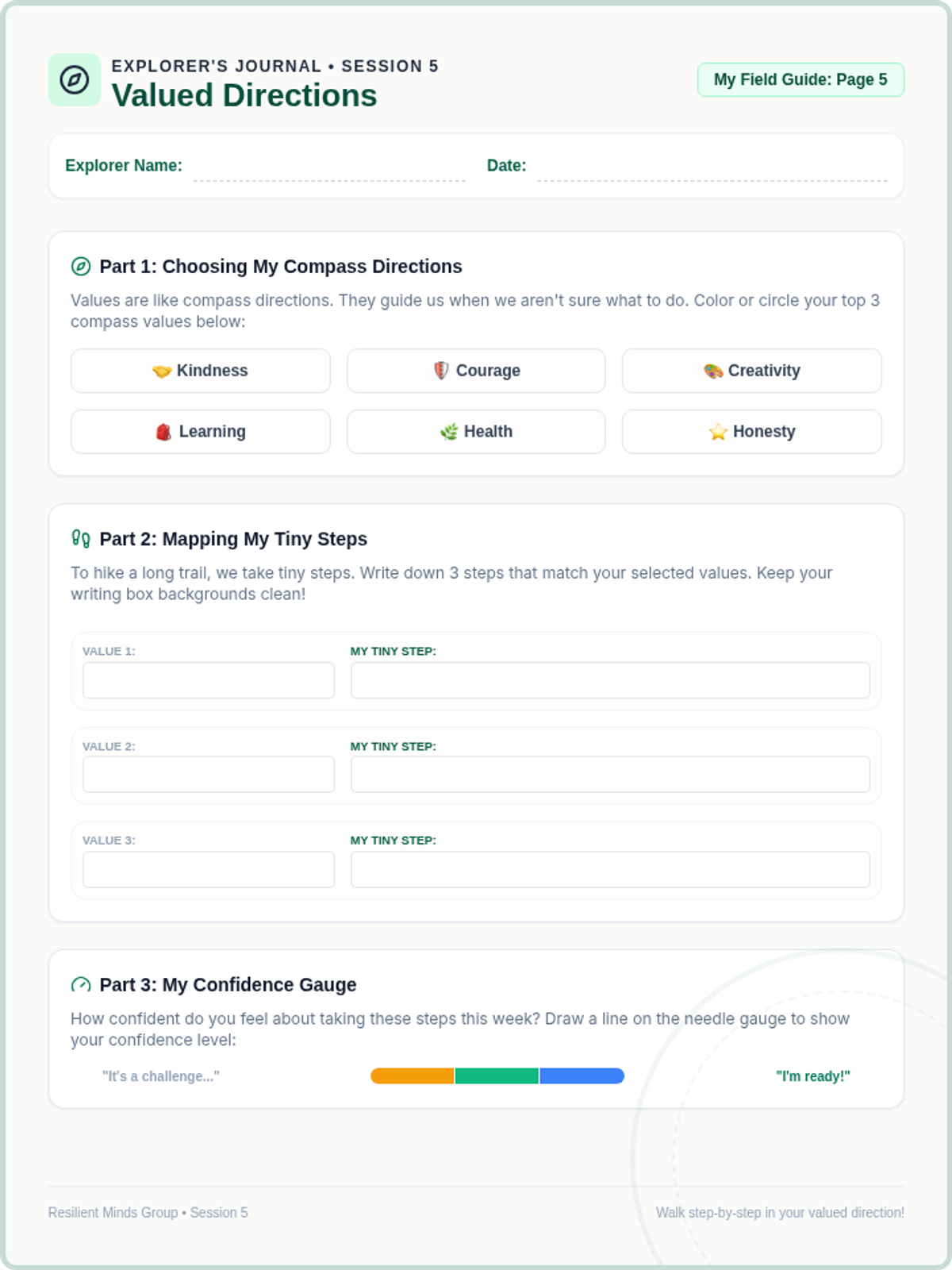
Students connect CBT behavioral activation with DBT 'mindful action' by exploring core values and mapping out tiny, courageous actions that align with their authentic strengths.
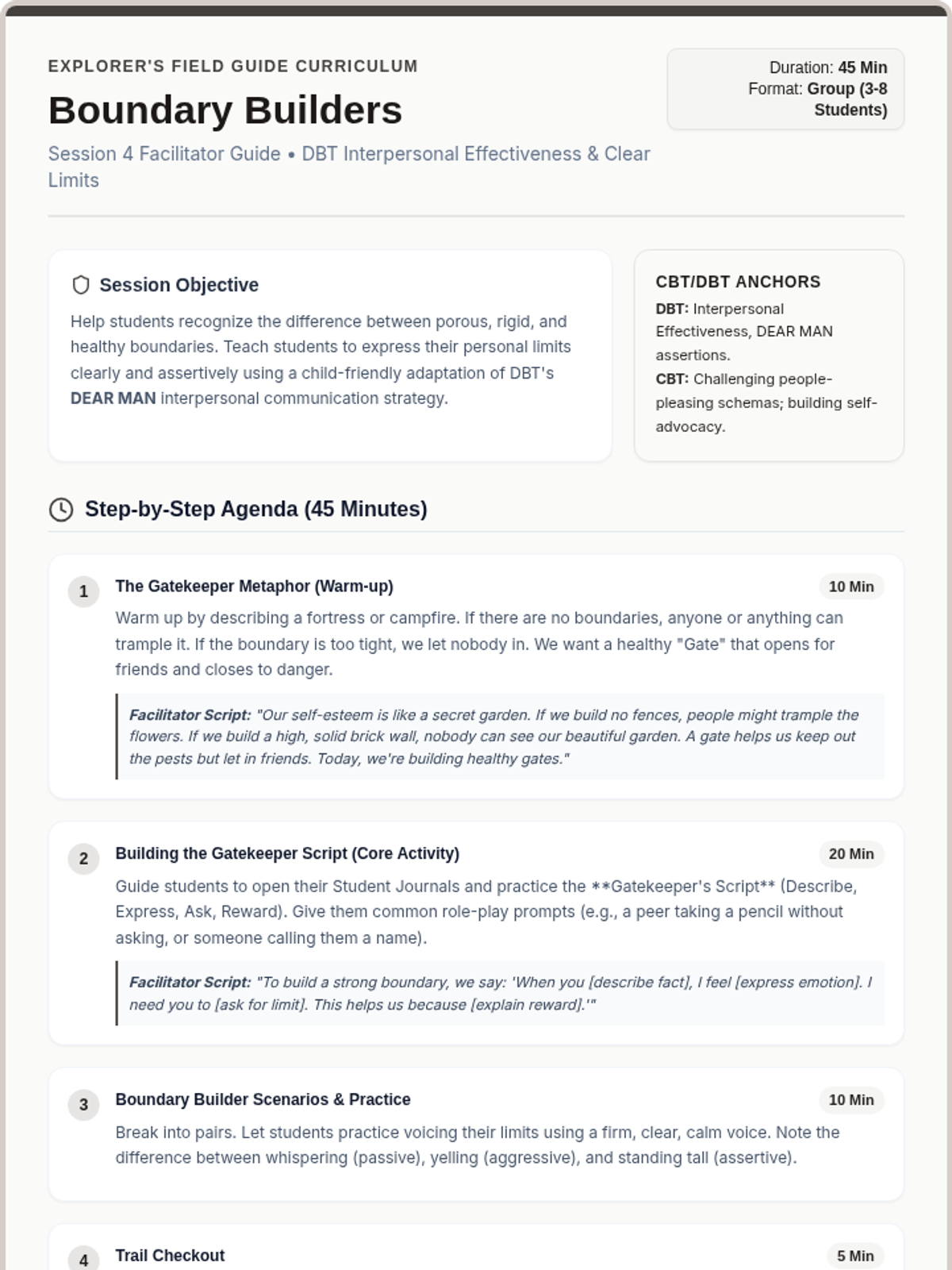
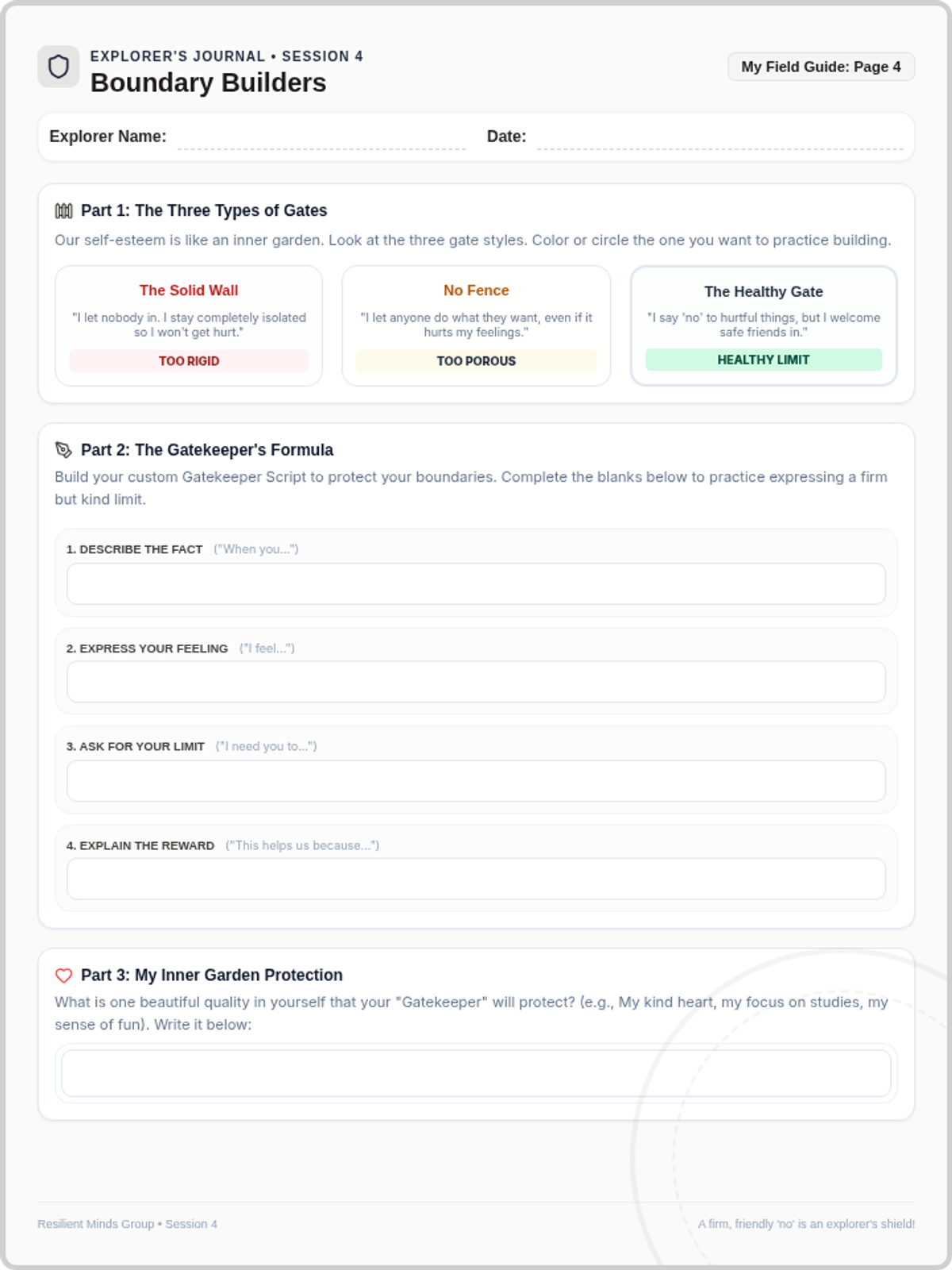
Students learn assertive communication, personal limit-setting, and DBT Interpersonal Effectiveness skills (DEAR MAN style) to navigate social situations and foster healthy self-esteem.
Students learn mindfulness, self-soothing, and distress tolerance techniques (DBT TIPP skills) to manage intense emotions and ground themselves.
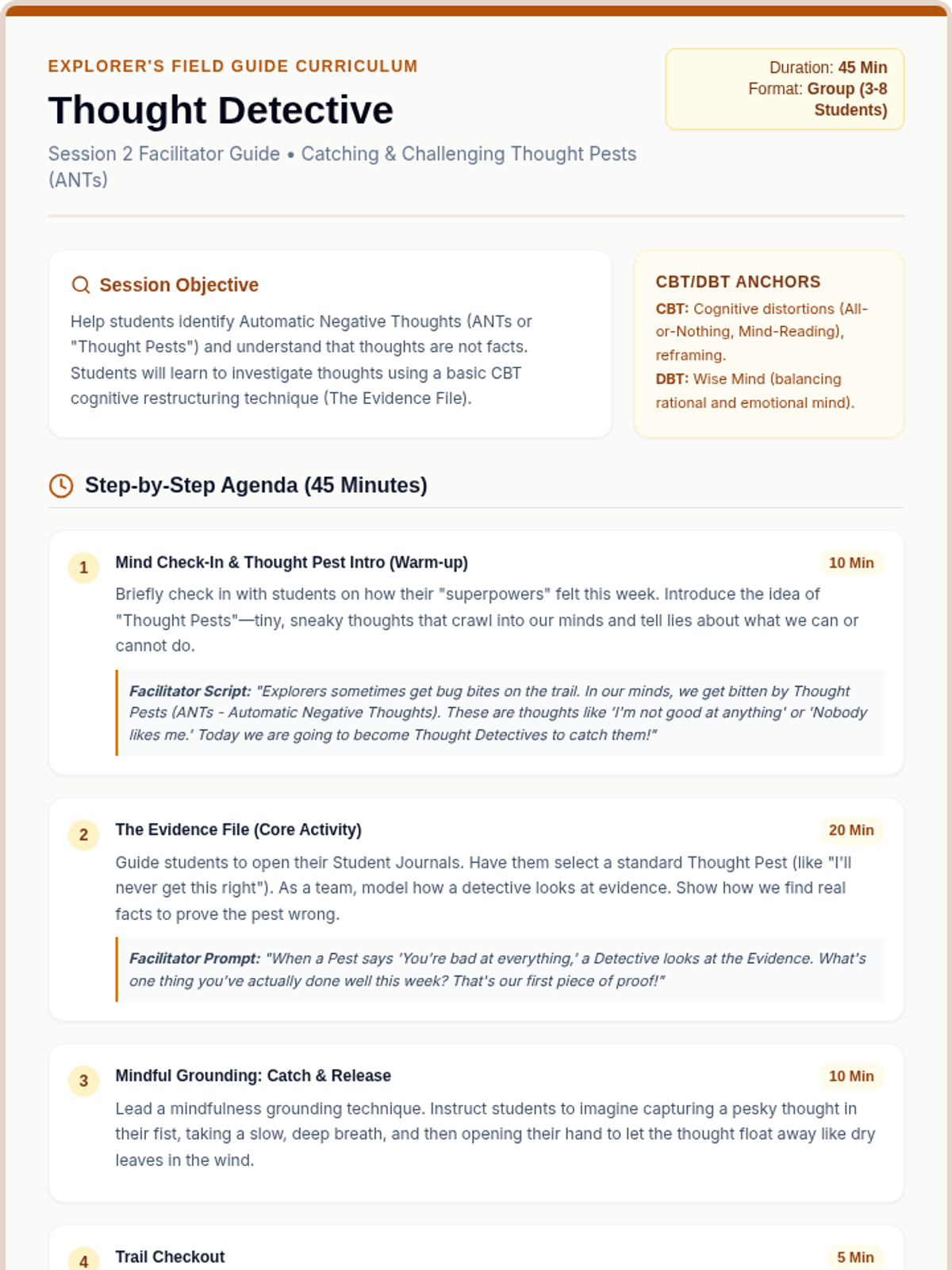
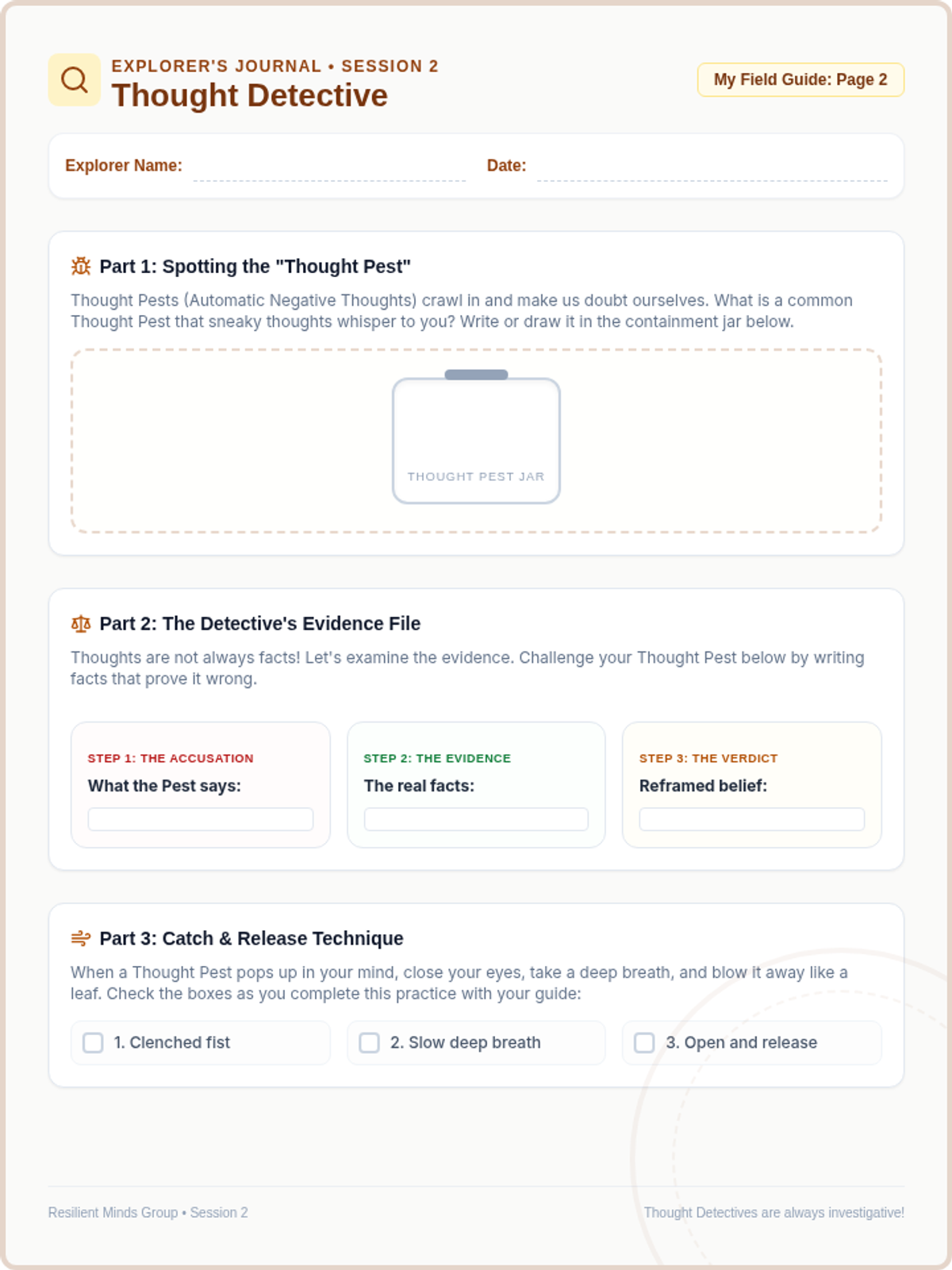
Students learn to identify and challenge automatic negative thoughts (ANTs) and cognitive distortions using CBT reframing techniques.
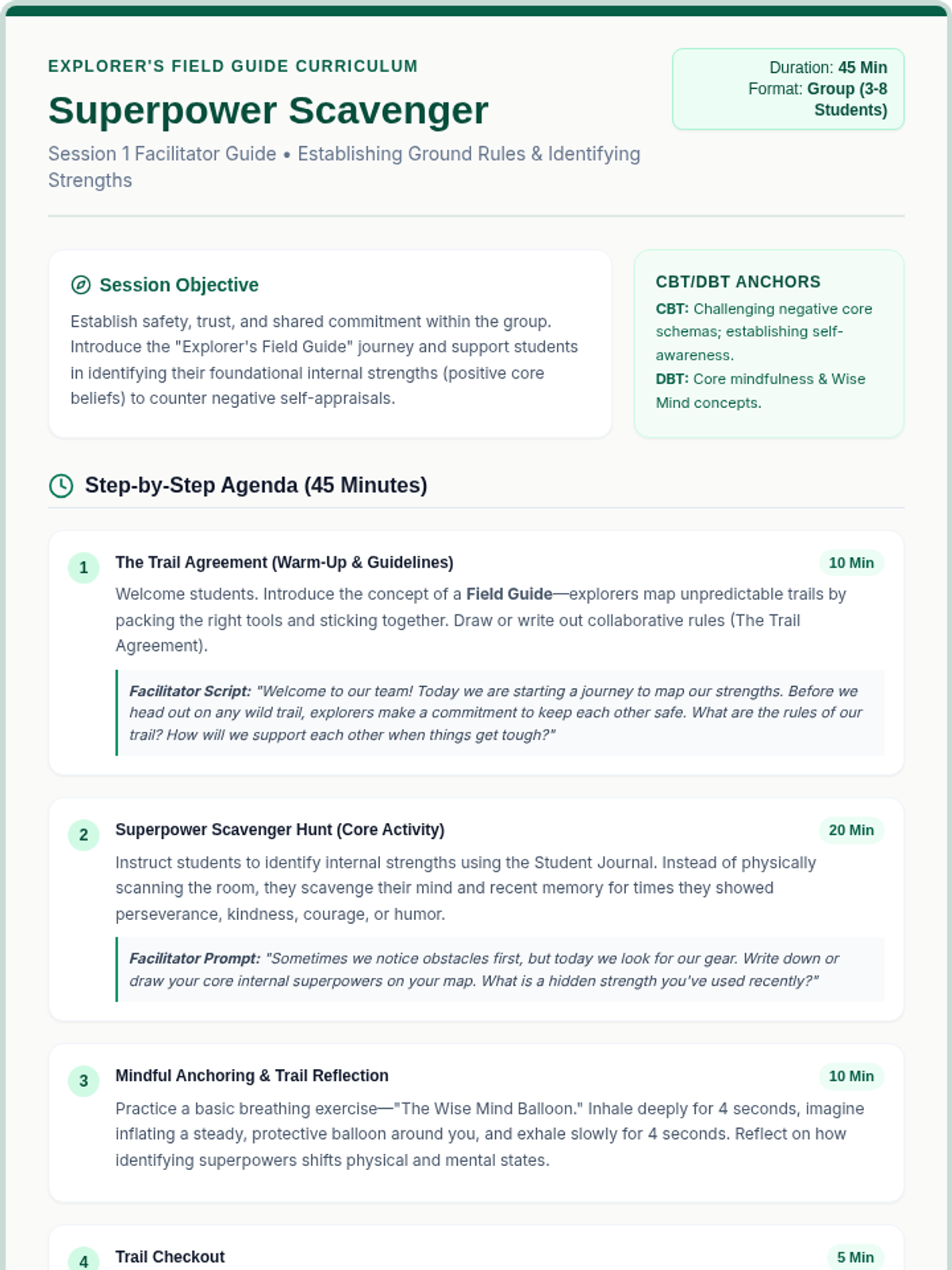
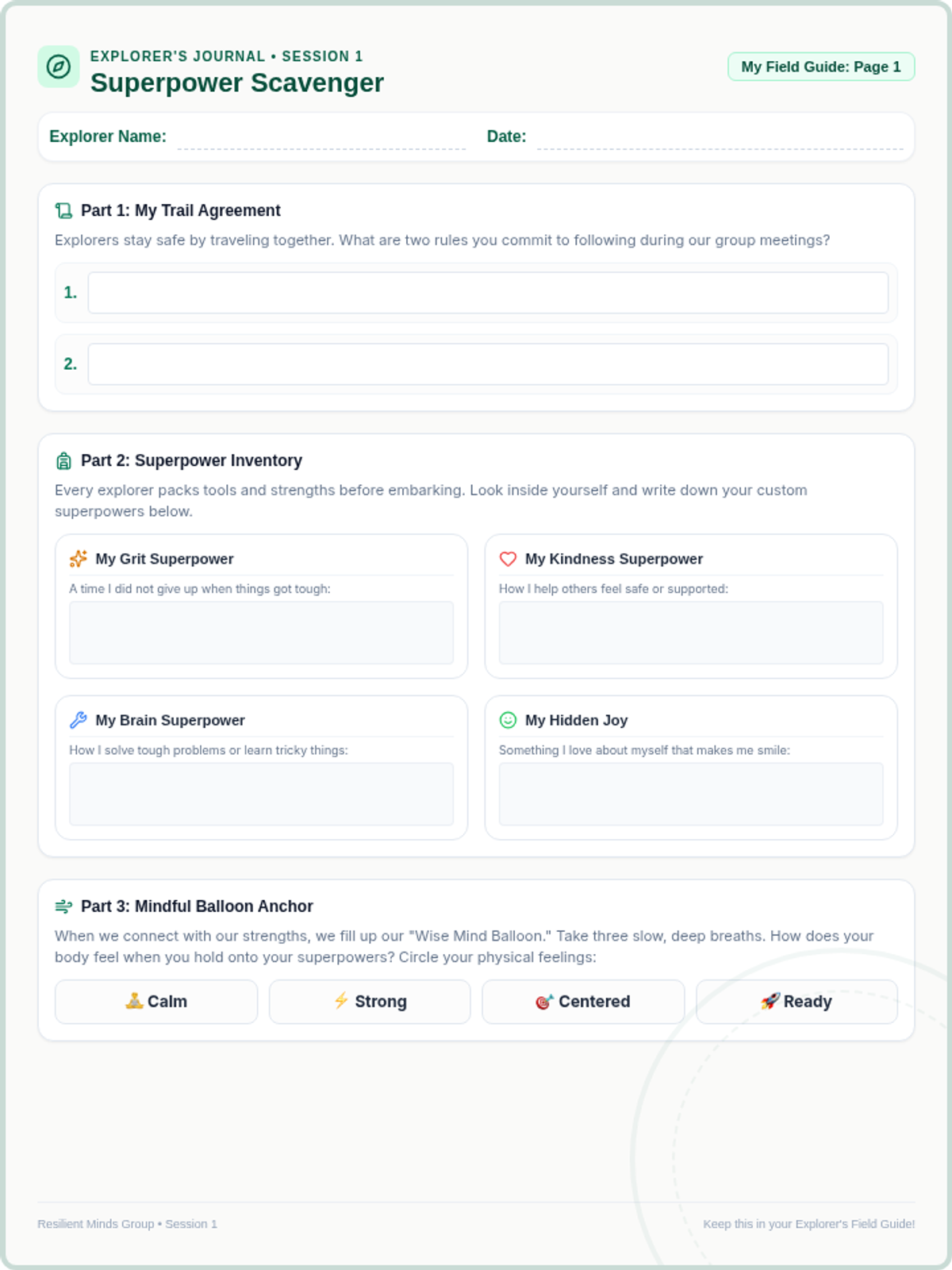
Students establish group guidelines, explore the 'Explorer's Field Guide' theme, and identify their unique internal strengths and positive core beliefs (CBT core beliefs & mindfulness).
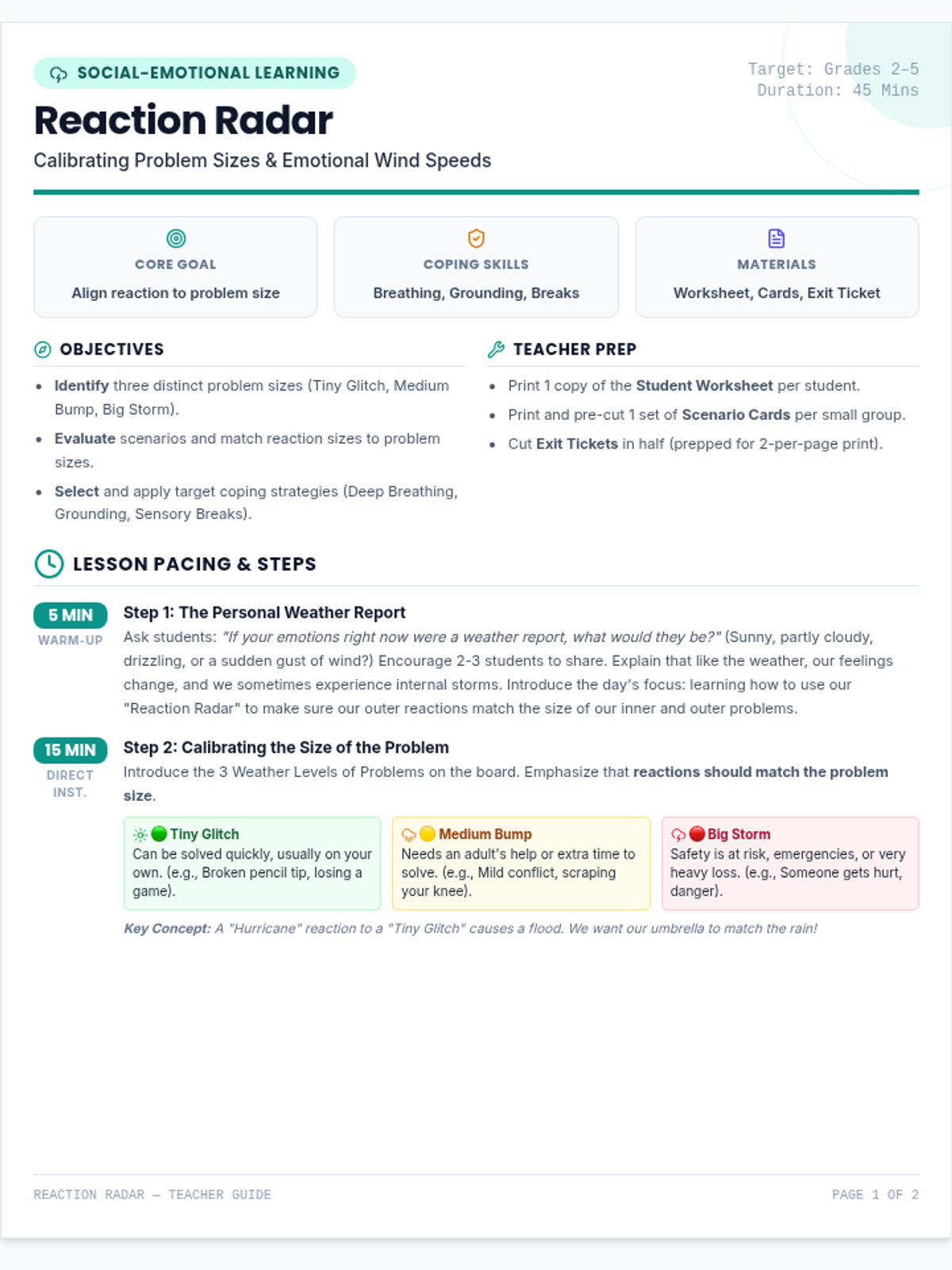
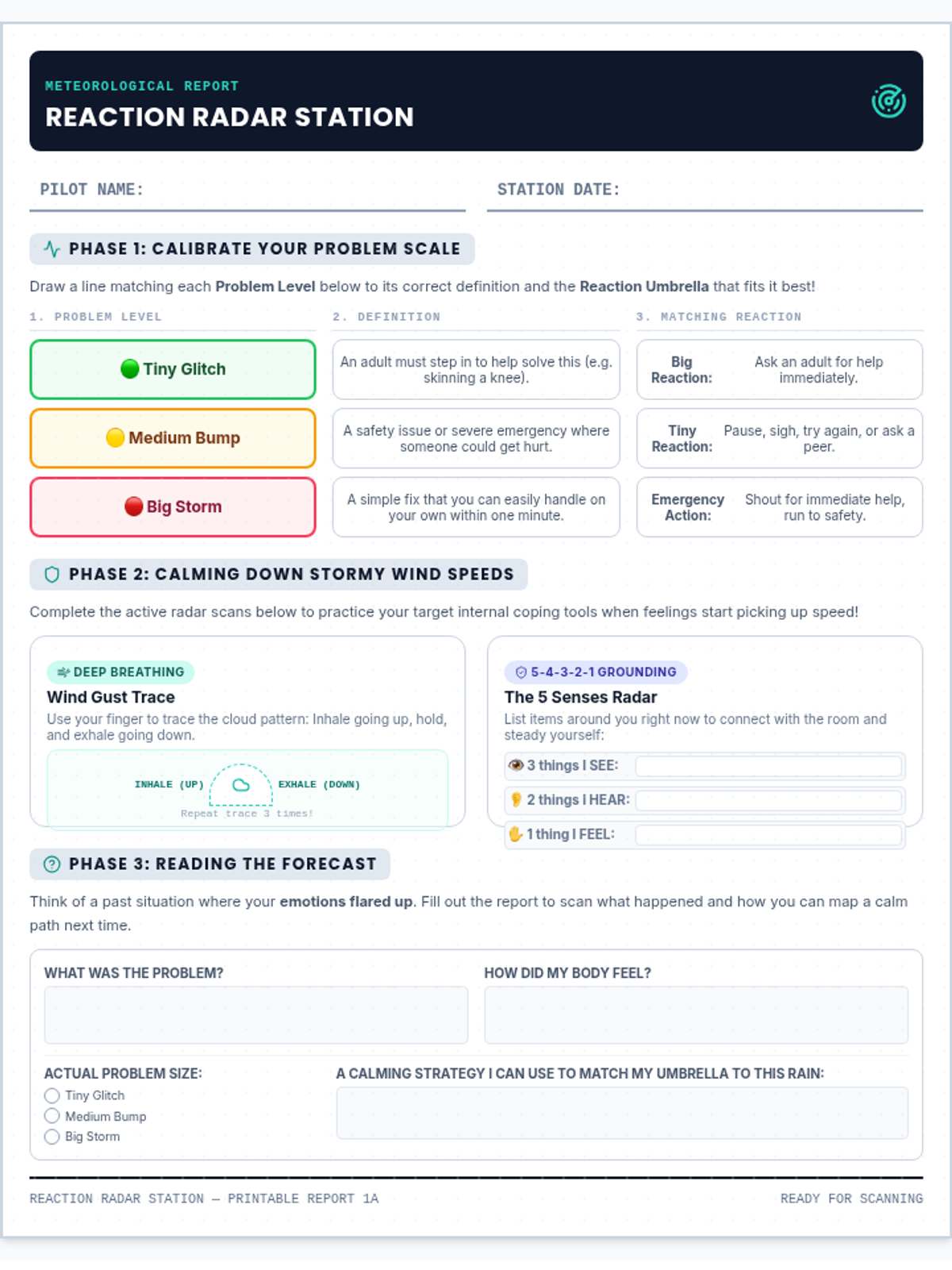
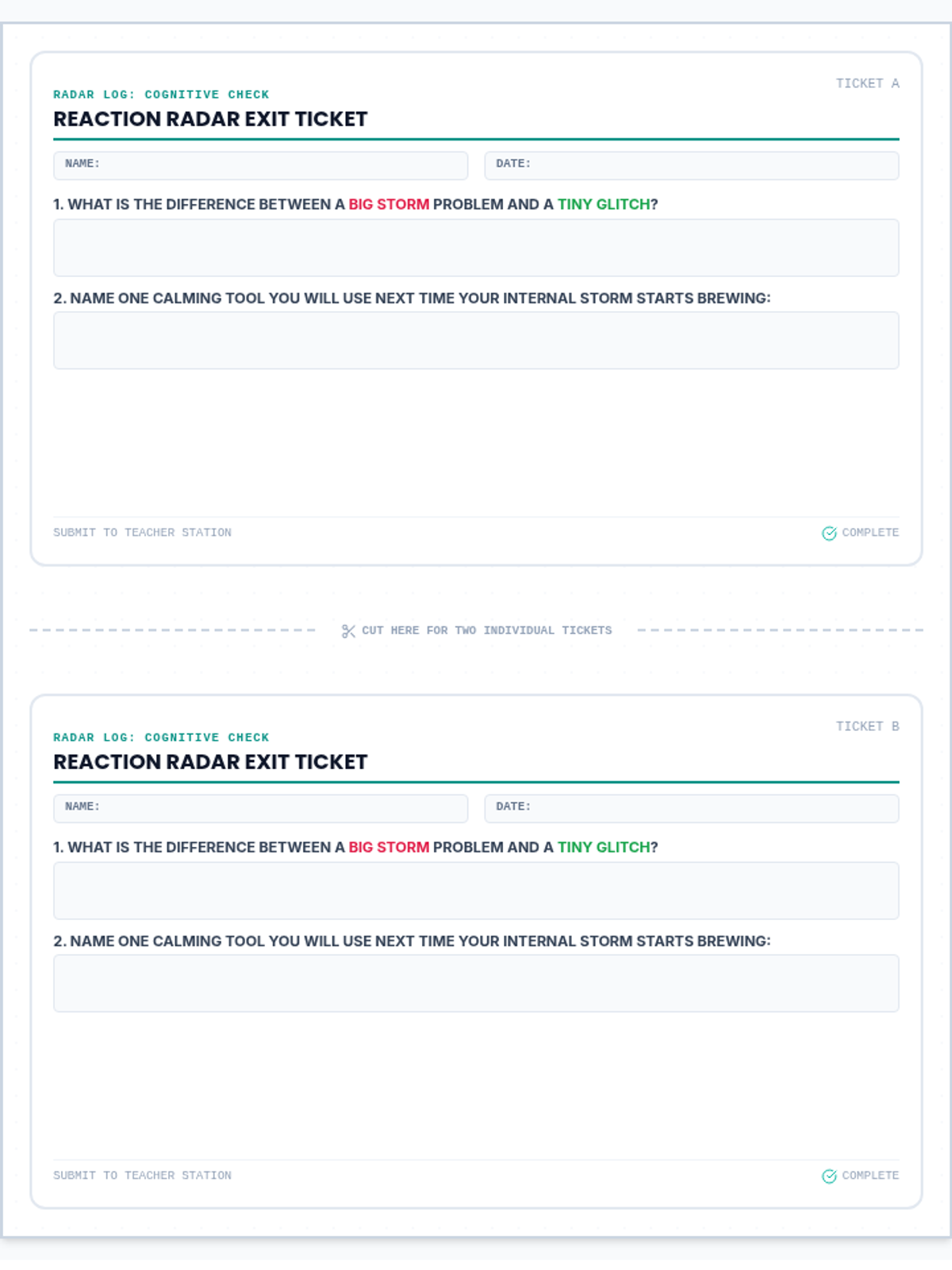
An emotional regulation and social-emotional learning lesson focused on helping students identify, measure, and match the size of their reactions to the size of their problems. Students will learn critical coping skills like deep breathing, grounding, taking a break, and sensory tools using a fun meteorological 'Weather Radar' theme.