This training empowers K-8 paraprofessionals with a restorative framework for mediating student conflict, moving from frustration to understanding through active listening and reflective discussion.
This lesson helps students explore the feelings associated with housing changes and provides tools for managing worry and uncertainty. It emphasizes that while living situations may change, the student's value and their 'inner home' remain constant.
A foundational 60-minute lesson introducing K-3 students to the concept of Executive Functioning using the 'Brain Captain' metaphor. Students explore the 9 core mental departments through interactive group activities and self-reflection.
A 20-minute 1:1 reflection session using a hot air balloon metaphor to help students evaluate their progress, celebrate successes, and identify areas for support.
This lesson teaches students how to recognize and maintain a calm body and voice in different environments. Students will learn the difference between 'inside' and 'outside' behaviors and practice self-regulation techniques.
Covers online job applications, digital privacy, and managing professional profiles.
Focuses on web navigation, effective searching, and setting up professional email communication.
Covers physical hardware, mouse/keyboard mastery, and the fundamental elements of the computer desktop.
Focuses on the transition from early sobriety to long-term maintenance, using digital tools to track personal growth and prevent relapse.
Focuses on integrating digital tools into daily routines to maintain sobriety and manage mental health long-term.
An introductory session focused on identifying and downloading the essential digital tools for sobriety and mental health management.
A 35-minute interactive lesson for middle schoolers focusing on the mechanics of active listening and the depth of empathy, moving from 'hearing' to truly 'understanding' without jumping to solutions.
An elementary lesson (grades 3-5) teaching emotional regulation through the metaphor of surfing waves. Students learn to identify body signals, use a three-step breathing strategy, and create a personal 'coping surfboard'.
An experiential lesson for grades 2-5 focused on learning and practicing five body-based calming strategies: belly breathing, grounding, muscle relaxation, butterfly hugs, and visualization. Students 'train' to become Calm Body Commanders, learning to manage big emotions through physical techniques.
A 40-minute lesson for middle schoolers that reframes resilience as 'bouncing forward' through the four pillars of connection, competence, character, and confidence. Students analyze a case study and create their own resilience blueprints with actionable goals.
A 45-minute exploration of diverse cultural perspectives on mental health, healing, and wellbeing, focusing on Indigenous, collectivist, faith-based, and Western models. students will learn about the importance of culturally responsive care and how to advocate for culturally safe mental health supports.
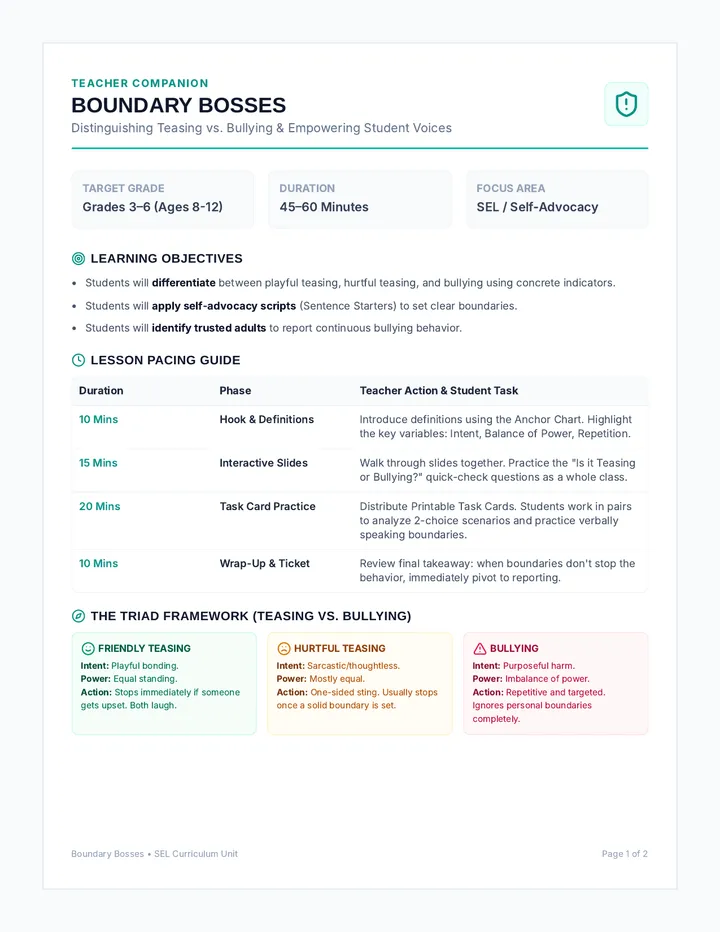
A 35-minute social-emotional learning lesson for grades 4-6 focused on reframing help-seeking as a strength, identifying trusted adults, and practicing communication strategies.
A 40-minute lesson for grades 7-8 focused on mental health literacy, the Dual Continuum model, debunking common myths, and taking active steps to reduce stigma in the school community. Aligned with School Mental Health Ontario frameworks.
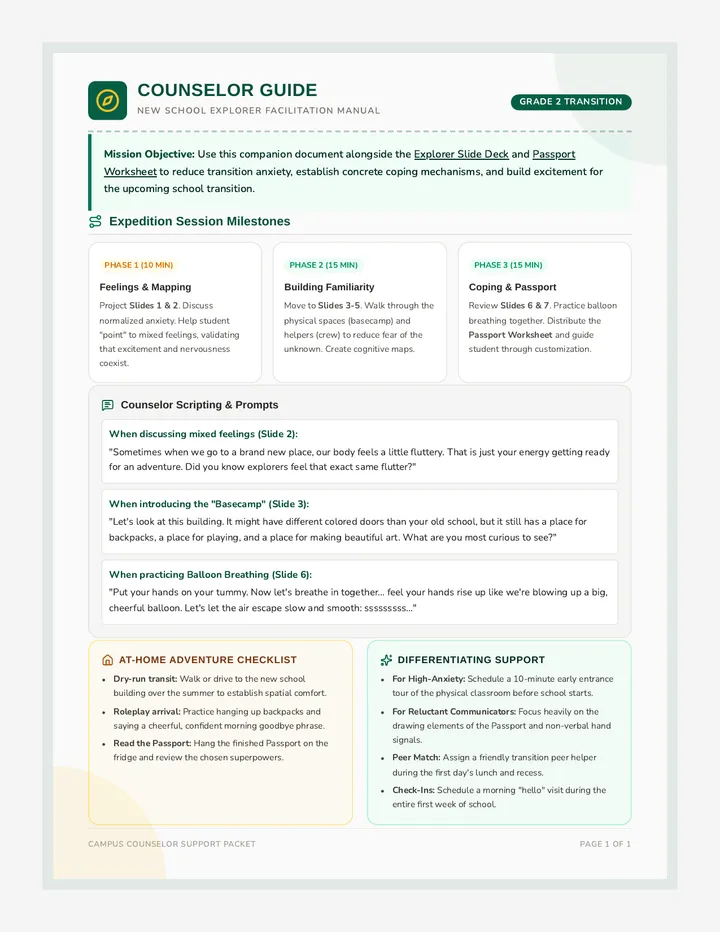
This lesson helps 5th and 6th grade students navigate the emotional and practical aspects of major transitions, such as moving to middle school or a new city. Students will explore common feelings associated with change, develop personalized coping strategies, and identify their support networks.
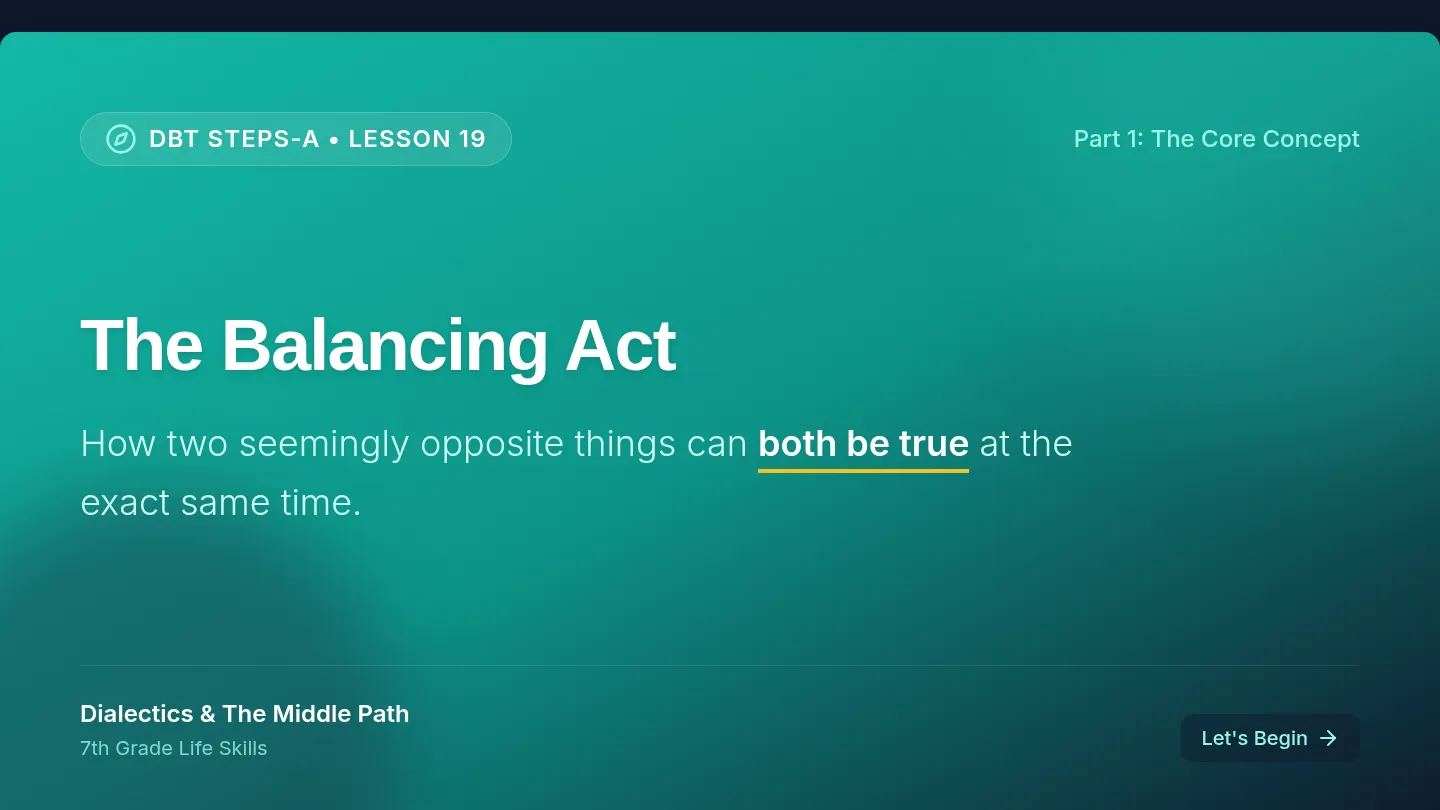
A 30-minute introductory lesson for grades 2-4 focused on celebrating individual identities and building an inclusive classroom community through a collaborative art project.
A practical, boundary-focused lesson for middle schoolers on supporting friends with mental health challenges, emphasizing active listening, recognizing limits, and connecting to professional help.
A 40-minute lesson for middle schoolers exploring the impact of social media and screen time on mental health, focusing on dopamine loops, algorithms, and healthy digital boundaries.
A fast-paced, 35-minute lesson helping middle schoolers navigate digital footprints, online scams, and cyberbullying with practical strategies for platforms like TikTok, Discord, and Instagram.