A 60-minute small-group project where 4th graders research everyday prices, compare retailers, and develop spending and saving plans to build financial literacy.
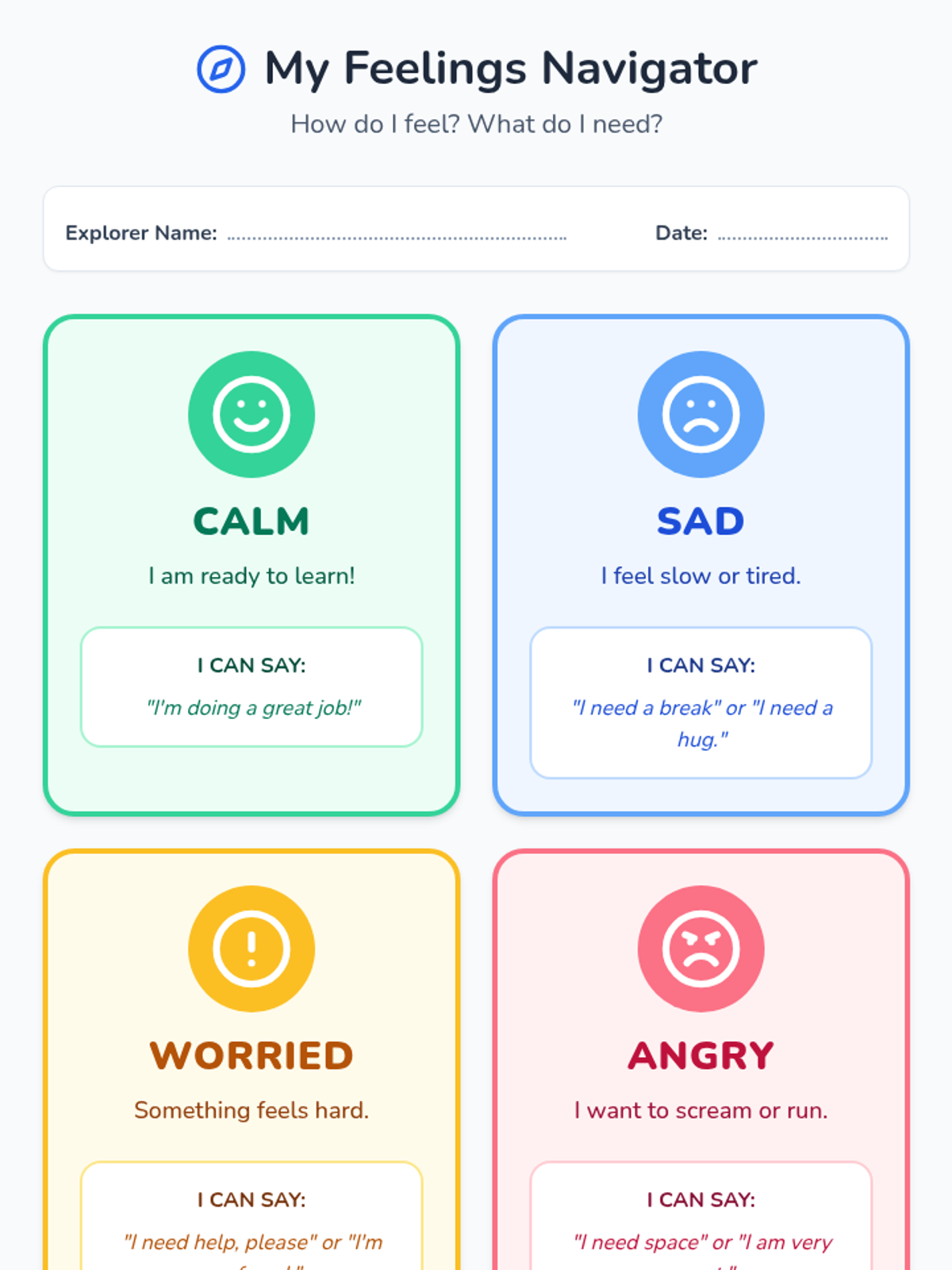
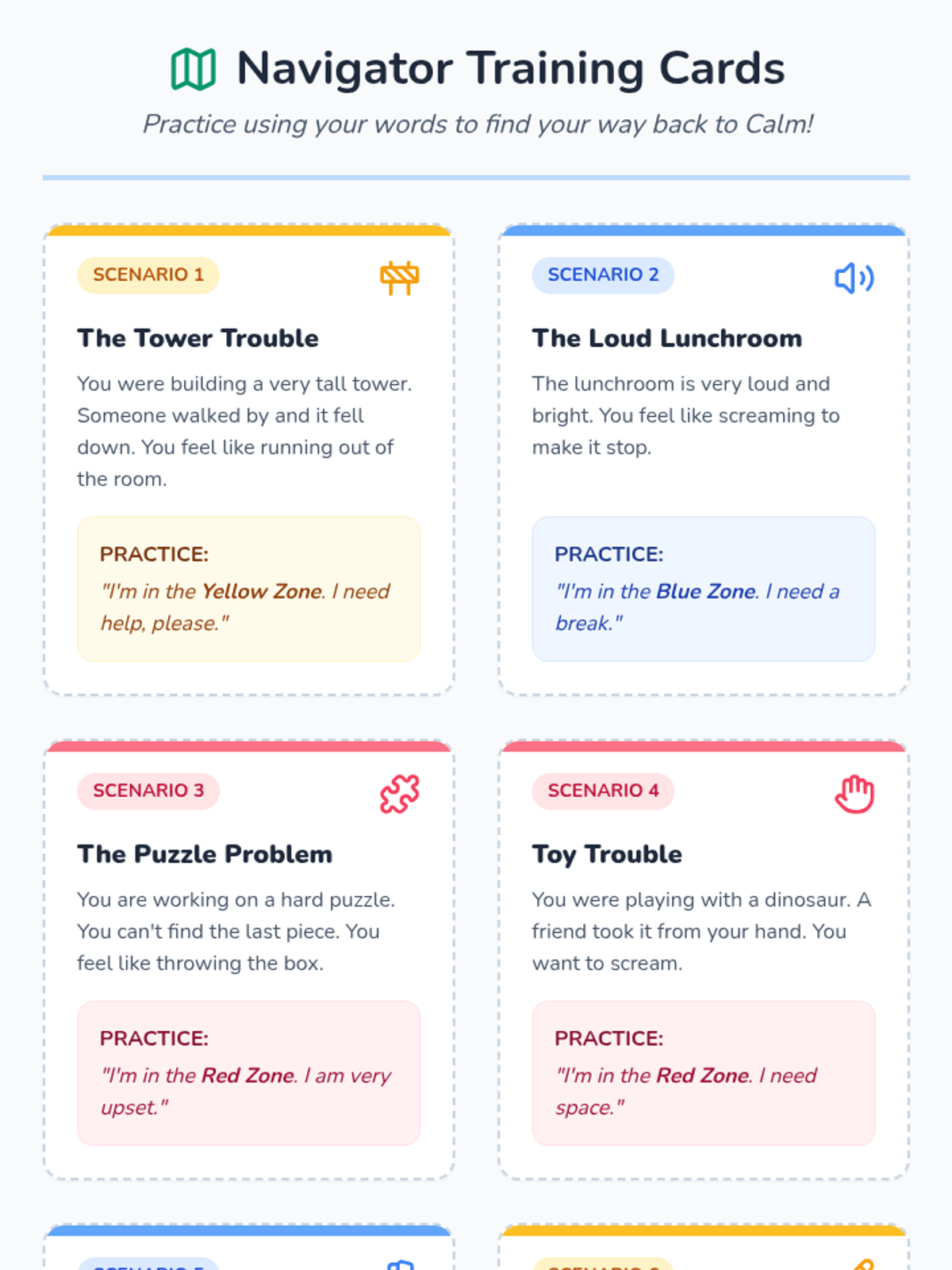
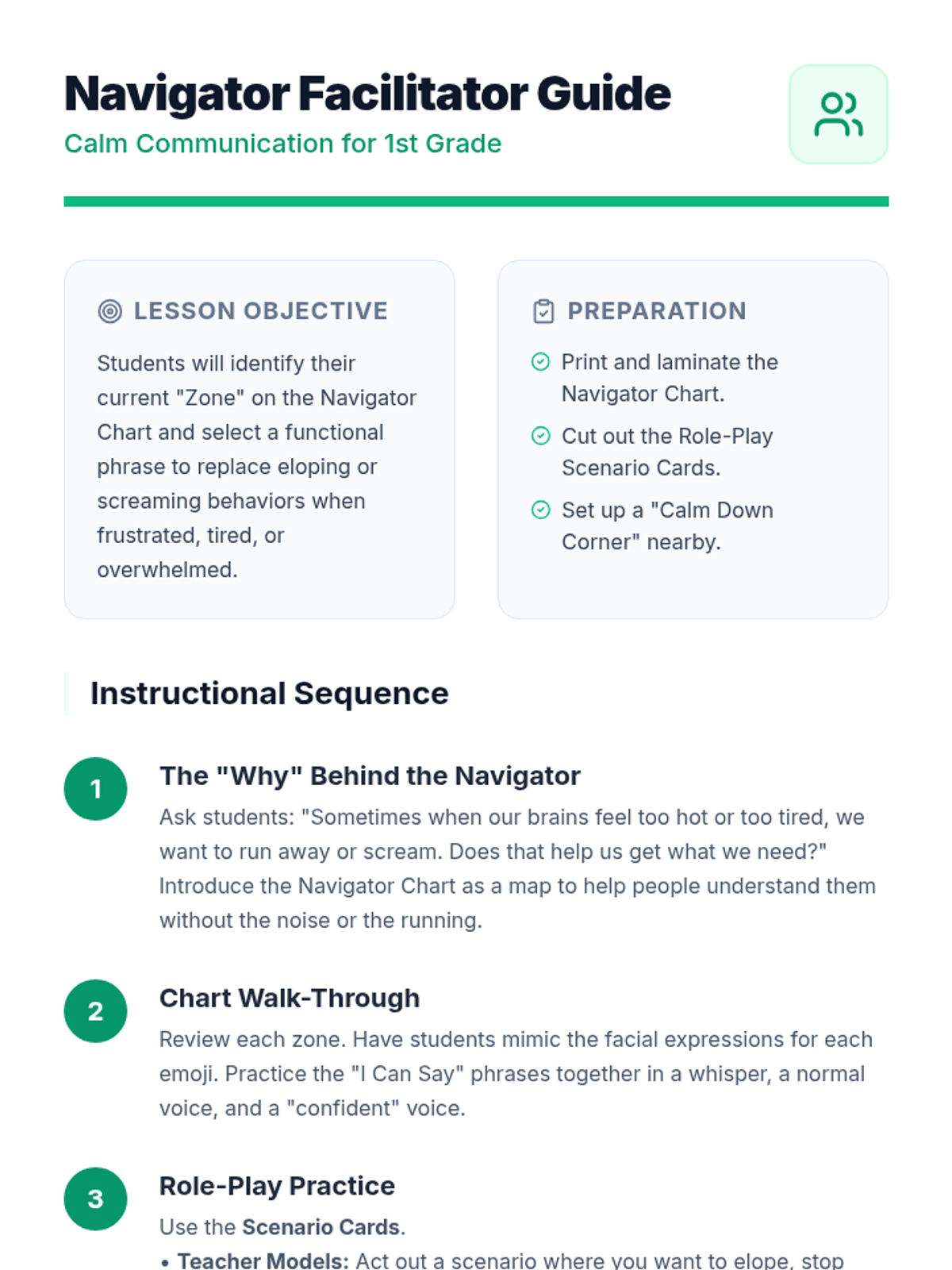
A lesson designed for two first-graders to learn how to replace screaming and eloping with verbal communication using a feelings chart. Through role-play and visual aids, students practice identifying their emotions and stating their needs.
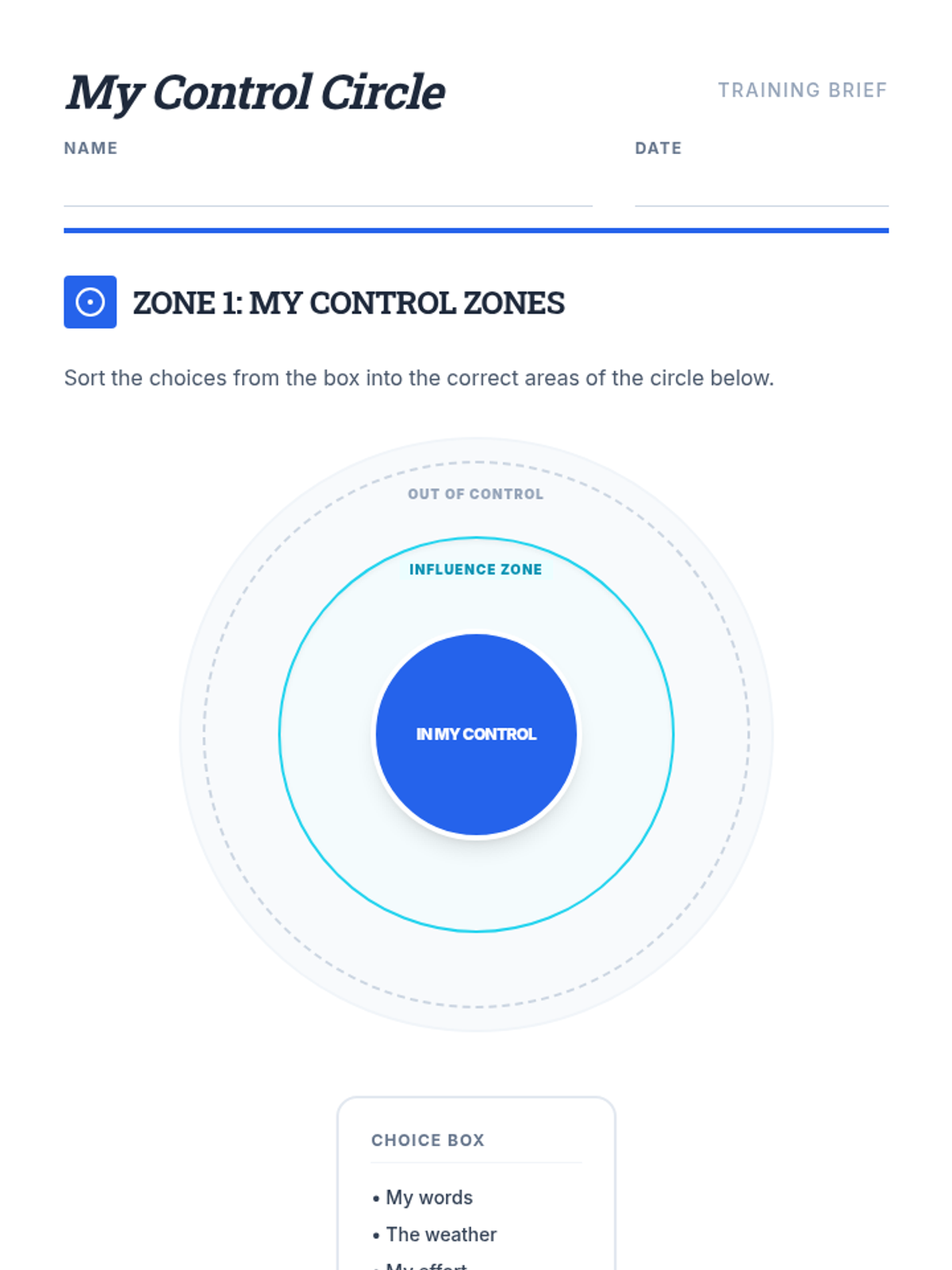
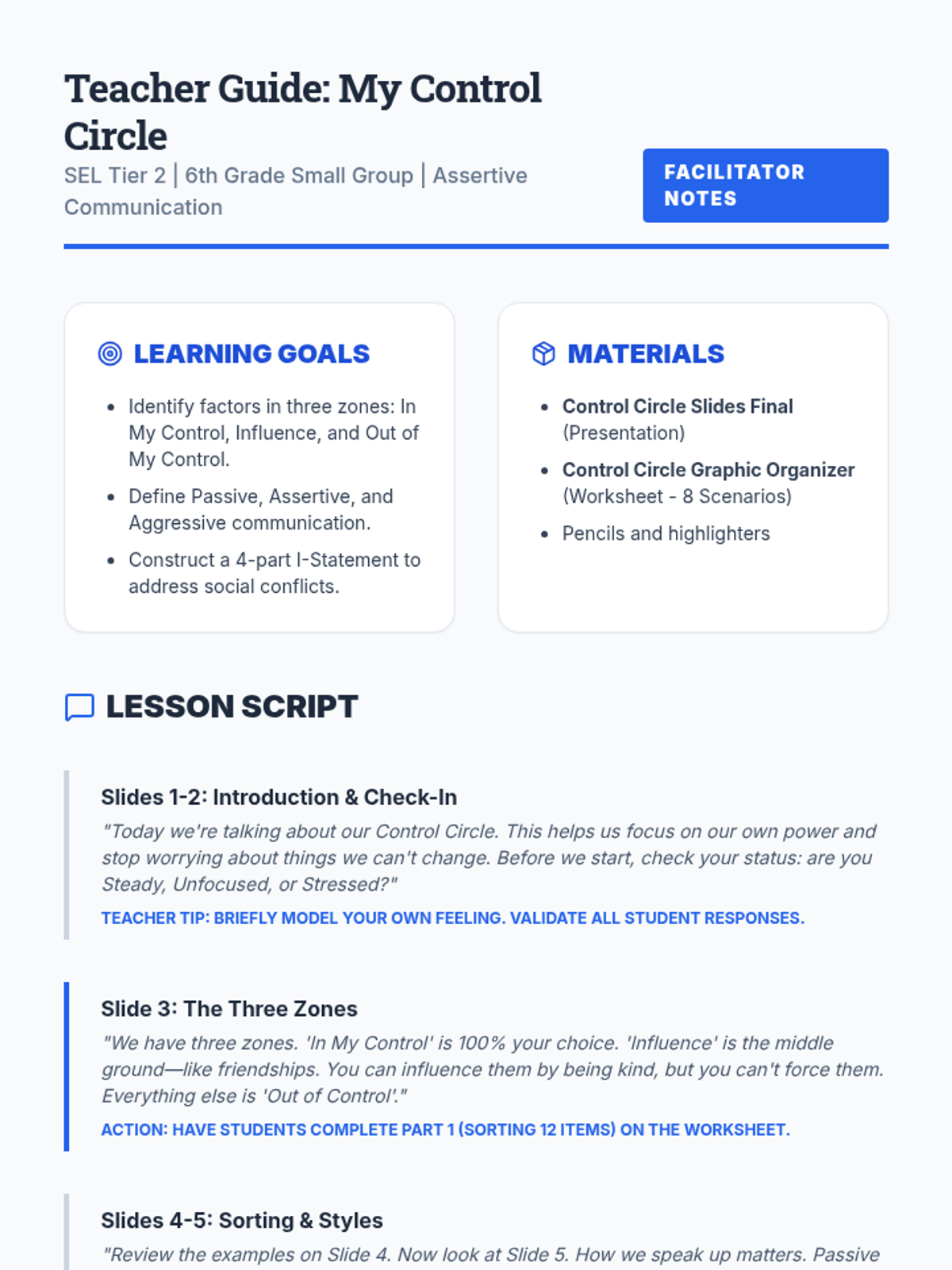
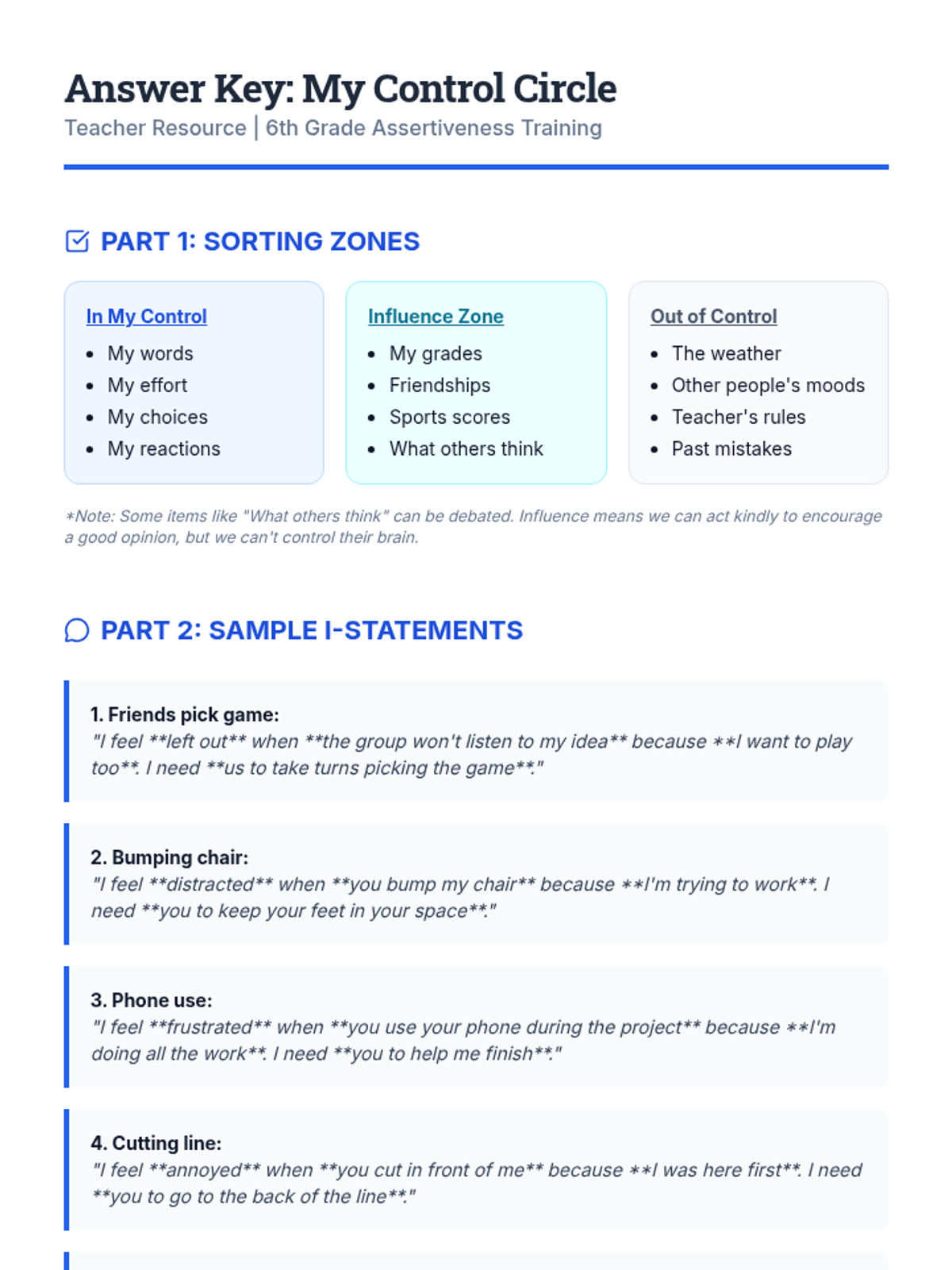
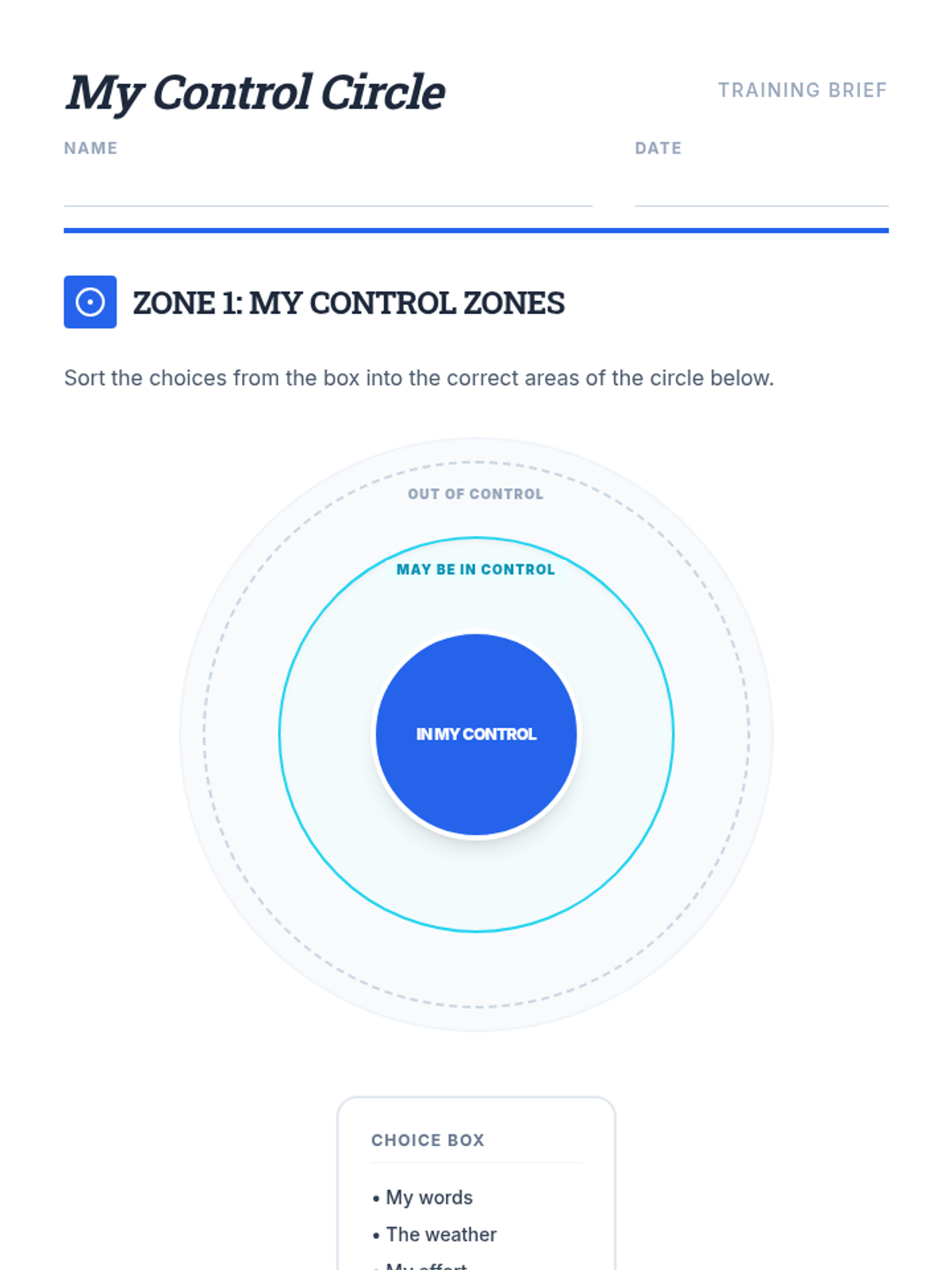
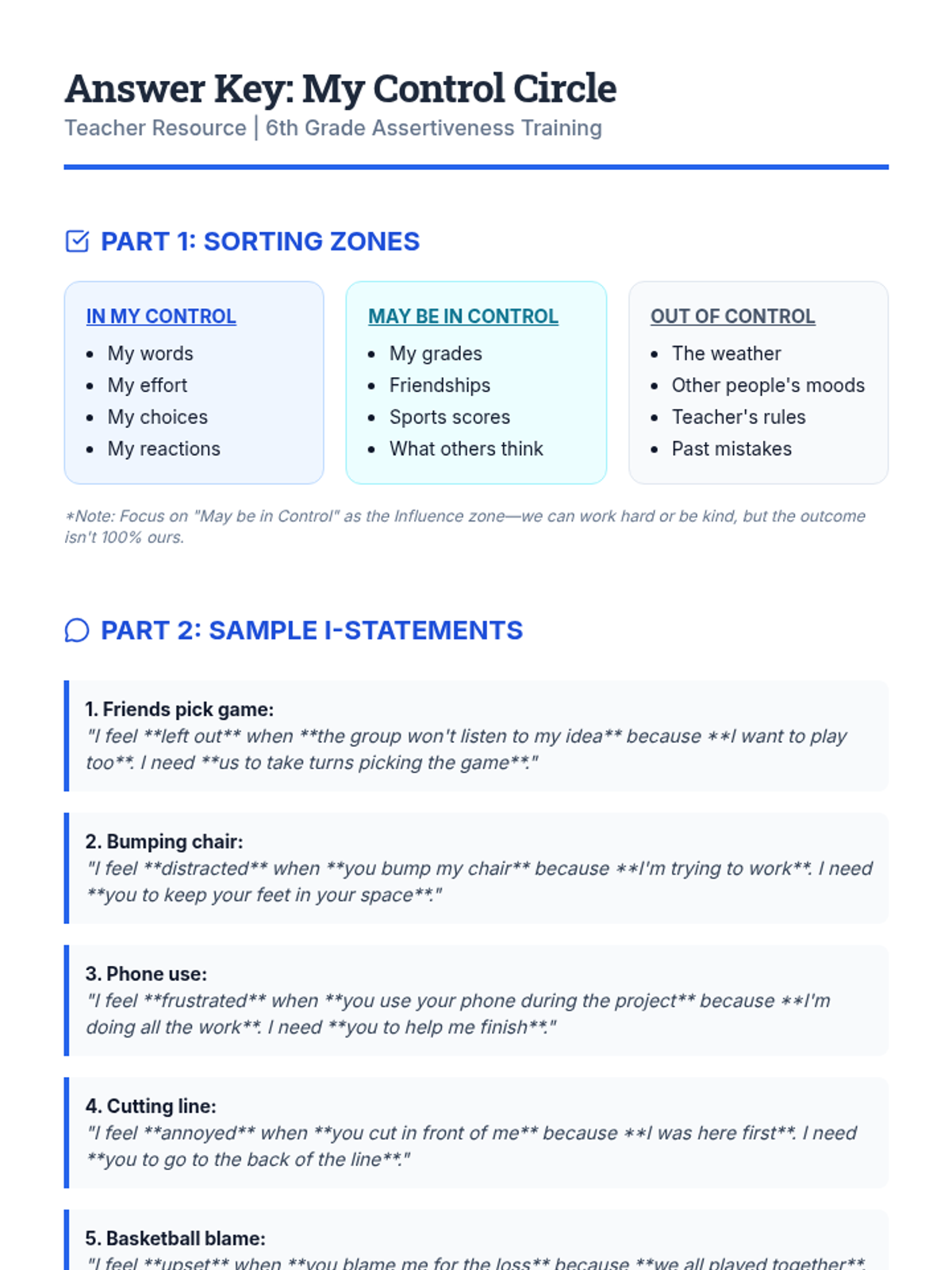
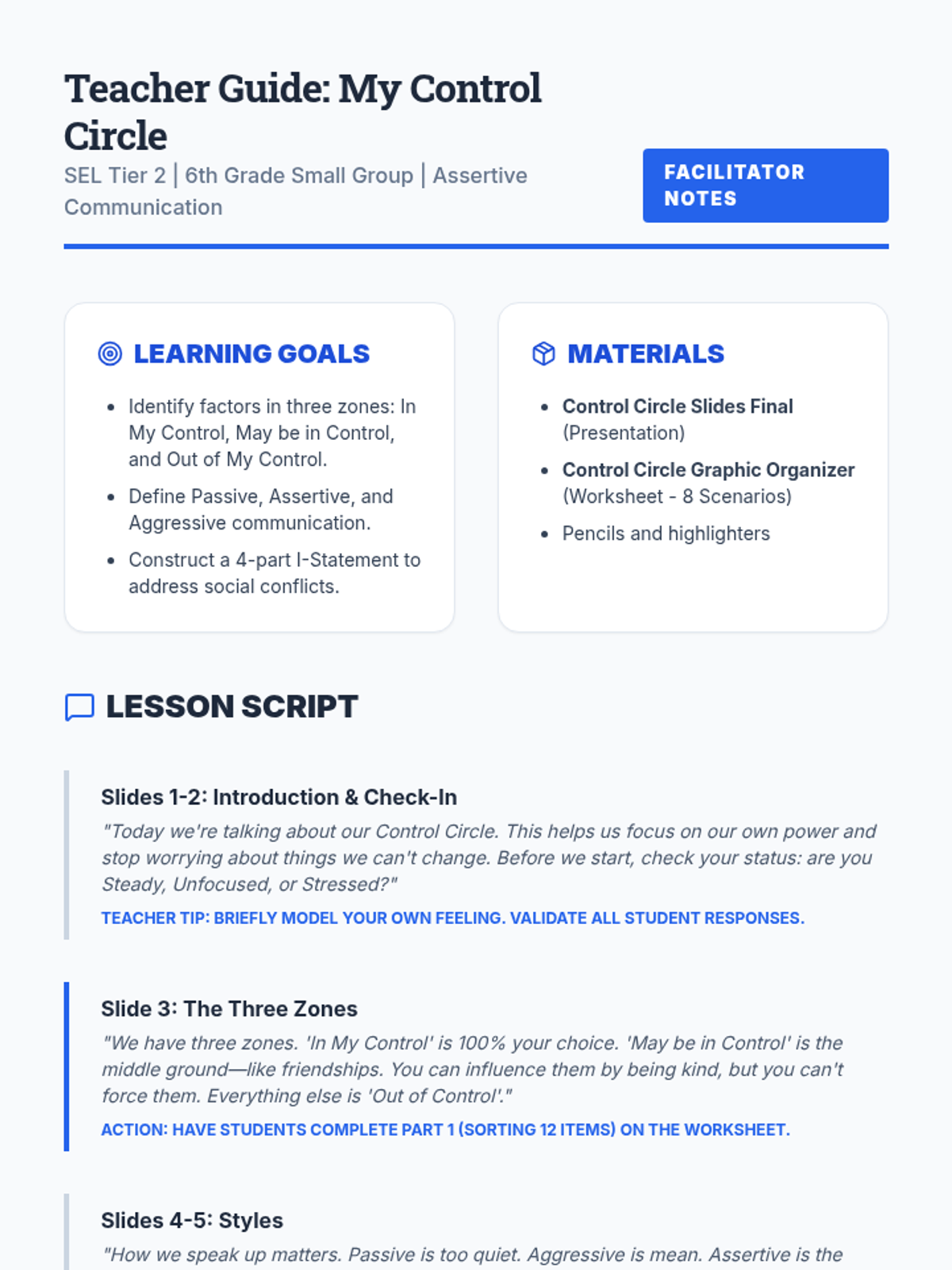
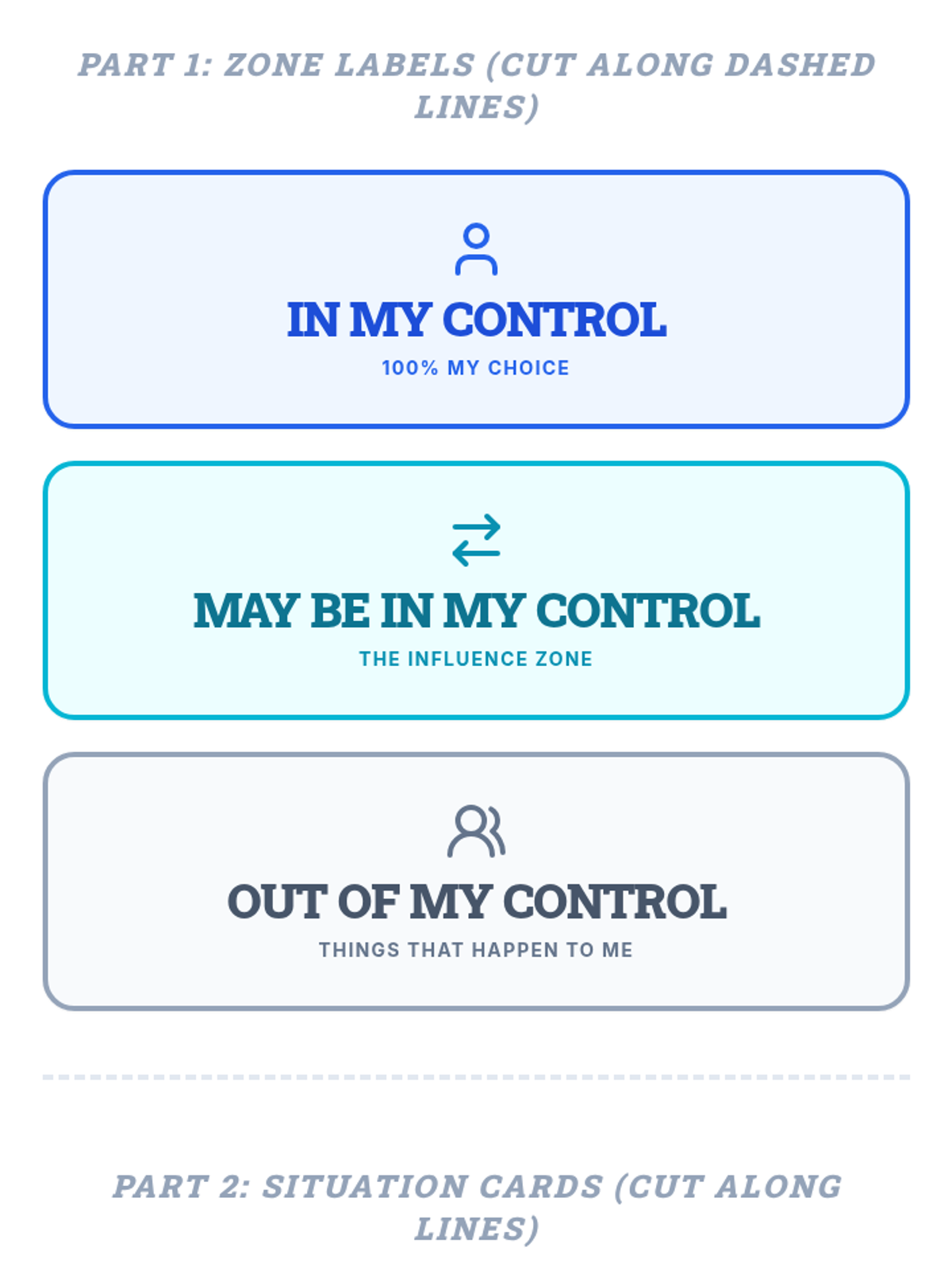
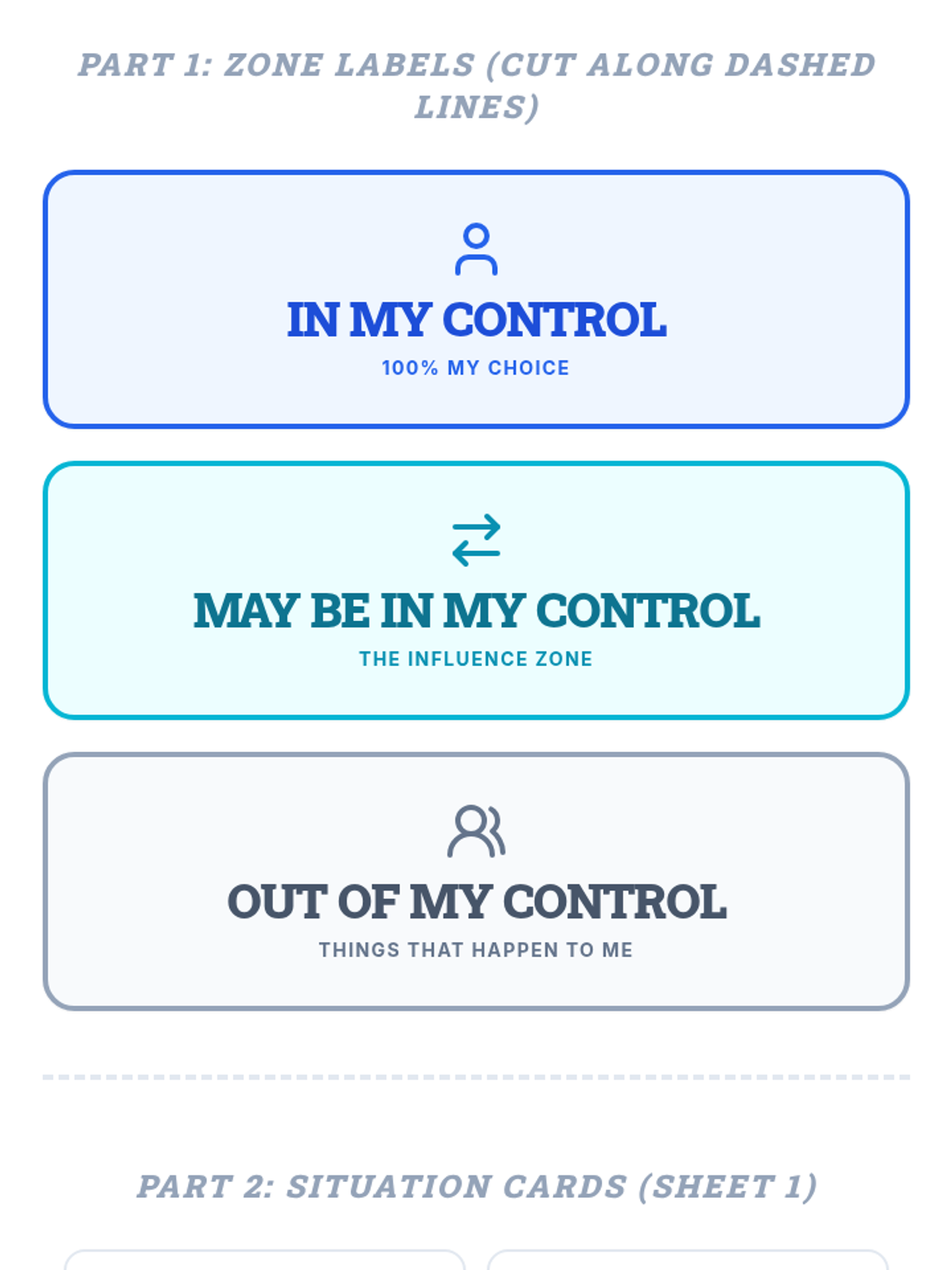
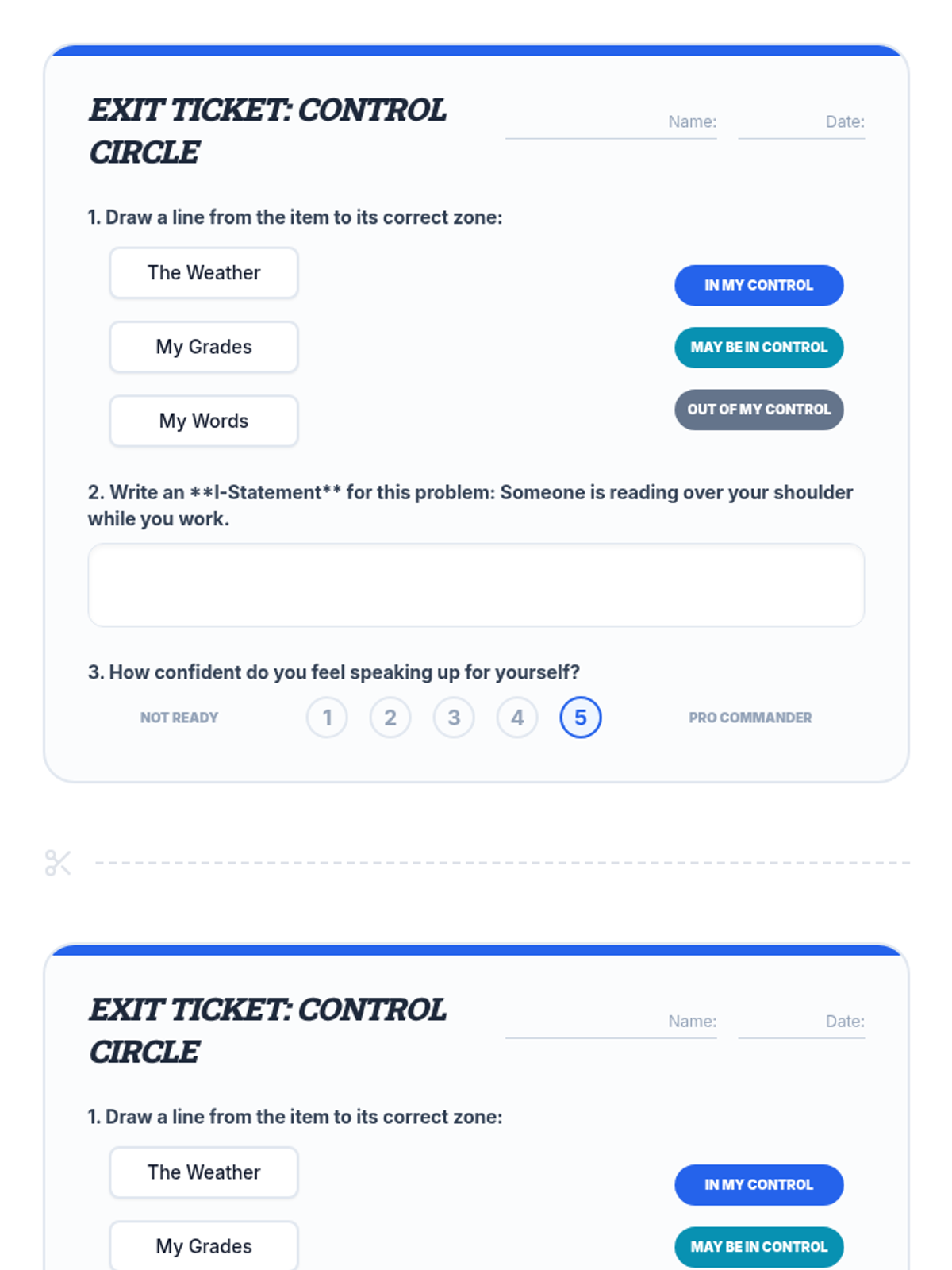
A social-emotional learning lesson for Tier 2 small groups focusing on identifying spheres of control and practicing assertive I-Statements in social scenarios.
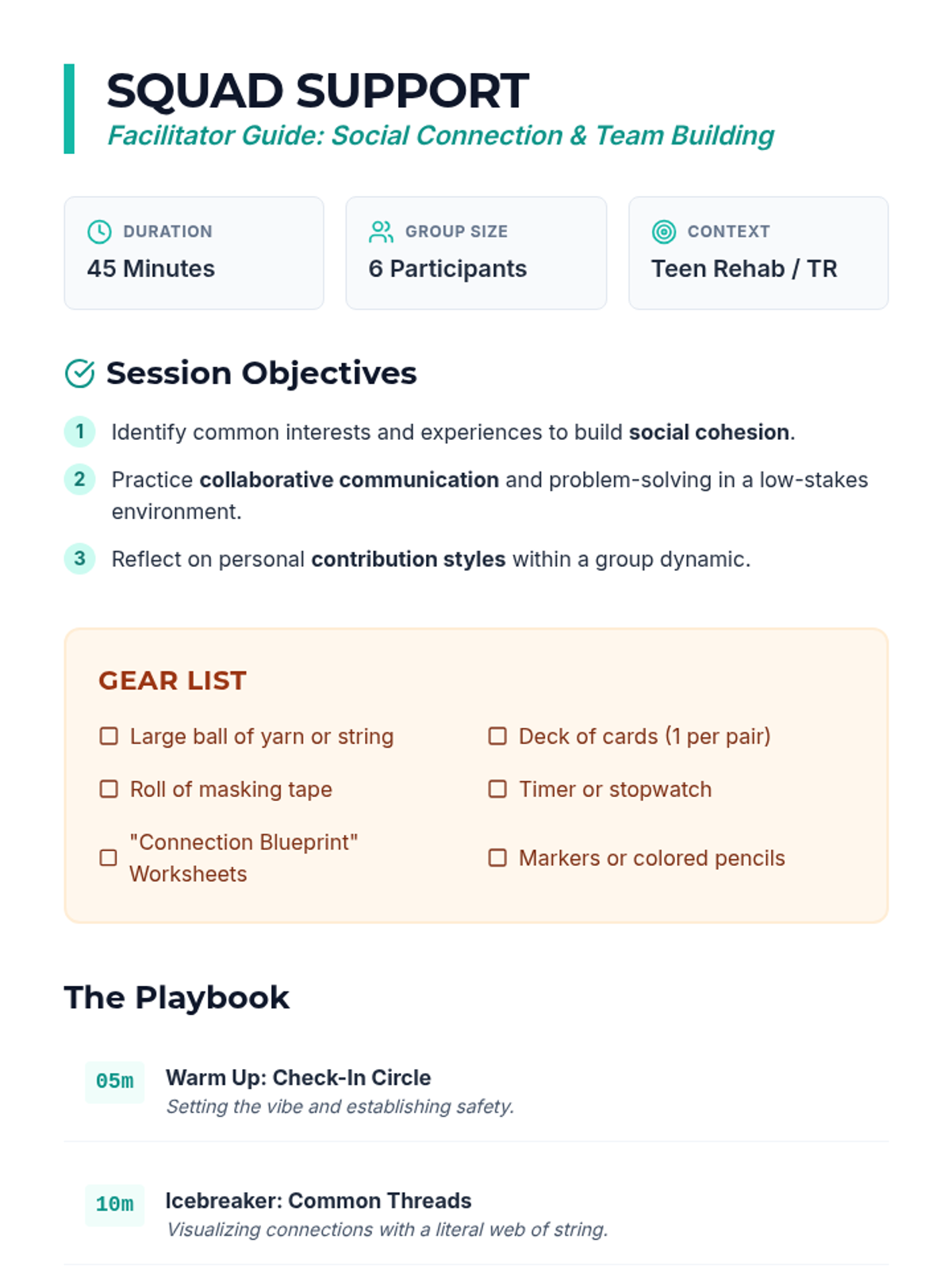
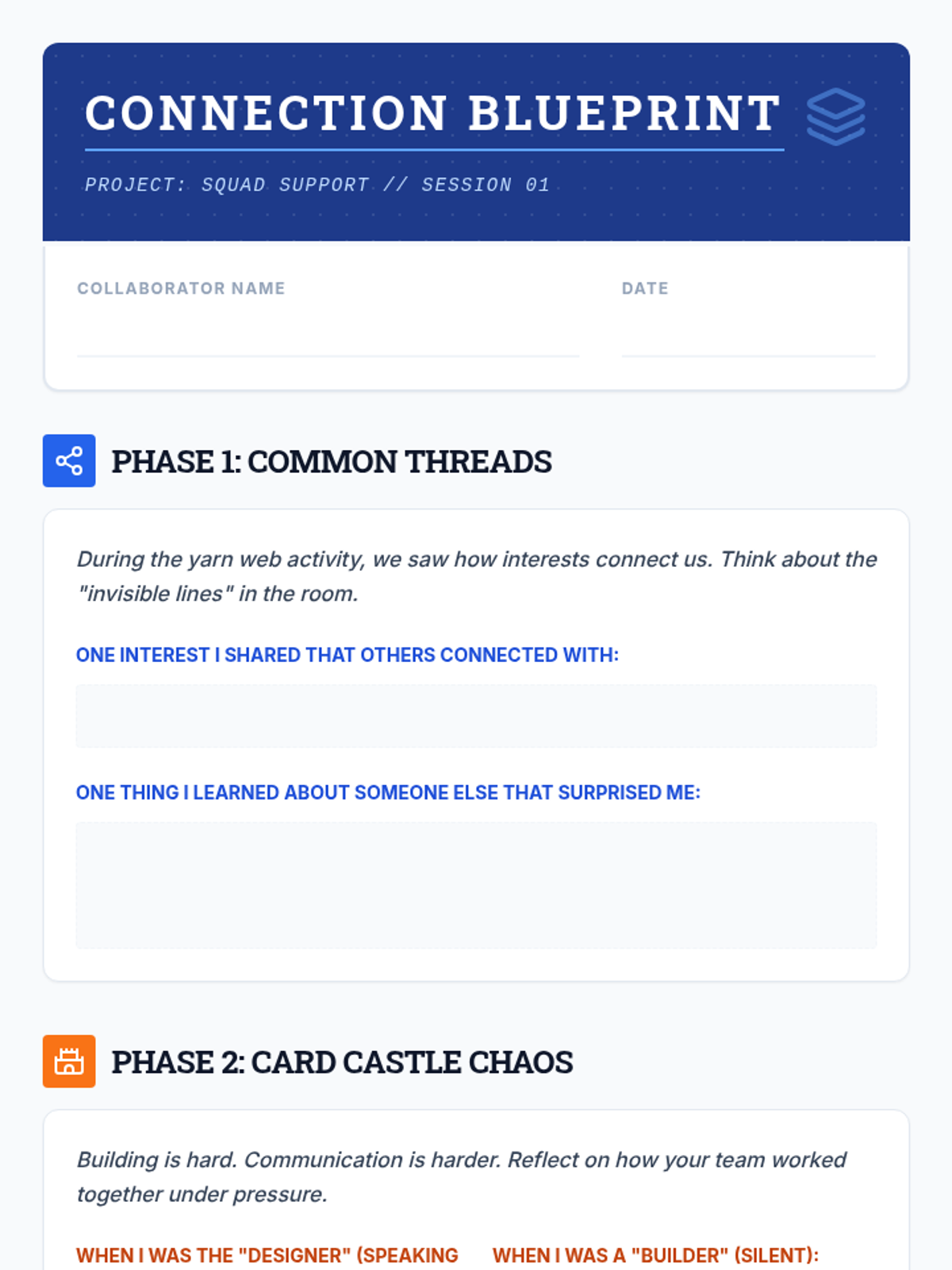
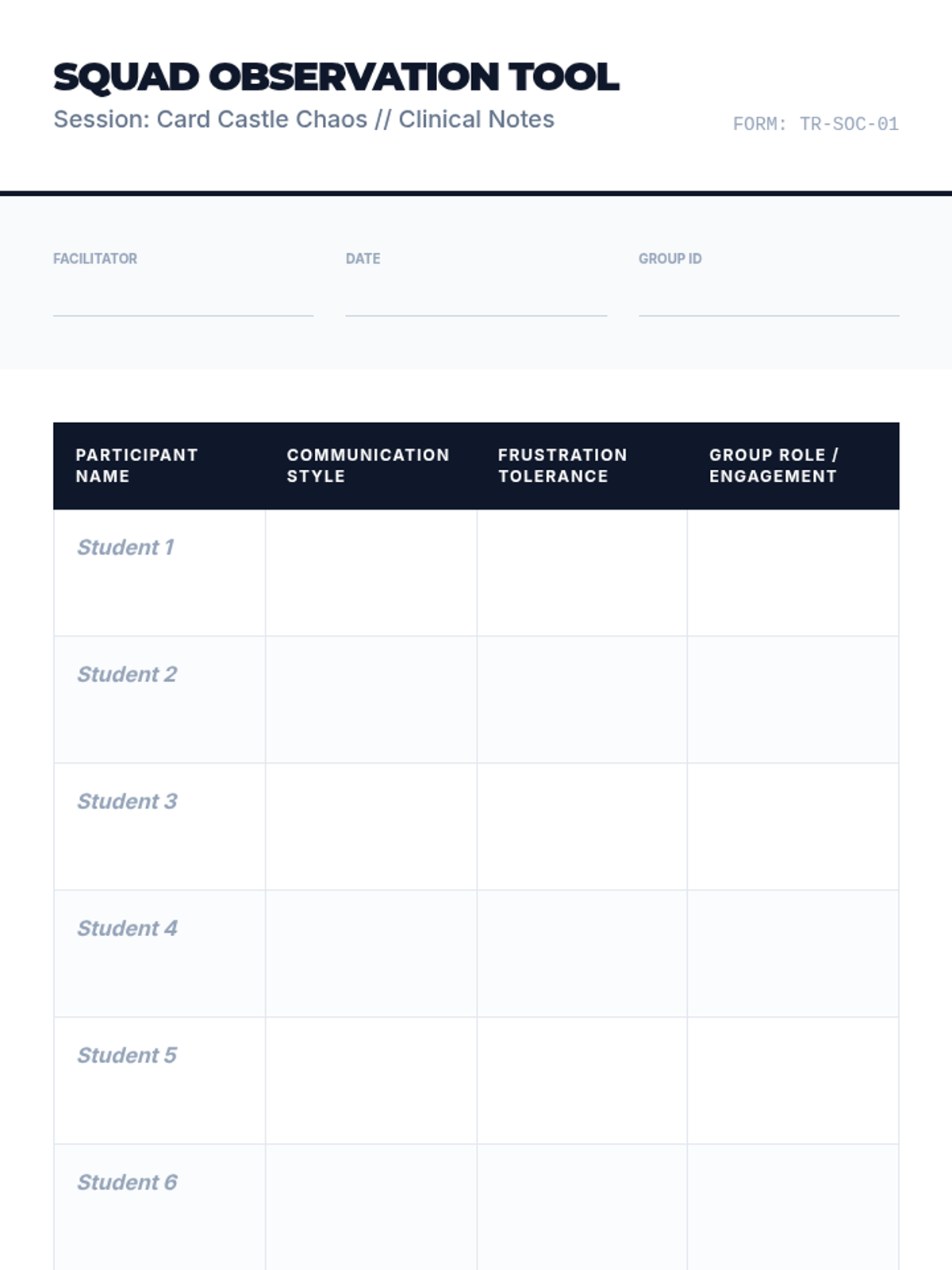
A 45-minute therapeutic leisure session for teens focused on building social connections and team dynamics through collaborative activities and reflection.
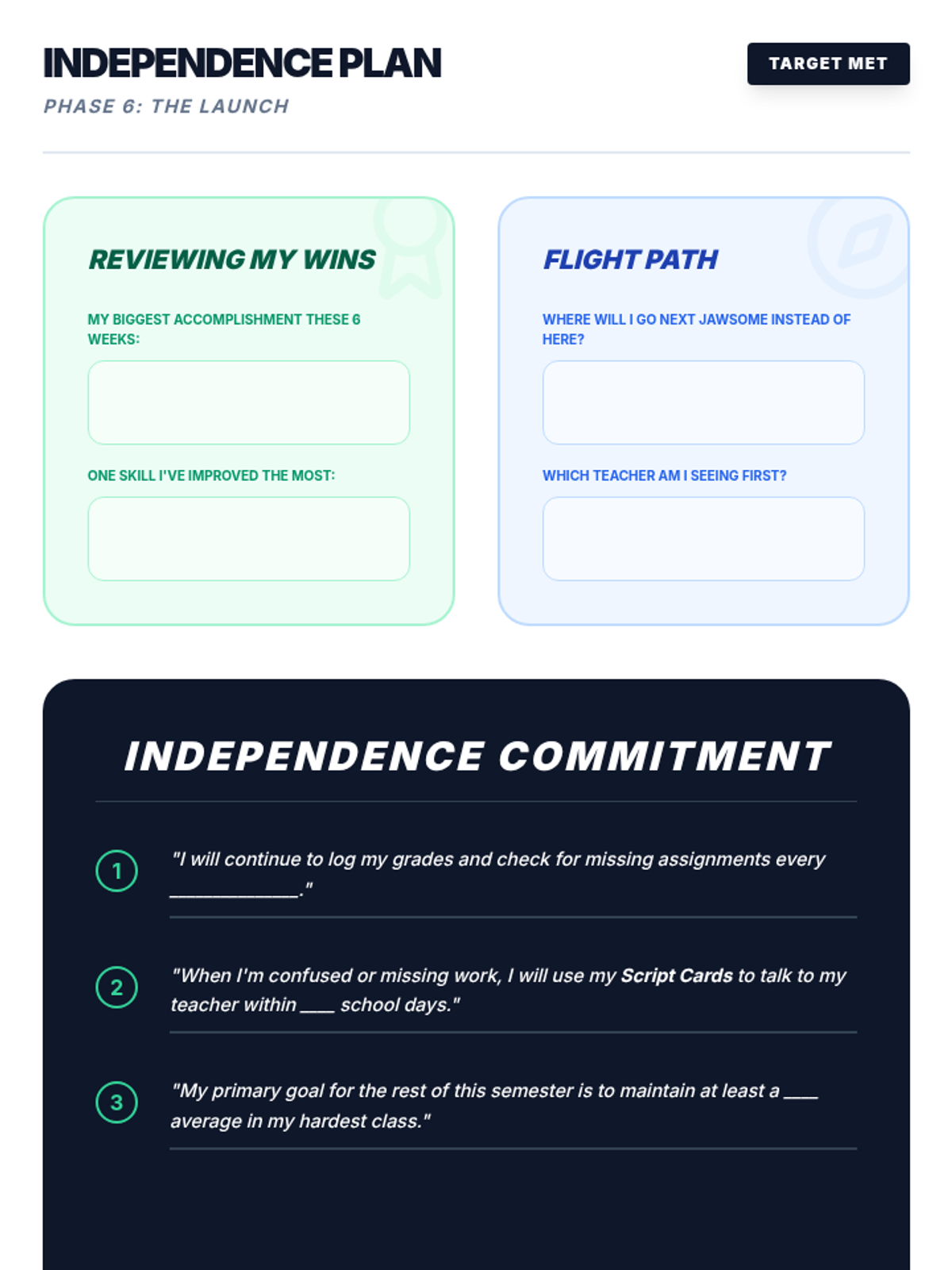
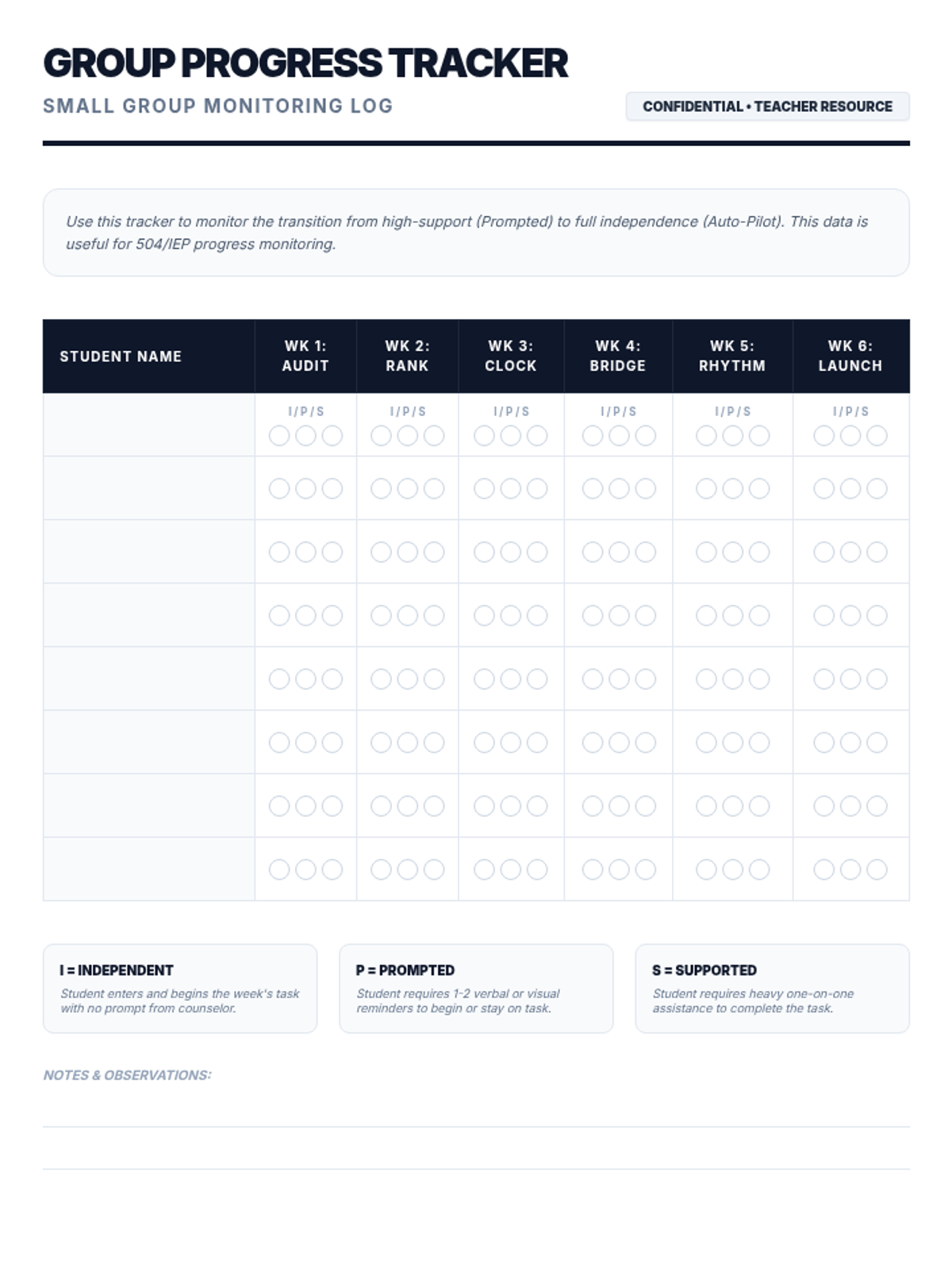
Preparing for independence. Students review progress reports and finalize a plan for seeking teacher support autonomously.
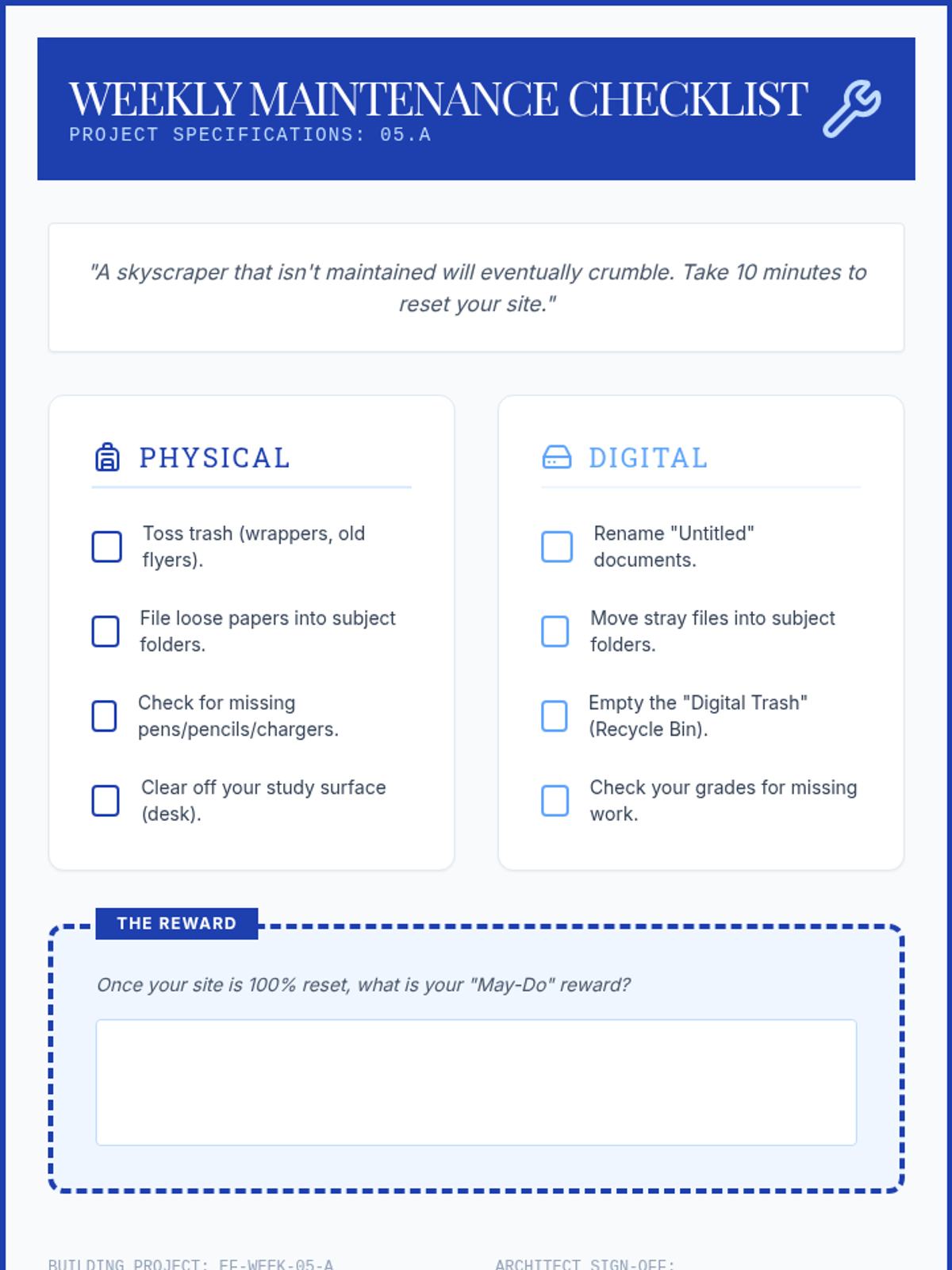
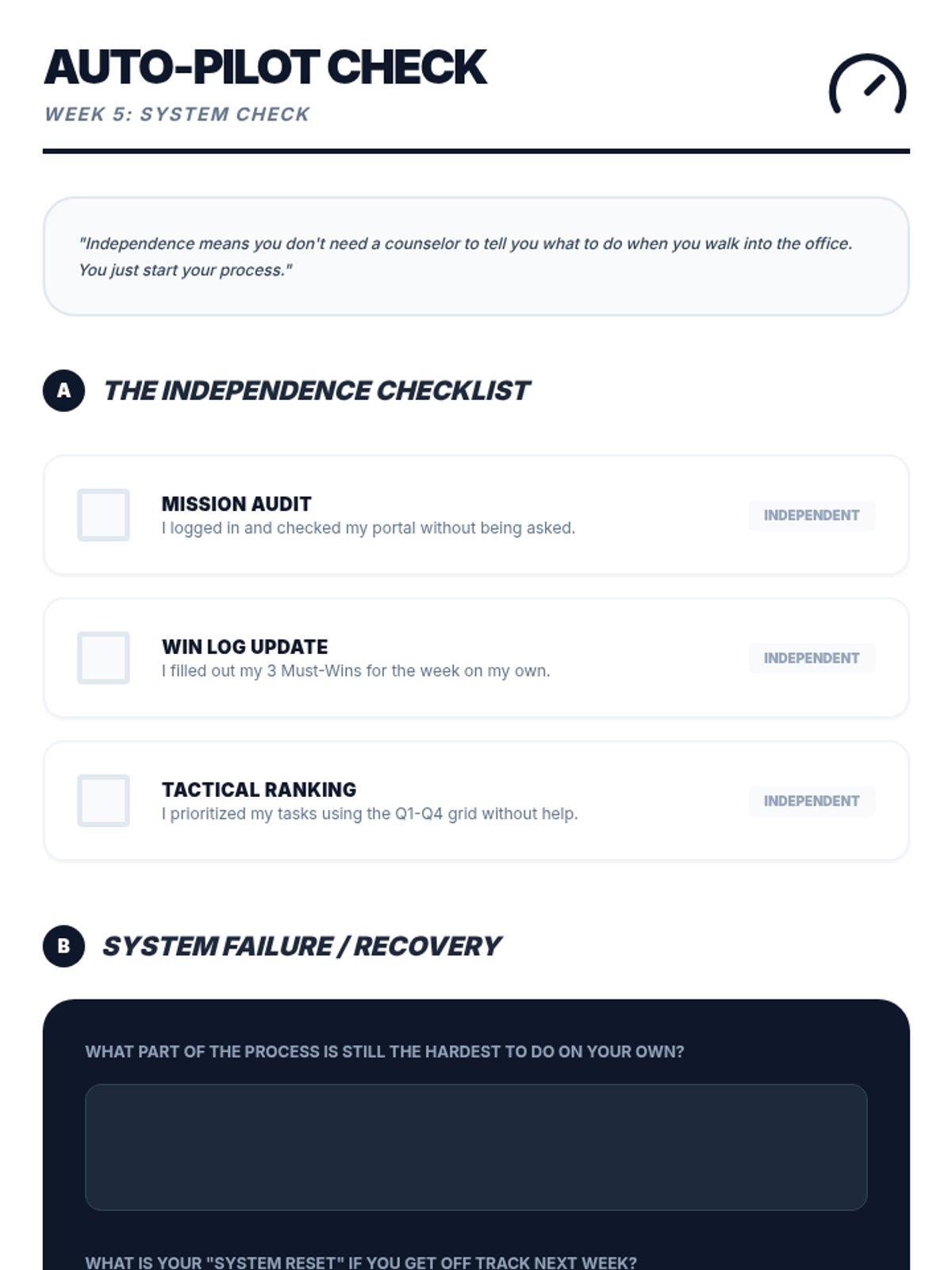
Establishing consistent habits and routines. Students refine their planning process to require less counselor prompting.
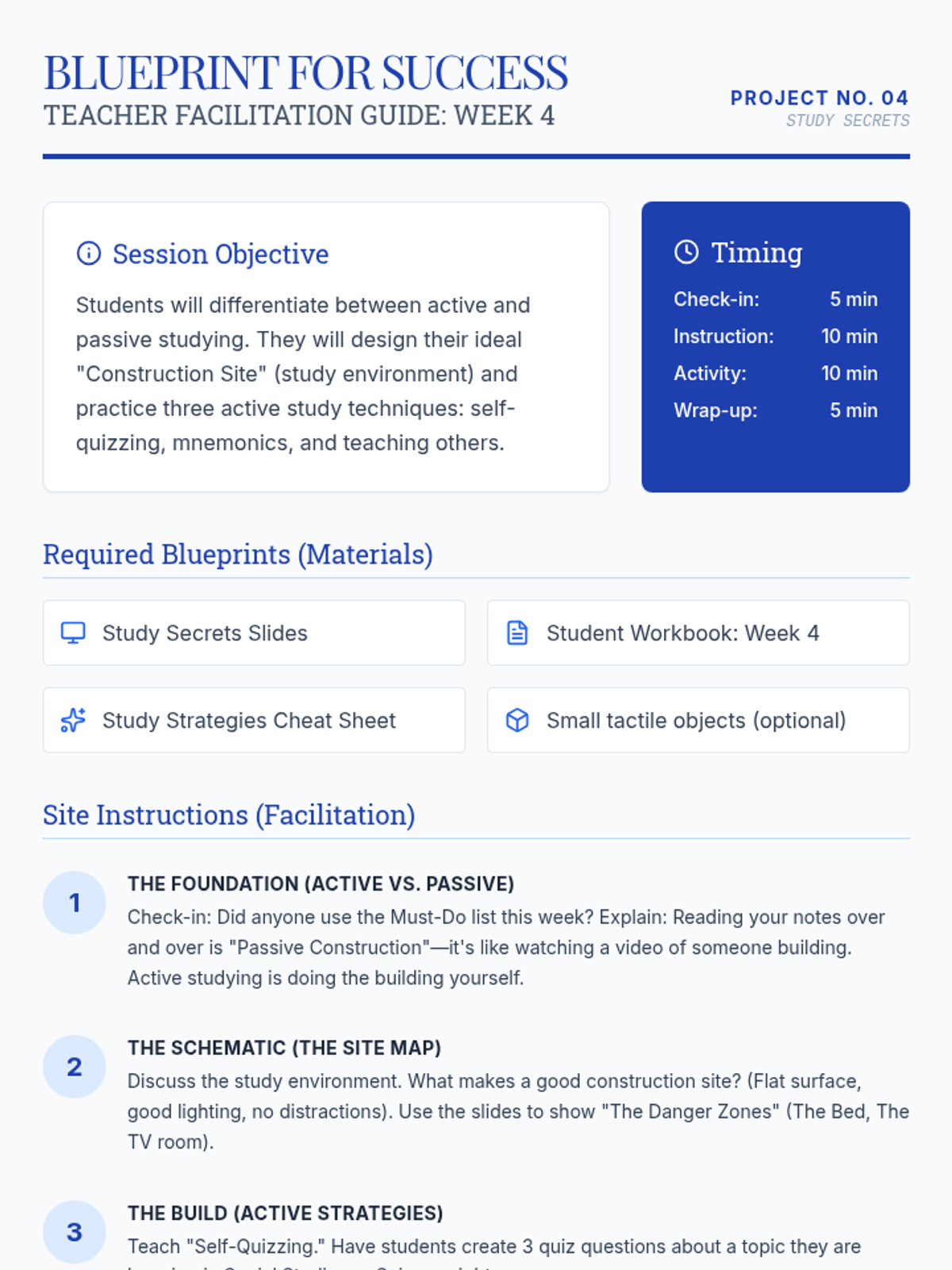
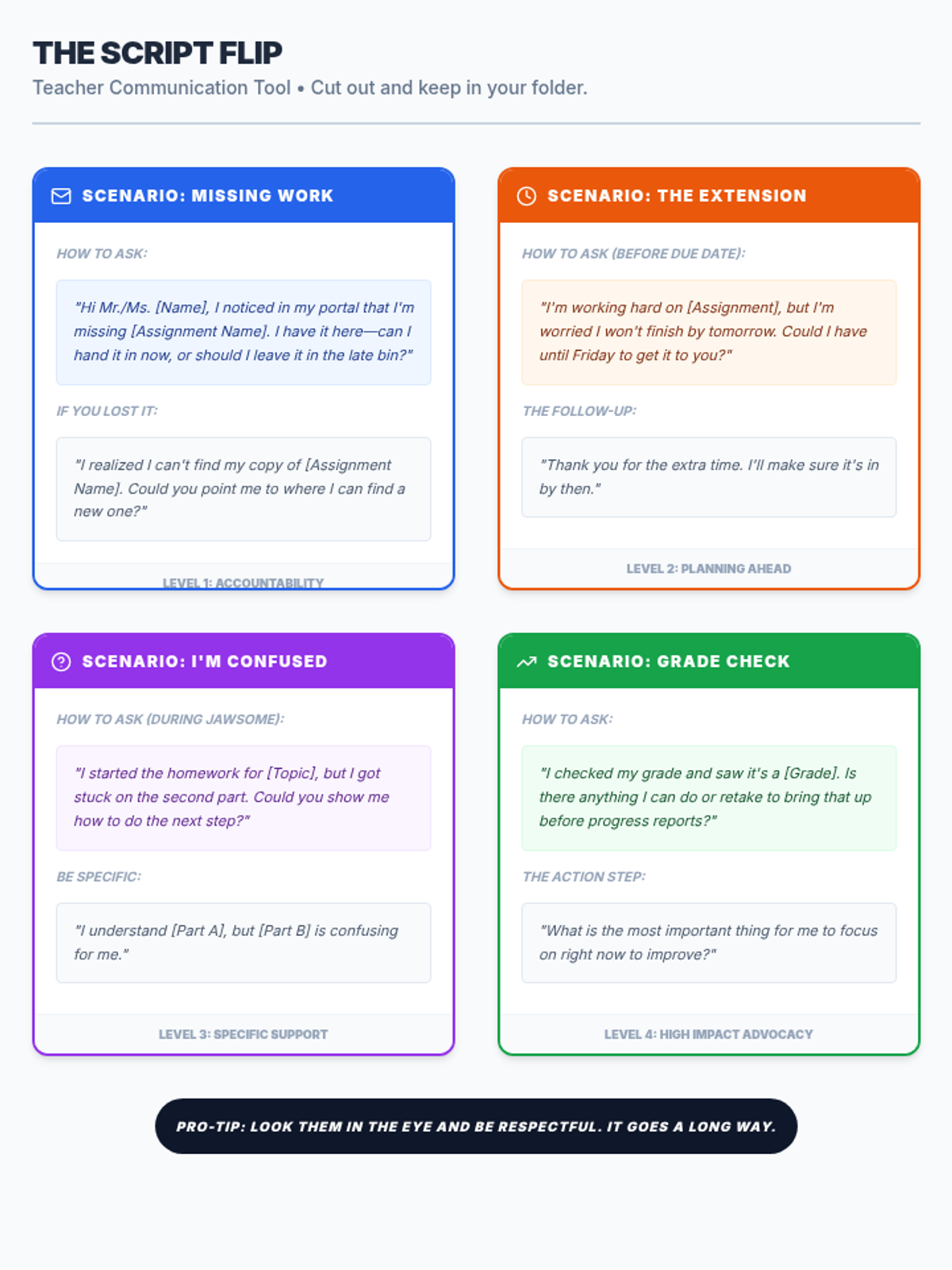
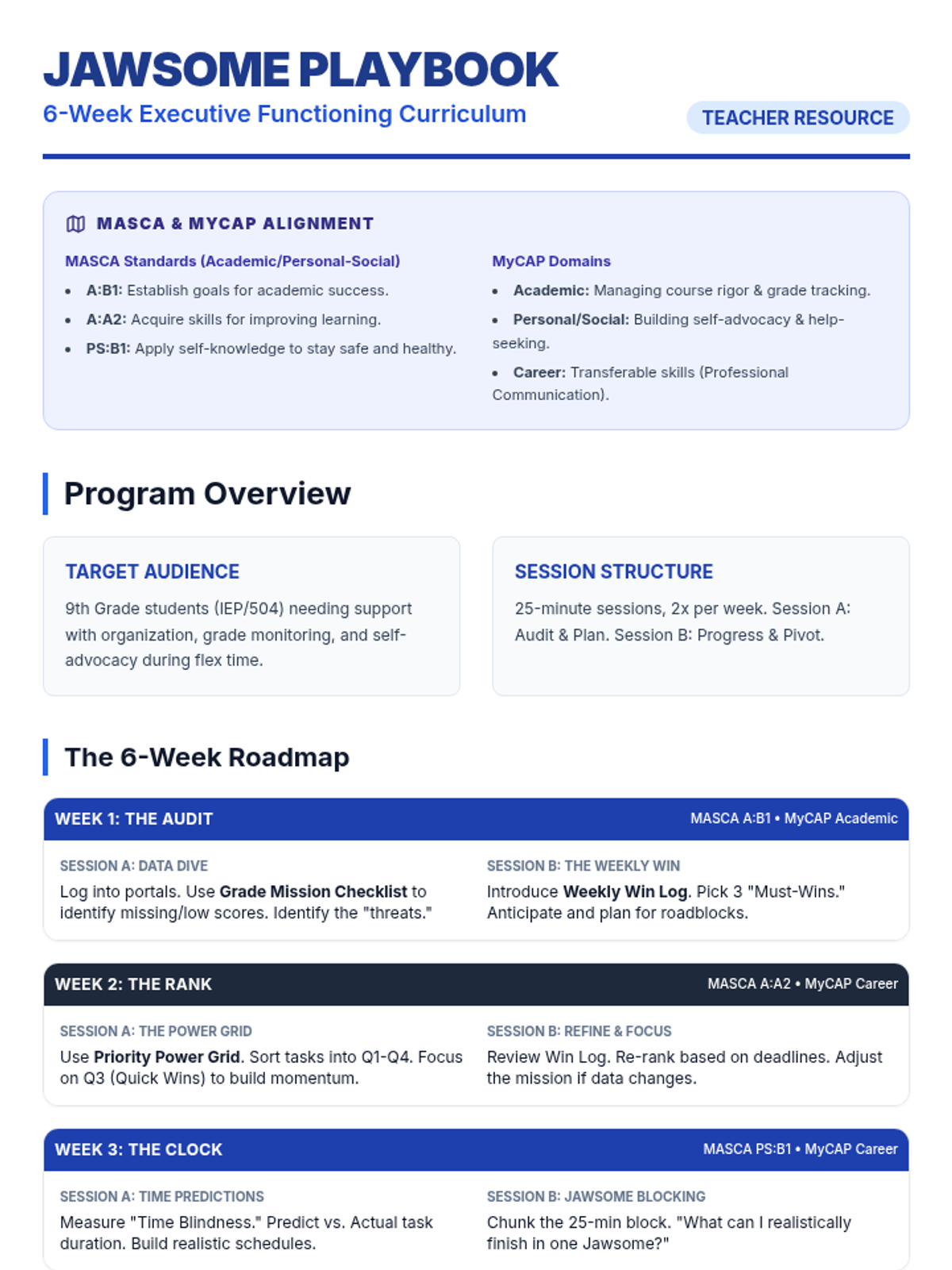
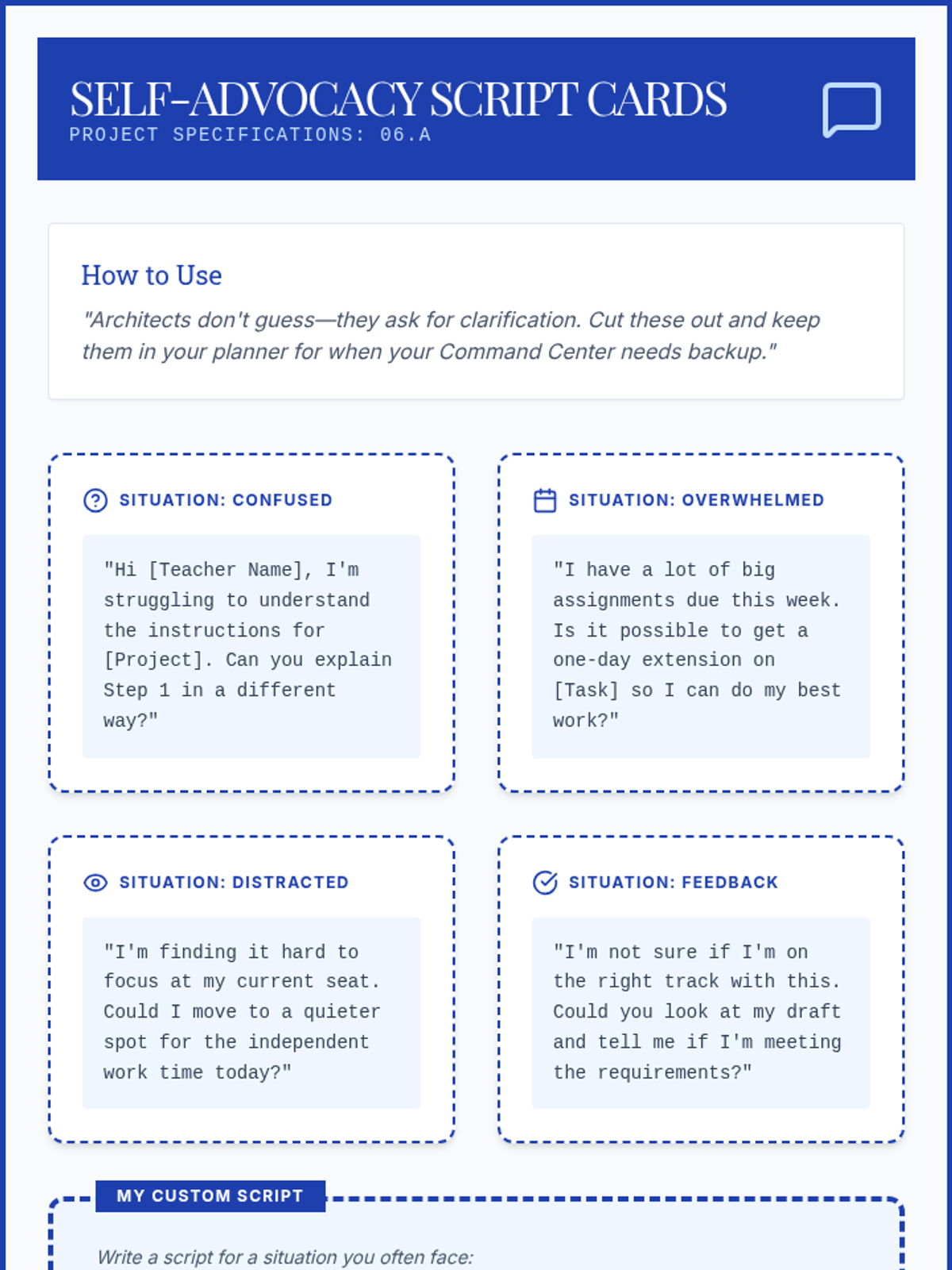
Developing teacher communication skills. Students practice scripts for asking for help, clarifying assignments, and negotiating deadlines.
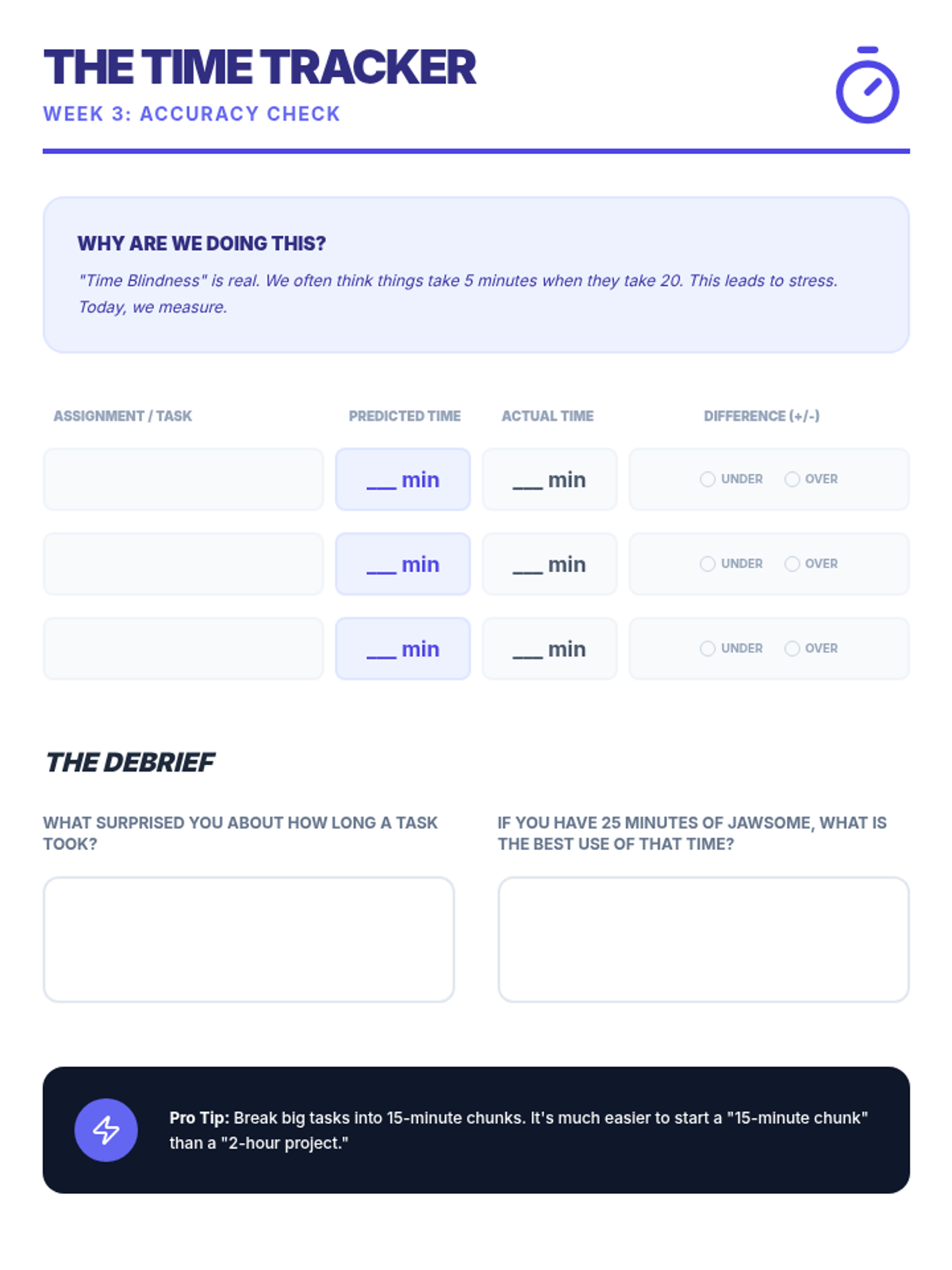
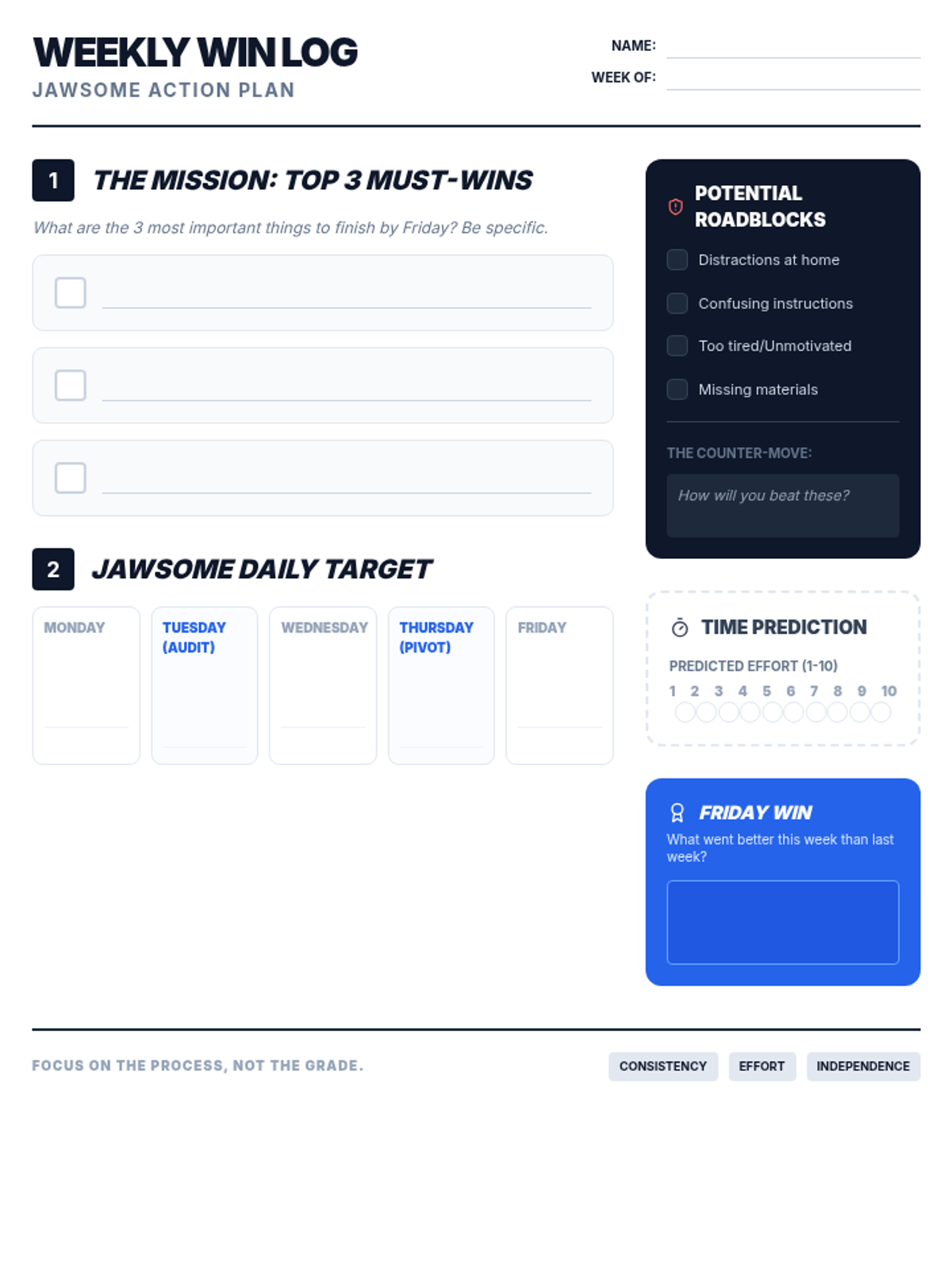
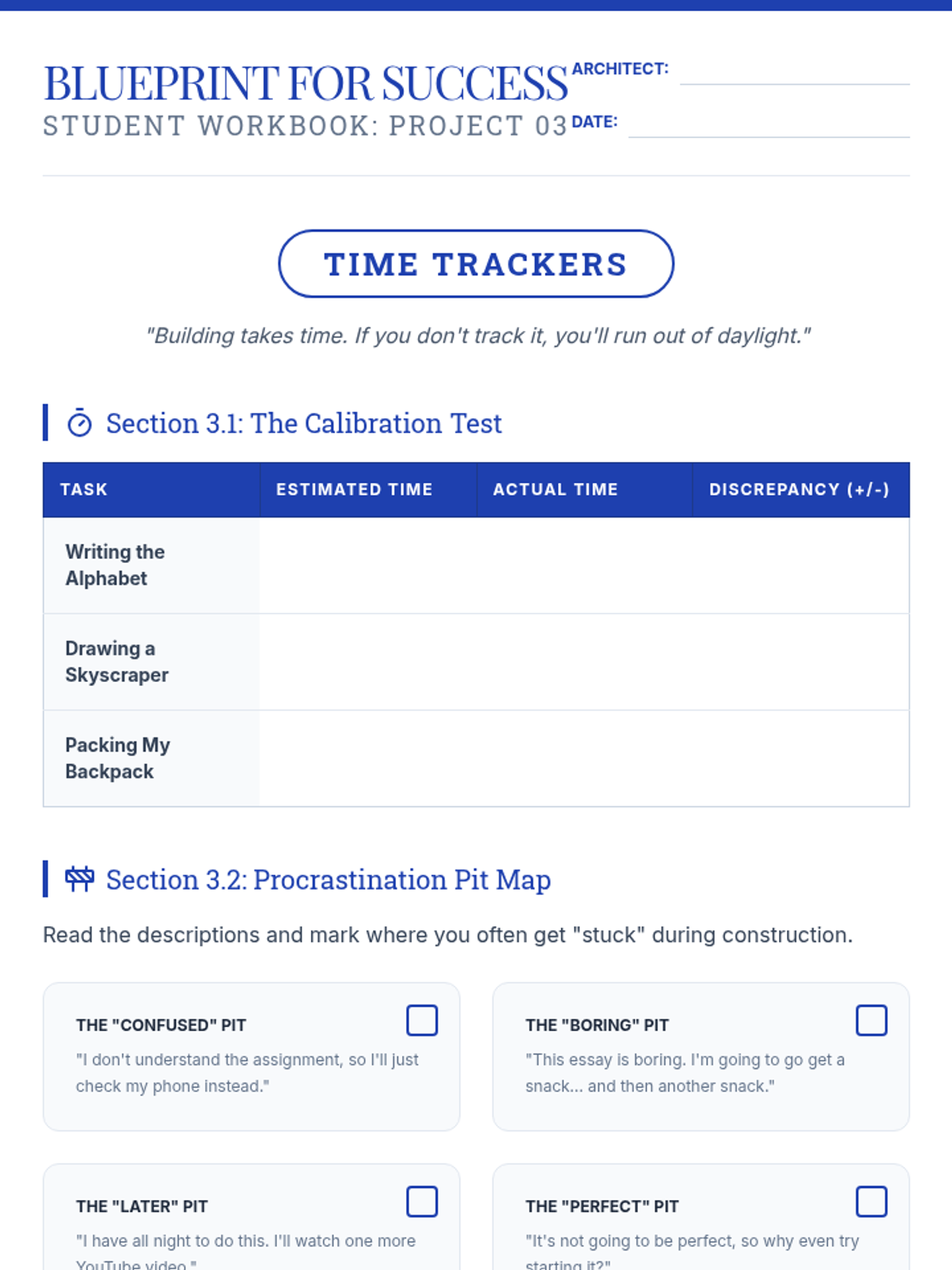
Time estimation and scheduling. Students practice predicting how long tasks take and slotting them into their Jawsome flex time.
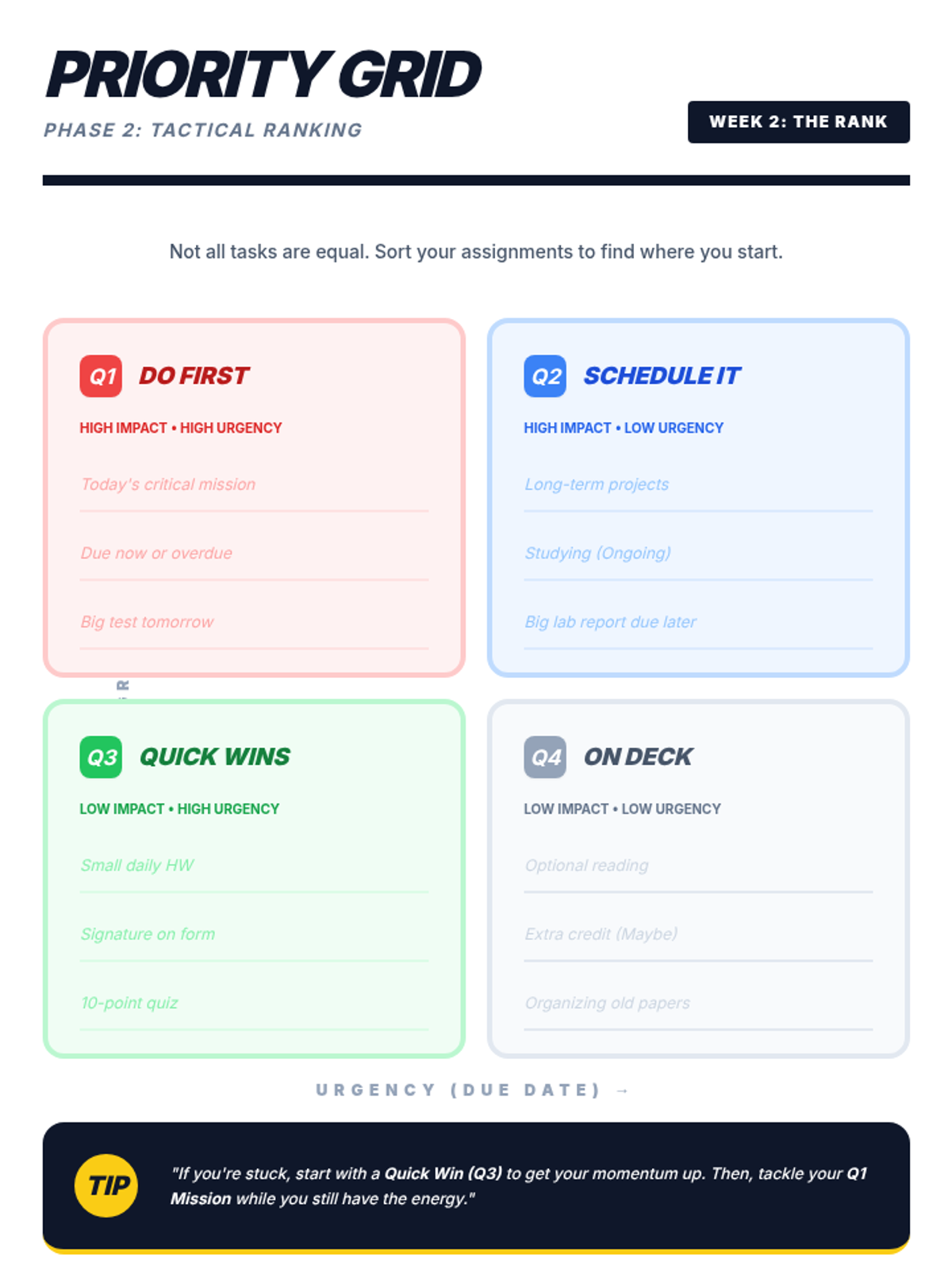
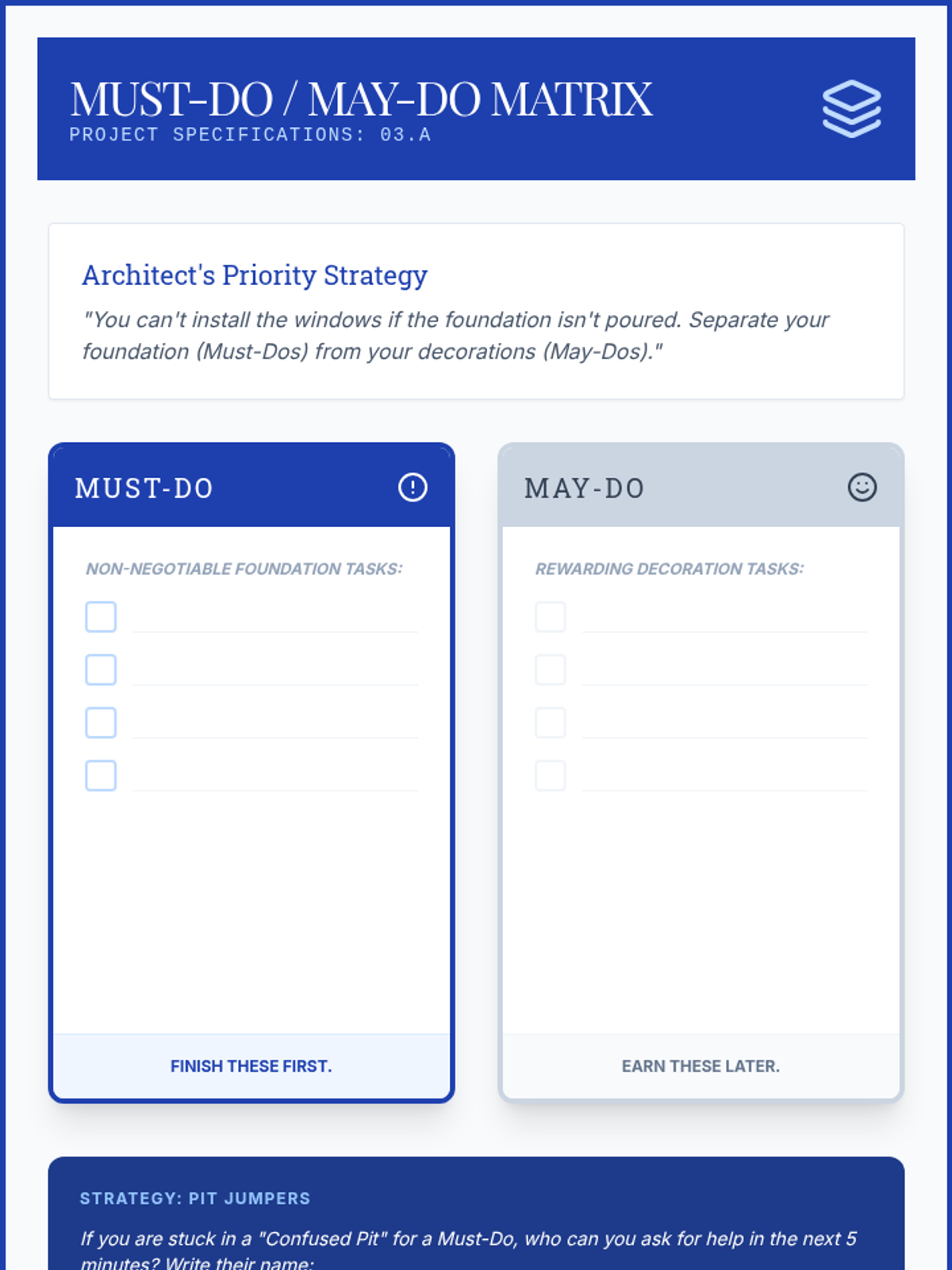
Focus on categorization and prioritization. Students learn to distinguish between urgent tasks and long-term projects using a priority matrix.
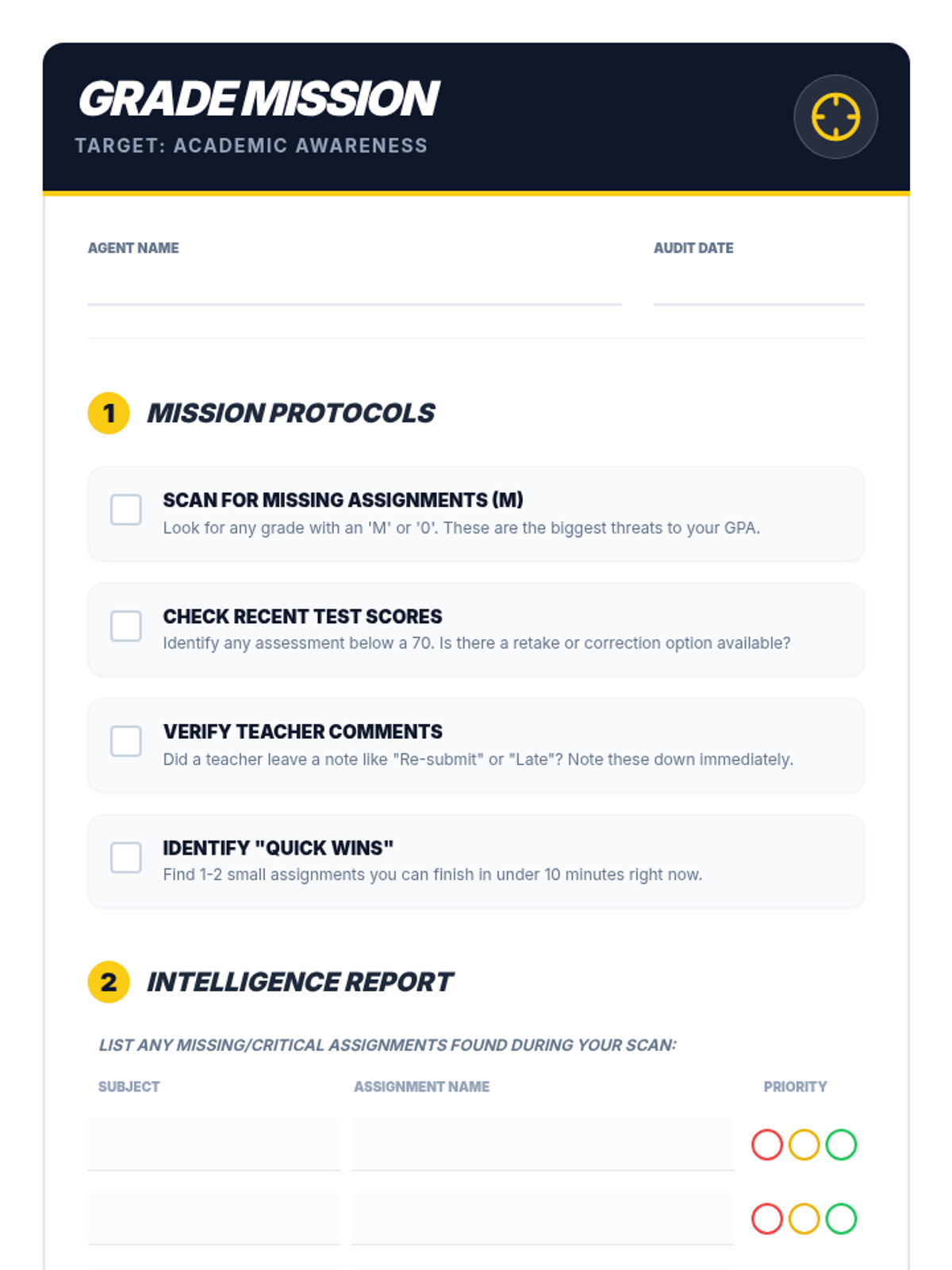
Introduction to the "Grade Audit" process. Students learn to navigate their online portals efficiently and identify missing assignments.
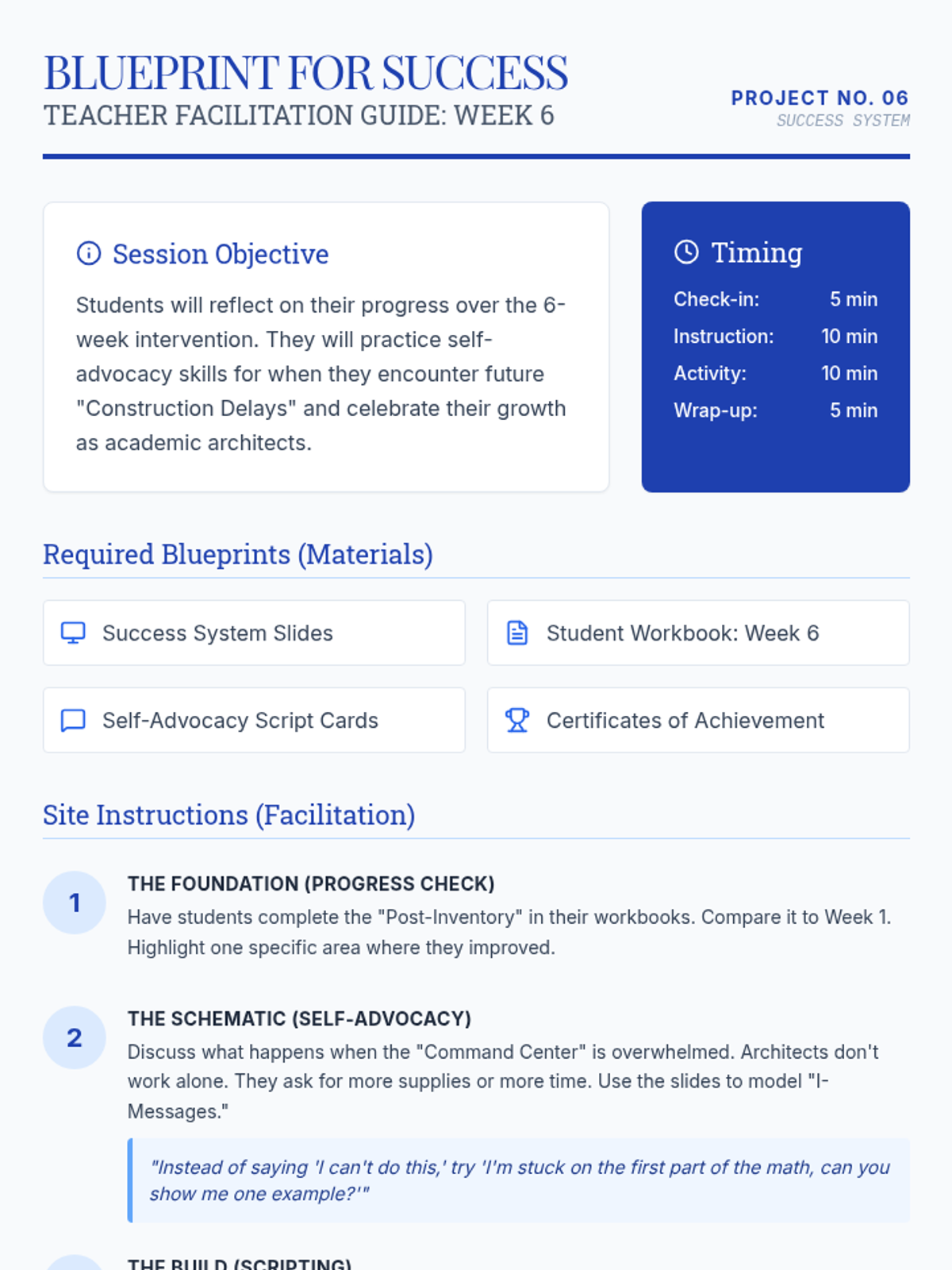
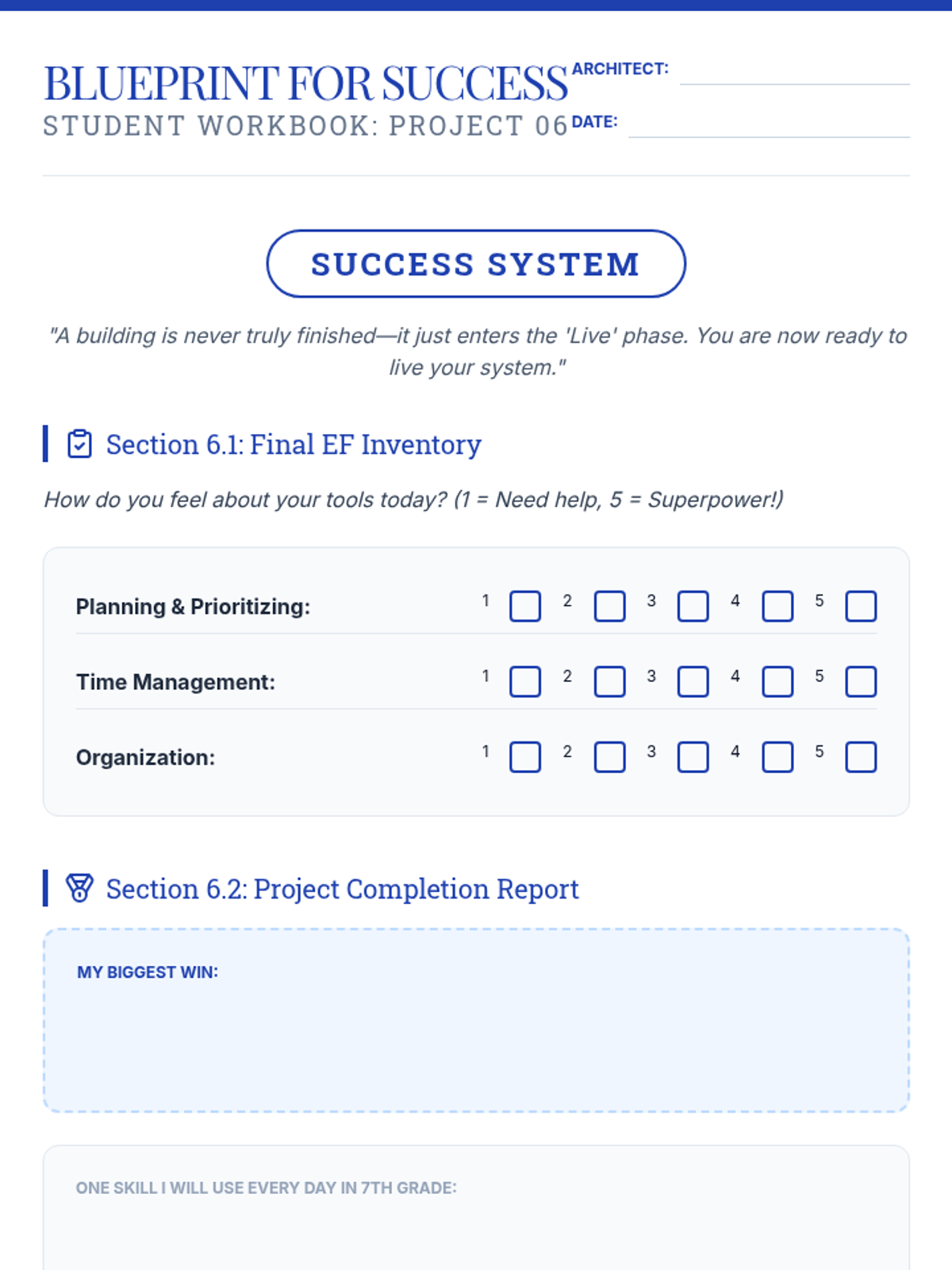
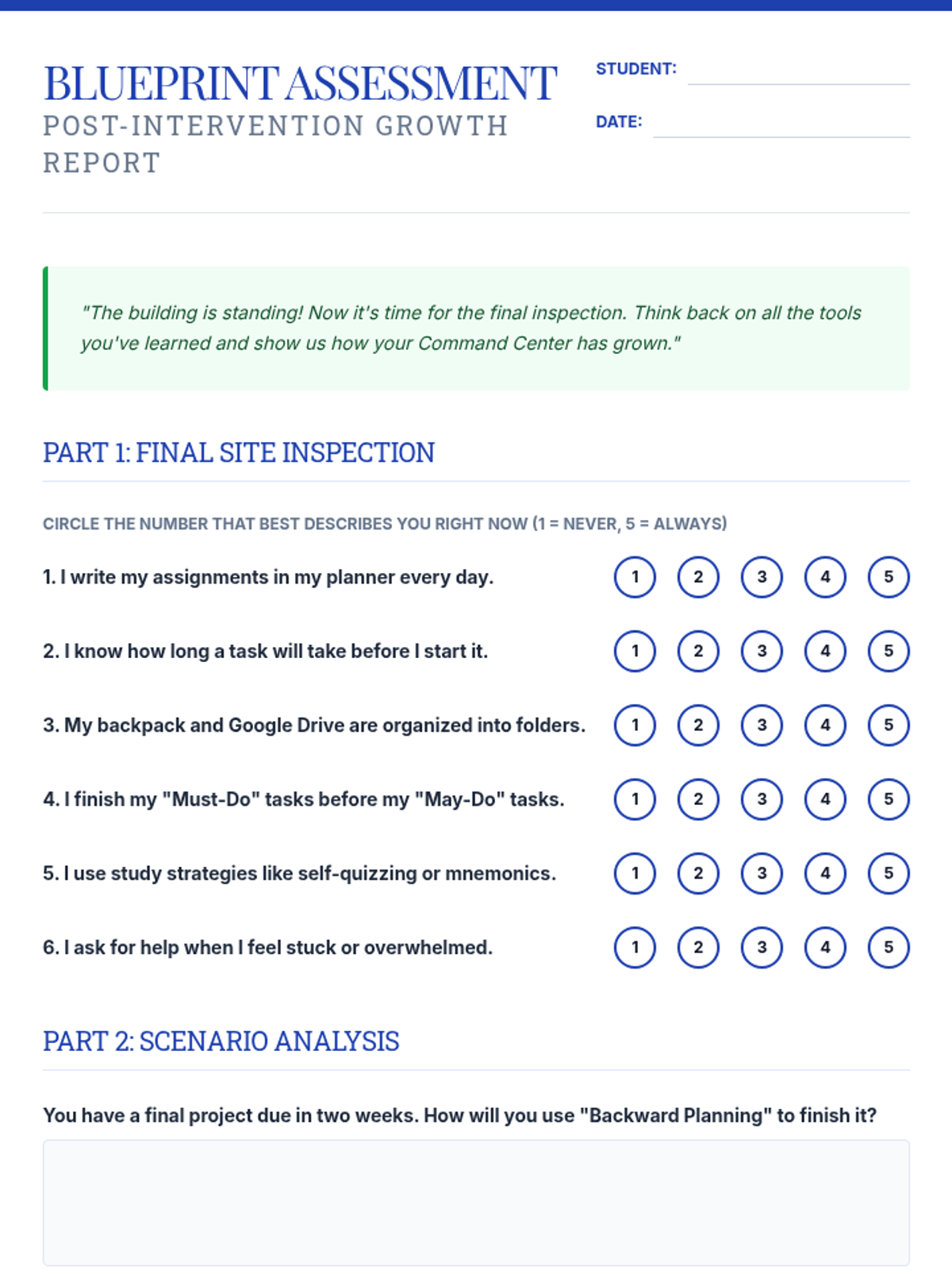
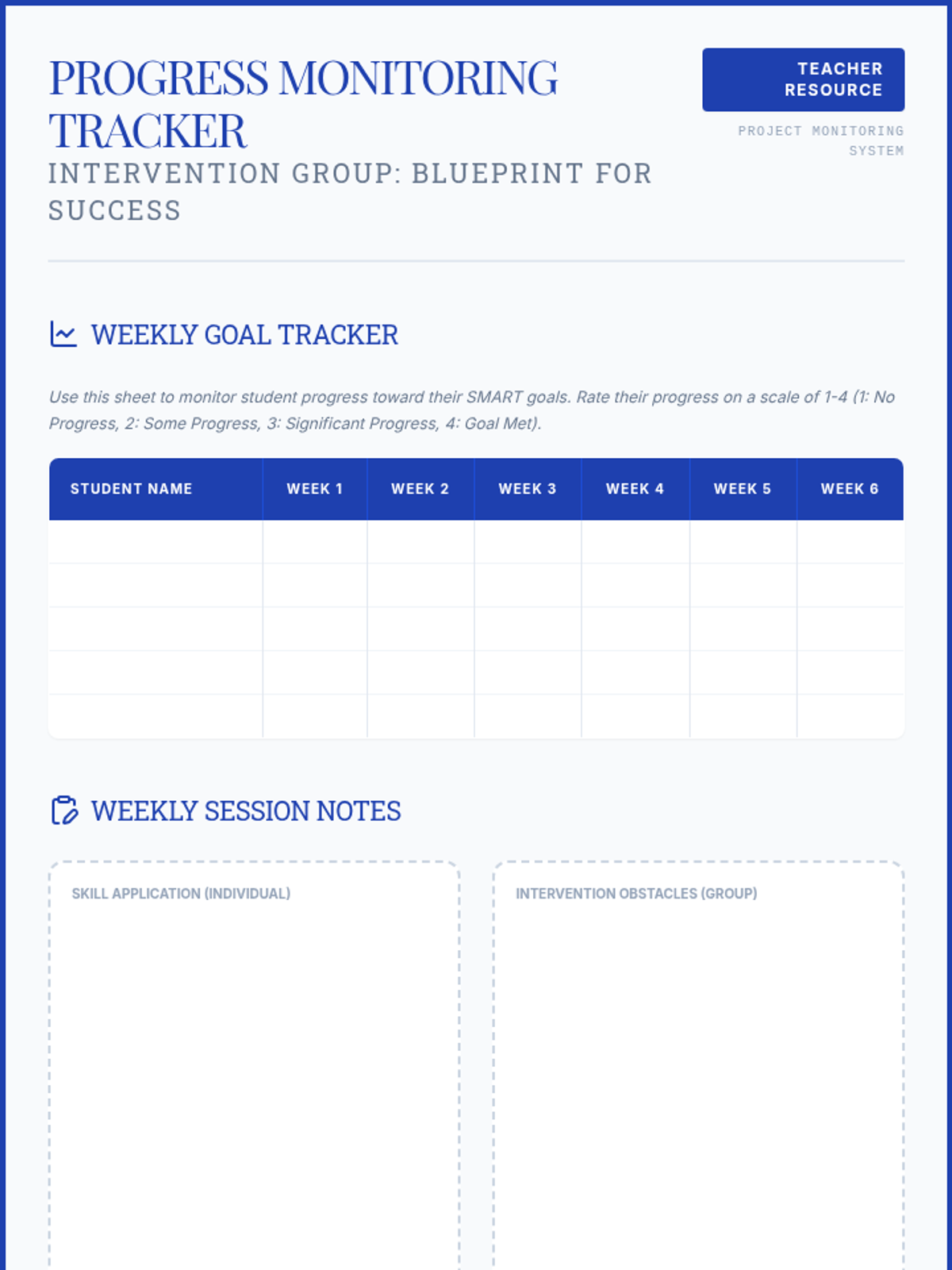
Reviewing skills learned, troubleshooting obstacles, and practicing self-advocacy for future success.
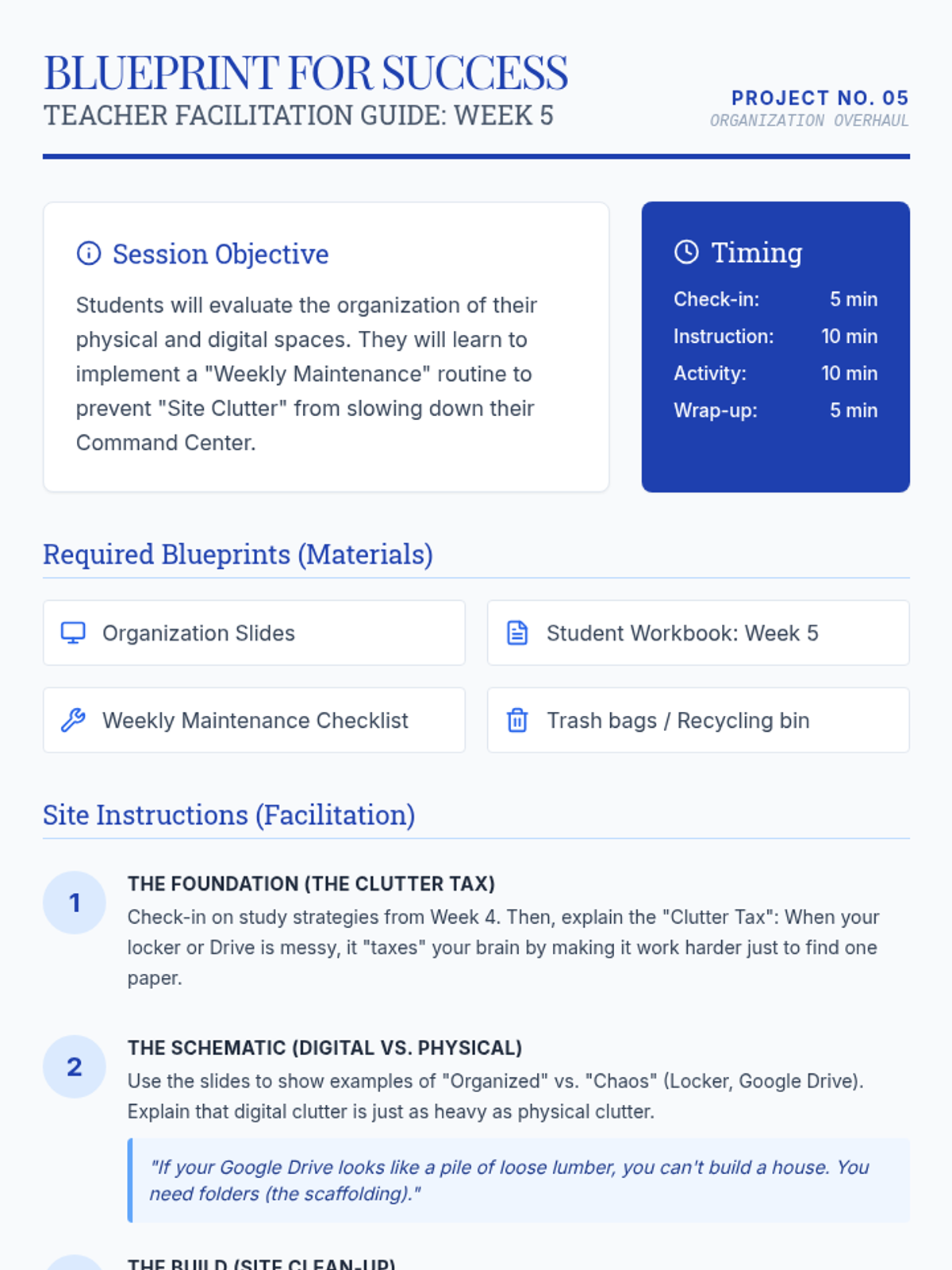
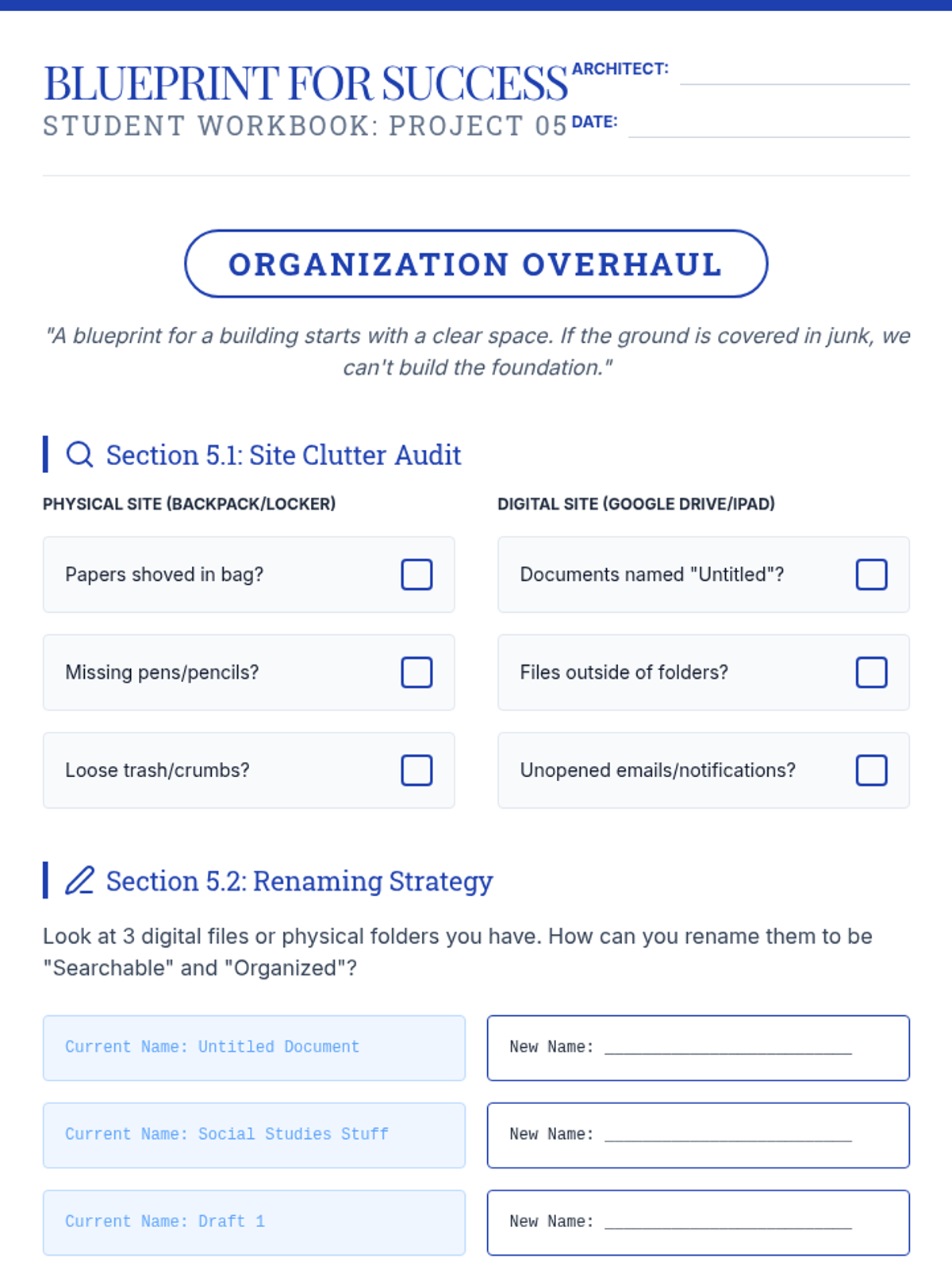
Organizing physical and digital spaces, establishing routines for material management.
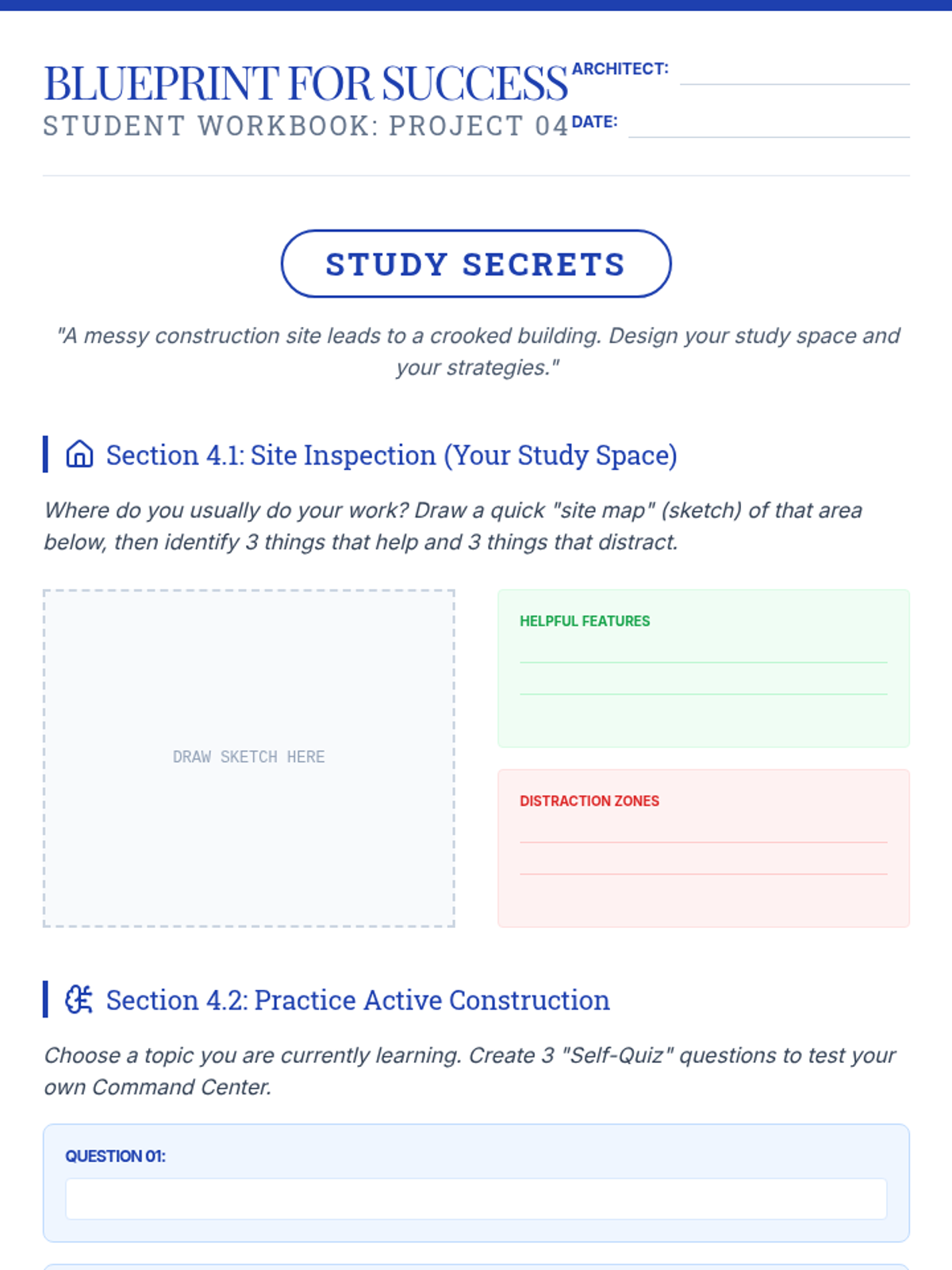
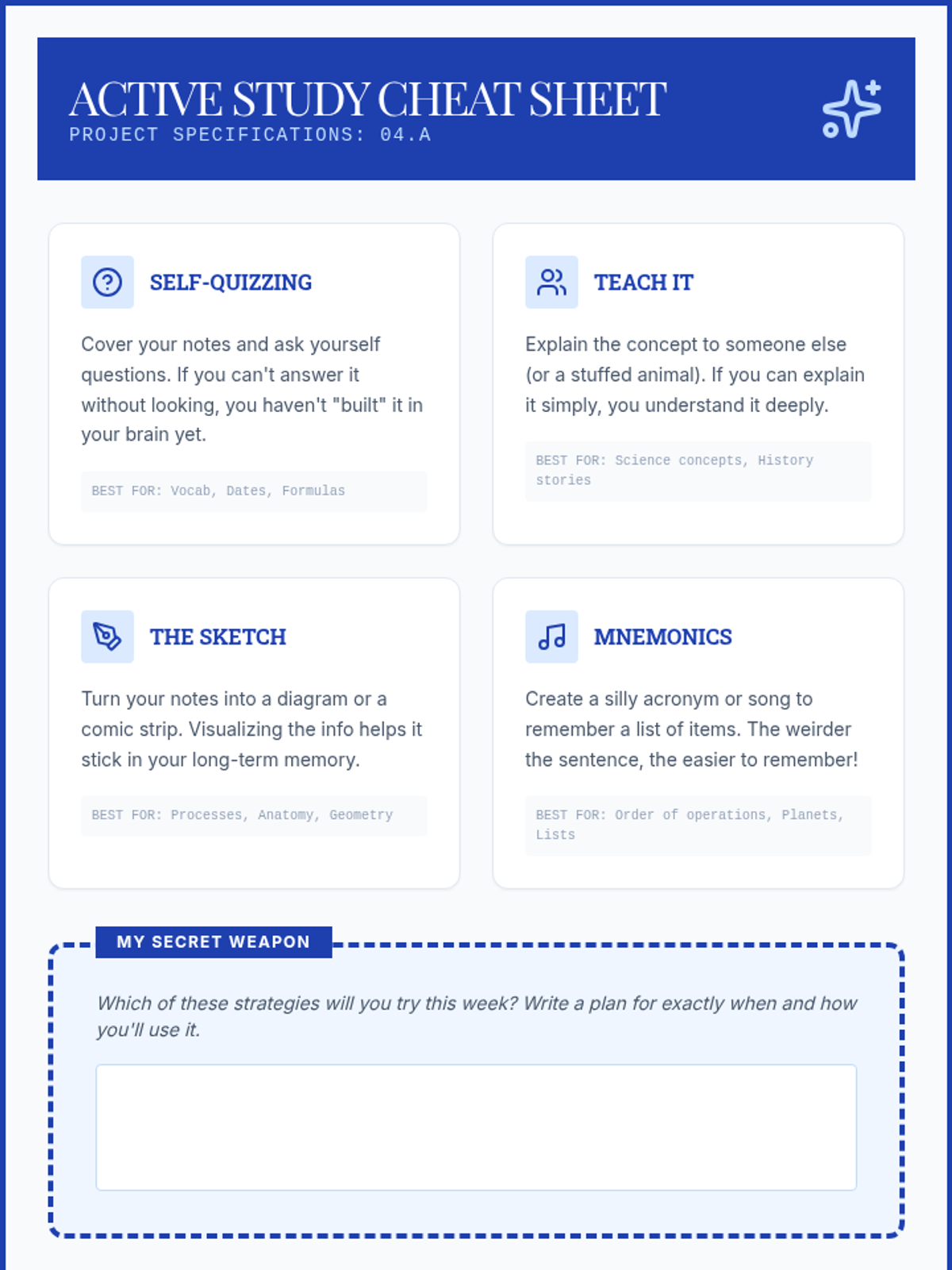
Developing active study habits, creating optimal study environments, and memory enhancement techniques.
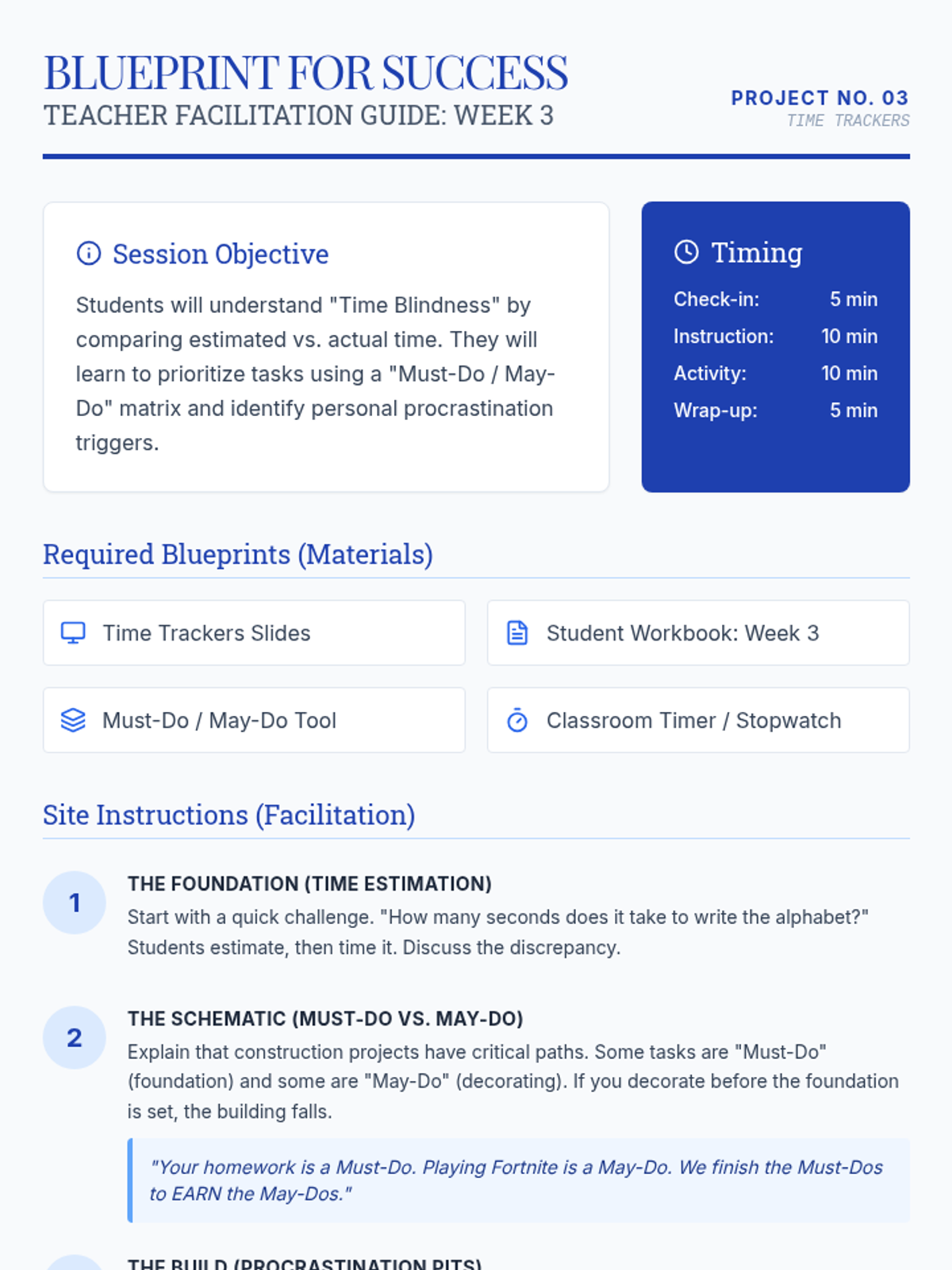
Strategies for time estimation, prioritization of tasks, and overcoming procrastination.
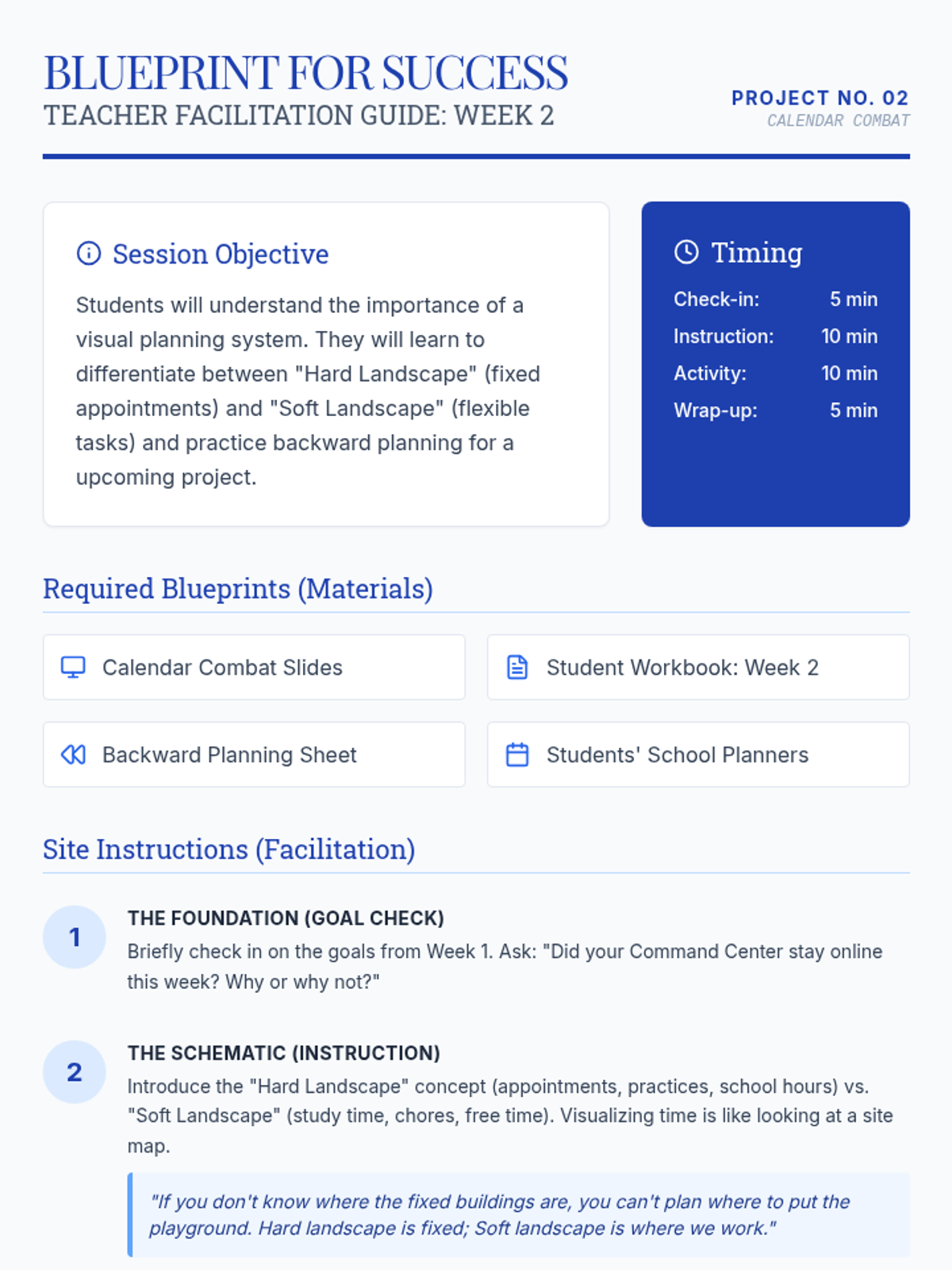
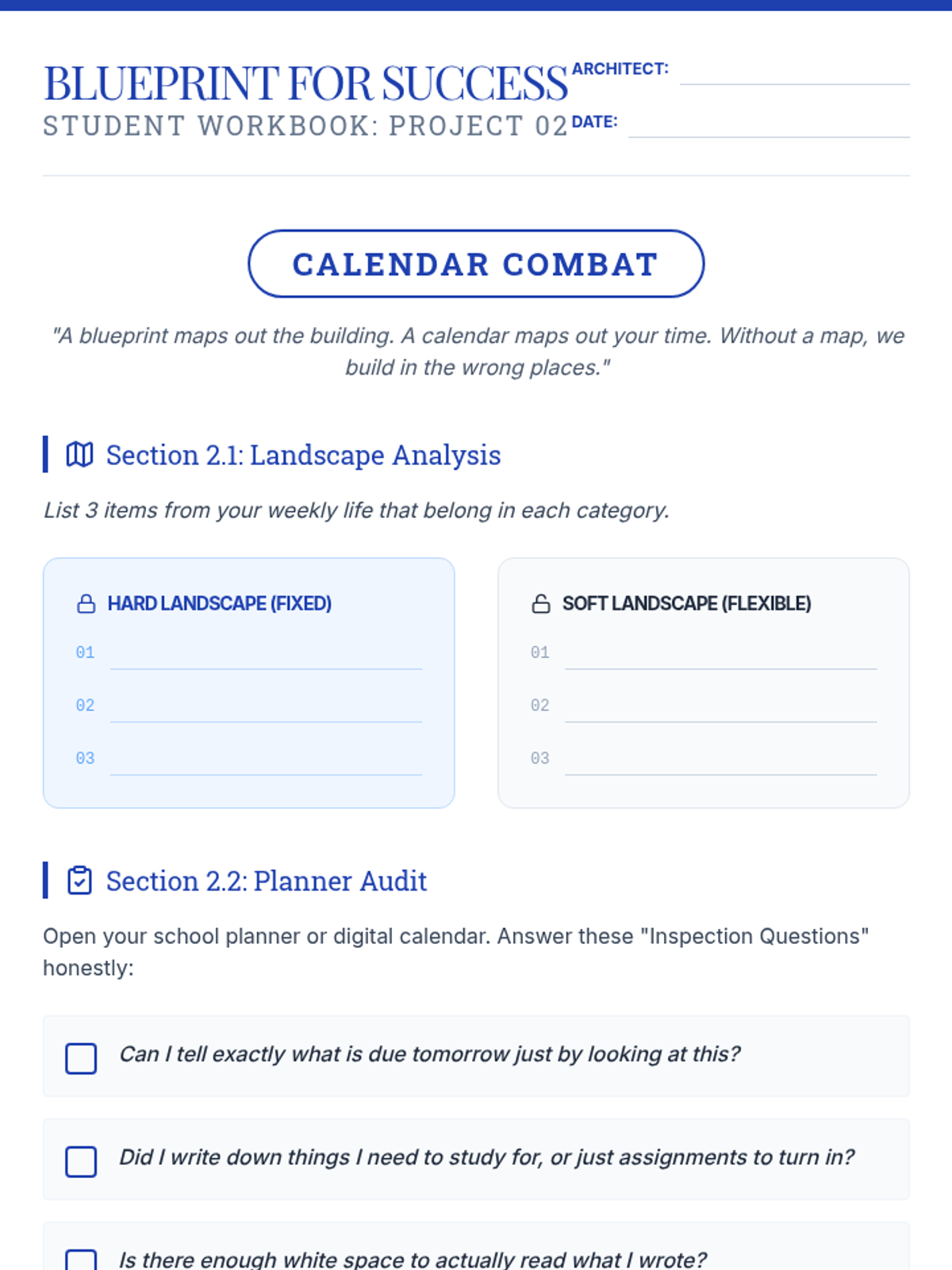
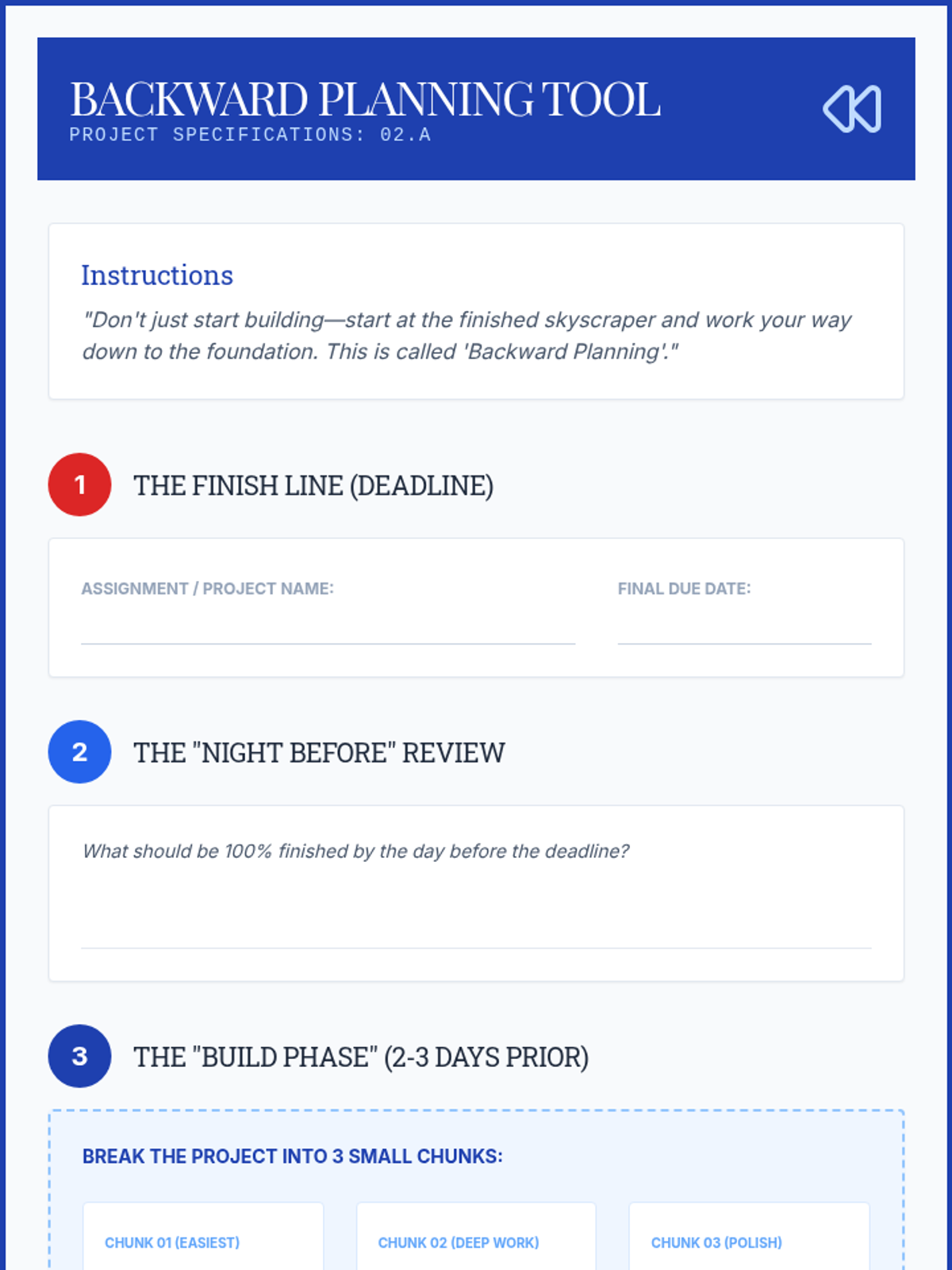
Focusing on academic planning, using planners effectively, and the art of backward planning for long-term projects.
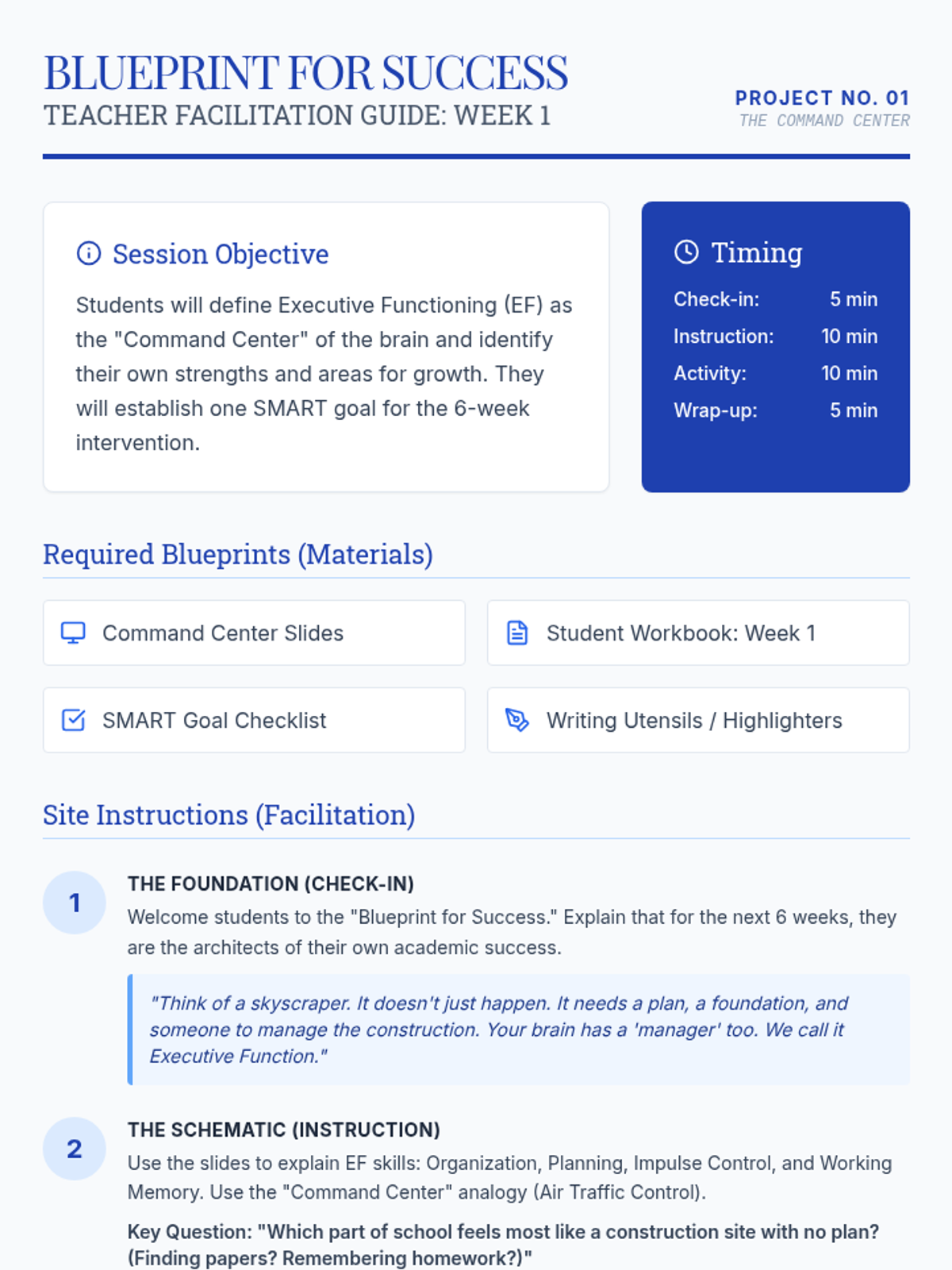
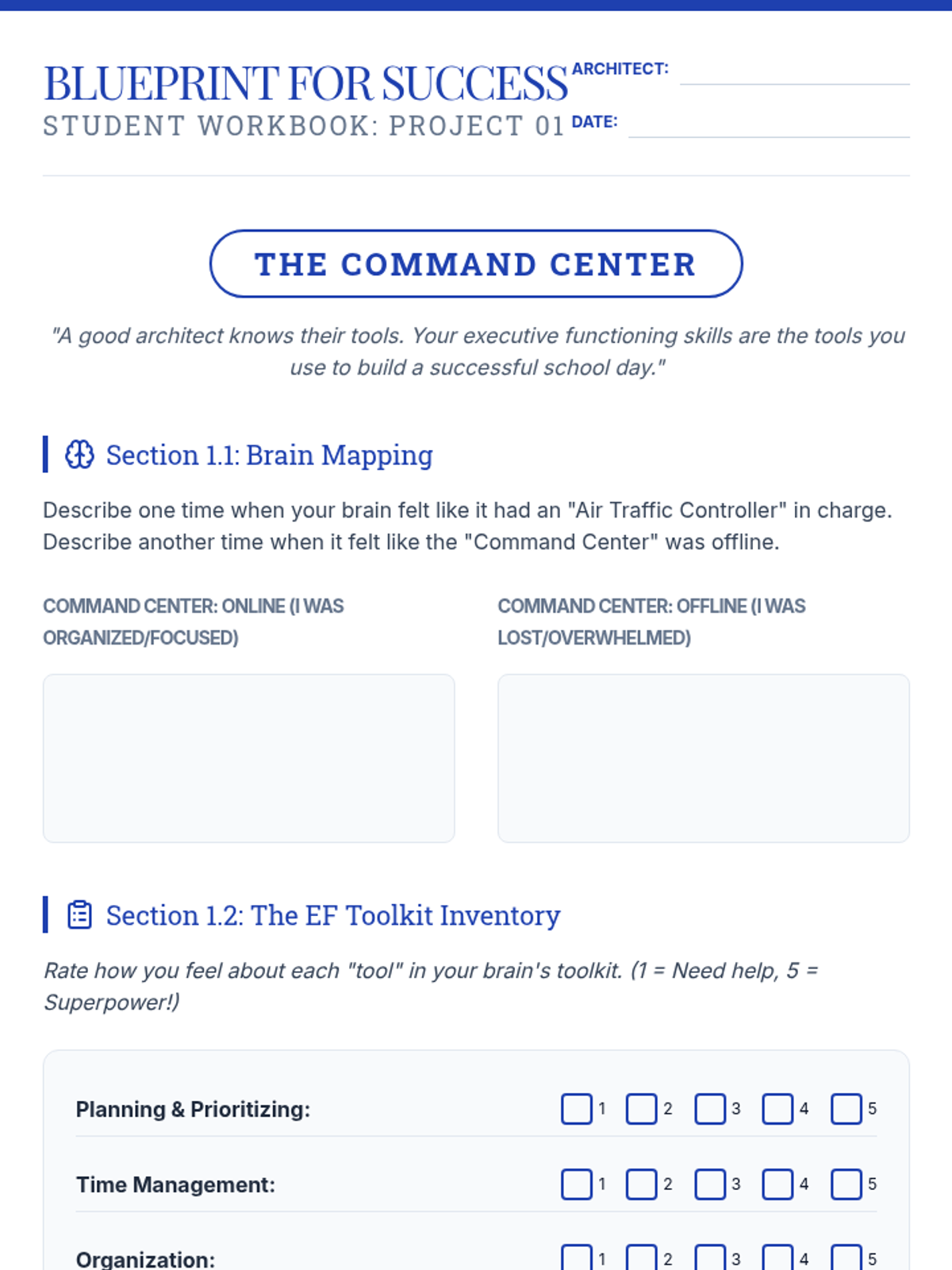
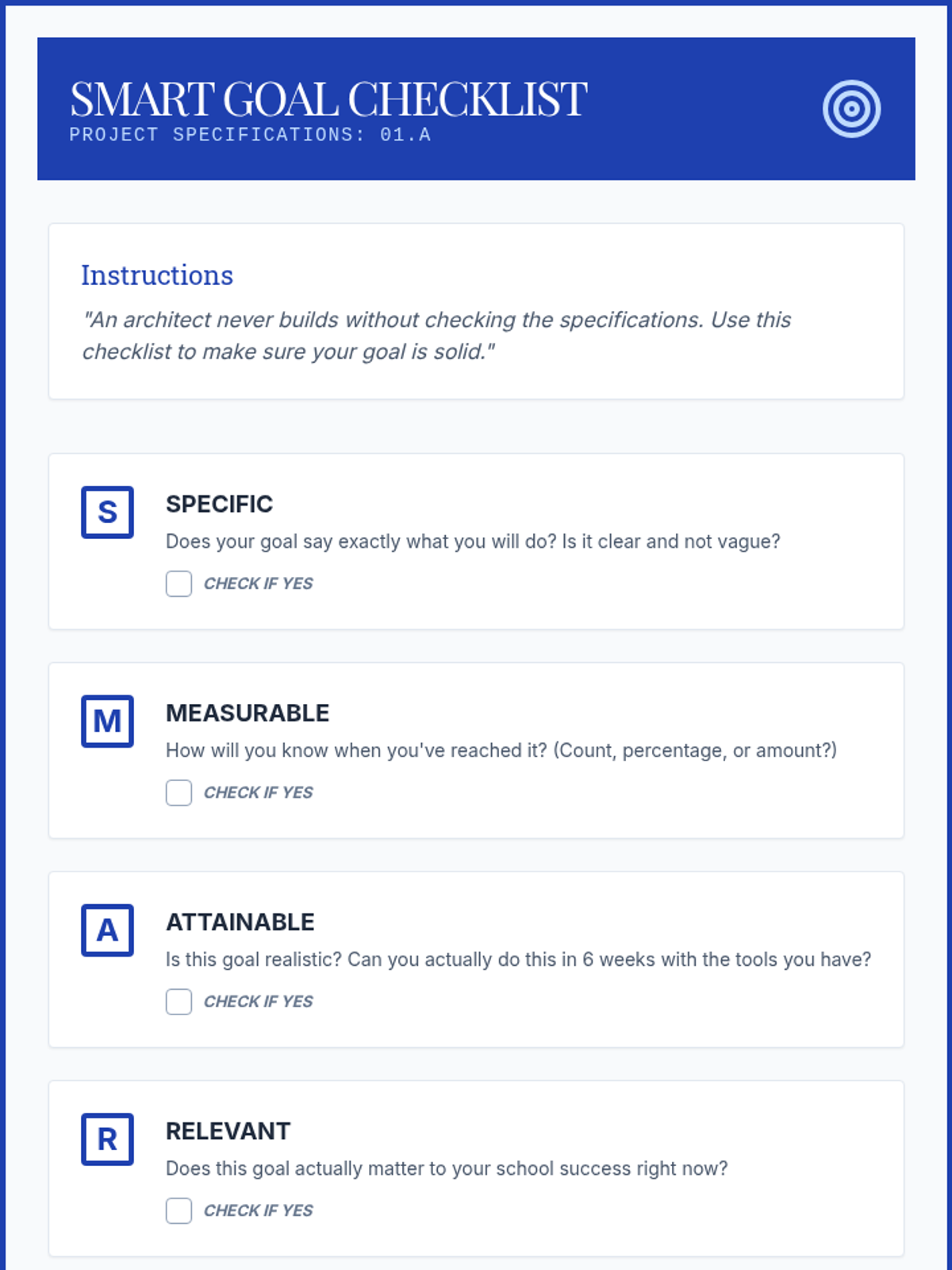
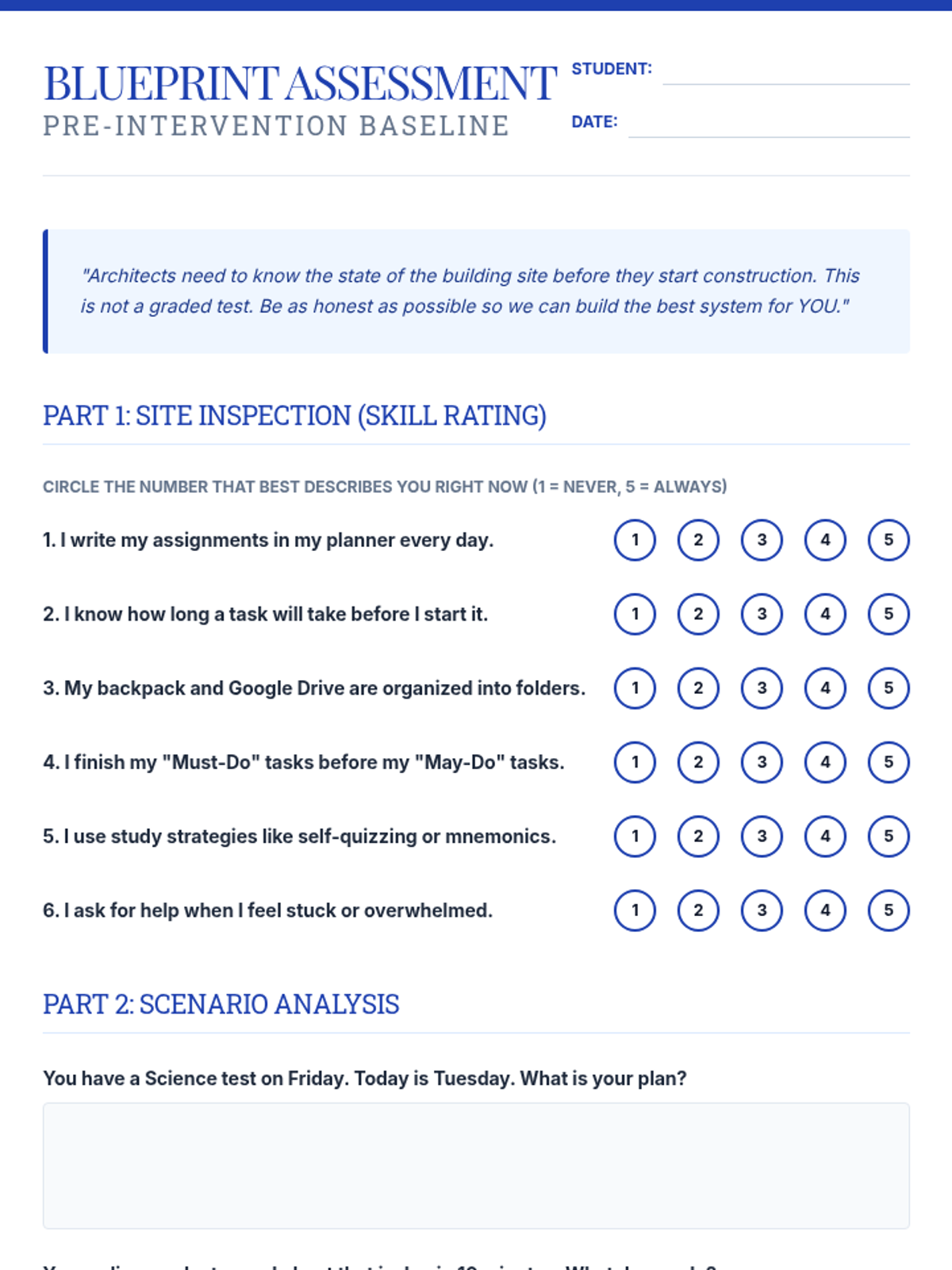
Introduction to executive functioning as the brain's 'Command Center' and setting initial SMART goals for the 6-week program.
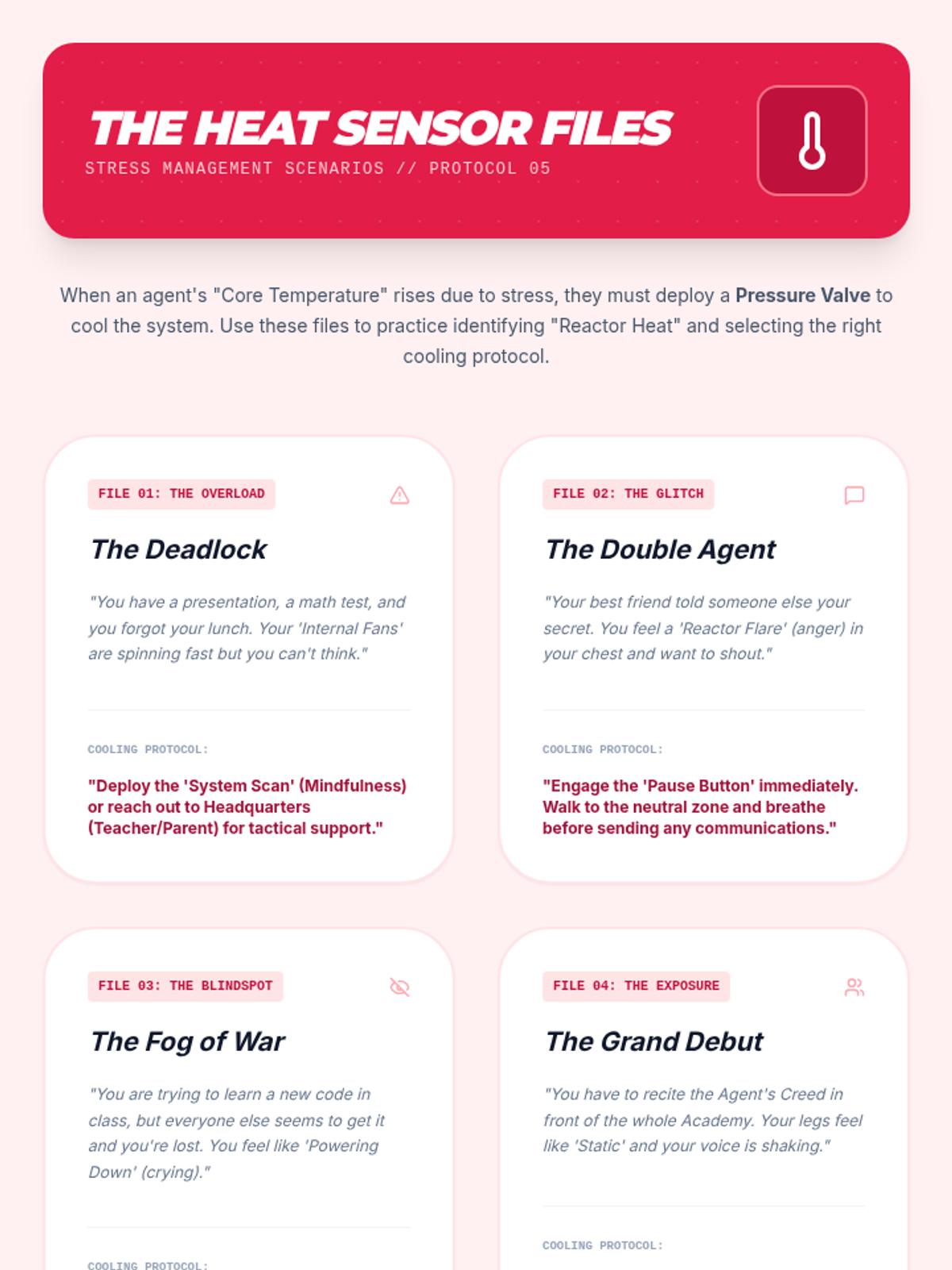
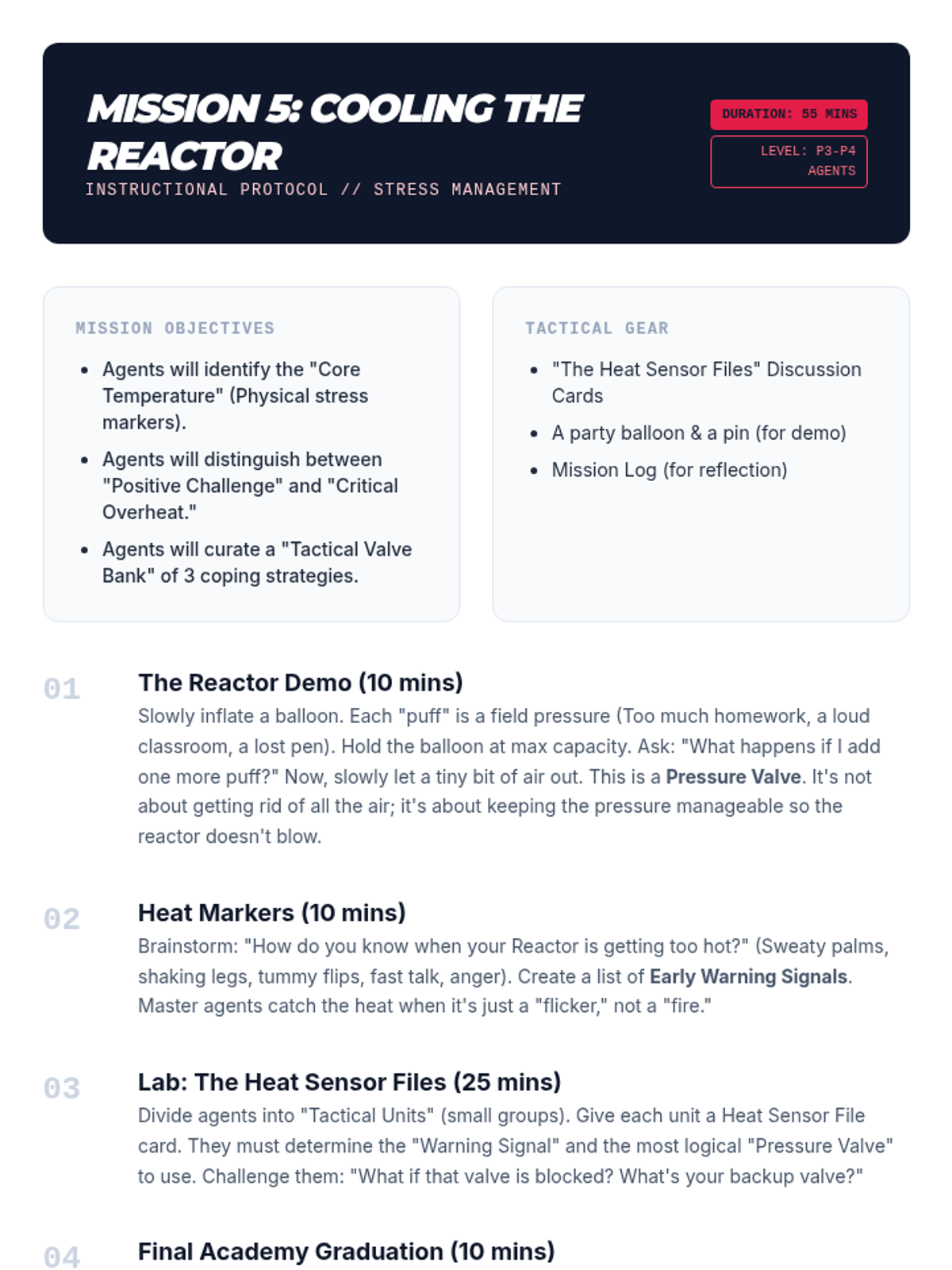
Agents learn to identify 'reactor heat' (stress) and use cooling valves to maintain operational status.
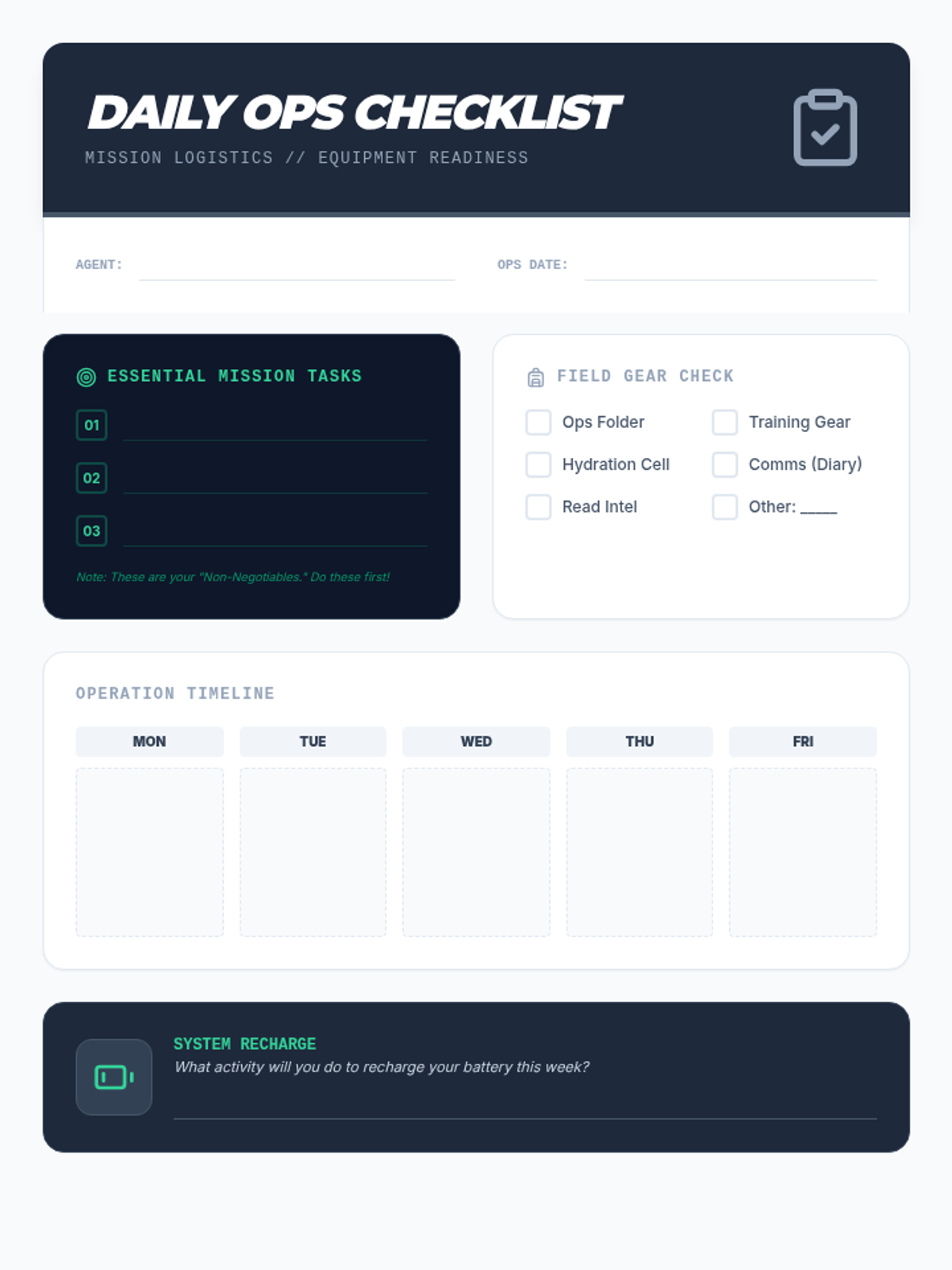
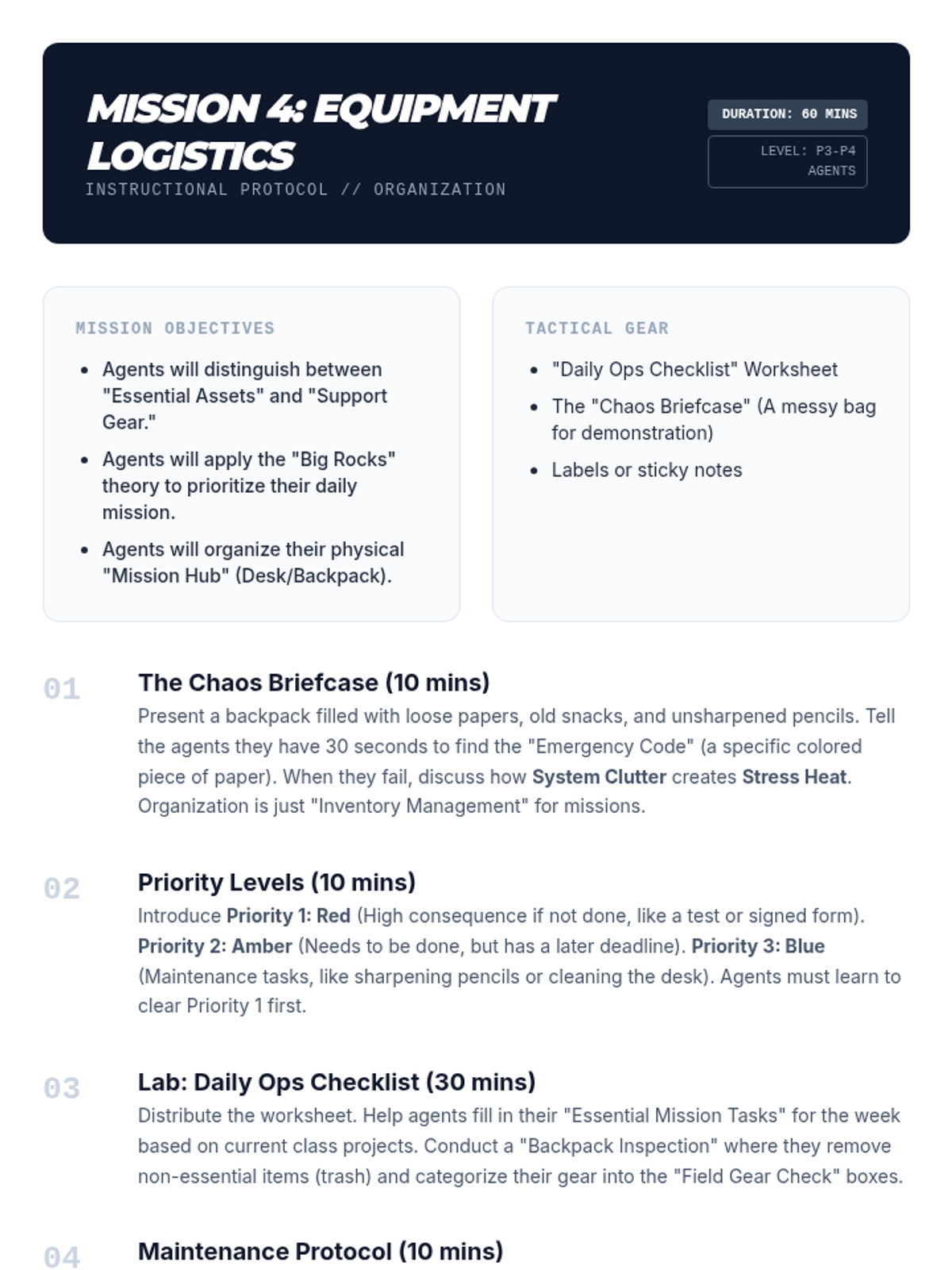
Agents master the logistics of their daily operations through effective planning and organization.
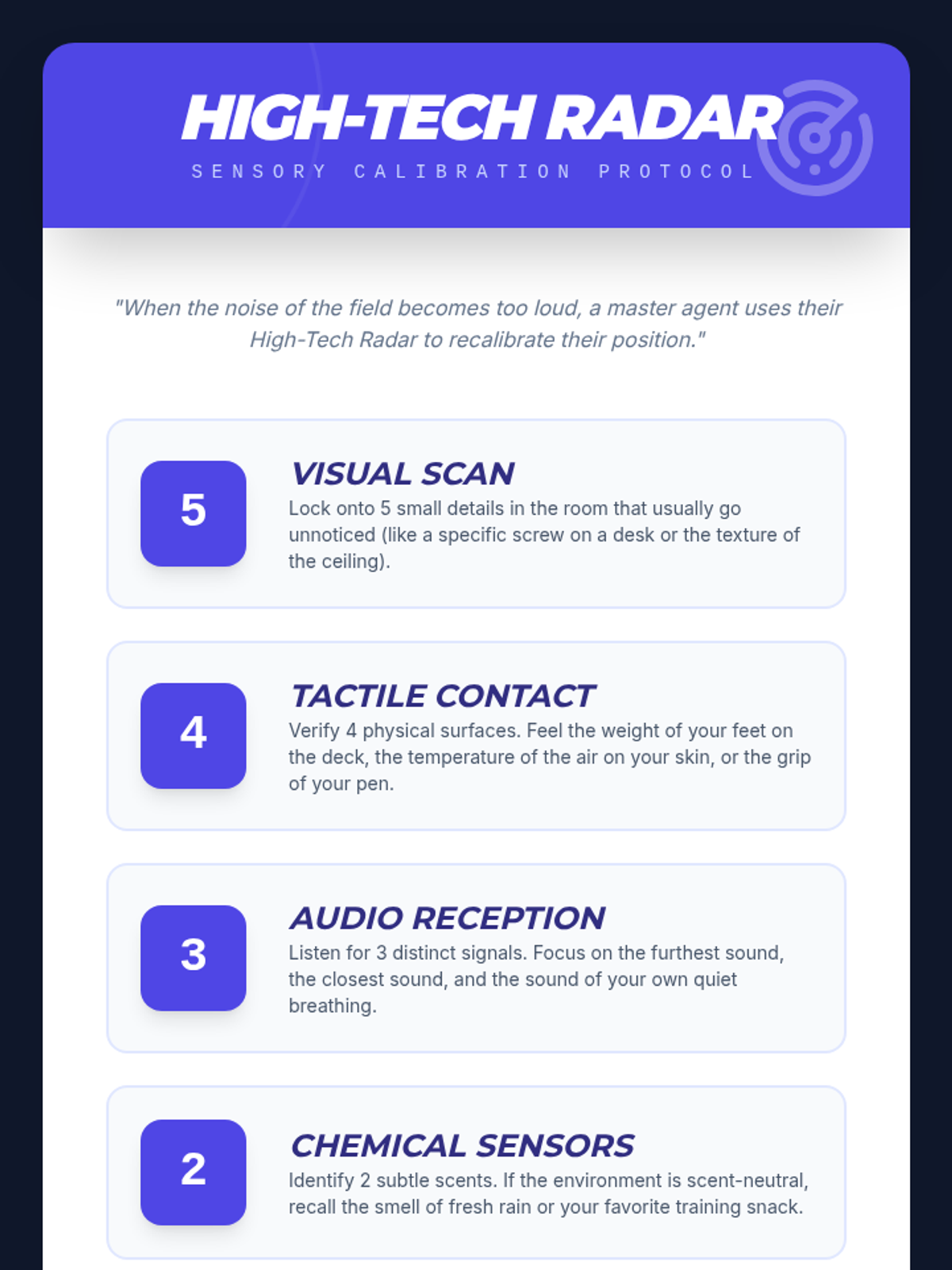
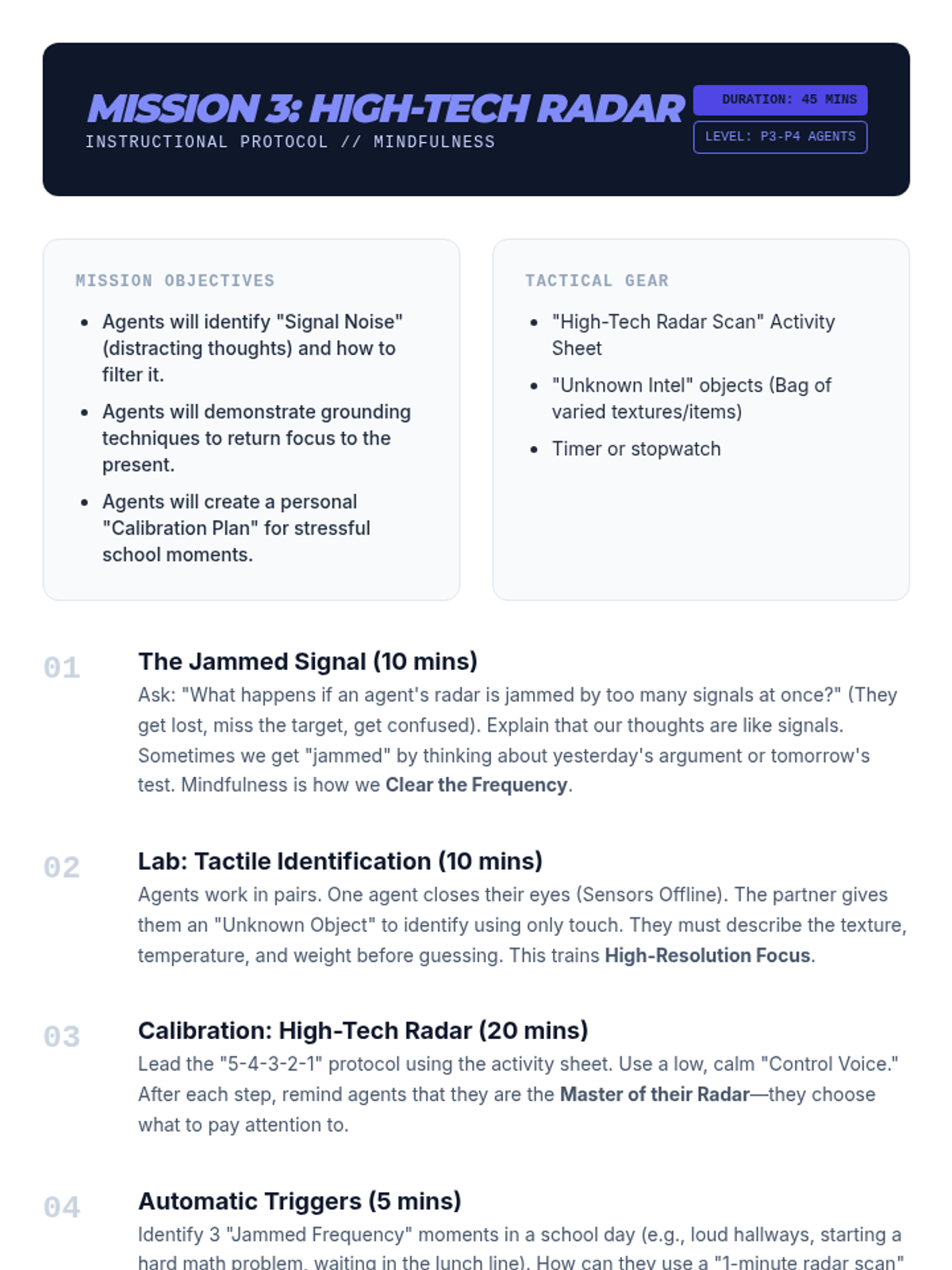
Agents calibrate their internal radar using sensory grounding techniques to stay focused.