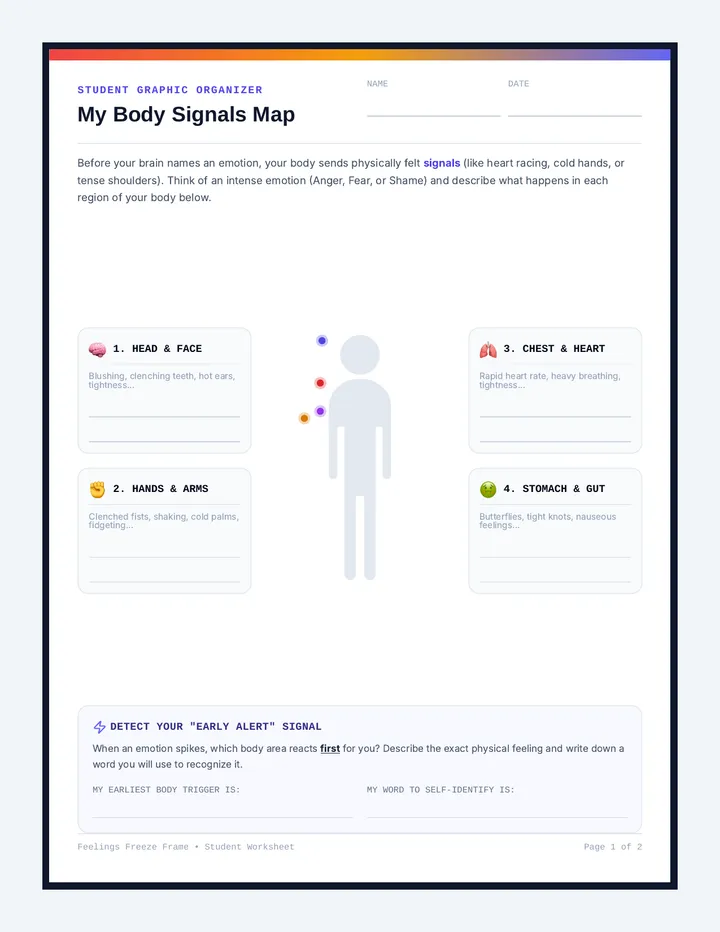
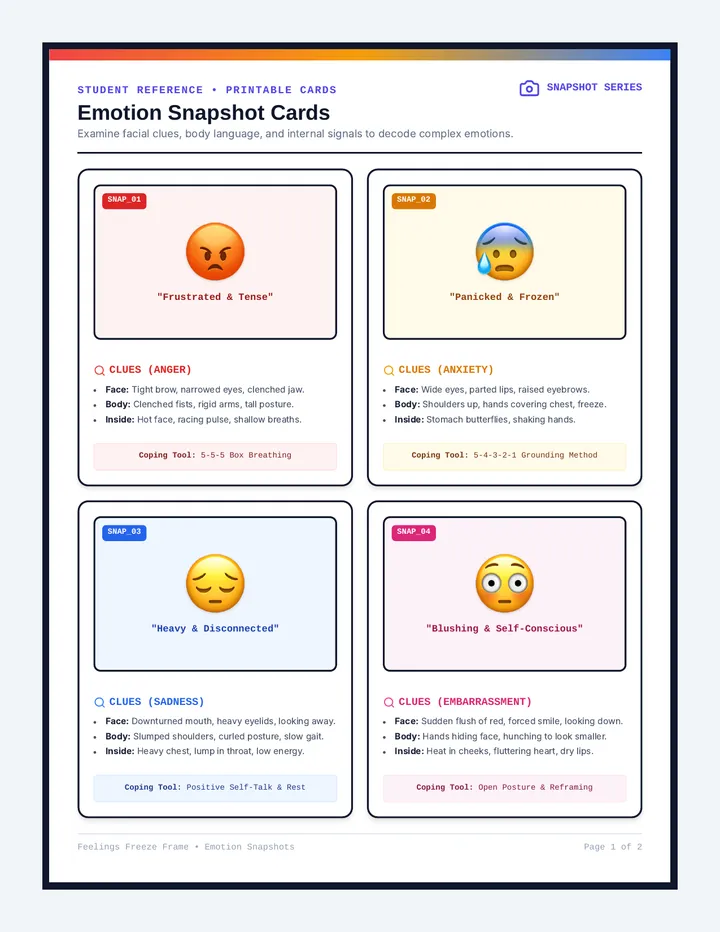
A lesson on decoding non-verbal communication across various social contexts, helping students identify and interpret facial expressions, posture, gestures, and proximity.
Focuses on long-term goal setting and identifying personal passions. Students learn the SMART goal framework and engage in a guided visualization to plan their post-graduation paths.
Focuses on the science of stress and developing a personalized toolkit of healthy coping strategies. Students learn to differentiate between productive stress and burnout and practice immediate grounding techniques.
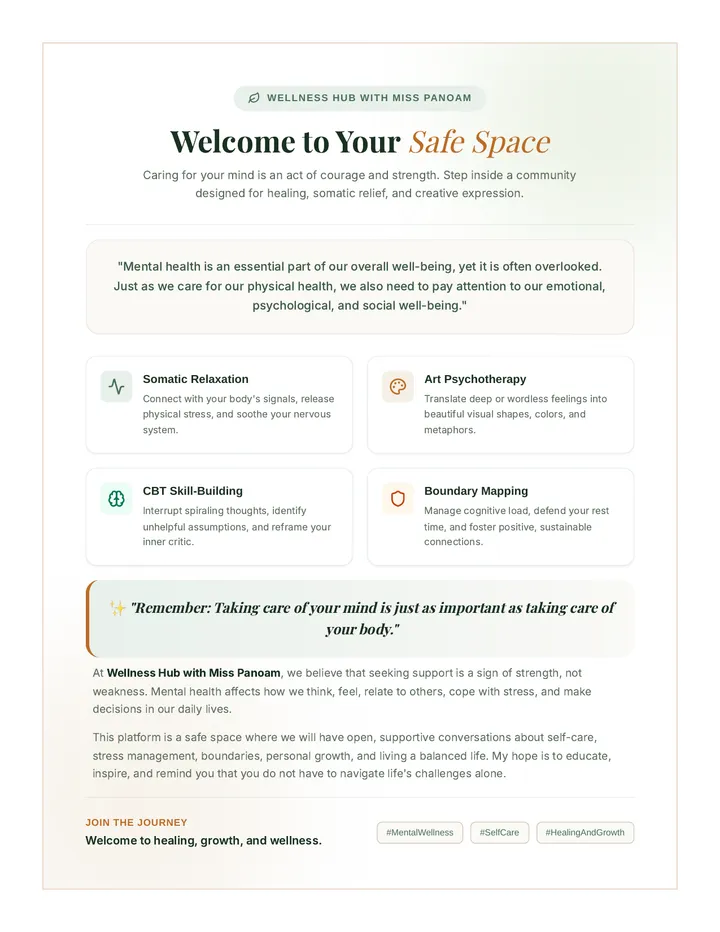
An introductory session for high school girls focused on identifying stressors and practicing mindfulness and relaxation techniques as healthy coping mechanisms.
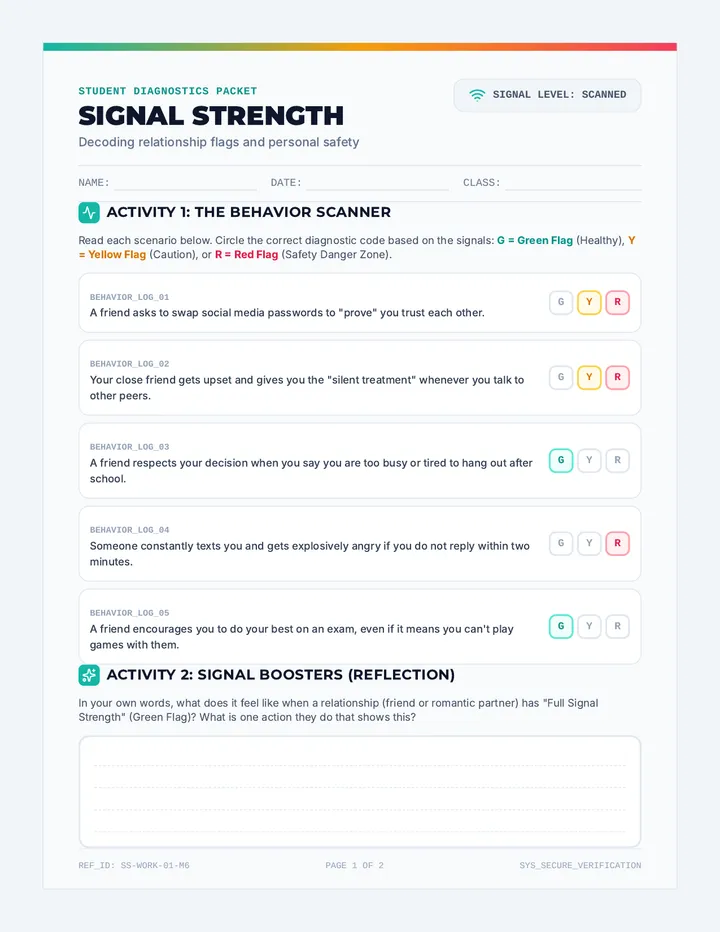
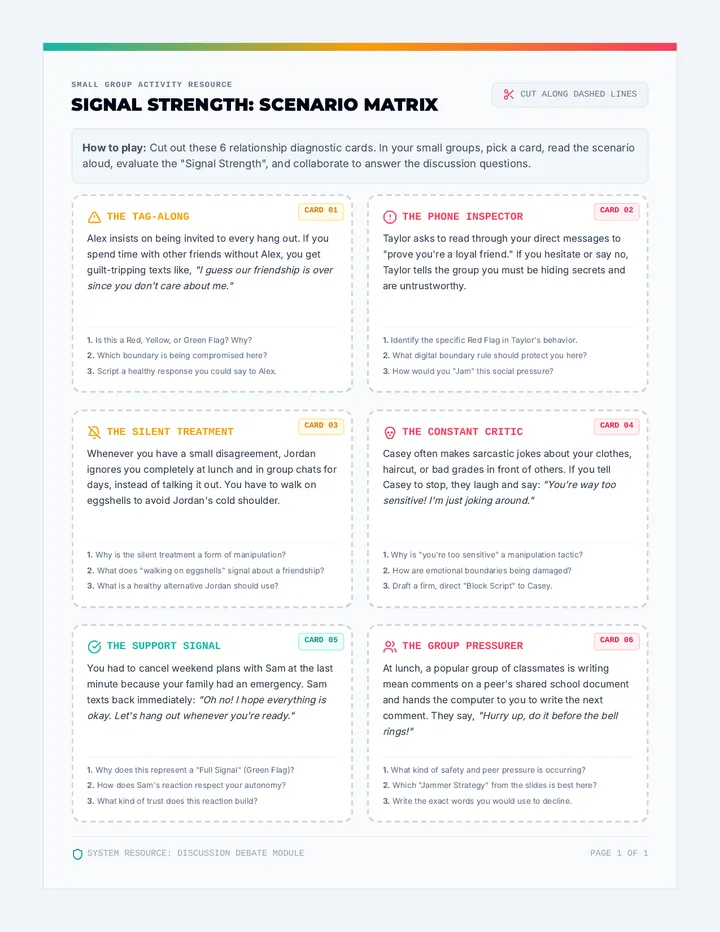
Focuses on identifying healthy and unhealthy relationship patterns. Students learn to recognize red and green flags and practice setting healthy boundaries with friends, family, and partners.
Focuses on building self-esteem by identifying personal strengths and reframing negative self-talk. Students will explore the difference between self-esteem and self-compassion through discussion and reflective activities.
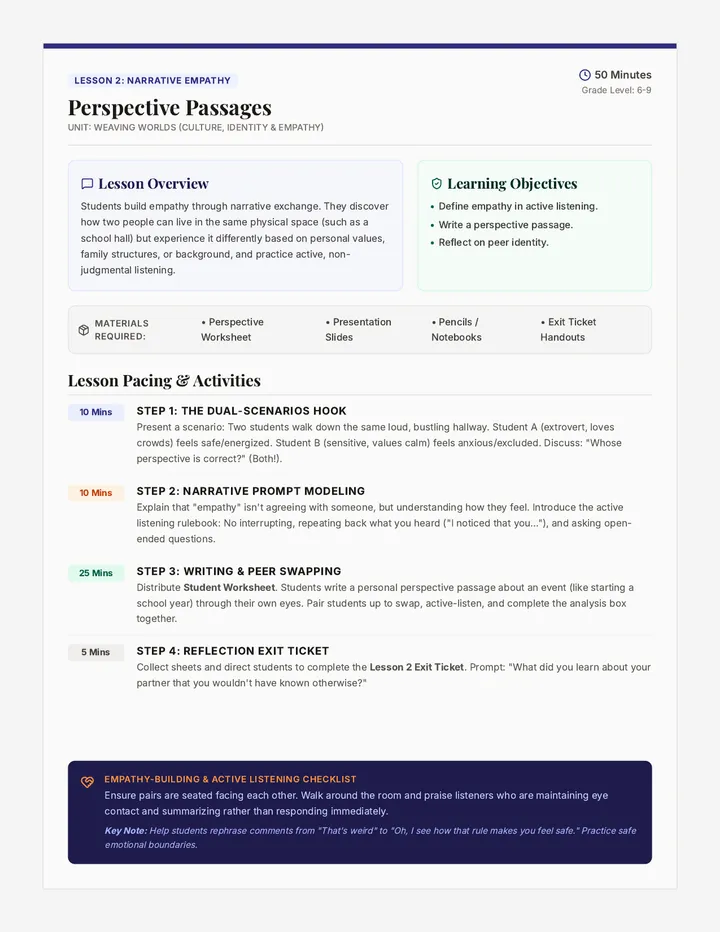
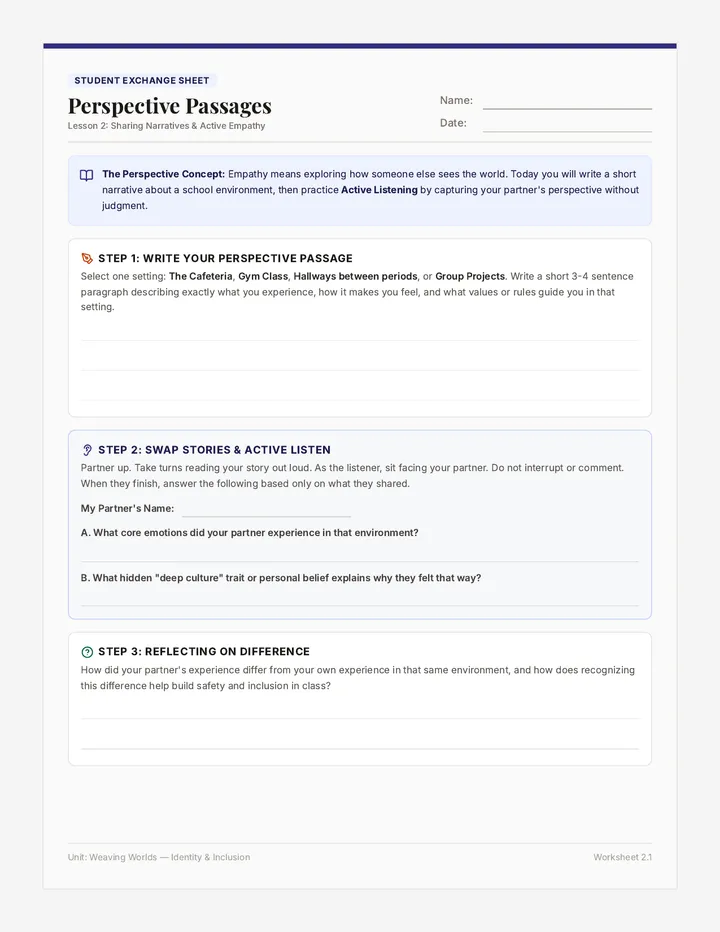
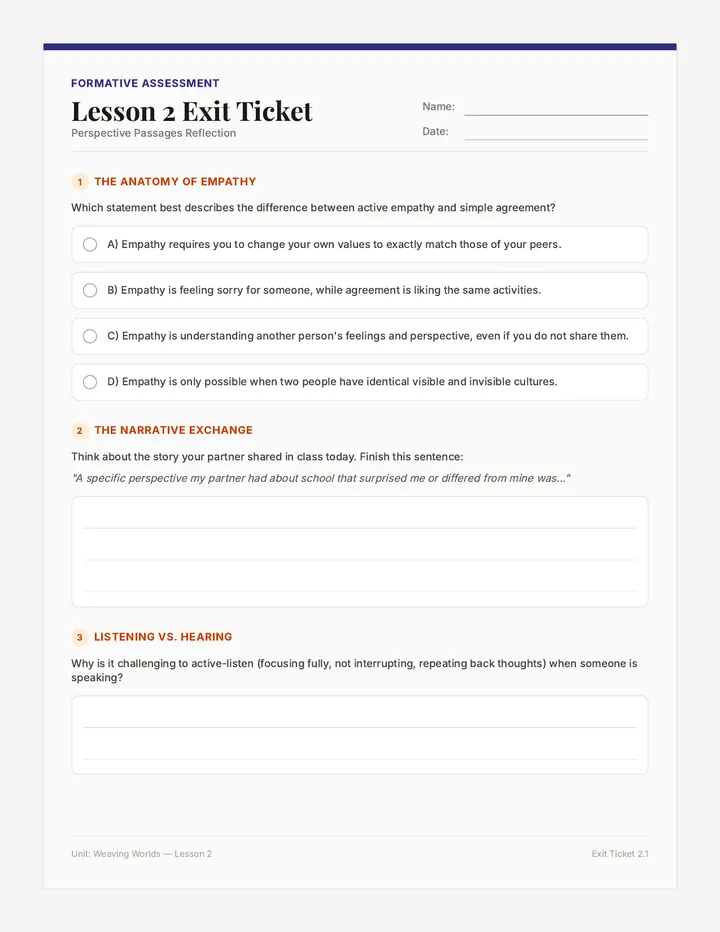
A 35-minute interactive lesson for middle schoolers focusing on the mechanics of active listening and the depth of empathy, moving from 'hearing' to truly 'understanding' without jumping to solutions.
A 40-minute lesson for middle schoolers that reframes resilience as 'bouncing forward' through the four pillars of connection, competence, character, and confidence. Students analyze a case study and create their own resilience blueprints with actionable goals.
A 45-minute exploration of diverse cultural perspectives on mental health, healing, and wellbeing, focusing on Indigenous, collectivist, faith-based, and Western models. students will learn about the importance of culturally responsive care and how to advocate for culturally safe mental health supports.
A 35-minute social-emotional learning lesson for grades 4-6 focused on reframing help-seeking as a strength, identifying trusted adults, and practicing communication strategies.
A 40-minute lesson for grades 7-8 focused on mental health literacy, the Dual Continuum model, debunking common myths, and taking active steps to reduce stigma in the school community. Aligned with School Mental Health Ontario frameworks.
This lesson helps 5th and 6th grade students navigate the emotional and practical aspects of major transitions, such as moving to middle school or a new city. Students will explore common feelings associated with change, develop personalized coping strategies, and identify their support networks.
A practical, boundary-focused lesson for middle schoolers on supporting friends with mental health challenges, emphasizing active listening, recognizing limits, and connecting to professional help.
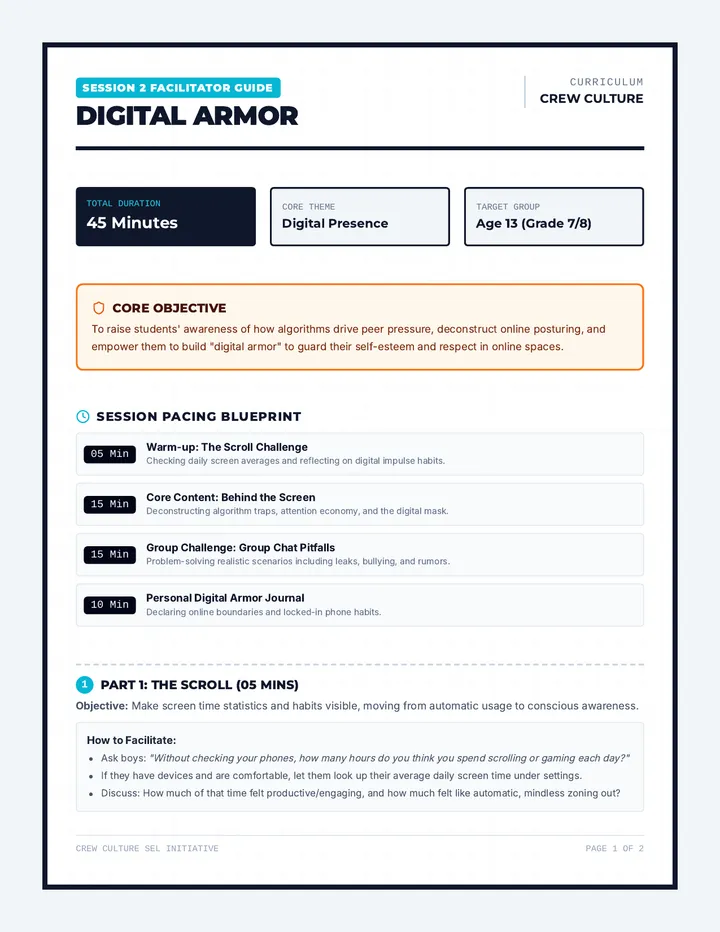
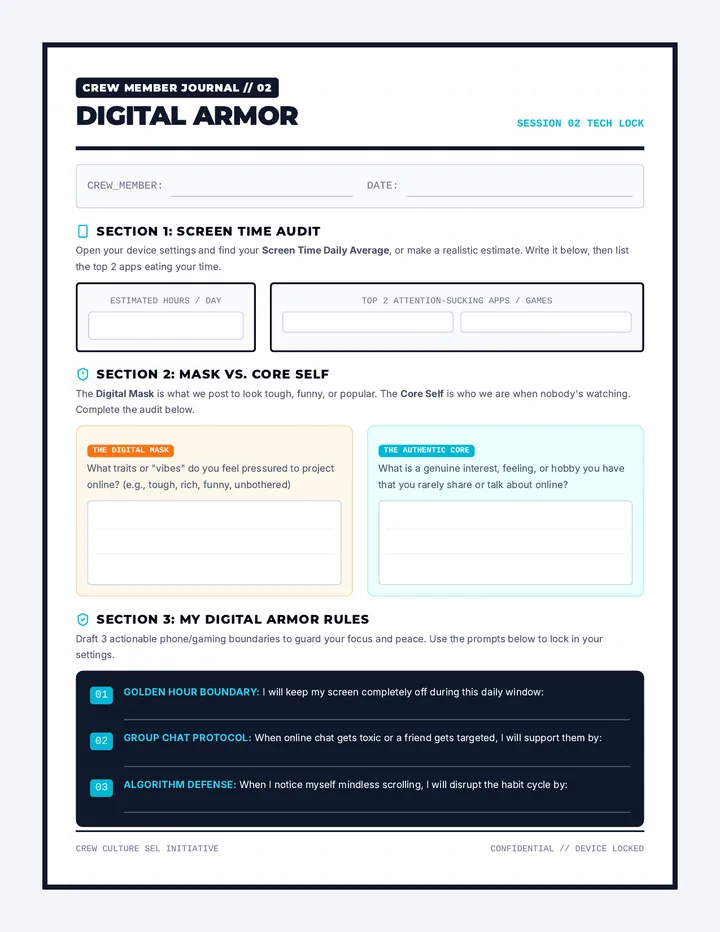
A 40-minute lesson for middle schoolers exploring the impact of social media and screen time on mental health, focusing on dopamine loops, algorithms, and healthy digital boundaries.
A fast-paced, 35-minute lesson helping middle schoolers navigate digital footprints, online scams, and cyberbullying with practical strategies for platforms like TikTok, Discord, and Instagram.
A 45-minute core training session covering the ambassador role, safety boundaries, practical stigma-reduction strategies, and student self-care.
A 40-minute interactive lesson for 7th-8th graders on the 'Bystander Effect' and practical, safe intervention strategies (the 4Ds) to transform from a passive bystander into an active upstander.
A 35-minute lesson introducing elementary students to the mental health continuum, using the analogy of 'Inner Weather' to explain that mental health is a spectrum that everyone experiences and that changes over time.
A 40-minute Social-Emotional Learning lesson for grades 7-8 focused on identifying healthy and unhealthy relationship patterns. Students explore the characteristics of respect and trust, recognize red flags like control and isolation, and discuss the nuances of digital-age relationships.
A 35-minute introductory lesson for high schoolers that demystifies mindfulness, teaching it as a practical tool for focus and emotional regulation through active experimentation with four distinct techniques.