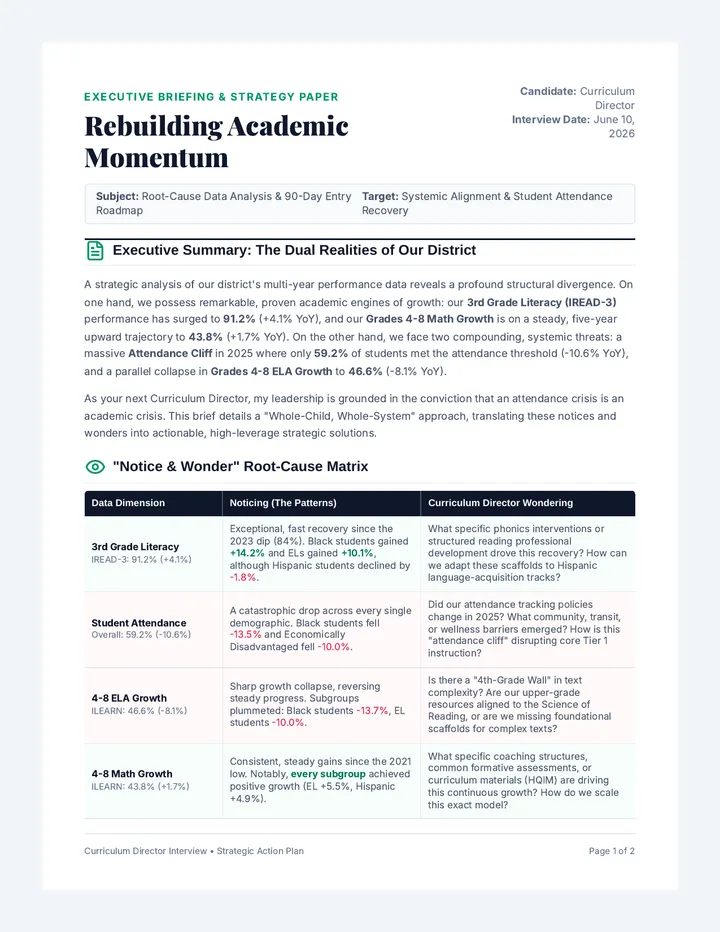
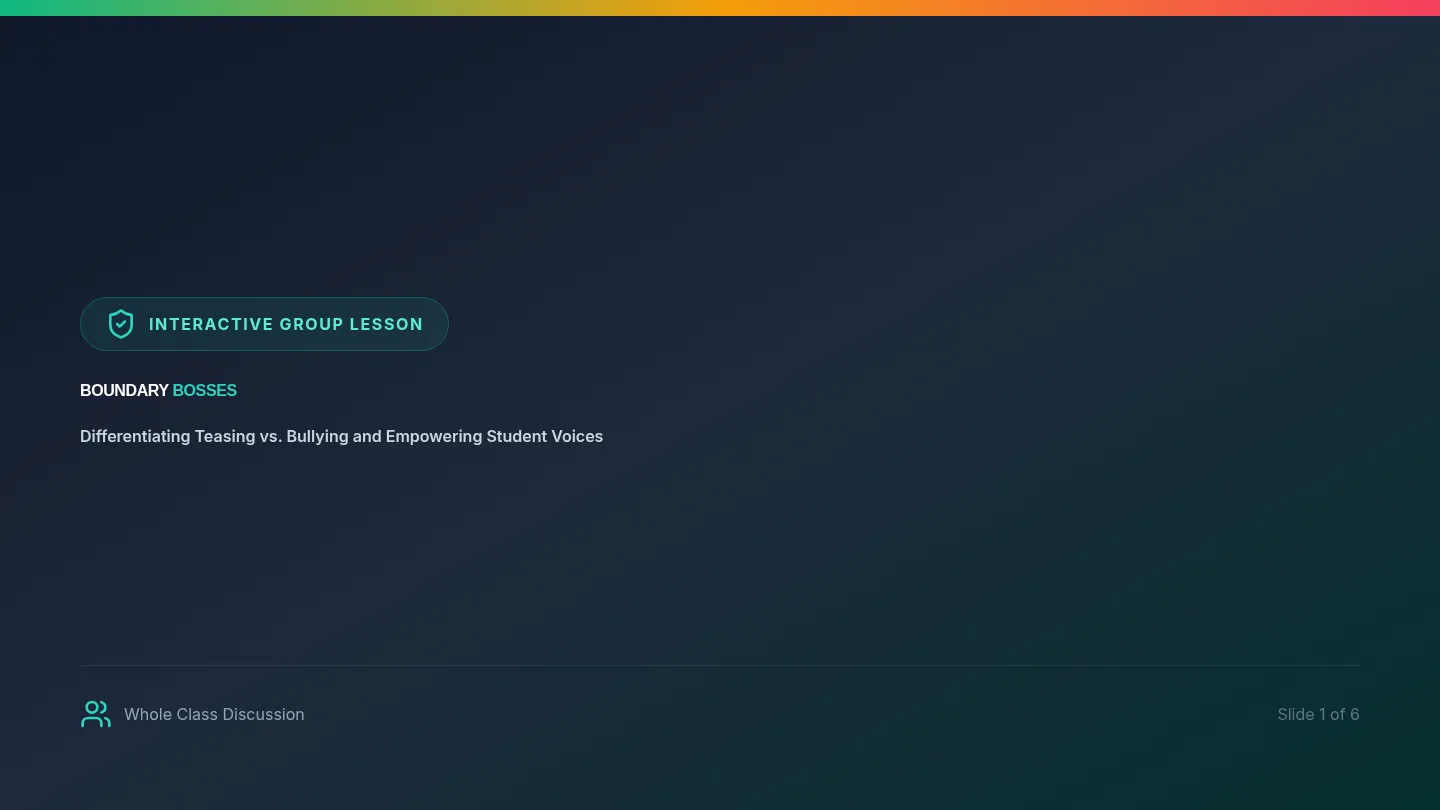
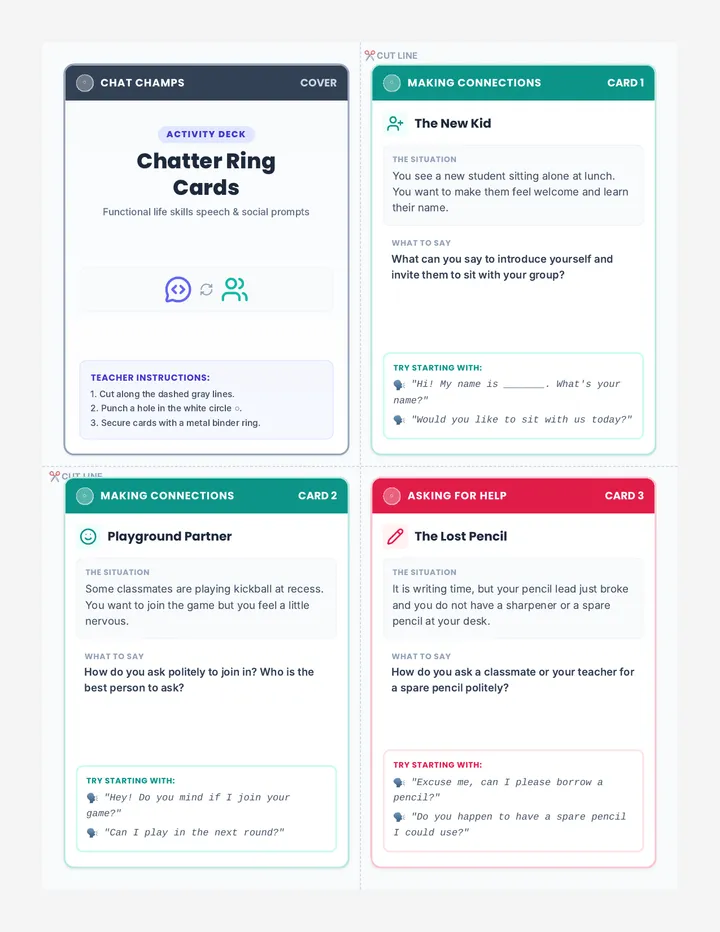
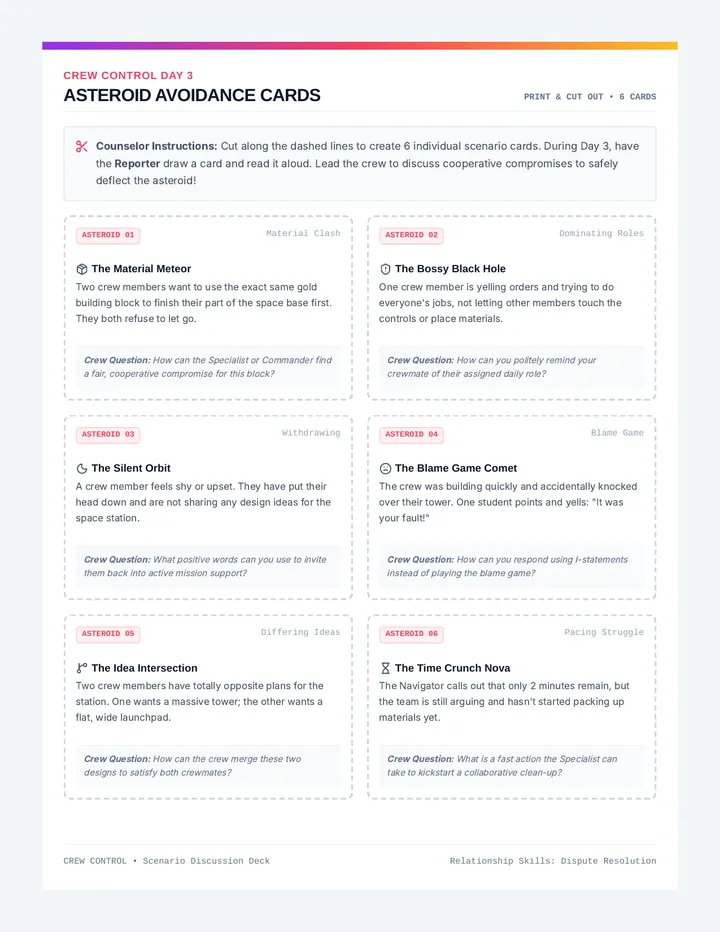
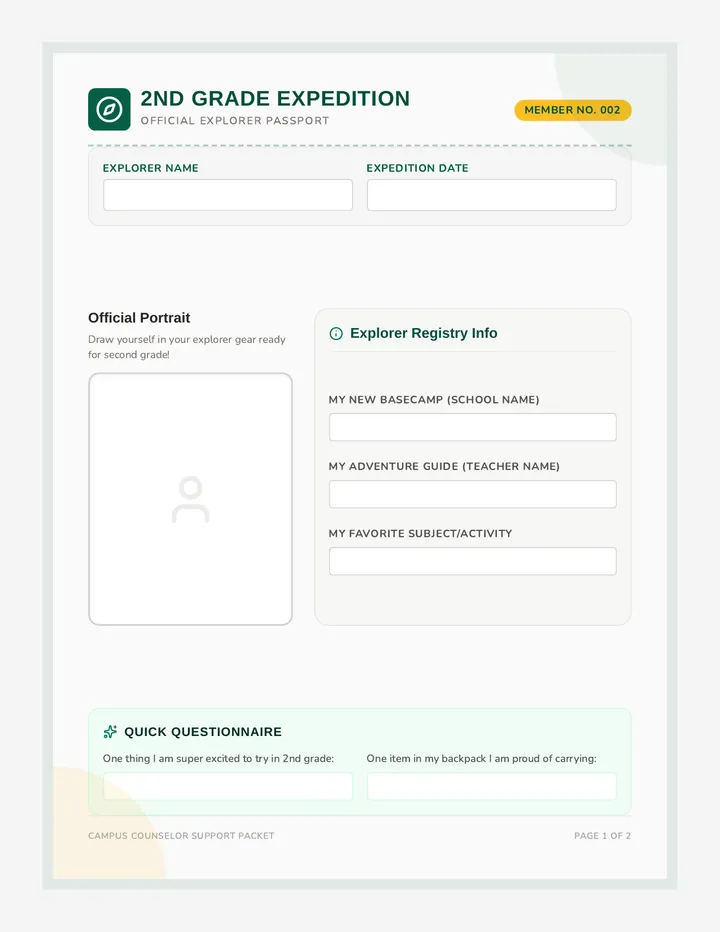
A comprehensive toolkit designed to boost elementary school attendance through parent communication, student engagement activities, and a school-wide incentive framework.
An elementary lesson (grades 3-5) teaching emotional regulation through the metaphor of surfing waves. Students learn to identify body signals, use a three-step breathing strategy, and create a personal 'coping surfboard'.
An experiential lesson for grades 2-5 focused on learning and practicing five body-based calming strategies: belly breathing, grounding, muscle relaxation, butterfly hugs, and visualization. Students 'train' to become Calm Body Commanders, learning to manage big emotions through physical techniques.
A 45-minute exploration of diverse cultural perspectives on mental health, healing, and wellbeing, focusing on Indigenous, collectivist, faith-based, and Western models. students will learn about the importance of culturally responsive care and how to advocate for culturally safe mental health supports.
A 35-minute social-emotional learning lesson for grades 4-6 focused on reframing help-seeking as a strength, identifying trusted adults, and practicing communication strategies.
This lesson helps 5th and 6th grade students navigate the emotional and practical aspects of major transitions, such as moving to middle school or a new city. Students will explore common feelings associated with change, develop personalized coping strategies, and identify their support networks.
A 30-minute introductory lesson for grades 2-4 focused on celebrating individual identities and building an inclusive classroom community through a collaborative art project.
A 40-minute interactive lesson for 7th-8th graders on the 'Bystander Effect' and practical, safe intervention strategies (the 4Ds) to transform from a passive bystander into an active upstander.
A 35-minute lesson introducing elementary students to the mental health continuum, using the analogy of 'Inner Weather' to explain that mental health is a spectrum that everyone experiences and that changes over time.
A 40-minute Social-Emotional Learning lesson for grades 7-8 focused on identifying healthy and unhealthy relationship patterns. Students explore the characteristics of respect and trust, recognize red flags like control and isolation, and discuss the nuances of digital-age relationships.
A 45-minute workshop-style lesson designed for secondary students to empower them as mental health ambassadors. Students learn to conduct needs assessments, plan authentic campaigns, and measure their impact while aligning with TDSB wellbeing frameworks.
A 45-minute lesson for high school students focusing on life promotion through protective factors, meaningful connections, and a sense of purpose. This strengths-based lesson moves beyond risk to build hope and community belonging.
A 30-minute social-emotional learning lesson for elementary students focused on building, maintaining, and repairing friendships through interactive brainstorming and creative activities.
A comprehensive 45-minute lesson for high school students exploring the mechanics of anxiety, cognitive distortions, and evidence-based coping strategies through a destigmatizing and practical lens.
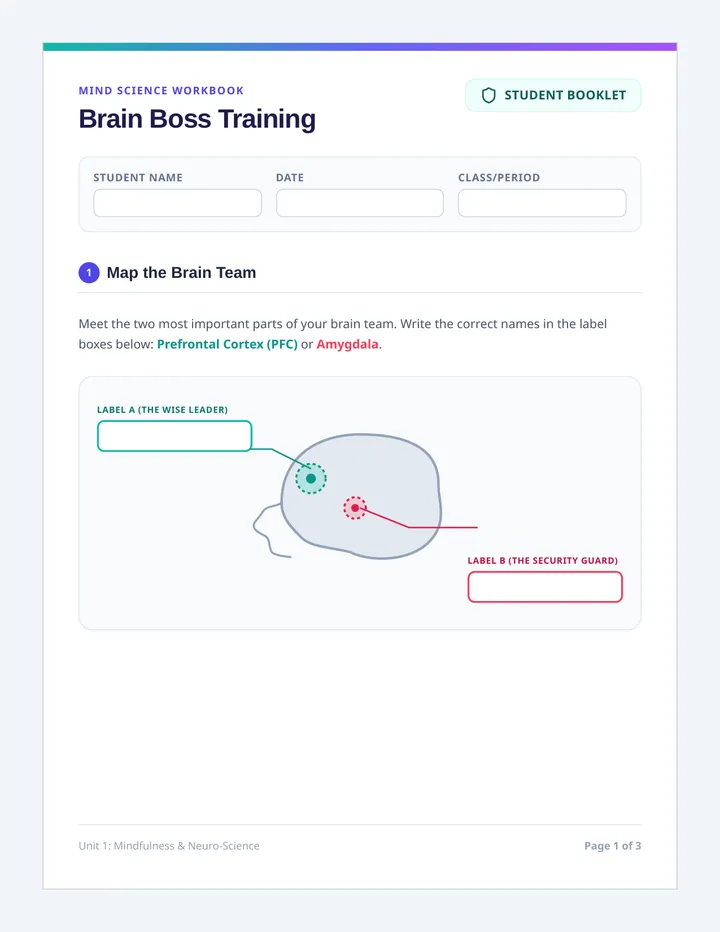
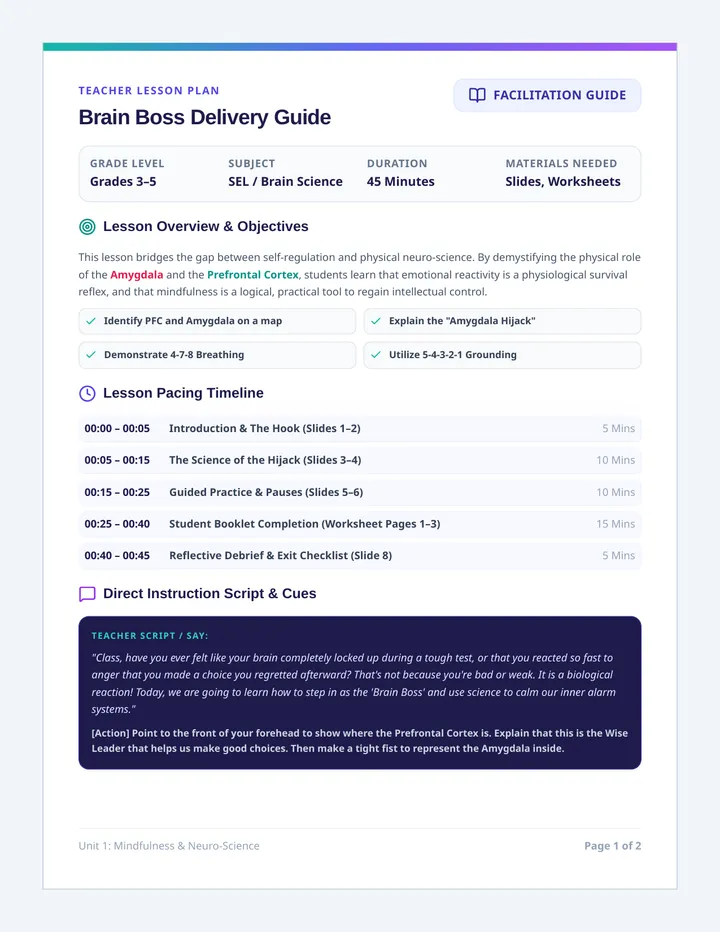
A 40-minute exploration of the neuroscience behind mental health, focusing on the stress response (amygdala vs. prefrontal cortex), the biological foundations of wellbeing, and practical strategies for emotional regulation.