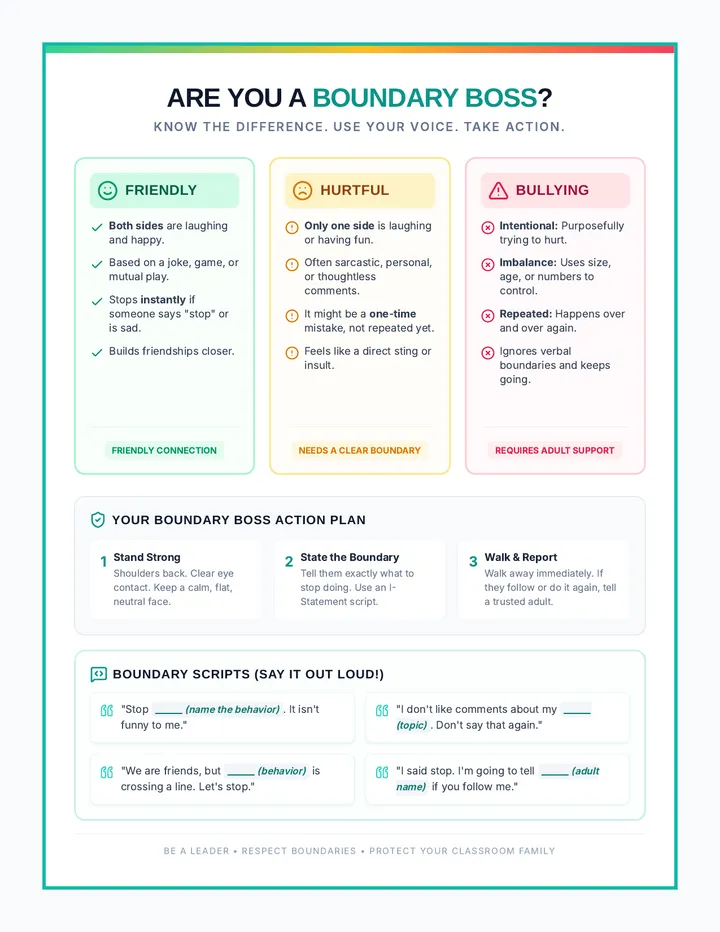
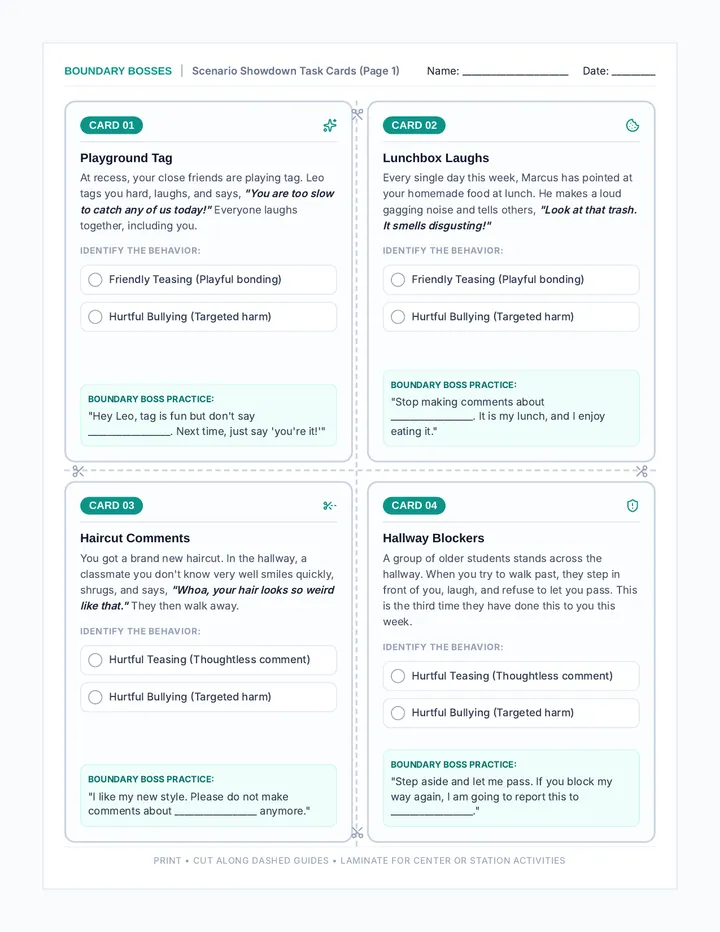
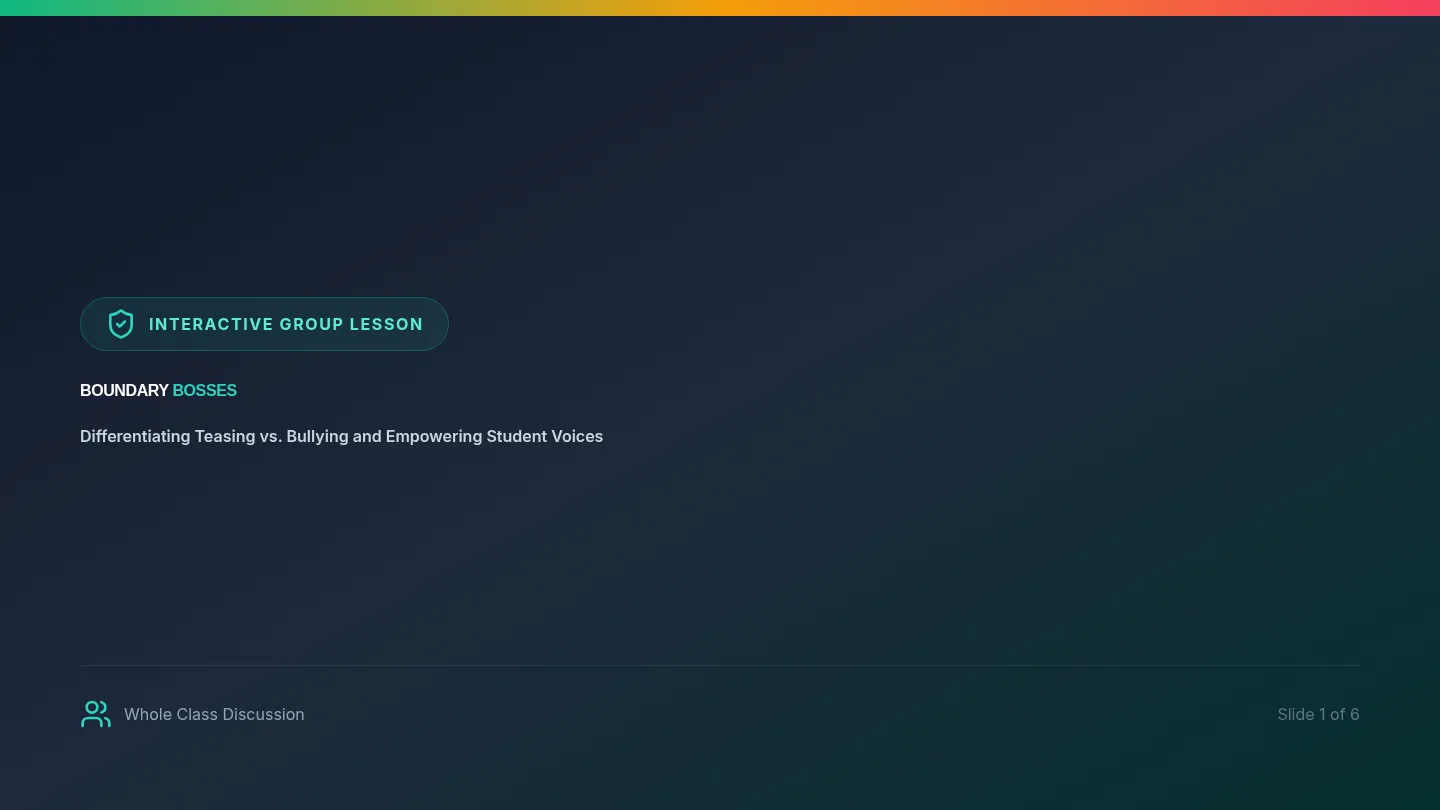
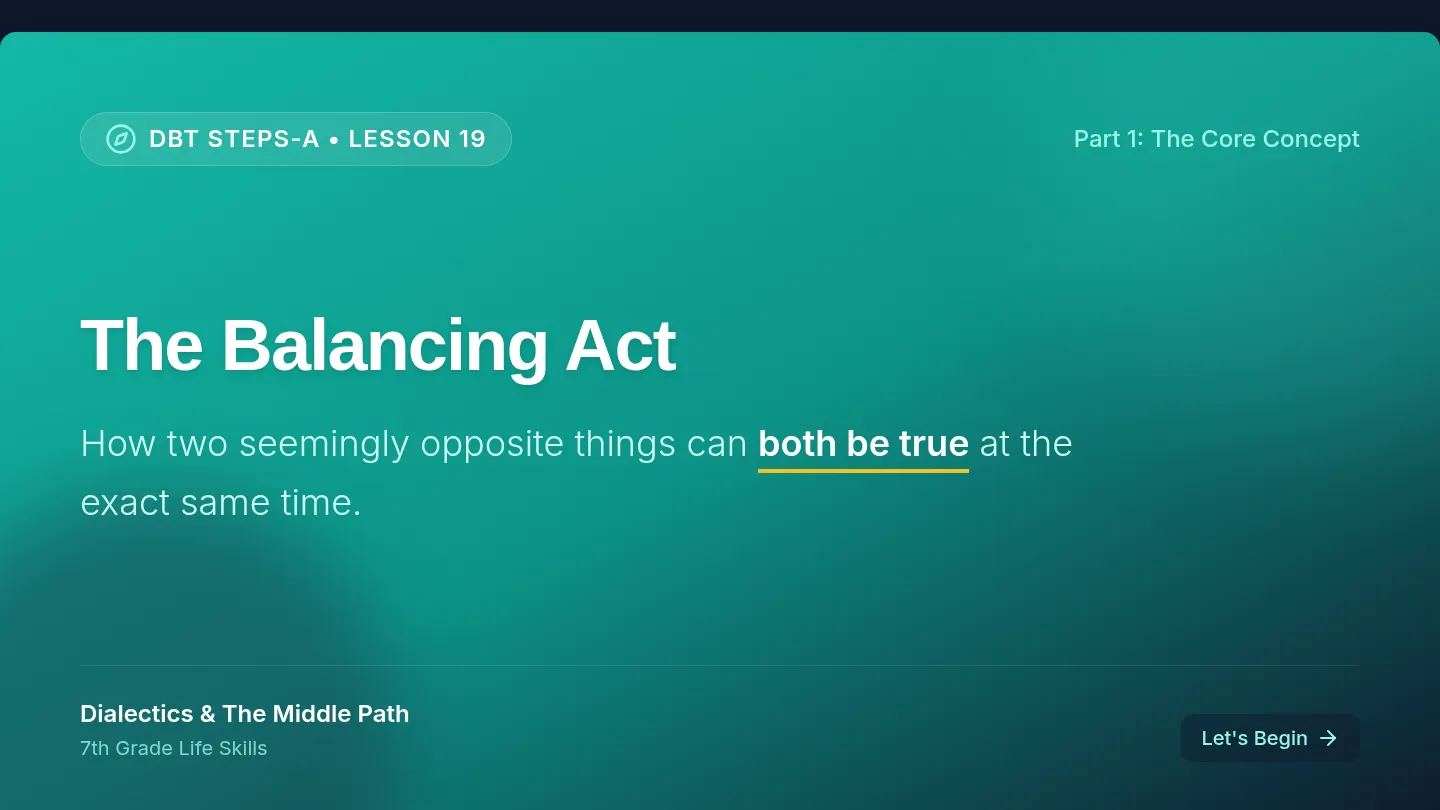
Guide the student to apply their personalized coping plan in realistic scenarios through role-play and reflective journaling, boosting confidence and flexible use of strategies.
A fast-paced, high-energy lesson where students evaluate their progress on long-term goals and make tactical adjustments to stay on track. Students use a racing pit-stop metaphor to identify barriers and refine their process.
A 30-minute workshop where 7th graders transform vague dreams into actionable blueprints using the SMART framework and peer coaching.
A comprehensive K-12 behavior management system that synthesizes best practices from MTSS, PBIS, and restorative justice frameworks. This lesson provides teachers with a clear decision-making flow and a detailed policy handbook for maintaining a positive school culture.
An interactive 8th-grade lesson focusing on self-management through the lens of processing constructive feedback and setting actionable goals. Students use a 'toolkit' approach to navigate challenges and persevere through academic and personal hurdles.
A small group social-emotional learning lesson focused on identifying and applying coping skills to common school-based stressors. Kindergarteners will practice choosing between breathing, asking for help, taking a break, and accepting "no".
An analysis of the financial decisions made in the film Goodfellas, focusing on high-risk income, the "bust-out" business model, and the long-term costs of illicit wealth.
This lesson prepares 8th-grade students for the social and emotional transition to high school through reflection, goal-setting, and a letter to their future selves. Students explore their current strengths and anxieties while envisioning their future success.
Students learn the importance of professional document formatting and hierarchy, setting up a formal business proposal template with structured headings and standardized typography.
Students conduct a market research sprint, interviewing classmates to validate their product ideas and learning to 'pivot' based on real user feedback and data synthesis.
Students learn the difference between leading and open-ended questions, developing a research table and interview script to gather unbiased feedback from potential customers.
Students explore the concepts of target markets and customer empathy, moving from personal preferences to identifying specific user needs and mapping out a "Day in the Life" for their ideal customer.
A gentle lesson for Kindergarteners focusing on personal space, body boundaries, and appropriate ways to show affection to friends.
Students explore the fundamental economic concepts of scarcity and opportunity cost, applying them to product development by making difficult trade-offs between competing features within a limited resource budget.
Students learn to identify consumer "pain points" as opportunities for innovation, moving from recognizing everyday frustrations to conceptualizing business solutions.
This lesson helps students navigate the social complexities of humor within a school setting. It focuses on identifying appropriate times for jokes, recognizing social cues from teachers, and understanding how timing affects classroom dynamics and respect.